

The proposed Fane tower, left; the Turk’s Head Building (1913), right.
In a very interesting article in the February issue of East Side Monthly (not yet up on its website) about Providence Preservation Society director Brent Runyon, titled “The Preserver,” staff writer Robert Isenberg elicits from the great director this description of PPS:
Typically, PPS has always embraced architecture of its time. We prefer good architecture of today rather than pastiche referencing things from yesterday.
In a more logical world, Runyon’s remark would be a bombshell. Instead, it is the conventional wisdom. Every PPS director since Antoinette Downing has embraced the identical attitude toward historical preservation. Why would preservationists want to preserve old buildings but promote new buildings designed to clash with the old buildings they fought so hard for? That’s a very good question, and it does not have any logical answer.
Some say that buildings that clash create a more exciting experience for onlookers than buildings that fit in. Maybe that’s true to a degree, but once you’ve seen it a hundred times (or, frankly, three times) it gets tiresome. Its thrill recedes swiftly, leaving behind the damage it has done to the character of a neighborhood and the more vital, lasting pleasure of its beauty.

Brent Runyon as seen in ESM.
Others say, as Runyon did, that it’s important to build “architecture of its time,” whether (I assume) it fits in or not. That is absolutely not so. “Architecture of its time” is a truly ridiculous concept. What is it that makes a building of its time? Does it somehow align with the ethos of the last five years? Or twenty years? Or fifty years? What is the character of an era? Most historians disagree what it is. Architects, especially modernists, have a very limited language to express it compared with historians. Does a building of its time symbolize war, or greed, or injustice? Shouldn’t architects try, if they can, to cure an era’s ills rather then merely expressing them? If not, for shame! If so, it has not worked. Yet few have argued that they should not be built.
One could go on and on asking questions about “of its time” that have no logical answers. No, it just does not make any sense. And that was clear as soon as the case for “architecture of its time” was made a century ago.
In fact, any building that is built at any time is automatically “of its time,” simply because it was built in its time at the time it was built.
The “of its time” concept is a fraud meant to justify banning styles popular in the past from being built today. Its “periods” – Romanesque, Gothic, Tudor, Classical, Victorian, Eclectic, Revival, etc. – are porous because styles result from slow change in taste and technique that is not limited by temporal boundaries drawn by scholars. Many buildings are mixtures of more than one style. Romanesque, Gothic and the other styles were revived again and again during the long span of architectural history – until the attempt to ban them started in the late 1940s. Since then their revival has offered families the blessing of choice in housing style – styles whose peril from modernism transformed historic preservation from a hobby of the wealthy into a mass movement to protect not just famous buildings but entire neighborhoods.
Yes, old styles built anew can be more expensive because of the attempted ban, which came damned close to snuffing out craftsmanship developed over centuries, but crafts are now undergoing a revival. It is in major commissions only that traditional architecture is rare, since the style for college buildings, institutional headquarters, corporate offices, civic buildings, etc., are selected by committees who want to show how hip they are, and for whom the “of its time” orthodoxy is easy to spout, with little fear of rebuttal.
You’d think the one thing preservationists would want to avoid is a prejudice against the styles they once chained themselves to bulldozers to protect!
But these are abstract objections to “architecture of its time.” Let’s put it in more practical, mission-oriented terms.
If Brent Runyon and PPS “embrace architecture of its time,” why do they object to the Fane tower? “Spot zoning,” Runyon says. He admits that “spot zoning, by itself, is not illegal. But doing it in such an extreme way, for the sole purpose of one developer, is legally challengeable. It’s not thoughtful. It’s not consistent with the community’s planning process.”
Maybe so, but spot zoning is a weak reason. It is a pretext to oppose the Fane tower, used because the real reason would be unacceptable to professional preservationists and more openly modernist members of Providence’s design community. The real reason is that most local residents think it goes against the historic character of the city of Providence. It does not fit in. The locals are wiser about both Providence and architecture than those who carry out its development regulations, or these professionals would already be wary of modern architecture. They are not, but they should be. They should heed the community’s planning process and its result, the comprehensive plan, which zoning regulations are designed to implement.
The comprehensive plan is festooned with mandates to protect the historic character of Providence. My recent post “Showdown on Blackstone” quoted 15 such passages. These mandates have existed for years but are officially ignored, even by preservationists, oddly enough. And yet the beauty of Providence is a major competitive advantage in the city’s quest for jobs, new corporate headquarters, more tax revenue, and a higher standard of living. Beauty and historical charm have placed Providence near the top of many national surveys of city living over the past two decades. Still, the attitude summed up by “architecture of its time” puts all that at risk going forward as the decline of beauty accelerates here in the capital of Rhode Island.
At least PPS is opposing the Fane tower. That is new, and it is major progress.
Providence officials should not pass a law requiring developers to propose projects that fit in and that strengthen the city’s brand. The mayor should just call up and ask. My guess is that developers would agree. They are much more interested in getting the support of local governments and citizens for their projects than they are in standing up for this or that architectural style. The refusal by preservation institutions in Providence and elsewhere – but especially in a historic city like Providence – to understand that beauty serves communities is one of the more curious mysteries of our time.
Don’t get me wrong. Under Brent Runyon’s leadership the preservation society has become more active and more successful. However, if its director, its staff and its board better understood the importance of beauty and the meaning of their own foundation story, the society’s success would be much enhanced. Every one of its missions would be easier to accomplish. If it did more to promote new architecture of the kind it was formed to protect, and if, as a result, more buildings are built that learn from the past how to make a better future, Providence could boast even greater allure, its competitive advantages would grow, and more people would join and give to PPS.
I am pretty sure most dues-paying members of the Providence Preservation Society agree with most of this. The board and the esteemed director should try harder to heed their wisdom.
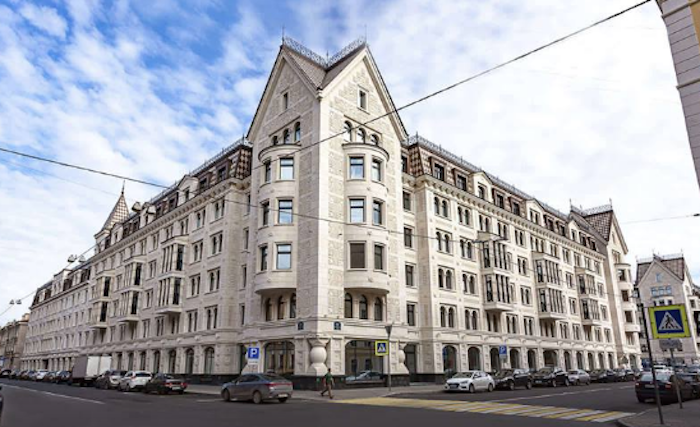
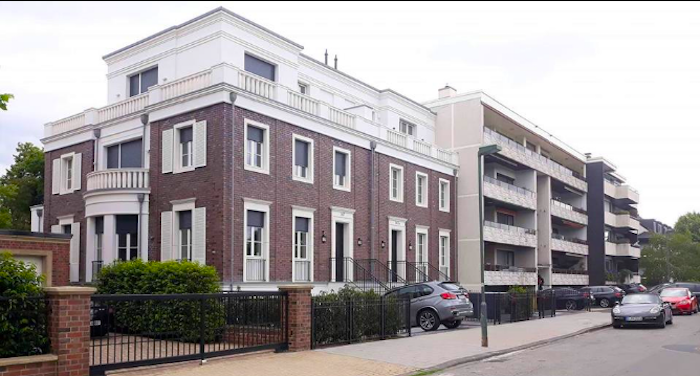
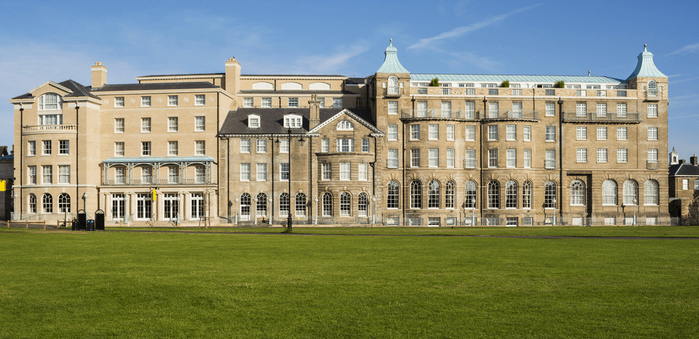
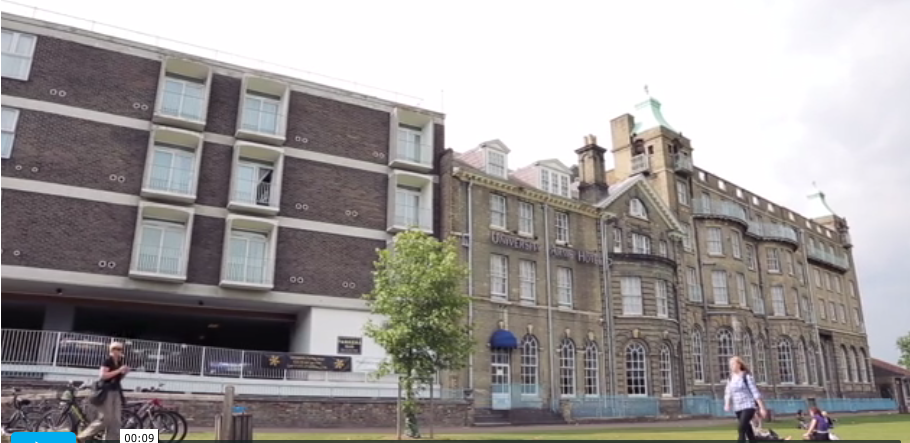




 Architecture Here and There