R.I.P. David Brussat

A Message to David’s Readers


It is with deep sadness that we share the news that David Brussat, the voice and spirit behind Architecture Here and There, passed away on November 25th, 2025.
David built this blog with great love—love for architecture, for beauty, for cities, and for the conversations that brought so many of you here. His wit, insight, and unwavering belief in the value of thoughtful design made this space much more than a blog. It became a community.
For years, David invited readers to look more closely at the world around them, to question, to debate, and to delight in the craft of architecture both old and new. His writing will remain here so that all who admired his perspective may continue to learn from it, revisit it, and share it with others.
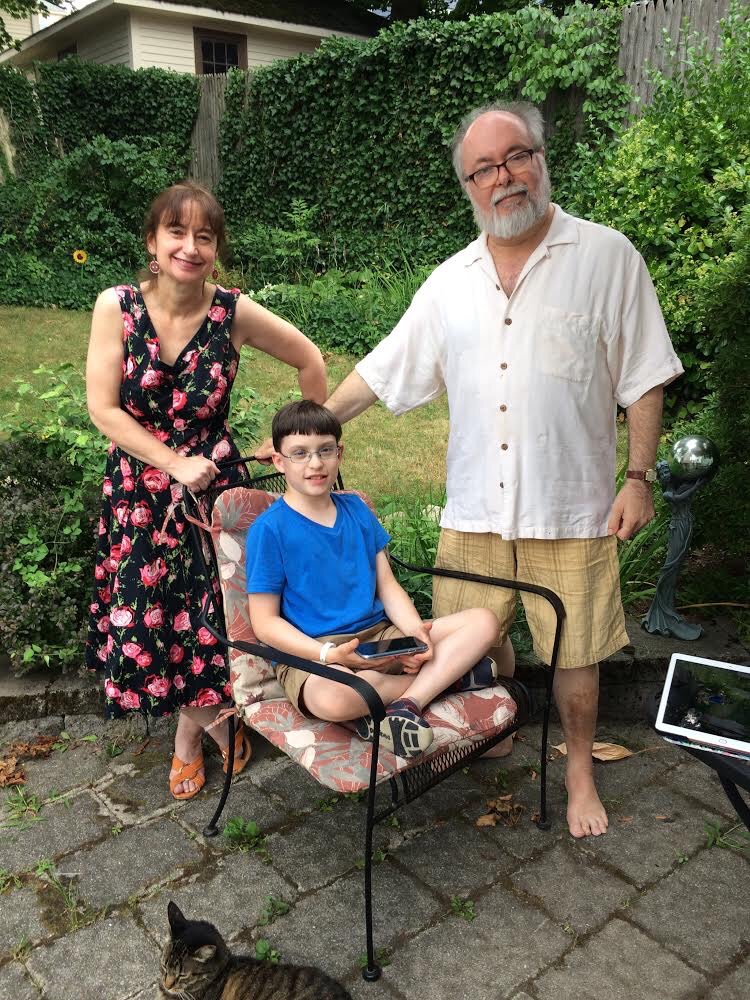
David is survived by his wife, Victoria Somlo, and his son, William “Billy” Brussat, whom he cherished above all else. A Celebration of Life will be held in the spring; details will be shared when available.
Thank you to all who have read, commented, challenged, and supported David’s work over the years. This community meant a great deal to him.


With gratitude,
The family of David Brussat

Posted in Uncategorized | 26 Comments

The Parthenon’s shackles


Recent view of thee Parthenon with its scaffolding removed.

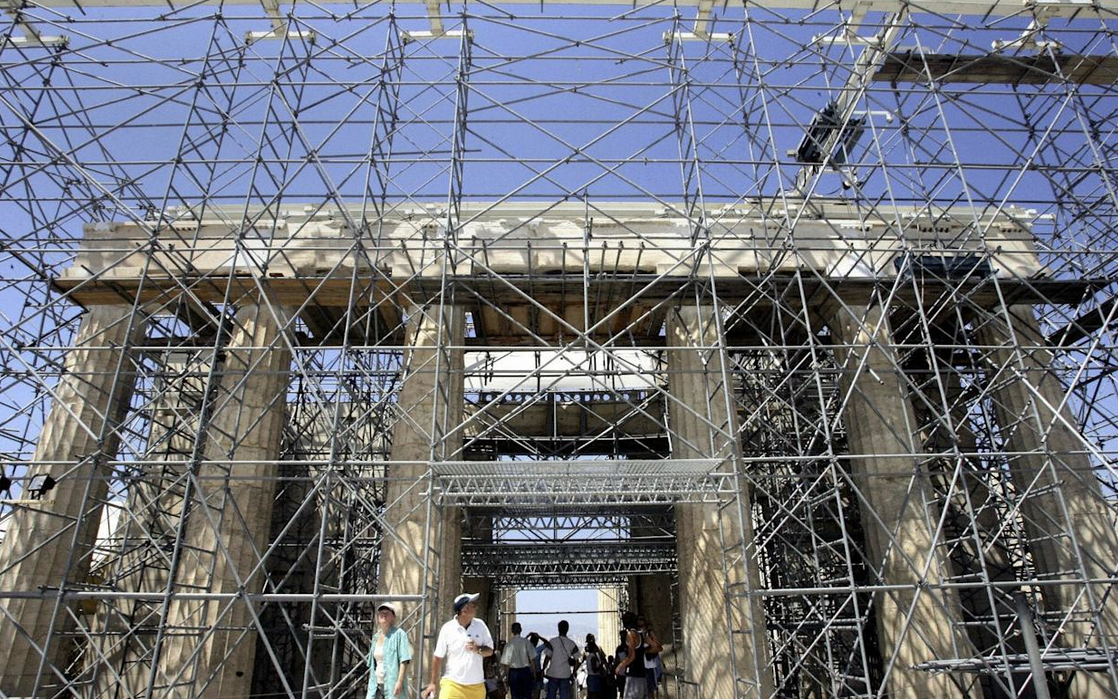
The Parthenon skirted in scaffolding before its recent removal.

For the first time in generations, the Parthenon is without its iron scaffolding. Tourists can view the famous Athenian landmark as it had been viewed by visitors to Greece for more than 200 years; it has been cloaked in construction garb for longer than can be remembered. A new set of scaffolding will encase the western side of the Parthenon; in a month, Greece’s minister of culture warns; she warns also that conservation work will continue on the Parthenon until early next summer.

In the world of architecture; this event rates mention  alongside the completion of repairs on fire-damaged Notre Dame in the summer of 2024, in time (just) for the Summer Olympics in Paris. The cathedral weighs in at some 800 years of age; the Parthenon, erected as a temple to the goddess Athena, at more than a thousand years. Built under the direction of Pericles in the Fifth Century B.C., it has withstood earthquakes, fires and explosions.

I can think of no reason to favor this news about the Parthenon over that regarding Notre Dame. I am old. Both are old; the Parthenon is much older; I have written more posts about Notre Dame since its severe damage by fire several years ago; I have visited Notre Dame several times and Athens only once; and there has been much more opinion for me to criticize of how the cathedral should be repaired. I was in love, or felt so, during my visit to the Parthenon and during my main visit to Notre Dame. On balance, I should favor Notre Dame, yet I feel more drawn to the Parthenon. I cannot say that either is more beautiful. My sister-in-law is Athenian (or at any rate Greek), but she is on the outs with my wife (very temporarily, I trust). Notre Dame is closer by hundreds of miles. I have seen no news item about the removal of the Parthenon’s scaffolding on any major television news network. Go figure.

Posted in Architecture | Tagged , | 1 Comment

The Parthenon sheds its scaffolding

Recent view of thee Parthenon with its scaffolding removed. 

The Parthenon skirted in scaffolding before its recent removal. 

For the first time in generations, the Parthenon is without its iron scaffolding. Tourists can view the famous Athenian landmark as it had been viewed by visitors to Greece for more than 200 years; it has been cloaked in construction garb for longer than can be remembered. A new set of scaffolding will encase the western side of the Parthenon; in a month, Greece’s minister of culture warns; she warns also that conservation work will continue on the Parthenon until early next summer.

In the world of architecture; this event rates mention  alongside the completion of repairs on fire-damaged Notre Dame in the summer of 2024, in time (just) for the Summer Olympics in Paris. The cathedral weighs in at some 800 years of age; the Parthenon, erected as a temple to the goddess Athena, at more than a thousand years. Built under the direction of Pericles in the Fifth Century B.C., it has withstood earthquakes, fires and explosions.

I can think of no reason to favor this news about the Parthenon over that regarding Notre Dame. I am old. Both are old; the Parthenon is much older; I have written more posts about Notre Dame since its severe damage by fire several years ago; I have visited Notre Dame several times and Athens only once; and there has been much more opinion for me to criticize of how the cathedral should be repaired. I was in love, or felt so, during my visit to the Parthenon and during my main visit to Notre Dame. On balance, I should favor Notre Dame, yet I feel more drawn to the Parthenon. I cannot say that either is more beautiful. My sister-in-law is Athenian (or at any rate Greek), but she is on the outs with my wife (very temporarily, I trust). Notre Dame is closer by hundreds of miles. Go figure.

Posted in Architecture, Architecture History | Tagged , | 1 Comment

Hasbro absquatulates

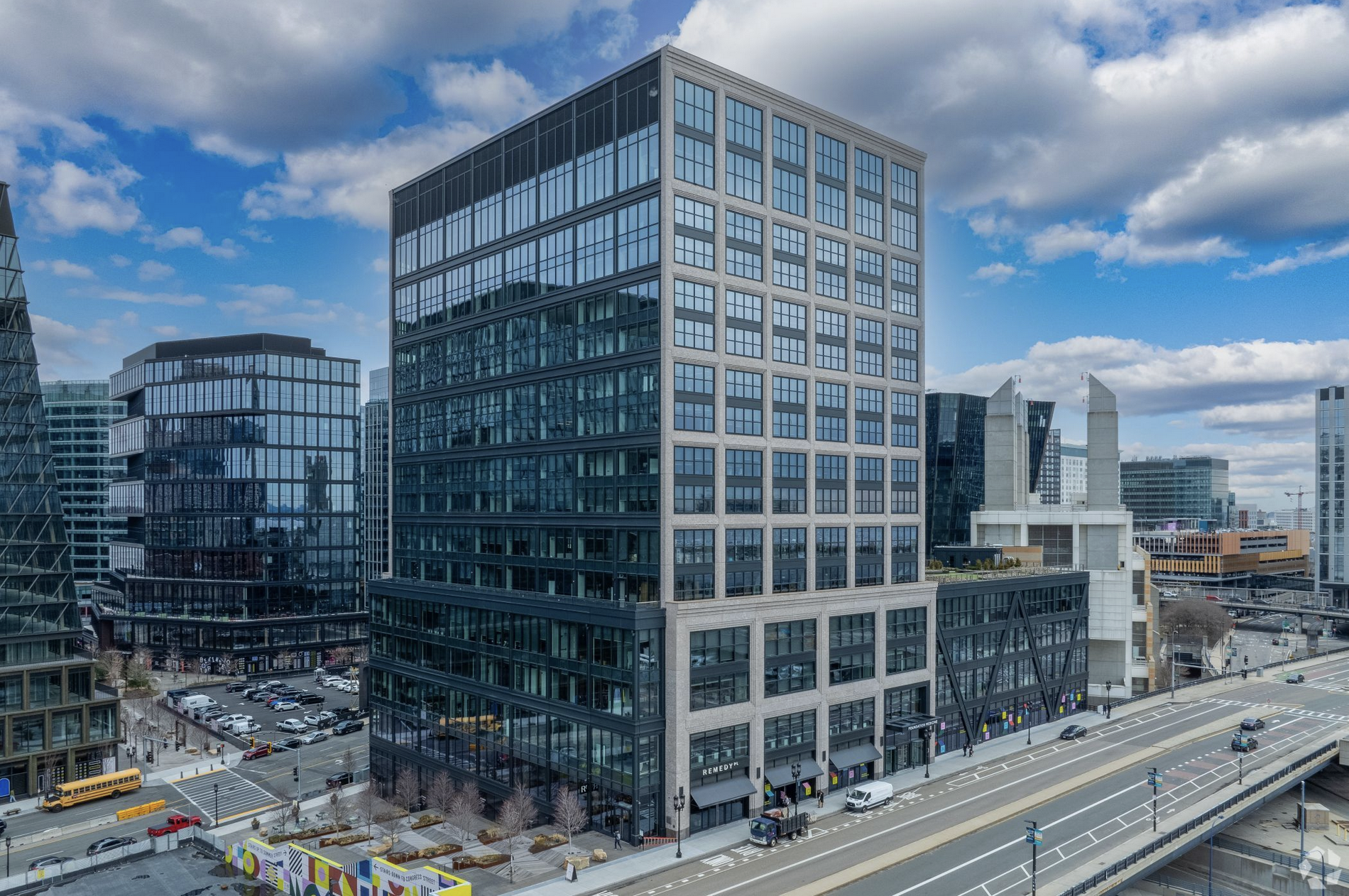
Rhode Islanders are mourning the loss of a leading manufacturer, Hasbro, which yesterday announced its departure from Pawtucket to Boston. Hasbro will share space in an ugly building (see photograph above), owned by WS Development, typical of Beantown’s Seaport District, which has nothing to do with the sea or with ports. The new address will be 400 Summer St, The building’s owner is WS Development, which also owns the Newport Ceamery in Cranston’s Garden City. The long-anticipated move, costing some 700 jobs, will elicit a massive groan from those counting on the strategy used to keep the toymaker – founded in Pawtucket a century ago – in the Bucket. It was the usual assemblage of state tax credit packages, or basically no strategy at all.

The silver lining in the dark cloud of Hasbro’s move is a warning: to wit, Rhode Island’s refusal to promote an attractive environment. Hasbro’s departure should refocus our attention on the pitiful architecture available for corporate relocation and redevelopment. Rhode Island is a state whose historical legacy was for decades supported by its historical architecture, which at the same time cemented its legacy as a beautiful place. That is, until the advent of modern architecture. Buildings that reflect the state’s historical legacy, which those do not, are not hard to erect. Rhode Island need only exert a piddling force of will and they will come. This corner has been a constant fount of advice urging such a strategy, which would pair the Ocean State’s leading features – its beauty and its history.  Historical beauty is our brand!

The first icon to go was the PawSox. Now Hasbro. Last one out please turn out the lights. What’s next, CVS? It is headquartered in Woonsocket. No hint yet of its ignominious departure (the definition of absquatulation in the headline above).

Posted in Uncategorized | 3 Comments

Hasbro absquatulates

400 Summer St., in Boston’s Seaport District, where Hasbro has chosen to relocate its headquarters building, along with 700 jobs. (Photo courtesy of CoStar News)

Rhode Islanders are mourning the loss of a leading manufacturer, Hasbro, which has announced its departure from its home of a century in Pawtucket, to Boston’s Seaport District, which, as a district, has nothing to do with the sea or ports. Hasbro will share space in an ugly building there (is there any other kind?) owned by WS Development. (WS Development owns the Newport Ceamery in Cranston’s Garden City, which has just been told to move out.) The long-anticipated move (of Hasbro), likely costing some 700 jobs, will elicit a groan from those dependent upon the strategy used to keep the toymaker in the Bucket: state tax credit packages, which was no strategy at all.

The silver lining in the dark cloud of Hasbro’s move, if it is perceived as such – which is highly unlikely – is a warning. To wit, the Ocean State’s continued refusal to promote an attractive, or even useful, environment has failed. Hasbro’s departure should push us to turn our backs on the pitiful architecture for corporate relocation and development. Rhode Island is a state whose historical legacy was for decades supported by its lovely historical architecture, until the advent of modern architecture. The Ocean State’s historical allure is its highest card in the high-stakes regional rivalry for jobs. Historical beauty is our brand. Buildings that reflect the state’s historical legacy are not hard to erect. We need only exert a piddling force of will to make the switch from ugly to beauty. I have been a constant fount of advice for decades here and at the Journal urging such a strategy.

The last time Hasbro was mentioned here was when rumors suggested that it would be relocating to the Industrial Trust (“Superman”) Building. Thankfully, we were spared that disaster. Can you imagine the hash Hasbro would have made of the Supe? Look at what Pawtucket has made of McCoy Stadium – a high school, actually a mashup of three high schools. But instead of the wilds of Pawtucket, it would have been in Kennedy Plaza, in downtown Providence. Yikes!

Rhode Island lost – essentially we gave the boot to – the PawSox several years ago. We have learned nothing. What’s next? CVS? Its headquarters is in Woonsocket. I have heard no whispering from thereabouts of its impending departure … yet.

Posted in Architecture, Art and design | 3 Comments

Save Newport Creamery!

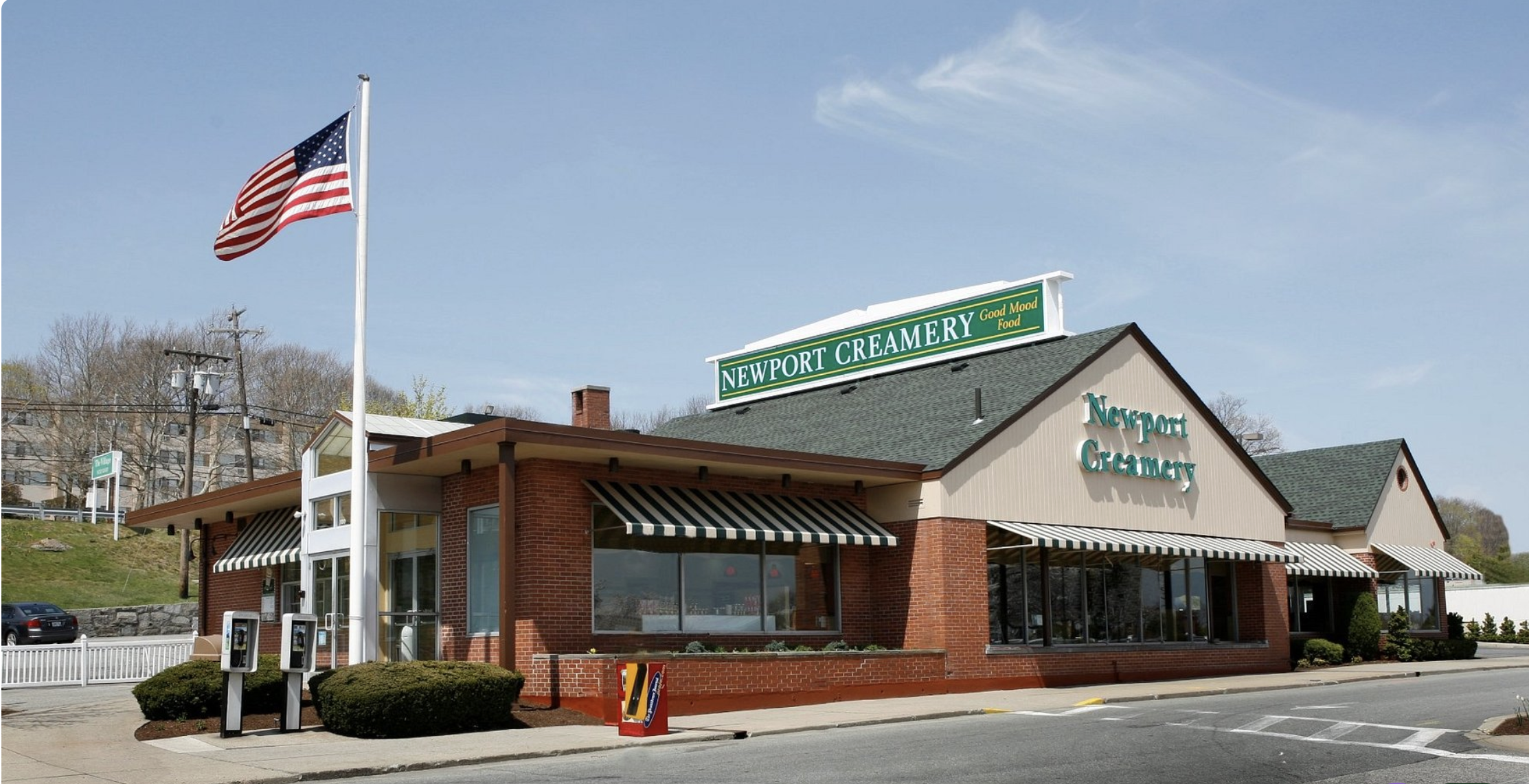
Newport Creamery, in Cranston’s Garden City Center. (Vrbo)

It has been widely noted of late and deplored that Cranston’s Newport Creamery is to be shut down. After 63 years across from the Garden City Center’s gazebo, the center’s owner, WS Development, has announced that the Cranston restaurant will be out of luck in 18 months, its lease terminated, and for no easily apparent reason.

Boo!

Boo times two!

The culprit here is vague. Some wonder whether WS wants to replace Newport Creamery with an Apple Store. No reply. Costco? Crickets. Nancy Thomas, publisher of RI News Today.com., seeking comment from WS, called and was asked to call back – not the reply of an enterprising entrpreneur. Could it be, as some suggest, a Ruth’s Chris steak house that is the target of the developer? “No excitement there,” groans Thomas under the topic of “Changing Times.”

Changing times? Well, history is nothing but an endless string of changing times. When are the times not a-changing? Most people wish the times would slow down, and one technique for accomplishing that, other than classical architecture, is Newport Creamery. The provision of high-quality institutions that remind you of the way things used to be. Newport Creamery provides such experiences in spades, and the one in Cranston is special, in part because of the gazebo. with its frequent popular musical performances. The Garden City Center is centrally located, easy to get to. The closest Newport Creamery to GCC is in the Smithfield Mall.

Yes, there are more Newport Creameries – eight in Rhode Island, including its second in Pawtucket, and two in nearby Massachusetts.

Newport Creamery was founded in Newport, in 1928, by Samuel Rector who opened a “Milk Bar” in a dairy on Van Zandt Avenue. It still does what it is good at. May its days in Cranston not be numbered. Public outcry at this commercial atrocity should swift and sure. Saving Newport Creamery will make time stand still in its tracks. Enjoy it.

Posted in Blast from past, Development | Tagged , , , , , , , , , , | 4 Comments

A White House ballroom

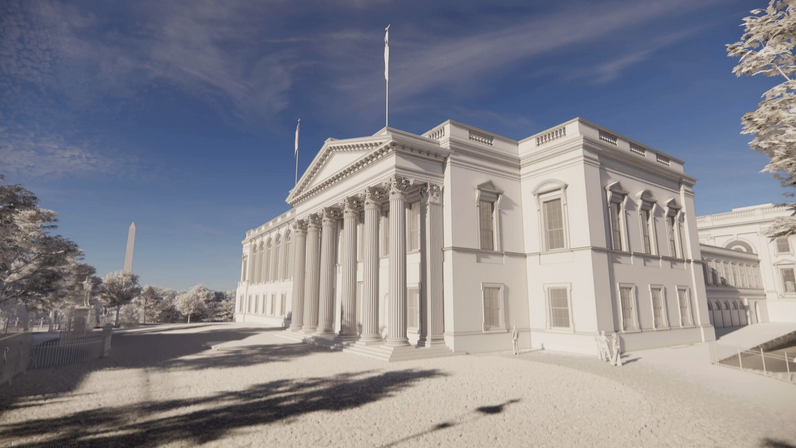
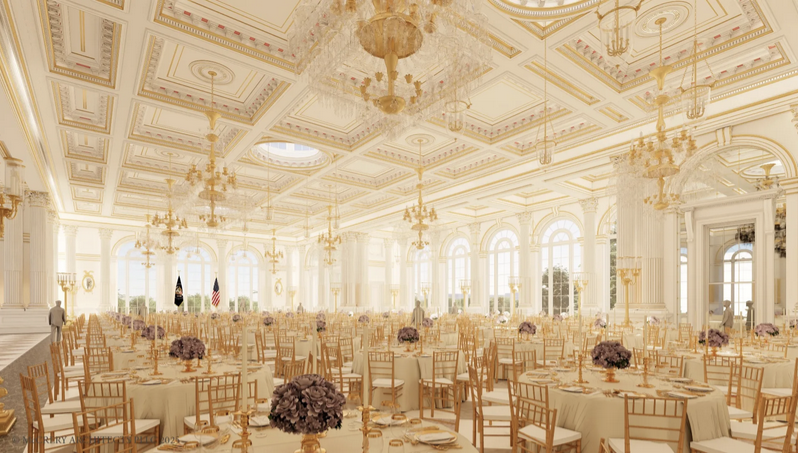
Recently poposed lstate ballroom, to be erected in a building separate from the main presidential installations (East Wing, etc.) at 1600 Pwnnsylvania Avenue. (images courtesy of McCrery Architects)

What we really need in this country, in the nation’s capital for god’s sake, is a grand new state ballroom to host White House guests – dignitaries foreign and domestic – presidents and such like – at yuge parties with a sumptuosity never before seen at the White House.

Whatever you think of Trump, the nation has long ago grown to a stature that calls for dinners, dances and events in a facility of this magnificance. America is clearly reaching out for that stature now. Such a facility has now been proposed. It will not only be good for whatever whim our dancer-in-chief might feel inclined to sport, but American taxpayers will not be required to foot the bill. Trump and other supermoneybags have, in the words of a White House press release, “generously committed to donating the funds necessary to build this approximately $200 million structure.”

Today the White House can host a party of only 200 invitees in a tent 100 feet from the White House entrance. The new ballroom, which will replace the East Wing and be built by McCrery Architects, of Washington, D.C., will host up to 650 people. “It has been untouched since the Harry Truman administration,” said McCrery of the East Wing.”I am honored that President Trump has entrusted me to help bring this beautiful and necessary renovation to The People’s House, while preserving the elegance of its classical design and historical importance.”

The White House chief of staff, Susie Wiles, said that the president “is a builder at heart and has an extraordinary eye for detail. The [p]resident and the Trump White House are fully committed to working with the appropriate organizations to preserve the special history of the White House while building a beautiful ballroom that can be enjoyed by future administrations and generations of Americans to come.”

The East Wing, originally built in 1902, was given a second story in 1940 and renovated or remodeled many times. At 90,000 square feet, the big new room will embrace the heritage and the classicism of the main complex – a style appropriate to presidential buildings. Their current resident’s gilded ego will, I trust, appear rarely if at all in the new building. (It may be expected that Trump’s overgilt style will be avoided by the architect.) James McCrery, has too much taste for that.

Trump has made clear in executive orders and other acts (including those of Congress) since the outset of his administration that he seeks to promote the growing New Classicism movement afoot in the nation today. The ballroom will be a good example of that, as the architect’s illustrations above and below suggest. The project is slated to begin in September and be completed well before the next presidential term,

So, in the words of the immortal Elton John, Saturday night’s all right for fighting. Let’s build this thing!

Actually I suppose, ahem!, they were the words of Bernie Taupin.
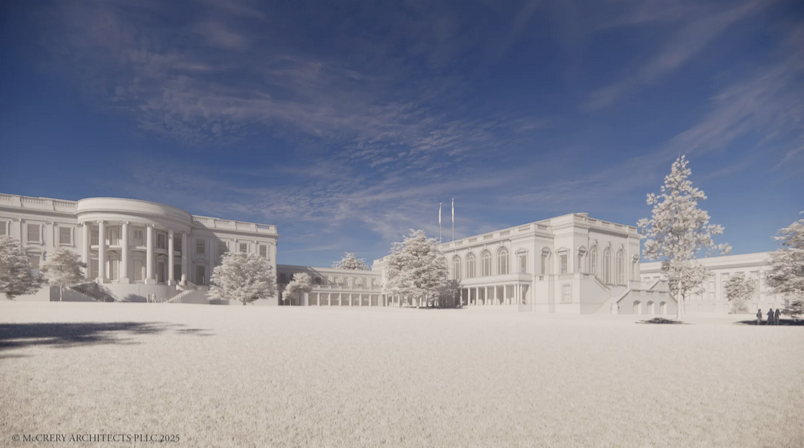
The proposed ballroom will be separate from most of the presidential complex.

Posted in Architecture, Architecture History | Tagged , , , , , | 6 Comments

Jane Austen on ‘improvements’

J. Austen’s ‘improvements’

I have come across in Jane Austen’s novel Mansfield Park an interesting passage in which she describes rival plans for improving a house in the “living” (meaning parsonage) of Thornton Lacey, a hamlet in the town of Northhamptonshire. They are not just rival plans, the plans are rivals for the affection of the novel’s protagonist, Fanny Price, who lives nearby and finds her cousin, Edmund Bertram, a potentially amiable match. Edmund is soon to take over as pastor of the village, a fate that faces Fanny with divided feelings – if that happens, she must live in the house under discussion between Edmund and Henry Crawford. Her feelings are decidedly undivided in her resistance to the fake romantic assault upon those feelings of Crawford, a recent guest at Mansfield Park who, unaware of Fanny’s true heart’s ambitions, is toying with her affections and has more ambitious ideas for how the parish house should be “improved.” (with someone else’s money, of course).

Here is the passage, with parts unrelated to the rival plans expurgated:

“Well,” continued Edmund, “and how did you like what you saw?”

“Very much indeed,” replied Crawford. “You are a lucky fellow. There will be work for five summers at least before the place is liveable.”

“No, no, not so bad as that. The farmyard must be moved, I grant you; but I am not aware of anything else. The house is by no means bad, and when the yard is removed, there may be a very tolerable approach to it.”

“The farmyard must be cleared away entirely, and planted up to shut out the blacksmith’s shop. The house must be turned to front the east instead of the north – the entrance and principle rooms, I mean, must be on that side, where the view is really very pretty; I am sure it may be done. And there must be your approach – through what is at present the garden. You must make a new garden at what is now the back of the house; which will be giving it the best aspect in the world – sloping to the south-east. The ground seems precisely formed for it. I rode fifty yards up the lane between the church and the house in order to look about me; and saw how it all might be. Nothing can be easier. The meadows beyond what will be the garden, as well as what now is, sweeping round from the lane I stood in to the north-east, that is, to the principal road through the village, must be all laid together of course; very pretty meadows they are, finely sprinkled with timber. They belong to the living, I suppose. If not you must purchase them. Then the stream – something must be done with the stream; but I could not quite determine what. I had two or three ideas.”

“And I have two or three ideas also,” said Edmund,”and one of them is that very little of your plan for Thornton Lacey will ever be put in practice. …”

As any reader can detect, Edmund has more modest plans for his living, plans that just happen to fit snugly along with Fanny’s plans for him. Crawford wants the parish residence to be fit for a man more ambitious than a mere parish priest. With half the book still to do, who’s willing to bet on the direction Fanny will eventually tilt (and probably already has)?

Posted in Uncategorized | Tagged , , , , | 6 Comments

David A. Mittell Jr.: R.I.P.

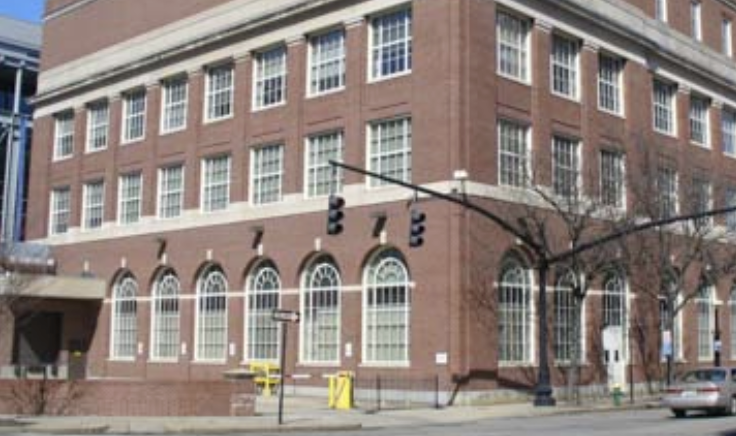
The Providence Journal Building, 1933- on Fountain Street, in downtown Providence. (Wikipedia)

I can find no other indication that David has passed away, beyond a phonecall from an even closer friend, to the effect that he passed away Thursday morning, age 82. David was a prolific editorial writer and columnist for the Providence Journal in the 1990s and the early 2000s, and other newspapers even before he was hired by the Journal. He was born in April 1943. Wikipedia is silent (so far). I will add more as the facts find their way to me. Here is a short piece that showcases some of his strongly held opinions about his colleagues and friends (among whom I think I may count myself even in the latter category), the Journal, and the practice of its particular arts:

Friends:

Today, the day after Labor Day, some 20 of my last, best former colleagues at The Providence Journal got the sack after 25 to 40 years of loyalty, diligence and skill. Most of them are writers who treated their subjects, their sources, their colleagues, the art of writing and the call of journalism lovingly – I know no other word to describe their methods.

     In the editorial office in which I worked from 1998 to 2008, a staff of 11 in the earlier year is down to two. Boilerplate shall rule. [The editorial department has since been eliminated.]    My grandfather was federal district attorney for Rhode Island under Presidents Hoover and Roosevelt. At six he had been terrified by his full-immersion baptism, and never willingly went to church again. It was said he didn’t believe in God, he believed in The Providence Journal! On April 9, 1960, at 84, he fetched The Journal from his stoop, took it inside and fell dead on the floor.  As Shakespeare put it in Julius Caesar, “the valiant never taste of death but once.” You and I, it seems, are fated to “die many times before [our] deaths” as witness to the tortured death of good reporting and to the ingratitude of little men for faithful reporters.

                                      –D.A. Mittell, Jr.
Posted in Art and design | Tagged | 2 Comments

David A. Mittell Jr.: R.I.P.

Providence Journal Building, Fountain Street, 1933- (Wikipedia)

I can find no other indication that David has passed away, beyond a phonecall from an even closer friend, to the effect that he passed away Thursday morning David was a prolific editorial writer and columnist for the Providence Journal in the 1990s and the early 2000s, among other newspapers even before he was hired by the Journal. I have been unable to discover the year of his birth. Wikipedia is silent (so far). I will add more as the facts find their way to me. Here is a short piece that showcases some of his strongly held opinions about his colleagues and friends (among whom I think I may count myself even in the latter category), the Journal, and the practice of its particular arts:

Friends:

Today, the day after Labor Day, some 20 of my last, best former colleagues at The Providence Journal got the sack after 25 to 40 years of loyalty, diligence and skill. Most of them are writers who treated their subjects, their sources, their colleagues, the art of writing and the call of journalism lovingly – I know no other word to describe their methods.

     In the editorial office in which I worked from 1998 to 2008, a staff of 11 in the earlier year is down to two. Boilerplate shall rule. [The editorial department has since been eliminated.]    My grandfather was federal district attorney for Rhode Island under Presidents Hoover and Roosevelt. At six he had been terrified by his full-immersion baptism, and never willingly went to church again. It was said he didn’t believe in God, he believed in The Providence Journal! On April 9, 1960, at 84, he fetched The Journal from his stoop, took it inside and fell dead on the floor.      As Shakespeare put it in Julius Caesar, “the valiant never taste of death but once.” You and I, it seems, are fated to “die many times before [our] deaths” as witness to the tortured death of good reporting and to the ingratitude of little men for faithful reporters.

                                      –D.A. Mittell, Jr.
Posted in Uncategorized | Leave a comment