The driverless car fiasco

Screen Shot 2016-05-27 at 9.52.26 AM.png

Driverless cars are fast becoming the next big thing, with timelines for their arrival collapsing at breakneck speed. They remind me of the Minions.

Craaashhh!

The website grist.org has an article by Katie Herzog called “No One Wants Driverless Cars Except for People Who Make Driverless Cars.” She reports on several polls suggesting that driverless cars are somewhat less popular than the wave they are riding.

People seem to be very impressed by the idea of a computer taking over from the human driver. Color me underwelmed. People forget that no manmade computer can match the intuitive driving intelligence of the human brain (actually a manmade computer, I suppose, but never mind).

To switch on the ignition and move out into traffic is to switch the brain into a gear that may perhaps use more subconscious survival techniques than are involved in any other human activity. For one thing, while driving a man or woman are in as much danger as they are likely ever to be in normal human life. The way we all make driving decisions without thinking about it is the brain at its best. A road full of cars operates with a degree of efficiency that no computer could match. The amazing thing about driving is not how many accidents there are but how few there are.

But take away that cognitive moment-by-moment creativity that is the act of driving a car and replace it with a computer – one that figures everything out in a split second based on algorithms triggered by sensors placed in strategic locations throughout the automobile. Factor in, as I suppose you must, that the car’s computer is programmed to obey all driving laws and regulations. Then quadruple the number of cars on the road because everyone will let their cars go do their errands for them. Then factor out the money spent on road maintenance now that fewer actual people will be driving, and the pressure on government to keep roads shipshape will decline.

With all that, imagine how fast the traffic will go. It will not speed up. It will slow down, slow down dramatically. Those who still do their own driving will be very frustrated by road sloth, the constant and constantly moving traffic jam. Some drivers might juke in and out of traffic, making life harder for the poor automated car’s computer, which will have to keep an eye out for these reprobates – and the pressure for laws to ban driving will increase.

Will the computers in cars be programmed to drive over to the side of the road if a deep pothole momentarily jolts their program out of alignment? What if one self-driving car is hit by another? Will they be programmed to exchange insurance data? I do not deny being frightened by the news that Google’s developers are contemplating a coat of glue so that pedestrians hit by driverless cars will stick to the fender rather than falling onto the road to be “bloop-blooped” by the guilty driverless car and those that follow it.

As an urbanist, I worry that injecting cities with thousands and even millions of driverless cars will bring such a wave of unintended consequences that prudence argues against it.

But no, I am not afraid of driverless cars. I’m sure that good sense will prevail before they hit the road. On the other hand, that good sense did not prevail when modern architecture – with its equally obvious monumental flaws – hit the road and took control more than half a century ago. Okay, I am scared.

After quoting sources pro and con, Katie Herzog ends her Grist piece with this home truth: “Besides, there’s already a vehicle out there that is cheap, green, and also lets you snooze through your morning commute: It’s called the city bus.”

Posted in Architects, Architecture, Art and design, Development, Urbanism and planning | Tagged , , , , , , , , , | 6 Comments

The vandals own the gates

Screen Shot 2016-05-26 at 11.21.12 AM.png

Here is sad news from sculptor Walter Arnold, who reports on an act of vandalism in Chicago. He writes:

Eric J. Nordstrom continues documenting the destruction of the Charles Sumner Frost-designed Public Life Insurance Building in Chicago. He took this photo in the past few days. He reports that the carved marble mantel, ornamental iron staircase and Bedford limestone façade are now in the landfill. nothing was salvaged and/or saved.

One need not have much imagination to guess what will replace the Public Life. I do not know. Maybe someone does. I’m not sure I want to know. Looking at the beautiful Ionic capital within the grip of the machine, I wonder how many decades of what goes by the name of creativity in modernist design would it take to match the creativity in the design of this one single capital? I don’t know. Maybe Walter Arnold can guess. I do not think such a calculation is humanly possible.

Here, from Russell Versaci, is more about the Public Life Insurance Building, its fate and its history, on the urbanremainschicago.com website.

Posted in Architects, Architecture, Architecture Education, Architecture History, Art and design, Preservation, Urbanism and planning | Tagged , , , , , , , | 3 Comments

Canada’s best new buildings

Screen Shot 2016-05-25 at 2.14.16 PM.png

Quebec City. (beta.qc.bluecross.co)

Here, in order of presentation in Canadian Architect, the journal of the Royal Architectural Institute of Canada, are this year’s winners of the biennial Governor General’s Medals in Architecture. No private houses here – this year’s program celebrates architecture “In the Public Interest.”

The article does not offer readers any photos of the winning structures, just links to specific articles detailing each entry. That gave me a few additional moments of potential joy during which to imagine that the next one I clicked on might be worth looking at. Alas, no such luck. Maybe it could be said that each is more regrettable than the one before, but it is difficult to “rank” in any real order the hodgepodge of entries here.

(I have placed a photograph of Quebec City atop this post as evidence of what Canada was once capable.)

Canada tries to copy the United States even as it seeks to express its distance from the yuge neighbor to the south. In the case of architecture – or at least the celebration of the best of architecture – Canada seems to be copying American practices. Canada is not alone in its failure to recognize that the profession and the industry of architecture is dragging the Maple Leaf down no less swiftly and no less certainly than Old Glory has been hag-ridden by architecture down here. Very sad.

As a service to the masochists among my readers I have besmirched this post with screenshots of the Governor General’s dozen 2016 laureates.

Screen Shot 2016-05-25 at 1.41.15 PM.png

Bridgeport Active Healthcare, Toronto, Ontario

Screen Shot 2016-05-25 at 1.42.18 PM.png

Cogeco Amphitheater, Trois Rivieres, Quebec

Screen Shot 2016-05-25 at 1.43.07 PM.png

Wong Dai Sin Temple, Markham, Ontario

Screen Shot 2016-05-25 at 1.44.14 PM.png

ArtLab, University of Manitoba, Winnipeg

Screen Shot 2016-05-25 at 1.45.06 PM.png

Glacier Skytwalk, Jasper National Park, Alberta

Screen Shot 2016-05-25 at 1.45.36 PM.png

Wood Innovation & Design Centre, Prince George, B.C.

Screen Shot 2016-05-25 at 1.45.57 PM.png

Ronald McDonald House, Vancouver, B.C.

Screen Shot 2016-05-25 at 1.46.29 PM.png

BC Passive House Factory, Pemberton, B.C.

Screen Shot 2016-05-25 at 1.46.51 PM.png

Regent Park Aquatic Centre, Toronto, Ontario

Screen Shot 2016-05-25 at 1.47.12 PM.png

Corporate headquarters, Caisse Desjardins, Levis, Quebec

Screen Shot 2016-05-25 at 1.48.02 PM.png

Nathan Phillips Square, Toronto, Ontario

Screen Shot 2016-05-25 at 1.48.32 PM.png

Central Library, Halifax, Nova Scotia

Posted in Architects, Architecture, Architecture Education, Architecture History, Art and design, Development, Other countries, Urbanism and planning | Tagged , , , , , | 3 Comments

Review of Siegel’s new book

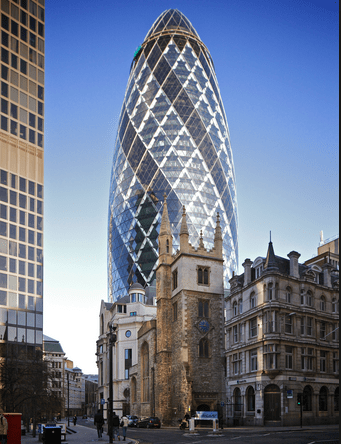
30stmaryaxe.pngCharles Siegel’s fascinating little book The Humanists Versus the Reactionary Avant Garde warmed my cockles with its picture of Norman Foster’s Gherkin – 30 St. Mary Axe, on Leadenhall Street – thrusting aggressively above a traditional London streetscape. I thought I would love this book. I do, in a general way, but along that way were many vexations, and my margins are filled with question marks and multiple exclamation points.

And, alas, while the photo on the cover is effective, it is not quite forthright. London is already overrun by modern architecture, and has been increasingly since Hitler’s Luftwaffe cleared acres and acres of land in central London for future development. Siegal probably had to search hard to find a picture of the Gherkin with a traditional streetscape to poke its head over.

I suppose when you are about to shove an entire design philosophy out the window, it is natural as a parting shot to say something nice about your victim. Siegel credits modernism with having originally been motivated by social concerns – better worker housing and that sort of thing. Such fantasies are natural given the ubiquity of the modernist propaganda in which we are all marinated. But, first, if they ever truly existed at all, such motives were secondary to the founding modernists’ hatred of traditional architecture, and their careerist goal of supplanting it. And second, the claim that modernist architects wanted to improve society – who doesn’t say that? – tilts Siegel’s perception of the history of architecture in ways that awkwardly twist his humanist prescription for architecture going forward.

The main problem with Siegel’s confrontation between modernists and humanists is that he puts too much stock in what might be called “program.” Buildings do not have feelings and even the conveyance of their designers’ feelings through symbolism is attenuated at best. Anyway, even at the top of the professional ladder, building designers generally are architects and placemakers, not political or moral philosophers. Using his term “avant gardists” for modern architects, Siegel writes:

Avant gardists claim that, because their architecture is futuristic, it is politically progressive, while traditional architecture is conservative. To make our architecture relevant to the key political questions of our time, we need to reject this idea. In today’s technological society, the modernists support the status quo while the humanists are working for social change.

While certainly a nugget of truth resides in that passage – modernists do indeed support the status quo – such an equation is fraught with confusion. Modernists do support the status quo, at least in architecture, but their social agenda is progressive as well. Their journals and conferences are filled with worrying about how architecture can do a better job helping to correct the ills of society. And modernists are not wrong to paint traditional architecture as conservative. It does look backward, yes, but its gaze is directed to finding a more humanist (to use Siegel’s word) way forward. Whether traditional or modernist, architects focus on designing a better building rather than a better society. Social philosophy is above their pay grade; anyway, they naturally assume that a better building trends to a better society.

The point is that all of these labels confuse more than they enlighten, and in the process they risk alienating the humanists’ greatest supporters, most of the general public, which includes many “conservatives,” be they political or aesthetic. They will be and should be offended by Siegel’s tarring them as against positive change. He confuses the world financial elites, whose brand is modern architecture, with your average conservative, many of whom (as we’ve seen) are against the status quo. There are as many conservatives as liberals in the preservation movement, the new-urbanist movement, the maker movement and various slow this or slow that movements.

Don’t get me wrong. Siegel is on the right path in his analysis of the history of architecture, his description of the errors of modernism, and his prescription for a more humanist architecture going forward. But his tendency to give the modernists credit they do not deserve for social concerns translates into an error of analysis. He argues that modernists’ rejection of ornament symbolized its social concerns, and having embraced that fallacy, he condemns any but attenuated ornament in traditional buildings – historical or contemporary – as inauthentic, even dishonest. Siegel seems to have become enmeshed in the modernist propaganda, “catch phrases” used by modernists to dismiss traditional architecture, which he slices up with such relish elsewhere. The following passage sums up the major flaw of his otherwise very perceptive book:

[M]any of today’s traditional architects also use historical styles dishonestly, for decorative affect, without any larger social meaning.

He deploys this critique constantly throughout the book, and it does get tedious, especially as he seems to ignore it toward the end where he praises individual contemporary classicists such as Quinlan Terry, whose work sings the glories of ornament as intrinsic to architecture.

Abetting this curious lapse, Siegel notes early in the book but then ignores the findings of theorists such as Christopher Alexander and Nikos Salingaros. Their neurobiological research identifies ornament as the modern-day equivalent of information that primitive man needed to survive. We do not need anymore to watch for the twitch of a leaf that heralds the tiger lurking behind a bush, but ornament satisfies a deep craving that still resides in our subconscious mind. Instead of warning us of danger today, embellishment enchants us. It soothes our savage breast. The lack of decoration in modern buildings is why so many consider them boring and, often, disconcerting.

Classical and traditional architecture serves the public weal not because its buildings or their designers have a more progressive political agenda than modernist buildings. They create a civilized setting for human discourse in both public and private places because that is what they do – what they evolved over thousands of years to do, using the best methods achieved through trial and error and handed down by generations of builders and architects. Alexander, Salingaros and others understand this subtle play of good design on public consciousness. It is perhaps best stated by Roger Scruton in The Classical Vernacular.

The behavior of classical buildings and streets conduces to civilized conduct in public and private life. Modern architecture may be responsible, literally, for some of the chaos and breakdown of structures in society today, on the march for half a century. It promotes instability, ugliness and alienation, undermining stability and killing beauty wherever it has been built.

Charles Siegel offers a virtuoso description of the state of architecture today, upon which sits the fulcrum of future possibility, threatened by the present and encouraged by a deeper past. He boldly and persuasively debunks the myths of modern architecture. Notwithstanding my picayune objections, The Humanists makes a valuable contribution to the discourse that will ultimately lead to a more humane architecture – and world.

[Last month, Robert Steuteville wrote a more comprehensive review, A Human-Centered Architecture for Our Time, of The Humanists Versus the Reactionary Avant Garde at CNU’s Public Square. Here, in “The reactionary avant-garde,” are my first thoughts about the book and Steuteville’s review.]


Posted in Architects, Architecture, Architecture Education, Architecture History, Art and design, Development, Other countries, Preservation, Urbanism and planning | Tagged , , , , , , | Leave a comment

Bad trad betters bad mod

Screen Shot 2016-05-22 at 11.42.32 PM.png

Rendering of Best Western hotel proposed for downtown Providence. (Journal)

Another modernist building for Providence? Ugh! Here we go again.

I could throw up my hands and settle with a sigh. After all, the crossroad that would host more blight, Washington Street and Service Road 7, is already marred by the Providence Public Safety Complex – the “Shades Building,” so called for the two plate-glass windows on either side of its glass snout, which looks for all the world like the nose of an officer of the law, the one that just got out of his car to ask you to show him your I.D. and registration.

So why not plop a Best Western at that intersection? Misery loves company.

That was my reaction, almost, last Friday when I saw the above rendering with Providence Journal reporter John Hill’s story “Best Western planned for Providence site.”

But it does not cost any more to build a hotel that strengthens Providence’s historic character, even minimally, than to build one that must weaken it significantly. Bad trad is no more expensive to build than bad mod. By bad modernism I mean a building that cuts corners with glass and steel curtain wall no more expensive to buy off the rack than bad mod’s panelized brick and mortar with prefab shutterized fenestration.

Both would go equally well on Jefferson Boulevard. But in fact bad trad, while just as cheeesy, fits better into Providence’s traditional historic fabric than bad mod. The city should strive to strengthen its historic character. Beauty is one of Rhode Island’s few competitive advantages. Even a small boost in both is far better for the city and the state than its alternative.

And actually, it appears that some members of the City Plan Commission are queasy about the design. Toward the end of his story, Hill writes:

The hotel’s exterior decor is also being examined. Its designed front, which will face away from the highway, features a wide blue ribbon-like band lighted from within that runs along the roof and then descends down the front of the building like a glowing column. City officials requested more information about how the lighted front would affect the neighborhood to the west and how the side facing the interstate, which will define it to travelers, would look.

Some at the commission meeting were concerned that the lighted band could be excessive and others worried that it might not fit with the rest of the neighborhood. City Plan Commission Chairman Christine West, an architect, said the city needed to be open to new design ideas.

Might not fit into the neighborhood! Heaven forfend! West’s idea of “new design ideas” is about half a century old, and while Providence has far less of it than most cities, it still has more than it deserves. But we’ll not hold that against her. She is an architect.

“I feel that we see worse architecture sometimes through somebody trying to fit in and doing it badly,” she adds, “than somebody just taking a risk at doing something new that reflects the time we live in. So I think it’s subjective.” In what conceivable way does this design do something new that reflects the time we live in? I guess we’ll have to seriously agree to seriously disagree.

To be sure, many classical theorists believe that bad trad is a bigger enemy to the classical revival (or the continued emergence of any new traditional architecture). I think they are wrong about that, but in any event bad trad fits into a traditional setting better than bad mod (or good mod, for that matter). It may not fit well, and it ought to be “upgraded” to good trad. After all, the police/fire headquarters has already degraded the context. It may be reliably assumed that the congregation of the lovely church just south of the proposed hotel, on Dean Street, will not be pleased at the next step in their neighborhood’s decline.

Both the hotel now scheduled to rise over the Brutalist Fogarty Building on Fountain Street and the hotel apparently also moving forward on Parcel 12 near Burnside Park have seen their designs move from bad mod to bad trad – in the first case – and from really bad trad to fairly bad trad in the second. It is not impossible for design review in Providence to make things better. The Best Western should also head in that direction.

As architectural historian Steven Semes, author of the pathbreaking The Future of the Past, might say, you’ve got to start rolling back modernism’s erosion of city streets somewhere.

Screen Shot 2016-05-23 at 8.33.17 AM.png

Providence Public Safety Complex. (idighardware.com)

Posted in Architecture, Architecture Education, Architecture History, Art and design, Development, Providence, Providence Journal, Urbanism and planning | Tagged , , , , , , , | 8 Comments

Cafe Pushkin comes alive

wikimapia.org.png

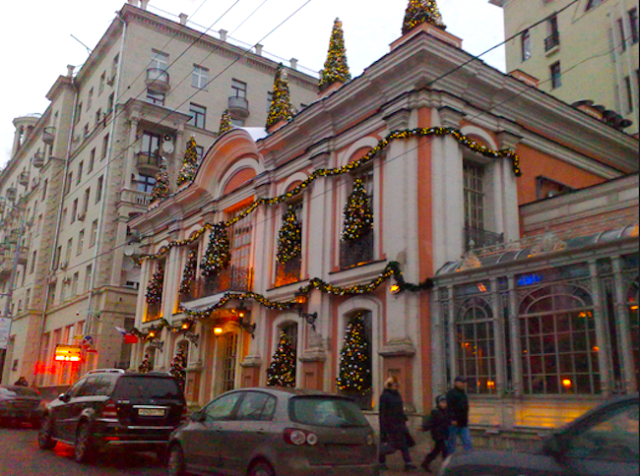
Cafe Pushkin, in Moscow. (wikimapia.org; cannot credit photos below)

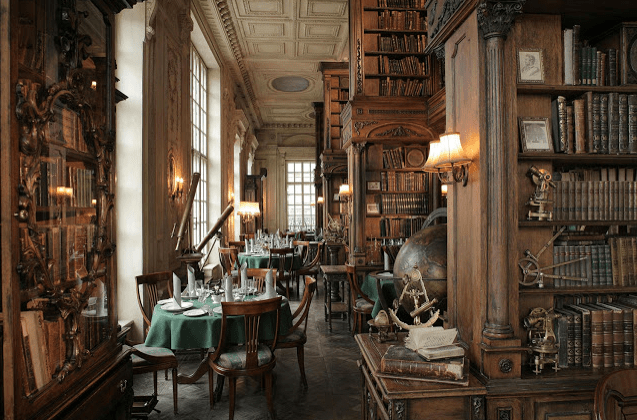
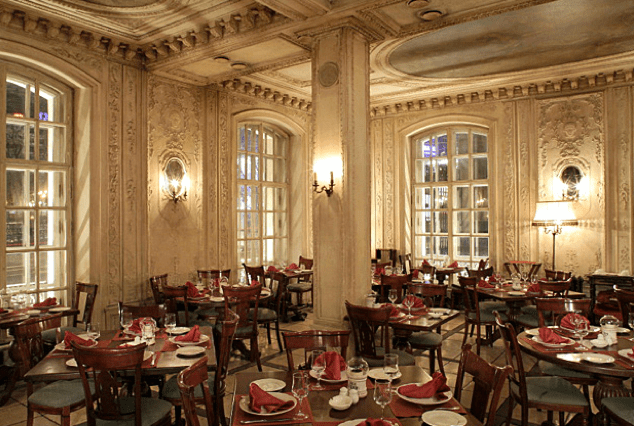
No doubt inspired by photographs of mahogany antiques crammed with romantic abandon into a lovely building in downtown Providence (see my post “Tilden-Thurber memories“), Malcolm Millais, author of Exploding the Myths of Modern Architecture, has sent me a tale, in Portuguese, on Café Pushkin, in Moscow. Here is the text, translated into English via Google:

For over 50 years, the legendary French singer Gilbert Bécaud visited Moscow. When he returned to Paris after one visit, he wrote the song “Natalie” and dedicated it to his Russian guide.

The song says something like, “We walked around Moscow, visiting Red Square, and you say to me that you learn things about Lenin and the revolution, but I just wish we were at the Café Pushkin, looking at the snow outside, drinking hot chocolate and talking about something completely different … ”

The song became incredibly popular in France and all French tourists who came to Moscow tried to find the famous “Café Pushkin.” But they never found it since it exists only as a poetic fantasy in Bécaud’s song.

But in 1999, his poetic fantasy became reality when Russian artist and restaurateur Franco Andrei Dellos and chef Andrei Makhov opened the Café Pushkin in a historic baroque mansion on Tverskoy Street.

And the most fantastic part of this story?

Bécaud, the French singer who inspired it all, sang “Natalie” at the opening of the restaurant.

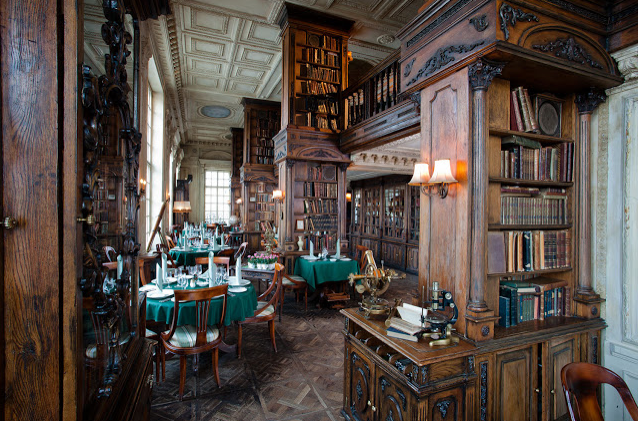
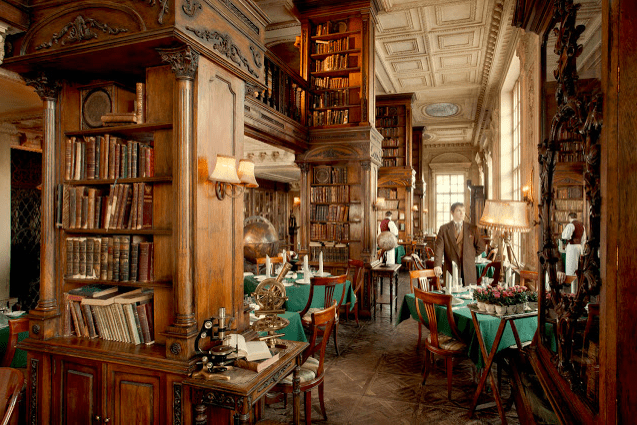
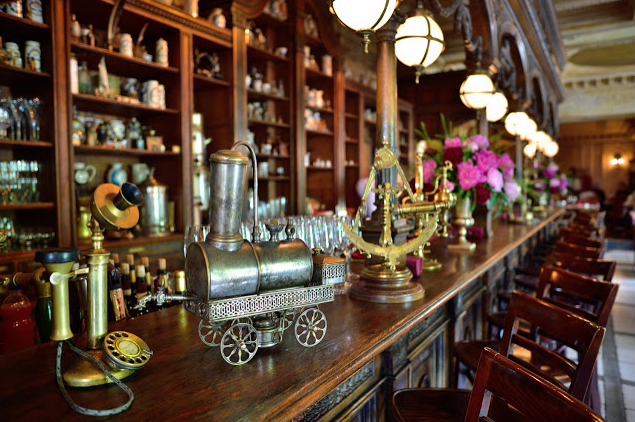
But now marvel at the interior and all the details of this absolutely fantastic breakfast restaurant.

What a beautiful story! And – finally – what a beautiful place!

[An article in 2011 announced a Café Pushkin scheduled for New York City, though Time Out reported the “oligarch theme park” had closed in 2012.]

Screen Shot 2016-05-22 at 3.04.50 PM.png

Screen Shot 2016-05-22 at 3.05.03 PM.png

Screen Shot 2016-05-22 at 3.05.19 PM.png

Screen Shot 2016-05-22 at 3.05.36 PM.png

Screen Shot 2016-05-22 at 3.05.49 PM.png

Screen Shot 2016-05-22 at 3.06.03 PM.png

Screen Shot 2016-05-22 at 3.06.21 PM.png

Posted in Architecture, Architecture History, Art and design, Books and Culture, Interior Design, Other countries, Preservation, Uncategorized, Urbanism and planning | Tagged , , , , , , , , , , , , | 2 Comments

Tilden-Thurber memories

Screen Shot 2016-05-21 at 10.33.48 AM.png

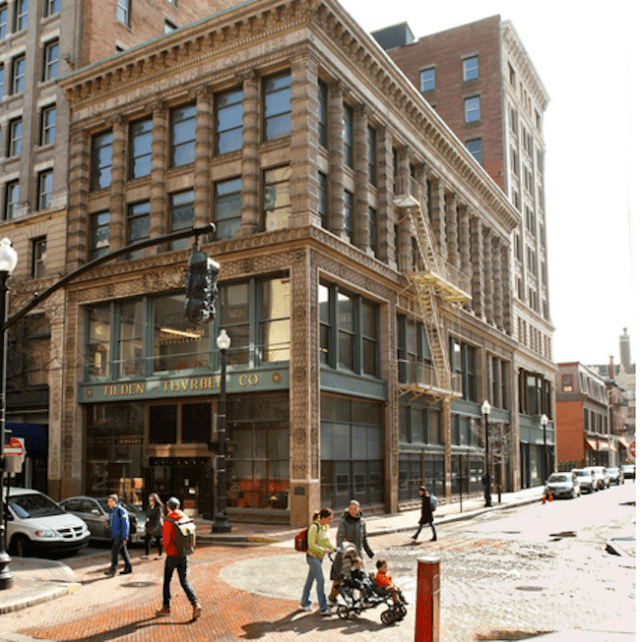
Tilden-Thurber Building. (Sandor Bodo/Providence Journal)

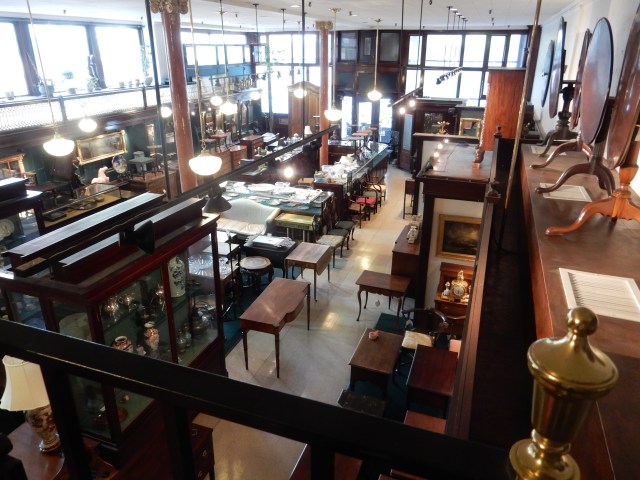
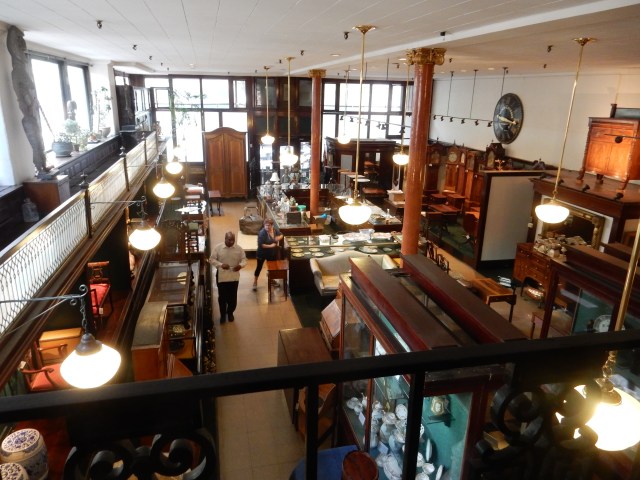
The Tilden-Thurber Building, erected in 1895, designed by Shepley, Rutan & Coolidge, of Boston, was sold last week but remains, so far as I can tell, as it was built, inside and out. Stanley Weiss, the local developer and fine antique furniture impresario, sold it to former mayor and longtime developer Joseph Paolino. “Providence’s historic Tilden-Thurber building sells for $712,000,” said the headline in the Providence Journal. That sounds like a tiny amount for so great a monument to the beauty of architecture in its heyday.

Here is a line from the downtown survey by the Rhode Island Historical Preservation & Heritage Commission: “4-story masonry building with classically inspired detailing including original stone pier-and-spandrel system on first and second stories with plate-glass and metal infill, colossal engaged and rusticated columns and quoined corners on third and fourth stories, broad Ionic entablature and ornate bracketed cornice; handsome, little-altered mahogany-cased interior space.” Gorham silver was on display here long after the firm evaporated.

The deal included side arrangements that may render the price meaningless. Paolino also bought Weiss’s mansion on Prospect Street, bought him a house on Pratt Street (which Weiss says will be renovated by Friedrich St. Florian, who designed the modernist house next door), and sold him a warehouse on Fourth Street for his massive collection behind the Festival Ballet Providence dance studio. The current tenant, a bike shop, will move elsewhere.

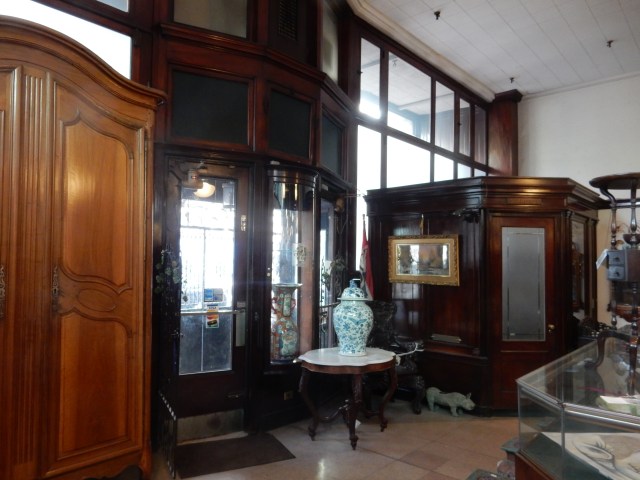
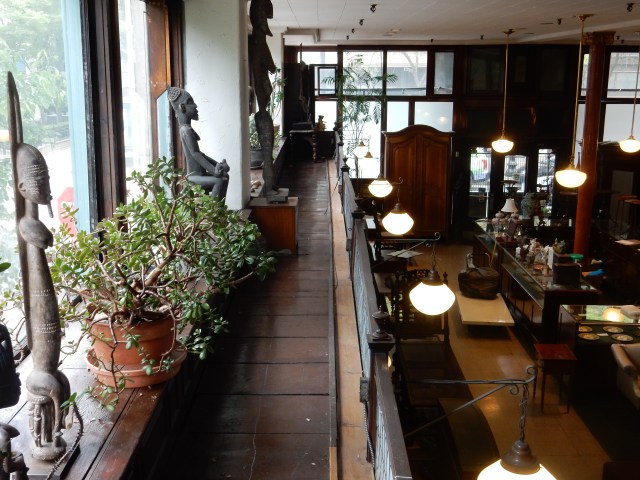
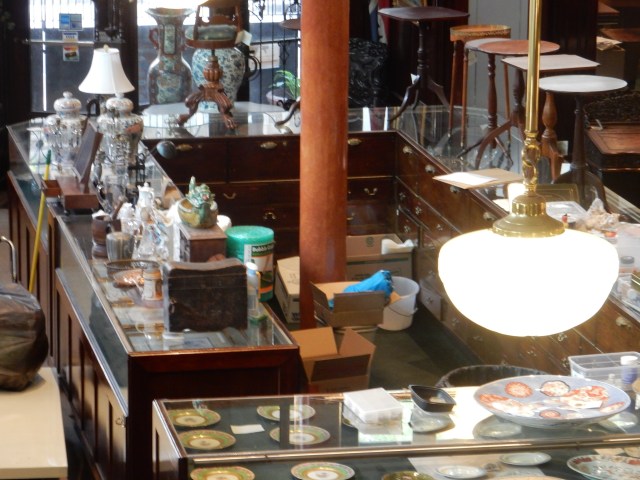
All that is neither here nor there. Who knows what will happen inside the building. A coffee shop on the ground floor? Offices upstairs? I hear but I don’t know. Weiss had the best office in the city, on the second story, whose huge plate-glass windows look out upon Grace Church across Mathewson and, kitty-corner, Grace Park at Freeman Square (or vice versa), a site he developed as the ritzy Hotel Providence. Its piazza is as close to European urbanism as it gets in Providence – which is, frankly, very, very close in many stretches of downtown. Weiss says his business is mainly catalogue sales to wealthy collectors from around the world, so he has not needed this elegant space for years. No doubt hesitant to leave it, he has been there for almost a quarter of a century. Because he has done so much, I have written about his activities for almost as long, and spent more than any man’s fair share of time in that office and in the magnificent showroom below.

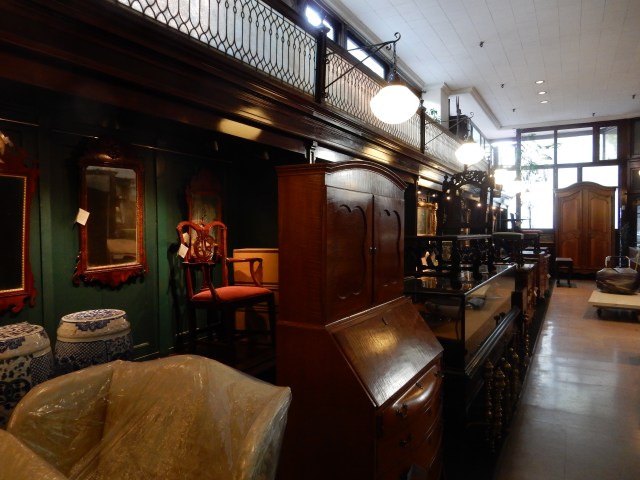
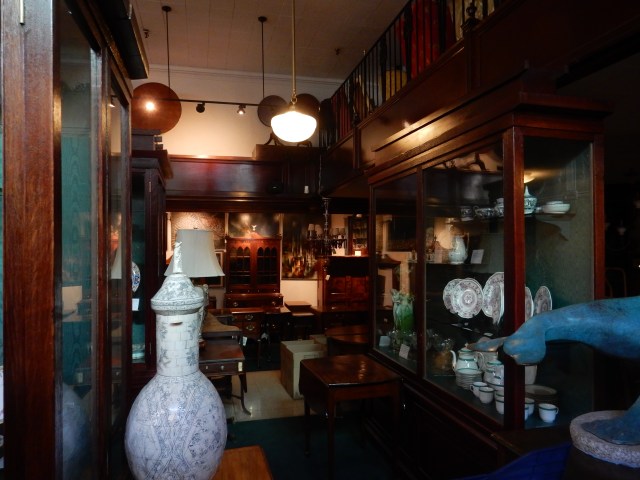
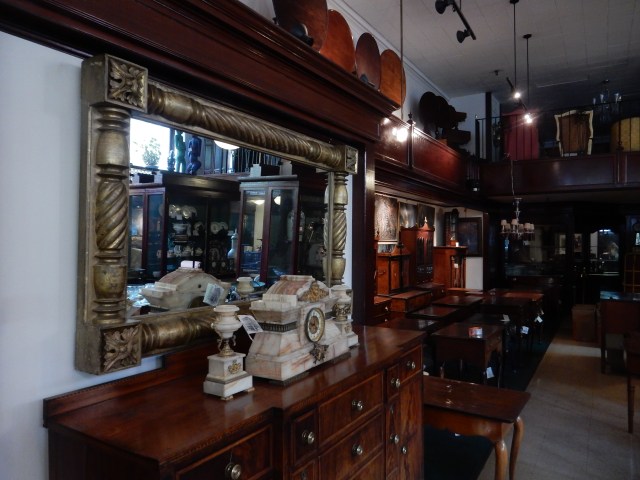
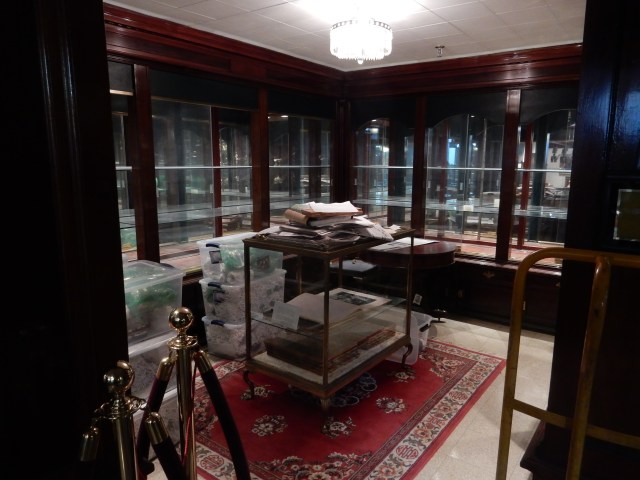
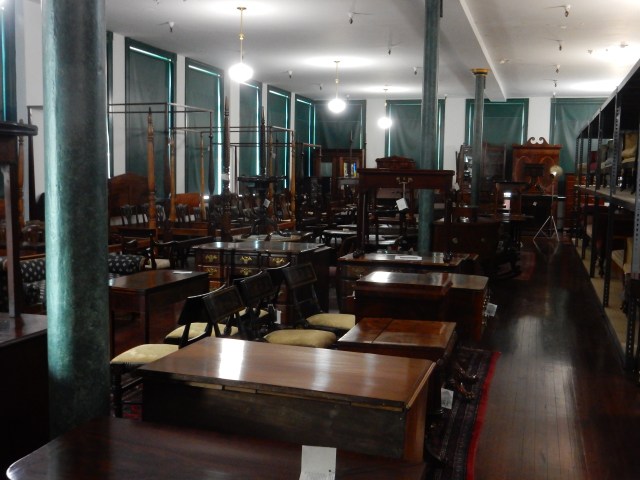
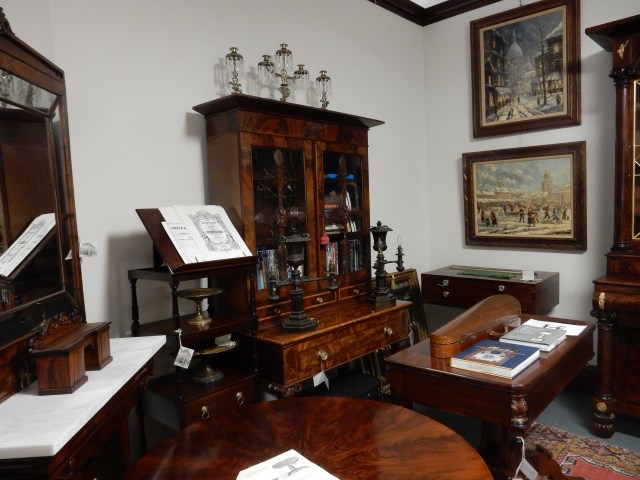
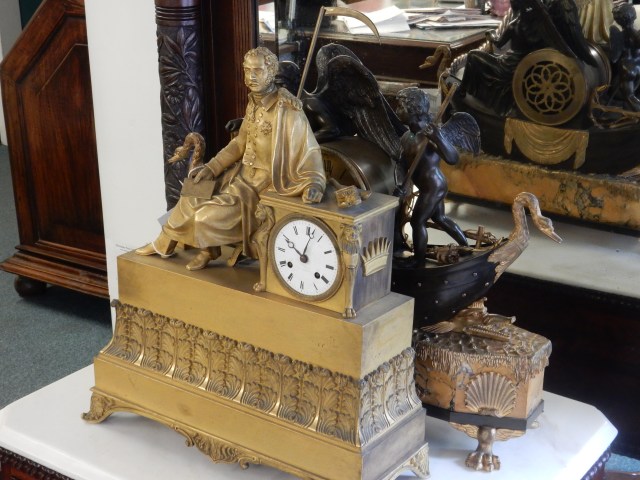
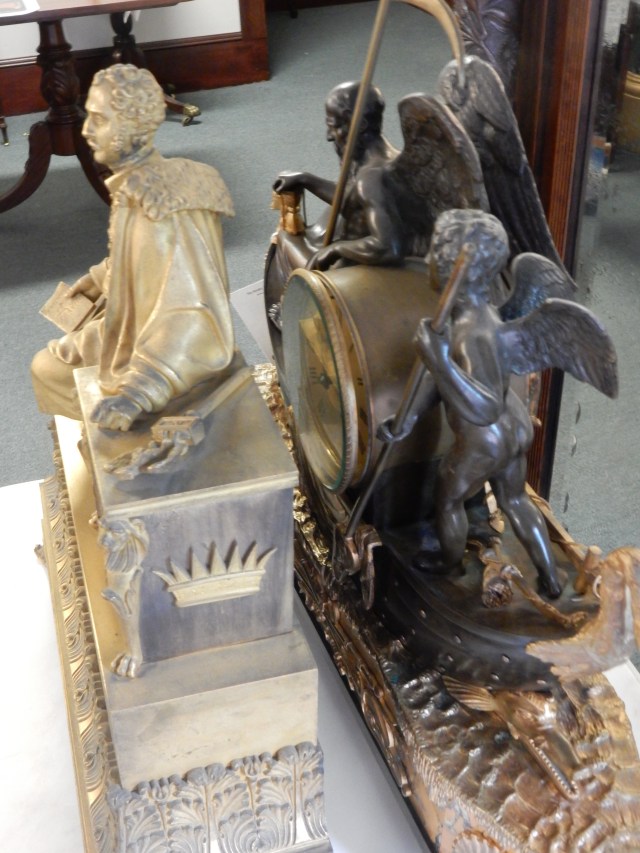
But even if Paolino rents to new tenants with excellent taste in preserving the space and decorating it with rare sensibility, the interior cannot live up to the look of its recent past. Tomorrow it will be gone, but today it still takes much of its beauty from the collection of antiques crammed with a certain grace into the large rooms. Below are some shots taken in a spirit of joyful mourning, and blessed memory, before the advent of the men in vans.

DSCN0480.JPG

DSCN0475.JPG

DSCN0476.JPG

DSCN0477.JPG

DSCN0478.JPG

DSCN0483.JPG

DSCN0481.JPG

DSCN0526.JPG

DSCN0484.JPG

DSCN0485.JPG

DSCN0486.JPG

DSCN0490.JPG

DSCN0494.JPG

DSCN0532.JPG

DSCN0496.JPG

DSCN0497.JPG

DSCN0499.JPG

DSCN0502.JPG

DSCN0504.JPG

DSCN0505.JPG

DSCN0507.JPG

DSCN0512.JPG

DSCN0479.JPG

DSCN0516.JPG

DSCN0518.jpg

DSCN0520.JPG

DSCN0523.JPG

DSCN0525.JPG

DSCN0535.JPG

Posted in Architects, Architecture, Architecture Education, Architecture History, Art and design, Books and Culture, Development, Interior Design, Photography, Preservation, Providence, Providence Journal, Urbanism and planning | Tagged , , , , , , , , , , , , | 14 Comments

Photos of South Main St.

DSCN0544.JPG

***

Spent some time this afternoon along South Main Street, parallel to the Providence River between downtown and College Hill. Had camera, did shoot. To set the scene, in the shot at the top of this post, looking north along South Main, Old Stone Bank and the Joseph Brown House are left of center, with the tower of the Providence County Superior Courthouse rising at top center beyond the dome of Old Stone.

***

DSCN0469.JPG

DSCN0470.JPG

DSCN0559.JPG

DSCN0548.JPG

DSCN0549.JPG

DSCN0567.JPG

DSCN0546.JPG

DSCN0555.JPG

DSCN0551.JPG

DSCN0556.JPG

DSCN0574.JPG

DSCN0547.JPG

DSCN0563.JPG

DSCN0562.JPG

DSCN0571.JPG

DSCN0570.JPG

DSCN0564.JPG

DSCN0565.JPG

DSCN0569.JPG

DSCN0568.JPG

DSCN0566.JPG

DSCN0572.jpg

Posted in Architecture, Architecture Education, Architecture History, Art and design, Photography, Preservation, Providence, Urbanism and planning | Tagged , , , , , , | 1 Comment

Miniatures, near and afar

Screen Shot 2016-05-19 at 2.47.49 PM.png

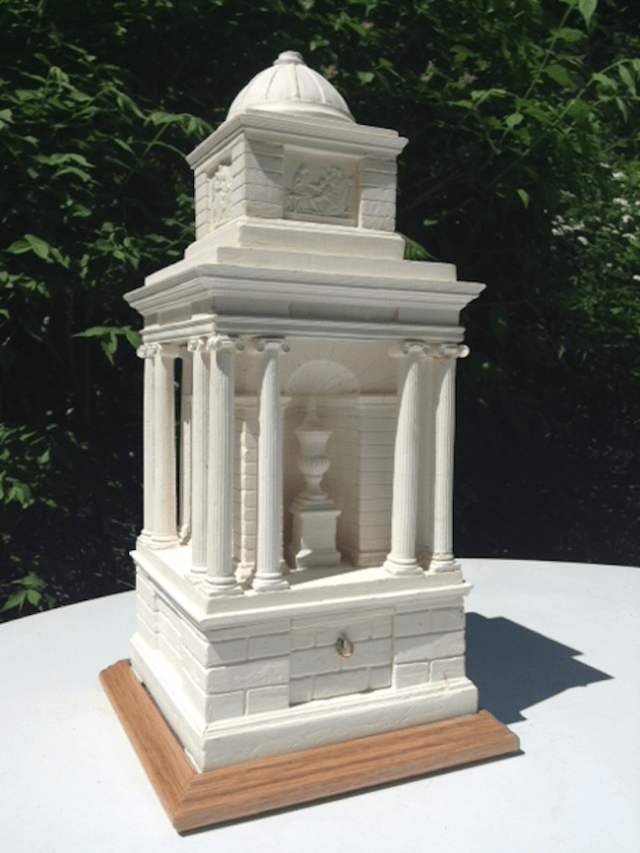
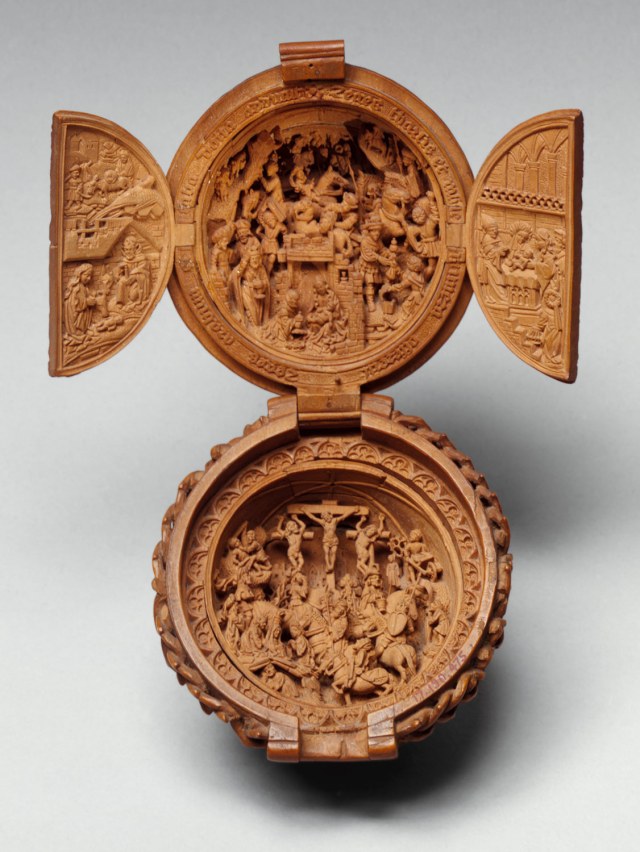
Clay Fulkerson, designer and sculptor of miniature temples, sent me a photo of his latest temple, a Baroque incense burner, shortly after I posted a video of pencil lead sculptures by Salavat Fidai, which elicited from Andrew Reed a photo he took at the Metropolitan Museum of Art of a Dutch rosary bead carved from boxwood, circa 1500.

Of his latest temple confection, Clay writes:

This is another incense burner, the incense cone being placed in the drawer in the base. Smoke rises through the oculus in the dome. As I mentioned before, it seems I’m moving from purely classical structures into the realm of the baroque, the English baroque in particular.  My newest designs are original, but inspired by (who knows how many) structures I’ve seen in my travels, in books and online.

Andrew, on the other hand, sent along with the photo of the rosary miniature along with the museum’s text for its exhibit:

Date: 1500–1510

Culture: South Netherlandish

Medium: Boxwood

Dimensions: Diam: 2 1/16 in. (5.2 cm)

Classification: Sculpture-Miniature-Wood

Credit Line: Gift of J. Pierpont Morgan, 1917

Accession Number: 17.190.475

Rosary beads, miniature altars, and other small devotional objects produced in Brabant in the early sixteenth century inspire awe by the detail and minuteness of their carving. Produced in relatively large numbers, these rosary beads were carved of many pieces of fine-grained boxwood that were then fitted together, presumably with the aid of a magnifying glass. On the outside of this bead is the crown of thorns among pierced Gothic arches and circles accompanied by biblical inscriptions. The upper interior depicts Adam and Eve and the tree of knowledge when closed; when opened, a triptych is formed, with depictions of, on the left, the Journey to Nazareth and the Nativity; in the center, the Journey with the Adoration of the Kings in the background; and, on the right, the Presentation and the Offering of Doves. In the lower half is the Crucifixion with ancillary scenes of the Agony in the Garden and Peter cutting off the ear of Malachus.

Amazing.

Speaking of which, view more of Clay’s work on my post “Ancient temples on parade” about his exhibit last November at Cranston’s William Hall Free Library – itself a classical gem.

hb_17-1.190.475.jpg

Posted in Architecture, Architecture Education, Architecture History, Art and design, Books and Culture, Uncategorized | Tagged , , , , , , , , | Leave a comment

A job for new bridge group

Screen Shot 2016-05-18 at 6.02.51 AM.png

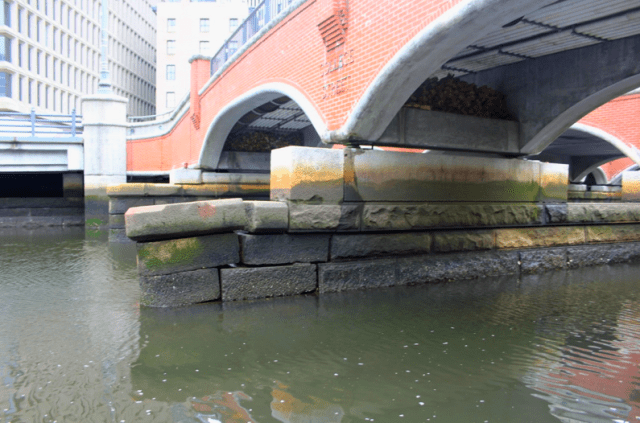
Deteriorated abutment of south pedestrian span of College Street Bridge.

The Providence Journal reports that a new organization, Building Bridges Providence, has been formed to push for progress on the long-delayed pedestrian bridge to connect the I-195 development land and its two parks on either side of the Providence River.

That bridge is now not expected to be complete until late 2018, assuming no further delays in its schedule. Building Bridges Providence will throw a party near the end of May to raise public support for the bridge. Its advocates may not be aware, or may prefer to ignore the fact that the bridge’s modernist “unbridge” design is a factor in undermining the public’s support for its construction, along with its constantly increasing cost.

What the group ought to do is to propose its redesign in the guise of further “value engineering” so that the bridge will cost less and look more like the originally proposed bridge – which was jettisoned even though (or perhaps because) it would have fit into the historical context of Providence far better than the current design. Then the group should urge the governor to ask the various developers of the 195 land to put their proposed buildings – all of them are modernist contradictions to the character of Providence, all of them erode its “brand” – through a similar redesign process.

In the meantime, the group has a more immediate task. It should push the city and state to fix the College Street Bridge, which is falling apart. A source of mine, well situated to observe the inner workings of design, development and construction in the city, warns of deterioration that can be seen by anyone who cares to look under the bridge. He writes:

The College Street Bridge is supported by a stone abutment, with large stones mortared together. The mortar is washing away, due to either poor specifications or shoddy workmanship, and abetted by incompetent oversight at the Rhode Island Department of Transportation. The mortar that is washing out will threaten the structural stability of the bridge within (my guess) 10 years. This is a big deal, and it will be costly and difficult to repair.

If you look at the bridge at low tide, you will see that the capstones on the upriver side have washed away. The capstone on the downriver is side is sliding off, since the stone below cracked as the mortar supporting it washed out. As the mortar washes away, the abutment will not be able to support the weight of the bridge, and the bridge will become a very picturesque ruin.

The abutments of the Crawford Street Bridge just to the south are holding up better. Washington and Steeple Street bridges have cast concrete abutments, and they show no deterioration. The exposed abutment wall supporting 12 WaterFire embrasures may have similar problems but will not be as costly to fix.

Memorial Boulevard, which was designed with a 40-ton weight limit, is now restricted to 15 tons. The only way a truck driver would know that is to burrow deep into the website of RIDOT, since the agency has not seen fit to put up the required signs. The reason the boulevard’s weight is restricted is that two of the supporting columns, to the east of the Post Office on Kennedy Plaza, have deteriorated rapidly due to shoddy construction, with costly repair inevitable down the road.

This is the same DOT that proposes to build an $800 million (ha!) tunnel to replace the aging Route 6-10 Connector.

My source loves bridges and loves Providence. His warning should be heeded by the city and the state, and should be on the agenda of the new Building Bridges Providence, if it hopes to be taken seriously. Meanwhile, party on!

Posted in Architects, Architecture, Architecture Education, Architecture History, Art and design, I-195 Redevelopment District, Preservation, Providence, Providence Journal, Rhode Island, Urbanism and planning | Tagged , , , , , , , | 2 Comments