See ‘High Rise’ film trailer

Screen Shot 2016-05-17 at 5.28.31 PM.png

Opening scene of “High-Rise” movie trailer. (all screenshots courtesy of studiocanal.uk)

Imagine my thrill at learning today that J.G. Ballard’s suspense novel, High-Rise, depicting what can come of the pressures that build up in the compressed psychosis of a modern residential tower, came out as a film in Britain last year, and was released on this side of the pond in April.

Here is the trailer of High-Rise. It’s hard to tell whether the film is as perverted as the book, or whether the building is as much of a character in the movie as in the book. Still, it presents the tall building as, to say the least, a malign influence on the lives of its residents. They live in a towering maelstrom of bad behavior.

Last year, ignorant of the movie’s existence, I wrote of the book in my post “A high-rise schimflexicon.” This year, with more supertall residential towers threatening to pop up on the skyline of Manhattan, articles on the quality of life above the clouds are trending. Froma Harrop recently asked me to write about it for her website, Silk Stocking. (Part 2 should be read first.)

I think her readers will want to check out the trailer, download the film on Netflix or whatever their film TV fix may be, and then read the book.

Screen Shot 2016-05-17 at 5.22.40 PM.png

Woman drops wine bottle on naked man’s balcony.

Screen Shot 2016-05-17 at 5.23.40 PM.png

Rooftop garden of sinister tower in “High-Rise” film, starring Jeremy Irons as the architect.

Posted in Architects, Architecture, Architecture Education, Architecture History, Art and design, Development, Interior Design, Landscape Architecture, Uncategorized, Urbanism and planning, Video | Tagged , , , , , , , , , , , , , | 1 Comment

Video of pencil sculpture

Screen Shot 2016-05-16 at 8.27.02 PM.png

Pencil sculptures by Salavat Fidai. (Bright Side Video)

Screen Shot 2016-05-16 at 9.05.49 PM

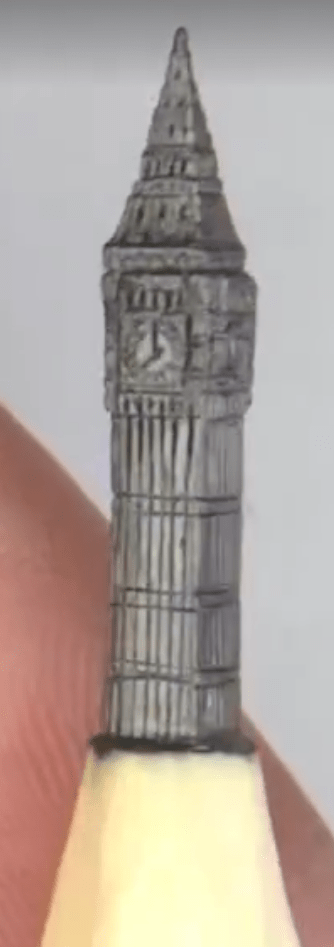
A marvelous minute of video portrays a virtuoso hand at sculpting the lead out of a pencil. Click on “Art on the tip of a pencil” to view a minute of how Salavat Fidai gets the lead out. More can be seen at his website via Facebook called Salavat Fidai Art. My wife Victoria sent me this video clip, no doubt pursuant to conversations we’ve had with our son Billy about the poor quality of the lead in pencils these days. We find, in doing homework (an astonishing amount for a kid in first grade at Vartan Gregorian Elementary, in Providence), that pencil lead snaps easily, and that sharpening a pencil is an act that calls for the patience of Job. (Not to be compared, of course, with the patience of Salavat.) That critique might actually apply to the pencil sharpener. Ours is a high-tech affair (as these things go) of plastic. It runs on batteries, and yet it routinely breaks the lead off the pencil in the process, leaving a deep empty wooden mine shaft that must be ground through before reaching a paydirt of lead to sharpen again.

As a boy we assumed such items were made in Japan. Now we assume they are made in China.

A Facebook commenter on Fidai’s video – one of almost a couple hundred thousand, according to the Facebook tally – marveled that pencil-manufacturers, who on the normal No. 2 pencil provide merely a quarter-inch of eraser at the other end must have unbounded confidence in the quality of the work being done at the business end.

No errors that we could see on Fidai’s video. He is a true virtuoso. The video is brief, almost titillating in its brevity, and if you can bear the accompanying elevator music you can see him whittle his pencil sculptures with an X-Acto knife (I think it’s called) in stop-action, whereby he completes or displays 11 sculptures in just a shaving over a minute, including wee Big Ben at left.

Stupendous!

Salavat Fidai’s sculptures are featured on Bright Side Videos.

Posted in Architecture, Art and design, Providence, Video | Tagged , , , , , , , , , , | 2 Comments

Not the ‘male gaze,’ but …

Screen Shot 2016-05-15 at 9.35.03 PM.png

Nina in her glass bathtub in the film “Until Money Departs You.”

I know, this may seem to be drilling down more deeply into the sexuality of architecture than most readers of this family blog would like to drill, but I just could not resist. My last post, “Playboy and modernism,” referred to Beatriz Colomina’s fascination with “the male gaze,” whatever that may be. Supposedly, houses are designed to advantage men in their constant quest to see women naked. And when Architect magazine’s interview with Colomina did not bring it up, I decided to go looking for it myself.

I did not look in Playboy. Its in-depth articles on modern architecture do not seem to show up on Google. (Rats!) But I did find: “Conflicted Identities: Housing and the Politics of Cultural Representation,” a scholarly tome by Alexandra Staub. I know, I know. That sounds really boring. And it is. But some oddballs get off on this stuff. Maybe it is the sort of thing classicists should spend more time with. (Still, better Alexandra Staub than Martha Nussbaum!) If you are one of those oddballs, click on the link. (The following quote starts on page 150, in case the link doesn’t take you there directly.)

Looking at architectural spaces as well as architecture portrayed within film, Beatriz Colomina, in another classic essay, has pointed to the voyeuristic observation of women as a form of both power and control within the architectural modern movement that claimed to be working to erase women’s subjugation. Analyzing iconic works by Le Corbusier and Adolf Loos, Colomina shows how voyeurism both within the house and between the house and spaces outside allows a subtle game of domination and control.

Gee, my fingers are getting tired. And yes, that is indeed boring. But it is something we need to familiarize ourselves with, right? Well, Staub’s long research paper was published this year but Colomina published her research in the early 1990s. Staub refers to modern architecture’s founder as “the modernist figurehead Le Corbusier.” The passage following the one quoted above gets down and dirty with some details about how architects – even the figurehead Corbu – design houses so that the windows are on its periphery, enabling the nasty voyeurs passing by outside. “[E]verything in these houses seems to be disposed in a way that continuously throws the subject toward the periphery of the house.” (As a card-carrying peeping Tom, here at last is something for which I can thank Corbusier!)

Or, as the Rowan & Martin’s Laugh-In character, a German soldier played by Arte Johnson, used to say, “Very interesting. But stupid.”

Posted in Architects, Architecture, Architecture History, Art and design, Books and Culture, Interior Design, Landscape Architecture, Video | Tagged , , , , , , , , | 4 Comments

Playboy and modernism

Screen Shot 2016-05-14 at 12.20.53 PM.png

Unidentified photo in Architect, surely from exhibit at Elmhurst Museum.

I am pleased to inform those who love Playboy magazine and revere Hugh Hefner as a paragon of modernity that Architect magazine has an interview with the curator of an exhibit based on research that blames (or maybe I should say credits) Playboy for modern architecture.

In “Playboy Magazine and the Architecture of Seduction,” writer Karrie Jacobs interviews Beatriz Colomina, first introducing her exhibit thusly:

“Playboy Architecture 1953-1979” is one of the most alluring concepts for an architecture exhibition in recent memory. On view at the Elmhurst Museum in suburban Chicago until August 28, the show positions Playboy, better known for its centerfolds, as the driving force behind the mainstream popularity of midcentury modern architecture and design in this country.

I’d take the proposition with a very large grain of salt, even noting that Colomina would seem to be an unlikely proponent of the Playboy Lifestyle. But then Jacobs adds:

Colomina established her reputation in the early 1990s by examining the role of gender in the works of architects such as Adolf Loos and Le Corbusier, and she was known for her passionate critiques of modernist architecture as an enabler of the “male gaze.” With her recent enthusiasm for Playboy, however, she has emerged as a remarkably unconflicted proponent of that gaze.

Jacobs asks very interesting questions, such as, in reference to the amount of writing about modern architecture in Playboy, “How did you come to realize that?” Colomina got Princeton to buy a full run of Playboy issues. (But hey, Princeton’s the party school of the Ivy League, is it not? This factoid does not even raise eyebrows.)

Although I would not credit Playboy with very much of the popularity of modern architecture in the 1950s and ’60s, the idea of Hugh Hefner as one of its proponents is credible. After all, Hefner was the poster boy for jackasses with a desire for respectability. He published a magazine that treated women like cattle, but wanted to be considered some kind of intellect. Every month he wrote  a column called “The Playboy Philosophy.” He promoted the First Amendment. But liberty was not sexy enough, so he also promoted modern architecture in a predictable effort to épater the blue-noses.

One of my favorite Mad Magazine take-offs (no pun intended) was its Soviet version of Playboy. There was a photo-shoot on Soviet agriculture – shots of (I suppose) a farmer’s daughter leaning against one of the big wheels of a tractor, sitting on the seat of the tractor, draped across the hood of the tractor – open the foldout and there’s the tractor by itself.

Ha ha! (I really mean it. It was hilarious. Or so I recall.)

If I were the curator of Colomina’s exhibit, I would ask Architect magazine to do a take-off on Playboy. The photo-shoot would show a naked girl posing in the foyer of a bachelor’s pad, another standing in its sunken living room next to a picture window with a view of modern glass skyscrapers (symbolizing what? Um, I can’t recall),  and finally a naked girl draped on a couch by, say, Le Corbusier, and then, in the foldout, the couch.

Colomina almost seems to buy into the Playboy lifestyle when she writes of how modern architecture was used to assist in seduction:

They really felt that this was an important tool—actually crucial—for seduction. The modern apartment is a necessity for the bachelor, who has to surround himself with all these gadgets and all this modern furniture, and eventually even the architecture, the Playboy Pad. These are the settings in which seduction happens.

So where is the “male gaze”? Unfortunately, in Architect’s edited version of Jacobs’s interview with Colomina, she is not encouraged to carry forward the interesting passage she sets up. Too bad.

Jacobs attempted to suggest that midcentury modern was already popular when Playboy was first introducing readers to modernism.

Yes, but Hefner made it mainstream. That’s the point of the exhibition, that Playboy did more for modern architecture and design then any architectural journal or even the Museum of Modern Art.

Jacobs asks what architecture meant to Playboy, other than to heighten the suspense between nude spreads (until lately). Colomina answers:

It meant a lot. At the time, the so-called shelter magazines were all very conservative. If you look at House Beautiful, for example, they were going on and on about European émigrés that were destroying America as we know it.

House Beautiful had a famous article by Elizabeth Gordon titled, “The Threat to the Next America.” And the threat turned out to be Mies Van der Rohe and all these other architects that were coming here. That magazine was completely against modern architecture. But Playboy claimed modern architecture.

Nowadays, as the whole world cringes at the built environment, we realize that House Beautiful was right. It could have gone further and blamed Playboy for modernity itself (with all its mindsets that have proved so damaging to modern life). I would not go that far either, but I would go part way. The Playboy philosophy and lifestyle are a part of the problems, broadly speaking, associated with modernism and Playboy celebrated it. These two are not strange bedfellows.

Hats (and maybe not just hats!) off to my wife Victoria who sent me the article on Playboy in Architect magazine.

Posted in Architects, Architecture, Architecture Education, Architecture History, Art and design, Books and Culture, Interior Design | Tagged , , , , , , , , , | 5 Comments

Hail buildings archaeology!

Screen Shot 2016-05-13 at 10.21.37 AM.png

New creativity vs. old creativity: The Pym extension (l.) to the Ulster Museum, Belfast.

Hugh Kavanagh, an Irish student of architecture from Cobh, Ireland – a seaside town known also as Queenstown, which was the Titanic’s last port of call and boasts Pugin’s St. Colman’s Cathedral – sends me an extraordinarily sensible essay. He wrote “Death by Nostalia: What Architects Can Learn from Archaeologists” for the autumn 2012 Archaeology Ireland. I’ve lifted it from his blog Scrawling from the wreckage: Architecture, Design, Art and Making.

Kavanagh’s essay strikes many useful points regarding the dead hand of modernism upon the present, most particularly how much we miss the slow way of evolving architectural practice into the future, which helped us of the present avoid alienation from our past. Here is the first paragraph:

The title of this piece, “Death by Nostalgia,” is a quote from Frank Zappa’s autobiography where he describes the continual recycling of styles in popular culture as stifling progress and innovation in contemporary music. This view has been common amongst the creative arts in the 20th century, where innovation and avant-garde are seen as superior and definitive. Architects have fallen into this way of thinking, too, with the result that a serious interest in architectural heritage has been seen as backward thinking. Amongst many in the modern creative arts, past artistic accomplishments are seen with patronising fascination like something from an alien culture, to be kept in glass cases to ward off infection. Our separation from the past is something that society takes for granted today, but this is a relatively new phenomenon. In the past, artistic progress was slow and methodical so we did not feel so alienated from our preceding generations’ work. The 20th century has seen an infatuation with the future and in some way it has been archaeology which has benefited by being an expression of the basic human need for us to feel in touch with our roots.

In that paragraph Kavanagh approaches a point that I have lately taken to making with increasing urgency about creativity. As Kavanaugh says, most architects and artists now see novelty as the sole valid approach to creativity. They look down their noses at the past, and especially the type of creativity that was prevalent in the past. That is the creativity that involves improving current techniques of embellishment: how painters can improve the way they mix paint colors, apply brushstrokes, render subjects by model or by imagination; how musicians can improve music by advancing notational composition, better techniques of designing and making instruments, of playing them, improving the acoustic quality of concert halls; how singers, playwrights, film directors, actors, poets, novelists, and every kind of artist can advance their artistic techniques; how architects can do what they do to improve upon the classical orders, or how they can make a building better meld its functions of beauty and utility – and so on and so on.

The idea, whether by methodical practice or by sudden insight, is to improve the virtuosity of the artistic process, rendering it more pleasing or more capable of reaching toward an aesthetic ideal, be it that of accuracy, gusto, accessibility, meaning, beauty, simplicity, emotion, whatever.

Leaving aside the other arts, this is how architects displayed the supposedly progressive character of their art/industry in the centuries leading up to the takeover of architecture by modernist practice. As brilliantly described by Hugh Kavanagh, it is how buildings archaeologists are now rediscovering the techniques of the architects of the past – how they made architecture, and how they made it the creative enterprise that it once was and can be again, by better understanding both how to restore old and build new architecture.

Posted in Architects, Architecture, Architecture Education, Architecture History, Art and design, Preservation, Urbanism and planning | Tagged , , , , , , , , , , | 2 Comments

Capt. Aubrey’s dad’s house

Screen Shot 2016-05-12 at 10.20.17 AM.png

Station Road, in Woolhampton, Britain, circa 1965. (visionofbritain.org.uk)

I am on the seventh volume* of my fourth circumnavigation of Patrick O’Brian’s Aubrey-Maturin series of 21 novels, set during the Napoleonic Era. Much of it takes place between bouts of naval warfare, at home as an half-pay officer with his wife Sophie and their three children. Jack Aubrey visits his father, a former general and now radical member of Parliament, and in this passage, already dismayed by his stepmother, a former milkmaid younger than Jack, he rues what the old man is doing to Woolcombe, the house where he grew up in Woolhampton, which lies on the road from Bath to London:

[Aubrey senior] had recently set about altering Woolcombe on an ambitious scale. It was perhaps that which had saddened Jack most. The house in which he was born had no doubt been a raw and staring edifice when it was first built two hundred years ago [circa 1614] – highly ornamented red brick with a great number of gables and bays and high corkscrew chimneys – but no Aubrey since James’s time had sprung up with Palladian tastes or indeed with any tastes at all in the architectural line, and the place had mellowed wonderfully. Now it was beginning to stare again, with false turrets and incongruous sash-windows, as if the vulgarity of his new associates had infected the General’s mind. Inside it was even worse; the panelling, old, dark, and inconvenient to be sure, but known for ever, had been torn out and wallpaper and gilt mirrors had taken its place. Jack’s own room had already vanished; and only the unused library, with its solemn rows of unopened books and its noble carved plaster ceiling, had escaped; he had spent some hours there, looking, among other things, at a first folio Shakespeare, borrowed by an earlier Jack Aubrey in 1623, never read and never returned: but even the library was doomed. The intention seemed to be to make the house false – ancient outside and gimcrack modern within: at the top of the hill, where he had always taken a last look back (for Woolcombe lay in a dank hollow, facing north), he directed his gaze steadily down on the other side, to Woolhampton.

Was that a fling at modernism? Yes and no. Modernism as we know it today did not exist in the early 19th century, of course. But the tendency toward the garish new was already well established by then. It is that tendency that has the modern era by the throat, most sadly in architecture. Today we look back with envy at the architectural disputes of prior eras. How, we wonder, could anybody so vocifer- ously favor, say, either Gothic or Classical over the other? With modernism having wreaked havoc on the built environment of the West for closing in on a century, and on the rest of the world for half a century, they both seem, along with every other strain of traditional and vernacular architecture, heaven sent.

Mindful of O’Brian’s description, it has been said that preservationists often work too hard to restore old houses to their original look and sheen, peeling away the sensibility of time that enhances lovability. The last annual meeting of the Providence Preservation Society, in January, featured a keynote by Adele Chatfield-Taylor, the early preservationist leader and former longtime head of the American Academy in Rome, who had this to say:

A continuing worry for some of us was that once a building was rescued, those in charge seldom considered anything but a full-blown, multi-million-dollar restoration or reconstruction as a way to preserve it. And to this day it is, more or less, our favorite model of what to do.

But at least preservationists of that era wanted to save beautiful architecture. Now they mainly want to save Brutalist architecture and other errors. The 20th-century battle (or surrender) that saw modernism routing tradition in architecture is a tragic saga that awaits its Patrick O’Brian.

[The novel quoted herein is The Surgeon’s Mate. This post originally misattributed the quote to the sixth volume, which is The Fortune of War.]

Posted in Architecture, Architecture History, Art and design, Books and Culture, Development, Preservation, Uncategorized | Tagged , , , , , , , , , , | Leave a comment

Shots of the Bulfinch gala!

BtxexjzbibBs9xl0Dzv0hShM0CTwxS3vkgUxl6KBh0M.jpg

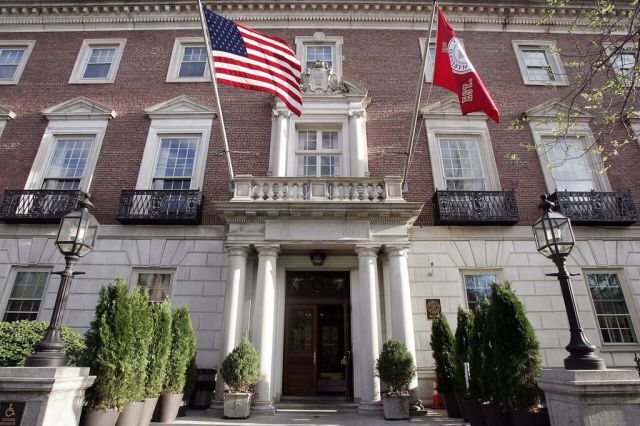
The Harvard Club. (Photos above and below by Tara Carvalho of South Shore Photography)

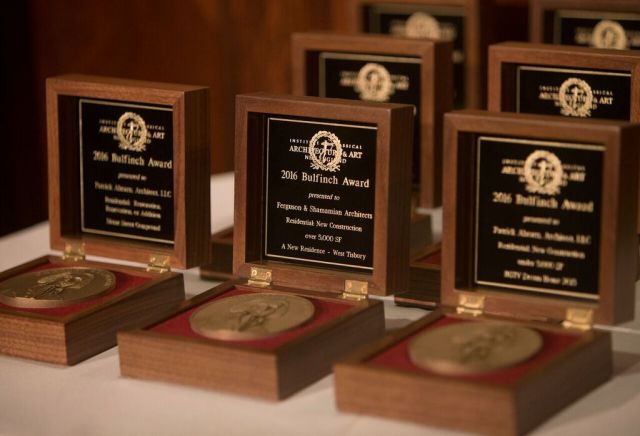
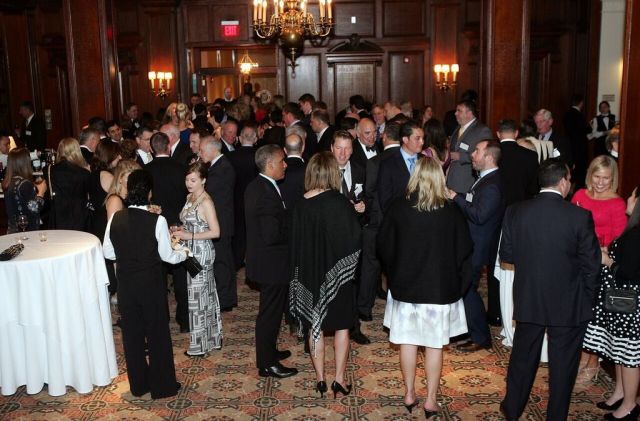
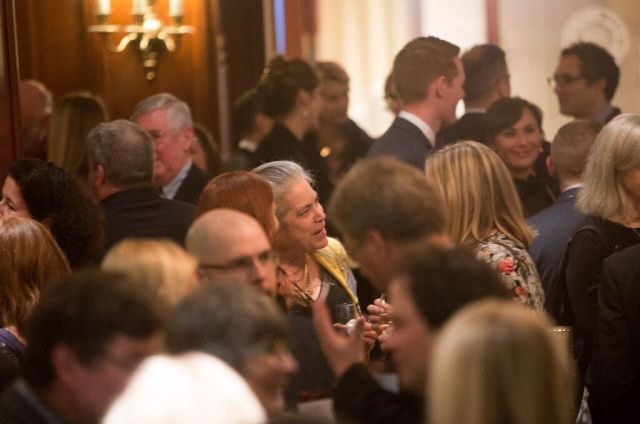
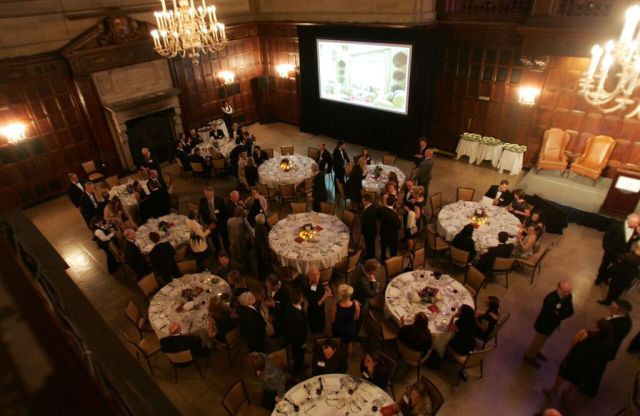
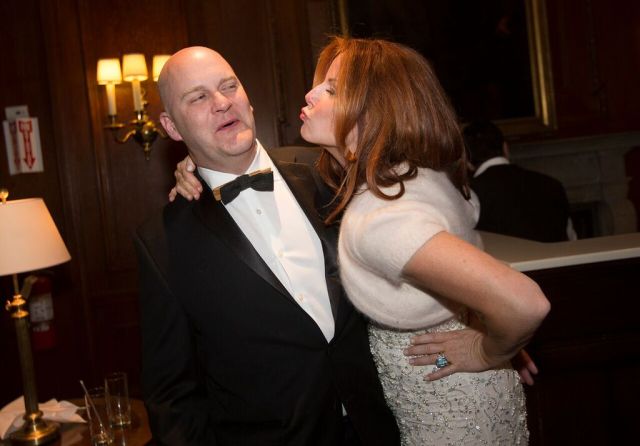
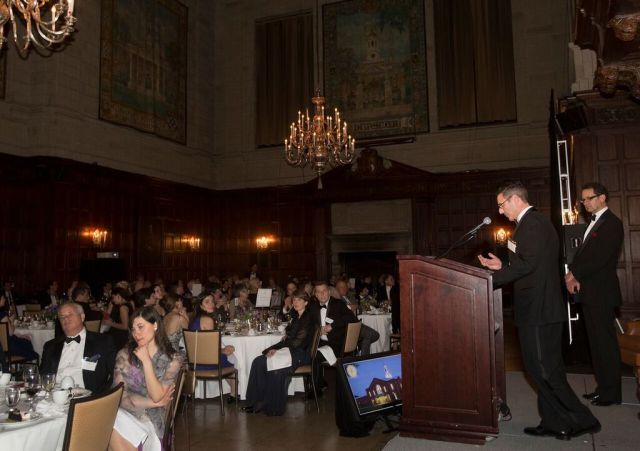
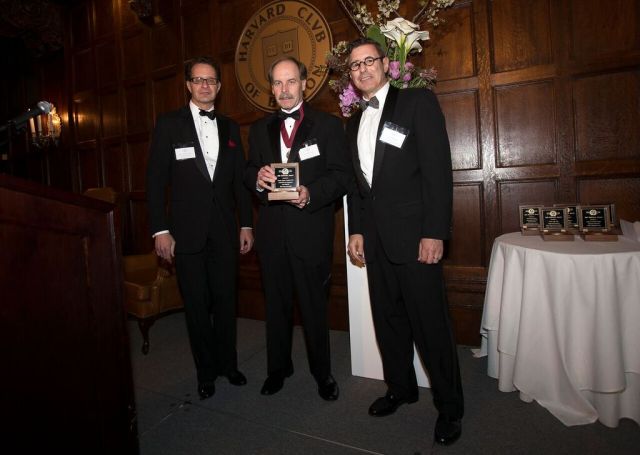
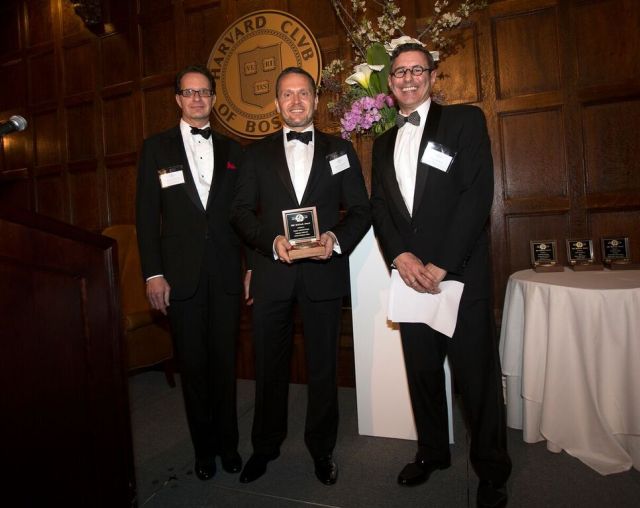
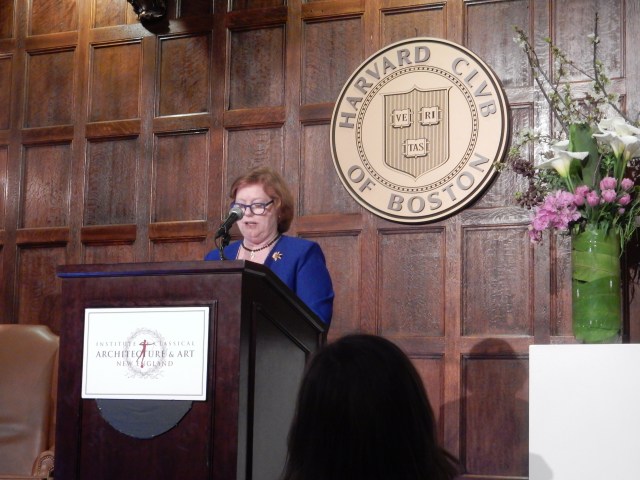
Here is a healthy selection of photos from the New England chapter of the Institute of Classical Architecture & Art‘s recent Bulfinch Awards gala at the Harvard Club on Commonwealth Avenue in Boston. The event was a rousing success because it was all about beauty – not just that of the guests and the sponsors but of the Bulfinch laureates and their work.

A party is a party is a party, of course, but a really fun party can serve as a springboard for the growth of an organization as the greater respect for and visibility of its purpose – in this case, the spread of classical architecture and art – cascades through society. Boston has classical wealth in abundance, but its architectural establishment pays it little mind and less respect. Maybe the gala weekend of the ICAA’s Bulfinch Awards program will help inject some regard for what classical architecture has done for Boston and the region. It may be stated with some confidence that strengthening the link between classical architecture and fun can only grow the family of the ICAA.

Read my survey of the gala weekend in the post “ICAA New England’s gala.”

Meanwhile, starting with the Harvard Club atop this post, here are some photographs of the event. All but one were taken with a loving feel for the lens by Tara Carvalho of South Shore Photography.

***

SP8_K_2F6LAzE7pGIEWFrF3w66D7IfbwRLdhwnjlf7s,obXg1Rb0KJaYZLfUbPk_8MWc1JK8CCUj26AwezzAvX4,sHooI62F_9uXtkC54SNCD_fOnMcxFdwQY0aB0WK9Wp0.jpg

T7xt3Ko72qSojOzWMf2qQkOhdR-dNl5zvCLbyPULEUg,1oXVef-DTWFvnUm-VJx0ZjECa0zqGyvzvva0ohnZOIo.jpg

The gala began with cocktails, lubricating talk of classical architecture.

kIAbaiieLBrHMzUnJ8Y7PH6mnMY6aF5mY6Z7PrXdKU4.jpg

6JNON5uaiKqQSxAzUN56qC3n454noNr04Z-EUT3AwuU,WMMiYKODj-iKkuH92fS0Pe_ptLk9qNYMee9qh0ucnEU,daqcwiuF4WRgXezCZLQAyT7br19-Ez81S5BrGjaxdSQ.jpg

X3yGJcMMQzqTs3hmenutNySAhQlRBxMEaBvQojf-wJA,-4rLhXPTdPuSr-gTGrnf_quP5u08y3g6MPcRSUYzWa8,ChzTDn0w7cJQ14AJ7NCojl3hgD6qJ5kZ-VBRwKKkJQU.jpg

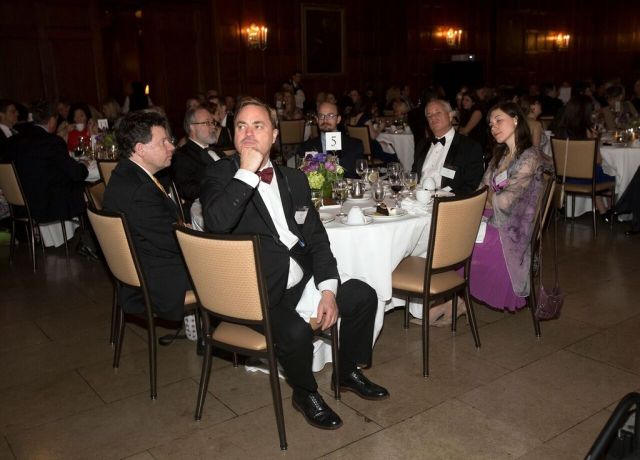
Then all were ushered into Harvard Hall for the inaugural gala dinner.

ecGvLZtKnIO6VrfDbNROVhbc_f3NZ7HU1DXRHmuqGVM.jpg

-4YqwE0mRf73snIduhN7PGNegfY8HREVa_R5MPnu8V4,HrUBNYtlxVss5yflA4qJPYJRwDrsQBmcY0oQCS49MnE,NZ7Qh71-rtzyDTOA47_3zi2VxVywbUdQsu5bAWTWrig.jpg

jsv9HwtDNlSynM05Hft_Vt1rmrnIMQdFYKotd5udxKc.jpg

R4Ayw9LYfFDnur9xrpS-0AU-5K8j0L6Fz_35u4xFAao,n96yB4sgvHjkuX8wqDGKqtFXS44Hdi_eWnnaQq1VrXE,YWF3EHNgt_sPQv_3LKNmxapHhF7ePpqlDTuggHXtEPU.jpg

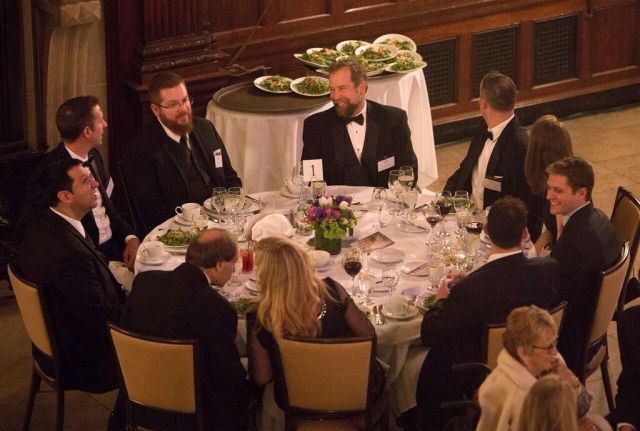
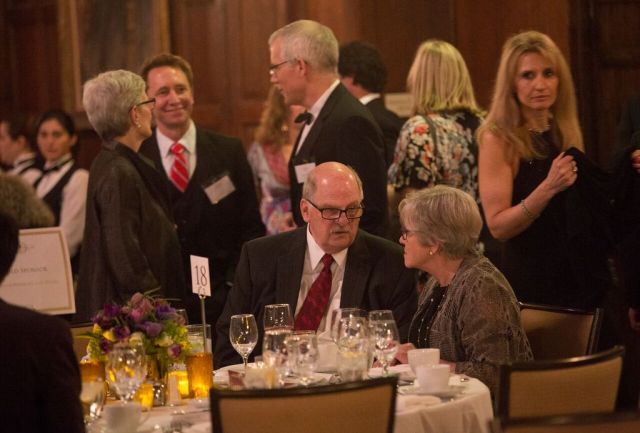
Good food creates good fellowship, and fellowship for classicism creates fun.

159RE666gZqlMo7epR0cdb_W5JGgJb_zKvGIIUFHeqk.jpg

0d6E7be-wXlFBvzauxkZjN43-fE90goj5IsCVZyEHNk.jpg

R4zlypSQY3r3hzDcfVrl7t-MtMpZ4e8Ds_OOUWHGi70.jpg

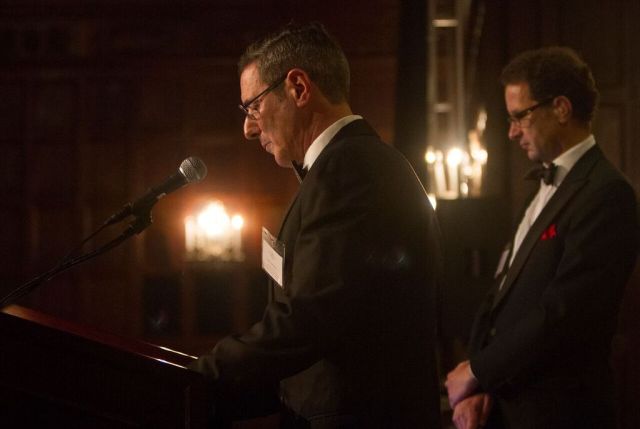
Before things got out of hand, Chapter President Kostelecky and Vice President Andreozzi (at lectern) were forced to start handing things out.

Nhoz8fXuvVP7lJe6ynmT6VQ8-72NAf5a-5xZA4qVmeE.jpg

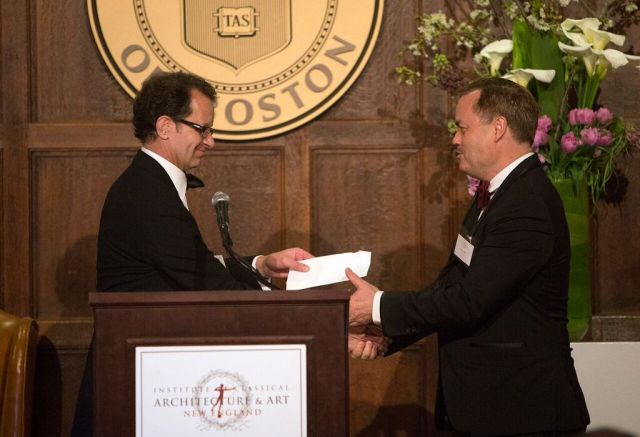
Hush and suspense … And the envelope, please.

f1zU49xHg-8H1i5DcmX9X-T9lAGFbSY1jKhpM2Xvs0U,WCb6xftk4SomJu6Lvc_kBvQnWhz5WCa7j-PSpKh5PDo.jpg

biYKg1ujpznK4B0N01ZKL5qbAzU4JoXnmPeUI2mLnMw,hP_RtXMp6tHVwgUUUKrwGh-MPZwfk4AF6gLfpRujOpo.jpg

Chapter President Kostelecky hands National President Peter Lyden a $5,000 check for the ICAA educational fund.

fRRNwxg-eV3Oz8Wf290pX3_so8gg2zJoB7JOedOkGv8.jpg

Oscar Shamamian accepts Bulfinch for Residential over 5,000 s.f.

mf4CHEbQLayksj3p6vap1dh8dzWMrAka2iEQ0peZ0TI.jpg

Patrick Ahearn accepts Bulfinch for Residential under 5,000 s.f.

ZeaG1-lzeV53TKe-X83ZRdx_EtwcJ1MZS_AmxtUKVwE.jpg

RAMSA partner Gary Brewer accepts Bulfinch for Commercial/Institutional.

PuQt-P3qAhD675RhsIEhtC7ZZnZUxD4CQ_JT27Ypj4s,EA-OFD-3Xm9w8oJbiYStRM1VEf5iIMSXzDzlYknW6Cg.jpg

Patrick Ahearn after accepting a second Bulfinch, for Restoration, Renovation, Addition

irJgm67Eld52LLEBF913YKXJNbxYX6q5f8y1piij-SA.jpg

Gregory Lombari accepts Bulfinch for Landscape Architecture

dy70COnb0AoSMOMkDVoAUK0xZst35-betxFTg9w6Ljs.jpg

David Nassim, of Hyde Park Mouldings, accepts Bulfinch for Craftmanship/Artisanship.

DSCN0372.JPG

Chapter board member Sally Wilson accepted a Bulfinch for Sketch on behalf of Leslie-jon Vickory of Hamadi Architects. (Photo by David Brussat)

UzEAon1fN0w_5tPDeMNZS6Ud5yGjdJcU4kmRtx-TGnM,sFzeSGpGZe7tQJbb6iGxBE7gxMFrO6TwfEgQIgSHfaA.jpg

With Sheldon looking on, David describes the first Bulfinch Award for Patronage.

Qtbcdjui3rOb6h1v68k7v04d7q0t7h-7kHHC-pPjFWg,TY8damPixkHe1pSq7SeRoRh75V5n-0dhz7U5Er4V0HM.jpg

Gary Brewer accepts Bulfinch for Patronage on behalf of Jonathan Nelson.

cZGic45tYJkaviwWKy3aAHjHfCm3IMsEJoM_LSZ2E2Y.jpg

Chapter board members in attendence: front row, l-r: Jason Harris, Sally Wilson, Aaron Helfand, Stephen Payne, Dan Gordon; back row, l-r: Nancy Berry, David Andreozzi, David Brussat (emeritus), Eric Daum, Lee Reid, Sheldon Kostelecky.

38uYgOx-4HzLfm7SeYm_gkpgWROMDQXPFYFwQl_DYlc,FyObZjGk9zGI1dVXQrIo8jsrqVAa3GoitQEzkb3s7SI,zHBldvzTIDJ8_cZJO9bq4Lpk2in_qwJTNOeQa7_fJwE.jpg

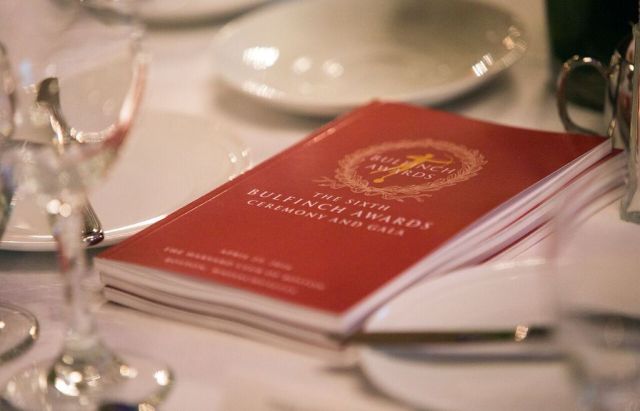
The program for the Sixth Annual Bulfinch Awards Ceremony and Gala.

TJ-w6ZpotV_K6SIBV3-hV5CfcPf9NGTwogi2ezw7ox8,bEOCe-ZPQbm4U61wRiF81bDQQpGV2jwhJyRdEuZT1HY.jpg

Departure was difficult, and made more so by the “swag bags” to be carried off by each guest.

pU82iqgn5wvyUSiKrXdg6guvMZrG99DCNCuuEIazkhU,LNUQl0yO4aW71Dav9poyuuLRMLIFw94c0wuQq4Ia8RQ.jpg

Posted in Architects, Architecture, Architecture Education, Architecture History, Art and design, Development, Interior Design, Landscape Architecture, Photography, Preservation | Tagged , , , , , , , , , , , , , , , | Leave a comment

Architects’ Trump moment?

Screen Shot 2016-05-10 at 12.15.23 PM.png

Donald Trump confronts modern architecture? (Common/Edge)

Duo Dickinson has a brilliant essay – “Will Architecture Have Its Donald Trump Moment?” – on the website Common/Edge. He compares the Republican establishment in politics to the modernist establishment in architecture. He compares those carrying pitchforks in the armies of Trump and Sanders to the masses pounding sand as they contemplate the inexplicable horror of the built environment. He begins:

There are two architectures. Not officially, yet, but the perception is real and growing that there is an architectural apartheid. There is an “inside” (the AIA, academia, mainstream journalism) and an “outside” (building, client-serving, context-accommodating architects). Thought leaders edit the images, words and lectures we all see to a soft-focus similarity of defendable Modernist Chic. The vast majority of us who do not teach (literally 90 percent: 60,000 doing vs. 6,000 teaching) or write/edit/promote the “cutting edge,” or lead an ever-shrinking AIA, do not feel part of the discourse.

But Dickinson says it has little to do with style – traditional versus modernist – and then his essay segues into concern for the average architect and his travails in a field dominated by starchitects and the starchitecture-centered American Institute of Architects.

The entire essay is a deft dodging of the fact that it is indeed all about style. Here is the moment when Dickinson’s fine essay trips up on its refusal acknowledge the applicability of his own observations:

It’s simplistic to say that it’s a style split: obviously in promoted architectural aesthetics “Elite=Modern,” but the disaffection in my profession (normal in year 8 of a building bust) is more about the invisibility of everything except the “cutting edge.”

That the public prefers houses that look like houses, churches that look like churches, and museums that look like museums introduces an impossible degree of distortion into everything about the field of architecture. That makes it harder for the typical practice to operate. Decisions made by architects and firms must discount reality from their business models. Architect wannabes have no alternative to a modernist education, little prospect for jobs at firms where they can use what they were taught, and nothing to look forward to but the widespread dislike of their work, whether they get a job with a modernist firm or with one of the many that build spec housing and spec commercial. Such architecture is called “bad trad” largely because the firms that build it must hire from a pool of graduates who were not allowed to learn how to produce “good trad” – only how to disdain it.

Most architects feel dissed because most people who experience architecture feel dissed. In politics, there is recourse to an electoral process. No such luck in architecture, which suppresses dissent with a vigor matched in no other field. It’s as if  voters seeking to express their anger were to find goons barring entry to voting booths. In architecture, the truncheon-gripping apparatchiks are the AIA, the schools of architecture, the culture of celebrity architecture and its media. “And don’t come back,” say the establishment’s gatekeepers, “until you have the broomstick of the Wicked Witch!”

I wonder why Duo Dickinson is so reluctant to recognize the obvious conclusion that his observations add up to.

Posted in Architects, Architecture, Architecture Education, Architecture History, Art and design, Urbanism and planning | Tagged , , , , , , , , , , | 5 Comments

Cantilevetravatecture!

Screen Shot 2016-05-09 at 4.12.02 PM.png

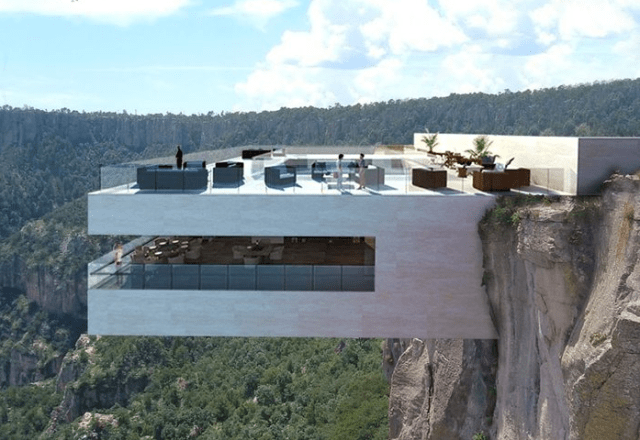
Bire Bitori, in Chihuahua, Mexico, by TALL Arquitectos. (archilovers.com)

I made up that word to headline this post about “Cantilever Architecture,” a set of the world’s most ridiculous works in that category, including one (the last one) by Santiago Calatrava, part of whose last name helps form the word cantilevetravatecture, which I hope fits into my blog’s headline space.

Why did I make up such a long and difficult word? Because I can!

“Cantilever Architecture,” on the website Archilovers.com, was sent to me by Malcolm Millais with his own proposed headline, “Because We Can!” He refers to the reason why architects like to design buildings that challenge the laws of physics. Because they can! That is hardly a good reason to design a building that, because it looks like it might fall down, probably is indeed more likely to fall down (other things being equal) than most buildings.

Millais knows whereof he speaks. He is an engineer as well as an architect, and brought together his knowledge of both subjects in Exploding the Myths of Modern Architecture, published in 2009. (I repeated my Providence Journal review of Exploding as a blog when Andres Duany said that it was the best critique of modernism in recent times.)

“Because we can” is a bad reason to build a building that flies in the face of nature, but it is also a simple description of a very complex phenomenon. As modern architecture grows long in the tooth, its practitioners must reach ever further from sensible design practice to do what modern architecture does best, and thinks is worth doing – which is to make the public go “Wow!” They can’t make it beautiful, a strategy they have abandoned to traditional architecture. What they can do is to challenge occupants of their buildings to jump up and down to see whether the engineers did their job well enough. Will the cantilevered wing of the building fall down? It must be hard to resist the challenge!

Well, feel free to resist the challenge of deciding which example of cantilever architecture in the article is most likely to collapse under stress. In fact, in case my proposed headline does not fit, I hereby, henceforth and forthwith suggest a new one “Jump Up and Down, Please!”

Posted in Architects, Architecture, Architecture Education, Architecture History, Art and design, Development, Humor, Urbanism and planning | Tagged , , , , , | 4 Comments

Krier: Politicians, take note

Screen Shot 2016-05-07 at 9.33.55 AM.png

Eupolis, vision for a new European capital proposed by Leon Krier. (Krier)

Léon Krier, the architect, planner, theorist and master cartoonist who hails from Luxembourg, has called upon the European Union to build itself a new capital so that a way out of the world’s gathering problems might be forged. He says politicians need to know more about cities, how they work, how they should be built, and why they should be friendly in their appearance.

Jane Jacobs, whose 100th birthday was observed on Wednesday and whose Jane’s Walk on the Providence riverfront I will lead at 1 p.m. today, was way out in front on all of this.

Krier’s piece in Building Design is called “Politicians would do well to show more interest in urban design.” It reflects much of what readers have read on this blog for many years. The design of buildings and cities shapes the mood of people in aggregate. It is the call of Jacobs, Prince Charles, Roger Scruton, Tony Brussat (see my post “Epiphany in Stuttgart” on my brother’s recent pensée), Andres Duany (at least to some large degree), Nikos Salingaros, Michael Mehaffy and many others. Krier writes:

I remain astonished by how few political and intellectual figureheads are actively interested in the final shape of our frantic development activities. Observing what happened to cities in the last half-century, there is no reason to be buoyant.

While classicists and traditionalists have the right idea on this very important matter, many of them spend their energy counting the number of angels that can dance on the head of a pin. Traditional Building magazine recently gave precious inches to the idea that classicists should embrace even more of the dubious thinking that has led the world down the treacherous path toward a Blade Runner built environment.

Rather, they should be working to figure out how modern architecture’s grip on the design and development process from the local level on up can be countered. Evening the playing field for major commissions in cities will not happen by studying Foucault!

Krier wants to build a new capital for the EU – Eupolis – along classical lines. (I would ask why not Europolis, but that would be an angels-on-pinheads question, criticized above.) It is a good idea, but even more unlikely than his recent proposal for a new classical center for music in London. Modernists will squelch both ideas with an application of pressure from their pinky fingers. That is because of one thing: politicians are almost completely ignorant about the built environment and what ails it.

I believe that beauty, as traditionally conceived, should be returned to that environment. This will have major effects on social behavior. Since we still have an abundance of models around the world, and since the public vastly prefers traditional to modern architecture, it is a simple problem to solve. We don’t have to figure it out. It’s not like figuring out how to abolish poverty or improve education, yet it will make those vital tasks easier. We just have to do it. And traditional architecture and planning are far more sustainable than the modernist model that the establishment buys into blindly. The only real problem is how to reform the development process to give the public more input into the way we build cities.

Jane Jacobs, were she alive, would agree. Robert Moses would disagree. Let’s proceed forward from this basic distinction, this basic truth.

Posted in Architects, Architecture, Architecture Education, Architecture History, Art and design, Development, Landscape Architecture, Preservation, Providence, Urbanism and planning | Tagged , , , , , , , , , , | Leave a comment