To guide or not to guide?

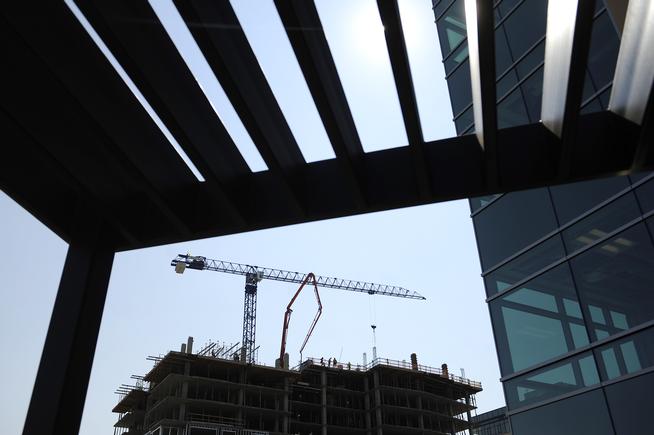
“A construction shot from the new Coda Cherry Creek Apartments. Cherry Creek North has some of city’s strictest design rules, and they work, designers and developers say. (Seth McConnell, Denver Post file)”

Above is a photograph of construction under way for apartments in the Cherry Creek North district of Denver. Is the glass-and-steel structure to the right part of the project or does it just abut the project? Either way, it casts considerable doubt on the allegedly strict design rules involved and, even more, on whether they “work.”

The Denver Post’s fine-arts critic, Ray Mark Rinaldi, in his article “Would design rules create a better-looking city?,” collects a host of reasonable opinions about the merits and demerits of design review, whose influence seems to be growing in Denver. There is little in here that an advocate of beautiful cities could disagree with.

Nearly everyone has concerns that regulations could limit property rights and increase bureaucracy, that they put too much power in the hands of neighborhood associations and NIMBY activists who could dominate the process, that it’s impossible to agree on aesthetic choices.

Yet nearly everyone backs them, especially now in Denver, where the construction boom is on and the consensus is that a lot of buildings are going up that disrespect the character of their surroundings and harm the city’s image as a capital of progressive, Western living. Ugly might be hard to define, but there is widespread agreement that it’s on the rise.

Those two paragraphs reflect the wide parameters of the debate over design review. The author seems to approve of it, within reason. But one gets the feeling that the guidelines already in operation or likely to emerge are highly unlikely to rein in the runaway ugliness that most citizens seem to agree is threatening Denver’s beauty.

Design review is likely to make it harder for developers to get away with cheesy buildings made of el-cheapo, off-the-rack materials. And that is good. It also offers a forum to those who want to rally against ugliness, if they can be so bold as to identify it. But design review is unlikely to stand successfully athwart the trend toward ugliness, largely because of the sentiment that, as Rinaldi puts it, “ugliness may be hard to define.”

How did the world’s most beautiful and beloved cities manage to get built without the sort of design review we see today? London, Paris, Rome, Washington, even New York, which was once considered a beautiful city, were built during a long period when the need to define ugliness was not recognized because building and design practices made beauty so easy. Those who monitored civic design did not have to fight today’s style wars.

I’m not saying that great beauty was easy to create but that minor beauty was a predictable product of longstanding practice in architecture and city planning. (And don’t say that’s because it was all about kings building what they wanted. Not so!) It is only since beauty was thrown out of the architect’s toolkit and replaced by novelty that everyday people began to worry that whenever anything was torn down, something worse would replace it. That was a new form of fear, and it gave rise to a new movement – preservation (which was transformed from its roots as an antiquarian concern driven mainly by history, not beauty).

Closing in on a century of architecture since the onset of modernism, we find that cities no longer know how to do beauty. People do not know what beauty is – at least educated people in position to influence design decisions do not. No cities have leading citizens prepared to stand up and insist that the old ways of creating civic beauty were good and should be allowed today. Even Paris now lacks leaders willing to express such a vision. (Fortunately, there’s too much beauty in Paris to be altered significantly in the life spans of the people who don’t care about beauty, such as its current mayor.)

The problem throughout much of Denver, including some of its most central and notable districts, is that a largely deplorable context, created by a half-century of development, will be used to set the guidelines for the guidelines of design review. They will be implemented by professionals who have little knowledge of or care for beauty. The blind will lead the blind. Instead of design reviewers leading Denver out of the hodgepodge of its character, the growing ranks of design review are likely to fuel the alienation of average citizens by continuing the hodgepodgization of Denver.

So, with regret, and in spite of the oh-so-reasonable sentiments expressed about design review in Rinaldi’s article, I see little hope for Denver. I see less hope for cities with less beauty to build upon than Denver. I see hope only for cities with lots of beauty to build on – such as Boston, Providence and Charleston – and even that hope is slender. In those cities, design remains the purview of an educated class that has “educated” its own appreciation for beauty out of its hearts and minds. They, along with developers and civic leaders of no vision, have led the way for the erosion of beauty in even the most beautiful cities, and will continue to do so. Sad but true, alas.

Posted in Architecture, Architecture Education, Architecture History, Art and design, Development, Preservation, Urbanism and planning | Tagged , , , , , , | 2 Comments

Zum! Zum! Zum! Zumthor!

Zumthor proposal for Los Angeles County Museum of Art. (Atelier Peter Zumthor & Partner)

Zumthor design for Los Angeles County Museum of Art. (Atelier Peter Zumthor & Partner)

The forces of architecture in Los Angeles are clashing over the latest proposal, by Swiss architect and Pritzker prizewinner Peter Zumthor, for the new LACMA. What is the LACMA? A lengthy critique of an even lengthier critique of Zumthor’s design does not deign to inform the previously uninformed reader. But I looked it up. It stands for Los Angeles County Museum of Art. Zumthor has proposed the swoopy doopy platform above, which bridges Wilshire Boulevard. Anything goes when it comes to designing an art museum these days – no holds barred! And Zumthor delivers.

The Case for Zumthor” in The Architect’s Newspaper by Frank Escher, a principal of the architecture firm Escher GuneWardena, attacks a series of pieces by critic Joseph Giovannini in the Los Angeles Review of Books that attack Zumthor’s museum design. Escher’s piece links to Giovannini’s pieces. Giovannini thinks that the project should have gone to celebrated Angeleno Frank Gehry. An earlier LACMA proposal by Rem Koolhaas was selected a few years ago but tanked before the shovels hit the ground.

Here is an example of Escher’s insulting and condescending tone:

The insulting and condescending tone of [Giovannini’s] articles make them difficult to read. His platitudes become tiresome: the “monkish architect coming down from a village in the Alps with promises of architectural simplicity,” the “Alpine prophet” who “has come off the hill to levitate our expectations,” or the “ayatollah of elementalism” expecting us to make “the hajj to Haldenstein.” Accusations of plagiarism, the inane comparisons, or Giovannini’s advice to study the New York Guggenheim make the articles impossible to take seriously.

Towers proposed for Los Angeles in 2006 by Richardson Robertson. (Robertson Partners)

Towers proposed for Los Angeles in 2006 by Richardson Robertson. (Robertson Partners)

It is difficult to get up a bolus of indignation at this because there’s so little there there at risk in L.A. Back in 2006, Richardson Robertson III proposed two new towers there on the same day that a project for two new towers there by Frank Gehry was announced. The publicity for Gehry sucked all the air out of the publicity environment, even though the Robertson plan was the real news. He was proposing two very tall traditional towers in the style of the great skyscrapers of prewar New York City. It was something different! Man bites dog! So it was ignored and the buildings were not built. (See my 2006 column in the Providence Journal, “Angeleno inspiration for Providence.”)

Los Angeles doesn’t really want to be a real place, just a fantasyland enigma, a series of projects that are little more than billboards proclaiming the “genius” of their silly designers. The Zumthor LACMA is no different. So when a pair of local architecture critics start going at it hook and tong, the basis for disagreement seems vague and the charges hurled back and forth seem like a sort of arcane literary watusi: more entertaining than enlightening.

You may enjoy the sort of critical sparring that takes place between Escher and Giovannini. If not you may find Escher’s conclusion sufficient:

It is clear … that the new LACMA may just be too quiet for some, not offering enough entertainment or spectacle. Or, as Giovannini concludes, “Zumthor represents one end in architectural debates currently polarized between complexity and simplicity. In choosing Zumthor, LACMA has taken sides in a broader polemic, becoming both a testing ground and a battleground.” Our architectural world, though, is more nuanced. Let us distinguish between architecture that is complex and architecture that is complicated. There are enough examples of architecture that pretends to épater la bourgeoisie — an important cultural position one hundred years ago — and instead manages only to amuser le bébé.

Complexity in art may be expressed in a simple form, a complex idea in a simple phrase. It is precisely the tension between conceptual complexity and formal simplicity — the absence of noise — that makes Zumthor’s work so good.

Complexity versus simplicity, oh my!

Amusing, to be sure, but if this truly is what the debate in architecture has come down to, then it has not come down to anything at all. It is still up in the clouds, dizzy and pointless, out of touch with the ground, with reality, with the public, even with L.A. In short, what else is new?

[Hats totally off to Kristen Richards and her indispensable (and free) ArchNewsNow.com for highlighting this exciting L.A. contretemps!]

Posted in Architects, Architecture, Architecture History, Art and design, Blast from past, Development | Tagged , , , , , , , | Leave a comment

Dorothy in “Renderland”

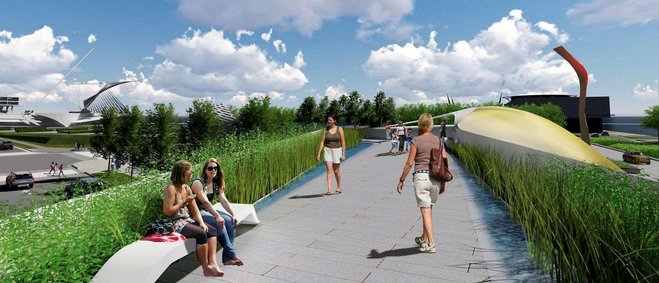
Rendering of proposed Lakefront Gateway Plaza, in Milwaukee. (Journal-Sentinel)

Rendering of proposed Lakefront Gateway Plaza, in Milwaukee. (Journal-Sentinel)

Given the apparent difficulty architects have designing places that improve rather than undermine their settings, I was amused at the crie de coeur from art critic Mary Louise Schumacher of the Milwaukee Journal-Sentinel about the figures – known in the design trade as “scalies” – that occupy architects’ renderings of projects. (See my March post “The secret lives of scalies.”)

Schumacher’s article “In Renderland, including designs for lakefront project, few faces of color” complains that

The humans are uniformly happy and somehow familiar, like old acquaintances you can’t quite place. They cheerily glide in sporty sneakers, chat on cellphones, point at fireworks and eat baguettes. They are also, far more often than not, white. … Not unlike their postwar counterparts — architectural renderings that romanticized the notion of a mostly white middle class — this new class of renderings reinforce an iconography of white privilege.

Oh, please. Give us a break! Schumacher refers in particular to a project along Milwaukee’s lakefront. “In what should be a representation of one of the most democratizing spaces in one of the most racially segregated cities in the United States, the renderings for Lakefront Gateway Plaza included very few people of color.”

She adds, quoting Arijit Sen, an associate professor of architecture at the University of Wisconsin-Milwaukee, that “”The lakefront is a highly charged place in terms of race. … I think the lakefront can be a very awkward place for people of color.”

So there aren’t any scalies of color? No, there are not enough scalies of color. She also regrets that there are too few older scalies and too few disabled scalies. How does she know? Maybe some of the scalies eating baguettes have had facelifts. Maybe some of the scalies chatting on cellphones are talking to the counselors at their halfway house.

(Excuse me, but I can’t resist wondering why Schumacher has expressed no concern that scalies are too thin, that there aren’t enough obese scalies. Has she succumbed to a regrettable bout of lookism? I think not. Certainly the obese may be defined as disabled. On the other hand, wouldn’t that be to commit reverse lookism?)

It’s really a little bit much to expect the designers who use scalies to funnel them into some sort of sociological portrait of the area around a given project. Their purpose is merely to give a notion of the scale of a proposed building. Architecture has enough issues without the design equivalent of whether #All Lives Matter is a reprehensible concern.

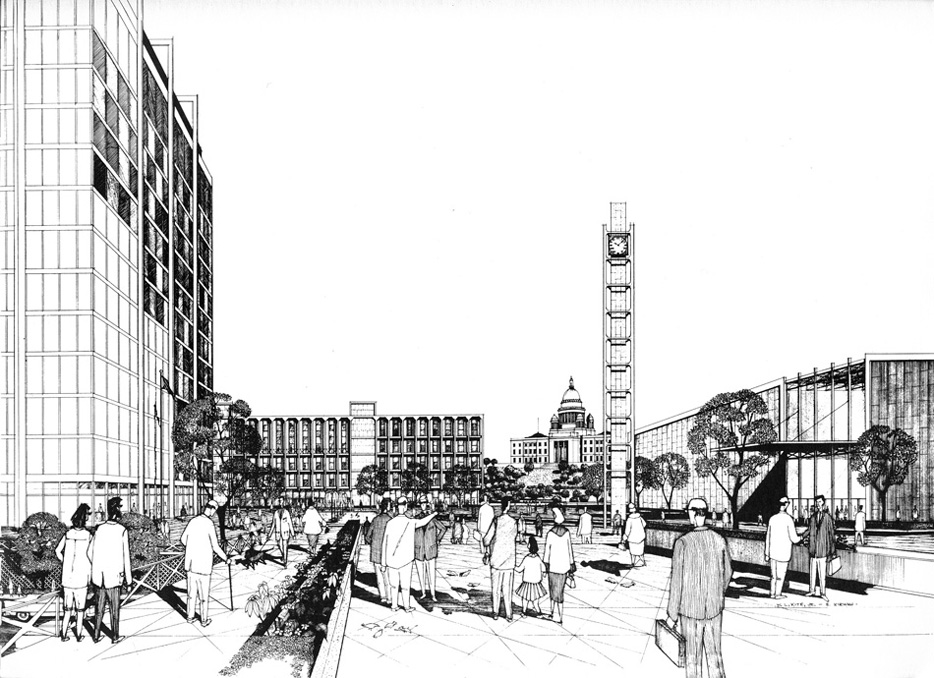
Schumacher refers, above, to early “postwar” scalies. I recall, in writing about the Downtown 1970 Plan, proposed in 1960 at the height of midcentury modernism, that many if not all of the male scalies in its renderings had male pattern baldness. I attributed that to their being drawn into modernist environments. It was supposed to be a joke!

Proposed redesign of Kennedy Plaza in Downtown Providence 1970 Plan.

Proposed redesign of Kennedy Plaza in Downtown Providence 1970 Plan.

Posted in Architecture, Art and design, Books and Culture, Development, Landscape Architecture, Providence, Urbanism and planning | Tagged , , , , , , , | 19 Comments

Eviscerating Edinburgh

Edinburgh skyline from Canton Hill. (Almy/Guardian)

Edinburgh skyline from Canton Hill. (Almy/Guardian)

The iconic photograph of Edinburgh, above, testifies to what Scotland’s capital and leading city have to lose in a recent rush to development. The United Nations agency that oversees its World Heritage Cities program, UNESCO, has been asked to remove the city from its list.

Hotel development locally known as

Hotel development locally known as “The Turd.” (Jestico + While/Guardian)

Certainly the call to action merits serious consideration. The list can have little meaning if beautiful cities can trade away their allure for filthy lucre without threatening their place on the list. But does the threat of removal from the list mean much to the thugs who often run such lovely places? I refer to the developers, not the politicians, who generally are not thugs so much as cowards (and perhaps thieves). Will they just declare open season on beauty there? Needless to say, the architects who build them are no better than hired gunslingers, soulless cannibals who, under the banner of architecture, eat world beauty, robbing us of one of the few free things that bring joy to even the poorest citizen.

A good question. I wish I knew the answer.

The U.K. Guardian has published an essay by Kevin McKenna, “Edinburgh’s world heritage status in peril as developers move in,” raising useful questions. He describes the angst felt by a celebrated local writer:

On Leith Walk, as it rises to meet Princes Street, award-winning novelist Candia McWilliam is heartbroken at what has already disfigured her beautiful Edinburgh and the prospect of what may yet befall it. Her father was the noted architectural writer, Colin McWilliam, who toured the UK to write about the country’s most beautiful and important buildings.

Her home lies in the shadow of the St James development and she is dismayed at what it will do to the city’s skyline. “The architecture of a city ought always to be the result of a conversation between the old and the new. The hotel that is being built up there is like a loud, boastful, braggart bullying everything that comes into its view,” she said.

Fine and dandy, but in the very next paragraph the novelist makes a statement whose implications she cannot have properly considered:

“Dad was a modernist, and probably far more daring in all regards than me and he believed (and I agree with him) that there is a place for architectural ‘brutalism.'”

In short, ugliness is okay as long as I don’t have to look at it. NIMBY, pure and simple.

These are the sentiments, viewed as admirable expressions of objectivity, diversity and open-mindedness, that invite the camel’s nose of ugliness under the tent of civic beauty. It is happening now in Edinburgh, to name only one great place, and all steps (short, I suppose, of strategically located mortar emplacements) must be taken to thwart it. Surely the threat of removing the city from the coveted UNESCO heritage list is one such step.

Posted in Architecture, Architecture History, Art and design, Development, Other countries, Preservation, Urbanism and planning | Tagged , , , , , | 2 Comments

Morgan on Cram’s All Saints

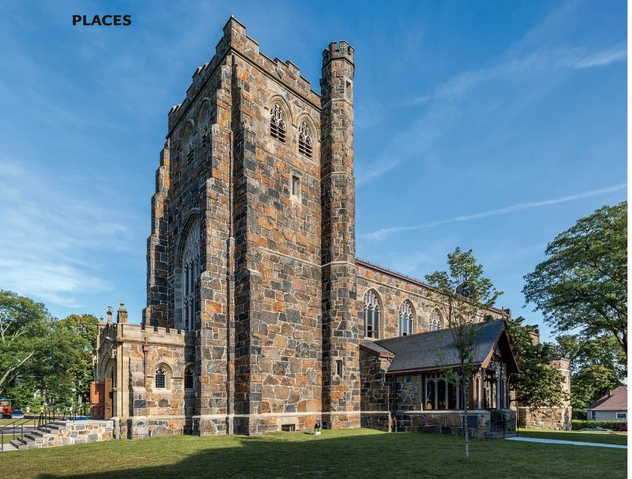
Interior of Ralph Adams Cram's All Saints Church in Dorchester, Mass. (Design New England/Peter Vanderwarker)

Ralph Adams Cram’s All Saints Church in Dorchester, Mass. (Design New England/Peter Vanderwarker)

I direct readers to William Morgan’s splendid review in Design New England of the restoration of Ralph Adams Cram’s All Saints Church, in Dorchester, Mass. In part, I suppose, this post makes up for (and yet does not apologize for) my recent semi-rough handling of my friend’s review (in the Providence Journal) of Brown’s new math building (see “Handsome rectangular box?“). Aaron Betsky should not expect similar kid-glove treatment.

But Morgan manages to describe the restoration by John G. Waite Associates, of Albany, with a minimum of his usual mod-symp tics, which he knows drive me nuts. He writes that Waite managed to “recapture the original intent without any specious historicism.” I don’t even know what that is supposed to mean! “Specious historicism”? I will just have to await Morgan’s enlightenment in the no doubt ensuing email rejoinder.

No rejoinder came from him after my Brown applied math post. Perhaps Morgan was out of town, or in a sulk. He did re-initiate contact soon, though, wondering why Jasper Fforde did not spell his last name fforde, as, he said, correctness required of an English surname of Norman French derivation. (See my post “Lost in a Good Book.”) An odd query, but I was glad we were back in contact. He next sent me his “All Saints Be Praised” piece in Design New England, which I was happy to receive. I commend it to readers.

The piece describes how the church’s restoration was accomplished without “spoiling its well-worn patina.” The description of that process is interesting, and is followed by an even more intriguing passage:

To worship at All Saints is to enter another world, one predicated on the romantic notion of what an Anglican church would have looked like had the development of Gothic style not been interrupted by the Italian Renaissance.

Ah, what if! Which brings to mind a sultry “if only!” If only the evolved and evolving architectural tradition of the early 20th century, with cities enriched by building practices that heaped beauty upon beauty, no holds barred, had not been so rudely interrupted by soulless modern architecture.

What then, Will Morgan?

If you ask me, the world would be a happier place. Still, read Morgan’s piece and luxuriate in the building through the photos of Cram’s church by Peter Vanderwarker. They will make readers happy, at least for a while.

Posted in Architects, Architecture, Architecture History, Art and design, Photography, Preservation | Tagged , , , , , , | Leave a comment

“Rightsizing” Providence

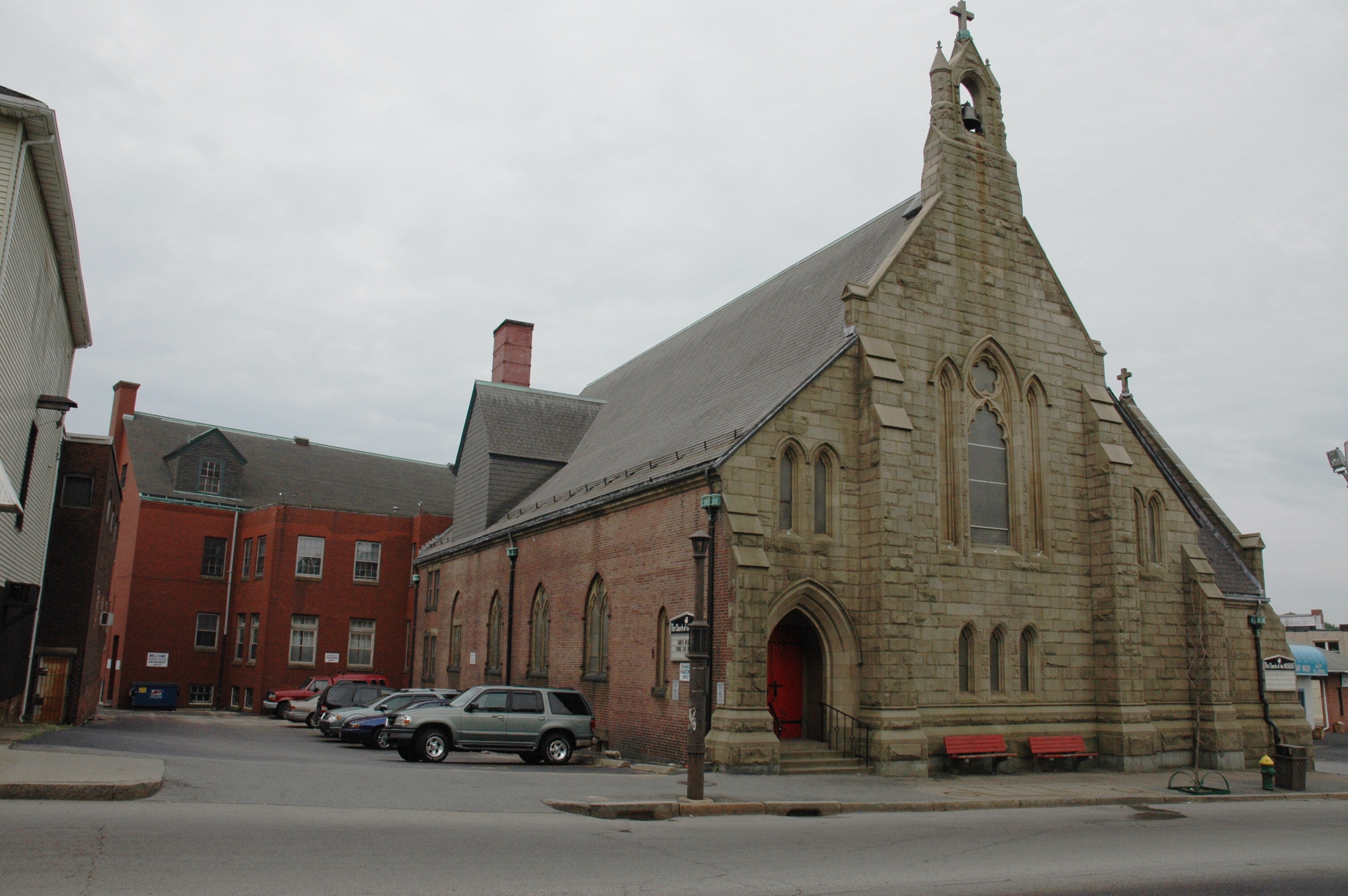
The King's Cathedral, in Providence's Olneyville neighborhood. (wstl.us)

The King’s Cathedral, in Providence’s Olneyville neighborhood. (wstl.us)

The King’s Cathedral, a church in Olneyville whose motto is “Where Everyone Is Royalty,” and its leader Bishop Jeffrey Williams hosted the inaugural session of this year’s “Beyond Buildings” symposium of the Providence Preservation Society. “Beyond Buildings” rubs me wrong, as if PPS were slightly abashed at being interested in architecture instead of people. But as the bishop pointed out in his welcoming remarks, “What people see helps people envision what they want to become.”

You tell ’em, Reverend!

The subtitle of this year’s symposium is “Preserving the Livable Neighborhood” – which the society has been pursuing actively since the 1980s under Wendy Nicholas, who was its first director (I believe) to draw the society’s attention away from College Hill.

While listening last night to keynote speaker Donovan Rypkema, an expert in the economics of place, my stomach was hankering for pulled pork from Wes’ Rib House, nearby, but as the site of the evening’s VIP reception, this was not to be. Still, Rypkema had some interesting things to say about his area of expertise, which is called “rightsizing.” That is how cities are trying to address issues raised by diminished municipal population.

He said that cities addressing such issues put far too low a priority on the role historic districts can play in civic regeneration. The historic districts in cities studied by Rypkema’s firm, PlaceEconomics, tend to lose less population per square mile than their host cities as a whole. The rate of home foreclosure is less in historic districts than in cities as a whole. While surveys show that people don’t like high population density in general, they do like historic districts more than newer neighborhoods with lower, even suburban, densities. So it is extraordinarily important to learn from these places.

Rypkema cited a range of factors that strengthen historic districts compared with other neighborhoods. Density, which reduces infrastructure costs and increases sociability and activism in a neighborhood, is just one. Another is neighborhood character, or how pretty it is. Although history certainly plays a vital role in creating historic districts and especially their distinctive qualities, Rypkema correctly correlates the popularity and high property values of historic districts with their beauty.

I would go further and insist that, going forward, the advantages of historic districts spring less from their history than from their beauty. Their beauty does indeed spring from the historical fact that such districts were almost all built before beautiful architecture was booted from the design and building industry. But the fact is that people who buy and rent houses in historic districts do so not because of the history of their house or neighborhood but because of their beauty. It is beauty more than history that will create jobs and boost populations in Olneyville, in Providence, in Rhode Island.

As Rhode Island considers how to rebrand itself, Governor Raimondo and her new team of rebranding experts should keep this in mind. Our history makes us who we are, but in terms of selling the Ocean State to potential visitors and new citizens, and creating jobs, beauty is a more easily salable commodity. Beauty is first-hand experience while history is second-hand experience. While beauty is appreciated immediately through our senses, history is appreciated only through knowledge, which must first be acquired. This is why it is easier to “sell” beauty than history.

In determining how historic districts can play a leadership role in civic regeneration – that is, by giving more neighborhoods the qualities that make historic districts popular and valuable – the importance of beauty cannot be overstated. That is why incorporating the architectural principles that create beauty in new architecture is just as important as preserving those principles in buildings that are saved. Saving a beautiful building prevents the decline of beauty in a neighborhood, but only the construction of a new building of beauty can add to it. What Donovan Rypkema sees as the role of historic districts in civic revitalization should be harnessed to turn less advantaged neighborhoods, such as Olneyville, into ones that have all the character of historic districts. This is no less important than solving the problems of crime, poverty and poor schools – but it is a helluva lot easier.

Notwithstanding its “Beyond Buildings” moniker, I hope this is what the society’s guests will take away from their Olneyville sessions at the King’s Cathedral today and tomorrow.

PPS will at some point make last night’s keynote available on video. In the meantime, readers should view at least some of the lengthy talk recently given in Charleston, S.C., by Andrés Duany, the New Urbanism founder whom Charleston’s Mayor Riley asked to update the city’s landmark process. Much of what he says is equally useful to Providence, which rivals Charleston as a city reliant on the quality of its built environment, and whose beauty is also facing challenges from modern architecture that undermines its brand.

For more information on those sessions, go to the website of the Providence Preservation Society, which next year will reach 60 years in operation.

Posted in Architecture, Architecture Education, Architecture History, Art and design, Development, Preservation, Providence, Urbanism and planning, Video | Tagged , , , , , , , , , , | 2 Comments

Nat’s natural advocacy op

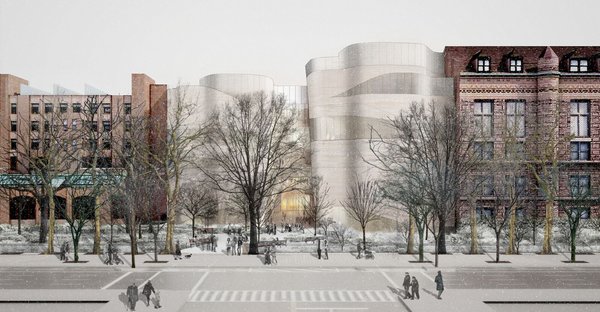
Proposed rear addition to Museum of Natural History. (NYT)

Proposed rear addition to Museum of Natural History. (NYT)

The American Museum of Natural History, in New York City, has announced plans to build an addition that would fill up the lovely garden space known as Theodore Roosevelt Park, where Billy, Victoria and I sojourned for half an hour after visiting last spring.

Interior of proposed addition. (NYT)

Interior of proposed addition. (NYT)

The New York Times’s Robin Pogrebin reports in “Museum of Natural History Reveals Design for Expansion” that the proposal is “both cautious and audacious.” She says it introduces “a contemporary aesthetic that evokes Frank Gehry’s museum in Bilbao, Spain, in its undulating exterior and Turkey’s underground city of Cappadocia in its cavelike interior.”

Not sure which of these is the cautious and which the audacious. A Gehryesque swooping of glass and steel might seem audacious but audacious today is really clichéd, de rigueur and hence perhaps intended to be interpreted as somewhat cautious. The more the public hates it the higher the “quality” of design. But my guess is that the underground Turkish city is cautious – after all, it would be inside.

The proposal, designed by Chicago architect Jeanne Gang, still must be approved by the city’s Landmarks Preservation Commission and other bodies. The neighborhood has already expressed its concern. Advocacy still being part of the mission of the Institute of Classical Architecture & Art, whose national headquarters is in Midtown, perhaps the nation’s leading voice for traditional design should speak up on behalf of the neighborhood.

The cave-like indoor exhibition space sounds intriguing, but its poopy-doopy container would not only plop ugliness where park space now graces the intersection of Columbus Avenue and West 79th Street, it would rob us all of a good swath of the rear of the museum.

Like doctors, architects’ motto should be “First, do no harm.” This addition violates that edict and should be opposed, not least by the ICAA.

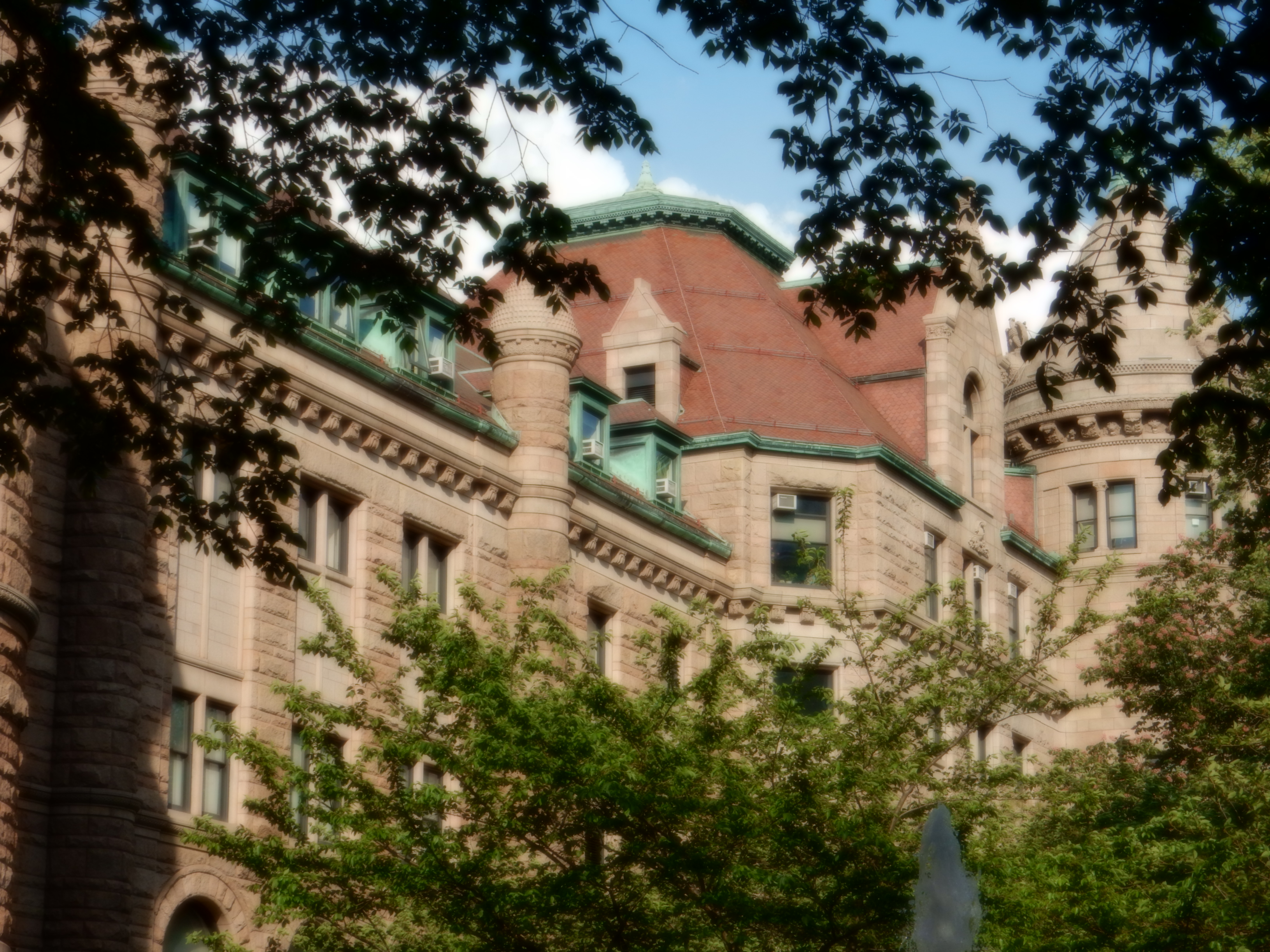
Rear of Museum of Natural History, facing Columbus Avenue. (Photo by David Brussat)

Rear of Museum of Natural History, facing Columbus Avenue. (Photo by David Brussat)

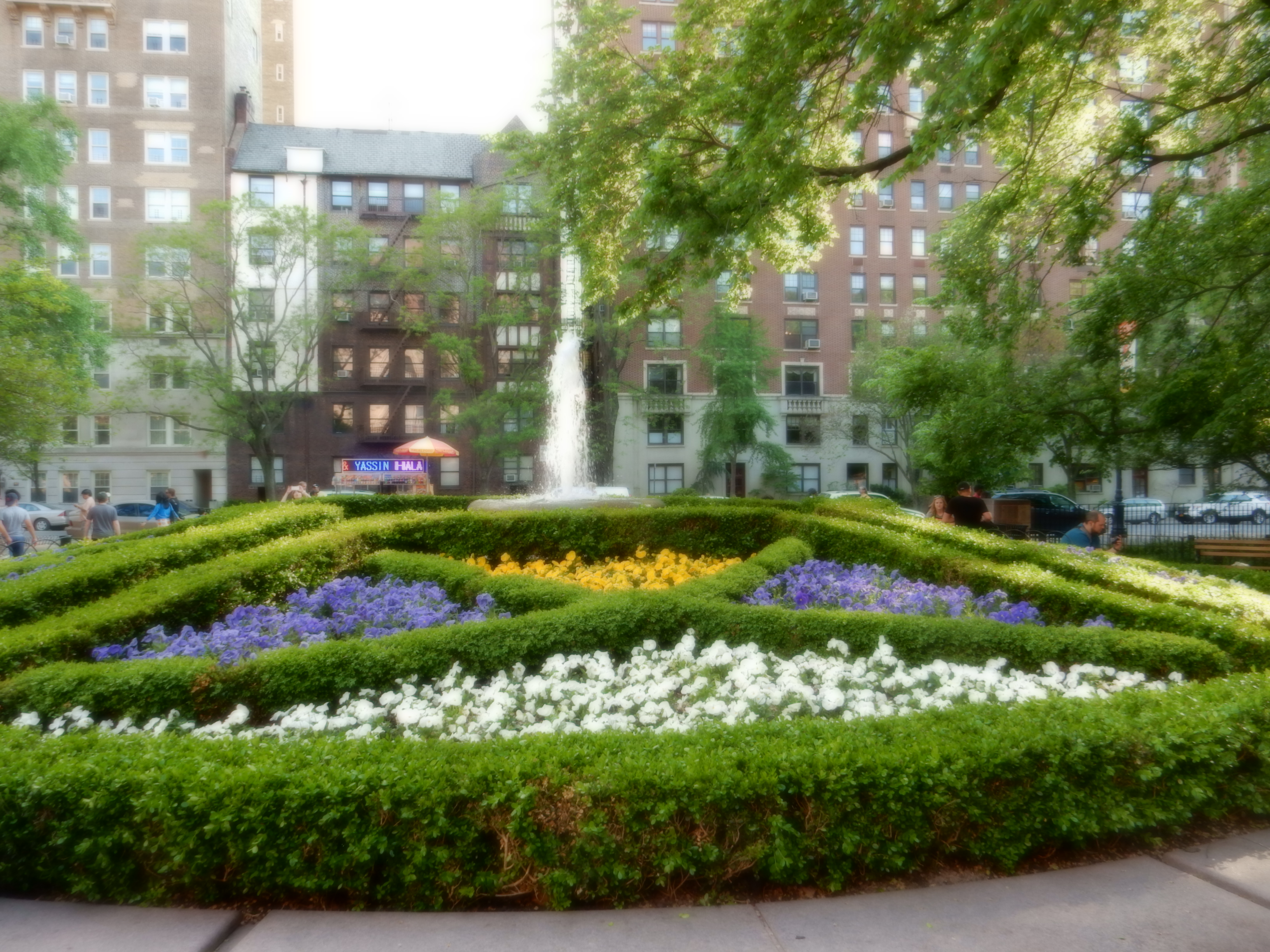
Theodore Roosevelt Park behind the museum. (Photo by David Brussat)

Theodore Roosevelt Park behind the museum. (Photo by David Brussat)

Posted in Architects, Architecture, Architecture Education, Architecture History, Art and design, Development, Preservation, Urbanism and planning | Tagged , , , , , | 1 Comment

“Lost in a Good Book”

Unattributed collage about the Thursday Next series of comic sci-fi novels. (frivolouswasteoftime.wordpress.com)

Unattributed collage about the Thursday Next series of comic sci-fi novels. (frivolouswasteoftime.wordpress.com)

To illustrate the generally ecumenical theme of this blog, I will quote a few passages from Lost in a Good Book, a sci-fi comic thriller by Jasper Fforde, in which heroine Thursday Next, a literary detective who can jump in and out of famous novels to solve the crimes therein, visits an exhibit of modern art at the church of the Global Standard Deity.

Jasper Fforde (thevarsity.ca)

Jasper Fforde (thevarsity.ca)

Unlike modern architecture, which we cannot choose to avoid, modern art is not, as recently said of modern architecture, “almost always and everywhere an enemy of the public good.” Like modern architecture, there is often talent on display by its authors, perhaps almost as often as there is an effort to disguise a lack of talent. Also like modern architecture, even when “good” it often sears the eye. Then again, one must almost always enter a building (often an ugly one) at one’s own volition to inflict that pain on oneself, and it does not directly injure the wider public that is able to ignore it. (Modern art does indirectly injure the wider public by diverting whatever talent it may express toward lesser rather than greater endeavors, artistic or otherwise.)

With that, the passages on an art exhibition from Lost in a Good Book:

We approached a small scrum where one of the featured artists was presenting his latest work to an attentive audience composed mostly of art critics who all wore collarless black suits and were scribbling notes in their catalogues.

“So,” said one of the critics, gazing at the piece through her half-moon spectacles, “tell us all about it, Mr. Duchamp.”

“I call it The Id Within,” said the young artist in a quiet voice, avoiding everyone’s gaze and pressing his fingertips together. He was dressed in a long black cloak and had sideburns cut so sharp that if he turned abruptly he would have had someone’s eye out. He continued: “Like life, my piece reflects the many different layers that cocoon and restrict us in society today. The outer layer – reflecting yet counterpoising the harsh exoskeleton we all display – is hard, thin, yet somehow brittle – but beneath this a softer layer awaits, yet of the same shape and almost the same size. As one delves deeper one finds many different shells, each smaller yet no softer than the one before. The journey is a tearful one, and when one reaches the center there is almost nothing there at all, and the similarity to the outer crust is, in a sense, illusory.”

“It’s an onion,” I said in a loud voice.

There was a stunned silence. Several of the art critics looked at me, then at Duchamp, then at the onion.

I was sort of hoping the critics would say something like “I’d like to thank you for bringing this to our attention. We nearly made complete dopes of ourselves,” but they didn’t. They just said: “Is this true?”

To which Duchamp replied that this was true in fact, but untrue representationally, and as if to reinforece the fact he drew a bunch of shallots from within his jacket and added: “I have here another piece I’d like you to see. It’s called The Id Within II (Grouped) and is a collection of concentric three-dimensional shapes locked around a central core.”

Cordelia pulled me away as the critics craned forward with renewed interest. “You seem very troublesome tonight, Thursday. Come on, I want you to meet someone.”

Sci-fi is not everyone’s literature of choice, of course, and normally not mine, but Fforde’s novels are so curious, and written with such pitch-perfect style, elegance and wit, that I highly recommend his books. … Thursday continues to consider the exhibit:

I left Cordelia and Mr. Flex plotting their next move in low voices and went on to find Bowden, who was staring at a dustbin full of paper cups.

“How can they present this as art?” he asked. “It looks just like a rubbish bin!”

“It is a rubbish bin,” I replied. “That’s why it’s next to the refreshments table.”

“Oh,” he said. …”

And a bit later:

I found Cordelia and Mr. Flex discussing the merits of a minimalist painting by Welsh artist Tegwyn Wedimedr that was so minimalist it wasn’t there at all. They were staring at a blank wall with a picture hook on it.

“What does it say to you, Harry?”

“It says … nothing, Cords – but in a very different way. How much is it?”

“It’s called Beyond Satire and it’s twelve hundred pounds, quite a snip. Hello, Thursday!”

Later still:

“I know that only too well,” I replied, steering them towards a quiet spot next to a model of a matchstick made entirely out of bits of the houses of Parliament.”

These finely wrought send-ups of modern art and popular reaction to them must have been fun for Jasper Fforde to write. I enjoyed not only reading them but transcribing them onto this post for your enjoyment. By the way, anyone who wants to try him out might do well to start with The Eyre Affair, my first and still my favorite, about how she solves a crime in the novel Jane Eyre. Here is how Amazon describes the series:

Fans of Douglas Adams and P. G. Wodehouse will love visiting Jasper Fforde’s Great Britain, circa 1985, when time travel is routine, cloning is a reality (dodos are the resurrected pet of choice), and literature is taken very, very seriously: it’s a bibliophile’s dream. England is a virtual police state where an aunt can get lost (literally) in a Wordsworth poem and forging Byronic verse is a punishable [crime].

Posted in Architecture, Art and design, Books and Culture, Humor | Tagged , , , , , , , | 1 Comment

Misconstruing “starchitect”

Frank Gehry's proposed Eisenhower memorial. (architizer.com)

Model of Frank Gehry’s proposed Eisenhower memorial. (architizer.com)

Kriston Capps’s piece for CityLab, “Leave Starchitects Alone,” is filled with so much hooey that I am embarrassed to be inflicting it on my readers. It is part of the continuing effort to tar opposition to modern architecture as partisan and conservative. If the uglification of our built environment is a political issue – and I wish it were – then why do both political parties seem equally reluctant to masticate this big, juicy porterhouse steak?

In particular, Capps is miffed at the growing popularity of the word starchitect to denote an all-purpose bogeyman. Capps misconstrues the word and the meaning attached to it. There is (again, unfortunately) almost no political or partisan content in the widespread public distaste for starchitects and starchitecture. Starchitects are disliked not because they are wasteful – though often they are – but because their work is ugly. By ugly, I mean intentionally disruptive to the beauty of cities.

Frank Gehy’s unpopular design for a proposed memorial to Dwight Eisenhower has been hooted across the political spectrum because it is ugly. Its few positive reviews embrace its essential purpose as an attack on traditional monument design in Washington. That is a good enough reason for conservatives to dislike it, of course, but liberals dislike it, too.

Capps correctly asserts that it is “quiet for a Gehry,” and it is. But it is not “neoclassical” – that is absurd; it is anti-classical. Capps is trying to set up a false scenerio to dismiss conservative critics of Gehry as engaging in pure political partisanship despite the alleged “conservatism” of its design. But even he admits that the National Review piece he targets (“An Awful Enthusiasm“) expresses admiration for Gehry’s only skyscraper, at 8 Spruce St., in New York City. (I’ve written in its defense as well.)

The bottom line is that starchitects are almost all modernists (Robert A.M. Stern, who is known for his classical buildings, is the only American exception), and almost all of their work undermines what most people conceive as the beauty of cities. This, whatever Kriston Capps may think, is the only reason why modern architecture is so widely disliked.

By the way, here are my thoughts on the word starchitect in a post, “In defense of ‘starchitect,'” about a year ago. Coincidentally, it criticizes a piece by James Russell, the critic who has just announced his new municipal architecture job in New York City. Good luck to him!

Tip of the cap to Justin Shubow, president of the National Civic Art Society in Washington, for sending this CityLab piece to TradArch.

Posted in Architects, Architecture, Architecture History, Art and design, Books and Culture, Development, Urbanism and planning | Tagged , , , , , , , , | 5 Comments

Loopy inSANAA “River”

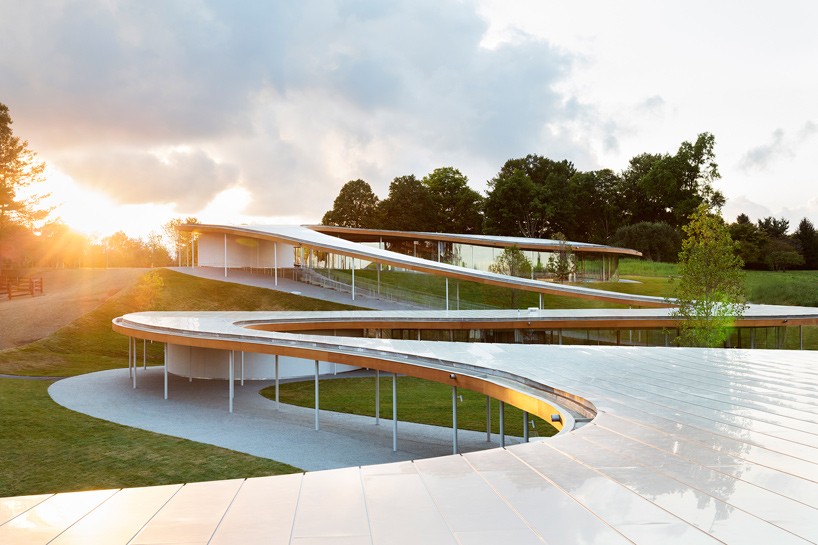
The River, a pavilion by SANAA in New Canaan, Conn. (worldarchitecturenews.com)

The River, a pavilion by SANAA in New Canaan, Conn. (worldarchitecturenews.com)

My life as a reporter of architectural design review proceedings has over-taxed my ocular muscularity. My eyeballs roll furiously whenever an architect declares that his building’s “remarkable transparency” allows it to give “new meaning to the concept of ‘blending in.'”

The quotes come from an article in World Architecture News, “A River Runs Through It,” about the River, a pavilion of glass by the Tokyo architecture firm SANAA that winds through a meadow of New Caanan, Conn., farmland. Its location on private property does not absolve my eyes of rolling but surely absolved the landowner of design review. He or she is no doubt a wealthy “gentleman farmer” who wants to cash in on the proximity of his or her “farm” to Philip Johnson’s Glass House, also in New Canaan.

And why did the gentleman farmer hire SANAA to design it? Perhaps the allure of the double-A played a role, consciously or coincidentally.

SANAA's project in Paris. (openbuildings.com)

SANAA’s project in Paris. (openbuildings.com)

SANAA has committed the far greater crime of beginning to erect another snaky glass abomination in a much more important place. It has a designed an ugly new facade for La Samaritaine, the famous department store along the Rue de Rivoli in Paris, recently approved for construction after a bout of courtroom jockeying. All Paris shares blame for this eyesore-to-be. In the case of the River, the blame belongs not to SANAA, which is merely a hired thug, but to Grace Farms, whose “president” is Sharon Prince – so, no, not a “wealthy gentleman farmer,” not quite, but someone who spent $67 million to sheath 83,000 square feet of exhibition space, a library, a welcome center and a gym in a glass tube stretching a quarter of a mile on 80 acres of rolling meadow and hillside.

But let’s not chuckle from the peanut gallery. The River is a “unique place where people could go to convene with nature, encounter the arts, pursue justice, foster community and explore faith.” Well, gosh. That sure is a unique building! Are they sure it’s not the White House? The River has been touted as “brilliant,” and surely it must be, since its design comes to us from a winner of the Pritzker Prize.

Nevertheless, it is “barely there,” “completely dissolves into the landscape,” and “creates architecture’s ultimate disappearing act,” and yet has “enormous presence.” So says reporter Sharon McHugh of worldarchitecturenews.com, who understands that if you are praising the work of a certifiable starchitect, your words will not be challenged and thus need not make sense.

GTECH. (dish.andrewsullivan.com)

GTECH. (dish.andrewsullivan.com)

The fact is that you cannot spend $67 million and end up with a building that fails to make its mark upon the landscape. Like many buildings whose plans I’ve watched architects trot out at design review – not least GTECH headquarters, in Providence, whose glassy exterior was billed as reflecting and hence disappearing into its context! – the River leaves a clear slither upon the landscape it snakes through.

I leave for another day why architects so frequently seek to persuade the public that their work will be invisible!

Like Johnson’s Glass House, a building set in private verdure in a small town like New Canaan may be appreciated for doing far less damage than a building in downtown New Canaan, or for that matter a building on the Rue de Rivoli. So perhaps we should applaud Sharon Prince for diverting SANAA’s attention from more damaging opportunities.

A tip o’ the ol’ fedora to Anne (“The Fair”) Fairfax for flinging me the fairly farfetched fandango from Fairfield County.

Posted in Architects, Architecture, Art and design, Development, Landscape Architecture, Urbanism and planning | Tagged , , , , , | 3 Comments