Walker: “Babylon electrified”

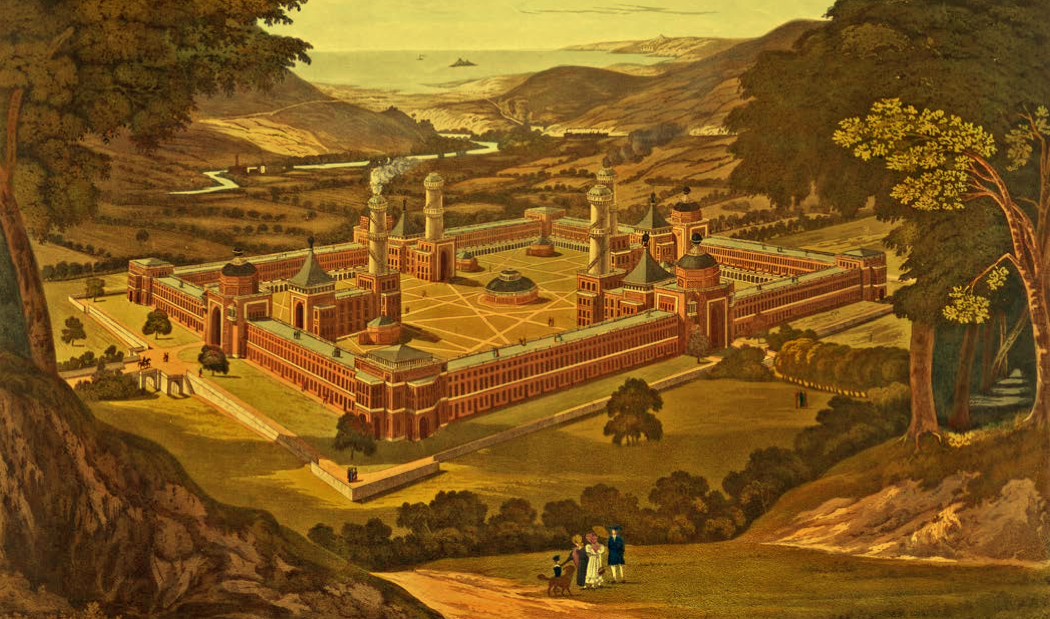
1838 version of Robert Owens's New Harmony utopia with overlay of Mughal forms. (courtold.org.uk)

1838 version of Robert Owens’s New Harmony utopia with overlay of Mughal forms. (courtold.org.uk)

Nathaniel Robert Walker, whose essay on food and architecture many readers here recall fondly, has sent me another essay, this one entitled “Babylon Electrified: Oriental Hybridity as Futurism in Victorian Utopian Architecture.” The title may sound daunting but, as with “Architecture and food,” the subject and its treatment are fascinating and delightful.

With much detail and quotation from original sources, Walker – who, Brown doctorate in hand, now teaches architectural history at the College of Charleston – demonstrates that much architectural thinking in the 19th century imagined cities of the future that partook of architectural styles from around the world. Walker offers a collection of quotes from the 20th century asserting that architects of the prior century embraced a variety of historical styles, often several in the same building, primarily in order to mask or even to deter the onset of the Industrial Age and its “utilitarian” styles. Walker then suggests that much thinking since then has undermined the validity of that conceit:

In the many decades that have passed since these condemnations of architectural “borrowing,” a number of scholars have demonstrated that nineteenth-century revivalist eclecticism was, in fact, often deliberately crafted not as hodgepodge escapism, but rather as part of a progressive search for a definitively modern — if obviously not Modernist — architecture.

Of course, the debate continues over whether and to what extent classicism has been, continues to be, and ought to be mixed with the many strains of tradition, Western and otherwise. With the upcoming treatise on classicism and heterodoxy by New Urbanist founder Andrés Duany, that discussion has reached a fever pitch (rather, maintained a fever pitch for several years). It’s hard to find a type of traditional architecture that has not been permeated by the urge of individuals and organizations to monkey around with what is considered orthodox. Walker’s essay only confirms that heterodoxy’s history reaches even into the most distant corners of time and geographical space.

Nathaniel Robert Walker’s essay first appeared in Revival: Memories, Identities, Utopias, an online book newly published and offered free to the reading world by the Research Forum of the Courtauld Institute of Art at Somerset House, Strand, London, whose courtesy in permitting this reprinting is deeply appreciated. Other essays in the book, such as “The Problem of the Expiration of Style and the Historiography of Architecture,” by Martin Horáček, are also worthy of perusal.

Posted in Architecture, Architecture Education, Architecture History, Art and design, Urbanism and planning | Tagged , , , , , , , , | Leave a comment

My haunted reading list

Tapestry of the Battle of Agincourt, Nov. 4, 1415. (herodote.net)

Tapestry of the Battle of Agincourt, Nov. 4, 1415. (herodote.net)

Two days after Halloween and and two days before the 600th anniversary of the battle of Agincourt on Wednesday*, my reading list runneth over with coincidence. Apropos of nothing to do with this blog about architecture – hence the castle of Agincourt in the background of the tapestry above – I cannot resist shouting boo at this evidence of a certain symmetry in the architecture of happenstance, which spans my three latest-read books.

First I read, or reread from decades ago, George MacDonald Fraser’s Flashman at the Charge, in which our heroic poltroon manages to survive the Charge of the Light Brigade at Balaclava (I almost wrote Calatrava), in the Crimean War of 1854. I then read half of Lost in a Good Book, a sci-fi romp through literature by Jasper Fforde, whose characters venture in and out of old books to solve various crimes therein. His heroine Thursday Next marries a man who lost a leg in a modern Crimean War. Then I stopped in the middle of Lost to read Agincourt, a historical novel by Bernard Cornwell, and then returned to Lost just as Next’s lawyer boasts, “They said I couldn’t get Henry V off the war-crimes rap when he ordered the French POWs murdered, but I managed it.” This was an allusion to Henry’s order amid the slaughter at Agincourt when a third French attack was expected. (It never came and Henry cancelled the order.)

Well, I don’t usually notice this many coincidences in what I read, but they coincided with my blog production at a point where I was flailing around for a topic more directly related to my usual theme. My next post will be, not coincidentally, about architecture.

*By Oct. 25, St. Crispin’s Day, which was the 600th anniversary of the Battle of Agincourt before the adoption of the Georgian calendar shifted it to Nov. 4, I had experienced the first and second coincidence related above, but not the third. Oddly enough, the Charge of the Light Brigade was on Oct. 25, 1854.

Posted in Architecture, Art and design, Books and Culture | Tagged , , , , , , , | 2 Comments

Haunting if not haunted

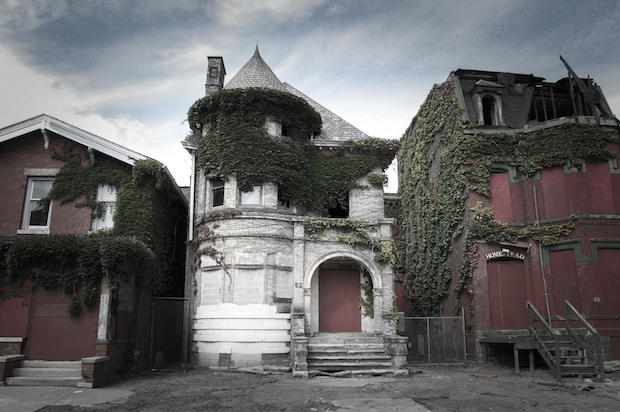
Photos of abandoned houses by Seph Lawless.

Photos of abandoned houses by Seph Lawless.

Now this is more like it. Here, courtesy of Mental Floss, are “26 Hauntingly Beautiful Photos of Abandoned Homes Across America,” houses that look haunted, that may be haunted. They are merely abandoned, and too bad! They are more the sort of thing I had hoped to bring to readers in my last Halloween video earlier today. Some look like they could be lovely homes – for me, you or your neighborhood ghoul. Enjoy!

Posted in Architecture, Architecture History, Art and design, Photography, Preservation, Urbanism and planning | Tagged , , , | Leave a comment

Haunted houses in America

The most beautiful building in Rhode Island reflected in the gray windows of the ugliest building in Rhode Island, suggesting a genuinely scary proximity. (designxri.tumblr.com)

The most beautiful building in Rhode Island reflected in the gray windows of the ugliest building in Rhode Island, suggesting a genuinely scary proximity. (designxri.tumblr.com)

GTECH headquarters is certainly the scariest building in Providence, even with the recent relocation there of Capital Grille (from Union Station!), following in the brave footsteps of Ruth’s Chris Steak House. But GTECH is not haunted. It is scary. Not the same difference. As it is Halloween, let me post “The 7 craziest, scariest most extreme haunted attractions in America.” Yes, I think GTECH should be in there. It is not. I have not looked at all of the videos. I cannot vouch for the quality of their hauntedness, but they did make it into this collection. So here it is. Frighten yourself. Have fun.

Posted in Architecture, Architecture History, Art and design, Providence, Video | Tagged , , , | Leave a comment

Rhode Island turning point

Waterplace Park in 2000 before construction of modernist towers. (Photo by Richard Benjamin)

Waterplace Park in 2000 before invasion of modernist towers. (Photo by Richard Benjamin)

Rhode Island is at a turning point. Going forward it can encourage new development that strengthens its brand of beauty or it can throw away a competitive advantage by allowing developers to build projects that will transform the Ocean State into a place that alienates its own people and casts an evil eye on potential visitors and new citizens.

Going down the wrong path, which we are now on, requires only the inertia of the state. Going down a better path requires no new programs, no new laws, no new money and no new state employees. It merely requires an assertion of will by the state, its governor and its civic leaders – at the very least a polite phone call by the governor to each developer.

But speed is vital. A host of new projects are in stages where design is determined. These are proposals in the I-195 Redevelopment District; the parks associated with the district; proposals at South Street Landing for a hotel, two dormitories and a garage next to the planned nursing school in that lovely old power plant; the proposal for a public food and cuisine arts market near India Point Park where Shooters used to be; a couple of hotel proposals downtown (both of these proposals have already taken several steps toward a more traditional design approach); and other proposals scattered throughout the state, including a new welcome center near where I-95 heads into Connecticut.

Meanwhile, Governor Raimondo seeks to rebrand Rhode Island. Let’s hope the campaign builds on our strengths instead of undercutting them.

This decision is not about moving “forward” or “backward,” or rejecting “the future” to embrace “the past.” This is about moving into the future based on principles that served us well in the past, upon which we have based a movement to preserve our architectural heritage, and which underlies Rhode Island’s strong reputation for beauty.

Nor is this decision against science or technology. It is about correcting a misguided decision, made gradually starting a century ago, to “reflect” the Machine Age by designing buildings to look like machines. But buildings that look like machines just look like machines. They are not any more efficient than buildings that “look like the past” – often they are less efficient, and thus less sustainable.

Buildings of the past, before the Thermostat Age, were designed to use climate to help keep heating and cooling costs down. Features like porches, wide roof overhangs, deeply inset fenestration, window shutters, thick walls and rooms with high or low ceilings brought in more or less of the sun’s heat as desired, took advantage of breezes, and in many different ways did more to retain heat, or cool it down. Designing buildings this way does not mean abandoning technology that helps this process, or advances that make houses more livable in the ways we’ve come to love.

Most new architecture increases the public’s tendency to ignore the built environment as much as they can, a human defense mechanism against the prevalence of poor design. Few people like most new buildings designed to look like machines, or built with supposedly high-tech materials, and reliant on petroleum destined to grow both increasingly scarce and costly. Most people prefer buildings that are designed in traditional styles – a matter of “taste” that science increasingly attributes to neurobiological influences.

Rhode Island can occupy the leading edge of these design trends – along with the slow-food movement and other increasingly popular efforts to return to more natural or traditional ways of satisfying our needs and desires – or it can continue to stake out the rear guard of yesterday’s new tomorrow.

Posted in Architecture, Art and design, Development, I-195 Redevelopment District, Photography, Preservation, Providence, Rhode Island, Urbanism and planning | Tagged , , , , , , | 1 Comment

Sweet breather at the BPL

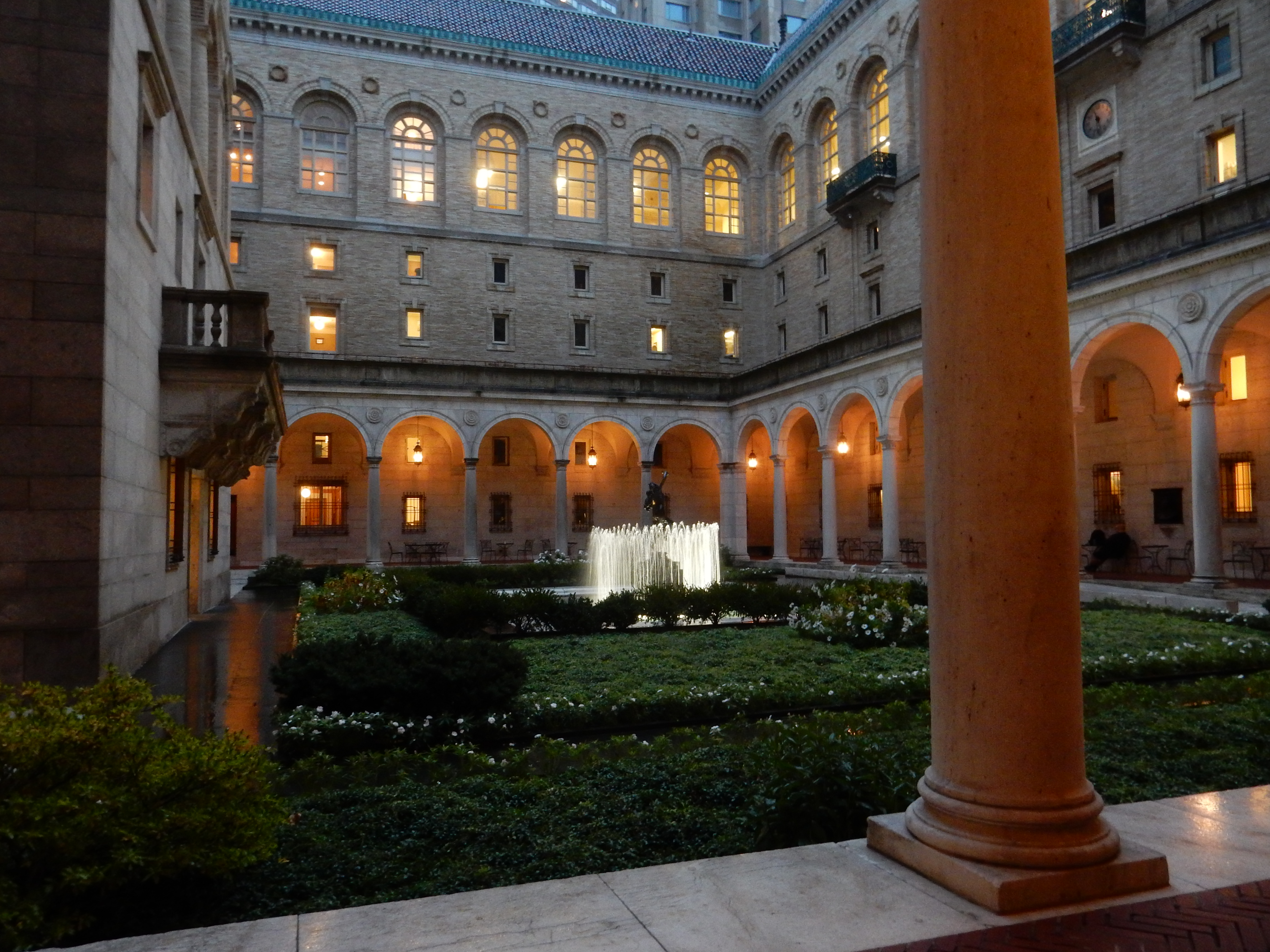
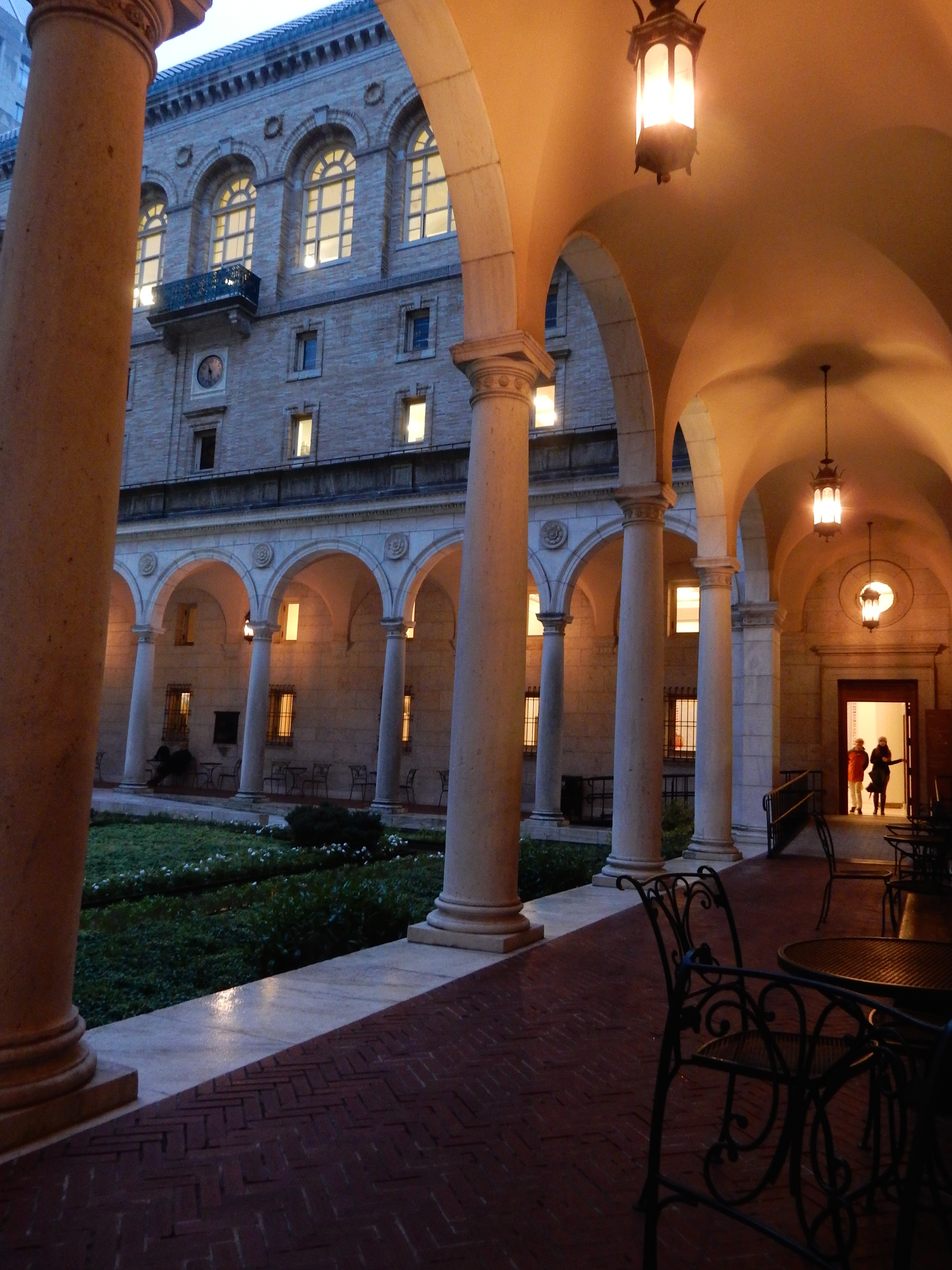
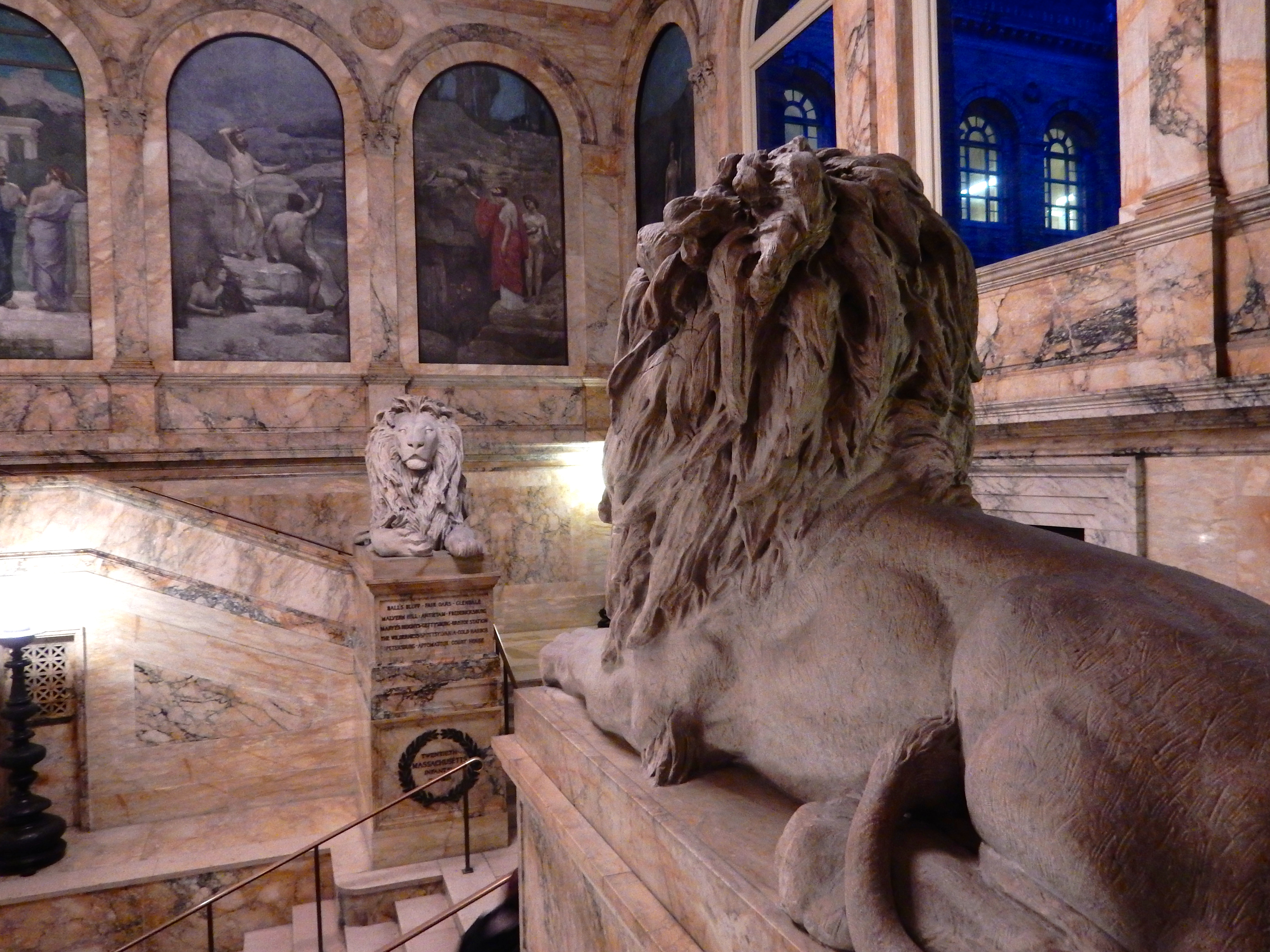
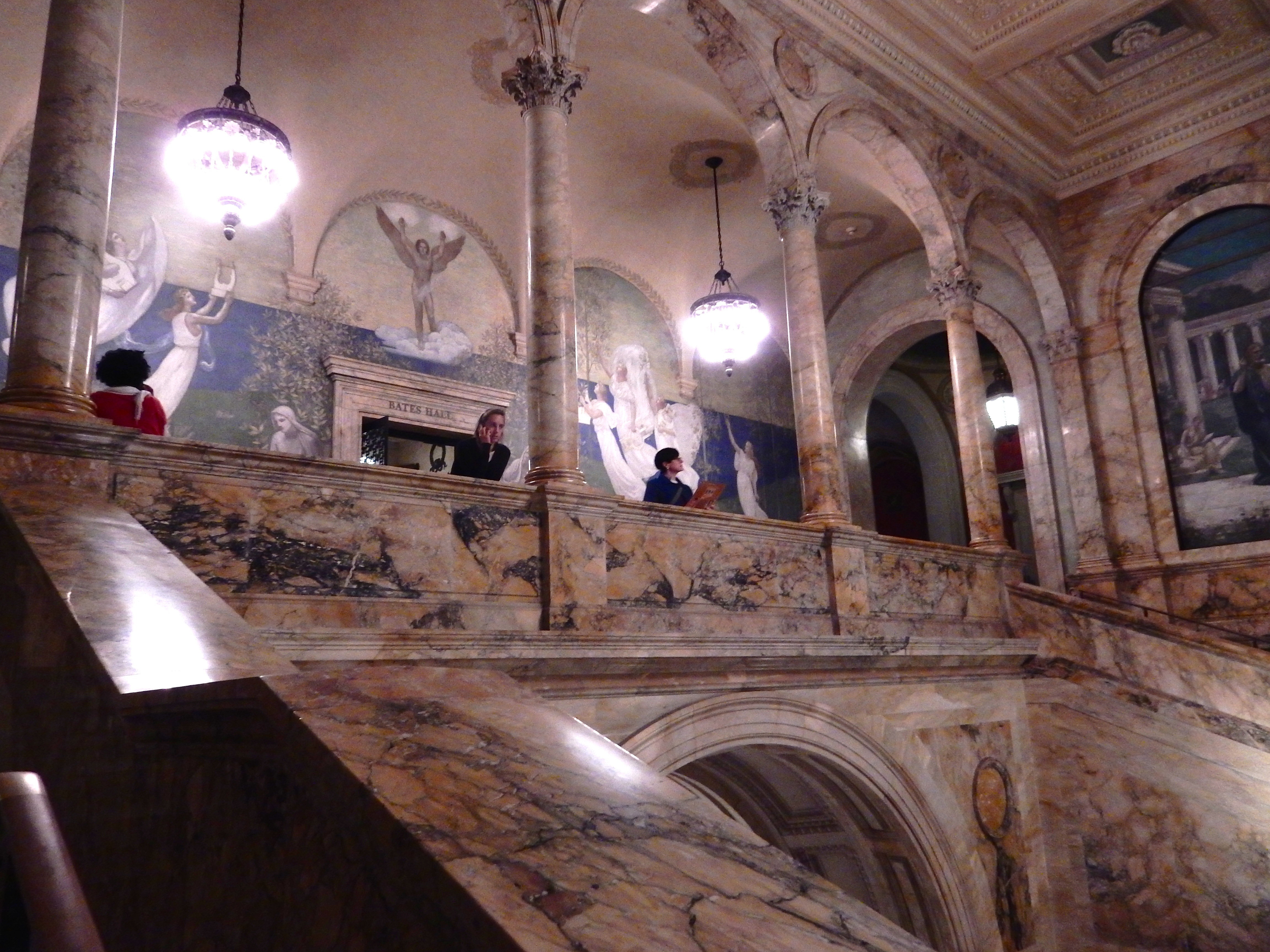
The courtyard at the Boston Public Library, designed by Charles Follen McKim. (Photos and video by David Brussat)

The courtyard at the Boston Public Library, wet and lovely. (Photos and video by David Brussat)

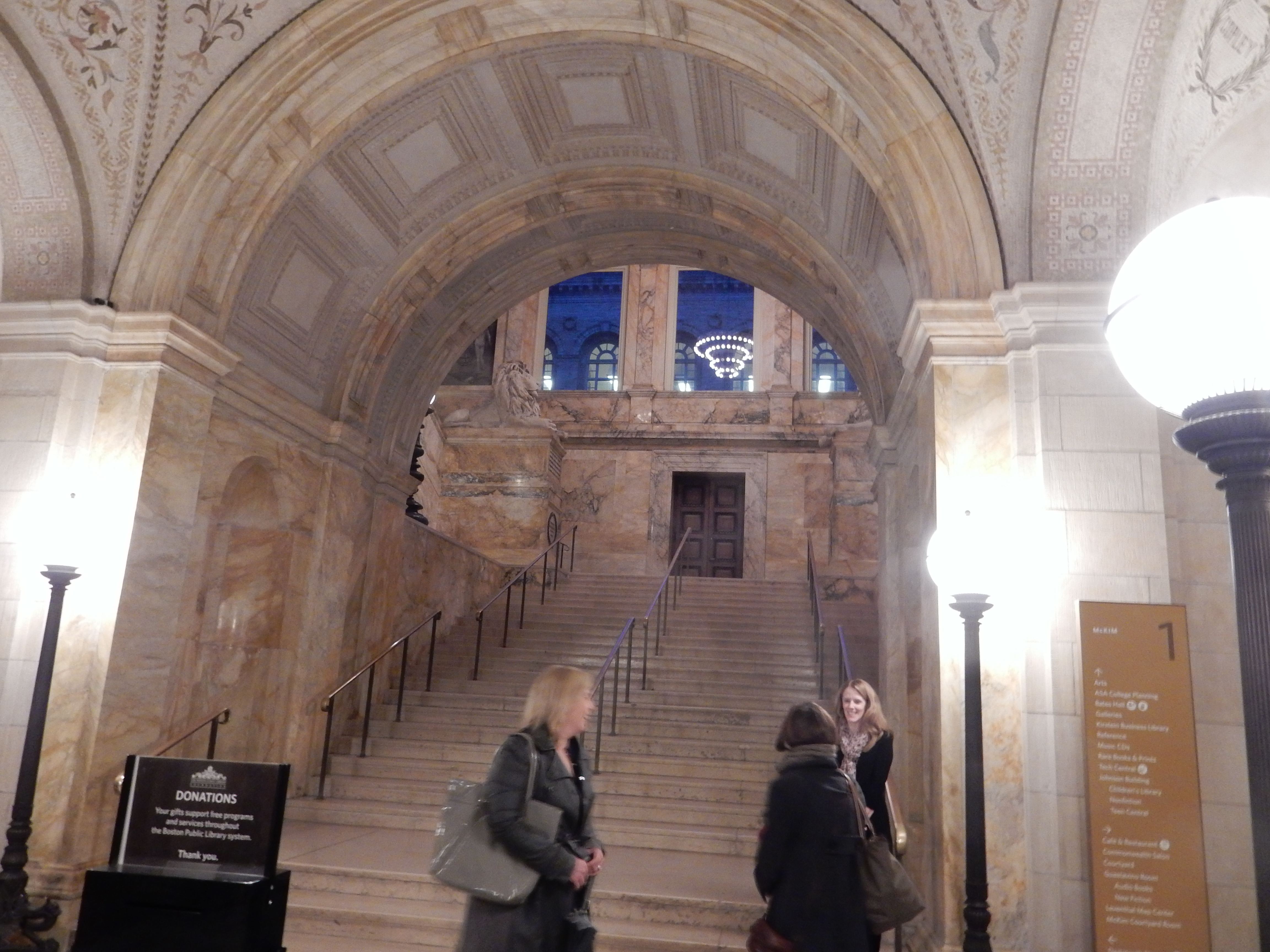
Took the MBTA up to Boston yesterday evening to a meeting of the New England chapter of the Institute of Classical Architecture and Art. After emerging from the Back Bay stop into Dartmouth Street, there is always the difficult choice (since my train usually arrives a bit early) whether to waste time at the Copley Plaza or at the Boston Public Library. The beauty of the library, designed by Charles Follen McKim, may be said to engage in its own sort of advocacy. It won me over, this evening at least.

DSCN9664

DSCN9667

DSCN9670

DSCN9671

DSCN9674

Posted in Architecture, Architecture Education, Architecture History, Art and design, Photography, Preservation, Video | Tagged , , , , , | Leave a comment

BIMBY: Beauty here, too!

Screenshot from the BIMBY website. (Prince's Foundation)

Screenshot from the BIMBY website. (Prince’s Foundation)

BIMBY stands for Beauty In My Back Yard. It is a website launched by the Prince’s Foundation for Building Community – Prince Charles’s architectural shop in Great Britain. Even though Britain has tougher official laws against beauty there than we do here, it also has the Prince of Wales fighting for the right of the average Briton to beautiful communities.

Americans have the same right, as a penumbra, you might say, of the right to the pursuit of happiness enshrined in the Declaration of Independence.

Here is how the website describes Beauty In My Back Yard:

The BIMBY Housing Toolkit is a simple and practical online tool which will empower communities to work with local authorities and developers to create a regional BIMBY Housing Manual. It is specifically designed to give both certainty to house builders, who can be sure of their housing’s popularity, whilst also granting security to the community and local authority that new building projects will tie in with local preferences and needs.

BIMBY offers communities the tools to work with developers to design new projects that fit into their settings. It has a “housing tool kit,” a “housing manual” and advice on how to get your manual accepted as part of the local design and development process. Developers are not considered interlopers but as partners in a mutually beneficial transaction. The average developer cares less about the design of a project than whether it has local support, official and popular. BIMBY empowers local residents to provide part of that support in return for projects whose designs beautify the local setting.

People involved in community affairs, seeking to reduce the typical pain of economic development, should look at BIMBY to see what can be used on this side of the pond. In particular, here in Rhode Island, BIMBY might serve well as a corrective to the Tool Kit for Developers working in the I-195 corridor and other projects. If BIMBY takes hold in America as well as in Britain and elsewhere, NIMBY need not be the growth industry that sees stopping growth as the only way to protect communities.

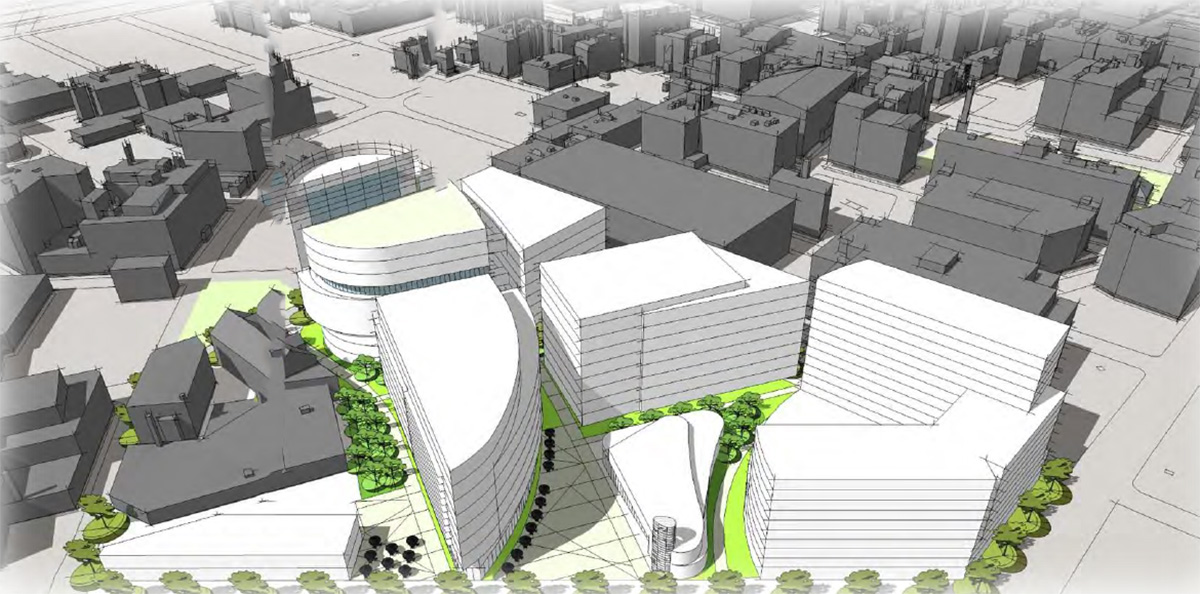
Below is an early design conception of the proposal by Wexford Science & Technology for a project on two parcels of I-195 land in Providence, where the Tool Kit for Developers offered by the I-195 Redevelopment District Commission promotes unattractive design.

Tip o’ the hat and top o’ the day to Hank Dittmar, a consultant for and former chief executive of the Prince’s Foundation, who sent the BIMBY website to the TradArch list and who tips his own hat to the foundation’s Ben Bolgar and his team for their work creating the site.

Proposed research center for the I-195 corridor. (Wexford)

Proposed research center for the I-195 corridor. (Wexford)

Posted in Architects, Architecture, Architecture Education, Architecture History, Art and design, Development, Providence, Rhode Island, Urbanism and planning | Tagged , , , , , , , | 3 Comments

Zaha, FLW & arrogance

Sketch of Zaha Hadid. Artist unattributed. (Spectator)

Sketch of Zaha Hadid. Artist unattributed. (Spectator)

Far be it from me to defend Zaha Hadid. Any ammo you can blow up under her reputation might rock her architecture – its reputation if not its actual existence. Let ‘er rip! I have defended Zaha from accusations that people die at her construction sites, but complaining about her volatile personality is fair game. Now a defense of Zaha’s arrogance has been made by a woman attacking a man for not attacking another man’s arrogance.

In “Correcting the record about arrogant architects,” the (U.K.) Examiner’s art critic Joan Altabe tries to undermine Spectator critic Stephen Bayley’s criticism of Hadid’s arrogance (“Architecture would be better off without Zaha Hadid“) by attacking his his supposedly missed opportunity to criticize the arrogance of Frank Lloyd Wright in a column two years ago unrelated to Hadid or to the arrogance of architects. She writes:

Everything Bayley objects to about Hadid’s arrogance could be said about Frank Lloyd Wright’s hubris. Yet in a column for The Spectator on Dec. 12, 2013, Bayley gave him a pass this way: “Even as a child, Wright did not want to draw Nature. He wanted to be Nature. Of course, he became one of the greatest architects ever.” Really, Stephen, “The greatest architects ever”?

Architecture criticism as he said/she said cannot be carried very far. But this is ridiculous. Frank Lloyd Wright died in 1959. His arrogance – not to mention his immoral private life and his questionable professional ethics – has been part of the case against his work for many decades. And Bayley was hardly, as Altabe puts it, “beside himself with rage” at Hadid’s personality or her architecture. Regarding the latter, even at its tartest his critique was rather lame. Like most of his tribe, he criticizes the architecture apparently without realizing that his critique applies not just to the work of his target but to most modernist architecture, and especially buildings by celebrity architects.

Altabe lets her slip show by removing the words “one of” from her clunky retort to Bayley’s praise of Wright, quoted above. Now, I personally think there’s a good (early) FLW and a bad (late) FLW, but he certainly must be counted as one of architecture’s historical greats. By seeming to doubt that, Altabe only undercuts her own argument.

By the way, the column by Bayley in which he supposedly “gives Wright a pass” for his arrogance is called “The most inspired gift for your child this Christmas,” relating to toys parents can give to stimulate their children’s creativity. After his success, Wright famously recalled his mother’s gift of blocks to her little boy. Bayley criticizes Lego for selling sets of famous architecture, essentially denying Lego’s longstanding open-endedness as a tool for triggering playful young minds. Last time I entered the Lego shop at Providence Place, I looked around, had the same thought, and talked to a clerk. You could no longer buy just a plain set of Legos.

Lego has a set of FLW’s Robie House but nada by Zaha. Sexist? Hardly.

And before we get too far afield of the topic of arrogance, let us not forget the other Frank’s recent middle finger.

Lego set of Frank Lloyd Wright's Robie House. (thecoolist.com)

Lego set of Frank Lloyd Wright’s Robie House. (thecoolist.com)

Posted in Architects, Architecture, Architecture History, Art and design | Tagged , , , , , , | Leave a comment

Into London’s age of grit

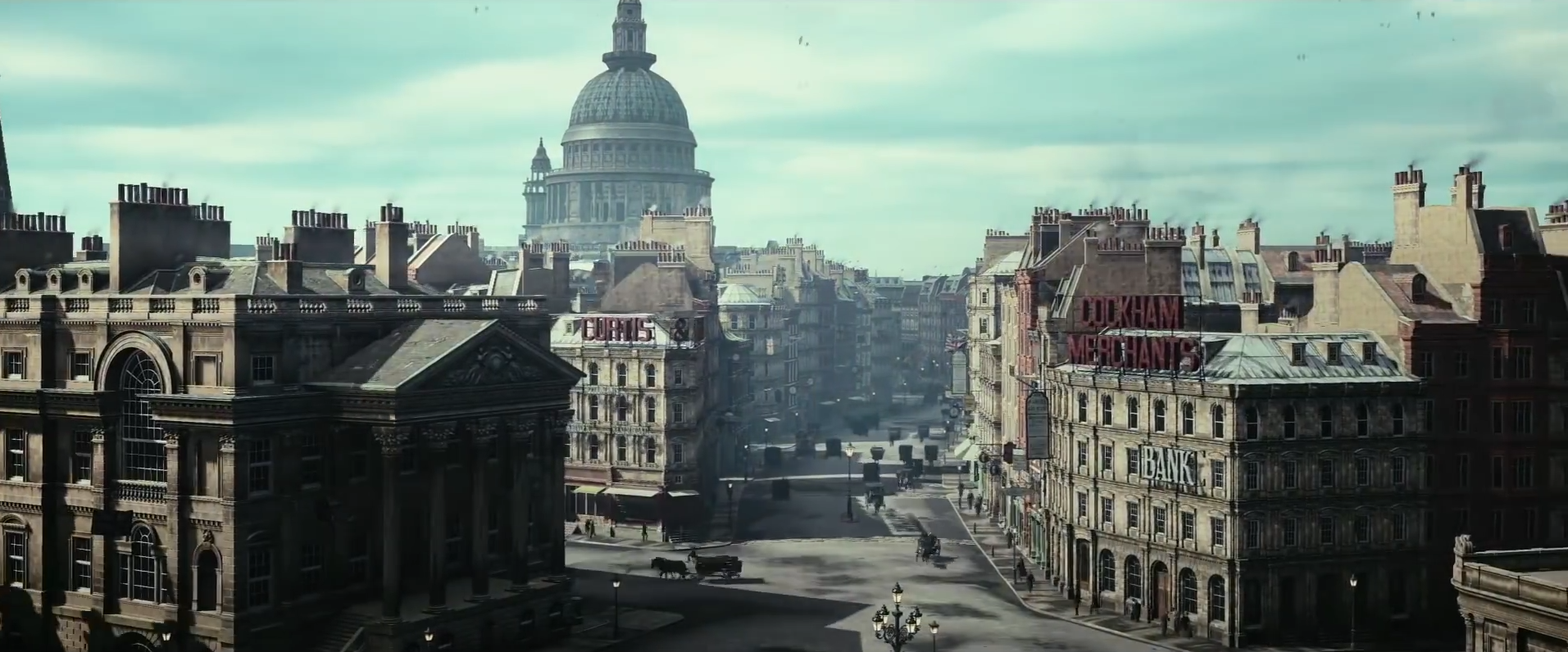
Screen shot of Assassin's Creed I, which takes place in London circa 1850. (Ubisoft)

Screen shot from debut trailer of “Assassin’s Creed I,” set in London. (Ubisoft)

It suddenly occurred to me that, having done a post on the beautiful Renaissance digital imagery of the video game “Assassin’s Creed II” – it was called “Gaming the Renaissance” – I should check out “Assassin’s Creed I.” I just did. Get ready. It is hot. Here is London in the full glory and grit of the dawn of the Industrial Revolution.

I am still ill, but this perked me up a bit, even though the story played in “Assassin’s Creed I” is dark. The action takes place in, my guess, 1850. Look at the video, linked below, and maybe you can make a better guess based on the buildings on the London skyline. (Looking again, it says “London: 1868.”) Here is the YouTube description of the original trailer, released last May 15:

“You play Jacob Frye, a gangster assassin fighting for justice on behalf of London’s enslaved working class. Watch as Jacob rallies his gang to break the corrupt stranglehold on London and bring the working class a brighter future.”

Well, maybe not so dark, but still gritty. I wonder whether Ubisoft, creator of the game, had to hire an architectural historian to get the details right, as it did for “Assassin’s Creed II” – a video of the game displaying some of the results of her work is the central feature of “Gaming the Renaissance.” The video here of “Assassin’s Creed I” introduces game fans to the concept. Very, very interesting!

Screenshot from Assassin's Creed I debut trailer. (Ubisoft)

Screenshot from “Assassin’s Creed I” debut trailer. (Ubisoft)

Posted in Architecture, Architecture History, Blast from past, Book/Film Reviews, Other countries, Urbanism and planning, Video | Tagged , , , , , , | 1 Comment

Handsome rectangular box?

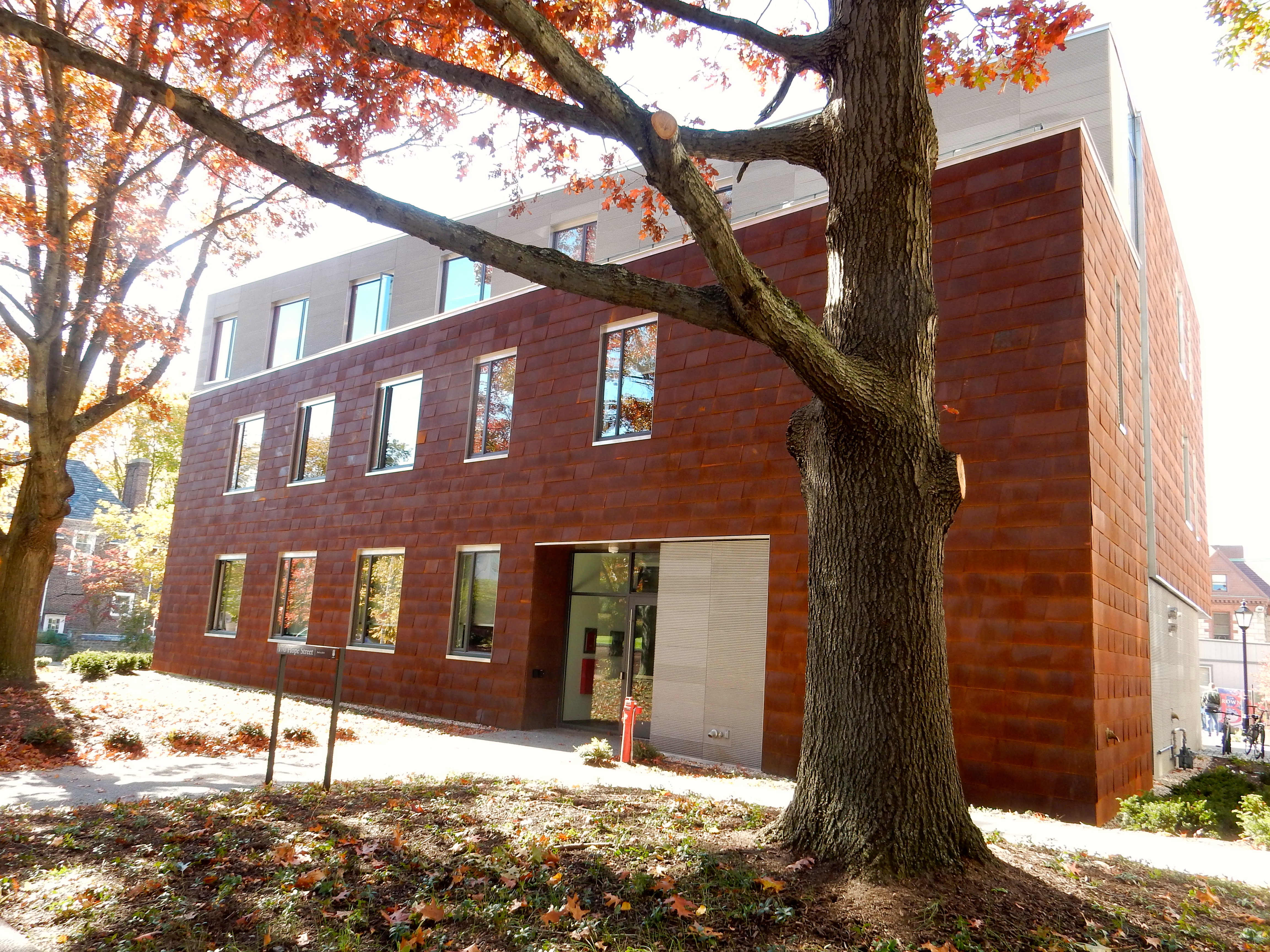
Applied Math Building recently completed at Brown. (Photo by David Brussat)

Applied Math Building recently completed at Brown, on Hope. (Photo by David Brussat)

I had hoped to remain mum to “Brown’s handsome rectangular box,” as the headline over my friend William Morgan’s piece in the Providence Journal describes the university’s latest foray into the avant garde. Not very far into it, Morgan shrugs, and I would agree – not very far being still more than a mite too far. But I don’t know where to begin criticizing the critic’s roundup of recent Brown architecture.

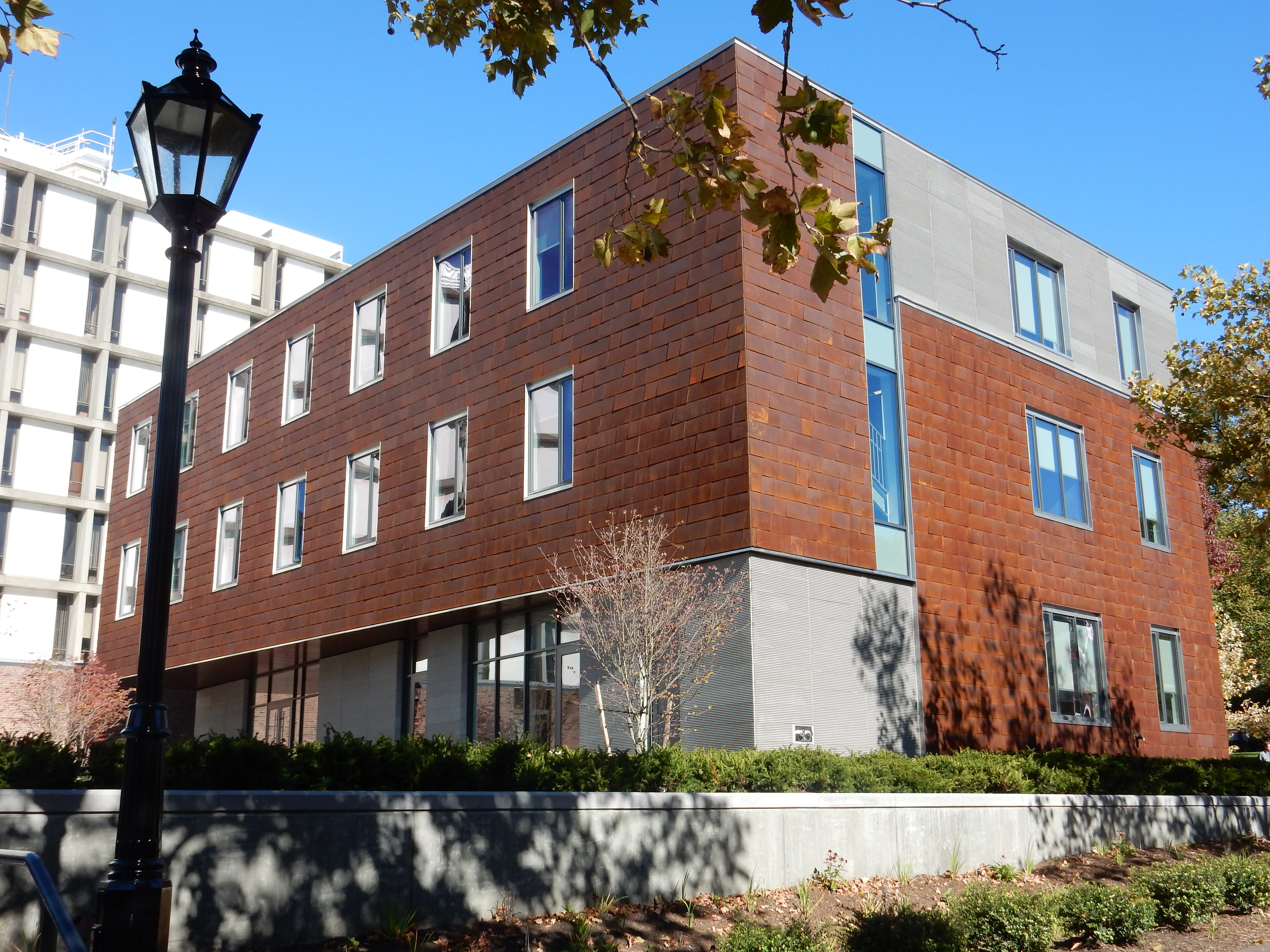
Math Building, George Street. (David Brussat)

Math Building, George Street. (David Brussat)

Math Building facing lawn (to come) and George Street. (David Brussat)

Math Building facing lawn (to come) and George Street. (David Brussat)

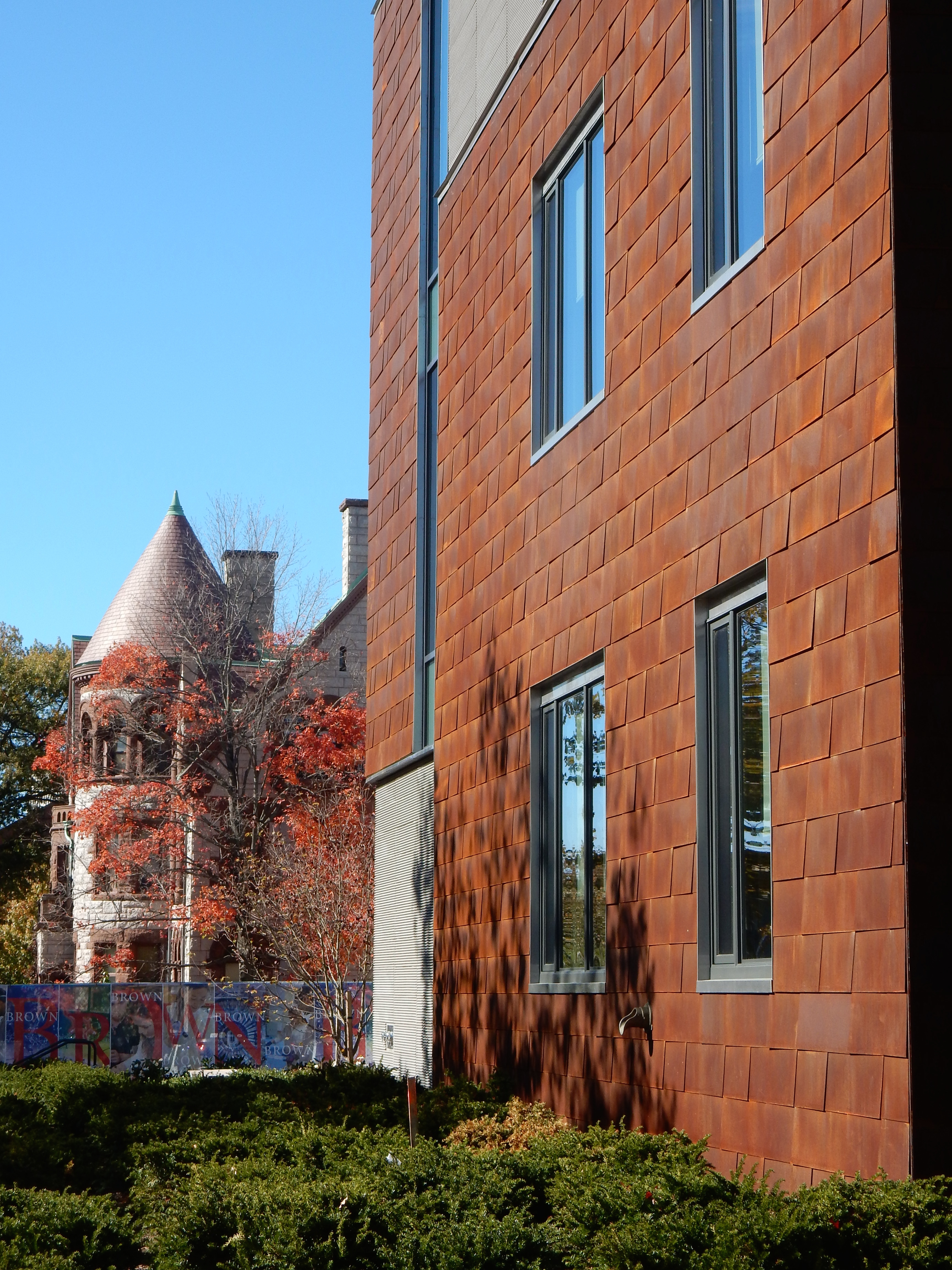
Math building's steel shingles. (David Brussat)

Math building’s steel shingles. (David Brussat)

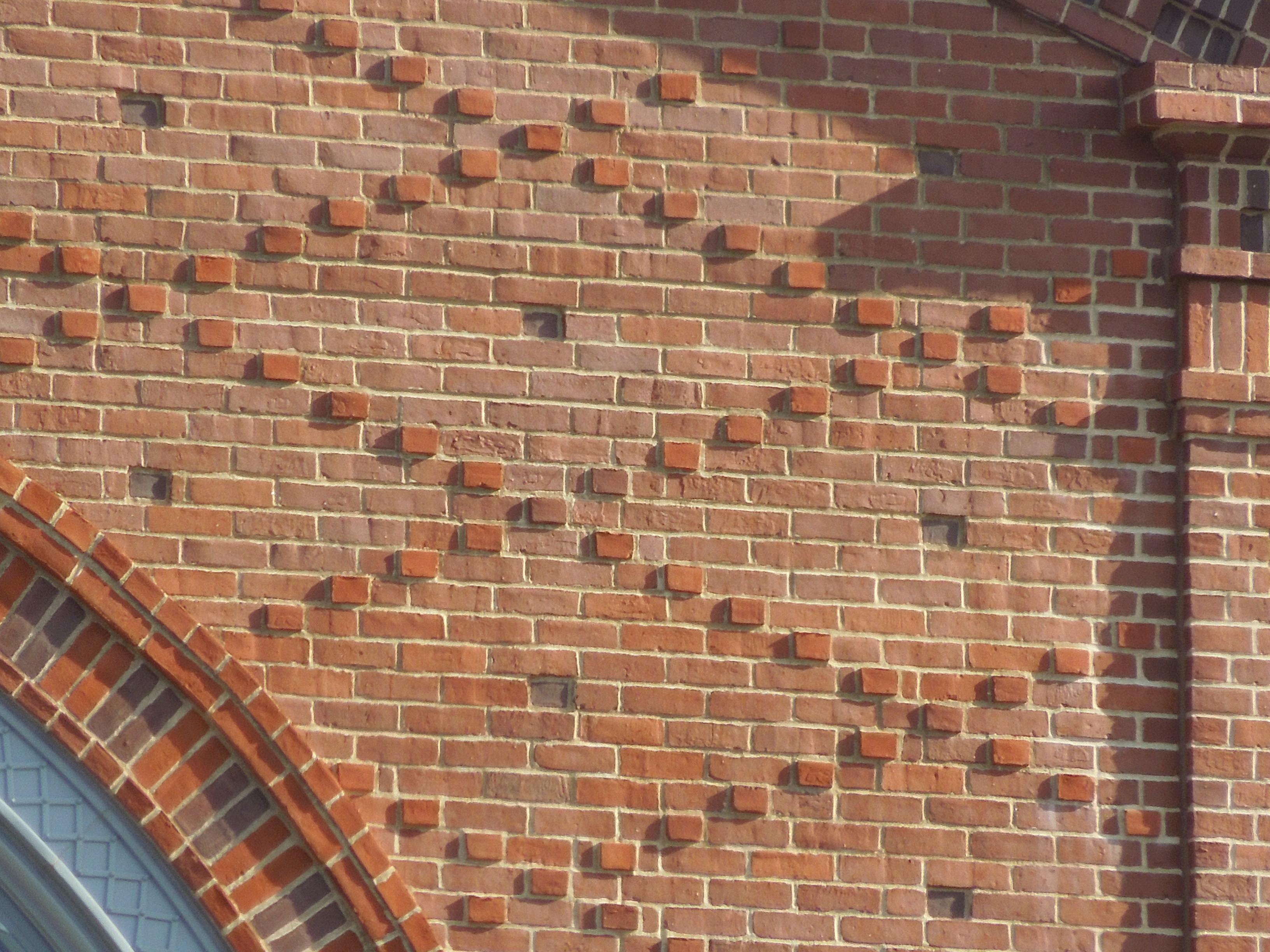
Nelson Building's diapered brickwork. (David Brussat)

Nelson Fitness Center’s diapered brickwork. (David Brussat)

Jonathan Nelson Center, on Hope Street. (David Brussat)

Nelson Center, on Hope Street. (David Brussat)

Granoff Center's frightful accordion facade. (David Brussat)

Granoff Center’s frightful accordion facade. (David Brussat)

The new Applied Math Building’s rusty brown shingles give it a pre-weathered look that is quite nice, especially amid the reds and yellows of today’s sun-dappled autumn foliage. But beyond that it’s a typically modest effort to appear slightly off – its gray third floor slices awkwardly back from the façade’s first two floors facing Hope.

I’m afraid that the designer, the Architecture Research Office, of New York, reflects the sort of rote “creativity” that, along with that of most of its fellow architects, and like Morgan and almost all of his fellow critics, reflects a widespread misunderstanding of the concept of creativity. Creativity is certainly not wackiness, at least it’s not supposed to be. It has a deeper meaning that is much more supple and subtle than merely what has not been done before. Creativity used to mean using talent and imagination to carry artistic technique to a higher level of virtuosity.

Nowadays, that’s called “copying the past.”

Does the Math building “quietly respect that past without caricaturing it,” as Morgan insists? Not on your life. For one thing, it is impossible for Morgan to conceive of a brand new traditional building, however well performed, that does not caricature the past. And his idea of respecting the past is to slam it in the face with a bat. Unlike the Granoff Center for the Performing Arts, which looks like an accordion struck by an earthquake, this building does not go that far. At worst, it quietly disrespects the traditional buildings nearby. That’s enough for it to degrade its environment. Mission accomplished!

Morgan is more disappointed with the building’s interior, which I have not seen. “Brightly painted drywall cannot conceal its suburban office park ambiance.” He says that’s “hard to square with an Ivy League education.” But if the Applied Math building’s exterior squares with the Ivy League, then I’m a monkey’s uncle.

In fact, all of Brown’s recent new buildings challenge the concept of a quality education except for the only one Morgan really hates, which is the Jonathan Nelson Fitness Center, completed in 2012. He writes: “Looking like an A&P grocery store from the 1950s, the gym has all the gravitas of Saran Wrap.” Morgan is mad because the donor “declared he did not like modern architecture” and refused to fund the winning design in the university’s first design competition (or so reports Morgan), by SHoP Architects, of New York, one of three “exciting” entries no doubt all clichéd to the max.

In a rare bit of aesthetic moxie by a major university donor, Nelson urged Brown to have Robert A.M. Stern design it instead. RAMSA partner Gary Brewer designed an excellent building. I drove by it after taking pictures of the Math building, and its beautiful diapered brickwork shone in the brilliant sky. Any single square yard of the Nelson is superior to the entire Math building, inside and out.

Morgan concludes with a sigh, wondering “whether Brown is really committed to good design.” Obviously it is not, unless a patron demands it. On the other hand it may be commended for stopping short of being as committed to the sort of “good design” that most standard-issue architecture critics have come to expect.

I have many times warned Brown that college buildings by “with-it, trendy firms” probably leach future donations by creating a large hole of ennui in the memories of aging former students. The Math Building will cost Brown future money. The Nelson Building will not.

Posted in Architects, Architecture, Architecture Education, Architecture History, Art and design, Development, Providence, Urbanism and planning | Tagged , , , , , , , , , | 9 Comments