Preserve Mineral Spring Ave.

DSCN0277 - Version 2.JPG

Here is a column I wrote precisely 17 years ago. At the end is a mini-column relating to an early version of what turned out to be the GTECH building.

***

Preserve Mineral Spring Avenue
April 1, 1999

TWO YEARS AGO, in “Turning the tide of crudscape,” April 17, 1997, I described the transformation of Mineral Spring Avenue: “Today, it is a veritable museum of early crudscape (suburbanologist James Howard Kunstler’s evocative word). Any day now, I expect someone to nominate Mineral Spring Avenue to the National Register of Historic Places.”

Well, that has not happened, at least not yet. But a few days ago, I got a call from Amanda Trellis, executive director of the North Providence Preservation Society, who asked me whether I’d like to attend their next meeting. She said that NPPS had done a survey that showed that residents of the town believed that it was “losing its sense of place.”

I bit my tongue to keep from asking, “What sense of place?” and told her I’d be there. The meeting was on Tuesday at the Sal Mancini Memorial Community Center, on Mineral Spring.

I know Mineral Spring Avenue quite well, and have long believed that with a few modest changes it could become almost as charming as Benefit Street (the one in Pawtucket, not Providence). For now, drivers stuck in traffic can enjoy long views of scenic North Providence from the crests of the big hills over which Mineral Spring gracefully climbs. By dusk, the delicate pattern of overhead utility wires fades from view. After dark, you can detect the sparkle of the surrounding metropolis beyond the avenue’s many small but eager neon and backlit signs.

I had planned to tell the citizens of North Providence how to revitalize Mineral Spring:

First, mandate that shops be built next to the street with parking in the rear; and then set up a Mineral Spring Design Review Commission that would have the power to dangle variances in return for a new generation of Shore’ses, Douglas Drugs and Ponderosa Steakhouses in a diversity of post-neohistorical styles.

But NPPS was way out in front of me. Ms. Trellis turned on a projector and there, shining brightly, was a colorful slide containing a cross-section of a block on Mineral Spring laid out just as I had planned to propose. Slide followed slide, revealing a series of streetscapes of elegant shops with suburban assault vehicles parked in the rear, permitting drivers still parked in traffic to drink in the cupolas, balustrades and colonnades attached to the traditional ‘burban façades. There were even pedestrians in white shoes and pompadours, or stretch pants and big hair.

I could barely contain my excitement. “You all must be avid Dr. Downtown fans!” I gushed.

“Not exactly. We contacted Andres Duany,” she said, and he guided them through a session of what she said he called “suburban schlock therapy.”

“How much did he charge?” I asked. She said his fee was only $750,000. “What!” I exclaimed. “But how did you raise the money?” I half expected her to concoct some bogus bequest from the Sal Mancini Fund, but instead she described the loan North Providence had received on the basis of revenue expected from the future sale of development rights on the right-of-way to cleared when Bill Warner relocates the Route 15 underpass over the Route 146 overpass.

“But I’ve never heard of that plan,” I protested.

“You will when the North Providence Foundation rams it onto the TIP,” said Ms. Trellis, “after Mineral Spring is named to the National Register of Historic Places.” “When is that supposed to be?” “Day after tomorrow,” she said. Which, of course, is today.

***

Parcel 9, Parcel 9, Parcel 9

The front page of last Saturday’s Journal contained news of a proposal to build a retail complex on Parcel 9 in Capital Center, between Providence Place and Waterplace Park. On an inside page was a drawing that seemed to show a modernist glass box. I took an immediate dislike to it, but have since talked to many people who said they could not tell from the sketch what the building is supposed to look like.

This is not surprising. Architectural sketches today are, I believe, often intended not to reveal but to conceal a proposed building’s appearance – on the reasonable grounds that, in the case of a modernist design, the public would object if they knew what the architect was planning to inflict upon them.

Many people told me they were withholding judgment on the building, and so am I. I hope and pray with all my heart that the sketch does not, in fact, truly express the building’s appearance, because if it does, and is actually built that way, it would end all hope that Capital Center can avoid the hodgepodgization that has degraded so many American cities.

Detailed drawings of the project will be shown at the next meeting of the Capital Center’s design review panel on April 12, 7:30 a.m., at 40 Exchange Terrace, in downtown Providence. Please attend.

Copyright © 1999. LMG Rhode Island Holdings, Inc. All Rights Reserved.
Record Number: MERLIN_709408

Posted in Architecture, Architecture Education, Architecture History, Art and design, Development, Landscape Architecture, Preservation, Urbanism and planning | Tagged , , , , , , , , , | Leave a comment

Dame Zaha, rest in peace

Screen Shot 2016-03-31 at 12.49.19 PM.png

I have had many bad things to say about the architect Zaha Hadid, but she did not deserve to die this young. Her architecture inspired her colleagues around the world, and she was a model for rising female architects. Zaha Hadid was a product, not a cause, of the flaws of her industry. Architecture seems to be immune to the criticism that would be leveled against it in any other field. We cannot blame that on Zaha Hadid.

It is hard for women and blacks to make it, but worse, the dominant architectural styles have made the world a worse place to live. Modern architecture has acted around the world as a sort of historical defoliant. Acting through a Western elite at first, now through architects everywhere trained in Western practices, the industry has helped to recolonize nations that struggled for their independence, wreaking havoc on their indigenous cultures. Modern architecture is a contributing force to global warming. Its ameliorative steps have been largely bogus. Traditional architecture that evolved over centuries with techniques to regulate the effects of climate before the Thermostat Age, which remain viable and available today, are suppressed. This has not only hurt the ability of the field to address climate issues but limits the field’s ability to provide beauty and uplift to people around the world. The inability of publics in nation after nation to fight the entrenched architectural interests no doubt saps people’s confidence in the validity of their political establishments, undermining efforts to lift up the public’s role in creating a more livable environment locally, nationally and globally, with deplorable blowback against efforts to expand democracy.

Flaws of such magnitude would never mount up in most industries because existing checks and balances – professional organizations, schools, the media, etc. – would push most industries back to basics. Reform in architecture, snuffed out in the 1980s (PoMo), has never risen again. The AIA is totally dedicated to modernism. There is only one major architecture school with a traditional curriculum in the world. All this despite the fact that most people prefer traditional to modern architecture. No mainstream architecture critic is willing or able to challenge the establishment. In no other industry would a major firm design the equivalent of a stadium that looks like a vagina in a country whose women are not allowed to show their faces in public. It would not be roundly criticized: It just would not happen. Not so in the case of architecture. Modern architecture is a cult.

Dame Zaha’s sad and premature death offers the field of architecture an opportunity to look deep into itself. Mark my words, it will not happen.

Zaha Hadid, RIP.

Posted in Architects, Architecture, Architecture Education, Architecture History, Art and design, Development, Other countries, Urbanism and planning | Tagged , , , , , , , , | 3 Comments

Peter Thornton’s Providence

Screen Shot 2016-03-30 at 7.23.03 AM.pngTomorrow evening at City Hall, some of the buildings of Providence that I love and have photographed over the years will be on display as buildings loved and painted by the artist Peter Thornton of our fair city. His show of stylized images, “Providence Scenes,” opens Thursday at 5-7 p.m. This looks to be a lovely and charming exhibit, not to be missed. It will run through May 15.

“The show,” according to a note sent me by the artist himself, “will feature iconic images of our fair city as depicted in a series of limited edition Giclée prints. Working sketches, photos and short commentary on each piece will also be displayed.”

At left, sitting for their portraits, are City Hall along with the Biltmore and beyond it the Westin addition (at least that’s what I call it). I am glad to hear that the artist has provided commentary on his work, as I am eager to learn, for example, of how the skating rink across from the Biltmore came to be filled not with ice but with trees. Ah! Lucky rink! Lucky artist! Among the delights of painting largely unavailable to the photographer is the ability to edit a scene so as to delight the eye. Thornton has also edited the original Westin Hotel from this painting. I have no quarrel with its defenestration on behalf of art, but I pant to discover the “why” of this magical decision by the godlike artist.

Posted in Architecture, Architecture History, Art and design, Landscape Architecture, Photography, Providence, Urbanism and planning | Tagged , , , , , , , , | 4 Comments

R.I. “Cooler & Warmer,” eh?

Screen Shot 2016-03-29 at 11.11.21 PM.png

New Rhode Island slogan superimposed on image of downtown Providence.

The Ocean State’s new slogan, just announced today, is “Rhode Island: Cooler & Warmer.” What does it mean? Is it about our temperature? Our climate? Is it about the waters of our Narragansett Bay? Is it about how our economy blows hot and cold?

No, it is about hip and friendly. Get it? Cool = hip. Warm = friendly. Rhode Island is hip and friendly.

While cool and warm are synonyms for hip and friendly, the synonymity is not obvious. Unlike the current slogan “Discover Beautiful Rhode Island,” and unlike “I ♥ NY,” “Cooler & Warmer” is not clear or direct. A slogan that must be explained has already failed. Effective slogans build on existing attitudes. No thought associated with Rhode Island arises in the Rhode Island mind, let alone the out-of-state mind, when “Cooler & Warmer” is heard. “Cool & Warm” might have been better. Or for that matter, why not “Coolest & Warmest”? It doesn’t beg questions as “Cooler & Warmer” does. Cooler and warmer than what? Than California? Cooler and warmer than Connecticut? Sorry. Any way you slice it – hot and cold or hip and friendly – it does not compute. It is a contradiction in terms.

The logo that goes with it ought to be simple and straightforward. But no, it is vague and complicated. In the cynical world of product branding, interpretation is the assassin of comprehension.

“The Biggest Little” is clear and direct because Americans all know which state is the nation’s smallest. “Discover Beautiful Rhode Island” may not impress creative types but it is clear, direct and offers an excellent reason to come to Rhode Island. Our beauty is the Ocean State’s chief competitive advantage. It is foolish to abandon it without a superior slogan in hand. “Cooler & Warmer” is not that superior slogan. It screams “Cooler than thou!” The reaction on social media and news website comment boards has been baffled, almost entirely negative. In the wake of 38 Studios, the need was for a clear slogan that avoided opening the floodgates of cynicism. This slogan is sure to inspire the next @38 Stadiums.

To judge by remarks from the governor and her economic development people, the new slogan and the entire rebranding campaign is like a bad Super Bowl commercial. It tries too hard to impress industry chums even as the meaning sails over viewers’ heads. Those viewers who chuckle at the foolishness of such commercials reflect an instinctive superiority of mind over that of the makers of those self-indulgent ads, and this is the basis upon which Rhode Island’s new ad campaign is likely to be judged.

“Cooler & Warmer” would be too cute by half if it were the least bit cute at all. It is not cute, it is confusing. Good advertising copy can be witty and charming without sacrificing clarity. “Cooler & Warmer” sacrifices clarity without a whit of humor.

Governor Raimondo’s rebranding campaign has spent $5 million on bupkis. She is also about to deep-six another clear, direct and clearly successful state symbol – the light blue Ocean State wave that flows gently across our license plates, carrying our brand across the nation. What’s going on here?

Channel 12 has some hilarious mockery of the new slogan on its website.

Posted in Art and design, Development, Humor, Providence, Rhode Island | Tagged , , , , , , , , | 14 Comments

And these are the winners!

Screen Shot 2016-03-29 at 4.03.31 PM.png

“New York Horizon,” winner, entry of Yitan Sun and Jianshi Wu (U.S.)

Winners have been announced in the 2016 eVolo magazine skyscraper design competition, and they are real doozies. eVolo, which I’d never heard of, exists to discuss “the most avant-garde ideas generated in schools and professional studios around the world,” and the competition certainly does tend to push those goals forward. We chuckle at the result, but be careful. This is where architecture is headed if an adult is not put in charge immediately.

The winning entry, by architects Yitan Sun and Jianshi Wu of the United States, would build a “horizontal skyscraper” reaching around and 1,000 feet down all four sides of a newly sunken Central Park, with the park itself dug out and replaced with what looks like a paradise for people interested in rock climbing, supposedly a mountain once entombed beneath its famously beautiful Olmstedian terrain. Beauty’s so old-hat!

The ambition is to reverse the traditional relationship between landscape and architecture, in a way that every occupiable space has a direct connection to nature. The 1,000-foot tall, 100-feet deep mega structure provides a total floor area of 7 square miles, which is about 80 times greater than the Empire State Building.

This will raise the hairs on the back of Froma Harrop’s neck! Silkstocking.nyc call your office! Just as the proposed supertall superthin skyscraper proposed for Sutton Place is bringing its neighbors together in opposition, perhaps this proposal to wall off Central Park will finally unite foes in the longstanding rivalry between the East Side and the West Side.

The second-place winner’s proposed tower, off the southeastern corner of Central Park, is called The Hive, a drone skyscraper, a sort of airport for the gathering future of product delivery. The others are equally absurd, indeed obtuse, and yet equally in sync with the direction modernism is taking us. Each time a modernist architect hatches an even more unique design for his building is a challenge to the architectural community to come up with something even wackier.

Don’t laugh. When I say this is the future, a chuckle will not cut it. Indeed, a defense of the winner just ran in Fast Company/Co-Exist, “This Insane Skyscraper Should Not Be Built in Central Park – But It Should Exist.” (“Might be a step too far,” writes Ben Schiller.) In all seriousness! He adds: “‘In the heart of New York City, a New Horizon is born,’ say the designers, forgoing to mention how it would tear apart the very center of Manhattan.” So when I say architecture is heading in this direction, and fast, I am not just whistling Dixie.

(Hats, including horizontal stovepipes, off to Kristen Richards for running this wackadoodle on her marvelous ArchNewsNow.com website!)

Screen Shot 2016-03-29 at 4.04.58 PM.png

“The Hive,” second, by Hadeel Ayed Mohammad, Yifeng Zhao, Chengda Zhu (U.S.)

Posted in Architects, Architecture, Architecture Education, Architecture History, Art and design, Development, Humor, Landscape Architecture, Urbanism and planning | Tagged , , , , , , | 5 Comments

Steampunk vid of New York

Screen Shot 2016-03-28 at 8.00.13 PM.png

Came across this film, “The Old New World,” of New York and bits of Boston and Washington, D.C. (the Capitol), in about 1931, on the Kuriositas website. It is the Old New World Project run by Alexey Zakharoff. It is pretty amazing, and I really haven’t the foggiest idea how they do it, even though it is vaguely explained below:

Take a trip to times past in a steampunk time machine.  This amazing animation has been created with camera projection based on photos.  The result is something wonderful – if eerie – as the past comes to life in front of your eyes. A number of the large cities of the New World are included here, including New York, Washington and Boston.  Just wonderful!

The gizmo gears that unfold to expose the pictures are in the Steampunk style, a sort of takeoff on industrial design when industry was allowed to be beautiful (before the so-called “form follows function” era). You may think I have stolen the thunder because of all the pictures I’ve screenshotted from the project. But keep in mind that the pictures move. They are, as the squib above puts it, just wonderful! I regret only that it continues for merely 3:46 minutes, and that includes an end segment that seems to give some hints as to how it was all put together – but I would not stake my steak on it, if I had one before me.

Screen Shot 2016-03-28 at 8.04.46 PM.png

Screen Shot 2016-03-28 at 8.01.20 PM.png

Screen Shot 2016-03-28 at 8.02.33 PM.png

Screen Shot 2016-03-28 at 8.04.00 PM.png

Screen Shot 2016-03-28 at 8.06.08 PM.png

Posted in Architecture, Architecture History, Art and design, Blast from past, Old Video, Photography, Urbanism and planning, Video | Tagged , , , , , | 3 Comments

Sleeping girl, sleeping father

Screen Shot 2016-03-27 at 9.32.18 AM.png

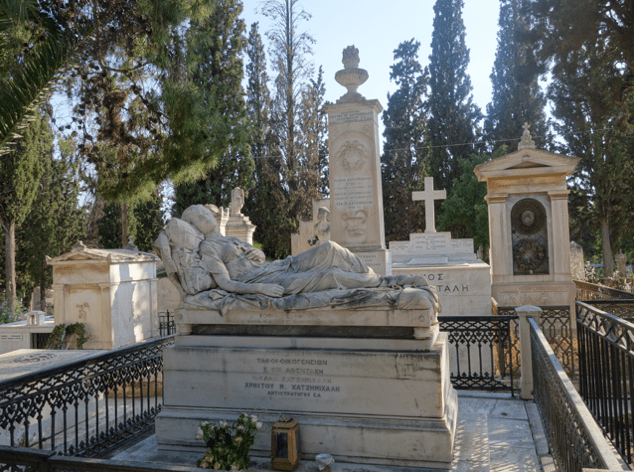
Photo of “Sleeping Girl” at the oldest cemetery in Athens. (Philip Jameson)

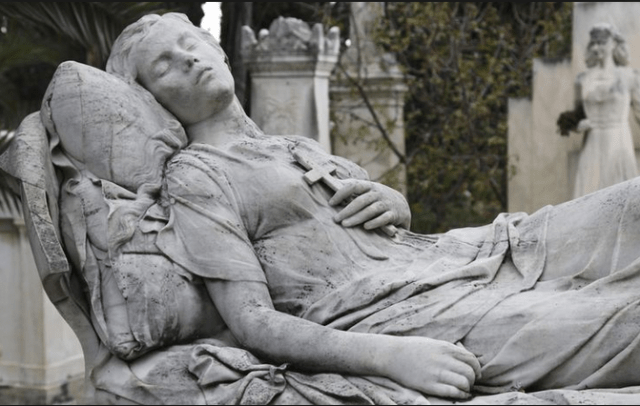
My friend Philip Jameson, the photographer, saw my post of sad sculptures and sent this shot he took in Athens of the “Sleeping Girl,” lightly brushed by sun. Philip’s fond belief is that the sculptor was the girl’s father, and that he was so distraught after discovering he had carved the work two inches short of the width of the tomb that he committed suicide.

Philip has visited the tomb regularly since 1960 after wedding his wife, who is Greek. The tragedy is poignant, the beautiful word he uses to describe the beautiful sculpture. It is almost as if the girl beneath the sculpture has arisen from her grave. That is a somber but pleasing thought on Easter, for me in particular as my wife Victoria’s dear father, Laszlo Somlo, who was like a father to me, passed away on Good Friday. We buried him at Swan Point later the same day. We do not believe he will rise to life again. That does not mean we do not wish it. A man truly well loved, he lives in our memories.

Laszlo loved classical music and opera. Next time you hear music you love, please think a kind thought on his behalf.

Screen Shot 2016-03-27 at 10.01.24 AM.png

Close-up of “Sleeping Girl.” (pinterest.com)

Posted in Uncategorized | 2 Comments

Sadness etched in stone

Screen Shot 2016-03-26 at 4.14.09 PM.png

The sculptures linked here as “15 utterly incomparable sculptures of the past and present” may or may not be utterly incomparable but are unutterably beautiful, some perhaps more fervently so than others. Most or maybe all evoke sadness, melancholy or despair. Here they are to twist your heart.

Whoever selected these for the website Brightside – his or her identity is unrevealed – introduced them with some trenchant words:

It’s said that stone can never come to life. However, the greatest masters of sculpture have proven this wrong time and again. In their skilled hands, incredibly lifelike masterpieces are born — when you look at them you can almost believe that at any moment a gentle sigh will escape those stone lips, and those rigid eyelashes will flicker in awe.

Desire for a beloved one’s resurrection is among the most powerful feelings that can fill the sad hearts of the living.

Posted in Art and design, Photography | Tagged , , , , , , , | 1 Comment

Big Dig redux in Prov?

Screen Shot 2016-03-24 at 5.33.17 PM.png

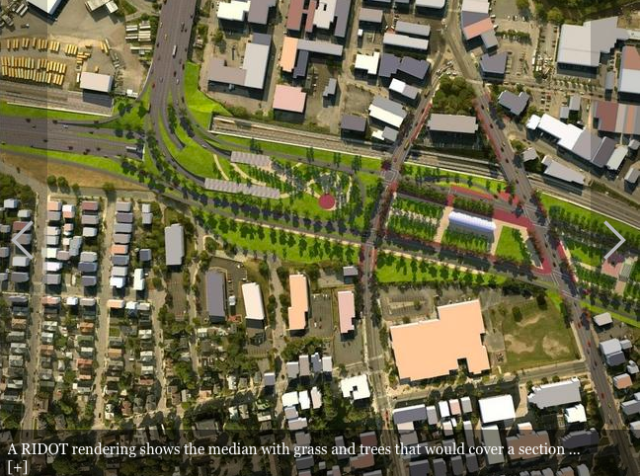
Tunnel entrance visible at left of plan to renovate the Route 6-10 connector. (RIDOT)

My impression of the proposed 6-10 connector alternative to rebuilding the aging highway was to replace the highway with a surface boulevard – a concept I cheered last December in “A boulevard, not a highway.” Imagine my surprise reading in today’s Journal that the “boulevard” concept had morphed into the Biggest Little Dig.

Boston’s Big Dig replaced its elevated I-93 with a tunnel covered by the Rose Kennedy Greenway. Whatever we think of it now, it is famous for its cost overruns. I have the same pit in my gut at today’s Providence Journal’s story, “Green Gateway,” by John Hill, which describes the new plan to “entomb Route 10 in concrete walls with a roof covered in dirt over the roadway to create a park-like median from Route 6 to Broadway.”

Huh? Whatever happened to replacing the highway with a boulevard? Perhaps that concept was never feasible. Perhaps you could never get the amount of traffic on the connector through a boulevard worthy of the public’s support. And now they’re saying it will cost upwards of $800 million in state and federal funds. This apparently does not include money to be spent on other road and bridge repairs on the state’s to-do list. The 6-10 revamp is expected to take up a tenth of RIDOT’s RhodeWorks bridge and road repair program (excluding the cost of the truck-tax infrastructure). Already, the speed of this bracket creep is breathtaking.

The bus rapid transit (BRT) part of the program sounds nice but why put the bus lanes in the middle, requiring expansive bridge gantries to enable riders to get to buses?

Given the broader and deeper overlapping budget quagmires engulfing the city and state (not to mention the feds), why not build a simpler boulevard? Why not build a boulevard with two sets of three lanes in both directions flanked by two sets of two lanes on either side? Can the tunnel deck park. A wide verdant median could separate the two sets of three fast lanes in the middle, with narrower verdant medians separating the flanking slower service roads on either side of the main drag.

This is the traditional design of a boulevard. Regular buses and bikeways would go up and down the service lanes and the BRT could go up the middle, with pull-overs that would negate the need for costly rider flyovers. (Recent news of scant ridership on the southern R.I. segments of MBTA might raise some eyebrows about BRT.) The money saved by a more basic design could be invested in elegant landscaping and street furniture throughout the route, reknitting long-severed neighborhoods and creating allure for new development on either side. Thus conceived, the idea could be expanded farther along Routes 6 and 10 rather than concentrating so much of the renovation on the connector segment itself.

I’m sure there must be some hitch to this simple plan, or the authorities would have embraced it themselves, right?

Posted in Architecture, Development, Landscape Architecture, Providence, Rhode Island, Urbanism and planning | Tagged , , , , , , | 8 Comments

Brussels under dark skies

Screen Shot 2016-03-23 at 8.49.59 AM.png

The world stands with Brussels now that it has come under the ire of ISIS. The beauty of Brussels makes it a prime target for terrorist uglies. I have been to Bruges but not to Brussels. The elegance of the capital’s trade guild rooflines in its market square once inspired my thoughts on the design of the Providence Place mall here when its designer, Friedrich St. Florian, who is from Austria, drew my attention to them as inspirations to him in the mall design. Oh, well. Here is the glory of Brussels in its hour of need:

Screen Shot 2016-03-23 at 8.48.45 AM.png

Screen Shot 2016-03-23 at 8.48.12 AM.png

Screen Shot 2016-03-23 at 8.52.09 AM.png

Screen Shot 2016-03-23 at 8.49.23 AM.png

Screen Shot 2016-03-23 at 8.52.32 AM.png

Screen Shot 2016-03-23 at 8.51.28 AM.png

Posted in Architecture, Architecture History, Art and design, Photography, Preservation, Urbanism and planning | Tagged , , , , , , | 1 Comment