SF rejects free museum

presidio2

John King, the architecture critic for the San Francisco Chronicle, occasionally displays reasonable judgment, which is considerably more often than most architecture critics. But in his piece for Metropolis defending the city’s rejection of a free, $700 million museum to be donated by filmmaker George Lucas, King’s convoluted reasoning does not successfully mask the truth.

The truth is that the powers that be in San Franciso, mostly filthy rich foundations, rejected Lucas’s offer because its design, by the Urban Design Group of Dallas, would have been forthrightly classical.

No other conclusion is plausible. King tries to gently insert in the reader’s mind that the public rejected the proposal, but it is clear that it was rejected so that some other facility – another museum or something else – could be designed by one of their modernist friends.

Yes, plain and simple: social corruption disguised as public concern.

King says the Lucas proposal “would make most municipalities swoon,” but that in fact, they should learn from this that “big, easy answers aren’t nearly as persuasive as the underlying logic of place.” But King does an unusually poor job of backing his case up with evidence.

Apparently, a big empty lot with a big-box sporting-goods emporium should not be replaced by a grand classical edifice housing a museum that would, indeed, make most civic tourism offices swoon. Readers can glean from King’s article what would have been put in there by Lucas. I found it alluring. But King’s description of the context into which would fit whatever is built did not even begin to persuade me that a museum would be unworthy of the space, or anything but an addition to its sense of place. Maybe that’s why he used the curious phrase “logic of place” rather than “sense of place.”

Then, on the last page, he brings in, as an honest critic would have to do, the “private foundations who have donated $75 million to make today’s Presidio what it is” out of federal land, once a military base, near the Golden Gate Bridge. In other words, the fancy pants who, in all probability, wanted a big museum, yes, but rather one designed by one of the usual suspects to deface yet more delicious land in San Franciso.

I have a feeling that Lucas, however much he’s accomplished in the film world, is simply not part of the in crowd, and that the rejection of his more-than-generous offer was an example of local artist wannabes circling the wagons on behalf of their own tainted gods.

I wonder why this piece appeared in Metropolis rather than King’s regular space in the San Francisco Chronicle. Probably because the readers of the Chronicle would be more likely to see through the bullshit than the readers of Metropolis, who are easily seduced by vague incoherencies that mimic (and urge) their preferred types of architecture. I don’t know, and perhaps I’m being unfair to King, who is a fine writer and, so far as I know (having met him only once and chatted online with him a couple of times) a good regular guy and amiable fellow. But I think he’s paying some sort of dues with this clearly unconvincing piece of claptrap. Read it here. You decide.

Posted in Architecture, Art and design | Tagged , , , , , , | 5 Comments

Taki’s take on New York

9367a933ed49da29_large

Here is a piece from The Spectator (of Britain) by Taki, the London socialite of Greek extraction who has written the magazine’s “High Life” column since 1977. In this essay he ruminates filmographically about New York and how it has changed in his time. The subhead is “The Fountainhead was a great movie but lousy architecture. Now all we have is the architecture.” The headline itself is “My New York is gone forever. The internet has seen to that,” but the essay doesn’t have much to do with the internet, except right at the end. It’s more about the movies, particularly that made of Ayn Rand’s book, which has much to do with architecture. Bad architecture. The entire essay’s worth reading, but here is a key passage:

Modernism, especially in architecture, is bleak and sterile and incomprehensible, and a panacea for the talentless and the phoney. Urban architecture that draws on the decorative style of previous eras is beauty personified, whereas functionalism, as the gimmick is called nowadays, is the very stuff that has made architects and city planners turn their backs on what makes a city beautiful and livable.

But you’ll have to read the essay itself for the paragraph leading into the above. It is a gas and a half. Take that, “Sir” Norman Foster!


Posted in Architecture, Architecture History, Art and design | Tagged , , , , , , , | 1 Comment

Heritage thought experiment

Queen Street, in Melbourne. (blogs.crikey.com.au)

Collins Street, in Melbourne, circa 1950. (blogs.crikey.com.au)

Alan Davies, a columnist in Melbourne, Australia, who often writes about architecture and planning issues, recently devoted an interesting column to a thought experiment: What if all the old buildings along Melbourne’s main streets – heritage buildings as they are known in Australia; they are known as listed buildings in Great Britain; here? old buildings!* – had never been demolished. “What if those magnificent historic city streetscapes and marvelous 19th century buildings in the centres of our [Australia’s] major cities were never destroyed? How would things be different today?”

Davies generally likes the old buildings and dislikes many of their modernist replacements, but he isn’t thinking about what if we could snap our fingers and have beautiful cities again. He says, however, that if by some fiat those buildings on main streets had been preserved and fitted out intelligently with new uses, the result might not be all that we expect. He argues that in Melbourne, development of modern architecture would simply have shifted to areas off main thoroughfares such as in the photo of Melbourne’s Collins Street above, and obliterated, for example, the alleys that eventually became some of the city’s “laneways” that have become so popular in recent years.

Centre Place, Melbourne. (John Wiley & Sons)

Centre Place, Melbourne. (John Wiley & Sons)

I ran a picture of one with my review of Street Design: The Secret to Great Cities and Towns, by Victor Dover and John Massengale, a couple of weeks ago. I illustrated it with a shot of a little girl standing in the middle of Centre Place. I’d hate to think that laneway might never have been preserved and redeveloped as it has.

Davies’ thought experiment is very well done and his analysis is hard to quarrel with. But I think he thought the wrong experiment. Why not imagine what would have happened if architecture had continued to evolve after World War II as it had for centuries beforehand. You would still have had some modern architecture, of course, but traditional architecture would still have been built as well. I do not know what happened in Australia, but in Britain and in the United States a very heavy official thumb was placed on the scales favoring modern architecture. There may have been a “zeitgeist” for the sleek and utilitarian, but there was also a suppression of new traditional architecture, a suppression that might be regarded as, at the very least, authoritarian. It was not just a matter of fashion; it was a matter of policy – professional organizations were “captured” by modernism and used against tradition in ways that tradition could have wielded against the rise of modernism in the ’20s, ’30s and ’40s, but did not. Traditional history and practice were largely banished from architecture schools. Competition for major building projects was rigged with requirements that proposals be “of their time.” Tradition was purged from architectural reportage and criticism. I am still the only architecture critic in America, working for a daily newspaper, who is both for classical and against modern architecture. No joke! It has an impact. It is not that the public suddenly, or even gradually, came to dislike traditional and classical architecture. It just was not built. Americans and Britons just had to grin and bear it. True, housing largely escaped because it was the only building type that is chosen largely by its users in the free market rather than by committees of managers and executives. One result, since you cannot expect the suppression of an entire way of life to go completely without response by the victims, was the transformation in just a few decades of preservation from a concern of blue-haired ladies interested in where George Washington slept to a mass movement. People were afraid of modern architecture and what it might do to the places they loved. But now even preservation has been taken over by the modernists, who have shifted the movement’s focus to saving old gas stations, parking garages, Brutalist government offices, and other examples of long-in-the-tooth modernism that nobody really cares about.

But I am rattling on. I just want to make one more point in trying to understand what happened. Some of the founding modernists who eventually were handed plum jobs in architecture here had not, before they came, been above trying to get Hitler to adopt modernism as the stylistic template for the Third Reich (I refer specifically to Ludwig Mies van der Rohe). They fled after they failed to convert Hitler (even though they had Goebbels’ support). To whatever extent they participated in that endeavor, when they arrived in America they appear not to have completely shed, at least subconsciously, the mindset of totalitarianism that had gripped the German establishment in the 1930s. Gropius’s discarding Harvard’s set of classical ornamental casts along with its curricula in architectural history is a good example. Another is the effort by later modernists to taint traditional architecture as fascist because Hitler refused to accept modernism (except for factories) and embraced a classicism that had been the establishment architecture, in one form or another, for three thousand years.

The exclusivity of modernist dominance of architecture was not pre-ordained. It did not have to happen.

So I wonder what Alan Davies’ thought experiment might be like if, instead of taking a set of buildings and forcing them to persist in place, he wondered what would have happened if, somehow, the modernists had not been permitted to acquire any more power over their profession than factions in most other fields, such as medicine, law, engineering, agriculture, ladies’ fashion or baseball – where progress still is mostly a matter of embracing change by learning from, rather than rejecting, the best practices of the past.

Still, Davies’ thought experiment is definitely worth reading. It is here. My column about streets, illustrated by Centre Place, is here. You can buy Great Streets here.

* Not old buildings but landmarked buildings. Escaped me for a few hours.

Posted in Architecture, Architecture Education, Architecture History, Preservation, Urbanism and planning | Tagged , , , , , , , | 1 Comment

Column: A bit late to cry for London’s skyline

A 1920 collage of Trafalgar Square, in London, and New York's Newspaper Row. Written on rear of file photo: "Londoners' idea of how Americans would transform Trafalgar Square." (Providence Journal archives)

A 1920 collage of Trafalgar Square, in London, and New York’s Newspaper Row. Written on rear of file photo: “Londoners’ idea of how Americans would transform Trafalgar Square.” (Journal archives)

It’s hard to work up much sympathy for London and its citizens, who have suddenly learned that they may expect 236 more skyscrapers on their skyline. A petition of opposition has been signed by, at last count, 70 nabobs of London.

“The skyline of London is out of control,” says the document. “Over 200 tall buildings, from 20 storeys to much greater heights, are currently consented or proposed. Many of them are hugely prominent and grossly insensitive to their immediate context and appearance on the skyline. This fundamental transformation is taking place with a shocking lack of public awareness, consultation or debate.”

The petition drive is supported mostly by architects, planners, artists and academics. Signatories include the likes of Sir David Chipperfield — winner of the Stirling Prize, the British equivalent of our Pritzker. You do not qualify for a Stirling unless your buildings are “grossly insensitive to their immediate context and appearance on the skyline.” Other signers, such as architect Sarah Wigglesworth, architectural historian Joseph Rykwert and author Alain de Botton, show little or no concern in their work for threats to skylines, contexts or people, for that matter, in London or anywhere else.

To read the rest of this column, please visit The Providence Journal.


Posted in Architecture, Architecture History, Other countries, Preservation, Urbanism and planning | Tagged , , , , , , , , | Leave a comment

Time Lapse advance alert!

DSCN0639

Sheila Lennon, Journal uber-blogger, speaks this Thursday. Details below.

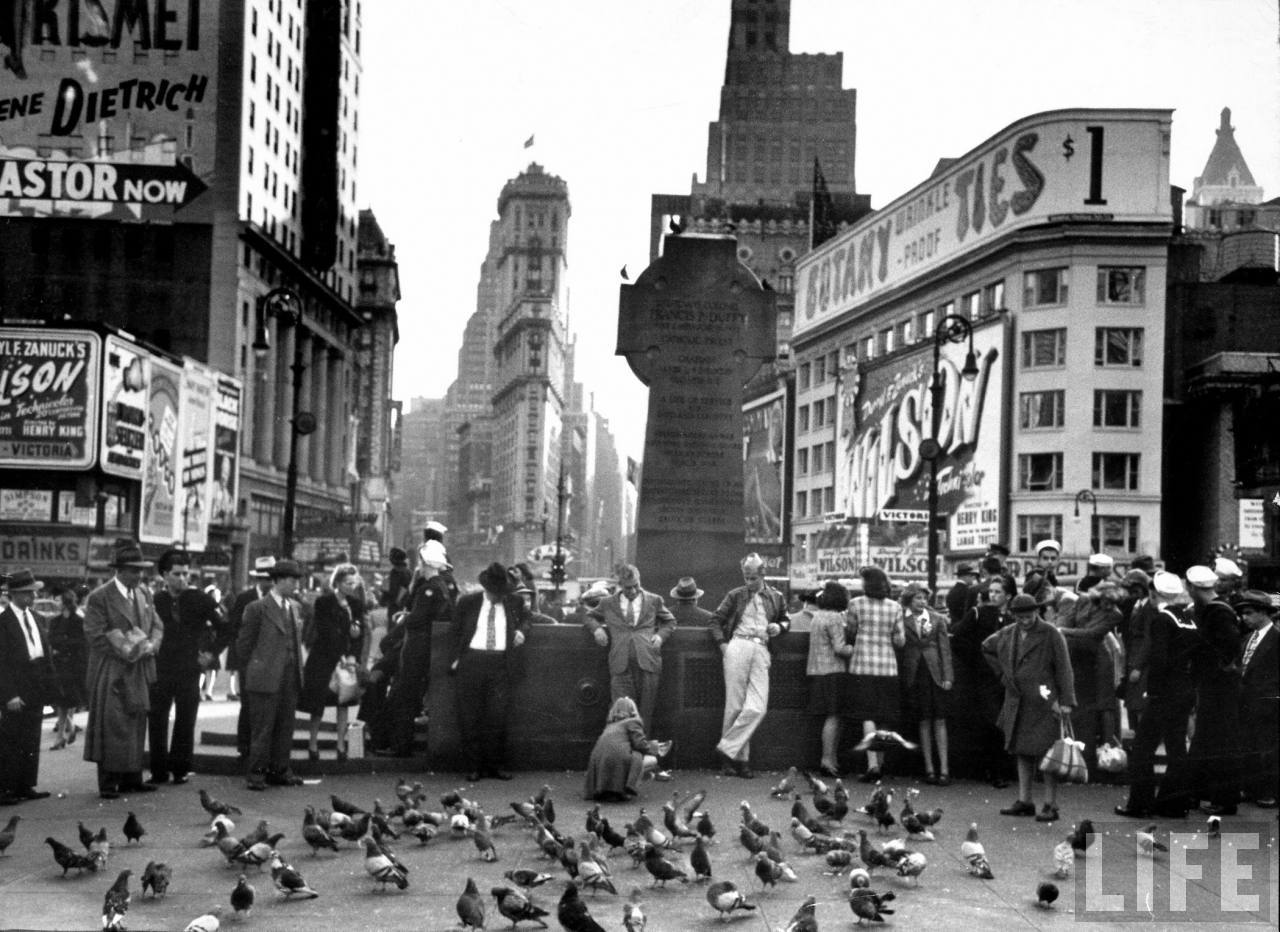
What is depicted in the photo above? This is a trick question because it is a trick photograph, one that I found on Tuesday afternoon rifling through the Journal photo archives in search of an image to illustrate my Thursday column, which I had written Tuesday morning. It so happened that Sheila Lennon was also in the archive; it must be her second home. She assembles the weekly “Time Lapse” feature in the paper and online. It reaches toward a climax each week, putting readers in suspense until she grants us release on Sunday, unraveling a mystery in a single photo – where is this? what’s going on? – with a payload of archival stories and photos from old Journals.

Sheila’s spirit must have been at play this afternoon, resulting in my finding the above photo, which I expect will run with my column. And the question is: What is it about the photo that fits like a glove with both my column topic and the day of its writing? Hint: The topic is London.

Be that as it may, at 6 p.m. Thursday (the schmoozing begins at 5:30), the Providence Preservation Society and Preserve Rhode Island will host The Providence Journal’s blogger-in-chief Sheila Lennon for an illustrated talk at the Gov. Henry Lippitt House, 199 Hope St. (at Angell). Sheila informed me of this event after I showed her the photo above, and I told her I would post a notice of her talk. The hosts request a $10 donation, if you cn spare it. The evening is officially free if you are a PPS or PRI member.

Warning: Be in a mood to see incredible photos from the Journal’s archives.

The PPS announcement is here, though I think most of the necessary info is above.

Posted in Architecture, Architecture History, Photography, Preservation, Providence | Tagged , , , , , , , | 1 Comment

Good news for Providence!

Bye-bye!

Bye-bye!

Here is great news for the city from Mayor Taveras and the Jewelry District Association! Tip o’ the cap to Lewis Dana for this timely revelation!


Posted in Architecture, Humor, Providence | Tagged , , , , , | Leave a comment

Is beauty conservative?

united-states-capital-building(1)No. Certainly not in the political sense. Beauty, by which I mean architectural beauty in traditional and classical design, is as alluring to liberals as it is to conservatives. Because political conservatives have been more skeptical of modern architecture and other modern isms, many liberals wrongly concede the field to conservatives, even to Republicans. This is a mistake that some modernists gin up to put traditional architecture in what they consider a bad light. “Let’s you and him fight!” might be the modernists’ motto.

The matter is well framed by two essays sent to me by Mark Anthony Signorelli, who contributed an excellent hortative, indeed radical essay with Nikos Salingaros last year entitled “The Tyranny of Artistic Modernism,” which artists were exhorted to rise up in revolt against. (It is here.) The one he sent, “Timeless Beauty: Conservatism’s Modernist Problem,” by Joel Pidel, a New York architect trained at Notre Dame, is in response to the one Pidel links to, “Nameless Beauty: Conservatism’s Architcture Problem,” by Matthew Milliner, an assistant professor at Wheaton College. Both were published by the Witherspoon Institute.

Both essays are worth reading and make many useful and pertinent points, but I prefer Pidel’s careful rejoinder to Milliner’s point that conservatives should appreciate the beauty that exists beyond the constraints generally observed in tradition’s concept of beauty. I would add that while Milliner correctly asserts that modern architecture can be beautiful (as I have occasionally admitted in my writing), it cannot be so in principle but must rely on a sort of accidental genius. That genius, so rare, is the exception to modernism’s rule, which not only leads mostly to ugliness, but to many other preening, destructive qualities that degrade what beauty remains in cities and other places, and is inherently disruptive to the very concept of civic beauty: Buildings that compete to upstage each other in the degree of their novelty are unlikely ever to create a setting whose built structures cooperate on behalf of a public sensibility congenial to all.

That last goal should be as alluring to liberals as to conservatives if not more so. My own dislike for modern architecture is based less on its “will to ugliness” as on its incivility to its fellow occupants of the street, be they pedestrians or other buildings.

But wait, there’s more! I dislike modernism because unlike the classical establishment that preceded it, the modernist establishment of architecture has taken active measures for more than half a century to suppress tradition and prevent it from regenerating itself, on behalf of an orthodoxy so vapid that a third grader can see through it. You’d think the moral bankruptcy of modern architecture would make it a prime target of liberal disdain.

I don’t like to bring politics into architecture, but I do believe that the first political party to put into its platform a plank that makes an issue out of why our cities and towns have become so ugly, and promises to help the public pressure politicians and their developer and corporate friends (and paymasters) to hire architects who prefer beauty to ugliness will steal a march on the opposition. For it is a fact that with so many difficult problems facing the nation (and the world), this problem is downright easy to solve.

Posted in Architecture, Art and design, Urbanism and planning | Tagged , , , , , , , , | 2 Comments

Blast past: Deep skinny on Parcel 9

Here is a column I wrote in 1999 about a year after the design for Parcel 9 was denounced  by Mayor Vincent A. “Buddy” Cianci Jr. This predates any notion that GTECH would turn a sad situation into a continuing and probably irreversible tragedy. (Readers can refer to my recent repost of “Waterplace wig-out” to view the revised design praised here. Unfortunately, I cannot come up with an image of the original horrid design.)

Parcel 9 falls, finally, into line
July 22, 1999

LAST WEEK in this space, readers were warned not to expect any “major improvements” in the design for a proposed retail center on Parcel 9, between Providence Place and Waterplace Park in Capital Center. Well, color me surprised! To describe the changes revealed Tuesday as major improvements would be to understate the degree to which the project has reversed its cold, stark, modernist direction.

The first version had four sides of widely differing design, each vying to offer the most egregious insult to the traditional architecture it would face. The best that could be said for the least obnoxious, most traditional, facade – facing Memorial Boulevard – was that it was comparable to nearby Center Place in its blandness. The worst side, facing Francis Street, featured a curving slate-and-metal screen that seemed to spin off from a prismatic glass tower at Memorial and Francis, and then, after separating from the actual wall of the building, gradually rose as it climbed toward the State House. No attempt was made to disguise the rooftop garage, which was a perilously heavy thud on top the building’s rhetorically fragile frame.

The extent of change away from that original design may not be fully appreciated by readers of yesterday’s paper. A sketch was juxtaposed not against the first version but against the second version, which had positive changes in material, but still made no attempt to fit into the traditional architecture of the neighborhood. Mainly, it substituted for the curving screen a brick facade that rose in curious syncopated spurts as it approached the State House.

The Waterplace facade remains a glass-and-metal curtain wall that puffs out oddly several times after it curves in along the Woonasquatucket River from Francis Street. But because this stretch of glass now has a wholly different setting – a building of greater unity that tries to fit into its traditional context rather than trying to be all facades to all people – it works much better. Ditto the glass tower. When an architect decides to design a building that actually looks like a building, good things happen all round.

This, in brief, is what Hugh Hardy has finally done. He has not “copied” (to use his term) either the mall or the traditional streetscapes of most of the rest of downtown Providence. And yet, both the Memorial and Francis facades now feature brick, with vertical bays separated by what seem to be pilasters, topped by a stringcourse and a cornice, behind which sits a garage that now seeks to blend into the look of the rest of the building. Hardy has finally created a building that begins to converse with its neighbors rather than thumbing all four of its noses at them.

All of the design panelists, most of whom were very enthusiastic about how different the original design was from its neighbors, were, on Tuesday morning, even more enthusiastic about the degree to which the latest design mutes its differences from its neighbors.

“Much better,” said Thom Deller, who once said, “It’s time we try something different.” Commission chairwoman Leslie Gardner, who last March belittled the need for strong contextuality in Capital Center as “more of the same,” said the new, much more traditional design was “infinitely better.”

“A quantum leap,” said Barry Fain. “Substantially improved,” said Bob Reichley. Panel chairman Will Gates, who, I am told, pressed hard behind the scenes for a return to context, praised the design as a “fresh new beginning, not the old design rehashed.”

David Dixon, the panel’s consultant, who had expressed uneasiness with the first design, praised the latest as an “evolutionary leap” (a useful oxymoron), adding that “integration has finally occurred.”

Even greater integration might be had, I believe (and here the panel’s ranking modernist, Derek Bradford, will surely agree), by deepening the setbacks of the pilasters, the bays, the windows and the horizonal moldings to create bolder shadows and movement, adding character to the design. And let’s lose the protruding windows on Memorial, please, which will just get dirty more quickly and be harder to keep clean.

The developer, Forest City Ratner Co., gave Hardy a free hand to go with the flow, and both had the patience to bear with its changeability. “I think we’re finally there,” said Hardy. “We listen. Eventually.” In short, the process seems to have worked as it should.

I suspect that the strongest hand in all of this was that of Mayor Cianci, who had publicly, on The Truman Taylor Show and elsewhere, expressed his displeasure with the design. Perhaps more than anyone, Cianci understands that the Providence renaissance needs to hit a grand-slam home run, not just a single, a double or a triple, if it is to boom enough growth to reverse the fiscal tides pulling the city down.

To the extent that design plays a role in economic success, satisfying the public’s taste rather than “challenging” it is the only way to generate the public excitement required at this hopeful but perilous time.

David Brussat is a Journal page design editor, editorial writer and columnist. His e-mail address is: david_brussat@projo.com.

Unfortunately, the Forest City Ratner proposal tanked when Bank of America informed Edwards & Angell, the proposed lead tenant for the new building, that if the law firm moved out of its current digs in the Hospital Trust Tower (owned by BOA), it would lose its law business. A couple of years later, GTECH decided to move from North Kingstown to Capital Center. I had assumed it would take over the latest design, but, as all can see, it felt it had to design its own hideous piece of “high-tech” excrement. The mayor, David “now congressman” Cicilline, is probably more responsible than anyone for this, but I bear some blame for not warning of a potential disaster more vociferously, or denouncing it even more violently when it finally emerged. Not that it would have helped. But you never know.

Stay tuned and I will soon post Buddy Cianci’s interesting remarks about the original design from Truman Taylor’s show.

Posted in Architecture, Architecture History, Blast from past, Providence, Urbanism and planning | Tagged , , , , , , , , | Leave a comment

Among the Tudors

420px-Wood_Carvings_in_English_Churches_II-034My oldest and dearest friend from growing up in D.C. recently urged me most vociferously to read Hilary Mantel’s Wolf Hall, published in 2009. It is the story of the years leading up to Henry VIII’s battle with Rome over the status of his marriage. Most historical novels see great events through characters on the periphery of the actions of leading characters. In Mantel’s book (and its 2012 sequel, Bring Up the Bodies), the leading characters are at center stage, with protagonist Thomas Cromwell offering his advice to Henry (and before him Cardinal Wolsey) in the matter of Henry’s desire to marry Anne Boleyn. Mantel – the first woman to win two Booker prizes – is a subtle and articulate historian. Here, she makes the walls speak in a way that will delight lovers of classical architecture:

He [Cromwell] imagines the cardinal among the canons at Southwell, in his chair in the chapter house, presiding beneath the high vaulting like a prince at his ease in some forest glade, wreathed by carvings of leaves and flowers. They are so supple that it is as if the columns, the ribs have quickened, as if stone has burst into florid life; the capitals are decked with berries, finials are twisted stems, roses entangle the shafts, flowers and seeds flourish on one stalk; from the foliage, faces peer, the faces of dogs, of hares, of goats. There are human faces, too, so lifelike that perhaps they can change their expression; perhaps they stare down, astonished, at the portly scarlet form of his patron; and perhaps in the silence of the night, when the canons are sleeping, the stone men whistle and sing.

Cardinal Wolsey is narrator Cromwell’s patron, but the cardinal is on the outs with Henry, and Cromwell is trying to latch onto Henry’s court without too obviously putting Wolsey’s comradeship in the past. I am riveted to this book, and would be reading it at this moment, but I am also interested in providing top-quality edification for readers of this blog. Enjoy! (And you can get the book here.)

Posted in Architecture, Art and design, Books and Culture | Tagged , , , , , , , , | Leave a comment

A new stage for Emerson College

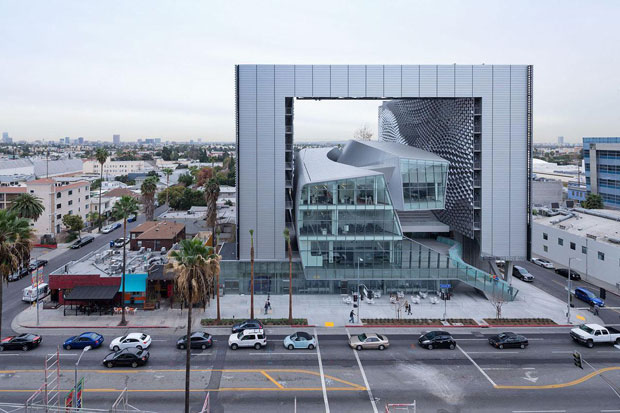
Emerson College's new L.A. campus, by Thom Mayne. (Los Angeles Times)

Emerson College’s new L.A. campus, by Thom Mayne. (Los Angeles Times)

I spent a year in Boston at Emerson College in 1973-74 when it was still on Beacon Street. After I left Boston I heard that Emerson was planning to move out to the suburbs, or rather to Lawrence, Mass. Then, visiting Boston again years later, I discovered that the school, which is primarily devoted to the performance arts, had moved instead to nearby Boylston and Tremont streets, into exquisite set of old commercial buildings, one more glorious than the next. To walk in this stretch of Boston’s old theater district as the students crowd the sidewalk preparing, in their elegant way, to launch their evenings of fun, is pure bliss. These are indeed tomorrow’s “beautiful people” strolling among yesterday’s beautiful buildings.

Then, late last night, by way of an e-mail warning me of a new building by the egregious Thom Mayne, I learned that Emerson had opened a new campus on Sunset Strip, in Los Angeles. Here is Christopher Hawthorne’s L.A. Times review of the “campus,” with 22 illustrations, including the one on top of this post.

My correspondent has a daughter spending the semester trapped in this abomination. My prayers go out to her. My wife, when I showed her the picture, went online and saw some reviews, including one whose headline referred to its beauty. “Beauty?” she said, “It looks like World War III.” Hawthorne himself is adept at finding many comparisons that symbolize the “stage” that “frames” Emerson’s focus on performance. He adeptly identifies its precedents in modern architecture, including a similar rectangular arch shape visible (alas!) from the Arc de Triomphe in the La Defense area. And he perceives some of the flaws in the design concept of the campus. He compares it to “the alien popping out of Sigourney Weaver’s stomach.” And yet he likes it.

Hawthorne’s attitude sums up the self-referential, cynical, inhumane attitude of modern architecture and its acolyte critics, of whom Hawthorne is undoubtedly a talented example. He and his fellow design mavens and the architects over whom they drool understand that the architecture of today does not do much for the actual humans who must use it. The architectural establishment embraces a bastardization of “L’art pour l’art,” an artistic philosophy that emerged in the late 1900s as a rejection by bohemian artists of the bourgeois money that kept them in their garrets with a good supply of sultry posing slatterns, but which threatened to constrain their “creativity” to maintain the sale of their work – some of which was becoming obnoxious to the eyes of the hands that fed them. But a building is not the same thing as a painting, or even a sculpture, which can be easily hidden away in a museum once the fad has passed. Someday, the public is going to rise against the ugliness with which architecture has been populating our cities and towns. Then, when artists resume the essential humility that is the proper attitude of art toward humanity, the good times will roll and beauty will resume its … well, I can hope, can’t I?


Posted in Architecture, Art and design, Urbanism and planning | Tagged , , , , , , , , | 1 Comment