“Dystopia” three years on

James Stevens Curl, author of “Making Dystopia,” “The Oxford Dictionary of Architecture,” and other scholarly treatments of architecture. (National Civic Art Society)

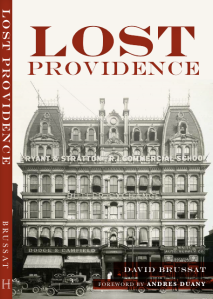
Three years have passed since British architectural historian James Stevens Curl’s masterful Making Dystopia was published by Oxford University Press. Subtitled “The Strange Rise and Survival of Architectural Barbarism,” the book can only have been about modern architecture, perhaps the most curious and indeed outrageous phenomenon of our time.

Writing in The Critic a few months ago, the mathematician and architectural theorist Nikos Salingaros described the book this way:

Curl’s critique of the theory and practice of modernism demolished the economical-ethical-political arguments put forward for decades that justified forcing people to live in inhuman environments. It was all a power-play, to drive humane architecture and its practitioners into the ground so that a new group of not very competent architects and academics could take over.

Stevens Curl in his book describes the result this way:

A great language capable of infinite variety of expression, a mighty and expansive vocabulary, a vast resource based on two and a half millennia or more of civilization, was superseded by a series of monosyllabic grunts, foisted on the populace with a totalitarian disregard for the opinions of those who had not been drilled to conform.

No wonder Stevens Curl won the 2019 Arthur Ross award for history and writing, bestowed by the New York chapter (and national headquarters) of the Institute of Classical Architecture & Art.

Has Making Dystopia diminished the unwarrantedly high status of modernist architecture over those years? Undoubtedly it has. Salingaros asked himself the same question in “Still Making Dystopia” and sadly concluded that evidence for the book’s impact on modernism must be considered elusive.

I once predicted in my review of the book on Amazon that if Dystopia got the attention it deserved,

it will start a revolution in the way we shape our built environment, and the result will be as vital as the discovery by mankind that the natural environment is in equal peril. It will rank with civilization’s victories in defeating totalitarianism and bringing democracy to Germany and Japan after WWII, and to Eastern Europe after the defeat of the Soviet Union in the Cold War. Some will dismiss that, but the eradication of beauty from the intensely visual field of architecture – the queen of the arts – which we all must experience every day and have done so since childhood, has had a major saddening effect on the world, and its reversal will bring about an efflorescence of happiness. It’s possible that James Stevens Curl’s book will launch that revolution.

It is still possible, but it has not happened yet. As Salingaros points out, the architectural establishment has savaged the book, and it has not been read or commented on by elite practitioners in the field, who have ignored it.

This is not unexpected. In our day and age, miseducated elites regularly ram poorly conceived policies down the throats of their supposed beneficiaries. Not only in architecture is this true, and in architectural education, but it’s true in education at all levels, K-Ph.D. It’s true in law enforcement from local police up to federal agencies – the FBI, the CIA, the Pentagon – charged with protecting the public and the nation. It’s true in science, health, in so many fields: wherever false narratives prevail, with the legacy media running interference for one side only in debates over facts and truth, local, state, national and international. But as Stevens Curl’s book strongly suggests, this state of affairs has prevailed in architecture since the 1920s, longer than in any other field.

Still, the book has been a godsend to those who practice architecture and city building as it was practiced for hundreds, even thousands of years. But even if such a positive emotional impact has been widely felt, evidence of it would be hard to find. Even if there were a measurable uptick in architectural practitioners citing Stevens Curl’s book, or design critics giving more credence to tradition or denouncing modernism more harshly after reading it, or municipalities leveling unequal playing fields that face traditional practitioners seeking commissions in cities and towns, it would still be impossible to count all the citations, even on the internet, or to develop a detailed ennumeration of the lies, disinformation, coverups, and sheer bad faith and brutality of the current establishment.

“What is missing from much debate about architecture today,” writes Stevens Curl toward the end of Dystopia (page 333),

is empathy, respect for culture in the widest sense, understanding of history (including religion), recognition of the imperative of nature as part of humankind’s habitat, and understanding of the importance of expressions of gravity and stability in building design to induce calm and ease in those who have to live with the realized works of an architecture that denies gravity, that deliberately sets out to disturb, and that only respects itself.

Hard facts characterize this scholarly volume of 388 pages, not including 75 pages of notes, 43 of bibliography, 40 of index, and many photographs and drawings, including some by the author. Along with numerous books on mostly architectural subjects, Stevens Curl also wrote (with Susan Wilson) the Oxford Dictionary of Architecture, with many wry comments in modernist entries.

And yet insurrection against evil can begin at the bottom and, when successful, bring change to the top. Immeasurables such as the influence of a powerful book, one that indicts a corrupt regime, can spark revolution. It has happened many times before, in every realm of society, across time and across the globe. It is happening today in the food industry, to name just one with which many are familiar. It may be just starting to happen in the field of education, and it sure can happen in architecture. But architecture is more tightly nailed down by its establishment than any other field, and will require sparks to be set by people at the bottom, as it were: in local neighborhoods where architects and developers are most vulnerable to direct action.

I will give one example, a woman in Providence who has probably not read Making Dystopia but has led opposition to modernist house proposals being forced into a historic neighborhood. Lily Bogossian led locals on a charge into the belly of the beast, battled smart and tough, emerged victorious, and is about to do it again, taking on a new set of developers and purveyors of ugliness aiming to crush the spirit of a beautiful city and a free society. Good for her. I urge her, if she has not, to read Making Dystopia. If beauty is to regain the upper hand here and around the world, her like must become legion.

When dissatisfaction strongly felt by the public wells up into revolt, the elites do not realize it until too late. Either this will happen someday, or it will not. But if it happens, it probably would not have happened without the powerful impetus of James Stevens Curl’s Making Dystopia.

Posted in Architecture, Books and Culture | Tagged , , , , | 9 Comments

Presto chango bus hub idea!

Latest plan for a new RIPTA bus hub to replace centralized facility at Kennedy Plaza. (Union Studio)

Seemingly out of the clear blue sky a completely new bus hub idea has suddenly emerged in Providence. The Innovation District Transit Center, it’s called. The reigning notion of shifting most buses from Kennedy Plaza to a pair of new sub hubs blocks away has not been popular. Most riders believe the bus hub should remain in the plaza. So instead of sticking with the decades-old tried and true, downtown advocates such as the Providence Foundation and Grow Smart RI now propose a whole new ballgame, popping in from far left field.

So far, neither city nor state has turned thumbs up or down on the proposal.

According to a Providence Journal article by Patrick Anderson and published last Thursday, the new proposed bus hub would sit near the Garrahy Court House, on a large parcel of parking lots at the intersection of Dorrance and Dyer streets, one block from the Providence River. It would be a multi-use facility expected to include shops, restaurants and 40 units of housing in a six-story brick building. Will it be affordable housing? “Workforce housing” says the plan.

Anderson writes:

A coalition of nonprofits and businesses are promoting a plan to move the bus berths in Kennedy Plaza inside a proposed six-story building containing a new full-service transit terminal. In addition to shops, restaurants, an indoor waiting area, public bathrooms and parking, the new $77-million terminal building would also have more than 40 apartments.

The proponents, who include Grow Smart RI and the Providence Foundation, came up with the plan after the state’s proposal to replace the Kennedy Plaza hub with three new facilities sparked outrage from city officials and advocates for transit riders.

I don’t recall reading of any such “outrage” from city officials, who seemed perfectly willing to buy into spending a $35 million state bond issue on items that the public did not vote for in 2014. Transit activists have all along deplored the heightened distances and rider confusion considered likely under the plan to split up Kennedy Plaza’s central role, with two new sub hubs at the train station and, as originally conceived, at the proposed Garrahy garage. The plaza’s future grows only cloudier under the latest plan. The plan’s visioneers want to “alleviate crowding” in Kennedy Plaza. Huh? What planet are they living on?

The six-story building’s design is traditional, and quite nice, not surprisingly so from the downtown firm of Union Studio Architecture. Union Studio’s plan of 2013 for Kennedy Plaza, which integrated an upgraded public square into the existing bus amenities, was frog-marched out of the picture in favor of a sterile redesign, implemented in 2015, that included removing the plaza’s Art Nouveau waiting kiosks and substituting highly unenchanting plastic kiosks.

Now Union Studio has been tapped to design the new terminal on Dorrance. Does this mean that its 2013 plan for Kennedy Plaza is now alive again? Or is it more of a quid pro quo for having been stiffed by the 2014 plaza redesign, which introduced maximum sterility into what was once a lovely civic square? A tug of war between traditional and modernist visions of downtown’s future seems to be in progress. Advocates of civic beauty have had little to applaud of late.

Kennedy Plaza is named after a dead white male, so it seems to be an obvious candidate for cancellation by today’s laughably woke municipal administration and its corporate backers.

That may seem over the top, but apparently the city is now planning to sell its beautiful statue of Christopher Columbus, recently removed, rather than storing it until the current mania has passed. Think of the most stupid ideas for how to move this city forward, and they are all being thrown at the wall to see if they stick. A cartoonish new entrance to Roger Williams Park is being erected at its Broad Street entrance. Kennedy Plaza and Waterplace have been targeted with kindergarten amenities – referred to absurdly as a “more vibrant and welcoming public space” by proponents. They would, for example, place an automatic rain maker above Waterplace (just what we need!), raise the river walks by eleven feet, and demolish a perfectly good skating rink at Burnside Park in favor of a curlicue rink in the plaza itself. They seem willing to destroy beautiful Providence rather than continue to stew in frustration at its privileged status among American cities of its size.

All of this churning just wastes money that could fund genuine necessities as we emerge from the pandemic. I wonder how much of the $35 million in bond money even remains after so many rounds of idiotic “planning” since 2014? Not enough to fund the $77 million Innovation District Transit Center, I dare say! (Gov. Dan McKee has wrinkled his nose at that cost figure.)

This city has rebounded in the past half century because it has tried (fitfully, to be sure) to retain its civilized legacy, most endearingly and enduringly via its traditional redesign of the waterfront by the late Bill Warner between 1990 and 1996. How the latest ideas for Kennedy Plaza and public transit fit into a scenario that seems eager to repudiate that history is anybody’s guess.

The dark trapezoidal land is where the new facility would go. (Union Studio)

Posted in Architecture, Development, Providence | Tagged , , , , , , , , | 4 Comments

Update on Mack restoration

Glasgow School of Art before the fires of 2014 and 2018. (Photo by Steve Cadman)

With bigwigs and celebs jetting away at last from Scotland’s global climate summit, what else is afoot in the city of Glasgow?

The famous 1909 Glasgow School of Art by Charles Rennie Mackintosh has not been rebuilt after its near destruction after two fires in 2014 and 2018. The cause of the latter conflagration remains elusive. While its restoration may be years off, the good news is that in October, leaders of the school agreed that “faithful reinstatement” would be the preferred strategy for rebuilding.

The other options were to build a new building altogether, or a hybrid consisting of new structure inserted into what can be saved of the original structure.

Faithful reinstatement leans, as I understand it, more toward replication among the various synonyms for restoration. Many modernist architects and academics have pushed since 2018 for the school to lean toward new construction or some sort of hybrid. They assert, dubiously, that since Mackintosh was creative, the most “creative” rebuilding strategy would best honor his innovative nature. So the best strategy would be that which is the farthest from rebuilding the Mack (its local nickname) as originally designed – failing to notice that such a strategy would also precipitate flight among potential donors to the building’s salvation.

The most stringent definition of restoration would favor using as much of the remaining structure as safely possible while fabricating damaged or destroyed structures, features and embellishments with Mackintosh’s original designs as templates, with materials as close as possible to the original. Extensive archival drawings and photographs, assembled over the years, enable artisans to replicate the architect’s quirks with considerable confidence.

Architects Journal adds detail about long-revered spaces within the building that are more or less lost but could be devotedly replicated:

Iconic spaces, such as the library, board room, director’s office, Mackintosh Room, lecture theatre, Studio 58, the Hen Run, loggia, museum and Studio 11 will be reinstated together with all the other spaces, including studios.

But some observers have been pushing against that reasonable strategy. Among the most persistent is architect Alan Dunlop, whose opinion seems to appear with deadening regularity wherever rebuilding GSA is discussed. Last year, after desire for its restoration seemed to gain the upper hand, Dunlap tried to retwist the debate in his own direction:

I think the narrative around the future of the building has changed, with the emphasis now on restoration rather than replication of the original school. In other words, we should save what’s left of the building and put in a modern insertion.

He nudges and declaims, as if his kooky preferences might somehow gain force if repeated often enough. Since even the recent decision to faithfully reinstate the Mack is still subject to continued obsessive official analysis and reassessment, Dunlop might win in the end. But since the October decision, he seems to have resigned himself to the prevailing restoration strategy. No doubt he’ll be lying in wait in case things turn south, as often happens in cases of extreme bureaucratic sclerosis. No one expects the building to reopen before 2028 at the earliest.

My preferred alternative would be to not only rebuild the original as faithfully as possible but, in addition, to demolish the school’s recently built Seona Reid building by Steven Holl directly across Renfrew Street from Mackintosh’s original structure. What a horror! (See below.) But, of course, that will not happen. Which does not mean that it should not happen. Here is a quote from the opening of Observer critic Rowan Moore’s review of it, which places the building – and all others of its ilk – in proper perspective:

“Have you heard of the artist James Turrell?” asks Chris McVoy, partner in Steven Holl Architects of New York, and inside me something dies. When architects mention Turrell, it means that they have seen his installations and think that, because like him they play with white walls and light, they can make something as mesmerising. However valid their work in other ways, they can’t. It is like thinking that any painting of yellow flowers is a Van Gogh.

(As mesmerising as what? one might nevertheless ask.)

Like so many other cities in Europe, including London and now Paris, Glasgow has tried to commit suicide via modern architecture. Luckily, Europe’s stock of historical fabric is so intact that it takes a lot of modern architecture to ruin. Most American cities once had such strength but do not any longer, and have not for a long time. (Providence still does.) In deciding to “faithfully reinstate” its famous school of art, Glasgow seems to recognize (as the leaders of Providence do not) what they must do to avoid the fate of American cities like Houston. (My advice: city planners everywhere should set aside a sandbox for the modernists.)

Reid Building across Renfrew Street from the Mack. (UK Guardian)

The Mack, center left, and the Reid Building in Glasgow. (Photo by Peter Drummond)

West George Street showcases beauty of Glasgow. (visitscotland.com)

Posted in Architecture, Preservation | Tagged , , , , , , | 2 Comments

William Blackstone’s statue

Recently erected statue of William Blackstone on river bank of Pawtucket, R.I.

William Blackstone, or Blaxton (1595-1675), has long struck me as the mildest of colonists, perhaps not even a colonist strictly speaking. He was a recluse, and when other colonists showed up, he exited stage left.

An ordained priest of the Church of England, he landed with emigrants in (what became) Weymouth in 1623, from which he migrated in 1625 to (what became) Boston in 1630, becoming its first settler and first resident of Beacon Hill. After inviting Puritan settlers from (what became) Charlestown to share his land in Boston, he became disenchanted with his Anglican colleagues, after which he retreated (not fled as did Roger Williams) in 1635, settling in (what became) Cumberland across from (what became) Pawtucket, in (what became) Rhode Island. Blackstone lived there peacefully – or so history seems to record – until his death in 1675, about a month before King Philips’ War. Aside from breeding the first American strain of apples, building his home, “Study Hill,” which at the time housed the colonies’ largest library, preaching to natives who would listen, and traveling on a bull while reading (not illegal at the time) to visit his friend Williams not far away in (what was already) Providence, he seems to have done very little of interest to historians, so far as I can tell. He may have been the least belligerent man on Earth.

A town in Massachusetts, a river, a canal, Providence’s ritziest neighborhood and its grandest boulevard take Blackstone’s name, but now a statue of the bookish hermit – no relation to the famous British jurist, Sir William Blackstone – is raising a stink next to the river that bears his name in Pawtucket.

Native Americans today, at least some of them around here, are irked that Blackstone’s fame as the first settler in Boston and Rhode Island flies in the face of the fact that several Indian tribes predated him in each place he settled. And at some point a tribesman (or woman) of this or that tribe would have become the first settler in each of those places, long before Blackstone, so his “firsts” are of a twisted historicity invented by the white man’s culture.

This Columbus Day (Indigenous Peoples Day to some), a gathering of about a hundred people, largely representatives of the Narragansett tribe but including various African-American activists and others, gathered to protest the recently erected statue sculpted of sheet metal shards by Peruvian native and Providence resident Peruko Ccopacatty. A story in Uprise RI by the activist Steve Alquist quotes Pawtucket City Council member Melissa DaRose:

“This monument only goes to show that it seems like we [the black, brown and indigenous community] don’t count,” said Council member DaRosa. “We’re not included. We were not included in that communication. The Blackstone Travel Council did not reach out to the Narragansett Indian Council.”

Narragansett tribal elder Bella Noka added:

“If I were to be raped, and see my rapist on a statue, and you tell me, ‘It’s okay. Yeah he did some bad things but we’re going to discuss those things. We’re going to find out exactly what was good about him and what was bad about him, but we’re going to keep [the statue] there.’ That’s what you’re doing,” said Bella Noka. “Shame on you if you’re supporting that man.

More to the point was the statement by Narragansett tribal elder Randy Noka, who said of the statue, “For those who see something in it, more power to you. I think it is an ugly piece of steel and should be taken down.”

He is correct that it is ugly but not that it should be taken down. Ccopacatty’s style of sculpture leaves much to be desired, but it is a reasonably well crafted example of its type, which is legion in the world of art. The private and federal funds used to build out its space alongside the river is nicely traditional, and an admirable bit of urbanism, which Pawtucket cannot afford to spurn. Its quality, or lack thereof, should not form the basis for its removal.

In all the speechifying, nothing negative was cited about Blackstone except that he was a white settler who represented the oppressor civilization that since came to New England from far away. Four hundred years later, past injustice seems to have colonized the minds of many, oppressed and unoppressed, who now deny the progress made and seem intent upon demonizing the values of civilization that have made that progress possible.

The Declaration of Independence, a civil war fought to rectify historic wrongs, a civil-rights movement to surmount resistance to that rectification, and trillions in programs to transform that rectification into social and economic progress for victimized communities: Even as this valiant progress is denied, personal values such as hard work, diligence, humility and study that enable individuals to benefit from it are disparaged.

As they say, those who forget the past may be condemned to repeat it.

So maybe, far from removing the statue of William Blackstone, he should remain in place to be celebrated as precisely the sort of colonist the colonies could have used more of, especially the Narragansetts whose descendants gathered the other day in Pawtucket to pay homage (of sorts) to the new statue.

Posted in Art and design, Books and Culture | Tagged , , , , , , , | 9 Comments

“Conundrum of architecture”

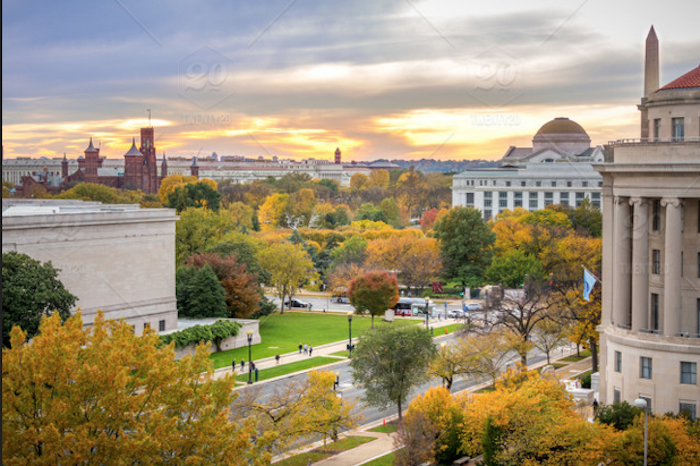
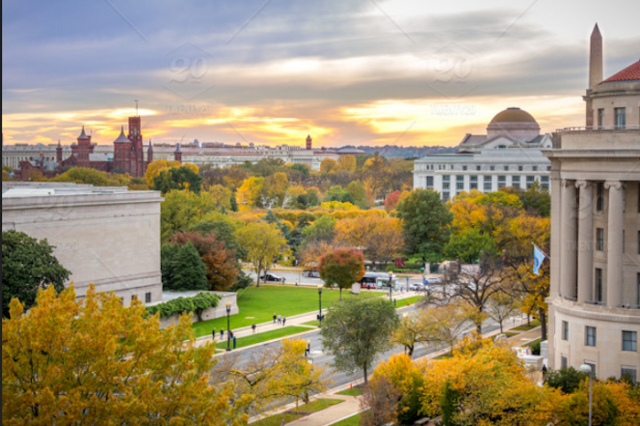
View toward Mall from Constitution Avenue, in Washington, D.C. (twenty20.com)

Below is a long guest post written by Scottish architecture critic David Black, who lives in Edinburgh. Written in light of controversies in the United States over former President Trump’s effort to align the styles of federal architecture with American principles and tastes, Black’s essay looks with a gimlet eye at the cases for classicism and modernism. His essay is by far the longest post, by me or by a guest, on Architecture Here and There, and I can assure you that it is worth every minute.

***

America’s Crisis of Classicism: A Philosophical Conundrum?

David J Black

President Biden’s sacking of a soft-spoken, bespectacled academic from the US Commission of Fine Arts represented an interesting moment in the story of American architecture in that it invited us to consider whether, in terms of its once secure and comforting national identity, the USA, architecturally speaking, might be falling out of love with itself.

In this quasi-ideological comic-book urban showdown of smoke, mirrors, generous helpings of prejudice, and the spectre of Donald J Trump, it would appear that in the world of architectural politics, or political architecture, a surprising number of highly-placed people seem congenitally incapable of telling their left from their right. Viewed, in the case of this writer, from the classical city of Edinburgh, Scotland, this bad-tempered squabble seems as puzzling as it is exotic.

An explanation: Dr Justin Shubow, a former Yale philosophy instructor, has long been president of the National Civic Art Society, which champions ‘classical and humanist’ architecture in the public realm. In 2018 he was appointed to the US Commission of Fine Arts, which was established in Congress in 1910 to ‘guide the architectural development of Washington DC’ among other things.
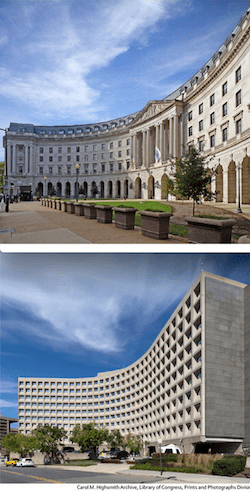
First of seven sets of choices in Harris Poll of October 2020. (NCAS)

If this makes him sound like some sort of nostalgia-infused elitist, it should be borne in mind that opinion polls suggest the majority of Americans support him on matters of federal public architecture, regardless of age, gender, education, income, race, ethnicity, religion or political party. He speaks, in effect, for most of the masses.

In 2020, Harris pollsters showed 2,039 people images of (a) Marcel Breuer’s 1970s brutalist Hubert Humphrey building and (b) John Russell Pope’s quintessentially classical 1930s National Archives building, both in Washington DC, and asked which they preferred – the one that looked like a hybrid of the House of the Soviets in Kaliningrad and a flyblown 1950s suburban tax office, or the one that looked like a Greek temple on Mount Parnassus.

The surprise was that while 83 percent supported the latter, in the end it would be the 17 percent which, thanks to the latest presidential intervention, would win the style wars. The tail now wags the dog.

While it is doubtful whether any metric exists which can reliably show where an architectural style sits on the political spectrum, this particular spat appears to have supposedly left-of-centre Democrats embracing the architectural tastes of Ayn Rand, an ideologue so far to the right that she would make most Republicans blush. Her credo, as expressed in her near unreadable 1943 book The Fountainhead, was that modern architecture was about ‘the right of the ego’, while anything traditional, like classicism, was collectivist communitarian dross which should be eliminated.

Rand’s hero was ‘visionary’ Howard Roark, whose buildings (at least in the 1949 movie) were lift-offs from the worst period of European international modernism. The fact that he raped a lady (well, he was a superhero after all) while fixing her fireplace was an apposite analogy for his approach to urban development: bully everyone, trash everything, build anew, and make heaps of money.

Whether or not Rand’s architect hero was based on Frank Lloyd Wright is a moot point, but there is no doubt that the model for the book’s villain, Ellsworth Toohey, was Harold Laski, chairman of the UK Labour Party. Rand dedicated much of her time to helping Senator McCarthy and the House Un-American Activities Committee. Anything with the least hint of liberalism, like Frank Capra’s movie It’s a Wonderful Life, was a target for her venom. An implacable opponent of traditional architecture, she would certainly have applauded President Biden’s defenestration of Dr Shubow.

To grasp what this strange controversy over classicism is all about, it helps to scroll back to the origins of the newly independent republic’s ‘national style’. For Thomas Jefferson, writing to the architect Henry Latrobe in 1812, the purpose of an American national style in architecture was not complicated. The Capitol building, for example, was to be ‘the first temple dedicated to the sovereignty of the people; embellishing with Athenian taste the course of a nation looking far beyond the range of Athenian destinies.’ It’s unlikely the sort of ‘people’ he had in mind were the ones who swarmed all over it on January 6, 2021.

America’s national style, even in its earliest years, had a certain viscosity. Federalists favoured the ‘Adamesque’ grammar of such architects as William Thornton, who planned the Capitol building, and Charles Bulfinch, whose father had studied medicine in Edinburgh just as it was extending beyond its medieval girdle. He lodged with University principal William Robertson, cousin and close friend of the Adam brothers, the world’s first progenitors of an ‘international style’. Presidents like Jefferson and Monroe added a modicum of Neo-Greek monumentality and Napoleonic chic to the feast, but every bit of it was solid, scholarly enlightenment classicism.

Ohio House at 1876 Centennial Exposition, in Philadelphia. (Philadelphia Inquirer)

As the 19th century progressed there were departures into the realms of Collegiate and Ecclesiastical Gothic and flourishes of Parisian Beaux-Arts. The guardians of the flame were writers like Edith Wharton and architectural practices like McKim, Mead and White. ‘Brand America’ was reinforced in 1876 during the Philadelphia Centennial celebrations, though the style-wars bifurcation into the Classical and the Romantic brought variations like the homely American Gothic revival (if classically symmetrical) ‘Ohio House’ in Philadelphia’s Fairmont Park.

Even New York’s first skyscrapers evoked the wholesome ethos of tradition in a new, distinctly American, symbiotic style. Henry Hardenbergh’s buildings might be twenty floors high, yet they exulted in the grammar of traditionalism. The Beaux-Arts origins of the Empire State Building are unmistakable, and possibly unavoidable, since its designer, William F Lamb, the son of a Glasgow-born Brooklyn contractor, gained his Beaux-Arts diploma in Paris before going on to work for Carrere and Hastings, architects of the New York Public Library and the Forbes Magazine Building.
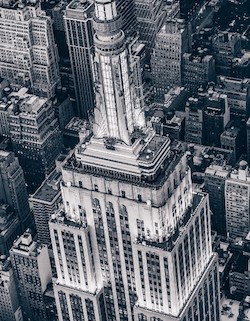
Empire State Building (Facebook)

The Empire State Building is closer in spirit to these precedents than anything that urban disruptors Le Corbusier, Richard Neutra, or Mies van der Rohe ever concocted. Likewise, to call Beaux-Arts alumnus Daniel Burnham’s Flatiron Building, in New York, an example of modernism makes little sense. The same could be said for Cass Gilbert’s Woolworth Building in Lower Manhattan, and Louis Sullivan’s Carson, Pirie Scott Building in Chicago. These were all modern buildings incorporating novel technologies such as the Otis lift, but they were certainly not seeking to be modernist.

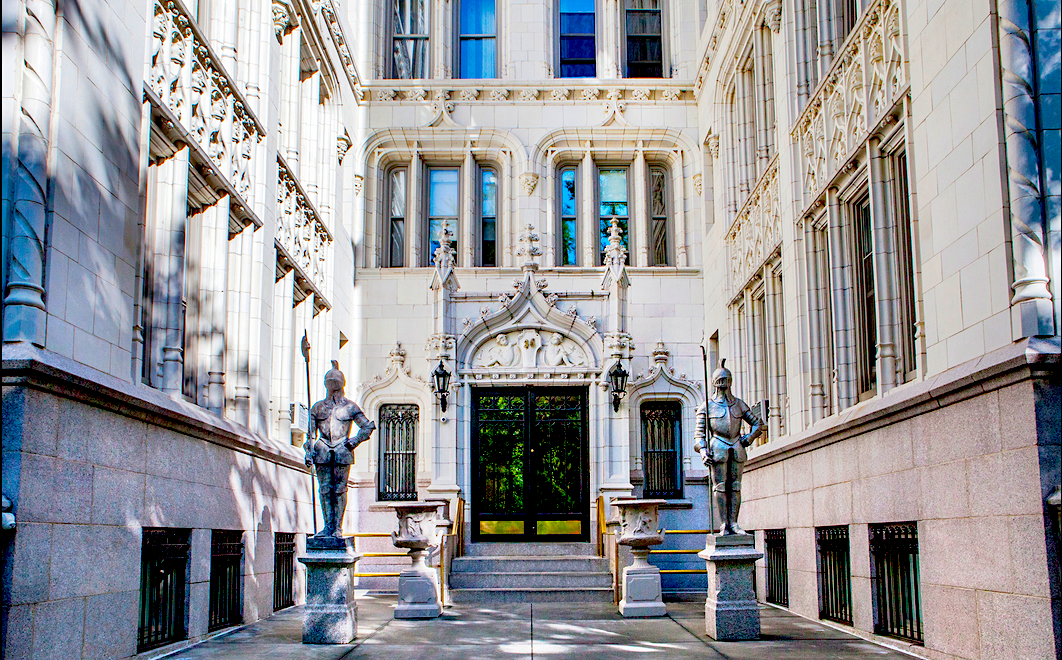
Much the same could be said of the tastefully detailed high-rise apartment blocks built for brothers Leo and Alexander Bing in Upper Manhattan and Greenwich Village – their block at 1000 Park Avenue even has effigies of both brothers in medieval dress flanking its gothic entrance. Alexander Bing, in particular, had a social conscience. He founded and promoted the City Housing Corporation which planned the ‘Garden City’ style Sunnyside Gardens community in Queens.

Bing & Bing also built the 1926 Drake Hotel, in New York, patronised by virtually every star in the firmament from Lillian Gish to The Who until its 2007 demolition. Its replacement was the world’s tallest residential building, Rafael Vinoly’s 432 Park Avenue, damned by Fortune Magazine’s Joshua Brown as ‘the house that inequality built’ and The New Yorker’s Adam Gopnik as the tallest, ugliest, and among the most expensive private residences in the city’s history – the Oligarch’s Erection, as it should be known – a catchment for the rich from which to look down on everyone else, it is hard not to feel that the civic virtues of commonality have been betrayed.
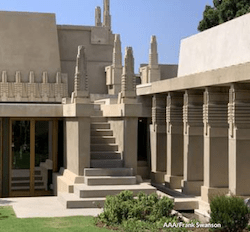
Hollyhock House (aaa.com)

The early buildings of Frank Lloyd Wright, too, while they might be quirky, evoke a sense of tradition rather than the streamlined futurism favoured by Corbusian fundamentalists. His 1919 Hollyhock House in Los Angeles, for example, is curiously reminiscent of an Indian railway station in the heyday of the British Raj. It also served as the perfect location for the 1989 film Cannibal Women in the Avocado Jungle of Death. Wright, while included in the 1932 MOMA exhibition of international modernism, nonetheless derided it as ‘the miscarriage of the machine age’ and would later join forces with architectural writer Elizabeth Gordon when she denounced international modernism as an expression of doctrinaire totalitarianism.

To equate Frank Lloyd Wright with international modernism is almost as absurd as Sir Nicholas Pevsner’s attempt to claim William Morris as a pioneer of British modernism, dismissed by art historian Robin Middleton as ‘a piece of propaganda for the establishment, in particular, of the modern movement in England.’ Wright’s only skyscraper, the 1956 Price Tower in Oklahoma, was a 19-floor baby compared to Chicago’s 109-floor Sears Tower, though that didn’t stop him dreaming up oddities like his (mercifully unbuilt) ‘Automobile Objective’ on Maryland’s Sugarloaf Mountain.

America, with a few exceptions, maintained a healthy urban wariness of the life-denying excesses of European minimalist modernism until after World War II, but it was just too lucrative to resist for developers eyeing up profits, empire-building institutional academics, or city councils in search of mass housing. The great exemplar was the 1954 Pruitt-Igoe housing project in St Louis. This became famous not so much for its architectural scariness as for its starring role in Godfrey Reggio’s 1982 film Koyaanisqatsi, in which it was dramatically blown up to the music of Philip Glass.

While it would be only fair to point out that these 33 blocks of 11-storey housing for the poor were a socially prescriptive failure as much as a design one, Pruitt-Igoe’s armageddon was craftily co-opted by architectural theorist Charles Jencks, who conveniently hailed this televised moment as the ‘death of modernism’ (3:32 p.m. on July 15, 1972, though he got the date wrong) at which point ‘Post-Modernism’, its funky dressing-up box alternative, came into being.

It wasn’t quite the end of astringent Corbusianism, however, since Pruitt-Igoe’s architect Minoru Yamasaki was yet to sign off his Lower Manhattan twin towers, whose end would also be dramatically televised in September 2001 in rather more spine-chilling circumstances.

‘What, then, is this new man, the American’ asked the French immigrant Michel-Guillaume de Crevecoeur in the years leading up to the revolution. A similar question could be posed with regard to the genesis of that distinctly American brand of classical architecture which the Biden administration would, it seems, prefer to turn its back on.

Does this ill-conceived appetite for dog-whistle cultural nihilism suggest that America has suddenly become embarrassed about being American? Why is the architectural soul of this once confident nation so troubled?

Conflating the Zeitgeist

Civic America’s current anti-classical frenzy began with a leaked 2020 report about a proposed presidential order to re-instate classicism as the preferred architectural grammar of the Federal City. That the signatory in this case was Donald Trump was, predictably, the kiss of death for the urban classical ideal, as well as a call to arms for hubristic architectural modernists, their profit-seeking property-investor backers, and certain self-regarding archi-scribes and pharisees of the press.

The anti-classicism cause was much amplified under the headline “MAGA War on Architectural Diversity Weaponizes Greek Columns,” by New York Times architecture correspondent Michael Kimmelman. This was probably as close to endorsing the spirit of Ayn Rand’s The Fountainhead as that once liberal newspaper has ever got; but just who, we might ask, was doing the weaponizing?

Bas-relief on Bonwit Teller Building. (Secrets of Manhattan)

That the executive order would eventually be signed by Donald Trump caused much angst. One almost sympathises, for it was he who, in 1980, promised to give the Metropolitan Museum important bas-reliefs from the Fifth Avenue Bonwit Teller building before having them smashed to pieces in a fit of power-crazed anti-heritage pique. The Bonwit Teller store would make way for not-so-classical Trump Tower in mirror-glass-box style by uncompromising ‘flash ’n’ cash’ modernist Der Scutt.

It is of course one of history’s great ironies (pace Henry Kissinger’s Nobel Peace Prize) that an aesthetically challenged developer who somehow became president should seemingly end up endorsing the aims of the 1902 McMillan Commission’s ‘City Beautiful’ proposals. Moreover, for some, this particular president’s journey to enlightenment had rather dark beginnings.

In 2017 he became embroiled in controversy by offering support to those who were out to preserve the country’s heritage of Confederate statues. The fact that the old Confederate heroes in question had had as their objective the destruction of the United States per se was glossed over, likewise the fact that the destruction of public works of art by any faction, left or right, doesn’t actually contribute to a deeper understanding of a nation’s history.

This point was sadly overlooked by speaker Nancy Pelosi when she greeted the razing of the marble statue of Christopher Columbus in her home town of Baltimore with the verbal shrug-off ‘People will do what people will do.’ Perhaps so, but this is a logic which ultimately endorses the Taliban’s destruction of the Bamiyan Buddhas, or the damage to ancient Palmyra by ISIS.

By July the 4th 2020, Mr Trump was addressing the nation from Mount Rushmore as guardian of the nation’s cultural patrimony. It could, perhaps, be argued that this was akin to giving King Herod a babysitting concession; after all, one of the mountain effigies was Abraham Lincoln, slain at the behest of a Confederate cause which Mr Trump had acknowledged in his championing of secessionist monuments in the south; but in an election year it was soundbites, rather than sound reasoning, which made the bulletins.

In any event it is not helpful to conflate the controversy over statues with the altogether different matter of whether the development of Washington’s Mall and other federal sites should be regulated in accordance with the principles of the ‘City Beautiful’ movement, or whether the introduction of ‘disruptor’ buildings by celebrity modernist architecture will be a benefit to the zeitgeist of some imagined ‘New America.’ It is even less helpful to consider the issue through the lens of one individual’s reputation.

Reactions to the executive order ‘Promoting Beautiful Federal Civic Architecture,’ which finally came into force in December 2020, ranged from the outraged to the supportive. Critic Martin Pedersen stated that ‘Modernism as a sort of style religion has lost the moral high ground (if it ever truly possessed it) due to its role as the face of global capitalism and income inequality,’ adding, as a prescient afterthought ‘So, if your goal is influencing the hearts and minds of the young – then hitching your fate to the Trump brand is likely to have the opposite effect.’ Spot on, Mr Pedersen.

On the other hand Martin Filler, author of Makers of Modern Architecture, launched a tirade against classicism in The New York Review of Books, noting ‘Hitler’s insistence that all public buildings in the Third Reich hew to the classical tradition,’ neatly establishing a link between an architectural style and a genocidal tyrant which, by dint of some perverse logic, toxifies the style.

In words Filler attributed to a ‘left-leaning’ organization called the Architecture Lobby, classicism was ‘a blatant attempt to leverage aesthetics in the service of white supremacy.’ Thus a capricious supposition which would, in the interests of consistency, also conclude that since Hitler was a vegetarian, then vegetarianism itself can only be a social evil, somehow entered the lists.

Invective became the order of the day. Reinhold Martin, professor of architecture and media at Columbia University, railed against ‘the project to make America classical again – the latest episode in a more organized anti-democratic performance – with neoclassicism as its architectural standard bearer and Black Lives Matter as its political foil, the avowed humanism of the National Civic Art Society is nothing but an attack on the state’s social-democratic redistributive function.’

In a less vindictive if equally impetuous outburst of anti-classical fervour in Yale’s quarterly The Politic, student economist Jennifer Wu began her revanchist plea for a more diversified architectural modernism and a wholesale abandonment of classicism with something which isn’t even a building – Maya Lin’s 1982 Vietnam War Memorial, just off the National Mall.

In marking this American tragedy, the choice of an architect of South East Asian descent was a gesture of reconciliation. Lin approached her project as a wound in need of healing, sensitively placing her granite memorial wall below ground level precisely because she didn’t want to compete with the capital’s ‘national style’, particularly that of the nearby Lincoln Memorial. It was a stroke of genius. Those of us who have visited the memorial, aware of grieving relatives running their fingers over the inscribed names of the fallen, are left in no doubt that this sacred site is much more evocative than any big-statement signature building could ever have been.

hirschorn

Hirshorn Museum (New York Times)

Ms Wu doesn’t get this, however, as she bemoans the National Mall’s lack of modernism, though she cites a few examples like the Hirshhorn Museum of contemporary art by SOM’s Gordon Bunshaft, a forbidding gun emplacement not quite ameliorated by its four-acre sculpture garden. Otherwise she twists a knife into the much vilified Dr Shubow, whose appointment she deems ‘the [Trump] White House’s first step towards complete control over the aesthetics of federal buildings.’

This rather misses the point that it was an executive order of 1962 which had thrown out the McMillan Commission’s assumption in favour of new federal buildings’ being more or less harmonious with Washington DC’s established classical grammar. Wasn’t the 1962 decision also a bid to exert control?

Likewise, President Biden’s abandonment of the sort of federal classicism which four out of five Americans prefer is itself a gesture of control at the behest of others. This was a response, it appears, to a report from a task force established by Washington’s current mayor, Muriel Bowser, to ‘remove, relocate, or contextualise’ landmarks such as the Jefferson Memorial, and to focus on ‘key disqualifying histories, such as participation in slavery, systemic racism, mistreatment of, or actions that suppressed equality for, persons of color, women, and LGBTQ communities.’

Mr Biden’s order was essentially a dirigiste reaffirmation of (future) senator Daniel Moynihan’s 1962 Guiding Principles for Federal Architecture promoting ‘the choice of designs that embody the finest contemporary American architectural thought’. Senator Moynihan was no philistine. He liked to quote Pericles and save several historic buildings, such as Washington’s old Patent Office, now the US National Portrait Gallery. He supported First Lady Jacqueline Kennedy’s campaign to preserve historic Lafayette Square, opposite the White House, and referred to the demolition of New York’s Penn Station as ‘the greatest civic crime’ in that city’s history. His DC office was in the ‘City Beautiful’ Russell Senate Building, and he has, as his everlasting memorial, McKim, Mead and White’s hyper-classical Old Post Office in New York, now ‘The Moynihan Train Hall.’

But this was moonshot America seeking new ‘signifiers’, so he let the modernist cat out of the bag and into the Federal City. How much of ‘the finest contemporary American architectural thought’ emerged is questionable. He would later bemoan the result, stating ‘Twentieth Century America has seen a steady, persistent decline in the visual and emotional power of its public buildings.’
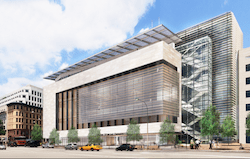
Newseum, on Pennsylvania Avenue. (The Business Journals)

His hope that ‘the finest contemporary architectural thought’ would permeate the federal built future invites us to consider just how truly ‘American’ his Guiding Principles were. To be nit-pickingly didactic, Frank Gehry, whose obtrusive Eisenhower Memorial is a bete noire of Dr Shubow’s, is a Canadian. James Polshek, whose a-contextual ‘Newseum’ building at 555 Pennsylvania Avenue was panned in the New York Times as ‘the latest reason to lament the state of contemporary architecture in Washington DC’, is American born, but was processed through the practice of Chinese born I.M Pei, an ally of Bauhaus disruptors Gropius and Breuer.

Mr Pei himself was singularly favoured in the changing face of Washington DC, albeit he exhibited some coyness in such buildings as his 1978 addition to the National Gallery, built from the same Tennessee stone as Pope’s nearby ‘City Beautiful’ building.

The result eschews the ostentatious gaudiness of his former colleague’s ill-fated Newseum, and may claim, as its principal virtue, a sort of character-deficient inoffensiveness, but this would hardly seem like much cause for celebration.
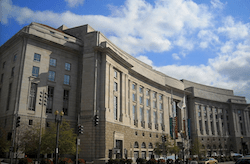
Ronald Reagan Building. (Wikipedia)

Another DC building from Pei’s office betrays a hesitant withdrawal into pastiche timidity, however overwhelming its scale – at 3.1 million square feet this is the largest federal building after the Pentagon. The Ronald Reagan Building and International Trade Center has been described as ‘faux federal’, and certainly exhibits a kind of dull, ponderous Roman monumentalism. Bedevilled by endless construction and scheduling shenanigans involving Mayor Marion Barry’s office, the Pennsylvania Avenue Development Corp, the General Services Administration, the Office of Management and Budget, and the Federal Triangle Corp, the architect’s fee – already the highest of seven submitted – rose from $26 million to $52 million. Even so, some were relieved that the project didn’t end up with one of the more gauche modernistas, such as Mayne, Holl, Gehry, or Hadid.

It really shouldn’t matter a damn which architect comes from where in the creation of an immigrant nation’s civic identity, especially in the case of a polyglot city like Washington DC, first projected by a Scotsman, George Walker, in The Maryland Journal and Baltimore Advertiser on January 23rd 1789 and laid out in plan form by a French military engineer, Pierre L’Enfant, in 1791, with the help of an African-American surveyor, Benjamin Banneker. The White House, begun in 1792, and loosely based on Dublin’s Leinster House, was designed by Irish Catholic James Hoban, with porticoes by English Moravian Benjamin Latrobe, and built by a Scot, Colen Williamson.

The Capitol building is the work of several architects, American and otherwise, beginning with West Indies born Scots Quaker William Thornton, a polymath who developed a strong interest in architecture while studying medicine at Edinburgh University, when the construction of the neoclassical Georgian New Town was under way. He was succeeded by Latrobe, who had been brought to Thomas Jefferson’s attention by the Scottish marble mason, James Traquair.

America’s classicism, a heterodox distillation of enlightenment ideals, belongs neither to the right nor the left. It was an intellectual and emotional expression of the values of the world’s first constitutional democracy in toto – a nascent, imperfect republic, to be sure; ruled by white male lawyers and landowners who lorded it over disenfranchised women and enslaved black people, certainly. Even so, that ‘great experiment for promoting human happiness’, as George Washington described it, was a marvel in its time, and grew into something remarkable. Why disinvent it?

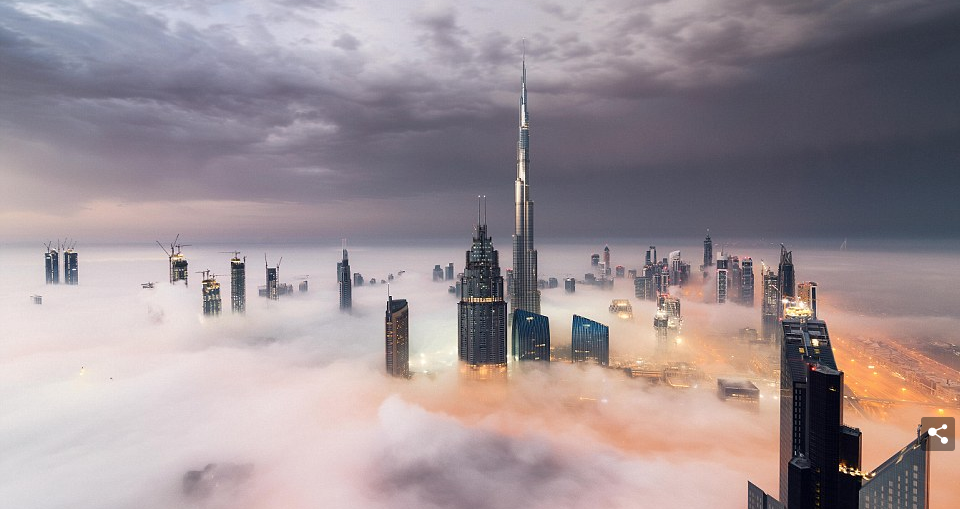
Those with an urge to de-classicise one of the world’s great planned cities of the 18th century would re-imagine it as – what? Dubai by the Potomac? Hudson Yards redux? A developer’s dystopian Dhaka? And could someone please explain how it is, exactly, that the denigration of its original architectural character and the encouragement of urban disruptor buildings by multi-millionaire architects will be some sort of triumph for an imagined inclusive left, rather than for raw capitalism?

Classicism, Iconoclasm, and the Rise and Fall of the Democratic Intellect

The belief that American classicism begins and ends with the great buildings of state, like the Capitol, the Supreme Court, and the legislatures of, say, Austin, Providence, and Virginia, conceals the fact that, on the whole, its first utterances were the domestic products of private patronage.

When Bishop Berkeley arrived in Narragansett Bay in 1729 I suspect it was his fellow immigrant, the Scottish artist and occasional architect John Smibert, who designed a new neoclassical doorcase for his plain, if comfortable, farmhouse, Whitehall. Smibert went on to design Boston’s Faneuil Hall and Holden Chapel in Harvard Yard, though whether this justifies the title ‘the father of American architecture’, as claimed on a painted sign in Boston’s South Churchyard, is perhaps debatable.
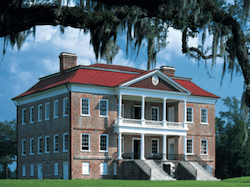
Drayton Hall, Charleston, S.C. (aaa.com)

It is possible, too, that America’s oldest Palladian mansion, Drayton Hall, in South Carolina, was designed by Scot George Haig, who arrived in Charleston in 1733, aged 21, to become, in time, its deputy surveyor general. He already had links in the town. His father’s name (spelt Haigs) appears in the 1729 Charleston St Andrews Society roll book. The diamond shape in an upper-floor fireplace at Drayton which features in Haig family heraldry may also offer a clue. However, recent dating of the roof timbers suggests a construction period shortly after his death in 1748, though his plan may well have been completed by another hand, such as that of the wright Robert Deans.

The attribution remains speculative, though Haig, known as a ‘very prolific surveyor, mainly in the townships of Amelia, Saxe-Gotha, and Orangeburg’ is certainly a well-qualified candidate to be Drayton’s putative designer/builder, even though tradition favours John Drayton himself. Haig boarded at the home of a relative, Lilias Skene Haig, whose father-in-law, William Haig, had been one of the earliest surveyors of an area of land by the Delaware River which would later become the city of Philadelphia. Place-making was very much in this family’s DNA.

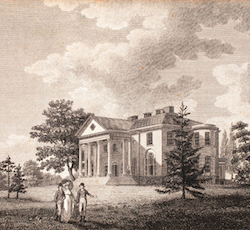
Philadelphia, as it happens, still has one of the most ‘Adamesque’ mansions in the USA. Originally home to lawyer Andrew Hamilton (whose successful 1735 defence of the printer and publisher John Peter Zenger was to become a precedent for the constitutional right to free speech), in the hands of his grandson William the enlarged mansion, Woodlands, would become ‘the first fully realised Federal architecture in North America’.

Woodlands, outside of Philadelphia. (americanhistoricalstaffordshire.com)

Hamilton almost certainly met one or both of the Adam brothers during his 1780s visit to Europe and, like them, he was a subscriber to the influential “Treatise on the Five Orders of Architecture” by their head draftsman, George Richardson. The tempting thought that the brothers might have had some significant input into the building’s design should probably be resisted. Even so, its elements are clearly derived from their ‘corrected style’, so no one can deny that Woodlands is just possibly the only building in America designed by the brothers Adam, which is quite a thought!

The most prominent classical building in Philadelphia, however, is undoubtedly the neo-Greek Museum and Art Gallery on Fairmount Hill, just outside the city centre. With this, the banal thesis that architectural classicism is ‘a blatant attempt to leverage aesthetics in the service of white supremacy’ as trumpeted by Martin Filler falls to pieces, since the building’s exterior, from its famous steps to its polychrome pediment, was designed by the African-American architect Julian Abele, one of America’s most sensitive exponents of neoclassicism.

Despite a $233 million internal makeover by Frank Gehry, Abele’s exterior retains its power and dignity as one of the great neoclassical urban masterworks of the United States, while it confounds the ill-informed prejudices of those who bizarrely insist that classicism, as the favored national style, is the architecture of a racist right.

A look at the facts behind the sloganizing might, on balance, tend to favour other conclusions. In contrast to the African-American classicist Abele, the major proselytiser of modernism in twentieth century America was the architect Philip Johnson, whose activities included attendance at National Socialist rallies in Nuremberg and Potsdam, avidly supporting Adolf Hitler (whom he found ‘spellbinding’), anti-semitic and anti-black outbursts during a foray into journalism in which he was paid by the Nazi government to cover the invasion of Poland, and hosting meetings of American Nazis in his apartment. He also wrote rave reviews of Mein Kampf for the pro-Fascist quarterly The Examiner and attended Nazi rallies in Madison Square Garden.

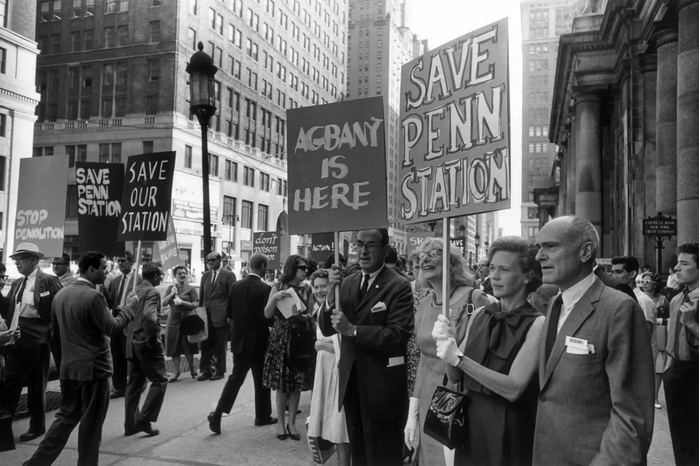
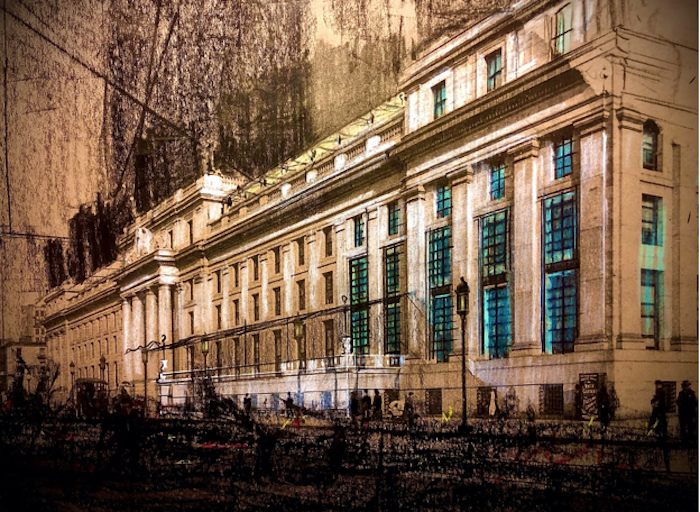
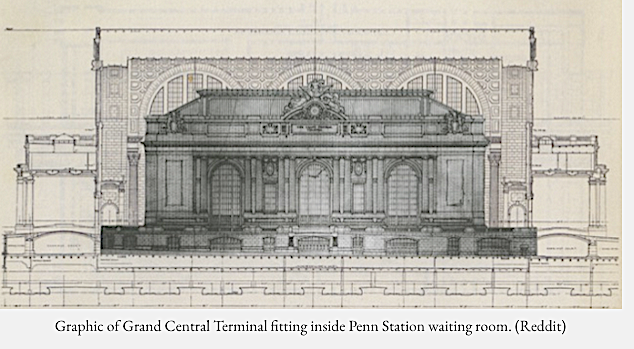
It may also be noted in passing that New York’s most prominent classical building at one time was the same Pennsylvania Station whose loss Daniel Moynihan described as the greatest civic crime in the city’s history. As with Julian Abele’s Philadelphia masterpiece, to characterise McKim, Mead and White’s railway-age reinterpretation of ancient Rome’s Bath’s of Caracalla as a symbol of white supremacy would be a mistake. The Emperor Caracalla, after all, was half Syrian and half Libyan.

If the denigration of classicism is not informed by scholarship, what, then, is its true underlying dynamic? Could it be an example of ‘poacher’s cloak’ politics in action? This is the technique whereby one particular interest group – say celebrity architects and their developer backers – seeks to sow confusion by exploiting the anger of another for its own ends. Some see it as an extension of statue-felling, which has long moved on from the de-plinthing of Robert E Lee and his Confederate henchmen, or even the morally deficient Christopher Columbus, to a comprehensive drive to sweep away all statuary, it would seem – including effigies of the emancipators Lincoln and Grant.

AT&T (Sony) Building. (Twitter)

Anti-classicism is, at root, an iconoclastic spasm. Philip Johnson would probably have understood this perfectly. He combined a Houdini-like ability to escape his fascist past with the consummate skills of a propagandist and the suave persuasiveness of a wealthy Madison Avenue marketing guru. When it seemed possible that the FBI might arrest him as an enemy agent, he enlisted in the US Army. As a modernist he hedged his bets, topping off his AT&T headquarters building with a faintly classical Chippendale pediment (‘The Seagram Tower with ears’ – Village Voice) and marching alongside Jane Jacobs and Jacqueline Kennedy to oppose the demolition of Pennsylvania Station.

As curator of the 1932 MOMA exhibition on international modernism, Johnson, the quintessential elitist, like MOMA director Alfred H Barr, had scant interest in social architecture or utopian housing, though the urban theorist Lewis Mumford was grudgingly given limited space in an isolated room for an exhibition of planning and housing, and even Alexander Bing was granted a token look in. Otherwise the catalogue was largely a mix of ‘starchitect’ hagiographies of such Nietzschean Ubermensch (no women, and certainly no non-white ethnicities) as Le Corbusier, Wright and Oud, whose virtuous profiles were provided by Henry Russell Hitchcock, though Johnson reserved the Mies van der Rohe puff for himself.

Patrons of and contributors to the exhibition included Jacobo Fitz-James Stuart y Falco, 17th Duke of Alva (or Alba), 10th Duke of Berwick and pretender to the throne of Scotland, who would later become General Franco’s representative in Britain, and a supplier of useful intelligence to the Third Reich, via Madrid.

At the other end of the political spectrum was a close friend and patron of Mies van der Rohe, Marxist-Leninist Eduard Fuchs, who had been appointed by Lenin to organise prisoner exchanges after World War 1, was a member of Berlin’s Bolshevik Comintern, and had commissioned Mies to design a monument to the communist martyrs Rosa Luxemburg and Karl Liebknecht.

Others included Baroness Helena von Nostitz-Hindenburg who, the following year, would be one of nine influential German women to sign the Oath of Allegiance to Adolf Hitler; and Georg von Schnitzler, head of chemical giant I.G.Farben, manufacturers of Zyklon B gas, who would be sentenced for war crimes in 1946. All in all, totalitarianism, left and right, was well represented.

Given this ambivalent pedigree, it is surely paradoxical that the generally justifiable sensitivities of Black Lives Matter activism have somehow been press-ganged into the modernist cause. Even if Philip Johnson and Ayn Rand had never existed, one might wonder how yet more expensive, big-ticket city centre projects by rich modern ‘disruptor’ architects and profit-hungry developers would actually benefit ordinary communities, black or white. Could it not be that the average citizen needs less vanity-fueled bombastic corporate and state modernism, not more?

But we are urged to forget all that. The repeated refrain must be that classical architecture is damned on the flimsy pretext of guilt by association, and those who defend it must can only be right-wing reactionaries, particularly since their cause was embraced by Donald Trump. Look a little further into this and the theory doesn’t quite hold. In fact, it’s close to being the opposite of the truth.

I don’t know anything about the private political beliefs of those serving on the now reshuffled US arts commission, and don’t particularly care, since their function was to promote the stewardship of federal architecture – an area best left unpoliticised. I have, as it happens, met two of the rejected commissioners, one being Dr Shubow, who spoke at an urbanism conference in Charleston, South Carolina. I recall, above all, his unbridled admiration for Franklin D Roosevelt, a confirmed classicist and New Deal liberal who had his private home, Springwood, remodelled as a Georgian mansion.

Indeed, I discovered some time after the event that Dr Shubow had once been editor of a left-progressive newspaper, Forward, whose original 1912 Beaux-Arts New York building is perhaps the only one in America adorned with bas-relief effigies of Karl Marx and Friedrich Engels!

In 2015 I met Dr Shubow’s fellow commissioner Rodney Cook at a planning event in Havana, a few months prior to President Obama’s visit, when there was much interest in the restoration of Cuba’s stunning, if crumbling, built heritage. I hadn’t a clue what Mr Cook’s private political views were, or even if he had any. What I soon discovered, however, was that he was a man of outstanding erudition who has been pro-actively engaged in restoration projects throughout the world.

I was later informed by an Atlanta friend that Mr Cook’s father had been a respected Georgia state representative and friend of Martin Luther King senior. A gang of racists had burnt a Ku Klux Klan cross into the lawn of the Cook family home after he had advocated desegregation in housing. At Mr Cook senior’s funeral in 2013 the eulogy was given by civil-rights leader Andrew Young. Somehow this back story doesn’t quite chime with shallow tropes about classicism and white supremacy.

432park

432 Park Ave. (YouTube)

Apart from that, there’s the matter the effects of endless urban construction on climate change, given that a startling 38 percent of the world’s CO2 emissions in 2020 were produced by the global building industry. Better, by far, to restore and improve existing buildings, or build new ones of local materials in a local style, than to raise yet more versions of the Rafael Vinoly-designed and developer Lendlease-built Oligarch’s Erection at 432 Park Avenue, with its two-foot sway, vertical floods, and walls which reportedly creak like the wooden hull of The Mayflower, which is presumably not the sort of American dream its overseas billionaire purchasers were buying into.

The pedigree of the ‘modernism’ of buildings like 432 Park Tower dates back around 90 years, when Philip Johnson and his collaborators sought to persuade the public that it was the architecture of tomorrow. His skills as a propagandist were utilised when he launched the international modernist exhibition at MOMA which was little more than a drive to import the minimalism of his European associates Le Corbusier and Mies van der Rohe into America – the latter, incidentally, being not averse to signing off his letters ‘Heil Hitler’ when pitching for work in Germany.

Neither this, Rand’s loathing of traditional architecture, nor Mussolini’s enthusiasm for a glass and steel ‘Casa del Fascio’ offers proof that modernism belongs to the right. There were also left-wing advocates for Corbusianism. It makes more sense to assume that a traditional style like classicism is not the direct outcome of any specifically political ideology. A simple fact which cannot be doubted, however, is that most modernism, and its postmodern alter ego, is elitist, a point well made by Tom Wolfe in his denunciation of the modern movement in America, From Bauhaus to Our House, in which he impishly asks, ‘Has there ever been another place on earth where so many people of wealth and power have paid for and put up with so much architecture they detested.’

An equally acerbic attack was The Architecture of the Absurd: How ‘Genius’ Disfigured a Practical Art by John Silber, an outspoken academic who was, successively, president and chancellor of Boston University, and a one-time Democratic candidate for Massachusetts governor. The Texas-born son of an architect, John Silber takes no prisoners when it comes to criticising the mesmeric hold rich celebrity architects such as Frank Gehry, Daniel Libeskind, and Stephen Holl have on the cultural and educational elites. Silber rails against the ‘theoryspeak’ (a word borrowed from Wolfe) of architects who talk ‘aesthetic and philosophic rubbish’ and, more importantly, asks why their clients were ‘impressed and even intimidated by it.’ By all accounts Mr Silber could be a difficult man, but anyone who openly opposed capital punishment in Texas and was a lifelong Democrat can hardly be characterised as a right-winger simply because he thought modernism was a bit of a fraud.

Classicism: The First International Style, and an Expression of the Democratic Will.

Some might doubt whether this author is really entitled to have a view on the subject of the threat to American classicism. He writes as a Scot who has spent time in the USA but belongs to a city – Edinburgh – which was the result of the progressive precepts of Europe’s 18th century philosophical enlightenment.

Such debates about the way we treat our historic cities are not confined to the USA. Classicism belongs to the world. Its finest expressions can be found not only in Washington DC, Paris, Turin, and Munich, but also in St Petersburg, Russia, and Kolkota (Calcutta), India, among other places.

urbanrealm.com

Hotel dubbed “The Golden Turd” by citizens of Edinburgh. (urbanrealm.com)

Tragically, in Edinburgh, an American anti-classicist gesture (a hotel, at left) now disfigures one of the world’s finest 18th century planned townscapes, the classical New Town. An investment by major pension investment corporation TIAA of Charlotte, North Carolina, it rejoices in the locally popular name ‘The Golden Turd’. An American friend seriously wonders whether it would have been approved by the Nevada architecture review authorities for the tacky end of Las Vegas Strip.

The truly sad thing about this is that a great deal of architectural classicism is a shared Scottish-American heritage, representing, in each case, a moment of resurgence in the national spirit of both countries. In 1753, with Scotland’s self-esteem at its lowest ebb after the failed Jacobite rebellion, something of a miracle was wrought when the foundation stone of a new Edinburgh ‘Royal Exchange’, funded by public subscription, was laid by John Adam, and the redemptive power of architecture was revealed.

‘Now Scotland’s youth, with better omen born, salute the dawning of a brighter morn – Last of the arts, proud ARCHITECTURE comes, to grace EDINA with majestic domes’ wrote an ebullient John Home, cousin of philosopher David Hume. The classicism, in this case, was a communitarian show of force, a blow against ‘barb’rous chiefs, with iron sceptre swayed’ who had dominated the past. Edinburgh’s classicism was a potent symbol of patriotic assertiveness, the people’s will, the first stirrings of the ‘democratic intellect’, and dreams of a more prosperous future.

Exactly forty years and five days later President George Washington enacted a similar ceremony when he laid the cornerstone of the United States Capitol building. In both cases these achievements were to be followed and amplified by the construction of two great classical cities; Edinburgh New Town, and Washington DC. It goes without saying that the customs and mores of the 18th century were not those of today. In America’s nascent democracy, whatever lip service the founders may have paid to vague ideas of milkwater abolitionism, George Washington and his wife ‘owned’ a total of 317 enslaved people, which is why anyone with a close interest in the founding period should certainly read that ‘necessary corrective’, Frederick Douglass’s What, to the Slave, is the Fourth of July?

The American Revolution, just like Robert Adam’s ‘Kind of Revolution’ in civic architecture, should be viewed as a developing process, not a single event. There is, it goes without saying, no plea-in-mitigation for the crime of slavery, but we should always seek to judge and condemn in context, and should see the continuation of that revolution in Lincoln’s 1863 Emancipation proclamation and the 1964 Civil Rights Act, as well as a work in progress at the present time.

As for the politics of architecture, there is an obvious counter-thesis to the contention that America’s classical tradition in architecture is some sort of conspiracy by an imagined white supremacist right. After all, what is corporate modernist architecture but the built fulfilment of the right wing neoliberal doctrines of Chicago School economics? Writing in The New York Times Magazine in 1970, Milton Friedman, the doyen of unfettered free-market capitalism, accused businesses which claimed to have ‘a social conscience’ of ‘preaching pure and unadulterated socialism’.

Today, US corporate capitalism conspicuously embraces the wholesome acronyms ESG and CSR (Environmental, Social, and Governance criteria, and Corporate Social Responsibility) while waxing eloquent about ‘the sustainability agenda’ yet the supreme imperative, far from ‘unadulterated socialism’, remains that of ‘fiduciary duty’ – the maximisation of profits.

Corporate modern architecture uses the same playbook, rhapsodising in seductive poetry while operating in stark bottom-line prose. Starchitects are never poor. With a net worth of $240 million, Britain’s Lord Foster leads the field, though even at just under half that amount Frank Gehry isn’t doing so badly, while Renzo Piano gets by on $20-30 million and Maya Lin is believed to have banked around $10 million. The earlier generation weren’t exactly struggling either. On his death in 1969 Mies van der Rohe was worth around $5 million – perhaps $40 million in today’s money.

Given the power of wealth and the resultant inequalities of arms this is not, of course, a balanced debate. The advantage lies with the forces of iconoclasm and money churn, aided by a plethora of magazines and glossy books that back their cause. They have, overwhelmingly, the press eating at their table and growth-minded politicians providing them with favours. They also exert a powerful influence over the academic establishment, and thus the minds of future generations of architects.

Moreover, modernism’s architectural nihilists denigrate classicism as ‘architectural conservatism’ as represented by the views of, say, the late Sir Roger Scruton, or the Prince of Wales, while playing down the environmental damage for which they themselves bear much responsibility. They hire PR teams to wine and dine press and politicians, and prefer to avoid critical engagement like the 1982 Harvard debate between Peter Eisenman (later the author of an essay entitled “The End of Classicism”) and the architectural humanist Christopher Alexander, which neither participant could be said to have won, since there was absolutely no common ground between them.

How any of this tallies with the belief that a privileged modernist elite will be serving the interests of the progressive left in matters of class or racial diversity is something of a mystery. A much more persuasive argument than anything Messrs Kimmelman, Filler, or Martin, or Ms Wu, have presented us with in their anti-classical diatribes concerns the ‘democratic essence’ of the classical ideal. After all, if more than three-quarters of the public in a Harris poll prefer classicism to those modernist alternatives which are suggested for America’s federal buildings, this surely suggests it is the people’s choice.

Consider, too, that in Mark Gelernter’s History of American Architecture, of the top three neoclassical European buildings that influenced the neo-Greek style in the emerging United States, two were museums (Smirke’s British Museum in London, and Schinkel’s Altes Museum in Berlin) while the third was a school (Thomas Hamilton’s Royal High School, Edinburgh). The core theme of such architecture, in other words, was the cultivation and betterment of all humankind.

This adaptation of the Socratic belief in the value of knowledge harmonised perfectly with both the Scottish enlightenment and the founding ethos of a republic which began the preamble to its 1787 Constitution with the words ‘We the People.’ It is a demographically inclusive sentiment, and it is appropriate that some of the most sublime classical temples of the ‘great American age’ were designed for mass transit, like New York’s Penn Station. For the late historian Vincent Scully, to arrive at the lost original ‘one entered the city like a god, but now’ he lamented ‘one scuttles in like a rat.’

There is much that is absurd in the phobia of classical buildings by a politically naïve lobby which has persuaded itself that traditionalism in architecture is somehow inimical to the interests of a self-appointed progressive and inclusive left and those it purports to represent. Nor should we unquestioningly endorse the views of a gilded press commentariat which, in many cases, is simply cheerleading its rich architect and developer chums, as evidenced by what the writer Alexandra Lange described as Herbert Muschamp’s ‘5,000-word swoon’ over Frank Gehry’s Guggenheim Bilbao which, for him, was ‘a re-incarnation of Marilyn Monroe’.

On the other hand this is not an either/or controversy, with two diametrically opposed factions fighting it out for the urban soul of America. Why should it not be possible to exercise an even-handed judgement, cherishing the great classical heritage on the one hand, while welcoming high quality and appropriately located modern architecture on the other? By no means need everything be classical, even in Washington DC, where the very idea of a Museum of the American Indian inevitably leads to a particularly knotty intellectual quandary.

indian2

National Museum of the American Indian. (abpan.com)

Although, on the initiative of Daniel Moynihan, it spent many years in Cass Gilbert’s Beaux Arts Alexander Hamilton US Custom House building in New York, there was an understandable demand that the culture and history of America’s ‘first people’ should have a presence in the nation’s capital. This came to pass in 2004 when the Smithsonian opened a National Museum of the American Indian on Independence Avenue.

The problem with designing a large institutional building to represent an indigenous people who have, historically, no tradition of large institutional buildings was always going to be challenging, particularly on this site. For obvious reasons, there could be no question of marginalising it on a nearby location, such as Rosslyn or Bethesda, while designing a large building in a classical style, even on the Mall, would have struck a note of cultural dissonance.

On the other hand, is the invention of a bogus new sui generis style suggestive of ‘Indian-ness’ a persuasive alternative? For this writer, there might have been a way to get this right if the original architect, Douglas Cardinal, had developed his computer generated theme of nature, with the building as some sort of rocky outcrop rising out of its wetland setting, but he was sacked, and would dismiss the later post-modernist variation on the theme of Fallingwater as ‘a forgery.’

On the other hand this was possibly an intractable problem with no satisfactory outcome. If that last open ground near the Capitol was not to have a classically harmonious building, then what should it be? Perhaps the best defense of the building as it finally emerged is that in the hands of one of the more outlandish post-modernist disruptor architects it could have been so much worse.

Despite the endlessly discordant note in most modern architecture, it is perfectly possible to praise a building like, say, Frank Gehry’s Guggenheim Bilbao, given what it achieved for the economy of a run-down post-industrial city in Spain, while at the same time decrying the banal flippancy of his later ‘toytown’ projects like the 2004 MIT Stata Center, which ended up with the client suing its architect for negligence, leaks, and design failures.

It is certainly unfortunate that Bilbao, whatever its socio-economic (as opposed to aesthetic) merits, would spawn a host of imitators like Liverpool’s stupendously awful waterfront museum, the sprayed-concrete opera house in Taiwan’s third-largest city, Taichung, or the tawdry extension by Michael Lee-Chin Crystal to Toronto’s Royal Ontario Museum. Other horrors are available.

The very idea that this sort of bilious rash of vanity-fueled architecture is, in some mysterious way, an improvement on the established traditional norms of architecture utterly defies logic. Even more extraordinary is the fanciful notion that the values of unfettered modernism are in some sense liberal and inclusive, and thus an antidote to the alleged elitism of such established styles as classicism, the preferred choice of the overwhelming majority of the population.

Traditional architecture belongs neither to the right or the left, and it is time it was de-politicized. The last thing an architectural style should be is a manifesto for an ideological cult, whatever Ayn Rand, Philip Johnson, or their present-day disruptor acolytes would have us believe.

***

Biographical note:

David J Black is former Sunday Times Scottish property and architecture correspondent and a consultant on historic buildings and urban theory. He has written extensively for, amongst other titles, The Guardian, The Observer, The Daily Mail, The Spectator, The Herald, The Scotsman, Private Eye, The Architects Journal, and Country Life.

His fiction includes contributions to BBC Radio 4’s Morning Story (also on PBS America) while his play “Nancy’s Philosopher,” about the controversial relationship of David Hume and Nancy Ord, was first staged at the Edinburgh Fringe Festival in 2017, and restaged in 2019 before Hume’s portrait in the Scottish National Portrait Gallery.

A former trustee of the Scottish Historic Buildings Trust (which finds viable re-uses for historic buildings at risk) he was a founding member and first chairman of the Edinburgh-based Southside Association, a founding member of the Edinburgh Old Town Association, a former chairman of the Borders Branch of the Architectural Heritage Society for Scotland, a member of the US Institute of Classical Architecture & Art, and the General Society for Mechanics and Tradesmen of New York. In 1993 he co-founded Thistle & Rose, a craft company which makes and restores fittings for historic buildings.

Previous books include All the First Minister’s Men (Birlinn; 2004) which exposed the scandal behind the construction of the new Scottish Parliament Building at Holyrood, Edinburgh, and The Virgin Good Junk Guide (Virgin Publishing; 1993), based on a six-week series he wrote for The Observer Magazine. He lives in Edinburgh, Scotland.

Posted in Architecture | Tagged , , , , , , , , | 5 Comments

Mary Campbell Gallagher: RIP

Of all the photographs I have taken of Paris, this is my favorite.

I was saddened to hear of the passage on Monday, after a year-long illness, of Mary Campbell Gallagher, a leader in the fight against skyscrapers and other modernist architecture in Paris. Mary was best known for her work as liaison in the United States for SOS Paris, an organization dedicated to preserving the historical character of the City of Light. She founded and led the Save Paris International coalition, dedicated to the same exalted purpose.

Mary Campbell Gallagher

Expressions of deep regret are rolling in from the community that supports Mary’s initiatives in Paris, including Lucy Minogue Rowland, who writes: “What a loss to urbanism and especially to Paris, which she loved so much.” Nir Buras, author of Classical Planning, writes that “[h]er spirit continues to inspire us and her deeds remind us of our own commitments to beauty.” Her close friend the architectural curator Seth Joseph Weine observed, truly, that “[w]ith her … combination of grace, energy and intelligence, she unflinchingly identified and targeted the enemies of what makes cities wonderful places.” Her obituary notes that her friends considered her to be “both beautiful and powerful, a woman of vision, strong [and] articulate.” In addition to leading in the trenches of the style wars in Paris, Mary lectured widely on that city, on skyscrapers and on architecture. She had a degree in law from Harvard, which enabled her to comment acutely on the legal battles fought to save the beauty of Paris.

My own contact with Mary goes back at least to 2008, when she sent me a copy of a white paper written by architectural theorist Michael Mehaffy about then-French president Nicolas Sarkozy’s “Grand Paris 2030” plan. The result of this early use of my pipeline, via Mary, to the resistance in Paris to modernism was my Providence Journal column “France must heed cry of SOS Paris” [alas, the link doesn’t work], which sums up the continuing fight since then – mostly lost causes thus far. Mary has populated my writing frequently.

Still awaiting publication is a book of essays edited by Mary (including one by me) about how Paris and France must defeat the forces of ugliness pounding on the gates of beauty. In English, it will be called Paris Without Skyscrapers, or, in French, Paris Sans Gratte-Ciels (a much more evocative title that calls to mind what the word skyscraper actually means: scraper of the sky).

Mary’s latest contribution to my blog was her guest post in April, reprinted from Le Figaro. It is called “Lovers of Paris the World Over Are Alarmed as it Descends into Ugliness.” In my introduction to her essay, I told of having emailed her my theory that the attack on Paris’s beauty was inspired by a “growing desire to trash Western culture,” which she described as “looney tunes.” In reply, my apology of sorts was: “I admit I phrased this idea a bit more bluntly than was advisable.”

My point is to note that her legal training and her experience as a journalist and publicist resulted in considerable frankness in our years of emails back and forth regarding journalistic practice, often criticizing my occasional failure to list all her allies in the Parisian fights, and occasionally the structure of my quotations of her in my columns and posts, and various other disputes too recondite to summarize here. Others surely benefited from this side of her character. She was very sharp, very tart, and while we certainly did agree on almost every matter regarding Paris and architecture, she held me to the highest standards in my writing.

I’m sure she’s looking down now, and wishing she could type out a riposte involving my quotations of praise from her friends and colleagues, above, which required some slight editing to fit, to parse well, and, once, to censor (or rather to omit) a remark that might have caused confusion. And maybe some other things.

So I am sad that Mary and I will no longer engage in our battles over writing. Nor will she stand by me and I by her in battles over the city we love. But she will be there in spirit! She has been taken up to that great Haussmannesque city in the sky, where she will stroll the boulevards with nary a skyscraper in sight, since the Paris of the future will surely reflect her own exalted vision.

Posted in Architecture | Tagged , , , , , , | 6 Comments

First, kill all the leaf blowers

Reminiscent of Shakespeare’s line about lawyers, the New York Times used that headline to introduce a guest column, published today, against leaf blowers. ‘Tis the season, right? It does not specify whether we should kill leaf blowers or just the machines they operate. Either way, I agree.

Writing from Nashville, the Times’s guest essayist, Margaret Renkl, opens with a pastoral passage:

Into these perfect October afternoons, when light gleams on the red dogwood berries and the blue arrowwood berries and the purple beautyberries; on the last of the many-colored zinnias and the last of the yellow marigolds and the last of the white snakeroot flowers; on the shining hair of babies in strollers and the shining ponytails of young mothers and the tender, shining heads of old men walking dogs — into the midst of all this beauty, the kind of beauty that makes despair seem like only a figment of the midnight imagination, the monsters arrive.

Since I moved to a two-story house in Providence from a fifth-story apartment in its downtown (where I would regularly seek the death penalty for motorcyclists who gunned their engines outside Haven Bros. diner next to City Hall), in 2010, I have transferred my affection to leaf blowers and their operators. I hasten to add, in our ridiculous cancel culture, killing the operators is merely aspirational. Most of them should probably be deported instead. But I would support a government edict banning the operation of leaf blowers.

I’ve long hated the noise those monsters produce. I am no climatista, but even I was blown away by Renkl’s citation of studies on how much carbon monoxide and other pollutants, such as decibels, leaf blowers pump into the air:

This particular environmental catastrophe is not news. A 2011 study by Edmunds found that a two-stroke gasoline-powered leaf blower spewed out more pollution than a 6,200-pound Ford F-150 SVT Raptor pickup truck. Jason Kavanagh, the engineering editor at Edmunds at the time, noted that “hydrocarbon emissions from a half-hour of yard work with the two-stroke leaf blower are about the same as a 3,900-mile drive from Texas to Alaska in a Raptor.”

Can that really be true?

California has just enacted legislation to ban two-stroke leaf blowers (and some other machines, such as generators, that are typical of California overkill). Let’s see whether they actually enforce it. (Doubtful.) Renkl argues, and I agree, that a lawn with fallen leaves is more beautiful than a leaf-free grass zone that pokes its finger in the eye of nature (my words). She writes:

Fallen leaves provide protection for overwintering insects and the egg sacs of others. Leaf blowers, whether electric or gasoline-powered, dislodge the leaf litter that is so essential to insect life — the insect life that in turn is so essential to birds and other wildlife. … Our yard is a mixture of grasses and clovers and wildflowers, so we can safely let our leaves lie. If a high wind carries them away, it’s hard not to wail, “Wait! I was saving those!

As I began to write this I wondered whether I should fess up at the beginning or the end to hiring a garden service that uses leaf blowers. I have a heart condition that makes it risky for me to rake leaves. I doubt that’s really true. I could rake them slowly enough to get rid of them before gusts of wind blow them back. But then I would have to bag them. World without end! Yes, I do feel guilty. Our back yard is tiny, with no lawn in front. Don’t kids rake leaves anymore? (Oh, and I actually have one of those!) I also don’t want to shovel the upcoming snow, either, but at least the shovelers don’t use snow blowers, at least ours don’t. I wonder how bad they are.

Woe is me! But this is the 21st century. Why can’t we send the leaves to the moon?

Posted in Landscape Architecture | Tagged , , , , , | 8 Comments

Your “average life altitude”

36 Gramercy Park East, in Manhattan. (Commercial Construction and Renovation)

Several days ago I was chatting with a friend and the topic of past residences came up. I recalled a column I’d written in January 2009 for the Providence Journal in which I’d unveiled what I called my “average life altitude” and described how readers could calculate theirs. Turns out I had published two columns on this topic, one five months after the other. I thought more readers ought to be interested in the subject, but they were not. Oh well. Let me try again. Here I reprint both columns side by side, or rather one atop the other.

***
Manhattan’s transfer of altitude
The Providence Journal
January 15, 2009
I’ve done the math and find that I have lived my life an average 2.54 floors above ground. To find you Average Life Altitude (ALA), multiply the floor on which you have slept in each house or apartment where you have lived by the number of years you lived there. Add them up and divide that number by your age. Your ALA may be a fairly useless statistic, but you will find that its calculation requires a pleasant trip down memory lane.
.
Today, my wife, Victoria, and I (and our little boy due in June [Billy was actually born that March]) live in an apartment that is about twice my ALA and is the highest floor I have ever lived on. Coincidentally, over the holidays we spent two days in New York City, where Victoria’s sister, Barbara, her [late] husband and two children have a loft, also on the fifth floor, of a 10-story building near Madison Square Park, where Broadway and Fifth Avenue intersect at the famous Flatiron Building.

I did a lot of walking and luxuriated in my love for the Big Apple. Manhattan’s glory resides not only in its skyscrapers but in its shorter buildings – those of 10 stories or less. The skyscrapers get the press, but shorter buildings remain more numerous, articulating Manhattan’s character at street level.

In 2006, there were 104,381 taxable lots in Manhattan, according to a New York Department of Finance annual report. Some lots held garages, utility structures and other things that might not count as buildings; other lots held public, educational or religious buildings that are not taxable; 1,404 lots were vacant. So there are about 70,000 office and residential buildings today in the Borough of Manhattan.

In 1913, Manhattan had 92,749 buildings, according to a New York Times article on Aug. 17 of that year. It reported that an average of 700 buildings were going up annually. The pace has slowed considerably. In the intervening years, Manhattan’s total number of buildings has fallen by about 22,000. A lot more than that were razed, though, since many buildings erected in the second half of the century were skyscrapers whose construction required the demolition of up to an entire block that might have contained a score or more of shorter buildings.

The 1913 article dissected Manhattan’s building stock by height. Of its 92,749 buildings, 83,062 were six stories or less, 8,630 were between seven and 10 stories, 997 were between 11 and 20 stories, and only 51 were taller. The tallest was the Woolworth Building, which opened that same year at 57 stories.

Since then, the average height of the city’s building stock has skyrocketed. Its residents might have the world’s loftiest Average Life Altitude. But Skyscrapers, by Judith Dupré, says New York has lost ground in the global skyscraper sweepstakes. It has only seven of the world’s 100 tallest, complete or under construction. The Empire State Building ranks No. 34. The Burj Dubai ranks No. 1. Its final height remains a secret, but at 2,559 feet as of two weeks ago, it is already more than twice the Empire State’s 1,250 feet. The Burj eclipsed the 1,620 feet of Taipei 101 on July 21, 2007; that May, Victoria and I visited Taipei 101 while it had two months left in its reign. (The Burj Dubai, now called the Burj Khalifa, is still the world’s tallest completed building.) [Completed in January 2010, it rises 2,722 feet.]

Still, New York across the East River from Brooklyn remains the most impressive view of skyscrapers in the world. A close rival is the view from atop the Burj Dubai. A photo in the new edition of Skyscrapers looks down from the Burj on the crowns of 30 nearby skyscrapers poking above the clouds.

But in my book, walking next to shorter buildings rewards the eye a lot more than walking next to skyscrapers – unless vertigo is your cup of tea. New York’s shorter buildings unfold along the street like an encyclopedia of decorative art, page after page of embellishment etched in marble, granite, limestone, sandstone, brick and other masonry, not to mention the elegant designs of doorway surrounds, balconies, staircase railings and other ornament fashioned for delight in wrought iron and steel.

The Sunday morning after Christmas I strolled to Gramercy Park, surrounded mostly by townhouses of four and five stories, although there several buildings rise to 15 and 16 stories. Most enchanting, to me, were the apartments at 36 Gramercy Park East, pictured above. Not only do a pair of knights in armor guard the building’s recessed entry but its façades are thick with flowery ornamentation.

You’d think that with all the modernist buildings that have risen in New York since 1950, walking its streets would be a depressing study in sterility, with few stretches of uninterrupted beauty from a more civilized age of architecture. That this is not so was the second most comforting discovery I made over the holidays. The first was the best way to catch a train at Penn Station: Get a redcap to take you to the train before the gate is revealed to the crowd waiting under the electronic schedule board. This makes a picnic of a horror show. Tip generously. [This remains true today, and is perhaps the only good thing about Penn Station, which should be torn down and rebuilt as originally designed by Charles Follen McKim of the firm McKim Mead & White.]

***

Tallest skyscraper in the world, the Burj Khalifa, originally the Burj Dubai. (Daily Mail)

What’s your average life altitude?
The Providence Journal
June 18, 2009
I have lived my life an average of 2.54 floors above street level. That’s my Average Life Altitude. One’s ALA is, as I pointed out in my Jan. 15 column “Manhattan’s transfer of altitude,” a “fairly useless statistic.” Still, its calculation seemed to require “a pleasant trip down memory lane.”
.
To find your ALA, multiply the number of floors in each house you’ve lived in (or floors up in the case of apartments) by the number of years you lived there, add up these totals and divide by your age.

It may be a good parlor game to see who among a half-dozen people sitting in a living room after dinner has the highest ALA. You can add to the fun by debating the effect of a high or a low ALA on happiness, longevity, wealth or upbringing. For example, the desirability of a backyard might suggest that an optimal ALA for raising children is 2, because few houses rise more than three floors, but a house with only one floor could be a suburban ranch. On the other hand, millions of children have been successfully raised in Manhattan highrises. The higher your ALA, the more likely you are to have grown up with a view and so enter adulthood with a contemplative mind. (William Hazlitt’s 1822 essay, “Why Distant Objects Please,” suggests as much.)

One can trace one’s altitudinal lineage as some trace their blood lines. Figuring out one’s ALA may help some people look down their noses at people whose blood lines are superior. That assumes that a high ALA outranks a low one. But maybe one’s ALA is more like a Rhode Island license plate than a bank account, with low beating high. Not that such classist (that’s classist, not classicist) striving is among the officially recommended uses of the ALA.

Speaking of classicism (not classism), it may be possible to recalibrate one’s ALA according to standards of beauty. For example, if you move from a classical villa of two stories in Tuscany, designed by Palladio, into a flat on the 47th story of a highrise in Manhattan by I.M. Pei, it is easy to figure whether your “true ALA” has gone up or down.

So you can tease the ALA to infinity. When I first wrote about it, I thought readers might find this fairly useless statistic fairly amusing, especially while driving on Route 95 to work or waiting for a load of laundry to dry. The number of letters to the editor and e-mails I got about it suggested otherwise.

And yet, the Average Life Altitude may be more than just a good way to kill time or to induce conviviality over dessert. It may turn out to be a useful tool in the kit of tomorrow’s urbanologist.

As the world shrinks and warms, the global ALA can only rise. There are only so many square miles of habitable land on planet Earth. Human migration into deserts or higher up mountainsides, or the expansion of filled land into rivers, lakes and seas, can only add so much to Lebensraum. Expanding upward would accommodate population growth more sustainably than expanding outward, so a rise in the global ALA could be a useful register of the policies we adopt as mankind conquers the future.

But rather than permit this column to progress in an overly wonkish direction, suffice it to say that urbanologists and other officially sanctioned experts may feel free to use the ALA without acknowledging or even compensating its inventor.

Copyright © 2009. LMG Rhode Island Holdings, Inc. All Rights Reserved.
Posted in Architecture | Tagged , , , , , , , , | 6 Comments

Up Fifth Avenue in early ’30s

Early clip from film of New York’s Fifth Avenue in early 1930s. (YouTube)

Stumbled upon this delightfully informative, well-paced, almost soporific film of Fifth Avenue, taken from the rear window of a motorcar (if they still used that word in the 1930s), at a steady pace except for stops at traffic lights. You’ll almost nod off at the gentle pleasure, grace and repetitiveness of the architecture of the buildings along the avenue, opposite Central Park. Thrill at the elegance of the street lamps, at the absence of “signage,” traffic lights and at the various makes of automobile. At first the camera takes in both sides of the street – for a while you can see the new Empire State Building in the distance – then the camera focuses on the buildings on the east side of the street. Toward the end, Central Park itself takes center stage. The season is spring, with the trees newly abud, seemingly in early afternoon, though it seems to shift with different takes. You can see the “towers” of Central Park South dimly off in the distance.

Here are the details for A Day in New York 1930s:

A time travel in New York 1930s. We can clearly see what is happening in broad daylight, I believe it starts at 51st Street and rides along Fifth Avenue for the rest, right next to Central Park.

Video Restoration Process:

  • FPS boosted to 60 frames per second
  • Image resolution boosted up to HD
  • Improved video sharpness and brightness
  • Colorized only for the ambiance (not historically accurate)
  • added sound only for the ambiance
  • restoration: (stabilisation,denoise,cleand,deblur)

Please, be aware that colorization colors are not real and fake, colorization was made only for the ambiance and do not represent real historical data. Thanks to A/V Geeks for share the amazing B&W Video Source B&W Video Source from: A/V Geeks on archive.org B&W Video Source: https://archive.org/details/pet1019r1ny

Posted in Architecture, Video | Tagged , , , , | 4 Comments

Two visions of New York City

Protest against demolition of Penn Station. Philip Johnson at far right. (Getty)

Two recent panels held by the Empire Station Coalition discussed rebuilding Penn Station in its original 1910 design and growing opposition to former Gov. Andrew Cuomo’s Empire Station Complex, which would clog the area around Penn Station with glass-box skyscrapers. The vicinity has already been declared a “blighted area,” placing 50 existing buildings at risk, including a dozen or so that are of historic importance. This plan must be stopped before the plan to rebuild Penn can make any sense.

A pair of essays, one in Crain’s New York by Alexandros Washburn, a former chief urban designer for New York City, and another in the New York Daily News by Josh Alan Friedman, author of Tales of Times Square, offer compelling cases for rebuilding the original Penn Station and against building “Houston on the Hudson,” as Friedman calls the Cuomo plan.

Imagine the difference between arriving in New York after Penn Station is rebuilt and arriving after the Empire Station Complex has been completed.

It is the difference that historian Vincent Scully evoked with his famous line after Penn Station was torn down in 1963: “One entered the city like a god; now one scuttles in like a rat.” The vast difference between the original Penn Station and the station we have today mimics the difference between Penn Station rebuilt versus getting stuck with the Empire Station Complex.

Of course, it would be literally possible to rebuild Penn Station and then surround it with glass towers. But that would be ridiculous.

***

The Penn Station that was demolished in 1963 was not quite the Penn Station that opened in 1910. As its owner went broke in the 1950s, Penn Central Railroad stinted on maintenance and installed “improvements,” especially an incongruous ticketing kiosk that detracted from the lines of the original. That is the station as recalled today by most who remember experiencing it as youths. The station as rebuilt anew would resemble the monument in its more salubrious form, before its grim and gritty final stages of faded glory.

Even in those final years, the sun’s rays still played with shadows on the fluted columns and carved embellishments of marble and granite inside and outside the station. Still, the aesthetic disjunct caused by layers of remodeling may explain why New York did not rise up in anger after the demolition was announced. Or maybe it was the difference between the power of social dissent then – burdened by the limits of a largely satisfied and obedient society – and now.

This post proposes that public opinion has much more influence today, and that forces aligning to block the Empire Station Complex and rebuild the old Penn Station can succeed where weak efforts to save the old Penn Station failed.

[Text continues below illustration.]

Sketch of Eighth Avenue facade of rebuilt station with outdoor cafes. (Cameron/Atelier & Co.)

Imagine, for a moment, that Penn Station has now been rebuilt. The practicality of the task as a matter of engineering defies the image most of us have of its impossibility. Almost the entire structure of the original station remains intact beneath existing retail and waiting/ticketing levels above the original tracks and platforms, including the load-bearing piers that uphold those levels and Madison Square Garden above. Original blueprints survive for the passages, chambers, utilities and other features in, out, and around Penn Station. With advanced computerized stonecutting equipment and digital techniques of ornamentation to cut and mold cast stone, there is no need to import thousands of stoneworkers from Italy. Washburn recently wrote in Crain’s that,

[t]o begin with, the station was not destroyed – it was decapitated. Gone are the soaring waiting rooms and the rows of columns, but all the guts remain. The entire foundation, every column supporting every piece of Penn Station is still there, as is the configuration of tracks. Most of the hard work of building the station is done. In many ways, you could argue that the easiest thing to do is to rebuild the station because you could do it without altering or affecting operations.

Imagine rising from track level to the vastness of a waiting room large enough to contain Grand Central Terminal in its entirety. Light floods through arched windows as you marvel at the monumental scale, and at embellishments near and far. You exit the station through a portal whose grandeur prepares you for ornate buildings, new and old, around the station, including those built or restored after the Empire Station Complex was killed.

[Text continues below illustration.]

The old standbys at risk have been rescued, including the Hotel Pennsylvania (also by McKim Mead & White), the Stewart Hotel, the Fairmont buildings, the Equitable Life Assurance Building, the Penn Station Powerhouse, the Gimbels Building with its beloved skybridge, and the churches of St. John the Baptist, St. Francis, and St. Michael’s. Preservation mooted the eviction of congregants and tenants, commercial and residential. Completing the classical ménage, but not at risk, is the old Farley Post Office next door to Penn Station, now the Moynihan Train Hall, by McKim Mead & White as well, featuring a colonnade as exalted as that of the original Penn Station.

Add to this the prospect of new buildings in traditional styles – chief among them a Madison Square Garden relocated, possibly, to nearby Herald Square and redesigned to reflect the second Madison Square Garden designed by Stanford White of MM&W that once overlooked Madison Square Park. Also imagine the host of parks, parklets and squares recently proposed to grace the station area by architect Richard Cameron, who years ago brought the idea of rebuilding the original Penn Station into public view.

All of this creates a sense of place undisrupted by the helter-skelter of styles erected higgledy-piggledy since World War II, which discombobulated the more gentle stylistic diversity of New York streetscapes long past.

Imagine strolling from the station through streets that pick up on the historical character of Manhattan in the decades before its glory faded. Unlike the sterile glass towers proposed by Cuomo, Penn Station and its surroundings, preserved and proposed, partake of an architectural language that neurobiological research has traced to human survival techniques going back hundreds of thousands of years. Science now explains why traditional building patterns are preferred by two-thirds to three-quarters of the public in the most recent survey by Harris a year ago over the currently favored establishment architectural language.

Imagine that. Architecture beloved by the public. What an idea!

[Text continues below illustration.]

***

In the Oct. 28 panel, Lynn Ellsworth of HumanScaleNYC described the currently dominant architectural language as a cage into which most design and planning officials and professionals have locked themselves. That is why – even in a nation where markets run by supply and demand are supposed to rule – the architects, the developers, the planning officials and all others involved in building cities never listen to the public. Instead, in New York, the nation’s leading city of commerce, a topsy-turvy dedication to “generic dead space,” as Friedman puts it, undergirds Cuomo’s Empire Station Complex: ten huge new glass skyscrapers between Hudson Yards and the Empire State Building, with at least one of them taller than the Empire State Building itself.

[Text continues below illustration (Click to enlarge).]

Axonometric drawing of Empire Station Complex buildout, in blue. (Draft EIS for Complex)

The official project description provided by the Empire State Development Corporation‘s environmental impact statement contains no attempt to describe the appearance of the proposed “transit-oriented commercial district.” It is as if the appearance of buildings has no impact on our civic environment. Only the square leasable footage envisioned by developer Vornado Realty Trust matters. Only the list of proposed building heights offers any feel for the eventual result. The heights, as listed, would range from the tallest at 1,300 feet on downward to 1,270, 1,130, 1,052, 1,018, 975, 936, 748, 664 and 235 feet. (The Empire State Building rises 1,250 feet.) The massing of buildings on the EIS maps is speculative, though perhaps not more so than the heights themselves.

With negligible warning from the project description, projecting the likely look of these behemoths nevertheless requires little more than your impression of the city’s two latest large development projects: Ground Zero and Hudson Yards. No doubt the dominant style of skyscrapers in the Empire Station Complex would follow these patterns, because the same firms that designed the glass canyons at both locations will be asked to submit requests for proposals that fit the latest architectural trends. If anything, perhaps we may expect the ten towers to be dumbed down from the more abstract chaos of the two supposed exemplars.

As if to confirm this prediction, the EIS assessment of adverse impacts on neighborhood character concludes that “[t]he Proposed Project would not result in a significant adverse impact on neighborhood character,” adding:

The buildings are anticipated to have contemporary designs, with curtain wall façades of glass, metal, or masonry, which would be consistent with the urban design character of a number of the taller, more recently constructed buildings in the primary study area, such as 1 Penn Plaza and 2 Penn Plaza.

Which tells us precisely nothing. With so little to go on, considering that no building project has yet to receive an architectural treatment at this stage of pre-development, it is hard to imagine the urban design details along the streets surrounding Penn Station. Still, some aspects are predictable.

The ten buildings would be clustered up close around the north, south and east edges of Penn Station, reaching up in height to as much as eight times the height of the station (and arena) itself. The ten buildings would completely block the station and its environs from the sun almost all day and almost all year. To walk out of Penn Station would force New Yorkers and visitors to confront a phalanx of towers antiseptic in aspect, producing dark shadows or reflective glare depending on the sun’s location in the sky. I could not find a wind study in the EIS, but clearly the building heights and the sheer, featureless architecture of the ten towers would cause a wind-tunnel buffeting of passersby.

***

[Text continues below illustration.]

Hudson Yards, Empire State Building, left, Madison Square Garden, center left. (Curbed NY)

Whether Penn Station is rebuilt in the original style or remodeled to apply lipstick to the infamous pig, the impact of the Empire Station Complex may be summed up as almost entirely negative. Only the developer, Vornado, would benefit from any of this. Proponents of Empire Station insist that the project would transform “substandard, insanitary” patterns of existing development into “cohesive, revitalized, modern” patterns to be inflicted upon the city without the say of its citizens. In either case, proponents often define these terms to mean the opposite of how normal people understand them. In other words, expect historic character, even at the nadir of its decline, to be replaced by a uniform sterility. The entire proposal is anti-urban in its essence.

Josh Alan Friedman sums this all up with frightening clarity in his piece for the New York Daily News:

In defense of the streets [around Penn Station], I say these grand structures deserve rehabilitation, not annihilation. The demolition of Penn Station is now acknowledged as New York’s greatest architectural crime. Bulldozing the remaining blocks around it would reopen the wound. …

I pray the entire Empire Station Complex is stopped cold. Private groups like ReThinkNYC and New Yorkers for a Human-Scale City have floated cheaper and better alternatives. Scrap the subsidies to Vornado, scrap the $16 billion in sketchy financing, dependent on the sale of air rights. Rebuild Penn Station as the center of a regional unified train network. Hopefully, one that would resemble the picturesque hub of a railroad, not a shopping mall. It is up to Albany to spare the city the insult of another hyper-developed, gentrified forest of glass towers.

Maybe, without our knowing it, the Empire Station Complex is already dead. How great would that be! If not, then perhaps with a new governor, and with more popular understanding of what the old governor has proposed as his parting gift for New York City, it ought not be too difficult to imagine the public rising up to replace a very bad plan with a very good plan.

The choice: Creative anti-urbanism or monumental civility. (Twitter)

Posted in Architecture, Development, Preservation | Tagged , , , , , , , , , , , , | 2 Comments