Tour the national classical

Screen Shot 2016-05-06 at 8.34.12 AM.png

Bird’s-eye view of Federal Triangle, in Washington, from above the Mall. (loc.gov)

I grew up in Washington, D.C., and credit its robust and abundant classical and traditional architecture – the buildings themselves, not my upbringing among them – for my own taste in the architecture of civic beauty. I have no idea where else it might have come from.

My father furnished our house in D.C. with Scandinavian modern, the walls decked largely with modernist prints, framed modernistically. We even lived in a modernist house once, in the Maryland suburb of Wheaton. One winter, the tiny house’s small porch roof collapsed in a snowstorm: it was flat. As he was a city planner, my dad, William K. Brussat, was written up in the paper (not the Post) for moving from the suburbs into the city (man bites dog). My dad’s boss, who once headed the U.S. Urban Renewal Administration, had one of the few houses by I.M. Pei, on Ordway Street, N.W., Cleveland Park. We lived on Rodman, four houses up from Connecticut Avenue.

But ahh! To step outside! We were always taking the Green Hornet (our nickname for D.C. Transit buses) down to the Mall, long before Metro. But Washington was soaked in great architecture, not just what tourists see. And now, if you live in or visit Washington, you can see the best of it, shown by the best guides, under the aegis of the organization that’s doing the most to revive classicism in Washington – the National Civic Art Society.

Its president, Justin Shubow recently gave the inaugural Bulfinch Lecture at the gala in Boston of the New England chapter of the Institute of Classical Architecture & Art. We all learned a lot, and I will do a post quoting passages soon. Meanwhile, he asked me to give my readers the opportunity to check out the information about the NCAS tour packages.

Our expert tour guides will explain the timeless vision of the Founding Fathers and their tradition-honoring successors, which has resulted in the iconic public buildings and monuments that superbly embody the principles of the Constitution and the Declaration of Independence. The guides will also examine the role of our memorials in crystallizing national identity and historic memory.

So reads the online brochure for these guided tours, which, to judge by the prominence of the guides – Milton Grenfell, Francis Morrone, Erik Bootsma, Anne-Marie Whittaker and Andy Seferlis –  will give attendees far more than what most of the ubiquitous Washington tours give. And at far less cost: $15.

Sounds like the classic definition of a bargain!

Posted in Architects, Architecture, Architecture Education, Architecture History, Art and design, Preservation, Urbanism and planning | Tagged , , , , , , , , , | 1 Comment

Inside ProvModPedBridge

dkcommun..png

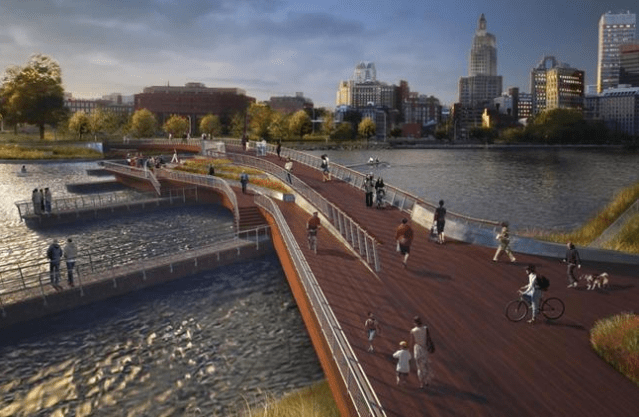
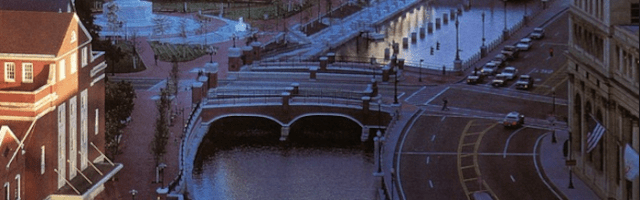
Current design for Providence pedestrian bridge. (DK Communications)

The Rhode Island Department of Transportation has announced a slight advance in the schedule for getting design, bidding and construction of the modernist pedestrian bridge that will (?) link two parks and the east and west parcels of development land on either side of the Providence River.

Kate Bramson’s story in today’s Journal, “DOT: I-195 land pedestrian bridge going out to bid soon,” says the bridge may be finished by late 2018.

The cost has skyrocketed from initial estimates of $4 million years ago, after the design won a competition in 2010, to $13.2 million today. For the past two years, RIDOT was saying that the bridge would cost $5.5 million. Now it says money to build it is available in a special fund set aside when DOT sold the land to the I-195 Redevelopment Commission. But I think – I could be wrong – it may be owed to the federal DOT, which owned the highway land.

Preliminary design documents for the bridge leave what it will look like largely to the imagination. Let’s hope these intricate plans represent the project prior to “value engineering” (cost cutting). The bridge is expected to look like what is pictured above, with its landscape spreading south from the eastern half of the bridge, where Route 195 used to cross the Providence.

Screen Shot 2016-05-05 at 11.37.53 AM.png

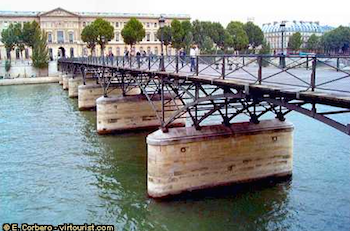
Pont des Arts, in Paris.

Screen Shot 2016-05-05 at 11.26.20 AM.png

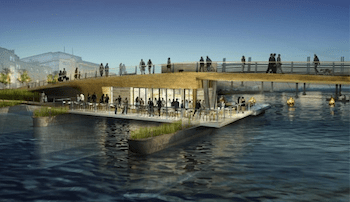
Original winning entry of bridge competition.

gcpvd.org.png

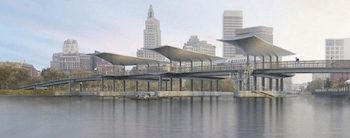
Second-place entry in bridge competition.

I’ve been rooting against the bridge, partly because of its design and partly because of its suspicious origin. When U.S. Rep. David Cicilline was mayor, the elegant traditional bridge proposed by I-195 relocation project design consultant Bill Warner (based on the Pont des Arts in Paris) was given the heave-ho. A new modernist design took its place after a competition that seemed to me to have a number of flaws. One was the apparent exclusion of any traditional bridge design. The other was that the  winning entry seemed so expensive (it even included a restaurant) that one might be forgiven for suspecting it was selected in order to be jettisoned later (for reasons of cost) in favor of the second-place bridge, by a local design team (Friedrich St. Florian and 3six0) whose principals included, according to my sources, a friend of the former mayor.

Well, I have no hard evidence for this – evidence of that sort is rarely available to mere members of the press; usually official investigations and court orders are required. Still, such factors have caused me to wish that the current proposal would fall and the Warner proposal – or another simpler proposal of greater elegance and lesser cost than the current one – would rise in its place, maybe even as the result of value engineering on the current proposal.

Ironically, the cost of the current proposal has tripled in spite of the removal of its restaurant component. And RIDOT has still not repaired the original designers’ laughable oversight of failing to include a passage for the extended riverwalk under the western abutment of the bridge.

This bridge is unnecessary. The Crawford Street Bridge and the Point Street Bridge would do the job – already are doing the job – well enough. But the Cicillines of the world want a bridge that will wow design elites who are easily goggled by high-tech razzmatazz. Fortunately, it seems as if the view of the bridge from the two northerly embankments, from which most people will see it, may appear more traditional.

The money for this bridge would be better spent on dredging the river channel from Waterplace Park to Point Street Bridge, plus – and here is real news – repairing the extraordinary deterioration of at least one bridge along the new riverfront. These bridges were only built 10 to 14 years ago, but one of them, the College Street Bridge, has suffered serious structural damage.

iloveprovidence.org.png

College Street Bridge, with its two flanking pedestrian bridges.. (iloveprovidence.org)

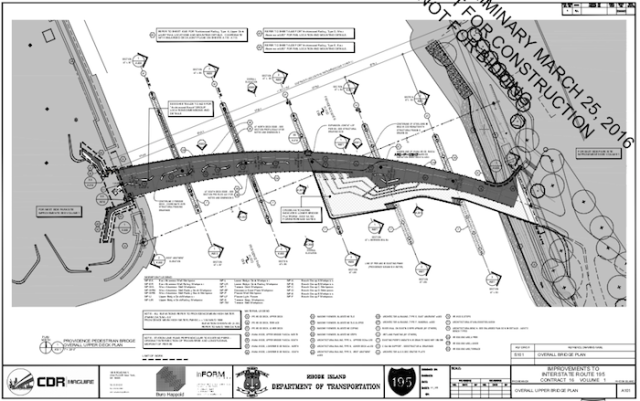
Look at the preliminary design documents. They are almost indecipherable, but they do suggest why a bridge of this complexity keeps growing in cost.

Screen Shot 2016-05-05 at 10.19.41 AM.png

Page toward end of preliminary  design documents for pedestrian bridge. (RIDOT)

Posted in Architects, Architecture, Art and design, Development, Landscape Architecture, Providence, Providence Journal, Rhode Island, Urbanism and planning | Tagged , , , , , , , , , | 3 Comments

Scalia rules on Mudd Hall

Screen Shot 2016-05-04 at 12.44.14 PM.png

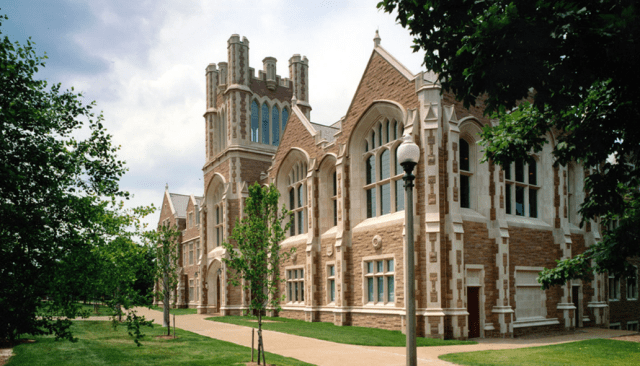
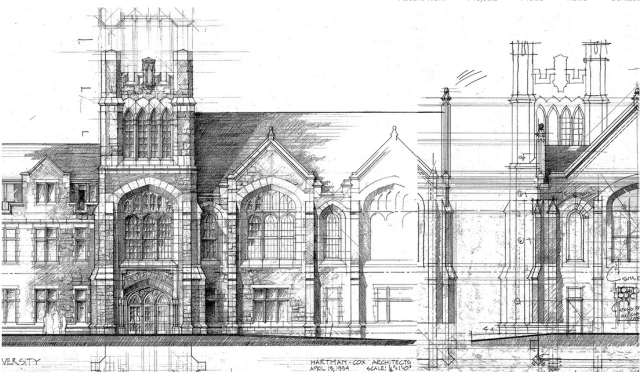
Anheuser-Busch Hall at Washington University, in St. Louis (Hartman-Cox)

As if from the grave, the late Antonin Scalia has reached out to rule against the late Mudd Hall, at Washington University in St. Louis, replaced 19 years ago by a beautiful new law school building.

Not unrelatedly, today would be Jane Jacobs’s 100th birthday. My Jane’s Walk tour of Providence’s greatest megaproject (which she would have loved!) is on Saturday at 1 p.m.

I read Peter Dreier’s HuffPost piece on the late Jane Jacobs, “Jane Jacobs’ Radical Legacy: Cities Are for People, Not Developers” – and clicked on a piece at the bottom by a kid from Washington U. at Oxford, where he sat next to Scalia at a dinner before the justice delivered a speech at the Oxford Union in 2008. The article, “Scalia told me a secret about George W. Bush,” on Salon, was promoted as revealing Scalia’s secret view of the brothers Bush, but toward the end, the author, Stephen Harrison, now a Dallas lawyer, adds:

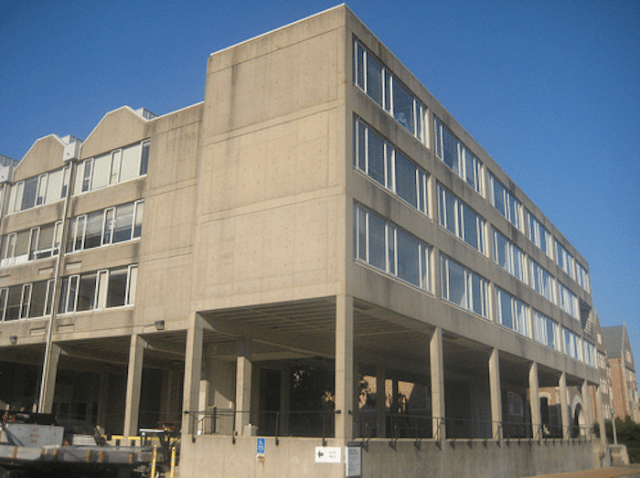
“Wash. U., eh?” Justice Scalia had said, when I told him where I was in college back in the states. “You know, your old law school building used to be gray and boxy. Mudd Hall, think that was its name. Too modern. Very ugly. But I hear the new one is pretty nice.”

The new building, pictured on top of this post, is Anheuser-Busch Hall, designed by Hartman-Cox Assocs., of Washington, D.C. It opened in 1997, with Justice Sandra Day O’Connor speaking at its dedication. Seeley G. Mudd Hall, built in 1971, dedicated by Justice Earl Warren, and now demolished, is pictured below. Washington University has graced its campus with a number of lovely buildings in the Collegiate Gothic style in recent years, especially on its engineering quadrangle.

Here is an interesting piece in the St. Louis Times-Dispatch from shortly after Busch Hall’s opening that debates whether Mudd should have been so disparaged. One alumnus says – intelligently, I believe – that he will not donate to the school until it is out of Mudd Hall. This is another one of those pieces that seeks to defend modern architecture but unintentionally seems to hammer another nail into its long-overdue coffin.

Although Jane Jacobs was open-minded about modern architecture (perhaps of necessity, as her husband was a modern architect), I’m sure she would have agreed with Antonin Scalia on this if on little else.

Screen Shot 2016-05-04 at 11.39.42 AM.png

Seeley G. Mudd Hall (wikipedia)

Screen Shot 2016-05-04 at 12.47.23 PM.png

Busch Hall (1997) (Hartman-Cox)


Posted in Architects, Architecture, Architecture Education, Architecture History, Art and design, Development, Urbanism and planning | Tagged , , , , , , , , , , , , , | Leave a comment

Better ideas not worse, pls!

DSCN3059 copy.JPG

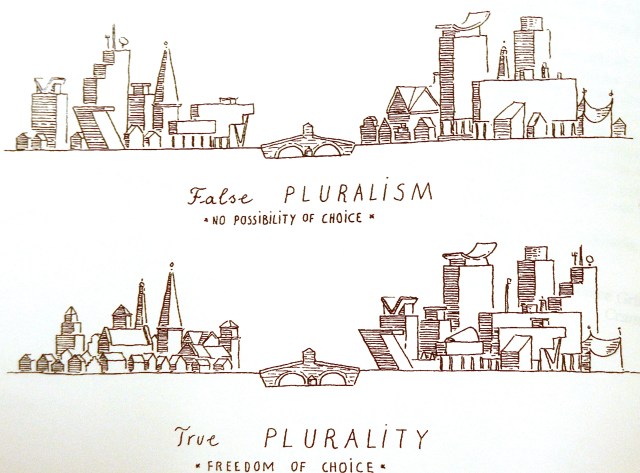
Sketch by Leon Krier, architect and planner. (Leon Krier)

Yesterday I sent in my monthly blog post for Traditional Building magazine, and today I’m thinking, well, I left out some really important stuff. My TB post was a reply to TB’s Forum in which the architectural historian Paul A. Ranogajec contended, in “Time on Our Side: Toward a Critical Tradition of Classicism,” that classicists do themselves harm by ignoring modern trends in thought, not just on architecture but on broader social and cultural issues. He cited such thinkers as Michel Foucault. If that’s his idea of the kind of thinking classicists have ignored, then I can only applaud the classicists.

And I said so in my post. But I left out examples of thinking that perhaps Ranogajec and certainly most modern thinkers ignore or are unaware of. For example, consider the research being done by Nikos Salingaros, Michael Mehaffy, Ann Sussman and many others. They are finding neurobiological reasons that explain why humans prefer traditional to modernist buildings. Briefly, it’s because of ornament. Traditional buildings embrace it, modernist buildings spurn it. But ornament – broadly speaking, the detail that animates traditional architecture at all levels of scale – tugs on humans’ longstanding desire for information about their environment. Today, enjoying the beauty of ornament reminds our subconcious of the relief humans derived in earlier ages from the timely perception of dangers (say, a tiger behind a bush on the savannah) or edibles (such as bananas amid a tangled jungle environment). The intricacies of visual, aural and nasal perception were of vital importance. People like to see detail today because it is beautiful. This is not just a matter of taste but the brain’s atavistic recollection of a matter of survival.

I do not think this is too far from what some of the thought leaders cited above are reporting. There is much more to it, and we have been seeing a lot of it in books and media these days. But unlike the thinking that Ranogajec points us toward, much of it seems to be explaining why we should place a higher value on our basic human instincts rather than on theories, like those of Foucault, that seem to emphasize deconstructing language or power in ways that undermine the structures of everyday life.

Often those theories are not based on scientific evidence but on the ideological proclivities of their proponents.

Ornament is both an expression of style and a requirement of utility – for example, some types of ornament prevent rain from penetrating inside buildings by protecting the seams between sections of wall and fenestration. A century or so ago, the founders of modernism decided to ditch ornament because it was not utilitarian (an obvious falsehood, as I’ve just pointed out) or because  the machine age required a machine architecture (another very serious error), or to flip the bird at the bourgeoisie, or because a roof gable represented monarchical rule that yanked us into World War I. Poppycock! War is bad! Blame it on the buildings! These are all classic examples of faulty – and in all likelihood essentially fraudulent – intellectualization. Freud must be ecstatic, or maybe he is rolling in his grave.

Again, these are theories invented out of whole cloth by intellectuals who were themselves alienated from the prevailing culture. Ornament and other aspects of traditional design, on the other hand, evolved over hundreds and thousands of years as practitioners found new methods to solve old design problems, or adjusted their practice to new materials or technologies. Mostly this sort of evolution involved slight changes in practice rather then entirely new conceptions of design. It was almost Darwinesque.

So here is some thinking that the modernists are obviously ignoring. Which is the better thinking? I will let the reader decide.

Posted in Architects, Architecture, Architecture Education, Architecture History, Art and design, Landscape Architecture, Preservation, Urbanism and planning | Tagged , , , , , , , , , , , , , | Leave a comment

Walking in Zaha’s shoes

Screen Shot 2016-05-02 at 12.42.58 PM.png

Zaha Hadid-designed shoes worn by Maya Diab. (albawaba.com)

Here is my monthly blog post from the last issue of Traditional Building. The post was written shortly after the passing of Dame Zaha Hadid, one of my least favorite architects. “Walking in modernist shoes: Zaha Hadid” was my attempt to try to see things from the perspective of the other guy. Here are the first two paragraphs of that post:

A passage I cannot now locate in “Master and Commander,” by Patrick O’Brian, has ship’s surgeon (and Admiralty spy) Stephen Maturin urging Captain Aubrey to “walk in the other man’s shoes” before leaping to criticize. When architect Zaha Hadid died the other day, I tried to walk in her shoes. They did not fit.

Speaking of shoes, Hadid in her time designed a few pair. Her most celebrated shoe could as easily be, were it larger, a Hadid building – space for a foot on the inside and a shiny metal thingamajig on the outside, looking as far from a lady’s shoe as possible. Her buildings all have doors, and interior spaces from which one may ignore its exterior – as Guy de Maupassant dined at the Eiffel Tower to avoid looking at it. These are the only concessions to tradition in her entire oeuvre.

Feel free to criticize my attempt to see things from the other guy’s shoes, as it were, especially in light of my most recent Traditional Building blog post, which replies to the Forum essay by architectural historian Paul Ranogajec, who thinks classicists could benefit by taking the intellectual discourse of our era more seriously. I expect my post’s reply to be up on the TB website any moment, if it is not there already. I will link to it when it shows up.

Meanwhile, here is my own blog’s post “Dame Zaha, rest in peace,” written the day of her passing. Of course, it did not make it into any of the roundups of architectural commentary on Zaha’s death and her legacy. Surprise! But then it really wasn’t about her, was it? Rather it was about her benighted profession.

Posted in Architects, Architecture, Architecture Education, Architecture History, Art and design, Books and Culture | Tagged , , , , , | Leave a comment

My Jane Jacobs river tour

Screen Shot 2016-04-30 at 6.27.10 PM.png

Wednesday would be the 100th birthday of Jane Jacobs if she had not died in 2006. Saturday at 1 p.m. is my third tour of Providence’s new riverfront for Jane’s Walk, the international conspiracy to spread her urbanist wisdom around the world, now in its ninth year (the conspiracy, not the world).

The image above is from my second Jane’s Walk tour. The tour was rollicking good fun, with people like Barnaby Evans of WaterFire fame asking me hard questions about my controversial architectural views. Barnaby is stroking his beard next to Bill Warner’s fancy banister. That’s me in the yellow shirt.

In 2014, some 40,000 people took part in Jane’s Walks in 134 cities on six continents. Each was free and led by a volunteer. Here is a passage about it from Wikipedia: “The walks are led by anyone who has an interest in the neighbourhoods where they live, work or hang out. They are not always about architecture and heritage, and offer a more personal take on the local culture, the social history and the planning issues faced by the residents.”

Well, they will be about the architecture on my walk, but that includes the culture of building and development in Providence, which has had, shall we say, its highs and lows over the years, and especially recent years. I’m still covering these issues, as I did for three decades at the Providence Journal. Roger Williams founded Rhode Island on the original waterfront, but I was not around to cover that. The waterfront designed by the late Rhode Island architect and planner Bill Warner is the high point of a more recent history. The encroachment of modern architecture around its westernmost extent, Waterplace, is certainly the low point. We will discuss this on Saturday.

Jane Jacobs, if she is looking down from above, must be proud of Warner, who very much stood in her shoes as the proponent of a safe, active and indeed beautiful urban riverfront. Jacobs fought New York’s longtime master planner, Robert Moses, when he tried to ram a highway through Washington Square. That sounds bad enough, but Jacobs was not involved when Moses planned low bridges along the parkways leading to Jones Beach, off Long Island, so that buses would not be able to get there from the city – because bus was how most blacks might be expected to arrive.

Screen Shot 2016-04-30 at 7.30.16 PM

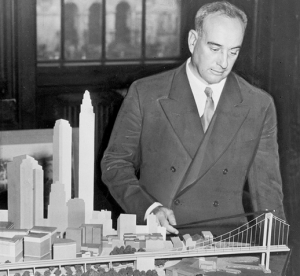
Robert Moses (Wikipedia)

Jane Jacobs and Bill Warner would never have wanted to do that, but the blog BLDGBLOG is reporting on a call being put out for entries in a competition to design a computer game that will enable players to erect such bridges if they so choose. The competition, as conceived by Tim Hwang, of the Infrastructure Observatory blog, would use Robert Caro’s breathtakingly detailed 1975 biography of Moses, The Power Broker, as the template for such a game. It sounds very exciting, but there’s a frisson of danger because some modernists want to bring Moses-style megaprojects back after decades in which the influence of Jane Jacobs has made it harder for cities to blow out ethnic neighborhoods in order to install towering prison-like housing for poor people. (Hardly an exaggeration.)

Of course, Bill Warner’s Providence waterfront was a megaproject – a megaproject for the ages and the angels. Jane Jacobs is not spinning in her grave at the influence of Bill Warner. And yet a return of the megaproject as the default operating system for U.S. city planning is something to be wary of. Not every city can boast a Bill Warner – or a Jane Jacobs.

(By the way, check out BLDGBLOG and see how its font makes it seem like BLOGBLOG (or BLDGBLDG). Very neat. Today I put this blog, run by Geoff Manaugh, on my “Blogs I Follow” so readers can tap right into it.)

Posted in Architects, Architecture, Architecture Education, Architecture History, Books and Culture, Development, Landscape Architecture, Preservation, Providence, Providence Journal, Rhode Island, Urbanism and planning | Tagged , , , , , , , , | Leave a comment

Trump’s towering penis envy

spencer platt:getty images.png

Trump Tower on Manhattan’s Fifth Avenue. (Spencer Platt/Getty Images)

Trump – the Donald, that is, our president wannabe – owns several tall buildings. I will not attempt here to say how tall or how many. His website shows quite a number, but other sources make it more clear that some, though bedecked with the Trump moniker, are no longer owned by him. Others he clearly wishes he’d built, and at least one of those I’d want to claim, too. It is 40 Wall Street, the building that back in 1930 raced the Empire State Building into the sky. Here’s what Trump’s real-estate website has to say about the Manhattan Company Building:

The majesty of New York’s financial district and the style and elegance of Trump come together to create an incredibly impressive, landmark property at 40 Wall Street.

Screen Shot 2016-04-28 at 2.23.28 PM.png

40 Wall Street, New York (Trump)

Screen Shot 2016-04-28 at 2.42.38 PM.png

Trump Hotel & Tower, Chicago (Trump)

You can tell the copywriter did not want, for obvious reasons, to make the mistake of being too clear on who didn’t build it. (“You’re fired!”) Reading how “majesty,” “style” and “elegance” have “come together to create” the building, a visitor to the Trump website might be forgiven for concluding that Trump built it – until, reading on, the visitor learns the fact that, “[c]omprised of 1.3 million square-feet of office space distributed over 72 stories, this 1930 property was once the tallest building in the world.” (That is, until the Empire State caught up with it in 1931!)

The tallest Trump tower is the Trump International Hotel & Tower, in Chicago, at 92 stories rising 1,389 feet, which became “the tallest completed residential building in the world” in 2009. Trump’s tallest tower in New York City is Trump Tower, whose 68 stories rise 927 feet at East 56th and Fifth Avenue, and which Trump’s website points out was “[o]riginally, the tallest all-glass structure in Manhattan” when completed in 1983 and remains “one of the most distinctive buildings in the world,” a judgment that is, at the very least, debatable – a debate that cannot be won with a throw-away line about the elegance of the Trumpian hand.

I was frankly surprised to learn that the Trump International Hotel in Las Vagas is the only Trump tower with the Trump name emblazoned at the top of the building. Admittedly my analysis is based on the photos in the portfolio on the Trump website – but I don’t think anyone will blame me for assuming that the architect of the website would, for obvious reasons (“You’re fired!), use photos that were yugely clear on that small matter.

I offer evidence but I take no stand on what Freud might say about Trump’s infatuation with tall buildings. (Don’t tell anyone, but there are 20 buildings in the world taller than Trump’s tallest. The tallest building in the world is the Burj Khalifa at 2,717 feet, almost twice the height of the Trump International Hotel & Tower in Chicago. Shhh!)

Screen Shot 2016-04-28 at 4.09.10 PM.png

Tallest buildings with Trump name, over 500 feet. (Chicago Tribune)

Posted in Architects, Architecture, Architecture History, Art and design, Development, Humor, Urbanism and planning | Tagged , , , , , | 7 Comments

Hart’s humanist architecture

lincoln memorial ANLH.jpg

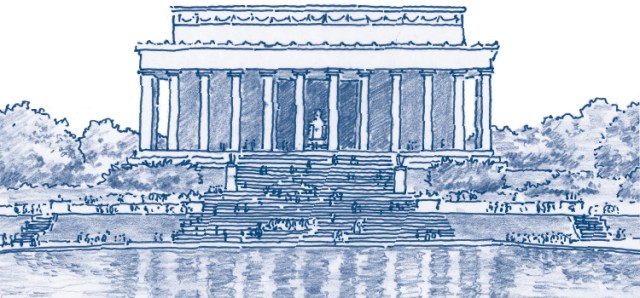
The Lincoln Memorial – The dignity humanity, and success of a man framed in classical virtue, reminding us of how much we’ve forgotten about building monuments. [Sketches by Albrecht Pichler]

Robert Lamb Hart has sent me A New Look at Humanism in Architecture, Landscape and Urban Design. Essentially, his book seeks to use modern science to bring a new humanist sensibility to the architecture of our age. Hart does not – so far as I can tell – necessarily want to bring back the more intrinsically humanist classical architecture that modernism has replaced; he wants designers to use the growing fields of science about us to help make buildings more sensitive to our feelings – as traditional buildings already are. He concedes that modernist buildings and settings have not done the trick.

Since I have books lined up (and it is hard break away from my fourth circumnavigation of Patrick O’Brian’s 21-volume, Austenesque novel of the Napoleonic Age), I decided to invite Bob to post his own essay here on my Architecture Here and There blog about his book, published last year by Meadowlark Publishing. Here is what he has to say:

***

What Is It Like to Be There?

By Robert Lamb Hart

Architecture Here and There has been a defender of traditional architecture and an eloquent critic of a mainstream “modernism” styles where creative ideas are more often about the striking image, originality at all costs, demonstration of a theory, thirst for celebrity, or a quick fix – instead of an understanding of “what it is like to be there” for the rest of us.

The criticism typically attacks “modern” with powerful, head-on rhetoric, but I think there may be a more effective way: I call it  “a new look at humanism.” It’s a probe into the sources of centuries of past architectural successes – into the human origins of their “languages” that we find so appealing – and using that knowledge to help us grasp and guide the momentum of the ongoing revolution we call modern culture.

The humanism in modernism

Over the past two hundred-plus years, our modern industrial culture has been caught up in the excitement of rapid, repeated release from biological human limits. We have naturally given a high priority to the capabilities, values, and machinery that have led us into these exhilarating new levels of mastery – transcendence, at last, over our in-born constraints. We’re reaching new levels of health, comfort, security, strength, speed, expanded social connections – and startling new opportunities for amassing wealth, “winning,” and exploiting the ecosystems we inhabit as the top predator.

It’s been intoxicating, and these tangible, cascading successes of high-performance technology have earned the underlying hard sciences and  engineering a high level of prestige. The finely built, effective machines reflect back to us our exceptional human capabilities. “High-tech” has become a metaphor for control and success, and precedence is given to the imperatives of the rational, quantifiable thinking that propels it. As a result, its powerful but inherently narrow set of values and convictions has simply sidelined others, and many have responded by creating places that feel to them machine-designed and machine-made, celebrating the human mastery that made “all this” possible.

Yet, look around. Over and over again the results on the ground, the places that are actually built and lived in – the clear, tangible expression of our society – after a first flash of marketing and excitement, prove disappointing. And they’re doubly disappointing when we realize that, for all the efficiency talk, what we’re building is not remotely sustainable over any time horizon.

The modern revolution

As a practical matter, though, the “modern revolution” is seen only incidentally in the styles and fashions of built environments that it has produced – the  International Style and the sequence of Modernisms or Constructionisms. Its defining enterprise has been the maturing and application of the empirical, experimental sciences and the passion for probing below the visible, tangible surface of things.

So far, in our built environments the most productive results have been realized – often brilliantly – in construction technology. Scientists and engineers are probing deeply into the underlying, internal molecular and chemical structures of materials – from glass and metals to synthetics – as well as into operating systems, energy flows, and production methods. As a result, we have a formidable body of credible, useful information, precise measurements of performance, new levels of predictability, and a solid foundation for innovation and for exploiting construction sciences to open up more opportunities in the arts of day-to-day building.

The life sciences, though, the ones that explore how you or I actually experience the places being built for us, have only recently been systematically applied in our  design professions.
louisburg jp ANLH.jpg

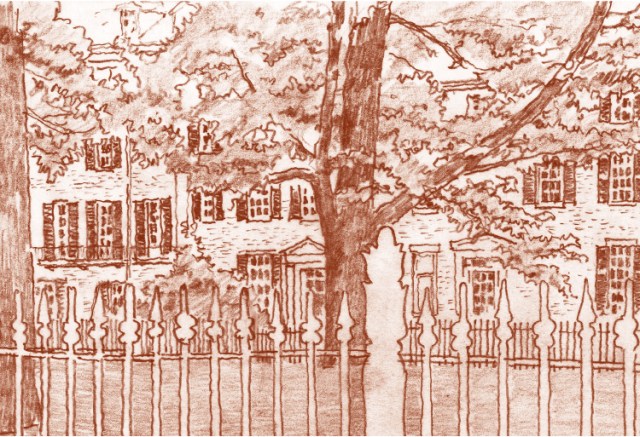
Louisburg Square on Beacon Hill in Boston – Human emotion and wisdom embodied in a traditional neighborhood and architecture, prospering in the heart of a busy center city for generations.

What’s going on in a mind and body?

When I use the term “humanism,” I mean a way of thinking that will integrate into design practice continually updated insights into the ways human minds and bodies actually experience and then respond to the places we build.

The foundations come from studies of human evolution – a way to understand motivations, meanings, and spiritual qualities in experiencing architecture.  Second are studies of ecology in its broad, literal sense, the study of an organism’s (including our own) interactions with its environment – with not just architecture but the lands, villages and urban places we develop.

A third group is the escalating discoveries in the cognitive and neurosciences, the intricate links of a mind and body, and the nature of perception. A fourth is the role of the mind in creating stories and metaphors that lead us to read, judge, and describe built environments with the same vocabulary and same concepts that we use to describe people – surely one of the sources of falling in love with traditional architecture.

And at the core of experience are emotions. Every experience, every rational, hard-headed thought has emotional contexts. Their power comes from their speed, faster than conscious thought, and from their links to changing whole-body chemistry.

Practical applications, research, and insights into this “inner life” – and its exploitation – have already become commonplace in other fields. Political campaigns, the legal, medical, and many engineering professions, and, above all, the entertainment and marketing businesses routinely exploit the human sciences – and us – as they practice their arts, reshaping minds and cultures globally with impressive competitive success.

Design professionals.

Yet many design professionals simply have not updated their understanding of people – of the human beings who will live out their lives in the places we’re trusted to build for them. As a result, the trajectory of human wisdom that has been embodied in traditional architecture has been interrupted. Dazzled by modern industrial success and its narrow values, many have lost track of the full richness of human nature and the architecture that it has created over continents and centuries.

That’s why I wrote A New Look at Humanism – in Architecture, Landscapes, and Urban Design.  The book expands on the ideas outlined here in the belief that when we learn more about ourselves and how we interact with out environments, we’ll see emerge a new commitment to architectures of humanism, as they existed in the past.

Equally important, while the book is built on a strong academic foundation, it’s written in the language of professional offices and their client meetings – the places where our future is actually being designed.
thorncroft ANLH.jpg

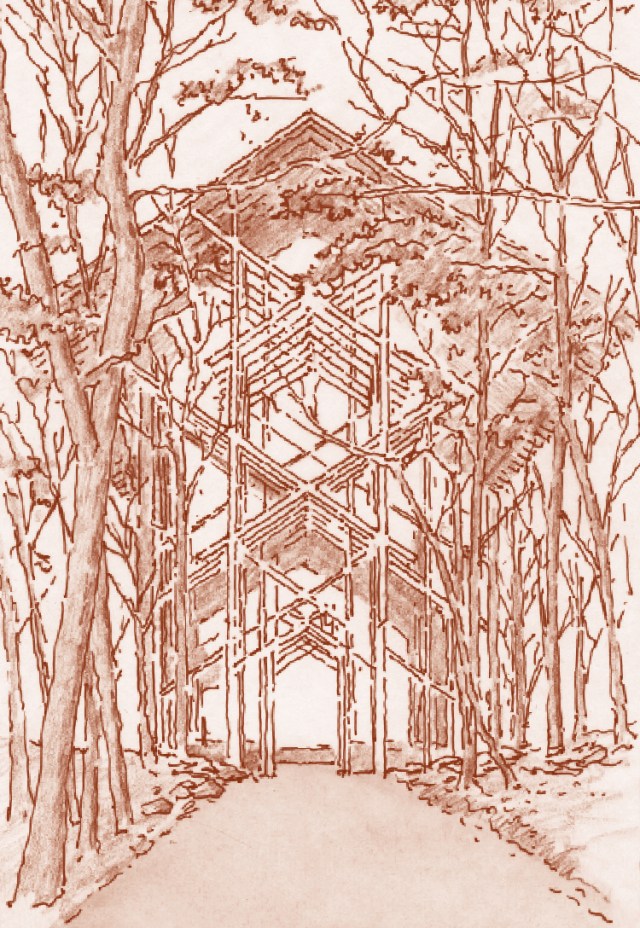
The Thorncrown Chapel in Arkansas – Inspired by the Gothic La Sainte Chapelle in Paris. Built with essentially all natural materials with no structural element larger than two men could carry through the woods.


Posted in Architects, Architecture, Architecture Education, Architecture History, Art and design, Book/Film Reviews, Books and Culture, Landscape Architecture, Preservation, Urbanism and planning | Tagged , , , , , , , , , , , | Leave a comment

Epiphany in Stuttgart

Screen Shot 2016-04-26 at 10.53.44 AM.pngMy brother, his wife Sabrina and her two sons stayed a stretch in Germany for treatment of the two sons’ Lyme disease – successful treatment, by the way. They were in Stuttgart when Tony, a noted philosopher of the mind/body/nature continuum, had the following thought, which he passed along to his brother:

It occurred to me, while looking at this building in Stuttgart, what a feeble attempt this little ornament was, to distract us from such a sterile monstrosity. Walking further in this same neighborhood, I remarked that the apartment buildings were unattractive – cement high-rises with random-looking balconies. … I had a political epiphany.

To keep people from gathering, fraternizing, plotting, such buildings keep people inside, apart, and weak. But the internet, Facebook, Twitter, and all that, turns it literally inside-out. So it occurred to me that a traditional revival, along the lines that you dream of – inspiring people to be outside – might find political support simply because it keeps people from their computers. As well, a riotous mob might be less inclined to destroy a cityscape that they find lovable.

Anyway, I thought you might get a kick out of these musings.

Tony, you may be onto something. Being surrounded by beauty while rallying to support beauty might be helpful. Whatever the issue at hand, beautiful buildings generate political support, providing incentive to gather as folks rally to their beliefs instead of staying inside to gaze at their screens. Who wants to destroy a lovely environment? Citizens of Paris and Stuttgart might not have minded in 1848, as they knew a damaged building would be repaired or rebuilt in an equally lovely way. Today, who cares, since so many buildings are so ugly? People stay inside to avoid the inevitable angst of the built environment outdoors. But if they go outside, they may bring their screens along – but at least they will be able to see and join the multitudes who receive their texts.

Posted in Architecture, Architecture Education, Architecture History, Art and design, Other countries, Urbanism and planning | Tagged , , , , , , , , , , , | 2 Comments

Scruton, Haussmann, Syria

Screen Shot 2016-04-25 at 8.49.13 PM.png

Marwa al-Sabouni in Homs, Syria. (Guardian photo by Ghassan Jansiz)

The British philosopher and architectural theorist Roger Scruton, whose 1995 book The Classical Vernacular is one of my bibles, has recently written “Rebuilding a new Syria without the divisions” for The Times of London. Syria’s history as a French protectorate weaves the incongruous link: Baron Haussmann ripped down the hovels of central Paris and replaced them with boulevards, an act that today might be likened to America’s disastrous urban renewal, except for one thing: Haussmann’s renovation of Paris was classical. That made all the difference. In this essay, Scruton explains why classicism made all the difference, and expresses hope that a young female Syrian architect, Marwa al-Sabouni, can transform her hometown of Homs and perhaps Damascus some day. Here is a passage from Scruton’s essay:

Although it would be wrong to pin the civil conflicts that have swept through the Middle East on architecture, it is difficult to avoid the conclusion that western town-planning and modernist building-types, acting upon the indigenous sense of inferiority, have had a part to play in the destruction. If you wipe away settlements that have been home for centuries, and replace them with faceless blocks that might have been anywhere and are felt to be nowhere, it is not surprising if residents feel that they are already in conflict with their surroundings, and only one step away from conflict with their neighbours as well.

Marwa al-Sabouni’s new book, The Battle for Home, has just been published in Britain by Thames & Hudson, and will be published in America May 17.

The situation of Homs, Aleppo, Damascus and other cities being destroyed by civil war in Syria strikes me as the obverse of the continuing destruction of London. Foreigners blasted London during the Blitz, but its destruction was completed by British architects. Syria is being destroyed by its own people, yet many of its greatest cities had already been largely destroyed by foreigners wielding modern architecture and planning, as Scruton explains in his essay. Perhaps Syria’s cities, at least, might someday be rebuilt with sensitivity to human nature by architects like Marwa al-Sabouni.

Here is “Kismet, but not in Mecca,” a post I wrote a couple of years ago on this general subject of the West’s brutal recolonization and resulting destruction of Third World cultures by invading armies of architects.

Posted in Architects, Architecture, Architecture Education, Architecture History, Art and design, Book/Film Reviews, Books and Culture, Development, Other countries, Preservation, Urbanism and planning | Tagged , , , , , , , , , | 1 Comment