Perils of architecture school

Screen Shot 2017-06-12 at 11.22.26 AM.png

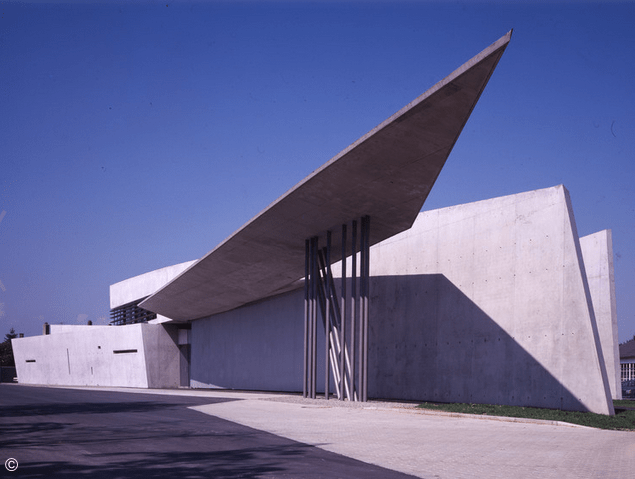
Vitra Fire Station (1993), in Germany. (ArchDaily.com)

Common/Edge is a website about architecture. All of the essays are written well, but many seem to try to have it both ways about the battle over style in architecture. So I’m not quite sure how Prof. Nikos Salingaros managed to get his essay, “What Architectural Education Does to Would-Be Architects,” published here. Its common-sensical viewpoint is far too straightforward and unapologetic to have gotten onto this website without first surviving some sort of fight among its editorial board (if it has one).

(Perhaps I am too hard on Common/Edge, which at least acknowledges that there are two sides in this battle, and listens to both. That is admirable.)

Salingaros, who teaches mathematics and design theory at the University of Texas and schools around the world, believes that architectural education does not strengthen but rather destroys the innate mentality that supports the work that architects do.

One of the things a good essay does is spark thoughts in readers that independently support (or undermine) its thesis. So by way of describing Salingaros’s thinking, I will describe some of the thoughts it sparked as I read it. Readers should click on the link above and read it themselves.

It disconnects them from their own bodies. This strikes me as a reference to the role of architectural education in separating young people from their innate understanding of architecture. All people from near birth onward have a much more intimate experience of architecture than of any other realm of art or design. People experience architecture every hour of every day, inside and outside, awake or in their dreams. This contributes to a relatively sophisticated understanding of building design in the average person, which manifests itself not in an ability to design buildings but in an ability to assess their quality, their functionality, their appearance, etc. This explains why the public, by three or four to one, prefers traditional to modernist buildings. The first goal of architecture school, then, is to destroy students’ innate affection for beauty. (A tangential result has been to undermine unjustly the average person’s confidence in his or her own judgment of buildings – so that nowadays many people feel a sort of peer pressure to say they like architecture they really don’t like.) Hence …

It brainwashes them. Salingaros is referring to students but could also be referring to the broader society. He points to the Bauhaus, the early 20th century German compound that designed the template for architectural learning. “Eventually, the student’s brain is conditioned to believe that abstract, empty forms and surfaces – the building blocks for much of contemporary architecture – are the basis for ‘good’ design.”

This reminded me of the description of a Bauhaus class exercise in Tom Wolfe’s From Bauhaus to Our House (1981): Students are instructed to create a building out of a single sheet of paper. Most seek to achieve some sort of complex origami solution but the teacher declares the “winner” to be the student who folded his page in half and stood his building, a mere tent, upon the table. O! How! Profound!

It reduces spatial ideas to two dimensions. Salingaros writes:

Abstraction loses an enormous amount of information. But it also does something worse: it starves the brain and turns what should be visceral reactions into intellectualized ones. It’s the difference between finding innate beauty (let’s say in a lotus flower or the arching branches of a tree) and being taught or told how to appreciate an acquired taste (like a blank “sculptural” wall).

This reminded me of a passage I had just read this morning in Rising Sun, a suspense novel by Michael Crichton about a murder in a new tower for a Japanese corporation in Los Angeles. Two detectives seek to interview a suspect at a private house party:

[A]lmost everyone was wearing black. But the room itself caught my attention: it was stark white, entirely unadorned. No pictures on the wall. No furniture. Just bare white walls and a bare carpet. The guests looked uncomfortable. They were holding cocktail napkins and drinks, looking around for someplace to put them.

A couple passed us on their way to the dining room. “Rod always knows what to do,” she said.

“Yes,” he said. “So elegantly minimalist. The detail in executing that room. I don’t know how he ever got that paint job. It’s absolutely perfect. Not a brush stroke, not a blemish. A perfect surface.”

“Well, it has to be,” she said. “It’s integral to his whole conception.”

“It’s really quite daring,” the man said.

“Daring?” I said. “What are they talking about? It’s just an empty room.”

Connor smiled. “I call it faux zen. Style without substance.”

It may be hard to credit, but this attitude sums up architecture today, and what is provided in all but a handful of architecture schools.

It privileges image over emotion. Another way to put it: It privileges intellect over intuition. As Salingaros points out, the human brain has evolved over millions of years into a tool for processing information from visual and other senses. The mind sees not just what is there but analyses it instantly according to deep knowledge baked into our DNA. We are feeling creatures, thinking creatures only secondarily. Architecture today denies the validity of feelings and turns reality on its head. This parallels the research of Ann Sussman, author (with Justin Hollander) of Cognitive Architecture (2014). It explains why people who have invested scores of thousands of dollars in architectural education are less genuinely sophisticated in their basic architectural judgment than the average man on the street.

It promotes a kind of “architectural sadism.” Salingaros writes:

Contemporary architecture is obsessed, to the point of arrogance, with “innovation.” But unless you’re trained to admire and revere it for its own sake (something architecture students are routinely taught), aggressive “novelty” often triggers negative reactions from everyone else: alarm, anxiety, even physio-psychological pain.

He urges readers to “remember the poor Vitra firemen, unwitting victims of ‘cutting edge’ architecture.” The reference is to Zaha Hadid’s first completed building, a fire station in Weir am Rhein, Germany, that supposedly used the architect’s abstract meanderings to supply the functional needs of firemen in a fire station. According to Architecture Daily, in “AD Classics: Vitra Fire Station” by Luke Fiederer, Hadid realized that firemen “must remain on constant alert; the design reflects that tension, as well as the potential to burst into action at any given moment.”

Ha ha! So firemen find it useful that their building represent the potential to burst into action at any given moment? That idea proved so useful that the building, completed in 1993, was never used as a fire station but as an exhibit hall. Fortunately, the building also served to “shield the [Vitra factory] campus from its incongruously traditional, vernacular neighbors.” I’m sure the factory complex’s occupants were duly thankful to Zaha for that!

Ha ha ha ha ha ha! Salingaros’s brief discourse on architectural education has his subject dead to rights. Read it here.

Posted in Architecture, Architecture Education | Tagged , , , , , , , , , , | Leave a comment

Shots of d’town living tour

Screen Shot 2017-06-11 at 2.35.28 PM.png

View of downtown Providence from roof terrace of Peerless Building. (Screenshot of video)

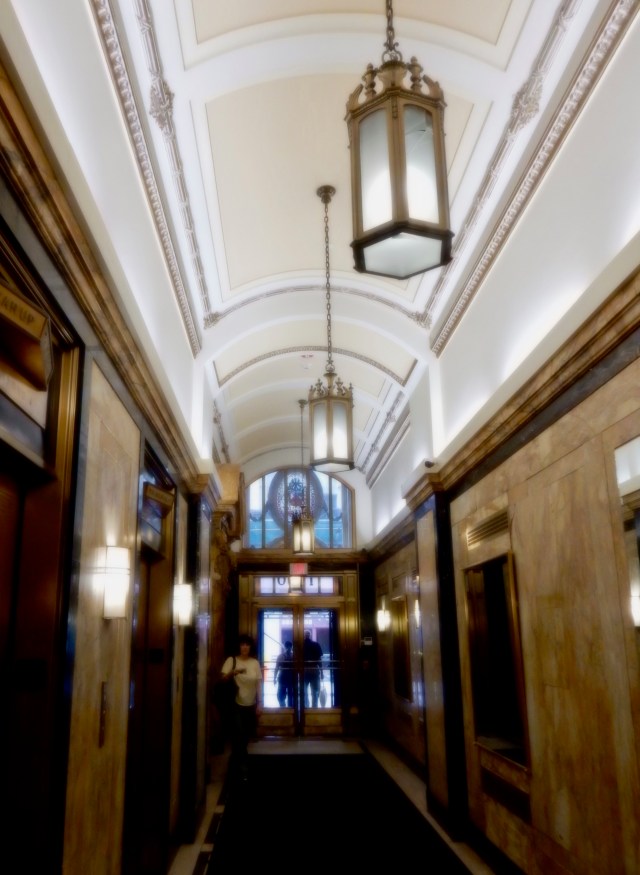
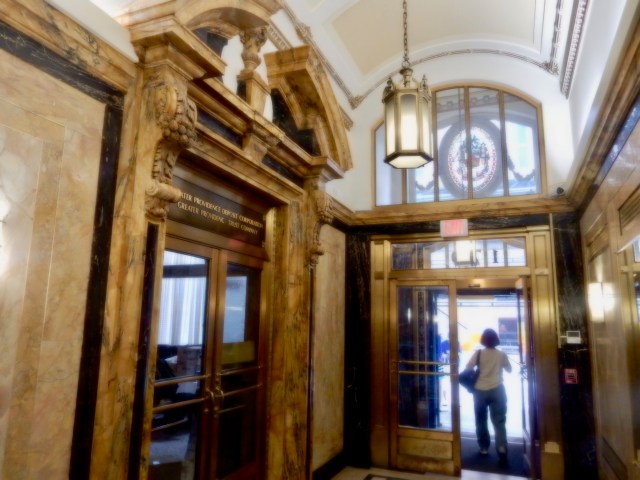
Yesterday’s tour of downtown apartments highlighted just how Providence is ramping up for an influx of new residents with money for relatively high rents. The sheer number of units coming on line now and in the near future suggests both an expanding market for downtown living and an expectation of more. All of the apartments on the tour are rental units. At some point, the market indicators that apparently prevent them from going condo will shift, though there are condos available in the residential towers of Capital Center. The expanding market does, however, suggest an eventual downward pressure on rents – not lower rents, necessarily, but weaker upward pressure on rents. Still, lower rents will show up if new jobs in the innovation district along the 195 corridor don’t, or show up less robustly than hoped.

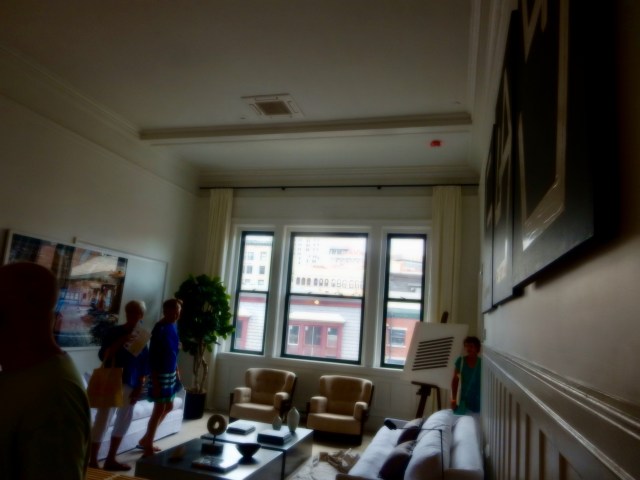
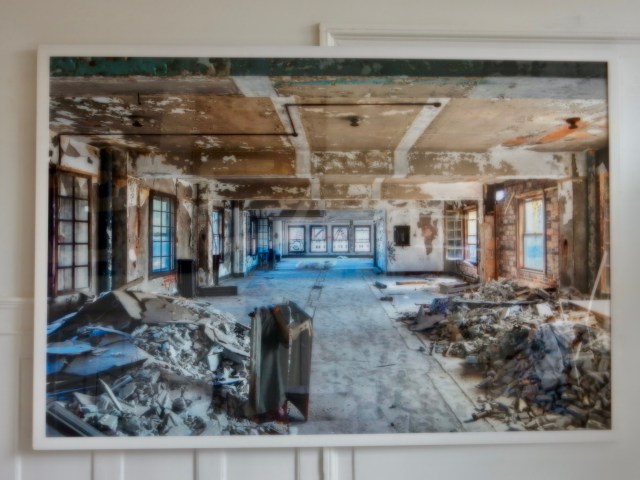
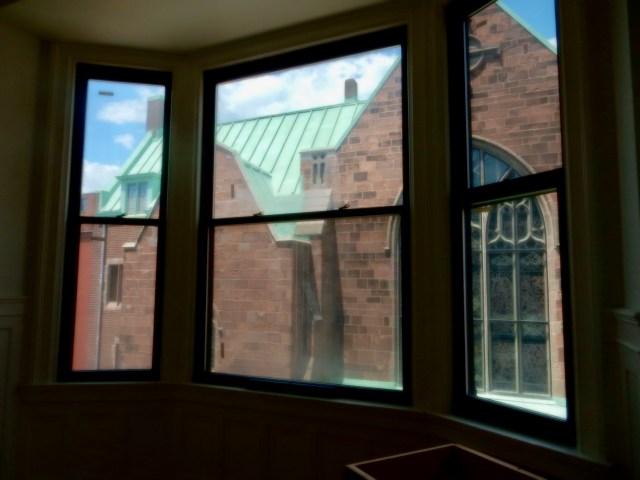
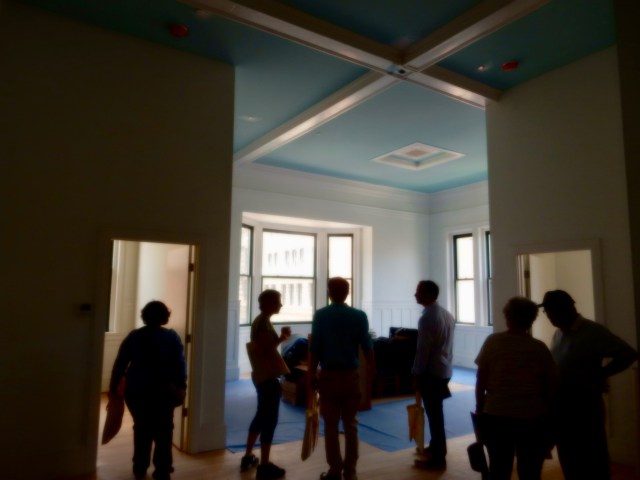
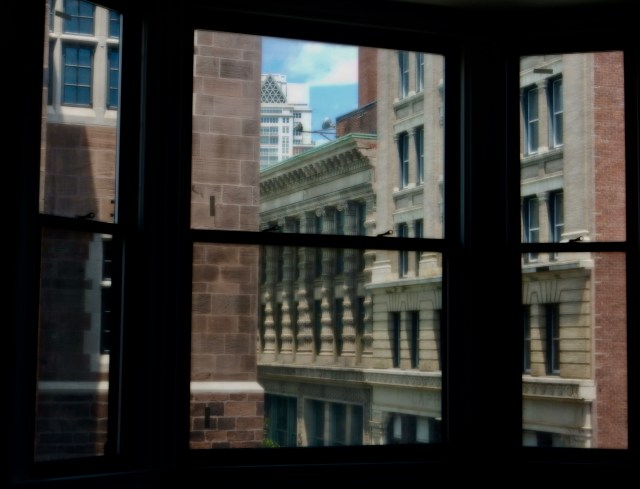
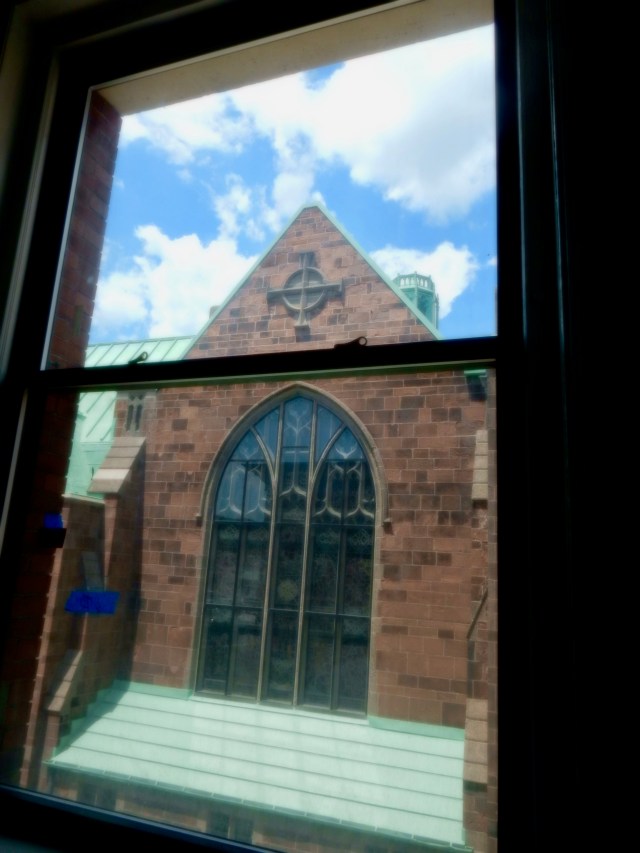
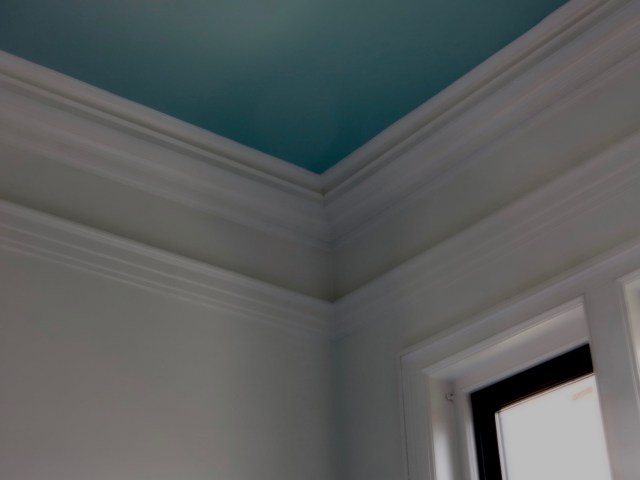
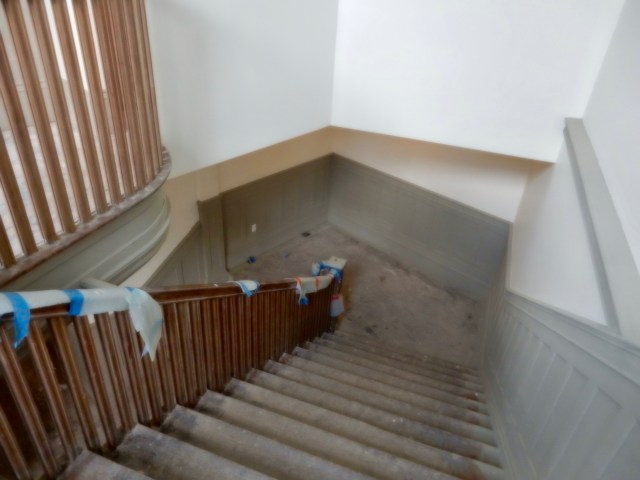
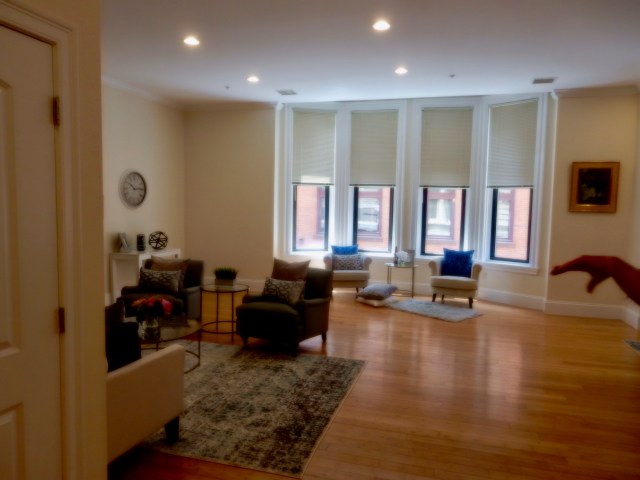
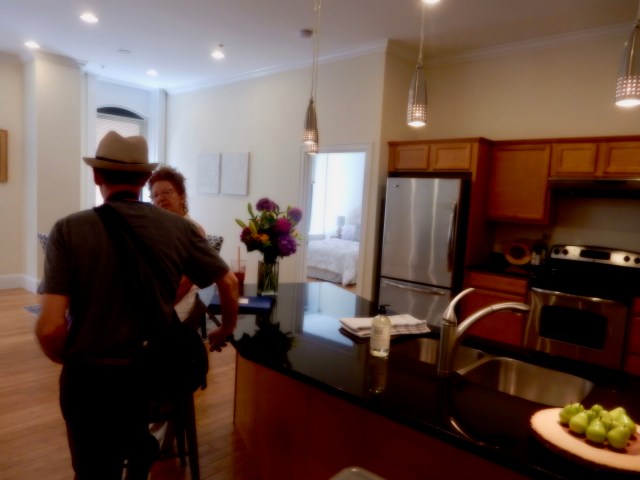
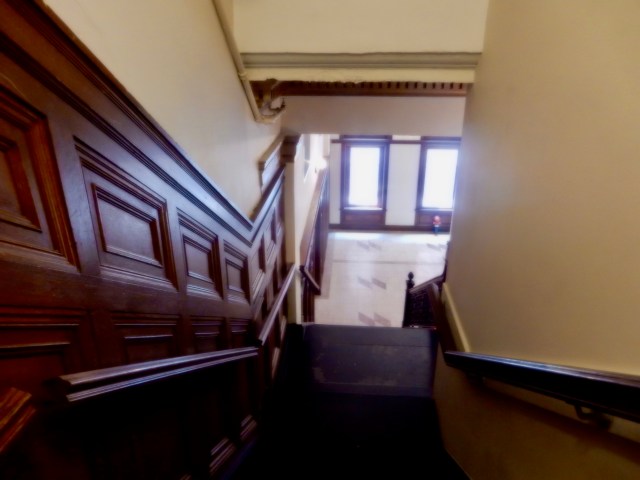
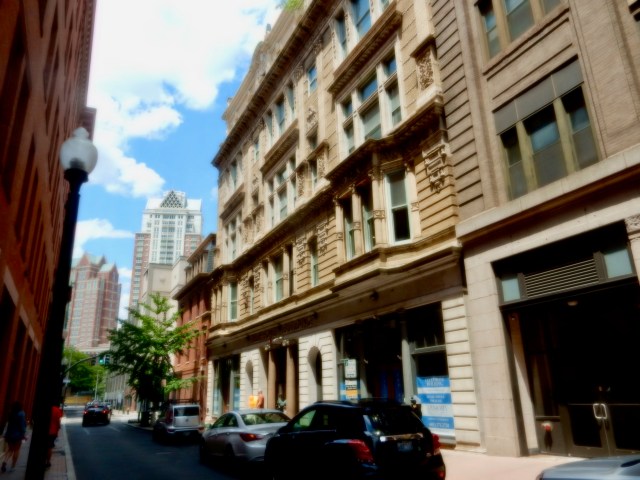
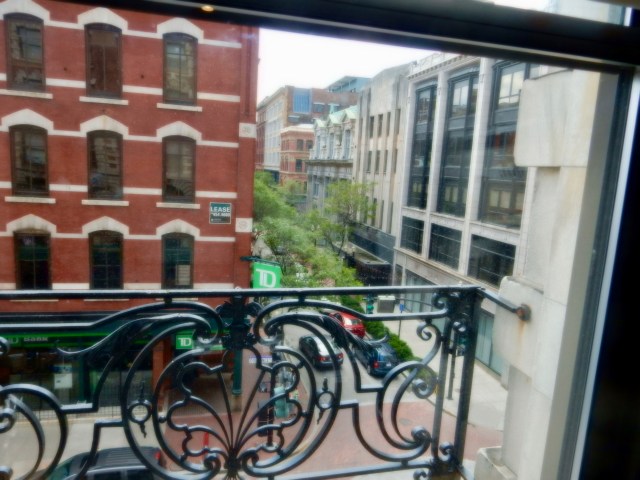
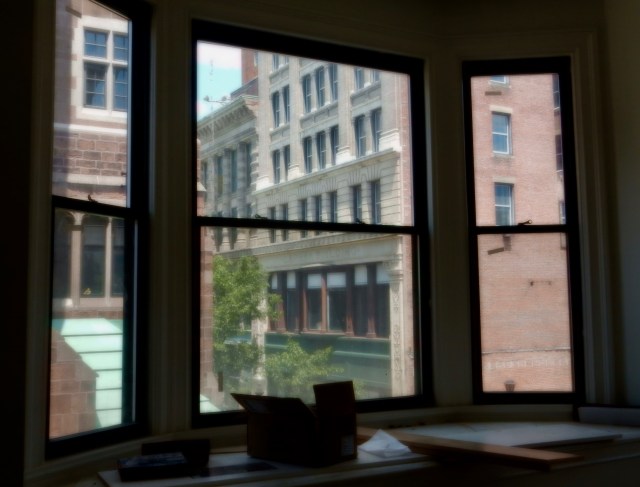
The tour, hosted by the Providence Foundation and the Providence Downtown Improvement District, featured an itinerary of 11 buildings. Here are a host of photos from that tour. Not all of the buildings are represented, and the shots do a poor job of characterizing the apartments. Most are shots of the view from the windows. There was a wide variety in the sizes of the apartments, the quality of their layout and the extent of the historic features retained, such as moldings. I apologize for not labeling the shots. Identifying them reliably from the window views turned into a brain-twister after I lost confidence in the “order” in which they were uploaded onto my computer.

The buildings on the tour are listed in my post from Thursday, “Saturday’s downtown living tour.” Fortunately, the website downtownprovidence.com offers a list of buildings you can click on to learn more details about the apartments, the landlords and the leasing operations. Bringing up the rear down below are a video of an apartment in the Peerless Building and another from its roof terrace. Enjoy!

***

DSCN0894.jpg

DSCN0896.jpg

DSCN0898.jpg

DSCN0899.jpg

DSCN0901.jpg

DSCN0903.jpg

DSCN0904.jpg

DSCN0905.jpg

DSCN0906.jpg

DSCN0908.jpg

DSCN0909.jpg

DSCN0910.jpg

DSCN0919.jpg

DSCN0918.jpg

DSCN0921.jpg

DSCN0923.jpg

DSCN0935.jpg

DSCN0940.jpg

DSCN0936.jpg

DSCN0937.jpg

DSCN0951.jpg

DSCN0952.jpg

Posted in Development, Providence | Tagged , , , , , , | 6 Comments

WaterFire on TV Monday

Screen Shot 2017-06-09 at 11.33.43 AM.png

Braziers filled with wood burn at WaterFire along Providence’s urban rivers. (Marriott Providence)

Barnaby Evans, the creator and mastermind of WaterFire Providence, informs me that it will star in a television show airing at 7:30 on Monday, June 12, on PBS Channel 36 in the Rhode Island area. The show is called “Weekends with Yankee,” and the episode is called “Land and Water.” The WaterFire segment is almost 9 minutes.

In Rhode Island and around the world, this is must-see TV. WaterFire was performed for the first time on New Year’s Eve in 1994 and since 1996 has featured multiple lightings, normally every two or three weeks from May through October or even November.

The work, which is known in the art world as an “installation,” is perfect for Providence’s intimate urban rivers, especially since they were uncovered and lined with beautiful bridges, river walks and parks. It is great to walk along, hand in hand, or with all of your best  friends and family, or (my favorite) by yourself. I wrote a piece about it years ago called “Sex and WaterFire.” It may be that Barnaby Evans has never forgiven me for it (though he commissioned it), and yet who can deny that, except perhaps for the late, great Bill Warner, no individual has had a greater positive impact on Providence than Barnaby Evans, at least not since Roger Williams (including Buddy Cianci).

So tune in on Monday. That’s this coming Monday, Ch. 36 at 7:30 p.m.

Posted in Art and design, Providence | Tagged , , , , , , | Leave a comment

Sat.’s downtown living tour

Screen Shot 2017-06-08 at 1.18.09 PM.png

Telephone Building; right, the Smith,where author lived 11 years. (Providence Foundation)

Among the most delicious of downtown events, and well on its way to being a Providence tradition, is the tour of downtown apartments hosted annually by the Providence Foundation and the Downtown Providence Improvement District. This year’s Downtown Providence Living Tour is on Saturday, June 10, from 11 a.m. to 5 p.m. Tickets are $7 at downtownprovidence.com or, on Saturday, $10 at AS220, on Empire Street. Kids under age 10 tour for free; free for all are shuttles and pedicabs between sites.

All units on the tour are for rent. Here is this year’s itinerary:

  • 95 Lofts: 59 units in the Irons & Russell Building. 95 Chestnut St.
  • 225 Weybosset: 12 units in two historic buildings across from PPAC
  • Arcade Providence: 48 micro-lofts in the nation’s oldest shopping mall
  • Avalon at Center Place: 225 units near train station. 50 Park Row West
  • G Reserve: 60 units in the Union Trust Building. 170 Westminster St.
  • Peerless Building: 97 units with atrium and roof deck. 150 Union St.
  • Providence G: 56 units in three historic buildings. 100 Dorrance St.
  • Regency Plaza: 473 units with pool and tennis courts. 1 Regency Plaza
  • The Sampalis Building: 15 units across from PPAC. 199 Weybosset St.
  • Telephone Building: 12 units in ornate office building. 112 Union St.
  • Wilkinson Building: 12 units in smallest Buff Chace rehab. 90 Eddy St.

Each year, as the number of places to live downtown multiplies, it must be ever more difficult for Joelle Kanter, of the foundation, to keep the list of buildings  on the tour within manageable limits. The tour has become an adjunct of last weekend’s Festival of Historic Houses tour hosted annually by the Providence Preservation Society, but more utilitarian in purpose. It is intended mainly to help people thinking about moving downtown, but while the society’s festival offers a peep into the home lives of the owners of the houses on the tour, the foundation/PDID tour’s sites feature unoccupied apartments – that is, you could live here! How titillating is that!? If you also fancy yourself a connoisseur of apartment design, indulge!

As a denizen of this tour and a reporter covering new building rehabs downtown for decades, I have seen ’em all. Or so I thought. This year’s tour has apartments in six (6) buildings whose renovations I have yet to see. Those six represent part of downtown’s boom in apartment construction but not the whole thing. Several apartment rehabs are not done yet, including the (former) Paolino World Headquarters on Dorrance, and the dear Lapham Building on Westminster, and also include rehabs that are done though I have not seen them and they are not on this year’s tour. Large apartment buildings have also been proposed, including the Procacciantis’ building along the Woonasquatucket behind Providence Place, and Buff Chace’s proposed building on the parking lot across Fountain Street from my old place of toil, the Providence Journal building, which he now owns.

No doubt the developers of these living spaces are anticipating the habitation needs of the flood of workers expected to take jobs in the new buildings that will soon be arising along the I-195 corridor, our very own innovation district. Although I’d rather that those new buildings embrace traditional design, I say good luck with that. If a sandbox for the modernists will help further enliven downtown, I can get with the program. At least it may be said that those new workers, after spending eight hours in an ugly glass box, will have nice places to go home to. Where? Well, that’s what Saturday’s tour is all about. Check it out!

Posted in Architecture, Development, Providence | Tagged , , , | 2 Comments

Smarting in Woonsocket

RE:MAX.png

View down Main Street, Woonsocket. (RE/MAX)

Grow Smart Rhode Island held its annual awards ceremony in Woonsocket yesterday. Before the awardees were celebrated at the Stadium Theater, Mayor Lisa Baldelli-Hunt and deputy planning director Rui Almeida led a tour of the city’s awesome Main Street. The street bends through a topographical wonderland decorated by beautiful buildings.

I have visited Woonsocket and floated upon its charms many times. Some members of the tour group were from elsewhere, and were astonished at the beauty and intact quality of Main Street’s fabric.

If it were not for Woonsocket’s enviable historic character, the Stadium Theater would not have been renovated and the city would not today be planning a push to further enhance the appeal of downtown Woonsocket. Officials would have to dig much deeper to offer inducements to renovate historic buildings, assuming any actually remained, or erect new buildings on vacant lots. Downtown today would be scarred by many more down-at-the-heels buildings and many more gaps in the civic fabric. It would be harder to convince such organizations as GrowSmartRI to embrace the challenge of Woonsocket, but if they did throw out a lifeline, it would be much harder for them to enable Woonsocket to qualify for state and federal programs designed to help old cities – ones that still can claim some remnant of historical character – attract development by leveraging their beauty.

Without its historical character, Woonsocket would have to try to pull itself up by its bootstraps – without bootstraps.

So I was dismayed, and frankly astonished, to hear of plans to offer a level playing field to modern architecture as proposals for development emerge under the city’s award-winning downtown overlay district. An overlay district is a planning tool that loosens some zoning rules in the hope of encouraging development. To seek architecture that undermines Woonsocket’s beauty today will only make it harder for Woonsocket to continue its revitalization efforts tomorrow. Hard to swim against the undertow modern architecture always generates by interrupting the flow of historic character.

It is said that good modern architecture can be fit into a traditional streetscape without undermining its character. In theory, perhaps, but in practice almost all such efforts are failures. Even a well done modernist building, which excites admiration via contrast with its setting, does so only by undermining the higher value of the district’s symphonic cohesion.

I challenge anyone to name a building of modernist design anywhere in Rhode Island that does not interrupt the aesthetic DNA of a historic block. Indeed, find me one anywhere in the world that, if it is in a historic setting, does not act as a parasite, snuggling up to beauty to distract from its own ugliness. Regardless of how many cities try it, triggering a “wow factor” of sculptural design is not an effective planning strategy. Many cities try to imitate the success of Gehry’s Guggenheim Bilbao. Very few succeed.

How startling to learn, then, that Woonsocket, of all places, was heading in this direction. After the tour, we returned to the Stadium, and after some hobnobbing sat down in the beautiful auditorium to watch the ceremony, emceed by GSRI chief Scott Wolf. I hope the mayor stayed after making her speech. Maybe she and her team will take the presentation of Grow Smart winners as a warning not to “go there.”

Each award was presented after a video celebrating its winner. The winners were chosen based on ten Grow Smart principles. Most appropriate here is “Capitalize on existing assets to protect or create distinctive, attractive places and public amenities.” The awards opened with Al Valliere, an affordable housing developer lauded as an exemplar of the Smart Growth philosophy, and concluded with a special founders’ award for recent GSRI chairman Howard Kilguss. In between, there were awards for five projects and an award for a plan. That went to the Rhode Island Woodlands Partnership’s strategic plan for 2016-2020. Last year, the award went to Woonsocket for its downtown overlay district. The five winning project awards went to:

  • Blackstone Valley Gateway
  • Bristol Industrial Park
  • Sankofa Apartments, Providence
  • WaterFire Arts Center, Providence
  • Westerly Education Center

The Valliere video showed new affordable houses traditional in style. Four of the five award videos showed projects that featured traditional architecture, old buildings given new purpose in life. The last project video did, too – or so a viewer might think, as traditional buildings in Westerly came on the screen one by one, mixed with interior shots of the Education Center, as if to hint that, like the other projects, it also re-used an old building.

Anyone might think so. But then, in the last few frames of the video, the modernist cat was released from the bag.

Think about it. Brief reflection suggests that within the niche development world of repurposing old buildings in old cities, those cities’ historical character is not just a nice feature but the fundamental advantage on which rests the logic for investing money in old cities. Preservation development strategies differ from the conventional development world, whose sterile architecture forces most citizens to try, as a sort of defense mechanism, to ignore their built environment. Boston’s Innovation District is an example of that. In Providence, city and state officials are striding, their blinders firmly in place, toward the same error in its I-195 corridor. The state capital might survive such a cannonball to the foot. Woonsocket? Not so much.

Development is a tough job, with the permitting process a long, costly, hair-raising adventure. If cities asked developers to propose designs the public might like, they might do so, and projects would go down like an oyster.

Most developers, I think, care more for whether local authorities support their project than for matters of architectural style. There is no reason for the leaders of cities with valuable historic character not to encourage developers to submit project designs that reinforce rather than undermine those cities’ brand. Attacking one’s own brand is not a helpful development strategy.

The developer of a private commuter railway in the works that would stop at Woonsocket’s train station on its way between Providence and Worcester – he is Vincent Bono, of the Boston Surface Railroad Company, who gave a presentation on that project to conclude the tour – surely understands the important principles involved here. Let Woonsocket be Woonsocket!

I really think I must have heard wrong at the outset of the tour, when this notion of mixing of the old and the new was voiced by our tour guides. At the time, I think I was trying to decide whether I should open my umbrella. Maybe I was distracted and heard wrong.

But as Churchill said, “First we shape our buildings; afterward, they shape us.” If Mayor Baldelli-Hunt and her team want to set Woonsocket on the path to 1984, or Brave New World, or Fahrenheit 451, or Blade Runner, here is some advice: Don’t go there!

Posted in Architecture, Rhode Island, Urbanism and planning | Tagged , , , , , , | Leave a comment

Manhattan puddle mystery

Screen Shot 2017-06-06 at 2.18.40 PM.png

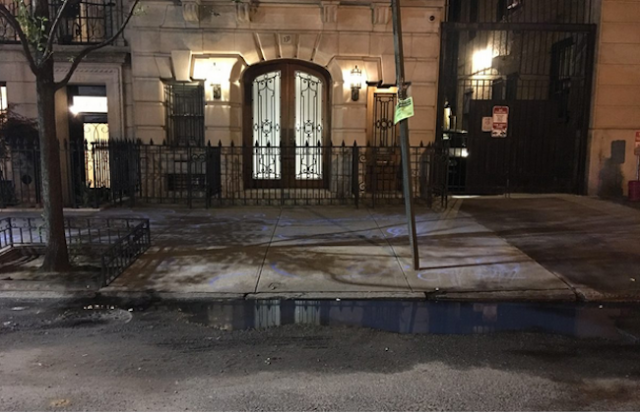
Puddle on E64th St. between Park and Lexington avenues. (This East Side)

Here is a story worthy of the literary bent of the author of the book A Burglar’s Guide to the City.” Geoff Manaugh has a blog, wittily framed as BLDGBLOG. The letters seem to read “blog-blog” until you look at it more closely. Manaugh’s building blog concerns itself a lot with the infrastructure of cities. Now Froma Harrop, in her This East Side blog (it used to be the Silkstocking blog), reports, in “Mystery of the East 64th Street Puddle,” on the mysterious origin of a puddle on the Upper East Side that never seems to go away. To be sure, if I lived on the UES I would never go away either.

Harrop springs a pop quiz on her readers:

The East 64th Street puddle is caused by:

  • A broken fire hydrant
  • A leaky underground pipe
  • A washing machine dumping its rinse cycle onto the street
  • None of the above.

And the answer (otherwise it would not be much of a mystery) is “None of the above.” It turns out that the puddle is in fact not a puddle at all but a spring that feeds the De Voor Mills stream – an underground aquifer that is one of many brooks and streams that were buried, paved over, possibly redirected but not snuffed out, and which survives under who knows how many levels of pavement. Calling Dr. Manaugh! Assistance on East 64th Street! Required to determine the layers of infrastructure that lie between the “spring” and the sidewalk! Its gutter never says adieu to the puddle, which many scorn as a source of mosquitoes.

When I lived in the Smith Building in downtown Providence, there was a puddle that frequented the rutty asphalt pavement just outside the front door. I used to enjoy taking pictures of the banking towers of Fulton Street (Kennedy Plaza) as reflected in the puddle. In 2011, the year after we moved out of the Smith, the “street,” really an alley, was paved over nicely, no doubt just to spite the departing architecture critic. This no doubt meant doomsday for the poor puddle, which probably did not have a hidden stream to assure its longevity, as the East 64th Street puddle has.

Screen Shot 2017-06-06 at 2.39.30 PM.png

Viele’s Map of 1865 shows path of De Voor Mills stream under East 64th Street. (TES)

Posted in Urbanism and planning | Tagged , , , , , , , , , | 3 Comments

Warp speed in St. Petersburg

Screen Shot 2017-06-05 at 2.40.37 PM.png

Normally I’m leery of using fancy video techniques to film beautiful cities. Often the techniques undermine the focus on the beauty. Maybe that’s true in this case, “White Nights in St. Petersburg,” but the virtuosity of the work has totally defeated my skepticism, and it does omit the wilder, much more discombobulating techniques. So here is the video, by Kirill Neiezhmakov, a specialist in time lapse and hyperlapse videography, from Kuriositas.

Posted in Architecture, Video | Tagged , , , , , , | 1 Comment

London bridges standing up

Screen Shot 2017-06-04 at 4.44.23 PM.png

London Bridge in 1616. Drawing by Claes Van Visscher.

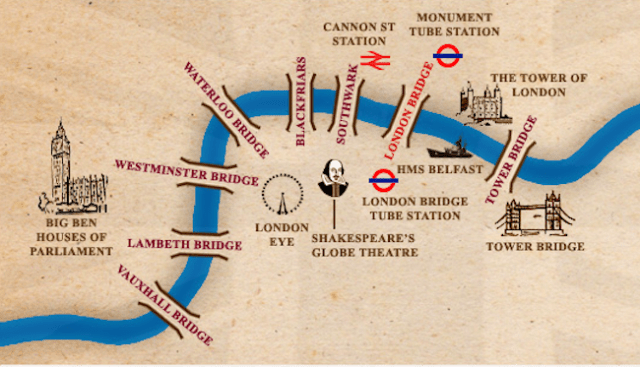
Yesterday’s terror attack on London Bridge follows by about two and a half months a similar attack on Westminster Bridge, four bridges east of London Bridge. Thirty-three bridges span the River Thames in Greater London. The most famous is Tower Bridge, near the Tower of London. The bridge that was taken down and rebuilt in Arizona is not, as some think, the Tower Bridge but an earlier version of the London Bridge attacked last night. That London Bridge was auctioned off to the founder of a planned community in Arizona. The first London Bridge was built in A.D. 50 and (Wikipedia says) rebuilt in 1209 and 1831. The just-victimized London Bridge replaced the 1831 bridge in 1973, after it was found to be sinking into the riverbed of the Thames.

In fact, the old ditty “London Bridge Is Falling Down” does relate to the instability of the bridge that was rebuilt in Arizona. It had been considered “at risk” for centuries. The song has been traced back to the 17th century. In those days, London Bridge had buildings lining the span. Many states, such as Rhode Island, hyperventilate with regularity that their bridges are at risk of falling down. All bridges are at risk of falling down, especially since bridge engineers use computers these days to calculate the strength requirement of bridges before they are built. (Today’s engineers may be more likely to think that they can figure out those requirements exactly, whereas old bridges were engineered with a superabundance of strength because professional humility made for a commendable degree of caution.) I officially raise my eyebrows at Wikipedia’s assertion that the first London Bridge lasted from A.D. 50 to A.D. 1209, or that the 1209 version stood until 1831. Maybe they did.

On a bridgeworthy note, in 2016 a New York City-based artist, Leo Villareal, who designed the lighting for the San Francisco Bay Bridge, was chosen to light up the 17 bridges of central London. His plan appears encouragingly subdued, seeming to avoid the gaudy effects one might reasonably fear in a huge project of “the arts.” A video of it is on the Thames Leisure website.

workflow.arts.ac.uk:.png

The primary bridges of central London. (workflow.arts.ac.uk)

Screen Shot 2017-06-04 at 4.11.59 PM.png

Photo of the Thames showing major spans. Tower Bridge is the bottom. (Wikipedia)

Posted in Architecture, Video | Tagged , , , , , , , , | 2 Comments

D’town PVDfest vids galore

DSCN0837.JPG

We – not the editorial we but the family we, as in me, Victoria and Billy – visited PVDfest in downtown Providence this afternoon – whoa, Nellie! a lot going on! Downtown was jamming. More different types of people than you could shake a stick at, and all enjoying themselves to the hilt. And there were some mighty fine buildings, too, and sometimes my lens was unable to resist the urge to pan them – not to pan them, for gosh sake!, to pan on them!

So there are a number of still shots and then 12 videos running mostly between 30 and 60 seconds each, topped by one lasting a minute and 56 seconds, which was of the irresistible scene flowing past the window of Blake’s, where we have a developing tradition of situating ourselves to watch PVDfest (and its prior incarnations) roll by. I have placed the videos in the order I shot them. The first several are of the scene on Westminster Street, then a couple on Dorrance Street near Kennedy Plaza, then a few from our table inside Blake’s, where we had a ringside seat. And finally a couple taking in the view on Washington Street. Pop through them and see what we saw – second only to being there.

DSCN0838.JPG

DSCN0839.JPG

DSCN0851.JPG

DSCN0852.JPG

DSCN0860.JPG

DSCN0866.JPG

Posted in Architecture, Providence, Video | Tagged , , , , , , | 7 Comments

“Within Walking Distance”

Screen Shot 2017-06-02 at 8.57.43 PM.png

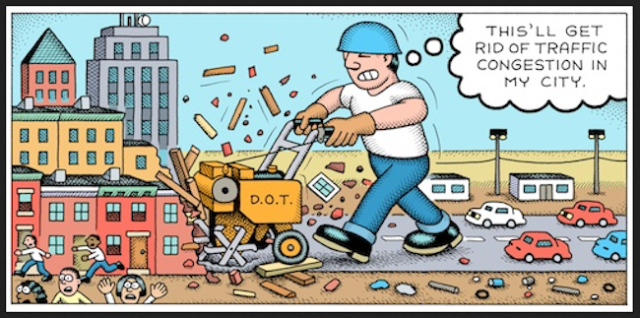
Cartoon by Andy Singer.

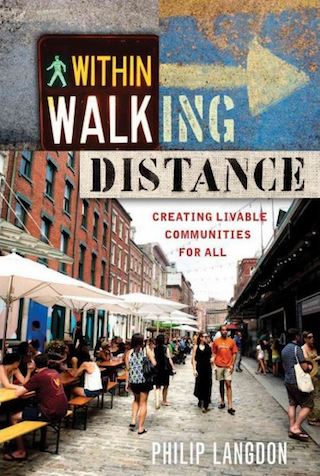
Philip Langdon’s new book Within Walking Distance, published by Island Press, uses six examples of walkable communities to show how they are made. No, unfortunately they do not arise spontaneously, at least not anymore, not since the postwar era, in America, of modern city planning and architecture. Although many municipal planning offices have embraced at least the rhetoric of the New Urbanism (the old urbanism renewed), and sing the praises of Jane Jacobs and her streetsmart urbanism, most cities and towns still retain laws and regulations that make it harder to generate neighborhoods people will naturally want to inhabit.

Screen Shot 2017-06-03 at 11.53.18 AM.png

Andrés Duany, a founder of the Congress for the New Urbanism, likes to say that a historic district is nothing but a typical neighborhood built before World War II. And a historic district is just another name for a walkable community.

Langdon takes as his exemplars of walkability a series of neighborhoods in Philadelphia, New Haven, Chicago, Portland, Brattleboro, Vt., and the “Cotton District” in Starkville, Mississippi. The chapters examine the history of each district, and the cooperation among their inhabitants that went into bringing about, protecting and improving upon the qualities that make the six neighborhoods so livable.

The stories behind their success amount to an education in placemaking, and Langdon – who edited the CNU’s New Urban News for years – tells those tales with a gentle eye toward the extraordinary people who made it happen. The author has a firm grasp of the principles and stratagems that promote walkability, which itself is key to places that are livable and lovable. The book distills them admirably, and so beyond noting this fact I will limit my own comments to highlighting the importance Langdon places on traditional architecture as another such key to walkable places.

For example, in the Northern Liberties neighborhood near the city center in Philadelphia, he cites the Piazza at Schmidt’s (site of a former brewery) as a lost opportunity for commercial development there. He writes:

“Transformational projects” aimed at radically reshaping neighborhoods and revolutionizing their images have been launched in countless U.S. cities since the 1950s. Sometimes they have succeeded, but often they have succumbed to what [Bryn Mawr professor Matt] Ruben calls “a monoculture,” to being “dominated by a certain vibe.” Rundown areas do need new energy, but in most cases a better strategy is to work in a more organic fashion, with smaller increments of development and with close attention to neighborhood context.

The New Haven neighborhood of East Rock features small blocks with short streets. Small blocks are helpful for creating walkability. In a neighborhood of small blocks a pedestrian can map a variety of routes to his destination, deciding which one to take according to his needs or his mood. But what if the blocks are long? Langdon writes:

A couple of streets, Livingston and Everit, had blocks that stretched on for more than a third of a mile. From a pedestrian perspective, that would ordinarily be a problem, but those two 1,900-foot blocks had such beautiful early twentieth century houses that I rarely minded the length.

Langdon goes full archiporn in his description of the streets of Brattleboro, a town I was smitten by when I first visited in 2013. His vivid language suggests his love for the kinds of buildings people actually do love, and the frequency of architectural style in his book suggests its vital role in giving streets a head start toward the goal of walkability.

Straight ahead is a jewel box of a building, three stories high and three bays wide, all dressed up with neoclassical accoutrements: fluted pilasters, lintels with keystones, and windows subdivided into small panes. Nearby are buildings with vigorously indented cornices or parapets, meeting the sky with strength and dignity.

In his chapter on Portland, widely considered the bigger American city that has made the greatest strides toward livability, Langdon clearly enjoys discussing its Pearl District, of which he is so enchanted that he chides its northern sector for going off-message.

As development moved north, there was less context to relate to, and many of the new buildings adopted more contemporary styling. With simple, straightforward shapes, smooth walls, and little or no applied ornament, many of them did not feel as rich or idiosyncratic as the best of the old buildings, but they made a decent backdrop to the streets. …

Langdon quotes a neighborhood planning advocate as saying that after the last recession, “the city was hungry for just anything to get built. You can really feel the difference between the old neighborhood that has context versus the area to the north.”

Langdon quotes a local architect and association member as saying “We want some bolder architecture.” Portland’s planners were listening. An example of what resulted is the Cosmopolitan, at 28 stories of reflective glass the tallest building in Portland. When it opened in 2013, some people were “elated.” Others not so much. Langdon quotes a Rollins College professor, Bruce Stephenson, as saying he “detests” it: “It sticks out. It doesn’t fit in. The glare from it is such a blinding light. … It eviscerates the view you want to have. It destroys any sense of visual continuity.”

Let me take a wild guess that Stephenson is not an professor of architecture!

Langdon quotes an essay in Planetizen by one of the nation’s leading urbanists, Michael Mehaffy, about this wrong turn in the development of the Pearl. Mehaffy, who founded the urbanist think tank Sustasis, wrote:

[I]nstead of clear, predictable form-based codes that guide development to blend sensitively with the scale of its neighbors and mitigate its impacts, the city imposes a subjective game of “impress the design panelists” and “who’s the best renderer” – for drawings that are famously unlike the built result. … Architecture has become a novelty machine, in which the name of the game is to be exciting and dramatic and different – or at any rate like the latest fashion, which is different from the previous fashion, whatever that is. But this is not a problem-solving approach; it’s a novelty-for-novelty’s-sake approach.

Mehaffy has put his finger on one of the broader problems, but while Langdon seems to agree, he nevertheless states: “In the Brewery Blocks, one of the most outstanding developments in the district, new Modern structures and decades-old brick buildings make a dynamic combination.”

Oh? So which is it going to be? The one weakness of Langdon’s book may be that it makes no attempt to suggest a solution to the problem identified by Mehaffy. In my opinion, the solution has as much to do with coordination among local residents as it does in other aspects of neighborhood creation, whose procedures are fully addressed in the book.

The most curious and fascinating of Langdon’s examples is the Cotton District, near the Mississippi State University campus in the college town of Starkville, Miss. It is the long-term project of one man, Dan Camp, a former shop teacher who has pretty much built the neighborhood from scratch by himself. He has a small staff, but it is inspired by Camp, who seems to be a one-man McKim, Mead & White. All of the hundred or so buildings in the Cotton District are classical, often leaning toward the vernacular but always, it seems, slightly off, sometimes purposely so, and with marvelous results.

Architect and planner Sara Hines sent me some pictures of the Cotton District three years ago and was I astonished! I’d never heard of it before. I posted on it, running Hines’s photos, about three days after I lost my job at the Providence Journal. My blog lit up like a switchboard, with thousands of hits coming in from readers of “The Cotton District.” I still have no idea why. Maybe it was because I wrote this:

The permitting and design approval process drives developers nuts in so many places, including Providence, because in most places planning officials do not learn. They do not learn that if developers build what people like, permitting goes down like an oyster. They prefer, for some reason, to build junk, and when resistance arises, they slog through the permitting process and then go home and cry into their beer.

Over the decades, Camp has learned that he’s had an easier and easier time with the planning apparatchiks in Starkville (especially, I suppose, when he was its mayor) as they come to understand his earnest desire to build what people like. He wrote about that on the Cotton District’s website and I picked up on that in my post. Now Langdon picks up on it, sort of, in his book. The passage, if inverted, simply says “Build nice buildings”:

Modernism promulgated the idea that buildings can be designed “from the inside out,” letting the needs of the interior determine the nature of the exterior. For architects, this concept was liberating, but it frequently had the unintentional result of harming the public realm.

I’m not sure how unintentional it was. But of course the average modernist architect does not purposely harm the public realm. Today’s architects are (almost) completely innocent of the philosophy upon which modernism (architectural and otherwise) rests. But what Camp has learned over the decades of his Cotton District project is that it gets easier and easier to handle the local permitting bodies once they understand that you are trying to build things people will actually like. This makes officials look good, as if they are actually doing their jobs, and they appreciate that. But of course you actually do have to try designing buildings that people will like. It’s not rocket science, but it is also not the conventional wisdom.

A few years ago I reviewed Street Design: The Secret to Great Cities and Towns, by Victor Dover and John Massengale. Their fine book collected, assessed and ranked all the principles and instructions involved in making great streets, but here is the secret: you make great streets by lining them with great buildings. Within Walking Distance has pretty much the same charm. Its principles and instructions are valid, but they are secondary. Line the streets of a neighborhood with lovable buildings and it will be – presto, chango! – a walkable neighborhood. The principle could be enunciated in about three pages, but books three pages long often go unpublished. So most authors would rather take it a few steps further. I think in his heart Philip Langdon understands this perfectly well, and that is why his book is so good.

Posted in Architecture, Urbanism and planning | Tagged , , , , , , , , , , , , , | 2 Comments