Mozart, music, architecture

Screen Shot 2017-06-23 at 7.37.42 PM.png

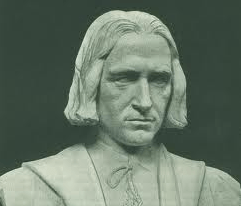
I’m reading a biography of Mozart by Marcia Davenport, published in 1932. It is excellently written. Of course, Mozart is famous for writing the most enchanting music without crossing out notation on his manuscripts in the least. That is because he wrote the music in his head and merely transcribed it onto paper when he had the time, which could be amid parties, the chatter of friends and other environmental conditions that would block most writers, musical or otherwise. But it was as if his mind were giving his hand dictation. Here is a passage about how Mozart wrote his three greatest symphonies in eight weeks, even though he was depressed by the recent failure of his opera, Don Giovanni, to translate from success in Prague to further success in Vienna, where he was a court composer for Emperor Joseph. The Jupiter was written 1788, just a few years before his untimely death in 1791:

Yet his conception of the symphony is perhaps less remarkable than the development he showed from one work to the next. If each symphony had been written a couple of years after the other it would be much more comprehensible. The poetically beautiful E flat has been chosen for the honor of being Wolfgang’s farewell to his youth. The dramatic G minor is supposed to be the culmination of all the tragedy and frustration in his life. And the mighty Jupiter is the salute to the future – the promise of the next century. This may or may not be true, depending upon one’s taste for reading things into music. Certainly Wolfgang himself had no such ideas. He wrote these symphonies like everything else – in pure creative power and mental delight. “Whence or how they came,” he neither knew nor cared. As soon as one was written down he was ready to retire into solitude and start evolving the next. This remarkable feature of his development is not the romantic one, the dividing his life into periods each to be expressed by a type of music, but the plain matter of the instrumentation. In these three symphonies he made successive strides straight into the full-voiced expressions of the nineteenth century, the world of orchestral giants.

Architecture has been famously compared to music (“Architecture is frozen music,” said Goethe) with good reason. There may be an interesting parallel to be drawn, in the passage by Davenport, from how Mozart (and perhaps composers generally) inject “meaning” into their work and how architects do so (or not) with their buildings. She adds a couple of pages later:

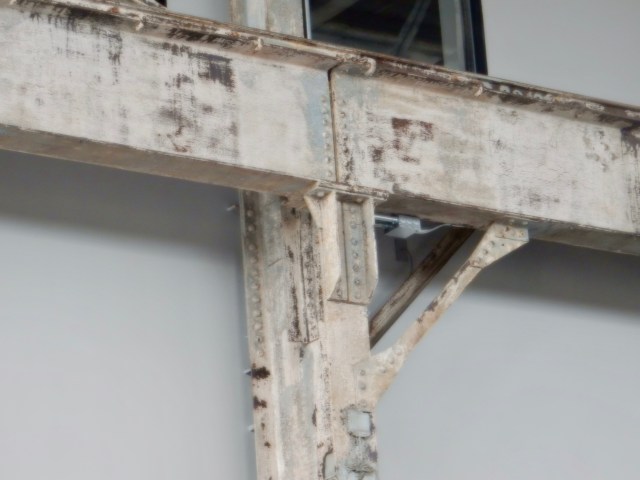
Even while one is captivated by the beguiling beauty of his melody and the subtle brilliance of his orchestration, the science of Mozart’s music is, in the end, more thrilling than its loveliness. It has irresistible appeal to minds trained in the great schools of art and logic. One word has repeatedly been used about it: architecture. And it is a good word to use, for the music is built with the same instinct for proportion and the same fidelity to elemental laws of structure that built the Parthenon and Chartres Cathedral. Bach’s music, in a sturdier and less lyric way, is of the same kind. The surface ornaments of Mozart, like the scrolls and cherubs on a Baroque façade, have preoccupied many and have diverted their attention from the underlying structure, but those who see it as a whole know its universal value. The accident that Mozart happened also to be full of spontaneous melody, dramatic fire, tender humor, sophisticated grace, and profound emotion is a bonanza of Providence. Such an accident does not happen twice.

Here is the closing fugue (Schlussfuge) of Mozart’s Jupiter Symphony.

Posted in Architecture, Art and design, Video | Tagged , , , | 2 Comments

Westminister Street daze

Screen Shot 2017-06-22 at 9.22.05 PM.png

Misspelled street sign in downtown Providence. (Channel 12 News)

Channel 12 News reported last night that Westminster Street is spelled Westminister Street on a couple of signs in downtown Providence, one of them at the corner of Empire Street. And that it has been that way for years. And nobody noticed until now. One man quoted said he felt “stupid” for not noticing. So do I. But I am not on TV so I have time to explain why. (Time to explain things is not a typical characteristic of TV news.)

Screen Shot 2017-06-22 at 10.48.35 PM.png

Roger Williams

As Dr. Downtown (my longtime nom de plume when I was at the Providence Journal), I have been aware that the street is named Westminster for over three decades. Why should I look at a street sign? I know where I am, and know how it’s spelled. That’s my story and I’m sticking to it.

On the other hand, I am a journalist, too, in fact a “print” journalist, to the extent anyone can be such a thing these days. I type on a keyboard, even if you can’t line your birdcage or wrap your fish in it, unless a reader prints it out on a printer. So as a print journalist with pretensions to a capacity for editing and proofreading the printed word, and as a print journalist whose gaze often takes in the misspelled street signs, I should have noticed that the name Westminster was misspelled on those street signs, no doubt by an accidental assumption that the reference in the name is to some sort of minister, probably a man of religion.

No, the reference is to a section of London known as Westminster, where the nobs (the nobility) live, work (or don’t) and breed (or used to). By way of apology for not noticing the error on the street signs and raising a stink about it, I offer a historical tidbit or factoid of which many local readers may be unaware.

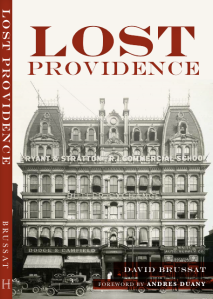
In fact, I will quote a passage on page 33 of my book Lost Providence, published by History Press, which goes on sale August 28. Chapter 1, called “Lost: The Benjamin Hoppin House,” tells the story of the breakup of a congregation in the town, then a bit over a century in existence.

The congregational breach is described in Weybosset Bridge by Arthur E. Wilson. Suffice it to say that Roger Williams’s principles of religious freedom – “soul liberty” – did not preclude schism, secession and every sort of doctrinal squabble. Indeed, in the previous century, the aging Williams was given the post of toll-taker for the Weybosset Bridge by the General Assembly, which stripped him of the post not much later for reasons that have not come down to us but that may stem from the founder’s argumentative character. As one can imagine, he may have caused unwanted delay in crossing the bridge. Williams was long gone by the time Snow set up the New Light [church], but his cranky spirit lingered, as suggested by Snow’s petition to the General Assembly in 1770 to split off his village, too, from Providence to form the town of Westminster (“Weybosset” is scratched out and overwritten on the petition). In London, Westminster was (and is) the seat of Parliament, which often tried the patience of British royalty, much as Snow and his followers chafed under the “despotic rule,” as they put it, of the descendants of Roger Williams on the Neck [Now the East Side]. The assembly rejected the petition.

So there you are. Westminster Street may have been named by a minister, but not for a minister. It is not spelled Westminister Street. One month after my book is published I will be speaking about it in a talk hosted by the Preservation Society of Newport County. The event will be at Rosecliff, on Bellview Avenue – oops! I mean Bellevue Avenue.

Posted in Books and Culture | Tagged , , , , , | 2 Comments

Too late to squash-bust it

DSCN1019.jpg

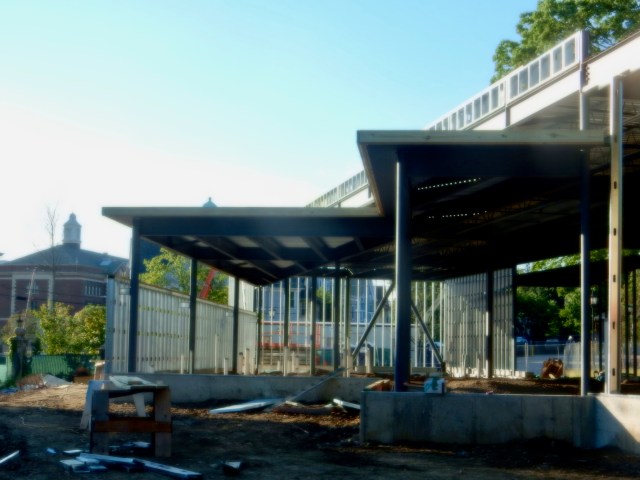
Portion of SquashBuster Center at Moses Brown on Tuesday evening.

The alien spaceship being erected on the Moses Brown School campus facing Hope Street telegraphs its strangeness to everyone who passes along that stretch of Hope. Two sets of angled girders thrust akimbo toward Hope, like the wings of a stealth fighter jet. Out they come from the structure’s two- story rectangular body, seemingly bent on disrupting the flow of traffic.

What can this be, most passersby must surely be asking.

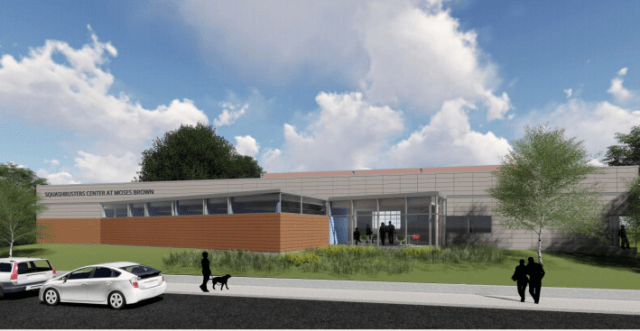
It is the SquashBusters (sic) Center at Moses Brown. The latter is an elite local private school. Perhaps it is good that when complete the new facility will not quite live up to the edgy quality suggested by what’s there now. The local firm of Lerner Ladds Bartels may be blamed for this subdued atrocity, but the leadership of the school is responsible. The design’s pretense to cool, however unrealized, uglifies a stretch of Hope long – but no longer – graced by the physical charms of the Moses Brown campus, which SB@MB serves to squash, or at least largely to block from the view of passersby.

Except for its trendy misspelling, SquashBusters is a perfectly respectable nonprofit that combines after-school sports and academics, to date mostly in the Boston area. Its twelve new squash courts on Hope Street will allegedly be made available to the public. Too bad its tepid stylistic egotism, which would be a perfect fit for a suburban commercial strip, has already crash-landed on one of the great streets of our historic city. No doubt the spirit of school founder Moses Brown (1738-1836) is spinning in his grave.

Screen Shot 2017-06-20 at 6.36.19 PM.png

Rendering of SquashBusters Center at Moses Brown. (LBB)

Posted in Architecture | Tagged , , , , , | Leave a comment

WaterFire’s ribbon-de-fe

DSCN1009.jpg

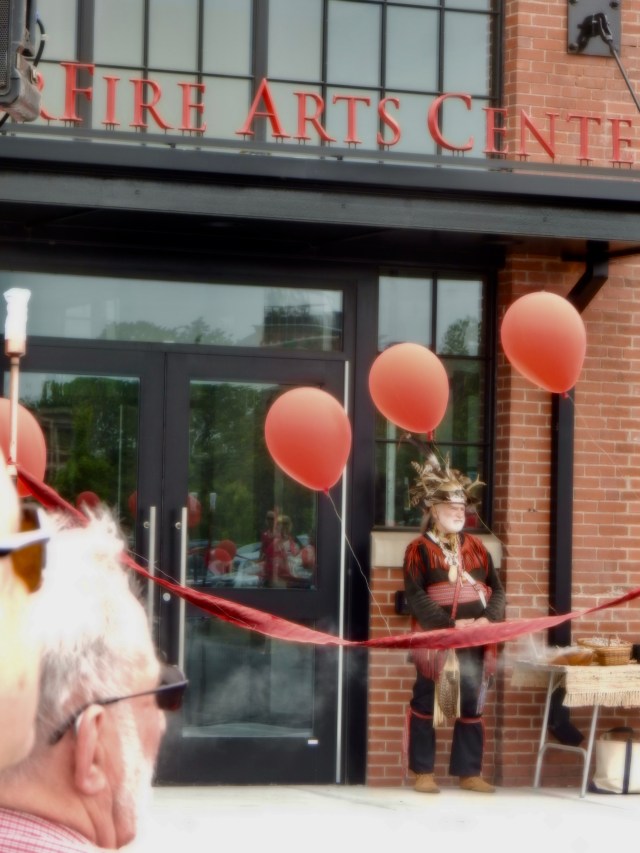
Barnaby Evans opens ribbon-cutting speaking program.

At the end of my tour of the WaterFire Arts Center on Sunday (“WaterFire’s crib opens today,”), Waterfire creator Barnaby Evans told me to look out for “a surprise” at the next day’s ribbon-cutting. Well, I have it on video. They did not cut the ribbon, they immolated the ribbon. Fortunately, since things didn’t quite get out of hand, there was no need for “water” to douse the “fire” – get it? … WaterFire!!!

Seriously, it was a great event heralding a great new facility not just for WaterFire Providence but for the community. So here are a few photo and video reminiscences. The second “ribbon-cutting” video suggests how edgy (my dear and normally potty-mouth-averse mother-in-law, Agnes Somlo, used an edgier word) the ribbon-de-fé threatened to become.

But hey! L’art pour l’art, n’est-ce pas? Anything for art’s sake! And I caught Rose Weaver spinning her WaterFire anthem (to the tune of “Summertime”) to open the speaking program. I wish I’d taped the whole thing.

The photos and videos below are shown in the order they were taken. Enjoy.

DSCN1011.jpg

DSCN1014.jpg

Posted in Art and design, Providence | Tagged , , , , , | 4 Comments

WaterFire crib opens today

DSCN0966.jpg

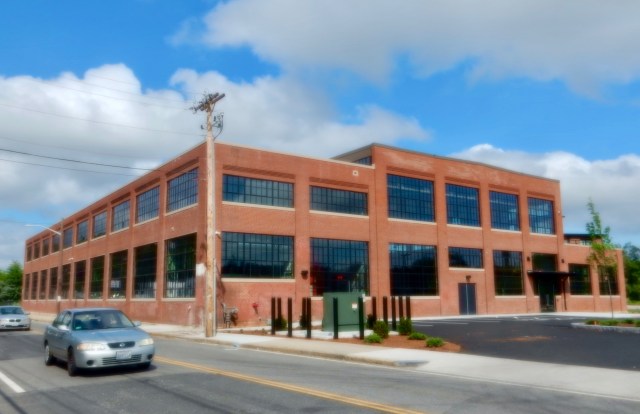
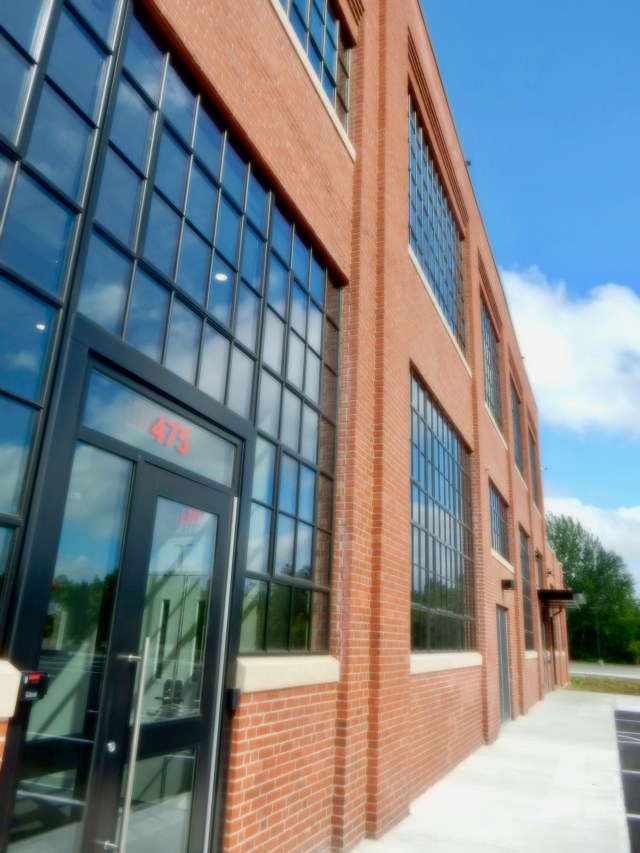
WaterFire Arts Center, 475 Valley St. (Photos by David Brussat)

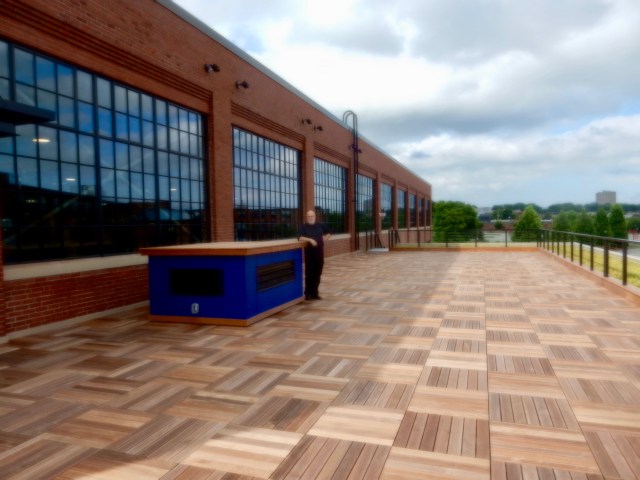
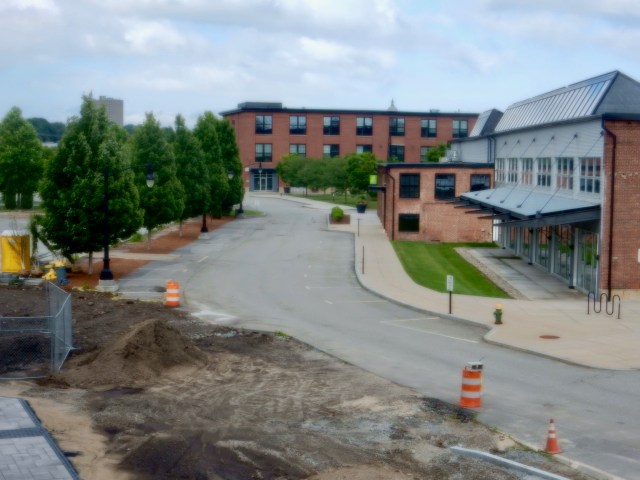
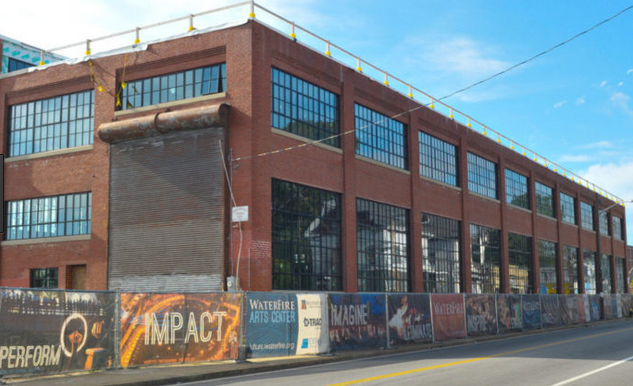
Barnaby Evans, the creator of WaterFire Providence, toured me through the new WaterFire Arts Center yesterday, mere hours before its ribbon-cutting scheduled for 10:30 this morning. The sun played hide and seek with the clouds at 4 yesterday, finally letting me take the above photo of the place, which was built in 1929 for the U.S. Rubber Co.

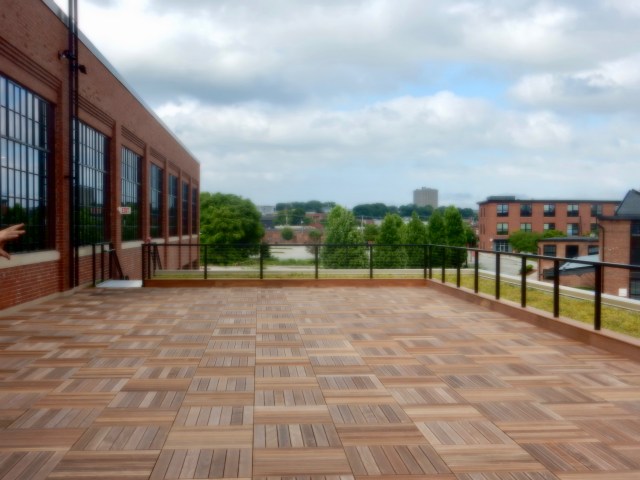
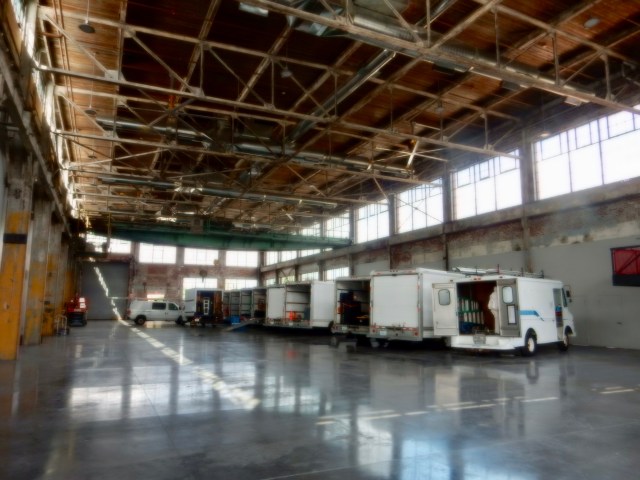
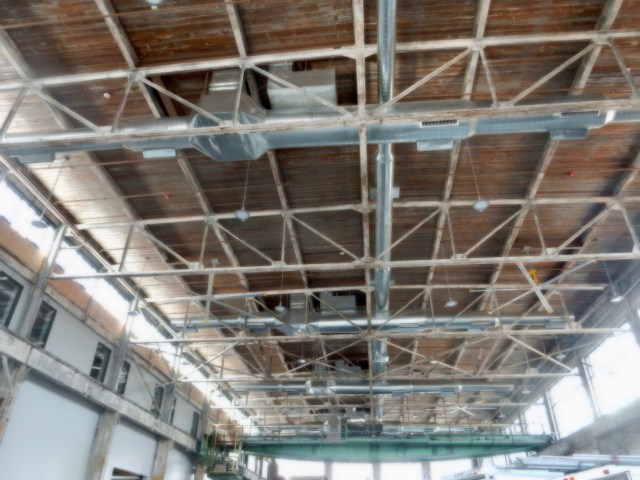
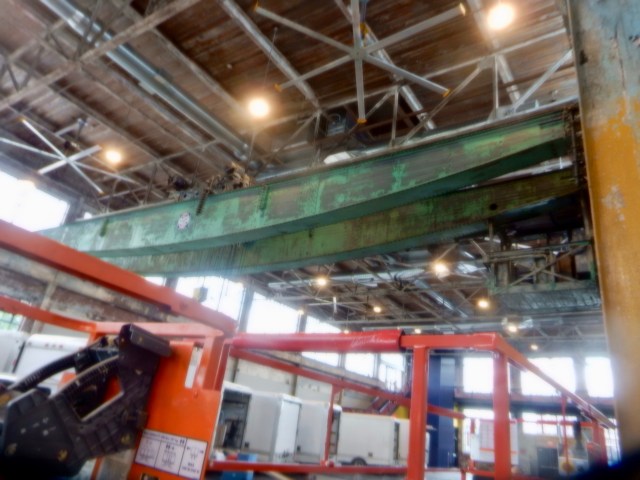
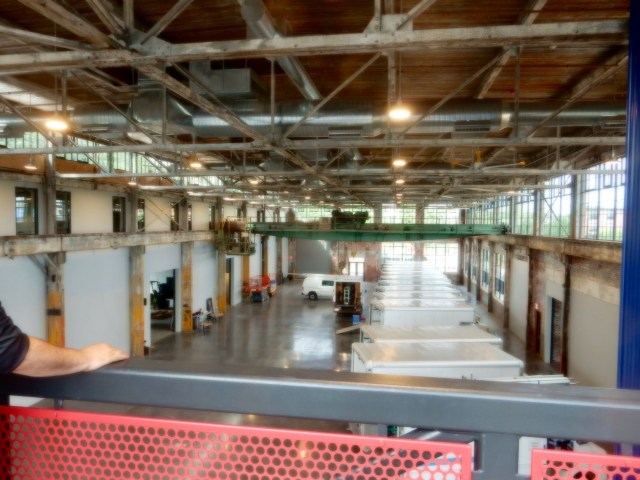
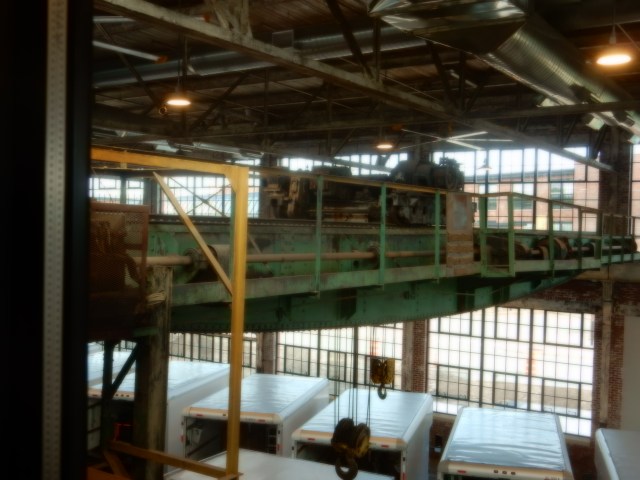
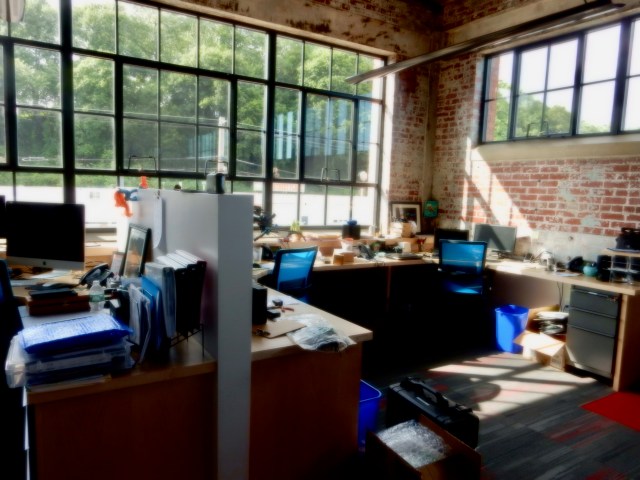
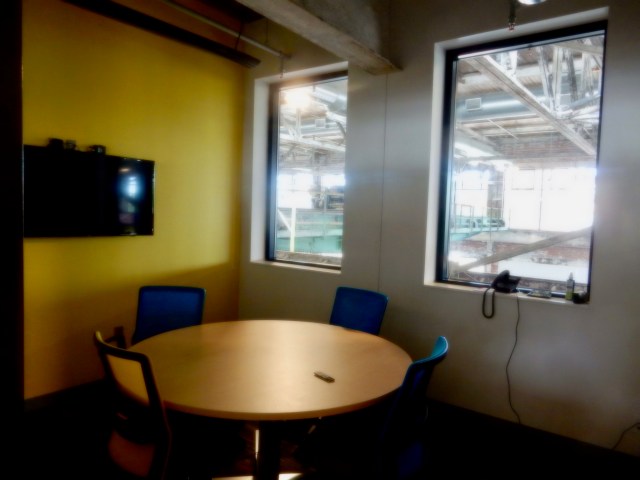
We entered the building’s cavernous space, whose square footage betters those of PPAC and Veterans Memorial Auditorium, and almost that of the Cranston Street Armory (not currently usable). Capable of a 2,300-person standing occupancy, or 1,000 seated banquet style, the plant originally constituted a single huge room that has a new rear second floor platform built in that houses WaterFire’s offices and other function spaces – including one large room designed to be used primarily for the construction of boats, of which the organization already has 32.

As a plant for U.S. Rubber, one of up to 29 of its plants in the city’s industrial Valley District long ago, its workers manufactured various products over the years, ranging from golf balls and the interior linings for railroad tanker cars to the rubber soles for Keds sneakers (“tennis shoes”) – but not automobile tires. Joseph Banigan was the Providence industrial magnate who founded the Banigan Rubber Co., merged it with U.S. Rubber, and eventually supplied 80 percent of the U.S. high-quality rubber market after it had developed the process of vulcanization, which enabled rubber to retain its flexibility at low temperatures. Entire freight cars of rubber from Brazil used to pull, on rails, through a huge door in the plant to be unloaded inside the space where some of those reading this will sit for this morning’s ceremony.
Barnaby is one of the relatively few leading citizens of Providence who seem to really like modern architecture, and he appeared to take some small pleasure in asserting that the plant is of modernist design. Its construction came at a time when that style of design was challenging traditional styles for dominance in the profession, at first chiefly in the realm of utilitarian structures. Even Hitler, who with the rest of the world preferred the reigning classical style for civic, institutional, residential and commercial structures, thought modernism was acceptable for factories.

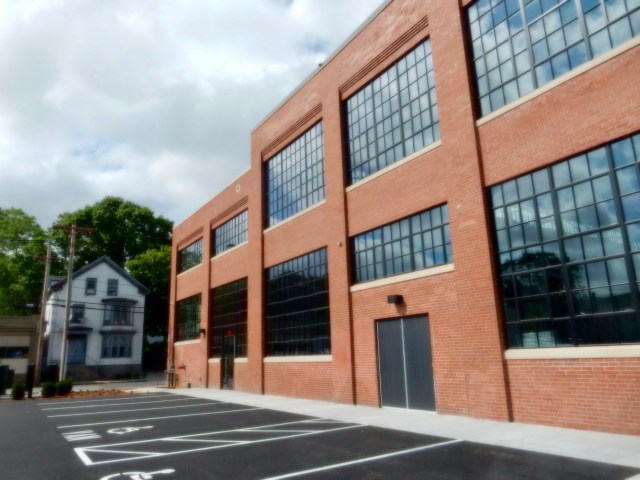
The building’s fenestration of large windows features many small panes of glass (including several sets accidentally laid with horizontal panes), all reproduced as originally built. The building’s brickwork includes such nonutilitarian decoration as a segmented band of stepped brickwork running around the building above the upper of its two levels of windows. Typical of traditional work in the second quarter of the 20th century, the building’s design attempts to address the challenge of modernism by applying that style’s flattened and unadorned features within an otherwise traditional factory format. Or vice versa, if you insist!

The coloration of some interior features, especially the new structure of its frieght elevator, doffs its cap to the artist Piet Mondrian, using WaterFire’s signature color scheme of black, red, yellow and blue. In general, WaterFire, working with architect DBVW and contractor TRAC Builders, kept as much original detailing, including old graffiti and cracked paint, as possible but, in keeping with one theory of preservation practice (if not the best theory), sought to make sure new features would look “newish” so as not be confused with original features. The building’s historical appearance was considered secondary to the needs of curatorial authenticity. Still, the broader idea was to modernize its functionality while maintaining, to the most feasible extent, the way it looked in 1929.
It worked. They did a great job. The building still looks primarily “historical” whether you are inside or outside.

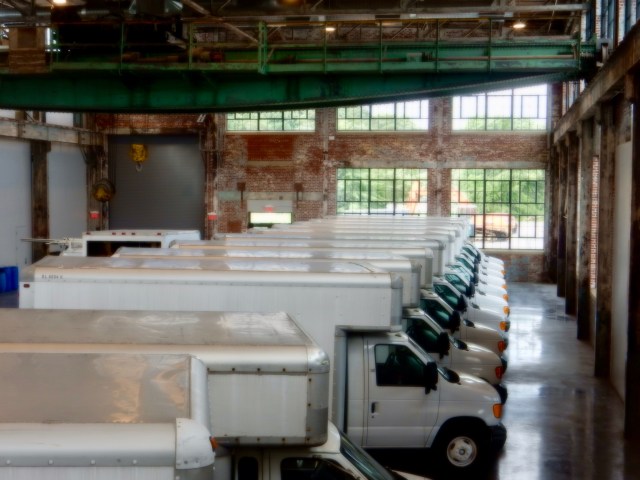
Yesterday, the huge floor just inside the long front wall of the building was lined with a dozen or so of the white trucks WaterFire uses to transport its equipment downtown for event nights. The trucks were not parked higgledy-piggledy – not at all! They were parked on a precise diagonal, each truck seeming to have been situated with meticulous care, as if they were a combat battalion on parade before the general staff.

They may be gone now, but yesterday they struck me as a fine metaphor to symbolize a complex organization run with a healthy degree of managerial savvy. WaterFire has long since become a tradition – a real tradition, not a “new tradition” as some things aspire to these days. Generalissimo Barnaby and his board of directors seem to be expanding the scope of the mission of the organization beyond its original purpose of art to include the facilitation of socially useful education and training, above and beyond renting out its grand new space for occasions. WaterFire is doing good for the citizens of Providence and Rhode Island – without watering down its art in the least.

All of this is, of course, just mahvelous. But in case you don’t make it in time to rummage around the building – where does the WaterFire general staff plot further global conquest!? – here are some photos taken yesterday:

DSCN0964.jpg

DSCN0962.jpg

DSCN0990.jpg

DSCN0987.jpg

DSCN0991.jpg

DSCN0992.jpg

DSCN0983.jpg

DSCN0967.jpg

DSCN0975.jpg

DSCN0977.jpg

DSCN0980.jpg

DSCN0979.jpg

DSCN0984.jpg

DSCN1008.JPG

DSCN0996.jpg

DSCN1000.jpg

DSCN1006.jpg

DSCN1004.jpg

DSCN0970.jpg

DSCN0968.jpg

DSCN0973.jpg

Posted in Architecture, Preservation | Tagged , , , , , , , | 5 Comments

Market town, New Zealand

Screen Shot 2017-06-18 at 1.15.39 PM.png

Illustration of a market town from the Market Towns NZ website.

Not so long ago, I wrote a blog post and received a comment in reply from “leveveg.” (I am not sure that’s his name, or even whether he’s a he.) Anyway, I visited his Norway-based website, dedicated to sensible urbanism, and its impressive page Naturkonservativ: Resilience after modernism. Although the quarter of my blood that is Norwegian has not endowed me with the least fluency in that language, the illustrations clearly signaled congeniality, or at least congeniality to those who favor sensible urbanism.

Now, in the wake of my recent blog posts on gentrification, he has sent me a string of comments (in one of which he kindly corrected my misdirected link to my own post). He included a link to another website, Market Towns NZ, this one originating in New Zealand (hence in English), that also partakes of sensible urbanism. I have in turn linked this post to a part of that website called “Beautiful Architecture,” from which readers should navigate back to the site’s main page, “Development Patterns: Reinventing local planning for seven generations,” and thence to other segments. Scroll down toward the bottom of the main page, for example, to learn the principles behind the market-town concept (which hails from the Europe of earlier centuries).

Market Towns NZ rolls out a vision of sustainable development for the 21st century that is far, far broader than my own narrow focus on architecture’s style wars. It seems to be simpatico with the New Urbanism in America. Its economic prescription is as follows:

The Internet and its converging technologies change everything, including how we design communities. First the net was email, then social networking and e-commerce. Next is the Internet of things, [such as] 3D printing. These technologies make global markets local. But as humans we still need face-to-face. Social networks are not enough. We still need real society.

To get there requires a new development pattern based on a very old one: the historic market town, a legal term originating in the medieval period for a settlement that has the right to host markets, as distinguished from a village or a city. It is called a 21st century market town, whose economy is based on fiber-optic broadband, not the ancient economy of surrounding farms.

Not that there’s anything wrong with surrounding farms, whose existence outside market towns is everywhere on the Market Towns NZ site.

Especially interesting to me, in addition to its acknowledgment of the importance of beauty and tradition’s role in its creation, is that a market town’s family would store its car, if it had one, outside of the town’s walls – yes, walls (good fences make good neighbors). I spent five years living without a car in Providence, and discovered that getting around was much easier than I’d expected, and a lot more interesting. Of course, the population of Providence is not the 10,000 or fewer that is supposedly optimal for a market town, wherein all destinations are walkable. (Providence seems to be expanding its center – at any rate what it defines as its center – putting its famous walkability at risk.)

Not sure where I’m going in this post. Its aim is merely to introduce my readers, by way of thanking Leveveg, to this remarkable urbanist website from New Zealand.

[Update: Leveveg left another comment, informing me of his name, Øyvind Holmstad, and of Market Town NZ’s founder in New Zealand, Claude Lewenz, and of a sister blog in the United States, Piscataquis Village Project, in Maine. Holmstad says that leveveg means “way of life” in Norwegian.]

Screen Shot 2017-06-18 at 1.16.05 PM.png

The Placa de la Constitucio, in Alcudia, Mallorca. (Market Towns NZ)

Posted in Architecture, Urbanism and planning | Tagged , , , , | 3 Comments

Antidote to gentrification

Screen Shot 2017-06-17 at 2.49.32 PM.png

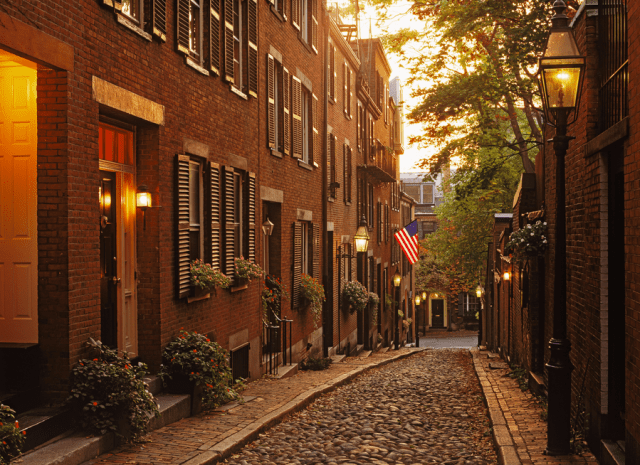
Beacon Hill, in Boston. (Otis and Ahearn)

The other day, in “Mehaffy on ‘gentrification,” I posted on that sensitive subject, directing readers’ attention to a post by urbanist Michael Mehaffy, “Beware of Voodoo Urbanism,” on the blog Livable Portland. In a comment on my post, Steven Semes, the author of The Future of the Past and a leading architectural historian and preservationist at Notre Dame, described a solution to problems raised by gentrification. He wrote:

David, I have a contrarian theory that gentrification and mass tourism are predictable effects of modernist architecture. Gentrification doesn’t happen because historic preservation [limits] the supply of new housing. Rather it happens because modernist architecture and urbanism limit the supply of the kinds of environments people actually want. … If people everywhere could live in beautiful walkable neighborhoods, they wouldn’t have to displace poor people to find them, or spend millions of dollars going to Europe to find them.

This, in a nutshell, is the argument for new traditional architecture. Historic cities that have maintained their beauty through preservation are expensive because people want to live there. In too many historic cities, especially in America, preservation has limited itself to protecting a building here or there, with few if any historic neighborhoods able to thwart the invasion of modern architecture. Other cities are too recent to have much in the way of beautiful historic neighborhoods. What few they have are either way out of reach or so sunk in poverty that gentrification dare not try to take hold. (Remember that many of the people who benefit from gentrification are poor who happen to own and thus can sell old, dilapidated houses.)

Build more – and eventually many more – neighborhoods people like and the pressure on old houses in poor neighborhoods would decrease, while the prices of housing would not rise so fast in historic districts gentrified long before that word became a pejorative for change in cities.

Semes adds that historic cities around the world suffer from mass tourism because so many people seek to vacation in places that protect the beauty lost – or banned – in their own neighborhoods here in America. Venice is a good example. In my 2016 review of If Venice Dies, by Salvatore Settis, I wrote:

Historic cities are at risk because in the middle of the last century it became unfashionable to build beautiful cities that people can love. In many places, it became illegal. To the extent that more cities, towns and communities that people can love are built, to that extent the pressure on old historic cities – the surviving preserves of such admirable civic qualities – would be lifted.

Unfortunately, like many professional preservationists, Settis does not seem to agree. He understands that modern architecture threatens the “soul” of any historic city, but refrains from proposing new infill, neighborhoods or entire cities designed in traditional styles. Don’t assume that requires cities “step backwards” or become “museums.” New old styles can evolve into the future as if their interruption by modern architecture never happened. Lift the many legal and regulatory obstacles to new traditional architecture and – voila! – the problems of gentrification and of mass tourism will evaporate in relatively short order.

Posted in Architecture, Preservation | Tagged , , , , , , , | Leave a comment

Tower on State House lawn

Screen Shot 2017-06-15 at 12.54.02 PM.png

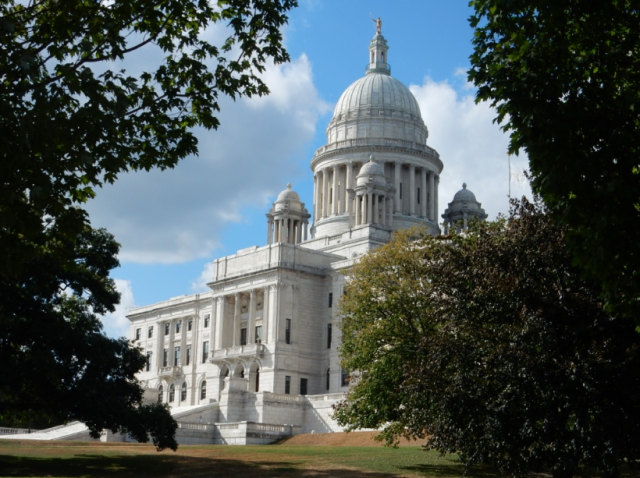
Rhode Island State House. (David Brussat)

And for no good reason.

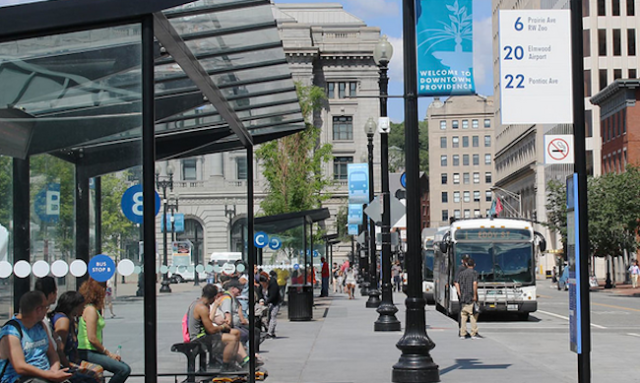
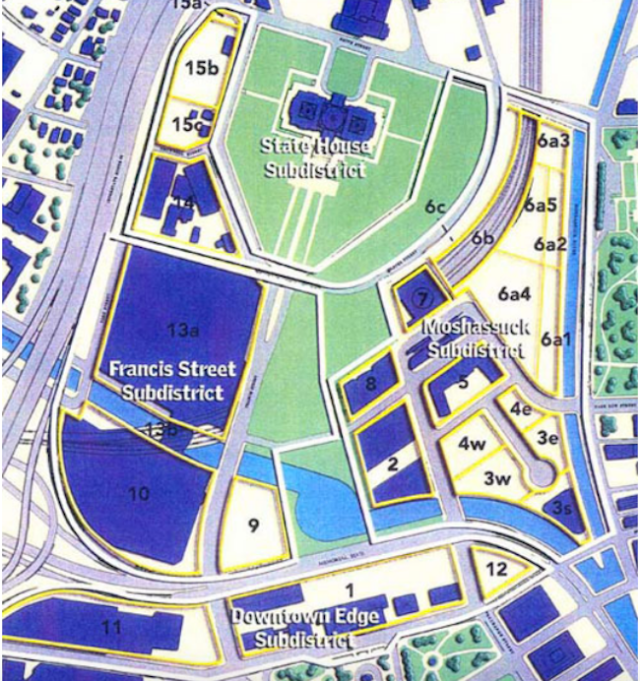
Grok this, fellow Rhode Islanders: The state wants to place a new transit hub along with a tower on land near the State House, possibly right on the State House lawn. The original proposed site for this complex, now rejected as too expensive, was over the railroad tracks directly north of Providence Station, and hence equally obnoxious to the state’s most revered landmark. Some of the newly revealed alternative sites, such as on the parking lot that used to be part of the State House lawn, are even closer to the capitol, designed by Charles Follen McKim and opened in 1901. The state’s preferred site, at the northwest corner of Station Park (the grassy land west of the station) at Gaspee and Francis streets, would violate the Capital Center Commisson’s supposedly inviolate dedication to that land as open space.

The Providence Journal story “Part of R.I. State House lawn eyed for transit hub,” by Patrick Anderson, lays out the facts minus the outrage.

The proposed hub complex and tower would directly compete with the State House. No site thus far suggested, either on its lawn or near the station, would fail to block one or another view corridor through Capital Center to the State House. Depending on its height and design, the complex with its tower would either overwhelm the State House or diminish its dominant place on Smith Hill – or both.

And what for? To create a new subsidiary transit hub to better connect the train station to the main hub at Kennedy Plaza. Voters approved a multi-million dollar bond issue for the new hub without being told that it would include a tower to compete with the State House.

The desire to make it easier for riders debarking in Kennedy Plaza to reach Providence Station and vice versa is valid. But a new hub complex is an outrageously costly way to accomplish the goal. Instead, the Rhode Island Public Transit Authority should institute a minibus loop between the two destinations. That would cost several thousand dollars a year, and would entirely accomplish RIPTA’s goal.

The project has already failed as an economic development tool. That is proved by the fact that the state now sees state offices as a likely occupant of the tower, rather than a private, lease-paying tenant, which the Department of Transportation has as yet been unable to identify. Proponents of the supposed public/private hub complex describe it as a perfect example of transit-oriented design – development around bus, train and light rail stops. I think they are mistaken. TOD is not normally meant to trash state icons.

It appears that RIDOT now describes its goal for Kennedy Plaza in terms that seem to suggest removing the bus nexus at Kennedy Plaza entirely to the area of the train station. If so, then voters were hoodwinked by the state’s bond rhetoric, which originally foresaw a sub-hub at the train station still subservient to the main Kennedy Plaza hub.

This entire proposal needs to be given a second look. That should occupy officials and the legislature for about half an hour. Nix it now.

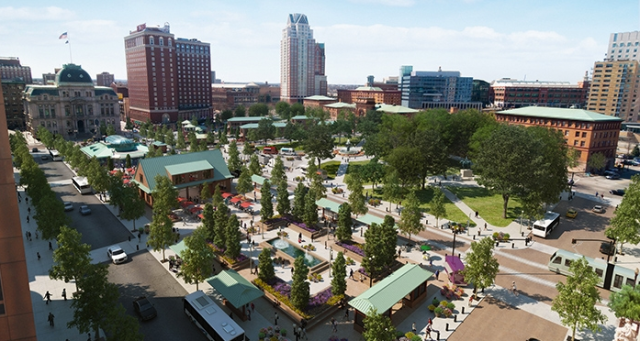
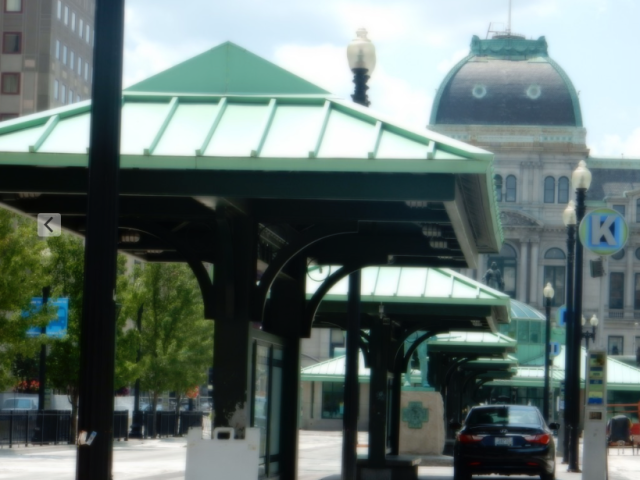
As for the $35 million bond approved in 2014, it should go to deficit reduction. Or maybe it should go to advancing the originally proposed Kennedy Plaza renovation imagined by the Downtown Providence Parks Conservancy and designed by Union Studio. Yet that design seems to have disappeared (“frogmarched,” as I warned in 2014) from project pages on the RIPTA and Conservancy websites. If I am mistaken and the Union Studio design remains part of Kennedy Plaza’s future, it should include the removal of the sterile bus waiting kiosks erected in 2015 and their replacement by the elegant Art Nouveau kiosks removed to make way for the ugly new ones

Screen Shot 2017-06-15 at 12.04.27 PM.png

Originally proposed Kennedy Plaza renovation. (Union Studio)

Screen Shot 2017-06-15 at 11.13.05 AM.png

New bus kiosks after 2015 Kennedy Plaza renovation. (Greater City Providence)

Screen Shot 2017-06-15 at 11.19.47 AM.png

Former bus kiosks that should be returned. (Photo by David Brussat)

Screen Shot 2017-06-15 at 11.17.47 AM.png

Proposed bus hub site on State House lawn half-way between State House and Waterplace. (CCC)

Posted in Architecture, Development, Providence | Tagged , , , , , , , , | 2 Comments

Mehaffy on “gentrification”

Screen Shot 2017-06-14 at 2.27.19 PM.png

Proposed research campus in I-195 innovation corridor. (Greater City Providence)

All change is bad. Take gentrification. Gentrification is when rich people suddenly take a liking to a poor part of town, move in, raise property values, and force longtime residents – that is, the poor – to move out.

Right? No, that’s not what gentrification is. It is the pejorative term for change. All cities change, and change sometimes creates problems such as making it harder for poor people to afford to live in their neighborhoods. But cities and their neighborhoods always evolve, always have and always will. How to soften its impact on the most vulnerable is the big question.

Michael Mehaffy takes up the topic of gentrification in “Beware of Voodoo Urbanism” on the blog Livable Portland. His urbanist think tank, the Sustasis Foundation, is headquartered in Portland.

Part of his post focuses on the tendency of some people, such as urbanist Edward Glaeser, to chide Jane Jacobs for the fact that after she helped rescue Greenwich Village in the 1960s, property values rose, causing demographic shifts that promoted greater blandness. Glaeser and others claim that this history challenges the wisdom of Jacobs’s thinking about cities, such as her emphasis on the vital importance of old buildings. Old buildings provide affordable space for entrepreneurs who can’t afford to build or lease big new glass boxes for their start-ups. Mehaffy writes:

But Glaeser and other critics seem to miss Jacobs’s point. For Jacobs, the answer to gentrification and affordability is not an over-concentration of new (often even more expensive) houses in the core. Rather, we need to diversify geographically as well as in other ways. If Greenwich Village is over-gentrifying, it’s probably time to re-focus on Brooklyn, and provide more jobs and opportunities for its more depressed neighborhoods. If those start to over-heat, it’s time to focus on the Bronx, or Queens. Or Cleveland, Detroit, Baltimore, New Orleans.

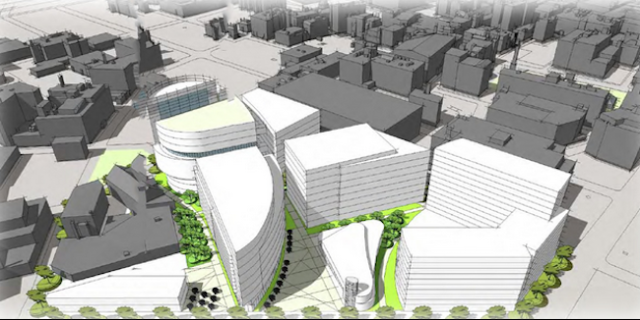
Providence has been trying to channel the energy of redevelopment quite well over the past several decades, promoting revitalization not just downtown but in neighborhoods such as West Broadway, South Providence and the Jewelry District. But Mehaffy also urges cities that create large new development districts to divide them up into smaller development parcels. Providence has done quite poorly at this, and the results are clear in Capital Center and the nascent I-195 corridor, the latter with its innovation district of proposed large glassy unalluring research boxes.

My upcoming book Lost Providence, due out Aug. 28, offers a sense of the kind of churning that affects evolving cities, whether in neighborhoods or downtowns. I quoted an old column of mine from the Providence Journal, “In defense of gentrification,” written in 2003 about decisions the city made on the way to its current promising revitalization:

One can no more expect landlords to neglect buildings in perpetuity as welfare programs for struggling artists or buck-a-beer joints than one can expect those same tenants to embrace building improvements that will raise their rents. They whistle past the graveyard as the gathering clouds of renaissance darken, praying that their landlord fixes up all his other buildings before getting around to theirs.

There is a certain vitality to dark streets empty most nights until drunks stumble in a rowdy mass from clubs at 1 a.m. But it will be a sad day if City Hall ever determines that the preservation of this vitality should be the urban policy of Providence.

Fortunately for Providence, that policy did not prevail. Gentrification is a word that dangerously oversimplifies that realities of change in cities. Mehaffy’s post is an excellent antidote to that.

Posted in Architecture, Development, Providence | Tagged , , , , , , , , | 9 Comments

As the WaterFire turns

Screen Shot 2017-06-13 at 11.13.35 AM.png

Volunteers stoke WaterFire braziers. (Screenshot from PBS episode)

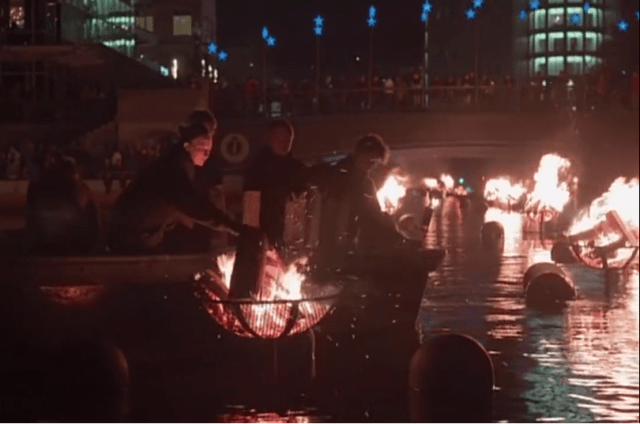
Another day, another accolade for WaterFire Providence. Yesterday, PBS Channel 36 broadcast a segment on WaterFire for its show “Weekends with Yankee,” a 13-part series showcasing visits by plane, train, boat and foot to various exciting places around New England. The segment of this week’s episode called “Land and Water” features extensive footage of the event that, every couple of weeks or so in the warmer months, has enlivened downtown Providence now for 23 years. The scenes of WaterFire are mingled with the dynamic analysis of his work of art by its creator, Barnaby Evans. The segment runs more than eight minutes.

Screen Shot 2017-06-13 at 10.59.14 AM.png

Barnaby Evans (r.) and Richard Wiese.

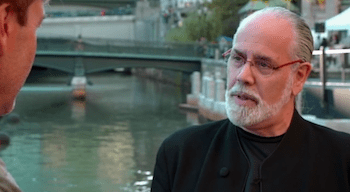
WaterFire is one of the most spectacular things I’ve ever seen.” That is the opening remark of series host Richard Wiese. Evans replies, “From an arts point of view, it was that immersive idea of touching all your senses. You hear it, you see it, you smell it, you taste it. You feel the warmth on your skin.”

“We use this Promethean sense of fire as a symbol of inspiration and culture and civilization as a trope throughout the night,” he adds, as Wiese watches the fires being stoked by black-clad volunteers in black boats. “Fire and water are both symbols of life, and yet they are mutually self-destructive. Water will put fire out. Fire will boil water away to nothing. And these extremes between light and dart, hot and cool, life and death, are what life’s all about.”

“There’s another element here,” continues Evans. “The civic ritual of the fires burns bright when we light them, and then they tone down when they burn out the fuel. And then we have [boats] that come out of the darkness with volunteers, all volunteers on the boats, and each person adds their log to the fire to make the city bright again. And that symbolic statement [is] that by everyone working together to rebuild the city you can turn the city around. And Providence has completely turned around.”

“This is all part of the performance art that goes on here,” observes Wiese as he glances at the crowds past a lovely fire spinner swinging her flames. “And art transforms. You don’t have to speak a certain language to appreciate art, and this is amazing. This is not a theme park. This is a real living, breathing city that happens to be Providence, Rhode Island.”

Wiese’s astonishment may reflect that of most WaterFire virgins. Every other week or so for half a year, people from around the world visit Providence and see WaterFire for the first time. But many Rhode Islanders and most citizens of Providence are long since veterans of this show. I’ve been to scores of them. Evans introduces new features for each event, so as to maintain the interest of jaded locals, but my own addiction to WaterFire resides in the features that are common to each event – the people, the music (especially the opera segments), the smoke, the eerie phantasmagorical scenery along the beautifully re-opened rivers, with their (new!) classical bridges, parks and river walks, lined with places to sit on walls of granite. Some 40,000 come on most evenings, sometimes thrice that number, and over a million yearly.

Shows like this hosted by Wiese for the magazine Yankee spread the word out farther and farther, stoking future crowds for WaterFire and for the Ocean State and its capital city. Here is a trailer for the 2013 documentary “WaterFire: Art & Soul of a City” – about five minutes. This short version shows video from WaterFire Roma!, the performance of WaterFire on the Tiber River. It is very beautiful, but the Tiber is not really an intimate river. In Providence the strength of each event owes much to the cozy feel of our three downtown rivers and the traditional setting created between 1990 and 1996 for the new waterfront, designed by the late Bill Warner.

It is understandable that Barnaby Evans seeks to expand his empire globally, but I for one think that only Providence offers a proper setting for one of the world’s great continuing artistic extravaganzas. I will be taking a tour soon of the new WaterFire Arts Center, and will try to locate the strategic planning office in which Barnaby Evans and his co-conspirators plot to export Water- Fire around the world. No, I don’t expect to find it, but maybe you can try during the WFAC’s ribbon-cutting event, which will be at 10:30 a.m. next Monday, June 19. Located at 475 Valley St. in the industrial Valley District of Providence, the building opened in 1929 as a factory owned by U.S. Rubber.

Screen Shot 2017-06-13 at 12.42.50 PM.png

WaterFire Arts Center, in Providence. (Providence Business News)

Posted in Architecture, Art and design, Preservation, Video | Tagged , , , , , , , | Leave a comment