Oldest footage of New York

Screen Shot 2017-04-08 at 5.26.52 PM.png

New York’s Herald Square on May 11, 1896. (Library of Congress/Yestervid)

This fascinating video, “Oldest footage of New York City ever,” filmed between 1896 and 1905, has been seen on this blog before. I post it again because, first, it is so amazing, and second, it has a new feature my first post of this lacked: a strip with maps of where the scene being shown was shot and in what direction the camera was pointing.

The scenes are spliced so as to lead the viewer backward in time. What the producers think most people will be most interested in seeing comes last. I would have flipped the sequencing so that some sense of moving forward in time is retained. But there is so much going on in the streets and sidewalks that the order doesn’t really matter. There is a host of personal incidents that take place which many will want to view again and again. For those familiar with the city today, you can pause and use the maps and arrows to orient in your mind the view back then as it looks today.

Look for these highlights: a copper in one of those bulbous helmets twirling his nightstick as he walks his Lower East Side beat; a man strolling by the Flatiron Building whose hat flies off in the wind; a boat sailing by, in 1903, the approximate site of the WTC, with the Twin Towers etched in (this is where I figured the video would end); horse-drawn carriages driving down Broadway in 1902, already lined with tall buildings; a woman walking along West 23rd near Fifth Avenue with her beau when a whoosh of air from a subway grate lifts her dress – her smile, priceless – the cameraman obviously set up to catch this, half a century before Monroe; a time-lapse demo of the Star Theater; Buffalo Bill on parade down Fifth Avenue; a skating pratfall in Central Park; in 1899, a fist- fight in Madison Square, perhaps between newsboys; the oldest footage of a busy Herald Square intersection; and of course so many old buildings, some identified on the clips, that survive 112 to 121 years after being filmed.

(The video was produced by Yestervid in 2014 with Library of Congress clips.)

Posted in Architecture, Old Video | Tagged , , , , , , | 5 Comments

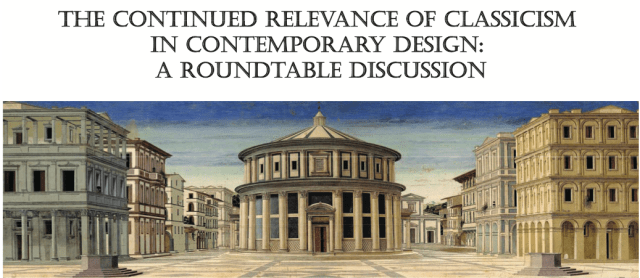
Classicism’s relevance today

Screen Shot 2017-04-06 at 6.43.16 PM.png

The Boston Design Center in the city’s Innovation District hosted a panel today, as part of Boston Design Week, on the relevance of classicism in contemporary design. All five panelists agreed that yes, classicism is still relevant. Classicism has a job of healing to do today after half a century with its opposite, modernism, at the controls. Right outside the windows was all the evidence you needed: the Innovation District itself, described by one panelist as the opposite of a humanistic environment.

Unfortunately, the Innovation District isn’t the only evidence. We are sur- rounded by the evidence, outside and inside, and around the world. It is killing us. Classicism is the antidote.

The discussion was put on by the Institute of Classical Architecture & Art‘s New England chapter, whose president, David Andreozzi, opened the session and handed it off to its moderator, chapter member Eric Daum, an architect at Merrimack Design. He set the stage for the discussion with a rousing general description of classicism. He said the Roman architect Vitruvius defined its requirements as firmitas, utilitas and venustas – strength, use- fulness and delight. Modernism, he added, holds that strength and use- fulness are enough. Modernists “removed the human from design, and with it the belief that beauty mattered.” He concluded by asserting that classicists

believe that beauty is an essential part of architecture; that beauty is not subjective, but objective, as described by Vitruvius and refined through more than 2,000 years of Western tradition. We believe that people have a positive visceral response to classical design. Because beauty is desirable, it has a positive impact upon property value. But most importantly, beauty and tradition, through a rigorous authentic classicism, connect us to the flow of history, both to our past, but hopefully to future generations through the legacy of the built world we leave behind.

The next speaker, John Tittmann of the firm Albert, Righter and Tittmann and a former board member of the chapter, described how architecture might be said to represent the way a building and its neighbors create a block, blocks combine to form a neighborhood, and neighborhoods con- stitute the major parts of a city. This is the organic flow of a city, a history that fits into the broadest of nature’s schemes – the circadian rhythm of day and night, to which the city must conform. The grid of the hours of man’s activity as an urban creature forms the framework within which cities succeed or fail. When they succeed, their street networks look just like the chlorophilic skeleton of a leaf. Hence their sustainability over time.

Leslie-jon Vickory, the education committee chairwoman of the chapter’s board and an interior design architect at Hamady Architects, picked up the thread. She described how in her work she turns the influence of day and night into the architecture of inside and out. Along the shift from light to dark to light again, the art of interior design is deployed. Her diaphanous sketches of interiors help a client to ponder the character of a room in a house, and to move his or her mind’s eye through what Vickory described as “the place between reality and imagination.”

The next speaker, woodworker Oliver Bouchier, partner in the craft shop of Payne-Bouchier and a former chapter board member, reached backward to establish an even more sensual connection with “the pleasure and satisfac- tion of making prehistoric artifacts.” Ratcheting up from the hewing of rude stone edges, stone spear heads, polished jade and the earliest architecture, such as Stonehenge, Bouchier illustrated the ancient progress of craftsman- ship. That movement over time, he said, was accompanied by an ever more powerful and sophisticated sensuality in decorative creation. The joy of craft, Bouchier seemed to suggest, cannot be reconciled on any level with the ab- sence of feeling, soul and humanity that has overtaken the degenerative machine sterility of architecture in our time.

Finally came architect Ann Sussman, author (with Justin Hollander) of Cognitive Architecture, batting cleanup. Her research, using eye-tracking and other software to measure the neurophysiological response of the mind to pictures of our built environment, demonstrates that humans prefer active surfaces to blank surfaces. This turns out to be the main reason why people generally desire traditional, not modern, architecture. We are hard-wired to dread the stripped-down absence of articulation that characterizes most of modernism. Starting with what we know about mental illness and working back from her neuropsychological evidence, Sussman exposed the flaws in modern architecture’s founding mythology. All three of modernism’s main early pioneers, the Swiss/French Charles-Édouard Jeanneret (“Le Corbusier”) and Germans Walter Gropius and Ludwig Mies van der Rohe, suffered from mental illness. Gropius and Mies saw action in World War I and emerged with post-traumatic stress disorder (PTSD), while Corbusier was autistic.

Modernism’s original ban on ornament was based in part on a perceived need to break from past practices in architecture after the horrors of World War I. Whatever the merit of that justification, Sussman argued, the new style offended the residual desire for detail that arose from early mankind’s dire need for information about his surroundings. This survival mechanism evolved over millennia into today’s deep preference for ornament, the sort of embellishment purged from modern architecture. The brain’s clearest mani- festation of this need and its strongest tendency of all is to seek out facial imagery, very much including the symbolic faces that turn up in the place- ment of windows and doors in the façades of traditional buildings – faces that are rare in the blank walls of so much modernism.

The presentations ended and questions from the audience were invited. As when Sussman spoke to the chapter on Feb. 23 – reported in my post “Suss- man on Corbu’s autism” – an audience member wondered whether she is arguing that all modernist architects are mentally ill. Sussman replied that the idea was not that every modernist was mentally ill but that modernist architecture displays the unfortunate characteristics of mental illness baked into the architectural principles developed by its founders and maintained, cult-like (my characterization, not Sussman’s), by its adherents to this day.

The resulting degradation of the built environment is the most powerful reason for the continued relevance of classical architecture. President Andreozzi closed the event with a reminder that the chapter’s Bulfinch Awards are coming up on Saturday, April 29. Tickets to that event are available through a link on the chapter’s website.

Here are links to Eric Daum’s introduction and its illustrations:

Eric Daum intro text

Eric Daum intro illustrations


Posted in Architecture | Tagged , , , , , , , , , , | Leave a comment

Architecture of love’s prose

Screen Shot 2017-04-05 at 12.40.18 PM.png

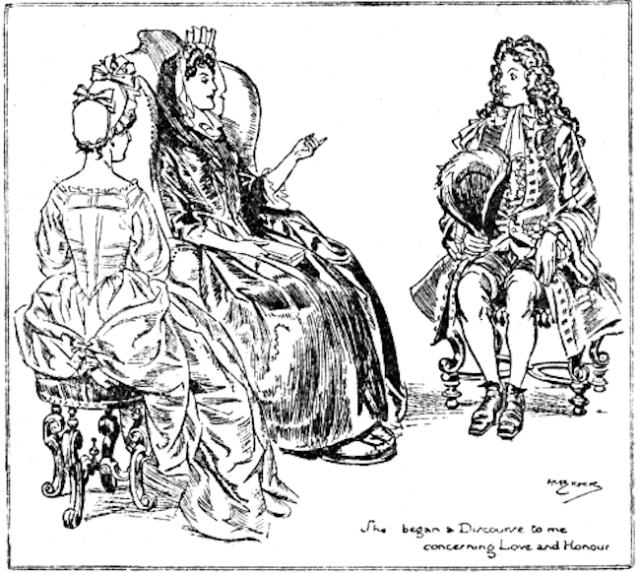
Sir Roger pays court to Widow, with confidante. (Project Gutenberg)

Reprinting this long passage from Richard Steele’s essay No. 113 in The Spectator of Monday, July 10, 1711, is meant to amuse readers who might have become bored with the plain prose about architecture that is the meat and potatoes of Architecture Here and There. Steele’s prose is not about architecture; it is architecture, indeed his prose is poetry. Architecture is a language no less than English. Steele’s cadences may be compared with the classical ornament that makes— … Oh, never mind. No excuses – just enjoy!

The Spectator was published daily in 555 numbers from March 1, 1711, until some date in 1712, after which it became intermittent. Steele, who with Joseph Addison also formed The Tatler in 1710, contributed numbers there and in The Spectator on a range of topics designed to enlighten and amuse. I have always found Steele the more pleasant, and far less pedantic than Addi- son. The Spectator has a stable of fictional characters, apparently based on real people, who often populate the essays. In this example, Steele has Sir Roger de Coverley describe his most vexing disappointment in Love:

***

“I can assure you I was not a little pleased with the kind Looks and Glances I had from all the Balconies and Windows, as I rode [as county sheriff] to the Hall where the Assizes were held. But when I came there, a beautiful Creature in a Widow’s Habit sat in Court, to hear the Event of a Case concerning her Dower. This commanding Creature (who was born for Destruction of all who behold her) put on such a Resignation in her Countenance, and bore the Whispers of all around the Court with such a pretty Uneasiness, I warrant you, and then recovered her self from one Eye to another, till she was perfectly confused by meeting something so wistful in all she encountered, that at last, … she cast her bewitching Eye upon me. I no sooner met it, but I bowed like a great surprized Booby; and knowing her Case to be the first which came on, I cried, like a captivated Calf as I was, Make Way for the Defendant’s Witnesses. This sudden Partiality made all the County immediately see the Sheriff also was become a Slave to the fine Widow. …

“You must understand, Sir, this perverse Woman is one of those unaccountable Creatures, that secretly rejoice in the Admiration of Men, but indulge themselves in no further Consequences. Hence it is that she has ever had a Train of Admirers, and she removes from her Slaves in Town to those in the Country, according to the Seasons of the Year. She is a reading Lady, and far gone in the Pleasures of Friendship: she is always accompanied by a Confidant, who is Witness to her daily Protestations against our Sex, and consequently a bar to her first Steps towards Love, upon the Strength of her own Maxims and Declarations.

“However, I must needs say this accomplished Mistress of mine has distinguished me above the rest, and has been known to declare Sir Roger de Coverley was the tamest and most humane of all the Brutes in the Country. I was told she said so, by one who thought he rallied me; but upon the Strength of this slender Encouragement of being thought least detestable, … I set out to make my Addresses. …

“[W]hen I came to her House I was admitted to her Presence with great Civility; at the same Time she placed herself to be first seen by me in such an Attitude, as I think you call the Posture of a Picture, that she discovered new Charms, and I at last came towards her with such an Awe as made me speechless. This she no sooner observed but she made her Advantage of it, and began a Discourse to me concerning Love and Honour. … Her Confidant sat by her, and upon my being in the last Confusion and Silence, this malicious Aide of hers turning to her says, ‘I am very glad to observe Sir Roger pauses upon this Subject, and seems resolved to deliver all his Sentiments upon the Matter when he pleases to speak.’ They both kept their Countenances, and after I had sat half an Hour meditating how to behave before such profound Casuists, I rose up and took my Leave.

“Chance has since that Time thrown me very often in her Way, and she as often has directed a Discourse to me which I do not understand. This Barbarity has kept me ever at a Distance from the most beautiful Object my Eyes ever beheld. It is thus also she deals with all Mankind, and you must make Love to her, as you would conquer the Sphinx, by posing her. … After she had done speaking to me, she put her Hand to her Bosom and adjusted her Tucker. Then she cast her Eyes a little down, upon my beholding her too earnestly. They say she sings excellently: her Voice in her ordinary Speech has something in it inexpressibly sweet. …

“I can assure you, Sir, were you to behold her, you would be in the same Condition; for as her Speech is Musick, her Form is Angelick. But I find I grow irregular while I am talking of her; but indeed it would be stupidity to be unconcerned at such perfection. Oh the excellent creature! she is as inimitable to all women, as she is inaccessible to all men.”

I found my Friend begin to rave, and insensibly led him towards the House, that we might be joined by some other Company; and am convinced that the Widow is the secret Cause of all that Inconsistency which appears in some Parts of my Friend’s Discourse. …

Posted in Architecture, Books and Culture | Tagged , , , , , , , | Leave a comment

Memorial news & views

Screen Shot 2017-04-04 at 3.11.17 PM.png

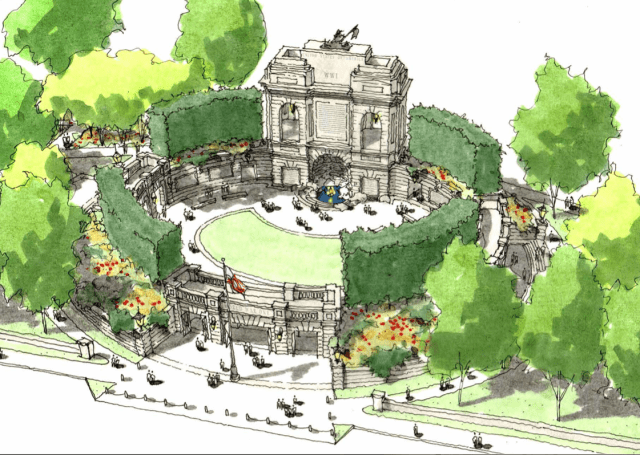
National World War I Memorial competition entry by Kimmel Studio, Annapolis. (Devin Kimmel)

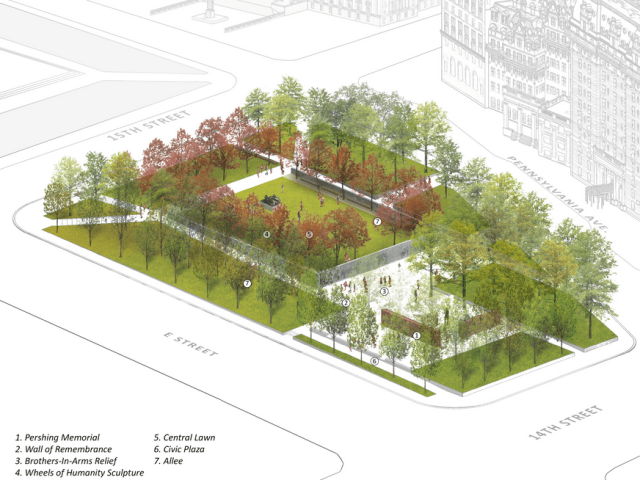
George Weigel, the religious philosopher, replays the sad saga of the proposed memorial for Dwight Eisenhower in his essay “Ike Memorial No-Brainer,” from the National Review. Weigel urges Congress to dump Frank Gehry’s “Memorial To Myself” design that has already enriched Gehry by $16 million in federal funds and promises to top out at $150 million if this farce continues. Weigel suggests holding a new competition and mentions the recent World War I memorial competition that called for a budget under $25 million. It will rise on what is now Pershing Park, near the White House. Weigel notes that the memorial is “now being built,” but further investiga- tion suggests that construction won’t begin until Nov. 11, 2018.

Hmm. The image above is not Gehry’s Ike, of course. Nor is it the WWI memorial design that may or may not be under construction (that’s on the bottom). Rather, it is the WWI memorial design that should have won the competition. It holds pride of place atop this post because I wanted to look at it again. It was the better design. Perhaps I am biased because I helped its architect, Devin Kimmel, of Annapolis, write the text for his entry’s Phase II presentation to the judges. Still, I was in love with that design, more so, at least, than I can recall feeling for any other unbuilt building or monument I’ve known, except maybe for the World Trade Center rebuild proposed by the firm of Franck, Lohsen, McCrery in the Autumn 2001 City Journal.

I just read the report of the jury on the Kimmel design. The jurors’ com- plaint, that it was too big, recalls Austrian Emperor Josef II’s complaint that Mozart’s music had “too many notes.” Perhaps, too, the jury, in slyly pooh- poohing the memorial’s classicism, was hinting that a war memorial in the language of a war memorial might be a little too much.

The winning entry by architect Joe Weishaar and sculptor Sabin Howard is not bad. It is a mixture of classical bas-reliefs etched upon stark, one might almost say modernist, walls that elevate a lawn whose center boasts a sculp- ture of a cannon crew aiming what looks too much like a Civil War-era field piece. But it is mainly a park and its role as a memorial hardly leaps out at you. Apparently, that is what the memorial commission had in mind.

Screen Shot 2017-04-04 at 11.33.23 AM.png

Posted in Architecture | Tagged , , , , , | Leave a comment

C. of C.’s new trad degree

Screen Shot 2017-04-02 at 1.29.57 PM.png

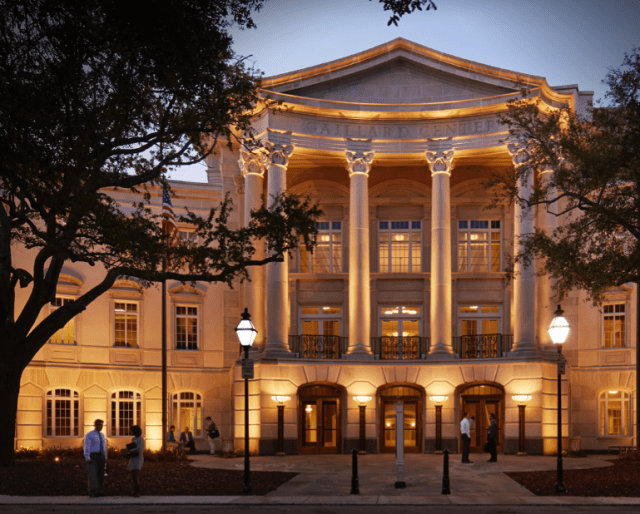
Gaillard Center, in Charleston. (DMSA)

The College of Charleston is to be congratulated for instituting the first classical program of architectural education in the South. Starting this fall, its new master of arts program in Community Planning, Policy and Design will instruct students in progressive traditional design that makes classicism “more culturally diverse, socially inclusive, sustainable, and beautiful.”

You can apply here. The program brochure is here: CPADbrochureWeb

The C. of C.’s new CPAD program joins a recent spate of new classical and traditional coursework within existing university design departments. The University of Colorado, Denver’s College of Architecture and Planning has its new Center for Advanced Research in Traditional Architecture (CARTA), directed by Christine Franck, one of the classical revival’s leading impresa- rios. Catholic University in the District of Columbia has just added a classical concentration to its master’s curriculum in architecture and planning.

Only Notre Dame among universities in the U.S. boasts a full-fledged classical program offering a master’s and doctorate; it ousted its modernist program in a palace coup almost three decades ago. Yale’s program has at least the blessing of diversity, with students able to choose whether to study modern or classical architecture (at least this was the case under recently retired dean Robert A.M. Stern). Several smaller schools, such as Judson University, in Illinois, offer classical coursework in a generally modernist curriculum. Few architecture curricula in America or elsewhere offer even that, or at most schools even architecture history, let alone what the College of Charleston now offers. SCAD, the Savannah College of Architecture and Design, has taken hopeful steps toward offering some classical coursework. The American College of Building Arts, also in Charleston, offers traditional craft courses but not a general education in architecture. And of course the Institute of Classical Architecture & Art and many of its chapters (including the New England chapter) offer certificate courses in classicism. On the down side, a couple of years ago the Boston Architecture College jettisoned its new classical concentration, allegedly for money reasons. Notwithstanding that, perhaps the latest news from Denver, Washington and Charleston heralds the beginning of an expansion of traditional teaching in architectural education. Great! But there is a long way to go.

Since it is my belief that C. of C.’s phrase “progressive traditional” is redun- dant – that classical and traditional architecture have evolved for centuries and are thus naturally, intrinsically progressive – a bit more on what it means from the program’s brochure might be helpful. It states:

Most design schools around the world teach modern architecture, a few tolerate classicism, and only a handful actively promote traditional design. CPAD is counted among the latter, but with a unique and important twist: our students are taught to understand and appreciate traditional design from a global, pluralistic perspective. They know how to draw upon the specific forms and details of local sites, but they are also capable of thoughtfully engaging with any and all traditions when crafting architecture and urbanism to serve diverse populations. Furthermore, our students are encouraged to engage with modern ideas, materials, and aesthetic innovations, to aid them in their quest to make places that are beautiful by classical standards but successful and sustainable by any standard.

That certainly clarifies that progressive traditional isn’t just another way to describe, say, the new Gaillard Center, a concert hall with a highly innovative curved portico just two blocks from the C. of C. campus green and pictured in the CPAD brochure. Designed by David Schwarz, its ornament riffs off African-American motifs. It makes sense to call it progressive traditional.

Seriously, progressive traditional puts a spin on the teaching of the classical tradition, ensuring that its cultural values are as advanced as they are in teaching the modernist tradition. That not only includes diversity, inclusion, sustainability and other values, but even the use of advanced materials in fashioning a classical building. Furthermore, it embraces the influence of design traditions (see below) from around the world and throughout history. Here is a passage on “pluralistic placemaking” from the brochure:

At the core of the progressive traditional philosophy of CPAD is a conviction that all cultures in every part of the globe have made valuable contributions to the realm of design. We celebrate the ennobling truth that all human beings are bound together by abundant commonalities, many of which have been elegantly etched in the history of architecture. We also acknowledge the present and growing need for people to work together and use every tool in the box—whether old or new, and no matter where it was invented—to build a more functional, resilient, and delightful world.

Longstanding Mayor Joseph Riley, recently retired and set to teach in the program, was instrumental in its foundation, as were New Urbanist guru Andrés Duany and architect Schwarz. Nathaniel Robert Walker, a Brown doctoral grad (2014) and assistant professor of architecture historian at C. of C., had the vision and partnered with Prof. Grant Gilmore III, director of its Historic Preservation and Community Planning program, to found the CPAD program along with Grant’s co-director Kendra Stewart, of the Joseph P. Riley, Jr. Center for Livable Communities, and a host of others. Perhaps illustrative of the progress of the so-called New South, using the word progressive in the program’s vision and promotion actually opened, I am told, many otherwise locked political doors in this delicate effort.

The state of South Carolina is also to be congratulated for approving the CPAD program in this day of tight educational budgets. As Duany points out, Charleston should not be importing but exporting architectural expertise. I have no doubt CPAD’s graduates will do great credit to the Palmetto State by beautifying the region, the nation and the world.

CPADbrochureWeb

Screen Shot 2017-04-02 at 2.50.38 PM.png

(Three photos courtesy Nathaniel Walker; lower right, courtesy of Khoury/Vogt Architects)

Posted in Architecture, Architecture Education | Tagged , , , , , , , , , , | 3 Comments

The Huxtable joke’s on us

Screen Shot 2017-04-01 at 4.43.02 PM.png

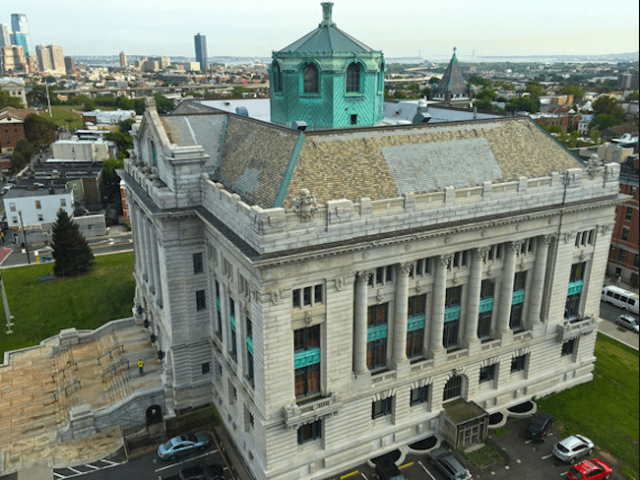
Hudson County Courthouse, in Jersey City, N.J. (Jersey Digs)

It may sound like an April Fool’s joke, but I recently started to read Will They Ever Finish Bruckner Boulevard? Turns out the joke’s on us. The book’s author, the late Ada Louise Huxtable, was, as most readers of this blog are probably aware, the über-influential architecture critic for 19 years at the New York Times. Daniel Patrick Moynihan’s preface encouraged me to hope that Huxtable perhaps was not as bad as I’d long thought. He wrote:

Twentieth century America has seen a steady and persistent decline in the visual and emotional power of its public buildings, and this has been accompanied by a not less persistent decline in the authority of the public order. This many of us know, but only Huxtable could capture the process in the precise moment of transmutation: At the moment the judges left the marble colonnaded chambers of the turn-of-the-century Hudson County Courthouse for new, functional, efficient modern headquarters next door. Right-thinking Americans will have seen this as a long-overdue disengagement with a corrupt and archaic past for a hopeful and enlightened future. Not Huxtable: She alone reports how much has been lost and what little has been gained.

Oh? That’s really not quite what I would have expected from Huxtable. So I turned to her 1966 column “Hudson County Courthouse: What Ever Happened to the Majesty of the Law?”

No one wants a circa 1910, solid Maine granite building with bronze lanterns and crestings and a four-story interior rotunda of pearl-gray marble, opening through all floors to a central dome, embellished by murals and surrounded by polished Italian green marble Ionic columns.

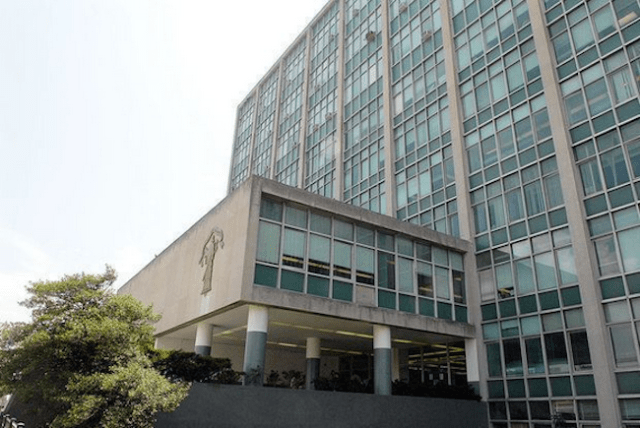
Of course not! Who would want one of those? The mayor of Jersey City refused to buy the building from the county for one dollar, saying he “had no need for a ceremonial city hall.” But Huxtable condemns the utilitarian new Hudson County Courthouse, mostly by comparing its modernist tediums with the graces of the old building. “So much for the dignity of the insti- tutions of man,” she intones. Is this the real Ada Louise Huxtable?

No. It’s too good to be true. The real Huxtable is the one who describes the new Lincoln Center as having, with its “fussy” colonnades, “defaulted as contemporary architecture and design.” After her fusillade, I almost wanted to like the place myself. The real Ada Louise is the one who, in “Sometimes We Do It Right,” describes plopping a tower of “satin-smooth aluminum and glass” – 140 Broadway, with its Noguchi cube sculpture – into a classical setting. This blotch is how to “do it right”? Its “skyscraper wall reduced to gossamer minimums of shining, thin material hung on a frame of extra- ordinary strength through superb contemporary technology”? This created “one of the most magnificent examples of twentieth-century urbanism anywhere in the world”?

Alas, that is the Huxtable with whom we are familiar. But what about the last column in the book, “Old Town Blues,” about tiny St. Paul de Vence, in France? I thought she must be pulling some sort of inverted April Fool’s joke, only pretending to mock those who would preserve and protect the town’s ancient beauty and heritage. But she’s serious. She is actually mocking the American-style urban renewers that the French rejected for so long. She writes: “Funny people, the French. They must be doing something right. Or could we be doing something wrong? Funny place, the world of the absurd.”

“The World of the Absurd” is the title of the book’s first column. And the world of the absurd is what we have today: beauty and heritage under attack everywhere, even in rural France. And for all too long it was Huxtable herself leading the parade. There are columns in this first collection of her Times criticism that might fool one into thinking she was on the side of the angels. For example, she attacks the proposed (and eventually canceled) Lower Manhattan Expressway – though without even mentioning Jane Jacobs, its leading critic, who is not even listed in the index). Yet most of the columns serve to correct any such false hope. Huxtable considered herself a critic of the conventional wisdom, but she was in fact its tribune, cheerleading for modern architecture at the height of its influence. In her introduction, she claims to feel “no wish or need to take back a word I’ve written here.” Since the few good words fail to cancel out the many bad words, it is too bad we can’t take back her whole career.

Screen Shot 2017-04-01 at 4.39.26 PM.png

New “courthouse” next door for which old courthouse was abandoned. (NJ.com)

Posted in Architecture | Tagged , , , , , | 2 Comments

Gallagher: “If Venice Dies”

Screen Shot 2017-03-31 at 1.04.22 PM.png

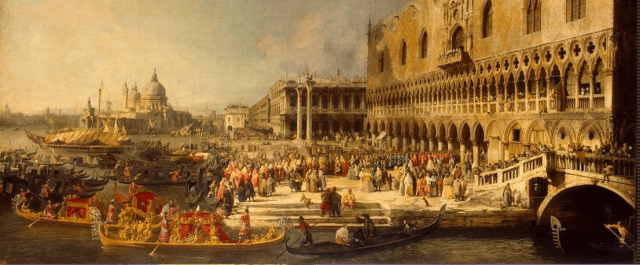
Canaletto, “Reception of the French Ambassador” (1726), Hermitage Museum, St. Petersburg. (TNC)

Mary Campbell Gallagher, founder of the International Coalition for the Preservation of Paris, has written a review of Salvadore Settis’s If Venice Dies for The New Criterion. Here is a direct link to her fine review, elegantly titled “La Serenissima” no more?” Below are my further remarks on Settis’s book in honor of its having now been reviewed by Gallagher.

***

“We must all hang together or, most assuredly, we shall all hang separately.” Benjamin Franklin’s revolutionary bon mot serves as excellent advice for great historical cities as well as for citizens challenging authority. They are engaged in a revolution – really, a counterrevolution – against worldwide urban trends that have the survival of historical cities in their crosshairs.

Venice and Paris are chief among those great old cities under siege, so it is appropriate that Gallagher, who is fighting to save Paris, praises Settis’s book If Venice Dies, published last year by New Vessel Press. Her focus is on many of the economic challenges facing Venice and other old cities. My own focus in “Review: ‘If Venice Dies,’” which posted last October, is more aesthetic, more design oriented, more focused on Settis’s idea that a city has a soul. My conclusion was that the greatest enemy of Venice’s soul, to its character etched by human behavior in its appearance, is modern architecture.

And so it was unfortunate that Settis did not address the most obvious and by far simplest answer to the plight of cities like Venice and Paris. This is to build more architecture that reflects that soul, that builds upon and strength- ens that character. Far easier to break from the recent past and build in a manner that revives the evolution of centuries than to try to solve the problems they face that have nothing to do with design. New traditional architecture in Venice would strengthen its beauty and its will to fight modernist incursions. Likewise, building in historically appropriate ver- naculars globally would reduce the pressure of tourism on Venice, etc., by adding new places that people love, so that our desire for beauty does not force us to stuff ourselves, on holiday, into the few cities that still have it.

Design may not be a sufficient answer to the problems facing Venice and its besieged brethren, but it is easier to change a design strategy than to change existing economic, political and social conditions. New traditional architec- ture could thus make it easier to solve the many other far more complex and politically difficult problems such cities face.

Gallagher considers Settis’s account of those more complex problems and how they might be addressed. But her review also cites an unsettling argument from Settis’s powerful polemic. She writes:

In a bold analysis, resting on his deep knowledge of the history of architecture, Settis says that the aestheticization of architecture has killed ethics. Aesthetics legitimizes real estate speculation and has become a mere market mechanism in the pursuit of profit.

Perhaps. But that makes sense only if by “aestheticization” Settis means using modernist design fads as an excuse to break away from historic character so as to profit by modernism’s gigantism and el-cheapo materials. “Aestheticization” really ought to refer to the opposite – to the prioritization of civic beauty, or “soul,” over the profit motive. It is difficult to imagine that Settis would be against that.

Gallagher urges UNESCO to place Venice on the list of World Heritage in Danger. I agree, as I am sure Settis would as well. If the world bureaucracy can help Venice’s citizens and government fight off powerful economic elites, such a designation can be vital. Among the most powerful elites is the mod- ernist design establishment. If it can be brought to heel in Venice, perhaps it can be neutralized or displaced elsewhere. If so, the entire world will benefit.

Posted in Architecture, Books and Culture | Tagged , , , , , , | Leave a comment

Postmodernist Edwardians

Screen Shot 2017-03-30 at 12.19.37 PM.png

Kristen Richards, the founder and editor of the indispensable ArchNewsNow, sent me the other day a piece she said would interest me. Well, that was the understatement of the week. “Understanding British Postmodernism (Hint: It’s Not What You Thought),” by Timothy Brittain-Catlin in ArchDaily, was almost like me talking to myself.

Since I’m not British, that is odd. But I’ve always had cranky thoughts about American postmodernism that track with the “It’s Not What You Thought” part of Brittain-Catlin’s article. He doesn’t think that British postmodernism is “about Charles Jencks, or about Robert Venturi. Nor is it about being the cheap British imitation of what the expensive Americans were doing. Look- ing back, it was a magnificent Edwardian revival.”

Likewise, I’ve never thought much of the postmodernism expressed by Venturi or most of his followers, except for its challenge to modernism. As a challenge to modernist orthodoxy it was on target and powerful; but as a movement it wimped out, satisfying its “revolutionary” urges by lamely plopping cartoon classical details on modernist forms, while modernism responded by twisting itself, vaulting from “strength” to “strength” by valuing absurdity of form over purity of line. But to the extent that post- modernism did open a crack in the door for a few architects interested in a real classical revival, it, too, owed little to Venturi or Jencks.

The architects that Brittain-Catlin identifies as the Edwardian Revival – John Melvin, Richard Reid and others – are excellent. And yet when you look at the buildings that inspired them, there is at least a slight falling-off from the non-neo Edwardian architecture. Almost any challenge to orthodoxy, in this case the modernist establishment in Britain, usually pays some tribute in the form of timidity. But the original buildings were extraordinarily exuberant.

What?! Exuberant Edwardianism? Isn’t that a contradiction in terms, as difficult to imagine as libertine Victorianism? Well, this is what we are supposed to think or at least what mod-symp architectural critics and historians have tried to teach us to think.

Referring to the architect Piers Gough’s comments on the Edwardians, Brittain-Catlin writes:

Those architects were enormously inventive – as Gough said, they would vary the fenestration on every floor; they were built well at a time when quality building was valued. Yet you could recognise easily the features on them that spoke to everyone. [Critic Trevor] Garnham’s hero W.R. Lethaby knew that if the ornamentation of a building reaches back in time to distant, symbolic things, everyone will somehow understand it, however complicated it is, and like it the more for it.

Isn’t that what architecture and architects are supposed to do? Brittain-Catlin could have been channeling some of Robert Adam’s thoughts on the classical language’s parallel with the English language, or any tongue that has evolved down the centuries, as classicism has but modernism hasn’t; indeed, modern architecture has not even sought to forge a comprehensible language – quite the reverse. (Preliminary to a broader review of Adam’s new book Classical Columns, I have recently posted a few quotes from it here and here. I earlier quoted at length from his essay “How to build a skyscraper” after he won this year’s Driehaus Prize. I did not have the book yet but the essay was reprinted in City Journal, available via my post’s link.)

Screen Shot 2017-03-30 at 12.20.07 PM.png

Posted in Architecture | Tagged , , , , , , , , | Leave a comment

Adam on classical language

Screen Shot 2017-03-28 at 6.46.12 PM.png

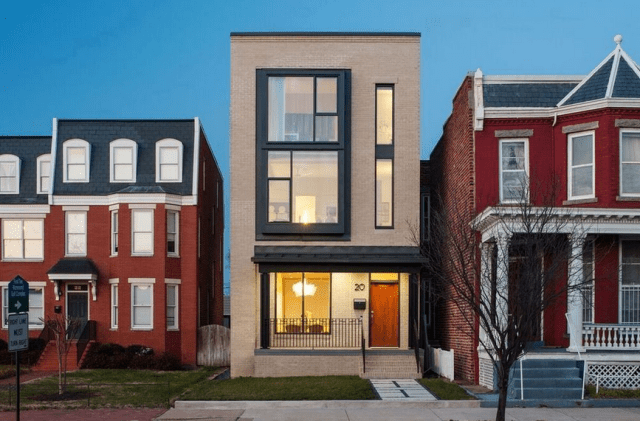
A row of houses with a language difficulty. (modernrichmondtour.com)

Robert Adam in his book Classic Columns addresses a topic many have addressed but at far greater depth of perception.  Few can fail to perceive that classical architecture is a language and that it evolves slowly just as the English language does, and that it has been doing so for many centuries. The classical “language” has been out there for us to hear and read for centuries, and we have learned it just as well as we have learned our English, our Ger- man, our Chinese, or what have you. The word house means house, with all its manifold variations, and has done so for centuries. Likewise church, bank, town hall, barn and office building. And the actual house, written in the brick, wood, stone and glass of classical architecture (or in a traditional or vernacular architecture descended from classical), also looks like a house, no less than what you think when you hear or read the word house.

Adam’s essay, “Classical architecture is the architecture of today,” expresses the idea in his more stately, exemplary way, and reaches the point at which we have been for the past half a century, where the classical language now has a rival in the “modernist” language. Referring to an architect’s practice of “quoting” bits of well-known architecture from the past, he writes:

Living languages are not scrapped and reinvented every fifty years. We may express ourselves a little differently from Charles II or Nicholas Hawksmoor but we can use their expressions today because what they were is part of what we are. Our civilisation and means of expression are modern but they carry their past with them and we are the richer for it.

We are not limited to the use of the past. We can use the latest technology. It is no longer necessary to learn a special language to use a computer, really advanced technology does what we want it to do. As new technology becomes – to use the buzz phrase – “user friendly,” we can, quite literally, make it speak our language. Voice simulators can quote Jane Austen and injection moulding can quote John Soane.

There are, of course, dangers in these analogies. No one orders drinks in the language of architecture or discusses the weather with cornices and capitals. It is easier to check on whether you are being understood in a spoken language and English has the great advantage that there has been no cultural elite trying to destroy it for thirty years.

This was written as a speech delivered in 1985 at a debate at the Royal Institute of British Architects – with the Prince of Wales in the audience. Adam continues:

Architecture is rather different. There has been a cultural elite trying to change its language. Speaking their own made-up architectural language, they think we all ought to learn it. But why should we? We’re fine the way we are. Put another way, imagine a game of charades where the other players keep saying “no”: they can’t guess what you are trying to be. Eventually you lose. Some people, unfortunately, never admit they’ve lost.

As the Modern Movement sinks under an accelerating barrage of “no’s” we should be thankful that the full apparatus of the living Classical language has survived. Perhaps our profession will now realise that nobody but architects ever bothered to learn their language and will take up Classicism, the true International Style.

Alas, the over-optimism of the 1980s! I was in London when Prince Charles’s handlers were still nervous about the royal family’s identity in the aftermath of Princess Diana’s death. Because his recent declarations about architecture had been so controversial (“carbuncle” and all that), he was forced (not sure that’s the right word) to choose a modernist to run his school of architecture, just to sort of calm things a bit. Charles had had the modernists on the run, I think, but then he toned it down and the modernists recovered and went on to more and more ridiculous forms of architecture – more and more unlikely to ever become a language that anyone could really understand.

The muzzling of the Prince of Wales was not the only explanation for the modernist revival, but to me it seems to have been a big part of the whole picture. Maybe Robert Adam will bring up the topic later in his book. Or maybe not. If he does, I will report back.

Posted in Architecture, Books and Culture | Tagged , , , , , , | 2 Comments

Minutes in lovely Malta

Screen Shot 2017-03-27 at 2.40.08 PM.png

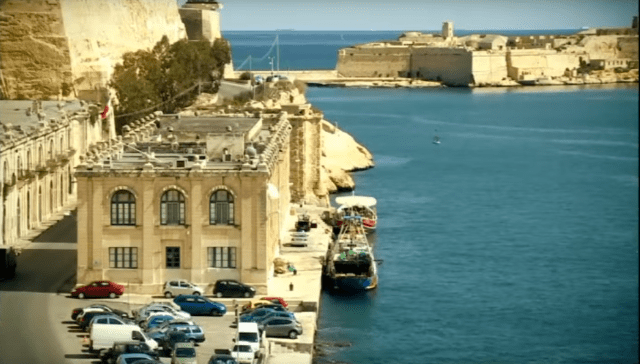
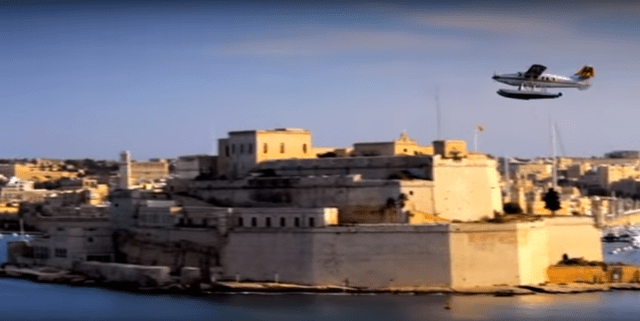
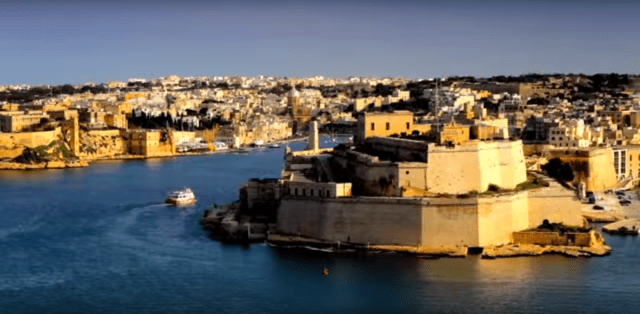
Fortifications guard the harbor as they did during the Great Siege of Malta in 1565.

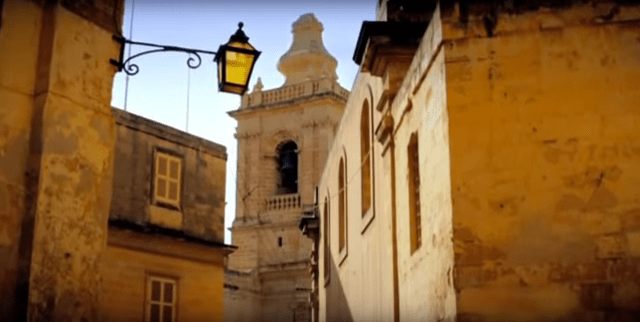
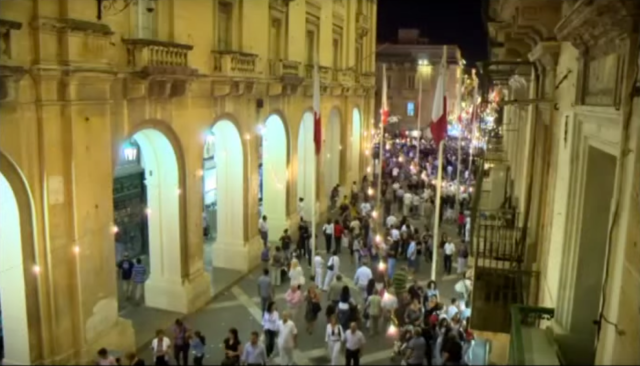
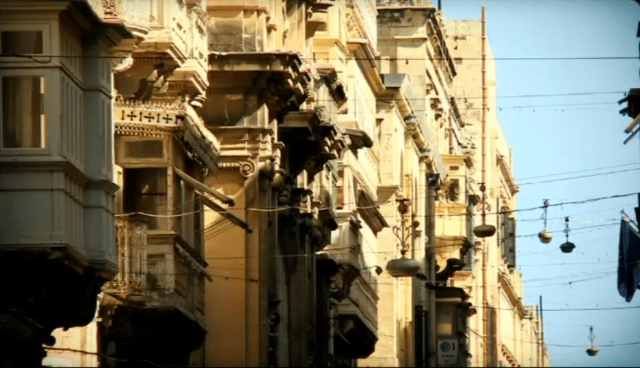
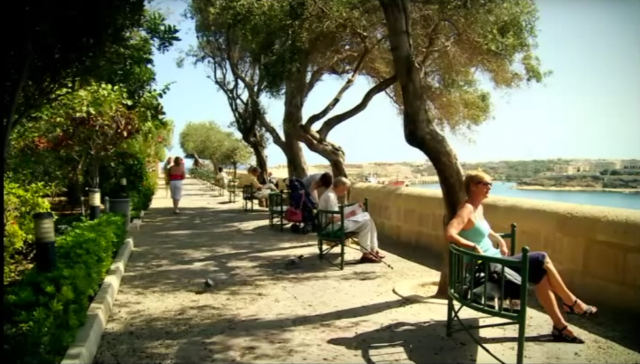
When I feel like writing a post but don’t have much time I fly to YouTube and its endless city videos. Today, Valletta, the capital of Malta, the island nation just south of Sicily. I visited in the late 1990s when former Providence mayor Joseph Paolino was our ambassador. I found a hotel room with twin balconies overlooking the capital and the harbor, where in 1565 an invasion by an army of 48,000 under the Ottoman Empire’s Suleiman the Magnificant was, after much catapulting of severed heads, repulsed by some 800 Knights Hospitaller and 7,000 Maltese. Today, although like Venice under an assault of mammoth cruise ships, the city of Valletta could not be more beautiful.

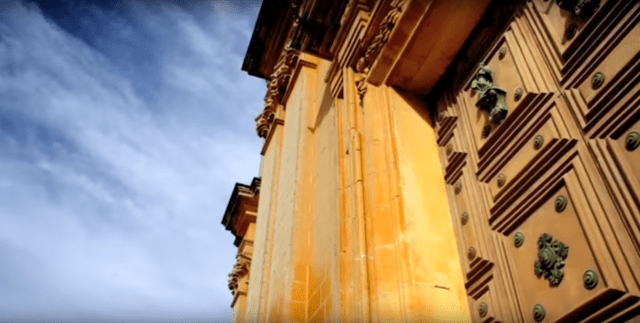
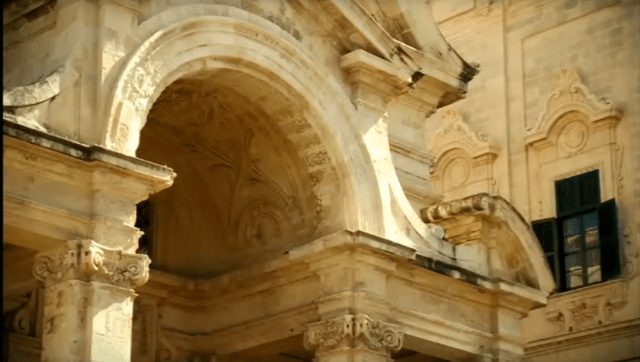
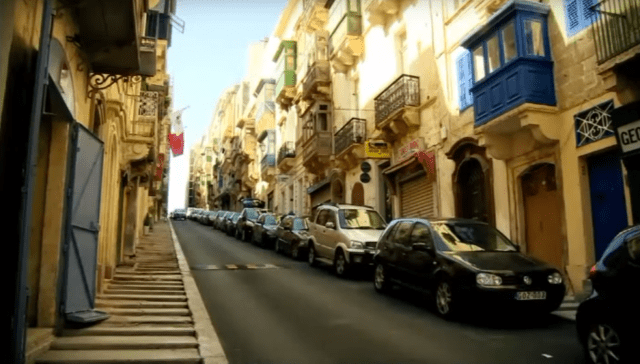
Before I left for Malta, my friend and former Journal colleague Irving Shel- don described the island as “Baroque from stem to stern,” and it certainly was. The two videos here, one of just over four minutes and one of less than three minutes, do a fairly good job of capturing its beauty with a minimum of videographic trickster conceits. Going to YouTube to find a good video of a place is tough because of the great variety of choices. Many feature obnox- ious narrators or unlistenable music in addition to bad photography, but you can’t know for sure without cranking them up. These two are nice. The ima- ges, above and below, are all screenshots from either video. Neither, how- ever, spend enough time on the fortifications from which the Knights repelled the Turks. Oh well.

The longer video is here. The shorter video is here. They are both products of Malta’s tourism bureau, at www.visitmalta.com.

Screen Shot 2017-03-27 at 3.19.53 PM.png

Screen Shot 2017-03-27 at 3.16.40 PM.png

Screen Shot 2017-03-27 at 3.18.47 PM.png

Screen Shot 2017-03-27 at 3.20.59 PM.png

Screen Shot 2017-03-27 at 2.37.00 PM.png

Screen Shot 2017-03-27 at 2.38.10 PM.png

Screen Shot 2017-03-27 at 2.41.29 PM.png

Screen Shot 2017-03-27 at 2.37.41 PM.png

Screen Shot 2017-03-27 at 2.40.32 PM.png

Posted in Architecture, Video | Tagged , , , , , , | Leave a comment