Market town, New Zealand

Screen Shot 2017-06-18 at 1.15.39 PM.png

Illustration of a market town from the Market Towns NZ website.

Not so long ago, I wrote a blog post and received a comment in reply from “leveveg.” (I am not sure that’s his name, or even whether he’s a he.) Anyway, I visited his Norway-based website, dedicated to sensible urbanism, and its impressive page Naturkonservativ: Resilience after modernism. Although the quarter of my blood that is Norwegian has not endowed me with the least fluency in that language, the illustrations clearly signaled congeniality, or at least congeniality to those who favor sensible urbanism.

Now, in the wake of my recent blog posts on gentrification, he has sent me a string of comments (in one of which he kindly corrected my misdirected link to my own post). He included a link to another website, Market Towns NZ, this one originating in New Zealand (hence in English), that also partakes of sensible urbanism. I have in turn linked this post to a part of that website called “Beautiful Architecture,” from which readers should navigate back to the site’s main page, “Development Patterns: Reinventing local planning for seven generations,” and thence to other segments. Scroll down toward the bottom of the main page, for example, to learn the principles behind the market-town concept (which hails from the Europe of earlier centuries).

Market Towns NZ rolls out a vision of sustainable development for the 21st century that is far, far broader than my own narrow focus on architecture’s style wars. It seems to be simpatico with the New Urbanism in America. Its economic prescription is as follows:

The Internet and its converging technologies change everything, including how we design communities. First the net was email, then social networking and e-commerce. Next is the Internet of things, [such as] 3D printing. These technologies make global markets local. But as humans we still need face-to-face. Social networks are not enough. We still need real society.

To get there requires a new development pattern based on a very old one: the historic market town, a legal term originating in the medieval period for a settlement that has the right to host markets, as distinguished from a village or a city. It is called a 21st century market town, whose economy is based on fiber-optic broadband, not the ancient economy of surrounding farms.

Not that there’s anything wrong with surrounding farms, whose existence outside market towns is everywhere on the Market Towns NZ site.

Especially interesting to me, in addition to its acknowledgment of the importance of beauty and tradition’s role in its creation, is that a market town’s family would store its car, if it had one, outside of the town’s walls – yes, walls (good fences make good neighbors). I spent five years living without a car in Providence, and discovered that getting around was much easier than I’d expected, and a lot more interesting. Of course, the population of Providence is not the 10,000 or fewer that is supposedly optimal for a market town, wherein all destinations are walkable. (Providence seems to be expanding its center – at any rate what it defines as its center – putting its famous walkability at risk.)

Not sure where I’m going in this post. Its aim is merely to introduce my readers, by way of thanking Leveveg, to this remarkable urbanist website from New Zealand.

[Update: Leveveg left another comment, informing me of his name, Øyvind Holmstad, and of Market Town NZ’s founder in New Zealand, Claude Lewenz, and of a sister blog in the United States, Piscataquis Village Project, in Maine. Holmstad says that leveveg means “way of life” in Norwegian.]

Screen Shot 2017-06-18 at 1.16.05 PM.png

The Placa de la Constitucio, in Alcudia, Mallorca. (Market Towns NZ)
Posted in Architecture, Urbanism and planning | Tagged , , , , | 3 Comments

Antidote to gentrification

Screen Shot 2017-06-17 at 2.49.32 PM.png

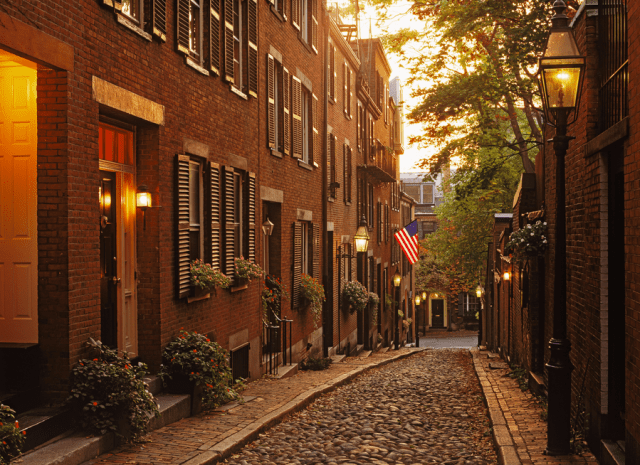
Beacon Hill, in Boston. (Otis and Ahearn)
The other day, in “Mehaffy on ‘gentrification,” I posted on that sensitive subject, directing readers’ attention to a post by urbanist Michael Mehaffy, “Beware of Voodoo Urbanism,” on the blog Livable Portland. In a comment on my post, Steven Semes, the author of The Future of the Past and a leading architectural historian and preservationist at Notre Dame, described a solution to problems raised by gentrification. He wrote:

David, I have a contrarian theory that gentrification and mass tourism are predictable effects of modernist architecture. Gentrification doesn’t happen because historic preservation [limits] the supply of new housing. Rather it happens because modernist architecture and urbanism limit the supply of the kinds of environments people actually want. … If people everywhere could live in beautiful walkable neighborhoods, they wouldn’t have to displace poor people to find them, or spend millions of dollars going to Europe to find them.

This, in a nutshell, is the argument for new traditional architecture. Historic cities that have maintained their beauty through preservation are expensive because people want to live there. In too many historic cities, especially in America, preservation has limited itself to protecting a building here or there, with few if any historic neighborhoods able to thwart the invasion of modern architecture. Other cities are too recent to have much in the way of beautiful historic neighborhoods. What few they have are either way out of reach or so sunk in poverty that gentrification dare not try to take hold. (Remember that many of the people who benefit from gentrification are poor who happen to own and thus can sell old, dilapidated houses.)

Build more – and eventually many more – neighborhoods people like and the pressure on old houses in poor neighborhoods would decrease, while the prices of housing would not rise so fast in historic districts gentrified long before that word became a pejorative for change in cities.

Semes adds that historic cities around the world suffer from mass tourism because so many people seek to vacation in places that protect the beauty lost – or banned – in their own neighborhoods here in America. Venice is a good example. In my 2016 review of If Venice Dies, by Salvatore Settis, I wrote:

Historic cities are at risk because in the middle of the last century it became unfashionable to build beautiful cities that people can love. In many places, it became illegal. To the extent that more cities, towns and communities that people can love are built, to that extent the pressure on old historic cities – the surviving preserves of such admirable civic qualities – would be lifted.

Unfortunately, like many professional preservationists, Settis does not seem to agree. He understands that modern architecture threatens the “soul” of any historic city, but refrains from proposing new infill, neighborhoods or entire cities designed in traditional styles. Don’t assume that requires cities “step backwards” or become “museums.” New old styles can evolve into the future as if their interruption by modern architecture never happened. Lift the many legal and regulatory obstacles to new traditional architecture and – voila! – the problems of gentrification and of mass tourism will evaporate in relatively short order.

Posted in Architecture, Preservation | Tagged , , , , , , , | Leave a comment

Tower on State House lawn

Screen Shot 2017-06-15 at 12.54.02 PM.png

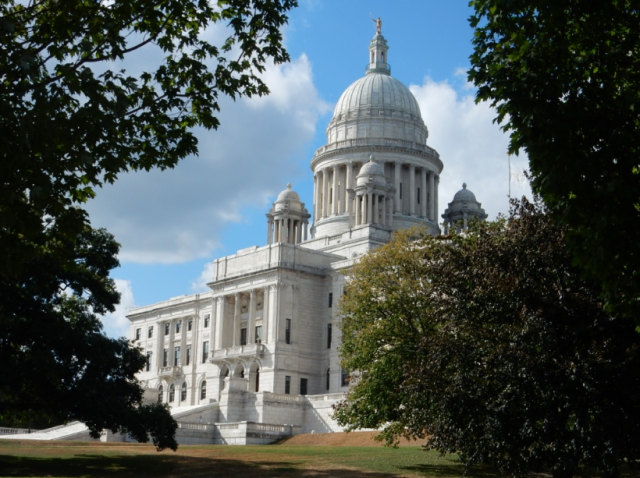
Rhode Island State House. (David Brussat)

And for no good reason.

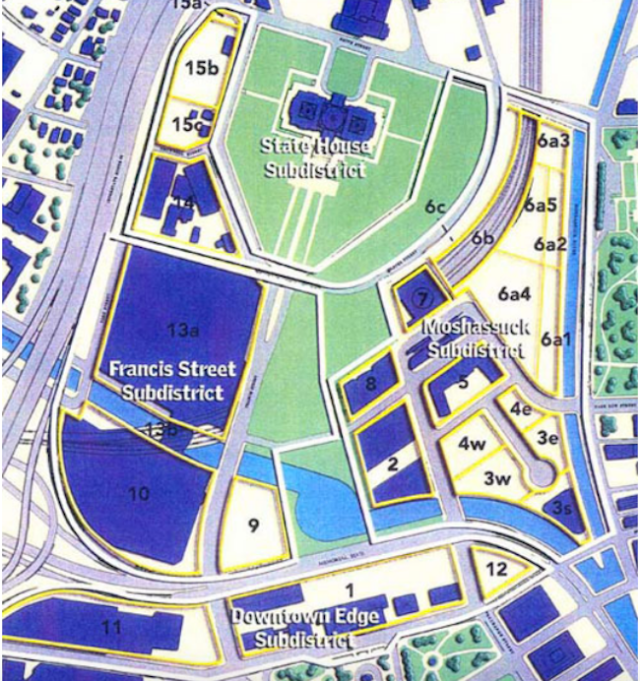
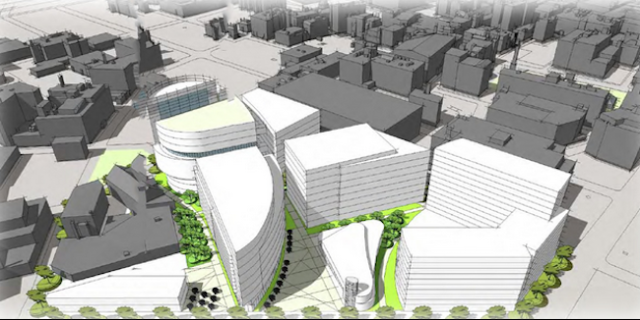
Grok this, fellow Rhode Islanders: The state wants to place a new transit hub along with a tower on land near the State House, possibly right on the State House lawn. The original proposed site for this complex, now rejected as too expensive, was over the railroad tracks directly north of Providence Station, and hence equally obnoxious to the state’s most revered landmark. Some of the newly revealed alternative sites, such as on the parking lot that used to be part of the State House lawn, are even closer to the capitol, designed by Charles Follen McKim and opened in 1901. The state’s preferred site, at the northwest corner of Station Park (the grassy land west of the station) at Gaspee and Francis streets, would violate the Capital Center Commisson’s supposedly inviolate dedication to that land as open space.

The Providence Journal story “Part of R.I. State House lawn eyed for transit hub,” by Patrick Anderson, lays out the facts minus the outrage.

The proposed hub complex and tower would directly compete with the State House. No site thus far suggested, either on its lawn or near the station, would fail to block one or another view corridor through Capital Center to the State House. Depending on its height and design, the complex with its tower would either overwhelm the State House or diminish its dominant place on Smith Hill – or both.

And what for? To create a new subsidiary transit hub to better connect the train station to the main hub at Kennedy Plaza. Voters approved a multi-million dollar bond issue for the new hub without being told that it would include a tower to compete with the State House.

The desire to make it easier for riders debarking in Kennedy Plaza to reach Providence Station and vice versa is valid. But a new hub complex is an outrageously costly way to accomplish the goal. Instead, the Rhode Island Public Transit Authority should institute a minibus loop between the two destinations. That would cost several thousand dollars a year, and would entirely accomplish RIPTA’s goal.

The project has already failed as an economic development tool. That is proved by the fact that the state now sees state offices as a likely occupant of the tower, rather than a private, lease-paying tenant, which the Department of Transportation has as yet been unable to identify. Proponents of the supposed public/private hub complex describe it as a perfect example of transit-oriented design – development around bus, train and light rail stops. I think they are mistaken. TOD is not normally meant to trash state icons.

It appears that RIDOT now describes its goal for Kennedy Plaza in terms that seem to suggest removing the bus nexus at Kennedy Plaza entirely to the area of the train station. If so, then voters were hoodwinked by the state’s bond rhetoric, which originally foresaw a sub-hub at the train station still subservient to the main Kennedy Plaza hub.

This entire proposal needs to be given a second look. That should occupy officials and the legislature for about half an hour. Nix it now.

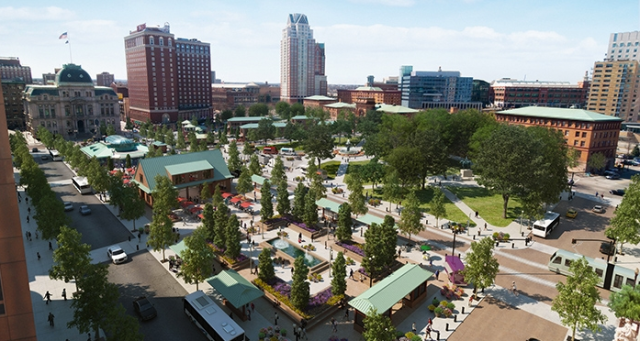
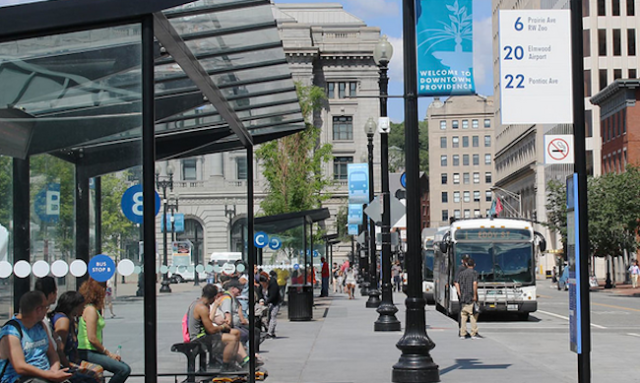
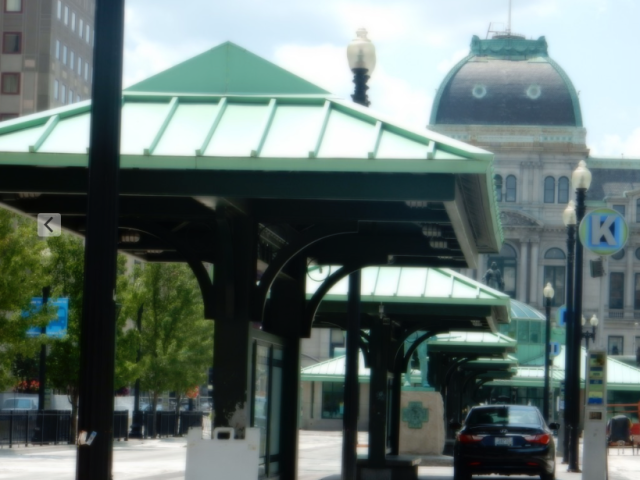
As for the $35 million bond approved in 2014, it should go to deficit reduction. Or maybe it should go to advancing the originally proposed Kennedy Plaza renovation imagined by the Downtown Providence Parks Conservancy and designed by Union Studio. Yet that design seems to have disappeared (“frogmarched,” as I warned in 2014) from project pages on the RIPTA and Conservancy websites. If I am mistaken and the Union Studio design remains part of Kennedy Plaza’s future, it should include the removal of the sterile bus waiting kiosks erected in 2015 and their replacement by the elegant Art Nouveau kiosks removed to make way for the ugly new ones

Screen Shot 2017-06-15 at 12.04.27 PM.png

Originally proposed Kennedy Plaza renovation. (Union Studio)

Screen Shot 2017-06-15 at 11.13.05 AM.png

New bus kiosks after 2015 Kennedy Plaza renovation. (Greater City Providence)

Screen Shot 2017-06-15 at 11.19.47 AM.png

Former bus kiosks that should be returned. (Photo by David Brussat)

Screen Shot 2017-06-15 at 11.17.47 AM.png

Proposed bus hub site on State House lawn half-way between State House and Waterplace. (CCC)

Posted in Architecture, Development, Providence | Tagged , , , , , , , , | 2 Comments

Mehaffy on “gentrification”

Screen Shot 2017-06-14 at 2.27.19 PM.png

Proposed research campus in I-195 innovation corridor. (Greater City Providence)

All change is bad. Take gentrification. Gentrification is when rich people suddenly take a liking to a poor part of town, move in, raise property values, and force longtime residents – that is, the poor – to move out.

Right? No, that’s not what gentrification is. It is the pejorative term for change. All cities change, and change sometimes creates problems such as making it harder for poor people to afford to live in their neighborhoods. But cities and their neighborhoods always evolve, always have and always will. How to soften its impact on the most vulnerable is the big question.

Michael Mehaffy takes up the topic of gentrification in “Beware of Voodoo Urbanism” on the blog Livable Portland. His urbanist think tank, the Sustasis Foundation, is headquartered in Portland.

Part of his post focuses on the tendency of some people, such as urbanist Edward Glaeser, to chide Jane Jacobs for the fact that after she helped rescue Greenwich Village in the 1960s, property values rose, causing demographic shifts that promoted greater blandness. Glaeser and others claim that this history challenges the wisdom of Jacobs’s thinking about cities, such as her emphasis on the vital importance of old buildings. Old buildings provide affordable space for entrepreneurs who can’t afford to build or lease big new glass boxes for their start-ups. Mehaffy writes:

But Glaeser and other critics seem to miss Jacobs’s point. For Jacobs, the answer to gentrification and affordability is not an over-concentration of new (often even more expensive) houses in the core. Rather, we need to diversify geographically as well as in other ways. If Greenwich Village is over-gentrifying, it’s probably time to re-focus on Brooklyn, and provide more jobs and opportunities for its more depressed neighborhoods. If those start to over-heat, it’s time to focus on the Bronx, or Queens. Or Cleveland, Detroit, Baltimore, New Orleans.

Providence has been trying to channel the energy of redevelopment quite well over the past several decades, promoting revitalization not just downtown but in neighborhoods such as West Broadway, South Providence and the Jewelry District. But Mehaffy also urges cities that create large new development districts to divide them up into smaller development parcels. Providence has done quite poorly at this, and the results are clear in Capital Center and the nascent I-195 corridor, the latter with its innovation district of proposed large glassy unalluring research boxes.

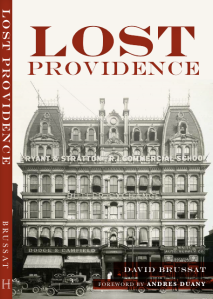
My upcoming book Lost Providence, due out Aug. 28, offers a sense of the kind of churning that affects evolving cities, whether in neighborhoods or downtowns. I quoted an old column of mine from the Providence Journal, “In defense of gentrification,” written in 2003 about decisions the city made on the way to its current promising revitalization:

One can no more expect landlords to neglect buildings in perpetuity as welfare programs for struggling artists or buck-a-beer joints than one can expect those same tenants to embrace building improvements that will raise their rents. They whistle past the graveyard as the gathering clouds of renaissance darken, praying that their landlord fixes up all his other buildings before getting around to theirs.

There is a certain vitality to dark streets empty most nights until drunks stumble in a rowdy mass from clubs at 1 a.m. But it will be a sad day if City Hall ever determines that the preservation of this vitality should be the urban policy of Providence.

Fortunately for Providence, that policy did not prevail. Gentrification is a word that dangerously oversimplifies that realities of change in cities. Mehaffy’s post is an excellent antidote to that.

Posted in Architecture, Development, Providence | Tagged , , , , , , , , | 9 Comments

As the WaterFire turns

Screen Shot 2017-06-13 at 11.13.35 AM.png

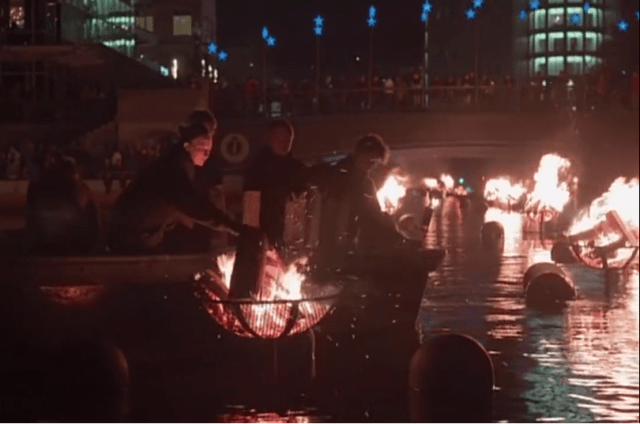
Volunteers stoke WaterFire braziers. (Screenshot from PBS episode)

Another day, another accolade for WaterFire Providence. Yesterday, PBS Channel 36 broadcast a segment on WaterFire for its show “Weekends with Yankee,” a 13-part series showcasing visits by plane, train, boat and foot to various exciting places around New England. The segment of this week’s episode called “Land and Water” features extensive footage of the event that, every couple of weeks or so in the warmer months, has enlivened downtown Providence now for 23 years. The scenes of WaterFire are mingled with the dynamic analysis of his work of art by its creator, Barnaby Evans. The segment runs more than eight minutes.

Screen Shot 2017-06-13 at 10.59.14 AM.png

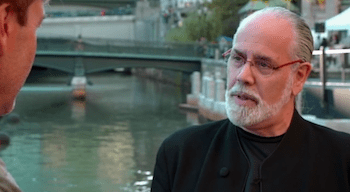
Barnaby Evans (r.) and Richard Wiese.

WaterFire is one of the most spectacular things I’ve ever seen.” That is the opening remark of series host Richard Wiese. Evans replies, “From an arts point of view, it was that immersive idea of touching all your senses. You hear it, you see it, you smell it, you taste it. You feel the warmth on your skin.”

“We use this Promethean sense of fire as a symbol of inspiration and culture and civilization as a trope throughout the night,” he adds, as Wiese watches the fires being stoked by black-clad volunteers in black boats. “Fire and water are both symbols of life, and yet they are mutually self-destructive. Water will put fire out. Fire will boil water away to nothing. And these extremes between light and dart, hot and cool, life and death, are what life’s all about.”

“There’s another element here,” continues Evans. “The civic ritual of the fires burns bright when we light them, and then they tone down when they burn out the fuel. And then we have [boats] that come out of the darkness with volunteers, all volunteers on the boats, and each person adds their log to the fire to make the city bright again. And that symbolic statement [is] that by everyone working together to rebuild the city you can turn the city around. And Providence has completely turned around.”

“This is all part of the performance art that goes on here,” observes Wiese as he glances at the crowds past a lovely fire spinner swinging her flames. “And art transforms. You don’t have to speak a certain language to appreciate art, and this is amazing. This is not a theme park. This is a real living, breathing city that happens to be Providence, Rhode Island.”

Wiese’s astonishment may reflect that of most WaterFire virgins. Every other week or so for half a year, people from around the world visit Providence and see WaterFire for the first time. But many Rhode Islanders and most citizens of Providence are long since veterans of this show. I’ve been to scores of them. Evans introduces new features for each event, so as to maintain the interest of jaded locals, but my own addiction to WaterFire resides in the features that are common to each event – the people, the music (especially the opera segments), the smoke, the eerie phantasmagorical scenery along the beautifully re-opened rivers, with their (new!) classical bridges, parks and river walks, lined with places to sit on walls of granite. Some 40,000 come on most evenings, sometimes thrice that number, and over a million yearly.

Shows like this hosted by Wiese for the magazine Yankee spread the word out farther and farther, stoking future crowds for WaterFire and for the Ocean State and its capital city. Here is a trailer for the 2013 documentary “WaterFire: Art & Soul of a City” – about five minutes. This short version shows video from WaterFire Roma!, the performance of WaterFire on the Tiber River. It is very beautiful, but the Tiber is not really an intimate river. In Providence the strength of each event owes much to the cozy feel of our three downtown rivers and the traditional setting created between 1990 and 1996 for the new waterfront, designed by the late Bill Warner.

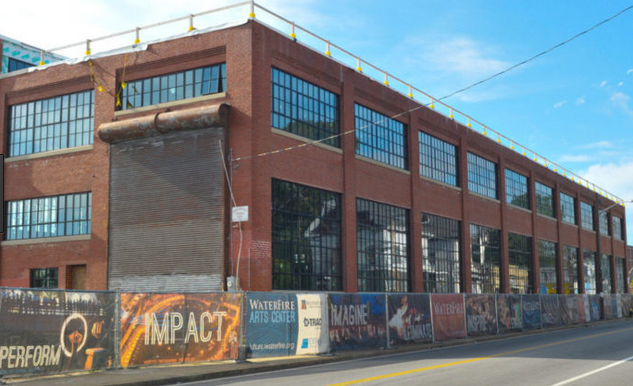
It is understandable that Barnaby Evans seeks to expand his empire globally, but I for one think that only Providence offers a proper setting for one of the world’s great continuing artistic extravaganzas. I will be taking a tour soon of the new WaterFire Arts Center, and will try to locate the strategic planning office in which Barnaby Evans and his co-conspirators plot to export Water- Fire around the world. No, I don’t expect to find it, but maybe you can try during the WFAC’s ribbon-cutting event, which will be at 10:30 a.m. next Monday, June 19. Located at 475 Valley St. in the industrial Valley District of Providence, the building opened in 1929 as a factory owned by U.S. Rubber.

Screen Shot 2017-06-13 at 12.42.50 PM.png

WaterFire Arts Center, in Providence. (Providence Business News)

Posted in Architecture, Art and design, Preservation, Video | Tagged , , , , , , , | Leave a comment

Perils of architecture school

Screen Shot 2017-06-12 at 11.22.26 AM.png

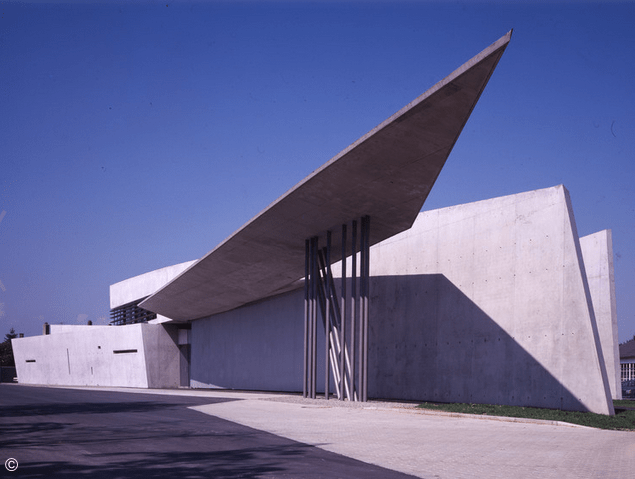
Vitra Fire Station (1993), in Germany. (ArchDaily.com)

Common/Edge is a website about architecture. All of the essays are written well, but many seem to try to have it both ways about the battle over style in architecture. So I’m not quite sure how Prof. Nikos Salingaros managed to get his essay, “What Architectural Education Does to Would-Be Architects,” published here. Its common-sensical viewpoint is far too straightforward and unapologetic to have gotten onto this website without first surviving some sort of fight among its editorial board (if it has one).

(Perhaps I am too hard on Common/Edge, which at least acknowledges that there are two sides in this battle, and listens to both. That is admirable.)

Salingaros, who teaches mathematics and design theory at the University of Texas and schools around the world, believes that architectural education does not strengthen but rather destroys the innate mentality that supports the work that architects do.

One of the things a good essay does is spark thoughts in readers that independently support (or undermine) its thesis. So by way of describing Salingaros’s thinking, I will describe some of the thoughts it sparked as I read it. Readers should click on the link above and read it themselves.

It disconnects them from their own bodies. This strikes me as a reference to the role of architectural education in separating young people from their innate understanding of architecture. All people from near birth onward have a much more intimate experience of architecture than of any other realm of art or design. People experience architecture every hour of every day, inside and outside, awake or in their dreams. This contributes to a relatively sophisticated understanding of building design in the average person, which manifests itself not in an ability to design buildings but in an ability to assess their quality, their functionality, their appearance, etc. This explains why the public, by three or four to one, prefers traditional to modernist buildings. The first goal of architecture school, then, is to destroy students’ innate affection for beauty. (A tangential result has been to undermine unjustly the average person’s confidence in his or her own judgment of buildings – so that nowadays many people feel a sort of peer pressure to say they like architecture they really don’t like.) Hence …

It brainwashes them. Salingaros is referring to students but could also be referring to the broader society. He points to the Bauhaus, the early 20th century German compound that designed the template for architectural learning. “Eventually, the student’s brain is conditioned to believe that abstract, empty forms and surfaces – the building blocks for much of contemporary architecture – are the basis for ‘good’ design.”

This reminded me of the description of a Bauhaus class exercise in Tom Wolfe’s From Bauhaus to Our House (1981): Students are instructed to create a building out of a single sheet of paper. Most seek to achieve some sort of complex origami solution but the teacher declares the “winner” to be the student who folded his page in half and stood his building, a mere tent, upon the table. O! How! Profound!

It reduces spatial ideas to two dimensions. Salingaros writes:

Abstraction loses an enormous amount of information. But it also does something worse: it starves the brain and turns what should be visceral reactions into intellectualized ones. It’s the difference between finding innate beauty (let’s say in a lotus flower or the arching branches of a tree) and being taught or told how to appreciate an acquired taste (like a blank “sculptural” wall).

This reminded me of a passage I had just read this morning in Rising Sun, a suspense novel by Michael Crichton about a murder in a new tower for a Japanese corporation in Los Angeles. Two detectives seek to interview a suspect at a private house party:

[A]lmost everyone was wearing black. But the room itself caught my attention: it was stark white, entirely unadorned. No pictures on the wall. No furniture. Just bare white walls and a bare carpet. The guests looked uncomfortable. They were holding cocktail napkins and drinks, looking around for someplace to put them.

A couple passed us on their way to the dining room. “Rod always knows what to do,” she said.

“Yes,” he said. “So elegantly minimalist. The detail in executing that room. I don’t know how he ever got that paint job. It’s absolutely perfect. Not a brush stroke, not a blemish. A perfect surface.”

“Well, it has to be,” she said. “It’s integral to his whole conception.”

“It’s really quite daring,” the man said.

“Daring?” I said. “What are they talking about? It’s just an empty room.”

Connor smiled. “I call it faux zen. Style without substance.”

It may be hard to credit, but this attitude sums up architecture today, and what is provided in all but a handful of architecture schools.

It privileges image over emotion. Another way to put it: It privileges intellect over intuition. As Salingaros points out, the human brain has evolved over millions of years into a tool for processing information from visual and other senses. The mind sees not just what is there but analyses it instantly according to deep knowledge baked into our DNA. We are feeling creatures, thinking creatures only secondarily. Architecture today denies the validity of feelings and turns reality on its head. This parallels the research of Ann Sussman, author (with Justin Hollander) of Cognitive Architecture (2014). It explains why people who have invested scores of thousands of dollars in architectural education are less genuinely sophisticated in their basic architectural judgment than the average man on the street.

It promotes a kind of “architectural sadism.” Salingaros writes:

Contemporary architecture is obsessed, to the point of arrogance, with “innovation.” But unless you’re trained to admire and revere it for its own sake (something architecture students are routinely taught), aggressive “novelty” often triggers negative reactions from everyone else: alarm, anxiety, even physio-psychological pain.

He urges readers to “remember the poor Vitra firemen, unwitting victims of ‘cutting edge’ architecture.” The reference is to Zaha Hadid’s first completed building, a fire station in Weir am Rhein, Germany, that supposedly used the architect’s abstract meanderings to supply the functional needs of firemen in a fire station. According to Architecture Daily, in “AD Classics: Vitra Fire Station” by Luke Fiederer, Hadid realized that firemen “must remain on constant alert; the design reflects that tension, as well as the potential to burst into action at any given moment.”

Ha ha! So firemen find it useful that their building represent the potential to burst into action at any given moment? That idea proved so useful that the building, completed in 1993, was never used as a fire station but as an exhibit hall. Fortunately, the building also served to “shield the [Vitra factory] campus from its incongruously traditional, vernacular neighbors.” I’m sure the factory complex’s occupants were duly thankful to Zaha for that!

Ha ha ha ha ha ha! Salingaros’s brief discourse on architectural education has his subject dead to rights. Read it here.

Posted in Architecture, Architecture Education | Tagged , , , , , , , , , , | Leave a comment

Shots of d’town living tour

Screen Shot 2017-06-11 at 2.35.28 PM.png

View of downtown Providence from roof terrace of Peerless Building. (Screenshot of video)

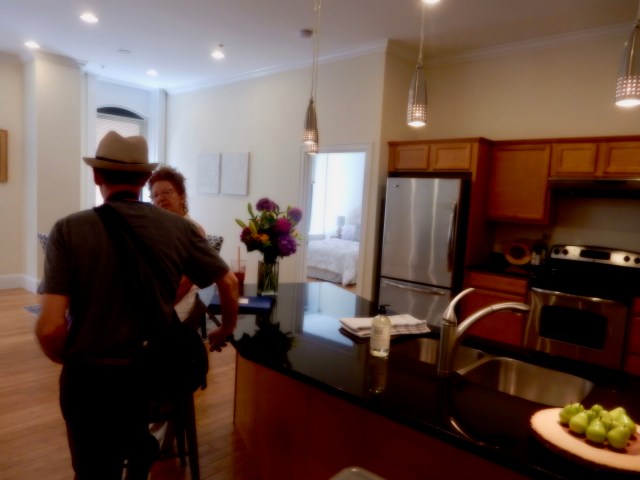
Yesterday’s tour of downtown apartments highlighted just how Providence is ramping up for an influx of new residents with money for relatively high rents. The sheer number of units coming on line now and in the near future suggests both an expanding market for downtown living and an expectation of more. All of the apartments on the tour are rental units. At some point, the market indicators that apparently prevent them from going condo will shift, though there are condos available in the residential towers of Capital Center. The expanding market does, however, suggest an eventual downward pressure on rents – not lower rents, necessarily, but weaker upward pressure on rents. Still, lower rents will show up if new jobs in the innovation district along the 195 corridor don’t, or show up less robustly than hoped.

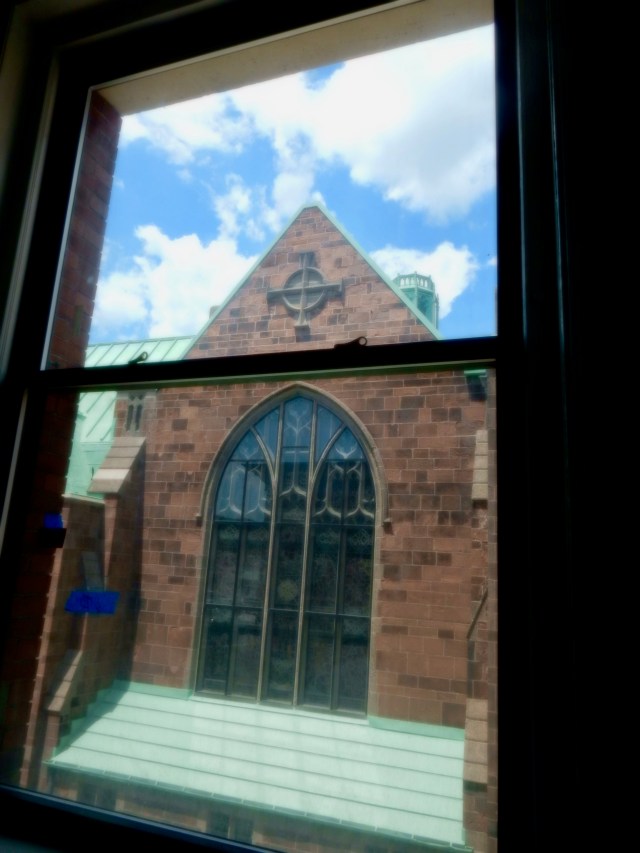
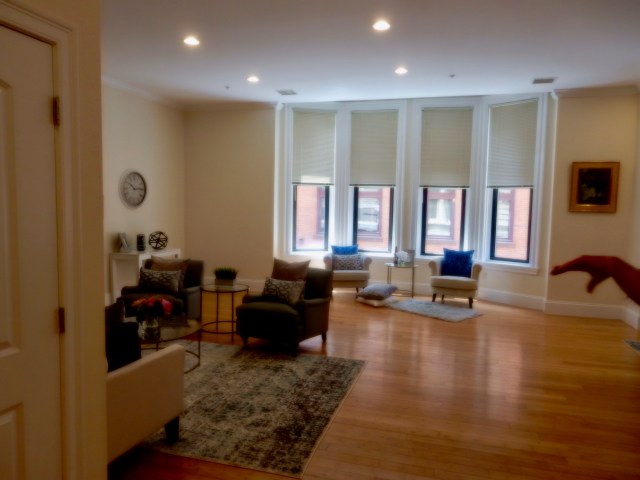
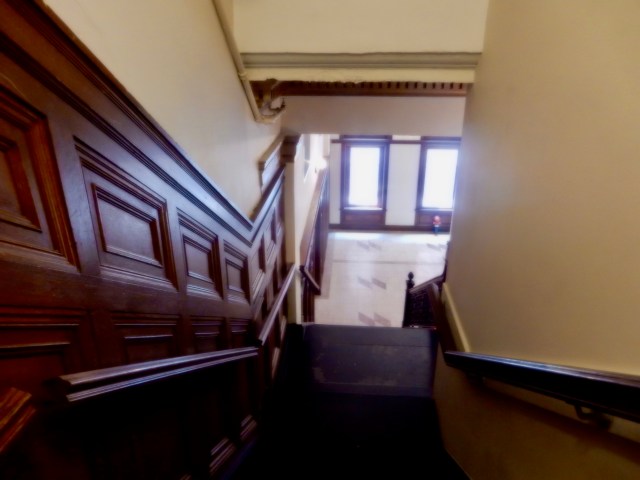
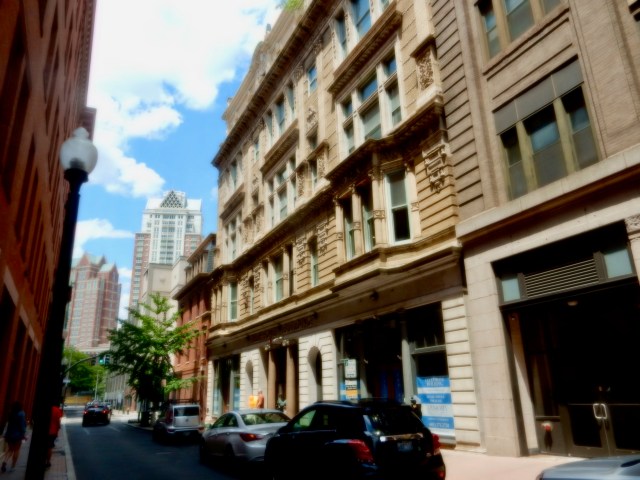
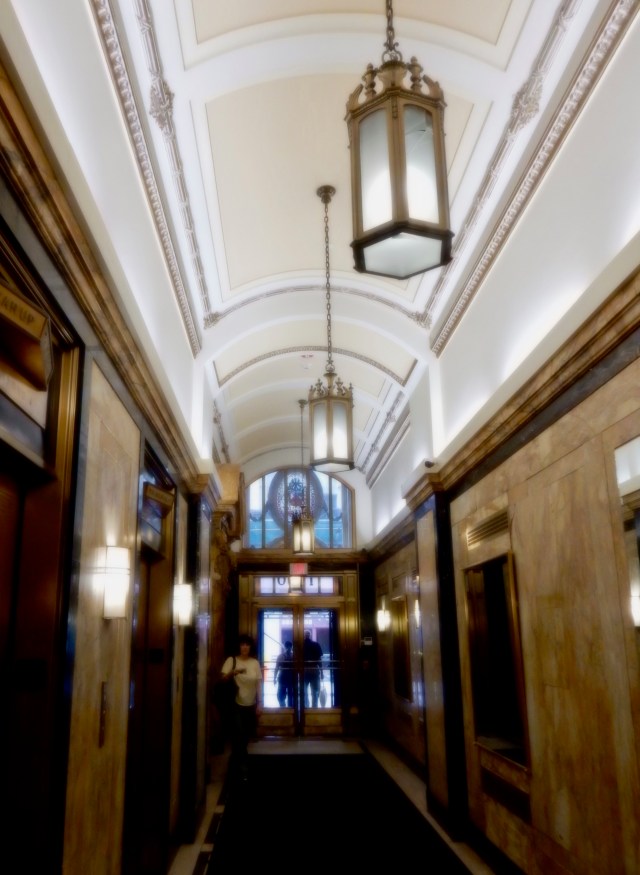
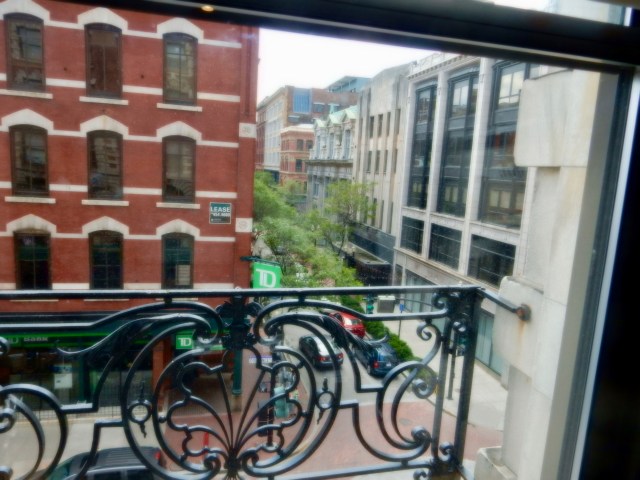
The tour, hosted by the Providence Foundation and the Providence Downtown Improvement District, featured an itinerary of 11 buildings. Here are a host of photos from that tour. Not all of the buildings are represented, and the shots do a poor job of characterizing the apartments. Most are shots of the view from the windows. There was a wide variety in the sizes of the apartments, the quality of their layout and the extent of the historic features retained, such as moldings. I apologize for not labeling the shots. Identifying them reliably from the window views turned into a brain-twister after I lost confidence in the “order” in which they were uploaded onto my computer.

The buildings on the tour are listed in my post from Thursday, “Saturday’s downtown living tour.” Fortunately, the website downtownprovidence.com offers a list of buildings you can click on to learn more details about the apartments, the landlords and the leasing operations. Bringing up the rear down below are a video of an apartment in the Peerless Building and another from its roof terrace. Enjoy!

***

DSCN0894.jpg

DSCN0896.jpg

DSCN0898.jpg

DSCN0899.jpg

DSCN0901.jpg

DSCN0903.jpg

DSCN0904.jpg

DSCN0905.jpg

DSCN0906.jpg

DSCN0908.jpg

DSCN0909.jpg

DSCN0910.jpg

DSCN0919.jpg

DSCN0918.jpg

DSCN0921.jpg

DSCN0923.jpg

DSCN0935.jpg

DSCN0940.jpg

DSCN0936.jpg

DSCN0937.jpg

DSCN0951.jpg

DSCN0952.jpg

Posted in Development, Providence | Tagged , , , , , , | 6 Comments

WaterFire on TV Monday

Screen Shot 2017-06-09 at 11.33.43 AM.png

Braziers filled with wood burn at WaterFire along Providence’s urban rivers. (Marriott Providence)

Barnaby Evans, the creator and mastermind of WaterFire Providence, informs me that it will star in a television show airing at 7:30 on Monday, June 12, on PBS Channel 36 in the Rhode Island area. The show is called “Weekends with Yankee,” and the episode is called “Land and Water.” The WaterFire segment is almost 9 minutes.

In Rhode Island and around the world, this is must-see TV. WaterFire was performed for the first time on New Year’s Eve in 1994 and since 1996 has featured multiple lightings, normally every two or three weeks from May through October or even November.

The work, which is known in the art world as an “installation,” is perfect for Providence’s intimate urban rivers, especially since they were uncovered and lined with beautiful bridges, river walks and parks. It is great to walk along, hand in hand, or with all of your best  friends and family, or (my favorite) by yourself. I wrote a piece about it years ago called “Sex and WaterFire.” It may be that Barnaby Evans has never forgiven me for it (though he commissioned it), and yet who can deny that, except perhaps for the late, great Bill Warner, no individual has had a greater positive impact on Providence than Barnaby Evans, at least not since Roger Williams (including Buddy Cianci).

So tune in on Monday. That’s this coming Monday, Ch. 36 at 7:30 p.m.

Posted in Art and design, Providence | Tagged , , , , , , | Leave a comment

Sat.’s downtown living tour

Screen Shot 2017-06-08 at 1.18.09 PM.png

Telephone Building; right, the Smith,where author lived 11 years. (Providence Foundation)

Among the most delicious of downtown events, and well on its way to being a Providence tradition, is the tour of downtown apartments hosted annually by the Providence Foundation and the Downtown Providence Improvement District. This year’s Downtown Providence Living Tour is on Saturday, June 10, from 11 a.m. to 5 p.m. Tickets are $7 at downtownprovidence.com or, on Saturday, $10 at AS220, on Empire Street. Kids under age 10 tour for free; free for all are shuttles and pedicabs between sites.

All units on the tour are for rent. Here is this year’s itinerary:

  • 95 Lofts: 59 units in the Irons & Russell Building. 95 Chestnut St.
  • 225 Weybosset: 12 units in two historic buildings across from PPAC
  • Arcade Providence: 48 micro-lofts in the nation’s oldest shopping mall
  • Avalon at Center Place: 225 units near train station. 50 Park Row West
  • G Reserve: 60 units in the Union Trust Building. 170 Westminster St.
  • Peerless Building: 97 units with atrium and roof deck. 150 Union St.
  • Providence G: 56 units in three historic buildings. 100 Dorrance St.
  • Regency Plaza: 473 units with pool and tennis courts. 1 Regency Plaza
  • The Sampalis Building: 15 units across from PPAC. 199 Weybosset St.
  • Telephone Building: 12 units in ornate office building. 112 Union St.
  • Wilkinson Building: 12 units in smallest Buff Chace rehab. 90 Eddy St.

Each year, as the number of places to live downtown multiplies, it must be ever more difficult for Joelle Kanter, of the foundation, to keep the list of buildings  on the tour within manageable limits. The tour has become an adjunct of last weekend’s Festival of Historic Houses tour hosted annually by the Providence Preservation Society, but more utilitarian in purpose. It is intended mainly to help people thinking about moving downtown, but while the society’s festival offers a peep into the home lives of the owners of the houses on the tour, the foundation/PDID tour’s sites feature unoccupied apartments – that is, you could live here! How titillating is that!? If you also fancy yourself a connoisseur of apartment design, indulge!

As a denizen of this tour and a reporter covering new building rehabs downtown for decades, I have seen ’em all. Or so I thought. This year’s tour has apartments in six (6) buildings whose renovations I have yet to see. Those six represent part of downtown’s boom in apartment construction but not the whole thing. Several apartment rehabs are not done yet, including the (former) Paolino World Headquarters on Dorrance, and the dear Lapham Building on Westminster, and also include rehabs that are done though I have not seen them and they are not on this year’s tour. Large apartment buildings have also been proposed, including the Procacciantis’ building along the Woonasquatucket behind Providence Place, and Buff Chace’s proposed building on the parking lot across Fountain Street from my old place of toil, the Providence Journal building, which he now owns.

No doubt the developers of these living spaces are anticipating the habitation needs of the flood of workers expected to take jobs in the new buildings that will soon be arising along the I-195 corridor, our very own innovation district. Although I’d rather that those new buildings embrace traditional design, I say good luck with that. If a sandbox for the modernists will help further enliven downtown, I can get with the program. At least it may be said that those new workers, after spending eight hours in an ugly glass box, will have nice places to go home to. Where? Well, that’s what Saturday’s tour is all about. Check it out!

Posted in Architecture, Development, Providence | Tagged , , , | 2 Comments

Smarting in Woonsocket

RE:MAX.png

View down Main Street, Woonsocket. (RE/MAX)

Grow Smart Rhode Island held its annual awards ceremony in Woonsocket yesterday. Before the awardees were celebrated at the Stadium Theater, Mayor Lisa Baldelli-Hunt and deputy planning director Rui Almeida led a tour of the city’s awesome Main Street. The street bends through a topographical wonderland decorated by beautiful buildings.

I have visited Woonsocket and floated upon its charms many times. Some members of the tour group were from elsewhere, and were astonished at the beauty and intact quality of Main Street’s fabric.

If it were not for Woonsocket’s enviable historic character, the Stadium Theater would not have been renovated and the city would not today be planning a push to further enhance the appeal of downtown Woonsocket. Officials would have to dig much deeper to offer inducements to renovate historic buildings, assuming any actually remained, or erect new buildings on vacant lots. Downtown today would be scarred by many more down-at-the-heels buildings and many more gaps in the civic fabric. It would be harder to convince such organizations as GrowSmartRI to embrace the challenge of Woonsocket, but if they did throw out a lifeline, it would be much harder for them to enable Woonsocket to qualify for state and federal programs designed to help old cities – ones that still can claim some remnant of historical character – attract development by leveraging their beauty.

Without its historical character, Woonsocket would have to try to pull itself up by its bootstraps – without bootstraps.

So I was dismayed, and frankly astonished, to hear of plans to offer a level playing field to modern architecture as proposals for development emerge under the city’s award-winning downtown overlay district. An overlay district is a planning tool that loosens some zoning rules in the hope of encouraging development. To seek architecture that undermines Woonsocket’s beauty today will only make it harder for Woonsocket to continue its revitalization efforts tomorrow. Hard to swim against the undertow modern architecture always generates by interrupting the flow of historic character.

It is said that good modern architecture can be fit into a traditional streetscape without undermining its character. In theory, perhaps, but in practice almost all such efforts are failures. Even a well done modernist building, which excites admiration via contrast with its setting, does so only by undermining the higher value of the district’s symphonic cohesion.

I challenge anyone to name a building of modernist design anywhere in Rhode Island that does not interrupt the aesthetic DNA of a historic block. Indeed, find me one anywhere in the world that, if it is in a historic setting, does not act as a parasite, snuggling up to beauty to distract from its own ugliness. Regardless of how many cities try it, triggering a “wow factor” of sculptural design is not an effective planning strategy. Many cities try to imitate the success of Gehry’s Guggenheim Bilbao. Very few succeed.

How startling to learn, then, that Woonsocket, of all places, was heading in this direction. After the tour, we returned to the Stadium, and after some hobnobbing sat down in the beautiful auditorium to watch the ceremony, emceed by GSRI chief Scott Wolf. I hope the mayor stayed after making her speech. Maybe she and her team will take the presentation of Grow Smart winners as a warning not to “go there.”

Each award was presented after a video celebrating its winner. The winners were chosen based on ten Grow Smart principles. Most appropriate here is “Capitalize on existing assets to protect or create distinctive, attractive places and public amenities.” The awards opened with Al Valliere, an affordable housing developer lauded as an exemplar of the Smart Growth philosophy, and concluded with a special founders’ award for recent GSRI chairman Howard Kilguss. In between, there were awards for five projects and an award for a plan. That went to the Rhode Island Woodlands Partnership’s strategic plan for 2016-2020. Last year, the award went to Woonsocket for its downtown overlay district. The five winning project awards went to:

  • Blackstone Valley Gateway
  • Bristol Industrial Park
  • Sankofa Apartments, Providence
  • WaterFire Arts Center, Providence
  • Westerly Education Center

The Valliere video showed new affordable houses traditional in style. Four of the five award videos showed projects that featured traditional architecture, old buildings given new purpose in life. The last project video did, too – or so a viewer might think, as traditional buildings in Westerly came on the screen one by one, mixed with interior shots of the Education Center, as if to hint that, like the other projects, it also re-used an old building.

Anyone might think so. But then, in the last few frames of the video, the modernist cat was released from the bag.

Think about it. Brief reflection suggests that within the niche development world of repurposing old buildings in old cities, those cities’ historical character is not just a nice feature but the fundamental advantage on which rests the logic for investing money in old cities. Preservation development strategies differ from the conventional development world, whose sterile architecture forces most citizens to try, as a sort of defense mechanism, to ignore their built environment. Boston’s Innovation District is an example of that. In Providence, city and state officials are striding, their blinders firmly in place, toward the same error in its I-195 corridor. The state capital might survive such a cannonball to the foot. Woonsocket? Not so much.

Development is a tough job, with the permitting process a long, costly, hair-raising adventure. If cities asked developers to propose designs the public might like, they might do so, and projects would go down like an oyster.

Most developers, I think, care more for whether local authorities support their project than for matters of architectural style. There is no reason for the leaders of cities with valuable historic character not to encourage developers to submit project designs that reinforce rather than undermine those cities’ brand. Attacking one’s own brand is not a helpful development strategy.

The developer of a private commuter railway in the works that would stop at Woonsocket’s train station on its way between Providence and Worcester – he is Vincent Bono, of the Boston Surface Railroad Company, who gave a presentation on that project to conclude the tour – surely understands the important principles involved here. Let Woonsocket be Woonsocket!

I really think I must have heard wrong at the outset of the tour, when this notion of mixing of the old and the new was voiced by our tour guides. At the time, I think I was trying to decide whether I should open my umbrella. Maybe I was distracted and heard wrong.

But as Churchill said, “First we shape our buildings; afterward, they shape us.” If Mayor Baldelli-Hunt and her team want to set Woonsocket on the path to 1984, or Brave New World, or Fahrenheit 451, or Blade Runner, here is some advice: Don’t go there!

Posted in Architecture, Rhode Island, Urbanism and planning | Tagged , , , , , , | Leave a comment