Jan Gehl’s misplacemaking

Screen Shot 2017-11-07 at 11.49.16 AM.png

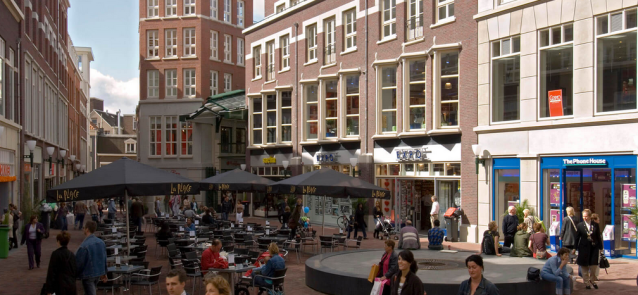
A human-scale plaza, the Musiskwartier (museum quarter), in the city of Arnhem, Netherlands, formed of buildings designed by the firm of Robert A.M. Stern Architects. (RAMSA)

ArchDaily has interviewed Jan Gehl, the noted Danish designer and theorist of placemaking. The article, “In the last 50 years, architects have forgotten what a good human scale is,” suggests that Gehl’s thinking, for all its merit, has not truly evolved to embrace much of what we know and have long known about “good human scale.”

His starting point makes a lot of sense.

In the old metropolis, everything was made to a suitable size for a person, but after the introduction of modernism and the automobile, the importance of this scale was forgotten. We went from having architecture suited to the travel speed of 5 kilometers per hour, to entire cities of 60 kilometers per hour, which meant wider streets, bigger advertisements, higher buildings, where we weren’t able to see anything in detail as we moved so fast.

So, modernism and “motorism” confused a lot of architects and planners about what was a comfortable scale for human beings.

But modernism’s sins against human scale should not be totally fobbed off on the car. Modernists did not develop an architecture that pays no attention to the lower registers of scale just because cars go by too fast for people to notice smaller details. Modernists’ criminalization of ornament precluded embellishment that makes buildings interesting to view from close up at a walking place, and did so before cars replaced walking as the dominant transportation mode in cities. Modernism cares only for medium and large scale and nothing for small scale, the most intimate and humane scale.

Gehl considers himself a follower of Jane Jacobs, but while Jacobs may not have been critical of urban renewal because of its generally modernist style, her preference for traditional styles is implicit in her entire thinking. She recommended that cities foster small blocks lined with more rather than fewer buildings. That suggests a strong preference for traditional buildings because they tend to be smaller, with far more stoops for people to sit on, monitoring their neighborhoods. And she urged that such blocks retain older buildings because older buildings help out entrepreneurs unable, initially, to afford rents in newer buildings or the cost of building them anew.

So while the interviewer may not have asked Gehl about whether traditional or modern architecture better fosters human scale, or may have suppressed the subject altogether, the answers printed suggest – as I have pointed out (see “Placemaking under siege“) – that Gehl has not yet acknowledged that traditional design is intrinsic to human scale and effective placemaking.

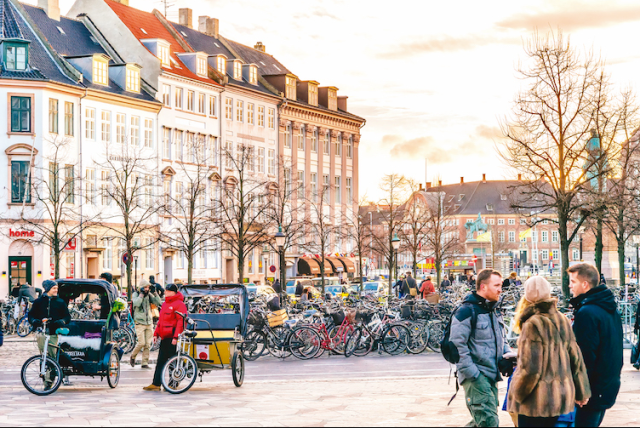
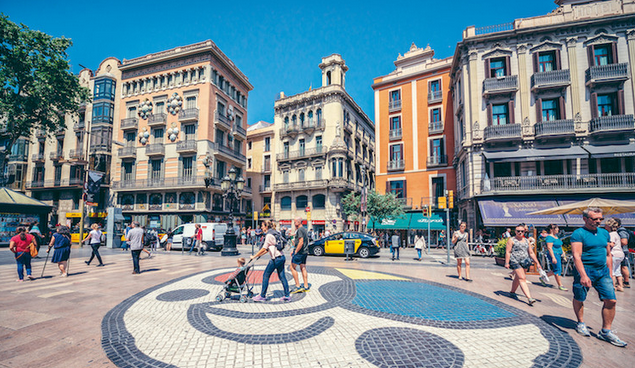
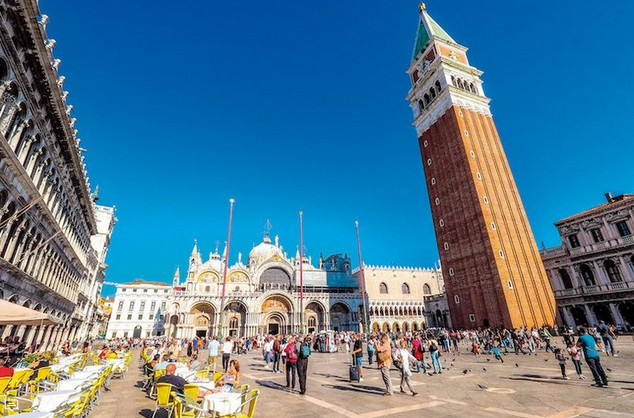
It is fair to ask where great places are found amid urbanism framed by modern architecture. I don’t think Jan Gehl would be capable of identifying any such places. The cities he mentions in the interview are historic cities, and the photographs used with his interview are of traditional plazas. They are below. I chose the plaza on top because of its recent vintage, in 2006, by RAMSA, the architecture firm founded by Robert A.M. Stern. Until the great placemaker acknowledges the implication of these visual cues, his work will remain incomplete and difficult to fully rectify with his own goals.

Screen Shot 2017-11-07 at 12.16.49 PM.png

Screen Shot 2017-11-07 at 12.17.30 PM.png

Screen Shot 2017-11-07 at 12.18.11 PM.png

Posted in Architecture, Urbanism and planning | Tagged , , , , , , , , | 4 Comments

Millais vs. Le Corbusier

Screen Shot 2017-11-05 at 4.36.03 PM.png

Le Corbusier holds up a model of one of his designs. (Archiobjects)

Malcolm Millais, the author of Exploding the Myths of Modern Architecture, has written Le Corbusier, the Dishonest Architect, brought out in Britain by Cambridge Scholars Publishing, of Newcastle upon Tyne. It is a brave book and a necessary book, a vital step toward truth in architecture today.

Screen Shot 2017-11-05 at 4.29.43 PM.png

Two books published in France two years ago expanded what little was known of the fascism that marred the career of modern architecture’s chief founding pioneer. Millais, a British architect and engineer who lives in Portugal, has woven these new facts about Le Corbusier’s story into the tapestry of what we already know of Corbusier’s incoherent architectural thought, dishonest professional practices and sham self-promotion. Millais has drawn conclusions about Le Corbusier that should shatter his iconic status.

Why we should care is succinctly explained by the rear cover text of the book:

This is not a book for architects, but for all those that have suffered, consciously and unconsciously, from modern architecture and have wondered how it came about. … This book exposes the myths that surround Le Corbusier, detailing the endless failures of his proposals and his projects. These were due to his profound dishonesty, both as a person and as an architect. His legacy was an architectural profession that believed, and still believes, they were designing buildings based on logic, functionality and honesty, whereas they were doing the opposite.

Millais does not tiptoe along the path of this dangerous ground. His book is chock-a-block with a multitude of examples, each explained in detail from an engineering as well as an architectural perspective. The author stacks up the flaws in the maestro’s work and impugns the direction Corbu believed his profession must take, and did take. Aping its hero, the profession has kept these flaws safely stashed in the rear of the bottom drawer of what passes for the annals of architectural history since Corbusier, originally a Swiss named Charles-Edouard Jeanneret-Gris, died in 1965. And yet, as Millais writes,

It is rare to come across anything in the endless writings about Le Corbusier that shows him to be a decent or admirable person. Negative comments are usually made as asides, but are so persistent that they become a leitmotif. He was a hypocrite, self-obsessed and pretentious, and a compulsive liar who re-wrote his personal history to serve his own ends. In his dealings with others he could be a thief, a bully and a coward, and underhanded in financial matters. In his marriage he was a serial adulterer. He was a supporter of fascism through a mixture of conviction and expedience. When he realised that fascism wouldn’t triumph, he set about severing his ties with it. After the liberation of France his previous support for fascism became a well-guarded secret.

Until recently, then, the cult of Corbu has been sacrosanct and impenetrable, leaving the public mystified about the clear and obvious stupidity behind the shibboleths of modern architecture and planning that have defaced the modern world. Corbusier called a house a “machine for living in.” All of his work picked up the machine aesthetic and, as detailed so meticulously by Millais, linked that aesthetic to a sensibility that saw people as cogs in the “machine” of society.  So long as Corbusier’s worst behavior remained taboo to mention, analysis of his work remained in the realm of the hagiographic. As the cloak is unraveled and the truth peeps out from the dark, the bogus rationale emerges, now assisted by this book’s thick sarcasm, buttressed by the underlying and entirely understandable anger of Millais.

The more the rest of us feel his anger, the shorter will be the lifespan of modern architecture.

It is impossible to get one’s head around the adulation of a man who proposed the destruction of Paris as a redevelopment strategy, as did his Plan Voisin. He tried the same thing in Algiers and other places, fortunately also without success.

What becomes evident in the book’s narrative is how the flaws in Corbusier’s work arise from the totalitarian impulse that seems to have sprung from his personality. Many great architects, artists and other accomplished men and women have behaved badly toward spouses, clients and others, but in very few has the bad behavior so expressly reflected the underlying principles of the accomplishments. Even in many of those cases, it is fair to assess the accomplishments separately from the misbehavior. But in the case of Corbu, the accomplishments have had such a direct and widespread negative influence on the built environment, and the happiness of mankind, that ignoring the connection would be a form of intellectual malpractice.

And yet dishonesty of self-assessment has characterized the profession of architecture for more than half a century, exacerbating the baleful influence of Corbusier’s legacy. This legacy has torpedoed conventions of beauty centuries in the making, undermining the dignity and enchantment of the public realm in cities and towns around the world. A possible result is that societies everywhere have found it more difficult to foster a healthy political and cultural engagement that might help in the search for solutions to problems local, national and global in scope.

For example, a more open and honest discussion of that legacy might have alleviated some of the discordance that bothers the public in its reaction to modern architecture at any and all points along the timeline of its progress since Corbu’s death 1965, or before.

So, yes, Corbusier’s legacy matters. We do not need another book describing the evil of, say, Hitler, since it is so widely accepted. It is far more important to right the reputation of a legacy that, in the absence of transparency, remains a debilitating influence on humankind. In short, Millais’s book is important because it speaks truth to power.

Some who dislike Corbusier’s architecture tend to tut-tut any attempt to focus attention on the architect’s years trying and, to a degree, succeeding to gain influence and work in the fascist Vichy regime set up by the Nazis after the surrender of France. This reluctance to engage, however understandable, plays into the hands of those cynical modernists who condemn traditional architecture because Hitler preferred it to modern architecture. But modern architecture was a small niche practice when Hitler took power; classicism had been the reigning palette of civic design for centuries. Hitler did not choose classicism over modernism, he accepted what then seemed the unchallenged mandate of architecture history.

Much more telling, and quite in line with Corbu’s fascist sensibility, was the effort of modernist icon Ludwig Mies van der Rohe, head of the Bauhaus “art compound” in Germany, who tried, with the aid of Joseph Goebbels, to persuade Hitler to accept modern architecture as the design template of the Third Reich. Mies’s attempt says far more about modern architecture than his failure. He then left Germany and ended up in America, where one of his supporters was the architect Philip Johnson, who was an out-and-out Nazi. After modernism became the establishment in the 1940s and ’50s, Johnson closeted his Nazi past as successfully as did Le Corbusier.

Millais sums up the situation without the usual coughing into sleeves:

When the Second World War was over, and being a Nazi had lost its status, Le Corbusier, Mies, Johnson and the rest of the architectural community suffered collective amnesia, and a veil was quietly drawn over their inconvenient past. Philip Johnson dismissed criticism that Mies worked for the Nazis with the tastelessly trivial remark, “Nazis, schmatzis.”

To the extent that modern architecture pushes society down the road to totalitarianism, as indicated by decades of unsubtle cultural cues, this too is a discussion that needs to be ramped up, not tamped down.

Since Millais began writing his book (full disclosure: I proofread the first draft, though much material was added later), more light was thrown on Corbusier’s personality by researchers in neurobiology. Ann Sussman, co-author with Justin Hollander of Cognitive Architecture and host of the website Genetics of Design, has shown via new eye-tracking technology that Corbusier was on the autism spectrum. The generally benign condition, combined with Corbusier’s dodgy early years, seemed to incline him to an architecture that flip-flopped the relationship between the importance of design and the importance of people. That pattern inserted itself into the DNA of modern architecture that has now evolved under its influence for three or four generations of architectural practice.

Le Corbusier wrote fifty-one books; few were translated into English and even fewer are currently in print. As he was such an influential architect, no book on modern architecture can be complete without a reference to him. On top of that, upwards of four hundred books have been written about him, not to mention hundreds of articles and theses. Indeed, the study of Le Corbusier has been the basis for a number of academic careers. As Professor [Alexander] Tzonis remarked, “Given the quantity and the unequal quality of this huge production, becoming acquainted with his work is increasingly difficult.

No longer. With Le Corbusier, the Dishonest Architect, Malcolm Millais has helped to pull the world, and maybe even the world of architecture, back toward a path of sanity about architecture’s reigning icon.

[Theodore Dalrymple has a review of Malcolm’s book on the blog of Taki, the famous socialite gossip writer for The Spectator, in London. It is even angrier than my review.]

[Malcolm’s publisher, Cambridge Scholars Publishing, has his book on sale for well below the $99.95 it is fetching on Amazon.]

Posted in Architecture, Architecture History | Tagged , , , , , , , , , , , | 11 Comments

Kunstler vs. infinite suburbia

Screen Shot 2017-11-04 at 1.59.54 PM.png

“The Jetsons” reflects the optimism criticized by James Howard Kunstler. (ABC)

James Howard Kunstler, best known for his 1993 book The Geography of Nowhere, which condemns suburbia, may be the hardest urban policy analyst to pigeonhole ideologically. Anyhow, I revere Kunstler not for his supposed nonpartisanship but for his coinership of the word crudscape, and for his unrelenting Eyesore of the Month, a feature on his website that identifies the latest ultra-modernist ridiculosities.

He is considered liberal, as witness his irascible blog Clusterfuck Nation. It provides a running account of the slow but inexorable collapse of a society addicted to and addled by a drug, cheap oil, that has locked America into its unsustainable suburban lifestyle. Sounds liberal, even progressive, perhaps even radical. But then take his “World Made by Hand” novels. Sci-fi of a sort, they portray a future on the other side of peak-oil collapse, a tough, back-to-basics world where the absence of electricity, the internet, automobiles and computers forces survivors in small towns to embrace a natural lifestyle and society. Toward the end, readers draw close to envying, even coveting, that lifestyle. It’s an odd conservatism, both troglodytic and crunchy granolic.

Somehow, though, I am not convinced that Kunstler’s essay “The Infinite Suburbia Is an Academic Joke” appeared in The American Conservative recently because its editors read his novels. It was more likely because the magazine has embraced the New Urbanism – an updated version of the old urbanism – to the point of devoting a section to it.

As is often the case with posts on my blog, Kunstler’s article revolves around another article, “The Suburb of the Future Almost Here,” by Alan Berger of MIT – again as often the case, in a more vaunted publication, this time the New York Times Sunday Magazine. Kunstler debunks Berger’s rosy notion that a range of pie-in-the-sky ideas, from mass drone delivery to self-driving automobiles – will suddenly converge to pave the way to a gently reformed eco-sensitive suburbia. In his critique of that, Kunstler deploys virtually the entire armory of his skepticism.

Kunstler, it seems to me, combines the traits of the fox and the hedgehog. He wraps his view of the world around both one idea (peak oil) and many ideas. I have a hard time assessing the validity of his worldview, but his essay in TAC is certainly both amusing and enlightening, albeit essentially depressing, in line with his view of the world.

Nevertheless, enjoy!

By the way, I enjoyed TAC’s or Kunstler’s popping the Jetsons image atop his essay. I have long been fond of associating modernism with the Jetsons, especially its fascination with what you might think would be the sacrosanct traditionalism of churches. When flouted by the modernists, I refer to it as the Church of St. George Jetson. The Jetsons reflect the inane optimism of Alan Berger, not its assailant Jim Kunstler.

Posted in Architecture, Urbanism and planning | Tagged , , , , , , | 1 Comment

Journal review of “Lost Prov”

Screen Shot 2017-11-02 at 11.25.57 AM.png

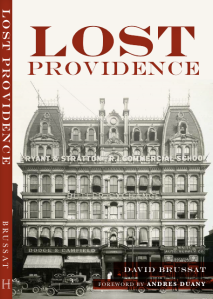
This post corrects my lapse in failing to pass along the Sunday, Oct. 15 review of my book in the newspaper I worked at for three decades. Lost Providence was reviewed by Patrick Conley, the historian laureate of Rhode Island. His article, “Vanished landmarks,” received prominent play in my old paper, including an illustrated skybox (“Where Providence Used to Be”) on Page One, and placement above the fold on the first page of the book section, with a large illustration and a thumbnail of the book, jumping to an inside page of The Rhode Islander with two more large illustrations. (The treatment online, linked above and headlined “Book review: ‘Lost Providence’ is a real find for architecture buffs,” was equally robust.)

The placement by Journal book editor Esther Gross was most gracious and personally gratifying, but the review itself, which she solicited from Conley, warmed the cockles of my heart. My favorite line is “Brussat has produced a worthy successor to and update of the magisterial ‘Civic and Architectural Development of Providence,’ published by architectural historian John Hutchins Cady in 1957.”

My thanks to Conley for making the comparison. Cady’s richly detailed and comprehensive volume reminds us all of how much we Rhode Islanders, so infatuated by our city’s history and its architecture, have forgotten about its development. Cady’s book is out of print but usually fetches at least $100 in used bookstores, but I was startled to discover that it may be had for $35 on Amazon (linked above). Conley’s book, Providence: A Pictorial History, written with Paul Campbell, who later became the city’s archivist, is another great book I used to write my book. The book that was most useful in researching the city’s development history since 1957 is Providence: The Renaissance City, by Francis Leazes Jr. and Mark Motte. Both are available on Amazon.

***

Speaking of Amazon, the first person to “review” my book there stated that she had ordered the book but was instead sent a set of 15 postcards from the book that my publisher, The History Press, sells separately. Her review just states her complaint and expresses her understandable pique by granting a mere two stars (out of five) to the book itself, which she clearly had not read. Since those who go to Amazon to buy the book will see her two stars, that misleading assessment is likely to reduce sales drastically unless others send in their own reviews to balance things out.

So, readers of this blog who have also read the book, please write a review, however brief, on its Amazon page. You will earn its author’s undying gratitude!

Posted in Architecture, Development, Preservation | Tagged , , , , , , , , , | Leave a comment

Left vs. modern architecture!

Screen Shot 2017-11-01 at 5.01.45 PM.png

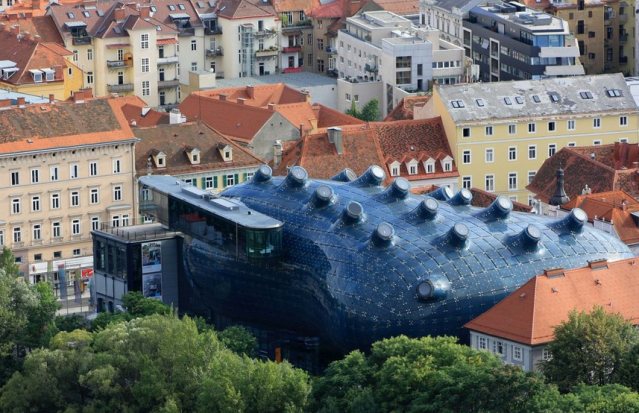
Peter Cook and Colin Fournier’s Kunsthaus in Austria. (e-architect)

Why You Hate Contemporary Architecture,” by Nathan J. Robinson and Brianna Rennix, is a long essay in the leftwing journal Current Affairs. The authors are its editor-in-chief and its senior editor, respectively. They omit the other typical synonym for ugly buildings (“modern architecture”) for reasons no doubt embedded in deep philosophy, and some of their economic and political assertions are on the dodgy side. But all hail Current Affairs for publishing this article, which places the case before an audience about which the phrase “preaching to the choir” certainly does not apply, and for running which they say they have been criticized.

In short, “Why You Hate” almost qualifies as a point-by-point summary of my own long list of themes in the discourse against modern architecture. From the above photo atop their article to virtually every example they use and almost every point they make, I have beaten them to it in many a blog post from the nine years of Architecture Here and There or column from my 25 years as the Providence Journal’s weekly architecture critic. It was really quite amazing to read through it. It is lushly illustrated, and the writing is elegant and delightfully unaffected.

For example, toward the end they offer pointers for overcoming some of the taboos that inhibit our thinking about architecture today. Points 4 and 5 are most pleasingly stated:

4. THE FEAR OF SYMMETRY The tendency toward discord has to end. Symmetry is nice. Multiple overlapping symmetries can be dazzling. A building doesn’t need to be lopsided. You can line the windows up. It’s okay. It will look better. Don’t worry. We won’t tell your professor.

5. THE FEAR OF LOOKING FOOLISH The people who most loudly disdain traditional architecture are those most concerned to convince others of their own intellectual seriousness. Designing a comforting, pleasing, and, yes, nostalgic space is simply not smart enough. People are afraid to say that they don’t “get” a building or find it ugly. It sounds childlike to say you wish it was a pastel color or you wish the two sides matched or you wish it didn’t look like it hated you. But it should be okay to say those things. Buildings shouldn’t hate you. They probably shouldn’t be weird-looking and they shouldn’t grate on the eyeballs. They should be comforting and attractive, because we have to live in them.

There is no reason that architecture should be a partisan issue. Both liberals and conservatives should appreciate traditional architecture, as they do preservation, and both liberals and conservatives have every reason to dislike modern architecture. The essay quotes the famous reply of Christopher Alexander, in a 1982 debate with Peter Eisenman, who admitted that he’d never visited the Chartres cathedral:

“I have gone to Chartres a number of times to eat in the restaurant across the street — had a 1934 red Mersault wine, which was exquisite — I never went into the cathedral. The cathedral was done en passant. Once you’ve seen one Gothic cathedral, you have seen them all.” Alexander replied: “I find that incomprehensible. I find it very irresponsible. I find it nutty. I feel sorry for the man. I also feel incredibly angry because he is fucking up the world.”

So true.

They come this close to making a serious intellectual mistake in the following passage, but I am assuming what they really mean is not to copy the past directly but to evolve traditional architecture of the past into something in the future that uses continuity to respect the traditions of the past. Here is that passage, in which they seem to suggest that designers of new traditional buildings are not already doing what the two editors want:

Memory and continuity are not mere nostalgia. Of course, tradition has gotten a bad reputation, simply because most “neo-traditional” architecture is so bad and Disneylike. Recreations and pastiches are not the solution, and the mindless conservative love for everything Greek, Roman, and Victorian is a mistake. The point is not to just mindlessly love old things; that gets you McMansions. Rather, instead of recreating the exact look of traditional architecture, one should be trying to recreate the feeling that these old buildings give their viewers. Don’t build a plastic version of Venice. Build a city with canals and footbridges and ornate pastel houses dangling above the water, and give that city its own special identity. McMansions are an attempt to superficially remind people of beautiful things rather than doing the real work it takes to make something beautiful. ​But tradition is crucial, old things were generally better things, and if we abandon them we doom ourselves to creating mindless new shape after mindless new shape.

To the extent that imperfect traditional buildings “remind” people of beauty instead of building real beauty, that’s still better than creating purpose-built ugliness. The perfect should not be the enemy of the good. Many classicists think bad trad is a worse enemy of the classical revival than modern architecture. They are way wrong.

Likewise, they err toward the end in assuming that skyscrapers are bad because they are tall. Now, I’m not sure my feelings on skyscrapers are fully evolved at this point, but I am quite sure that skyscrapers are bad less because they are tall than because, these days, they are modernist, or contemporary, to use the essay’s word of choice.

At the end, that thought leads to this one:

But more than just abolishing skyscrapers, we must create a world of everyday wonder, a world in which every last thing is a beautiful thing. If this sounds impossible, it isn’t; for thousands of years, nearly every building humans made was beautiful. It is simply a matter of recovering old habits. We should ask ourselves: why is it that we can’t build another Prague or Florence? Why can’t we build like the ancient mosques in Persia or the temples in India? Well, there’s no reason why we can’t. There’s nothing stopping us except the prison of our ideas and our horrible economic system. We must break out of the prison and destroy the economic system.

Although I have my problems with capitalism as it functions today, I would not go that far. Thankfully, the problem of architecture is considerably less dire than that.

Still, the excellence embodied in their article far outweighs what is suspect. I am not aware of any other such comprehensive and engaging assault against modern architecture in a publication of the left. Congratulations, then, to Brianna Rennix and Nathan Robinson. Please enjoy their inspirational essay.

Here is the final illustration:

Screen Shot 2017-11-01 at 5.24.11 PM.png

Posted in Architecture | Tagged , , , , | 12 Comments

Pawtucket’s stadium woes

Screen Shot 2017-10-29 at 11.09.55 AM.png

Postcard of Main Street, Pawtucket, in the 1890s. (pinterest.co.uk)

Doubts are increasing about whether new development around a proposed PawSox stadium can support its costs amid downtown Pawtucket’s longstanding failure to thrive.

Today’s Providence Sunday Journal ran a package of stories highlighting those doubts, but the issue was placed front and center on the Journal’s oped page on Thursday by Jim Raftus. In “Pawtucket’s revival requires more than ballpark,” the retired ad exec, who grew up in Pawtucket, describes a recent walk he took, and the deteriorated streets he found, along the path fans would take between the to-be-renovated old train station and the new stadium. He then notes the 50,000 square feet of spinoff in the stadium’s direct vicinity (see image below) and on Division Street. He writes:

This sounds fine, but Division Street is not downtown and the new buildings planned by the PawSox are in close proximity to the park. This new construction would have minimal effect on the deteriorating core of Main Street. When Apex moved into this location, while it enjoyed a decades-long success, it did not bring vitality to the struggling business sector just down the street. When discharged from the Army in 1971, I worked at Apex. I know the minimal effect it had.

So, why are the team and the city entirely focused on new construction rather than revitalizing what exists? Have the city officials given up on this area? Why not make Main Street and downtown the gateway to the ballpark?

Why not indeed! In the 1960s, downtown Pawtucket followed downtown Providence to urban perdition. Why doesn’t downtown Pawtucket follow downtown Providence today now that the latter’s advocates have discovered that revitalization is about embracing historic character, not rejecting it?

The postcard view of Main Street atop this post suggests how delightful it was in the 1890s, a situation that survived into the 1950s. Then Pawtucket’s leaders drank the same Kool Aid gulped down by their Providence colleagues after the latter proposed, in 1960, the Downtown Providence 1970 plan with a “destroy the village in order to save it” redevelopment strategy. Both cities proposed new modernist buildings, pedestrian malls and faux modernist façades for whatever beautiful buildings they were not planning to demolish on Main or Westminster streets.

The first photo below shows how attractive the new modernist buildings and faux façades looked during construction. Main Street looks much the same today, in spite of a few attractive but lonely buildings that remain.

These plans were developed at a time when city residents and businesses were in flight to the suburbs. In my opinion, well-publicized plans designed to fight this trend only exacerbated it. Images in local papers and on the evening news showed citizens how civic leaders were planning to uglify the downtowns of both cities.

Of course, planners did not see it that way, and many civic leaders and design professionals still do not see it that way. But most members of the general public have grown up day by day since near birth assessing architecture and urbanism. They have developed a very sophisticated, if intuitive, ability to assess places, both in terms of appearance and utility. So, many citizens read about and heard about these plans to fight flight and came to conclusions opposite those reached by the experts. The public feared that the plans were going to make downtowns worse, not better. So those plans contributed to the suburban exodus rather than helping to slow it down or reverse it.

Again, although still a long way to go, downtown Providence has discovered the key to revitalization lies in reasserting its historical character. When the PawSox considered moving to Providence in 2015, they used nice images of a traditional stadium in their publicity effort. Citizens turned thumbs down on the stadium deal for financial reasons, but I supported the concept (not the deal) because I hoped a traditional stadium would lead to more traditional buildings’ being proposed in the 195 corridor. Now the PawSox are using images of a stadium and its surroundings that fly in the face of Pawtucket’s historical character. I’ll bet that’s one reason why so many Rhode Islanders are inclined to find the latest PawSox stadium deal underwhelming.

So I agree with Jim Raftus. Don’t surround the new stadium with ugly new buildings. Instead, spend the money revitalizing Main Street – and build a more attractive stadium. This is not rocket science. Beauty is destiny, and planners who do not recognize that will shoot their cities in the foot.

Pawtucket, are you next?

(Some interesting images from a 2007 exhibit on plans of the last half century or so can be viewed on the website “Planning Pawtucket.”)

Screen Shot 2017-10-29 at 11.07.18 AM.png

In the 1960s, Pawtucket renovated Main Street as a pedestrian mall. (thurowsmall.com)

Screen Shot 2017-10-29 at 11.12.20 AM.png

Illustration of how Main Street would look after renovation. (thurowsmall.com)

Screen Shot 2017-10-29 at 11.02.13 AM.png

This image of proposed PawSox Stadium is now seen more often than a nicer image. (PawSox)

Posted in Architecture, Development | Tagged , , , , , , , | 4 Comments

New Brown engineers’ crib

Screen Shot 2017-10-26 at 12.24.13 PM.png

New research facility on Brook Street houses the Brown School of Engineering.

Modern architecture is easy to dislike. Its exemplars are ridiculous, its mythology is idiotic, and the methods by which it maintains dominance in the field of architecture are corrupt. I loathe modern architecture generally and feel little but contempt for its buildings individually.

But there are some modernist buildings that strike me as, well, all right.

I could find no photographs online yet of Brown University’s new School of Engineering facility. I criticized it and much of the rest of Brown’s recent architecture in “Brown attacks College Hill,” which links to my original critique. Even then, I found the building less obnoxious than most of its brethren – sort of like the recently razed Fogarty Building, a modestly inoffensive brand of the Brutalist style more aggressively represented by the List Art Center on College Street and, most infamously, Boston City Hall.

The proposed engineering school design I damned with faint praise back then in “Brown attacks”: “predictably boring but not as bad as it could have been.” Of the completed building I would say pretty much the same. True, it deserves to be damned some more given that, for all its modesty, it does not deign to make the least attempt to fit into its lovely College Hill setting (it was designed by KieranTimberlake of Philadelphia). Worse, the four historic houses demolished to make way for it were all far superior buildings both individually and collectively.

Still, it has a certain elegance unlike almost every other modernist building at Brown, from the List Art Center, by Philip Johnson, to the Granoff Center for the Creative Arts by Dildo, Scrofulous + Rentfree (oops, I meant Diller Scofidio + Renfro). Perhaps the only modernist building until now at Brown that could be called elegant is one of Brown’s first modernist buildings, also by Johnson, a block north on Brook Street, his Computation Lab, completed in 1961, a small building erected to house a large computer, the IBM 7070, whose computational power could now probably fit in your cell phone.

Look at it below, as it is today and in as an elevation drawing. Very nice. For the new engineering facility to be placed in the same category is as much praise as I can muster for it.

Screen Shot 2017-10-26 at 2.41.23 PM.png

Screen Shot 2017-10-26 at 2.37.31 PM.png

Posted in Architecture | Tagged , , , , , , , | 6 Comments

Believe his words/your eyes

Screen Shot 2017-10-25 at 4.22.14 PM.png

I think I’m going to start a new collection of buildings whose designers deny the obvious when confronting criticism of a work’s imagery. For example, the buildings above. They are actually a sculpture, yet the interview containing the denial is headlined “Are Those Two Buildings Having Sex?

But hey! Buildings? Sculptures? What’s the difference!

I don’t think it can be interpreted as the headline seems to suggest. Is the Centre Pompidou having sex with “Domestikator,” by Joep Van Lieshout? Certainly not. After seeing how the two main elements of the sculpture are positioned, the evidence is clear who’s doing it with whom (or what). It does not matter how many words the sculptor may waste trying to deny it, the truth is there for all to see.

For my new collection, three buildings are very good examples. One is the People’s Daily News headquarters in Beijing that looks like a penis, another is the late Zaha Hadid’s stadium in Qatar that looks like a vagina, and the third is the proposed and as yet unbuilt apartment complex by the Dutch designer MVRDV for Seoul, which looks like the Twin Towers being rammed by airliners. Each set of designers denied the obvious.

“Domestikator” was kept out of the Louvre by the good taste of one or more of, no doubt, a quadrillion committees there that decide what is appropriate to put on public display. Unlike the committee, I have no problem with the subject, although it is a bit raw, as was the image by Le Corbusier that author Malcolm Millais decided not to print in his recent book Le Corbusier: The Dishonest Architect; it’s the aesthetic treatment of the sexual act depicted by Van Lieshout to which I object. Here, at the risk of offending the readers of this family blog, is that illustration, sent to me by Millais.

Let me be clear: I do object as well to the growing coarseness in culture around the world that enables such tripe to be acceptable for public display in the world’s great museums, not to mention embodied in major public buildings. It may be reasonably argued that by displaying them here I am fostering the same coarseness. If I must plead guilty, at least permit me to argue that the display works hand in glove with my objection.

Screen Shot 2017-10-25 at 4.50.22 PM.png

Actually, it seems a lot more difficult to figure out what’s going on in Corbusier’s pen and ink wash drawing than in Van Lieshout’s sculpture, or even whether the work’s title, “Two Lesbians,” is, um, accurate. But hey, that’s Corbu for you. His writing was indecipherable, and so were his buildings. Why not his art? At least the founder of modernism’s sensibility was consistent in his confusion!Screen Shot 2017-10-25 at 4.57.18 PM.pngScreen Shot 2017-10-25 at 5.10.02 PM.png

Screen Shot 2017-10-25 at 5.00.54 PM.png

Screen Shot 2017-10-25 at 7.54.21 PM.png

Screen Shot 2017-10-25 at 5.06.53 PM.png

Posted in Architecture, Art and design | Tagged , , , , , , , , | 2 Comments

Don’t copy Boston’s tech hub

Screen Shot 2017-10-23 at 5.27.41 PM.png

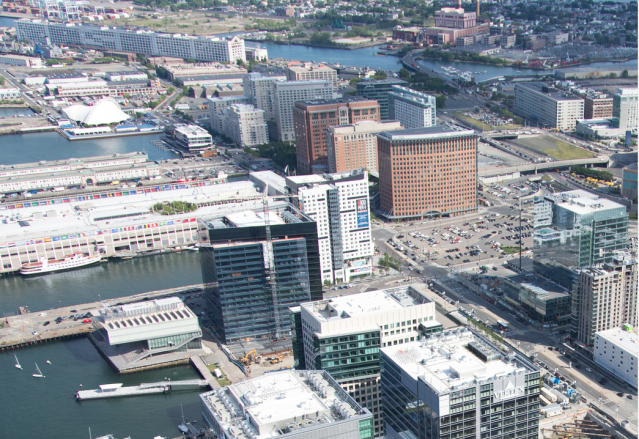
Easterly part of Boston Innovation District, with the very long Design & Innovation Building, on Northern Avenue, at upper left. (Boston Planning and Development Agency)

Last week I attended a party on Tide Street in South Boston, part of the Hub’s Innovation District. The party was fun, but please let me convey my experience of the district’s urbanism as a warning to Providence, which seems to want to reproduce it, albeit writ small, along the Route 195 corridor in what our city and state hope will become its own innovation district.

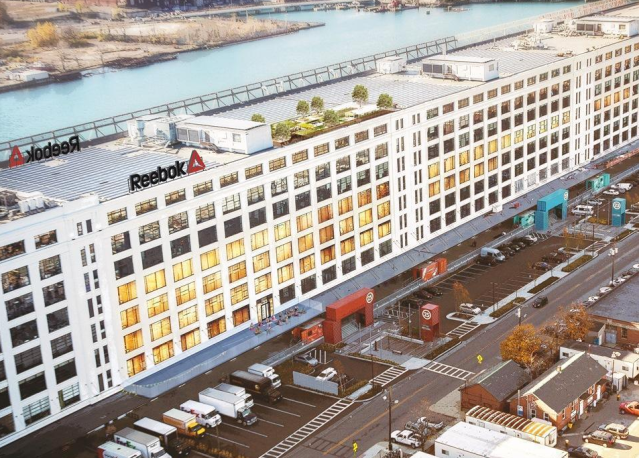
I left the party around 7:30 after phoning for a cab, and waited for the cab next to Tide Street, near Drydock 3. The street was long, wide, straight and empty. After 20 minutes the cab had not come. It was getting dark. I called the dispatcher, who said the cab would be right there. Another 20 minutes and I set out for Northern Avenue, some 300 yards off, an extension, even longer and wider than Tide, of the district’s main drag, Seaport Boulevard. Still, almost no cars. Reaching Northern, I crossed to a mammoth industrial facility, built in 1918 by the U.S. War Department, now the Innovation & Design Building. (Its western end is anchored by the Boston Design Center, where the New England chapter of the Institute of Classical Architecture & Art now meets.) No cars, no people. I tried to find where to go in. But before reaching it, I finally saw and flagged down a cab. As if we were back in Rhode Island, with its 1½ degrees of separation, the cabbie had been looking for me for at least half an hour, and kindly took me to South Station.

This sort of thing can happen anywhere, of course. The point is that the environment was way out of human scale, with nothing nice to look at. It was lonely out there and I felt like a small rodent. I was grateful it was dark, for, although there are lovely old blocks on the way into the district along Congress Street, out here and in much of the district, night graciously cloaks buildings that by day make some of us wish we were blind. All was emptiness and sterility, nothing intimate or comforting to the eye. The level of street activity, pedestrian or motorized, makes Westminster Street seem as bustling as Fifth Avenue. The architecture of Boston’s Innovation District makes our Jefferson Boulevard seem as lovely as London’s Regent Street.

Now Providence and Rhode Island are building their own innovation district. There is no law that our district’s appearance cannot be inspired by the brick mill architecture that housed the Jewelry District when its innovators led global industry in some fields. Or some other style that strengthens our beauty and historical character. But there is a law – the Providence Zoning Code – that says new architecture in downtown (which the 195 corridor now is, officially) must be “compatible with the existing historic building fabric and the historic character of downtown.” (See “Battle of the 195 riverfront.”)

This is a really easy decision. Let’s not muff it, please. A very robust Boston can afford to stink up part of the city. Providence cannot.

By the way, the principles involved apply equally to Providence’s Amazon pitch.

Screen Shot 2017-10-23 at 2.50.45 PM.png

About a third of the length of the Innovation & Design Building, into which a new Reebok headquarters is moving this fall. (Boston Business Journal)

Posted in Architecture, Development | Tagged , , , , , , , , , | 6 Comments

R.I.’s Amazon HQ2 bid

Screen Shot 2017-10-22 at 12.43.48 PM.png

Illustration handed out to media to represent Rhode Island’s pitch for Amazon. (CommerceRI)

Ha ha ha ha ha! Just look at that! Above is what Rhode Island’s leadership imagines Amazon wants for its proposed second headquarters. And they may be right. Amazon may indeed have that sort of thing in mind. If so, Rhode Island should avoid it like the plague.

The state offered sites in seven Rhode Island cities and towns to Amazon. The Providence Journal’s story on the pitch is “Rhode Island pitches 7 sites for Amazon HQ2,” by Patrick Anderson. It and every other local media report features that picture.

The CommerceRI website where the public can go to get an idea of its pitch is called “The Lively Experiment.” It starts with a come-hither from Governor Raimondo, then offers a creative video sales pitch that takes place in what initially looks like an empty field. The website does not reveal the state’s financial bid, nor release much information about the bid beyond a few testimonials from the usual suspects. It does, however, feature a very, very nice video of the state as a tourist attraction, called “See just how much fun we can squeeze into this fun-sized state.”

This video is at the bottom of the website. Check it out. It is very revealing. Those paid by the state to lure visitors recognize the importance of its beauty. Virtually no clip in the entire video runs counter to Rhode Island’s traditional, historical beauty. And yet the image associated with its pitch, with its fake factories and goofball office towers, suggests we’re willing to ruin Rhode Island’s beauty in our lust for Amazon. Is that what Amazon wants? The image torpedoes a lot of what’s good about the pitch.

But in Rhode Island, the official definition of creativity is not to build on the great things it already has but to kick beauty to the curb and shove a sort of faux novelty in our face, which usually manifests itself as ugliness. That’s what it did in Capital Center District, that is what it is doing in the I-195 corridor, and that’s what it apparently thinks will attract Amazon. And if that is what Amazon wants, then we do not want Amazon.

Instead, Rhode Island’s pitch should be to play hard to get, to startle Amazon by insisting boldly that, in building its HQ2 here, Amazon must help strengthen Rhode Island’s brand by building upon its beauty and its historical character. (See “How R.I. can get Amazon.”) That’s what you’d think Amazon itself would want, another HQ different from, arguably better than, the glassy glitzy one it already has. If not – fuggeddabowdit!

Maybe it is by now too late for that. But if what is good about Rhode Island’s pitch puts it in the running, that’s how the state ought to proceed.

Posted in Architecture, Development | Tagged , , , , , , , | 10 Comments