Ignore Rem Kookhouse

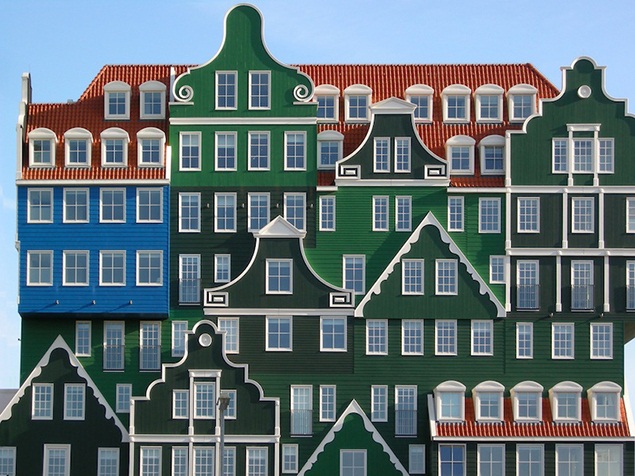
Hotel in Zaandam, Neth., by WAP Architects (Architectural Review)

Hotel in Zaandam, Neth., by WAP Architects (Architectural Review)

Rem Kookhouse. That is his Dutch name translated into English. In my last post I took a leap of faith and landed, well, awkwardly to say the least. I urged readers to consume an interview of Rem by Andrew Mackenzie in Architectural Review that I had not read, and, having now read it, find myself deep in apology mode. Don’t read it. It is filled with claptrap. I will extract the only passages worth plowing through for. So I have plowed through for you and here are the passages:

[A]t first sight the Netherlands is a very internationalist country, but looking closely you can see an enormous return of, not vernacular, but quasi-vernacular architecture and quasi-old fortresses that are newly built with a national flavour. Look at Zaandam, and that huge assemblage of so-called vernacular buildings. I understand this moment very well, because the vast majority of so-called modern architecture now is really a kind of gimmicky Modernism, and this creates space for traditionalism to be gimmicky too.

Maybe that passage, which is at least coherent, explains something, something of which those who prefer traditional architecture and its revival must be wary. The gimmicky traditional hotel in Zaandam is a good example, partly because it does have a sort of plasticky charm to it.

The next and final passage I pluck out to illustrate as exemplary of the silliness of Rem and of modernist thinking in general. He describes a commission for a house (the Y2K House in New York?) and asserts that it re-emerged as the design solution for an concert hall, the Casa da Música, in the Portuguese city of Porto (home, by the way, of Malcolm Millais, the author of Exploding the Myths of Modern Architecture). I find it highly unlikely that the thought process was anything like what Rem describes:

I had done a project for a house for a family, where the client said “we don’t really like each other, so we each need our own part of the house and then a place where we can get together if we want to.” It was a challenging proposition, which we thought was negative at first, but was actually quite inspiring. But every time I presented the house, the client keep pulling back and resisting the design. At the same time we were doing this competition in Porto and I was getting increasingly desperate to get an idea. Then I realised that, if we multiplied the scale of this house we were working on by five or six, the space that we had designed for the family to get together would work perfectly as a concert hall. We simply took the idea and enlarged it. It was a purely intuitive leap, which we subsequently won the competition with.

Not bloody likely! But illustrative of a way of thinking in which the explanation for a thing is created in retrospect. It is not an accurate description of what was thought. It is an attempt to reconstruct what was thought in a way that seems to carry more meaning, or at least more interest. In a way it’s what a playwright or a novelist does when he abstracts reality into something intellectually useful for consumers of art. The main difference is that the novelist and playwright think it important that there be some correspondence between reality and the work of art. Modernism, in its many forms, has severed that connection, and has successfully convinced the art world, and of course, the world of consumers of art (and architecture), that cutting art off from reality is valid.

As a reward for making it through that last paragraph, I offer a final bit from Rem, just a juicy tidbit (beginning with the question from the interviewer) that hints at his relationship with former employees:

Former principal of OMA New York, Joshua Prince-Ramus, has described the [Casa da Música] concert hall as determinedly irrational and the [Seattle] library as a kind of hyper-rationalised organisation. Is this an accurate description?

It’s always slightly disconcerting to hear my former collaborators describe the projects.

Meow!
Posted in Architecture, Art and design, Other countries | Tagged , , , , , , , , , , , , , | 2 Comments

What Rem has to say

Rem Koolhaas (Architectural Review)

Rem Koolhaas (Architectural Review)

There should be a question mark after the headline because I haven’t yet read this interview in Architectural Review (by Andrew Mackenzie) with Rem Koolhaas. But he is always interesting, and what he says usually redounds with a crash upon the noggins of his fellow modern architects. This time? Well, read it and see. I will read it too when I have a chance, and then maybe add more to this post. Look out!

Posted in Architecture, Architecture Education, Art and design | Tagged , , , , , | Leave a comment

Column: Digging into the Route 195 “Toolkit”

Numbered development parcels on Route 195 land, in Providence. (I-195 Redevelopment District Commission)

Numbered development parcels on Route 195 land, in Providence. (I-195 Redevelopment District Commission)

On Monday evening, breaking only for the Olympic figure skating in Sochi, I plowed through the 139 pages of the I-195 Redevelopment District Commission’s new “Developer’s Toolkit.” LINK_Toolkit(1)

My object was to find out what sort of vision the commissioners had for the new district on 40 vacant acres of land freed by the recent relocation of Route 195. Half of the land is devoted to parks and half is divided into 16 developable plots, as listed in the document’s index of parcels, or 19 if you count the parcels in the above map. The parcels are assigned numbers scattered at random between 2 and 42. No Parcel 1 exists, but there is a Parcel 1A. Parcels 2, 3, 5, 6, 8 and 9, but not 4, 7, 10 and so on. Three parks are labeled P2, P3 and P4. But no P1.

Anyway, the Toolkit is described as “Convenient, Predictable, Efficient: One Stop for Development Approval.” A “compliant project,” it says, can complete an approval process of two levels in six months, but a “Time to Approval” flow chart on page 33 suggests that 22 months may be more realistic, especially for projects that need variances or have compliance issues.

To read the rest, please visit The Providence Journal


Posted in Architecture, Architecture History, Providence, Urbanism and planning | Tagged , , , , , , , , , , | 2 Comments

Ramp it up, Bob! Ramp it up!

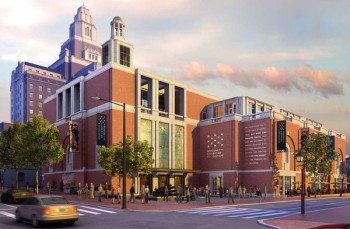
Rendering of Museum of the American Revolution. (RAMSA)

Rendering of Museum of the American Revolution. (RAMSA)

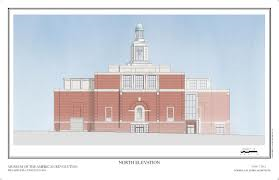
Robert A.M. Stern, the only classicist among American starchitects, designed a new building for the Museum of the American Revolution, in Philly, a couple of years ago. The design, which was neocolonial, hit the usual buzzsaw wielded by the usual suspects, but seemed to be heading for construction at any time. Now the city’s Art Commission has asked Stern to kill the cupola.

Who the heck are they? Are they the Cheesesteak Fine Art crowd? Inga Saffron, who has a lovely name, is nevertheless an Inquirer architecture critic who also came out guns blazing against the design two years ago and now has picked up her bazooka again. Her piece is here. It’s worth reading because it’s a sort of template of the arguments modernists use under these circumstances. She probably has about half of the sentences on save/get! (I suppose that dates me. Early computer lingo for a button that has often-used phrases or command strings on it. I wish my computer now had save/gets. It probably does but I don’t know how to use them.)

Elevation of museum front. (RAMSA)

Elevation of museum front. (RAMSA)

But Saffron still makes some good points, though most of them should encourage Stern to ramp up what she dislikes rather than to remove or tone down what she dislikes.

I hope Stern will resist the commission and return with a better cupola and answer some of its other reasonable questions. The donor who is funding most of the renovations says he didn’t like the cupola, but maybe he was just trying to snuggle up to Inga. He was not induced to say he disliked the neocolonial style. Saffron would not like the design even without the cupola because it is, to use her word, a “pastiche.” That’s modernist lingo for a revivalist style, though the word actually means something completely different – a mishmash. But then modernists are not rigorous in their rhetoric. Why should they be? They are rarely challenged and rarely need to flex their mental muscles, which, as I pointed out in a recent post, have atrophied.

And I have to catch a bus, so goodbye!

Posted in Architecture, Architecture Education, Architecture History | Tagged , , , , , , , , , | Leave a comment

And I thought I was tough on Gehry!

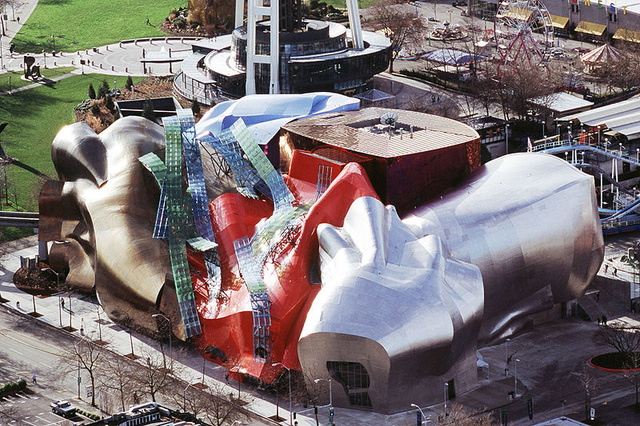
Experience Music Project, in Seattle. (wikipedia.com)

Experience Music Project, in Seattle. (wikipedia.com)

Kristen Richards, who applies exquisite snark in describing some of the columns of mine that she posts on her stellar website ArchNewsNow.com, has sent me this amazing diatribe against Frank Gehry, by Geoff Manaugh, posted on Gizmodo.com, called “Frank Gehry Is Still the World’s Worst Living Architect.” His piece is definitely for the younger crowd, but you don’t need to understand all the pop cultural references to grok* the depth of his angst over Gehry’s continued sway in the world!

* Dated cutting-edge ’70s reference: “grok” – to understand; Spockspeak … um, right? [No, I am reliably informed that it’s from Robert Heinlein’s Stranger in a Strange Land.]

Posted in Architecture, Architecture Education, Humor | Tagged , , , , , , , , | 4 Comments

Remansioning a Back Bay mansion

The Ames-Webster Mansion

The Ames-Webster Mansion

The Ames-Webster Mansion, on Dartmouth Street in Boston’s Back Bay, will soon be renovated. A press release forwarded to me by John Margolis, president of the New England chapter (on whose board I sit) of the Institute of Classical Architecture & Art, describes the upcoming work by Hamady Architects as a “large-scale renovation,” which would normally have the hairs on the back of my neck standing at full attention.

However, since Hamady is partnering with the chapter to offer a two-day course, March 7 and 8, on the mansion’s history and on its upcoming renovation, my fears are assuaged. Hamady may be, I can only trust, relied upon to pay utmost respect in its renovation to the mansion’s extraordinary artistic resources. First of all, it was originally designed in 1871 by the firm of Peabody & Stearns. Later, carving and murals by Beaux-Arts painter Jean-Joseph Benjamin-Constant and a glass skylight by John LaFarge were installed.

The course, which costs $260 for the public and $210 for ICAA members, will thoroughly consider the house, its craftsmanship and its prospects under the guidance of Hamady Architects. The firm’s head, Kahlil Hamady, who is on the national board of the ICAA, will participate. The first day will consist of historical and preservation lectures and a major craft demonstration; the second day will consist of drawing, guided by instructors, of the building’s exterior, interior and details.

Reservations are first come, first served. The course location is at the mansion itself, 306 Dartmouth St., where lunch will be provided for the two days, Friday, March 7 (9 a.m. to 5 p.m.) and Saturday, March 8, 9 a.m. to 6 p.m. The course is worth 15 continuing-education credits. Please find more information and register here.

Posted in Architecture, Architecture Education, Architecture History, Art and design, Preservation | Tagged , , , , , , , , , , | Leave a comment

More on the modernist coup d’etat

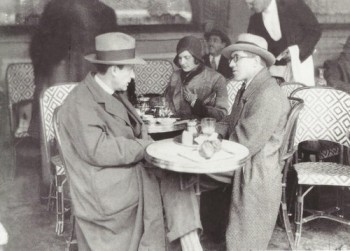
Gropius and Le Corbusier at Les Deux Maggots, in Paris. (xxx)

Gropius and Le Corbusier at Les Deux Maggots, in Paris. (design-is-fine.org)

John Massengale, head of the New Urbanists in New York and a classicist who often writes in to TradArch to note that modernism is at least as popular as traditional design in the cafes and restaurants of the Big Apple, has written in to dispute some details of Steven Semes’s analysis of modern architecture’s takeover of the profession. He makes some very interesting points. Much of what he says in demurral does not really dispute the essence of what Semes has written in my last two posts. But Massengale does say this: “I’m one of those who thinks that social and economic forces did make Modernism inevitable.”

I must demur! Modern architecture, at least, was not inevitable, even if many strands of social, aesthetic, artistic and political change during the 1930s and after WWII were pushing in its direction. It was the apparent refusal of tradition to push back that makes modernism seem so inevitable in retrospect. After a depression and a world war during which many cities grew shabbier because maintenance declined as a priority, it was not, I think, inevitable that society (government and major private institutions, that is) would decide to basically tear cities down and build anew rather than renovate. The decision to do so was a modernist decision, and if tradition had fought back in the ’30s and ’40s the decision might have gone the other way.

I do not believe that John actually buys into the modernist orthodoxy that modern architecture was (and is) intrinsically inevitable. But did the correlation of forces (so to speak) make modernism’s adoption inevitable even given the circumstances? I think not. It was tradition’s refusal to fight back, more than any other factor, that surrendered the fort to the bad guys.

Posted in Architecture, Architecture Education, Architecture History, Urbanism and planning | Tagged , , , , , , , , , , , | 1 Comment

More Semes on modernist “coup d’etat”

"Church of the Immaculate Heart of Mary, Rome, by Armando Brasini, 1923-38, resumed 1950-51. Still lacking the tall dome Brasini intended, the church nonetheless impresses with its intensely dramatic lower portion, which seems driven by centrifugal forces." (Steven Semes)

“Church of the Immaculate Heart of Mary, Rome, by Armando Brasini, 1923-38, resumed 1950-51. Still lacking the tall dome Brasini intended, the church nonetheless impresses with its intensely dramatic lower portion, which seems driven by centrifugal forces.” (Steven Semes)

[This post is the second part of two beginning earlier this morning here.]

In response to my recent post on the fecklessness of an editorial in the January edition of Pencil Points about the new modern architecture, Steven Semes sent more fascinating information about how modern architecture took over the field of architecture:

I think you are right about the lack of conviction with which traditional architects defended their positions in the 1920s and ’30s, at least in the U.S. The situation in Italy at the time was more boisterous, with active debate and competition for official recognition of various styles. At home, there seemed to be two reactions on the part of the traditionalists: on one side, defensive posturing and platitudes about tradition and the importance of keeping things as they have always been and, on the other, a willingness to do whatever seemed to be current and stylish. There were almost no really prominent architects in the U.S. who had the wit and imagination of a Brasini or a Piacentini, who could make new traditional buildings that were really new in the sense that they used the old language in ways that enlarged and refreshed it. (Or, in the U.K., a Lutyens or Holden.)

Thus, the “old guard” was vulnerable to charges that they “copied” (even if they didn’t) because there was so little real adaptation of models, but rather a kind of “sampling” that rarely reconceived the precedents or sought new expressions. Of course, the modernists used any weapon at their disposal to convince the profession and the public of the alleged decadence and plagiarism of the traditionalists, using a vitriol in their attacks that is astonishing (and, of course, continues today). There was also a general cultural enthusiasm for newness at any price and, compared to the shiny new modern buildings, with their gleaming white walls and nautical motifs, buildings like the Masonic Memorial in Alexandria, Va., looked like what Lewis Mumford said they were: cemeteries.

To me it seems that the traditionalists did not help themselves, though in the end, they did not fall because they had nothing to contribute, but because they were “executed” by the revolutionaries.

The triumph of modernism in the U.S. was a coup d’état at the top of the academic/professional establishment that took decades to consolidate, but, it finally was – with the aid of a Stalinist repression of the remaining traditionalist firms, academies, publications, competitions, etc. The take-over of the schools was critical, because once hundreds of students began emerging from the leading academies without any preparation in architectural history and plenty of indoctrination in the dogmas of Corb and CIAM, there was really little the traditionalists could do. And, I think, there was little interest in defending themselves, as the traditionalists had already lost confidence in what they were doing even before they came under attack.

My colleague Bill Westfall has written about the last decades of the Ecole des Beaux-Arts, in Paris, and how it slowly abandoned its historic pedagogy, becoming a rather empty institution early in the 20th century. All of this is fascinating and needs to be recounted by a scholar who can gather all the threads of the history and tell the tale. I hope someone will do it someday!

In any event, it seems that the traditionalists had every confidence that their power in the profession would maintain itself, and because of that confidence their ability to defend it atrophied from disuse over the years. By the time they needed it to defend their principles against those put forth by the modernists, their ability to argue their case had disappeared. That is happening today, it seems to me, to the modernists, who, with a few exceptions (such as Rem Koolhaas), mouth the old platitudes about modernism being the inevitable architecture of the future, with their ritual denunciations of “copying” the past.

Perhaps the classical revival will take advantage of this modernist sloth. Andres Duany’s effort to publish a new treatise on classical architecture – in which he seeks to recapture as classicists architects branded by the modernists as “precursors to modernism” – may be seen as part of this conversation. Perhaps the same may be said for the Institute of Classical Architecture & Art’s 2011 conference on postmodernism. I have criticized both – along with the Driehaus Prize awarded a couple of years ago to postmodernist architect Michael Graves – for undermining the preference in the public mind for tradition over modernism.

And I think such efforts do put that preference at risk. It is one of the two main strategic advantages (the other being the housing market’s preference for traditional styles) that the classical revival can deploy in its fight against modern architecture. But maybe those efforts by Duany and others will serve, in the end, as useful ways to think outside of the box in seeking a path back to the one true box. It remains to be seen whether classicists are dilettantes, as Duany claims, or whether they will join the fight that will be required to secure a future in which the built environment ennobles, or at least pleases, the public.

That discussion needs to be part of the effort to reform major institutions – capitalism, academia, government, etc. – to serve the broader needs of society as, like architecture, they once seemed to serve more effectively than they do, to say the least, today.

Posted in Architecture, Architecture Education, Architecture History, Other countries | Tagged , , , , , , , | 3 Comments

Why Britannica missed the “storm clouds”

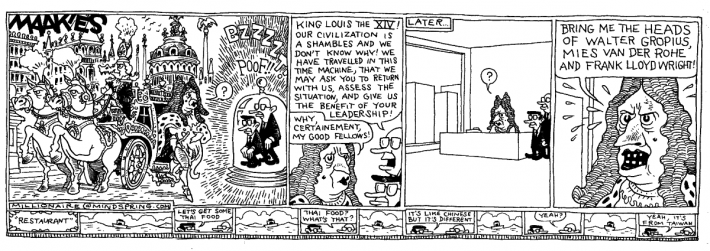
Not sure this cartoon is entirely appropriate, but I could not resist. Presumably sketched by one Maakies, it was posted by TheWhiteSkull at metafilter.com. That is as close as I could come to identifying the artist.

Not sure this cartoon is entirely appropriate, but I could not resist. Presumably sketched by one Maakies, it was posted by TheWhiteSkull at metafilter.com. That is as close as I could come to identifying the artist. [I have since learned from a commenter that the artist’s name is Tony Millionaire.]

Following my recent post of the concluding paragraphs of the Encyclopedia Britannica’s articles on architecture in its 11th (1910-11) and 12th (1922) editions, architectural historian Steven Semes, who teaches at Notre Dame’s architecture program in Rome, sent along some detailed notes to explain the encyclopedia’s curious lapse. Neither article had shown the least awareness of modern architecture’s existence, let alone its upcoming assault on a status quo that seems, in retrospect,  to be far more than reasonably decent.

Here is Semes’s note, which he kindly lets me reprint. His e-mail urged me to pass along his demure suggestion that he is not an expert on the subject.

Yes, you have stumbled on one of the really interesting historical questions of twentieth-century architecture. The Modern Movement was a very small minority of avant-gardists right through the 1920s with minimal impact on the profession at large, especially in the U.S,, where they were almost unknown until the 1930s. The 1920s were still a time of eclecticism and, for the most part, classical revival. Hardly anyone thought the very odd new things in Europe would sweep the “civilized countries” the way they did, from the mid-1930s on.

I break in to note that in 1931 H.L. Mencken wrote an editorial in The American Mercury (where he was editor and publisher) called “The New Architecture” in which he expressed his doubt that modern architecture would make any headway in America. It is a romp to read, of course, but a bittersweet pleasure in light of the ax that history has taken to his judgment. So very sad. The following year,  1932, saw the influential exhibition at the Museum of Modern Art on the International Style.

It wasn’t until after the Second World War that the Modern Movement became the dominant force and quickly suppressed all dissent. If you look at architectural magazines from the two interwar decades you see a progressive increase in attention to “modern” design, but even in the late 1930s, there is a pluralistic coverage of different styles. By 1940, the “Versus” exhibition and conference in New York has modern and traditional work in open opposition, exhibited on two floors of the National Academy of Design. Speaking at the event, Lewis Mumford declares that one floor (the modern work) is “a nursery” and the other floor (with the traditional work) is “a cemetery.” William Adams Delano, speaking for the traditionalists, asks plaintively, “Can’t we all get along?”

All of this points to something quite different from the official history, which continues to maintain that modernism was an inevitable development that slowly but surely emerged as the rational answer to all problems. In fact, it was imposed in a coup d’état starting (in the U.S.) in 1937 when Walter Gropius was installed at Harvard and 1938 when Ludwig Mies van der Rohe was installed at the Illinois Institute of Technology, respectively. It was a very sudden and “top-down” revolution, and that is why your editions of the Britannica seem not to have noticed the “storm clouds on the horizon.” There were none.

The history of modern architecture in the 20th century remains to be written.

Steve expanded on this in another e-mail, which I will reprint in my next post.

Also, because it is one of my bibles, I pass along this link to his book The Future of the Past, which is a diplomatic but thoroughgoing refutation of the preservation orthodoxy that putting modernist buildings in historic districts helps maintain the “authenticity” of the latter. It does not, and his book is required reading to understand why preservationists think so, and why they are wrong.

Posted in Architecture, Architecture Education, Architecture History, Humor | Tagged , , , , , , , , , | 2 Comments

Wandering into Pencil Points

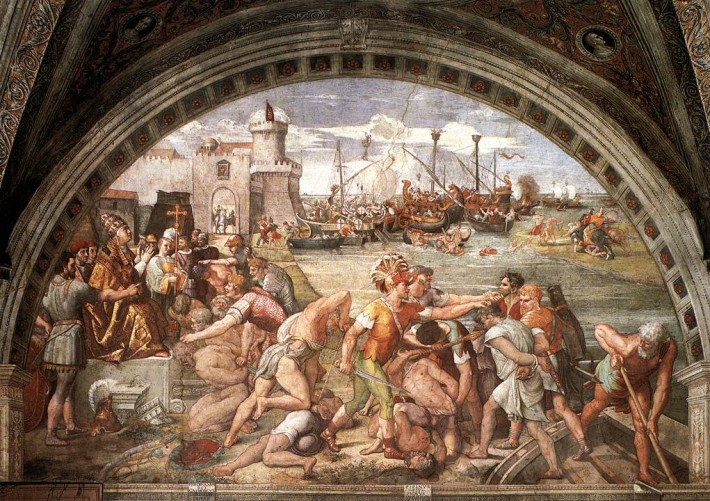
This is not the "document" referred to in the Pencil Points editorial, which I could not find, but it does show the lighthouse (200 B.C.) at Ostia harbor, not far from ancient Rome. (wattsupwiththat.com)

This is not the “document” referred to in the Pencil Points editorial. I could not find that. This is a painting by Raphael, which does show the lighthouse (200 B.C.) at Ostia harbor, not far from ancient Rome. (wattsupwiththat.com)

Yesterday I opened my Princeton selection of reprints from Pencil Points, the journal for architectural draftsmen, to an editorial from the January 1925 issue on the new modern architecture, entitled “Living Architecture.” Here are a couple passages from it:

When we review the architectural styles … [long clearing of editorial throat] …

That great changes in our architecture have taken place in the past few years we all recognize, but upon the question of the worth of the innovations and of the success with which the new problems have been met there is, naturally, disagreement. We are so close to the work that it is difficult to see the thing as a whole.

The important thing is to try to create living architecture. … There is, in many quarters, too much tendency to copy instead of drawing inspiration for new designs from old works. There are on the other hand a few men who show either a willful disregard for or ignorance of traditional design.

We are clearly in the midst of great confusion here. I found myself arrested by the following passage, part of a more general (and generally feckless) elucidation of the idea of copying versus drawing inspiration:

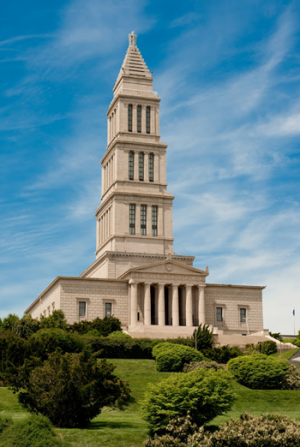
Masonic Washington Memorial, in Alexandria, Va. (mason2b1ask1.com)

Masonic Washington Memorial, in Alexandria, Va. (mason2b1ask1.com)

… In the July issue was shown the document given by Harvey Corbett as the inspiration for his design for the Masonic National Washington Memorial at Alexandria, Va., namely the lighthouse at the ancient port of Ostia, as shown in a restoration in D’Espouy. While Mr. Corbett’s Washington Memorial bears a resemblance to the design shown in the document in that he kept the idea of this beacon in mind while designing the memorial and the general plan of the grounds is similar in shape to that of the harbor at Ostia, as shown in the restoration, there is no very close resemblance between Mr. Corbett’s design and the document to which he attributes his inspiration. The big conception of the lighthouse and harbor at Ostia happened to fit in with the architect’s idea of the right kind of memorial to Washington and he availed himself of so much of the documentary material as seemed useful.

What stopped me, however, was not its fecklessness but that it called to mind that my mother had once told me, as we drove by Corbett’s memorial, that my father did not like it. He never expressed any of his architectural likes or dislikes to me, perhaps because he died in 1978, long before I ever expressed any interest in architecture. But he was a city planner for part of his career, so he probably had his own thoughts on the subject of style. I like to think he was quietly dismissive of what was being built in his heyday, but I don’t really have any sure idea, and this instance hardly bodes well. In any event, that stopped me and so I stop here.

I will be coming back to Pencil Points in future posts, mainly to wonder about why the traditional status quo seemed to surrender to the modernists without a fight in the years after World War II.

Posted in Architecture, Architecture Education, Architecture History | Tagged , , , , , , , , , , | 1 Comment