Parthenon’s “Deep Frieze”

At the Parthenon in 1998 or thereabouts. (Photo by David Brussat)

Parthenon in 1998 or thereabouts. Note horse in corner of pediment. (Photo by David Brussat)

Daniel Mendelsohn’s essay about the Parthenon (and what the Parthenon “means”) in the April 14 issue of The New Yorker made a deft grab for my heart. Ever since I demonstrated my ability, in grade school, to sit and listen while other children analyzed this or that to the hilt of plausibility and beyond, I have had a soft spot for writers who debunk the creative analysis of other writers. Mendelsohn’s essay supplies this service in spades.

Me at the Parthenon. (Photo by David Brussat's camera)

Me at the Parthenon. (Photo by David Brussat’s camera)

The essay takes a while (a delightful and informative while) to get under way but evenually Mendelsohn gets down to defenestrating The Parthenon Enigma, by Joan Breton Connelly. It is great good work. Connelly has upended the field of Parthenon analysis, a field that has persisted for millennia, with her supposedly sudden revelation that its frieze – “Deep Frieze” may be one of the best titles since a review in The New Republic of Scotty Reston’s autobiography called “Reston On His Laurels” – was about the sacrifice of virgins.

I regret to say that the full piece lurks behind a firewall. I cannot get by it. Nevertheless, the link gets you to the essay’s introductory fillip, which is most engaging. Mendelsohn imagines archaeologists of the future looking back 2,500 years at the ruins of One World Trade Center and has them wondering what it means. He thereby places the “creative interpretation” of the Parthenon’s “meaning” in deep context. Read and enjoy! I hope you can find it, even if you must buy a copy at the newsstand!

Posted in Architecture, Architecture History, Art and design, Book/Film Reviews | Tagged , , , | 4 Comments

Arnold and Alice

The Arnold Block before its fire. (forum.skyscraperpage.com)

The Arnold Block before its fire. (forum.skyscraperpage.com)

The Arnold Building had a serious fire in, I think, 2007. Its owner, Pat Cortellessa, who once ran for mayor against Buddy Cianci, lacked sufficient insurance to undertake repairs. This past year the Arnold was taken by eminent domain and the city has apparently found a developer – a young couple, I hear – who plan to turn it into two ground-floor shops and, I think, three apartments above, one a duplex. This is great news for downtown!

I would be very surprised if the Providence Revolving Fund, run by Clark Schoettle, and the Providence Preservation Society, which gave it birth and then independence, did not have a very major hand in making sure this charming edifice was not torn down by Big Parking.

The Alice Building. (durkeebrown.com)

The Alice Building. (durkeebrown.com)

The Alice Building, developed as residential lofts in 2004 by Buff Chace’s Cornish Associates, had as its primary ground-floor tenant a wonderful place called tazza caffe (lower-case), which became sort of a neighborhood hangout – I used to go there a lot when I lived in Chace’s Smith Building – his first residential rehab. Tazza was renovated, but Cornish decided (they say) to kick it out and turn it into three separate retail spaces. It seems the tapas place from across Westminster will expand into part of the old tazza space. I am told that they will be getting rid of the frosted glass that I think may be one reason the space was (apparently) considered poorly used by Cornish. The frosted glass diminished its window-on-the-world view that, I thought, was its chief asset. It also looks as thought they will be adding fenestration that opens to the street. Bravo!

Christopher Ise, of the city’s planning office, has kindly sent me plans from the respective developers of these projects that were the subject of a recent Downcity Design Review Commission meeting that I tried to attend but missed. The two sets of PDFs send to me by Chris are linked as follows: Arnold Building and AliceFacade.

Posted in Architecture, Preservation, Providence, Urbanism and planning | Tagged , , , , | Leave a comment

Eyed by Anne Boleyn

From "The Creation of Anne Boleyn"

From “The Creation of Anne Boleyn”

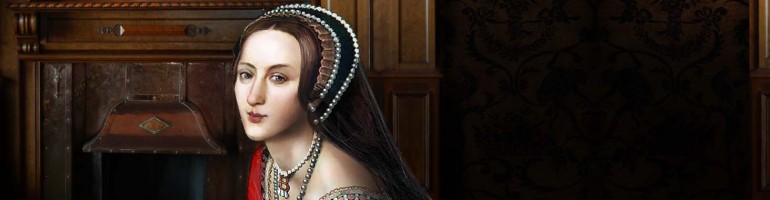
Here is a passage from Bring Up the Bodies, the second, following Wolf Hall, of Hilary Mantel’s trilogy (the third is yet to be published) on Henry VIII’s romantic life. In this passage, seen from the perspective of protagonist Thomas Cromwell, the king’s powerful secretary, Anne is wearing out her welcome, having given Henry as of 1535 a daughter (eventually Queen Elizabeth I) and a miscarriage. The environment around the monarch, who wants a son and heir, and his court has become increasingly dangerous.

[Henry’s] relations with the queen, as the summer draws to its official end, are chary, uncertain, and fraught with distrust. Anne Boleyn is now thirty-four years old, an elegant woman, with a refinement that makes mere prettiness seem redundant. Once sinuous, she has become angular. She retains her dark glitter, now rubbed a little, flaking in places. Her prominent dark eyes she uses to good effect, and in this fashion: she glances at a man’s face, then her regard flits away, as if unconcerned, indifferent. There is a pause: as it might be, a breath. Then slowly, as if compelled, she turns her gaze back to him as if he is the only man in the world. She looks as if she is seeing him for the first time, and considering all sorts of uses for him, all sorts of possibilities which he has not even thought of himself. To her victim the moment seems to last an age, during which shivers run up his spine. Though in fact the trick is quick, cheap, effective and repeatable, it seems to the poor fellow that he is now distinguished among all men. He smirks. He preens himself. He grows a little taller. He grows a little more foolish.


Posted in Art and design, Books and Culture, Uncategorized | Tagged , , , , | Leave a comment

Column: Build a real memorial to Eisenhower

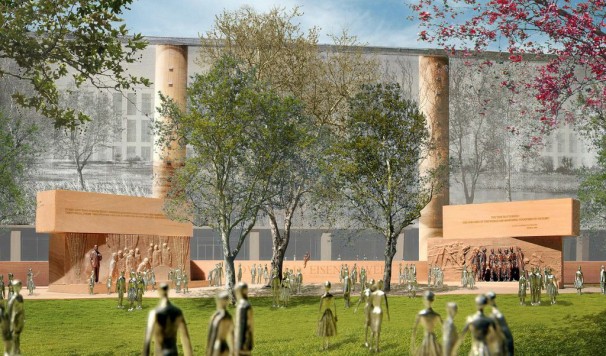
Sculptural core of Frank Gehry's proposed Eisenhower memorial, in Washington. (Eisenhower Memorial Commission)

Sculptural core of Frank Gehry’s proposed Eisenhower memorial, in Washington. (Eisenhower Memorial Commission)

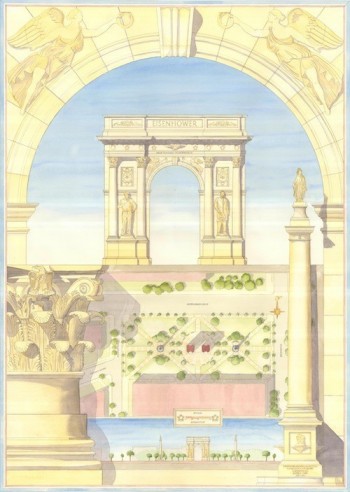
Winning entry by Daniel Cook in counter-competition sponsored by the National Civic Art Society.

Winning entry by Daniel Cook in counter-competition sponsored by the National Civic Art Society.

The horizon keeps receding for Frank Gehry’s notion of what a memorial to Dwight Eisenhower should look like. The other day his design was rejected by the National Capital Planning Commission (NCPC) for narrowing the view corridor down Maryland Avenue to the U.S. Capitol.

Recently, the U.S. Congress slashed a $51 million request by the Dwight D. Eisenhower Memorial Commission (created by Congress in 1999) to $1 million, blocking money for construction and leaving the memorial commission with, as an editorial in The Weekly Standard put it, “barely enough money to pay the electric bill and tip the cleaning lady.”

The Eisenhower family has remained adamant that the gargantuan scale of the Gehry design violates the general’s personal sense of humility and that its features disrespect his military and political achievements.

To read the rest of this column, please visit The Providence Journal.

Posted in Architecture, Art and design, Urbanism and planning | Tagged , , , | Leave a comment

Philip Johnson’s Nazi decade

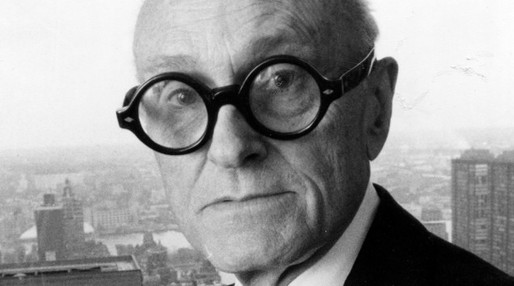
Philip Johnson in his Corbusier spectacles. (archinect)

Philip Johnson in his Corbusier spectacles. (archinect)

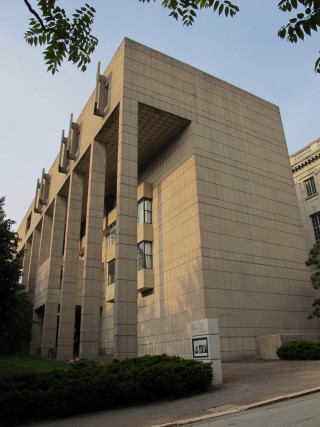
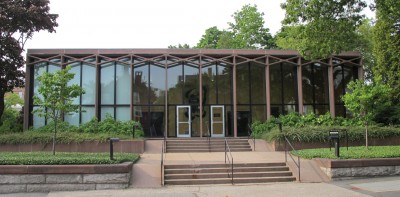
Here is a brave piece by Matt Novak for the Paleofuture page of Gizmodo, reprinted at Archinect. It is about the designer of two buildings on the campus of Brown University, in Providence: the Albert and Vera List Art Building (1971) on College Street and (predating that by a decade but less well known) the Center for Computation and Visualization on George Street. Yes, the renowned Philip Johnson was – shhh! – a Nazi.

List Art Building. (midcenturymundane.blogspot.com)

List Art Building. (midcenturymundane.blogspot.com)

Novak’s article, “One of America’s Most Famous Architects Was a Nazi Propagandist,” was written in connection with the anniversary of the opening of a more notable building by Johnson, the New York State Pavilion at the 1964 World’s Fair, in Flushing, N.Y.

The piece is interesting in part because Novak sort of unbuttons his shirt and throws open his chest to the slings and arrows of carefully muted consternation that he knows will be aroused by the mention of Johnson’s decade dedicated to the Nazis and the isolationist far right during the Depression and early World War II. Johnson was with German troops when they stormed into Poland in 1939. I did not know that. Novak says he thinks architects should be open about Johnson’s infatuation with Hitler, which he never denied – only going so far as to acknowledge his own “unbelievable stupidity” as a youth.

But Johnson’s fling with the dictator is not something that was in his distant past by the time he shifted his allegiance to modernism. No, his time in Germany sucking up to the Nazis and his work as a Nazi propagandist in the U.S. come after his curatorial work for the famous exhibit on “The International Style” at the Museum of Modern Art. Novak links his article to Johnson’s FBI file, which was assembled at the request of the White House to vet his suitability to perform work for the World’s Fair. (Check it out!)

Center for Computation and Visualization. (midcenturymundane.blogspot.com)

Center for Computation and Visualization. (midcenturymundane.blogspot.com)

Yet there has been a veritable cone of silence imposed on the subject by the modernist architectural establishment. Bringing it up is the most annoying sort of faux pas. It just is not done. It is equivalent to announcing to the office that your boss’s fly is down.

So I congratulate Matt Novak and welcome him to the heat of the kitchen.

“Old, old news” shushed someone on TradArch this morning when Novak’s piece was posted there by the brilliant Chicago classicist Timothy LeVaughn. A shout out to him, too, for his courage. And please don’t forget to read the hundreds of very interesting comments! (Not on TradArch, though, where, except for a couple of very brief comments, the curtain was allowed to drop on Johnson before the subject could be transformed into a thread.)


Posted in Architecture, Architecture History, Providence | Tagged , , , , , , | 2 Comments

“America’s Urban Future”

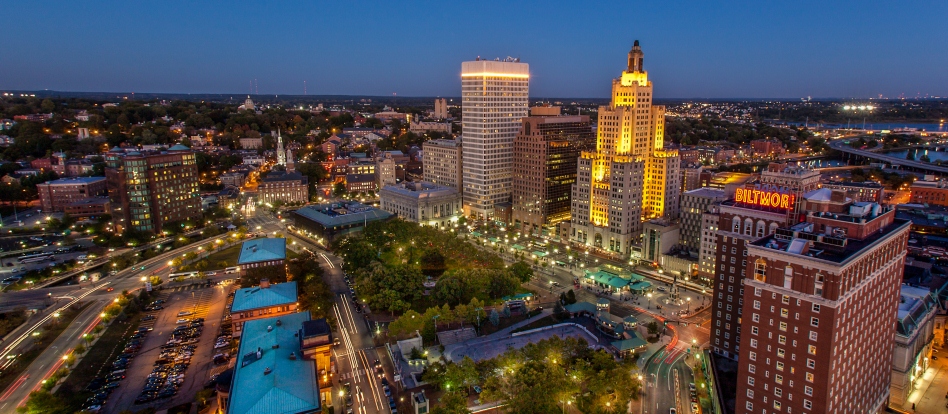
Kennedy Plaza in downtown Providence. (goprovidence.com)

Kennedy Plaza in downtown Providence. (goprovidence.com)

Vishaan Chakrabarti, a partner in the New York starchitect-wannabe firm SHoP (yes, the now almost mandatory ridiculous name), has nevertheless written an excellent piece about urban/suburban trends for the New York Times. It suggests that the feds should shift away from their decades-long strategy of taxing cities in order the bribe people to move to (or stay in) the suburbs. He paints an optimistic statistical portrait of where things are headed in America. It is called “America’s Urban Future.”

Just happened to see this nice image of downtown Providence. Why does it make me feel guilty? Well, I am hoping to charm readers with this image of my city, but it is a lie because the owner of the Industrial Trust, who thinks the city and state will assist him to redevelop the beloved Art Deco treasure, has doused its glorious golden facade lights. What an ignoramous! Still, it is a lovely picture, and I’ll warrant the lights will go on someday.

Posted in Architecture, Providence, Urbanism and planning | Tagged , , , , , | 1 Comment

Wings: Frank Lloyd Wrong

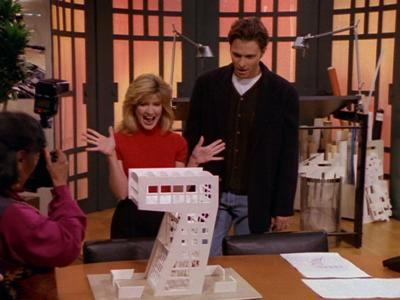
Wings episode 129

Wings episode 129

Here is episode 129 of the TV show Wings, “Good-bye, Frank Lloyd Wrong,” about when a couple is offered a free house shaped like a 7 by a famous architect.

The episode is here.

Posted in Architecture, Humor | Tagged , , , | 1 Comment

Proposed Czech national library

czech+national+library++prague

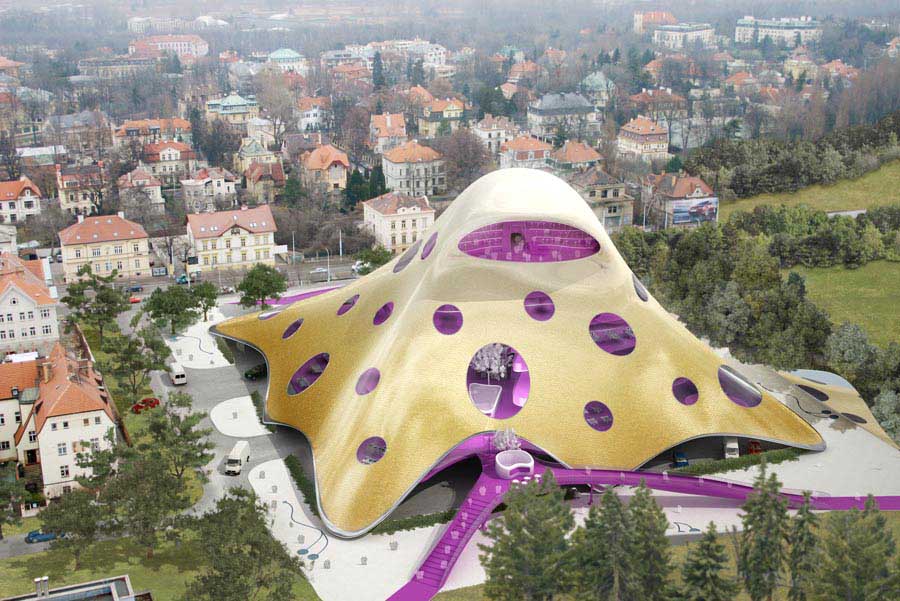
New national library proposed by the late Jan Kaplicky for Prague (andersonlayman.blogspot.com)

A friend, commenting on the proposed intermodal center for Queens a few posts back, said he could not imagine anything more ridiculous. I asked him whether he’d ever seen the proposal for a new Czech national library in Prague. He had not, so I sent the above to him.

The library proposal by the late Czech architect Jan Kaplicky of London was selected unanimously by the jury of an international competition in 2007. The president of Czechoslavokia, Vaclav Klaus, rallied opposition to it, but Kaplicky died and with him died his proposal. Yet many in Prague’s cultural elite backed the Kaplicky proposal (known as “Eye Above Prague”) as representing the nation’s need to continue its progress into the modern era. Opponents of the proposal were condemned as anti-democratic, even though there was nothing democratic in its selection.

The Queens proposal and the Czech library proposal both epitomize the disconnect between modern architecture and reality. These proposals are not designed to answer any public need or to reflect the nation’s culture or national sense of self, but are meant to stroke the ego of the architect, which is isolated from reality – except for the reality of modernist architectural practice, which is intended to keep reality at a certain distance.

Some readers may assume that I am making this up out of whole cloth. But in fact students of architecture are taught to treat the public’s skepticism toward their work as a feather in their cap. A book assigned in many architecture schools makes this point forthrightly. (I will insert the quote here if I can find it.) Architects are unpopular with the public not just because their work is ugly and proud of it, but because the profession has developed a reputation for browbeating its clients into accepting designs at odds with clients’ taste.

A famous episode of the TV show Wings bears this out. The clients, workers at the airport of Nantucket, just married, have been offered a free house design by a famous architect who is a frequenter of the island’s airline. He designs a house that looks like a “7” and, behind his back, the husband and wife battle over who will tell him they don’t want it.

I will try to find and post this episode.

Posted in Architecture, Architecture Education, Other countries | Tagged , , | 1 Comment

Which stadium “is” Qatar?


0intervie_660

Stadium proposed for Qatar by Foster & Partners.

Which stadium better “reflects Qatari design and culture”? One of the two has been anointed by the nation’s top sports commission, whose chairman declared that it does reflect the nation’s culture; the other is one of several designs whose collective inability to “reflect” Qatari culture drove Qatar to cancel the competition for another stadium for the 2022 World Cup, to be held in Doha. So which is the anointed one? Here is an article in bdonline.co.uk about the cancelled competition.

hadidsstadium-e1387127363370-1

Stadium proposed for Qatar by Zaha Hadid.

Posted in Architecture, Humor, Other countries | Tagged , , , | 1 Comment

Column: Dr. Downtown’s stroll with Dr. Street

Dr. Downtown examines pedestrian situation on Thomas Street, in Providence. (Photo by David Brussat)

Dr. Downtown examines pedestrian situation on Thomas Street, in Providence. (Photo by David Brussat)

Dear Dr. Downtown: Please tell us about your “walkabout” last weekend with the author of Street Design: The Secret to Great Cities and TownsStrolling in Stratford.

Well, the doctor thought that Dr. Street (aka John Massengale, New York architect and historian) might have some more sage advice for Providence. The author, who is also a founding member of the New York chapter of the Congress of the New Urbanism, lives on the Upper East Side of Manhattan.

Dear Dr. Downtown. Enough dagnab credentialism! Nobody is interested in your confused persona, or that of “Dr. Street.” Just tell us about your walk and what you learned from it. — Cantankerous in Canton.

Dr. Street actually visited in 2012 before he finished his book (with fellow walkologist Victor Dover). He had criticized the car-centric design of streets even in beautiful walkable Providence. That day, we headed down Angell Street, which turns into Thomas after crossing Benefit, then swoops down past the Providence Art Club. Dr. Street expressed dismay at the cars rocketing past helpless pedestrians on Thomas. Its brick sidewalk is narrow and lacks a protective screen of parked cars. “This street is too wide,” he said. He made that very same criticism on our walk this past Saturday.

Dear Dr. Downtown: You mean you took the same route as you did the first time? How redundant! The “doctor” is not a very good journalist! — Eyeball Roller in Island Park.

To continue reading this column, please visit The Providence Journal.


Posted in Architecture, Architecture Education, Architecture History, Humor, Preservation, Providence, Urbanism and planning | Tagged , , , , , , , , , , , , , | Leave a comment