Gingerly in Brooklyn

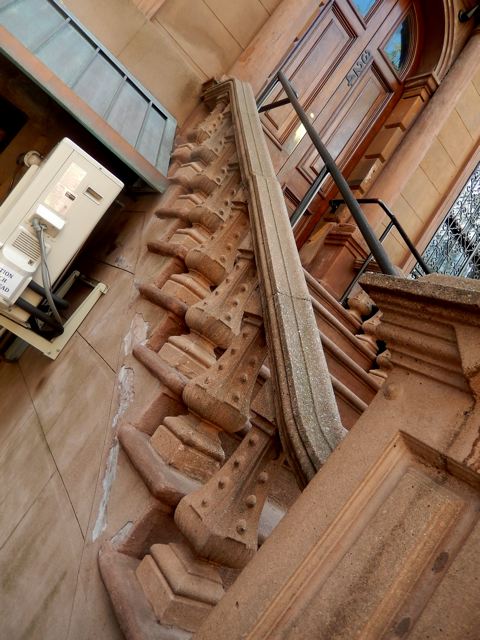
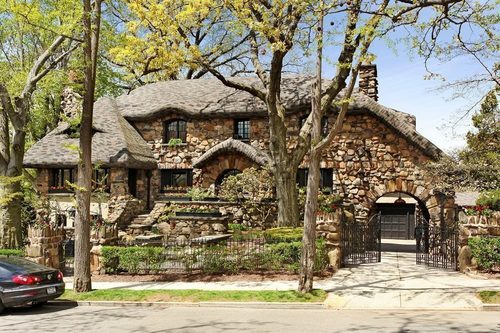
75702442The house above, in the Bay Ridge section of Brooklyn, is regarded, according to this piece about the gingerbread on Curbed.com, as New York City’s most charmingly adorable “fairy tale” residence. But it has been sitting on the market, watching its price fall year after year, now down to $10.5 million. What’s wrong? Yes, that’s a lot for most people, but more quotidian houses and condos go for more. The townhouse I wrote about recently by Peter Pennoyer on East 78th has units under contract for similar amounts, even though it’s not even built yet, with the penthouse asking $29 million.

Am I the only one bowled over by the photo above only to be underwhelmed by shots of the interior? It would be considered quite extraordinary an interior for most houses. You approach a mansion of magic but enter only to find a level of luxury that seems the work of a very talented interior designer rather than the “fairy tale” romantic setting that you are expecting. The inside just does not live up to the outside.

DSCN7910Or maybe it’s the neighborhood. I don’t know for Bay Ridge, but every nice neighborhood has its dumpy blocks. What’s next door? When Victoria, Billy (age 5) and I were looking for a house in Providence we found a most enchanting Beaux Arts house whose inside lived fully up to its outside, but which was set on a street of decidedly downmarket single-families – and it was not the best section of Mount Pleasant, and right across from a poorly rated elementary school. We took a pass, and quite sadly, because we loved the house, but in retrospect we doubt that we would have felt happy there.

The Brooklyn gingerbread may be surrounded by places up to all but its most romantic standard. But step inside and, though beautiful, it’s a letdown because it does not have the exterior’s mythic, storybook princess-in-the-tower connotations – which, of course, may not be for everyone. Anyway, that’s how it struck me. Better knock that price down again.
Posted in Architecture, Art and design, Providence | Tagged , , , , | Leave a comment

Oops: 12:30 p.m. in Newport

Today’s groundbreaking for an addition to the Tennis Hall of Fame at the Newport Casino, is at 12:30 p.m. NOT 11:30 a.m. Sorry about the error.

Posted in Architecture, Rhode Island | Tagged , , | 1 Comment

Tennis in Newport, anyone?

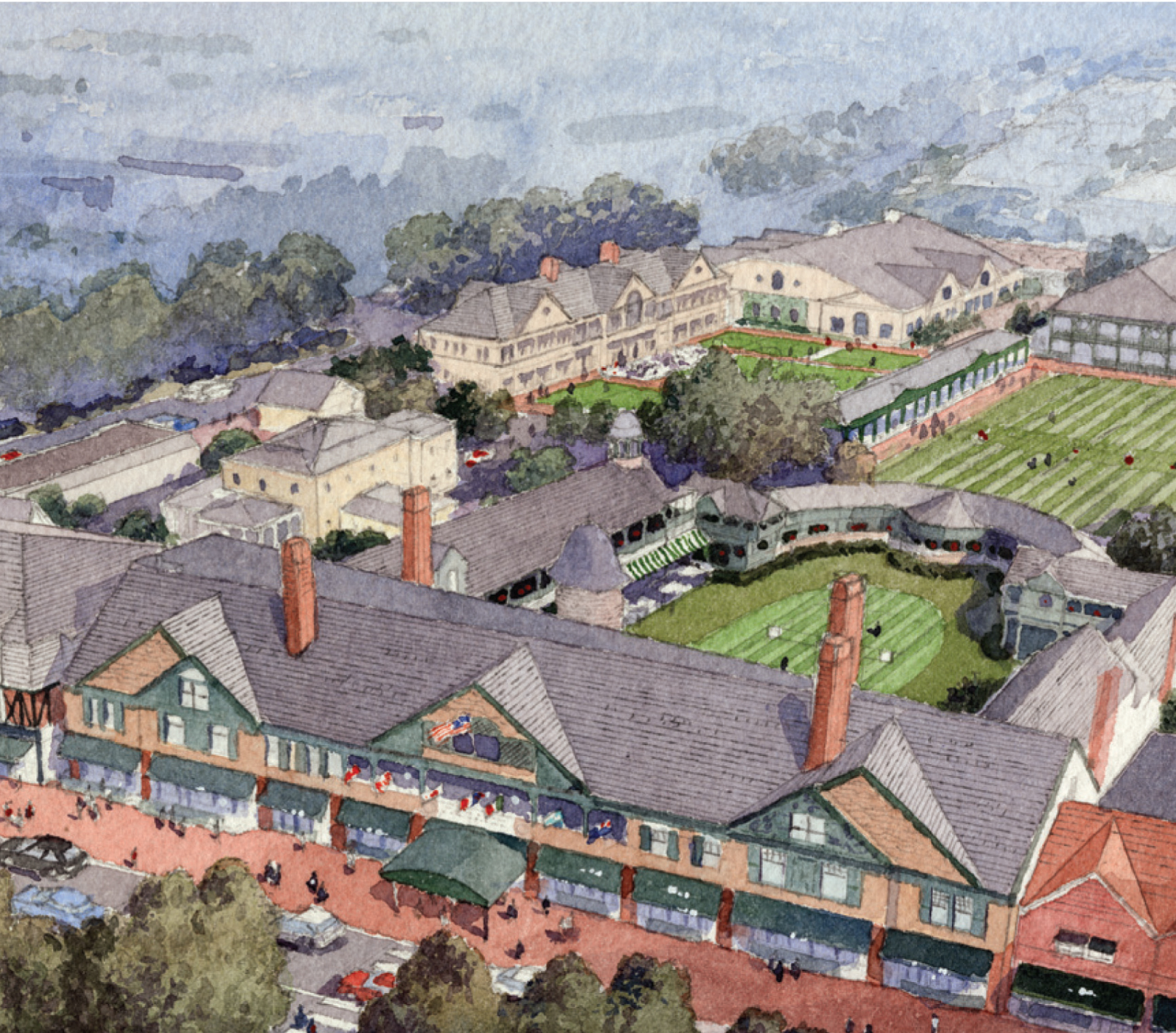
The addition is seen to the rear, on Memorial Boulevard around the corner from the Casino, which is on Bellevue Avenue.

The addition is seen to the rear, on Memorial Boulevard around the corner from the Casino, which is on Bellevue Avenue.

Here is an illustration of the proposed addition to the Tennis Hall of Fame, in Newport, which includes the famous Casino designed by McKim, Mead & White back in the 1880s. The groundbreaking is tomorrow, Wednesday, at 12:30, and after hearing from a string of politicians and tennis officials, who I am sure will have scintillating things to say, you can hear Gary Brewer, a partner of the Robert A.M. Stern Architects (RAMSA), talk about the building’s design, for which he is the lead architect.

I am excited that the Hall of Fame’s august board of directors chose a firm that was likely – though perhaps not a slam dunk if you know its work well – to build an addition to the Casino that will not thumb its nose at MM&W.

Posted in Architecture, Rhode Island | Tagged , , , , , | Leave a comment

Beauty isn’t so difficult

Prague

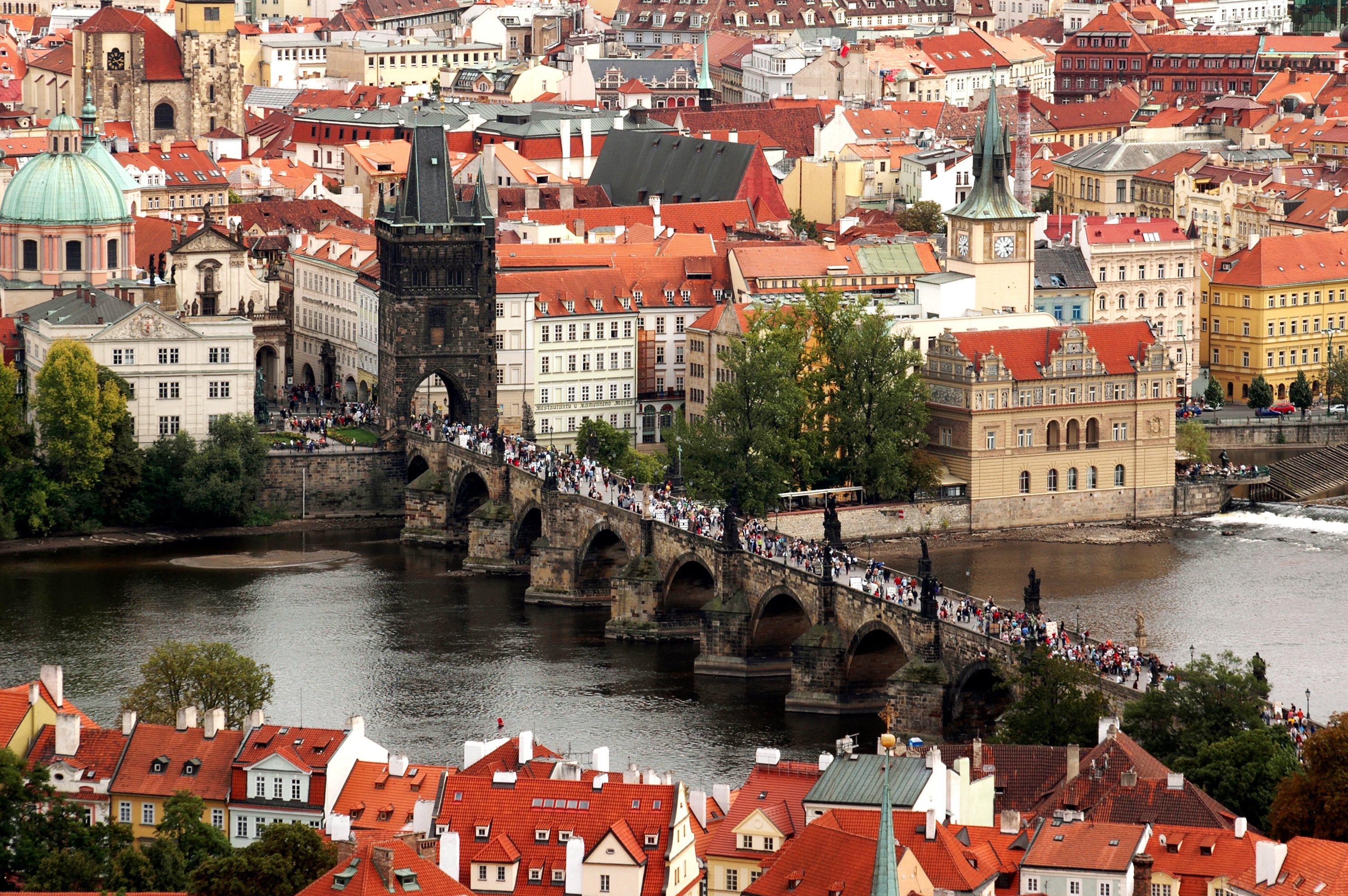
I took this from the bridge in the photo above, looking toward the Old Town.

I took this from the bridge in the photo above, looking toward the Old Town.

How do they do it? Beauty. Other things being equal, people spend much of their discretionary time in places where it is enough merely to be there to feel pleasure beyond what can normally be felt at home. Building beauty is not rocket science, or unduly expensive. Most societies have, in the modern era, simply decided against it. Places like Providence have destroyed less of their beauty than other places, and built less ugliness in its place. Prague is another such place. Why don’t other places follow its example? There are explanations for this – they are not good ones, in fact they verge on evil, but they do exist – but rather than drag them out here I will simply post this piece of beautiful photos of Prague published by huffingtonpost.com.

That’s my case and I’m sticking to it.

(I trust that all readers understand that I mean amid the broad range of choice in methods available for improving a society, building beautiful rather than ugly is an easy one compared with choices on such matters as improving the schools, improving the environment, improving the environment for business, reducing the crime rate, reducing the income gap, etc. I do not mean that making beauty is “easy.”)

The photo of Prague at the top of this post is from iises.net, web site of the International Institute of Social and Economic Sciences, which held its annual conference in Prague last September. I visited in 2005 and have my own favorite shot of Prague [which is the inset photo above. The reblog has upset the original post’s arrangement, for which I can only express my regret. The architecture of cities and buildings doesn’t degenerate quite so easily as the architecture of a piece of illustrated bloviation on the internet.]

Posted in Architecture, Development, Photography, Providence | Tagged , , , , | 4 Comments

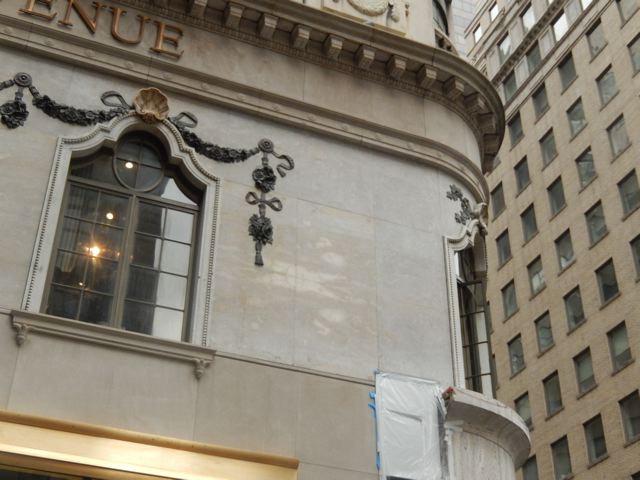
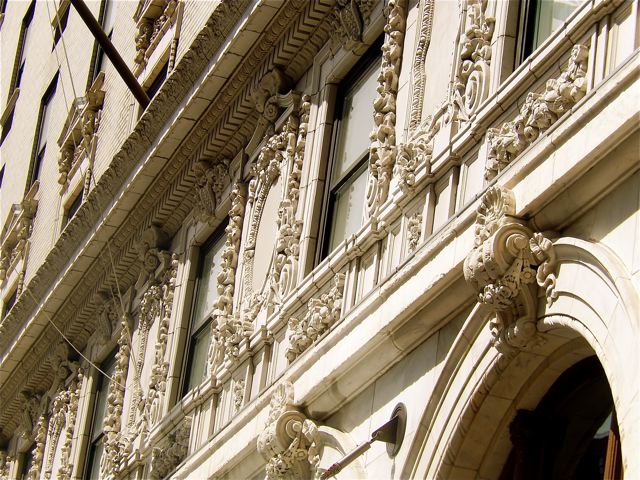
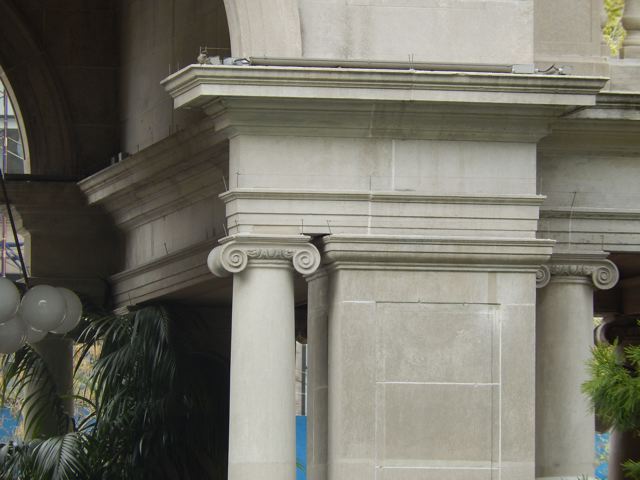
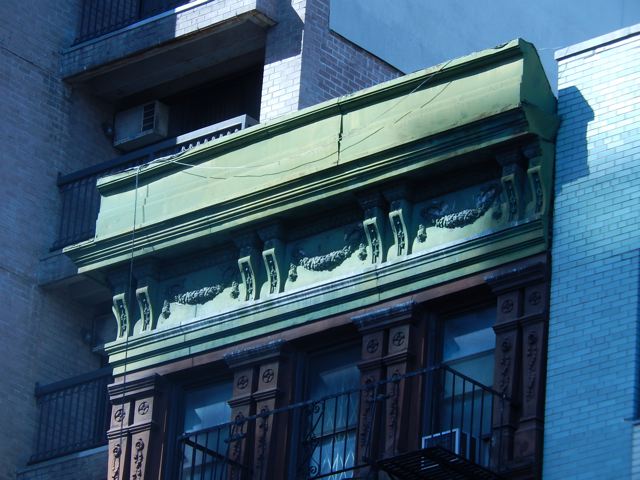
Details, details, NYC edition

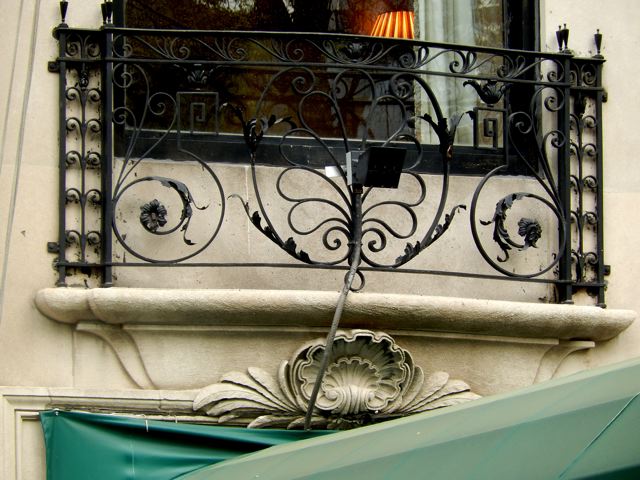
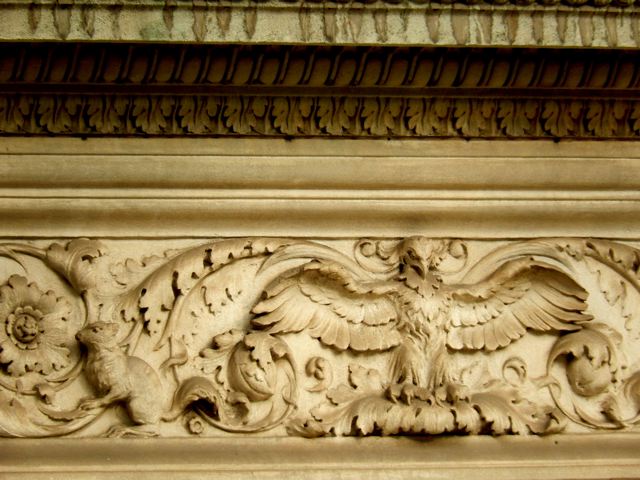
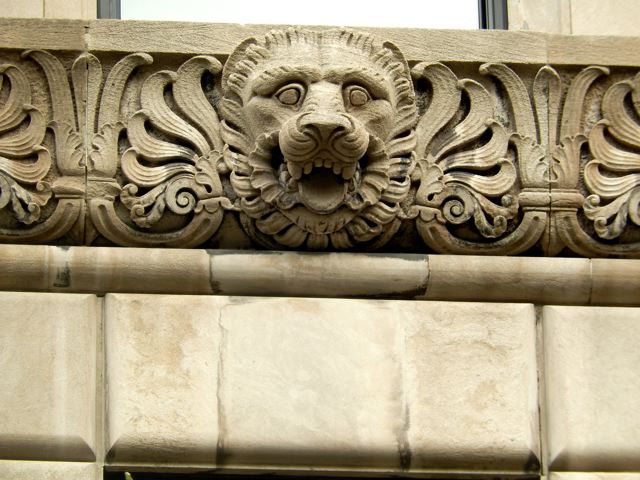
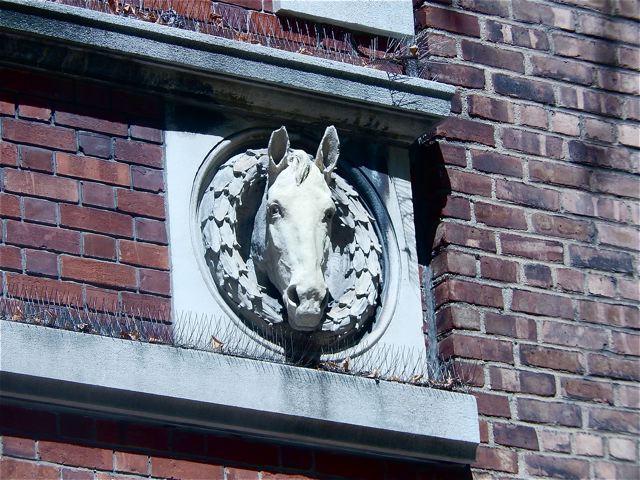
DSCN1604Manhattan at its best may be seen at that level of scale – the very small, the small and the submedium – that modern architecture eliminates almost entirely from its works. That’s why modernism is impressive only from a distance, because only then do its medium-sized features seem small and its small features offer some offset to blankness. (But it does not really fool any eye, practiced or unpracticed.) Nikos Salingaros writes of how architecture to be good must indulge every level of scale – our biological imperatives demand it – the ones that have promoted our instinct for survival through the intuitive analysis of detail, the footprint of the tiger, say, for eons. That’s why we love New York’s old buildings, with details high and low, ornate and mundane. So here are some loving shots of those lovable details that we perceive with an interest that slices to our core being:

DSCN1033DSCN1036DSCN1707DSCN1681DSCN1481DSCN1222DSCN1121DSCN1463DSCN1130DSCN1659DSCN1661DSCN1658DSCN1125DSCN1494

Posted in Architecture, Art and design, Photography | Tagged , , , , , , , | Leave a comment

Drinking in Manhattan

DSCN1316

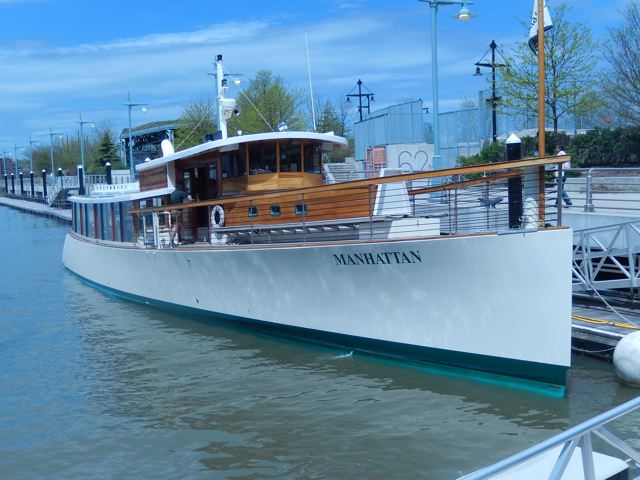
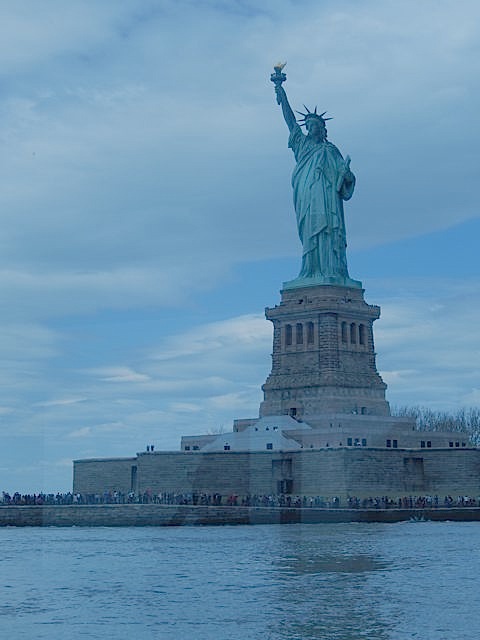
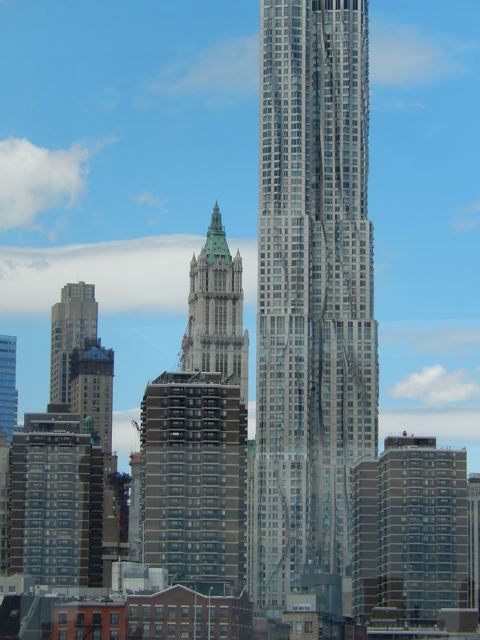
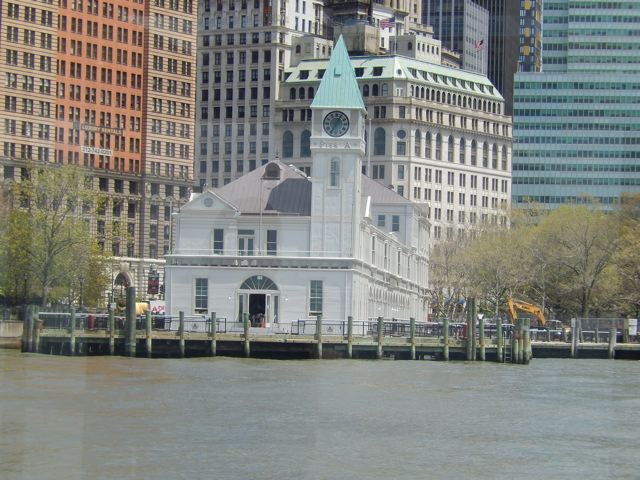
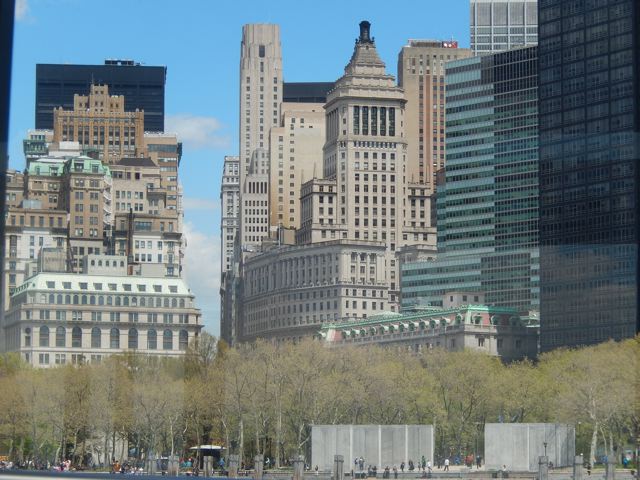
Kristen Richards, of ArchNewsNow.com, got Victoria, Billy and I onto a tour boat sponsored by the New York chapter of the American Institute of Architects. The vessel, of the Classic Harbor Line, is called the Manhattan, appropriately enough, and the tour was led by AIA’s John Kriskiewicz, who talked us all the way from Chelsea Piers on the Hudson, around Lower Manhattan and up the East River to about the Chrysler Building, and back around the horn again, 90 minutes in all. A marvelous tour, and many thanks to Kristen and Classic Harbor’s Meghan May Hart for arranging it all.

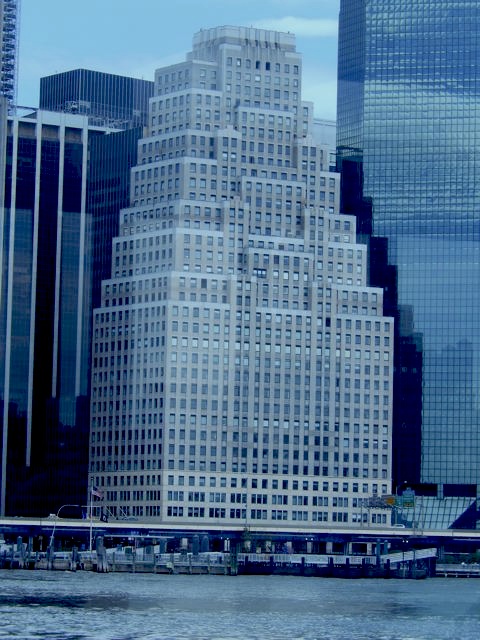
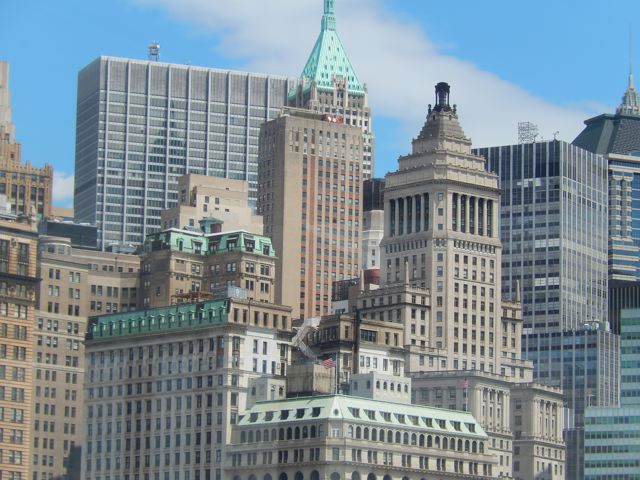
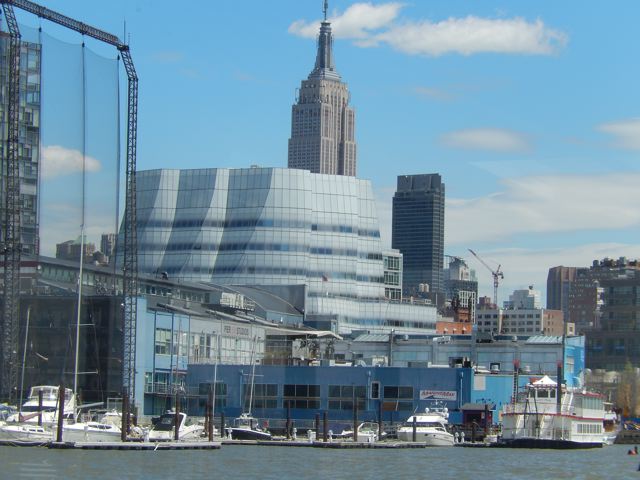
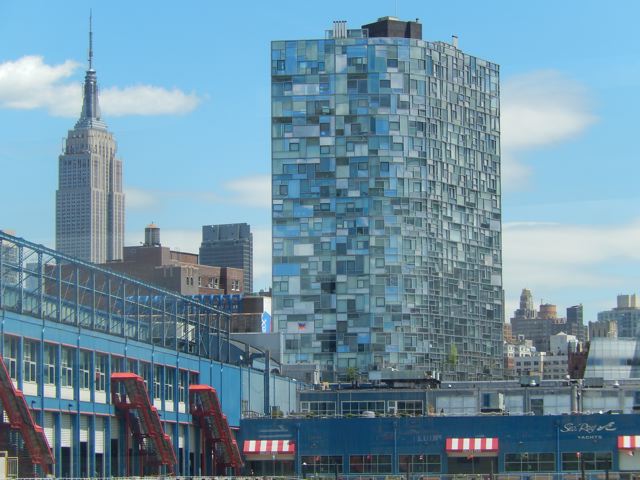
The ten photos hardly reflect all there was to see in two loops along the lower third of the island. Photographically, I am more interested in shooting the traditional buildings of old New York (and bombarding the others). Several of the photographs suggest the extent to which the old feel of Manhattan circa 1940 or 1950, with its jumble of 1916 zoning law setbacks, can be captured by narrowing your camera’s focus on a particular set of old buildings – and the extent to which that recapture is difficult, if not impossible. Tedious modernist buildings are now so ubiquitous when the skyline is viewed from a distance that the city’s modernity cannot be blinked away. Sustained bouts of real beauty in the city may be experienced mainly by walking between the avenues, not by taking in the skyline from a distance. This is sad, but it could change in future decades if more buildings by Robert A.M. Stern, Peter Pennoyer, or even George Ranalli (if he can go higher in his special way than he did with his Saratoga Avenue Community Center, in Brooklyn) – and of course please fill in the blank with others who have designed traditionally inflected buildings in Manhattan in recent years. And don’t forget to count the future work of the classicists emerging from various schools and programs today. Someday they may catch the wave of the future, and the Jetson cartoon of today may recede slowly into the sunset.

New York may not be a beautiful city today – no doubt arguments can be hosted on that issue! – but it is certainly an amazing city. Nothing like it in the world. Even such extraordinary skylines as that of Hong Kong, Tokyo and other great Asian cities, or Dubai, or in other parts of the world, hold no candle to New York – precisely because its classic skyscrapers offer the sort of spice that every other notable big city skyline lacks.

It was great to discover that however much classic beauty has receded on the Manhattan skyline, it remains that skyline’s most romantic feature. What a great boat ride!

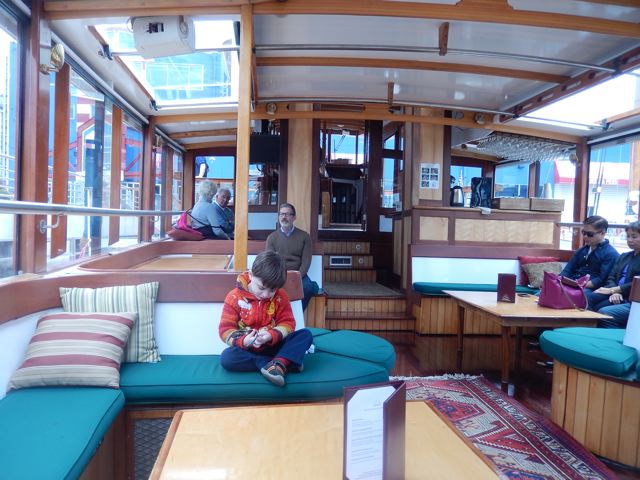
I am too tired to label the buildings in the pictures below, but many readers will know them well. And I will answer any questions of identity that I can. By the way, the bearded gentleman in the first photo below, seated and looking toward the camera over the head of my son Billy, is John Kriskiewicz, the boat tour guide. And speaking of the boat, Kristen and I were in agreement, later that evening, that the vessel is of that enviable type of yacht that was featured as the boat owned by the U.S. senator that was blown out of the water by Japs on Dec. 7, 1941, in the excellent sci-fi film The Final Countdown (1980).

DSCN1319DSCN1371DSCN1357DSCN1429DSCN1442DSCN1436DSCN1440DSCN1458DSCN1461

Posted in Architecture, Photography, Urbanism and planning | Tagged , , , , | 2 Comments

Starchitorture torched

Walk-in cancer treatment center in London, by Steven Holl. (curbed.com)

Walk-in cancer treatment center in London, by Steven Holl. (curbed.com)

Curbed.com recently published a list, compiled by Spencer Peterson, of rejected modernist projects proposed by certifiable starchitects. Of this list it may be said with confidence that it is not long enough, not by far. The seven rejects include Steven “Hollible” Holl’s horrible intervention in a lovely London neighborhood. The walk-in cancer treatment center was cancelled when – well, let’s here it from the Architects’ Journal – when “members ‘raised concerns about the proposed glass façade,’ despite Holl’s stated drawing of inspiration from ‘the deep history of the area.’ ”

Huh? Shouldn’t it be “because of” rather than “despite” Holl’s obviously bogus historical inspiration? If I were a member of any panel of architectural reviewers and I’d been shown the drawing above to reassure me that the architect drew inspiration from “the deep history of the area,” I would shut him down for insulting my intelligence. Maybe this is what the committee did, but that’s not what the article says. Hmm.

High on the list (and last on it, too) is Frank Gehry’s proposal for a memorial just off the national Mall to Dwight Eisenhower. I certainly hope this project was not placed on the list by mistake. It has been rejected by one committee but not cancelled.

Of course, it was totally depressing to see Bob Stern on the list. He may be considered America’s only classical starchitect. So while we normally would not like to hear about the rejection of a RAMSA project, in this case – a strip of entertainment schlock near Gehry’s philharmonic schlock in L.A. – its rejection is not nearly as depressing as its having been proposed in the first place. Many do not realize that the Stern “brand” fails to reflect the regrettable diversity of his firm’s product, which includes not just great traditional work such as 15 Central Park West (with which many, including many clients, are familiar) but modernist abominations like the Comcast Center, a tower in Philadelphia. Stern may not admit it but his L.A. rejection is probably good for his own business. If he were to put out his shingle solely as a classicist, RAMSA’s bottom line would benefit, but perhaps not as much as the beauty of the world. As matters stand, the firm’s transgressive quality strikes a chord similar to that struck famously by Philip Johnson when he likened architecture (or at least his own architecture) to the oldest profession.

Still, leaving aside that Peterson’s list of rejected modernist projects only whets the refined appetite for more, it is sure to warm the heart of any advocate for beauty.

Posted in Architecture | Tagged , , , | Leave a comment

Annoyer of Pennoyer

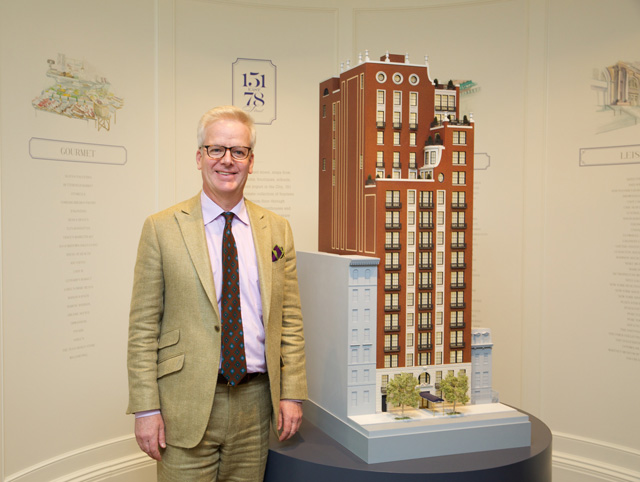
Peter Pennoyer stands next to model of 151 E78th St. (Julie Starrett/YIMBY)

Peter Pennoyer stands next to model of 151 E78th St. (Julie Skarratt/YIMBY)

Some classicists are up in arms over an interview with Peter Pennoyer by Nikolai Fedak on the web site YIMBY – Yes In My Back Yard, as opposed, I suppose, to NIMBY. But I don’t think Fedak phrased his questions in order to imply any disrespect for Pennoyer, who will be speaking in Boston on June 12. Rather, Fedak has such a profound ignorance of architecture that what Pennoyer designs just seems slightly weird to him, as if, since we live in modern times we must have “modern” architecture, and any design that doesn’t belong in a Jetsons cartoon is there only by accident. You see, it’s the cartoon rooted in the second half of the 20th century that is normal; an authentic building rooted in the architecture of the last 2,000 years is some sort of curious alien interloper.

I would no more think of getting mad at Fedak for asking whether Pennoyer’s penchant for Federal and Regency architecture “is rooted in the time frame following the Revolutionary War” than I would get mad at my son, age 5, for thinking that ninety-twelve is a number. It’s what happens when, like almost anyone writing about architecture these days, you know as much about the subject as a 5-year-old does about mathematics – including the most noted architecture critics.

Pennoyer’s 17-story residential building at 151 E78th St. is enormously attractive. If such buildings had been the norm in Manhattan for the past 70 years, New York would be not just a great but a beautiful city. Imagine how New York would look today if the energy that has gone into its glass boxes and its increasingly cartoonish evocations of “the future” had instead continued to infuse the eclectic creativity of traditional design. Imagine if advances in materials and engineering had been devoted to bringing greater and greater virtuosity to the ancient forms of beauty in architecture. Instead, energy has gone to escalating accomplishment in the realms of the tedious and the ridiculous. Instead of a succession of beautiful facades on the streets of New York, we have what were once lovely streetscapes pockmarked by large and fugly carbuncles that are aging badly. Very sad.

Pennoyer will speak at the Boston Atheneaum at 6 p.m. on Thursday, June 12, along with his co-author, the historian Anne Walker, who have written New York Transformed: The Architecture of Cross & Cross – a largely forgotten firm whose work dominated the streets of Manhattan in the 1920s and ’30s. In short, they designed many of the buildings that leave the impression, today, that New York is beautiful. No, New York has many beautiful buildings but is not a beautiful city. It is a great city but not a lovely (or, some might say, a lovable) city. Sorry. That is the fact. Blame modern architecture. The event (without the histrionics) is sponsored by the New England chapter of the Institute of Classical Architecture and Art.

Posted in Architecture, Architecture History | Tagged , , , | 3 Comments

ArchNewsNow in person

My writing has appeared on the ArchNewsNow.com web site run by Kristen Richards, whom I had the pleasure of meeting in New York City last night. I invited her up to see my view. On the 41st floor of our hotel, the Doubletree Suites at Times Square. No, my wife Victora and son Billy were there, too, looking out the window. Kristen gave me a copy of Oculus, the journal of the New York chapter of the American Institute for Architects, and right on the cover was Times Square under reconstruction, right below us. The crowds are even worse than normal, squishing onto 7th Avenue people who would normally be creeping down Broadway, which is torn up at this point.

Anyway, after the view, Billy and Victoria went off to visit her sister, who lives in the shadow of the Flatiron Building, and Kristen and I went to the roof garden of Donnelly’s, an Irish pub on W45th. Kristen’s a delight, everything you’d expect from a woman who takes seriously her journalism and its principle of objectivity – honored more in the breach, I think than otherwise. She’s modernist in her sympathies, and yet even though she has control of this global forum for writing about architecture, and could easily dump my stuff into her round file, she runs many of my columns and blog posts – in the face of predictable objections for modernists who don’t like any rain to fall on their cozy orthodoxy. So, of course, Kristen is one of my heroes and we had lots of fun chatting about … well, I won’t tell any stories out of school.

I also am unable to post a photo of Kristen taken while we were “entre booze” – any more than I was able to post George Ranalli’s community center. The computers at the business center at the Doubletree won’t let you copy photos on the web to other locations. Hmm. Kristen pointed out, regarding my camera, what I had not realized, that it has WiFi and can send photos – but it seems I’d have to download a … well, whatever it is, it is back in Providence in the box my camera came in. Oh well. I will try to do as I did with George’s building and link to a photo of Kristen. Here she is!

Well, so I thought. The computer would not let me copy (not even copy!) the link to a site topped by a photo of Kristen. But maybe I can type it into the link icon on wordpress. If so, it will be here. It is an interview of Kristen by the Association of Architecture Organizations.
Posted in Architecture, Art and design, Urbanism and planning | Tagged , , , , | Leave a comment

Manhattan transfer?

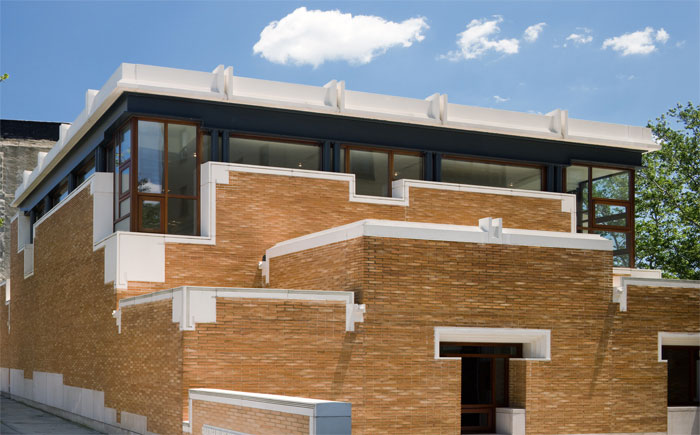
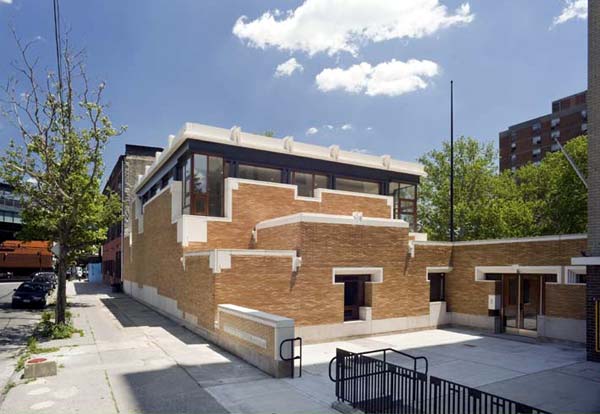
Saratoga Avenue Community Center, in Brooklyn (georgeranalli.com)

Saratoga Avenue Community Center, in Brooklyn (georgeranalli.com)

Visited George Ranalli at his office on West 28th St. in Manhattan this morning. He is famous for the building above [click below], a community center attached to public housing in Brooklyn. It is mainly of brick – masons are considered “villains” by most of the profession of architecture, he says = with elegant design touches that most architects today do not begin to understand. The building has made waves, even winning an award last year from the Institute of Classical Architecture & Art. I like it for suggesting a sort of third way between the dominant modernist ethos and a more traditional way of building. I hope to write more on our meeting when I get back to Providence, but in the meantime I am reassured that Ranalli, who is dean of the School of Architecture at the City College of New York, where my mother was in the acting club with Bernie Schwartz (aka Tony Curtis), really does seek a way out of the current architectural morass.

Anyway, I’d love to hear what folks have to say about the rec center.

[Since the computer in the Doubletree business center wasn’t able to permit the transfer of photographs, try clicking here to see the Saratoga Ave. Community Center.]

Posted in Architecture, Architecture Education | Tagged , , | 1 Comment