Michael Sorkin’s Saratoga

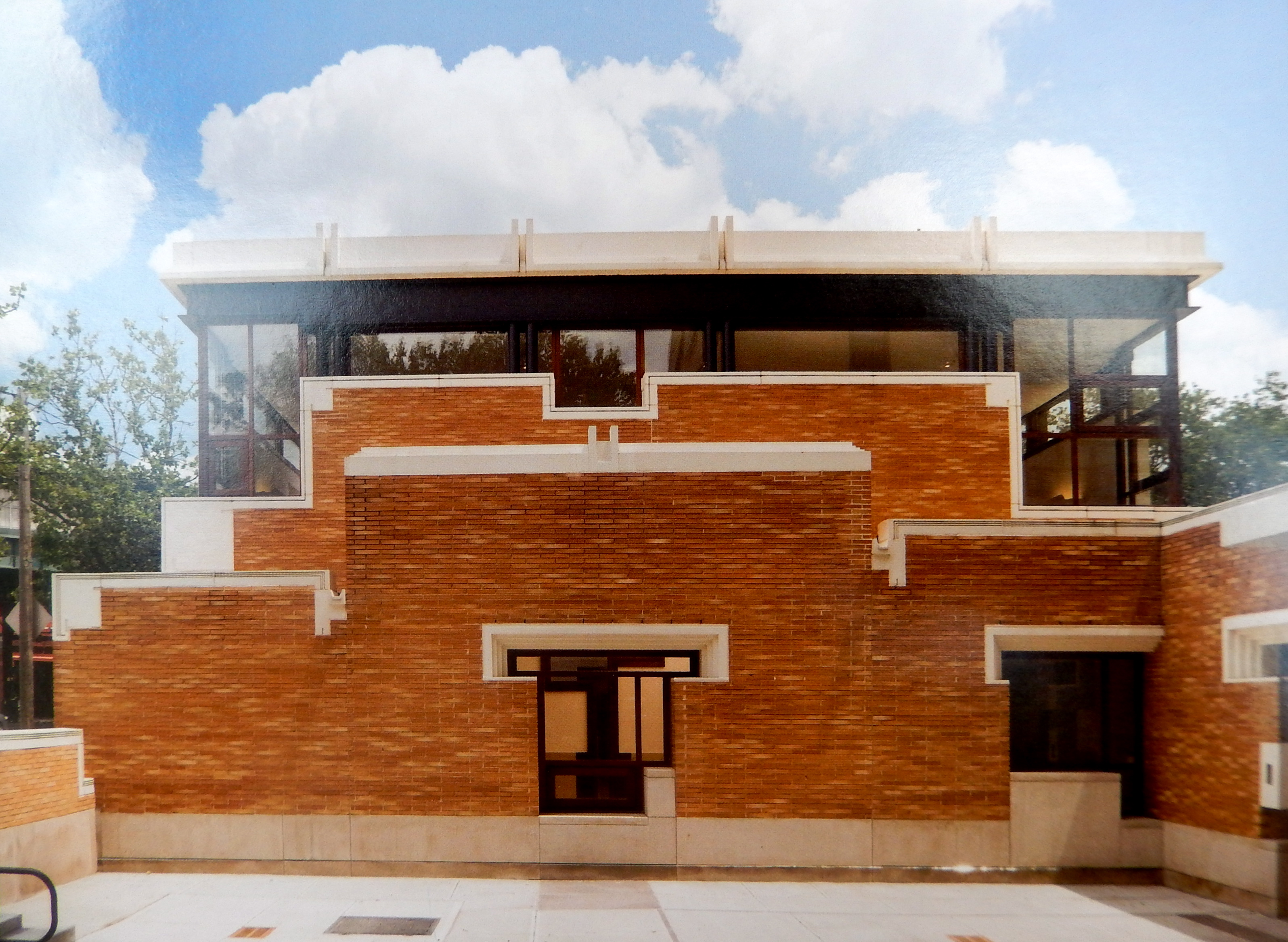
Saratoga Avenue Community Center, in Brooklyn, by George Ranalli.

Saratoga Avenue Community Center, in Brooklyn, by George Ranalli.

Michael Sorkin, an architectural theoretician and critic who is on the faculty of CCNY’s Spitzer School of Architecture, where George Ranalli is dean, penned an introduction to the monograph of Ranalli’s Saratoga Avenue Community Center (subject of my most recent column in the Providence Journal). I’d love to link readers to the entire essay but it is not online, so the best I can do is transcribe my favorite passages.

The first has to do with how the community center responds to the public housing block to which it is attached in the Brownsville neighborhood of Brooklyn. After referring to “the semi-punitive message” embedded in “public projects for the poor,” Sorkin writes:

Ranalli’s building is a stunning rebuke to all that, but done in a way that does not simply condemn its context, but seeks to reclaim it for a better, more civic idea of community building. Where the slab has generic metal sash, Saratoga has exquisite mahogany windows. Where the slab has homely buff brick, crudely laid up in unvarying courses, Saratoga has bricks of luminous orange and Roman proportion, beautifully articulated and trimmed with GFRC elements of musical richness. Where the slab and its interior are utterly resistant to detail and irregularity, Saratoga fascinates with amazing shifts in proportion and rhythm, with a panoply of beautiful elements – from cast stone scuppers, to steel kick moldings – that give the whole an almost palatial feel.

Nicely put. Sorkin is an excellent writer and, for all I know, a genuinely insightful analyst of architecture. To my skeptical eye his introduction reads, however, very much like a parody of architectural criticism in Mad magazine, circa 1977. Take this passage:

Rather than diminish its [public housing] neighbors by creating a sense of anomalous quality, Saratoga enhances them by sharing the authority of its articulation generously. This is the result both of the way Saratoga works within a familiar universe of materiality and proportion and the way in which it is the fulcrum for the reorganization of the irregular block on which it sits with its neighbors. Ranalli re-articulates the conditions of entry to the slab and gives its displacement from the street an urban logic it did not previously possess.

If you say so, Mike. On rereading his introduction, however, I find that much of Sorkin’s style is perfectly accessible to those versed in the peculiarities of architectural prose composition. Still, much of it reminds me of those humorous tutorials on how to talk about wine by stringing together random combinations of phrases selected from three lists.

The following passage falls into an expanding category of criticism whose authors do not seem to realize they are condemning what they like and praising what they detest:

It may be that the qualities that sustain and inspire [Ranalli’s] work are simply out of sync with the immaterial feeling of so much of our contemporary architecture, with its uniformity of detail, fetish for orthagonal form, love of transparency, willful defiance of gravity and servility to the most retrograde programs. George Ranalli stands outside this stream of fashion, just as he stands outside the backward-looking branch of the profession that claims, thumping its virtuous chest, to be building within some sense of “tradition,” in general one that has long been pronounced dead.

Hey, I resemble that remark! Or at least the part that’s been pronounced dead. Again:

Ranalli, on the other hand, works in a tradition that retains a principle of development, a living tradition, not one recaptured from the moribund reaches of the architectural past.

Thus George Ranalli’s suspension between modernism and classicism.  A book of his work, 496 pages of projects built and unbuilt, called In Situ, has gone on sale at Amazon.
Posted in Architecture, Architecture Education | Tagged , , , | 2 Comments

Floating Farnsworth House

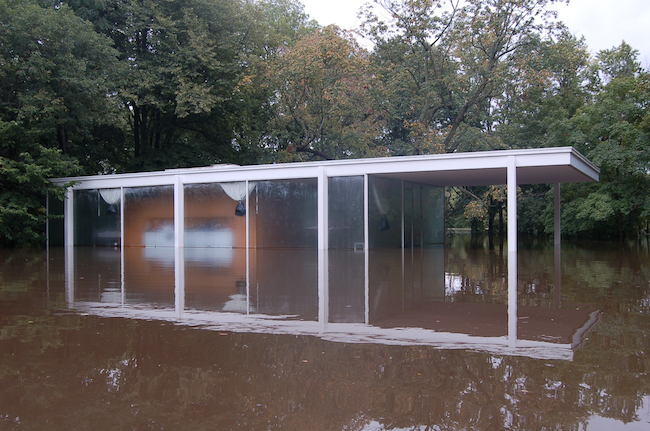
Farnsworth House during a flood. (Archtiectural Record)

Farnsworth House during a flood. (Archtiectural Record)

Here’s a scary photo, sent to the TradArch list by Gerald Forsburg, who imagines a horror movie in which Farnsworth House, by Ludwig Mies van der Rohe, is flooded, with its occupants struggling to escape. He links to an Architectural Record story on Farnsworth that proposes putting the famous glass box on a hydraulic lift to protect it from flooding. Farnsworth House is already a monster and a horror show in my book, but even I would not want to see it succumb to Mother Nature. It is too useful an example of what can go wrong when fawlty principles dominate architecture. Save Farnsworth House, I say, but let those who love it pay the $3 million tab for the lift.

Farnsworth House, in Plano, Ill., was completed in 1951. It flooded in 2008 and was closed four months while repairs were made. Some have suggested that raising the landscape or fixing things upriver would be cheaper than a system of hydraulic lifts. But at least that would be the modernist high-tech solution and would not offend Mother Nature’s dignity – not, that is, unless her mysterious ways are inimical to the future of Farnsworth House.

Posted in Architecture, Preservation | Tagged , , , | 3 Comments

Rec center’s ‘third way’ in Brooklyn


ranal1

Saratoga Avenue Community Center, in Brooklyn. (Photo by Paul Warchol, courtesy of George Ranalli)

A couple of years ago the world of classical architecture learned that an extraordinarily non-canonical building had won a Stanford White Award from the Institute of Classical Architecture & Art’s headquarters chapter in New York City.

Eyebrows arched. Was this another “break with tradition” like the ICAA’s 2011 conference on postmodern architecture, of all things, or like Michael Graves, of all people, getting another prestigious classical award, the Driehaus, in 2012? Heterodoxy! What was going on?

Then the talk died down and most classicists moved on to other issues.

But a flow of e-mails kept arriving from the New York architect who designed the building, the Saratoga Avenue Community Center, in Brooklyn. It turned out that George Ranalli is also the dean of architecture at the City College of New York, had taught for 20 years at Yale and was a modernist in good standing.

To read the rest of this column, please visit The Providence Journal.

Posted in Architecture, Architecture Education, Urbanism and planning | Tagged , , , | Leave a comment

Whoops oops in Warren

warr12I occasionally fail to make it to the bottom of the Journal’s version of my column, even though I link readers to it through this blog. My blog is not allowed to carry my Journal column in full – the idea being that linking to it will bring readers to the Journal’s website. That creates a two-stage process for getting to it that I hope does not deter many readers.

Perhaps that’s why Davison Bolster’s correction to my recent column on the state preservation conference in Warren escaped my attention at the time. He gently points out that, contrary to my assertions, the American Tourister proposal is not for condos (so I assume it is for rental apartments), and secondly, that the proposal is not being opposed.

I’m glad of that, and happy to be corrected, though I recall asking someone (I cannot recall who answered the question) on the waterfront projects panel that day whether the American Tourister proposal fits in with the waterfront advocates’ idea of what should be done. The answer was no, it does not, and a preference was stated pretty firmly for some alternative to residential, a mixture of retail and small manufacturing, if I recall correctly. Fortunately, as pointed out by Paula Silva in an expansion on Davison’s note, the mill project also will have a range of uses aside from residential.

All good! Now get rid of that big ugly white storage unit. Maybe a small golf course can be established in its place!

Here are the comments from Paula Silva and Davison Bolster (who came first):

Nice article! Davison is correct however, American Tourister is being welcomed as a mixed use development. Also, in addition to Walgreens I would add there was a major effort 10 or so yrs. ago to protect Warren’s Working Waterfront from becoming a wall of condos proposed. This effort successfully saved 5 Historic buildings, on Water Street and preserved public access on the wharf and 4 additional building there were either restored or newly built. Water Street now has become a hot destination thriving with new shops and restaurants vying to get in. Preservation has jumpstarted the economy in that neighborhood. Now with 2nd Story Theatre restoring and bringing more activity to Main, Market & Child Streets once again we are starting to see an expansion of new restaurants to the area. This is a built environment that already exists and is an opportunity to capitalize on with more encouragement by the town to continue to restore this prized downtown that many are not fortunate to have. (Paula Silva)
And …
Thank you David for the editorial! Only 2 corrections- 1. American Tourister is not being developed for condos, and 2. It is not being opposed. (Davison Bolster)


Posted in Architecture, Development, Rhode Island, Urbanism and planning | Tagged , , , | Leave a comment

Carpionato bids on 195

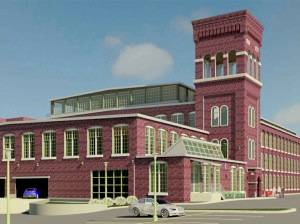
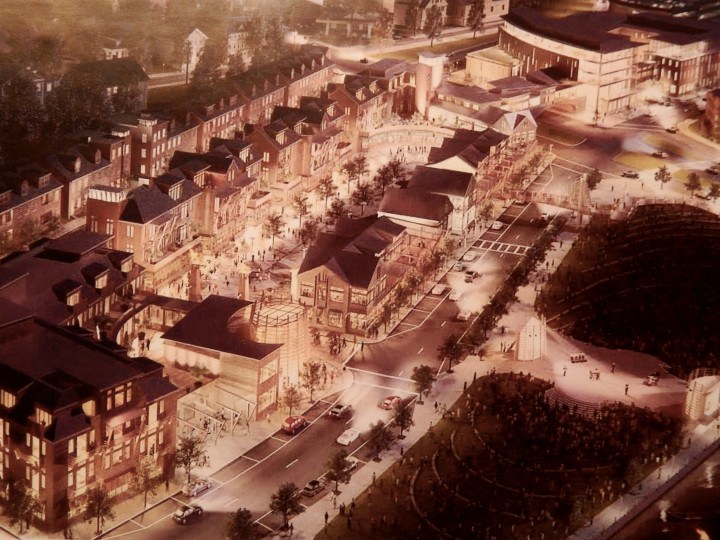
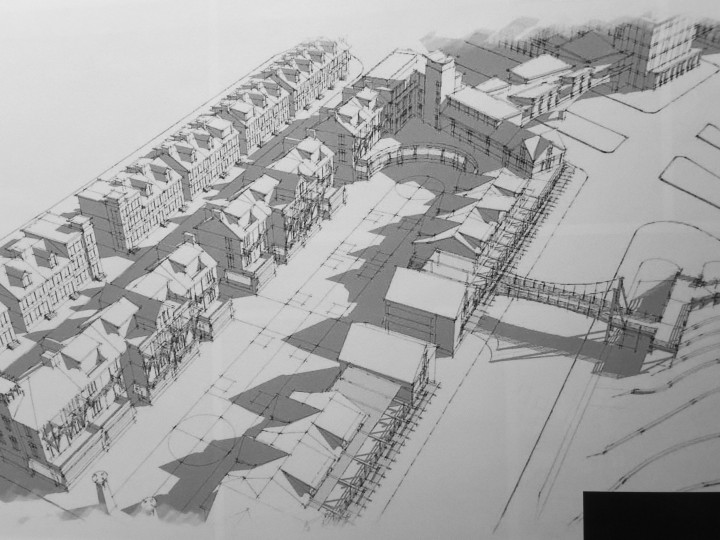
carpionato Through WordPress’s blogger data tool I noticed that interest in a post from months ago had spiked, and then I saw that its subject, the proposal made by Carpionato Group last year to build on much of the vacant Route 195 land east of the Providence River, was back in the news. Carpionato has apparently submitted a bid in the process, which was news yesterday because the 195 Commission did not hand out information on submissions as expected. So it’s good that a bid (one only? I hope not!) has been made. Here’s the column I did on the Carpionato proposal when it was first aired last March. (The illustrations above and below were performed under the direction of architect Neil Middleton of TRO Jung Brannen, of Boston. The identity of the pleasing artist him/herself is, alas, not yet known to me.)
Hold Carpionato to its bold proposal
March 7, 2013 

A week ago, Michael Graves, the celebrated postmodernist architect, designer and winner of last year’s Driehaus Prize for classical architecture, showed an audience at Brown University slides of his belongings in the renovated warehouse where he resides near Princeton University. These included his own paintings of Roman buildings and Tuscan scenery, which offered a sort of a sense of what they looked like.

Graves’s paintings are the opposite of the sort of image (above) used by The Carpionato Group to illustrate its proposed development of land in Fox Point that was under Route 195 before it was relocated. The main difference is that Graves’s paintings are of places that exist, while Carpionato’s image, which it showed recently to the committee guiding the 195 development, is of buildings still to come.

Odd, then, that the Italian scenes were rendered in a vaguely cubist form – okay, Graves seems a decent sort; let’s say his paintings are “dreamy” – while the Carpionato scenery that doesn’t exist was rendered in high precision.

That illustration, which ran on the first page of the Feb. 24 Journal, was so lovely that I almost wept for joy. It reminded me of a rendering of an earlier Carpionato project, now almost complete. On Monday, I drove down to Chapel View, a retail/residential complex near Garden City, in Cranston, to see how well that rendering had been transformed into reality.

Three of six granite dormitories of the abandoned Sockanosset Training School for wayward boys, erected in 1881-1895 as part of the “state farm,” have been knitted together within new structures of traditional character. The old chapel is now a restaurant, the Chapel Grille, and a lovely stone wall built by Carpionato encircles part of the complex. Still, the rendering was more pleasing than the final product.

Fine old architecture can only be diminished by new additions whose design and workmanship do not match the original in quality. And it is fair to suppose that the original jail for juvenile delinquents was itself not intended to be of the very highest quality. That the project swims in parking lots does not help.

Still, the latest Carpionato project on the old Route 195 right-of-way can be held to a higher standard and, set as it is in Fox Point, it should be. Here the Route 195 Commission should easily outperform the Capital Center Commission, which snatched defeat from the jaws of victory, inflicting GTECH and three modernist towers on the traditional cityscape built near Waterplace in the 1990s: Providence Place, the Courtyard Marriott and two (originally) Westin towers.

An alternative to the Carpionato proposal – market-based development of individual parcels – might be expected to produce, in time, a great place. Today, however, many developers feel obliged to be “creative” (that is, tediously orthodox) and might produce, in time, a hodge-podge that could be in Anyburb, USA.

Under these circumstances, a unitary plan might be more likely to result in a place people will love. The Carpionato plan has at least the charm of a composition that reads as smaller gabled buildings in a village vernacular, rather than a rack of twisted megastructures. Its style is embodied by a Ponte Vecchio-style bridge that spans Point Street, connecting two buildings. If Carpionato can get the details right, a truly attractive new part of town might emerge near the south end of historic Benefit Street.

Many developers build projects that do not live up to their advance billing. Two unbuilt proposals by Carpionato for hotels in or near downtown Providence, in 2006 and 2008, hint that it is capable of overreaching. One hotel was to have been on a triangle of land at the northeast corner of Kennedy Plaza; the other was to have replaced a produce terminal in the Promenade District, which Carpionato tore down before its financing had been secured. That is a track record that should be easy to improve upon.

The Route 195 Commission does not have a track record . . . yet. What it has is an opportunity to protect the public’s interest in good development. If there was a good reason for the legislature to give the commission its abundant regulatory power, that was it.

Maybe someday, if the Carpionato Group, encouraged by the commission, lives up to its advance billing in Fox Point, Michael Graves will return to daub Providence in oils.

David Brussat is on The Journal’s editorial board (dbrussat@providencejournal.com). This column, with more illustrations, is also on his blog Architecture Here and There at providencejournal.com.

carpionato2


Posted in Architecture, Blast from past, Development, Providence, Urbanism and planning | Tagged , , , , | Leave a comment

Blast past: Evolution on Thayer Street

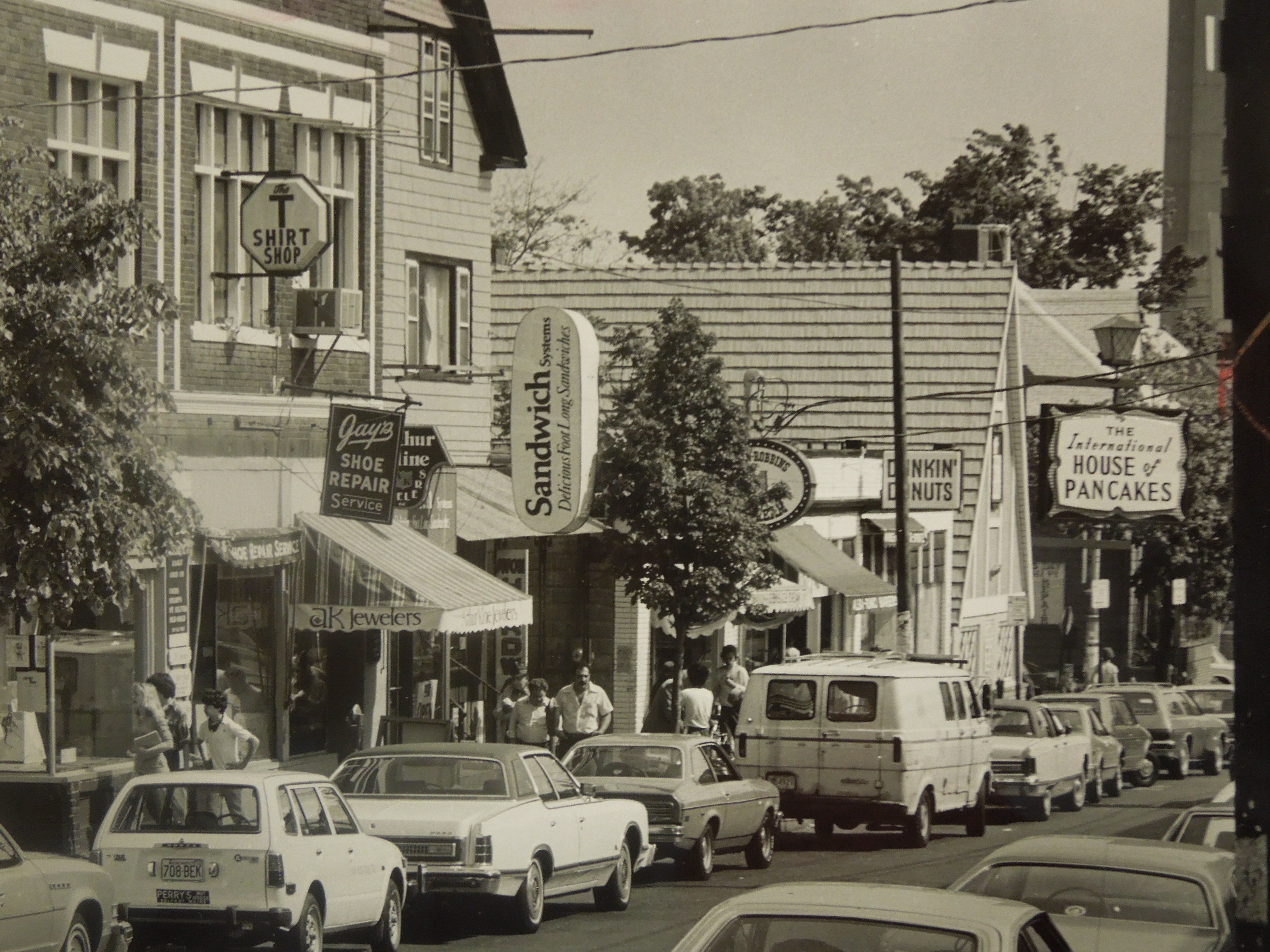
Thayer Street in the 1970s. Look, ma! No SUVs!

Thayer Street in the 1970s. Look, ma! A van, but no SUVs!

Here is a column I wrote more than 20 years ago about Thayer Street and the denizens thereof. I don’t even want to begin to start reflecting on the nature of its changes since then. Many readers will have their own reflections, thank you very much. Enjoy.

Evolution on Thayer Street
December 23, 1993

The sidewalks are busy and the curbs are bumper-to-bumper, but with only two shopping days till Christmas, Thayer Street is no more crowded than usual. It has been said that Thayer Street is the Harvard Square of Providence. I suspect, however, that it resembles Harvard Square no more or less today than it did 30 years ago.

After all, Cambridge once was quiet by comparison to what it is today. It, too, served a famously stodgy neighborhood: blue bloods, rumpled profs. Quiet communities never have parking problems.

Every few years the Journal sends out a reporter to catch some of the tears caused by change on Thayer. I have a batch of those stories before me, and they make me blink for the past, too. Here’s a short list of shops where I never had the honor of spending a dime: E. P. Anthony Apothecary (founded 1895); Merry-Go-Round, a toy shop (1932); Ms., a knick-knack shop pronounced Em’s (1934); Arthur Palmer, a clothier (1952); Thayer Street Market (1957). The dates are based on reporters’ accounts of local recollection.

Other shops were mentioned without note of their longevity at the time of departure. University Drug and College Launderers and Cleaners are memorable for their reference to the local industry. (Actually, College L & C was noted as having been operated for 30 years by Belle and Lester Eisenstadt when it closed in 1985, but for all I know, it may have opened long before their stint.)

Naturally, their former patrons recall these shops for the quality of their service. The Eisenstadts, for example, had the ability to remember each patron’s name after the first visit. And I have no doubt that service was tops at the Mills Sisters Dress Shop, the Alba-Runci Barber Shop and Ronnie’s Rascal House, a restaurant. Some old-timers remain: Clarke Flowers (1918), Avon Cinema (1938; a garage in 1937; opened in 1915 as the Toy Theater), Hillhouse clothiers (1950), to name only three.

It does not seem to me that Thayer Street today lacks merchants who insist upon offering quality service, or who care deeply about the quality of the neighborhood. And that includes some recent arrivals; after all, even the oldest shop started out as the new place down the block, and the old-timers of that era had already seen shops come and go, though maybe not so swiftly as these days.

Having been a patron of Thayer for almost a decade, I, too, can don my old-timer hat and recall places here and gone in the bat of an eye. For example, I miss Penguins, the coffee shop: I always enjoyed observing the behavior of its black-clad Sartre wannabes. I am sure there are other places I would miss if I could remember them.

I miss the IHOP, which was open all night. I miss it the more because it was owned in part by former Rep. Fernand St Germain, father of the nation’s S & L disaster. Whenever I stepped in, its staff would fix me a stack of naked crepes bathing in maple syrup, as my mother used to make, though it was not on the menu – this despite the fact that the IHOP was a chain restaurant.

I was sad when the IHOP was replaced by Laguna, the California-style restaurant/bar. Nevertheless, when Laguna ousted its parking for an outdoor cafe, it won my respect. But soon enough, it was gone; a new building is now under construction, to be filled by a Gap (pun intended).

Dining and drinking al fresco is one of my cardinal pleasures. That is one reason why my favorite place on Thayer is Andreas, the Greek restaurant (1966, opened as The Hungry Sheik; 1974, changed its name to Andreas; 1982 moved to the corner of Meeting). The primary reason: I met my [first] wife Tracey at Andreas; she was sitting by herself at the bar, reading; to muster the pluck to intrude required more bourbon chasers than I care to (or can) recall. Perceive in this a conflict of interest if you must, but I do not hesitate to hoist my glass to those intrepid folk who’ve stood up to the Thayer Street anti-saloon league.

It is said that chain stores and liquor licenses have been the bane of Thayer Street. This has not been my experience. Yet I haven’t any doubt that a dose of the past would serve to recapture a sense of place, of community. So Thayer Street should strive to install antique lampposts, brick sidewalks, nicer signs, more awnings – also, more sidewalk cafes.

Most of all, Thayer Street could use a good scrubbing. Unlike lampposts and sidewalks, which require city funding (or, perhaps, payments in lieu of payments in lieu of taxes from Brown), the ancient tradition of merchants who hose down their sidewalks in the morning and police their areas for trash all day is one that could be installed by the merchants themselves, for free.

Until the researchers at Brown can find a better way to turn back the clock, this will have to do.

David Brussat is a Journal-Bulletin editorial writer and columnist.

Posted in Architecture, Blast from past, Providence, Urbanism and planning | Tagged , , , , | 2 Comments

Life on Thayer Street

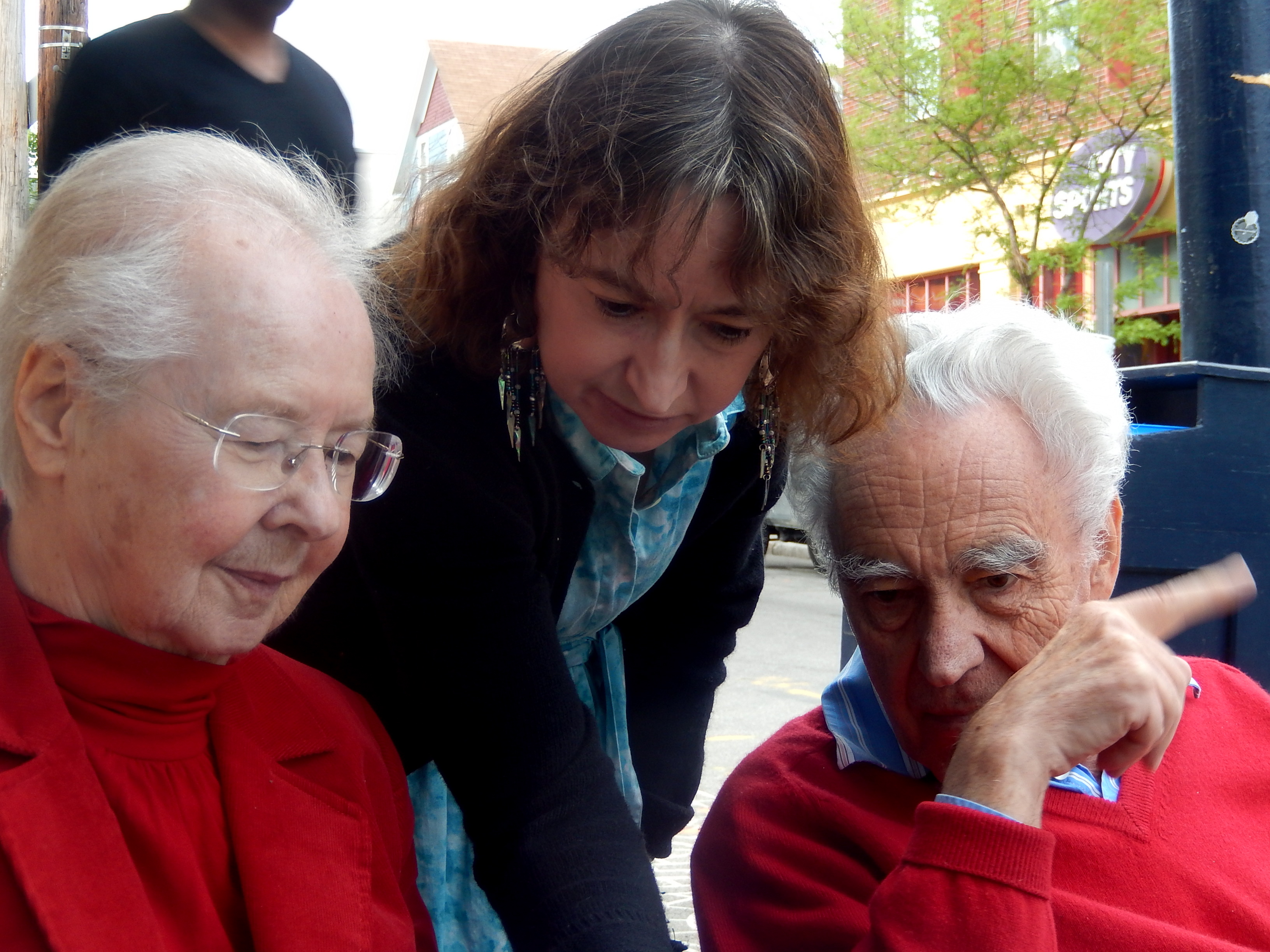
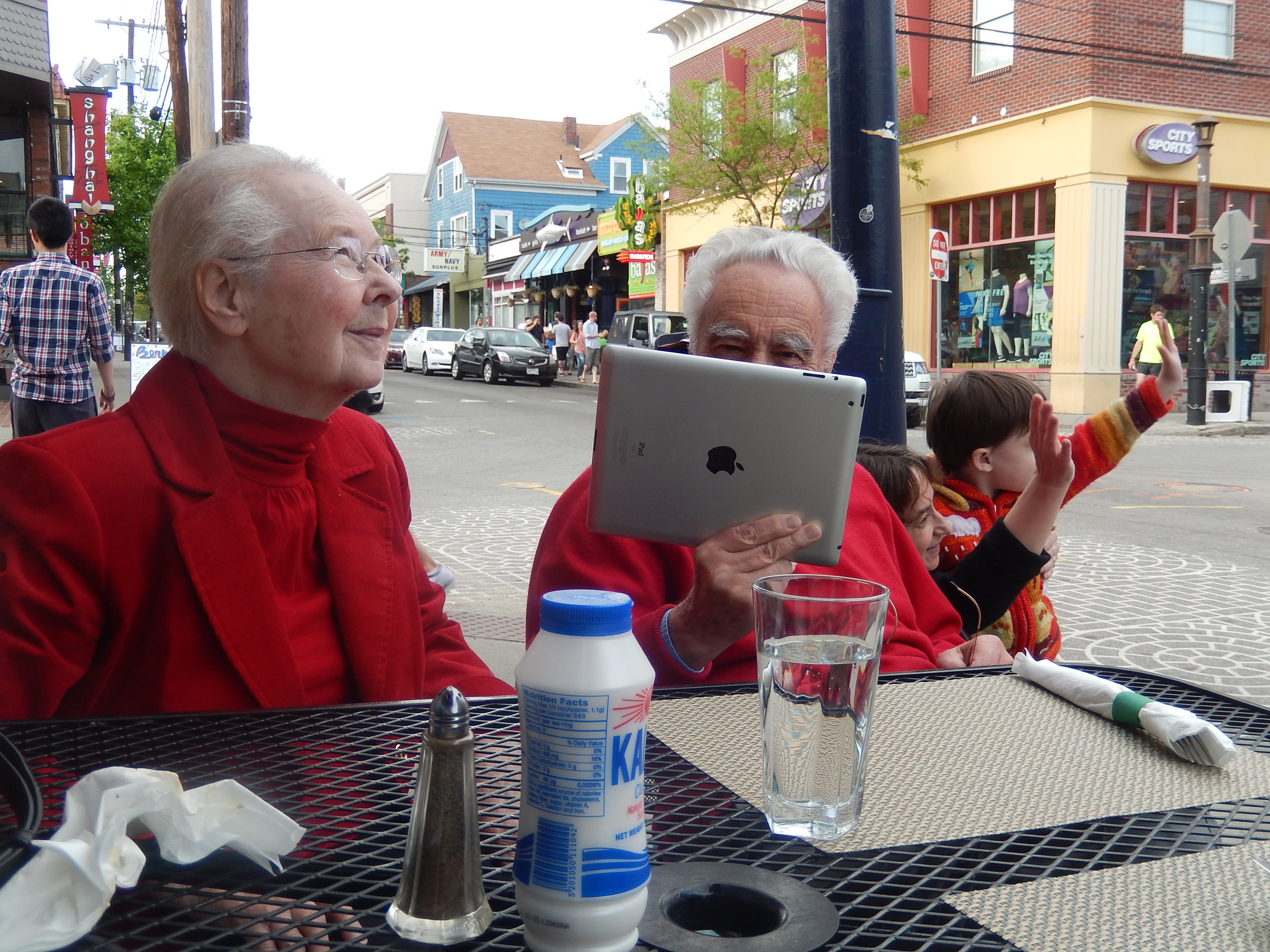
Billy does his thing outdoors at the Thayer Street restaurant Andreas, on College Hill, in Providence.

Billy does his thing outdoors at the Thayer Street restaurant Andreas, on College Hill, in Providence.

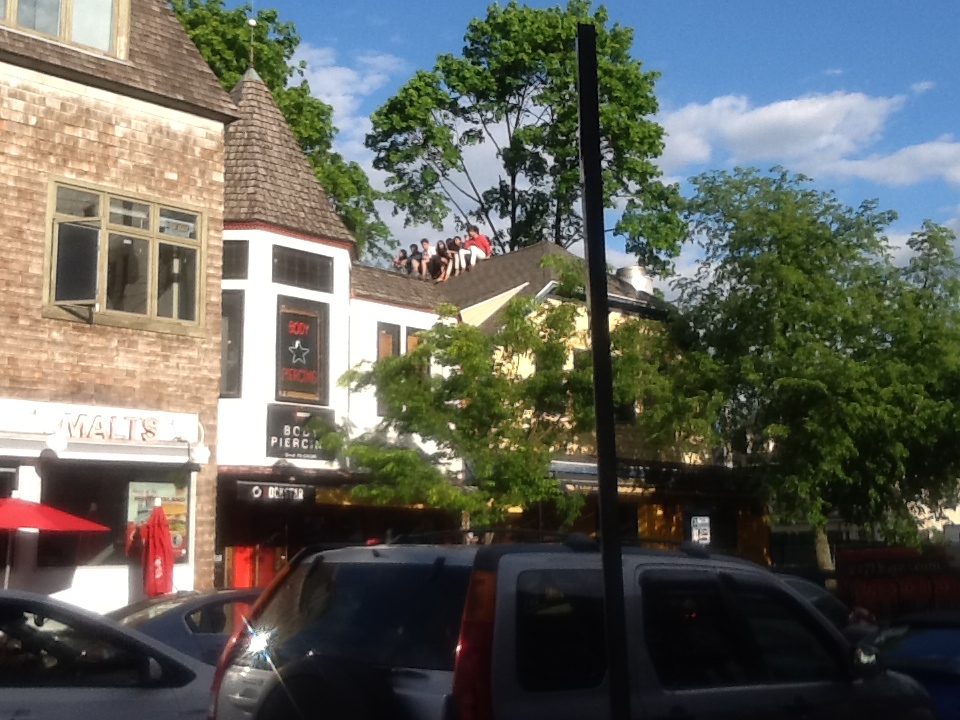
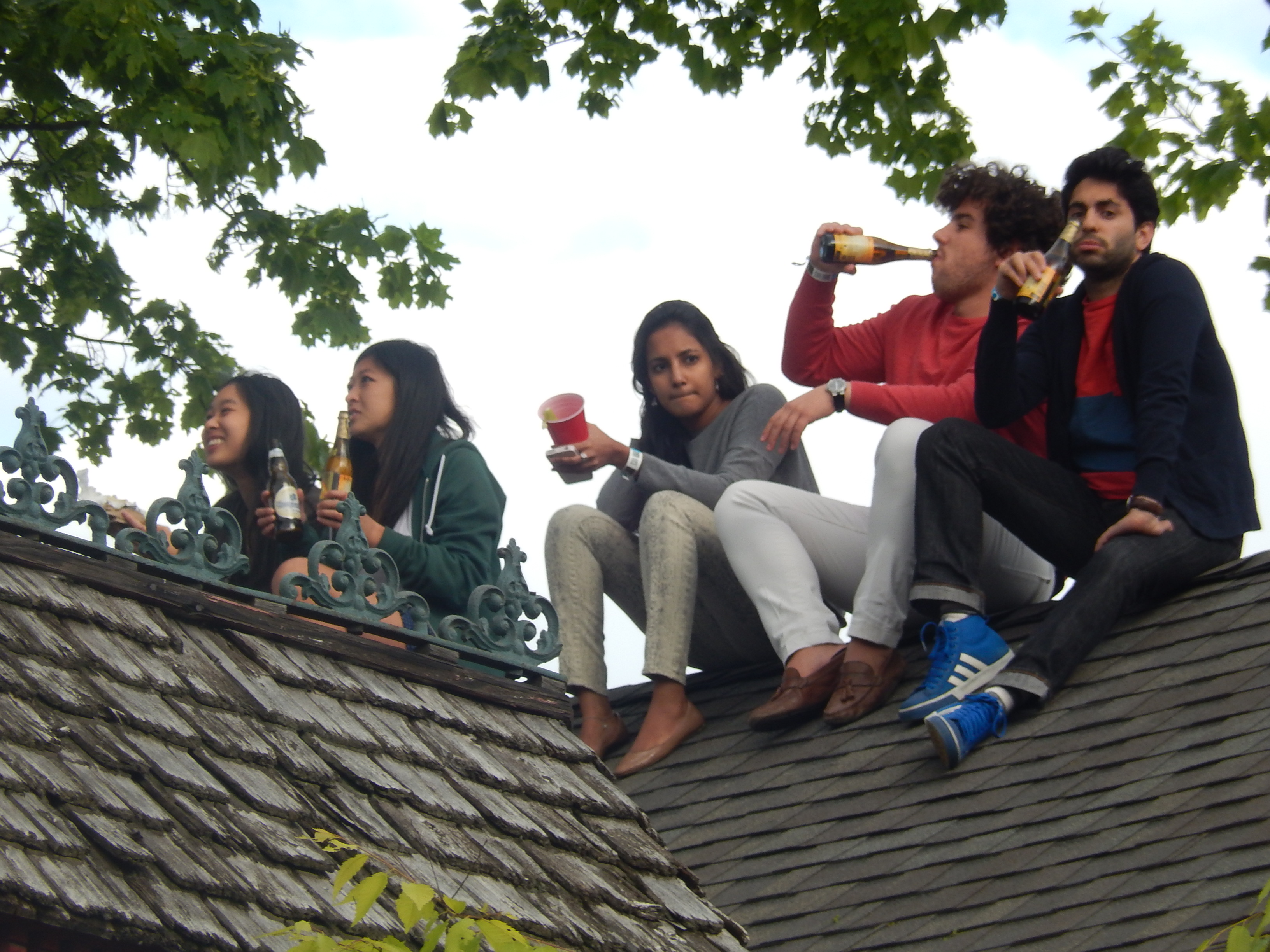
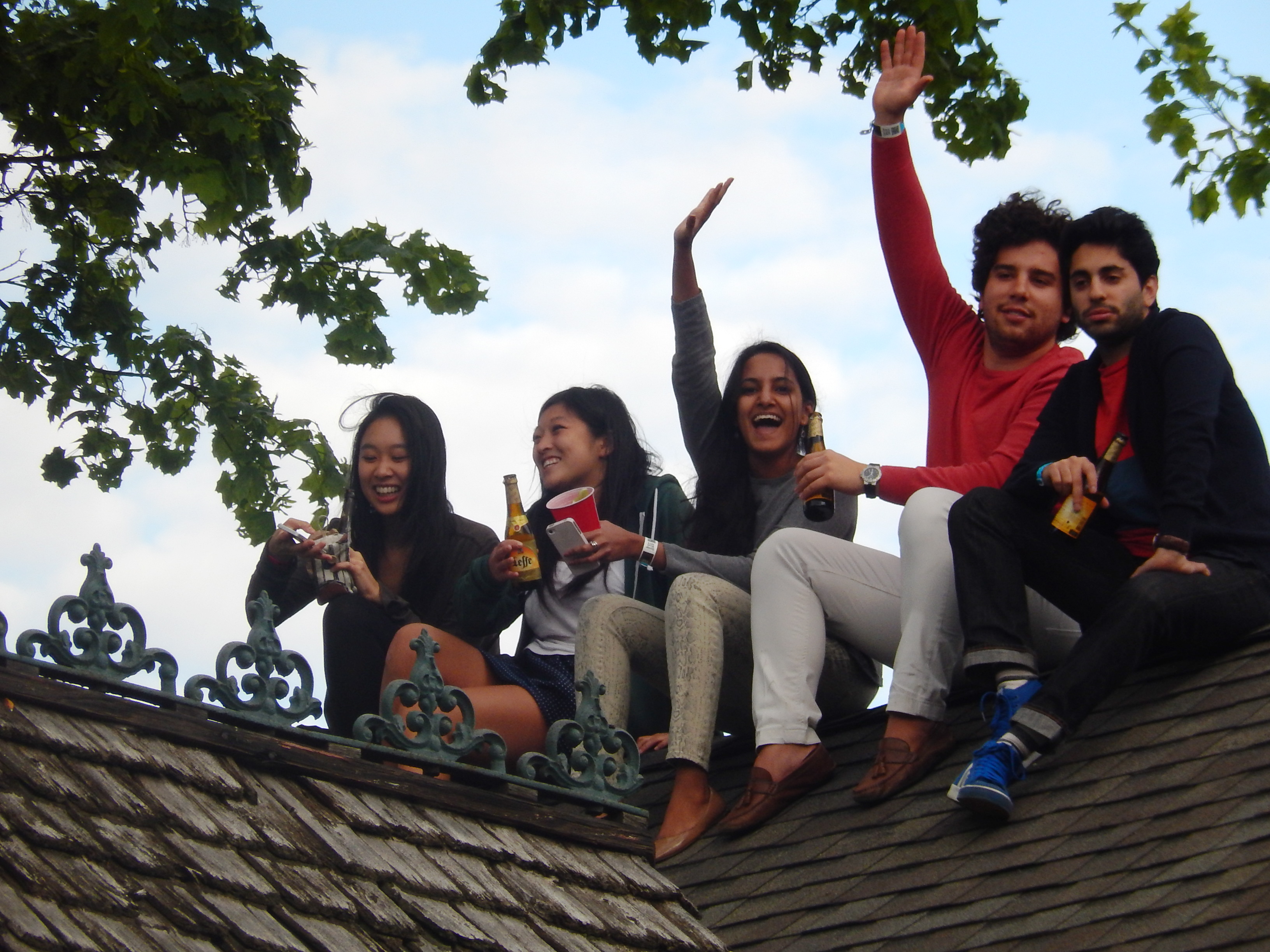
My family dined al fresco on Thayer Street this evening. Thayer is the main street of Brown University on College Hill, in Providence. We arrived, sat down, got out our mobile media, and noticed a party under way on a roof nearby. Then we saw Billy’s grandma and grandpa across the street. Turns out they had just finished eating inside the same restaurant, Andreas, where we were eating outside. They came over. We all enjoyed watching the roof party, at some point during which it seemed a “Cheese it, the landlord!” alarm went out and a very pretty girl tried to flee the roof (she and her boyfriend had actually parked their Volkswagen right opposite our table, bless them!). False alarm. Things calmed down, though the kid in the red sweater gave me the evil eye, I think, for shooting their shenanigans. Then we waved goodbye and they waved goodbye and we said goodbye to our folks and they left and we left, and on our way back to the car we saw a dog on a motorcycle (along with typical Thayer personae), and went home.

I relay this homely adventure to convey the idea of a great street, which Thayer is. This is life happening in all its facets. It’s where the action is, a living adventure. Victoria took the photo that shows the Brown partiers in their urban context. At the bottom of that photo is the nemesis of great streets: the SUV. Not because it guzzles gas but because it blocks views. I love watching people stroll by on both sides of the street. Any SUV takes away part of that pleasure.

Yes, yes, we drove to Thayer in a car (it was not an SUV, I promise, not by a long shot). But that’s another complaint. Good urbanism in America – that is, towns and suburbs built before World War II and New Urbanist communities (and infill) of more recent years – is so rare that high demand has bid up the price for houses there, and so only rich people can afford to live in such neighborhoods. So we live not on College Hill but a mile or so farther north in the outer reaches of the East Side (which many people think is a synonym for College Hill). The historic districts that are so beloved and hence so expensive are no more than regular prewar neighborhoods – really nothing special about them. Build more lovely traditional neighborhoods (in many places laws must be passed making them bloody legal again) and the prices will come down. I promise.

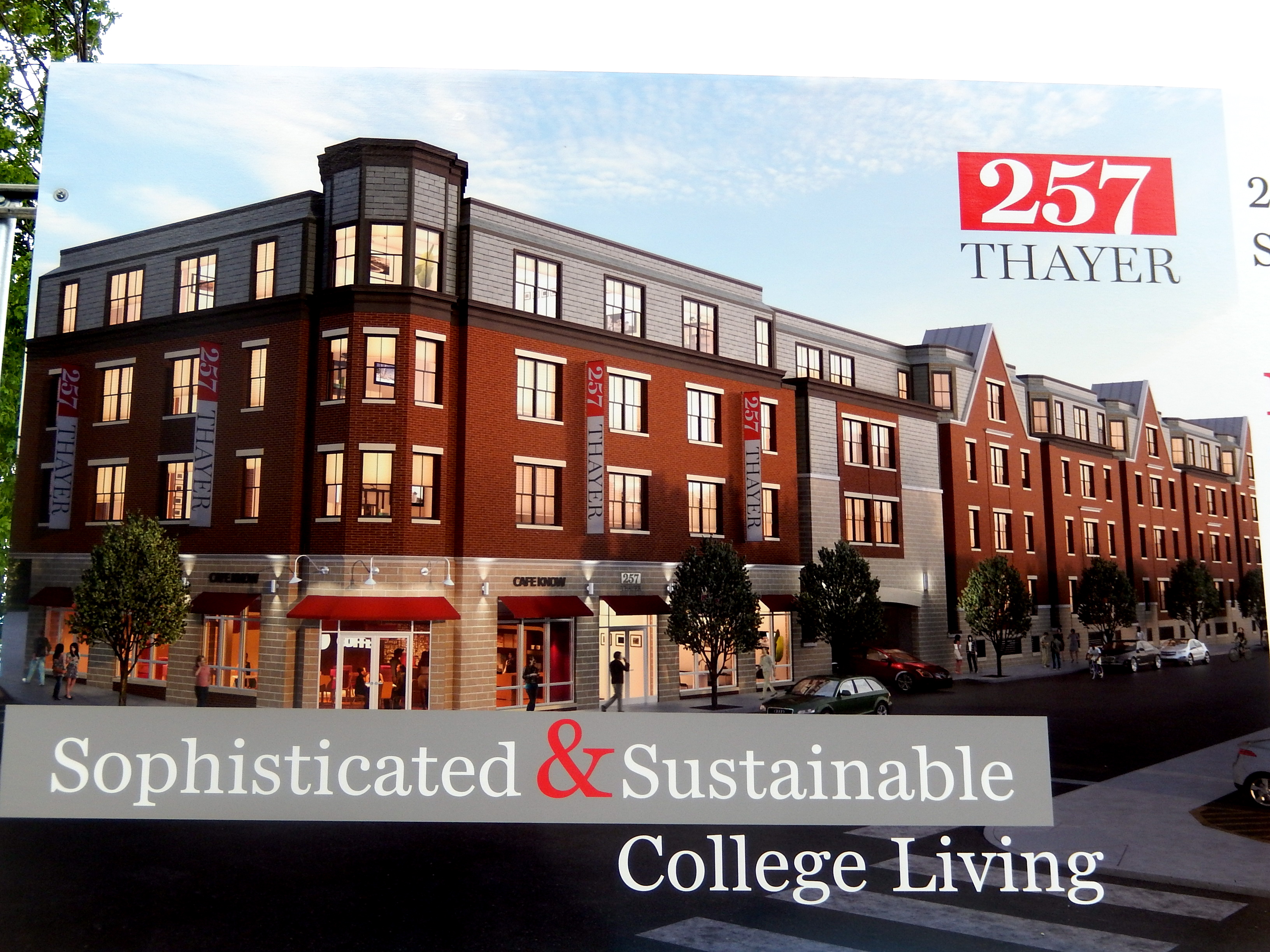
The photos below include a signboard of the 257 Thayer St. housing project under construction now for wealthy Brown students. It seems to have lost a bit in translation (“value” engineering) from the heights it achieved after it was given a major design tweak by the talented classicists of Union Studio Architects in downtown Providence after an initial appalling all-things-to-all-people design. Another shot shows a fire engine waiting near Brown’s new Granoff Creative Arts Center, the accordion-like thing by Dildo Scorpion + Rent-Free – oops, I mean Diller Scofidio + Renfro.

photoDSCN1808DSCN1809DSCN1823DSCN1821DSCN1825DSCN1838DSCN1846DSCN1844DSCN1845

Posted in Architecture, Development, Photography, Providence, Urbanism and planning | Tagged , , , , , , | 2 Comments

Morgan, Pevsner, Vermont

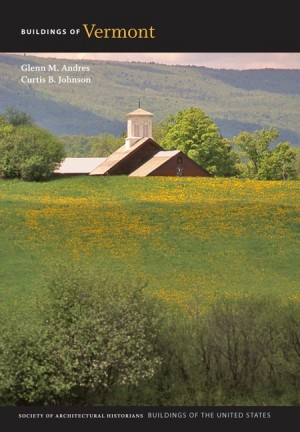
Cover, Buildings of Vermont. (University of Virginia Press)

Cover, Buildings of Vermont. (University of Virginia Press)

I have had the pleasure, just now, of running into my old friend William Morgan in my new friend Kristen Richards’s ArchNewsNow, the daily global roundhouse for architectural news and commentary (in English). On Kristen’s list for Friday I find that Will has written a review of Buildings of Vermont for The Boston Globe, and begins by introducing us to his friend Nikolaus Pevsner, the late, great British architectural historian.

Will recalls that Pevsner wondered why Will did not write a history of American architecture, state by state, as Pevsner had for the Sceptered Isle. ” ‘After all, Morgan,’ the greatest scholar of English architecture admonished me, ‘there are only 40 states, and there is not a parish church every couple of miles. You could do it in a summer or two.'”

Will gently twits his mentor’s “Eurocentric myopia” – 40 states indeed! – and points out that there are 40,000 structures in Vermont on the National Register of Historic Places. I didn’t know there were 40,000 buildings in all of Vermont. My family visits the Green Mountain State every summer, staying in the ski resort of Stowe. I have written a column about Vermont, which reminds me that Will has a book on New England farmhouses that I must get around to reviewing. Will has written lots of books, mostly, I think (and I trust he would like to think), in the vein of Pevsner’s 32 volume Buildings of England series.

IMG_0001_2blogRegarding the volume Will has reviewed of the Buildings of America series (there is also one for Rhode Island, which I reviewed long ago), the one on Vermont architecture is by Glenn Andres, an architectural historian at Middlebury College, with photographs by Curtis Johnson. The author may or may not be ranked among Will’s friends but he is certainly not a friend of Nikolaus Pevsner, and not just because the latter is no longer with us.

Will praises Andres’s book for pointing out that Vermont has more than just red barns and white churches. (I don’t think that very many people actually believe there are nothing but red barns and white churches in Vermont. Nevertheless, writes Will, “Andres was ‘pained’ by his editors’ choice of the barn-in-the-meadow cover” for the book. That, Will adds, is because the book’s purpose is “to look beyond the stereotypes to explain the remarkable range, quality, humanity and persistence” of Vermont’s landscape.

Yet, one looks in vain through Will’s review and its illustrations for examples of this running roughshod over stereotype. I don’t know whether Andres includes much of Vermont’s modern architecture in his book. Probably not. I do not think there is very much of it to include. Maybe Andres realizes (perhaps along with Will and Nick, in sotto vocce) that Vermont is No. 6 on the National Geographic’s list of world tourist meccas precisely because there is so little modern architecture in Vermont.

Usually when architectural historians speak of stereotypes they are about to engage in Pevsner’s particular specialty of historicism, of which concept he was among the originators. This is the idea that you can accurately categorize architectural styles by time period, a process that enables you to claim that the style of a new building is appropriate or inappropriate because it does or does not reflect its “era.” That’s a useful idea for modernists because it “proves” that since we are in the modern era, only modern architecture is appropriately built today. This is, of course, the central orthodoxy of the architectural establishment today among designers, historians and preservationists.

Architecture built today on the basis of historical principles is dubbed “historicist” – an error if not exactly a crime. This generalization is Pevsner’s chief contribution to the field of architectural history. Notwithstanding his natural reverence for the traditional British architecture he categorized so meticulously, he does not believe that those old buildings should be the source of a designer’s inspiration for new architecture today.

Nick and Will may have been friends, but Pevsner was no friend to beauty. The British landscapes he documented have been ravaged by modernism, and the failure to disapprove of that is a signal failure of modern civilization. For the ideas of Pevsner have been inimical to the humanity around the world. Historicism distorts history by covering up the reality that tradition is a phenomenon that builds slowly upon the lessons its past generates for its future. Stylistic change may be pigeonholed only by denying the fact that traditional architecture of all styles – Gothic, Romanesque, Georgian, Classical, Greek Revival, Victorian, etc. – has many more elements in common than otherwise. Denying its lessons a legitimate role in the education and inspiration of architects and builders in our era requires a denial of the plain truth.

Buildings are buildings, they are not historians. Just as historians have a difficult time determining the significance of history in the language of words and ideas, architects cannot be expected to articulate the meaning of their times in the far blunter language of glass, wood, stone and steel. For millennia they did not attempt it; in the modern era, having banned most of the tools architecture once used to convey meaning, they failed immensely and immediately, leaving behind them a record of scarred landscapes and brutalized public spaces. It is the purpose of architectural historians today, it seems, not to reveal that truth but to cover it up.

The fact is that architecture was, until recent times, slow to change in building form. None of the very lovely styles that were its result over a span of 2,000 years are any less legitimate for building today than they were at their time of erection long ago. Constant stylistic revivalism proved that long ago. Logically speaking, historicism must delegitimize all architecture from the ancients through early 20th century eclecticism. It all “copies the past” to some degree. Modern architecture, with help from architectural historians such as Nikolaus Pevsner, managed to topple the enduring concepts of architecture after World War II. The world has been poorer for it, and uglier to boot, ever since.

Will seems unintentionally to suggest, by not choosing to cite or display any modernist buildings from historian Andres’s book on Vermont, that the author does not buy into the idea that modern architecture deserves an important place in his book. If so, Andres has done valuable service for architecture in Vermont and for architecture everywhere. I will find the book and discover whether that is the case.

The sooner the public can pressure the architectural establishment to cut the crap, abandon its cult, return to its senses and bring the field of architecture back to its roots, the sooner we may all begin to recover some of the beauty that once characterized most of the built environment but now prevails only in places like Vermont – and Rhode Island (not to mention Paris, Rome, etc.) – that have resisted the slaughter of their architectural heritage.

Posted in Architecture, Architecture Education, Architecture History | Tagged , , , , | Leave a comment

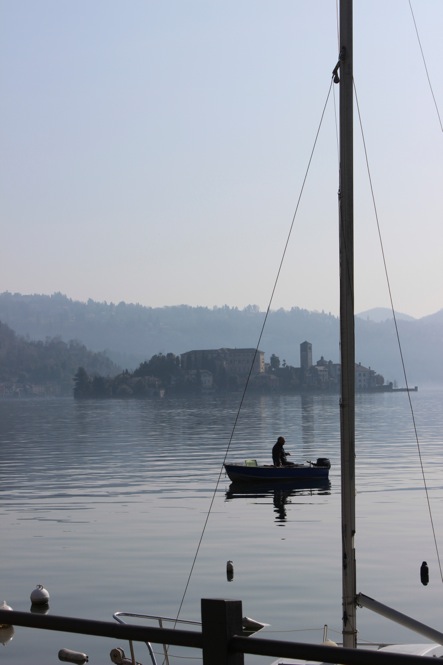
Italy’s got beauty, eh?

View of Isola di San Giulio from Orta san Giulio.

View of Isola di San Giulio from Orta san Giulio.

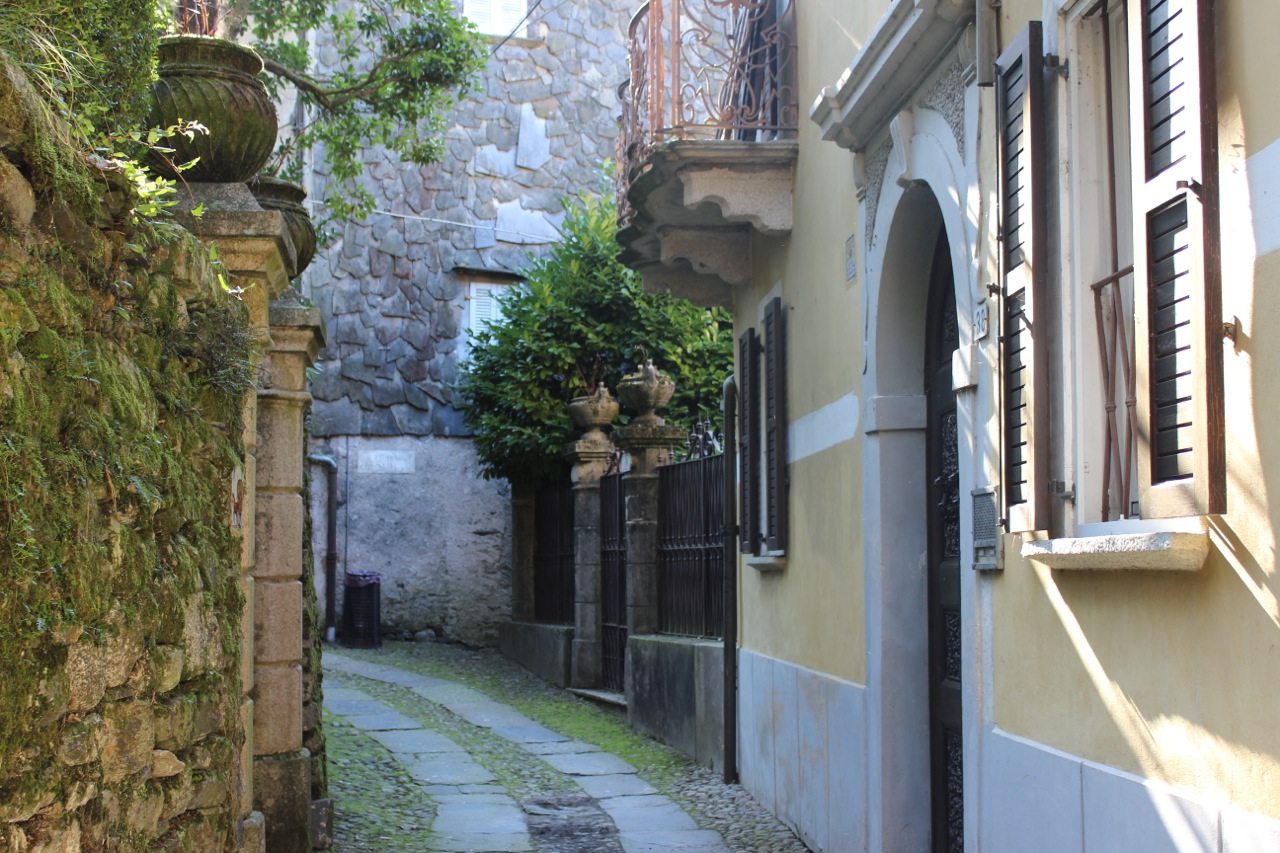
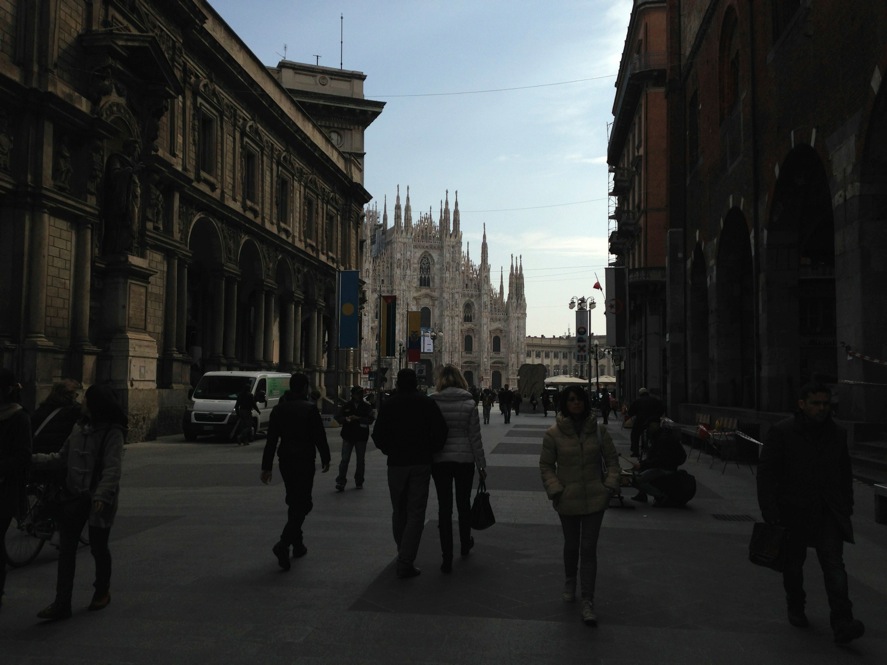
My friend Maria Ruggieri, the famous jewelry designer of Providence (her firm, Ti Adoro, at tiadorojewelry.com), recently visited the Italian family seat of her boyfriend, Gigi, of Toronto, who is from the lovely region of Lake Orta near Milan. She took pictures, bless her, and here are just a few from among the most evocative. (Maria, I didn’t know you were such a sharpshooter!!!)

IMG_2018

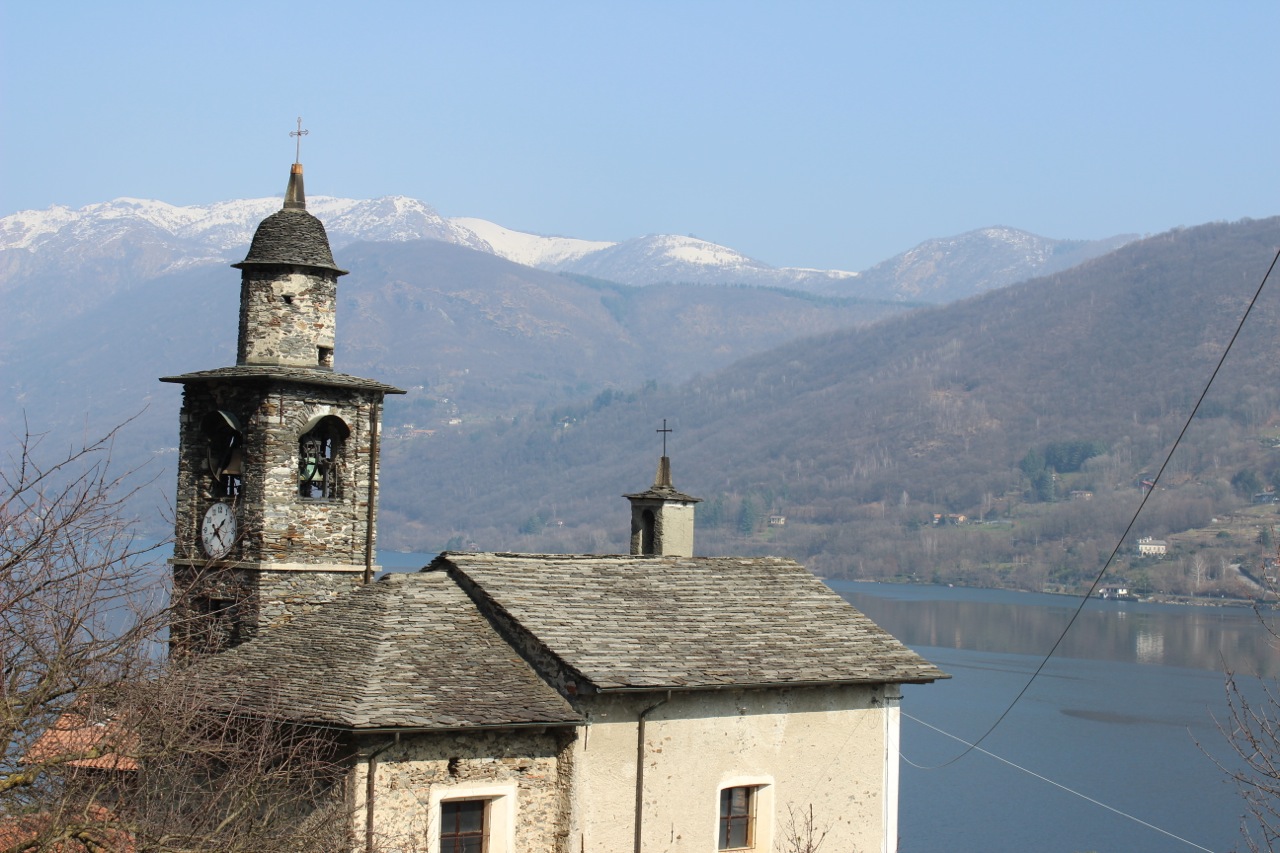
Chapel in the town of Ronca on Lake Orta

IMG_2002

View of Lake Orta from town of Pella.

IMG_1881

Main and only street on Isola san Giulio.

IMG_1731

Gigi’s family villa, the “Little House,” in town of Vaciago, above Lake Orta.

IMG_0242

View of the Duomo in Milan.


Posted in Architecture, Art and design, Photography | Tagged , , , | 8 Comments

Foster atrocity in N.Y.

DSCN1604

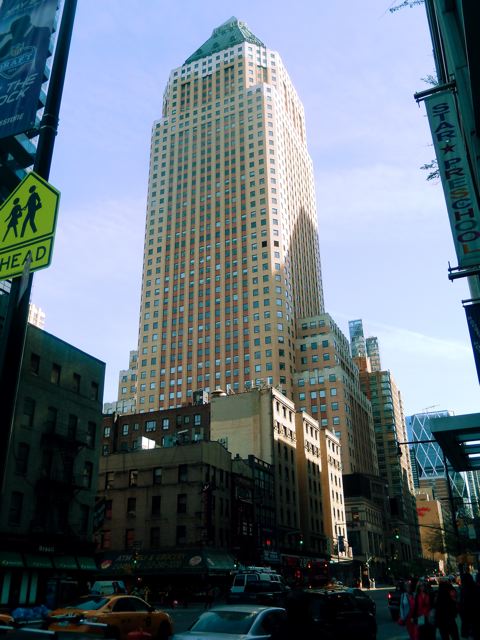
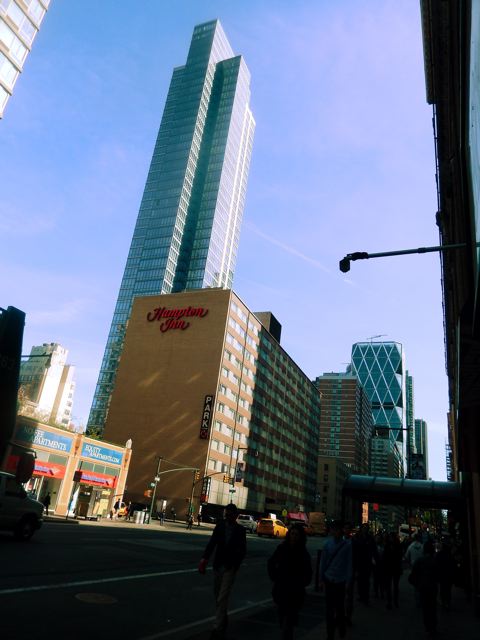
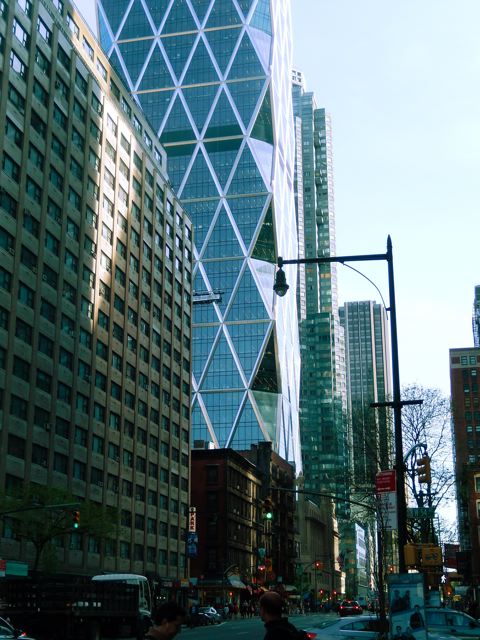
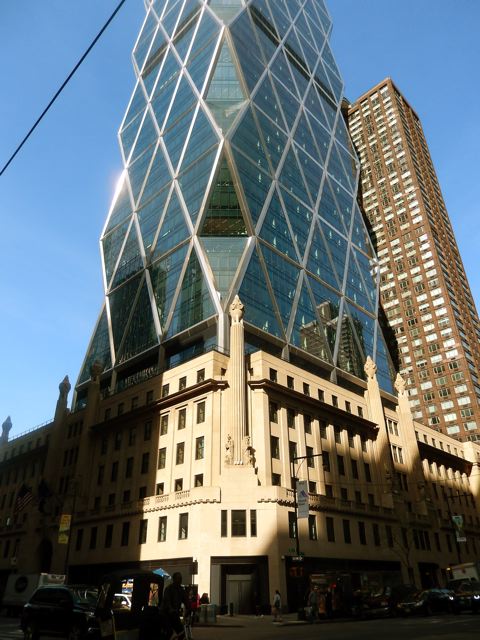
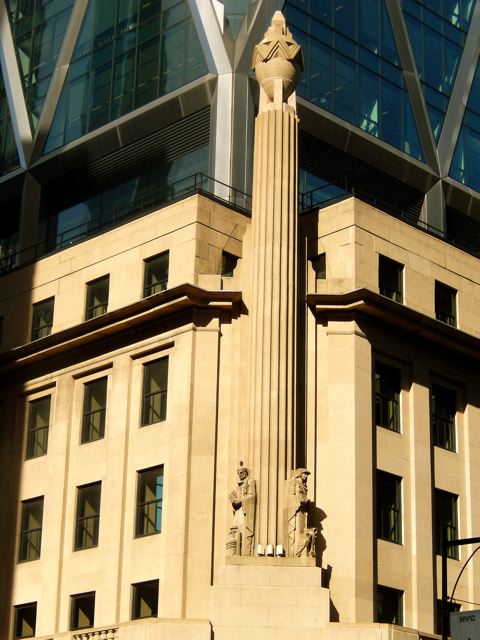
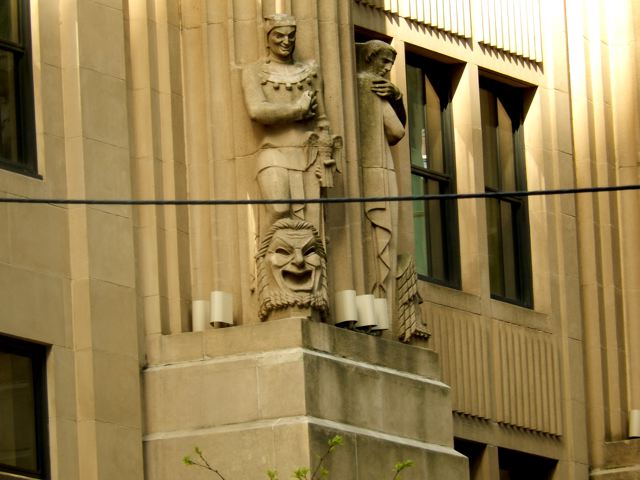
My recent post about architectural details in Manhattan opened with a shot of the statuary on the base of a building erected 80 years before the tower itself was added eight years ago. (You can see it way down the street at the lower right of the first photo below.)

Before the end of my original Journal blog (March 2009-Dec. 2013) I wrote a post about a window-washing accident at the 46-story tower, designed by Sir Norman Foster and plopped upon a beautiful six-story building, c. 1928, on Eighth Avenue, filling the block between W56th and W57th streets. The tower itself was completed in 2006, the first skyscraper to break ground in the city after 9/11, a gleaming glass polyhedronesque concoction that you could see online in many photos. (The engineers spent millions to design an apparatus to support window-washing, and it still didn’t work.) But in none of the shots could you really get any idea of how glorious a piece of work was the base, designed in 1927-28 by Joseph Urban and George B. Post.

The base was described in the AIA Guide to New York City, published before Foster went to work on it. The guide said: “Shades of the Austrian Secession Movement, this sculptured extravaganza was commissioned by the William Randolph Hearst publishing empire. It was a base for a skyscraper aborted due to the Depression. The foundations are still there, waiting …”

No longer, I’m afraid.

Last week in Manhattan I strolled by to see it. What follows are the photos I snapped of my sad, sad approach to the site of the Hearst building’s desecration, and of the ornament stomped upon by Foster:

DSCN1580_2DSCN1587_2DSCN1589_2DSCN1598_2DSCN1596DSCN1599_2DSCN1605_2DSCN1600DSCN1602_2

Posted in Architecture, Architecture History, Photography | 4 Comments
Breves historias de mi andar

Aprendizajes y reflexiones de lo vivido por Alejandro Ariza en un día cualquiera.

Frozen Music

A preservation architect looks at the built environment

Beatrix Koch Books

Books and Art

Hyperallergic

Sensitive to Art & its Discontents

Andrew Cusack

Style Wars: classicism vs. modernism

TradArch

Style Wars: classicism vs. modernism

BLDGBLOG

Architectural Conjecture | Urban Speculation | Landscape Futures

Mentalfloss Feed

Style Wars: classicism vs. modernism

Real Finishes

Style Wars: classicism vs. modernism

A Brief History of Music

A Brief History of Music

Kuriositas

Style Wars: classicism vs. modernism

urbanculturalstudies

the culture(s) of cities... space, time and urban everyday life

Klaustoon

Klaustoon

Architorture

Exploring the not-so-pleasant side of the best architecture program in the U.S.

Blog | the Original Green | Steve Mouzon

Style Wars: classicism vs. modernism

The Riparian Times

The Riparian Times is a boutique publication with musings about life, travel, fashion and art.

The Charnel-House

From Bauhaus to Beinhaus