Architecture and happiness

Here is my column “The architecture of happiness” from Dec. 7, 2006, about the book of that name by Alain de Botton. The author has produced a video about London that is excellent, but which seems to contradict his own preference for modern architecture.

The Architecture of Happiness is a roller coaster. Again and again on this ride, we readers endure a tremulous pull up the mountain of a bad idea, harder and harder to sustain as we approach the top, then, suddenly, whoosh! We head down the mountain or, you might say, the other side of the coin. By the time we reach the bottom, the bad idea is laid to rest and we feel safe again.

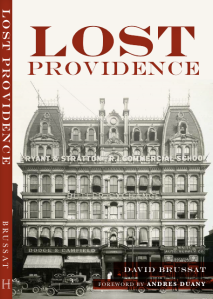
This cover, of the first edition, has been purged from Google! I had to find it on amazon.com.

This cover, of the first edition, has been purged from Google! I had to find it on amazon.com.

When I mentioned this book at the end of last week’s “Ask Dr. Downtown” column, I had no idea that reading it would be so much fun. I say so even though I don’t much like roller coasters.

The Architecture of Happiness, by the Swiss-born Brit TV commentator Alain de Botton, was a book whose title made it a sure bet to please me. The cover (and I always judge a book by its cover) had a sweet little cottage on top of a sterile modernist house. The point could not be missed. Or so I thought.

De Botton writes lyrically about the way buildings affect people. He once wrote a book called How Proust Can Change Your Life. Marcel Proust, the French novelist, famously took several chapters just to wake up and get out of bed. Not that de Botton’s sentences run on endlessly; they are beautiful, and his book is only 268 pages. Rather, he gets into your mind and plays around with your psyche, as if he were a cat toying with a mouse. And yet by the end, you feel that you have never really noticed buildings before, or realized how they could affect your life, or at least your mood. No book on architecture has ever done this better, so far as I know.

That said, de Botton’s style of writing, or at least his way of making a book, is to rile you up then calm you down. For example, in an early chapter in which the history of architecture is traced, he describes how it evolved through various stylistic periods, finally arriving in the early 1900s to a point where modernism came to dominate and style was, readers are told, no longer important. “Exchanging discussions of beauty for considerations of function promised to move architecture away from a morass of perplexing, insoluble disputes about aesthetics towards an uncontentious pursuit of technological truth, ensuring that it might henceforth be as peculiar to argue about the appearance of a building as it would be to argue about the answer to a simple algebraic equation.”

(Okay, maybe that sentence was a bit Proustian. Be that as it may, in the margin I wrote “Not!”)

So, after riling me up, de Botton proceeds to calm me down by assuring me how idiotic it would be to consider architecture by function alone. Whew!

In his discussions of honesty in architecture, the mood swings of buildings, why styles go in and out of favor, whether Le Corbusier was nuts to recommend tearing down Paris, etc., de Botton would rile me up then calm me down. I would scribble furiously in the margin, only to find the author making my point more calmly, with nary a furrow in his brow.

Some of his ideas are somewhat batty, in my opinion. Weakest was his notion that we like architecture that balances out our psychic profile. If we are messy, he says, we tend to prefer our buildings orderly. In fact, de Botton counts orderliness as among the marks of good architecture, though he believes order requires complexity in some degree to be tolerable. At St. Mark’s Square in Venice, the Doge’s Palace epitomizes “the pleasure of order combined with complexity,” while the Procuratie Vecchie (a photograph of which backgrounds my computer “desktop”) represents “the tedium of order.” What does this say about me? Let’s just say I don’t think de Botton has got that particular idea quite right.

Complexity epitomizes The Architecture of Happiness, but it’s a sweet and, after all of the ups and downs, a rather unthreatening complexity, rather more ambiguous, in fact, than complicated or abstruse. I’m still trying to decide whether the book is as “deep” as it seems to be. By the end, I actually thought he kinda sorta agreed with me. Indeed, I was largely in the dark regarding de Botton’s stylistic preferences until I read a review in the Sunday Times (of London) on Monday morning: “Given that his own known personal preference is for modernism, this attempt at neutrality is commendable.”

Commendable, surely. I would call it Herculean. But in the end the book amounts to an elegant and subtle restatement of the fallacy that what matters is not the style of a building but the quality of its architecture (both are important). That’s where de Botton ends up. So for me, getting there was more than half the fun. Maybe I had the roller coaster backwards after all. Most readers will still be dizzy about buildings after reading this book, but a good time – and much learning – will be had by all.

Posted in Uncategorized | 3 Comments

De Botton’s sore bottom line

Screen shot of the opening of

Screen shot of the opening of “The Ruin of London,” by Alain de Botton.

Alain de Botton, who wrote a rollicking book a while back called The Architecture of Happiness, has produced a video, “The Ruin of London,” expressing his horror at what is happening in the favorite city of the super rich. He says (as has been reported here) that there are 260 towers of 20 stories or more, mostly residential, in the pipeline there.

“We’ve become so embarrassed to talk in plain language,” he says, “of beauty an ugliness, we’ve fallen so in love with the postmodern relativism that we don’t dare to declare that what’s happening to London is a clear desecration.”

Too true. And yet he says it is not too late for London.

Sorry, Alain, it is too late. It may not have been too late two decades ago, but two decades ago and ever since then architects like you have been giving the thumbs up to architecture that, as you say, desecrates London. Your book was a rollercoaster because your expressions of excellent taste followed up inexorably by expressions of abominable taste made the book a fun read but ultimately hypocritical. Just like the architecture you always claimed to like: at war with itself, its clients, and the society it supposedly strives to serve.

You say in the video that “architecture, when it’s going right, should never be fun.” I do not agree. But I think architectural commentary should try to avoid silliness. Almost everything in this video is spot on (except for the examples you use to describe an otherwise intelligent solution). But your history as an architect, as a modernist, knocks all of it into a cocked hat.

Because basically, in your modernist tastes, you have preordained what you now condemn. Sorry, Alain. But you can’t have it both ways. Since you seem in the video to favor putting architects in jail (though not executing them as in Pyongyang) for their sins, while insisting that they are not bad people, I would not want to be the judge or the jury who is charged with deciding your punishment. Get thee (at the very least) to a nunnery.

Or better yet, if you have changed your mind, say so. Get off the rollercoaster. Bring your high-wire act to a conclusion. You will do incalculable good.

Off with our hats to Mary Campbell Gallagher for sending de Botton’s video to TradArch.

Here is my review, in 2006, of The Architecture of Happiness.

Posted in Architects, Architecture, Art and design, Development, Other countries, Urbanism and planning, Video | Tagged , , , , , | 1 Comment

We dodge a Gmail spanking

Whoever has not done so, please click “Follow” to continue receiving these posts! Thank you very much!

David Brussat's avatarArchitecture Here and There

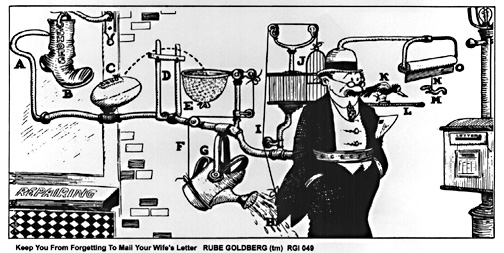
rube-wifes_letterHelp! One click can let your tech-challenged correspondent keep sending these Architecture Here And There posts to you. You need not don the above Rube Goldberg device. That is my job. Your job: Hit “Follow,” the button just to the right of these words, and these posts will continue to flow to your inbox.

Google Mail – Gmail – has apparently changed its parameters for defining bulk mail as spam. For years I have sent my posts out to many of you by copying lists of your email addresses into the “To:” field of several bulk emails, sent “bcc.” Now Gmail has suddenly started to block those emails as spam.

Every recipient of these posts who has not already done so, please click the “Follow” button over to the right. That’s all you need to do. I will no longer need to send out these posts in bulk. I will…

View original post 75 more words

Posted in Uncategorized | 1 Comment

Reverend, grace and Grace

Grace Episcopal Church. (flickr.com)

Grace Episcopal Church. (flickr.com)

Had a very nice talk by phone with the Rev. Jonathan Huyck, of Grace Episcopal Church, and he assured me not just that nothing was set in cement regarding the design of a proposed new parish hall (possibly of glass), but that he understands that there are alternatives to the sort of glass carbuncle the idea of which, for now, is a shadow passing slowly over the future of one of the city’s most beautiful buildings.

He said he would give a traditional design solution for the parish hall equal billing with the modernist “solutions” that he and his board are sure to hear about from those who, as far as beauty is concerned, have already fallen from grace.

Posted in Architecture, Art and design, Development, Preservation, Providence, Urbanism and planning | Tagged , , , , | 1 Comment

We dodge a Gmail spanking

rube-wifes_letterHelp! One click can let your tech-challenged correspondent keep sending these Architecture Here And There posts to you. You need not don the above Rube Goldberg device. That is my job. Your job: Hit “Follow,” the button just to the right of these words, and these posts will continue to flow to your inbox.

Google Mail – Gmail – has apparently changed its parameters for defining bulk mail as spam. For years I have sent my posts out to many of you by copying lists of your email addresses into the “To:” field of several bulk emails, sent “bcc.” Now Gmail has suddenly started to block those emails as spam.

Every recipient of these posts who has not already done so, please click the “Follow” button over to the right. That’s all you need to do. I will no longer need to send out these posts in bulk. I will still send out my posts to the TradArch and Pro-Urb lists. Those who receive them because they are list members do not need to click “Follow.” And if you get my posts through Facebook, Twitter or other social media, you also need not hit “Follow.”

Thank you very much! I look forward to a long future of sending you posts designed to inform, entertain and uplift those who wish for a more beautiful built environment.

Posted in Architects, Architecture, Architecture Education, Architecture History, Art and design, Development, Humor, Preservation, Providence, Urbanism and planning | Tagged , , , , , , , | 3 Comments

More grace in glass additions

The assemblage that makes up the Royal Opera House, in London. (urbancomplexity.com)

The assemblage that makes up the Royal Opera House, in London. (emergenturbanism.com)

In researching glass additions worthy of downtown Providence’s Grace Episcopal Church, I came across the image above of the Royal Opera House (formerly Covent Garden), designed by Edward Middleton Barry and completed in 1858, with its elegant glass addition followed by a bungled modernist addition with a glass “hinge.”

The “addition” is actually the former flower market of Covent Garden, which was built in 1830 but absorbed into the opera house in the 1990s. A next-door neighbor became an addition, which doesn’t quite fit the program of Grace Church. Still, it offers an idea for how a glass addition could work.

Tietz Dept. Store, in Berlin. (Michael Rouchell Collection)

Tietz Dept. Store, in Berlin. (Michael Rouchell Collection)

Awkward moment in downtown Providence. (Photo by David Brussat)

Awkward moment in downtown Providence. (Photo by David Brussat)

Another idea comes to us from the Tietz Department Store, in Berlin. Completed in 1900, it no longer survives. But this photo does, and while it has little to say about the fate of Grace Church under the shadow of glass, it does suggest an infinitude of possibility that need not bring an air of sterility, or worse, into the makeup of Richard Upjohn’s local masterpiece.

The department store suggests that even the plainest glass, fitted into a well-articulated frame, can prove enchanting. Even a one-story parish hall of glass is not going to be made entirely of glass. So what framing is contemplated? Something as flat and featureless as glass (bless its heart in all other regards) requires, to set off its asceticism, a degree of ornament in the vertical and horizontal framing members that enclose each pane of plate. It needn’t be elaborate but it mustn’t be as plain as the glass itself.

After visiting Grace yesterday I came across the abomination at bottom left, in which a modernist brick building clouts an elegant pediment from an earlier building. The treatment of the glass in the modernist building is precisely what Grace must strive to avoid.

Traditional Building magazine is a treasure trove of companies that provide a more elegant sort of glasswork. Centerbrook Architects, hired by Grace Church, is certainly aware of that. Let us hope the board of directors at the church is aware of it, too. All of the examples cited here are of greater scale than is contemplated for the single-story addition at Grace Church. This means that a new glass parish house in sync with the church’s original design should be affordable.

Below, coming in just before I sent this post, is an amazing building called the Palmenhaus Schönbrunn in Vienna, Austria. It is an actual greenhouse, built as part of the Schönbrunn Palace. It was bombed in World War II, rebuilt, and reopened in 1953. Hats off to Seth Holman for sending it to TradArch in the nick of time.

I hope all of this will amount to something interesting to chew on as Grace Church completes its planning for a new parish hall.

Palmenhaus in Vienna, Austria. Hats off to Seth Holman for this photo!

Palmenhaus in Vienna, Austria.

Posted in Architecture, Architecture Education, Architecture History, Art and design, Development, Preservation, Providence, Urbanism and planning | Tagged , , , , , , , | 3 Comments

Failure of grace alert!

Rear of Grace Church today, amid restoration. (Photo by David Brussat)

Rear of Grace Church today, amid restoration. (Photo by David Brussat)

The Providence Journal reports today in “Age and Grace” that Grace Episcopal Church, in downtown Providence, plans as part of its restoration to add a new glass addition. This festered within me all day, and so I went downtown to take some pictures to help me assess where it would be added to the church, designed in the Gothic style by the ecclesiastical architect Richard Upjohn, of New York, and opened in 1848. The Journal story, by Patrick Anderson, reads:

Repair work on the building exterior is already under way, and church leaders are finishing plans to extend a new parish hall off the west side of the building. The new hall would replace the church’s current basement gathering space with a glass-enclosed, wheelchair-accessible, single-story structure fronted by a new sanctuary garden.

Grace Episcopal. (flickr.com)

Grace Episcopal. (flickr.com)

Glass addition to Round Top. (Photo by David Brussat)

Glass addition to Round Top. (Photo by David Brussat)

It seems as if the glass addition would take up at least part of the church’s current parking lot, seen from Westminster Street through a wrought-iron fence. The firm hired for the job is Centerbrook Architects, of Centerbrook, Conn., which designed the elegant restoration and addition to Ocean House in Watch Hill. But a visit to its website reveals that beauty is not the firm’s only product.

A glass addition would almost certainly represent a fall from grace for Grace Church. Even if it were as modest as the glass addition behind Round Top, the Congregational church nearby on Weybosset, it would be as much a spiritual as an aesthetic betrayal of its people, its neighborhood and its mission. Churches are not normally expected to stick their thumb in the eye of their community.

While my family and I were living downtown just a couple blocks from this church, I used to take my little boy Billy, then age 1 or 2, to services there, not to inculcate him early with lofty thoughts but to try to imbue him with a taste for beauty. (You can’t start too early!) I cannot forget its lovely services. The congregation was so nice to Billy and me.

We moved out of downtown with the arrival at Grace of the Rev. Jonathan Huyck. Hard to believe now, but to take the job in Providence he left a congregation in Paris. I have a call in to him, and maybe he will assure me that my skepticism has jumped the gun. A glass parish hall needn’t be an abomination. It could pick up rather than rejecting, as usual, the church’s architecture. But these days that is rare. I will report what he says.

Posted in Architects, Architecture, Art and design, Preservation, Providence, Urbanism and planning | Tagged , , , , , , | 4 Comments

Pandion as African Queen

Katherine Hepburn and Humphrey Bogard in

Katherine Hepburn and Humphrey Bogard in “The African Queen.” (travel-babel.com)

There were rocks in the channel now, with the white water boiling around them, and Rose saw them coming up towards her with terrifying rapidity. There was need for instant decision in picking the right course, and yet Rose could not help noticing, even in that wild moment, that the water had lost its brown colour and was now a clear glassy green. She pulled the tiller over and the rocks flashed by. Lower down, the channel was almost obstructed by rocks. She saw a passage wide enough for the boat and swung the bows into it. Stretching down before her there was a long green slope of racing water. And even as the African Queen heaved up her stern to plunge down it she saw that at the lower end of the fairway a wicked black rock just protruded above the surface – it would rip the whole bottom out of the boat if they touched it. She had to keep the boat steady on her course for a fraction of a second, until the channel widened a trifle, and then fling herself on the tiller to swing her over. The boat swayed and rocked, and wriggled like a live thing as she brought the tiller back again to straighten her out. For a dreadful second it seemed as if the eddy would defeat her efforts, but the engine stuck to its work and the kick of the propeller forced the boat through the water. They shaved through the gap with inches to spare, and the bows lurched as Rose fought with the tiller and they swung into the racing eddies at the tail of the rapid. Next moment they had reached the comparative quiet of the deep, fast reach below, and Rose had time to sweep the streaming sweat from her face with the back of her left forearm.

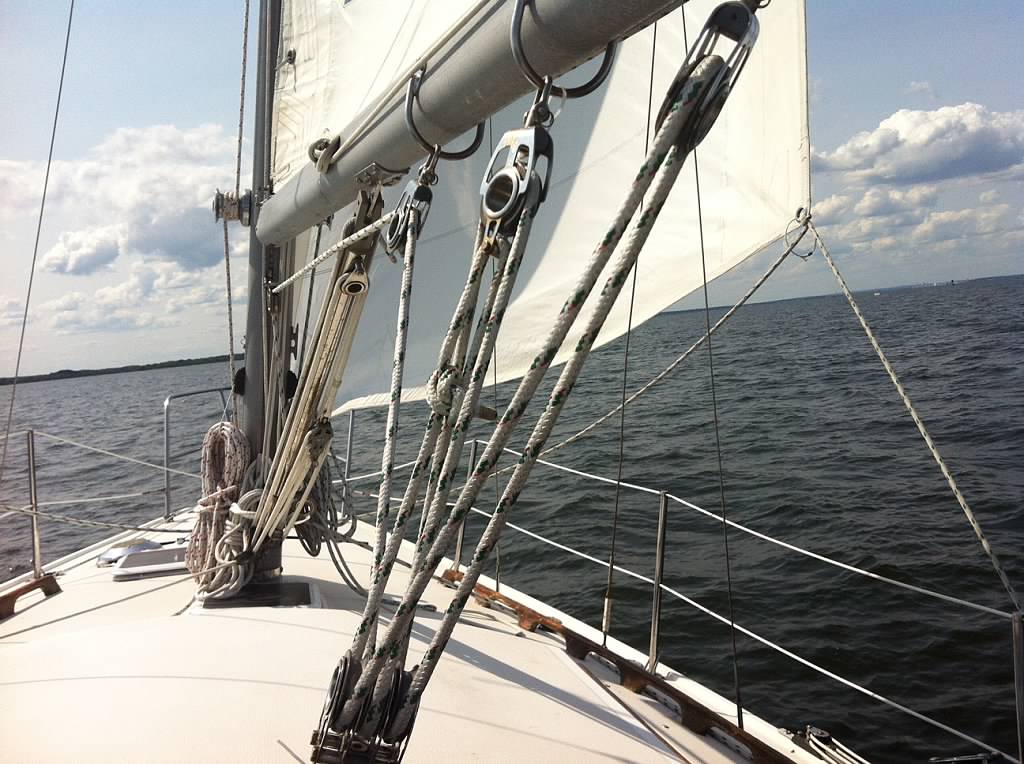
Swiftly run the rapids of the Ulanga in the African Queen for Bogie and Hepburn in C.S. Forester’s classic novel. “The sound was terrifying to Allnutt, and so were the lurches and lunges of the boat, but he had no time to look about him.” Not nearly as exciting, I trust, will be our run, today, down Narragansett Bay from the Bristol Yacht Club in the Pandion with Capt. Mike Gerhardt. On this expedition his most unsailorly passengers, Victoria, Billy and me, will have minimal responsibility for manning (or womanning) the tiller. Below is the view from the Pandion as she heels to starboard, a maneuver about as close to sluicing down the Ulanga in the African Queen as we are likely to get. Bliss to be alive on Bay 101 summers after the events recorded (fictionally) by Forester!

The Pandion heeling to porty, or something like that. (Photo by Mike

The Pandion heeling to starboard in Narragansett Bay (Photo by Mike

Posted in Books and Culture | Tagged , , , , , , , , | Leave a comment

Lists and lists of restaurants

The Rue de L'Espoir, on Hope Street. (pinterest.com)

The Rue de L’Espoir, on Hope Street. (pinterest.com)

Providence has a reputation for fine dining and restaurants that grow old and increasingly beloved. Le tout foodie Prov is mourning the announced closure, on Aug. 9, of the Rue de L’Espoir. But as GoLocalProv.com’s story “Restaurants That Are Sadly Gone” points out this morning, a whole lot of restaurants fail. I ate at all but one of the dozen restaurants we are bid to recall: They are: Rue de L’Espoir, Eddy & Son Diner, Blue Grotto, Taza Caffe, RiRa, Ruth’s Chris, Downcity Food & Spirits, McFadden’s, Tini, Cuban Revolution, $3 Bar and LJ’s BBQ.

The one where I never dined was $3 Bar on Federal Hill, but it only existed for several months. Why it is on that list, who knows? Could you get a real meal there, besides a knuckle sandwich?

GoLocal might also have added: 3 Steeple St., New Japan, Empire, the Blue Grotto on Federal Hill, Napa Valley Grille in Providence Place, Adesso off Thayer Street (not the same in two subsequent locations), the Barnsider on South Main (not the same as the recently opened Mile-and-a-Quarter), and maybe Guido’s, on Hope Street. Does it still exist?

I have comments on most of them but will limit myself to mentioning that Downcity Food & Spirits used to be the Downcity (no upper-case C, please!) Diner, which I recall so fondly, and which burned and then moved down Weybosset to where Circe is today. Its post-fire relocation took it from the second-to-the-last extant downtown building by Thomas Tefft (originally the Second Universalist Church) to what then became the last remaining extant downtown building by Tefft (originally the Bank of North America).

Here are a few restaurants that have been around a long time: Pot au Feu, Hemenways, Capital Grille, New Rivers, Café Nuovo, Al Forno, Capriccio, Andreas, Pakarang, CAV, Pizzico, Chez Pascal, Pastiche, Haven Bros., Geoff’s, Wes’s Rib House, and a host of places on Atwells Avenue, including Angelo’s, Camille’s, and the Old Canteen – there are about three dozen others on Federal Hill, including many of almost equally long standing.

And finally, here’s a list of restaurants that disappeared a long time ago (but since 1984, when I got here). Anthony’s, now Rhode Island Housing; L’Apogee, atop the Biltmore Hotel; Winkler’s Steak House, in the Biltmore garage, where Buff Chace has opened several eateries; the IHOP on Thayer Street; Alfredo’s, also on Thayer; Panache, whose location on College Hill eludes me [see below]; Periwinkles, a comedy club in the Arcade; Scotland Yard, a restaurant on the Arcade’s second story (or third?); Amsterdam’s, on South Main Street, notable for its rude encounter with Buddy Cianci; InProv, facing Kennedy Plaza from the lobby of the Fleet Center, a restaurant with extraordinarily high-concept restroom design; Raphael’s, on Pine Street; City Lights, a café in the old Davol Square mall; the Atomic Grille, under the former Route 195, where Leo’s used to be (a Rhode Islandism within a Rhode Islandism!); Davio’s, in the Biltmore; the Plaza Café in what is now the police substation in the bus station that arose from the Kennedy Plaza comfort station; Ming Garden, the second place I ever ate out in Providence (L’Apogee was the first); Luke’s Luau Hut, on the first floor and in the basement of the Smith Building, long before I lived there for 11 years.

Most restaurants come and go, and those of Providence are no exception. But where the restaurant scenes of most cities, including some much bigger than La Prov, involve extensive cannibalization, here restaurants seem to last longer and new ones pop up frequently, with relatively little fratricidal blowback. The culinary school at Johnson & Wales is certainly responsible for our unnaturally robust foodie culture, as is the creativity that flows naturally from RISD, fueled by the money that flows naturally from Brown.

In these lists I have favored places favored by me. I hope readers will refresh my frazzled and over-strained memory with places I have omitted.

And by the way, here is a fascinating look at Providence on its 350th birthday (1986), “R.I. Offers a Capital Rooted in Tolerances,” that was written for the Philadelphia Inquirer. And here is another great retrospective piece from the old Phoenix, “Almanack Redux,” by Ted Widmer, written in 2003 about Providence in the late 1970s.

Posted in Art and design, Blast from past, Books and Culture, Development, Preservation, Providence, Urbanism and planning | Tagged , , , , , | 8 Comments

Eames golden mean oops

Mathematica Exhibit at Boston Museum of Science. (Boston Globe)

Mathematica Exhibit at Boston Museum of Science. (Boston Globe)

The Parthenon, in Athens. (Wikipedia)

The Parthenon, in Athens. (Wikipedia)

The golden ratio traced on the figure of man. (Wikipedia)

The golden ratio traced on the figure of man. (Wikipedia)

A brief squib in the Providence Journal a couple of days ago about a mistake in the Mathematica exhibit at the Boston Museum of Science had me wondering.

The error was discovered by a 15-year-old, Joseph Rosenfeld. It appears that in an equation describing the golden mean (or ratio), three minus signs should have been plus signs. The error had gone unnoticed since the exhibit’s installation in 1981. The museum at first said it would correct the error but then announced that it was in fact not an error – that the equation meant the same thing whether the symbols were rendered as + or -.

Go figure. Literally. … Please, don’t wait for me.

The Boston Globe reveals that the exhibit was designed by the late Charles and Ray Eames. I rolled my eyes at yet another story that the Journal fumbled. After all, the Eamses were major influences on modern design, and although they were based in Los Angeles, the Rhode Island School of Design is in Providence. Once again, the Journal drops the ball on a story of interest to many of its readers. (I have written about the Hasbro Monopoly story, which it fumbled recently.)

The golden mean is said to influence much of architecture’s fascination with proportion. I have always wondered whether the precision implied by the sorts of equations and diagrams involved was really carried out by classical architects down through time. On the one hand, architects must always use methods that rely on precision, so throwing in a few extra proportional equations shouldn’t add too much difficulty. On the other hand, since the chief goal of proportionality in architecture is beauty – or at least form that pleases the eye – then maybe there’s wiggle room in the golden mean. kim-kardashian-grace-jones-jean-paul-goude-paper-676-body-image-1415802314

Speaking of wiggle room, I wrote several posts about this topic of proportion not too long ago – the most interesting of which may well have been the one (“Disproportion by definition“) that had an illustration of the tush of the celebrity Kim Kardashian. Is it proportional or disproportional? Or is it emphatically disproportional, transcending the very the idea of proportion? I leave the reader to decide the question, but would add that the golden ratio is probably not involved in the answer.

Getting back to Charles and Ray Eames, they were more famous for their furniture than their architecture. But I am not sure whether their furniture was uncomfortable enough to qualify as modernist furniture. Needless to say, the amount of time they put into the design of furniture took away (according to some mathematical equation that seems to be floating around somewhere in the vast dead spaces of my memory from seventh grade) from the amount of time the spent on architecture. Since most furniture is kept indoors, that equation may summarize an important benefit to the quality of the built environment. It is too bad, as I said in another blog not long ago (“The architecture of dessert“), that more modern architects do not dabble more in furniture – or photography, which was another of the Eamses’ interests, or for that matter, museum exhibit design.

I am sure they were just as good at furniture and kooky houses as they were at museum exhibit design.

Posted in Architects, Architecture, Art and design, Humor | Tagged , , , , , , | 6 Comments