Klaustoon pricks Pritzkers

Screen Shot 2015-12-27 at 11.44.16 AM.png

Here’s the latest Klaustoon, by Klaus, which heaps ridicule on the Pritzker Prize jury in its moment of crisis when laureate-to-be Frei Otto dies the day before the announcement, three days before the death of Michael Graves, the famous PoMo non-laureate. The response foreseen by Klaus was to put each nominee under medical investigation. Quite a macabre cartoon, but insanely hilarious. And there’s the constant rattling cage of the failure, thus far, of the Pritzker to recognize famed female architect Denise Scott Brown.

There is one weird note. Can anyone pick it out?

Click on the Klaustoon link above and you will see the cartoon in a format that can be enlarged with a click. Plus read all of the commentary that accompanies the cartoon.

Posted in Architects, Architecture, Architecture History, Art and design, Humor | Tagged , , , , , | 9 Comments

More reasons to like PoMo

tokyo-830x664.jpg

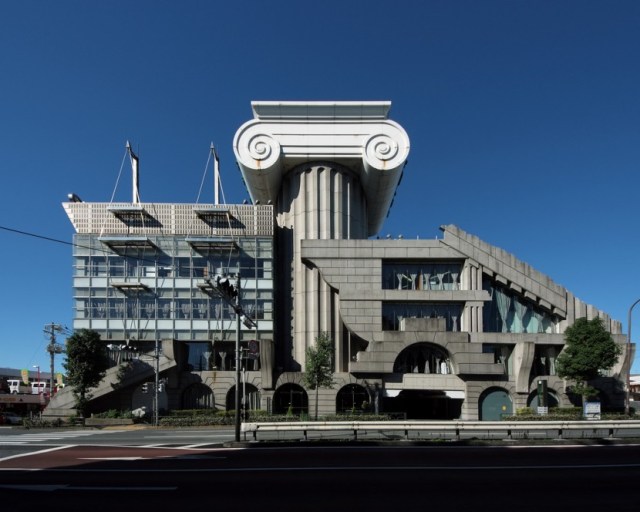
M2 Tokyo, 1991, designed by Kengu Kuma. (flickr/wakiii)

My headline is ironic, of course, like the column capital in the photo above that accompanies “8 Reasons You Will Also Like Postmodern Architecture in 2016.” The article, by René Boer for the website Failed Architecture, is quite a romp. Naturally, the author can hardly be expected simply to say that it will be chic to like what most people like most anyway. At least he mentions that classical and traditional buildings and houses are costly because they are so widely liked. “Most historical styles are very much appreciated,” he writes, “which makes them often quite expensive.” And there is a lot of backlash against modernism as well as PoMo in the piece. Enjoy!

Posted in Architects, Architecture, Architecture Education, Architecture History, Art and design, Humor, Urbanism and planning | 2 Comments

Bedford Falls or Pottersville?

Screen Shot 2015-12-26 at 12.33.55 PM.png

George Bailey roams Pottersville in “It’s a Wonderful Life.” (Vimeo)

I saw George Bailey in Bedford Falls and Pottersville last night. You don’t see It’s a Wonderful Life on television as much as you used to. The film’s copyright lapsed for 20 years beginning in 1974. Last night I saw the second half of the film but not the first half, in which a charming Bedford Falls is painted in the most dulcet colors. But later on, although obviously Pottersville was designed to horrify the movie audience of 1946, today it seems to evoke the sort of town that enchants many urbanists.

Perhaps I’m being unfair. Bedford Falls was like the bar in Cheers – where everyone knows your name. In Pottersville, nobody knew George Bailey’s name. What happened in Pottersville stayed in Pottersville. The streets were lined with ground-floor retail, that is, nightclubs and girlie joints mostly, or so it seems. It was well lit with shop signage. There was more activity on the streets and sidewalks of Pottersville (granted, the police were out in force) than Bedford Falls, which seems to have pretty much rolled up its sidewalks early in the evening. In the neighborhoods, Bailey Park – affordable homes financed by Bailey Bros. Building & Loan – had high population density but under Potter’s reign the land has even higher density (as a cemetery).

Frankly, for me, harking back to my long-ago days as a young man on the prowl, the lifestyle of Pottersville seems fraught with possibility. The set was one of Hollywood’s most elaborate, filling four acres. (I get some of this information from “25 Wonderful Facts About ‘It’s a Wonderful Life,” from the Mental Floss website.) But I just found a video of the entire film and watched from the beginning. Bedford Falls was quite lively. Why, the scene where George and (cab drivers) Bert and Ernie watch sexy Violet (Gloria Grahame) walk down the street shows that even a buttoned-down place like Bedford Falls was not without its pedestrian charms.

The spirit of Mr. Potter, the evil banker who in the “nightmare” sequence turns Bedford Falls into Pottersville, seems by now to have taken over the entire world economic system. Thus it may be no surprise that the society of modern times seems more like Pottersville than Bedford Falls. So ingrained are the attitudes of the former into our psyche that we hardly recognize them as morally suspect. Part of the beauty of It’s a Wonderful Life is that it portrays society as an ideal that, while it may never have been achieved in the past, seems almost almost impossible to imagine in the future. That sad shift may be summed up as the spirit of modern architecture.

Screen Shot 2015-12-26 at 11.43.56 AM.png

o-ITS-A-WONDERFUL-LIFE-RARE-PHOTO-570.jpg

rkoradiopictures.png

Posted in Architecture, Architecture History, Art and design, Book/Film Reviews, Urbanism and planning | Tagged , , , , , , , | Leave a comment

This year’s icy ice hotel

pinpin_studio_vy_sommar_v2-1140x740.jpg

The ice hotel in Jukkasjarvi, Swedish Lapland (icehotel.com; no fotog cited)

Some perversity inspires me this morning (Merry Christmas! though it’s in the 60s) to take readers to the Ice Hotel at Jukkasjärvi, 200 miles North of the Arctic Circle. My wife, Victoria, has often expressed a desire to stay there, an idea I annually poo-poo with fervor, and yet the prospect is not without its seasonal enchantment (most years). A classic package for two runs SEK 11 305. No dollar translation on the website. Well, if you have to ask …

A new ice hotel is built every year in a different design. One year it was modeled after Shakespeare’s Globe Theatre. It is built, occupied for three months, then it melts.

This National Geographic video paints the place in what seems to me to be unusually stark and unpleasant tones. The website for the hotel displays it much more alluringly in still photography. The NG vid spends a lot of time on the ice glasses produced for drinks, but very little time on the beds in the hotel’s suites. Are they made of ice, too? It appears so. What about the bed sheets and covers? They seem to be furry. Are there prizes for which couple melts their bed fastest? I’m sorry, but these are issues facing the nation (fortunately, that nation is Sweden).

Here are some photos, actually screenshots, from the hotel website:

Screen Shot 2015-12-25 at 10.09.08 AM.png

Screen Shot 2015-12-25 at 10.07.46 AM.png

Screen Shot 2015-12-25 at 10.08.51 AM.png

Posted in Architecture, Art and design, Development, Humor, Photography, Video | Tagged , , , , , , , | 4 Comments

Form, function and Sullivan

archhistdaily.wp.jpg

Louis Sullivan’s Guaranty Building, in Buffalo. (archhistdaily.wordpress.com)

Am plunging into a 1956 softcover copy of Louis Sullivan’s The Autobiography of an Idea, first published in the early ’20s. The introduction to this edition by University of Illinois architecture professor Ralph Marlowe Line, written with the well-known forward by Claude Bragdon, an architect and proponent of “organic architecture,” in mind, or so you would think, is a textbook example of the omission of fact on behalf of theory.

MTE1ODA0OTcxMzA2Mjg4NjUz.jpg

Louis Sullivan (biography.com)

Bragdon notes that Sullivan’s buildings were highly embellished, although not in the classical line. Bragdon notes that for Sullivan, “function determin[ed] form and form express[ed] function,” adding with no hint of reproof that over a building’s structure “he wove a web of beautiful ornament – flowers and frost, delicate as lace and strong as steel.” This was in 1924.

Line, writing three decades later, ignores this fact unshamefacedly in discussing Sullivan’s conviction that “no architectural dictum or tradition or superstition or habit should stand in the way … of making architecture that fitted its functions – a realistic architecture based on well-defined utilitarian needs.”

Line forgets (even if the actual Sullivan did not) that utilitas forms part of the triad, with firmitas and venustas, that has been followed by architects since Vitrivius (and long before). Nowhere in Sullivan’s famous lines on “form ever follows function” does he excoriate decoration. His preferred decorative pallette paid little heed to classical precedent, but there is nothing in his writing that is honestly translatable into “form follows function only by excluding ornament.”

In his architectural practice, he often gave himself the ornamental work and left building structure to other office members. In the hagiographies of his appointment as “precursor to modern archtiecture,” written by modernist historians, Sullivan’s pr0clivities as a professional, when discussed at all, are spoken of sotto voce or covered up altogether.

Now “form follows function” is about all that remains of the popular legacy of Louis Sullivan. As a statement it is simple and unobjectionable. As an expression of modernism’s “ornament is crime” philosophy, it is strictly hogwash. Those who know nothing of Sullivan but his association with that one entirely misunderstood phrase, and who then look for and observe any building designed by him, are bound to be baffled.

This is no surprise. Confusion is the second commandment obeyed by all adherents to the cult of modern architecture: Thou shalt not permit clarity to expose the obtuseness of modern architecture. (Awareness of this modernist abhorrence of simplicity and clarity characterizes Steven Semes’s New Criterion essay, linked in my post “Semes on Paris and our cities” last night.

Andrés Duany’s effort, through his Heterodoxia Architectonica treatise under construction, to (among other things) recapture the rep of Louis Sullivan as a classicist – that is to say, a sane architect interested in the marriage of beauty and utility – is a project whose time came long ago.

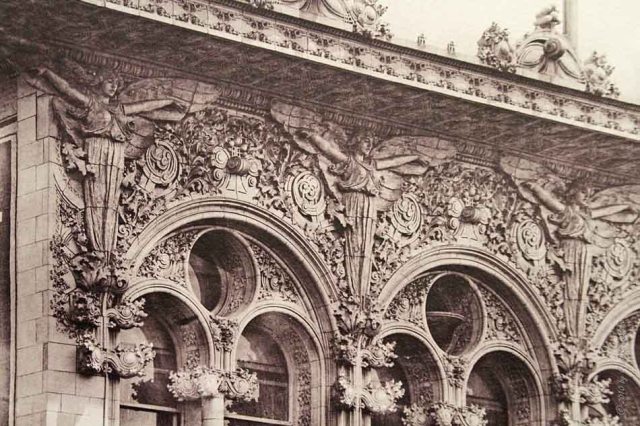
So, for the holidays, I offer some shots I took in 2013 of the entrance to Sullivan’s Carson Pirie Scott & Co. Building. Best of the season and good cheer to all of my readers, every one!

DSCN8980.JPG

DSCN8979.JPG.JPG

DSCN8983.JPG.JPG

DSCN8984.JPG

DSCN8993.JPG

DSCN8990.JPG

DSCN8990.JPG

DSCN8980.JPG

DSCN8978.JPG.JPG

DSCN8977.JPG


Posted in Architects, Architecture, Architecture Education, Architecture History, Art and design, Preservation, Urbanism and planning | Tagged , , , , , , | 1 Comment

Semes on Paris and our cities

joelix-paris-rooftops4.jpg

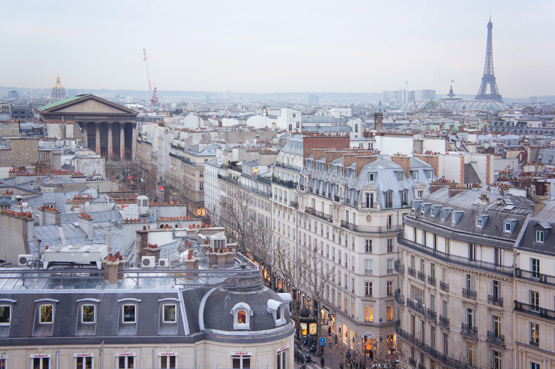
Paris, looking toward the Madeleine. (The New Criterion)

Steven Semes, head of the Rome program for the school of Architecture at the University of Notre Dame, and the author of The Future of the Past (one of my bibles) has written a long and, I am sure, brilliant essay about the vandals at (or inside) the gates of Paris. I am posting it before reading it because I know it will be good and readers should have it asap. I may add a comment or two about it later. “Preserving the City of Tomorrow: The Best Way to Improve Our Cities,” published in The New Criterion, was sent to me by Andrew Reed, nephew of the late Henry Hope Reed, who essentially led the Classical Revival for half a century.

***

Semes’s essay recapitulates virtually the entire debate raging in the fields of architecture and urbanism today. Here is one passage, which opens with a reference to “architecture of our time,” the mantra of what modern architects and their camp followers say cities need:

This aggressive aesthetic of “our time” is conspicuously at odds not only with our historic cities, but also with the real and pressing imperatives of our present conditions: climate change, urbanization, and the need for a sustainability that actually allows us to live together without foreclosing the quality of life for future generations. The building technology celebrated by modernist architecture—with its reliance on inherently unsustainable glass and metal exterior envelopes—and the urban development models of superblocks, isolated towers, and automobile dependence are principal contributors to our current energy crisis. Preposterously, the architects and their political supporters insist that we continue, even accelerate, the practices that produced the environmental crisis in the first place, while the obvious remedy lies all around them in the historic city.

Semes goes on immediately to quote a report of the Council for European Urbanism, essentially suggesting that if sustainability” is key to the future of cities, then why not try “what has already been sustained”?

Nah. Makes too much sense. Click and read this great essay.

***

It should also be noted that Semes credits Mary Campbell Gallagher of SOS Paris with voicing many of the arguments over skyscrapers in Paris. He quotes her regarding the David vs. Goliath aspect of the battle, adding, “One hears echoes of ‘La Marseillaise’ in those words!”

Posted in Architects, Architecture, Architecture Education, Architecture History, Art and design, Development, Other countries, Preservation, Urbanism and planning | Tagged , , , , , | 2 Comments

Christmas card community

image1.JPG

Tom Low responded to a request on TradArch from architect Steve Mouzon for comment, thumbs up or down, on a new neighborhood in Bentonville, Ark., featured in Architect magazine, voice of the AIA (which traditionally hates traditional architecture). Low replied but added the image, above, of what he was working on. To me, it seems much better.

Down below this post is the Bentonville “pocket neighborhood,” described in Architect, called Black Apple and inspired by Pocket Neighborhoods, a book by Ross Chapin. Of Black Apple, Mouzon had written:

On the one hand, it quotes a lot of regional vernacular and does some interesting things. On the other hand, there’s nothing canonically correct. Good or bad? What say you?

As for me, it’s the first time I’ve seen anything with any traditional inclinations in Architect in decades, so I’m wondering if it signals something we’re not quite seeing yet.

My first impression had indeed been that the pocket neighborhood was a bit spare and sterile, but it was nice enough that a feeling of oddness did come over me that it was featured in Architect. Here’s what Low wrote of it:

Pretty basic design but framed with references to appealing Ross Chapin brand pocket neighborhoods, green building, great-good places, small cottages, and local vernacular style. IMO mostly succeeds in scale, but the details are clunky, social character especially suffers from the the low-slab floor, and the community pavilion is hip but a little too corn-cribby kitsch.   The traditional precedent is bungalow courts like those in Hyde Park Tampa and Pasadena.  Excellent model for expanding housing choice de-emphasizing auto-centric era lifestyles.

That articulates my own instinctual reservations. I think what he finds wrong with it is summed up by the neighborhood (pictured on top) that he has designed for Black Mountain, N.C., near Asheville. The site work has already begun. (Probably a good start with this weather!)

90.jpeg

Black Apple neighborhood in Bentonville, Ark. (Architect)

Posted in Architects, Architecture, Architecture Education, Architecture History, Art and design, Development, Urbanism and planning | Tagged , , , , , | 2 Comments

Lovely house on N.J. coast

image1.JPG

Sketch of house under construction on N.J. waterfront. (David Rau)

David Rau has sent to TradArch his sketch of a house he has designed along the intercoastal waterway of New Jersey. I am assuming that the grayed-out structures to the left and the rear are the neighbors of the eventual owners of the house. It is under construction now.

Rau writes: “On a related, but wider note, we’re searching for a handmade, organic, local, and natural approach that represents what architecture should be ‘in our own time.’ This is my attempt at the Fifth Recall. [It] needs work.”

A recall is a return to order after a period of architectural dispersion in relation to the classical canon. The Fifth Recall is what Andres Duany, in his treatise Heterodoxia Architectonica (still under construction now), says must happen if the classical revival is to avoid being bogged down by an overly strict adherence to the classical canon – what he calls Palladiophilia. I think he overstates the case, but it is certainly a valid concern. Rau’s house above may suggest that classical architects are already taking Duany’s warnings seriously. My take is that they have been for many years.

Yes, there are classicists who design houses and other buildings that take a “strict constructionist” view of the canon and how it is to be applied. And let us hope there always will be. Let’s not forget that a creative approach to the canon will become chaotic if the entire classical revival becomes unmoored from the canon. And let’s also not forget that a strict adherence to the canon is almost sure to produce beauty.

The canon can produce such a variety of forms that (notwithstanding my own warning just above) that we needn’t fear being bored by whole swaths of very canonical classicism. Be that as it may, work such as that of David Rau as shown above ensures that the conversation among classicists will continue to be lively, and sometimes even elegant.

Posted in Architects, Architecture, Architecture Education, Architecture History, Art and design, Development, Urbanism and planning | Tagged , , , , , | Leave a comment

So sue me, Louis, I like it

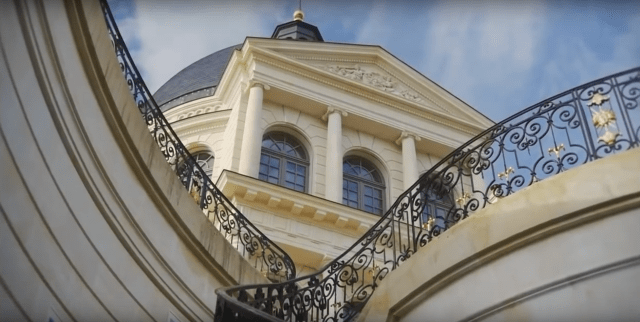
Matthew Hardy sends to TradArch a video flacking a newly constructed house, said to be the world’s most expensive new house, called Le Château Louis XIV. And it looks like Versailles. And it’s near Paris. And I like it. So sue me! I cannot sniff at whoever built it. The video, about four minutes or so, in French, displays a lovely place for someone with a lot of money. Go for it! Who are we to sniff at this? Is it a copy or an imitation?

To check it out, click on the video atop this post.

Here is a quote from a website called homesoftherich.net sent by Anthony James to assist those who want more still shots of the mansion:

I’m at a loss for words. This is without a doubt the most amazing estate to be built in the last 100 years … anywhere. Dubbed “Chateau Louis XIV”, this jaw-dropping castle-esque estate is located in France (coordinates 48.8499°N 2.1204°E) and started construction in October 2008 and finished in June 2011. It was designed by renowned French architect Pierre Bortolussi and built by Cogemad. It was modeled after Vaux-le-Vicomte and built around a moat. The grand interior features over 53,000 square feet of living space with extensive marble and gold leaf throughout. Rooms include a grand foyer with marble staircase, amazing 50 foot high grand salon, gourmet kitchen, multiple reception rooms, home theater, wine cellar, indoor racquetball court, indoor swimming pool with spa, steam room and sauna, massage room, ball room, nightclub, lounge areas made of glass with views of the fish and much more. The rear of the home features a grand terrace with double staircase leading to a swimming pool. The grounds feature spectacular formal gardens, fountains, a stable and more.

(Not sure what is meant by “built around a moat.”)

Screen Shot 2015-12-21 at 7.38.07 PM.png

Posted in Architecture, Architecture History, Art and design, Landscape Architecture, Other countries, Video | Tagged , , , , , , , | 3 Comments

‘Modernism’s back!’ said he!

modernismlede.jpg

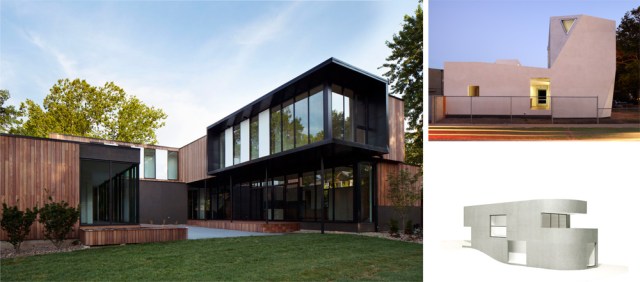
Here’s a great addition to my collection of articles that damn modernism in its own defense. This one says pretty much the opposite of what the headline says and what the writer, David Hay, wants to believe. “Why Modernism Came Back, and What It Looks Like Now,” in Curbed, is filled with quotes of architects backing away from modernism. But each time, the author insists that modernism’s popularity has grown. I read it all the way through, and could not believe my eyes. Give it a try.

Modernism remains dominant not because it is popular but because the architectural establishment keeps the playing field tilted – except in the market for single-family houses, where people not committees decide. Most architecture journals puff only modern architecture, but look at what’s for sale on the magazine racks of your local bookstore. As citizens in unfree societies are aware, dominance does not always equal popularity.

Posted in Architects, Architecture, Art and design, Development | Tagged , , , | 6 Comments