The Schwäbisch Hall cure

monkeysandmountains.com.jpg

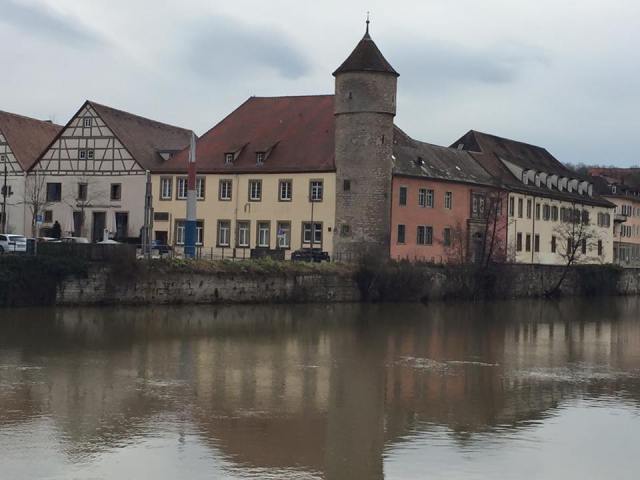
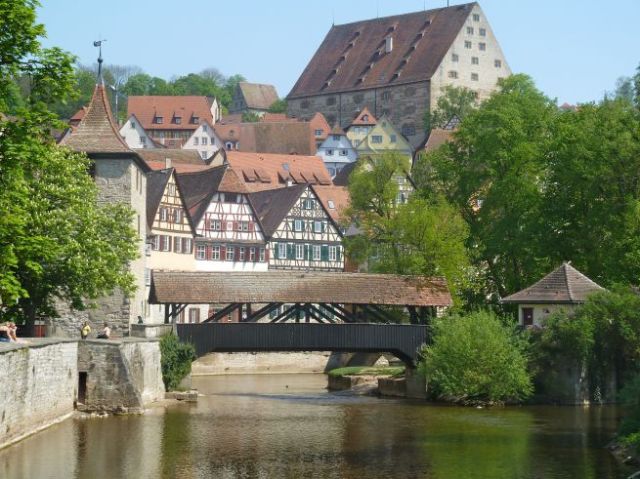
Town of Schwabisch Hall, along Kocher River in Germany. (monkeysandmountains.com)

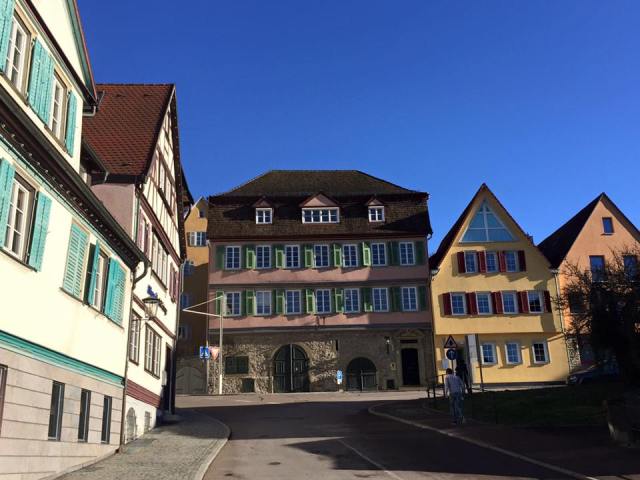
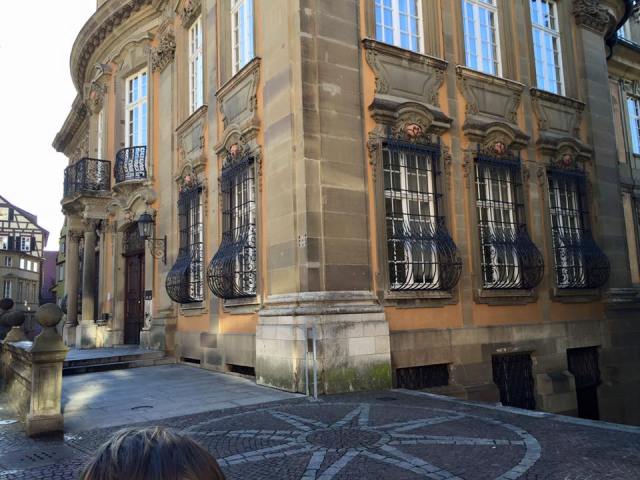
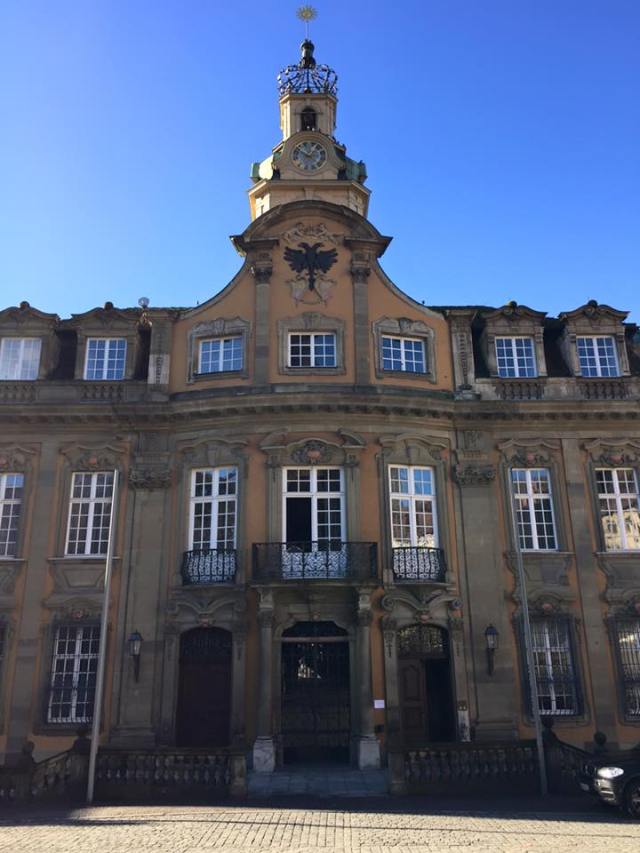
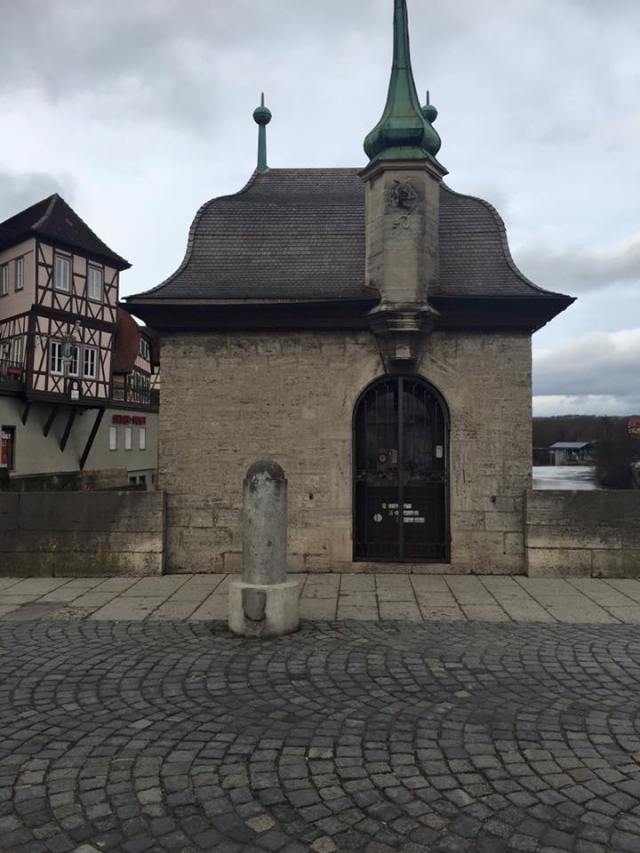
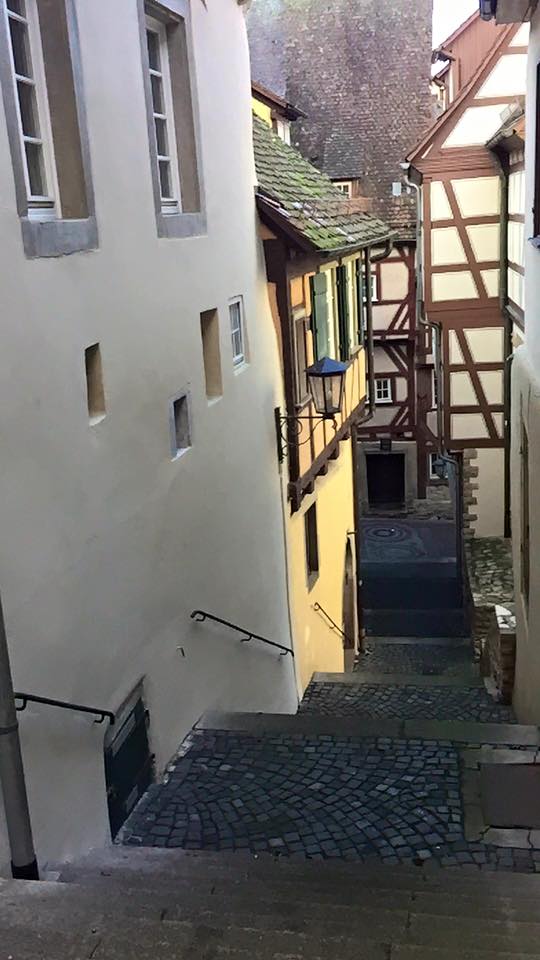
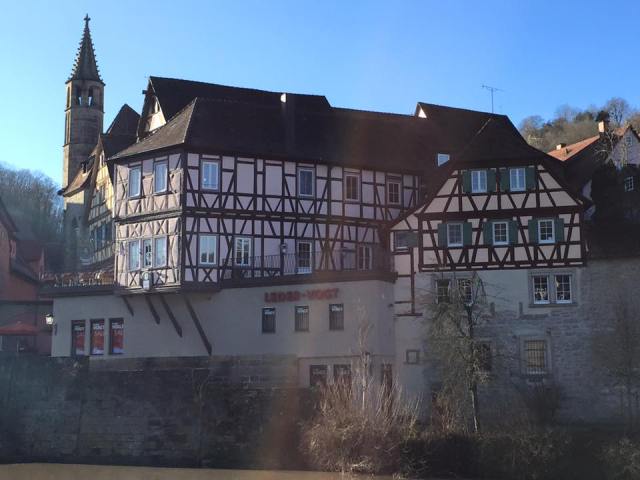
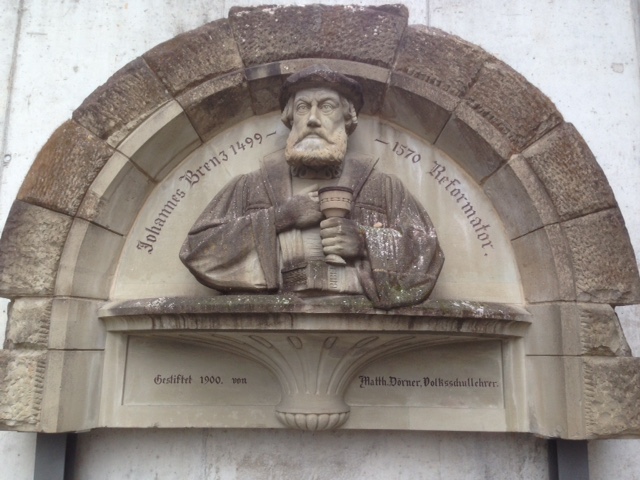
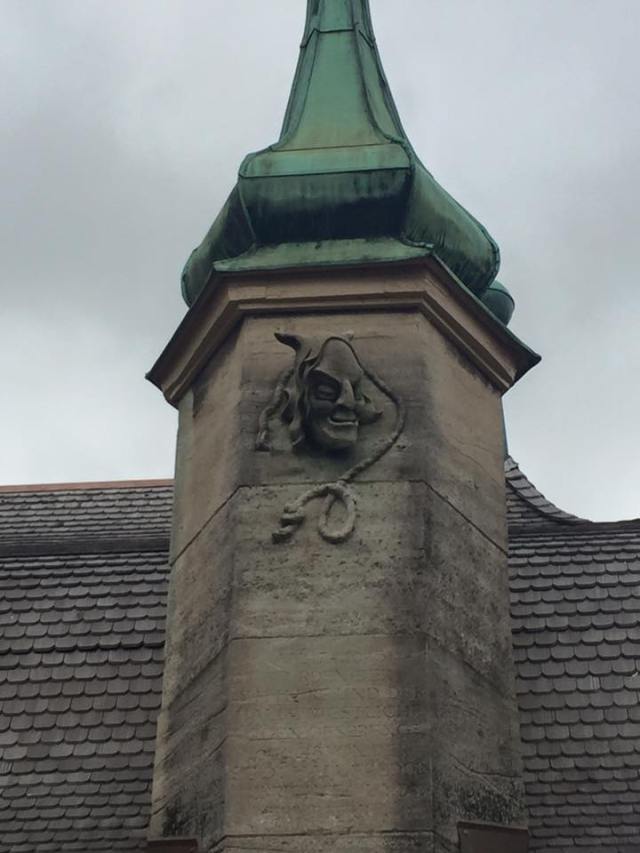
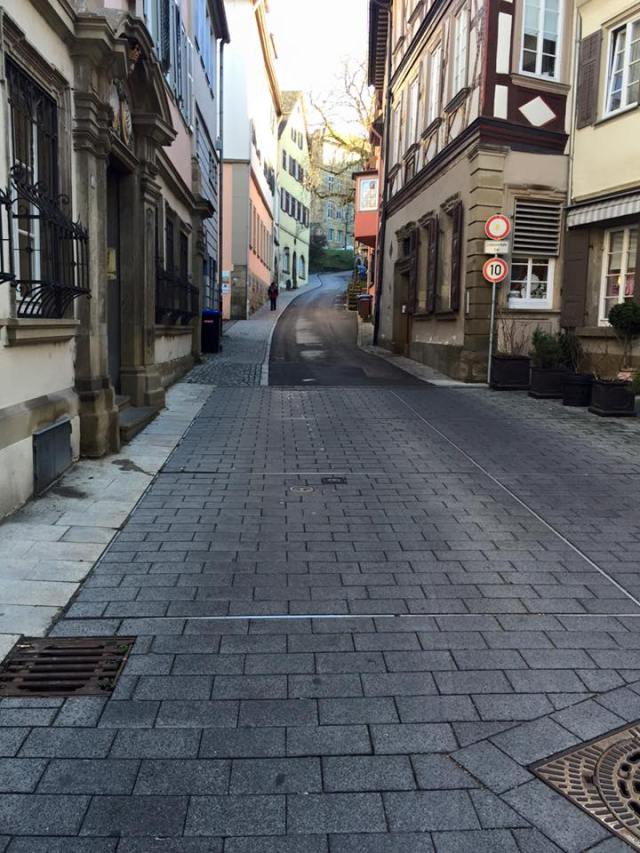
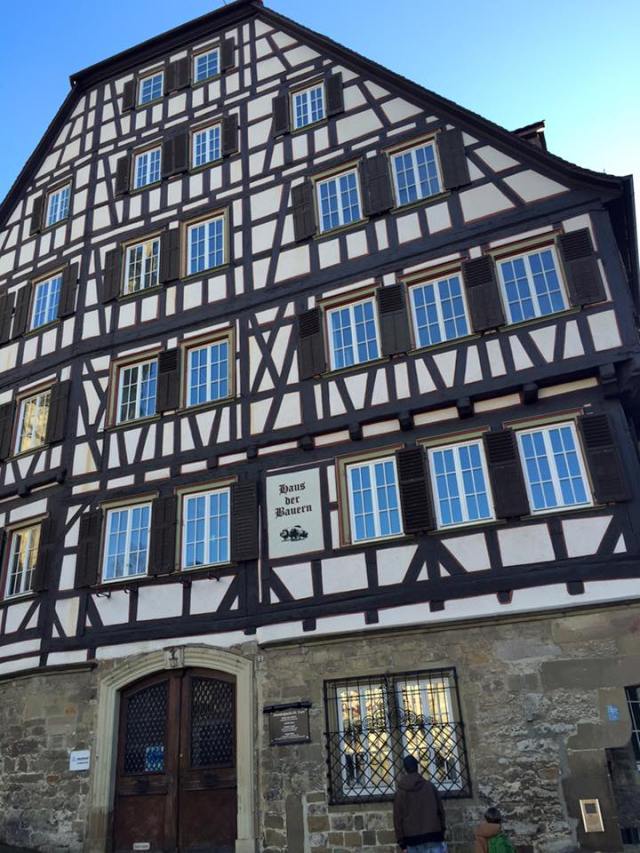
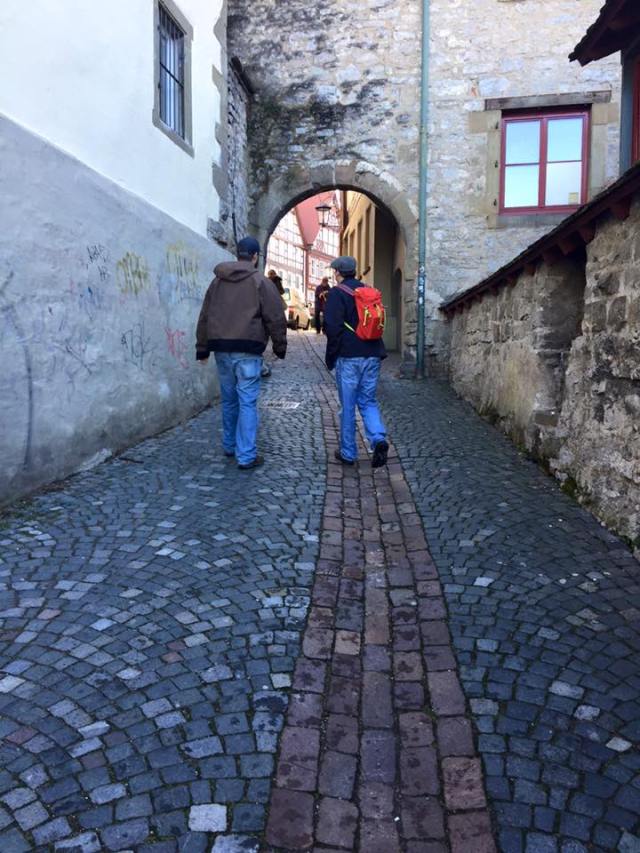
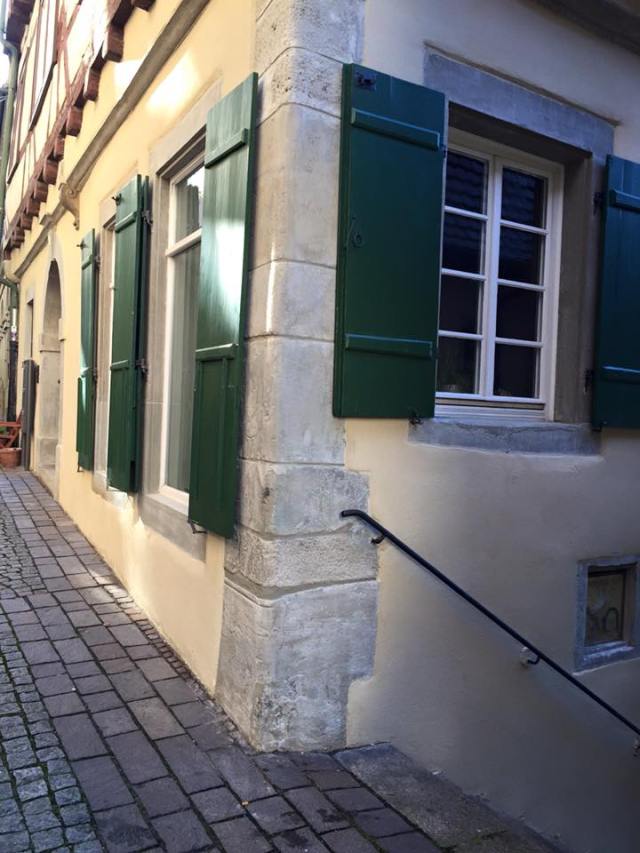
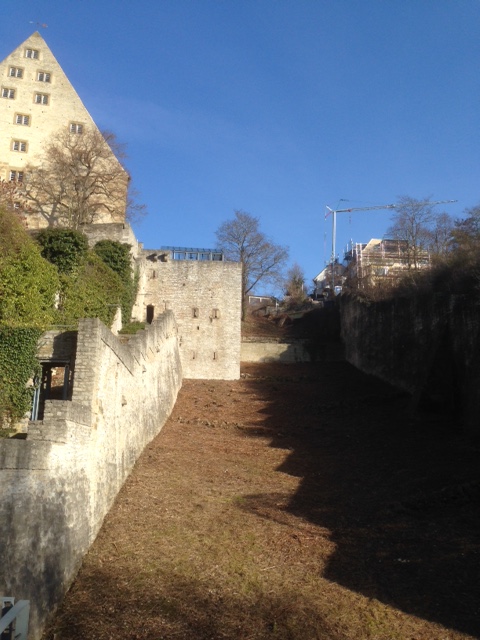
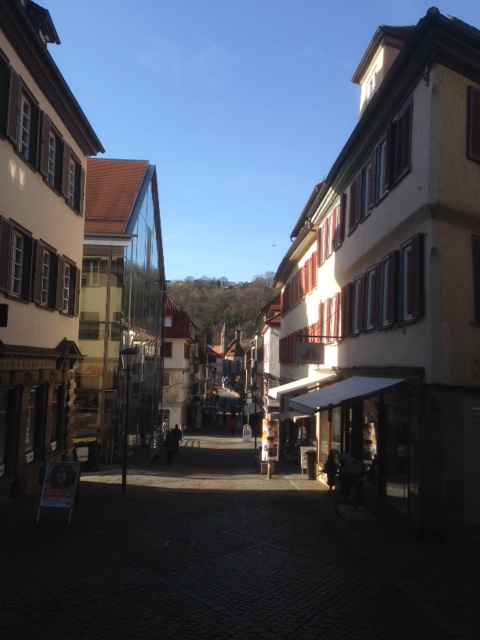
A German town of some 36,000 in population, Schwäbisch Hall was barely nicked by Allied bombing in World War II, and it shows. The medieval streetscapes in the photos here might well suggest the town as spa or cure for whatever ails you. In fact, my brother Tony and his wife Sabrina, who live in Oregon, are at the Hall so her sons, Jonny and Trey, can take a pathbreaking cure offered there (but not in the U.S.) for Lyme disease. They have been on the cure for several weeks and so far it is working very well for both patients. Sabrina recently posted happy tidings of the treatment to her Facebook page but also included some lines about living in Schwäbisch Hall.

We go to a church sometimes and that is nice. We also went to Ken’s house, which is 500 years old. Most of the time if [Jonny and Trey] are not in therapy we walk around the town. There are many tunnels underneath the houses in the old city. Jonathan took a picture of a shackle, which in the past was used for punishment. The whole town would shame the person by throwing rotten fruit and vegetables at him. Today we walked on the Hanging Bridge. In the past this is where hangings took place. The history is amazing here. Jonathan and Trey were next to a building that was built in the 13th century. There are many castles here within a bus ride distance. We have not seen those but there is a monastery within walking distance we are going to see when we have a sunny day.

Tony is a rhetorician and psychiatric nurse. Here’s his description of the Lyme treatment:

The treatments are multiple: along with vitamin infusions and shots, they get autologous blood infusions with ozone and also bionic light therapy all of which kill the Lyme and the co-infections and cause a massive detox (getting rid of all these dead bacteria and perhaps viruses). In addition they get a ton of naturopathic drops (which I have to count out drop by drop) throughout the day. Fortunately something in all of this suppresses the misery that usually accompanies detoxification.

Here is a GoFundMe link to “Jonny’s Lyme Fight” for those who want to help support the family’s sojourn of several months at Schwäbisch Hall.

12688308_1267062909987214_1440529620075594444_n.jpg

12688139_1267063163320522_7968567683527047141_n.jpg

12654250_1267062886653883_66037132304291017_n.jpg

12439528_1251760891517416_5587068277688861461_n.jpg

12524066_1251760938184078_5954253531757519532_n.jpg

12647383_1263062773720561_8148999938208055939_n.jpg

1910053_1251761071517398_3572571032807163961_n.jpg

12669591_1267062879987217_5297367624405180875_n.jpg

12549109_1251760994850739_307098385206074973_n.jpg

12400692_1251761111517394_4117495106959373374_n.jpg

IMG_0683.JPG

12654327_1267063113320527_185576944265384519_n.jpg

12717742_1267062856653886_3747589600956341681_n.jpg

12642766_1267063189987186_6366303038535549844_n.jpg

12509883_1251761041517401_1764019394156622917_n.jpg

12400614_1251760824850756_772789026941442545_n.jpg

12552805_1251760984850740_3125116295725085392_n.jpg

IMG_0648.JPG

IMG_0650.JPG

The glass building with gabled roof left of center is one of the seemingly few modernist interventions in the town center. I cannot tell how many of the other pictured buildings survive intact or have been rebuilt or rehabilitated. I am thankful, however, that Jonny and Trey are well on their way to successful renovation.

Posted in Architecture, Architecture History, Art and design, Other countries, Photography, Preservation, Urbanism and planning | Tagged , , , , , , , | 3 Comments

6th annual Bulfinch winners

1280px-Flickr_-_USCapitol_-_Charles_Bulfinch.jpg

The New England chapter of the Institute of Classical Architecture & Art has announced this year’s winners of its Bulfinch Awards, which honor work in classical architecture, urbanism and allied arts. This year for the first time the chapter invited entries from all around the country so long as the work was done in New England.

There are eight laureates, including seven chosen by the jury of Christine Franck, Alvin Holm and Andrew Skurman, and one, our first award in the category of patronage, chosen by the board of trustees.

Here are the winners:

***

01AhearnMorseSt.jpg

Patrick Ahearn Architect, Residential (Restoration, Renovation or Addition), for “Morse Street Compound”

***

02FergShamTisbury.jpg

Ferguson & Shamamian Architects, Residential (New Construction) Over 5,000 SF, for “A New Residence – West Tisbury”

***

03AhearnHGTVDreamHome.jpg

Patrick Ahearn Architect, Residential (New Construction) Under 5,000 SF, for “Dream Home”

***

04RAMSABrownFitnessCtr.jpg

Robert A.M. Stern Architects, Commercial/Institutional, for “Nelson Fitness Center and Coleman Aquatics Center, Brown University”

***

05LombardiGentlemanFarm.jpg

Gregory Lombardi Design, Landscape Architecture, for “Country Gentleman’s Estate”

***

06HydeParkKennedy.jpg

Hyde Park Mouldings, Craftsmanship/Artisanship, for “Ornamental Plaster, Edward M. Kennedy Institute”

***

07LesliejonAmesWC.jpg

Leslie-jon Vickory of Hamady Architects, Sketch, for “Ames Mansion – Watercolor Study”

***

bio-jonathon-nelson.jpg

Jonathan Nelson, Patronage, for convincing Brown University to change from a modernist to a classical design for its Fitness and Aquatics Center, noted above.

***

The winners will receive their cast bronze Bulfinch medals at a gala reception and dinner on the evening of Saturday, April 23, at the Harvard Club on Boston’s Commonwealth Avenue following a keynote speech at 1 p.m. by Justin Shubow, president of the National Civic Art Society, in Washington, D.C. For details, please visit the ICAA chapter website.

Posted in Architects, Architecture, Architecture Education, Architecture History, Art and design, Landscape Architecture, Preservation, Uncategorized | Tagged , , , , , , , | 7 Comments

Two agin transforming Prov.

Screen Shot 2016-02-10 at 12.34.04 PM.png

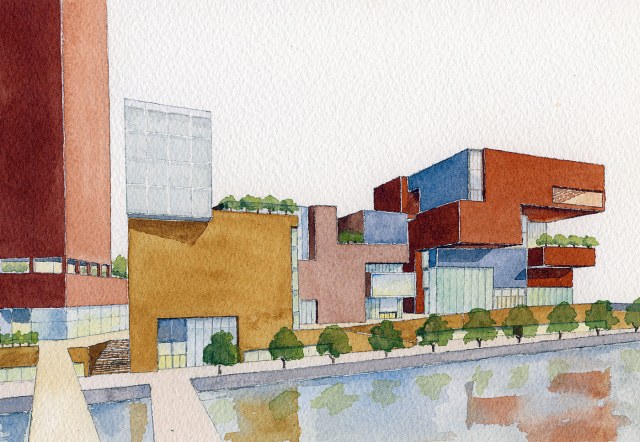
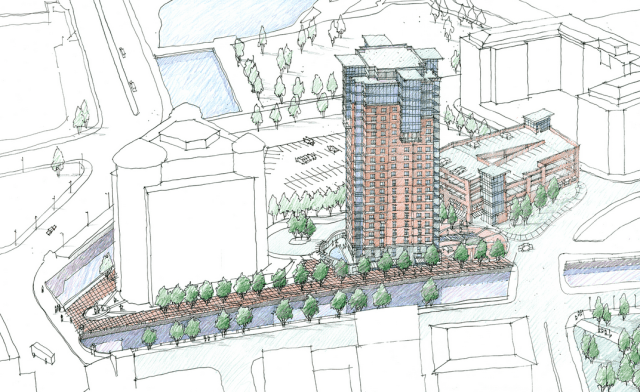
Proposed design for 10 Park Plaza, by Joe Mamayek (now with HDR, in Boston)

Here are two columns I wrote long ago about the “Transforming Providence” symposium held at RISD Auditorium in November 2000. The first ran before the event, the second after the event. They represent my occasional effort to promote some sort of compromise between the old and the new that would help modern architecture find a proper place in a traditional city.

***

Here is the first:

Don’t transform Providence
November 2, 2000

LAST WEEK, at a meeting of the Capital Center Commission’s design review panel, a developer proposed erecting a 23-story residential building on Parcels 3e and 4e, next to One Citizens Plaza. The 17 stories above its three-story stone base are mostly of red brick. The top three stories, however, are of glass, with rectangular bay windows reaching three stories farther down on each side, and glass corners reaching down to the base. Broad, spare cornices stretch out from the roof over each bay.

Well, you see the sketch. Would you call it a traditional or a modernist building?

To me, it seems more than traditional enough to fit into the historic, largely brick Providence cityscape, but its syncopated array of glass upper stories gives the building a contemporary flair.

It is a conservative tower sporting a jaunty cap.

I was pleased when I walked in and examined the drawings before the design meeting was called to order. But I was not the least bit surprised when the usual suspects on the panel tried, politely, to browbeat the architect, Joe Mamayek of Jung/Brannen, a Boston firm, into replacing the brick with more glass.

“Stay the course, Joe!” I wanted to cry out.

I hope he will attend the “Transforming Providence” conference at RISD Auditorium, starting at 8 a.m. Saturday (and starting Sunday, a related exhibit at Providence Place), to get a feel for how his building fits into the debate on architectural context here.

Ten Park Row joins the office/retail structure on Parcel 9, right next to Waterplace Park, as the latest buildings proposed for Capital Center. Both deftly bridge the gap between the more traditional styles of the three newest buildings in Capital Center – the Westin Hotel (1994), Providence Place (1999) and the new Marriott Courtyard (2000) – and the modernism of Citizens Plaza (1990) and, at the southern end of Providence River Park, Old Stone Square (1984).

Bill Warner used a decidedly traditional style for Providence River Park, stretching some nine football fields in length, from Waterplace Park to Memorial Park. Since the new waterfront acts as a stylistic organizing principle for downtown, reinforcing the historical character of the existing urban fabric, new buildings near the rivers would fit into the city’s architectural context best if they were also traditional.

It may be argued that a contrasting backdrop of abstract modernism would set off the beauty of the city’s traditional buildings. But that contrast already exists in the modern office towers that make up much of the Financial District’s skyline.

So any compromise between the “old” and the “new” must surely be on the order of the building Joe Mamayek proposes – something mainly traditional that doffs its hat graciously to the modern.

However, someone at “Transforming Providence” will probably argue that since the city already has so many traditional buildings, it’s about time new buildings should be modern. Something different! Eventually, they will reach a balance. Presto! Compromise!

But compromise that compromises the unique beauty of Providence is a goal that nobody seeks to achieve. Right? After all, whatever you may think of other American cities, the singularity of this city’s beauty depends heavily on its historical character.

The streetscapes of downtowns across America have become a hubbub of old and new styles, almost everywhere sacrificing character and charm for a dubious pizzazz. Each additional modernist building here, even if it is well designed, makes Providence look more like other cities, and less unique. Build more modern architecture, and we will lose the opportunity to pioneer a bold new urban design strategy. In effect, we will “copy” the trends of the past 50 years. This is not the best way for Providence to move into the future. Why exchange the successful aesthetic that we already have for one that has failed to please the public almost everywhere it has been tried?

I am hopeful that the speakers at “Transforming Providence” will, for the most part, agree. But the old modernist warnings against “Disneyesque” design, architectural “theme parks,” “faux historicism” and “copying the past” will probably be heard. These canards seek to undermine the popularity of traditional design, which is especially strong in Rhode Island.

Speaking of popularity, Mayor Cianci will speak at Saturday’s forum. Last year, on The Truman Taylor Show, he criticized two modernist designs. “I like the traditional,” he said. But so far as I know, he has opposed no modernist designs this year. His polls have fallen from 70 percent to 60 percent. Let ‘er rip, Mayor!

Webster defines the word transform as “to change completely or essentially in composition or structure.” Perhaps some things in Providence do cry out to be transformed, but its appearance isn’t one of them.

Transforming Providence: Good forum. Bad idea.

Copyright © 2000. LMG Rhode Island Holdings, Inc. All Rights Reserved.
Record Number: MERLIN_61479

***

Here is the second:

Don’t transform Providence II
November 9, 2000

LAST WEEK, in “Don’t transform Providence,” I expressed not just the hope but the expectation that Saturday’s “Transforming Providence” conference would “consider ways in which innovative design may actually reinforce the special sense of place in Providence while preserving the city’s unique character in this time of transformation.”

These were not my words but those spelled out in the conference brochure’s “Conference Purpose.” This question of how to design buildings that bridge the gap between old and new amid the historical streetscapes of Providence is a necessary inquiry, one that I had assumed would be the focus of the conference.

What in blazes was I smoking?

Ted Sanderson, director of the Rhode Island Historical Preservation & Heritage Commission, started things off with a slide show, an enchanting journey through the architectural history of downtown Providence. Toward the end, he chided the modern architecture of the 1950s and ’60s for taking “no notice of the Providence of the past.”

This drew titters from the 400 or so listeners, who seemed to agree that taking no notice of the past was a bad thing. So far, so good.

Boston Globe critic Robert Campbell spoke next, and revved up my hopes even more by hinting that the right mix of old and new might be found somewhere “between order and spontaneity.” He did not specify how this might be applied in Providence; however, he did encourage us to imagine good architecture as “a madman struggling to break out of a straitjacket.” That’s a scary image, not what most people would want a building on Westminster Street to resemble. Well, we can hope the madman will fail to escape.

Next up was Elizabeth Plater-Zyberk, who wrote the Downcity design guidelines that emerged from the “urban group therapy” that she and husband Andrés Duany brought here in 1994 [and twice since]. She suggested that new buildings in historical districts such as Downcity (the oldest section of downtown) should be allowed to deviate only so far from their neighbors. That, of course, leaves room for a lot of creativity, as Sanderson’s slides demonstrated. In new districts such as Mayor Cianci’s New Cities, far more design latitude would prevail.

“Now we’re getting down to business,” I said to myself. But Plater-Zyberk turned out to be the last speaker with any interest in how new buildings might be fit into historical streetscapes without coming off like Marilyn Manson singing the “Ode to Joy.”

Next came Friedrich St. Florian, who thanked me for these controversial columns, adding that “criticizing modern architecture was like criticizing the sun and the moon.” He showed slides of his [Providence Place] mall, told how he addressed its size, but avoided mentioning its traditional style or what Parcel 9, the proposed office next door by his friend Hugh Hardy, ought to look like.

Next, architect Hardy, of New York, showed more slides of the creativity of historic downtown buildings (which he warmly applauded but whose implications he totally ignored). He then showed slides of Parcel 9, bemoaning how he’d had to retreat from his initial modernist design (based on “some hair-raising things”) to a more traditional style without bothering to discuss that style, or how it now fits better with the mall.

Then came Mayor Cianci, who said Providence should not be “a museum” a choice of words suggesting that he now buys the balderdash of the sort of local elites who hate him most. Smart move, Buddy!

Then came George Hargreaves, a landscape architect from Cambridge, who showed slides of his far-flung and uniformly tedious modernist parks, none of which suggested any ideas applicable here. Finally came Max Bond, a leading black artist and educator from New York City who said that we had dissed the urban masses by revitalizing downtown before the neighborhoods. He urged new buildings that “shock” and “surprise,” and warned us not to be overly concerned about the neatness or the safety of downtown.

It may be stated, with charity, that none of the last five speakers had anything to add to what little had already been said about how to fit the new into the old. All did agree, however, that the new should not look like the old, and that our historical streetscapes were as good a place as any to plop a bold new building.

In the concluding Q&A, Friedrich St. Florian, who has built his reputation on his traditional designs for the mall and his national WWII memorial, urged the audience, who were mostly local design professionals, “not to be afraid of modern design.” He then expressed confidence that none of his fellow panelists were afraid of it. Alas, not a single one of them demurred.

Fine. Who likes to admit being “afraid” of something? But what about the rest of us, the victims of “modern design”? Since the conference refused even to address its own central issue – how to fit the new into the old – we do indeed have every reason to fear an assault on the beauty of Providence.

When writing last week’s column, f I had paid more attention to four words embedded in the Conference Purpose – “challenge current local assumptions” – I’d have greeted “Transforming Providence” with the pessimism it so richly deserved.

Copyright © 2000. LMG Rhode Island Holdings, Inc. All Rights Reserved.
Record Number: MERLIN_67996

Posted in Architects, Architecture, Architecture Education, Architecture History, Art and design, Blast from past, Development, Preservation, Providence, Urbanism and planning | Tagged , , , , , , , , , , , , , , | Leave a comment

“Reinvent” (destroy) Paris

6f303531a.jpg

One of the 23 winning proposals in Reinventing Paris. (Mairie de Paris)

Here is the Reinventing Paris video displaying, in quick succession, the 23 finalists for 23 development sites in a contest sponsored by the municipality under Mayor Anne Hidalgo. The text is in French, and I cannot therefore reconcile why it refers to 74 finalists as 23 images flash onscreen. So I add a CityLab/Atlantic piece, “A High-Stakes Competition to ‘Reinvent’ Paris Fails to Impress,” by Feargus O’Sullivan, who concludes that “Paris appears to have totally botched it.” He adds:

They’re mainly standard-issue contemporary boxes with façades effaced by greenery, their bulk lurking behind verdant balconies and green walls of the sort that tend to thrive with greater lushness in renderings than in real life.

Writers at CityLab usually seem to like that sort of thing. Anyhow, a couple of proposals at the beginning of the video seem actually rather nice, but that may be because the image does not truly display the intent of the project.

On Feb. 3, Mary Campbell Gallagher of SOS Paris sent the video to TradArch along with a few choice comments. Her anger is entirely appropriate:

Today the City of Paris opened a huge exhibit of designs submitted in its competition to “Réiventer Paris.” Held in a city museum, the Pavillon de l’Arsenal, the exhibit fulfills the evil promise of its name. The designs on exhibit bear no resemblance whatsoever to Paris. This is the latest in a series of exhibits in which City Hall uses its public museums to persuade the public that blight is beautiful.

Reinvent Paris? The very idea is ridiculous, nay it is vile. I recall a symposium called “Transforming Providence” sponsored by the city’s design elite, most of whom push for more avant-garde buildings in what was and still is city whose traditional fabric remains among the most intact in the nation (if not as intact as that of Paris). The late Buddy Cianci, attending the symposium as mayor, revealed that he was capable of being manipulated, too, when he said Providence does not want to be a “museum.” That is modernist boilerplate rhetoric that actually means “wreck the beauty of the city by inserting more insensitive modern architecture wherever possible.” Slowly, Providence has been following this advice, and it has grown uglier – but too slowly for most people to worry or notice. This is what is likely to happen in Paris, too, if Mayor Hildago has her way.

I will post my two columns from the fall of 2000, “Don’t transform Providence” and “Don’t transform Providence II.”

Posted in Architects, Architecture, Architecture Education, Architecture History, Art and design, Development, Preservation, Providence, Urbanism and planning, Video | Tagged , , , , , , , , , | 2 Comments

Bevan’s “modest revival”

0116IL_ST_ARC_03-WEB.jpg

New campus building at Burntwood School, in London. (AHMM)

Last week, in “Zaha Hadid gets RIBA medal,” I wrote that Hadid complained about “a tilt toward tradition in London architecture that only she is able to perceive.” I was wrong. The British critic Robert Bevan sees it, too: a trend toward the traditional in recent and proposed building design in London.

Don’t be fooled.

Bevan, writing in Intelligent Life magazine, perceives a “Modest Revival” of something or other, which he identifies as a retreat from starchitecture’s infatuation with the “mania for instant icons” that began with Frank Gehry’s Guggenheim Bilbao in the 1990s. The evidence he perceives is pictured above, one of six “neo-Brutalist” buildings, for the campus of a school in London, that won the latest Stirling Prize. Bevan also sees that trend playing out in last year’s Carbuncle Prize being awarded to the Walkie-Talkie, a bulbous building of 37 stories that not only has more square footage on its upper than on its lower stories but whose glass focuses the sun to melt automobiles below.

0116IL_ST_ARC_05-web

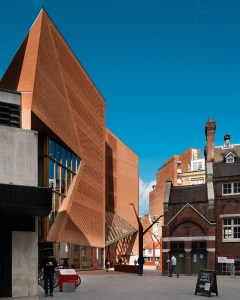
London School of Economics student center, which uses brick!

It may be understandable if architects want to retreat from buildings that look about to topple (and until then zap the cars below) toward buildings that merely poke passersby in the eye. But that does not add up to a revival of traditional design, or anything like it. Not even if brick is one of the materials used. It merely reflects the fact that not every new building can be an “instant icon.” Allford Hall Monaghan Morris Architects, the firm that designed the neo-Brutalist building pictured above, certainly would like to be considered starchitects (whether they like the word itself or not). Now that they have won Britain’s equivalent of the Pritzker, I think Bevan’s refusal to anoint AHMM is a sort of rudeness. Why isn’t their building an example of starchitecture?

Surely not because it isn’t big enough – don’t forget there are six in all that won the prize. Bevan says that their buildings fit “tactfully within the school’s existing campus.” I don’t see that they do. They merely add six more black eyes to the school’s collection of Miesian buildings. And Neo-Brutalism counts as traditional only next to Hadid’s oeuvre!

So what gives? Merely that modernism is still up to its old tricks – self-criticism as a road to redemption but not change. Michael Mehaffy writes of Bevan’s dodgy article:

Notice that, in addition to re-packaging and attacking the older fashions – which, as a project built on novelty, is par for the course – they’re doing something else very shrewd.  They’re carving off a disposable core part of the Neo-Modernist project – the starchitect icon – and turning it into a straw man.  “Ah, gad!  How foolish we were to be so caught up in that!”  And then, “Now let us show you this much more modest and contrite architecture, that is still built upon exactly the same avant-garde art chassis, the same engine of environmental industrialization, the same Loosian denuding of ornament, the same Giedionian surrender to mechanization, the same Corbusian banishment of all things from the past, including real urbanism.  Aren’t we brilliant?”

In a way they are – but as propagandists, not as architects.

The building set into the text above, and the building design below, are both by the same firm, O’Donnell & Tuomey. They illustrate Mehaffy’s point, and are ample proof that Bevan does not really see what he says he sees. Bevan pretends to denounce starchitecture but he is not truly celebrating its “twilight.” Not at all. Perhaps these buildings are more traditional than what Zaha Hadid designs, but traditional they are not.

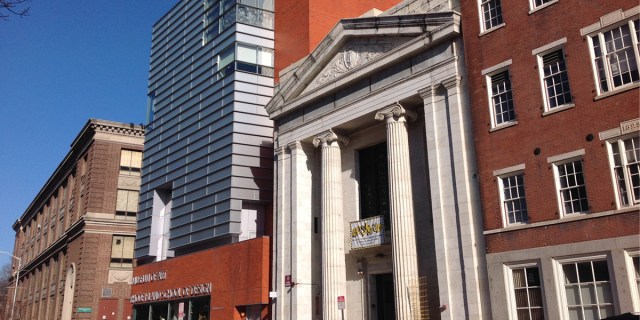
(Rafael Moneo, trying to sell his design in Providence for an addition to the Rhode Island School of Design Museum of Art, at bottom, also claimed that its brick made it fit in.)

0116IL_ST_ARC_04-web.jpg

Proposed addition to the Victoria & Albert Museum East – which also uses brick!

RISD-Museum.jpg

Addition, at center left, to RISD Museum of Art. (alocalstateofmind.com)

Posted in Architects, Architecture, Architecture Education, Architecture History, Art and design, Development, Other countries, Providence, Rhode Island, Urbanism and planning | Tagged , , , , , , , , | 1 Comment

Heinrich Kley’s “Road Rage”

gasolinestallion.gif

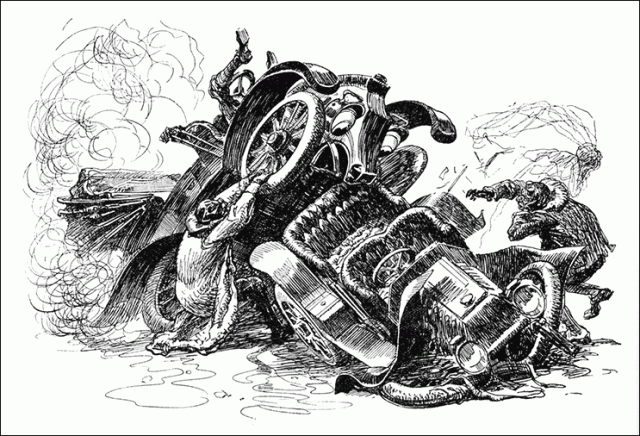
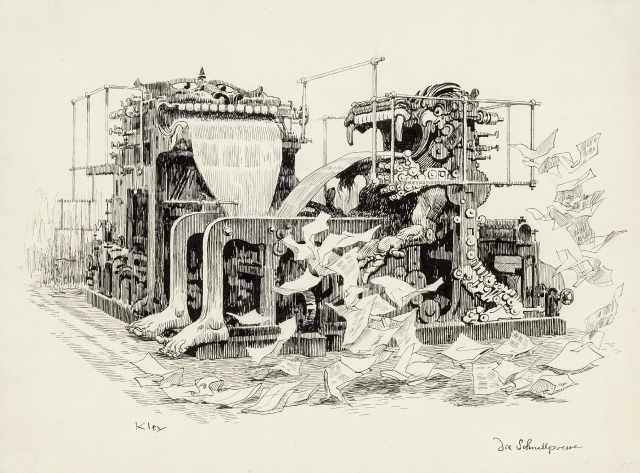
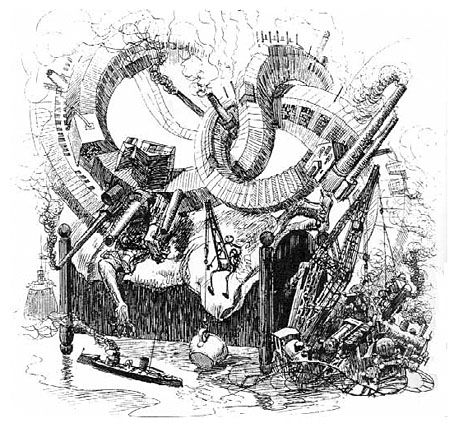
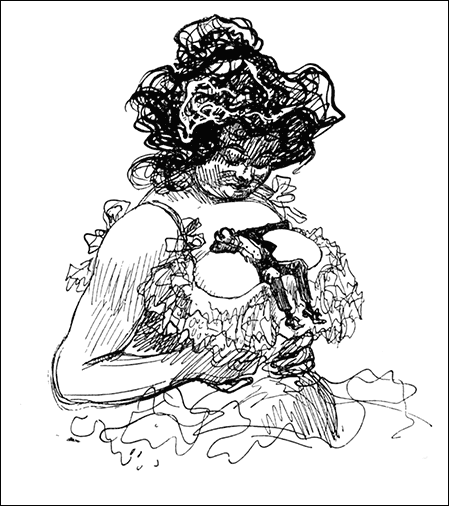
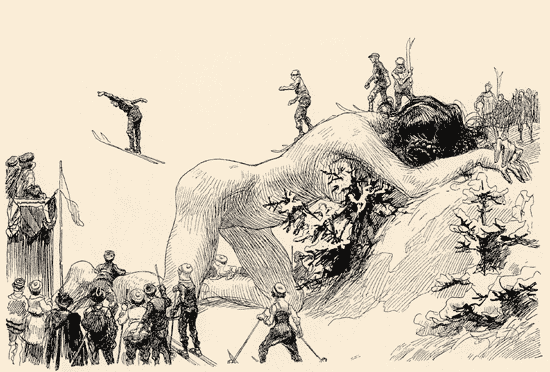
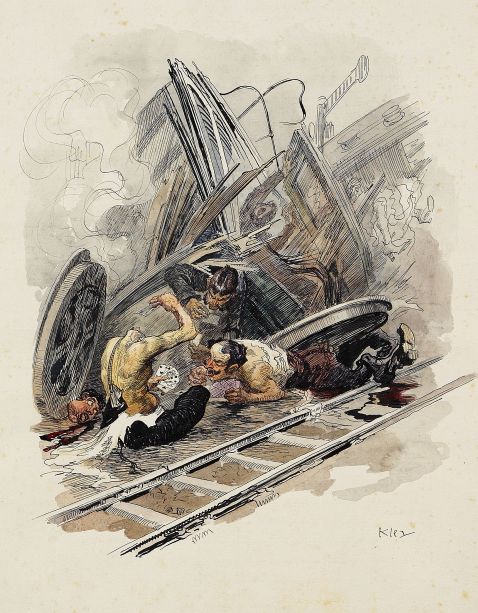
The sketch above, “Gasoline Stallion,” which these days might be renamed “Road Rage,” is one of my favorites by Heinrich Kley (1863-1945), the German illustrator. It was probably drawn early in the 20th century, when automobiles were beginning to overtake horses as primary transportation. In Kley’s illustration, a car that has some of the features of a horse lashes out at another car. Today we have too many cars, and the result is road rage. We rarely see such excellent free-hand drawings these day.

You can type “Heinrich Kley” into Google and see more of his work, which is often far too dark to warrant publication in a happy blog like this. For example, there is a man raping a church (anyway, that’s my interpretation). Even I don’t dare run that here! But I offer some tamer drawings by Kley.

Kley’s brief write-up on Wikipedia notes: “Cartoonist Joe Grant was well aware of Kley’s work and introduced his drawings to Walt Disney, who built an extensive private collection. A number of early Disney productions, notably Fantasia, reveal Kley’s inspiration. Due to Disney’s interest and reprints by Dover Publications, Kley is still known in the USA, while he is nowadays little regarded in Germany.”

According to thescreamonline.com, Kley also did “architectural paintings of building exteriors in Old Munich, Nuremberg, Bruchsal, Dresden, the harbor, Paris, Ostende, and the island of Helgoland in the North Sea,” though very few of these works appear in Google’s selection.

Thanks to Rob Steuteville, who sent out a call for cartoons and other illustrations for a new feature for The Public Square, which he edits for the Congress for the New Urbanism. Under the headline “Got a minute?” he wrote: “Every Friday on Public Square we will publish something brief and thought-provoking, like a cartoon, drawing, photograph, or slide, with a brief explanation. We are happy to get submissions for these.” I thank Rob for inspiring me to revisit Kley’s work. Maybe some of it will appear in The Public Square. Meanwhile, here are some that probably won’t:

23_orig.jpg

kley2.jpg

100601192.jpg

idyl.jpg

aftertheball.gif

Screen Shot 2016-02-07 at 11.44.54 AM.png

Posted in Architecture, Art and design, Books and Culture | Tagged , , , , , , , | 7 Comments

Built in major & minor keys

Screen Shot 2016-02-06 at 11.02.00 AM.png
Campus of The American School in Switzerland (TASIS) near Lugano. (Screenshot from video)

David Mayernik, who teaches at Notre Dame’s school of architecture and has designed the campus at The American School in Switzerland, overlooking Lake Lugano, recently presented his views on the language of architecture and definitions of the classical and traditional to a symposium on humanism at the Universidad Politécnica de Madrid. The symposium was sponsored by the Rafael Manzano Martos Prize. Mayernik’s lecture was entirely sensible, but I’d like to introduce his video of it with some thoughts on the major and minor keys in music from Wolfgang Hildesheimer’s biography, Mozart.

No one has ever satisfactorily explained the different emotional effects of the two modes. No one will deny that, different as night and day, major and minor awaken the most opposite feelings; indeed, no other artistic discipline commands a contrast even remotely similar to this polarity, as clear-cut as turning a switch on and off. Why (to reduce the question to its simplest form) does the minor third make us sadder than the major third?  …

He continues, explaining that “within the radius of objective reception” there are differences in how two people might perceive the two keys differently in some of Mozart’s music. He adds:

Even where interpreters agree about the “tragic” content of a piece, the degree will vary and with it the descriptive attributes applied. Of course, we can never prove that the composer felt the way we do.

Likewise, no two people will feel the same reaction to a work of architecture. And many people confuse the terms traditional and classical. I often conflate them myself, in the desire to achieve a larger clarity. As Mayernik writes in his blog’s intro to his video talk, “Why it matters is that if we don’t know what we’re doing, we don’t know what we’re doing. Simple as that.” Very true. Mayernik’s lecture, which is linked to from the blog, describes astutely some of the vagaries involved in seeking clarity on this matter.

Classical and traditional architecture share a distinct but overlapping language, the language of the classical orders. Classical buildings (ancient or neo) are built according to a more or less strict interpretation of those orders. Traditional buildings generally include elements of those orders but stray. So you might have Gothic or Romanesque or Victorian buildings, but they all share more in common than they diverge from the classical canon.

The difference between the classical and the traditional in architecture is quite unlike the difference between the major and minor keys in classical music. And yet, as Hildesheimer suggests in regard to Mozart, there are degrees, and a degree to which the architect of a building can never be sure what chord it will strike in the eye of the beholder. Music and architecture express ideas in ways that cannot often, or ever, be translated into the far more specific language of words. Thus the observer of a building can never be sure what precise idea, if any, its architect intended to convey.

However difficult it may be to explain why we perceive major keys in classical music as joy and minor keys as sorrow, architecture’s “frozen music” in today’s world is keyed likewise, after a century of modernism, in joy and in sorrow. The explanation is amply clear to most people, however sophisticated their ear, or rather their eye, may or may not be.

Off with our hats to Eric Daum, who sent David Mayernik’s blog and video.

Screen Shot 2016-02-06 at 11.03.36 AM.png

View toward Lake Lugano from TASIS. (Screenshot from video)

Posted in Architecture, Architecture Education, Architecture History, Art and design, Books and Culture, Video | Tagged , , , , , , , , | Leave a comment

Zaha Hadid gets RIBA medal

_88094189_hadid1_976.jpg

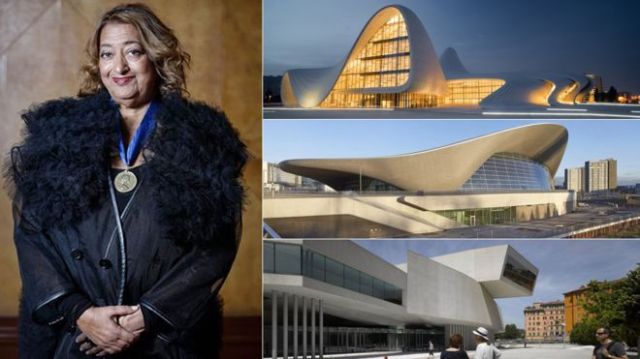
Dame Zaha with her medal and three of her designs: the Heydar Aliyev Centre in Baku (top), the Aquatics Centre in London (middle) and the Maxxi Museum in Rome. (BBC)

The Iraqi-born architect Zaha Hadid has received the Gold Medal for Architecture from the Royal Institute of British Architects. She spoke to RIBA upon receiving the award and launched a tirade against tradition. Notwithstanding her complaints, London, where she set up her firm in 1979, has so far, thankfully, dodged the bullet of a building in its center designed by Dame Zaha. How long can that last?

Building Design magazine’s Tim Clark, in “Gold Medal winner Hadid marks award with ‘traditionalism’ fears” (register for free), writes that in her remarks on Tuesday night, “Hadid spoke of her worry regarding a move towards traditional design among London’s developments.” She adds:

I have always believed in progress and in creativity’s role in progress. That’s why I remain critical of any traditionalism. I worry about the dominance of neo-rationalism in London’s current transformation.

Compared with Hadid’s work, everything else must be considered “traditional” and hence worrisome. But I’m not sure how she thinks traditional work (that is, work that is actually traditional rather than just more so than hers) threatens her work. Except, of course, that Britons who like beauty in architecture might wake up and work to make sure that their city keeps the RIBA laureate’s buildings out. (Her Olympic Aquatics Centre is 9 km from Charing Cross.) London already has too many buildings and more planned that seem intended to terrorize its citizens and explode its skyline.

Clark’s piece reprints her lecture. Check out the following passage:

This is the meaning of my first compositional strategies: explosion and fragmentation. The Russian avant-garde offered me a reservoir of yet untested compositional innovations, full of complexity and dynamism.

The Suprematist compositions of Malevich and El Lissitzky experimented with the interpenetration of forms rather than maintaining their neat separation. This is much more in tune with our current interest in the mixing of functions and the search for synergies.

I added to this the ideas of distortion and gradient transformation, for the sake of site adaptation and versatility. Further, I explored the use of free form curvature to articulate the dynamism and fluidity of contemporary life.

“Explosion and fragmentation”: Isn’t that what terrorists do? When Hadid is not complaining about a tilt toward tradition in London architecture that only she is able to perceive, she is complaining about being misunderstood. If she believes that a city and its citizens want buildings that either explode or fragment, or that somehow cause explosion and fragmentation in their neighborhoods, then Zaha should be thankful she is misunderstood. As it is, I think the public, if not the design establishment, understands her all to0 perfectly and wants none of it.

Of her work she said: “All this serves urban densification, and urbanity, via invasion by new complex projects, projects that should be well embedded into their sites and serve as connective tissue rather than separate fortresses.”

This is a specimen of what Mencken would call “the obviously not true.”

Of course, contrary to its protestations, architecture today is not about giving either clients or the public what they want. It’s about smacking them upside the head, good and hard, and for their own benefit as assessed by experts who epitomize the old saw, “Only an expert could believe that!” How long are Britons (and the rest of us, for that matter) going to take it lying down?

Hats off to Steve Mouzon and Hank Dittmar for posting the article extracting Hadid’s comments on how scary tradition is.

Posted in Architects, Architecture, Architecture Education, Architecture History, Art and design, Development, Urbanism and planning | Tagged , , , , , , , , | 3 Comments

Photographs of Lviv, Ukraine

lviv_2676465b.jpg

Statue of Neptune in Lviv’s Rynok Square. (Alamy/telegraph.co.uk)

David Mittell, whose essay “Why I love Lviv” ran here on January 26, has sent some photographs to illustrate the various conditions of architecture in Lviv, which he characterizes – truly – as one of Europe’s most beautiful unknown cities. On top is a photo of Lviv from the Internet. Below are some of David’s photographs, straight from the Mittellian camera – and straight up, too, as David’s camera does not mince words. This is not the tourists’ Lviv, but the one to love no less, for it needs love the more.

Screen Shot 2016-02-04 at 12.58.21 PM.png

Screen Shot 2016-02-04 at 1.00.21 PM.png

Screen Shot 2016-02-04 at 1.01.13 PM.png

Screen Shot 2016-02-04 at 12.59.36 PM.png

Screen Shot 2016-02-04 at 1.02.00 PM.png

Screen Shot 2016-02-04 at 12.59.04 PM.png

Screen Shot 2016-02-04 at 1.02.20 PM.png

Screen Shot 2016-02-04 at 1.02.43 PM.png

Screen Shot 2016-02-04 at 1.03.04 PM.png

Screen Shot 2016-02-04 at 12.59.58 PM.png

Screen Shot 2016-02-04 at 1.01.35 PM.png


Posted in Architecture, Architecture History, Art and design, Landscape Architecture, Other countries, Photography, Preservation, Urbanism and planning | Tagged , , , , , , | Leave a comment

Schumacher’s Pritzker feint

Screen Shot 2016-02-03 at 12.04.48 PM.png

Novartis Office Building, Shanghai. (cnn.com)

Patrik Schumacher, who runs Zaha Hadid’s office and involves himself in the modernist discourse, has used his Facebook page to criticize the Pritzker jury’s choice of Chilean architect Alejandro Aravena. His critique mimics his recent, widely condemned, critique of the Chicago Architectural Biennial for being too socially conscious. Schumacher thinks Aravena, too, pays too much attention to architecture’s mission to improve society.

My post “Diss the Chicago Biennial!” quoted his critique of the CAB.

Here is the meat of his latest critique:

The PC takeover of architecture is complete: Pritzker Prize mutates into a prize for humanitarian work. The role of the architect is now “to serve greater social and humanitarian needs” and the new Laureate is hailed for “tackling the global housing crisis” and for his concern for the underprivileged. Architecture loses its specific societal task and responsibility, architectural innovation is replaced by the demonstration of noble intentions, and the discipline’s criteria of success and excellence dissolve in the vague do-good-feel-good pursuit of “social justice.”

Ha! What a joke. If I were Schumacher I would not worry my pants off. Modern architecture is not abandoning its “specific societal task and responsibility” of serving the worst instincts of the globe’s national and financial elites. Maybe Schumacher would not admit the validity of that description of modern architecture’s mission, but he does not say what it is, and no other mission can be plausibly deduced.

In fact, if I were a conspiracy theorist I would look into the possibility that the Pritzker, the Chicago Biennial, the leading professional organizations and most of what is written these days in architectural magazines (most of which is belied by the photographs of the buildings celebrated) are busy putting up a smoke screen. Its intent is to spoof the world into thinking that modern architecture has resumed its (alleged) original intentions of social progress. In fact, top architects and their camp followers, such as the American Institute of Architects, like the money they are making and want to keep on making it, but fear their greed is too obvious and are therefore faking a concern for humanity.

To look at Aravena’s work exposes the fallacy of the modernist’s good intentions. Rest easy, Patrik. The socially conscious architecture you fear is merely a sheep in wolf’s clothing. There is no chance that it will help either the environment or the disadvantaged. It may injure the bottom line of the developer but not the architect. In fact, to don my own tinfoil hat, I suspect that Schumacher is among the perps of this sinister feint.

Paul Goldberger, of Vanity Fair, in “Architecture’s Biggest Prize Was Just Awarded to Someone You’ve Probably Never Heard Of,” calls Aravena’s work “modest, practical, and exceptionally elegant.” Who does Goldberger think he’s kidding? Nothing Aravena has ever done risks elegance. Below is Villa Verde, a project in Chile of 484 “half-houses” that may be modest but are hardly practical. They are designed so that their occupants can build out the second half on their own. Yeah, sure – when they win the lottery? (Aravena’s employer saved the cost of building half a house, and the architect got showered with praise for affordability.)

These hucksters do not think they need to make sense – they know of no one in their hive who will call them on anything they say, however absurd. So why fake a social conscience? Beats me. They have got to have something to do, right? Their idea of “design” doesn’t require any real work, except that of thinking up patently ridiculous excuses for it. And surely some have deluded themselves into thinking they have a social conscience. Some actually might, however little it is manifested in their work. Who knows.

If modern architects were to suddenly start designing buildings that the public liked, only then might they deserve the accusation of having a conscience, social or otherwise.

pritzker-prize-alejandro-aravena-02.jpg

Villa Verde, a project of 484 affordable half-houses in Chile. (Elemental/Vanity Fair)


Posted in Architects, Architecture, Architecture Education, Architecture History, Art and design, Development, Other countries, Urbanism and planning | Tagged , , , , , , , , | 2 Comments