London’s Tin Pan Alley, RIP

Screen Shot 2016-08-27 at 10.43.39 PM.png

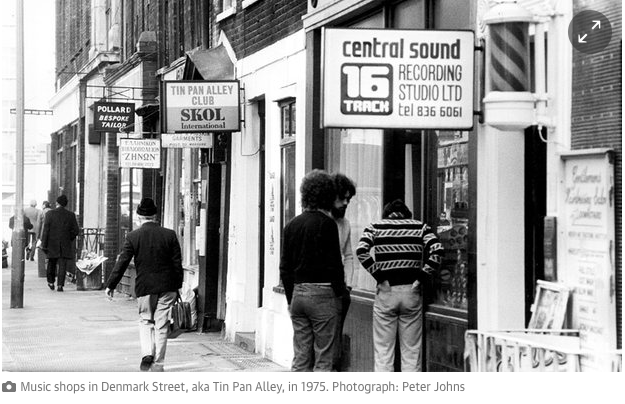
RIP? So it appears, to the eyes (and supposedly the ears) of many. A deep source sent me an article from Britain’s Evening Standard headlined (in part; it was an almost endless “hed”) “Kinks Star Slams ‘Soulless’ Denmark Street Redevelopment.” Right down my alley, eh? Well, Denmark Street, where the Kinks, the Stones, the Sex Pistols and other rock groups used to hang out, practice, record, etc., is called London’s Tin Pan Alley.
Screen Shot 2016-08-27 at 11.24.21 PM.png

Jean van der Tak

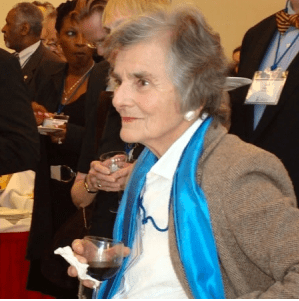
It is also near Tottenham Court Road, near where I stayed for three weeks back in the day (1979) with my old friend Steven van der Tak, who lived across the street from the British Museum. His late dear mother Jean was a leading influence on the entirety of my life. She passed away, age 89, on July 27. I should be in Washington at her memorial service, which is today, but several things, now including a medical emergency (large blood clot in leg), have kept me in Providence. RIP, Jean.

RIP Denmark Street? It is being redeveloped, but my deep source may mistake the degree of my sadness. Yes, I regret the decline of this deep infrastructure of rock and roll, but it seems that the developer, according to the Standard, wants to “redevelop the entire street, which is listed [protected, in American lingo], adding luxury flats behind and above the existing scruffy-chic exteriors.” Putting the bad stuff behind elegant historic exteriors – often called a “façadectomy” – is not my idea of the worst sin that can be committed by developers. Will they preserve the garish signs, historic graffiti and faux first-story siding that Londoners have come to associate with their (and our!) idols? I don’t know. Let’s just say I am conflicted about this project. After all, developers are more likely to rip great old buildings down than let them stand.

Another article, “Why London’s music scene has been rocked by the death of Denmark Street,” by Marc Burrows in the Guardian, strikes the jugular in its description of the project’s 21st century sensibility:

It will, according to the marketing blurb, mean we can “interact with the brands we love in exciting new ways,” it will be “a new dawn for meaningful brand engagement” promising “branded real-time experiences that add value to people’s lives.” We’re told it will put “the heart and soul back in St Giles,” presumably with “branding.” A working area full of innate personality becomes another haven for tourists and those with cash to burn.

Decide for yourselves – there’s a handy promotional video here showing the new complex in all its terrifying electronic glory. Behind the adspeak is a weird dystopian vision, an emotionless touch-screen void where engaging with “brands” is the most important aspect of anyone’s day, and the gig-going experience is defined by the free MP3 you can download in the queue. It’s Blade Runner without the flying cars.

Jean van der Tak spent part of her life studying global population issues, and part of it preserving historic landmarks. To name the one I know most about, she led the effort to save an early local shopping plaza in Washington, D.C. – at Connecticut and Porter in the Cleveland Park ‘hood where the three Brussat boys and the three van der Tak boys grew up. I’m sure Jean would shed more tears for Denmark Street than me, which tells me that perhaps my deep source knows more than I do about what’s right down my alley.

I just got off the phone with my brother Guy and his wife Laura, who gave me the deep skinny on the memorial service. Laura said she did not realize that Jean, a Canadian, met her late husband Herman, who was Dutch, at the London School of Economics. Well, I mentioned above that I had stayed with their son Steven, who was himself at LSE, and who just before my arrival had met his eventual wife, also at LSE.

Life rocks and rolls. Some folks ride it to the max, as did Jean.

Posted in Architecture, Preservation | Tagged , , , , , , , , | 6 Comments

How does tower still stand?

Screen Shot 2016-08-26 at 8.39.17 AM.png

Its bell is gone but somehow the tower along the main road through Amatrice survived the magnitude 6.2 earthquake that hit central Italy early Wednesday morning. At least 267 souls perished. Some of these mountain villages hit may never revive.In “Some Villages in Italy May Never Recover from Earthquake,” the New York Times portrays a depressing vision of the future. The Times shows some devastating photos in “Italian Towns Before and After the Earthquake.” It is understandable that the initial reaction to ghastly death and destruction is dire, but Italy has suffered earthquakes for centuries and the peninsula is not today one boot-long string of unrepaired devastation. There are in Italy villages abandoned for various reasons (see my post “Craco, abandoned in 1963“), but quite clearly there are villages that pulled themselves up, rebuilt, and continued to create their histories. I hope some of these villages hit in Wednesday’s quake will show that spirit of never-say-die, as did the tower in Amatrice, and in that assurance I here post some old photos of that town by way of inspiration.
Screen Shot 2016-08-26 at 8.48.52 AM.png

Screen Shot 2016-08-26 at 8.51.30 AM.png

Screen Shot 2016-08-26 at 8.26.02 AM.png

Screen Shot 2016-08-26 at 8.38.42 AM.png

Screen Shot 2016-08-26 at 8.50.08 AM.png

Screen Shot 2016-08-26 at 8.45.47 AM.png

Screen Shot 2016-08-26 at 8.52.27 AM.png

Screen Shot 2016-08-26 at 8.36.56 AM.png

Screen Shot 2016-08-26 at 8.47.48 AM.png


Posted in Architecture | Tagged , , , , , , | Leave a comment

From atop Rubik’s Cube

DSCN9447.JPG

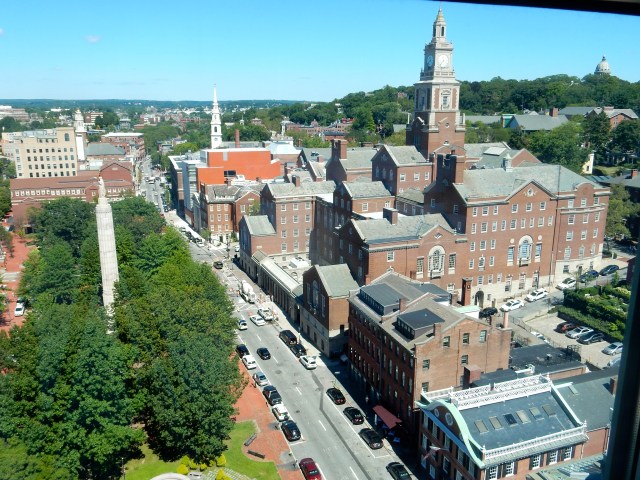
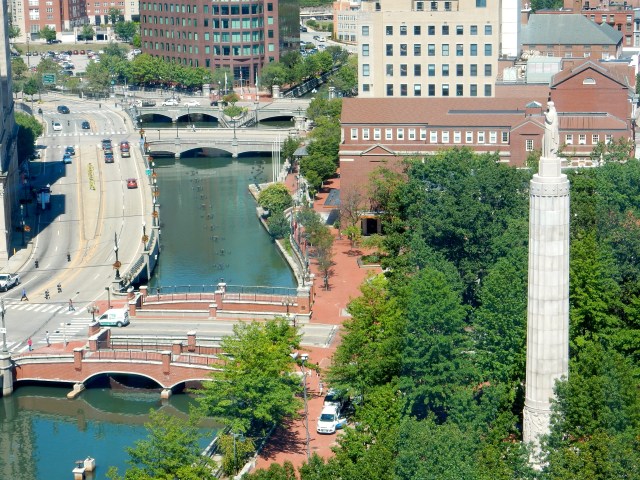
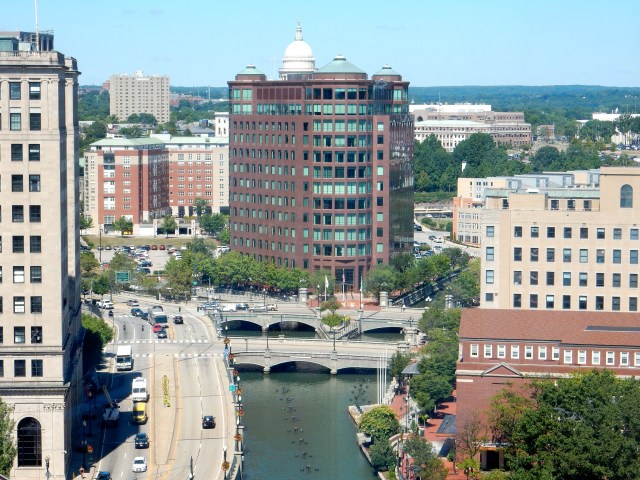
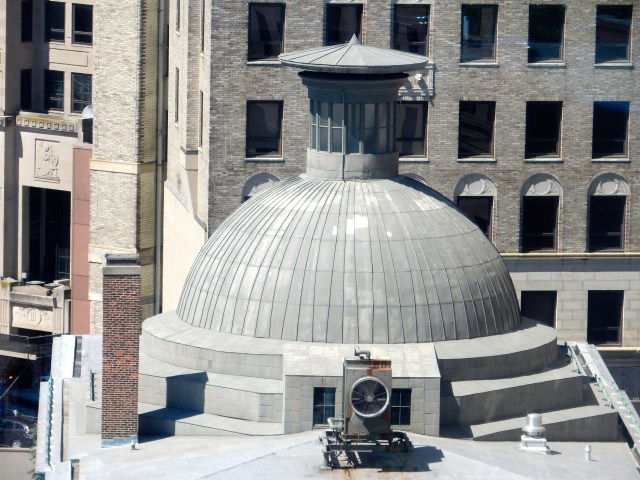
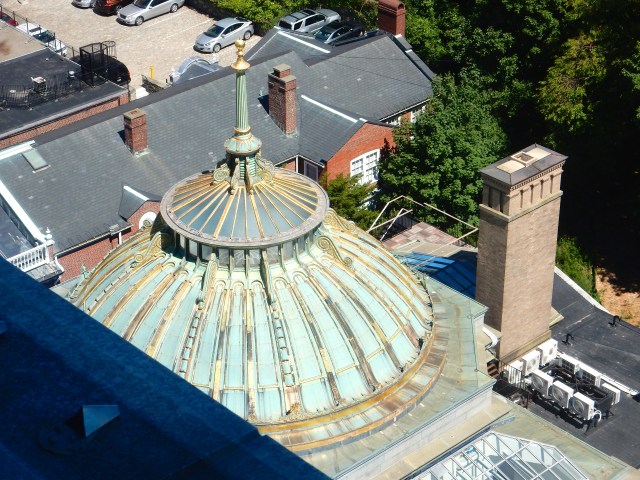
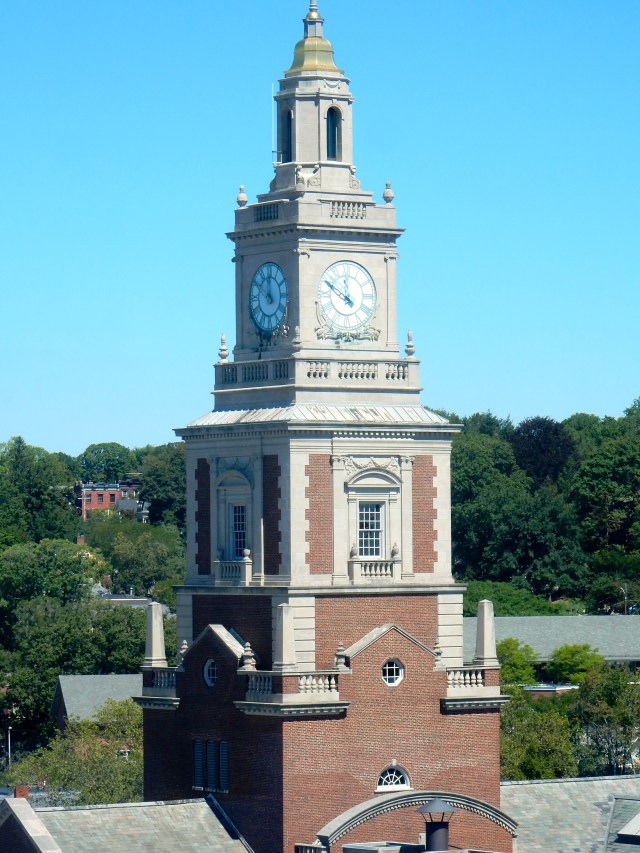
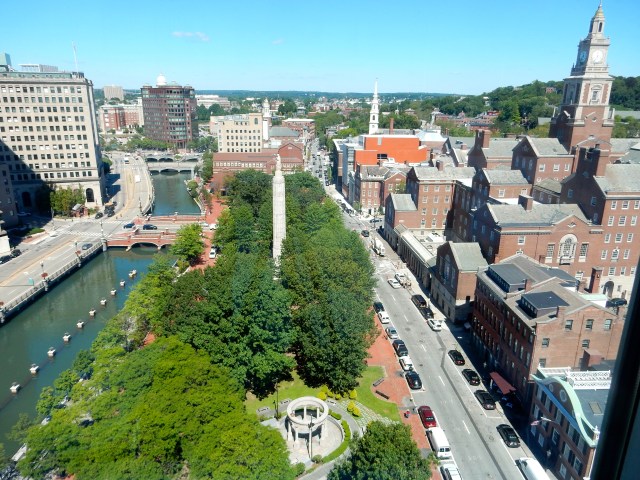
Here are some shots through the grand windows of the 11th floor meeting room of the old Brown Rudnick law firm, a space now belonging to Brown University, which kindly allowed me up to shoot a shot for my book Lost Providence, now about two-thirds written. All of the shots here are taken from the cutting-room floor, that is, they are not shots I took for the book, but as targets of opportunity – I shot them because they were there.

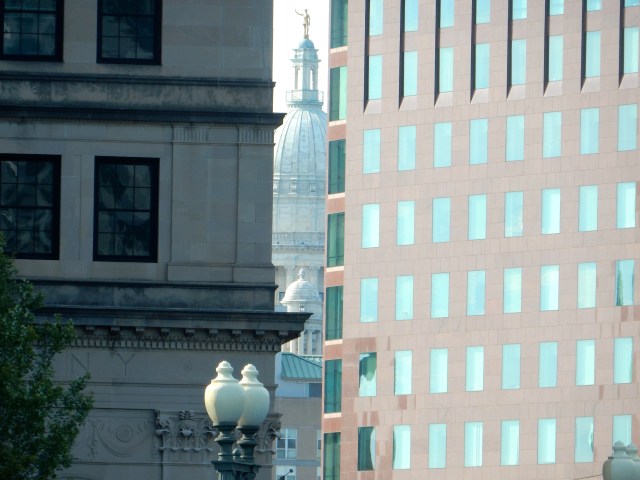
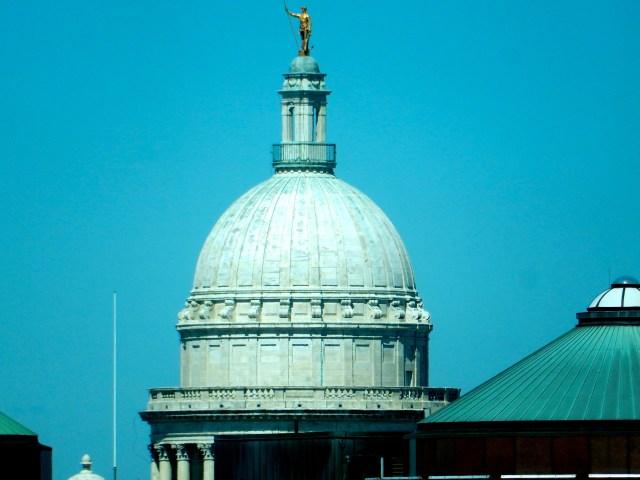
Perhaps the only story line here, aside from the garish brick RISD has imposed on the city skyline, is that of how the Darth Vader Building (One Citizens Plaza) blocks the view of the State House from downriver. I have a sad shot somewhere in my iPhoto library of 44,637 phot0graphs that shows that you can still see the dome of our capitol, topped off by the Independent Man, in a sliver of space between the Darth and RISD’s old Hospital Trust. Maybe I have flagged it. [I’m afraid not.] If I happen upon it I will add it to this post. Didn’t, so I went out and reshot it. (It is not, of course, from atop Rubik’s Cube. It was shot from the Crawford Street Bridge.)

DSCN9451.JPG

DSCN9448.JPG

DSCN9450.JPG

DSCN9542.JPG

DSCN9465.JPG

DSCN9468.JPG

DSCN9471.JPG

DSCN9487.JPG

DSCN9460.jpg

DSCN9466.JPG

DSCN9467.JPG

DSCN9464.JPG

DSCN9461.jpg

DSCN9491.JPG

DSCN9474.JPG

Oh, yes, and here’s the Rubik’s Cube, below, seen from just off Benefit Street:

DSCN0923.JPG.JPG

Posted in Architecture, Photography | Tagged , , , , , , , , , | 6 Comments

Sketches by David Macaulay

DSCN9427.JPG

Portion of David Macaulay’s exhibit on the waterfront. (Photo by David Brussat)

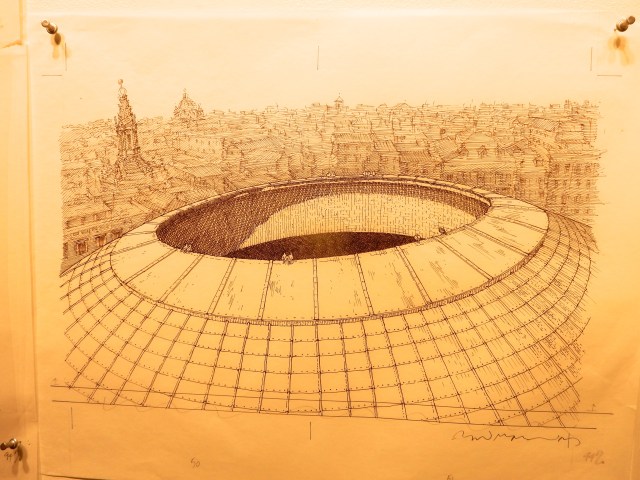
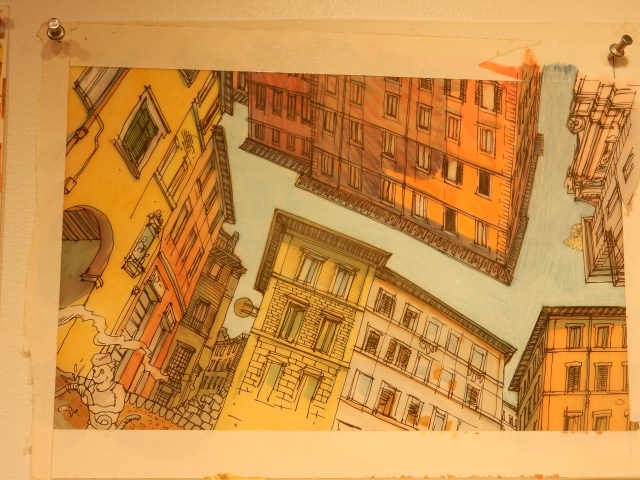
Strolling along the RISD embankment during WaterFire last Saturday, I stumbled upon “The Way Macaulay Works,” an exhibit of the work of David Macaulay, the prolific illustrator and creator of books about how buildings, cathedrals and other places are built. His is a magical talent, and it was on full display at the Illustration Studies Building – I assume that’s what ISB stands for; spelling something out is so old hat – 55 Canal Walk, and will be until Sept. 21. A closing reception will be held that Wednesday evening at 7.

RISD’s online description of the event (link above) offers this interesting assessment of Macaulay’s work process: “A MacArthur fellow, Macaulay offers an expository installation revealing his characteristically convoluted and extraordinarily inefficient process from endless sketching to the occasional finished product.” I assume the artist OK’d the description if indeed he did not provide it himself. Intriguing, to say the least!

Also intriguing is why it took RISD so long to think of offering a gallery experience on a WaterFire evening.  Barnaby Evans’s famous art installation has been with us for at least two decades, some 200 events at the very least. Why, for that matter, has RISD never opened a café of any sort along its section of the embankment? And while I’m at it, let me wonder out loud why, after the city and state provided RISD with a free waterfront campus, would the school express its gratitude by plopping the abominable new wing of the RISD Museum of Art on North Main Street?

I took photos of the waterfront and west slope of College Hill from the 11th floor windows of Old Stone Square (the Rubik’s Cube building), and it was impossible to get away from the garish orange brick that sticks out of the hillside like a sore thumb. I expect to post that shot (see below) along with others from my photo shoot in a post tomorrow.

You have almost a month to go see Macaulay’s exhibit. Imagine a whole exhibit of stuff such as inhabits the wall in one of the pictures I’ve included here and you will be able to imagine the thrill in store for anyone interested in architectural drawing at the uppermost level of quality.

DSCN9424.JPG

DSCN9426.JPG

DSCN9425.JPG

DSCN9428.JPG

The ISB, on what used to be Canal Street before the rivers were daylighted in the 1990s.

Oh yes, the ISB is lovely from this side. It is one of the old warehouses that H.P. Lovecraft loved and tried to save (this one was not at risk), but RISD covered the North Main Street façade with modernist crap glitz. Thanks a heap! Still, good on ya for finally opening a gallery on a WaterFire night. Keep up the good work. RISD has done much to make Providence a great place, including its preservation of many great buildings. It nevertheless has much to atone for. Not the least of it is the orange of the brick from its museum wing below. (Architect Rafael Moneo, who designed the wing, is said to work well in historic settings – that must mean he knows how to punish them.)

DSCN9446.JPG

Posted in Architecture | Tagged , , , , , , , , | Leave a comment

The Great Wall of China

Screen Shot 2016-08-22 at 10.02.59 AM.png

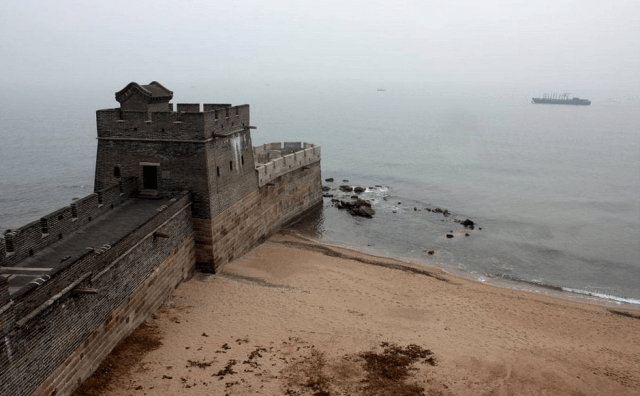
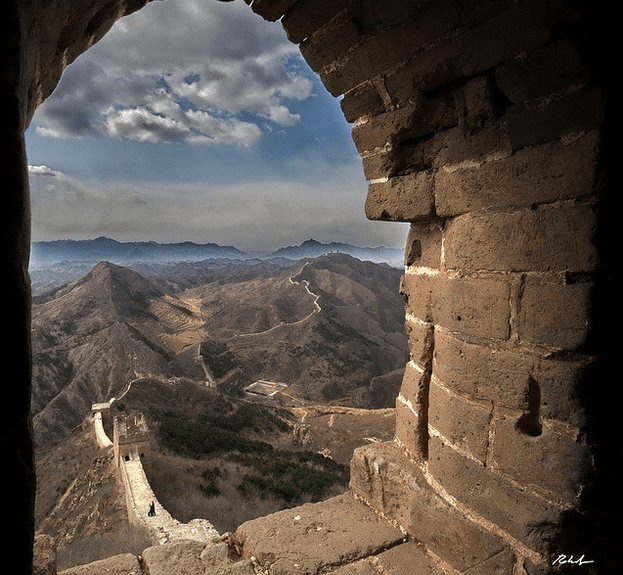
The Great Wall concludes (or begins?) at the Yellow Sea, near North Korea. (Kuriositas)

Who knew that it ended at the sea? It does, at the Yellow Sea, just athwart what we now call the Korean Peninsula. It is over 13,000 miles long, running from east to west. I do not know how successful a protection it was, or from whom, nor have I anything to say of its ramifications today. Suffice it to say that these pictures describe a wall of great elegance, but too long to walk, and surely not in high heels. But here are shots of portions of the wall that we rarely see, and without the usual crowd of tourists.

This set of photographs, “The Great Wall of China: Diverse Perspectives” was assembled by the website Kuriositas.

Screen Shot 2016-08-22 at 10.23.15 AM.png

Posted in Architecture | Tagged , , , , | 2 Comments

Ugliest house in Vancouver?

Screen Shot 2016-08-20 at 9.19.59 AM.png

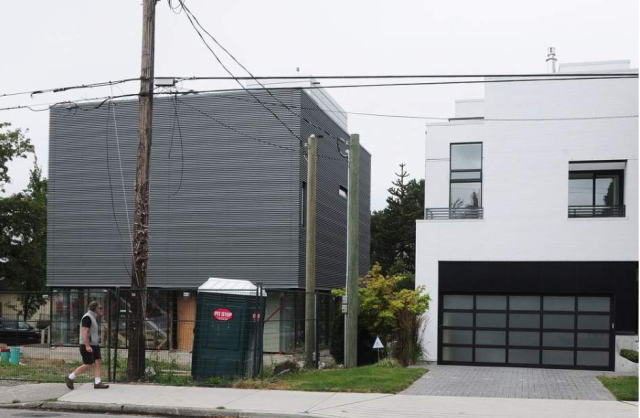
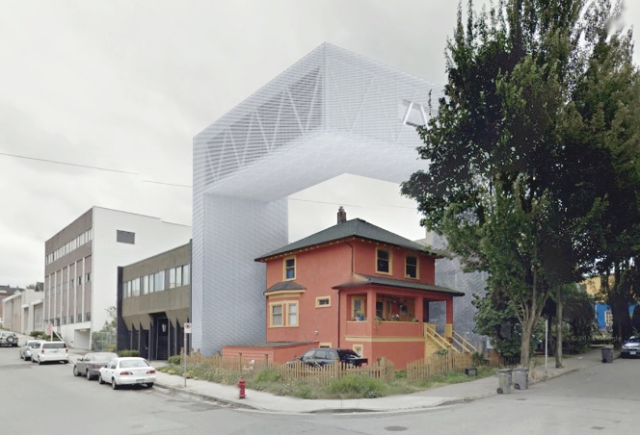
Some Vancouverites are upset over the house to the left in the photo above. “Vancouver’s Most Hideous Urban Design for 2016: Why residents are up in arms over this house,” reads the headline in The National Post.

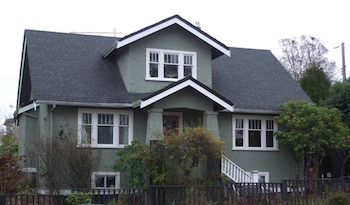
So why are residents up in arms over this house? Let me guess. There is a clue in the headline: it is Vancouver’s “most hideous urban design for 2016.” Talk about a headline belaboring the obvious! That black box has replaced a house of very pleasant traditional lines, depicted below left. Although the house above on the left is certainly uglier than the house on the right, the latter, which copies the past in the Corbusian manner, is no candidate for the charmer of the year award. Why wasn’t residential Vancouver just as upset by that house as it supposedly is by its glowering new neighbor?

Screen Shot 2016-08-20 at 9.52.04 AM.png

Original 3691 Point Grey Rd. (theprovince.com)

The architect, Tony Robins, proposes another, um, house in Vancouver that has raised eyebrows. Pictured at the end of this post, it is considered a “heritage infill” project, not completed (or even really planned, perhaps). Hasn’t anyone noted its resemblance to Rem Koolhaas’s “Big Pants” building for China’s CCTV in Beijing? Unlike Big Pants, which stomps with metaphorical rage upon the Chinese people, Robins’s proposed building almost literally stomps on, or at least threatens to collapse upon, the old house above which it hovers. Who would want to live there? Why wasn’t Vancouver up in arms over this proposal? Perhaps because it, like its neighbors, is apparently a commercial enterprise? So what?

The National Post’s writer, Cheryl Chan, talked to the neighbors.

A neighbour who lives across the street was befuddled by the design. “Where are the windows?” she asked. “Is that black the end result or are they going to stick something on the front?”

Are there no courts of law to resolve this sort of dispute? Does the neighbor quoted above, who apparently understands the threat to her own house’s value, have no recourse? The National Post story continues, quoting a historian’s description of housing trends.

Michael Kluckner described the house as “unneighbourly” but par for the course — the ultimate expression of our society’s evolution from a front-porch culture to a courtyard culture.

A century ago, Vancouver houses looked outward, their windows as eyes on the street with front porches that allowed for interaction with neighbours, said Kluckner. But throughout the decades, “there was a turning inward that has accelerated.”

Modern homes now usually present “an almost blank face on the street,” with drawn windows and an expansion of the backyard as a private recreational space. “You realize how much the design of a house … has the ability to connect with people and how much of that has disappeared,” he said.

Why are people in neighborhoods throughout this great continent of ours, or for that matter the world, not up in arms about this kind of architecture wherever and whenever it is built? It could be that they are, but feel helpless to do anything about it. Architecture has become a powerful cult, having planted roots since 1950 in the cultural establishment in spite of the regrets felt and sometimes even voiced by anybody with a mind. Eventually, the world will undertake an intervention.

Screen Shot 2016-08-20 at 9.16.49 AM.png

Another proposal, possibly an office, by Tony Robins. (aarobins.com)

Posted in Uncategorized | Tagged , , , , | 7 Comments

In search of Russell Warren

DSCN9377.JPG

Russell Warren’s Dr. Nathan Durfee House, Fall River. (“Books on Paper”)

Through my correspondent Peter Van Erp, Corinne Barber of the Rhode Island Historical Society has made it known that the Society will be digitizing drawings and other documents of Russell Warren, the celebrated 19th century Rhode Island architect. He is perhaps best known for his work with James Bucklin on the Providence Arcade, built in 1828, possibly the third and certainly the oldest remaining indoor mall in the United States. During his career he worked up and down the Eastern Seaboard, including a stint of several years in South Carolina. If anybody is aware of local archives housing original sketches, plans or other material attributed to or about him, Corinne and the Society would love to hear from you.

She also hopes that some firms will be in a position to help finance this project.

Here are some of Corinne’s thoughts:

The mission of the Russell Warren Project is to make available in a single location the plans created by Russell Warren and the historical documents relating to his life that are currently located in archives across the region. By digitizing these records, we will encourage broader access to these collections and protect the original materials from repeated physical use. RIHS hopes to close the gap between these varied collections by hosting their digitized versions with links to their home organizations in one streamlined, online catalog.  Over the course of this project, we also hope that our efforts will encourage other members of the community to identify their pieces of Russell Warren history, helping to assemble a more complete portfolio of this prolific R.I. architect.

Of course, once we find the plans, it’s going to cost money to have them digitized.  I would love to be able to get the R.I. architect community involved in covering that cost (it’s really very little).

Of course, Russell Warren plays a role in my upcoming book, Lost Providence, and I have personally experienced the difficulty of acquiring high-quality copies of Warren’s elegant architecture drawings – and not only drawings by him. This digital centralization concept seems certain to be of high value to anyone interested in American architecture.

Here is Corinne’s contact information:

Corinne Barber
Development Officer
Rhode Island Historical Society
110 Benevolent Street
Providence, R.I. 02906

401.331.8575×135

Posted in Architecture | Tagged , , , , , , , , | 1 Comment

Lovely rough-hewn brick

Screen Shot 2016-08-18 at 9.19.51 AM.png

Jumbo Utility brick known as “Bark.”

Beauty is not always symmetrical, or smooth or polished. Neither is nature. Some of the most beautiful buildings have a sort of rough-hewn quality, often provided gratis over the years by time and weather. The matter came up yesterday when Barrington, R.I., architect David Anreozzi, a member of the TradArch listserv, asked listers whether anyone was familiar with the type of brick pictured above.

“Does this ugly brick look familiar to you? I need to match it in size and texture for a proposed addition – before I paint it all,” wrote Andreozzi, who specializes in very high quality traditional houses. A lister then replied, identifying it as “Jumbo Utility — 7 ⅝ x 2 ⅝ x 4 ⅝.” He added, “Texture seems to be what Glen-Gery [a maker of brick] calls ‘Bark.’ Appropriate, it is a dog!”

As a TradArcher in good standing, I sent in a reply:

No, no! This brick is not ugly. It might be put to ugly use but its rough texture is not ugly. It is sort of naturally integrated into the order of laid brick. Not ugly. Maybe unusual, but not ugly per se. Actually, it is quite attractive. Is it machine made? I always loved the rough-hewn, hand-made quality of brick from old buildings in colonial times (here in America). This brick may be a sort of latter- day substitute for that hand-made quality. Or maybe it actually is hand made. Anyhow, I like it.

To my post here, Andreozzi replied: “It is more complicated than the brick style alone. The combination of the brick’s style, the contrasting darker grout lines, on a 1980s boxy modern house make for a difficult combination to work with. As part of a new facadectomy – :^) – we are trying to make it look more traditional.”

Good! But if the client wants the brick painted over, maybe it will be ugly after all! Maybe the client is the famous Ugly Client. Maybe what the Ugly Client really should do is tear his house down and replace it with a house of béton brut – French for rough concrete, better known as the modernist architec- tural style Brutalism. The Penguin Dictionary of Architecture describes Brutalism as “handled with an overemphasis on big chunky members which collide ruthlessly.”

Back in the early 1990s when Providence built a city-owned hotel to go with its convention center, it was to be of brick. An über-modernist member of the design review panel, Derek Bradford, urged that the mortar between the bricks be of the same red color as the bricks. His clear aim was to make the traditionally designed Westin look a little more modernist by eliminating the small detail of the contrasting coloration of the mortar. The building would have been flatter and more plasticky as a result. Bradford’s real intent was probably not to make it a better building – he is too smart for that – but to make a new traditional building look worse in the public eye, diminishing the very idea of new traditional architecture. It was a bad suggestion, and it was thankfully ignored.

The brick on top may be aptly called “Bark,” but not because it is a dog but because its surface resembles bark, the stuff on tree trunks. As with any material, it may be beautiful or ugly depending on how well or poorly it is used. Below is a great example of brick well used. It is from the new Jonathan Nelson Fitness Center at Brown University, winner of a 2016 Bulfinch Award and designed by Gary Brewer, of Robert A.M. Stern Architects. Providence has seen much new brick in recent years, some of it pretty horrid, such as the orange brick used in the new wing of the RISD Museum of Art, designed by Rafael Moneo. Excuse me, I will spare you a picture of that. (But you can Google it if you are a masochist.)

After I posted this, Tim Kelly sent in these interesting remarks. I was actually going to mention the too-sharp edges of the brick but I did not. Kelly mentions it. He writes:

It looks like a type of wire-cut brick. Machine-made. While this type of brick may have some charm as a close-up or a few individual bricks, when spread over an entire façade, it is really quite a dog.

There are three issues I have with this type of brick: 1) its a machine-made texture – there is no variation from brick to brick. 2) because of the manufacturing process, the bricks all have perfect 90-degree edges as opposed to the subtle irregularities they are trying to mimic. 3) the texture is too unnatural.  Perhaps there is traditional brickwork with a similar character I haven’t seen, but to me it just screams fake.

Take a look at the other offerings from Glenn Gery:
Molded Brick:  http://www.glengery.com/brick-products/facebrick/molded-brick
Hand-made Brick:  http://www.glengery.com/brick-products/facebrick/handmade-brick

Compare those two offerings to the version to be matched. Those have the appearance of a pleather jacket.  or leopard-print polyester fabric…

Screen Shot 2016-08-18 at 9.35.59 AM.png

Brick at Nelson Fitness Center, Brown University. (Photo by David Brussat)

Posted in Architecture | Tagged , , , , , , , , | 3 Comments

Pictures of Rio de Janeiro

Screen Shot 2016-08-16 at 9.08.02 PM.png

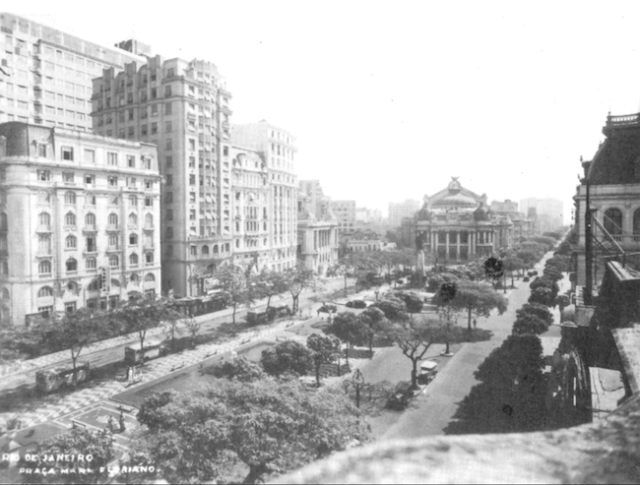
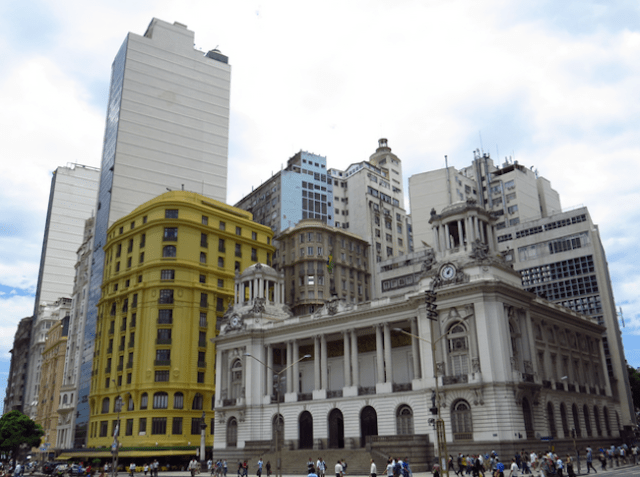
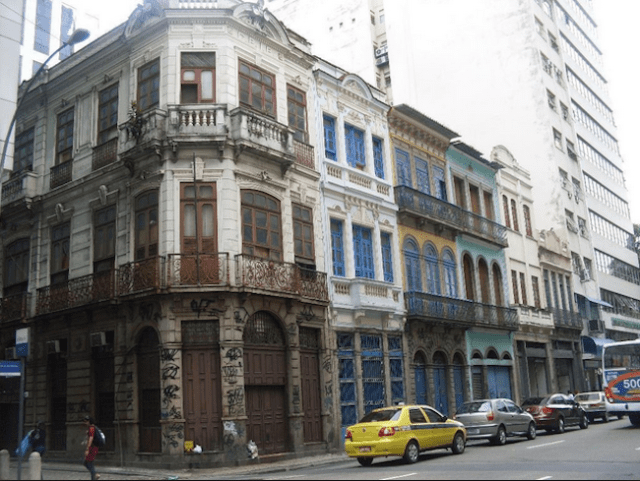
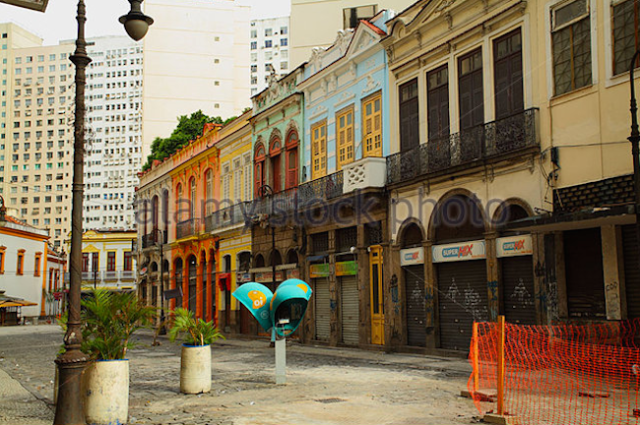
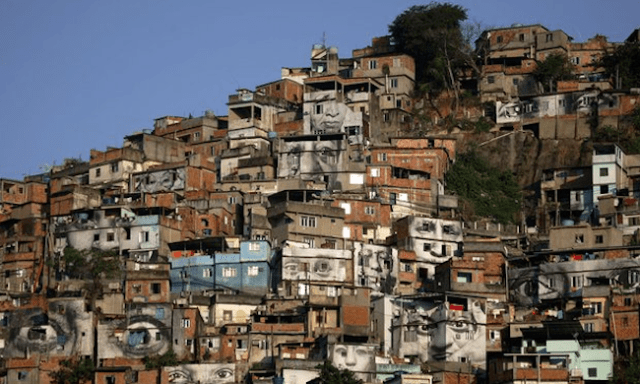
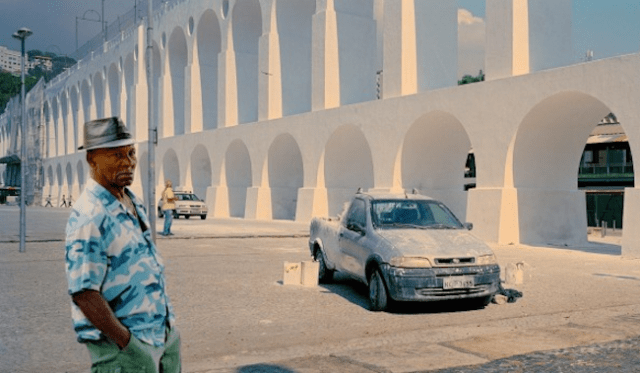
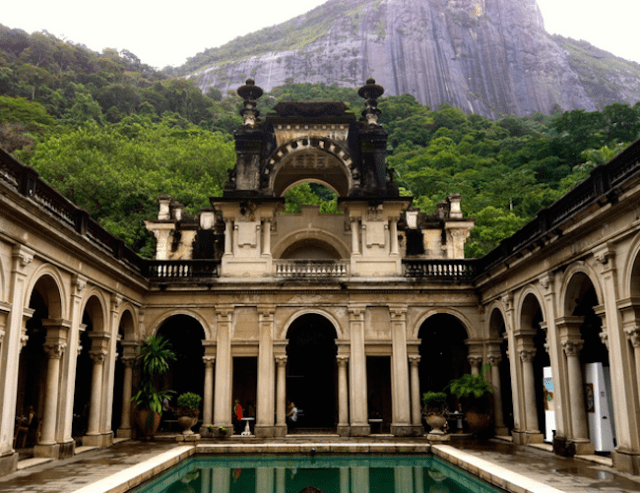
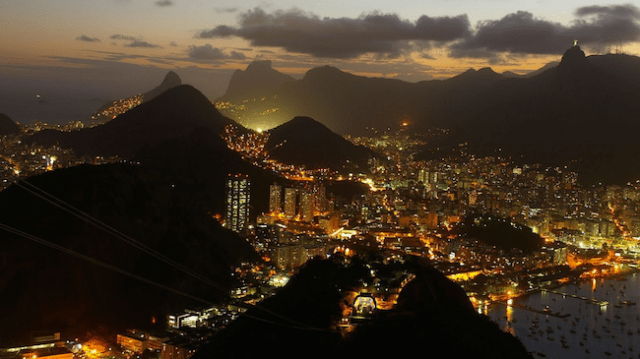
There is very little to complain of in the category of Olympic stadiums at Rio this year. The structures all appear to have mastered the urge to look like something other than arenas for sport. No bird cages, no bubble mattresses, not this year. So I have collected some images of Rio de Janeiro, the city. It, unlike its stadia, has received not a few hard knocks this year. But Rio’s a beautiful place, and no crime wave, health scare or political crisis can take that away from it, especially if stacked next to Brazil’s actual capital, Brasilia. And I don’t want to go there. So … back to Rio. And here is an interesting essay, “Rio Atlas: Cosmopolitan Urbanism,” about the history of Rio’s architecture by Emma Schad.

Screen Shot 2016-08-16 at 9.53.23 PM.png

Screen Shot 2016-08-16 at 9.09.58 PM.png

Screen Shot 2016-08-16 at 9.12.03 PM.png

Screen Shot 2016-08-16 at 9.40.35 PM.png

Screen Shot 2016-08-16 at 9.14.33 PM.png

Screen Shot 2016-08-16 at 9.34.30 PM.png

Screen Shot 2016-08-16 at 9.10.51 PM.png

Screen Shot 2016-08-16 at 9.16.24 PM.png

Posted in Architecture | Tagged , , , , , , , , , | Leave a comment

The next Blackstone battle?

Screen Shot 2016-08-14 at 1.00.37 PM.png

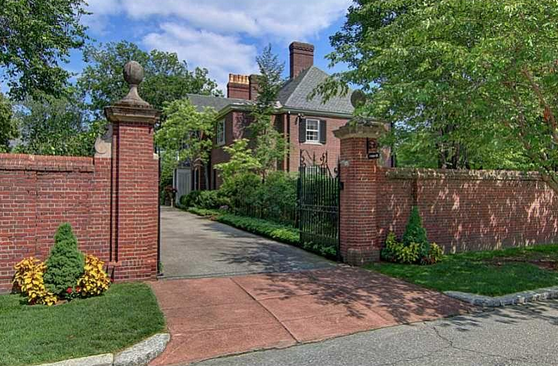
The headline refers to the failed effort, in 2014, to divide up the Granoff estate. The property behind it, 25 Balton Rd., has the same dark cloud gathering over it. Many people are familiar with the Bodell mansion from having driven (or walked) down Cole Avenue, between the Granoff estate (now owned by a Dallas developer, apparently) and the gigantic hedge of bushes through a gap in which may be seen the several fancy garage doors of a magnificent old house. Finished in 1929 to the design of architect William T. Aldrich, who designed the original RISD Museum of Art on Benefit Street, the Georgian Revival mansion was once known around town for its colorful gardens. Frederick Bodell was a stockbroker and a naturalist.

Screen Shot 2016-08-14 at 1.10.14 PM.png

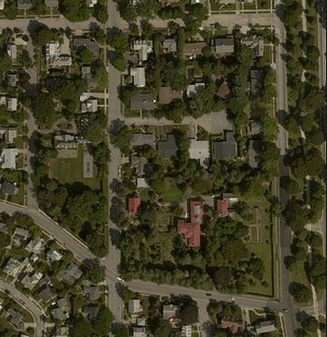
Of the invaluable emails sent to the Blackstone neighborhood by David Kolsky the latest shows that on Tuesday afternoon, the City Plan Commission will discuss a plan to subdivide the four acres much as the Granoffs had hoped to subdivide their larger parcel of land. The house, according to my source, is to be retained but at least four much smaller houses are to be erected. In the aerial photo at left, the Bodell house is to the left, with swimming pool (which, one imagines, would be history).

My information here is very sketchy but my source fears that, while the Blackstone neighbors beat back the subdivision attempt by the Granoffs, its new owner could have another go at it, a task that would be easier if the Bodell property next door is successfully subdivided.

It might not really matter all that much except that given recent history, a developer might be expected to build more houses that don’t fit into this neighborhood’s historic character. The neighbors have taken decades to be aroused to the threat, as bad modernist houses arise to besmirch Blackstone’s picturesque charms. Now that they are alerted, they are aware that politics, not law, is often the deciding factor in zoning cases. It is not the law but the interpretation of the law that counts, and that is often political.

(Notwithstanding all this, the latest addition to the housing stock along Blackstone Boulevard is a lovely one on the boulevard just south of its intersection with Rochambeau Avenue. Its front columns have just been painted. How much lovelier it is that the two houses that arose several years ago just south of the boulevard’s intersection with Laurel!)

The meeting is at 4 on the first floor of the Department of Planning and Development, across Empire from the beautiful building on Westminster that it used to be in, and in the Brutalist structure it now inhabits at 444 Westminster, on the way up the path to the Cathedral of Sts. Peter & Paul.

Posted in Architects, Providence | Tagged , , , , , , , | 1 Comment