Fate of the Fane skyscrapers

Screen Shot 2017-03-05 at 12.40.45 PM.png

Current (left) and original (right) proposals for skyscrapers in Providence. (Fane)

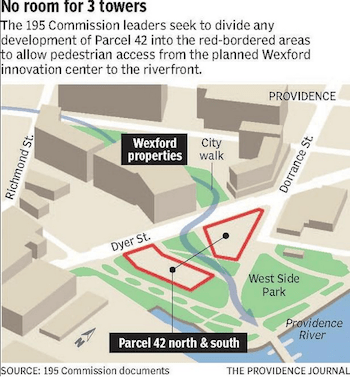
Got my paper this morning and was startled to read the headline “Trio of towers never stood a chance” on the front page. The story in the Providence Journal, by Kate Bramson, seemed to indicate that the project had been mortally wounded by a secret promise by the I-195 District Development Commission to leave a public pathway through the middle of the parcel on which Jason Fane wanted to build three skyscrapers atop a five-story garage.
Screen Shot 2017-03-05 at 12.21.00 PM.png

The pathway to the public park along the Providence River, part of a so-called City Walk bisecting the already proposed Wexford innovation campus, was revealed by the commission to the developer, Jason Fane, but not to the public. That left both critics and supporters of the proposed Hope Point Towers in limbo. Why did the project seem to be twisting slowly, slowly in the hot air of the commission’s deliberations? Why? Because nobody but the insiders knew about the promise to Wexford.

But at the end of Bramson’s story, readers awaiting a quote of Fane throwing up his hands in disgust and resignation, learned that Fane is not going away, not yet. The commission, having failed to get him to move his project to a more sensible parcel away from the public park and toward Route 95, is apparently still open to one tower, while Fane’s supporters – mostly contractors and unions – are still pushing a two-tower proposal.

The Providence Journal wrote an appropriately frowning editorial on Feb. 21, “Keeping the R.I. public in the dark,” after the Journal’s successful open- records request revealed the secret doings.

Rhode Island has learned many times that secretive governmental decision making ends up helping special interests and hurting the public. It is extraordinary how often the state’s officials choose to “forget” this lesson.

The commission wrote an oped in reply, “Selfless commission has experience, integrity,” that was also published today.

This grim dance has been the inevitable result of a program openly designed to poke the public in the eye with its poorly conceived architecture. You’d think, now that proposals are finally crowding in for the 195 corridor, that the public would be enthused at the prospect of economic growth and new jobs based on a state plan to build a high-tech sector largely from scratch. But the public has been unenthused, and only partly, I think, because of the public subsidies involved.

For reasons I’ve discussed on this blog and in columns I used to write for a quarter of a century on the Journal’s editorial pages, a large majority of the public dislikes the sterile modern architecture that is the design template for so many development projects. The Wexford campus is just as bad as Fane’s three towers. Panels such as the 195 commission, charged with overseeing the design of these projects, are inherently confusing to the public because panel members try to disguise from the public their sympathy with the design elite’s modernist taste as they deliberate with developers over how new buildings should look. (Developers care far less about style than about securing permits and official support for projects.)

If political leaders would encourage developers to propose buildings that the public could get behind, these long and costly development processes could be streamlined and simplified. Panel members should be encouraged to recognize that they oversee a process intended to benefit the public, not the design elite. Having the developers and the public on the same page in the vital matter of how these projects are supposed to look would reduce the perceived need for secrecy and obfuscation in massaging economic growth.

Here in Rhode Island, a newly rational development process – which would require no new laws and no new state expenditures – would also have the benefit of aligning what is built in the Ocean State with the state’s natural brand. (“Welcome to Beautiful Rhode Island” say all our border signs.)

Imagine that!
Posted in Architecture, Urbanism and planning | Tagged , , , , , | 2 Comments

City devitalization in France

Screen Shot 2017-03-04 at 6.41.05 PM.png

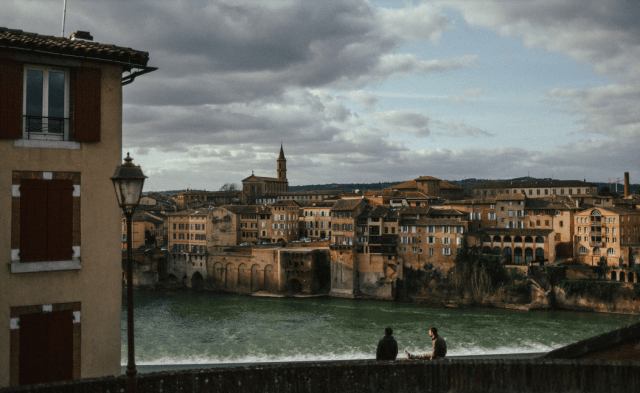
Albi, a declining town in southwest France. (NYT)

Towns and small cities in France have experienced in recent years something similar to what happened to towns and cities in America during the last half of the 20th century. In France they call urban renewal and suburban sprawl by another name, urban devitalization, the obverse of our optimistic term, urban revitalization.

France is a nation so proud of its national character and its culture that it has an official office to protect the French language from outside influences. It worked for a while but has not worked very well lately. French now bubbles with Americanisms – happy hour, brainstorming, weekend, brunch, job, swag, thug, ASAP, marketing, dress code and more than a mere host of others. The Académie française was founded in 1635 by the Cardinal Richelieu, and it still exists, not that you could tell lately.

Today the New York Times ran a story by Adam Nossiter, “As France’s Towns Wither, Fear of a Decline in ‘Frenchness,’” on the devitalization of Albi, a town an hour from Toulouse in France’s southwest. Nossiter (son of WaPo’s Bernard?) met with a French blogger, Florian Jourdaine, who has written on his blog a meticulous diary of Albi’s decline, shop by shop. Nossiter writes:

To him, Albi’s fate was a cultural misfortune. City leaders had poured money into a high-concept modernistic new culture center at the town’s edge. And the shopping mall had been built. Large grocery chains, called hypermarkets, had also been constructed outside the city, with free parking. It is not that Albi no longer had commerce, or activity. But the essence of the ancient city was being lost.

Things may be even worse in rural France. The architecture critic Robert Russell posted this comment after reading Nossiter’s article:

I was in southern France last May/June and was shocked to see what looked like whole villages closed up: every building shuttered, no one on the streets. I was looking for a putty knife and went through four entire towns before I found a hardware store. These were old agricultural villages but it looked like French ag is following the path of American mega-ag: the fields are getting bigger, the machinery is getting bigger and the farmers are going away.

Of course, plus ça change and all that. The more things change, the more they stay the same. Or, to take another tack, change is the only constant. Two healthy clichés that we all use all the time. So do things change or do they not? France is debating that now. America has debated it for a long time. On second thought, so has France. Does a nation have the right to place limits on change? It is even possible to avoid change? What sort of change? Is it fair to describe some change as good and other change as bad? These questions seem to answer themselves, but they do not. What is national character? Is it something we are bound to respect? In France? In America? Or do the forces that degrade it warrant equal respect? Oops! Excuse me for bringing it up.

(I have run two photos from Nossiter’s story that seem to belie the loss of “Frenchness” in Albi. Other photographs with his story seem to confirm it. Readers can seem them and the story through the link above, but maybe they should think of popping some pills, “uppers,” before reading his story. Or, as NBC puts it on certain “Dateline” reports by news anchor, Lester Holt, #DontWatchAlone.)

(For more detail on his trip to France from Robert Russell, who now teaches at Salve Regina University, in Newport, R.I., scroll down below the following photo. A reader has asked him where he went in France.)

Screen Shot 2017-03-04 at 6.42.48 PM.png

Street in Albi belies decline of its “Frenchness.” (NYT)

Mostly in the Aude and Tarn regions. We had a free house in a bastide – one of those fortified towns the French built when they took the south over in the 13th c. – north of Carcassonne. It had once been a bustling town (I won’t say thriving), but its population is down to about 40, mostly octagenarians. You had to go a couple of miles down the valley to get to a place that had a general store open a couple of afternoons a week.

Carcassonne, by the way, seems to be doing pretty well, though its economy is based almost completely on tourism. Most of its daily commerce has been relocated outside of town, pretty much as described in the NYT article about Albi. The same could be said for Aigues-Mortes, east, in the Bouches-du-Rhone. But it is a fake town, also based on tourism, though I’m sure the few inhabitants would object to that characterization.

We made one trip to Toulouse and on to Moissac in the Midi Pyrenees. We stayed off the A-roads (autoroutes – French high-speed toll roads) and took the national roads, which take twice as long to get anywhere. They also go through the many old villages bypassed by the fast roads, places you have never heard of: Cabardes, Lastours, Revel, Villemur-sur-Tarn, Labastide St.Pierre, La Ville Dieu du Temple. That last one takes longer to say than to drive through. Those are the places that are dead. The farm machinery is too big now to fit in the old barns, so it sits out in the weather.

Posted in Architecture, Preservation, Urbanism and planning | Tagged , , , , , , , | 7 Comments

The design of the spectacle

Screen Shot 2017-03-03 at 1.02.14 PM.png

When you have a pair of glasses you like, why can’t you keep them? The optical-industrial complex has a say in the matter. Frame styles change so swiftly that getting a new pair of glasses means finding a new you. Glasses are treated as fashions like clothing even though one’s unified face theory should be more impervious to change than what you get from a new pair of slacks or a new pair of shoes. You are what you wear, but even more so you are what glasses you wear, at least for those of us who don’t wear contacts.

This year, though still primarily horizontal, frame styles emphasize depth over width. The new technology of “progressive” lenses – bifocals that meld the distance and the reading halves of the lens – requires more leeway in the vertical than ever. But I don’t care about bifocals. I want smaller, flatter openings in my frames, mainly to avoid the Coke-bottle lenses that would otherwise be the fate of my nearsighted peepers.

Besides, I’ve come to like the look. So I’ve given up on new frames and want to have new lenses popped into my old frames. But no can do! So says the optician I patronize. Leave your glasses with us for a week while we sculpt the new lenses into the old frames – or get a whole new pair of frames for them to transplant your new lenses into while you wear your old frames.

Huh? Can’t they just measure my old frames’ openings and let me wear my old frames while they sculpt the new lenses to fit into those measurements? Don’t opticians work in micro-millimeters? Isn’t this child’s play for them? Almost as easy as Lasik surgery? Not so, say my guys. So I am looking around for an optician who will buck the system. And now I hear that Walmart will let me wear my old glasses until they are ready to swap in the new lenses.

What do other opticians say? It seems odd that mega-corporate Big Box chain opticians can help customers dodge the planned obsolescence fashion mandates of the optical-industrial complex better than the smaller operators. Tell me it ain’t so!

Screen Shot 2017-03-03 at 8.12.54 PM.png

Posted in Art and design, Humor | Tagged , , , , , | 6 Comments

Pritzker’s 2017 yawn x 3

Screen Shot 2017-03-02 at 2.41.34 PM.png

Soulages Museum, in France. (fastcodesign.com)

The Pritzker Prize for 2017 was just announced, and while it feels good to continue to celebrate the prize jury’s now years-long retreat from rewarding starchitects, the multitude of excuses offered for the Spanish (or perhaps the Catalonian) trio’s prize leaves one rolling one’s eyes.

It’s been a nine years since the Pritzker went to a standard-issue starchitect, Jean Nouvel, eight if you expand the definition to include Peter Zumthor, and a dozen years since it went to an American, Thom Mayne. This year’s selection was immediately linked by the architectural punditocracy to issues of diversity and multiculturalism. The triumvirate includes a woman. Their national identity, while admittedly European, basks presumptively in the Catalan independence movement. A hint of respect for collaboration and regionalism also characterizes the spin that spun back and forth yesterday between the Pritzker jury and the profession. The idea of nuance, often hard to detect in modern architecture, was also granted copious strokage.

The work of winners Rafael Aranda, Carme Pigem, and Ramon Vilalta, of RCR Arquitectes displays the conventional and now seemingly obligatory ability to design buildings that have little – nay, nothing – in common with their firm’s prior work, or with that of fellow modernists. Some of their buildings have a grittiness that, when it is not too akin to rust, gives them almost a natural appeal that harks back to the best work of Zumthor.

So it is difficult to decide which of their buildings to place atop this post. The Soulages Museum, a cubic Corten-clad building in France, will just have to do. It looks like an alley in the run-down industrial district of the Rust Belt, even though it is in France. I lifted it from an article on fastcodesign.com by Diana Budds, gaily subtitled “RIP, Starchitecture. And Good Riddance.” Its Pritzker coverage, “Three Little-Known Spanish Architects Win Architecture’s Top Prize,” has a relatively extensive slide show of the firm’s work. A second, below, is the El Petit Comte Kindergarten, in Spain. It looks like a cardboard box franchise warehouse painted to look as if it were designed to house machinery for the processing and packaging of very young children.

Screen Shot 2017-03-02 at 2.34.30 PM.png

El Petite Comte Kindergarten, in Spain. (fastcodesign.com)


Posted in Architecture | Tagged , , , , , | 3 Comments

Sussman on Corbu’s autism

Screen Shot 2017-03-01 at 10.42.06 AM.png

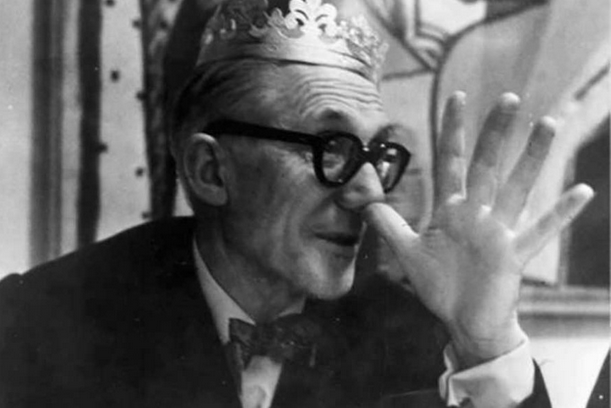
Charles-Edouard Jeanneret, also known as Le Corbusier. (Archiobjects)

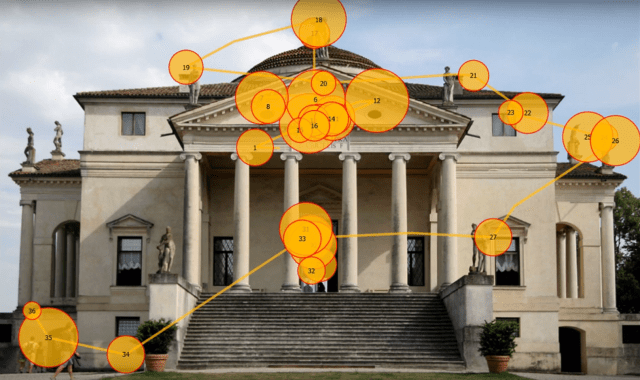
One reason people prefer traditional to modern architecture is that their eyes literally refuse to look at blank walls. Shown a picture of a building with a blank wall, the eye of an observer will linger anywhere – on a side street next to the building, on a red light in the foreground of the building, on a lady walking down the sidewalk in front of the building – anywhere but on the building itself. The entrance (if visible) might catch some attention.

This is the growing evidence from biometric tools that track and time the focus of the eye on pictures of architecture, according to architect and researcher Ann Sussman, co-author (with Justin Hollander) of Cognitive Architecture.

Screen Shot 2017-03-01 at 8.17.06 PM.png

Eye tracking shows normal focus on kitten in top photo, with attention on face; in bottom photo, autistic focus shows attention avoids face.

The neurobiological nullification of modern architecture was one of two major revelations from Sussman at a talk last week in Boston sponsored by the New England chapter of the Institute of Classical Architecture & Art. She addressed the chapter in February of 2015, revealing the mind’s preference for symmetry and for buildings whose windows, doors and other features seem to read like faces. (See my post “Edges, shapes and patterns.”)

Since then, she has continued her pathbreaking research on how the eye perceives its environment – via an intuitive defense mechanism that harks back to prehistorical times when primitive man needed data to protect himself from lions and tigers and bears. Today, the need for data that enhanced our safety is satisfied by ornament that we seek for our enjoyment. Buildings that lack such details don’t speak to us. Literally.

Sussman states that:

It appears that blank building façades actually cause more release of cortisol (the stress hormone linked to cancer and heart disease) when we’re surrounded by them. If you look at Boston City Hall the cortisol may rise in your cheek cells; whereas when you look at neighboring Old State House – you can’t help but feel happy, and consequently will  have more oxytocin (the hugging hormone) in your blood stream. Yes – how modern architecture by not providing the fixations our brain is set out to see (such as windows that seem like eyes) increases stress response, crimping community relations – and since we are the most social species on the planet, biologists say – undermines our health and social well-being, virtually killing us.

Mathematician and architectural theorist Nikos Salingaros, of the University of Texas at San Antonio, has long contended that modern architecture not only makes people dizzy but causes illness. I have tended to suppose he overstates the case, but the research has caught up with his prognosis. In speaking of buildings that “virtually kill us,” Sussman may well herself have committed exaggeration. But on sober reflection, maybe not: “Our ancient brain sets limits on our modern brain.” To the extent that modern architecture has inflicted Corbusier’s “tower in a park” model on public housing around the world, it may indeed be responsible for the social and behavioral descent that has resulted in the deaths of who knows how many thousands of people.

We may like to think of ourselves as beings who think, and we are, but our thoughts arise from our feelings, which are largely linked to our primitive past. If we are to thrive in the 21st century, humans must come to grips with that.

And now Sussman has added a bold stroke to her conclusions. How, she asked her listeners last week, did modern architecture become the dominant style if people don’t like it? She answered her own question: Because modernist founder Le Corbusier was autistic.

Sussman deduces from Corbu’s big head, his social inadequacy, his penchant for blank walls, and other factors, that modern architecture’s most influential founding theorist occupied a dire place on the autistic spectrum. This suspicion has been confirmed by biometric studies. Eye tracking shows that people on the autistic spectrum track very differently from most people. Sussman explains:

Le Corbusier, we now know, had a genetic brain disorder and because of it, he actually “saw” the world differently than neuro-typical types, and could “fixate” on blank façades – indeed, more readily sought them out to emotionally regulate.

During the question and answer session, an audience member pointed out that thousands of other modern architects who have practiced since Corbu were not all autistic. I sought to correct him – Sussman was contending not that all modernists were autistic but that the modernism propounded by Corbu was influenced by his autism, and that many other modernists since have baked Corbusier’s autistic insights into the practice of their craft.

More and more literature is emerging that backs up Sussman’s research linking Corbusier’s architecture to his place on the autistic spectrum. No doubt the architectural establishment, which still considers him a hero, will greet the news with silence – the typical reaction of a cult to facts contrary to their world view. Eventually, however, the drip-drip-drip of the truth will have its way.

Screen Shot 2017-03-01 at 10.56.20 AM.png

Eye tracking follows typical person’s focus on Palladio’s Villa Rotunda. A person on the autistic spectrum is more likely to focus on the few blank spaces. (geneticsofdesign.com)

Posted in Architecture, Books and Culture | Tagged , , , , , , , , | 12 Comments

Cement plant for living in

Screen Shot 2017-02-28 at 2.04.05 PM.png

Ricardo Bofill’s cement factory near Barcelona. (all photos from boredpanda.com)

Ricardo Bofill has long been known for bombastic and gargantuan pseudoclassicism – his take on postmodernism’s ironic dismissal of the classical orders and traditional ornament. In 1973, the Spanish architect purchased an old abandoned cement plant near Barcelona, and has since turned it, little by little, into a machine for living in.

The website boredpanda.com has splashed a photo spread of La Fábrica in “Architect Turns Old Cement Factory into His Home, and the Interior Will Take Your Breath Away.” Although Bofill is not quite my cup of tea, his “house” is worth a look.

Frankly, I would turn the headline around and stand the story on its head. By the time you get inside, you are already blown away. That’s the impression I got after receiving the article from my wife Victoria, who chid the architect for interiors that are far from cozy. True, but coziness here may be next to impossible. I doubt Bofill is an aficionado of the cozy. Most of his work embraces, if anything, the totalitarian impulse.

The verdure on the walls and roof are, along with the arched windows, the result of Blofill’s intervention. They turn the plant’s already remarkable forms into something almost other-worldly. Enter, and their obverse forms shape a frightfully imposing interior. No, not exactly cozy. And of course there is room for Bofill and his employees to work “at home.” (Don’t drive in to the office, have the office drive in to you.) Do look at the article, which has more photos than you can shake a rebar at.

Screen Shot 2017-02-28 at 2.04.44 PM.png

Screen Shot 2017-02-28 at 5.57.31 PM.png

Screen Shot 2017-02-28 at 2.05.27 PM.png

Screen Shot 2017-02-28 at 5.58.54 PM.png

Screen Shot 2017-02-28 at 2.07.14 PM.png

Posted in Architecture, Uncategorized | Tagged , , , , , , | 3 Comments

Behold the GPS landscape

Screen Shot 2017-02-27 at 1.44.35 PM.png

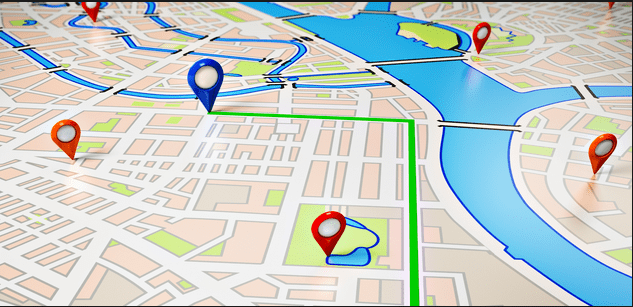
A map derived from the Global Positioning System, or GPS. (The Next Web)

In his recent essay in New York Magazine, “I Used to be a Human Being,” on how social media almost killed him, Andrew Sullivan wrote:

Our oldest human skills atrophy. GPS, for example, is a godsend for finding our way around places we don’t know. But, as Nicholas Carr has noted, it has led to our not even seeing, let alone remembering, the details of our environment, to our not developing the accumulated memories that give us a sense of place and control over what we once called ordinary life.

I read this a moment ago. I have not even finished his (very long, intimate) essay. It caused me to think of a passage from James Howard Kunstler’s remarkable The Geography of Nowhere, published in 1993, which I am rereading. He writes:

When Americans, depressed by the scary places where they work and dwell, contemplate some antidote, they often conjure up the image of the American small town. However muddled and generalized the image is, it exerts a powerful allure. For the idea of a small town represents a whole menu of human values that the gigantism of corporate enterprise has either obliterated or mocked: an agreeable scale of human enterprise, tranquility, public safety, proximity of neighbors and markets, nearness to authentic countryside, and permanence.

Despite the nearly universal imposition of the straight grid, with all its weaknesses, America’s small town streets at their best had some powerful saving graces. The houses were scaled generously – families were larger then, and multi-generational. No matter how fanciful, nineteenth-century homes were built of natural materials that aged gracefully. The procession of porches along the street created a lovely mediating zone between the private world of the home and the public world of the street, further connected and softened by the towering elm trees and the lush foliage.

The organic wholeness of the small town street was a result of common, everyday attention to details, of intimate care for things intimately used. The discipline of its physical order was based not on uniformity for its own sake, but on a consciousness of, and respect for, what was going on next door. Such awareness and respect were not viewed as a threat to individual identity but as necessary for the production of amenity, charm, and beauty. These concepts are now absent from our civilization. We have become accustomed to living in places where nothing relates to anything else, where disorder, unconsciousness, and the absence of respect reign unchecked.

And this was written almost a quarter of a century ago. In some ways, such as the anomie of our social mediated lives, it has gotten even worse. In other ways, such as the beginning of a revival of tradition and craft in building and design, it has gotten better, at least in some places, and with very much more to be done. A rereading of Kunstler’s book dips us into what we have lost, while opening our eyes today suggests that, except in a few areas such as the “slow” this or “slow” that movements, we have not learned a thing. (By the way, Kunstler’s novel series beginning with World Made by Hand predicts what the United States, at least, will come to as a result. Very engaging novel, as are its successors.)

Posted in Architecture, Books and Culture | Tagged , , , , , , , | Leave a comment

Betsky goes ballistic

Since I have discovered the “reblog” key, here is a fun reblog:

David Brussat's avatarArchitecture Here and There

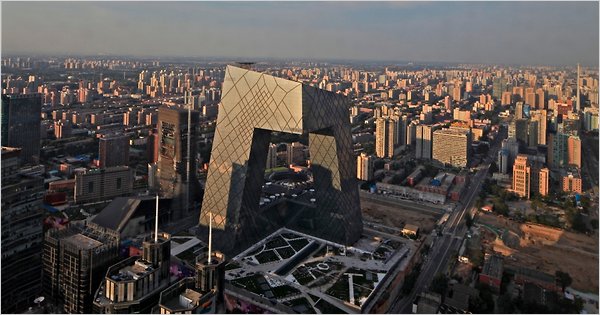
CCTV tower in Beijing - known as CCTV tower in Beijing – known as “Big Pants,” it seems intended to crush the people. (nytimes.com)

Let the establishment – in this case the New York Times – allow to be uttered just a single peep against modern architecture and its enforcers suffer total meltdown of equanimity. Aaron Betsky, the architecture critic for the journal of the American Institute of Architects, has gone ballistic in his reply, in Architecture magazine, to the recent essay on the Times’s oped page by Steven Bingler and Martin Pedersen, headlined “How to Rebuild Architecture,” which merely opines that architects should try listening to the public, the ultimate users of architecture.

It is tempting to go through Betsky’s piece, “The New York Times Versus Architecture,” line by line to rebut all of his ridiculous assertions. But I will limit myself to his objections to what he seems to feel is…

View original post 1,038 more words

Posted in Uncategorized | 2 Comments

Corbusier’s nasty drivel

Screen Shot 2017-02-25 at 12.43.45 PM.png

Model of Le Corbusier’s Plan Voisin, targeting Paris. (quadrant.com.au)

Anthony Daniels wrote in 2015 a masterful defenestration of modern architecture’s chief founder, “The Cult of Le Corbusier,” for Quadrant, an Australian magazine. I offer this one quote, along with my assurance that the essay in its entirety will comfort all who recognize the despicable in Corbu and his work. He is a man venerated who should be shunned:

For a man for whom abstract ideas were so important, he wasn’t very good at thinking. His ideas were to real thought what doggerel is to real poetry. You never have to go very far in his books (and his literary output was prodigious) to find ex cathedra statements that combine inaccuracy, looseness, laziness and self-serving mendacity, all covered in a thick sauce of absolute self-confidence. Here, for example, is something from page 4 of Quand les cathédrales étaient blanches, published in 1937:

The cathedrals were white because they were new. The cities were new: they were built all of a piece, in order, regular, geometric, according to plans.

This will no doubt come as news to medievalists. And to imply some kind of aesthetic equivalence between, say, Rheims Cath- edral and the Unité d’habitation (or anything else that he built) is breathtakingly arrogant, to put it mildly. On page 163 we read:

Manhattan repeats a natural history lesson: man is an ant, with precisely the same life habits, a uniform behaviour. By wanting to “free” man from his biological realities by an urbanisation extended in space, our snake-oil salesmen have rendered cities ridiculous …

The solution is obvious: to hand over total control to Le Corbusier, so that uniform man can live in uniform buildings that are efficiently conformable to his uniform behaviour and his “biological realities”.

Le Corbusier wrote thousands of pages of this unpleasant semi-intellectual drivel.

The illustration atop this post is a model of Corbusier’s Plan Voisin, involving the destruction of a large swath of central Paris. Daniels’s essay provides information on this plan and the so-called thinking behind it. The plan was rejected by Paris, fortunately, but much of its program was carried forward on behalf of the poor in public housing, housing estates and banlieus around the globe. The essay describes Corbusier as “a man, deeply autistic, who could never tell the difference between his own dull metaphors and reality.”

Corbusier’s own renderings of the Plan Voisin and his book The Radiant City put his fascistic tendencies on open display. Daniels describes the cult-like will to ignore of attendees at a Corbusier exhibition at (of course) the Centre Pompidou in Paris:

Many normal people do not see it, however, among them the thousands who trooped respectfully through the exhibition, not one of whom (as far as I could see) reacted with anything except awe to what was exhibited. Corbusier’s ideas, all of them gimcrack and third-rate, have struggled with good taste and common sense, and triumphed in the struggle. Of course, the visitors were a self-select- ed group; but the thoroughness with which the myth of Le Corbu- sier’s architectural genius has been propagated can be gauged from the story that Marc Perelman, an architectural critic, relates in his recent book, Le Corbusier, une froide vision du monde. In 1986, he says, he published another book critical of Le Corbusier, and it put an immediate end to his career in French architectural schools.

Daniels quotes one fawning critic’s appallingly accurate description of Corbusier’s most famous work, the Villa Savoye:

The most limpid and most structured of his works. A fragile edifice, all but uninhabitable, abandoned immediately, ruined by leaks, its plaster constantly cracking, but incontestably a masterpiece.

Of course, it was impossible for me to print only a single passage from Daniels’s brilliant essay. But just one more. He quotes another recent book critical of Le Corbusier, Le Corbusier, un fascisme français, by Xavier de Jarcy. It ends:

The most appalling thing is not that the most famous architect in the world had been a militant fascist. It is the discovery that a veil of silence and lies has been thrown over not only this reality, but also over the fascism of a part of the French intellectual, artistic and industrial elite. It is to feel the thickness of the curtain of forgetting that has concealed the facts for so long.

Posted in Architecture | Tagged , , , , , | 13 Comments

Our buildings, our selves

In lieu of my report on last night’s lecture in Boston by Ann Sussman, hosted by the New England chapter of the ICAA, I am reposting my “Our buildings, ourselves” from last year, which concerns Sussman’s research. Look for a post on last night’s lecture tomorrow.

David Brussat's avatarArchitecture Here and There

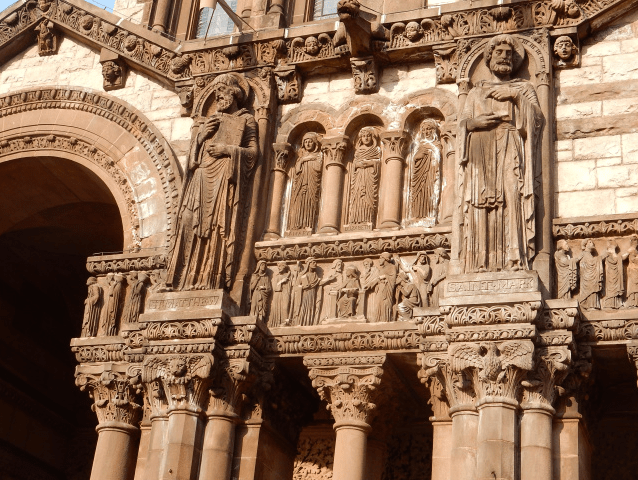
Screen Shot 2016-06-06 at 2.15.56 PM.png Details of Trinity Church, Copley Square, Boston. (Photo by David Brussat)

Ann Sussman, author with Justin Hollander of Cognitive Architecture, has an article in Planning magazine, “Planning for the Subconscious,” that suggests that the millennia-long evolution of how we shape buildings and places placates the inner urges of our minds and bodies (and hearts).

Or at least it used to. Modern architecture ended that. But now, she writes, advances in our understanding of biology through biometrics “means we can record how people see and feel about their surroundings, not as machines, but as animals keen on connection and ruled by anxieties.” She adds:

Imagine being able to collect real-world, real-time data about emotional habits in the built environment and to definitively answer perennial questions such as why people enjoy walking through miles of a dense urban settings like Manhattan but consistently shun barren landscapes like Boston’s infamously…

View original post 427 more words

Posted in Uncategorized | 3 Comments