Just stumbled on this …

Just stumbled on this, which I really gotta love! I thought he was going to somehow hoist me on my own petard, but he ends up … waving my flag? At least I think so. You decide.

[Several readers have noted that the writer, “Howard,”  identified the close of neoclassicism’s popularity at least two decades early, and I think he has hastened the onset of modernist dominance by at least one and probably two decades. He stands corrected.]

Posted in Architecture, Architecture Education, Art and design | Tagged , , , , , , | Leave a comment

Can’t find/afford an old house? Try this

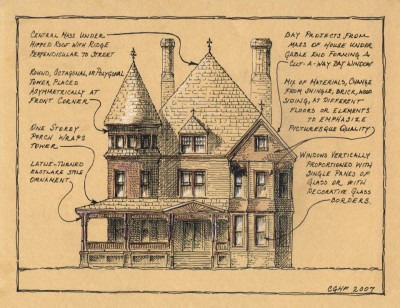
newoldThis article by Dale Hrabi in the Wall Street Journal called to mind my dear old neighborhood in D.C. and our friends the van der Taks (three sons, Steven, Derek and Laurens, whose ages closely matched those of me and my two brothers). Their marvelous old Sears Catalog house was up a few doors from our modest semi-detached house on Rodman Street, next to woods we used to play in, called Melvin C. Hazen Park, an offshoot of Rock Creek Park. Steven and his wife Merran live in a vernacular country house they built on the coast of Portugal.

Russell Versaci and others are making available today charming period houses with interiors modeled for today’s lifestyles. He and I met for breakfast a few years ago at the Biltmore in Providence, and I wrote two reviews of his books, which I’ll post separately as “blasts from the past.” (You can go to russellversaci.com and get PDFs of them, if you have the patience.) At the time, Versaci said he was contemplating a move into “authentic” prefab houses, which would satsify a market for old houses that was often frustrating to potential buyers because so many require extensive renovation or, having had it, are quite expensive. This WSJ article, sent to me by David Andreozzi, reveals that Versaci has made the plunge, along with others.

Posted in Architecture, Book/Film Reviews, Preservation | Tagged , , , , , , , , , , , | 1 Comment

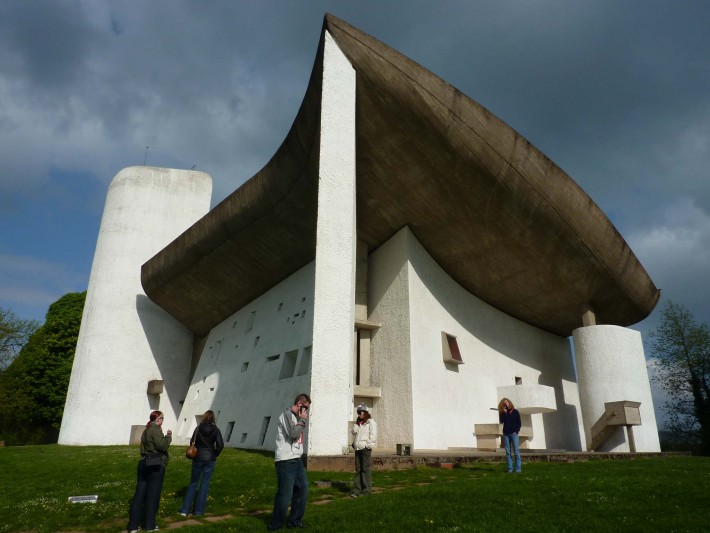
Vandalism at Corbu’s Ronchamp

Chapel at Ronchamp (1962). (coloradorotarygoestofrance.wordpress.com)

Chapel at Ronchamp (1954). (coloradorotarygoestofrance.wordpress.com)

How could they tell? Seriously, the Chapel of Notre-Dame du Haut at Ronchamp, with its rough texture and swoopy lines, may be the least objectionable of Le Corbusier’s buildings. Although William J.R. Curtis has more respect for the chapel than I do, his piece in Architectural Review, Vandalism and Neglect at Ronchamp, is filled with admirable sensibility to what has happened – beyond its appalling vandalism and its cheesy disrepair –  to the chapel and especially to its environment, augmented in 2011 by the celebrity architect Renzo Piano.

The entire article is good but here are some quotes:

Cracked chapel. (Photo by William J.R. Curtis)

Cracked chapel. (Photo by William J.R. Curtis)

Ronchamp has once again been vandalised, not by Renzo Piano this time, but by thieves who forced entry by breaking a pane of glass painted by Le Corbusier. …

For 60 years the Chapel at Ronchamp existed in relative peace and quiet on its remote site surveying the horizons, easily accessible through a gate up a meandering pilgrim’s path. But now the site has been transformed and commercialised as a tourist destination, even with a sliding electric gate barring the route to the Chapel. In effect it has become a sort of gated community with outward signs of prosperity. …

Then there is the implicit ‘vandalism’ of the Piano project itself which was ‘sold’ behind a smokescreen of sanctimonious incense as enhancing the religiosity of the place. In fact it has done the opposite by treating this universal masterpiece as merchandise, de-sacralising the landscape and destroying the aura. When you visit Ronchamp today you have the impression of a mass tourist site and a ‘machine à sous’, a money-making machine. The Chapel itself has quite literally been undercut and trivialised by a host of surrounding mediocre architectural gestures. Far from becoming more ‘spiritual’ the place has become more materialistic.

Curtis follows that last passage with this line: “Somehow all of this is typical of our time.” But of course like everyone who has the least bit of patience with modern architecture, he fails to pick up on the extraordinary depth of his own remark. Modern architecture sanitizes whatever it does not vandalize, and it vandalizes and indeed oppresses everything at scales both smaller than and larger than its commodified self. Neighborhoods, villages, towns, cities, the world, all places suffer from modernism. This is obvious to most people without skin in the game.

As for those with skin in the game, they internalize their will to brutality, or at least their connivance in it, as “hip,” “chic,” “cool” and “edge.”

Off with their heads!

Posted in Architecture, Other countries, Preservation | Tagged , , , , , , , , , , , , | 1 Comment

Column: World roses and raspberries for 2013

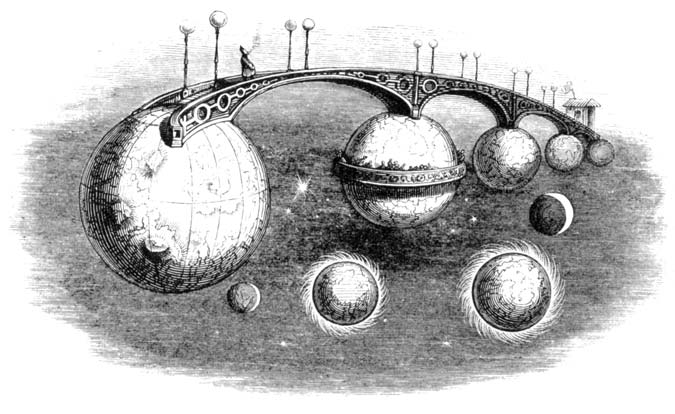
From Un Autre Monde (1844), by Grandville

From Un Autre Monde (1844), by Grandville

Here, from around the globe, are roses and raspberries for buildings, people and events that moved the world as we know it closer to or further from the world as we’d like it to be:

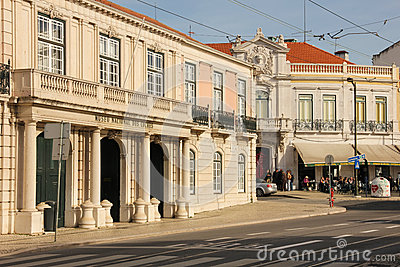
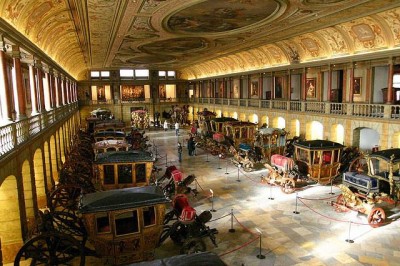
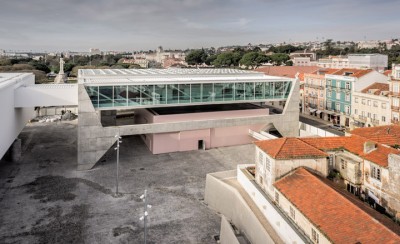
• A raspberry to Lisbon for planning to move its beloved coach museum, the Museu Nacional dos Coches, from its graceful home at a 1787 royal palace to what looks like a parking garage. One mustn’t blame the pathetic architect, Paulo Mendes da Rocha (a Pritzker Prize winner, naturally). He is a hired gun. The officials who hired him are to blame; so is the public for not raising enough of a stink to stop the project. But the recession has stopped it, for now. Why must beauty’s survival rely so often on local or national poverty?

To read the rest, please visit The Providence Journal here.

Editor’s note: Until I place illustrations into the online version of my Journal column, I will publish them below. An appendix containing the final digital montage may be viewed at the bottom of this post. Meanwhile, here are all but that image:

Museu Nacional dos Coches, in Lisbon. (dreamstime.com)

Museu Nacional dos Coches, in Lisbon. (dreamstime.com)

Interior of Coach Museum. (promptguides.com)

Interior of Coach Museum. (promptguides.com)

New Coach Museum in construction. (wallpaper.com)

New Coach Museum in construction. (wallpaper.com)

Sketch by Christine Franck. (christinefranck.wordpress.com)

Sketch by Christine Franck. (christinefranck.wordpress.com)

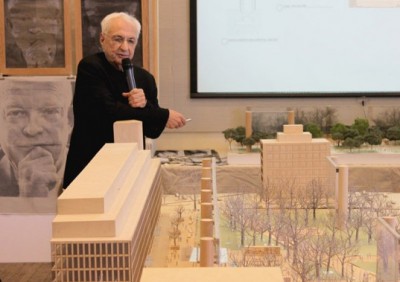
Frank Gehry and proposed Eisenhower memorial. (inhabitat.com)

Frank Gehry and proposed Eisenhower memorial. (inhabitat.com)

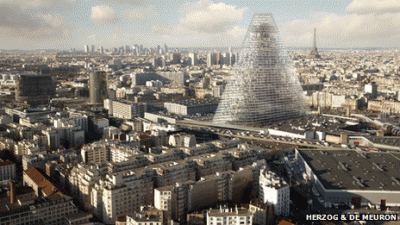
Proposed Paris skyscraper. (bbc.co.uk)

Proposed Paris skyscraper. (bbc.co.uk)

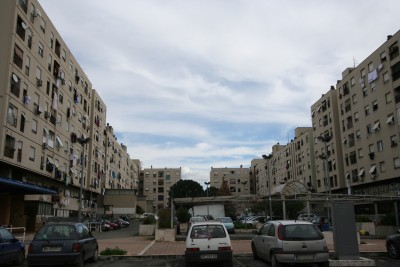
Tor Bella Monaca, outside Rome (clickthebrick.it)

Tor Bella Monaca, outside Rome (clickthebrick.it)

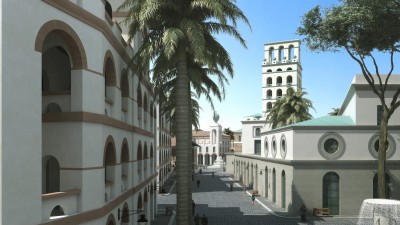
Proposed Tor Bella Monaca redevelopment. (Leon Krier)

Proposed Tor Bella Monaca redevelopment. (Leon Krier)

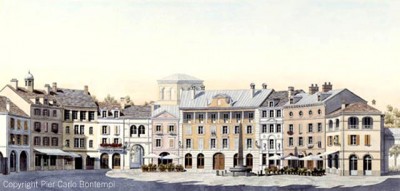
Sketch of built proposal by Pier Carlo Bontempi.

Sketch of built proposal by Pier Carlo Bontempi.

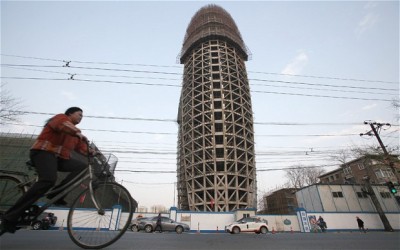
People's Daily headquarters, Beijing. (telegraph.co.uk)

People’s Daily headquarters, Beijing. (telegraph.co.uk)

Proposed soccer stadium in Qatar. (dezeen.com)

Proposed soccer stadium in Qatar. (dezeen.com)

The sequestered image may be viewed here.

Posted in Architecture, Architecture Education, Art and design, Other countries, Photography, Preservation, Urbanism and planning | Tagged , , , , , , , , , , , , , , , , , , , , , , , , | Leave a comment

See sequestered salacious montage here!

Boy architecture meets girl architecture. (Courtesy of anonymous commenter)

Boy architecture meets girl architecture. (Courtesy of “Anonymous”)

An anonymous donor responded to a challenge in an earlier post about the Chinese newspaper headquarters and the proposed soccer stadium (read it here), and sent me the above image, exclaiming that the challenge was “too easy.” The image is too hot to trot with the other roses and raspberries.

Posted in Architecture, Art and design, Books and Culture, Other countries, Photography | Tagged , , , , , , , , , , , , , | 1 Comment

Save NYC’s Rizzoli bookstore

Rizzoli Bookstore on West 57th Street, in New York City. (cn.hypebeast.com)

Rizzoli Bookstore on West 57th Street, in New York City. (cn.hypebeast.com)

The Rizzoli Bookstore is the in the middle. (trendhunter.com)

The Rizzoli Bookstore is the in the middle. (trendhunter.com)

I don’t see many petitions I’m inclined to sign but I signed one just a few moments ago. It was a petition to save the building that houses the publisher Rizzoli’s flagship store in a glorious old building on West 57th St. I visited only once, three years ago, but it was with my little boy Billy, who was 2 at the time. We went for a walk down the block and, since I’ve long loved Rizzoli’s list, we popped in. I’d had no idea it had such a wonderful store in a building fully worthy of the elegance of the books it publishes.

Dad and Billy, 2, on W57th, near Rizzoli

Dad and Billy, 2, near Rizzoli

How the New York Landmarks Commission can assert that the building is not worth saving is beyond me. I have not read, at this moment, what is expected to replace it (and the two equally lovely flanking buildings), in all likelihood a ghastly glass residential tower. I do know that tearing these buildings down would be a desecration of the city, and – if the commission has not lost its credibility long ago – of its preservation apparat.

What will the new mayor do? Anything?

Sign this petition. Right here! Many thanks to Gerald Forsburg for posting the petition to the TradArch list!

Posted in Architecture, Art and design, Books and Culture, Preservation | Tagged , , , , , , , , , , , , | 1 Comment

Curse of the ‘Creative Capital’

South Street Station, in Providence, could become a state nursing school. (news.brown.edu)

South Street Station, in Providence, could become a state nursing school. (news.brown.edu)

The rebranding of the Rhode Island Economic Development Corporation (RIEDC) as the Rhode Island Commerce Corporation (RICC) is complete, and a complete dud. This is the government agency that’s supposed to get the state economy growing again to produce jobs – and buildings, and jobs for architects and builders. Just get a load of the new entity’s corporate logo, below. Can you make anything of it? No.

And yes, the RIEDC brand had become toxic, swimming in the quicksand of the 38 Studios imbroglio. (Red Sox star pitcher Curt Schilling, in retirement, after failing to lure private backing, got RIEDC to drop $75 million in taxpayer money on a computer game development company he had started, which immediately tanked – with the money, of course.)

logoriccI do not intend to single out the new RICC logo, although it is the Creative Capital (the silly rebranding of Providence by former Mayor David “Congressman” Cicilline) writ large. You can perhaps perceive an R amid the swooshes, but the abbreviation of the state of Rhode Island is not R but RI. So where’s the I? But if it’s not supposed to stand for Rhode Island, what is it supposed to stand for? What is the meaning? Isn’t the whole idea of a logo to communicate a brand, an idea … something?

That a brand, a logo, should convey something clearly to a broad audience is an idea that keeps company with the dodo, at least around here. The RICC rebranding folly has a lot of local company, and I’m afraid to say that RIEDC – excuse me, RICC – has its fingerprints on a lot of it.

The agency’s big baby is the Route 195 Redevelopment Commission, which has recently rebranded the 40 or so acres of land that used to be under the recently relocated interstate highway. The land is now supposed to be called “The LINK.” Huh? The operative word apparently is not an acronym and stands for nothing at all, except that the land connects vague entities together – the land to the water? the land to the land? the land to the jobs that will tumble forth once high tech from around the country, turning a blind eye to the state’s soggy business climate, discovers the Knowledge District and … but I am getting ahead of myself.

I mean, what is this “Knowledge District”? It’s stepping on the toes of the Jewelry District, an old and venerable name the harks back to when it was filled with factories. Now, thanks to rebranding, it looks down its nose at other neighborhoods of the city. Knowledge District indeed! It certainly does not qualify for that designation today. Will it someday? Maybe. Or maybe not. This is called counting your chickens before they’ve hatched.

After all, the 195 commission and the Knowledge District were, respectively, legislated and rebranded at least three years ago, with little to show so far. They’re still putting in the utilities and curbs and pavement, etc. If we are lucky, we’ll get some ugly campuses for institutions shifting jobs from other parts of the city and state to the Knowledge District, partly, I suspect, to score brownie points with the General Assembly and City Council, which might otherwise contemplate taxing certain tax-exempt institutions. If we are not lucky, we’ll get more parking lots. (We could turn it into beautiful places, and that might help lure development, but that makes too much sense.)

Brown already has planted some medical departments in the Jewelry District and a state nursing school may be in the offing. Can the 195 commission manage to turn the gorgeous neoclassical South Street Station (an old power plant built in 1913) into an eyesore? If the commission follows the lead of its supposed mentor, the Capital Center Commission, who can doubt it?

A couple of years ago, another rebranding plopped the goofy name of Iway on the actual relocated portion of Route 195, including but not limited to the big new bridge over the Providence River. Iway must surely be intended as a riff on the Rhode Island accent. Iway … huh? Oh, highway! Now I get it! Har, har! Some people with thin skins might not think it’s so funny. Other people are taking it in stride. The bridge itself should be renamed for the late William D. Warner.

Bill Warner was the architect/planner who redesigned the city’s waterfront with river walks, parks and new bridges by the dozen in an evocative traditional style that built on the historic beauty of the city and state. Beauty is one of the few strategic advantages Providence and Rhode Island have in the intergalactic fight for jobs. Warner respected beauty, but beauty is spurned by the “Creative Capital” types who (for a fee) pump out a fog of confusion, epitomized by the RICC logo and other rebrandings. This only creates difficulties for Rhode Island in the battle with other states and the world to bring and create new jobs here.

I’m sure there are good people doing good work at the RICC, but that does not mean that this mania for rebranding should get off scot free. What we need is not rebranding but rethinking, and most of the rethinking does not require rocket science – but it might require some bold politics in a city-state that long ago forgot how to really create, and can’t imagine what actual creativity is all about. Let’s hope the Knowledge District is up to the challenge. So far, the prognosis is not good.


Posted in Architecture, Art and design, Providence, Urbanism and planning | Tagged , , , , , , , , , , , , , , , , , , , | 1 Comment

“The Monster-Builder” – A play

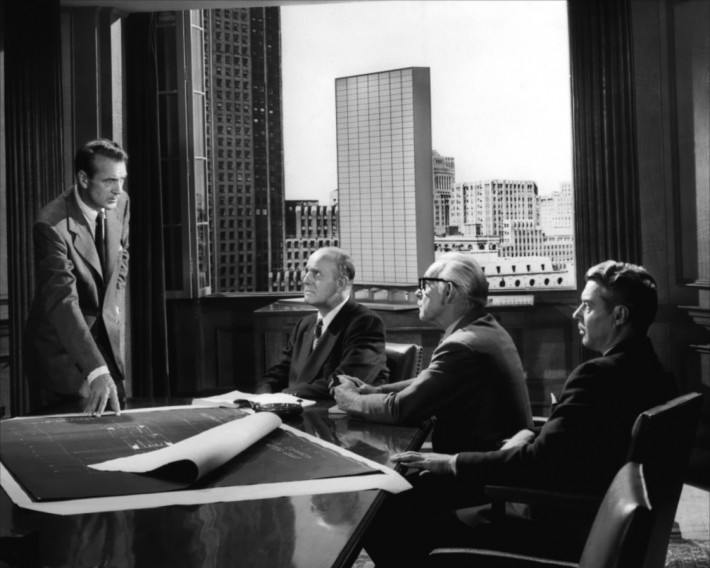
... as Howard Roark in the film version of Ayn Rand's The Fountainhead. (www.graymatters.gatech.edu)

Gary Cooper as Howard Roark in the 1949 film version of Ayn Rand’s The Fountainhead. (www.graymatters.gatech.edu)

Amy Freed (Portland Monthly)

Amy Freed (Portland Monthly)

Nikos Salingaros, the University of Texas mathematician and architectural philosopher whose most trenchant book is Anti-Architecture and Deconstruction, has sent me news of a new play by Amy Freed called “The Monster-Builder,” a play (on words) of Ibsen’s “The Master-Builder.” Nikos sends an interview with the playwright in Portland Monthly. Her play is being produced at the Artists Repertory Theatre in Portland, Ore.

This interview is a must read. Freed really gets it. Everything she says about architects and architecture is spot on. How, as an artist, she summons the courage I have no idea. She even understands that postmodernism gave birth to the horror of modern architecture’s latest phase, now several decades long in the tooth, more so than to neo-classicism, which arguably springs also from postmodernism.

“The Monster-Builder” must be brought to Trinity Rep, in Providence. I am sure it is up to the challenge. If not, other local venues should leap in to produce a play that will rock Rhode Island to its foundation.

Posted in Architecture, Art and design, Book/Film Reviews, Providence | Tagged , , , , , , , , , , , , , , , , , | 3 Comments

Blast from past: Middle way in architecture?

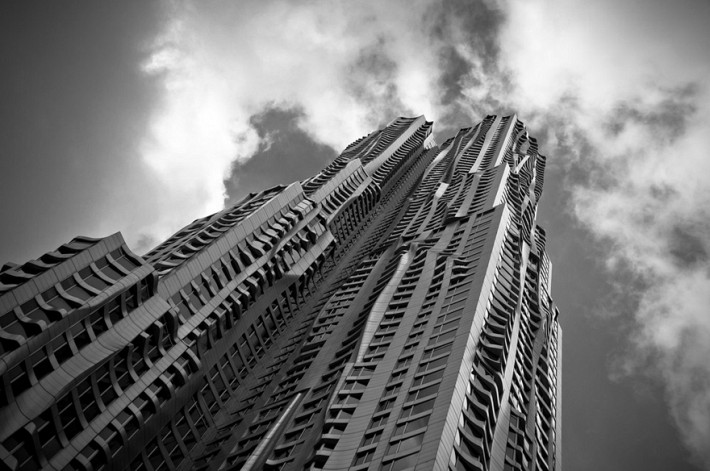
Frank Gehry's Beekman Tower, in Manhattan. (guillaumegaudet.photoshelter.com)

Frank Gehry’s Beekman Tower, in Manhattan. (guillaumegaudet.photoshelter.com)

I here inaugurate a “Blast from the past” feature based on my newly discovered ability to find posts from my lapsed Providence Journal blog, also called Architecture Here and There. I have created a page called Archives From My Old Journal Blog that contains material written between 2009 and 2013. This blogger’s appreciation for the courtesy of the Journal in making this archive available is considerable. The type is quite small but can be bumped up, if need be, on your computer screen.

The subject of this inaugural archival post is the idea that you could have buildings that meld modernism’s novelty and classicism’s tradition in ways that bring charm and even beauty to the city. The idea returned to me when I wrote a positive review of Frank Gehry’s Beekman Tower in Manhattan in 2011. It suggests a modus operandi for modernists and classicists to just get along. My conclusion, however, was that modernist architects don’t really want to get along.

Posted in Architecture, Blast from past, Providence | Tagged , , , , , , , , , | Leave a comment

A kiss is just a kiss … right?

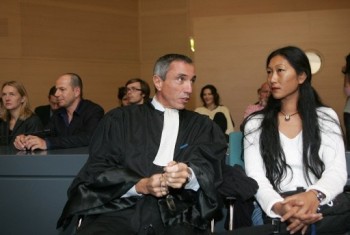
Sam Rindy with her attorney in French courtroom. (art-damaged.tumblr.com)

Sam Rindy, right, with her attorney in French courtroom. (art-damaged.tumblr.com)

One of the late Cy Twombly’s untitled paintings, a canvas entirely white, was kissed by French artist Sam Rindy, 30, leaving on the work the red imprint of her lips – the only arguably artistic thing about the painting, which nevertheless was valued, in 2007, at some $2.4 million (before Miss Rindy’s applique). She was arrested for her kiss at the Collection Lambert in Avignon, France, and the news ended up in a post I wrote for my Providence Journal blog back in 2011, when the paper published an obituary editorial about the famous artist.

I thought the post was history, swallowed up in the pit of the evaporation of my Journal blog, but somehow it survived, and I found it. Since it represents my first entry into art criticism, and I have just posted on a controversy involving two art museums, I thought I’d repost my old post here. I also am posting the New York Times story about Miss Sam “A Kiss Is Just a Crime” Rindy exercise in cooperative artistic endeavor, lest readers disbelieve my post’s account of her crime.

Posted in Art and design, Blast from past | Tagged , , , , , , , , , , , | 1 Comment