“The Monster-Builder” – the trailer

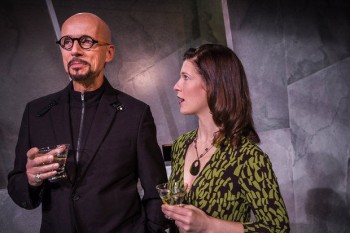
Nikos Salingaros, the University of Texas mathematician and architectural theorist whose thought has influenced Amy Freed – the playwright who wrote “The Monster-Builder” – has sent me a trailer of the play now being performed at the Artists Repertory Theatre in Portland, Ore. He got the trailer from Michael Mehaffy, who first alerted me to the play’s existence a week or so ago.

It is not a trailer like most movie or even theatrical trailers but features Amy Freed discussing the issues of her play and how she sought to evoke the profundity of how architecture affects us, but with a lighter touch. Some scenes from the play itself are spliced into her discussion. Here is the trailer.

Posted in Architecture, Architecture Education, Art and design, Book/Film Reviews | Tagged , , , , , , , , , | Leave a comment

Old video: Trolley ride in San Francisco, 1906

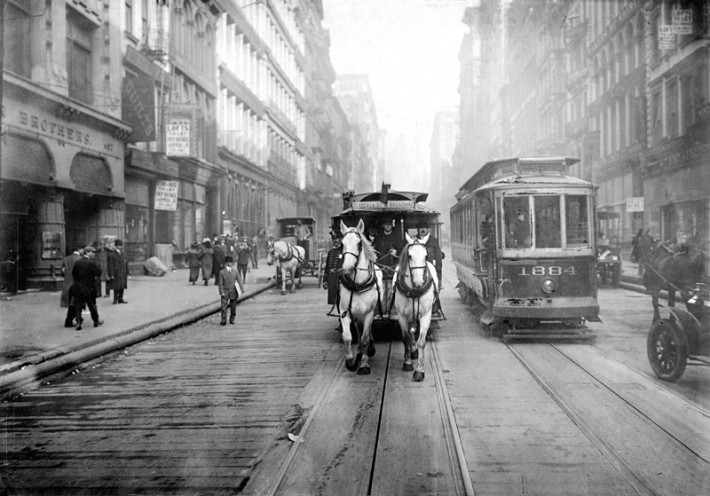
Market Street in San Franciso, in 1906. (

Market Street in San Franciso, in 1906. (telstarlogistics.typepad.com)

Here’s video, with music, from YouTube of a trolley ride down San Francisco’s Market Street in 1906, before the earthquake. After the earthquake? Tune in to this blog tomorrow!

Posted in Architecture, Architecture History, Old Video, Preservation, Urbanism and planning | Tagged , , , , , , , , | Leave a comment

Old video: Wild NYC driving, 1928

This guy is in some of the videos (justacarguy.com)

This guy is in some of the clips (justacarguy.com)

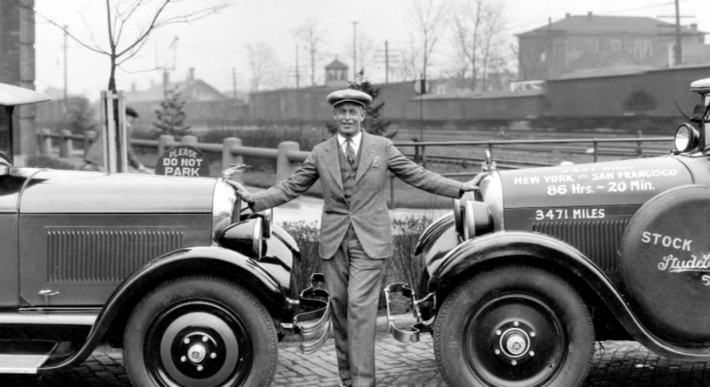
Here’s an old video from YouTube of several skits depicting crazy drivers of trolleys, horse trolleys and automobiles plowing helter-skelter through New York, circa 1928. And by the way, was the car guy’s second fare Babe Ruth? My brother informs me that the cabbie is none other than Harold Lloyd. I had no idea!

Posted in Architecture, Architecture History, Humor, Old Video, Urbanism and planning | Tagged , , , , , , , , , , , | Leave a comment

Old video: Puttering down Broadway

Broadway near 17th St. (en.wikipedia.org)

Broadway near 17th St. (en.wikipedia.org)

Came across several fascinating videos from YouTube of old films shot in various places and sundry moods. I will post them one by one today. Prepare to be fascinated, but buckle your seat belts first!

This one (perhaps notwithstanding the photo above) is filmed from the perspective of the horseless trolley driver. After a while he gets to Union Square and begins to focus on the nobs piling forth along the crowded sidewalks. They really did wear those top hats!

Posted in Architecture, Architecture History, Old Video | Tagged , , , , , , , | Leave a comment

Priceless. Absolutely hilarious. Nails Gehrymania

Here is a piece by Joe Queenan in the Wall Street Journal a couple of years ago. I am reposting it from my earlier Journal blog, in which I said I’d pay $300,000,000.01 to have written this essay, which seemed at first to be anonymous. When I finally discovered the name of the author lurking innocuously on the edge of the piece, I turned lizard green.

Posted in Architecture, Humor | Tagged , , , , , , , | 1 Comment

Britannica on architecture, c. 1911

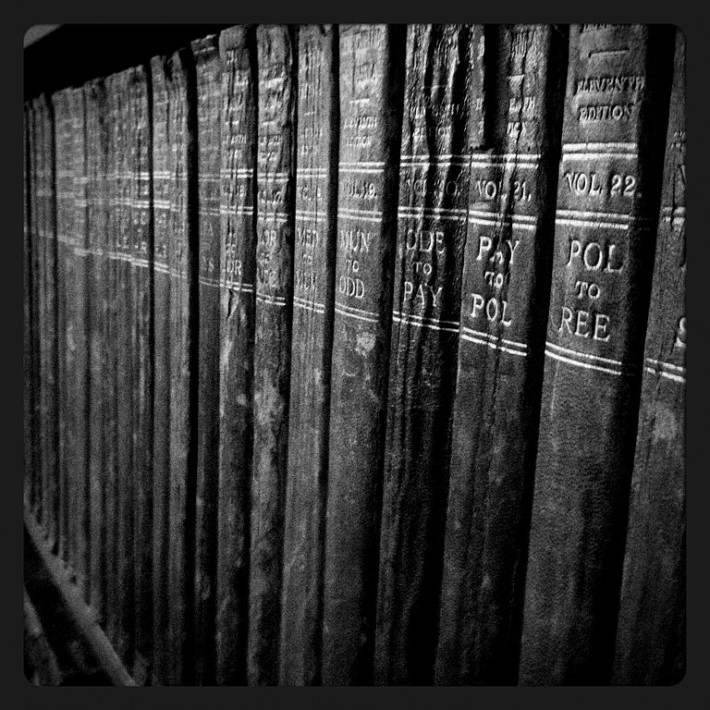
An early edition of the 11th Edition. (Wikipedia)

An early edition of the 11th Edition. (Wikipedia)

I dragged out my 11th edition of the Encyclopedia Britannica. My edition is actually the 12th edition, which is the 11th plus an appendix updating, in 1922, various important subjects, many of which had seen their articles in the famous (and infamous) 11th rendered moot by the intervention of the war to end all wars. The entire article, by the way, is 102,187 words long.

Here is the conclusion of the final section of the 11th edition’s article, which is quaintly entitled “Modern Architecture”:

In summing up the present position of modern architecture, it may be said that architecture is now a more cosmopolitan art than it has been at any previous period. The separate development of a national style has become in the present day almost an impossibility. Increased means of communication have brought all civilized nations into close touch with each other’s tastes and ideas, with the natural consequence that the treatment of a special class of building in any one country will not differ very materially from its treatment in another; though there are nuances of local taste in detail, in manner of execution, in the materials used. And the civilized countries have almost with one consent returned, in the main, to the adoption of a school of architecture based on classic types. The taste for medievalism is dying out even in Great Britain, which has been its chief stronghold.

What course the future of modern architecture will take it is not easy to prophesy. What is quite certain is that it is now an individual art, each important building being the production, not of an unconsciously pursued national style, but of a personal designer. As far as there is a ruling consensus in architectural taste, this will tend to become, like dress and manners, more and more cosmopolitan; and it seems probable that it will be based more or less on the types left us by Classic and Renaissance architecture. There are, however, two influences which may have a definite effect on the architecture of the near future. One of these is the possible greater rapprochement between architecture and engineering, of which there are already some signs to be seen; architects will learn more of the kind of structural problems which are now almost the exclusive province of the engineer, and there will be a demand that engineering works shall be treated, as they well may be, with some of the refinement and expression of architecture. The other influence lies in the closer connexion, which is already taking place, between architecture and the allied arts, so that an important building will be regarded and treated as a field for the application of decorative sculpture and painting of the highest class, and as being incomplete without these. It is in this closer union of architecture with the other arts that there lies the best hope for the architecture of the future.

Eyes wide shut, I’m afraid! But this was two years before Adolf Loos wrote Ornament and Crime. Here is the conclusion from the 12th (1922) edition’s article on architecture:

The conclusion that must be drawn from a survey of architecture in the United States during the 20th century is that the great regeneration initiated during the eighties of the 19th century went steadily forward until architecture became almost a vital interest to a general public that demanded the best that the profession could give. American architects had an advantage over European in the large demand for their services. Good architecture became the fashion, and this was due largely to three factors: the influence of the American Institute of Architects, the training of the Ecole des Beaux Arts, and the dozen or more great schools of architecture in different parts of the country. Behind this, however, lay the fact that apparently American architects as a whole were drawn from the class that possessed the finest traditions and the soundest standards, and that they were able by sheer force of character and excellence of attainment to impose on the public their own ideals and their own standards of value. The World War was an interlude of non-production, but not, apparently, of non-development, and by 1920 a recovery was being effected, while there was evidently an unfailing supply of young practitioners to carry on the movement that had already achieved such notable results.

This sounds more like a press release from the AIA, but you’d think there would have been storm clouds visible on the horizon. You would not think these were attitudes, so strongly and even obnoxiously asserted, that would surrender to nonsense over the next twenty years. Oh well.

But I suppose the silver lining in the dark cloud is that change can come as suddenly (from a historical standpoint) today as it did then, although the techniques available to modernists to “impose on the public” are more sophisticated nowadays.

Posted in Architecture, Architecture Education, Architecture History, Books and Culture | Tagged , , , , , , , , | 2 Comments

Blast from the past: America’s got architecture!

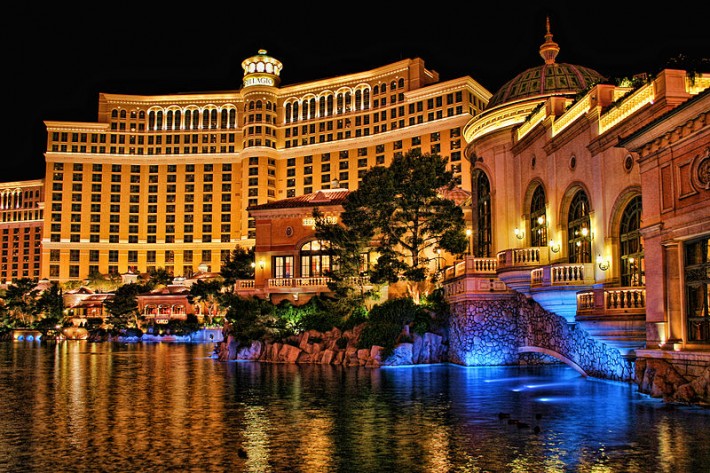
The Bellagio, in Las Vegas. (commons.wikimedia.org)

The Bellagio, in Las Vegas. (commons.wikimedia.org)

In my weekly column, called “Architecture critic, heal thyself!” and posted this morning, I referred to the elephant in architecture’s living room. That is the fact that most Americans prefer traditional to modern architecture. Among other evidence for this is the survey taken by the American Institute of Architecture to commemorate its 150th anniversary, in 2007. Even though the survey was double-blind, in that average Americans got to choose buildings only from a master list already selected by members of the AIA, the favorite buildings were still overwhelmingly traditional and classical.

Here, courtesy of The Providence Journal, is that column:

America’s favorite architecture
DAVID BRUSSAT
The Providence Journal

March 1, 2007

IT’S OFFICIAL! Americans prefer traditional architecture to modern architecture. This should surprise nobody, not even architects, but it’s nice to have the obvious confirmed by science.

To celebrate its 150th anniversary, the American Institute of Architects hired the Harris pollsters to ask a random sample of AIA members to nominate up to 20 of their favorite works of American architecture. Of those nominated by 2,448 members, 247 works got six or more votes. Of these, randomly selected sets of 78 photos were shown to 1,804 members of the public, who ranked each from 1 to 5, and winnowed them down to 150 “favorites.”

The top 10 favorites were: 1) The Empire State Building. 2) The White House. 3) The Washington National Cathedral. 4) The Jefferson Memorial. 5) The Golden Gate Bridge. 6) The Lincoln Memorial. 7) The U.S. Capitol. 8) The Biltmore Estate, in Ashville, N.C. 9) The Chrysler Building. 10) The Vietnam War Memorial.

Since the poll results were published on Feb. 7, leading architects, predominantly modernists, have expressed outrage. Some of their favorites didn’t even make it onto the list, such as the Seagram Building and Lever House, or Philip Johnson’s Glass House. Even more galling was that all of the existing modernist buildings on the list were beaten out by, of all places, the Bellagio Hotel and Casino, in Las Vegas, which came in at No. 22.

” ‘The Bellagio – I can’t believe it,’ bellows Edward Feiner.” So writes The Wall Street Journal’s Alex Frangos (“In the Eye of the Beholder: Public, Designers at Odds on What’s a Beautiful Building,” Feb. 7). Frangos caught Feiner, the former chief architect of the federal government, with his modernist pants down. His outrage was predictable: The Bellagio is new classicism, which modernists hate. The only modernist structures to beat the Bellagio were the former World Trade Center (No. 19), for sentimental reasons, and two tourist attractions, the Vietnam War Memorial and the St. Louis Gateway Arch (No. 14). The top “modern-looking building of recent vintage,” as Frangos puts it, was the 1998 Rose Center, of the National Museum of Natural History, in New York, which ranked No. 33. Almost as galling to those galled by the inclusion of the Bellagio must be the Ronald Reagan Building, a neo-classicist federal office building also completed in 1998. It placed No. 79, just ahead of the Philips Exeter Academy Library, by modernist Louis Kahn. No buildings by the pioneer of the glass box, Ludwig Mies van der Rohe, made the list. Perfecto!

The National Gallery of Art’s West Building, in Washington, designed by John Russell Pope and finished in 1941, made the list (No. 34). I.M. Pei’s ultramodernist East Wing, finished in 1978, did not. And while Monticello made No. 27, Jefferson’s University of Virginia, in Charlottesville, failed, alas, to make the list.

Two of my favorites, the New York Yacht Club and the Old Executive Office Building (the ornate neoclassical pile next to the White House), failed to make the list. New York, Washington and Chicago had the most buildings on the list. Boston had Trinity Church (25), Faneuil Hall (64), Boston Public Library (90; the original, not Philip Johnson’s 1972 addition) and the Hancock Tower (142). No buildings in Providence made the list, although at least half a dozen of our old buildings are superior to all of the modernist buildings that did make the list.

The list of favorites has been widely criticized as a “Greatest Hits,” based on popularity, not architectural quality. “A classic case of denial,” said classical architect Dino Marcantonio in one online debate about the poll (tradarch.list.serv). If popularity alone were key, then how did the relatively obscure Biltmore Estate outrank Monticello? Or how did the St. Regis Hotel outrank the famous Plaza Hotel? Even if popularity was in fact key, so what? As classical architect Nir Buras put it in the Tradarch debate, “The statistics still hold: People prefer/remember/recognize traditional 10 times better than modernist.”

I would say that modern architecture fared far better than it had any right to expect. By my count, 61 modernist works of architecture made it onto the list, although overwhelmingly toward the bottom. Modernists may have reason to be thankful for the curious way the poll was structured by the AIA. After all, the 1,804 members of the public got to choose only after selections by 2,448 “random” AIA members. If the public had chosen its favorites without the AIA members’ getting the first cut, no modernist buildings at all would have made the top 150.

Whether before or after he saw the results of its poll, the president of the American Institute of Architects decided to declare that it was “meant to get a dialogue going.” Good. Since the AIA has worked for decades to thwart the return of traditional design to contemporary American architecture – stacking the deck against the public’s tastes – it’s about time its members started listening.

David Brussat is a member of The Journal’s editorial board. His e-mail is dbrussat@projo.com.

Posted in Architecture, Architecture Education, Blast from past | Tagged , , , , , , , , , , , | 2 Comments

Column: Architecture critic, heal thyself!

"The Architect's Dream" (1840), by Thomas Cole. (wikipedia.org)

“The Architect’s Dream” (1840), by Thomas Cole. (wikipedia.org)

Witold Rybczynski’s 18th book, “How Architecture Works: A Humanist’s Toolkit,” opens with a quarrel in its title. By any definition of humanism, architecture has been broken for at least seven decades. The book, published in October by Farrar, Straus and Giroux, offers a tool kit for examining architecture but not for fixing it.

Indeed, Rybczynski the architecture critic fails to do what many dictionaries fail to do: say what is correct. Most dictionaries just describe a bunch of meanings and leave the proper usage up to you. Well, thanks a heap!

Rybczynski asserts with pride that he, too, has no “agenda.” Why not? Is it not the job of an architecture critic to have an agenda? Almost all architecture critics have an agenda. It is to promote modern architecture while looking down their noses at new traditional architecture, when they acknowledge its existence at all.

To read the rest, please visit The Providence Journal.


Posted in Architecture, Architecture Education, Book/Film Reviews | Tagged , , , , , , , , , , , , , , , , , , | 2 Comments

Review of “The Monster-Builder”

14168751-mmmainMichael Mehaffy, of Portland, Ore., and the TradArch list, sends this review from The Oregonian of the new play at the Artists Repertory Theatre there by Stanford University’s playwright-in-residence, Amy Freed.

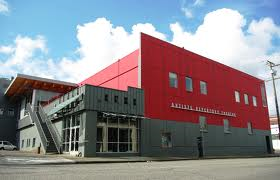
Artists Repertory Theatre

Artists Repertory Theatre

Michael pulls out this interesting quote from the review: ” ‘Why do we greet the arrival of a new building with a feeling of dread rather than anticipation?’ Freed asked. It’s a valid question, one that Portlanders might want to ponder given the spike in new buildings popping up across town. … Those problems are many, but can be wrapped up in a general lack of consideration for the people who will live and work in the buildings being designed.”

Clearly the writer of the review – really more an interview with the playwright – listened as Freed’s words went in one ear and out the other. The evidence for this is in the first sentence of his piece. Rereading it after finding a photo of ART’s building, I had to wonder what was going through his mind as he listened to Freed, who is brilliant on the subject of architecture. But you’ll have to revisit my Jan. 16 blog post here to experience that.

Posted in Architecture, Architecture Education, Art and design, Book/Film Reviews, Books and Culture | Tagged , , , , , , , , , , , , | Leave a comment

Past blast: Review of Versaci’s “new old” house book

Russell Versaci

Russell Versaci

My blog on how to resolve the difficulty of finding an old house to buy mentioned Russell Versaci’s prefab houses, but I was unable to access my review of his book from 2008. Here it is, reprinted courtesy of The Providence Journal:

New old houses on the march

By David Brussat

The Providence Journal

August 21, 2008

LIKE A SILVER LINING that eventually brightens a whole depressing horizon of dark clouds, the foreclosure crisis could seed the nation’s future with a suburbia of new old houses.

In the person of Russell Versaci, this pleasant possibility had breakfast with me on Monday morning at McCormick & Schmick’s, the Biltmore Hotel’s lobby restaurant. Versaci designs new houses in the traditional vernacular of regional American architecture. His book Roots of Home, following his 2003 bestseller Creating a New Old House, will be published in October. Versaci, who grew up in Rhode Island, described how across the nation, suburban developers facing the housing meltdown are having to sell millions of acres at pennies on the dollar. This opens the door to better architecture.

Poised to take advantage are developers – including Versaci himself in his latest incarnation – who embrace America’s longstanding love affair with its own architectural tradition and want to help make well-designed traditional homes more affordable to a wider range of families.

Versaci has made a name for himself as the guru of the New Ruralism, a countryside outgrowth of trends toward traditional town planning known as the New Urbanism. Both pick up on a widespread desire to live in communities that hark back to the past, to what America was like before modern architecture and planning began to ruin the full spectrum of manmade places. Now Versaci has combined his finely detailed period designs with new techniques for the production, in factories, of whole segments of houses that can be bolted together on site.

This prospect horrifies many architects, especially those with a modernist bent. The idea of new buildings in historical styles drives them nuts to begin with. That they might now believe their careers are threatened by the idea of fine houses built on the factory floor tickles me to pink. If, finally, the tide is turning against modern architecture, then its practitioners have only themselves to blame. The profession have spent decades spurning Americans’ architectural preferences – which are more refined than “educated” tastes precisely because they are not tainted by modernist aesthetic propaganda.

Architecture schools in America have long been a closed shop, intolerant of diversity. As a young student at Harvard’s Graduate School of Design in the 1970s, Versaci recalls being in class, drawing classical columns, when his instructor came over, ripped out his page, crumpled it up and said he could not do that there, and that if this is what he wanted to do, he should go elsewhere. Other instructors derisively called him “sculptor” (revealing, by the way, their own ignorance of modernism’s essentially egotistical aesthetic). Over the years, I’ve heard this sort of story again and again. Intellectual depth is not the long suit of modernist design pedagogy.

Eventually, Versaci joined the fraternity of architects (such as Robert A.M. Stern) who design high-end traditional homes for wealthy clients. His understanding of the subconscious allure of tradition encouraged him to believe that a wider market for houses in revivalist styles could be generated. He started planning rural communities in exurbia, designed with pattern books modeled on those of Asher Benjamin, whose 19th Century drawings helped build Providence’s College Hill and neighborhoods throughout America. Such historic districts are now this country’s most popular neighborhoods.

Versaci’s new venture brings the pattern book into the 21st Century, combining popular taste with contemporary household amenities.

The market for new old houses rests on aesthetic preferences that literally reflect the patterns of the mind. The science of perception and its connections to urban design have been mapped by the noted architectural theorist Christopher Alexander, whose work has been refined by Nikos Salingaros, of the University of Texas. Salingaros proposes that architectural preferences echo deep cognitive biases in the brain’s highly evolved survival mechanisms. In other words, it is not just “a matter of taste” after all. Traditional architecture embraces these preferences; modern architecture rejects them. This, he says, is why modernist buildings disorient most people while traditional buildings please them.

I will explain these theories soon. Meanwhile, having breakfast with Russell Versaci was like dining with dawn’s golden rays as they embraced the bright sunlit uplands of a nonmodernist future.

Posted in Architecture, Architecture Education, Blast from past, Book/Film Reviews, Preservation | Tagged , , , , , , | Leave a comment