Cutting myself to fit

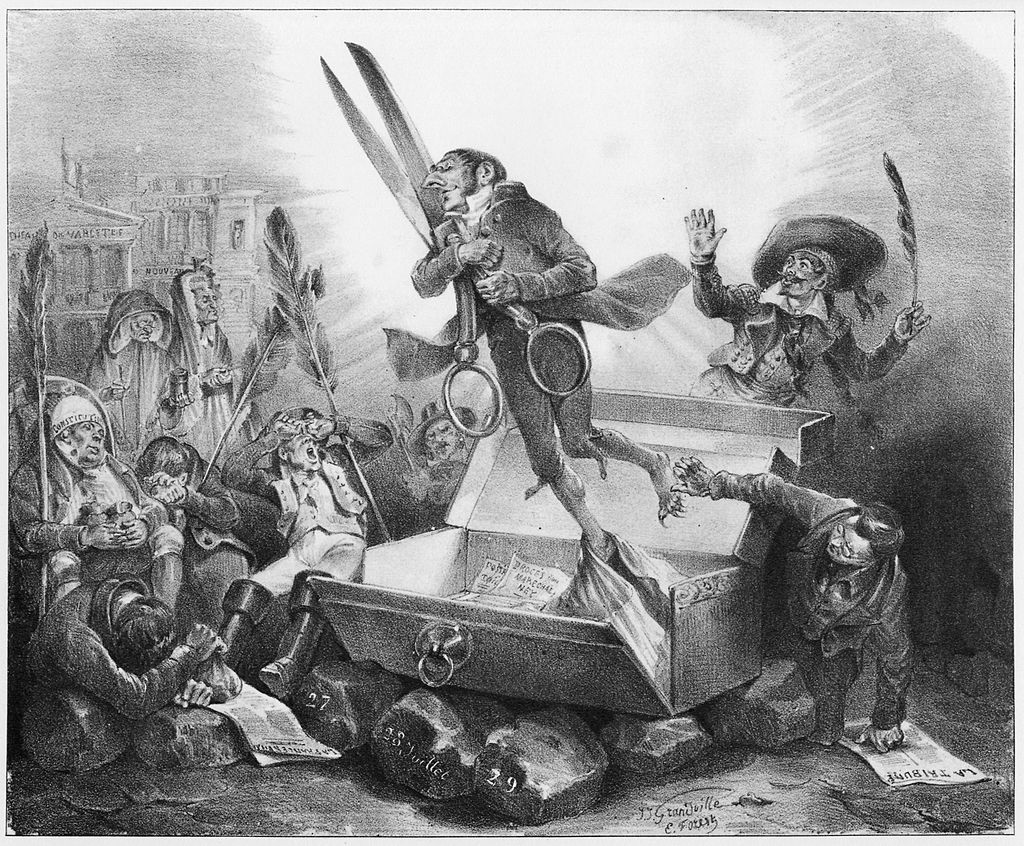
Self-editing with scizzors. (Grandville, "Un autre monde," 1834)

Dreaded editor emerges from closet with scissors at ready. (Grandville, “Un autre monde,” 1834)

This is to notify readers that the attempt to maintain the weekly online version of the late, lamented Providence Journal column has fallen prey to the constraints imposed by the need to produce a new weekly column. The new column, which first appeared this past Monday, is being written for GoLocalProv.com, an online newspaper and flagship of the GoLocal24.com group founded by Josh Fenton, a Providence mover-and-shaker. I made his acquaintance years ago when I wrote a column about the opening of the lofts at The Promenade, an old industrial plant just across Route 95 from Providence Place in the Promenade District. He drove me back to the Journal in his armored Israeli Jeep, which alas he no longer possesses.

The posts that issue from this blog will continue, of course, including some that even if they do not emerge on Thursdays will resemble the blog version of the weekly Journal column, even if they don’t always have a stack of illustrations down the left side of the page.

The WordPress blog program is not making it easier to stack my images. Instead of placing the images from top to bottom it seems I must start the stack at the bottom and work upward. If any reader familiar with WordPress knows how to fix this, it would reduce the degree of assbackwardness required to arrange the illustrations. My gratitude for such instruction would be boundless. (Any help on how to place an image in the middle of an existing stack would also be appreciated.)

Posted in Art and design | 4 Comments

Bowling trophy architecture

Skyscrapers in Dubai. (Courtesy of James Howard Kunstler)

Skyscrapers in Dubai. (Courtesy of James Howard Kunstler)

Read “Top Seven Reasons Behind the Shanghaiing of New York (#Dubai-on-Hudson),” architect and urban designer John Massengale’s astute analysis of the linkage between Big Finance and Big Architecture. His assessment is depressing, because it looks impregnable. He uses an illustration from James Howard Kunstler of the skyscrapers along the main drag in Dubai – a lineup of starchitecture he calls “Bowling trophy architecture.” How apt!

Posted in Architecture, Development, Other countries, Urbanism and planning | Tagged , , , | Leave a comment

Potemkin justice for Russia?

Central plaza of proposed judicial complex in St. Petersburg, Russia. (andrewcusack.com)

Central plaza of proposed judicial complex in St. Petersburg, Russia. (andrewcusack.com)

Far be it from me to endorse anything proposed by the regime of Vladimir Putin, but permit me to embrace the classical judicial complex to be built in St. Petersburg. As the blogger Andrew Cusack points out, the Russian architect Maxim Atayants has won a competition to build a new judicial complex in the old czarist capital, where the state judiciary will relocate from Moscow. Whether the entire complex, illustrated extensively here, gets built, especially with energy prices swooning, the aspiration voiced by Atayants’s victory in the design competition speaks volumes – good news in a country where a lot of bad is going on (invading neighbors, suppressing its own citizens’ rights, etc.).

Discerning readers will have noticed that the formulation of the first sentence above resembles that of the first sentence in my recent post on Xi Jinping’s denunciation of “weird” architecture in China. One need not jump on board the regrettable bandwagon of authoritarian rule to feel a thrill up one’s leg at the notion that the world’s two leading nondemocratic powers are itching to shuck off modernism. Of course, Xi’s remarks and Atayants’s victory do not mean that modernism has been dethroned. Far from it.

Yet more classical architecture is being built on a grand scale in Russia, its former republics, and in China than in America, Europe or other parts of the world. Often the design quality leaves much to be desired, and one wonders, with Jane Jacobs, whether these grand assemblages of classical confections will work any better than the Radiant City type. (We know they will look better, at least.) Still, the rejection of modernism cannot come fast enough, and one wallows with delight at every hint of it, even if a return to tradition proceeds haltingly in its wake.


Posted in Architecture, Development, Other countries, Urbanism and planning | Tagged , , | 1 Comment

Hard to build unnatural park

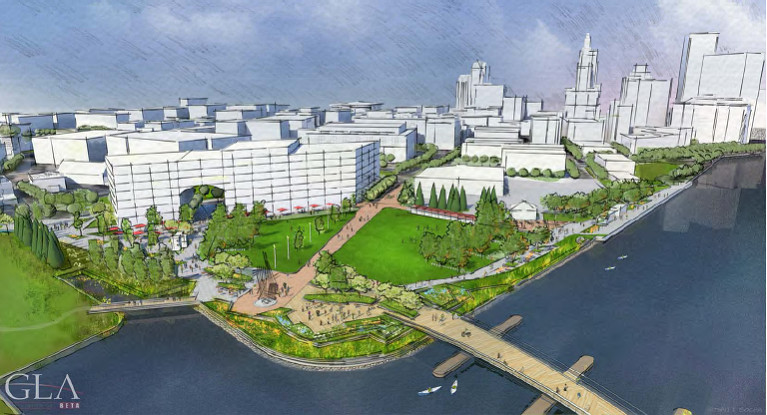
Early rendering of park at west end of pedestrian bridge on vacant Route 195 land. (gcpvd.org)

Early rendering of park at west end of pedestrian bridge on vacant Route 195 land. (gcpvd.org)

The parks committee of the Route 195 Redevelopment District Commission met yesterday afternoon to hear WaterFire generalissimo Barnaby Evans urge, late in the design process, that the western end of the proposed pedestrian bridge be raised to let the river walk run beneath it. Why this did not come up earlier in the process is explained in Kate Bramson’s story in this morning’s Journal: When Evans sought a hearing on this matter in June 2013, the commission told him come back later.

Why the bridge was not designed originally to accommodate our internationally famous and delightful river walk is another question that has no good answer.

But that does not mean it is without an explanation. In spite of the fact that the Providence waterfront’s sterling reputation owes in part to the fact that it was designed by the late Bill Warner to pick up on the city’s traditional urban character, the park is being designed in a manner that ignores or even rejects that character. Its designers will not admit to my downbeat description of their motives, of course, but there it is for all to see.

The original bridge proposed by Warner as 195’s design consultant was inspired by the Pont des Arts, in Paris. His idea was dumped during the Cicilline administration. Even before that, Cicilline had personally rejected a plea to resist the appalling design proposed for GTECH, in Capital Center. In the benighted mossback opinion of this man who is now a congressman, the city needed more “diversity” on its streets. That’s code for modern architecture that purposely contrasts with this city’s historical legacy.

So an unnecessary design competition for the footbridge linking the two proposed parks on either side of the Providence River was held, and selected a modernist bridge designed by a firm from Detroit. Either from the beginning or after cost cutting, its design did not leave room for a river walk under its west terminus, and it was not part of the park design either. It is this error that Barnaby Evans urged the commission to fix last night.

The discussion started with Evans’s presentation, which was politely resisted by state DOT Director Michael Lewis. Lewis noted how excellent each of Evans’s ideas was, then tried to knock them down. He noted that if you raised the bridge to fit the river walk underneath, you’d have to increase the slant of the embankment, making it higher, blocking views of the river from the Dorrance Street side of the park. Everyone around the table was aware that a key objection to the park design, whose land slants up toward the river, is that the water cannot be seen from a distance. Lewis rued any changes that would require other changes in the (allegedly) meticulous plan of the park’s gradations. Each change would cause a delay in the schedule and, in all probability, higher costs.

The idea that one must be able to see an urban river from a distance is quite simply ridiculous. One expects to see a river from its riverbank or from a bridge. Suddenly coming upon a river, or turning a streetcorner and suddenly seeing a lovely building, is one of the joys of a city that distinguishes it from the countryside.

In the early 1990s, as Warner’s design for the river walks along the Woonasquatucket River was being built, local restaurateur Bob Burke complained that you could not see the water down below while driving on Memorial Boulevard. And yet the differential in grades between the road and the river (and walkways) was key to the relative quiet that makes the new riverfront an oasis in the middle of the bustling city.

This strikes people as obvious now, but modern planning and architecture looks down its nose at the obvious, because it dislikes design based on precedent.

That today’s 195 planners, designers and commissioners are so dismayed that park visitors will not be able to see the river until they reach it is a predictable outcome of the decision to ignore the city’s historical template. The idea of working within a tradition is that the impacts of variations in design and style can be more easily seen in advance. Modernist planning and design embrace novelty for the sake of novelty. In effect, contradiction and difficulty are baked into the modernist pie, and each urban project – say, a park and all the elements within the park – is at odds with itself and with what was already built around it. This is true always in terms of aesthetic character and often even in the nuts-and-bolts engineering of a project’s infrastructure.

A kooky pedestrian bridge that in its self-infatuation forgot to allow for a river walk was predictable. A traditional bridge landing in a traditional park would simply have been easier for a city to build on a tight budget. It would have cost less and it would have taken less time. It would be done by now, and the public would be enjoying it today.

Posted in Architecture, Development, Landscape Architecture, Providence, Rhode Island, Urbanism and planning | Tagged , , , , | 2 Comments

A landscape urbanism primer

LandscapeUrbanismArchitect Marc Szarkowski, responding to news that the so-called landscape urbanists are helping to celebrate the 300th anniversary of the famous British gardener Lancelot “Capability” Brown (1716-1783), offers this chart on how to design a park from the landscape-urbanist perspective. It is a brilliant sendup. To increase its size, readers may click on the image above, then when it reopens, click it again.

Posted in Architecture, Architecture History, Humor, Landscape Architecture | Tagged , , , | 1 Comment

The fickle finger of Frank

Frank Gehry giver journo the fingerThe greatest architect in the world flipped the bird at a journalist last week during a press conference in Spain. He later apologized. The best photo of the event is above, from The Guardian, but the best story is by Alissa Walker for Gizmodo.com, headlined “Frank Gehry Says Architecture Today Is ‘Pure Shit.’ ” To demonstrate, she includes photos from the Gehry gallery of architecture. Very nice, Alissa, but in fact he condemned only 98 percent of architecture today, and we all know he counts himself among the 2 percent, working for the 1 percent. Her concluding line: “Hey, no need to apologize, Frank! You’re 85! And you know what? You can keep on building whatever shit you want.”

He knows he can, and he knows nobody will say “Boo!” But it seems that one journalist did, sort of. “How do you answer those who accuse you of practicing showy architecture?”

“Let me tell you one thing. In this world we are living in, 98 percent of everything that is built and designed today is pure shit. There is no sense of design, no respect for humanity or for anything else.” You almost get the sense he is referring to his own work until he goes on to speak of “one group of people who does something special. Very good. But good God! Leave us alone!” He concludes, “Please don’t ask questions as stupid as that one.”

I’m sorry. This is not an intelligent man, or at least not a smart let alone a wise one. He sounds like an average Joe who finds himself at the head of a movement whose rationale disappeared before he could memorize it. His architectural skills are rudimentary, as Allisa Walker’s inventory proves. He slabs a few wacky curves on some cubes, no doubt leaving the design of the space for actual people within those cubes to his associates. He relies on engineers to make sure the titanium swags, dialed up by computer program, do not collapse, crushing the cubes. The mickled up paper that allegedly serves him for inspiration could inspire equal inspiration in a 5-year-old, and does – except the 5-year-old does not have a troupe of influential architecture critics to provide bogus aesthetic theory for the resulting vapidity. And his inability to coherently support his aesthetic is obvious and embarrassing, but he does not notice or care. He only snarls and looks down his nose at everyone else.

I wish I were the recipient of a finger from Frank.

Modern architecture has been under attack by the classical revival for a couple of decades now. But first, renegade modernists generated the brief postmodernist movement in the 1970s and ’80s. The modernists never responded, and did not need to. By then they controlled all the power centers of the field, and everyone who valued their careers had to bite the bullet and toe the line. Almost everyone did. After a few years of decorating the usual glass box with “ironic” arches, gables and the like, postmodernism split into the “modern” modernist movement epitomized by Gehry, which does not condescend to offer any rhyme or reason for any design, and the contemporary classicist movement, which took “ironic” ornament as permission to pursue historical precedent. They took it to heart and branched out, often with considerable beauty, from there. Classical architecture is the only genuine challenge to modern architecture today.

But modern architecture still controls all the power centers, and has no need to do more, by way of intellectual explanation, than to invent big words with vague meanings and knit them together into a curtain that cloaks the nudity of the emperor’s new clothes.

The only thing that gives me pause is Alissa Walker’s description of the care with which Gehry unfolded his finger: “Slowly curling his hand into a fist and uncurling his middle finger toward the sky.” Geepers! What genius! The very grace by which the man gives the finger speaks to the elegant process by which vulgarity erupts slowly into artistic apotheosis! I am dumfounded. I retract all of my past grunting about Gehry.

Only kidding.

Posted in Architects, Architecture | Tagged , , , | Leave a comment

Landscape styles at war

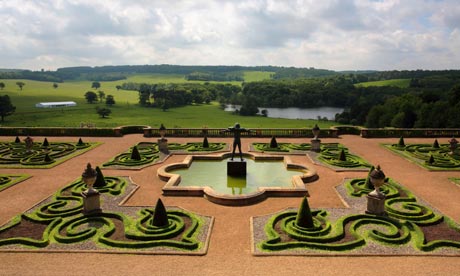
Garden of Harewood House, Leeds, with French style in foreground and British style landscape in background, both by Capability Brown. (theguardian.com)

Garden of Harewood House, Leeds, with French style in foreground and British style landscape in background, both by Capability Brown. (theguardian.com)

Capability Brown looking down on one of his landscapes. (lifechart.co.uk)

Capability Brown looking down on one of his landscapes. (lifechart.co.uk)

” ‘Now there’ said he, pointing his finger, ‘I make a comma, and there’ pointing to another spot, ‘where a more decided turn is proper, I make a colon; at another part, where an interruption is desirable to break the view, a parenthesis; now a full stop, and then I begin another subject.’ ”

This is how landscapes might be designed in the mind’s literary eye. The remark was addressed by Lancelot “Capability” Brown, the famous British 19th century gardener, to Hannah More, the poet, playwright and writer of religious tracts. Brown was among the first, and certainly the most well-known, advocate for transforming the style of British landscapes – mainly around the suburban manor houses of the wealthy of that era – from the much more formal French style to a more natural style. It is said that the landscape architect’s job was to perfect nature for the viewing pleasure of England’s elite (and, of course, the workers on their estates). That was then, of course.

Capability Brown is in the design news because, with the tricentennial of his birth, the Capability Brown Festival is sponsoring a landscape-design competition for a 45-hectare “contemporary multi-functional landscape” (whatever that is) at the Moccas Park National Nature Reserve, in Herefordshire, England.

Some, noting that the Landscape Institute is one of the festival’s partners in this celebration, have concluded that the evil forces of “landscape urbanism” have stolen a march on the Congress of the New Urbanism. Landscape urbanism is modernism’s belated attempt to recoup ground lost in planning circles to the mostly traditional town planning of New Urbanism, popular with developers and municipal planning offices around the country. But what landscape urbanism actually is remains sketchy. Proponents point to the new High Line park on the West Side of New York City as an example of it, but it is not quite replicable in other places, and was deuced expensive to create, beyond the means of most cities and towns. I have not yet visited it, and so I cannot judge it as readily as I might a building that I can visit through the science of photography, but it seems like a one-off proposition, hardly the basis for a new movement in landscape design.

Capability Brown has not yet been successfully hijacked by landscape urbanism. The historic dichotemy between French and English landscape design is not akin to the current dichotemy between traditional and modern architecture, let alone traditional and modern urbanism. French formal gardens and the English tweaking of natural wooded patterns align more with classical and vernacular types of traditional architecture. A landscape designed according to modernist principles would be perhaps more like an asphalt parking lot on hilly terrain with pods of shrubbery and modernist buildings in the background. We already have too much of that.

Still, traditionally inclined landscape architects might want to consider sending an entry to the competition, just to make sure things are on the up and up. Capability Brown would certainly spin in his grave if he thought that posterity would countenance the placement of modern architecture on his landscapes.

Posted in Architecture, Architecture History, Urbanism and planning | Tagged , , , | Leave a comment

Column: Yes, alas, we have modernism in R.I.

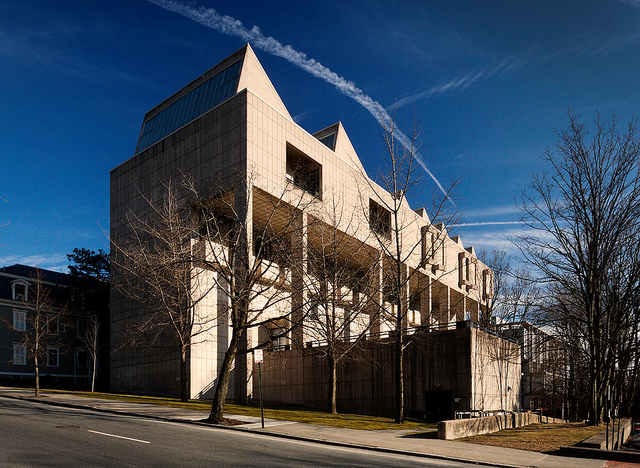
List Art Center (1971) at Brown University, by Philip Johnson. (flickr.com)
List Art Center (1971) at Brown University, by Philip Johnson. (flickr.com)

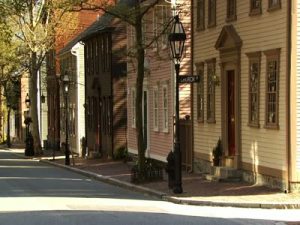
Benefit Street, in Providence. (shuttlecock.com)

Benefit Street, in Providence. (shuttlecock.com)

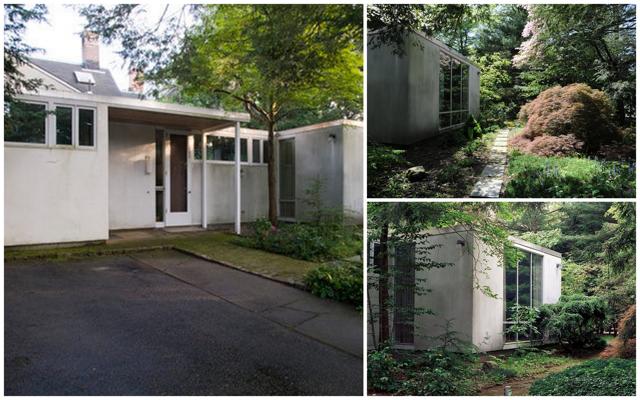
House, Ira Rakatansky. (midcentrymodern.com)

House, Ira Rakatansky. (midcentrymodern.com)

Knight Campus, CCRI. (xxx)

Knight Campus, CCRI. (xxx)

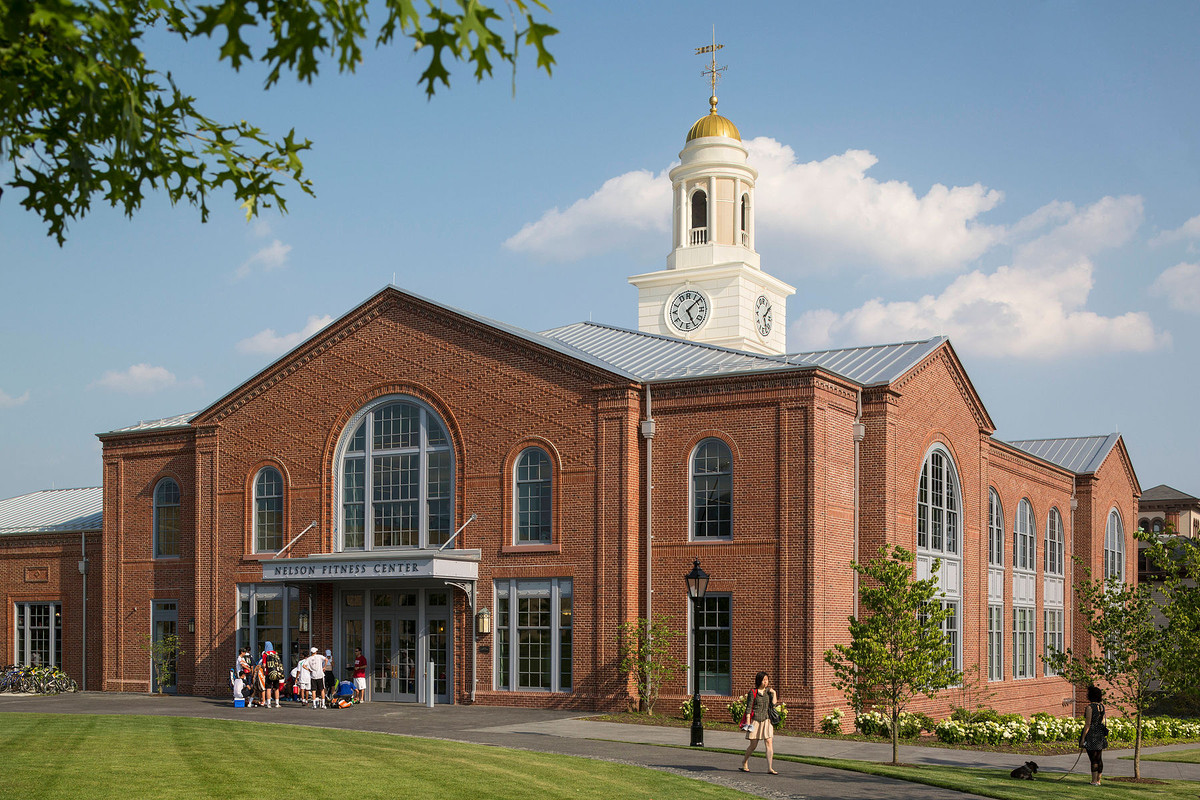
Nelson Fitness Center, Brown. (grandemasonry.com)

Nelson Fitness Center, Brown. (grandemasonry.com)

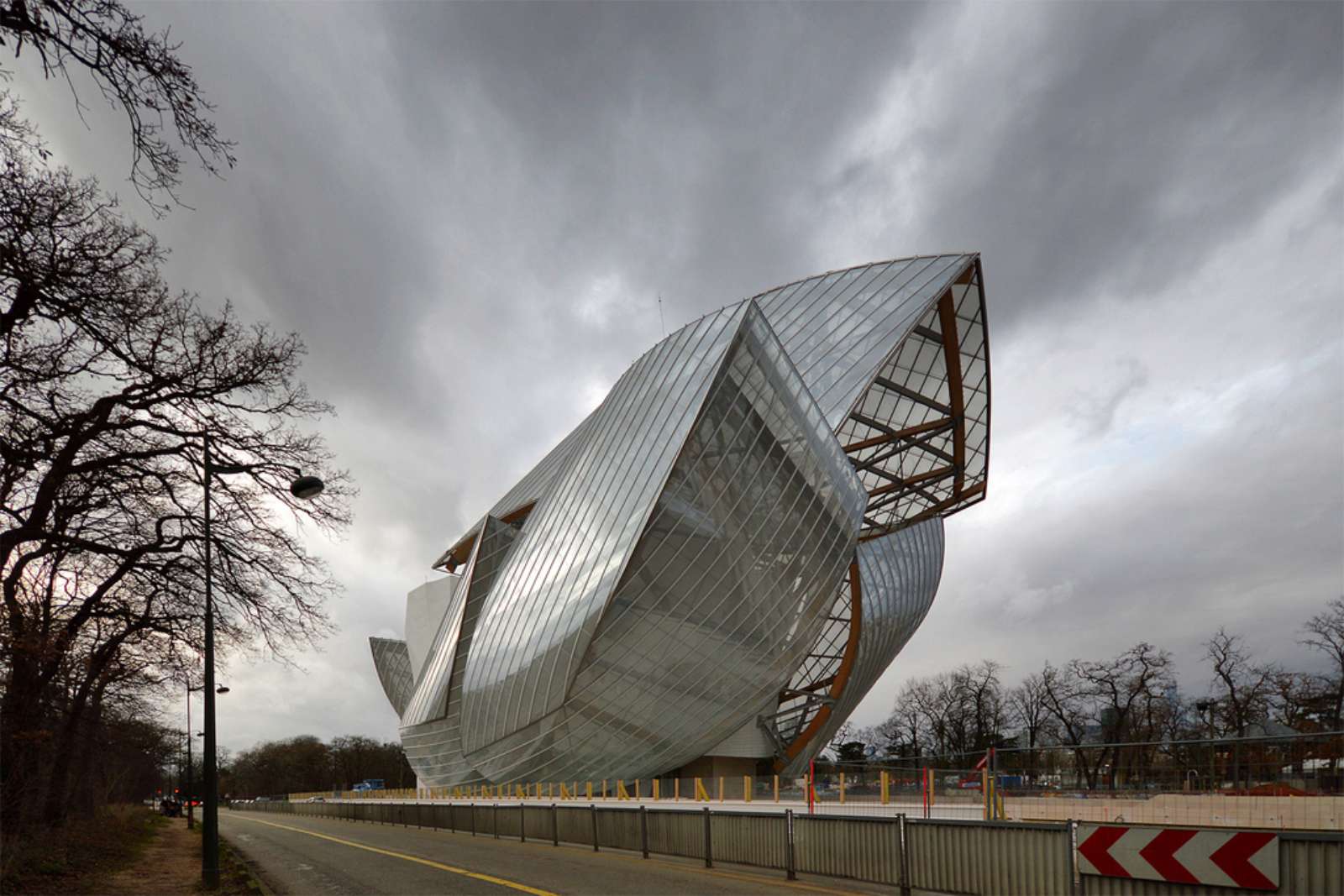
Fondation Louis Vuitton, Frank Gehry. (aasarchitecture.com)

Fondation Louis Vuitton, Frank Gehry. (aasarchitecture.com)

Apex, in Pawtucket. (labelscar.com)

Apex, in Pawtucket. (labelscar.com)

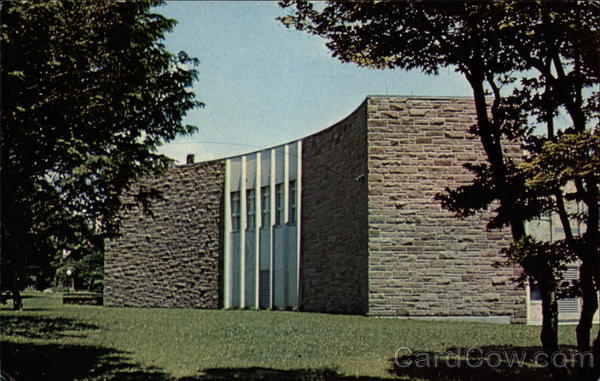
O'Hare Academic Center, Salve Regina. (cardcow.com)

O’Hare Academic Center, Salve Regina. (cardcow.com)

Beneficent House. (flickr.com)

Beneficent House. (flickr.com)

JWU Library. (Photo by David Brussat)

JWU Library. (Photo by David Brussat)

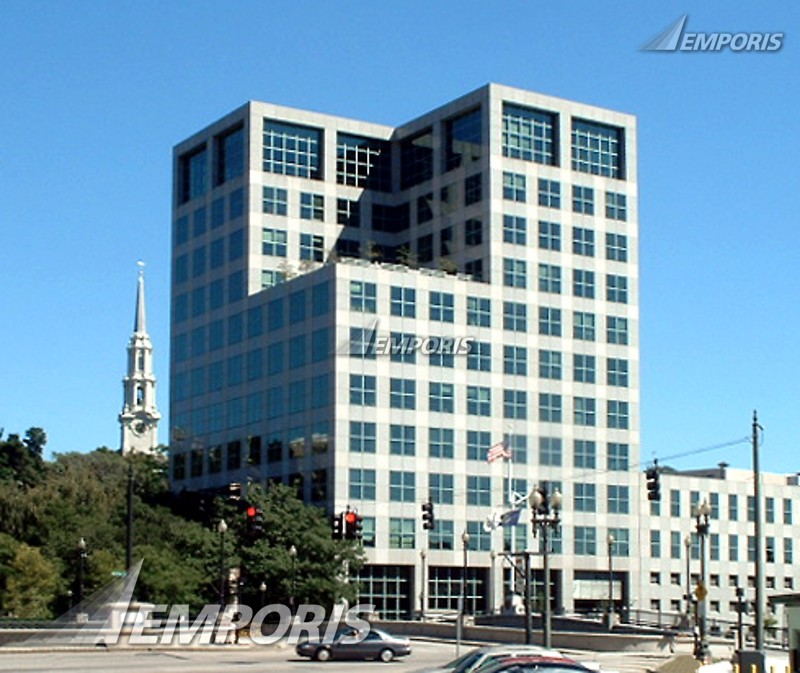
Old Stone Square. (emporis.com)

Old Stone Square. (emporis.com)

“God will provide,” my editor Bob Whitcomb used to say. This morning, as I struggled to find a column topic, He placed one right before my eyes, occupying the very space where my regular Thursday column in the Providence Journal used to live. The headline was “Yes, R.I., we have modern buildings.”

The piece is by Catherine Zipf, an architectural historian at the Massachusetts Institute of Technology. She expresses dismay that no tours of modernist buildings were held in Rhode Island on Oct. 11, the eighth annual “tour day” of the U.S. chapter of Docomomo. The international organization founded in 2008 supports the documentation of “classic” buildings in the modernist style, and tries to save them when their owners threaten their demolition, a risk that rears its head all too seldom.

Zipf uses the word modern throughout her article, even though a new building in a historical style such as, say, Brown’s Nelson Fitness Center is no less a modern building than Frank Gehry’s cockamamie new Fondation Louis Vuitton, which opened on Monday in Paris. She means modernist. I don’t blame her, for I occasionally make that mistake myself. The onus lies with those who kidnapped the word to lend authority to an architectural movement at war with the very idea of architecture. In short, a brilliant example of rhetorical jujitsu.

In eight years, Docomomo has sponsored only two tours in Rhode Island. One, in 2011, was of houses by local modernist Ira Rakatansky; the other, in 2012, featured the List Art Building, designed by Philip Johnson for Brown University in 1971, and the Knight Campus of the Community College of Rhode Island, which celebrated its 50th anniversary last month.

“These are good representatives of Rhode Island’s modern heritage,” writes Zipf. “In fact, when I asked my friends and colleagues to name their favorite modern building in Rhode Island, all of these were mentioned,” plus, she adds, Apex in Pawtucket and the O’Hare Academic Center at Salve Regina University, in Newport, with which I was unfamiliar and which she called “a curious choice.” “Apparently,” she says, “Rhode Island’s modern heritage seems to consist of these five examples.”

“Of course,” she adds, “this is not actually the case. Modern buildings surround us. But they are easy to overlook.”

I would respectfully and with considerable regret disagree. They are, alas, not easy to overlook.

The List Building and the Knight Campus behemoth are good examples, but what about Beneficent House (1967), by Paul Rudolph, Broadcast House (1979), the library of Johnson & Wales University, and Old Stone Square (1985), by Edward Larrabee Barnes?

In many years of writing about Rhode Island architecture, I have often heard even the staunchest advocates of modernism express disappointment with its quality in the Ocean State. Even those designed by the firms of famous architects are accorded scant respect. Most of the top modernists sent their firms’ “B” teams in to design their commissions here, or so I gently suspect.

“Bristol is not known as a hotbed of modern architecture,” writes Zipf, who lives there. “In fact, most people see it as exactly the opposite.”

Zipf is understandably reluctant to note that these two facts are closely related. Bristol is recognized for its beauty precisely because it has so little modern architecture. Much the same may be said for Providence, which has a very small stockpile of modernist buildings for a medium-sized American city. Rhode Island’s reputation for beauty may be attributed in large measure to its stock of historic architecture, which merely reflects the fact that so many buildings have not been torn down and replaced by modernist ones. The exceedingly pale shadow cast by modernism upon Newport draws visitors from around the world.

However one might assess the quality of individual examples of modern architecture in Rhode Island, they are not sufficiently easy to overlook. People generally perceive a city or town one street at a time, and they appreciate that street’s beauty not as a set of buildings judged individually, one after another, but as the sum of its parts. Even a single modernist building can undermine the beauty of a street. The stealthy accretion of modernism on the streets of a city or town gradually erodes its reputation. As civic leaders have discovered to their belated chagrin, that reputation can evaporate before citizens even realize it is at risk.

That this has not yet happened in so much of Rhode Island is no thanks to organizations like Docomomo. The difficulty of assembling a tour of Rhode Island’s modernist heritage is nothing to regret. It is a sign of our state’s beauty. Tours aplenty can be taken to see that beauty, much to the benefit of the Ocean State bottom line.

Posted in Architecture, Architecture History, Development, Preservation, Providence, Rhode Island | Tagged , , , , , | Leave a comment

Very merry Gehry ferry

Fondation Louis Vuitton, which opened Monday in Paris. (culturebox.francetvinfo.fr)

Fondation Louis Vuitton, which opened Monday in Paris. (culturebox.francetvinfo.fr)

The bling has hit the fan in Paris. Frank Gehry’s Fondation Louis Vuitton opened yesterday, and we can all swoon to the moon and back if we dare. I am linking everyone to one of my best sources of fun, ArchNewsNow.com, Kristen Richards’s collection of the day’s architectural commentary from around the English-speaking world. It features spiel after spiel from top pundits taking their turn at bat, swinging as hard as they can, trying to loft one over the left-field fence to score a grand slam in a sort of World Series of criticism. “It’s mostly Oui! Oui!,” says Richards. There is Wainwright, and Moore, and Merrick, and Giovannini, and Hawthorne. True, Goldberger (my post here) has already spoken, so the die as cast. Still, there is a lot yet to read. And to be fair, there are dark clouds beyond the billows of the Fondation Louis Vuitton. They can be fun, too.

(Sign up for Richards’s digest of daily reportage from the world of architecture after you read the Gehry stuff. Her tart summaries of usually some score of articles are followed by more robust summaries, and then you can click on a link to the article and … read!

Posted in Architects, Architecture, Old Video | Tagged , , , , | Leave a comment

Xi a Chinese visionary?

CCTV headquarters in Beijing. (curbed.com)

CCTV headquarters in Beijing. (curbed.com)

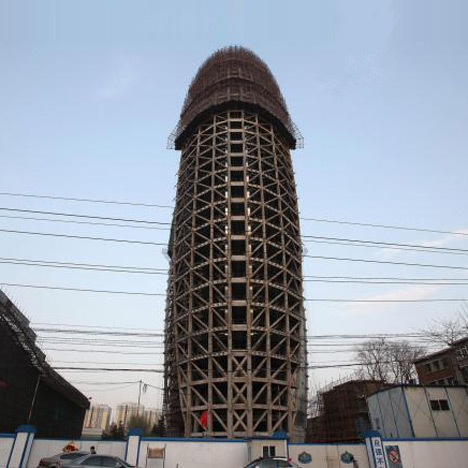
People's Daily headquarters in Beijing. (dezeen.com)

People’s Daily headquarters in Beijing. (dezeen.com)

Far be it from me to agree with the head of the Chinese Communist Party on anything, but please excuse me for agreeing with Xi Jinping on one thing.

Speaking to a literary symposium last week, the Chinese president said, “No more weird architecture.” Instead, he said, “Fine art works should be like sunshine from the blue sky and the breeze in spring that will inspire minds, warm hearts, cultivate taste and clean up undesirable work styles.”

I applaud the maximum leader of the Middle Kingdom for his insight. He singled out the CCTV propaganda headquarters by Rem Koolhaas, often referred to by its nickname “Big Pants,” and to the new headquarters of the People’s Daily, which looks like a giant penis.

The humorous writer for Curbed, Spencer Peterson, in his article “Chinese President Is Sick of China’s ‘Weird Architecture,’ ” attributed Xi’s comments to his finally having got wind of the “Western world’s blog-fueled fascination with wacky Chinese buildings.” The barrel of laughs writes that Xi “surely must hate fun or something.” But Peterson may be is right that Xi picked up the hints of ridicule from the West, since Chinese leaders are notoriously deaf to the opinions of their own people. “People’s Daily” indeed!

The problem with “Big Pants” is less that it looks like a pair of trousers than that it looks like it is in the process of stomping on the Chinese people. But then the “Big Pants” moniker was probably teed up for public consumption by a nameless party hack in the bowels of propaganda. Maybe it was the same guy who came up with the “Bird’s Nest” nickname for the Beijing Olympic Stadium that looks more like a giant roll of barbed wire. He is probably too scared to attempt a plausible nickname for the People’s Daily.

(The vagina-like soccer stadium designed by Zaha Hadid for a nation where women are not allowed to display their faces certainly deserves to be noted here.)

I doubt that Xi Jinping’s concern for his ancient nation’s venerable culture will do much to assist the classical revival in the West. Maybe he can hold a joint press conference with Prince Charles to denounce Western cultural imperialism. As the leader of 1.3 billion people, Xi’s words are welcome. Maybe it’s not too late to shut the barn door on worldwide cultural genocide. Ya gotta start somewhere.

(Hats off to Robie Wood, of TradArch, for uncovering the news about Xi.)


Posted in Architecture, Art and design, Humor, Other countries | Tagged , , , , , , | 1 Comment