Buffing the downtown fabric

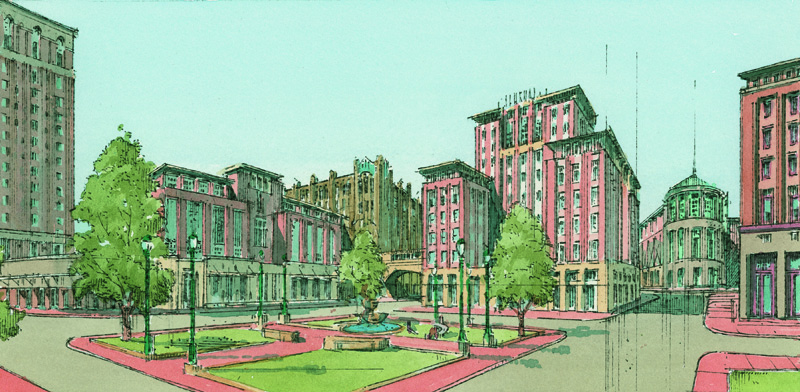
Proposed new buildings and redesigned Emmett Square, 2005. (Cornish Associates)

Proposed new buildings and redesigned Emmett Square, 2005. (Cornish Associates)

The expected purchase by Arnold C. “Buff” Chace of the Providence Journal’s headquarter’s building – not the old Journal building of 1906 but the “new” one of 1934, designed by noted Motor City architect Albert Kahn – is extraordinarily good news. I hope it goes through. Chace has said he hopes the Journal’s recent buyer, NewsGate, will keep the Journal operation as his tenant. A big-city newspaper that is not located downtown is already half dead. The Journal should stay on Fountain Street.

The end of the Journal building near Emmett Square. (midcenturymundate.wordpress.com)

The end of the Journal building near Emmett Square. (midcenturymundane.wordpress.com)

Westminster Street. (tripadvisor.com)

Westminster Street. (tripadvisor.com)

In addition, Chace has expressed his desire to build four- or five-story commercial and residential buildings on the two lots across Fountain where Journal employees park. They would be included in the purchase from Belo, of Dallas, the Journal’s former owner. Chace has eyed those two lots for years, since 2005 when urbanist Andres Duany was last here to help plan the next moves downtown. In a charrette, Duany showed two new buildings, both attractive, one on the lot near the Biltmore Hotel and another replacing the Journal’s green, snub-nosed parking garage facing a revamped Emmett Square.

Howard Sutton, the Journal’s publisher at the time, was said to be irked that he was not consulted by Buff about these theoretical essays in potential architecture sketched onto land owned by the Journal (or rather Belo). Not that anything was likely to happen then – even though the real-estate bubble had yet to burst – but rancor between the two probably did not help promote downtown development.

If Buff acquires the land now he can build what he wants on it. No better development strategy could be imagined than filling in vacant lots used for parking with buildings used for profitable enterprise. Not one of the five downtown buildings razed during the regrettable administration of Mayor (now Congressman) David Cicilline have been replaced by new buildings. That spate was the worst in downtown since 1978, when Paolino Properties demolished the Hoppin Homestead Building (1878). They are all still parking lots.

It is axiomatic that the more parking lots a downtown has, the less reason people have to use them. The city should tax empty lots higher as an incentive for property owners to build new structures (including garages) in their stead, or to sell the land to entrepreneurs with the balls to do something with them.

Most downtown offices do not have much dedicated parking, nor should they. Observers have reason to hope for an intelligent phasing-in of additional tenants at 75 Fountain St. and development proposals for the lots. An increased difficulty of parking downtown and its increased cost only increases the allure of living downtown. If more people live downtown and walk to work, there will be more parking for those who do not. Providence will grow, and its growth will spark more growth. Someday, Providence could become a real live city with a real economy and enough money flowing in to solve its rolling fiscal crises.

In comments following the breakage of news that he was buying 75 Fountain St. and the two parking lots, Chace not only expressed his desire to build on the two lots but asserted that the residential market downtown could absorb hundreds of new units. He described to Rhode Island’s NPR radio news two projects that are already under way in downtown through his development firm, Cornish Associates:

[Chace] said 44 additional housing units will become available when the conversion of the Kinsley Building on Westminster Street is due for completion in June. Chace said his firm bought two other properties on Westminster Street last year that could yield 55 more housing units, if the financing can be made to work with possible help from the city and state. Although the financing is more complicated without additional funding for the state historic tax credit program, Chace said, “We think there is the demand for hundreds more [units].”

Here is a story from last June’s Providence Business News that expands on the NPR story:

The Lapham Building is the latest addition to Cornish’s Westminster Street holdings as the developer tries to expand the cluster of fashionable downtown residences it’s created further southwest toward Empire Street. Last fall Cornish purchased the Kinsley Building at 334 Westminster, also to convert into apartments, and the former Roots Cafe Building at 276 Westminster, which it is reopening as the Aurora nightclub. It also owns 270 Westminster next door to the Aurora, which it plans to convert to apartments.

Chace has been trying to buy the Old Journal Building in recent years, but the estate of its late owner is as intent upon cutting off its nose to spite its face as the guy who purchased it at the wrong moment decades ago. Good luck!

Most readers of this blog are familiar with Buff Chace’s renovation of buildings downtown. His 199 units thus far and several blocks of new shops have brought new life to the city. He was this reporter’s landlord from 1999 to 2010 when he lived in a wonderful loft on the fifth floor of the Smith Building, the first Cornish rehab. Buff has helped to preserve downtown’s historic character by maintaining the traditional look of all of the old buildings he has renovated, allowing modernist features only in the interiors.

If he acquires the Journal building and its lots, and begins for the first time in his downtown program to build anew, he may perhaps be expected to rededicate himself to preserving the downtown as a place people can love. Otherwise it is unlikely that his new round of rehabs and new residential buildings would have the same appeal as the great places to live, work and shop that he already has under his belt.
Posted in Architecture, Development, Preservation, Providence, Urbanism and planning | Tagged , , , , | 3 Comments

Perfect critique, then … pfft!

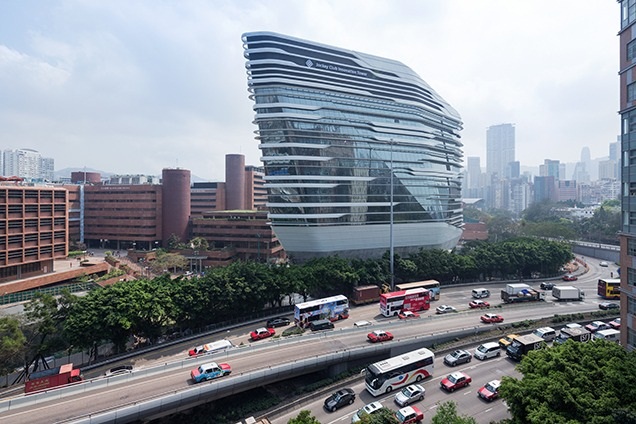
Zaha Hadid's Innovation Tower in Kowloon. (Architectural Review)

Zaha Hadid’s Innovation Tower in Kowloon. (Architectural Review)

There is almost nothing that I could disagree with or add to in “Empty Gestures: Starchitecture’s Swan Song,” a critique by Peter Buchanan in the Architectural Review. Nothing, that is, except that after so much striking perception, Buchanan does not see, or want to see, the very conclusion his thinking must ineluctably reach. He is a good example of the critics I noted in yesterday’s post who refuse to engage their own intuitive insights.

For example, after complaining that computer programs made it so easy for architects to engage in “formal posturing,” Buchanan writes:

But nobody thought to ask the obvious question as to which of these forms might be relevant to architecture, and not only in terms of functionality, which tolerantly accommodates itself to almost anything. Particularly apt would have been to question which forms elicit relationships − with us humans, both perceptually and psychologically, as well as with other buildings and external space − and so can aggregate into satisfactory urban fabric in which we can feel at home.

Splendid! But then:

The contrast between the diaphanous sails and the lumpy building proper is almost suggestive of butterflies hovering over a turd − You’re right Mr Gehry, much contemporary architecture is shit.

Comparing the Fondation Louis Vuitton with the Biomuseum in Panama reveals the constraints of a more normal budget and emphasises the spectacular extravagance of the Paris building. In the light of current circumstances and the many deserved criticisms already offered, are such buildings really worthy of adulation and declarations of architectural genius? Is some such realisation behind the insecurity that makes Gehry so touchy. Yet in time, and especially with the benefit of an inspired curatorial agenda, the Fondation promises to become a treasured part of Paris − like the Eiffel Tower. But like the latter, is it really architecture or, like the Bilbao Guggenheim, a species of usable sculpture? Architecture, once the encompassing mother of the arts, completed by sculpture and painting, and carrier of cultural significance and meaning, has become reduced to superfluous spectacle.

So after expressing almost every critique of modern architecture that’s come down the pike in half a century, Buchanan allows his piece to devolve into a chucking of mud at Zaha “Ha! Ha!” Hadid and Frank “O!” Gehry. Buchanan seems unaware that Gehry and Hadid consider public dislike of their work as a feather in their cap, a protective attitude Sigfried Giedion long ago urged architecture students to don against criticism of their modernist hooey. Gehry and Zaha are making millions and their work writhes on the covers of all the leading architecture journals. They are gods. They don’t give a hoot what Buchanan thinks!

For Peter Buchanan to recognize modernism’s sins but to chicken out before pinning the tail on the donkey is a crime against honesty, truth and beauty. What does he think the modern movement should do now? He certainly doesn’t suggest it should admit its error and join the classical revival. Perhaps that’s not “to be expected.” And that’s the problem.

Posted in Architects, Architecture, Architecture Education, Architecture History, Development | Tagged , , , , | 1 Comment

Criticism of criticism of …

Proposed design for the Zonghwei Cultural Complex, China. (ArchDaily.com)

Proposed design for the Zonghwei Cultural Complex, China. (ArchDaily.com)

That’s the title of a famous H.L. Mencken essay called “Criticism of Criticism of Criticism” about the convolutions of critical theoretics. An article by Mark Minkjan in one of my favorite blogs, Failed Architecture, is called “ArchDaily and Architecture Criticism.” It is a critique of the online architectural journal ArchDaily.com, and could be called “Criticism of Criticism.” It asserts that Failed Architecture is an antidote to ArchDaily, which is only partly true.

Minkjan points out that ArchDaily just reprints architects’ fatuous assessments of their own projects. But he does not admit that modern architecture (the only kind that appears in ArchDaily and every other mainstream architectural journal) is itself fatuous and impossible to criticize coherently because it has no conventional standards by which to measure a project against any other project or all projects. Overlooking this fact undermines FA’s critique, which is often valid but beside the point. One paragraph in his article describes a round-robin of critiques that spins off into space and then returns to zoom up its own rear aperture:

Rory Stott, contributing editor to ArchDaily, defended ArchDaily in response to an article published by The Architectural Review’s Phinneas Harper on Uncube, which was (via another article by Elvia Wilk) triggered by Jan Loerakker’s article on Failed Architecture. Phinneas Harper called for the de-democratization of the architectural press, arguing that it only leaves room for content [that] users are likely to click on (because clicks equal advertising income). Stott responded to Harper’s piece, being honest about ArchDaily’s model but also pointing out that the media outlet tries to generate original and critical content. He mentions a few examples, all written by himself. These all avoid criticism, instead side-stepping the issue with positive and descriptive terms.

The post of mine that you are reading now is criticism of criticism of criticism. Most architecture criticism misses the point, and without acknowledging that, criticism of such criticism misses the point cubed. I thought Minkjan’s reference to Phinneas Harper’s call, on Uncube, for “the de-democratization of the architectural press” was hilarious. As if there were any regard for the public in any of those journals today. There is not. The only articles allowed are articles about modern architecture. Period.

The Failed Architecture piece links to another FA piece, by Jan Loerakker, called “The Day Architects Stopped Reading Newspapers.” He quotes a typical example of the usual architectural self-pleasuring:

“The contemporary design of the main centres aims to characterize the city’s modernization, whilst capturing local cultural references. The building facades pay homage to local stone paintings and weaving patterns of sand-barriers found in regional deserts. Building materials further associate with local surroundings through different textures and colour palettes.” – Zonghwei Cultural Complex (ArchDaily 2013)

Yeah, sure! The passage describes the building design on top of this post. “Capturing local cultural references” indeed! Just look at it! Loerakker describes his amazement at “how big international firms like KPF or HOK and large governmental institutions produce the same kind of a-critical design, glossy imagery and sweet texts to sell cities built from scratch.” He adds: “Not only do project descriptions like these erode the meaning of words like ‘sustainable’ and ‘public space,’ it also raises a profound doubt about the quality and diversity of the proposed schemes.”

You bet it does, but the critics don’t listen to their own intuitive skepticism. Loerakker and his fellow critics of criticism criticize with considerable validity, but still they do not even begin to approach the degree of criticism their targets deserve. That is what this blog, Architecture Here and There, is for. The answer to all of the questions raised by the critics and their critics may be found in the past, until the point where thousands of years of progress in architecture was rejected and ejected by the modernist movement.

Unlike architecture today, traditional building evolved on a trial-and-error basis, building on the best practices of predecessors to determine what works – much as man has done with every other field of his endeavor, much as every biological species has done through natural selection, and much as Nature intends. It is entirely appropriate to step back in order to reacquire the proper road forward. But that is the last thing you will ever read in any mainstream architecture criticism or in the critique of that criticism.

Posted in Architects, Architecture, Development | Tagged , , , , , | 2 Comments

Bygone architecture criticism

A pair of pages from the 1931 criticism of Lutyens. (Architectural Review)

A pair of pages from a 1931 critique of Edwin Lutyens. (Architectural Review)

Here, reprinted in Architectural Review, is a long essay of architecture criticism of a sort that we never see anymore – detailed critique of a set of buildings by a famous architect, in this case Edwin Lutyens. The essay, “New Dehli: The individual buildings,” is by Robert Byron and was originally published in January 1931. Click the link to the piece then click on one of the solitary illustrations below (not the one on top or its set of slides) to enlarge the pages. Bump it up to about 300 percent. Most of the piece demonstrates the old adage that “Dry need not be dull.” (Is it an old adage? It may be a brand new one.) I am posting a brief excerpt, indeed an exception to that adage – a flash of well-modulated anger that I stumbled upon – even before I read the entire piece:

The detail of the dome has already been examined. The hemisphere (without its base mould), and the patterned white drum beneath, derive their shape from the Buddhist stupas of Sanchi. The turrets, in essence, derive from the European Middle Ages. Their caps derive from the Moguls; and likewise the form, though not the course, of the all-round chitjja. The remaining elements seem to lack historic precedent. But in reality, as they stand here, none of them has any precedent whatever. Amidst all the cacophony of standardized allusion and whining reminiscence which the present age calls art, Lutyens’s dome strikes a clear note of true aesthetic invention. To have seen it is to carry for ever a new enjoyment, and to add one more to those little separate flames of pleasure whose treasured aggregate alone gives purpose to existence.

A major tip of the hat to Richard Cameron, who placed this excellent material before my eyes.

Posted in Architects, Architecture, Architecture Education, Architecture History | Tagged , , | 1 Comment

Sketching my mom of moms

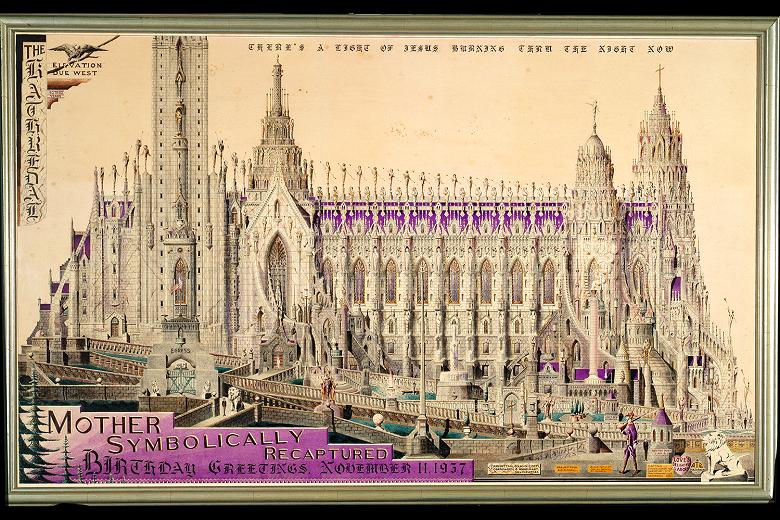
"Mother Symbolically Redcaptured," by A.G. Rizzoli. (beanstories.co.uk)

“Mother Symbolically Recaptured,” by A.G. Rizzoli. (beanstories.co.uk)

Here’s the column I wrote in 2004 about the annual meeting in Providence of the American Society of Architectural Illustrators. I was going to write it mainly about the work of a sort of sketchy illustrator from San Francisco in the last century named A.G. Rizzoli. His work was discovered not too many years ago in a garage, and A.G. Rizzoli: Architect of Magnificent Visions was published in 1997. What a piece of work that guy must have been. He drew and drew, dedicating many of his illustrations to his mother.

My own dear mother, Mona Carolyn (Pascal) Brussat, died just before the conference I had hoped to attend, so when I finally wrote up the architectural illustrators, I dedicated the piece to my mom, with an assist from A.G. Rizzoli and America’s architectural renderers. I just got a Super 8 film transferred to disk and saw my mother and father moving for the first time in ages. What bliss! What memories! Bless them. Bless old movies.

So here is that column from Thursday, Nov. 4, 2004.

Sketching the mother of all moms

THE BUILDING ABOVE, festooned with statues of mothers by the score, is the work of A.G. Rizzoli, a draftsman who worked for an architecture firm in San Francisco. His most extraordinary drawings, from the late 1930s, were done not for his boss but for his mom. This one, drawn in 1937, is called “Mother Symbolically Recaptured.”

Last week, the American Society of Architectural Illustrators held its annual meeting in Providence. I had hoped to attend. A column chronicling the convention would have offered an opportunity to discuss Rizzoli, but it just did not occur to me. Rather, I had planned to focus on the poster art for the event, featuring a sketch of the Providence County Superior Court, drawn in 1927 by Chester B. Price for the firm of Jackson, Robertson and Adams.

H.P. Lovecraft, the late Providence writer of mystery tales, praised the courthouse design in a March 20, 1929, letter to The Sunday [Providence] Journal. But it included an annex (visible in the poster) across South Main Street that would have required demolishing a string of old warehouses called the Brick Row, on the Providence River. Lovecraft attacked that part of the plan. “Behind it,” he wrote, “lies the far broader class of city-planning ideals which it typifies, the eternal warfare, based on temperament and degree of sensitiveness to deep local currents of feeling, between those who cherish a landscape truly expressive of a town’s individuality, and those who demand the uniformly modern, commercially efficient and showily sumptuous at any cost.”

(Brick Row was torn down in 1929, but the annex was not built. The site is now Memorial Park.)

The idea of writing about Lovecraft’s letter, the poster of the courthouse, and the art of drawing buildings teased me terribly the week before the meeting of illustrators. But I missed the convention because my dear sweet mother died.

Mom is with Bill now. My father died in 1978 after a career that began as a city planner in Chicago, where I was born, and continued in Philadelphia and Washington. I was in no position to memorialize him in newsprint when he died, but in 1995, after the death of his friend Hugh Mields, also a planner, I wrote about them both (“Together again,” July 20, 1995). Did their careers as planners influence my career? Not that I could tell.

My mother’s career as a teacher and actor – the former after her career as a mother of three boys, the latter after she had lost my dad – is, if anything, even more elusive in its influence on mine. We lived in a modernist house once. Later, our more traditional house in Washington was decorated in a contemporary style lifted largely from a furniture store called Scan. Full disclosure: My environment at home was comfortable, stylish and decidedly attractive. But its impact on my later architectural  tastes was indeterminate at best.

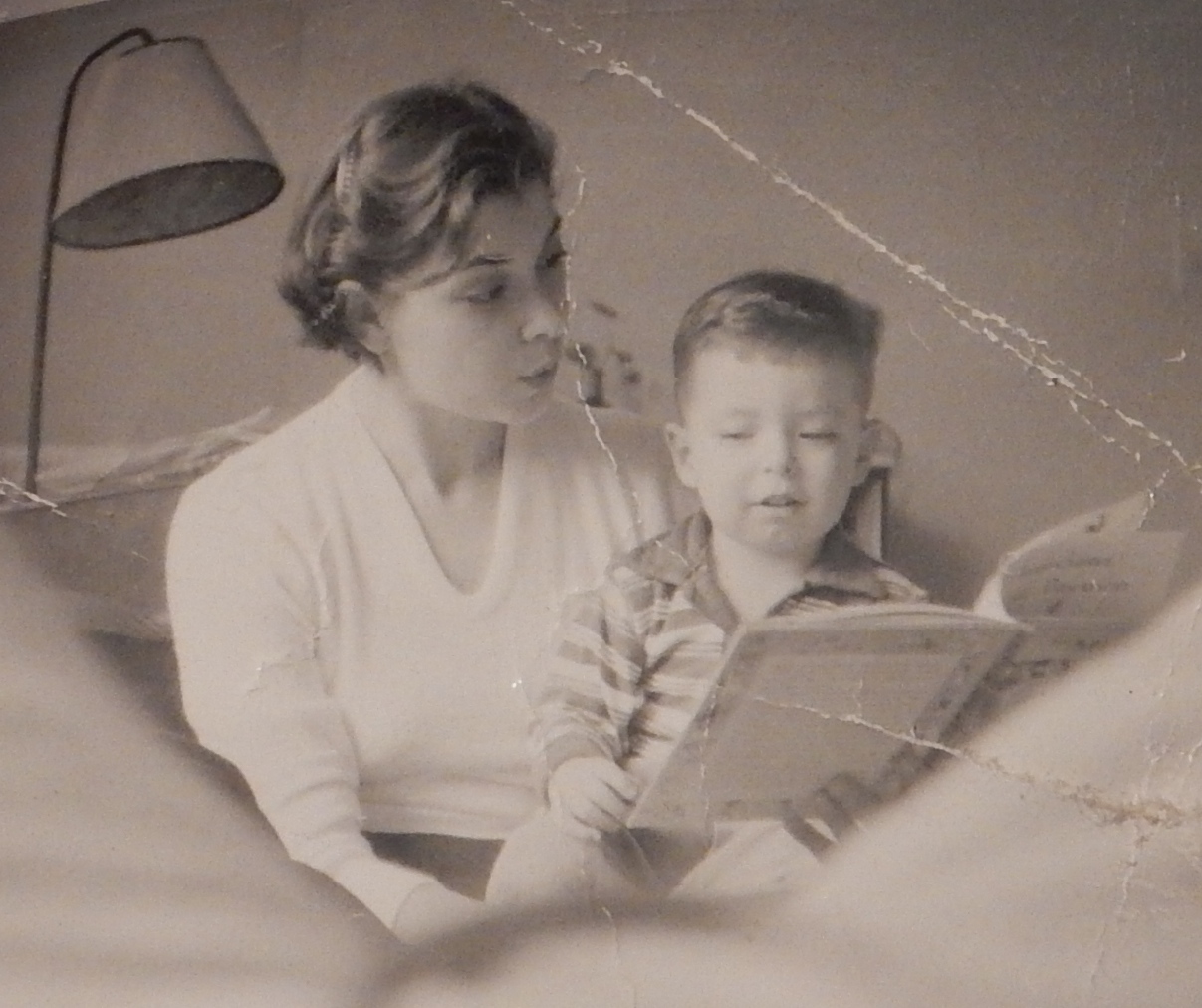
DSCN4978My mother did instill in me a love for beauty. Just look at the picture of her helping me read.

Mom was a fantastic educator. Once, I was in her arms, exercising my vocabulary with a slang term for breasts. “No, David,” she said. “They are bosoms.” (This was the 1950s.) My foundation in the terminology of ornamentation was laid at an early age.

Last week, my brothers and I sat on the couch in my mother’s living room going through a batch of pictures Mom had extracted and put aside toward the beginning of her illness. They were pictures of her as a young woman. I was reminded of A.G. Rizzoli and his lovely buildings dedicated to his mom.

After a reclusive life, Rizzoli died in 1981. In 1990, hundreds of his drawings were discovered in his family’s garage. Many of the fantastical buildings were symbolic representations of people he knew – “transfigurations,” as he called them. Those published in A.G. Rizzoli: Architect of Magnificent Visions (Abrams, 1997) reveal a meticulous style that I’m pleased to see has not been totally abandoned by architectural illustrators.

On Tuesday, at the Sol Koffler Gallery, in the Rhode Island School of Design’s recently renovated building on Weybosset Street, I examined the winners of an illustration competition sponsored by the illustrators’ society. The exhibit reveals the impressive artistry gathered in Providence last week. The architectural illustrators are not to blame for the fact that so many buildings designed today are not worthy of their talent.

Rizzoli was devoted to his mother and to an idea that most architects rejected decades ago – that buildings do represent people. No, most buildings do not have bosoms, but the principles of classical architecture are rooted in the dimensions of the human body. Ornament is not merely the jewelry of architecture but its very essence, the expression of a building’s purpose, its aspirations and its place on the street but also in the heart and soul of society.

My mother, symbolically represented as a building, is a temple to love, beauty and truth.


Posted in Architecture, Art and design, Blast from past, Books and Culture, Providence, Uncategorized | Tagged , , , , , , , | 3 Comments

Polemicists in pen and ink

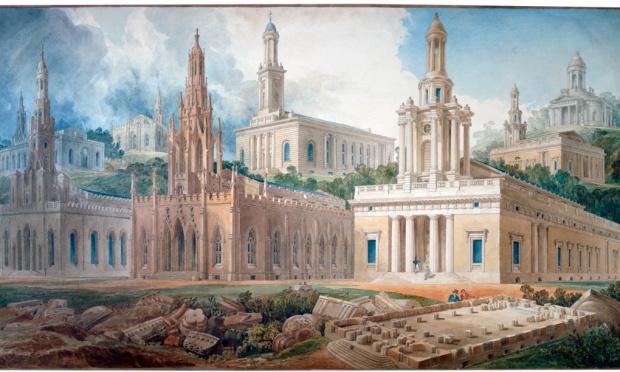
Rendering of several versions of Holy Trinity Church, Marlebone, 1824. (Soane Museum)

Rendering of several versions of Holy Trinity Church, Marlebone, 1824. (Soane Museum)

Someone recently twitted me for displaying on my blog beautiful drawings of a proposed new Boston City Hall designed (and illustrated) by Aaron Helfand. My correspondent said the building might not look as nice as the drawing when it is completed. In reply, I reminded him that this concern has been uppermost in my mind now that the graduate-student housing at 257 Thayer St., in Providence, is almost done. It does not look as good as the drawings by Union Studio, which had been hired to design a nicer building than the original one. Given materials and budgets, it may be inevitable that the finished building would look less alluring than the drawing (and for that matter the model). But it only goes to show that architecture is a constant battle between perception and reality.

Oliver Wainwright of the Guardian has an excellent article, “A battle of iron wills: The fracious world of architects versus clients,” describing an exhibit at the Soane Museum, in London, on the polemics of architectural rendering. The illustration above was architect Sir John Soane’s peeved response to the declaration by his client, the Vestry of the Holy Trinity Church, Marlebone, that they preferred a Gothic or Norman-style church to the Classical church he’d just designed for them. Soane’s renderer, Joseph Michael Gandy, painted a hillside with various versions, with the new versions looking slightly ragged. The architect got his way and the classical version – now famous – was built.

I recently visited Boston for a lecture and, after getting off the commuter train at the Back Bay station, left my ancient portfolio, with my half-read biography of Corbusier by Anthony Flint and all my marginalia, plus a worthless but still useful ancient iPod with many score of audiobooks in it. The cloth case was black and orange with an architect’s rendering of the Providence Superior Court emblazoned on it. I got it when I attended the annual meeting of the American Society of Architectural Illustrates held here in 2004. I wonder whether anyone around here has one they can sell me. Or maybe I can get it on eBay.

Architectural rendering is a lost art, it seems to me. Not that there remain no artists who can perform marvelous drawing of buildings. There are some. But it seems that today an architectural drawing aims to disguise what a building will really look like. The more the clients of a modernist architect learn of what the buildings they’ve commissioned look like, the more the client-architect relationship is likely to become a battle of wills.

Well, maybe that’s always been so.

Posted in Architects, Architecture, Art and design | Tagged , , , , , , , , | 1 Comment

“My Modernist Parents”

Scene from "Me and My Moulton." (rotoscopers.com)

Scene from “Me and My Moulton.” (rotoscopers.com)

What would it be like as a 7-year-old to have “modernist architects” for parents? The film Me and My Moulton answers that question. Inspired by director Torill Kove’s growing up in Norway under the roof of such a species, the animated short was nominated for best short film at the Oscars. Here is a trailer for the film. You must scroll down. There are actually two trailers. Hilarious! I want to see the entire cinematic romp.

Posted in Architects, Architecture, Art and design, Book/Film Reviews, Humor | Tagged , , , | 2 Comments

Pawtucket! Woonsocket!

Pawtucket Falls, circa 1815. (bucklinsociety.net)

Pawtucket Falls, circa 1815. (bucklinsociety.net)

With Pawtucket apparently about to lose its ball team, the city’s name is in the news, and it has caused me to marvel at the wonderful names cities in Rhode Island have. Pawtucket has a frankly puckish character. It’s nickname is The Bucket. Pawtucket is famous for its inclusion in limericks – “There once was a girl from Pawtucket, etc.” But there’s also Woonsocket. It does not have Pawtucket’s poetical jail bait but it is arguably even more romantic. It means “thunder mist” in the language of one of the three local native tribes, the Nipmucs, Wampanoags or Narragansetts. Woonsocket!

Providence is an unusually beautiful and evocative name, selected by founder Roger Williams to thank his maker for seeing him successfully to the place on which he would plant the colony where religious liberty was founded in America. The Ocean State, as it is affectionately known, eventually grew up to be the smallest state in the nation but has the nation’s biggest name: Rhode Island and Providence Plantations is its official moniker.

Other city and town names here are reasonably quotidian. Burrillville, Narragansett, Little Compton, Westerly and perhaps Tiverton stand out among Cranston, Johnston, Newport, Lincoln, Jamestown, Hopkinton,  Cumberland, Central Falls, Bristol, Barrington, Foster, Glocester, Greenwich, Exeter, Charlestown, Coventry, Middletown, Portsmouth, New Shoreham, Kingstown, Smithfield, Greenwich and Warwick. (This does not add up to 38 because I have omitted all Norths, Souths, Easts and Wests.)

No sexy names, please, we’re British! Well, we were, so we’re glad to have Pawtucket, Woonsocket and Providence, even though it is reasonable to worry that the capital city’s name, given its religious connotations, might constitute fightin’ words to some tribes elsewhere in the world.

Woonsocket, circa 1800. (ricurrency.com)

Woonsocket, circa 1800. (ricurrency.com)

Posted in Architecture, Books and Culture, Humor, Providence, Rhode Island | Tagged , , , , , | 2 Comments

Helfand’s Boston City Hall

Proposed new Boston City Hall designed by Aaron Helfand. (anarchitectureofhumanism.blogspot.com)

Proposed new Boston City Hall designed by Aaron Helfand. (anarchitectureofhumanism.blogspot.com)

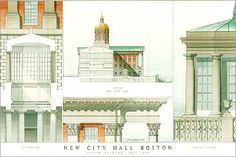
Details of proposed City Hall.

Details of proposed City Hall.

As I remarked in my last post, “Edges, shapes and patterns!,” Boston City Hall’s famous inhumanity came up in Tuesday’s lecture by Ann Sussman, co-author of Cognitive Architecture. At her lecture was Aaron Helfand, an architect at the Boston firm of Albert, Righter & Tittmann. Back in 2009, for his master’s thesis at Notre Dame’s school of architecture, he proposed a new design for Boston City Hall. I wrote a column about it, “Boston’s City Hall Plaza as it ought to be,” for the Providence Journal and reprinted it on the website of the New England chapter of the Institute of Classical Architecture & Art, which hosted Sussman’s lecture. That column is here.

It has been pointed out that successive efforts big and small to renovate Boston City Hall Plaza have been thwarted by Boston’s architectural elite in order to avoid hurting the feelings of I.M. Pei, who is still alive and who was responsible for siting the government buildings around the plaza.

Pei, who will be 100 on April 26, 2017, if he makes it that far, is probably able to rise above any bad feelings, just as the users of the buildings he designed are probably able to rise above the bad feelings caused by his architecture. But life is a struggle, for the users as well as the designers of buildings, especially in the past 100 years, and we must all cope, so I hope I.M. Pei will not be unduly distressed by my decision to republish Aaron Helfand’s far superior City Hall.

Axiometric plan of proposed Boston City Hall by Aaron Helfand.

Axonometric plan of proposed Boston City Hall by Aaron Helfand.

Posted in Architecture, Architecture Education, Architecture History, Blast from past, Urbanism and planning | Tagged , , , , | 3 Comments

Edges, shapes and patterns!

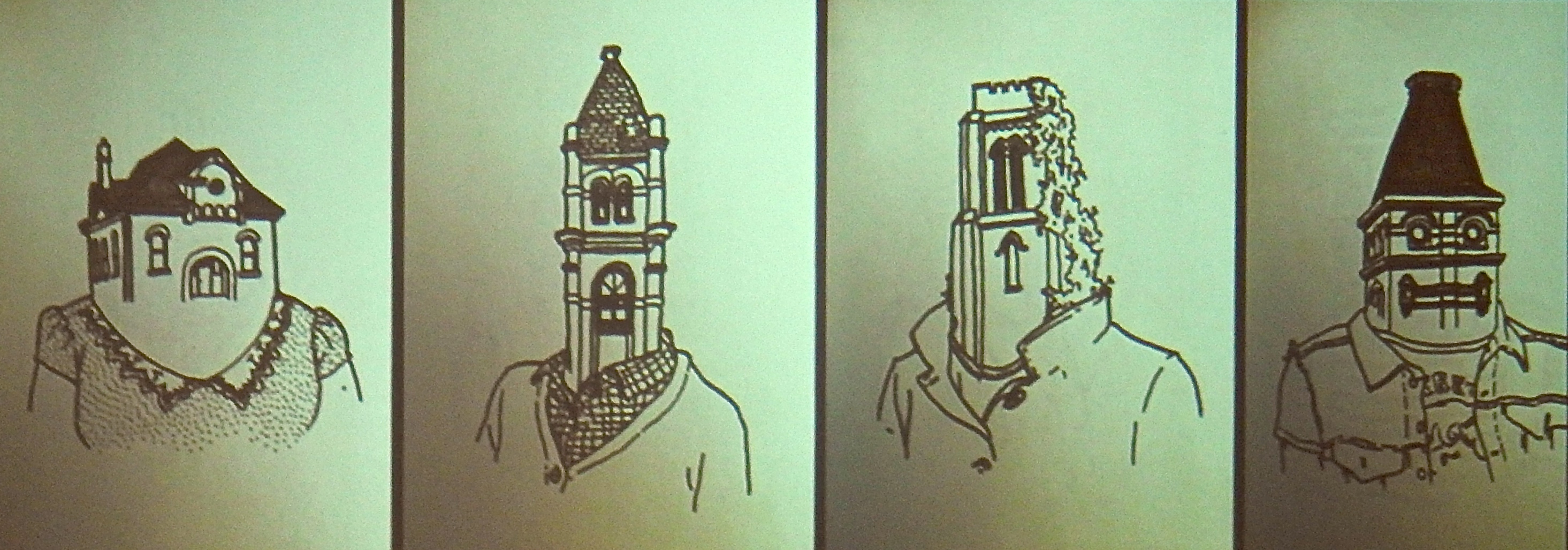
The faces of buildings. (Ryan Dodgson)

The faces of buildings. (Ryan Dodgson)

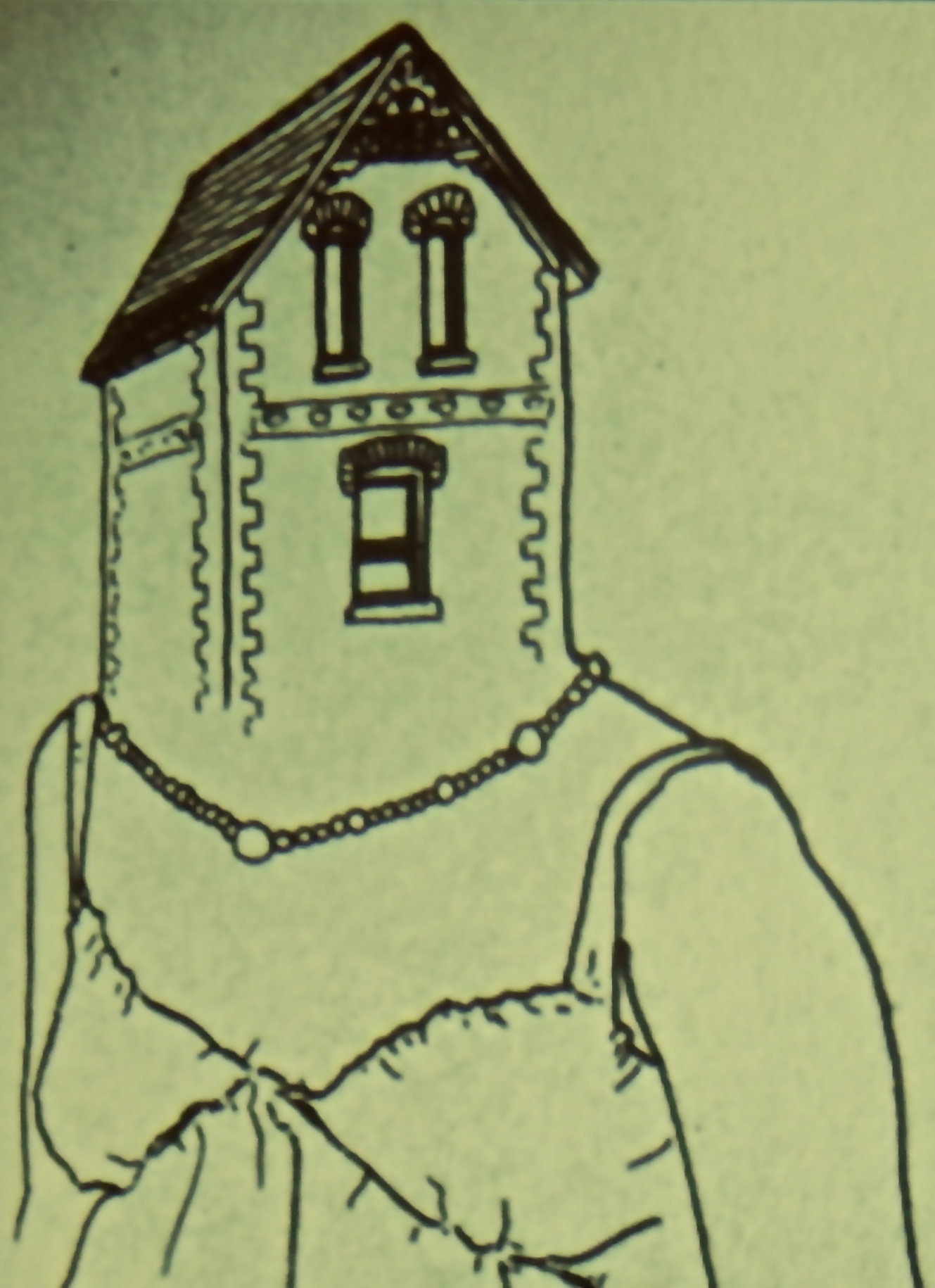
Edges, patterns and shapes affect our perception of the built environment through the millennia worth of knowledge accumulated by our brain about our world. Only 70,000 years from the savannah and, as Ann Sussman put it last night, “your subconscious brain’s already telling you not to go there.”

Female building. (Garry Dodgson)

Female building. (Garry Dodgson)

Ann Sussman. (Photo by David Brussat)

Ann Sussman. (Photo by David Brussat)

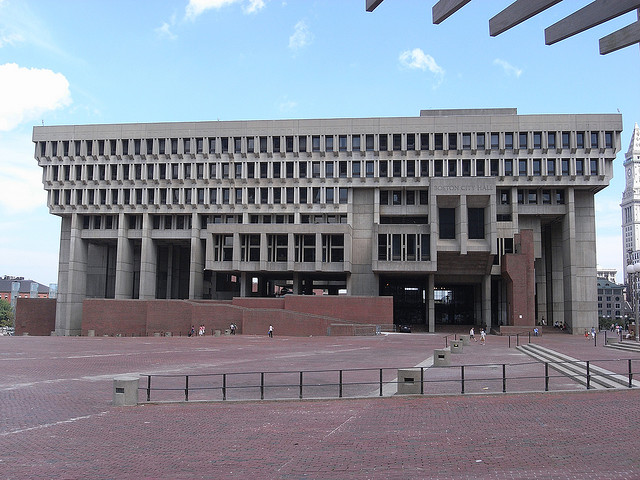
Boston City Hall. (wgbhnews.org)

Boston City Hall. (wgbhnews.org)

Hanover Street. (tripadvisor.com)

Hanover Street. (tripadvisor.com)

Go where? Boston City Hall. Your brain is raising the alarm to avoid it even before your conscious mind registers its own reluctance. So says Sussman, co-author of Cognitive Architecture, who spoke last night in Boston at an event sponsored by the New England chapter of the Institute of Classical Architecture & Art at the College Club of Boston.

Why Boston City Hall? Because the Brutalist structure – my conscious brain is very reluctant to call it a building – ignores warnings built into our instincts by the natural process of evolution. Boston City Hall might as well have a label attached reading “Not for Human Occupation.” It is grossly lacking in symmetry, scale, detail, facial recognition patterns, and its rough concrete surfaces tend to repel our inclination – called thigmotaxis – to travel close to the edges of places that lack the wealth of ornament and variety of scales that our mind reads as information needed to keep us alive, information that’s hard-wired into our perception of the environment around us, including architecture.

Near City Hall is Hanover Street, a road everyone loves to be on. It is lined with buildings designed by architects who knew all of the above, whether they realized it or not.

Sussman, who wrote her book with Justin Hollander, need not (and does not) point her finger only at Boston City Hall. Most buildings that have gone up since World War II suffer (or make us suffer) from the same deficits. And most people know it. But science, Sussman says, has only recently exposed the neurobiological reasons for this. She does not hesitate to blame modern architecture for its sins. But allow me to go one step further and blame modern architects for ignoring the obvious for most of the century or more during which it has existed – essentially since the human race entered the machine age. Modernist founder Corbusier may have been correct that a house is a “machine for living in,” but he was wrong to think that anybody in touch with his or her inner self would want to live in one of his.

A lot of this ground has been covered by others, including Nikos Salingaros and Michael Mehaffy, whose book Design for a Living Planet I reviewed here. They are writing about research and theories they and others have derived from several decades of scientific exploration. They describe why a healthier architecture and a more sustainable society must strive to copy nature’s organizational patterns, and they reveal the operation of systems based on organized complexity. Sussman and Hollander describe more recent research and experiments and how scientists have drawn hypotheses and theories from what they found in their laboratories. It is fascinating stuff, as Sussman proved in her lecture on Tuesday evening.

After the lecture I dined with Sussman along with Eric Daum, my fellow ICAA chapter board member who had invited her to speak, and Eric Svahn, who still works for the Gund Partnership, an architecture firm where both Sussman and Daum also used to work. We were looking for a restaurant and found one on Boyleston Street. It just so happens that Svahn once worked with another architect, Garry Harley, in an upper floor of the same building. And even more coincidentally, Sussman was scheduled to meet with Harley – who took some of the photographs in her book – the next day (today).

Happenstance plays a role in evolution, but let’s just say that hearing the energetic and entertaining Sussman and reviewing Mehaffy and Salingaros book within the space of a week on the same subject is undeniably coincidental. I do not explain it, I merely report it.


Posted in Architecture, Art and design, Books and Culture, Uncategorized, Urbanism and planning | Tagged , , , , , , , , | 8 Comments