Antwerp’s Centraal Station

Antwerp’s Centraal Railway Station, completed in 1905. (Culture Trip)

A friend sent an email literally begging me to read the novel Austerlitz, by W.G. Sebald, of whom I’d never heard, and it came in the mail just in the nick of time, preventing me from writing about the Super Bowl’s half-time show, which I am now already a day late in describing (the stage featured five white “rooms”), and of which I will say only that it must have been paid for by the GOP.

Austerlitz was published in 2001 and is said to have been written in one long paragraph of many complex sentences. But hey, I love Henry James. It seems that there is much about architecture in the novel, at least in the early going, especially Antwerp’s Centraal Station, part of whose description I quote below.

One of the projects thus initiated by the highest authority in the land [King Leopold] was the central station of the Flemish metropolis, where we [the narrator and his friend], said Austerlitz; designed by Louis Delacenserie, it was inaugurated in the summer of 1905, after ten years of planning and building, in the presence of the King himself. The model Leopold had recommended to his architects was the new railway station of Lucerne, where he had been particularly struck by the concept of the dome, so dramatically exceeding the usual modest height of railway buildings, a concept realized by Delacenserie in his own design, which was inspired by the Parthenon in Rome, in such stupendous fashion that even today [1967], said Austerlitz, exactly as the architect intended, when we step into the entrance hall we are seized by a sense of being beyond the profane, in a cathedral consecrated to international traffic and trade. Delacenserie borrowed the main elements of his monumental structure from the palaces of the Italian Renaissance, but he also struck Byzantine and Moorish notes, and perhaps when I arrived, said Austerlitz, I myself had noticed the round gray and white granite turrets, the sole purpose of which was to arouse medieval associations in the minds of railway passengers. However laughable in itself, Delacenserie’s eclecticism, united past and future in the Centraal Station with its marble stairway in the foyer and the steel and glass roof spanning the platforms, was in fact a logical stylistic approach to the new epoch, said Austerlitz, and it was also appropriate, he continued, that in Antwerp Station the elevated level from which the gods looked down on visitors to the Roman Pantheon should display, in hierarchical order, the deities of the nineteenth century – mining, industry, transport, trade, and capital. For halfway up the walls of the entrance hall, as I must have noticed, there were stone escutcheons bearing symbolic sheaves of corn, crossed hammers, winged wheels, and so on, with the heraldic motif of the beehive standing not, as one might at first think, for nature made serviceable to mankind, or even industrious labor as a social good, but symbolizing the principle of capital accumulation.

This passage is embedded in a paragraph that opens the book and does not end until its 31st page. So, yes, Austerlitz has more than one paragraph, but not all that many more. Yet even with its long sentences it is quite easy to read.

Who knows what Austerlitz (or Sebald) meant by “the new epoch”? The new century, perhaps, or the new goofball quality in the arts and, just being noticed by the public, in architecture. But that came a decade or so later. Eclecticism was still in vogue for years beyond 1905, a pastiche of old styles, and one wishes that it had remained in vogue. Uniting the past and the future is fine, if the future is not considered a rejection of the past – as in modern architecture it has been, purposely, throughout its brief history.

It would be impossible to write anything about modern architecture that a reader might find both lengthy and readable. Most writing about modern architecture is as nauseating to read – twisting language into pretzels to avoid description – as it is to experience. Modernist writing is language designed to disguise thought. An interest in modern architecture would never sustain a book like Austerlitz.
Posted in Architecture, Books and Culture | Tagged , , , , , , | 6 Comments

More dishing on Brad Pitt

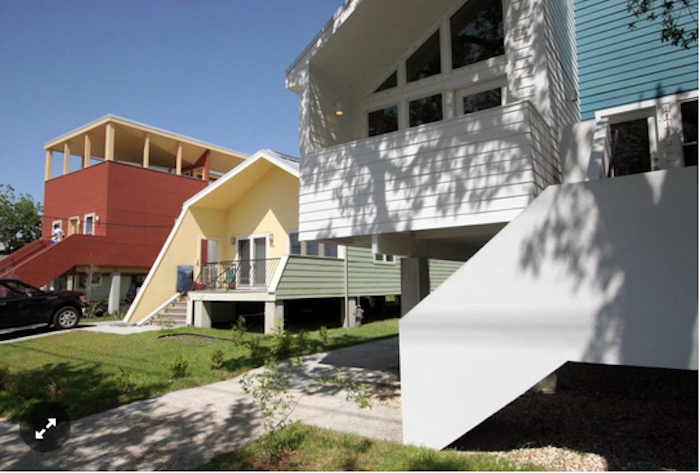
Experimental houses built by Brad Pitt’s Make It Right foundation. (Flicker/Commons)

Apparently, some media outlets have discovered the joy of dishing on celebrities who think they know best. Isn’t that all of them? At any rate, the Daily Kos and the (U.K.) Guardian both have new hit pieces out on Hollywood film crush Brad Pitt, who in the wake of Hurricane Katrina rushed to New Orleans to build new modernist houses for victims in the city’s hard-hit Lower Ninth Ward.

Anyone could have predicted that the houses would suck. The Guardian’s writer, Wilfred Chan, says they suffer from “water intrusion, black mold, porches rotted through, stair rails collapsing, fires caused by electrical problems, plumbing problems and poor ventilation.” Rebekah Sager, writing for The Daily Kos, accuses Pitt of “breaking a promise” to the ward’s mostly black community.

But he did not break a promise. Pitt formed a foundation called Make It Right to build 150 affordable, ecologically sustainable houses. Bill Clinton, Snoop Dogg and others held fundraisers. Pitt and his wife at the time, Angelina Jolie, raised millions, and donated $5 million of their own money; 109 houses were built and sold to star-struck residents for $150,000.

In 2010, Pitt declared, “We’re cracking the code on affordable green homes.” By 2014 it became evident that the houses were falling apart from the inside, but in 2016 Pitt divorced Jolie, they sold their mansion in New Orleans and the Make It Right website vanished. Two years later, a study showed that only six houses of the Make It Right neighborhood remained in “reasonably good shape.” Several have already been demolished.

Class-action suits started appearing in 2018. As described in the Guardian:

Some houses had flat roofs and lacked basic features like rain gutters, overhangs, covered beams, or waterproof paint to weather New Orleans’ torrential downpours. Within weeks, houses began to develop mold, leaks and rot. Pitt’s non-profit initially made some minor repairs, but then began pushing residents to sign non-disclosure agreements before it would tell them what was wrong with their homes. “That’s when a lot of residents started to notice that things were very fishy.”

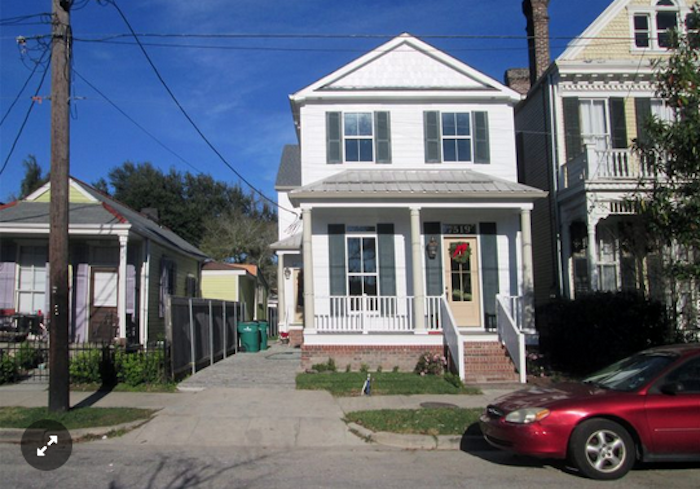
Both writers, and many others over the years, point to black mold and the other oopses, but no one seems interested in why these houses – designed by A-list architects such as Frank Gehry, David Adjaye, and Shigeru Ban – developed such a long list of problems. They did not need to look hard to discover how Brad Pitt’s houses differed from pre-Katrina houses in the ward, for example the famous shotgun houses, which had lasted decades and even centuries.

How did they differ? They were modernist. Make It Right was dedicated to Making It Wrong.

The desire to experiment with form required cutting costs on materials. The foundation could not create groovy new houses with shape-bending features and then sell them for a mere $150,000. This price tag was already below cost, but how much below cost? It was never going to work.

Brad Pitt wasn’t the only one building new houses in New Orleans after Katrina.  Of these, it seems only Pitt wanted to break the traditional rules of architecture. A study by Tulane identified 333 houses built between late 2005 and 2012, according to building permits, found that by a hefty 14 to 1 margin, residents wanted houses of traditional rather than modernist styles. As of 2012, Brad Pitt’s houses were only 1 percent of new houses built post-Katrina.

What may be more surprising than the failure of Make It Right is the behavior of its founder, Brad Pitt, certifiably a good guy, you’d think. When the writing on the wall resolved into Thou shalt not experiment on the poor, Pitt headed for the hills. The Hollywood hills, of course. Maybe that should not be so surprising. White privilege, anyone? It’s only when a blue-chip celebrity breaks the laws of architecture does the public notice, not to mention the authorities. Traditional architecture is not only more beautiful but more utilitarian and more sustainable than modern architecture. They used to build it right; now, they hardly ever do. Let’s hope Make It Right turns out to be an effective teaching moment.

[Rob Steuteville’s excellent column on this topic in his CNU Public Space also makes the points most writers fail to make. Nikos Salingaros links to Rob’s column in his comment, also excellent, below.]

Traditional houses in New Orleans. The one in the middle is new. (Infrogmation)

Posted in Architecture, Development | Tagged , , , , , | 5 Comments

Backsliding on 67 Williams

Inset at left describes changes from earlier plan for 67 Williams St. Click to enlarge. (HDC)

The proposal for a new house on Williams Street where no house has ever been built has, in my mind, slid in status from buildable perhaps to buildable not. I refer to my own minimal support for the design as okay if built with acceptably historical materials, such as wood rather than PVC for details, and assuming that the details meet the high standards of the historic neighborhood, which sits less than half a block off of Benefit Street, Providence’s famous “Mile of History.”

The latest meeting of the Providence Historic District Commission on the 67 Williams St. proposal took place on Monday. The commission decided to “continue” the process – that is, it refused to grant “conceptual approval” for now and the urged the proponents to return to the next meeting with an improved proposal. If they want to.

The HDC heard developer Jeff Hirsch, his lawyer and three architects for two hours, and concluded by rejecting conceptual approval. That is the first phase of approval, and deals with such matters as the height of the building, the distance between its front and the sidewalk of Williams Street, the number of balconies, or decks, on the house, but not whether, for example, the detailing of the roof cornices is appropriate, or whether they are made of historically appropriate construction materials.

Synthetic rather than natural materials are not only insufficient, but are usually a sign that effort will not be made to incorporate an appropriate amount or quality of detail for a historic district. And yet, according to a source, the cornices, frieze, trim and rail in the proposed house are to be made of PVC – a form of plastic. The roof is asphalt shingle. The clapboard is not of wood but of cement siding.

All this raises questions about whether the developer even intends that the house should fit into a historic district, and causes me to feel greater skepticism about the project as a whole. Commissioner Tina Regan said that with all the porches and railings and doo-dads, “it looks like a lady with too much jewelry.” I am inclined, at last, to agree with her.

The proponent’s architects apparently did not even know how tall the house was supposed to be – three stories on a street that features mostly one- and two-story houses, but how many feet tall? It’s an odd thing not to know. Since its closest neighboring houses are three-story houses, I did not agree with most opponents that its height or its massing were too large, and I still do not.

Yet the proponents now seem to have lost at least some enthusiasm for their project. For example, at Monday’s HDC meeting they were whining, according to my source, that their budget is not big enough to make some of the changes that opponents and the commission seem to want. Hirsch, the developer, even went so far as to say, on more than one occasion, that he was “trying to get to a yes here.” Does he mean he’ll say anything to get conceptual approval from the commission? Not a good look. Is it a sign of flagging enthusiasm, a throwing up of hands as the commissioners appear more skeptical of Hirsch’s proposal? Or is it a sign of even more enthusiasm than might be proper. It is hard to say.

There may be more to this than meets the eye. It did not come up at the meeting, and it may be gossip signifying nothing, but a couple of weeks ago I heard that proponent Hirsch was connected with one of the three firms proposing to build a large apartment complex blocking river views from College Hill on Parcel 2 of the waterfront east of the Providence River, near where the pedestrian bridge lands on the East Embankment. To my knowledge, he has not mentioned this connection before the commission. I looked at the documents and it was true. Cynics like me immediately and naturally wondered whether Hirsch wanted to build a house for himself on nearby Williams Street because he knew the fix was in for his firm to build the apartment complex. Well, that was clearly not the case, since that plan was rejected by the I-195 Redevelopment District Commission two days after the HDC meeting. If he knew about this in advance, it might cause a deflation in his desire to have a house of his own nearby.

Just thinkin’ outta the box!

I understand that there has been considerable confusion whether opponents of the proposed house on Williams Street have been accommodated by the HDC in their desire (and their right) to speak at Monday’s meeting. Those who wrote to the commission were, for the first time, it seems, not allowed to speak out at the meeting itself. Before the commissioners rule on the Williams Street proposal, they should figure out what the law says about who may speak at meetings, and stick by what they decide – at the next meeting and on into the future.

There is no excuse for confusion on this matter. It is a free-speech issue, which should be a top priority for a local development agency, whose deliberations are where the rubber meets the road of democracy.

Posted in Architecture, Development | Tagged , , , , | 4 Comments

Traditional design is healthier

Six examples of traditional architectural design from around the world that incorporate an intuitive understanding of multiple fractals. (Classical Planning Institute)

Without thinking much about it, most people prefer traditional architecture. Now it seems as if more detailed and ornamental styles of design for buildings and cities are not only more popular but more natural and more healthy. A new study of studies in the Urban Science Journal concludes that:

[W]e perceive urban space the same way as our ancestors perceived the landscape of our emergence, the African savannah. With significant implications for the design of cities based on our perception of streetscapes, the authors conclude that, in order to promote wellbeing, we should design streetscapes to “please” our brain.

The authors of the article in Urban Science Journal – neurobiologist Aenne Brielmann, architect/planner Nir Buras, mathematician Nikos Salingaros and physicist Richard Taylor – focus on the role of “multiple fractals”: patterns that self-repeat at different scales both in nature and in the built environment. This phenomenon of nature, when it is absent from architecture, starves the brain as it perceives streetscapes.

“What happens in your brain as you walk down the street?” ask the authors, who point to multiple studies to explain the answer. The Classic Planning Institute’s press release about the study explains it more concisely, and offers a link to the study of studies itself.

The insights that arise from the four authors’ summary are not quite new, but their role in contradicting what most architects and city planners have believed for a century could, if embraced, enable urbanists to design streets and buildings that “foster well-being, with such striking benefits as high as a 60% reduction in observers’ stress and mental fatigue.”

Fractals are the key to understanding why human beings are drawn to buildings and cities of ordered complexity arising from traditional architecture and urban patterns. For many centuries, all architecture featured detail of greater or lesser complexity. Architecture advanced by trial and error through generations of builders and designers. A century ago, tradition was increasingly challenged by new styles, dubbed “modern,” that downplayed detail and ornament in favor of a supposed utility expressed by the metaphor of machinery, with novelty more often trumping utility in prioritizing architectural development.

The public has resisted modern architecture for reasons that the eye suggests are obvious. The embellishment of traditional architecture creates beauty, and that is enough for most people. If you remove ornament from traditional architecture, you would have modern architecture. Ever since the advent of modernism, most people have found its vacant slabs boring. A multitude of surveys and anecdotal evidence has demonstrated the public’s skepticism for decades.

Indeed, popular resistance to styles based on the machine metaphor tends to undermine its utility. If people do not love a building, if they do not love where they live and work in a city, they will not provide for its repair and upkeep.

Recent research in neurobiology, tracing how the brain processes visual data back to the early development of human perception millennia ago, has advanced the knowledge of fractals and deepened our understanding of their role in how we feel about what our eyes tell us of our manmade surroundings.

Based on the makeup of the human brain, the authors sequence and characterize the earliest stages of visual processing. Laying this perceptual foundation validates the common urban experience we all share – places most people recognize as beautiful – or ugly. The perception of multiple fractals – a fundamental human characteristic – is among the first things to be processed, within 50 milliseconds.

Intuitive understanding of cities and buildings, and of how tradition regenerates patterns of design conducive to human nature, has long proved stronger than the pseudoscientific explanations modernists give for why modern architecture is the correct approach for modern times. But in modern times ancient wisdom often requires scientific backing. Without it, the quality of our built environment and the pursuit of a more humane existence will continue to be a matter of power rather than of truth. This is why the article by Brielmann, Buras, Salingaros, and Taylor is such a vital contribution to architectural discourse.

Posted in Architecture | Tagged , , , , , , , | Leave a comment

Ellsworth testifies for NYC

View of Penn Station from New Yorker Hotel. Statement by Jane Jacobs. (ReThinkNYC)

Lynn Ellsworth testified at last Thursday’s public hearing of the Empire State Development [ESD] Corporation. Ellsworth coordinates a group of organizations that opposes former Governor Cuomo’s (and now Governor Hochul’s) illegal plan to demolish the area of historic buildings around Penn Station and then erect a forest of towers that would damage New York City in a manner similar to the demolition in the 1960s of the original McKim Mead & White Pennsylvania Station, whose reconstruction is part of a comprehensive alternative proposal supported by the coalition. I have republished her brief testimony below as a guest post.

***

I’m Lynn Ellsworth, a coordinator of the Empire Station Coalition. I’m an economist and I specialize in economic development. I believe that the project concept and the choice of project site violate the UDC [Urban Development Corporation] Act [of 1968].

Section 2 of the enabling legislation for the ESD tells the agency to find urban areas that are economically suffering, that lack public transportation, are isolated and abandoned, where there is widespread poverty and “substantial unemployment,” where the buildings are “obsolete, abandoned, inefficient, dilapidated and without adequate mass transportation facilities.” The ESD is told to “to develop rental housing that is affordable to persons of low income” and to seek out urban places where there is an “unavailability of private capital.” But none of that describes the Penn neighborhood which is awash in private capital and sits on top of a massive transit network in the middle of the densest county in the entire country. The CEO of Vornado crowed about this in his annual shareholder letter and I quote:

“Day and night, the Penn District is teeming with activity. Our assets sit literally on top of Penn Station, the region’s major transportation hub, adjacent to Macy’s and Madison Square Garden” (Vornado’s Letter to Shareholders 2020)

Vornado Real Estate Trust chairman Steven] Roth repeats that the area is “teeming with traffic and our retail does really well there” and tells us that it has “the highest growth opportunity in our portfolio” He explains that the Hotel Pennsylvania was highly profitable before Vornado warehoused it.

It is circular reasoning to claim that if an area does not show constant demolition and rebuilding with Class A office space, that it is therefore “stagnant” (in the words of the Neighborhood Conditions Study). Since when is a Class A office monoculture the apex outcome for cities? As urbanists have long explained, successful cities require great diversity of office space, kinds buildings, industries, residents and incomes (Jane Jacobs 1992; Sorkin 1994; Sassen 2001). Urban success is destroyed when monocultures of any kind become dominant. Yet the ESD’s logic is that if market forces have not already demolished a neighborhood and replaced it with taller Class A buildings, then the ESD should use state power to force that result “river to river” in the words of an EDC spokesperson. By what legitimate theory of economic growth is that the case? If we apply that reasoning to the rest of the city, all of Manhattan would be demolished and rebuilt every ten years.

ESD also rhetorically equates the “age of buildings” with the words “obsolete” or “outmoded”. This is utter nonsense. The White House is over 200 years old. Should it be demolished?

The ESD bases this project in a discredited hyper-gentrification strategy, that of the “luxury city” model. It fails to provide a credible economic development strategy for working-class people, entrepreneurs, start-ups, or small businesses – all of whom currently thrive in the area. Instead, the ESD seeks to kick them out. Since when is the ESD directed by law to serve large corporations and the high-wage gentry class instead of everyone else?

— Lynn Ellsworth

Posted in Architecture, Development | Tagged , , , , , | 3 Comments

Really saving New York City

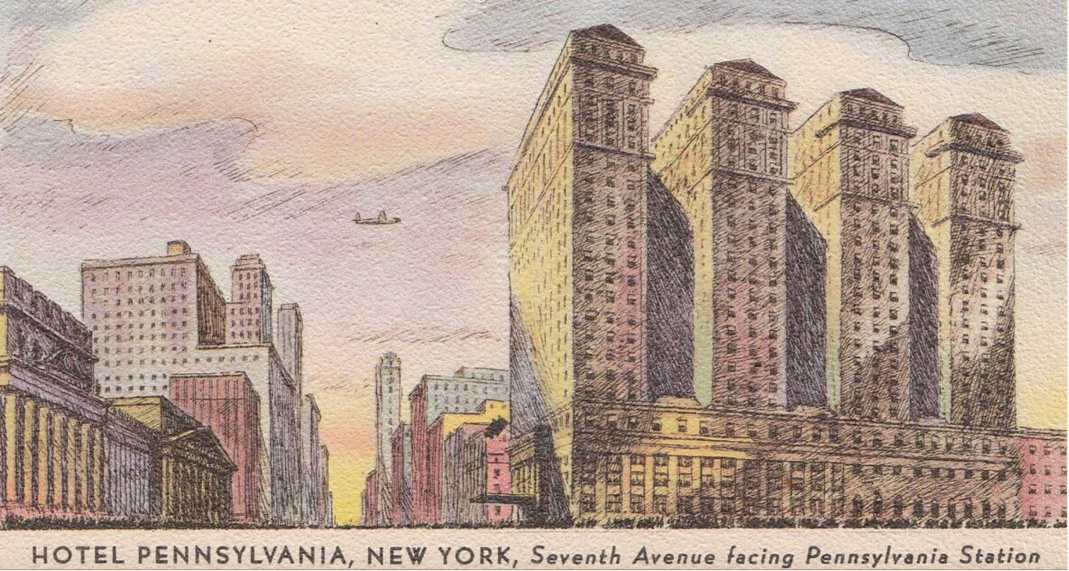
Hotel Pennsylvania (1919) is slated for demolition. (boweryboyshistory.com)

Authorities in the Big Apple, including, it now seems, the state’s new governor, Kathy Hochul, have bought into a vision of Manhattan’s future that privileges the greedy moguls of high finance and their camp followers in high office. So what else is new? You’d think that as a woman the new governor would want to flee her predecessor’s priapic project as fast as her legs can carry her. But no.

What is new is that instead of ruining the city building by building, as has been the way for decades, the entire area around Pennsylvania Station, nine square blocks, is to be torn down and rebuilt with skyscrapers from horizon to horizon. The old district – 13 landmark and landmark-eligible buildings, and at least 50 in all – will be replaced by glitzy towers and transformed into a sterile wasteland of wind corridors and dark shadows alternating with the sun’s glare reflected in hundreds of acres of glass. Meanwhile, workers, residents and visitors will enjoy endless construction sites, street closures, detours, and traffic snarls around the busiest transportation depot in the western hemisphere.

In a letter to Association for a Better New York chairman Steven Rubenstein urging him to hear an alternative plan by ReThinkNYC, its chairman Samuel Turvey wrote:

The Governor’s plan does not differ markedly from her predecessor’s. Much of the neighborhood would still be needlessly demolished, “supertall” buildings loathed by everyone except, it seems, governors of New York, will still add unsustainable density to the vicinity, blot out the sun and obscure the skyline, and, when the dust settles, Penn Station will still be trapped in the basement of a hockey rink.

This is more than a matter of whether to rebuild Penn Station to the original 1910 design of McKim Mead & White. Hochul’s plan for the neighborhood would blot out that opportunity altogether, substituting a half-assed remodel amid its plan to redevelop the area. High on the list of legacy architecture set for demolition would be the venerable Hotel Pennsylvania, also designed by McKim Mead & White and right across Seventh Avenue from Penn Station. The plan, formerly the Empire Station Complex and now called the Pennsylvania Station Civic and Land Use Improvement Project, was recently opposed by the National Trust for Historic Preservation, which described it as “hauntingly reminiscent of the failed ‘urban renewal’ strategies of the 1960s.”

Penn Station today is not on anyone’s list of landmarked buildings, nor should it be, but press accounts have suggested that unidentified preservationists want to landmark both Madison Square Garden, which squats atop Penn Station, and Two Penn Plaza, the 29-story tower also built on top of the station. That is a ridiculous idea. Landmarking those two structures would spell doomsday for rebuilding Penn Station. Turvey stresses that ReThinkNYC and the Empire State Coalition, the alliance of which it is a part, oppose any such steps. He adds:

We are not sure who is behind using preservation laws to protect Madison Square Garden and 2 Penn Plaza but it may well be a very cynical ploy by someone to detract from the fact that the State of New York, [real-estate mogul] Vornado and the Dolans [owners of the arena] would like to see the Penn neighborhood obliterated to make way for a Maginot Line of supertalls, an underground Penn Station and a dated track plan. That becomes a reality only after destroying numerous historic sites, displacing residents and hundreds of small businesses.

Cynical ploys may be the mother’s milk of New York politics. It’s surely not for nothing that historian Vincent Scully wrote after Penn Station’s demise: “One entered the city like a god; one scuttles in now like a rat.” Do we want to set the current Penn Station in cement? Do we want urban renewal in NYC? I don’t think so. Sam Turvey well encapsulates the situation:

To paraphrase Jane Jacobs, we could not save the original Penn Station but we can save New York. We can dothis, in part, by having the courage to rebuild an architectural masterpiece that should never have been destroyed andby letting logic, need and geography rather than political infighting and man-made jurisdictional limits define ourfuture transit operations. If we get this right, we will not only save New York but will unlock the region’s true potentialin ways that will burnish the legacies of all who fought to make this happen for generations to come.

***

A continuation of the public hearing held by the New York State Development Corporation in December on much of the above, which has been described as 90 percent in opposition to the Empire Station Complex, begins at 5 p.m. today at the link below:

https://us02web.zoom.us/w/81376225529?tk=QM-hbBP0oqmERx2cR1U1A3XPG7fnQwjBsbfUhieqx6g.DQMAAAAS8mao-RZGSGxyZkozaFRkZUlsdTJjNW1OZVlnAAAAAAAAAAAAAAAAAAAAAAAAAAAAAA

Posted in Architecture, Preservation | Tagged , , , , , , , , , , , | 20 Comments

Save a Providence water view

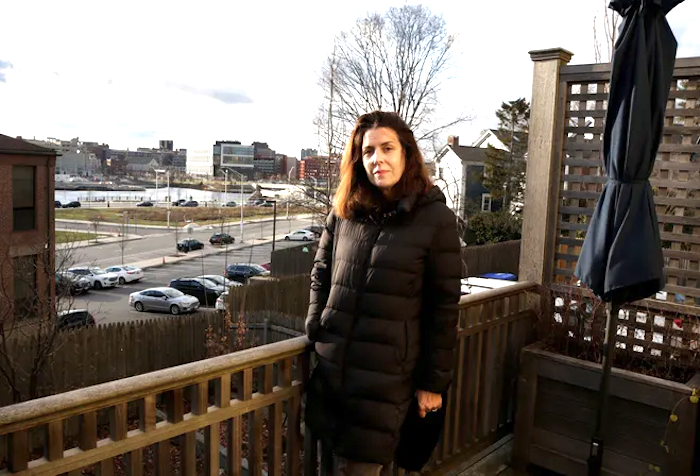
Tayo Heuser and the deck in back of her Benefit Street “home.” (Kris Craig/Providence Journal)

It may be too late to do anything for poor Tayo Heuser and Jeff Shore, according to Amy Russo’s story in the Providence Journal, “Neighbors scramble to soften impact of waterfront apartments.” They bought a “home” on Benefit Street seven years ago, and built a deck from which to enjoy their “picture-perfect view of the Providence River.” In a “twist of fate,” they they will probably soon be looking out, instead, at the rear end of a building filled with apartments.

One of three proposals for that building will be chosen on Wednesday. The Parent and Diamond proposal sears the eye considerably less than the other two along its river frontage, but all three are arguably just as godawful from the rear, which would face the Heuser’s and Shore’s deck.

I suppose they’ll have to learn to take more satisfaction from the “fossils, artifacts and paintings” that fill their home, as Russo describes it. Or maybe they will have to better appreciate the rear of the Laborers’ International Union headquarters that already blocks the southerly portion of their view. It encroaches from the left in the photo above by the Journal’s Kris Craig. To see the river, Heuser and Shore must angle their gaze to the northwest from their deck.

What dominates the view is the laborers’ parking lot on South Main Street. Yes, you can see the river, but you are also forced to see the buildings across the river for which the I-195 Redevelopment District Commission is responsible.

The predicament faced by Heuser and Shore brings into focus the reasons why their concerns should be front and center for the commissioners. Heuser and Shore have no right to a water view, but the commissioners have an obligation to promote good architecture, or no architecture if developers offer nothing that qualifies as good – and good means beauty that strengthens rather than weakens the city’s brand of historical character. A view of architecture good enough to at least compensate for the loss of a waterfront view is what the commission owes to Heuser and Shore. If that cannot be achieved, the land should remain vacant until it can be achieved, city taxes be damned.

So, yes, the fine grain of architectural design should be uppermost in the design judgments of the commission. God may be in the details, but details are central to the commission’s understanding of what a community needs from developers and architects – an understanding that clearly eludes this commission and the specialists who appear before it.

The view at issue is a pathetic hodge-podge of quasi-modernist structures. This did not have to be. For years, I have urged the commission to promote, for this district, buildings that would reflect Providence’s historical character – that is, buildings erected on smaller parcels that would break up the size and footprint of buildings and foster design with traditional forms and materials that might better reflect (on the west side of the river) the Jewelry District’s historic architecture and (on the east side of the river) the areas of Benefit Street, College Hill and Fox Point that Heuser and Shore must have found alluring when they were looking for someplace to live.

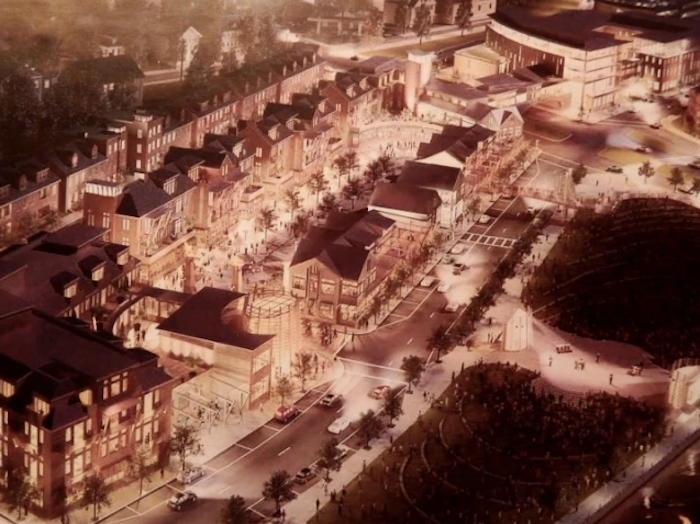
The commission has seen fit to do none of this, and as a result the banks of the Providence River between the new Crawford Street Bridge to the north and the Point Street Bridge to the south are an unholy horror. The only proposal I have seen that might have fit in the Innovation District was the Carpionato Properties development plan of 2013, Its pair of large parcels were not subdivided, but they hosted many small and elegant buildings. For some reason the proposal did not pass muster with the commission and so it disappeared into the mists of recent history. (See illustration below.)

I feel sorry for people who have recently moved into the Benefit Street neighborhood. Perhaps they thought that this city, whose past is so clearly a model upon which to build its future, might adopt development policies that would protect and extend its built heritage. Not to mention residents with even longer tenure in the neighborhood. How could they imagine, after the excellent River Relocation Project of 1990-1996 that created a new, beautiful, traditional downtown waterfront, that the city would instead imitate most American cities, knuckling under to the profane demand, among “professionals,” for architecture that rejects the past and condemns us all to a purposely ugly future.

As the only architecture critic in Providence, and one of the few (if any) around the nation, who tries to follow and review vital projects through their stages of development from a classical design viewpoint, I share blame – for not nagging and blasting the city’s various design commissions (the so-called “experts”) with sufficiently harrowing curses.

Planned development by Carpionato Properties, proposed in 2013. (Carpionato)

Posted in Architecture | Tagged , , , , , , , , | 1 Comment

Marble Arch’s stupid Mound

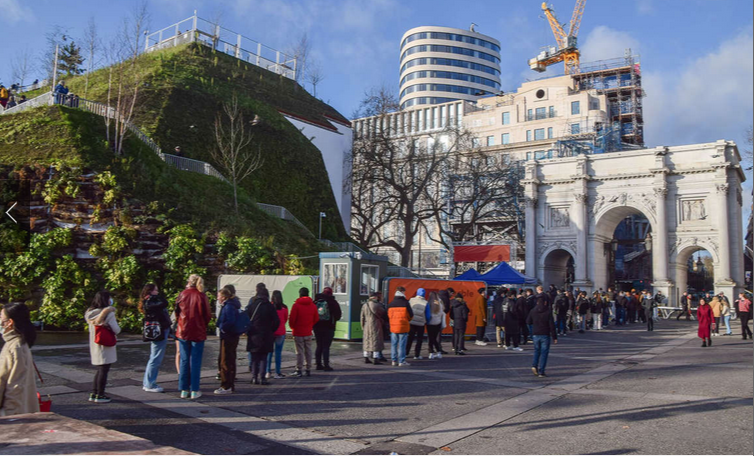
Marble Arch Mound, to the left of London’t famous Marble Arch. (msn.com)

Long ago, in 1979, I visited a friend in London for three weeks while he was a student at the London School of Economics and lived on Great Russell Street across from the British Museum. I often walked down Oxford Street to Hyde Park at its corner with Park Lane, through the Marble Arch and into Speakers’ Corner, where British politicians, divines, writers and cranks have held forth on many subjects, sacred and profane, for centuries.

The Marble Arch was designed by architect John Nash in 1827 as the entrance to Buckingham Palace, completed in 1833, but relocated in 1851 to Hyde Park.

Wikipedia notes that Speakers’ Corner was frequented by Karl Marx, Vladimir Lenin, George Orwell and William Morris, among many others. I assume they spoke when not listening, and I assume also none of them, even Karl Marx, would have been dumb enough to believe that the Marble Arch Mound was a good idea.

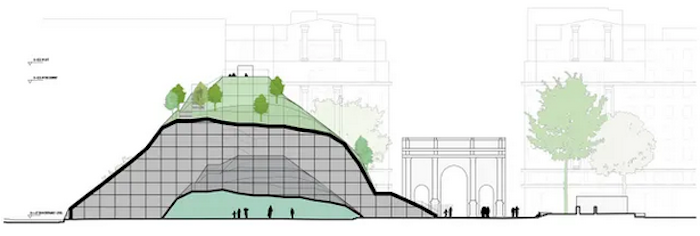
The Mound is a steep, hollow, fake hill with some trees. It opened next to the Marble Arch last summer, costing $18 million to build and $6 to climb. It was supposed to be a tourist attraction to help the Oxford Street shopping district cope with covid.

The good news is that attendance was so poor, so widely ridiculed, that yesterday it closed to the public. By that point, tickets were “being sold for free,” according to CNN. The bad news is that no date certain has been selected for tearing the damn thing down. Or, it might be reasonably asked, since bad architecture hates a vacuum, what might be put in its place?

The Marble Arch Mound was meant to be temporary. Not temporary enough, it appears. Its closure has been described as permanent. Thank God! But when will it begone? An interesting but largely wrongheaded essay by Rowan Moore of the Guardian is headlined “Why the Marble Arch Mound is a slippery slope to nowhere“; at least the headline is true!

The moundstrosity (please excuse me) was designed by MVRDV, a firm based in Rotterdam that specializes in stupid buildings, including buildings with trees on top. It also designed a twin residential towers with a central element of a clustered puff of balconies that resembled explosions. The firm denied that it had intended it to resemble 9/11, but it was obvious they had. Maybe because of justifiable horror at the design, it has yet to be built in its target city of Seoul.

Firms like MVRDV cater to the whim of architects and city planners, and idiot developers who are really to blame, for buildings and other structures that don’t look like anything ever built. Most end up looking like bad architecture already imagined and built, but there are exceptions, such as the Twin Seouls. Another, just to name a few, is CCTV headquarters in Beijing, designed by Rem Koolhaas, which looks like it is stomping on the people of China. The Pompidou Center, a museum in Paris designed by the late Richard Rogers and Renzo Piano, looks like it was built inside-out. Another of this ilk is called The Vessel, a “sculpture” designed by Thomas Heatherwick and installed at Hudson Yards, in Manhattan. It closed because some people who climb it like to leap off of it. These oddities were joined by the Marble Arch Mound. So far as I know, nobody has jumped or fallen off it.

It may be hoped that there are plans to take it down soon so people won’t have to look at it anymore. If so, the denizens of Speakers Corner, if they are still allowed to voice opinions, will be saddened by its absence as a splendidly easy object of their derision.

[After publication I was informed that the Marble Arch Mound covered a Blitz-era WWII bunker next to the arch. In a couple of dozen articles from the time of its initial opening last July 26 to its recent closure, including Wikipedia, I could find no mention of such a bunker’s existence or its dubious rationale for the Mound. A bunker near Hyde Park Corner served as a refuge for Winston Churchill during the London Blitz at a corner of the park well away from Marble Arch. It does not show on the diagram below, nor was it supposedly demolished prior to the Mound’s construction. But I did learn that the Mound was originally expected to close on Jan. 9, which it did, that it was to be removed shortly after, and that its trees would be replanted on London streets and school grounds. There remains no thinking that I could discover regarding plans for a replacement, if any. The most extraordinary thing I learned via this additional research is that the original plan for the Mound was for it to cover up the Marble Arch itself. This plan was rejected, not because it would have been insane but because it might have damaged the arch.]

Cutaway drawing of Marble Arch. Marble Arch is at right. (MDRDV)

Posted in Architecture | Tagged , , , , , | 6 Comments

PBS’s “High-Risk High-Rise”

Citycorp Center (1977) is the tallest building in this scene on New York’s Midtown district. beneath it is the Lipstick Building, designed by John Burgee and Philip Johnson. (wirednewyork.com)

A friend alerted me to a “Nova” special being aired today (through Feb. 2) called “High-Risk High-Rise.” I watched it, and it was as slick as you’d expect from PBS, but I could not help noticing its biases and omissions.

Of course, since a condo tower of 12 stories had collapsed last June in Florida, it was mostly about building safety from fires, hurricanes and earthquakes. Oddly, however, the documentary neglected to mention the Surfside disaster that killed 98 and is tied for third deadliest structural failure in U.S. history.

Don’t production schedules allow a line or two to be squished in for something so painfully pertinent? Maybe not. Still, Surfside appears to have fallen of its own accord, for reasons still under investigation rather than the causes that caught the attention of the documentary’s producers. (See “Max building fail in Miami.“)

Here is the show’s thesis statement:

[A]s most major cities become crammed cheek to jowl with tall buildings, as we spend more of our lives looking down on the world below, will we begin to lose our sense of place, of neighborhood, of community? Or can tall buildings begin to embrace a more humanistic vision, one that stresses livability, interactivity, and eco-responsibility?

Some designers are certainly trying new ideas, but as we build skyward at a staggering rate, there is a more basic question. What have we learned, over the decades, about whether we can make tall buildings as safe as they can be? Can we ultimately trust them with our lives?

Will we begin to lose our sense of place, etc.? We already have lost it in so many places. Tall buildings are notoriously sterile. Can highrises, especially skyscrapers, be more humanistic? Perhaps. The easy way would be to make tall buildings less oppressive and more attractive, as was conventional before modern architecture. Architects nowadays seem more interested in challenging the laws of physics.

As to whether highrises can be made safe, why not first try to avoid challenging the laws of physics. Another solution – which seemed to strike many people as obvious in the aftermath of 9/11 – is to stop building skyscrapers at all. That possibility is dismissed out of hand. The documentary suggests that it took years to summon up the nerve to build tall again – not till after 2008 and the Great Recession. Not so. Going up bypassed the terrorist rationale for not going up in a nanosecond. Going up is the only way to achieve the necessary density in cities, according to every expert interviewed for the show. And yet the 54,150 per square mile density of Paris’s cheek-by-jowl six- and seven-story buildings is not all that much less dense than the 74,780 per square mile density of Manhattan. The number of towers set on plazas may explain a lot. They are not “cheek by jowl.” Subtract Central Park and equivalent densities might be achieved.

“[T]he only true way to address it is going up in height” is the refrain repeatedly asserted throughout. Not so, methinks, and given the curb appeal of Paris, heeding its lessons might help city planners kill two birds with one stone – by making cites beautiful without having to make them unsustainable.

Perhaps the major omission of “High-Risk High-Rise” is the eco-irresponsibility of skyscrapers, which are environmentally unsustainable on many different levels. This topic is foreshadowed early in the documentary when it wonders whether skyscrapers might “begin” (again!) “to embrace a more humanistic vision, one that stresses livability, interactivity, and eco-responsibility?” But then the topic is generally ignored, except for a segment about a Bloomberg headquarters building whose elevators stop at only nine of its 25 stories (except for the disabled, who can get off on any floor). Exercise for employees is supposedly the motive.

From all I’ve seen and read, architects believe they are already addressing climate change, above every other concern except perhaps those of “equity” and “inclusion.” Beauty remains the issue that dare not speak its name.

When it comes to safety, the documentary seems to want to have it both ways, declaring that tall buildings have never been safer while, at the same time, raising the hair on viewers’ necks with warnings, backed by scary music, of the dangers faced by those in and around buildings that could tumble at any time.

One segment was especially dire. The Citycorp Center (1977), in New York, which we all recognize from its white triangular prism of a crown set on its side, has an inventive bracing structure to counter high winds. Engineering student Diane Hartley of Princeton (called “Sonny” by the narrator) questioned the bracing designed by prominent structural engineer William LeMessurier. The documentary’s mashup of voices from the narrator and various experts darkly intones the tale in a key of D-minor:

[The student] tells Bill, you know, my numbers say that the building could fall over. And LeMessurier tells the student “Nice story, sonny, but, uh, go check your numbers again. …

LeMessurier began to wonder if the student might be correct. “I pursued this and found out some very awesome and frightening facts.” He discovered that winds striking the building diagonally rather than face-on could increase the stress on some of the V-braces by 40 percent or more. Then he realized that during construction his office had permitted contractors to bolt the braces together rather than welding them as he had originally specified. He calculated that winds in excess of 70 m.p.h. striking the corners of the building could sever the bolted connections. ‘I came to the conclusion that a storm that had a probability of occurring once in 16 years would cause the building to fail, and collapse. I can’t live with that.’ LeMessurier recommended welding six-foot-long steel plates on either side of the bolted connections to strengthen them. This would certainly solve the problem, but would take weeks to finish.”

The city drew up plans to evacuate not only the building but the ten square blocks around the building, “just in case,” states LeMessurier, “the building falls over. Can you imagine!” In August 1978, as work on the fix began, Hurricane Ella headed for New York. There was no way repairs could be done in time.

Thankfully, Ella veered out to sea. “You know, ultimately it worked out,” said the engineer, “but it was a very dangerous situation.”

Whew!

The documentary makes sure we all shudder at the long list of hurricanes and earthquakes that have toppled tall buildings in recent decades. Watch out, California! But really, folks, not to worry!

It seems to me that, brilliant as our corps of building engineers is, not to mention our architects, last year’s lesson of Surfside, with its seeming quantum of human error, rattles my nerves far more than the forces of Mother Nature.

Posted in Architecture | Tagged , , , , , , , | 11 Comments

Best trad buildings of 2021

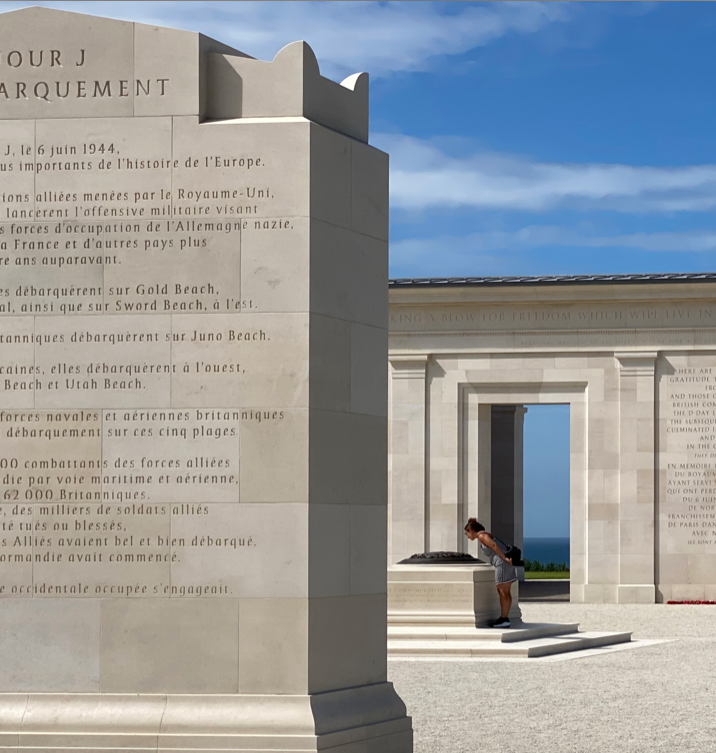
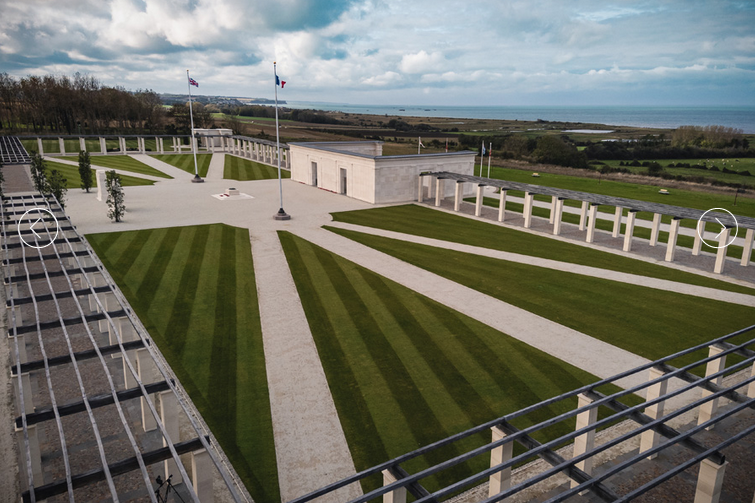
British Normandy Memorial, designed by Liam O’Connor. (Charles Bergen Studios)

This year’s meagre selection of new buildings designed in traditional styles came close to cancellation, not the first event to suffer that fate lately. It is depressing this year, as it was last year, to contemplate the listlessness of the genre, however lovely the specific works may be. This year I came even closer than last year to throwing up my hands in despair. No doubt there were many new buildings traditional or classical in style erected around the nation and the world: buildings that seem to have looked at their feet, avoiding our gaze, shunning the sort of publicity thrust vociferously at architecture that deserves its embarrassment.

Before I get to cases, let me introduce readers to an essay about the two colleges at Yale designed by Robert A.M. Stern Architects. The writer of this long piece, Belmont Freeman, in Places Journal called “Tradition for Sale,” so thoroughly misunderstands both architecture and university patronage that in condemning Yale’s hiring Stern to design its two new residential colleges, he unintentionally undercuts all of the points he intends to make. Great fun! Read it before or after checking out the best 2021 trads.

***

O’Connor’s memorial takes the shape, seen from the air, of the Union Jack.

The British Normandy Memorial, dedicated to British soldiers who died assaulting the French coast on D-Day, 1944, was designed by architect Liam O’Connor, perhaps best known for his British Bomber Command Memorial, located at Green Park, in London. The Normandy memorial sits 2,300 feet behind the Gold Beach. A grouping of three British soldiers landing on the beach was sculpted by David Williams-Ellis. I was informed of this memorial by Léon Krier.

***

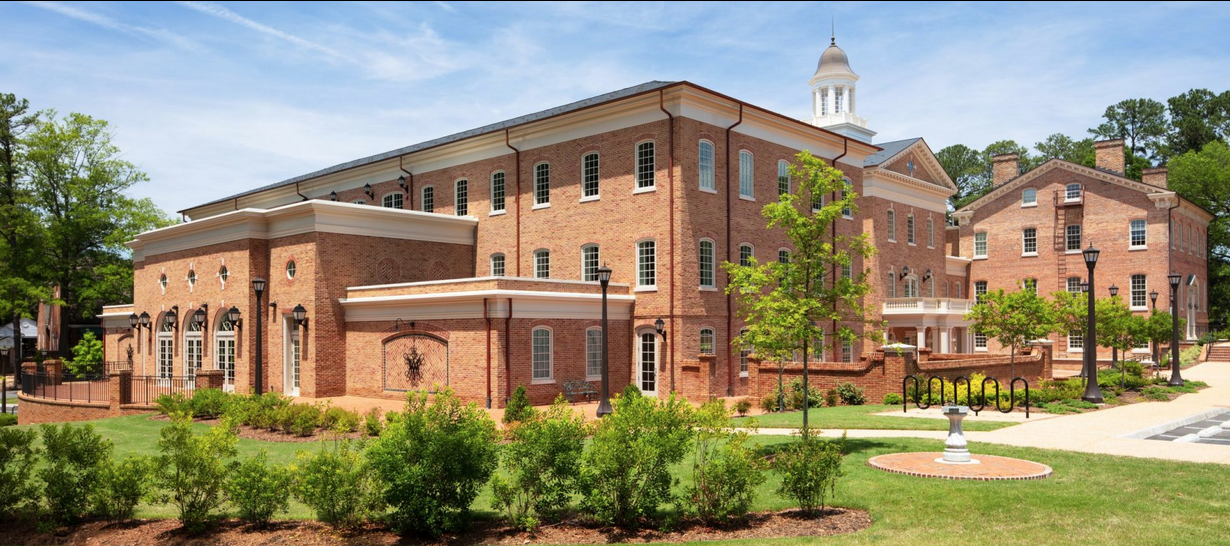
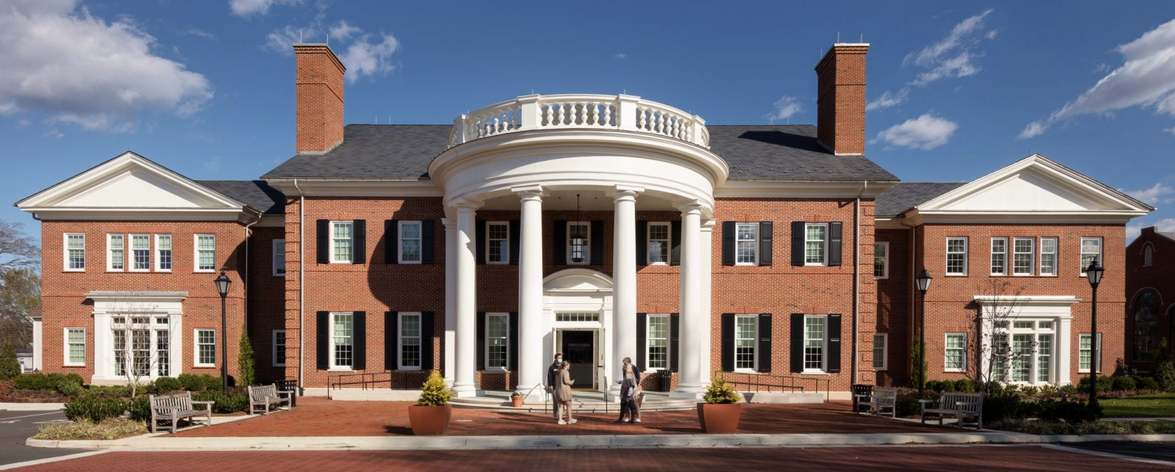
Alumni Hall expansion at the College of William & Mary; original Bright Hall at far right. (G&HA)

The Richmond-based firm of Glavé & Holmes has participated masterfully in the construction of Christopher Newport University, in Newport News, Va., and much more. It continues its good work with an addition, completed in 2021, to Alumni Hall at the College of William and Mary (above) – the original, Bright House, sits at the far right of the photo – and a new admissions building (below) this year at Longwood University, in Farmville, Va. I was alerted to this pair of buildings by G&HA senior principal architect Andrew Moore.

New admissions building, Radcliffe Hall, at Longwood University, in Virginia. (G&HA)

***

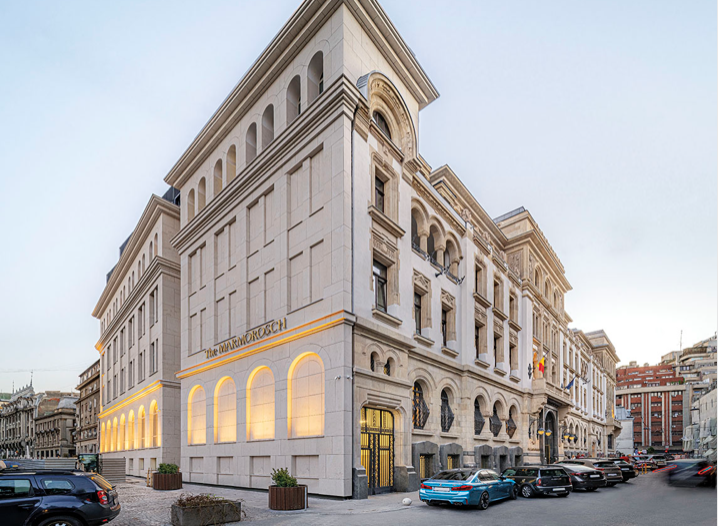
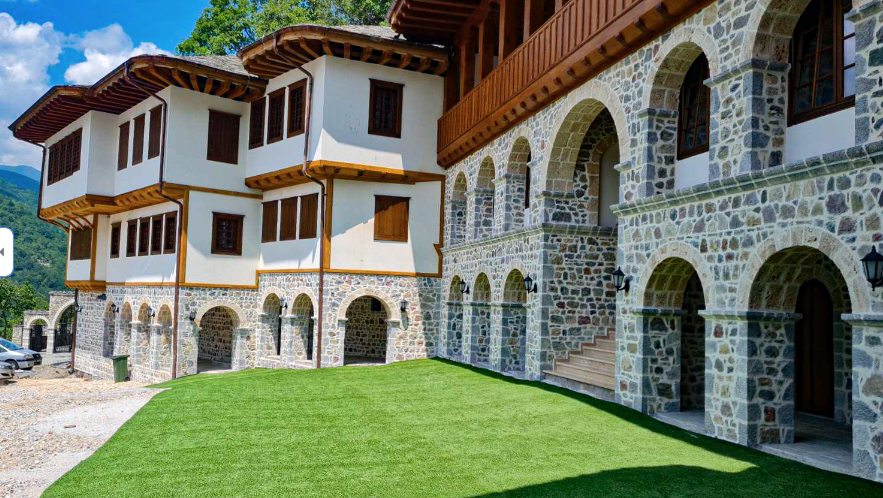
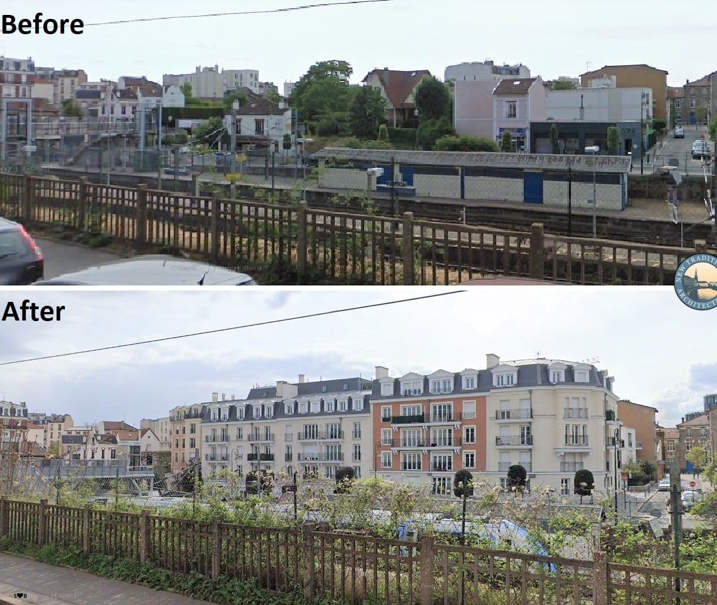
Architectural historian Michael Diamant, of Stockholm, who compiles examples of traditional architecture being built in Europe, has sent over a number of buildings completed this year.  Michael’s flow of information enables me to turn my frown upside down at the prospect that new traditional architecture is being built more widely than is apparent from what appears in my humble annual roundup. His Facebook page, New Traditional Architecture, and his website of the same name, are places to find extensive information and links about new trad architecture and the firms that produce it in many nations around the globe. He has formed a nonprofit lobby group called Arkitekturupporet or Architecture Uprising to keep pushing this rebellion forward. What follow are photos from his collection sent to me over the past few days:

This hotel in Bucharest, Romania, was once a bank, described by Diamant as “a ruin.” I am assuming that the hotel, by Cumulus, is tantamount to a new building, completed in 2021.

A monastery inn in North Macedonia completed in 2021 by Studio lelelele in a local vernacular style

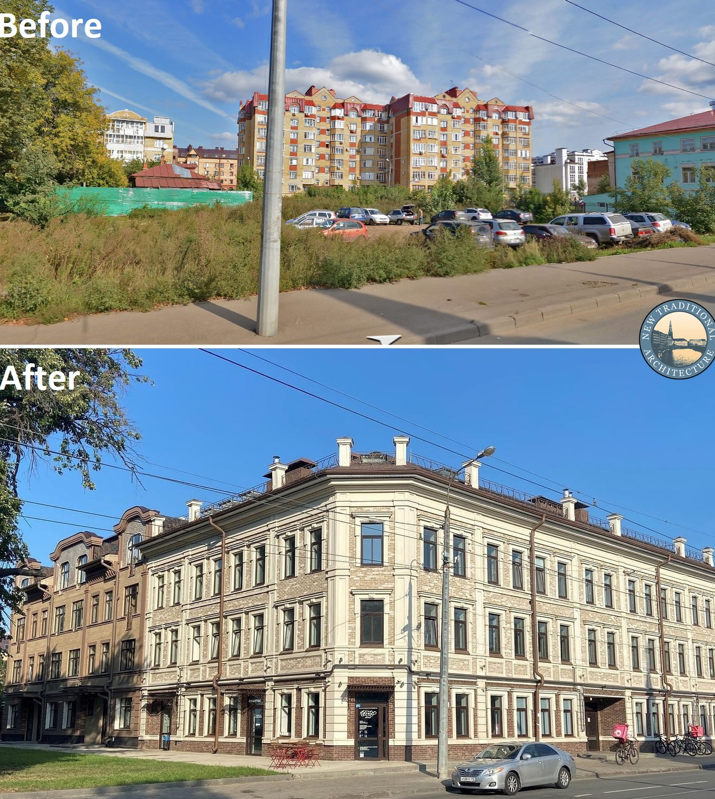
Before and after shots of a new block of townhouses, Villa Auriana, by Dominique Hertenberger, completed in 2021 near the Garenne-Colombes train station, in Paris, that replaces a set of demolished modernist structures.

This building, by ADT Project, was completed in 2021. Diamant writes: “In the Russian city of Kazan there are lots of things going on. Whole streets are being renovated and a lot of empty plots are filled with historicist buildings. They are good in scale, mixed use. They let the older historic buildings shine brighter.”

***

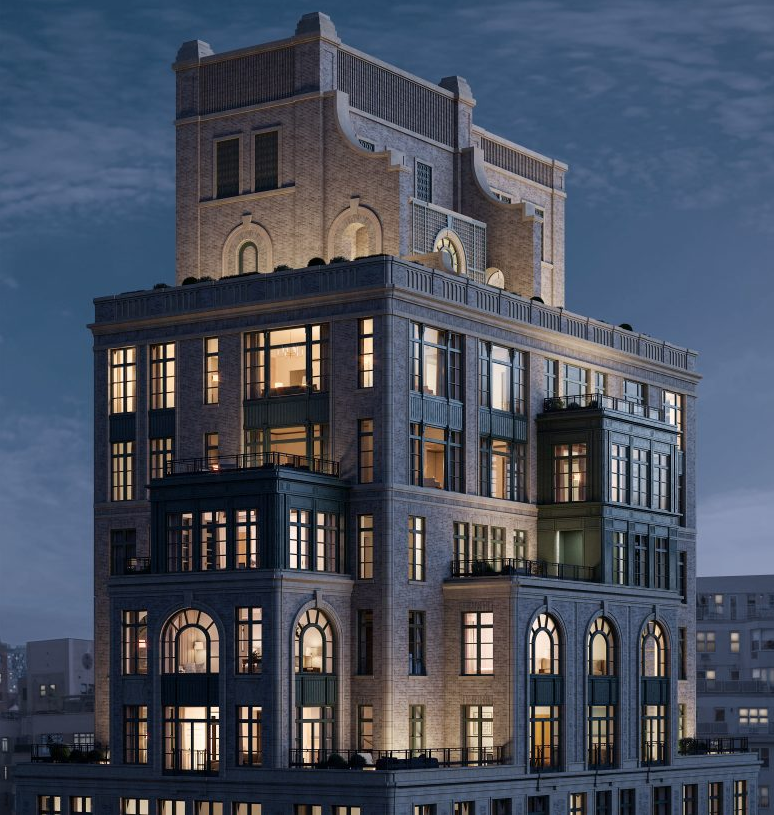
150 East 78th St., a 15-story condo tower in New York City. (Rendering by RAMSA)

I am sticking my neck out to include 150 East 78th St., a 15-story condominium building designed by Daniel Lobitz of Robert A.M. Stern Architects. It was described in June on the website YIMBY (Yes In My Back Yard) as set to open “later this summer.” Perhaps I will have to strike it from this roundup if I am informed that it will not actually be completed before tomorrow, as this is written. But it is truly gorgeous, and I am proud to take this risk of violating my own roundup rules, which mandate completion between Jan. 1 of this year and the end of Dec. 31 this year. Pray for me.

***

Don’t forget to read the essay from Places Journal on Yale’s two new residential campuses linked to near the beginning of this post. It is highly amusing. As if universities should avoid above all else designs that might please students and donors alike, the better to produce memories that might lead the former to join the ranks of the latter. Heaven forfend!

Well, it depresses me to think that the powers at Yale should interpret “the best of Yale tradition” to entail the replication of nearly century-old building forms, which were ersatz to begin with. Yale University has another tradition, now sadly in retreat, of taking risks with its architectural patronage.

Enjoy stewing in those juices, Mr. Belmont Freeman, whose name no doubt connotes the distance from which he may look down his nose at the tradition Yale has embraced. Readers, do enjoy wading through his existential angst!!!

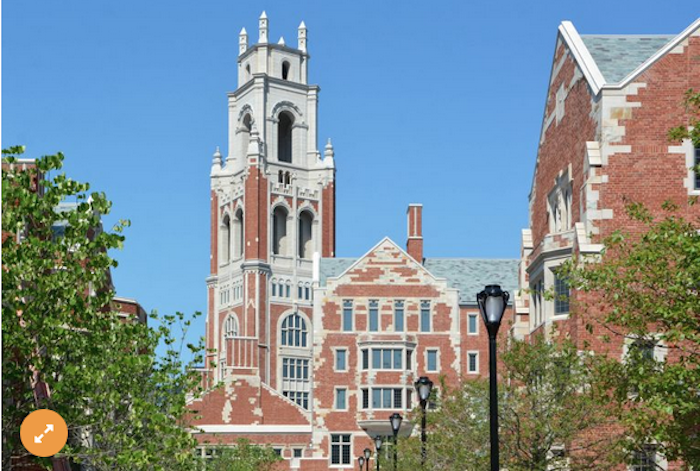
Freeman has included a lot of photos of both the types of design that he likes and those that he dislikes, all of which serve to demolish the argument of his article. Here is a photograph of the new Yale colleges (2017) that push his nose so delightfully out of joint:

Posted in Architecture, Development | Tagged , , , , , , , , , , | 5 Comments