Duo vs. the “style wars”

Screen Shot 2017-07-06 at 2.40.32 PM.png

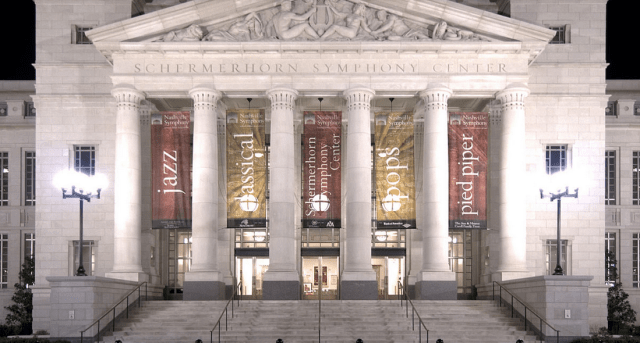
Schermerhorn Concert Hall, by David Schwarz Architects. (Wikipedia)

Architect and commentator Duo Dickinson spends nine-tenths of his essay “Does the New Traditionalism Have a Point?,” on the website Common|Edge, describing new traditional architecture as if it were a recent novelty, a niche phenomenon worthy of a look but without much practical purpose. What’s the point, he asks, as if he did not already know.

After citing chapter and verse how outbreaks of new traditional architecture have been coming on strong of late, Dickinson concludes:

This revived movement may be compared to a “separate but equal” approach of creating a distinct set of rules and criteria for direction and judgment, but it’s really about architects who feel that they are the oppressed and ignored minority rising up to speak truth to power. Rejectionism of any sort is inherently reactionary and shallow. I long for a time when “Good” and “Bad” is sufficient architectural judgment—no style screed necessary.

As Dickinson admits, modern architecture has big problems. “America has felt the failures of Modernism up close and personal,” he writes. And yet “architectural culture, as defined by the vast majority of professors, journalists and ‘thought leaders,’ has a clear bias against traditional styles.”

Nevertheless, after describing valid reasons for the anger of many new traditionalists and a public (let’s not forget them, Duo) that has seen its built environment trashed by modernism for decades, Dickinson trashes those who call for an alternative.

“Irrational and defensive as it seems, the anger against Modernism is real and often absurdly extreme.” “The noise and rancor of these ‘Style Wars’ is reductionist nonsense.” It is “inherently reactionary and shallow.” It embraces a “separate but equal” approach. And anyway, new traditional buildings such as those in two almost completed Collegiate Gothic-style campuses at Yale by Robert A.M. Stern are “Hogwarts.”

And yet Dickinson is one of the few members of the establishment design culture who bothers to acknowledge the existence, if not the validity, of a traditional alternative – one that is in its third millennium, has successfully resisted modernism in the private home market for half a century (as people can choose houses and don’t want modernist ones), and has become a movement not just lately but since the 1960s, when modernist-based criticism of modernism led to the postmodernist movement.

Modernism became a movement over a period of 20 years leading up to its capture of the architectural establishment in the postwar years. Preservation changed from a hobby of antiquarians into a movement just as swiftly and about 20 years later, as average people organized to oppose modernism in their cities and neighborhoods. The classical revival has taken longer to become a mass movement, 50 years and counting, because unlike historical preservation, tradition is actively opposed by the modernist establishment.

But as Dickinson seems to sense, tradition has in fact survived modernist extermination, and is rebounding – now strongly enough that critics like Dickinson cannot ignore it. He realizes that tradition is powerful, and is forced to feign confusion at such an easily understood phenomenon.

Dickinson wonders why can’t we all just get along (“I long for a time when ‘Good’ and ‘Bad’ is sufficient architectural judgment—no style screed necessary”). Just before he attests to his confusion, he quotes architectural theorist Steven Semes, a professor at Notre Dame and director of its new program in preservation, at some length, even though Semes’s words undercut the last remaining modernist excuse – that “we can’t build that way any more.” This mantra has been used time and again to shut down those who can’t see why buildings must look like machines. Why not revive the beautiful, humane places society once enjoyed? He quotes Semes:

The relation between form and technology has been completely reversed since we were in school. With digital representation, 3D printing, and virtual reality capabilities, the idea that ‘the machine’ has any bearing on the shapes and forms that architects design has gone out the window. Anything is possible, so to avoid chaos, one might look to a well-established, visually rich, and culturally resonant tradition as a framework. I see a great opportunity to explore highly innovative new classical expressions making use of all of this technology and encourage my students and colleagues to pursue this.

C’mon, Duo. Come on over to the light side. The view is much clearer over here.


Posted in Architecture | Tagged , , , , , , , , | 10 Comments

Changing cities in China

Screen Shot 2017-07-05 at 11.47.55 AM.png

Shanghai away from its center-city supertowers. (Paulson Institute)

Over a half century or so, China has changed from a largely rural to a largely urban country. The communists had brutal power and used it brutally, a sort of cultural revolution without the violence. China went from cities of small streets stitching together networks of courtyard houses to superblocks on the Corbusier model. Streets went from a lane or two clogged with bicycles to eight or ten lanes clogged with cars. Smog stank up the place, sickened the population, and you couldn’t see much of anything, not that in the New Red China there was much worth seeing.

This situation only grew worse after China decided that it must copy Western capitalism in its infatuation with Western celebrity architects. Beijing’s CCTV headquarters, for example, is designed by Rem Koolhaas, and looks as if it is stomping on the people. In a clear effort to deflect the obvious power of that authoritarian metaphor, they gave the building a cute moniker, Big Pants.

And we’ve all heard about new Chinese cities that are built but not yet occupied.

Now the Chinese seem to be undergoing yet another massive social about- face. Now they desire to at least pretend to be setting a green agenda for their economy. They realize that superblocks and superhighways cause pollution and stultify the mobility of goods and services. So with the signature of a authoritarian edict, China is again trying to do the exact opposite of what it was doing five minutes ago, on a massive scale.

And this, one must suppose, is good. The soft total state is surely preferable to the hard total state, assuming the trains still run on time. Beijing has hired Peter Calthorpe, the leading advocate in America of transit-oriented design, to help China flip from unlivable to livable urbanism. He has been surprised at how open the government has been to planning concepts that take people into account and leave a smaller carbon footprint.

Calthorpe discussed “China’s new agenda” in an interview with the Future of Places Research Network. After answering questions about China’s new green policies and its more sensible urbanism, Calthorpe fielded a question on its shift in architecture:

Q: The government is calling for architecture that preserves Chinese culture—an apparent about-face from the radical designs seen in cities like Beijing. What brought about this change in mentality?

They’ve come to realize that they’ve been destroying their identity and cultural continuity as well as the environment. In a way, we did the same thing in the U.S. when urban renewal gutted our cities in the ’50s and ’60s. We didn’t have historic preservation laws. Piece by piece, great historic buildings came down. In China, the superstar architecture world was wreaking havoc with buildings that looked like they were flown in from outer space. Now, the government is saying [to] focus more on durability, function, and energy efficiency. To modern architects it is controversial, ambiguous, and challenging — to find an architecture that relates to place and climate rather than image.

Q: Do you consider yourself an anti-modernist?

I am for modern architecture, but I want it to be historically, culturally, and environmentally connected to its place. The construction quality and materials in China are such that buildings barely last 30 years. The government is now basically saying, “Let’s make buildings that stand the test of time.”

Good luck with that! If Calthorpe can get that kind of modernism from actual modernists, let’s not hesitate to notify the Nobel Prize committee. Last year, “odd-shaped” buildings were forbidden by edict. (See “Oh to be in, um, China!“) Maybe the Chinese will ramp up their program of copying Western tourist attractions. Not that there’s anything wrong about providing the public with urbanism it likes, even at second hand. It would be interesting to hear what Calthorpe has to say about Chinese “copy the past” cities. Maybe China will decide, under its new agenda, to copy its own past.

Still, all chuckling aside, this is good, and combined with recent news from Steven Semes about change afoot in the American preservation movement (see “News for preservationists“) maybe the future for us all is not so bleak.

Posted in Architecture, Urbanism and planning | Tagged , , , , , | Leave a comment

Beauty, nature or nurture?

Screen Shot 2017-07-04 at 2.10.36 PM.png

United States Capitol (USA Today)

I often repeat the idea that our love for beauty – and for architecture whose ornament stimulates that love – arises from our prehistoric neurobiology. Primitive man on the savannah needed to be aware of details revealing dangers to be met or avoided. Today, we love buildings whose decoration triggers an atavistic desire for detail. Perhaps. But it may be, it surely is, more complicated than that.

The thought was brought to mind yesterday by a passage from Jack London’s 1916 novel The Assassination Bureau, Ltd., about an organization of assassins for hire who will only kill people who deserve killing. But they are constantly arguing about their principles. (Actually, they remind me of Rhode Island’s founder, Roger Williams!) Here is the passage:

“It is a curious problem,” Murgweather continued. “The sacred- ness of human life is a social concept. The primitive natural man never had any qualms about killing his fellow man. Theoretically, I should have none. Yet I do have. The question is: how do they arise? Has the long evolution to civilization impressed this concept into the cerebral cells of the race? Or is it due to my training in childhood and adolescence, before I became an emancipated thinker? It is very curious”

“I am sure it is,” Hall answered dryly. “But what are you going to do about the Chief?”

“Kill him.”

So what are we going to do about beauty? Love it, of course. Or kill it if you are a modernist trained to reject beauty. But maybe primitive man did have qualms about killing his fellow biped, qualms he may have experienced in the form of anxiety. Maybe life forced primitive man to stifle his live-and-let-live preferences and embrace a “live-and-let-die” credo only when rival tribes clashed over the carcass of a woolly mammoth – please excuse me if I have confused my prehistoric eras – and then relapsed into a more natural softheartedness after the battle.

Hmm.

Today is Independence Day, and so we worship freedom. Is our love for freedom innate or has it been pounded into us by propaganda? Love liberty – or else? Tribes among us have different levels of reverence for the idea of freedom, yes? Is this good or bad? Is there a valid parallel here to our love for beauty and our love for life? Discuss.

Hate to leave these questions hanging, dear reader, but the beach beckons.

Posted in Architecture, Books and Culture | Tagged , , , , , , , , | Leave a comment

My Milton Grenfell payback

Screen Shot 2017-07-03 at 1.58.25 PM.png

Proposal for Museum of the American Revolution, in Philadelphia. (Grenfill Architecture)

Strolling through the blogs of Traditional Building magazine’s website, I came across an article by Gordon Bock from two years ago about Milton Grenfell, a Washington, D.C., architect who designs classical buildings. Now, Milton Grenfell holds a lofty place in my heart not just for his work but for having sent a letter to the editor 17 years ago in praise of my writing at the Journal. At a time when deans and professors of architecture at Brown and RISD, among others, were regularly denouncing me on the Journal’s letter page, Grenfell’s letter was timely and extraordinarily gratifying.

Screen Shot 2017-07-03 at 2.02.05 PM.png

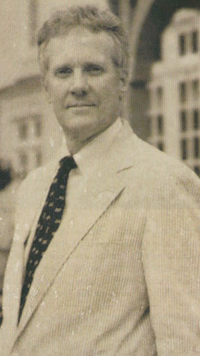
Milton Wilfred Grenfell

Bock’s piece on Grenfell, “Beyond the Call of Duty,” was written after the architect had won TB’s Clem Labine Award in 2015 for his efforts to promote traditional building and arts. TB’s Palladio Awards ceremony is coming up on July 18, in Salem, Mass. And in fact, it is for TB founder Clem Labine’s blog posts that I was searching for when I happened on Bock’s piece. So well written stylistically and of such elegance structurally is Bock’s essay on Grenfell, and so fully does he capture Grenfell’s ethos, that I might as easily have devoted this post to the writer as to the architect he celebrates. But it is Grenfell who once heaped praise on me, so this post is dedicated to him, long, long overdue.

(Posts on individuals, however marvelous, are generally beyond the scope of my blog, as requiring too much subtlety to attempt. In my whole run of 25 years as an architecture critic as an architecture critic at the Journal, I think I have thus memorialized only three: Henry Hope Reed, Antoinette Downing and Bill Warner.)

In a brilliant essay, “Of Time and Architecture,” Grenfell segues from describing the decline in the design and construction of factories as seen from the windows of Amtrak’s Eastern Seaboard line into philosophizing about the decline of architecture in America and, well, supposedly America itself. He writes:

We have been told that our society has grown wealthier over these last 200 years, yet our building record tells a different story. The record we read here is of a civilization entering a dark age. Instead of the settling of a continent as manifested in our nation’s first 200 years of building, begun in 1607, the last 200 years, in Wendell Berry’s memorable phrase, reflect the “unsettling of America.” The record along the rail line speaks of a people who no longer build for the future. And surely, underlying the barbarity of all dark ages is life lived without much attention to the future, much less any hope for it. For barbarians, like animals, only the present moment matters.

Or, as Theodore Dalrymple noted in regard to plans to demolish much of the city of Bath (thankfully thwarted), “The British are barbarians camped out in the relics of an older and superior civilization to whose beauties they are oblivious.” Our eyes tell us this is true of America today – surrounded as we are by evidence of how beauty is built, we continue to build ugliness instead. (I might quarrel over whether this has been the case since 1807, if I may be permitted to take Grenfell literally.) A growing beachhead of new traditional architects has been working against this sad and curious phenomenon, early as it may or may not have begun, for decades. Milton Grenfell is among the most elegant and prescient of its practitioners and theorists.

Here is his letter to the Journal, “Clone Brussat,” on July 19, 2000:

As a practicing architect and sometime town planner, I visit scores of towns and cities around the world, with your fair city of Providence being one of the places that it’s been my distinct pleasure to have visited. It was a double delight, therefore, to discover in The Providence Journal the trenchant, wise and finely crafted architecture/urbanism columns of David Brussat.

When compared with his ostensible counterparts in every other paper I’ve ever read, without exception, his bold and sensible essays stand out as diamonds from coal. He is a jewel that Providence should treasure just as surely as he treasures the many architectural jewels of your city. I suspect that for many I merely belabor the obvious, but I hasten to proclaim his prowess in the knowledge that, alas, a saint is often nowhere without honor except in his own town.

Could Mr. Brussat be loaned out, franchised, or cloned? How the modernism-blasted world of this land cries out for more Mr. Brussats, a man who cuts with lapidary clarity straight through modernism’s monolithic tyranny of the media.

Thank you, Milton!

Posted in Architects, Architecture | Tagged , , , , , | 4 Comments

Dirty truths of modernism

Screen Shot 2017-07-01 at 5.45.23 PM.png

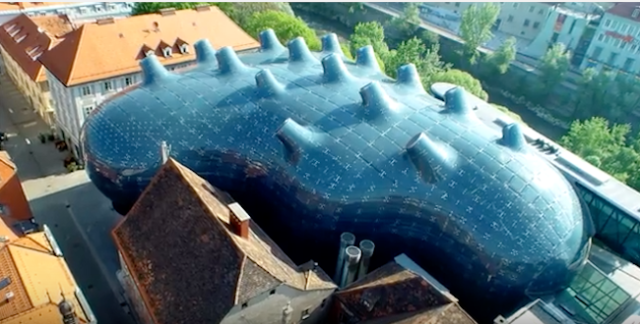
Grazer Kunsthaus art museum in Graz, Austria. (Universalmuseum Joanneum)

Sometimes truth comes out of the mouths of babes. Other times it comes out of the mouths of potty. That does not make it any less true, and since truth on any topic is a rare commodity, Paul Joseph Watson’s pottymouth video “Why Modern Architecture SUCKS” commands attention, and respect.

Paul Joseph Watson has every reason to be angry, and so have we all if what he says is true, and every word is true. One need not accept his verdict on modern art in order to accept his verdict on modern architecture. His discourse thankfully includes clips from such generally less pottymouthed thinkers as Prince Charles, Roger Scruton and James Howard Kunstler. (Coincidentally, the latter two blurbed my new book Lost Providence.)

The video is up to date, with a brief segment on the latest modernist abomination, the Grenfell tower fire in London. But while he mentions the totalitarian Le Corbusier, he leaves out Ludwig Mies van der Rohe, who tried to persuade Hitler that modern architecture was an appropriate stylistic template for the Third Reich. Architects never try to explain that away, they just ignore it. The photo above is a plug-ugly I had never seen before, the Grazer Kunsthaus art museum in Graz, Austria.

Toward the end of the video, Watson expresses this overarching truth about our era: “In an age of ugliness, a work of beauty is an act of defiance.” He concludes, “We must never accept ugliness as a form of beauty.” Enjoy.

Posted in Architecture, Video | Tagged , , , , , , , | 12 Comments

“Lost Providence” update

Screen Shot 2017-02-09 at 2.57.40 PM.png

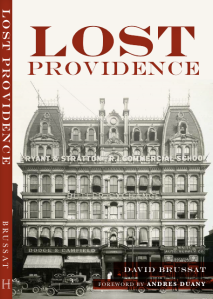
The back and front covers of Lost Providence, on sale August 28. (History Press)

Yesterday, the author’s allotment of five (5) free copies of his book arrived at his happy household in Providence. Today, I started reading it to my wife, and when it goes on sale this August 28 I will start hectoring – oops, I mean lecturing – broader audiences at a series of book events designed to publicize Lost Providence. The book is a history of architectural change in the capital of Rhode Island, and a primer on how citizens can seek to assure that change where they live is good rather than bad.

So far, with the assistance of my publisher, History Press, I have arranged four events. I am amidst negotiations for a dozen others, and have yet to contact yet another dozen or more organizations – schools, bookshops, newspapers, radio and TV stations – that might be willing to offer their patrons the controversial ideas packed into Lost Providence.

Here are the four book events arranged so far:

  • Aug. 28, Symposium Books, 240 Westminster St., Providence: book launch, Monday, time TBA; free
  • Sept. 20, Providence Public Library, 150 Empire St., slide lecture, Wednesday, 6:30 p.m.; free
  • Sept. 25, Rochambeau Community Library, 708 Hope St., slide lecture, Monday, 7 p.m.; free
  • Sept. 28, Preservation Society of Newport County, Rosecliff, 548 Bellevue Ave., slide lecture, Thursday, 6 p.m.; $10 members, $15 nonmembers

Lost Providence will also be available as an e-book. A set of postcards of illustrations from the book will be available in bookstores. This blog will have new pages devoted to the book, including one with illustrations of lost buildings that did not get a chapter in the book or illustrations that further illuminate the theme of the book but did not make it into the book, and a page where readers can share their own favorite lost buildings.

I will list more book events here on this blog as they are confirmed. Below is the house discussed in the book’s first chapter, called “Lost: Benjamin Hoppin House.”

Screen Shot 2017-07-01 at 7.43.03 PM.png

Benjamin Hoppin House, erected 1816 on Westminster Street. (Providence Public Library)

Posted in Architecture, Books and Culture | Tagged , , , , | 8 Comments

News for preservationists

DSCN9817.JPG

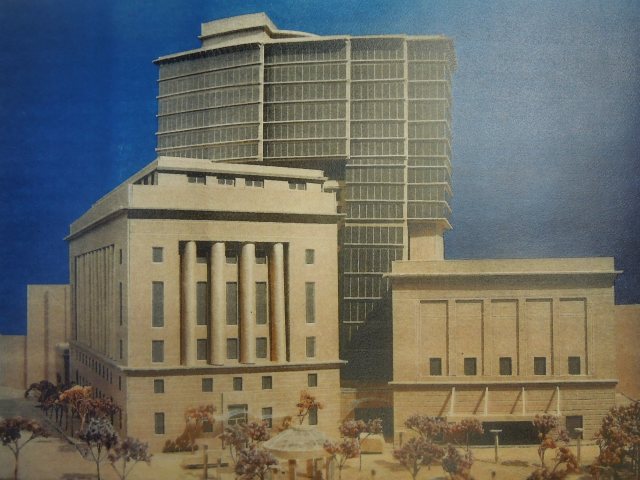
Proposed circa 2000 addition to Masonic Temple, in Providence, nixed by U.S. Park Service, risking demolition of building at left, later renovated as a hotel with traditional addition.

The author of one of my bibles, The Future of the Past, is Steven Semes, the Notre Dame scholar whose thinking pops up on this blog a lot. In 2014, he was named chairman of the new graduate program in historic preservation at ND’s school of architecture, and I am hopeful that his curriculum will reflect the wisdom of his 2009 book. Primarily, it argues that preservation should protect, maintain and augment the character of historic buildings and districts with a mind to retaining their original beauty and harmony.

For decades, preservation organizations have mostly lost focus on that goal.

Semes replied reassuringly: “The new MSHP degree program is more or less premised on the viewpoint of the book.” He added that its “viewpoint turns out to be increasingly mainstream.” He then described what he meant at some length, listing items of news of which I’d been unaware.

Most international bodies and charters setting up principles for historic preservation have, in spite of the modernist turn of their interpretation, for decades, by most theorists and practitioners, “pretty consistently called for harmonious new development in historic settings. … None of them are ringing endorsements of classical/traditional architecture, but an overview of the literature reveals that modernist contrast is not in any way mandated, nor is traditional work prohibited.”

A main exception is the Venice Charter, which is usually interpreted as supporting a modernist call for “contrast” in adding to historic buildings and districts. Some of Semes’s research has lately examined mistranslations in the charter. He writes:

That line in Article 9 about new work needing to “depart from the original composition” and “bear a contemporary stamp” is a mistranslation from the original French text. It doesn’t say that at all. In any case, the idea of “departing” from the composition violates two other articles (6 and 13) in the same Charter. Hence, the modernist interpretation is wrong.

Semes also shared news of positive evolution in the thinking of upper echelons of the American preservation movement.

Stephanie Meeks, president of the National Trust for Historic Preservation, received a standing ovation after her talk at the Congress for the New Urbanism in Seattle last month. Her book, The Past and Future City, is a tribute to Jane Jacobs and the New Urbanists, bringing a strongly urbanist viewpoint to preservation – I would say almost for the first time at this level. There is more emphasis on preservation as a means of community identity and empowerment, and the old modernist-contrast school of thought does not advance that viewpoint very well.

Semes also notes that

[T]he recent statement “Preservation for People: A Vision of the Future,” published by the NTHP, calls for reform of the Secretary [of the Interior]’s Standards. I think things are changing fast and our program [at Notre Dame], once it is fully under way in the coming years, will be riding and leading a wave that is already in progress.”

This is very good news.

The standards for rehabilitation of the Secretary of the Interior are principles that must be followed to qualify for federal preservation grants. Over the years, the standards, administered by the U.S. Park Service, became de-facto guidelines for preservation at the state and local levels, but are frequently misinterpreted as mandating modernist contrast in additions and infill. With that phenomenon in mind, the standards were partly rewritten two decades ago to make such misinterpretation more difficult, but the phenomenon persists, and new language for the standards is being formulated, with Steve Semes in the midst of the proceedings.

The modernist demand for “contrast” reflects a concern that the alternative of “fitting in” will degrade the authenticity of historic districts by fostering confusion as to what was built long ago and what was built yesterday. Such concern, however, privileges matters of curatorial interest over the public interest, which is in the continuity of architecture and urbanism whose preservation arises, in the first place, from a love for their beauty.

Shown in a model on top of this post, a circa-2000 modernist addition was proposed to renovate the Masonic Temple (left, 1929, never completed), in Providence, as a hotel. The modernist addition had garnered the support of almost every preservationist organization in the state, none of which could bring itself to support a traditionally styled solution to the hotel’s need for more rooms. The Park Service rejected the developer’s request for federal historic tax credits, causing Rhode Island’s governor to throw up his hands in frustration and urge that the temple, which had stood unused for seven decades, be demolished. At the last moment, Sage Hospitality, of Denver, a developer willing to erect a more traditional addition, and of much lesser height, rode in on a white horse to save the temple. The hotel project was completed in 2007 as the Marriott Renaissance, pictured below adjoining a historic state Veterans Memorial Auditorium (right). Nevertheless, when the finished project received a host of well-deserved awards, the preservationist community here basked in the glow, forgetting its deplorable role in the building’s close brush with demolition.

All preservationist organizations, public and private, at the state and local levels, should pay close attention to news emerging from the movement’s leading theorists, including the National Trust. Decades of error that have eroded the character of American cities can and should be corrected to return preservation to its roots – and to what no doubt are the expectations of members who support the good work of preservation societies.

Click for more information about the Master’s Program in Historical Preservation at Notre Dame’s School of Architecture.

Screen Shot 2017-06-28 at 12.57.00 PM.png

Marriott Renaissance Hotel (left) after its completion in 2007. (Goldstar)

Posted in Architecture, Preservation | Tagged , , , , , , , , , | 4 Comments

Our pushy American tongue

Screen Shot 2017-06-27 at 5.43.11 PM.png

As a proud owner of one of the several editions of H.L. Mencken’s The American Language, I was tickled to see him cited in an essay about how, after a battle of centuries, American English has conquered English English. The writer of “American English has conquered the world,” by Geoffrey (the English version of Jeffrey) Wheatcroft, in The Spectator, is a Brit, of course, or his essay’s subtitle would not be “Should we give a hoot that our language has been corrupted – or should we back off and call it a day.”

American English, English American – shall we call the whole thing off?

Okay, so corrupted may be more apt than conquered. Or maybe not. The staid tongue of our Anglo forefathers has certainly been loosened by imports from across the Atlantic. Some will say that’s good, others not.

Let me get my edition of Mencken’s masterwork, open it up, and pilfer a passage of predictable (this is Mencken, after all) profundity. Referring, in his preface, to how “certain American pedants” consider his exposing the differences between the two linguistic cousins to be an “anti-social act,” Mencken writes:

All it indicates, stripped of sophistry, is a somewhat childish effort to gain the approval of Englishmen, a belated efflorescence of the colonial spirit, often commingled with fashionable aspiration. The plain fact is that the English themselves are not deceived, nor do they grant the approval so ardently sought for.

How topsy-turvy the relationship is today, with American English having largely swept the field not just in Britain but around the world. Even the French, who have an official government agency to protect their language from foreign invasion, are drowning in vocabulary exported from our side of the pond (often with an initial stop in Britain).

Every branch of human endeavor features battles for dominance in the field, with one nation eventually pulling ahead in the race to perfect an art, a science, a commercial application of a technological innovation, or a method of using language to express a thought. Since it happens among individual practitioners, so inevitably it must happen among nations. This is no less true of architectural development than of linguistic development. Britain, France and other European nations were once the source for most architectural developments in America and other new societies. Now the American skyscraper is on the march around the world. (Which is merely to admit that U.S. power is not always used as it ought to be.)

The essay by Wheatcroft, which reviews Matthew Engels’s That’s the Way It Crumbles: The American Conquest of the English Language, struck me as way too short. It fields several lists of examples of American words and phrases that have squirmed (or wormed) their way into English English. Here is one:

Plenty of Americanisms which we no longer even know are immigrants arrived in Edwardian times or during the Great War (“cakewalk,” “give the game away,” “railroad” as a verb, “sex appeal”). In the 1920s, there was “gangster,” “down and out” (which Orwell, another symbol of Englishry, used as [he means “in”] the title of Down and Out in Paris and London in 1933), and “give a hoot” (which Neville Chamberlain used in a letter in 1938). In the 1960s we got “back off,” “spin-off” and “blue collar” (100 years ago we called office workers “black coat” rather than “white collar” — which are both now meaningless, to look around an office).

I could wallow in this stuff for hours. My copy of Mencken’s The American Language: An Inquiry into the Development of English in the United States weighs in at well above 700 pages. It is the Fourth Edition, published in 1936, one of several updated editions published since the First Edition came out in 1919. The question is how, on top of his more popular journalistic fecundity, he managed to find time for this. (The link above is not to my copy but to a full text of the First Edition.)

Posted in Architecture, Books and Culture | Tagged , , , , , , , | 2 Comments

Lovely Venice, lovely video

Screen Shot 2017-06-26 at 5.22.37 PM.png

I want to go back.

To Venice.

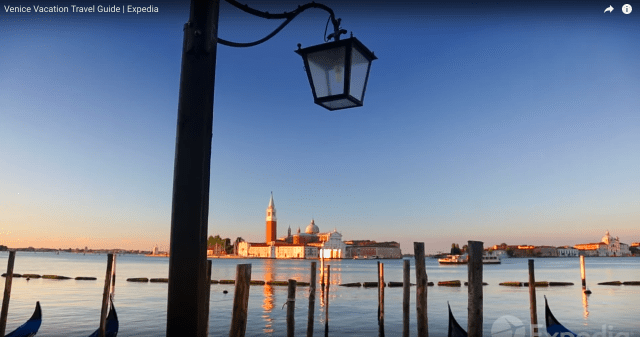
Ahhh. And to a degree, this Expedia video provides the cheapest, fastest and perhaps the most intensely beautiful way to go. Not that being there is not the best. It is. But few tourist videos surmount the beauty of this one, and the narrator’s voice is almost as sensual as the city itself. Here are some of the many nicknames of Venice: “La Dominante,” “Serenissima,” “Queen of the Adriatic,” “City of Water,” “City of Masks,” “City of Bridges,” “The Floating City,” and “City of Canals.”

Victoria and I visited Venice in 2005. It is the world’s most beautiful city – any doubters? – but as I often as I return to my photographic record, this video shows how many places we failed to see. It shows the range of Venetian beauty, the grand down to the subtle.

Screen Shot 2017-06-26 at 5.24.39 PM.png

Screen Shot 2017-06-26 at 5.26.25 PM.png

Screen Shot 2017-06-26 at 5.25.32 PM.png

Screen Shot 2017-06-26 at 5.27.10 PM.png

Screen Shot 2017-06-26 at 5.19.40 PM.png

Screen Shot 2017-06-26 at 5.18.45 PM.png

Screen Shot 2017-06-26 at 5.20.20 PM.png

Screen Shot 2017-06-26 at 5.21.15 PM.png

Ahhh!

Posted in Architecture, Video | Tagged , , , , | 2 Comments

Tragic London tower lesson

Screen Shot 2017-06-25 at 8.48.41 PM.png

Grenfell Tower aflame in London. (thesun.co.uk)

The Grenfell Tower that burned in London, costing several score of lives, offers lessons that we can and will again fail to heed. No building can be perfectly fireproof, and no ladder truck can reach beyond 20 stories anyhow. If we treated the safety of towers the way we treat, nowadays, the safety of almost everything else, the law would already bar their construction, would have barred it two or three decades ago, especially for the poor. In the case of towers, however, the money interests are even more difficult to defeat than their tenants are difficult to protect. Now the authorities are going after the manufacturers of cladding that stints on safety to achieve low-cost aesthetic relief, on the theory that new crap can improve the appearance of old crap.

As Simon Jenkins points out in his excellent Guardian piece “The lesson from Grenfell is simple: Stop building towers,” London has 400 towers waiting in line for construction when what Londoners – and citizens of cities worldwide – need is neighborhoods. The claim that only skyscrapers can provide the densities cities need to grow is a fraud.

The housing expert Anne Power spoke of the craving of architects and planners at the time for “something distinctive and prestigious.” Architects even invented a vocabulary to justify what was in effect a sales pitch. They would build “vertical streets … villages in the sky … new cities for a new age.” Social consequences were damned. … There is no need to build high at all. The developers’ cry, that cities must build high to “survive,” is self-serving rubbish, the more absurd when their towers are left half-empty. … [T]he most “crowded” parts of London are not around towers but in eight-storey Victorian terraces. The boulevards of central Paris have treble London’s residential density without towers.

Jenkins adds that

[P]eople are entitled to the city they want. When in the 1980s Liverpool’s Militant movement asked Everton’s inhabitants what should be done with their towers, the reply was pull them down and give us back the streets. It was done.

Then, of course, he notes that public housing no longer drives the market for high-rises. No, it is the global rich who want to park their wealth (no doubt honestly accrued!) in a gated apartment they might visit a couple of times a year. I hope that these are built on the sites of old modernist low-rise crap of the sort that London built on Luftwaffe lots for decades before the onrush of towermania. And if – perish the thought – they started building beautiful towers reminiscent of the heyday of Manhattan, then perhaps the case for skyscrapers might carry some weight. But for now, as Jenkins understands, towers are tragedies even if they don’t burn down.

Posted in Architecture | Tagged , , , , , | 9 Comments