‘Live’ blogging the eclipse

Screen Shot 2017-08-21 at 3.45.54 PM.png

Partial solar eclipse over Queens, N.Y., in 2013. (Curbed NY)

We are not going anywhere for the eclipse. We are going to view it from our backyard, sitting in patio chairs, without special glasses. Are you alarmed? No, we are not going to look directly at the sun passing behind the moon. We are going to be watching the “darkness at noon” effect (okay, 2:30-ish), paying attention to how the dusky partial eclipse will effect the ambiance of our little corner of the world.

Yes, it is true. You can watch the eclipse without those sunscreen glasses. The eclipse is not just the moon’s dance with the sun, it is the several moments of sudden midday darkness and how it affects appearances and Mother Nature. These can all be seen without looking directly into the sky. So let’s begin live-bloggin’ th’ ‘clipse!

It is 2:02. We are getting ready to go outside. The view northeast from my “office” window shows a sky filled with milky cloud cover.

2:05. Victoria just said, “I’m going down to make coffee.”

2:09. I look outside again. A patch of blue has appeared in the sky. I am wondering why the Providence Journal’s story did not mention what time the eclipse was supposed to be visible in Rhode Island. I read the whole story looking for that factoid. Maybe I skipped over it by accident. I look for the time of the eclipse online. A website called timeanddate.com gives the moment as 2:47. But it has a moving diagram with text that says the eclipse began to be visible here at 1:28, will be at maximum eclipse at 2:47, and will be all over by 4:00. So I guess we’d better get out there!

2:21. We are out on our patio, with coffee. The sky is a bit more cloudy. I don’t know whether the dimness of the light is more because of the eclipse, which hasn’t reached full, or the light cloud cover.

2:55. No apparent diminution of light attributable to the eclipse rather than to the sun. We pretty much chatted through the height of our partial eclipse, and looked for evidence of what others were seeing on our trusty iPad (hers) and iPod (his, and new). We paid attention to the birds, and having watched The Birds yesterday, had installed anti-aircraft batteries in our yard a few days ago. Only kidding. (Our neighbor’s air conditioning unit had mercifully gone off at around 2:21.)

3:39. Well, nothing happened. No, correction. Something happened, but we could not tell what it was. How much of the slight diminution in light was because of the partial eclipse and how much was the natural result of a thin layer of milky clouds? How to know? Or how to care? Hard to know. But yes, we did experience the eclipse. It was a pleasure sitting outside alone with my wife and the birds, whose tweeting, or should I say chirping, seemed to diminish during the supposed height of our partial. Very nice. It should happen every day. Now what should I use to illustrate this post?
Posted in Art and design | Tagged , , | 7 Comments

Sojourn in the Adirondacks

LakePlacid.jpg

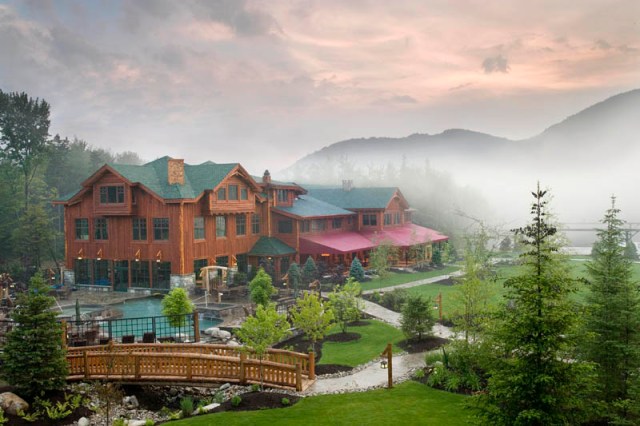
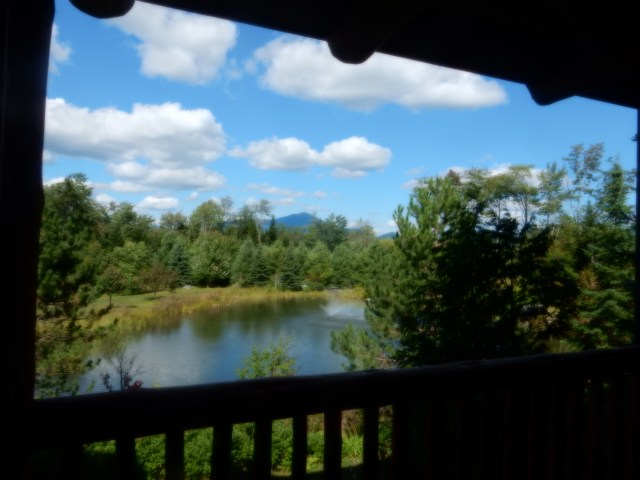
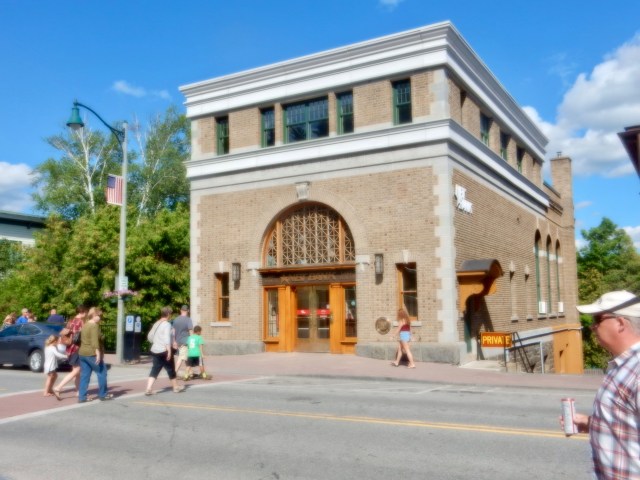
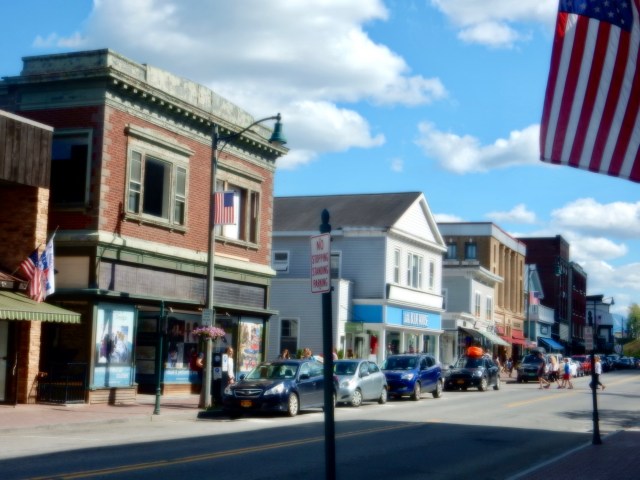
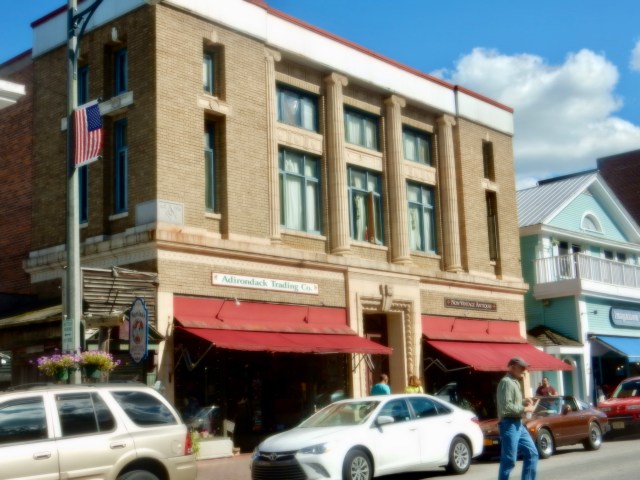
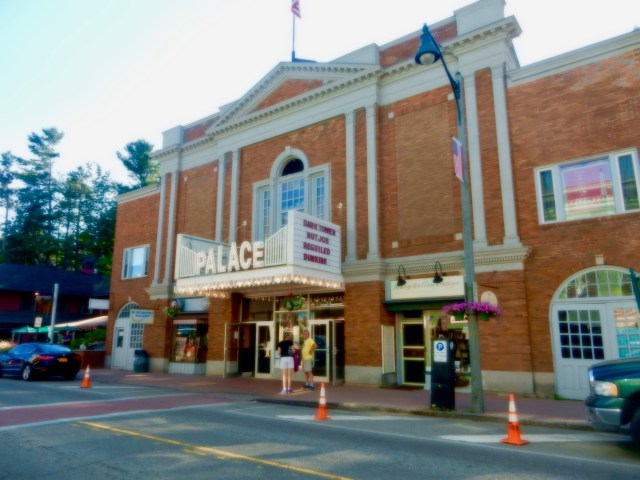
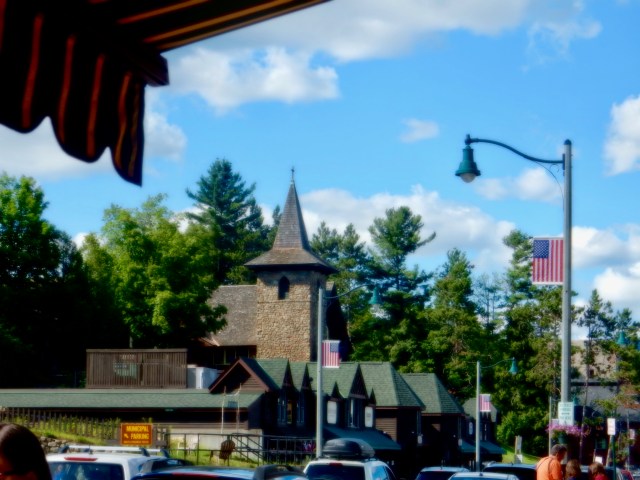
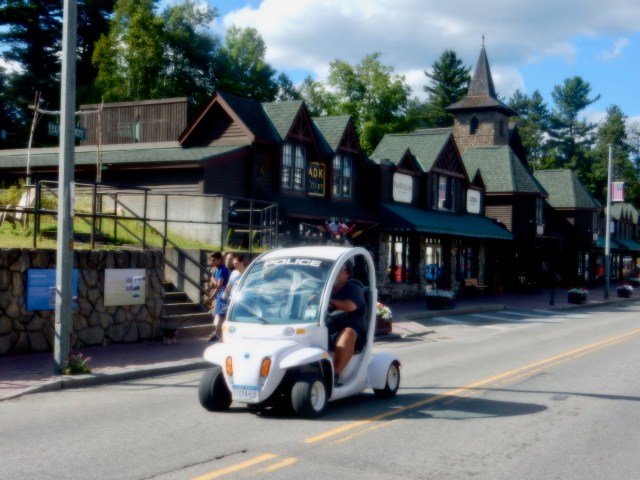
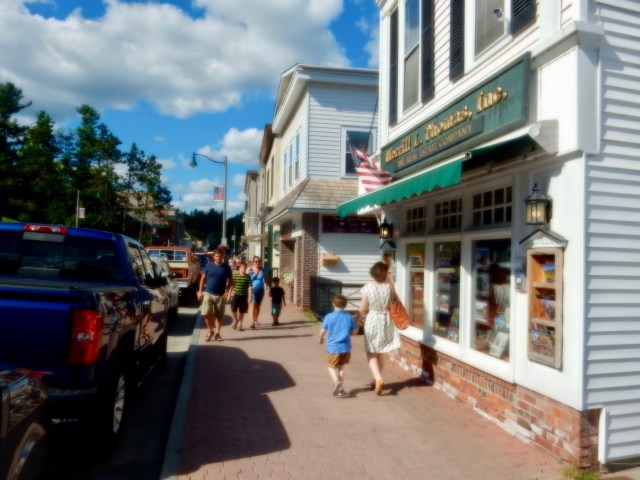
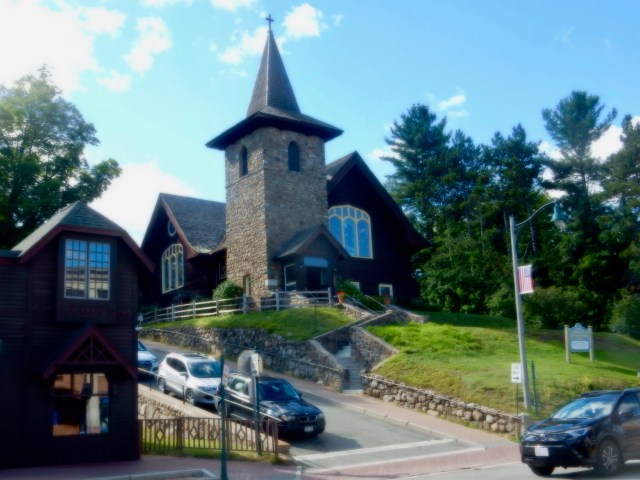
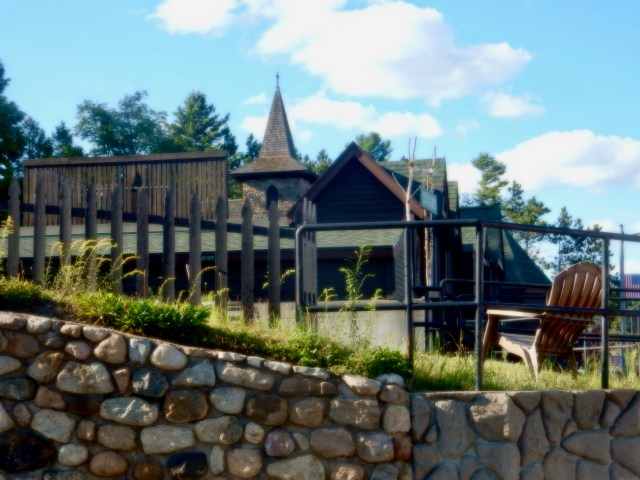
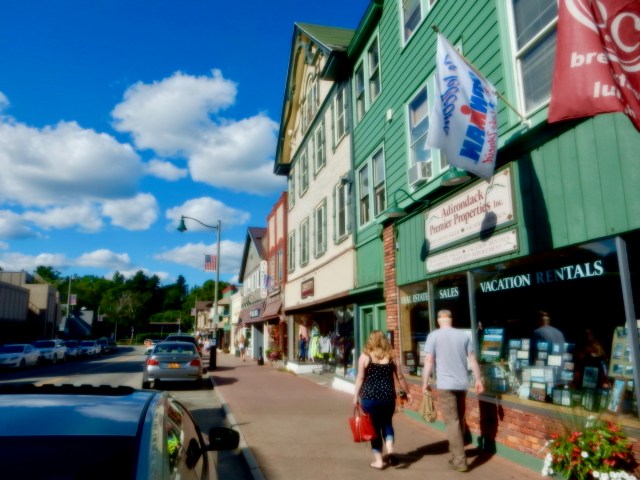
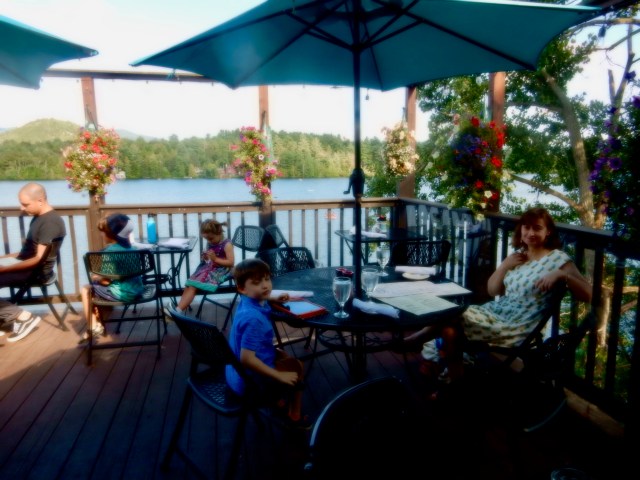
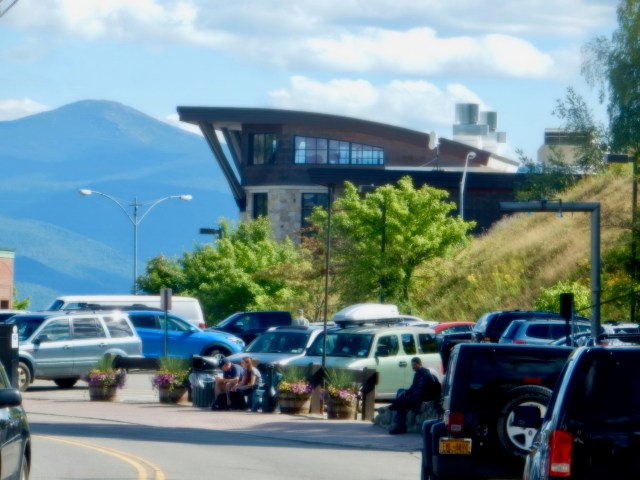
Our week at the Whiteface Lodge, in Lake Placid amid the Adirondack Mountains, was, with one very small interlude of blogging, a study in total relaxation. We took advantage of few lodge activities, nor did we venture out to see much of the rest of Adirondack Park, a state forest preserve of 9,375 square miles, verging on a quarter of the land area of New York State. On the way up, closing in on Lake Placid, it was fascinating to pass by the Olympic ski jumps. The town has hosted two sets of winter games, in 1932 and 1980. On our last full day we did visit Santa’s Workshop, at North Pole, N.Y.  Opened in 1949, it is said to be America’s first theme park. Very odd.

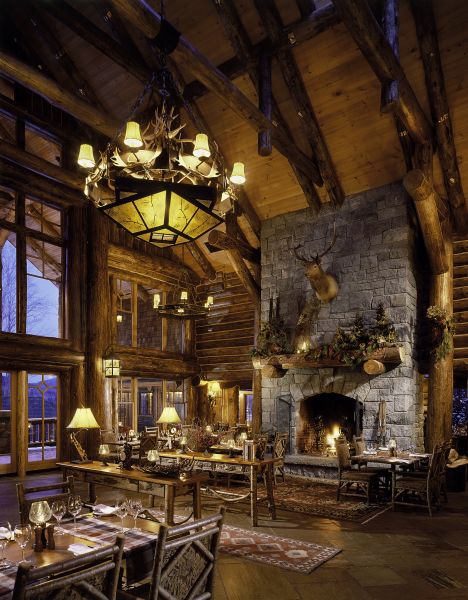
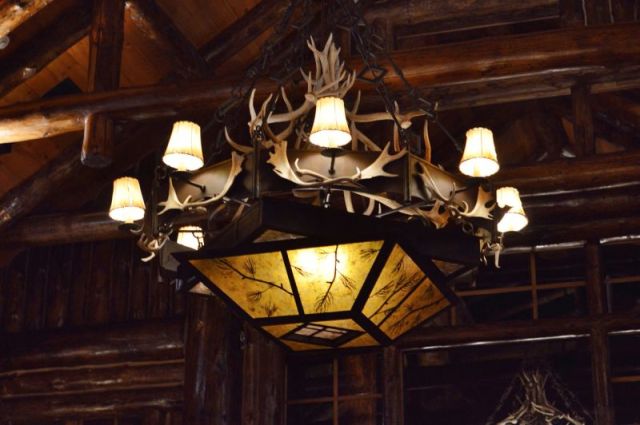
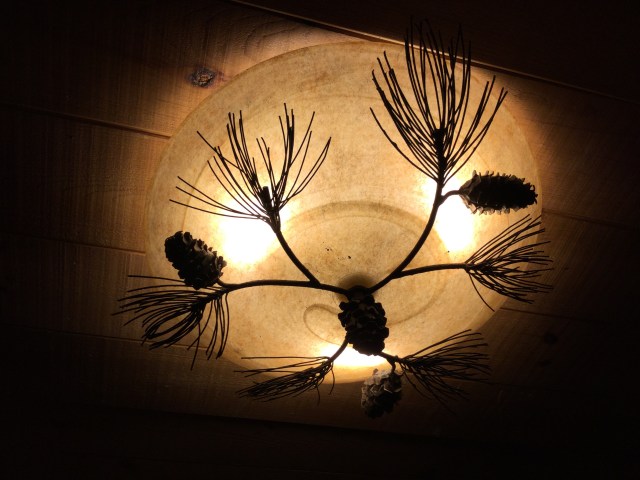
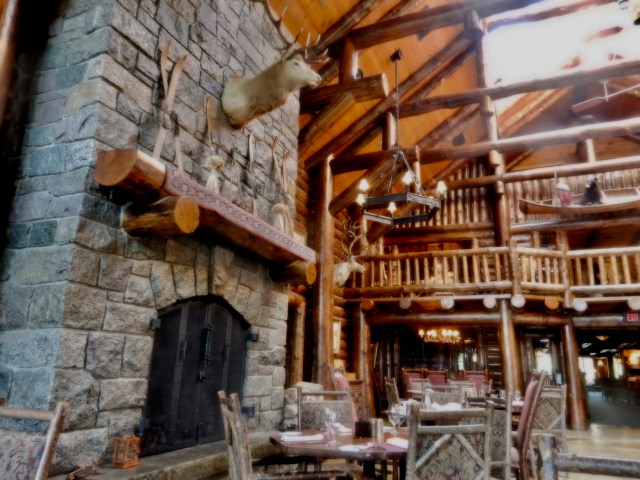
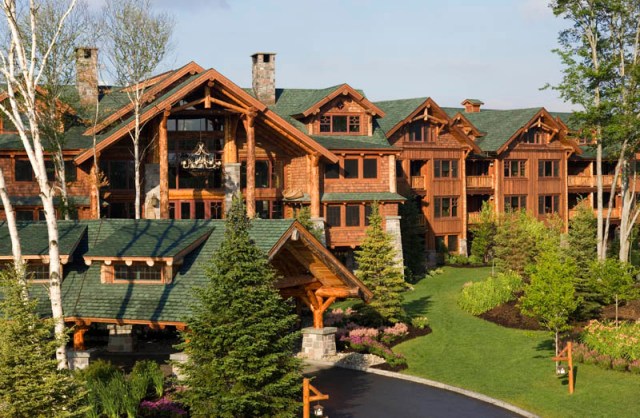
Of special interest was the Adirondack-style architecture, of course, essentially very large, fancy log cabins for the very wealthy, the first known as “great camps.” Many of these productions are now lodges, some always were. The Whiteface Lodge was built in 2005, however. It was developed by a former Olympian, luger Joe Barile, who spared nothing to recapture the Adirondack style down to its smallest detail. Very well done.

Blogger Renee Blodgett, in “The Oh So Adirondack Whiteface Lodge in the Heart of Natural Beauty” (We Blog the World), provides an in-depth description the place in 2015, with many photographs, some her own and others from the lodge website. Alas, I have been unable to find out whether the current Whiteface Lodge was built atop an earlier version that burned or was otherwise destroyed or demolished, or whether it was built on virgin land. It is about half a mile from Club Canoe, the lodge’s narrow lakefront, and a mile from Mirror Lake – along which stretches the charming Main Street of the resort village of Lake Placid.

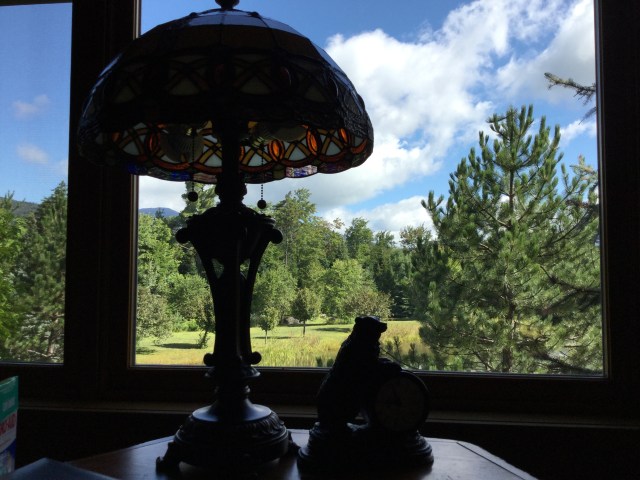
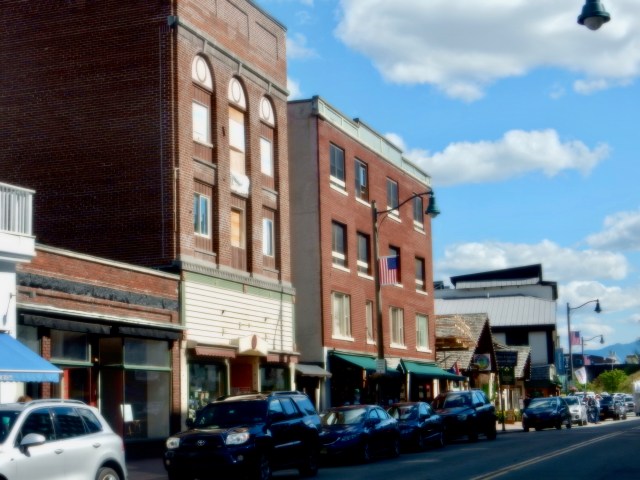
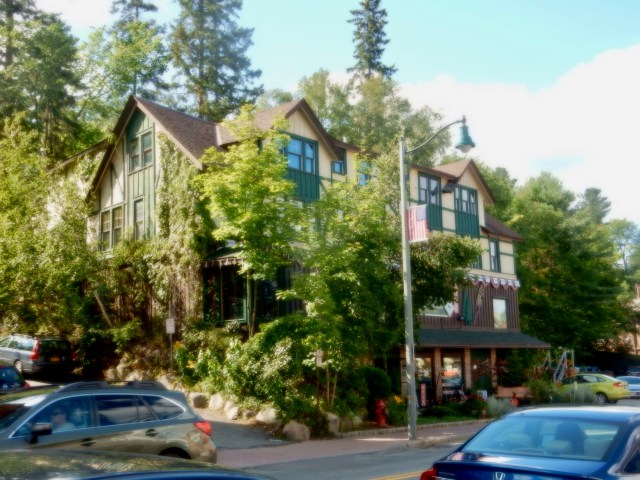
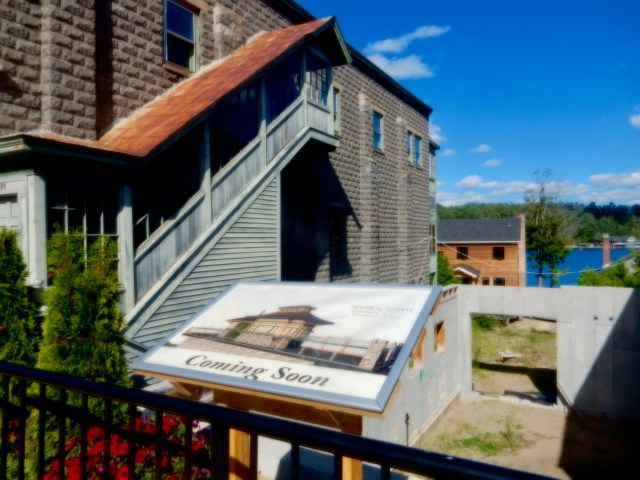
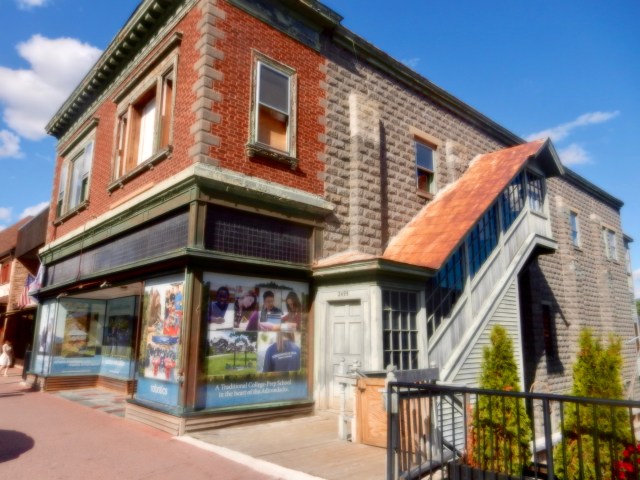
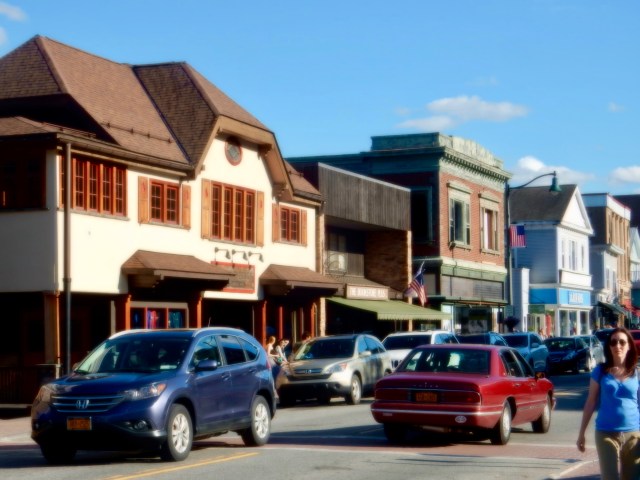
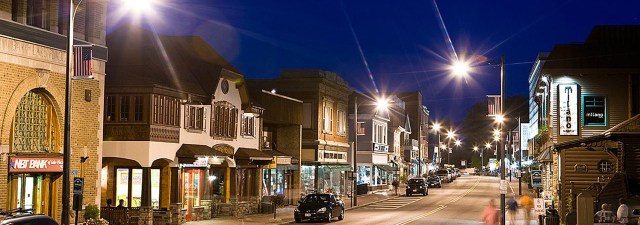
I’ll begin with some lovely shots from the lodge’s website and then some of my own from the hotel and from Lake Placid, whose downtown is a curious mixture of styles.

front_of_lodge_wide.jpg

clubhousedream.jpg

Whiteface-Lodge-Presidential-Living.jpg

Kanu-Dining-Room.jpg

IMG_6516.jpg

Lake-Spring-View.jpg

WhitefaceMtn26Sept2004EE.jpg

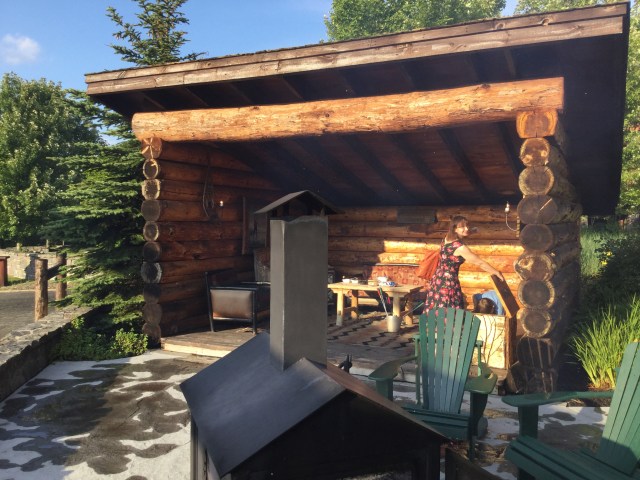
Above are shots from the Whiteface Lodge website, below are some of my own shots, a few of the lodge and then many more of Main Street, concluding with the Olympic Center.

IMG_0045.jpg

DSCN1158.JPG

IMG_0050.jpg

IMG_0052.jpg

IMG_0057.jpg

DSCN1236.jpg

DSCN1237.jpg

DSCN1161.jpg

DSCN1162.jpg

DSCN1164.jpg

DSCN1212.jpg

DSCN1165.jpg

DSCN1166.jpg

DSCN1171.jpg

DSCN1174.jpg

DSCN1176.jpg

DSCN1178.jpg

DSCN1182.jpg

DSCN1216.jpg

DSCN1184.jpg

DSCN1185.jpg

DSCN1189.jpg

DSCN1219.jpg

DSCN1200.jpg

DSCN1202.jpg

DSCN1220.jpg

DSCN1217.jpg

DSCN1168.jpg

Posted in Architecture | Tagged , , , , , | 1 Comment

What next? Jefferson? D.C.?
National-Mall_for-web-650x429

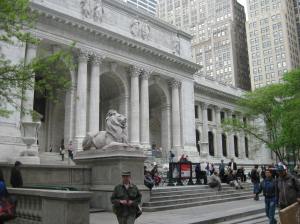
The National Mall, in Washington.

The statue of Robert E. Lee in Charlottesville should not be pulled down. Or rather, I should prefer that it not be pulled down. There’s a difference.

To eradicate every symbol of every political or cultural wrong in this or any other country would accomplish nothing. The urge to destroy symbols as a means of righting wrongs is widespread and understandable. Pulling down statues of Lenin and Stalin was satisfying, not just for Russians and their fellow sufferers under communism but for admirers of justice worldwide.

But what did it accomplish? Now we have Putin, who struts bare-chested but (so far as I am aware) has not had his statue erected in every village square. Mao’s statue still presides over Tienanmen Square, and we have had diplomatic relations with Beijing since Nixon, which were established before Mao’s successor rejected almost everything he stood for. (Which seems not to have placed his statues at risk.)

In the South there are proposals to remove not just statues and flags but the colonnaded mansions that presided over slave plantations. In Rhode Island there have been cries to demolish Bristol’s Linden Place, built with the profits of the slave trade. Must we then pull down Bristol itself brick by compromised brick? The effort to delegitimize founding fathers who held slaves has been afoot for years. Was their effort to enshrine freedom in principle of no extenuating value? Should the perfect be the enemy of the good? In principle I am no more against pulling down Lee and Jackson than I am against pulling down Washington (whether the monument or the city).

But to what end?

In a society that abjures slavery and hates its presence in our history, is one allowed to suspect that the motivation for the animus against statues of famous Confederates is as much – or maybe a lot more – political than philosophical? More left versus right than good versus evil? Such an admixture would tend to undermine the validity of the aspiration to rid the South of its statuary.

Again, to what end? The end of purging racism from our culture? Yes! But has not our progress toward that laudable end been made alongside the existence of Confederate statuary? Can the effect on the public mind of statuary be described with any accuracy? Does Lee on a horse give comfort to racists? Or does it remind us of the need to persist in our struggle to reach for our ideals? How much the former? How much the latter? Will pulling down Lee make further progress against racism more or less difficult? To the extent that these demands spring from partisan motivations that do not arise from this nation’s widespread and nonpartisan rejection of slavery and racism, progress obviously becomes more difficult. Or so it seems to me.

I am a reluctant participant in this discussion because my motives here are aesthetic rather than philosophical. The statues under assault are classical in style. Defending them is part of a wider defense of the classical style. Attacks on classicism as a style go back at least to the absurd argument that Hitler’s preference for classicism condemns all future design in that mode. Does it condemn all previous classical design? To answer yes is to argue for the destruction of all past architecture – starting yesterday, because all styles have housed people of good and evil motives, and stretching to who knows how many tomorrows. Buildings are not to blame for what goes on inside them, and a style – the reflection of an aesthetic tendency – is not to blame for symbolism misapplied to it for ideological purposes.

And yet while buildings, arguably, are ideologically mute, monuments, including statues, certainly are not. Still, the survival of a Lee on horseback, or even a house with a porch reminiscent of a plantation mansion, should be a matter for local sentiment to decide. It may not be possible to ensure that such local decisions will be philosophical rather than political. The line between the two is not necessarily crisp, and judgments of its placement may not necessarily be honest. There may be no answer to this difficulty except to assume that the decision is probably more likely to be honest if locally rather than nationally based.

Is that possible? Perhaps. Or perhaps not. But it should be a matter for citizens directly involved to decide, not a matter of “The whole world is watching!”

I am tired of this subject and I may decide not to post these ruminations. I am supposed to be relaxing in the Adirondacks, assisted so far by my inability to figure out how to post from my new iPod. [But I am making progress.]

The bottom line of my case here is that pulling down classical statues strengthens the case for pulling down all classical art and architecture. This is how I see it as I sit in my Adirondack chair.

The proper strategy is to work toward the obvious goal in the most effective manner. Perhaps that means pulling down Lee and his horse, but I suspect not. Better off trying less emotional and more practical steps toward racial equity and comity in this country. The good, the true and the beautiful all argue in that direction.

Posted in Architecture, Books and Culture | Tagged , , , , , , , , , , | 29 Comments

TB: Beauty as a social good

Screen Shot 2017-08-10 at 1.04.45 PM.png

The New York Yacht Club’s nautical fenestration. (The Reformed Broker)

Here is my Traditional Building blog post from last month, which ran with the following headline: “Beautiful Architecture is a Social Good. Why not bottle it?” It makes much of the fact that in Manhattan residents and visitors can stroll along many streets and find museum-worthy architecture, statuary and other building embellishments free for the looking at. Not all great architecture has been demolished and replaced by something worse on the island. The post reports on a study published in Atlantic magazine which found that living in a beautiful place ranks above many other factors in producing human happiness. Since happiness is a goal for the poor as well as the rich, who can buy it, the question is why traditional architecture should not be part of a government-funded social program to mitigate the ills of poverty. Here is the first paragraph:

Taxpayers foot an endless bill for costly social programs intended to improve the lives of the underprivileged. One source of free improvement – a good that is not just free but joyful – is widely ignored by the helping professions. They probably do not even know it exists. It is called beautiful architecture, and, to speak only of where my head is at this morning, it is all over New York City.

Enjoy the rest!

By the way, we will be visiting Lake Placid starting tomorrow and I am not sure I will be able to post until we return on August 18. I have bought an iPod, have just got onto the iCloud, and the resort where we will disport has a business office with computers for guests. But that may not be enough. We’ll see. If not, please memorize the following list of venues where I’ll be speaking after my book Lost Providence is published on August 28.

  • Aug. 28, Symposium Books, 240 Westminster St., Providence: book launch, Monday, 6 p.m.; free
  • Aug. 31, Barrington Books at Garden City, Cranston, book reading, Q&A, and signing. Thursday at 6:30 p.m.; free
  • Sept. 7, Books on the Square, 471 Angell St., Providence, book reading, Q&A, and signing; Thursday, 7 p.m.; free
  • Sept. 20, jointly sponsored by the Providence Preservation Society and the Providence Public Library, 150 Empire St., Providence, slide lecture, Q&A, book signing, Wednesday, 6:30 p.m.; free
  • Sept. 23, WaterFire Arts Center, 475 Valley St., Providence, joint talk with Gene Bunnell, author of Transforming Providence, time TBA, free
  • Sept. 25, Rochambeau Community Library, 708 Hope St., Providence, slide lecture, Q&A, signing, Monday, 7 p.m.; free
  • Sept. 28, Preservation Society of Newport County, Rosecliff, 548 Bellevue Ave., Newport, slide lecture, Q&A, Thursday, 6 p.m.; $10 members, $15 nonmembers
  • Sept. 30, WaterFire, Q&A and book signing during the event (sponsored by the Gloria Gemma Breast Cancer Research Foundation), time TBA, free
  • Oct. 5, Rhode Island Historical Society, Netop Nights at John Brown House, 52 Power St., Providence, lecture, Q&A, book signing, Thursday, 6 p.m.; free
  • Oct. 12, Preserve Rhode Island, Lippitt House Museum, 199 Hope St., Providence, reading/lecture, Q&A, book signing, Thursday, 6:30 p.m.

More is available on the blog’s new “Lost Providence: the book!” page.

Posted in Architecture | Tagged , , , , , , | 7 Comments

Landmarking the NYPL

New York Public Library. (therehereandback.com)

The New York Landmarks Preservation Commission has spoken. May we strive to decipher its garbled voice? Who can deny the good sense of protecting the glorious interiors of the New York Public Library – from the likes of its own board of directors, who tapped modernist Norman Foster to poop up the interior. The famous stacks were not designated today along with the Rose Reading Room and the Bill Blass Catalogue Room, even though it was the planned purge of the stacks that got this whole thing started. The stacks were to be moved off-campus and replaced by a sort of Starbuck’s-style “library cafe.”

Fortunately, public outrage put the kibbosh on that. The building’s exterior was landmarked in 1967 and, in 1974, the city’s first landmarked interiors were designated to protect primary circulation spaces, including Astor Hall, the central stairs and the McGraw Rotunda. What about the stacks?

I am writing this post on a new iPod, so it is destined not to be encyclopedic. But I must wonder whether, if the NYPL had, either in this its main branch or in another, a room as exquisite as the Rose, would the commission have ruled instead that the latter was expendable?

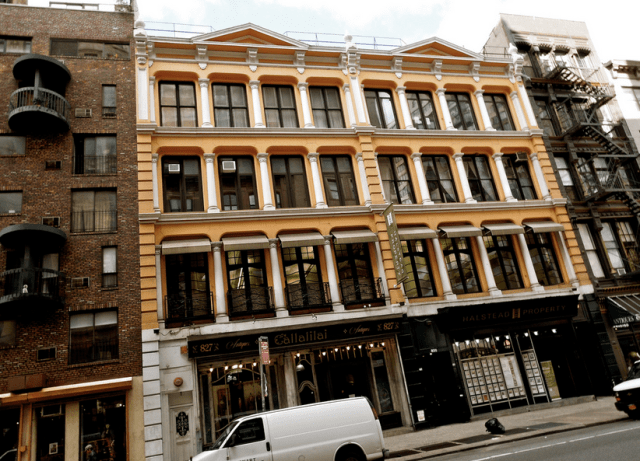
That is how it ruled when it turned down pleas to protect a delightful pair of cast-iron buildings at 827 and 831 Broadway. It said there were other cast-iron buildings of the same period on Broadway. So why give a hoot for these? As if Manhattan already has enough beauty!

I haven’t the foggiest idea how to place an image atop this post, so I may have to retreat to my iMac to finish things off. But at any rate I suppose a pertinent question or two have been raised. Still, as we will be visiting the Adirondacks next week, the question (about images, not about the sanity of the landmarks commission) must be resolved or I’ll have to rent a laptop.

[Note: The original of this post incorrectly labeled the New York Landmarks Preservation Commission, leaving out the P, and it erroneously named the stacks rather than the Bill Blass Catalogue Room as the space designated along with the Rose Reading Room. These errors were corrected within a few hours of publication.]

Posted in Architecture, Preservation | Tagged , , , , | Leave a comment

New “Lost Prov” book page

Screen Shot 2017-08-06 at 11.31.30 AM.png

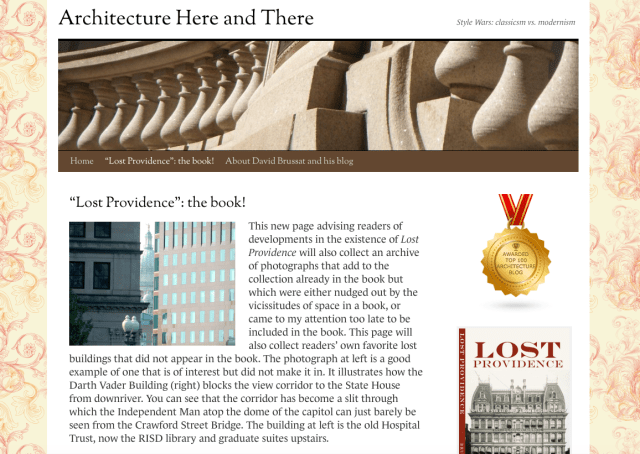
Today marks the official launch of ” ‘Lost Providence’: the book” – a new page on my blog with all the news about the book. It reveals how to buy the book and where its author will speak about the book (and sign copies). It also adds illustrations that would have been in the book if it were endless, and lists favorite lost buildings submitted by readers.

There are two ways to get to the book page from the blog. One is to click on ” ‘Lost Providence’: the book” next to “Home” in the brown bar below the balustrade (it is from the Providence Public Library). Or you can simply click on the image of the cover of the book to the right below the medallion for “Top 100 Architecture Blog.”

The book page is not like the blog itself, where a new post automatically places itself at the top. The reader must scroll down to view the latest news. Using the drag-down bar at the far right will take you in a second or two.

I look forward to updating not just the buy book section and the events calendar but to adding great illustrations that are not in the book. For example, the book only has four renderings from the Downtown Providence 1970 Plan, and only two from the College Hill Study. The book has a number of before-and-after photo sets, but I will add more to this part of the book page. Finally, there will be really fascinating images, mostly old photos, that could not fit in the book but are too irresistible to leave out altogether. For example, there’s a shot of the Arcade seen from Exchange Place (Kennedy Plaza) after the Butler Exchange was demolished but before the Industrial Trust (“Superman”) Building was constructed. Readers may want to send me examples of that kind of illustration in addition to their favorite lost buildings. Also, readers may comment on the book.

Notice that two WaterFire-related dates are new on the events calendar!

Posted in Architecture, Books and Culture | Tagged , , , , , | Leave a comment

Temple to Music – 1812, too

DSCN1119.jpg

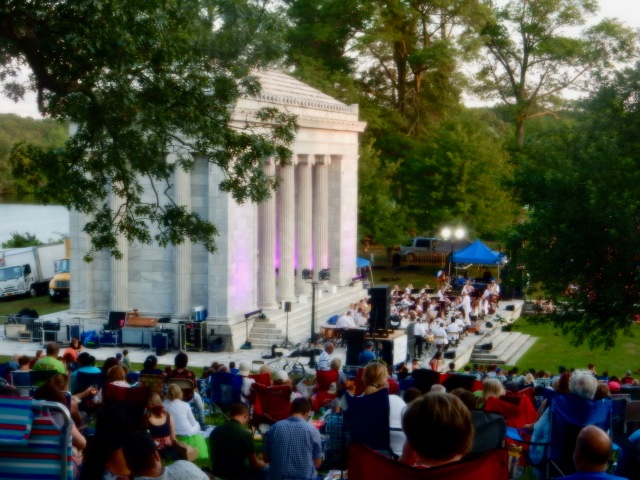
The Temple to Music at Roger Williams Park, in Providence. (Photos by David Brussat)

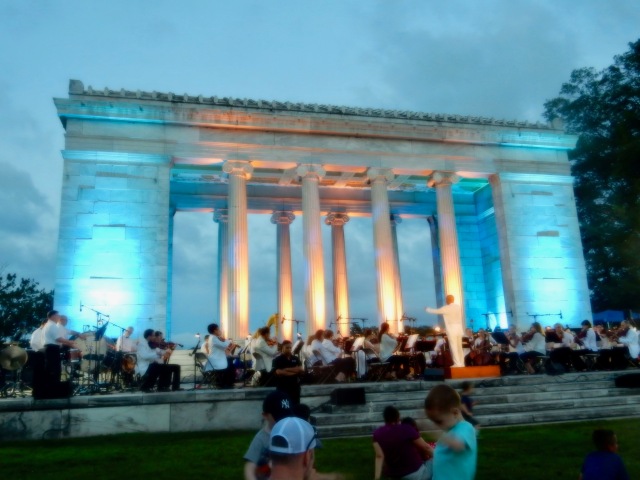
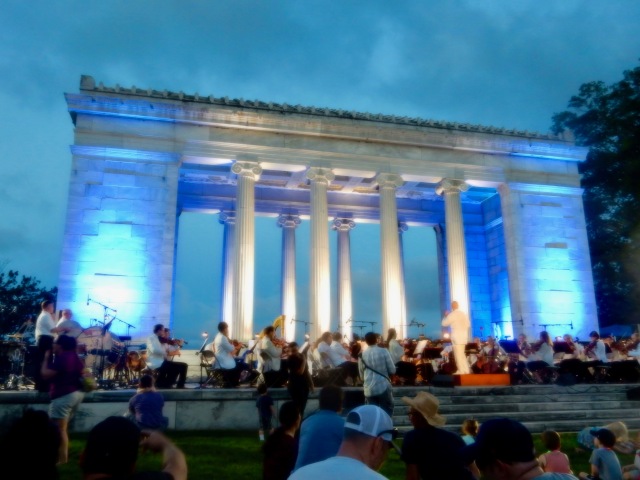
We attended a pops concert of the Rhode Island Philharmonic Orchestra on Friday evening, a free event sponsored by the Rhode Island Foundation and held at the Temple to Music, on the grounds of Roger Williams Park. … Ah! Rhode Island!

Anyhow, the program included, as a finale, Tchaikovsky’s “1812 Overture,” a favorite of mine, which has been absent for a couple of years, alas, from the program of the Fourth of July celebration hosted by the city of Providence at India Point Park. A second of two Sousa marches served, by way of encore, to reward the crowd for its fine taste.

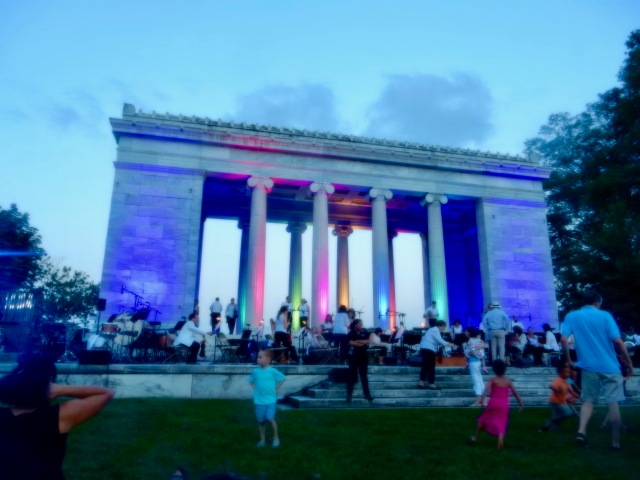
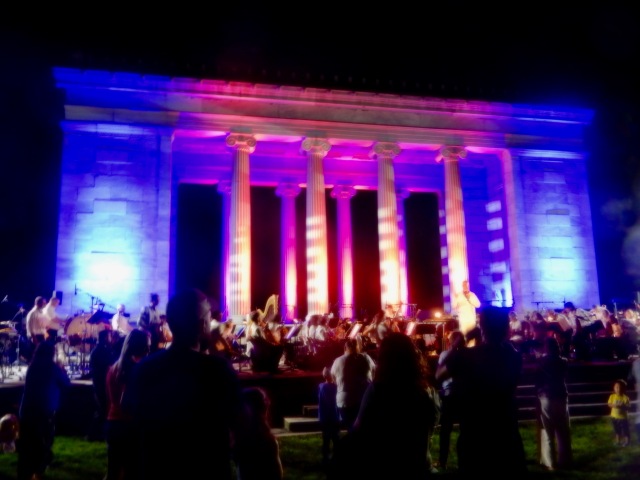
The park was mobbed, and we ended up after the intermission down in the children’s dancing semicircle just before the stage within the temple. It was a great place to sit on a blanket, joined by our friends Dan, Shoko and Caroline (who is Billy’s age). The kids did not dance but paid close attention to Billy’s computer games, undeterred by beautiful music or beautiful scenery. Dad lay back, closing his eyes, listening to the music through a gentle din. Ah, such bliss! I sat up every few moments to gaze upon, and photograph, the Temple to Music, which changed colors with every new item on the program, which was conducted by Francisco Noya.

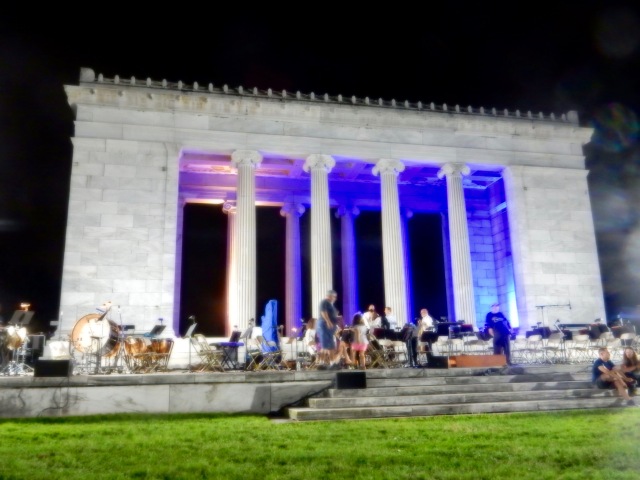
The Temple to Music was erected in 1924 to the design of architect William T. Aldrich, who also designed the RISD Museum of Art in 1926 – the real one, on Benefit Street – and, of recent note, the Bodell House on Balton Road, upon whose land five new houses are arising. The Bodell survives in spite of the subdivision of its grounds.

So last night the temple was lit in a succession of hues, which follow in order. The shots show the temple under the influence of bold or subtle coloration and falling darkness. The cloudy backdrop seen through the temple provided a mildly brooding ambiance on this fine evening. This may best be seen in the concluding video of the Philharmonic playing (I think) a bit from the Batman movie overture, or something like that. It was delicious, as was the entire evening, in spite of massive traffic jams, parking strategy dilemmas and the unaccountably successful trek back to the car (I found it and returned to retrieve Billy and Victoria.

DSCN1122.jpg

DSCN1124.jpg

DSCN1129.jpg

DSCN1131.jpg

DSCN1137.jpg

DSCN1143.jpg

DSCN1156.jpg

Posted in Architecture, Art and design, Video | Tagged , , , , , , , | 21 Comments

Is this architecture school?

Screen Shot 2017-08-03 at 5.53.01 PM.png

The Dulles International Airport access road? No. Lima, Peru. (David Almeida/Flickr)

What is architecture school? Metropolis has published a fine essay asking that question, written while a student by Miguel Córdova Ramírez, a 2014 graduate of the School of Architecture and Urbanism at Ricardo Palma University in Lima, the capital of Peru. “Is Architecture What They’re Really Teaching Us?” describes a cry of dismay from the heart at how the education of architects is leading them astray. Cities in Peru, Córdova argues, are being ripped apart by the new vandals – architects from Western countries – and now young architects in Lima are learning how to destroy their own culture – and (blindly, one hopes) they appear eager to do the job.

Like many young architecture students, Córdova signed up for a design education in the hope of improving the lives of citizens in his city and country. He writes:

However, after arriving at university, I quickly realized that humanity was far from the focus of my studies. In Lima, architectural education is dominated by modernist thinking: design global, ignore the local. When I would attempt to voice my concerns to my teachers, I was met not with understanding but complete intolerance. Semester after semester, teachers would move past my questions and doubts and stick to the lesson at hand.

But Córdova was lucky. He discovered something that, so far as I know, is exceedingly rare and perhaps nonexistent at American schools of architecture:

I noticed a very select and small group of teachers who disagreed with the kind of architecture that was being taught at my university (that promotes form for form’s sake, that fails to consider human scale, perceptions or sensations) and were frequently disparaged by their colleagues.

How had these apostates managed to dodge expurgation?

The miseducation of architects fuels a new indigenous generation of the invasion and colonization of submissive cultures. This imported virus has had predictable results, and Córdova demands acknowledgement, an accounting, and a response, which should start with the cold eye of analysis directed at principles of architectural education, and their correction under the careful, watchful eye of science.

Read this young student’s entire essay. I must add my grudging but hopeful respect for the editors at Metropolis for publishing this essay, so averse to the beliefs of the bulk of its readership. But the editors have done so before, generating for Metropolis a rare independence of mind in the chilly world of architectural journalism. Kudos!

Screen Shot 2017-08-03 at 5.57.23 PM.png

Scene in old Lima’s cathedral plaza. (travelwhimsy.com)

Posted in Architecture Education, Urbanism and planning | Tagged , , , , , | Leave a comment

Save twin B’way cast-irons

staticflickr.com.png

Twin cast-iron buildings at 827-831 Broadway face demolition. (staticflickr.com)

In its length and breadth, Manhattan is a free art museum for all of those who will open their eyes, whether they are Knickerbocker heirs or hoboes from Hoboken. To walk down the street is to encounter museum-worthy works of art one after another laid right out along the sidewalk for all to see at a fee of $0. I have made this point so often that I am turning blue in the face. So imagine my joy at finding an ally in The New York Times.

dekooningexperts.com.png

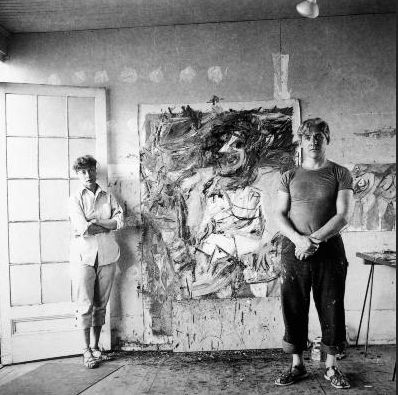
De Kooning and wife in studio. (dekooningexperts.com)

A Bit of New York History at Risk,” by Andrew Berman and Eric Rayman, describes the Lorillard Buildings on Broadway, paired iron-front structures of four stories, erected in 1866 and once hosting for a period after 1958 the penthouse studio of Willem de Kooning. The twins are now at risk of demolition to make way for a 14-story building.

After examining the history of the building, Berman and Rayman extol the allure of Manhattan in terms that seem more applicable to an art museum than a history museum. After all, while history in the form of the spirit of de Kooning and others may permeate the air of old streets, absent signage or guidebooks it is unlikely to be directly perceived. On the other hand, a streetscape’s sculpture, façade decor, garden flora, railing ornament and other embellishment are perceived directly and enjoyed without explication. Here Berman and Rayman express this happy feature of city life:

A joy of strolling the streets of New York is to see so many varied edifices. When you meander in the Village or Harlem or Chelsea or almost any other neighborhood, you are likely to stumble upon a unique and historic building.

We understand that New York is continually changing, but what makes so many people want to live or visit here is the sense of excitement and discovery in the streets. The Lorillard buildings add dignity and grandeur to the city. One does not have to be a student of architecture to admire the craftsmanship of artisans using hand tools a century and a half ago. These old buildings are like New York’s senior citizens and should be venerated as such, not cast aside.

Other cities create replica historic wharves or colonial markets to attract visitors. New York doesn’t have to create them — we have them, and for the health of the city, we should preserve them.

The city’s landmarks commission last year rejected appeals to list the Lorillard buildings, 827 and 831 Broadway. The reasons given smack of the curatorial, reflecting the precise opposite of the logical rationale for preservation. Here is how Berman and Rayman describe the decision:

In August 2016, the Landmarks Preservation Commission rejected an application to protect 831 Broadway and its next-door twin, 827. According to its director of research at the time, the commission decided that New York already had enough buildings with “earlier cast-iron façades” and that “there are buildings on Broadway of a similar date, type and style” to represent this era of development in New York.

Good grief! You mean there’s already enough beauty in New York? No need to save any more of it? The mission of the landmarks commission should not be to treat the city as some sort of playground for museum curators; it should be to protect civic beauty for those who visit and live or work in Manhattan.

Fortunately, the commission has been prevailed upon to reconsider. I hope they do. But what if they reject the application again? Is there any hope to maintain the beauty of the two cast-iron buildings?

Yes. But many preservationists, and other interested parties, will not like it. It is the construction of a new building behind the old Broadway façades.

rebusinessonline.com.png

Proposed 827-831 Broadway. (Rebusiness)

The word façadectomy evokes sneers from many, but if well done it can save a street from an insensitive architectural incursion without robbing a property owner of his or her right to redevelop the property. The possibilities on Broadway are clear. The façades should be saved and a taller building that reflects the historic buildings’ original design should go up behind them. Better that it be set back as far as possible – enough to insert a terrace, perhaps to retain the front rooms and maybe even add a hallway between the old and the new. The setback would, in theory, satisfy preservationists who believe an addition requires differentiation from the original. But it would also maintain the sense of the structures’ original massing for observers on the street and sidewalks.

Rebusiness Online has an article describing a loan in this proposed project as of May, and containing an image that could be either a façadectomy (of a lesser sort, erecting a modernist building behind the two cast-iron façades), or the situation as it is today, though the rear building, if it is now part of the property, must have been built recently based on other photos shown on my Google search for “831 broadway nyc” (the twin with de Kooning’s studio).

Preservation organizations have done excellent work over half a century and more to protect beautiful old buildings. That should remain their chief focus. Compromise can help rationalize a contentious process, in no place more so than Manhattan. Let’s hope these twin cast-iron masterpieces can be saved in toto – but if not, let’s hope that a useful and attractive compromise won’t fall victim to extremism on either side of the architectural and preservationist divide. Don’t let the perfect be the enemy of the good.

Posted in Architecture, Preservation | Tagged , , , , , , , | 6 Comments

Graffartists are not people

Screen Shot 2017-08-01 at 10.39.51 AM.png

Macaulay mural on wall near Saints Sahag and Mesrob Armenian Church. (Providence Journal)

Okay, if Brutalist architects are people (see previous post), then I must admit graffartists are, too.

Yet how sad and appalling to read in today’s Providence Journal that David Macaulay’s delightful mural near the State Offices exit from Route 95 has been painted over by state road crews to create a new blank canvas for the regrettable creatures who tagged the mural in the first place. That is called surrender. The perps should be shot and the mural repainted.

Screen Shot 2017-08-01 at 10.40.32 AM.png

Detail of Macaulay mural. (Providence Journal)

Of course, I hasten to assert that I speak with my tongue halfway in my cheek. Still, a well-placed machine-gun nest is an alluring response. But no, it would probably be too expensive and too dangerous to innocent people, and you can’t cover all the places the graffartists might want to tag.

Macaulay’s mural showed a lovely rusticated Greco- Roman stone wall with a line of niches, each containing a statue of a famous Rhode Islander – abolitionist Moses Brown, Civil War general (U.S. senator and first president of the National Rifle Association) Ambrose Burnside, and four others, including one waggishly toppled by a pooch chasing a pigeon. It was a brilliant work that brought beauty and joy into the lives of thousands every day.

Screen Shot 2017-08-01 at 10.41.00 AM.png

Recently, mural was tagged so hard that repair was deemed impossible. (Journal)

To erase the mural is to throw in the towel. The cost of repainting it should come out of the hide of the perps. Your money or your life sentence – or however many years justice demands. Or something like that. Aren’t there public funds for helping prisoners pay for cable TV or stock more barbells? Take it out of that, and let their stricken jailmates punish the the vandals in turn. No violence, of course. Or maybe Joe Paolino can find some unemployed denizens of Kennedy Plaza to do this work.

It is tempting to blame “society” for what these cretins inflict on buildings, walls – even on other art, as in this case – in any event, on every law-abiding citizen. But I must say, Kate Bramson’s Journal story, “Tagged for last time, Macaulay mural is gone,” offers a secondary target at whom to point the finger – even while keeping in mind that the chief owner of responsibility for a crime is the criminal.

David Macaulay, in addition to being a fine artist and author, is a member of this world and no doubt eager to be considered a nice as well as a good person. Only this can explain the line in the article that reads: “The other artists have now won, Macaulay said Monday as he talked good-naturedly about ‘the endless story’ of the beleaguered mural.”

This is not a direct quote of Macaulay’s own words but Bramson paraphrasing the artist. Still, she would not have used the term “artists” in place of “taggers” unless Macaulay had already used the term himself in the interview. Tagger is, however, Macaulay’s usual term. Either way, equating a tagger with an artist encourages vandals to assume somehow that their graffiti has society’s sanction. Not that I expect this is what they desire!

These are not artists and they do not create art. When they tag their own neighborhood or their own city, they are defecating in their own nests. They almost always damage or destroy architecture that may be a work of art. They often tag over the garbage of their fellow taggers. (Now and then the quality of a tag approaches the quality of art – but its hurtful intention leaves a vast gap between any graffiti and actual art.)

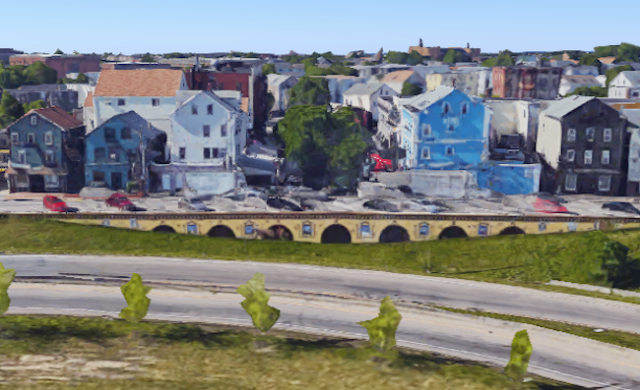
The loss of Macaulay’s mural recalls a mural nearby, along an exit ramp off Route 10 to Federal Hill. It is similar to Macauley’s – an aqueduct with frames for portraits (never executed) between its arches, whereas Macaulay’s has statues within its arched niches. But it has lasted since the Rhode Island artist Ronald Dabelle painted it in 1994. Maybe graffartists fear that people eating al-fresco at DePasquale Plaza will see them and call 911. I could not find Dabelle’s mural online, and it was too difficult to try to shoot it from across the highway (and of course I must not drive while operating a hand- held camera), so below is a photo of a photo from a column I wrote in the Journal on Aug. 18, 1994, entitled “Art out-of-doors in Providence.”

Since these miscreants sign their own vandalism (or “leave their mark”), you’d think they would be easy for the police to catch, even if nobody is watching. If only!

DSCN1107.jpg

Screen Shot 2017-08-05 at 11.20.16 AM.png

Commenter’s Street View shot of Dabelle’s mural beneath Depasquale Square.

Posted in Art and design, Urbanism and planning | Tagged , , , , , , , | 7 Comments