Unmocking mockup at Yale

Screen Shot 2017-12-22 at 4.14.26 PM.png

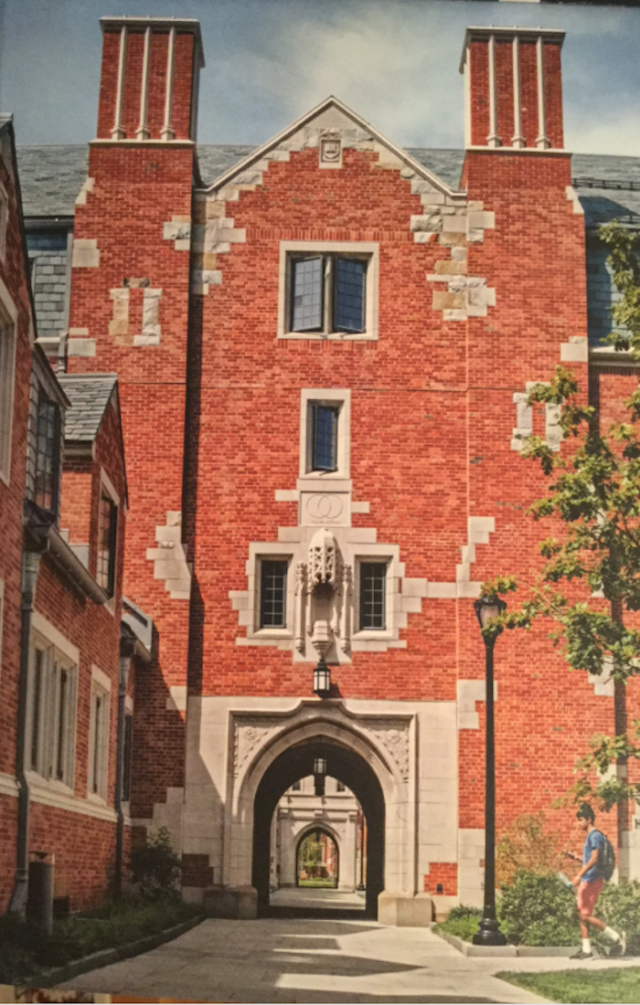
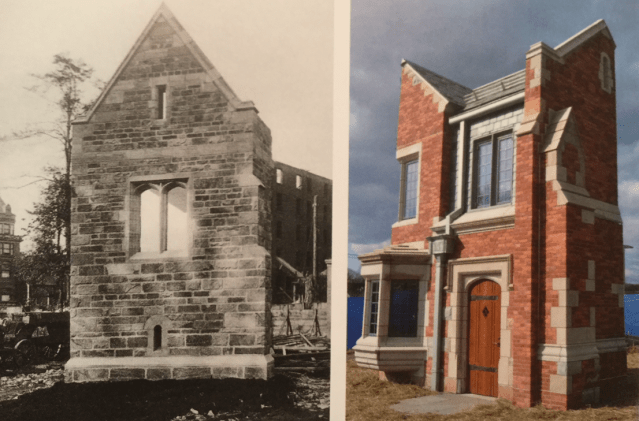
Mockups at Yale by James Gamble Rogers in 1917 (left) and RMASA in 2012 (right) (RAMSA)

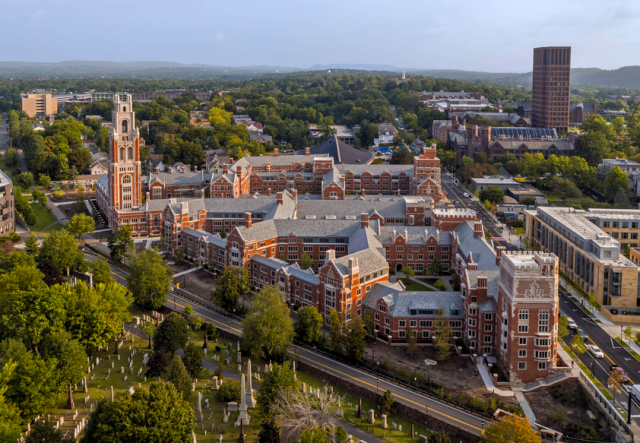
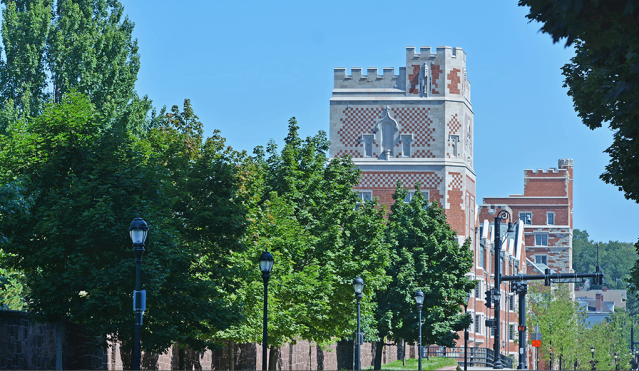
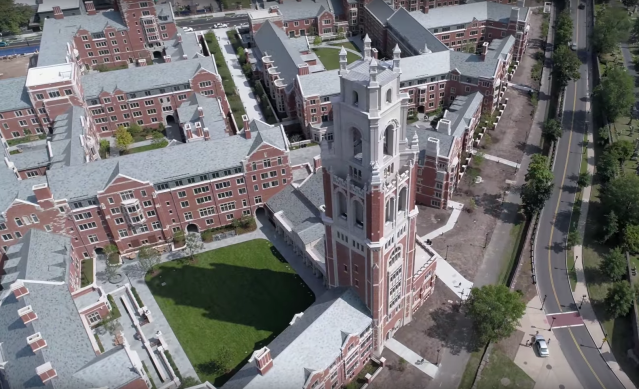
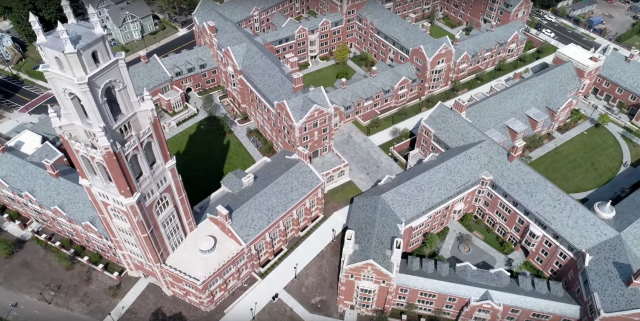
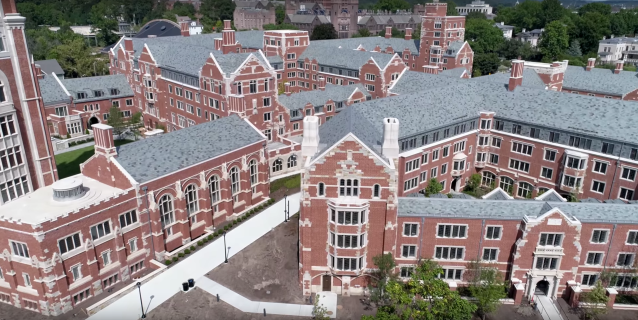
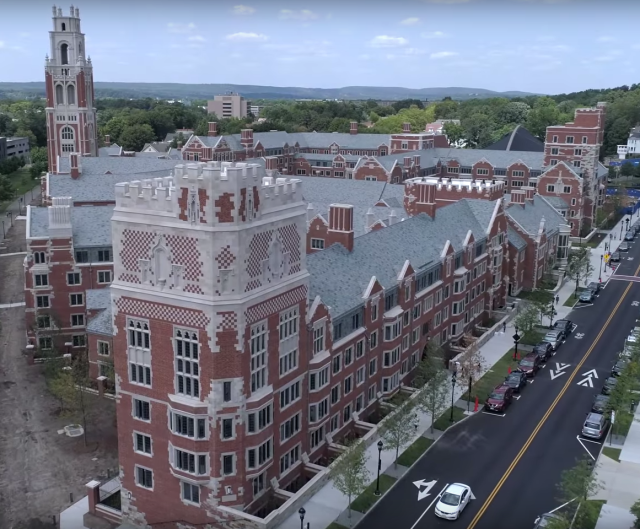
The other day the U.S. Mail produced for me a gift from RAMSA – Robert A.M. Stern Architects. The New Residential Colleges at Yale: A Conversation Across Time came with an inscription to me from the great architect himself: “To David Brussat, in appreciation of support. Bob Stern.”) It is a big book, and, looking at it sit there on my coffee table waiting to be opened, I was a fool to think it would be nothing but glorious photographs by Peter Aaron of a project I have indeed praised to the skies.

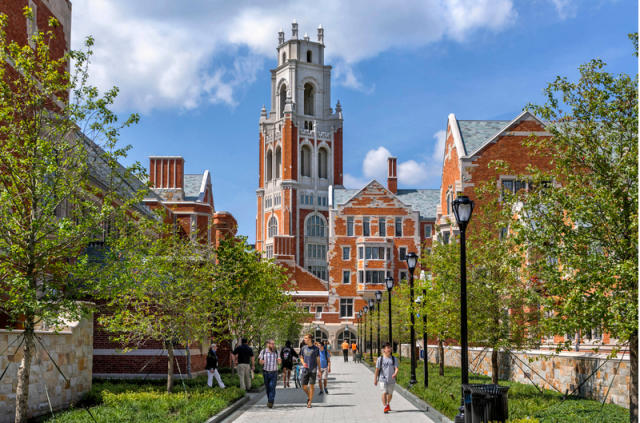
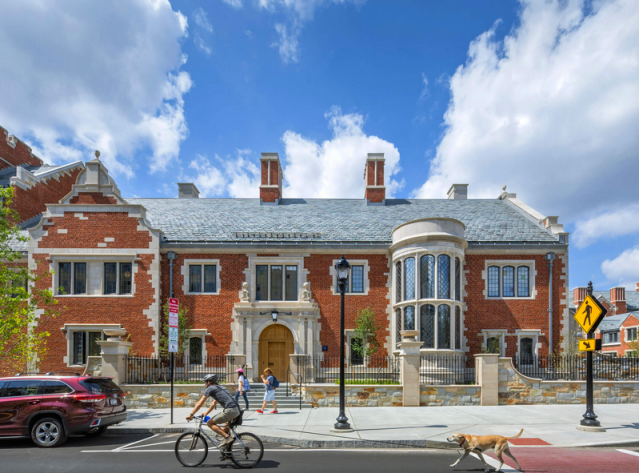
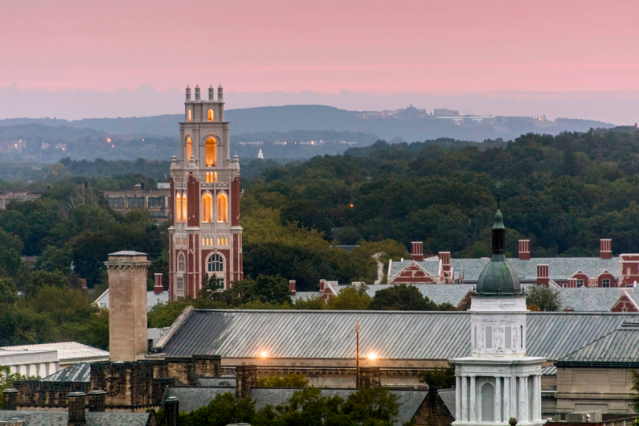
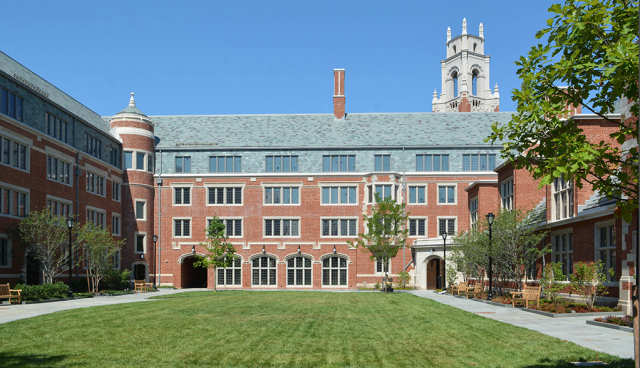
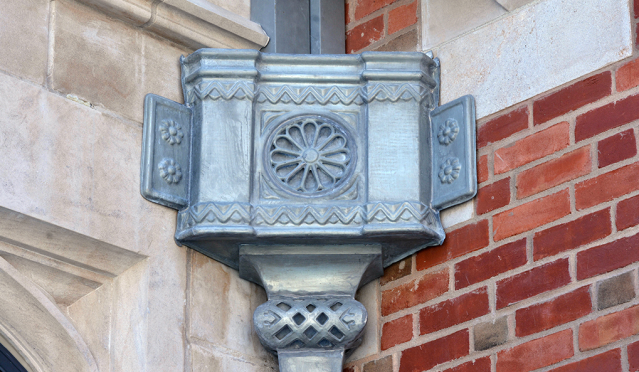
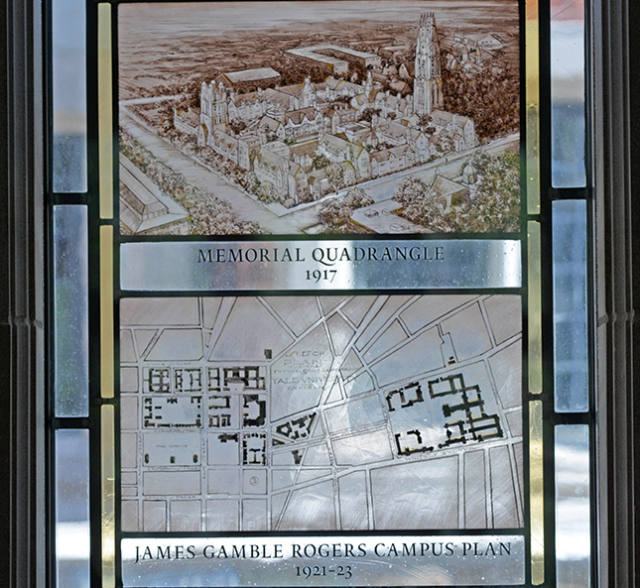
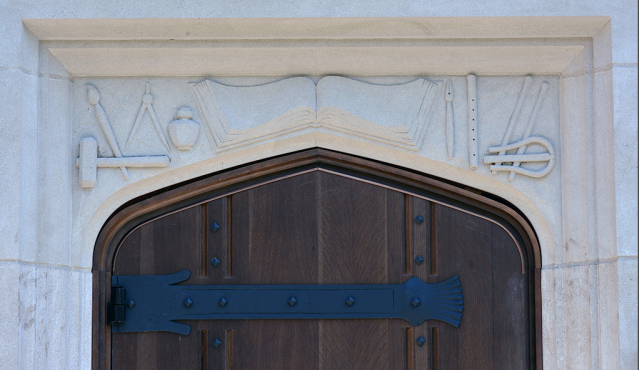
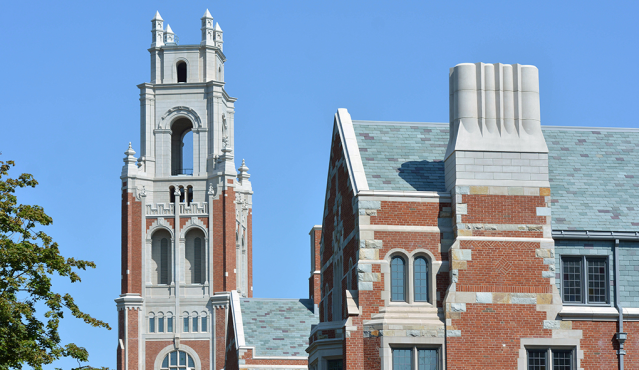
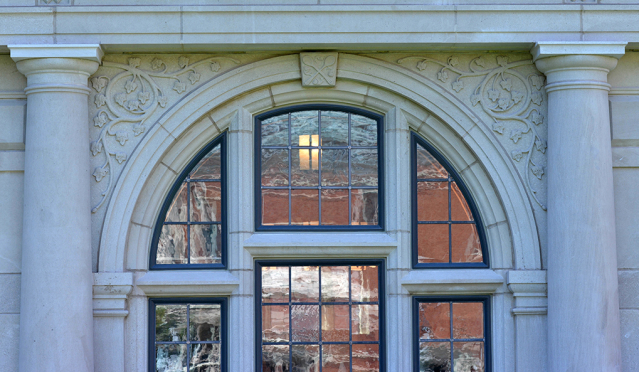
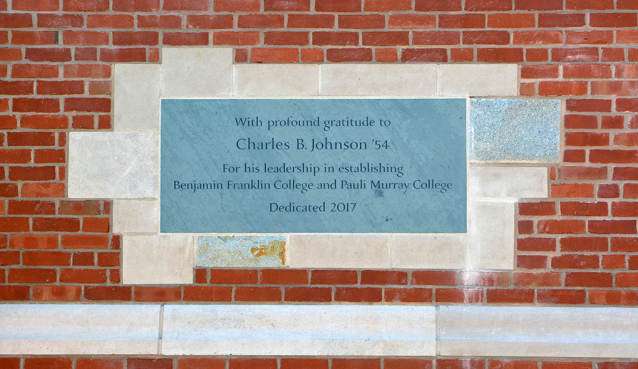
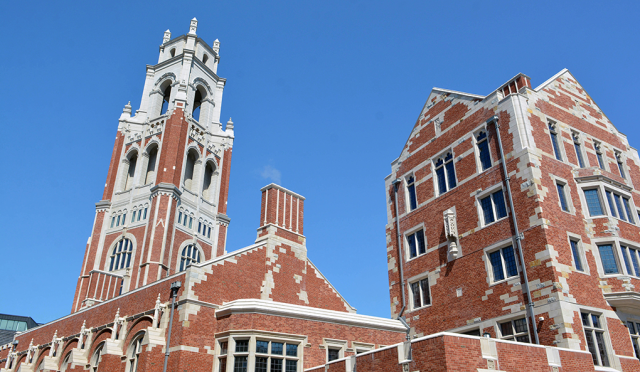
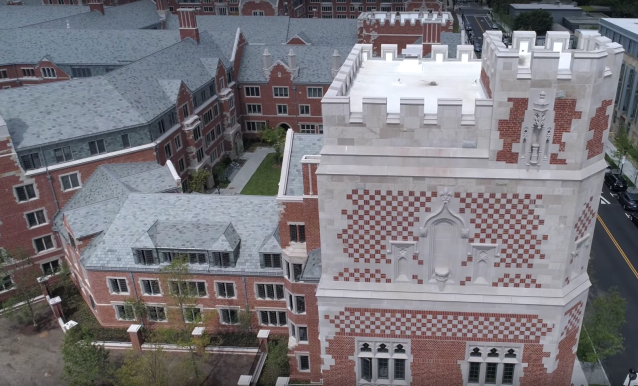
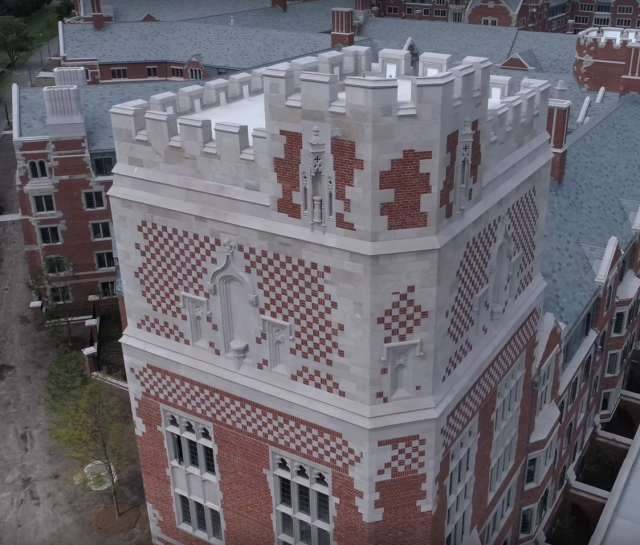
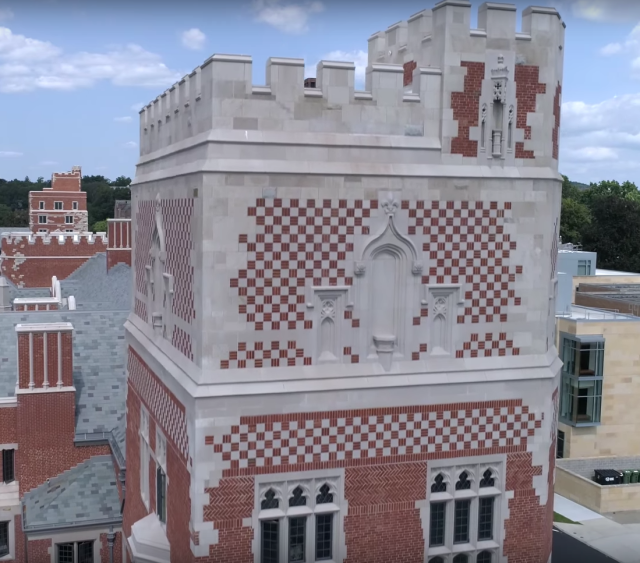
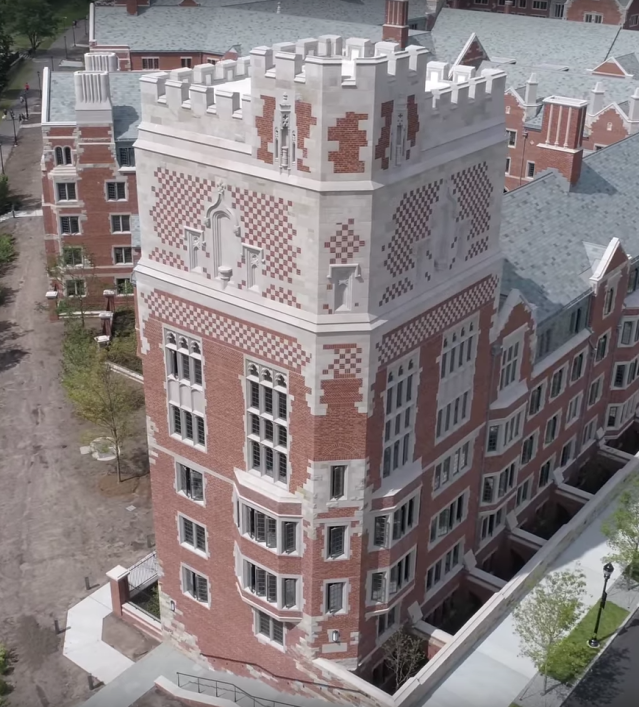
But in fact there were, page for page, relatively few large-format shots of the two Collegiate Gothic campi, completed just a few months ago. No, this book was more like Stern’s huge volumes on the architectural history of New York City. Yes, this book is filled with photographs, maps, diagrams and extensive text about the history of the campus, especially the Collegiate Gothic work of James Gamble Rogers, and the construction of the current work. Thus the subtitle. Benjamin Franklin College and Pauli Murray College were inspired by Rogers’s buildings erected at Yale starting a century ago and continuing into the ’30s. The names James Gamble Rogers and Collegiate Gothic are virtually synonymous. Bob Stern knows a good thing when he sees one.

The paired photos above encapsulate the book and the sensibility. They are mock-ups erected by Rogers and RAMSA to show off the materials and forms envisioned for the work proposed for Yale in 1917 and 2012, respectively. But a mock-up is more than just a display of materials and forms, as the passage below from Stern’s book, written with Gideon Fink Shapiro, illustrates:

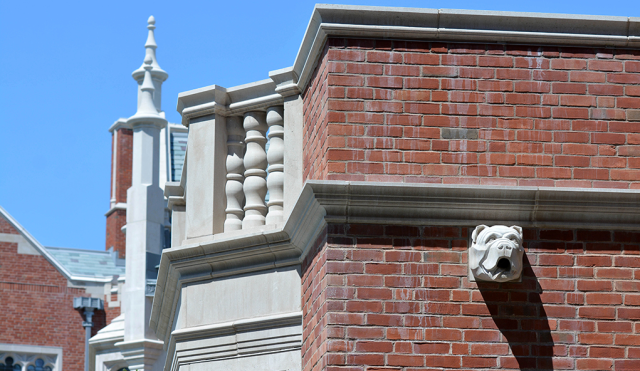
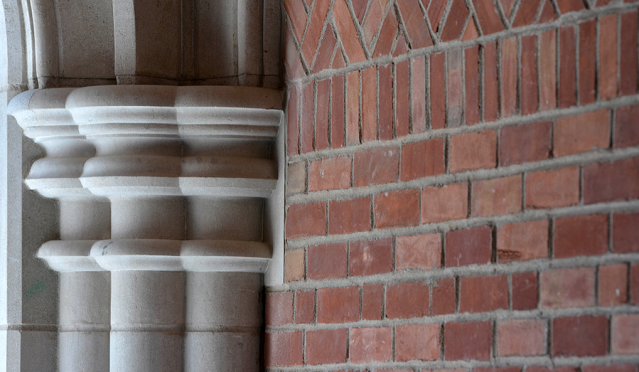
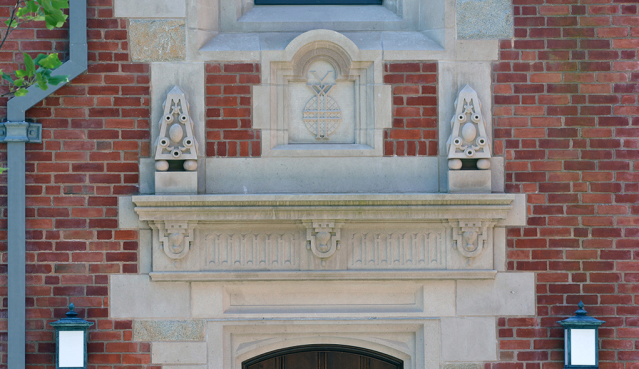
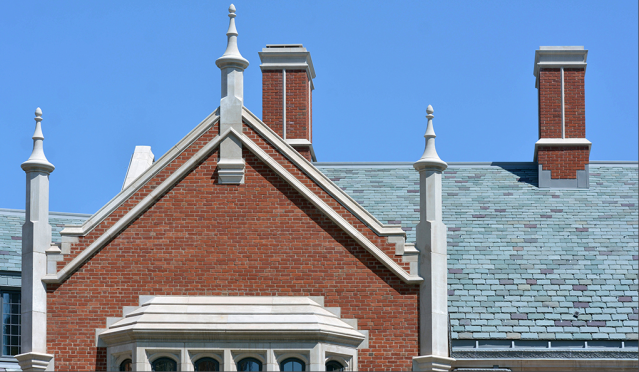
Prior to the start of construction, our research into building techniques and component assemblies culminated in the ultimate in physical study models, a full-scale mockup that helped solidify decisions about the composition and construction of the 1½ miles of façade that would wrap Benjamin Franklin and Pauli Murray Colleges. Erected a few blocks from the site on Winchester Avenue, and 30-foot-tall mockup effectively demonstrated technical and aesthetic qualities of the façade for both the builders and the client, tested assumptions about constructibility and cost, and set quality standards for subcontractors later asked to submit bids. It featured a fragment of a typical elevation of face brick, limestone and granite trim, cast-stone coping and window surrounds, a slate roof, a limestone-capped buttress, zinc gutters and downspouts, and a solid wood door. Its various types of windows, including a bay window, were supplied by five different manufacturers being considered for the job. The mockup also included invisible but equally important technical elements, such as flashing, waterproofing, insulation, and an air cavity.

Fascinating stuff. Many buildings today are built without mockups, and the mockups that are put up are intended, like most architectural renderings performed for clients, to disguise more than to reveal the nature of intended work. But Stern’s mockups are the real McCoy. The next paragraph describes Rogers’s mockups a century ago:

Rogers similarly relied upon demonstration walls, erected first in New York City and then in New Haven, “to get satisfactorily the stone jointing, texture, color, and mortar,” as reported in Architectural Record in February 1918, and he subsequently used mockups to facilitate the detailing and construction of the residential colleges after 1930. Robert Dudley French, writing about Rogers’s use of mockups for the Memorial Quadrangle, observd, “It is always easier to show a man what you want done than it is to tell him.”

Aaiyyyy! (To quote a common expression of frustration in the spirit of Federal Hill, now a restaurant mecca but formerly one of the major Italo neighborhood of Providence.) Mock me with your pictures! Always “worth a thousand words”! Gimme a break! Words are not just potted plants. We writers are not great fans of that bon mot. But I digress.

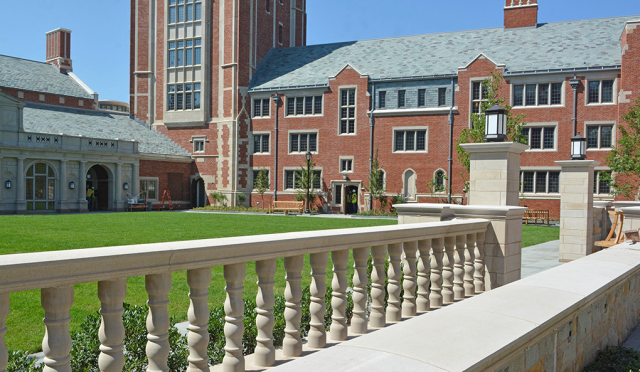
The New Residential Colleges at Yale has thousands and thousands of words, and many, many pictures. But a visit is important, too. I have no doubt that these tandem living spaces will be tourist attractions as well as educational facilities. To get back to sanity in architecture, people must see that beauty in architecture is not just a thing of the past. Ben Franklin and Pauli Murray will fill that role, too. The classical design of the colleges is a vital step in the history of the classical revival in the 21st century.

Thank you, Yale. And thank you, Robert A.M. Stern – for the excellent book as well as the excellent work at Yale and elsewhere. Merry Christmas and happy holidays to you – and to all of my readers!

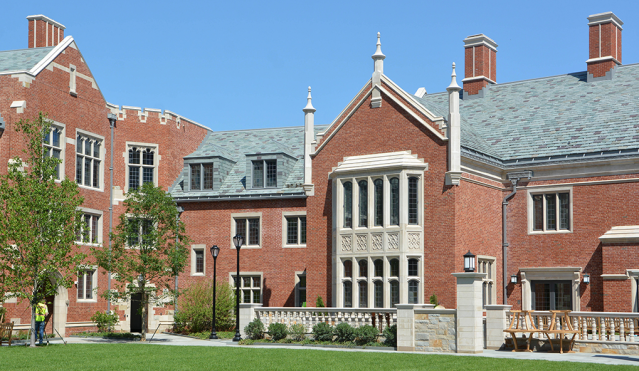
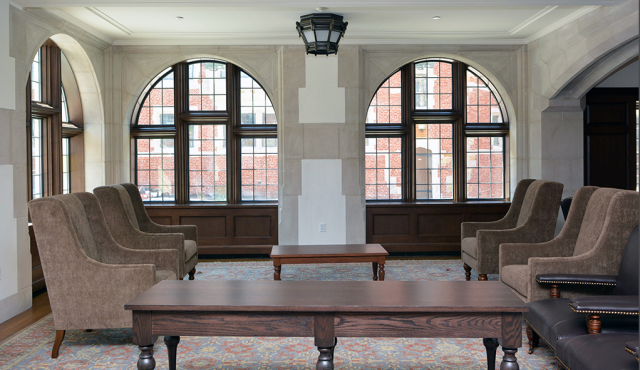
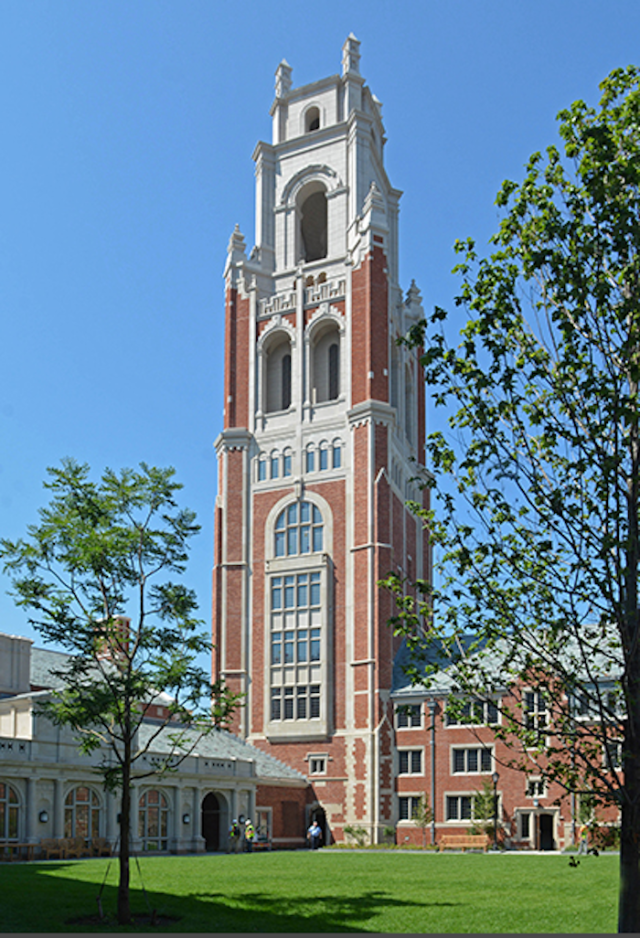
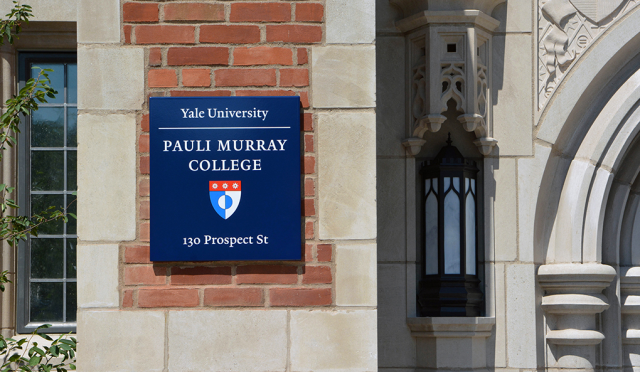
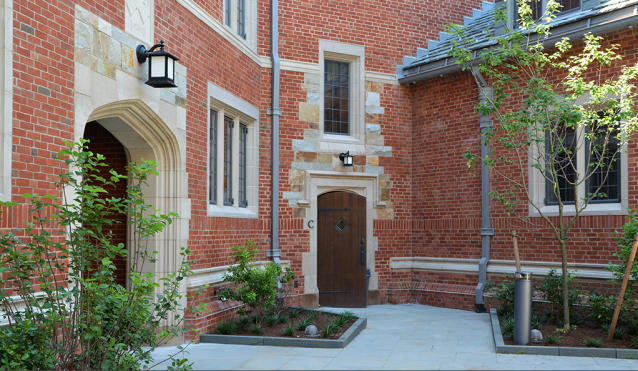
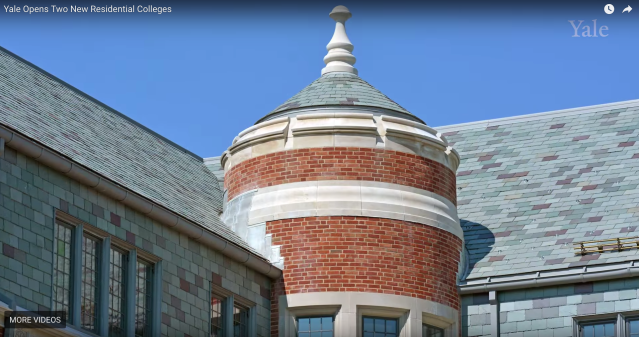
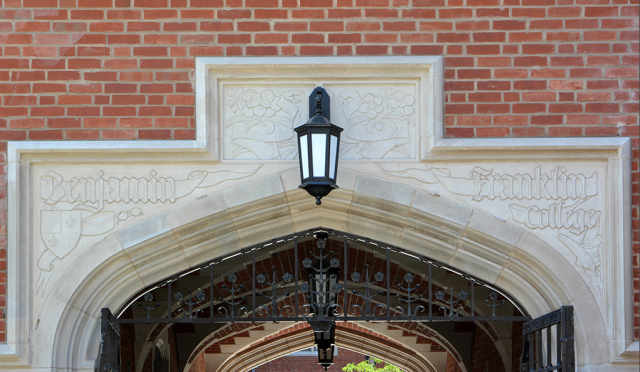
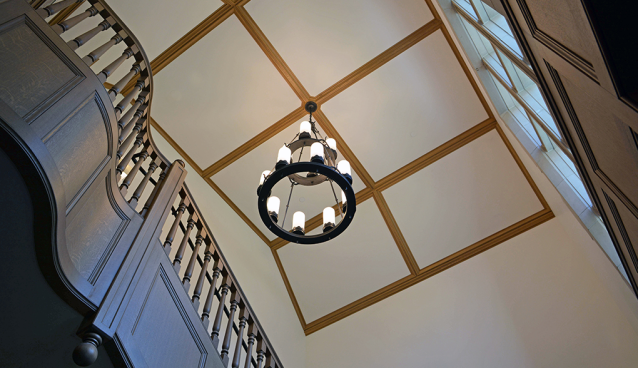
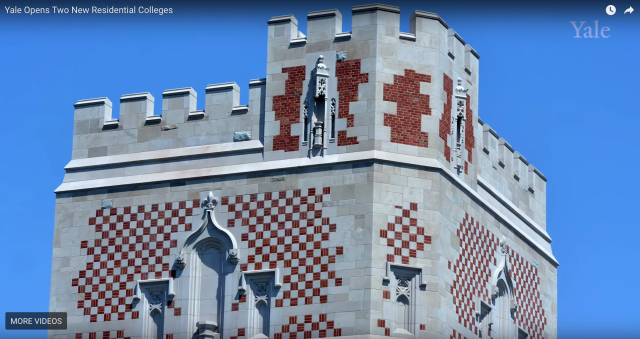
Below are some shots from an earlier post on the new campuses. Please go to that post to find out the photographers involved:

Screen Shot 2017-12-04 at 7.42.25 PM.png

Screen Shot 2017-12-04 at 8.14.16 PM.png

Screen Shot 2017-12-04 at 8.08.53 PM.png

Screen Shot 2017-12-04 at 8.09.35 PM.png

Screen Shot 2017-12-04 at 8.09.54 PM.png

Screen Shot 2017-12-04 at 5.17.47 PM.png

Screen Shot 2017-12-04 at 5.20.54 PM.png

Screen Shot 2017-12-04 at 5.21.22 PM.png

Screen Shot 2017-12-04 at 5.21.42 PM.png

Screen Shot 2017-12-04 at 5.22.04 PM.png

Screen Shot 2017-12-04 at 5.22.24 PM.png

Screen Shot 2017-12-04 at 5.22.40 PM.png

Screen Shot 2017-12-04 at 5.22.57 PM.png

Screen Shot 2017-12-04 at 5.23.15 PM.png

Screen Shot 2017-12-04 at 5.23.29 PM.png

Screen Shot 2017-12-04 at 5.23.45 PM.png

Screen Shot 2017-12-04 at 5.24.06 PM.png

Screen Shot 2017-12-04 at 5.24.19 PM.png

Screen Shot 2017-12-04 at 5.24.43 PM.png

Screen Shot 2017-12-04 at 5.25.00 PM.png

Screen Shot 2017-12-04 at 5.25.12 PM.png

Screen Shot 2017-12-04 at 5.25.26 PM.png

Screen Shot 2017-12-04 at 5.25.55 PM.png

Screen Shot 2017-12-04 at 5.26.16 PM.png

Screen Shot 2017-12-04 at 5.26.45 PM.png

Screen Shot 2017-12-04 at 5.27.03 PM.png

Screen Shot 2017-12-04 at 5.27.24 PM.png

Screen Shot 2017-12-04 at 5.27.38 PM.png

Screen Shot 2017-12-04 at 5.28.08 PM.png

Screen Shot 2017-12-04 at 5.28.29 PM.png

Screen Shot 2017-12-04 at 5.28.43 PM.png

Screen Shot 2017-12-04 at 5.28.59 PM.png

Screen Shot 2017-12-04 at 5.29.24 PM.png

Screen Shot 2017-12-04 at 5.29.39 PM.png

Screen Shot 2017-12-04 at 5.30.00 PM.png

Screen Shot 2017-12-04 at 5.31.04 PM.png

Screen Shot 2017-12-04 at 5.34.38 PM.png

Screen Shot 2017-12-04 at 5.35.06 PM.png

Screen Shot 2017-12-04 at 5.35.35 PM.png

Screen Shot 2017-12-04 at 5.36.04 PM.png

Screen Shot 2017-12-04 at 5.36.31 PM.png

Screen Shot 2017-12-04 at 5.37.58 PM.png

Screen Shot 2017-12-04 at 5.49.11 PM.png

Screen Shot 2017-12-04 at 5.49.47 PM.png

Screen Shot 2017-12-04 at 5.51.13 PM.png

Screen Shot 2017-12-04 at 5.52.10 PM.png

Screen Shot 2017-12-04 at 5.52.56 PM.png

Screen Shot 2017-12-04 at 5.54.19 PM.png

Screen Shot 2017-12-04 at 5.55.00 PM.png

Screen Shot 2017-12-04 at 5.55.35 PM.png

Screen Shot 2017-12-04 at 5.57.44 PM.png

Screen Shot 2017-12-04 at 5.56.19 PM.png

Posted in Architecture | Tagged , , , , , , , | Leave a comment

Assault on history at Brown

Screen Shot 2017-12-19 at 10.47.06 PM.png

86 Waterman St.

This afternoon, Providence’s City Plan Commission heard Brown University officials propose to move one and raze four historic buildings to make way for a new performing arts center with a concert hall rumored large enough to swallow the nearby Granoff Center (the one that looks like a broken accordian).

At a public hearing where nobody spoke in favor of Brown’s proposal, Brent Runyon, director of the Providence Preservation Society, who provided the foregoing factoid, chided the school for failing to protect the historic character of College Hill. Ray Rickman, a historian and former state representative, noted that Jacqueline Kennedy urged her son John to attend Brown because College Hill was lovelier than the Cambridge setting of Harvard. While at Brown, John-John lived in Knowles Row, at 155 Benefit St., an apartment with a window overlooking Geoff’s, where I’ve been enjoying the Juicy Brucie Lucie for three decades. (Ray has a sandwich named in his honor, the Rickman’s Reuben, but the president’s son? Nada.)

A couple of dozen members of the public spoke eloquently against razing the four buildings, and at the lack of parking for the performance center, but only one expressed dismay at its likely design by the New York City firm REX, led by Joshua Prince-Ramus, who formed REX after leaving OMA, the Office for Metropolitan Architecture, the Dutch firm founded by the eternally flatulent Rem Koolhaas. Prince-Ramus retained, among other things, his mentor’s love for designs that kick the local setting in the teeth.

True or false: Brown’s leadership, for all the millions the school has spent preserving its historic architectural patrimony, really cares less about that than about hiring celebrity architects to burnish Brown’s reputation as the hippest Ivy.

We are about to find out.

All five buildings at risk here are more important, more historic, more beautiful than the couple dozen or so old houses Brown has razed in recent years.* Despite the institutional zone that gives Brown more latitude on its campus, city zoning and comprehensive plans mandate that development must respect the historic character of the neighborhoods of the city. The evaporation of these five closely knit historic buildings on Waterman and Angell streets would gouge an irreparable hole in the fabric of College Hill along the east and west corridors used by many thousands of Rhode Islanders every day, not to mention local residents – including students and workers at Brown itself.

In his remarks, Armory Revival Co.’s Mark Van Noppen told the commission that “ordinances seem clearly to state that this should not be approved.”

The commission appeared to have been influenced by the combination of passion and expertise from those who spoke. Commission member Harry Bilodeau started to make a motion that Brown’s proposal (in the form of an amendment to its institutional plan) be rejected. A commission staffer suggested that a motion harder for Brown to challenge would need time to confirm the many objections voiced by the public. Brown was asked to table its proposal until the next CPC meeting on Jan. 16. Seeing which way the wind was blowing, Brown agreed.

The public hearing would also resume at that meeting. It’s likely that anger will grow as more Rhode Islander’s learn of this planned desecration of their history – an anger that ought to rise equally high in the gorge of the university community itself, especially its leadership.

Surely Brown can think of a better idea than demolishing beautiful buildings. There are a good number of places for Brown to build a new performance center, which virtually nobody denies Brown needs. One workable site might be the waterfront location of its own current School of Professional Studies, in the Jewelry District. It is near where most Brown development has occurred in recent years, and, unlike the currently proposed site, there are places to park. Think about it, Brown.

Here is GoLocalProv.com’s preview of today’s meeting.

* That’s not including the four beautiful buildings demolished to make way for Brown’s new engineering facility on Brook Street, which I neglected to mention in the original version of this blog post.

Pictured with this post are the five buildings at risk of demolition. One of them, Norwood House at 82 Waterman, might be moved. It is the bottom photo.

Screen Shot 2017-12-19 at 10.49.54 PM.png

Brown’s Urban Environmental Lab, on Angell St.

Screen Shot 2017-12-19 at 11.07.13 PM.png

172 and 129 Angell St.

Screen Shot 2017-12-19 at 11.09.42 PM.png

82 Waterman St.

Posted in Architecture, Preservation | Tagged , , , , , , , , , | 15 Comments

Trad and not so trad, cont.

Screen Shot 2017-12-16 at 2.17.52 PM.png

The Macedonian Museum of Archaeology, in Skopje, is an example of “bad trad.”

Classicism over thousands of years has developed an architectural language that modernism has not even sought to construct. A language would suggest a reliance on precedent. Among those who have criticized my admiration for Stan Weiss’s interior decor, Eric Daum puts it well. He writes that the decor “deletes adverbs, denies noun/verb agreement, and it doesn’t understand the rudiments of punctuation.”

Perhaps so. An antiques dealer and hotel developer, Weiss calls his ornament – yes, bought from catalogues and assembled according to his own design – a “classical fantasy,” comparable to Sarasata’s Carmen Fantasy for Violin. Maybe there is too much antique furniture in Weiss’s basic conception. Elements of his rooms strike me as Piranesian. That surely overstates the case, but the notion that it is “ugly” or “gives [one commenter] a stomach-ache” seems more like virtue signalling than genuine critical analysis.

But the objections are passionate and eloquent, and, I think, come from the heart. It is a reaction to be expected from anyone who has labored first to learn and then to apply the rules of classicism, and thus demands respect.

Screen Shot 2017-12-15 at 10.02.32 AM.png

One commenter, Nancy Thomas, a publicist who, however sensible, is not an expert in architecture, wrote:

All I know is my eyes dance at [Weiss’s embellishments], and if I could print a set of note cards with the artwork in that first image, I would do so. … What fun … how Classical!

My focus as a writer on architecture is the style wars between modern and traditional architecture. My reading in the principles and techniques of classicism is not deep, not at all. I don’t need a deep understanding to think and write about how a public square of classical design is superior to a public square squelched by modernism. I do understand the idea of classicism as a language. The importance of high standards in classical work is mother’s milk to me. However, after being assaulted on Pratt Street by the exterior of the Weiss House, I was very much taken aback by the interior. It was like stepping from an icy shower into a hot bath where nymphs bearing towels waited to dry me off in front of a fireplace. (These days I suppose they could be accused of harassing me!) At any rate, beauty is what my eyes beheld.

The honesty of my reaction is, I think, just as pure and passionate – as valid if not as well tutored – as the reaction against it.

Commenter “Anonymous” (or “Soundslike” in his original comment) writes:

The more that well-meaning traditionalists defend bad-trad architecture that treats tradition as just another shallow stylistic grab-bag, the less of a real argument we have against the cruelties and follies of Modernist architecture. … We have so much more than “style” going for us, but not if we accept anything with doodads and gewgaws applied to speak for “tradition.”

That’s all very well, entirely unobjectionable and perfectly valid so far as it goes. But the future of classical architecture does not rest entirely on the virtuosity with which classicists apply the principles. The future of classical architecture depends on whether classicists can leverage the public’s taste for traditional design into a movement away from modern architecture and back toward architecture people love.

So, what’s that famous line? “Let not the perfect be the enemy of the good.”

That is a very practical piece of advice, and it is applicable here. “Good trad” and “bad trad” are not so easily divisible. There is a scale between bad and good. At the bad end of the scale is architecture that deserves every iota of the classicists’ disdain. But as you move up the scale from the truly bad to the almost good, the advisability of castigating the almost good as if it were truly bad diminishes. Educated architects may not be emotionally capable of making this distinction, but members of the general public are, and do so instinctively, with a degree of sense born of continuous experience.

Seth Weine writes in his comment that “it is not true that bad (or even poor) classicism is better than no classicism at all.” Some classicists believe that bad trad is a greater enemy to the classical revival than modern architecture. Again, however understandable such a sentiment may be among experts, if taken seriously it virtually forecloses the possibility of a classical revival. My reply to his comment was:

Disagree strongly, Seth. Most people can tell the difference only to some degree. They may know enough to disdain the very bad, dumbed down “classicism” of a high-end CVS but far less so that of an interior like that of Weiss’s house. The latter cannot hurt the reputation of classicism anywhere near the way the former can. Therefore it serves to enhance classicism’s rep in light of most of what the public sees in its built environment. It baffles me that so many classicists cannot appreciate this. Experts might understandably see it differently, and obviously high standards are the best standards, but we design and build for clients and the public, not the experts.

The producers of places like Weiss’s interior – or, say, Providence Place mall, completed in 1999, or the neo-Georgian buildings on the edges of the Gaebe Common (except for its Triangolo Gate, which is high classicism) at Johnson & Wales University, or the Westin Hotel and its addition, or at least two of the several new hotels scheduled for construction, to take several examples from Providence – should be praised for their evident desire to produce buildings that the public will at least like.

The best examples can be praised with some brio, while lesser examples can be praised with some reserve. Even if their designers have no desire to please the public at all and have built traditional buildings for some other reason, they should be given the benefit of the doubt and praised. It may be safe to criticize the baddest of bad trad, but it should be kept in mind that what they all need most is education, not condemnation.

What an admirable goal to create friends, not enemies! It is above my pay grade to figure out how to structure a program to bring design education to the CVS design team, the facilities departments of universities, the staff of Home Depot, the architects employed by the design/build firms that build so many bland buildings today, etc. Suffice it to say, architecture schools are not required to enroll only kids, and churches are not the only institutions that could benefit by sending out missionaries.

“Anonymous” offers a useful reminder that classical education was purged from architecture schools by the modernists, leaving generations of designers without the ability to perform some of the basic tasks of architecture:

[I]f you look at buildings built before Modernism’s coup, in all of them – from the simplest 1770s house on Transit Street to the most ornate 1910s mansion on College Hill to the 1890s Fox Point workforce housing to the City Hall to the Deco storefronts downtown – you see they achieve incredible variety, but that none of them makes any of the mistakes of proportion, tectonic clarity, hierarchy, etc. that are rampant in the house you’ve extolled.

I wrote a fun post a year ago, “Skopje’s classical ambition,” on the topic of bad trad. The post chuckles at an article that quotes, with sympathy, a handful of [Skopje] modernists whose work is being shunted aside. They condemn the quality of the classicism that is replacing it. One of them even blubbered that they didn’t seek his consent to change his building. Consent!? Did he ask consent from the owners whose buildings he demolished back in the 1960s? Hardly likely! Not with Josip Braz Tito in charge!

But I digress. Here is one point from that post that applies in spades:

I lack the credentials to judge any attempt to reconnect Macedonia with its history. But Yugoslavia’s modernists benefited from modern architecture’s global effort to snuff out classical education and craftsmanship. It ill behooves them now to complain that the new classicism in Skopje is insufficiently canonical. Their hypocrisy beggars the imagination.

Classicists’ condemnation of less than canonical classicism may be unwise, but at least it’s not hypocritical!

The reputation of classicism depends only partially on how well particular buildings of classical inspiration are designed. The classical revival depends only in part on the number of classicists graduating from architecture school (few but growing). Those are both very important, and a classical revival will not happen without advances on both fronts. But if the classical revival must await a takeover of modernist education by classicist education, it will wait until doomsday. Unless the market intervenes.

For that to happen, the public must see classical and traditional architecture being built in their cities and towns. Without that, the public will continue to believe that beautiful buildings are something from the past that cannot be expected today, for various untrue reasons, such as their supposedly high expense or their supposed lack of propriety in modern times.

The public, as I suggested to Seth Weine, has no scholarly capacity to judge the canonical qualities of new classical architecture, any more than I did when I entered the Weiss House. At this point, the vast bulk of new classical architecture is likely to fall more or less beneath the level of the canonical. And a lot of it will be good enough to please the eye of most of the public. Classicism, as a profession, should take advantage of this. If it does not, if even the best of bad trad is castigated not just by the modernists but by the classicists as well, the public will continue to feel pressure to doubt its instinctive preference for traditional over modernist buildings.

A tolerance [among classicists] for some degree of bad trad is key to improving the work of its designers, and to strengthening the public’s confidence in its own instincts. Tolerance of bad trad is not incompatible with the highest standards of classical architecture. Both goods can be sought at the same time, and both can be mutually beneficial to the goal of a classical revival. No classical revival will survive if classicists cannot refrain from making enemies of their allies – those who are willing, wanting, waiting to make beautiful buildings, but who need to be taught, not disdained.

In a democracy, public taste should carry weight, but it never will until classicists find a more sophisticated way to address the making – and promotion – of classical architecture at every level. I hope my visit to Stan Weiss’s crib has helped to move that conversation forward.

Posted in Architecture, Art and design | Tagged , , , , , , | 2 Comments

Behold the classical disorders

Screen Shot 2017-12-15 at 10.02.32 AM.png

A gathering of embellishments inside the Weiss House, in Providence.

The other day I got word that the British architectural historian James Stevens Curl – with 40 books under his belt – had written another, Making Dystopia: The Strange Rise and Survival of Architectural Barbarism. Due out next August from Oxford University Press, it tells the tale of how modern architecture vanquished classicism in a short and remarkably uncontested battle for dominance in the architectural establishment.

Unable to acquire a book that has not been published yet, I sent away for his Oxford Dictionary of Architecture. The author’s wry skepticism of modernist architecture is on full display. It arrived in the nick of time to help me defend the classical embellishment of a house whose interior I had extolled in my recent post “Stan Weiss’s house divided.”

Look at the shot of gathered embellishment, above, in Weiss’s house. One reader called it “awkward” and described its faults at length, concluding that “whoever designed the interior trim scheme knows nothing about classical architecture and picked a batch of moldings from catalogs and put them together as best they could. But a sorry mish-mash it is.”

I very strongly disagree, and am glad to have Curl’s dictionary to back me up. It may indeed be that Weiss’s scheme is not quite canonical, may betray disorder among the orders, but the history of the classical canon is itself a string of deviations from the original Greco-Roman orders. Over the centuries, some deviations have become acceptable, others are still considered deviant.

Under the heading “Order,” Curl, noting the disorderly variations even within the original canon, writes:

The Greek-Doric Order has no base, and sometimes (as in the Paestum Orders of Doric) entasis is exaggerated and the capital is very large, with wide projection over the shaft; the Ionic Order has variations in its base (Asiatic and Attic types) and capital (especially in relation to angle, angular and Bassae capitals where the problem of the corner volute is dealt with in different ways[.]

In the same entry Curl describes more recent discontinuities:

John Outram (1934-) incorporates services into what he called the “Robot Order” (Ordine Robotico), or “Sixth Order,” not coyly hidden away, but expressed as a new polychrome Order visible throughout the building [hiding service tubes.] … His work was hysterically described as “sheer terrorism” by a defender of the Modernist faith (although the Piano-Rogers Beaubourg, Paris, which shows off its service innards, of course, escaped such strictures).

This may be inside baseball (or “Greek”) to some readers, but the point is that variation is the only constant in classical architecture.

Andrés Duany, in his not yet published Heterodoxia Architectonica, stresses that the string of treatises that frame the canonical discourse is suffused with contradiction. The Greek and Roman orders as interpreted by Renaissance classicists underwent extensive modification as to what is acceptable, and the very idea of exalting only the “acceptable” was under stress long before the modernists came along with their bludgeons. The needs of practicality and the impulses of artistic creativity have always caused the classical orders to be considered less a boundary than an inspiration for stylistic change. Haste and ineptitude also feed the mix, and might be said to be as integral to the evolution of practice in the descent, as it were, from Greek and Roman forms, occasionally, no doubt, in a positive manner.

To me, it seems evident that the key to distinguishing what is or is not acceptable, what is or is not unduly disrespectful of the classical orders, is the result. Is it beautiful? I concede a degree of canonical ignorance regarding the by-the-book strictures of Weiss’s critic. Yet, as they say, ignorance is bliss. If a degree of tolerance truly equals a cesspool of ignorance, I can only plead guilty. But again, look at the photo above and decide for yourself. Ditto the photo below, which the aforesaid critic sent to exemplify his critique.

Screen Shot 2017-12-15 at 11.27.58 AM.png

Posted in Architecture | Tagged , , , , , , , , | 12 Comments

Stan Weiss’s house divided

Screen Shot 2017-12-13 at 8.56.26 PM.png

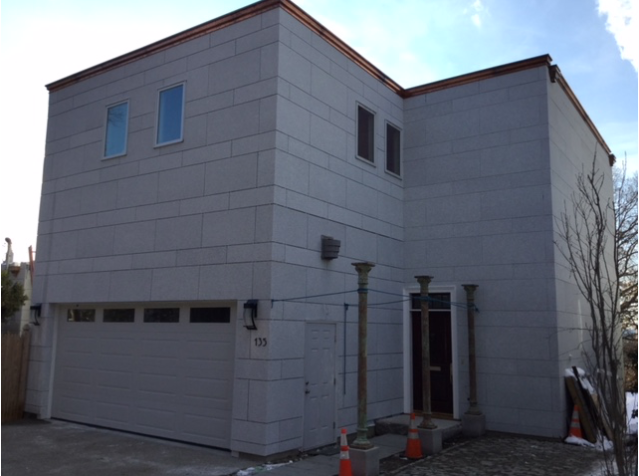
Stan Weiss’s recently newly renovated house on Providence’s Pratt Street.

For decades until a year or two ago, Stan Weiss’s antiques collection graced the graceful, gilded the lily so to speak, by residing in downtown’s Tilden-Thurber Building. Then he sold Tilden-Thurber to former Providence Mayor Joe Paolino Jr. Weiss also sold his mansion, Halsey House on Prospect Street, to Paolino. (This much I recounted in my book Lost Providence.) In return he got lots of money, of course, but also a building on Fourth Street, off Hope, where he now houses the famous Stanley Weiss Collection, plus a modernist domicile on Pratt Street, where he now houses himself and his delightful wife, Beth. On Tuesday, near the conclusion of its renovation, he invited me over to take a peek.

Originally a mid-’50s ranch moved from higher up on College Hill, the house on Pratt – after or rather because of a ’70s era renovation – was as bad looking as the circa ’00 modernist box designed next door by architect Friedrich St. Florian for a client. Pratt Street is College Hill’s sandbox for the modernists. Indeed, Weiss hired St. Florian to help redesign the house.

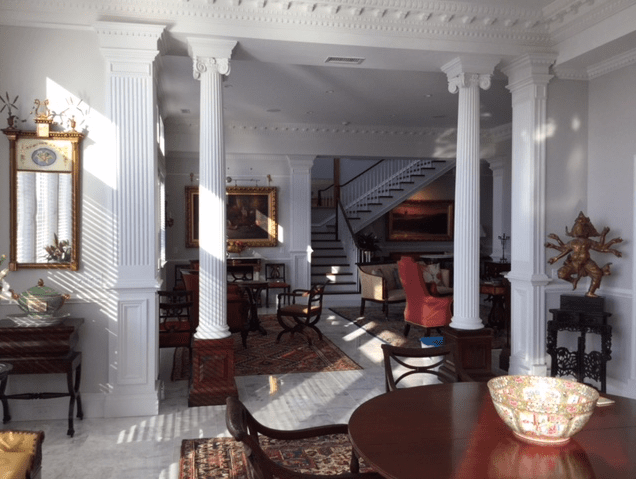
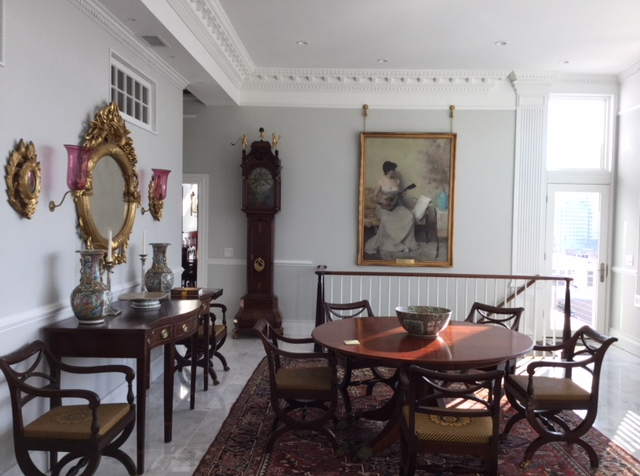
And the result? Well, the result probably belongs in the Guinness Book of World Records. In no house on Earth, I would venture to assert, does the outside express more profound disagreement with the inside. To approach the sullen exterior from Pratt in no way prepares a visitor for the classical heaven inside the front portal. Knowing Stan and Beth for years, I was not entirely unprepared, but was totally astonished nonetheless. So imagine the surprise, nay the joyful sense of relief, that will greet a pizza delivery man!! Or, on some other evening, one of Weiss’s colleagues in the art of selling fine antiques. Who can even begin to imagine what Joe Paolino might think.

Pictured above is that approach on Pratt. Below, shots of the interior are followed by shots of the exterior, including, finally, the view from Benefit Street below.

Screen Shot 2017-12-13 at 9.04.18 PM.png

Screen Shot 2017-12-13 at 9.05.01 PM.png

Screen Shot 2017-12-13 at 9.06.05 PM.png

Screen Shot 2017-12-13 at 9.06.56 PM.png

Screen Shot 2017-12-13 at 9.52.56 PM.png

Screen Shot 2017-12-13 at 9.53.25 PM.png

Screen Shot 2017-12-13 at 10.20.21 PM.png

Screen Shot 2017-12-13 at 9.54.27 PM.png

Screen Shot 2017-12-13 at 9.54.42 PM.png

Screen Shot 2017-12-13 at 9.59.06 PM.png

Screen Shot 2017-12-13 at 9.59.58 PM.png

Screen Shot 2017-12-13 at 9.59.46 PM.png

Screen Shot 2017-12-13 at 10.01.07 PM.png

Screen Shot 2017-12-13 at 10.03.21 PM.png

Screen Shot 2017-12-13 at 10.03.33 PM.png

Screen Shot 2017-12-13 at 10.03.02 PM.png

Screen Shot 2017-12-13 at 10.06.14 PM.png

Screen Shot 2017-12-13 at 10.07.17 PM.png

Screen Shot 2017-12-13 at 10.08.21 PM.png

Screen Shot 2017-12-13 at 10.09.30 PM.png

Screen Shot 2017-12-13 at 10.10.06 PM.png

Screen Shot 2017-12-13 at 10.10.41 PM.png

Screen Shot 2017-12-13 at 10.15.42 PM.png


Screen Shot 2017-12-13 at 10.17.33 PM.png

Screen Shot 2017-12-13 at 10.17.46 PM.png

Screen Shot 2017-12-13 at 10.18.36 PM.png

Screen Shot 2017-12-13 at 10.21.23 PM.png

Screen Shot 2017-12-13 at 10.22.25 PM.png

Posted in Architecture, Interior Design | Tagged , , , , , , , , | 9 Comments

“Aware now of its dullness”

Screen Shot 2017-12-12 at 8.03.40 PM.png

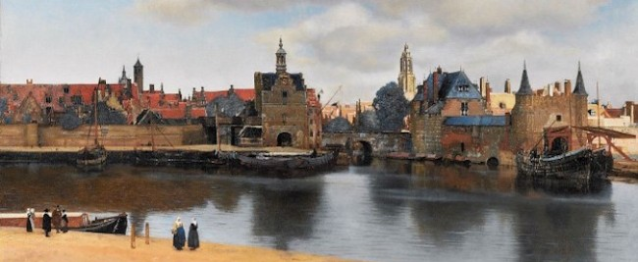
“View of Delft,” by Johannes Vermeer. (Mauritshuit)

Early in Girl With a Pearl Earring, Tracy Duvalier’s novel set in 17th century Holland, is a passage that launched several thoughts about architecture and design. The teenage girl has just become a maid in the household of the successful painter Johannes Vermeer. She is allowed on Sundays to visit the home of her mother and father – he was a maker of Delft tiles until a recent accident blinded him. She describes her first visit home:

Screen Shot 2017-12-12 at 8.07.45 PM.png

“Girl With the Pearl Earring,” by Johannes Vermeer. (Mauritshuis)

When we ate dinner I tried not to compare it with that in the house at Papists’ Corner, but already I had become accustomed to meat and good rye bread. Although my mother was a better cook than [Vermeer’s cook] Tanneke, the brown bread was dry, the vegetable stew tasteless with no fat to flavor it. The room, too, was different  no marble tiles, no thick silk curtains, no tooled leather chairs. Everything was simple and clean, without ornamentation. I loved it because I knew it, but I was aware now of its dullness.

The description suggests, with delicacy, how embellishment – of cuisine, of decor, of architecture – brings a more or less subtle richness to life. Maybe those without such embellishment get the greatest pleasure from it, if and when they can experience it. Maybe it is possible to love “dullness” only through deprivation of embellishment. If so, then maybe we need more traditional houses on public streets. serving (as I noted in “Beauty as a social good“) as free art museums for the general public, including those of low income, who need only stroll by to enjoy and who may appreciate it the most.

So cities with strong preservation societies preserve a social good. Right? Or maybe they preserve houses whose beauty makes it harder for the poor to bear the relative aesthetical poverty of their lives. Maybe modern architecture enriches the lives of the poor.

Hey! That’s going too far! Anyway, some food for thought about architecture.

Posted in Architecture, Art and design | Tagged , , , , , , | 7 Comments

Paolino vs. Industrial Trust

Screen Shot 2017-12-11 at 5.45.00 PM.png

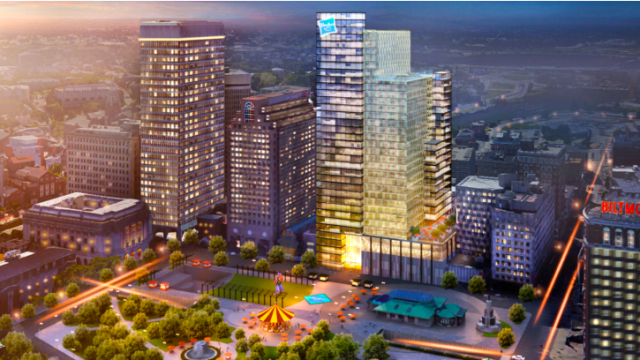
Proposed 36-story tower on site of Industrial Trust Building. (GoLocalProv.com)

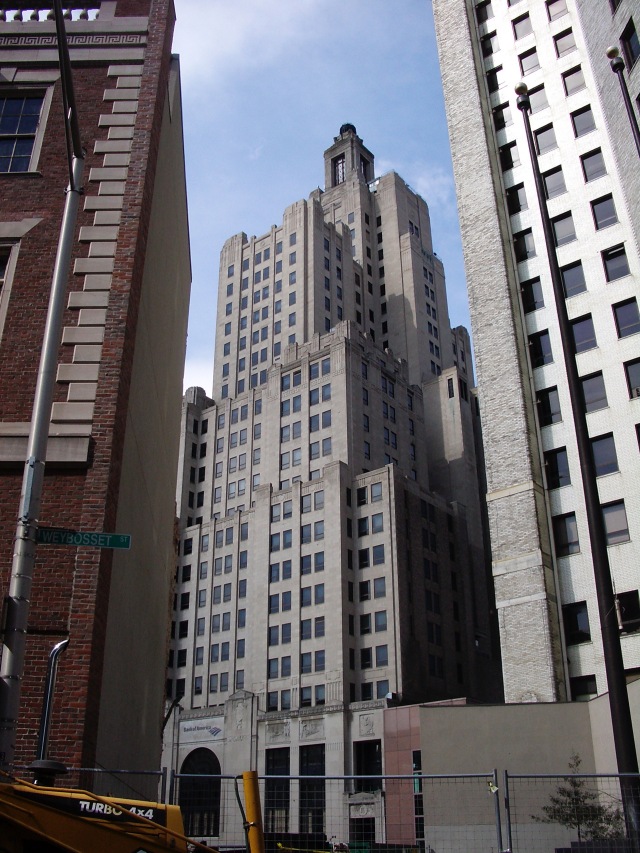
According to GoLocalProv.com, former mayor and longtime property owner Joseph Paolino Jr. wants to tear down Providence’s beloved Industrial Trust Building – widely known as the Superman Building – vacant since 2013.

Who does the PR for this guy?

The Industrial Trust’s chief rival as iconic building is the Rhode Island State House itself. Paolino’s proposal is even worse than Governor Almond’s plan 20 years ago to demolish its neighbor, the Masonic Temple. It was vacant since 1928 (the same year the Industrial Trust was completed). Now the temple is a successful luxury hotel.

GoLocal declared the Industrial Trust to be “Rhode Island’s biggest eyesore.” Huh? Maybe the writer meant “white elephant.” which would at least be accurate.

GoLocal’s story “Plan to Build Hasbro Headquarters in Providence – Demo Superman Building” reports that Paolino’s plan is one of several responding to rumors that the toymaker might acquire rival Mattel. Poor Pawtucket! Imagine losing both Hasbro and the PawSox in one fell swoop.

I’m sure GoLocal’s reporting of Paolino’s proposal is accurate; it’s Paolino’s proposal that reads like fake news.

Imagine Paolino paying millions to buy the Industrial Trust, then paying millions more to clear the land, then paying millions more to build an ugly 36-story tower on it when he already owns a large vacant lot across the street.

Why? How does this make sense?

In fact, Paolino’s proposal makes perfect sense in the context of Providence’s recent development history. The policy of the current and recent mayors seems to be this: Tear down everything that represents the city’s venerable brand and replace it with anything that can be relied upon to weaken its brand.

Hey! Sounds like a plan! This plan has a pedigree that reaches back to the Vietnam War: “We had to destroy the village in order to save it.”

For those shaking their heads in wonder, yes, Providence has already traveled down that road. The Downtown Providence 1970 Plan, announced in 1960, proposed demolishing the city’s beauty and replacing it with ugliness. Pure urban removal. Fortunately, only Cathedral Square and Westminster Mall were built. The former, though the brainchild of modernist icon I.M. Pei, remains dead space. As for the latter, Paolino himself deserves a lot of credit, as mayor in the 1980s, for removing the failed pedestrian mall, which was just as ugly as Cathedral Square, and replacing it with a street that can sit alongside many of Europe’s finest for beauty and civility.

But poor Joe Junior appears to have learned nothing even from his own role in the history of the city where he once was mayor.

IMGP2615.jpg

Industrial Trust Bank Building, erected in 1929. (Photo by David Brussat)

Posted in Architecture, Development | Tagged , , , , , , , , | 13 Comments

The telescope as sculpture

Screen Shot 2017-12-10 at 2.25.11 PM.png

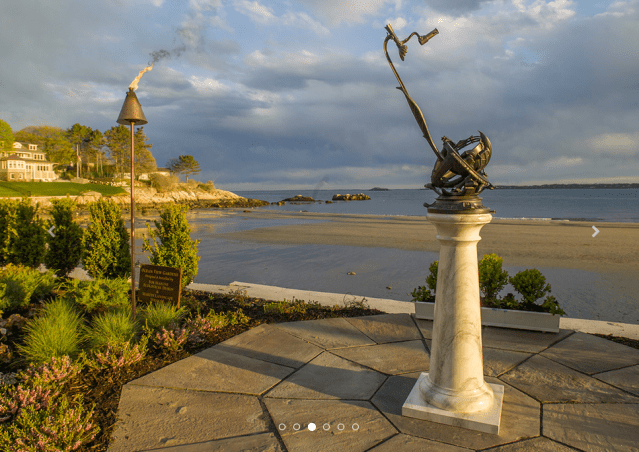
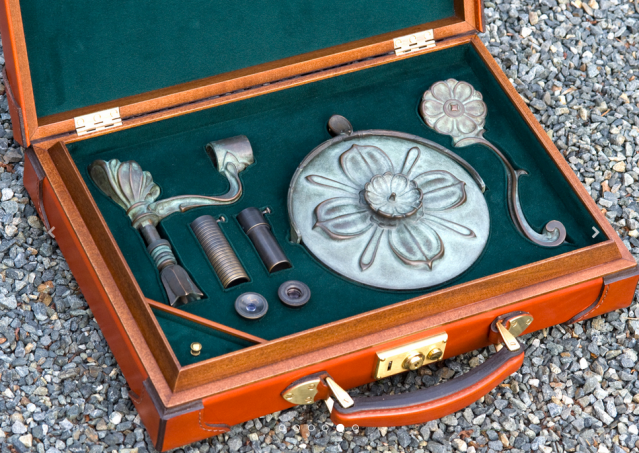
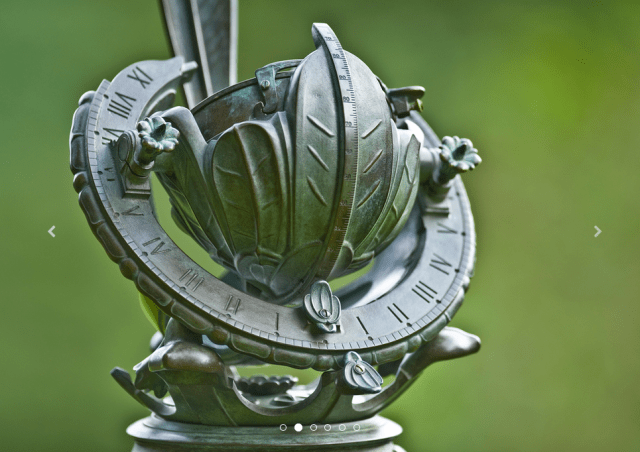
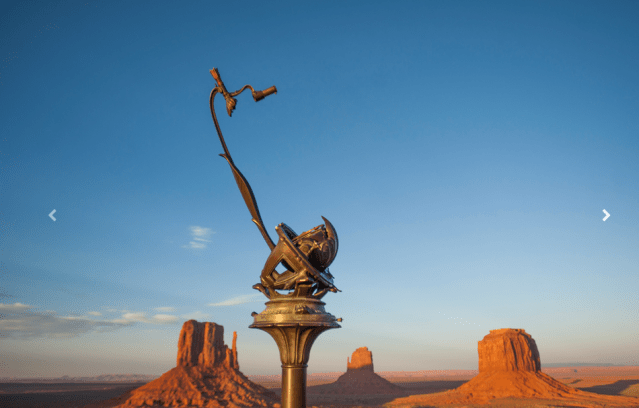
Porter Garden Telescope from Telescopes of Vermont (Russ Schleipman)

Years ago I was wandering through a naval equipment store in Provincetown, on Cape Cod, and found a telescope of high quality and elegant appearance. It was too pricey for me, $500 or so. I wanted something through which I could spy on downtown Providence from my fifth-floor loft in the Smith Building, right behind the Plunder Dome – City Hall – whose offices were a target. Or to watch people strolling on that sliver of new waterfront visible to me at the base of College Hill, some 980 yards straight down Fulton Street from my aerie. My wife gifted me a lovely brass telescope that, alas, looked better than it worked. It always sat next to one of the windows in our loft, but for actual snooping I had to make do with a set of binoculars.

Screen Shot 2017-12-10 at 3.47.49 PM.png

Today, I’d rather own a Porter Garden Telescope, designed in 1923 by Russell Porter, of MIT. I have a garden to put it in now, or rather a backyard. (It was a garden when we bought the house; now it is a backyard.) It is definitely not for peeping down from a lofty apartment at the cutie disrobing in her apartment on the west slope of College Hill. (I hasten to add I’ve never seen one of those.) It is for looking at the heavens – the planets, the moon, the stars.
But though it would grace our backyard – turning it back into a garden in one fell swoop – it belongs in the Louvre. (An original now sits in the Smithsonian.) It hasn’t the slightest resemblance to the Platonic idea of a telescope. Recently at a party in Boston sponsored by the New England chapter of the Institute of Classical Architecture & Art, I met Corina Belle-Isle (a name that also belongs in the Louvre). She represents Telescopes of Vermont, a firm in Norwich there that makes and markets the Porter reproductions, which she described to me, as it won last year’s Bulfinch award in the category of craftsmanship/artisanship.

Russ Schleipman, the president of Telescopes of Vermont, has written:

[T]he Garden Telescope was conceived as a superb optical instrument, Art Nouveau bronze sculpture, and working sundial, all in one. It was a model for the 200 inch Hale Telescope at Mt. Palomar in San Diego, and thereby found its way to the Smithsonian. Decades later my father, Fred Schleipman of Norwich,Vermont and the Thayer School of Engineering at Dartmouth College, driven by a deep passion to do so, organized a talented team for the express purpose of resurrecting this unique instrument, adding superb modern optics and considerably enhanced functionality.

He adds:

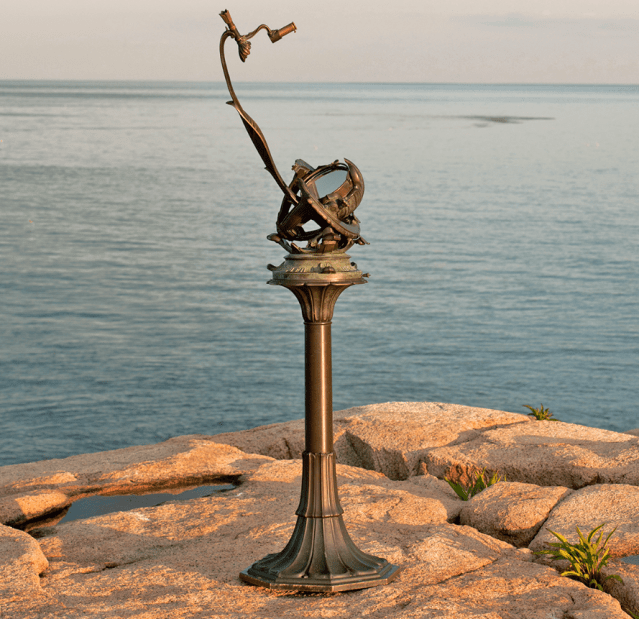
Though it is a reflecting telescope, the familiar tube is absent. Instead, a bronze leaf holds the optics. They lift out in seconds, leaving a graceful sculpture and working sundial which can be permanently installed outdoors as a distinctive centerpiece.

Each telescope requires 400 hours of labor to produce, and so I can imagine that each of the production run of 200 copies will boast the slight differences that set this bronze reproduction apart as an act of craftsmanship. Here is a more technical description of the telescope, which is 66 inches tall (including its pedestal) and weighs 110 pounds:

A six-inch mirror and eyepieces of 50 and 75 power deliver the moon, Jupiter and its moons, and Saturn with great detail. Currently there are thirty six in the world. The telescope, pedestal and optics case (made by a maker of cases for fine London and Belgian shotguns) comprise the kit, which sells for $65,000 US, plus delivery.
So now I have a garden but I still lack $65,000 – the price, and a fair one. It would make a fine Christmas gift, and a savings, for those out there who last year gave their loved one a Lamborghini with a ribbon on top. Yet, as a work of art, to see photographs of it serves as a gift in its own right, which I am happy to convey to my readers in their hundreds and thousands. Merry Christmas and happy holidays!

***

The first shot below is Vermont Gov. Hartness peering into the eyepiece of the telescope. Below are images from the Telescopes of Vermont website, which includes an elegant video of Russ Schleipman explaining the operation of his advanced reproduction of the original.

Screen Shot 2017-12-10 at 2.29.04 PM.png

Screen Shot 2017-12-10 at 3.03.19 PM.png

Screen Shot 2017-12-10 at 2.24.51 PM.png

Screen Shot 2017-12-10 at 2.24.18 PM.png

Screen Shot 2017-12-10 at 2.25.38 PM.png

Screen Shot 2017-12-10 at 2.25.59 PM.png

Posted in Art and design, Video | Tagged , , , , , | Leave a comment

Don’t fob off cheap, easy link

Screen Shot 2017-12-07 at 12.43.39 PM.png

Proposal for new bus hub under the Rhode Island State House lawn.

Friedrich St. Florian and Dietrich Neumann, RISD and Brown architectural illuminati both, have concocted what may be the most interesting, perhaps the best, idea for a new bus terminal to replace the one at Kennedy Plaza. In a Providence Journal oped, “A bus depot below the State House lawn?,” they describe how the depot could be built under the lawn within the slope of the hill that leads up from Providence Station to the Rhode Island State House.

The state Department of Transportation has vaguely proposed a new depot above ground along with a private component. Both elements, it appears, would be arrayed on either side of Providence Station, on Station Park or on a strip of the State House lawn created by relocating Gaspee Street to a point that would narrow but even out the lawn. Unclear is which element would go where. The state’s plan, poorly thought out as it is, also includes a “skyline-altering” tower for the private component.

As I’ve written in several posts, I disagree with any plan that features a new central bus depot. This is unnecessary and was not specifically mentioned in the $35 million bond issue passed in 2014 and now expected to finance the state’s portion of the plan.

The state does not need a new central bus hub. A better link for riders between the buses and the trains is easy-peasy. A continuous bus loop connecting Kennedy Plaza and Providence Station would accomplish this for bupkis – a few thousand dollars a year.

The state’s real purpose, I think, is to eliminate bus riders and idlers (two groups that partly overlap) from the plaza so it can be redeveloped as a “public square.” Burnside Park already serves quite well as a public square – unless the real reason is to make it easier to redevelop the Industrial Trust (“Superman”) Building.

A plan to remake Kennedy Plaza into a space more congenial to more people is not without merit, but it should be done straightforwardly. It could be accomplished by changing bus routes in downtown from a system where buses stop only at Kennedy Plaza to one where buses stop briefly at the plaza and continue on to bus stops on every block or so throughout downtown. That is how most cities configure their bus systems. That would thin out, though not eliminate, the plaza’s bus and bum populations.

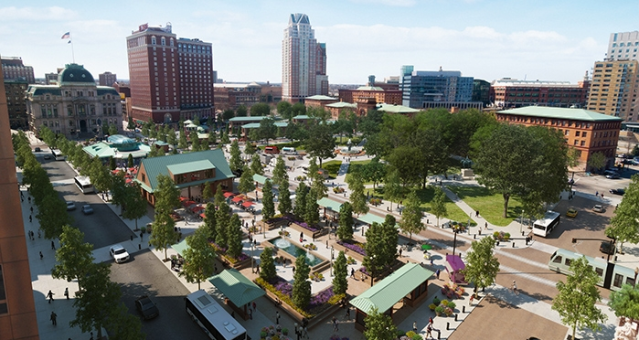
The elements of a public square could then be constructed as imagined by the downtown design firm Union Studio (see below). I would not tear down the arched entry to the skating rink, and I would bring back the Art Nouveau kiosks replaced in 2015 by cheesy, sterile waiting kiosks. The continuous bus loop between the plaza and the Amtrak station would continue to make sense in such a plan, if a new public square is carried out.

Or the state could save the $35 million bond money, or split it between the public square and a bus sub hub next to the municipal courthouse on Dorrance Street, a proposal that was envisioned (along with a Providence Station bus sub hub) in the thinking behind the bond issue. This would allow the broader scheme to move forward more swiftly.

As for the Neumann/St. Florian proposal, drawings published with their Journal oped do not seem to bear out the suggestion that the view corridor to the State House would be unaffected. The cherished view from in front of Providence Station would be mostly blocked by the entrance portal to the underground hub on Gaspee. They could dig deeper into the hill, perhaps, but that would be more expensive. That might also avoid the unfortunate flattening out of the graceful set of hillocks leading up to the State House.
Finally, their plan suggests no private component. If that was not considered necessary to bring about the new depot, it’s hard to see why the state would have led with its chin by planning to put a number of new buildings on or near the State House grounds.

Tinkering with sacred land around the State House remains unnecessary and unwise.

Screen Shot 2017-12-07 at 1.58.52 PM.png

Rendering of the proposal to renovate Kennedy Plaza as a public square. (Union Studio)

Posted in Architecture, Development | Tagged , , , , , , | 8 Comments

More of Yale’s new campuses

Screen Shot 2017-12-05 at 1.46.38 PM.png

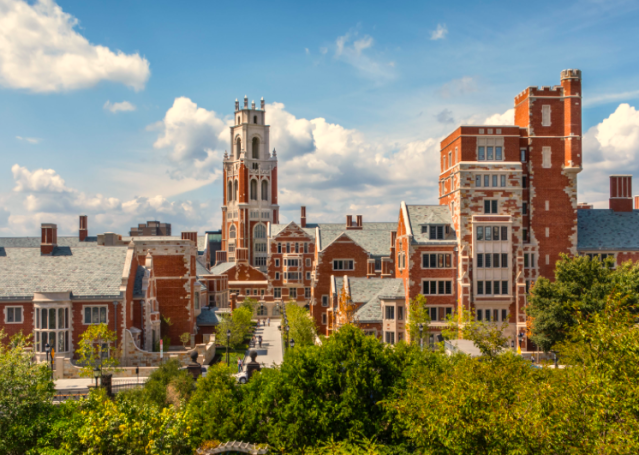
Central image from RAMSA card celebrating two new Yale residential colleges.

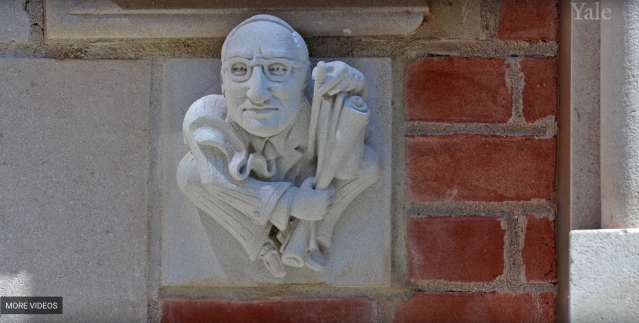
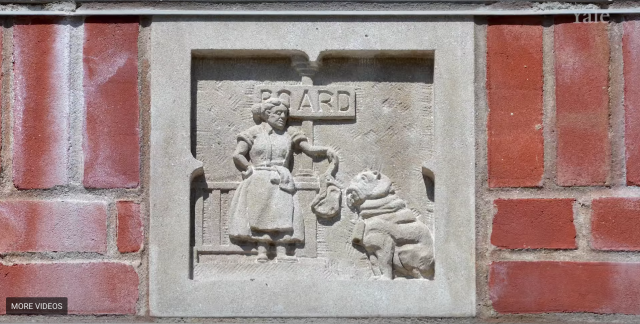
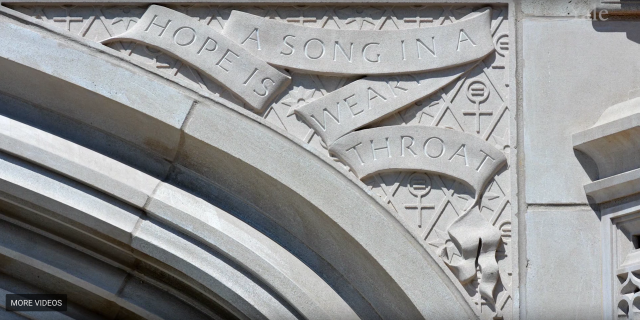
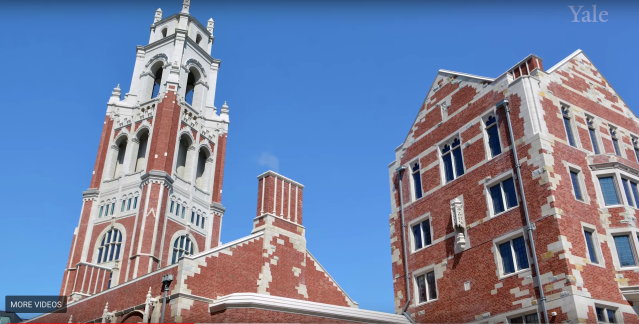
Got a wonderful gift in the mail today. It was a card from Robert A.M. Stern Architects, of the sort I often get, and which often give me pleasure. But this was more – more pleasure, because more photos of Yale’s new Benjamin Franklin and Pauli Murray residential colleges. Beautiful!

It is impossible to have too many for conveyance to readers.

Much of the Yale campus built in the decades before World War II was designed by James Gamble Rogers. Robert Stern, who led the team from RAMSA that designed the two campuses (including Melissa DelVecchio, Graham Wyatt and Jennifer Stone), took his inspiration from Rogers’s Collegiate Gothic, a refreshing break from the modernists who built most new Yale buildings since, including Paul Rudolph’s school of architecture, of which Stern was dean for quite a while until recently.

The photos printed with the card gave me fits to photograph myself for transfer to this post, since it was late afternoon before I got around to it, forcing me to use unnatural light. I gave up. I went online for shots. These come from a combination of the RAMSA and Yale sites, including RAMSA’s usual project mini-monograph and a Yale slideshow of photos by Michael Marsland. I’ve added a Yale publicity video of the campuses (unavoidably, Yale officials serve as talking heads), and a drone video of the campuses, and have taken some shots from these, and also I have added a very interesting time-lapse of the construction, which is followed by some video of scenes on the new campuses, from which I’ve taken yet more screenshots. Yet, inspired by the photography on the card, I went back and tried my best to reproduce them digitally for this post.

Dinner is approaching, so I am just going to slap them up as orderly as I can and hope for the best.

I can say that the top photo and first two photos below are by Peter Aaron/OTTO from the card from RAMSA, the next three are from the RAMSA website, and the next score or so are from Yale, either by photog Marsland or from Yale videos. Finally, there are shots from the drone video for Yale. The Yale time-lapse video from YouTube is here.

If RAMSA wants to send me a better version of the top shot, without the crease in the card so faithfully reproduced, I will happily sub it out. [Done.] Finally, I apologize in advance if some of these shots are either credited wrongly or uncredited. I will gladly print corrections. I put up with these looming credit woes because the photographs, by whomever, are so lovely. And credit for that goes to Yale, for insisting on such beauty in the first place.

Screen Shot 2017-12-04 at 7.42.25 PM.png

Screen Shot 2017-12-04 at 8.14.16 PM.png

Screen Shot 2017-12-04 at 8.08.53 PM.png

Screen Shot 2017-12-04 at 8.09.35 PM.png

Screen Shot 2017-12-04 at 8.09.54 PM.png

Screen Shot 2017-12-04 at 5.17.47 PM.png

Screen Shot 2017-12-04 at 5.20.54 PM.png

Screen Shot 2017-12-04 at 5.21.22 PM.png

Screen Shot 2017-12-04 at 5.21.42 PM.png

Screen Shot 2017-12-04 at 5.22.04 PM.png

Screen Shot 2017-12-04 at 5.22.24 PM.png

Screen Shot 2017-12-04 at 5.22.40 PM.png

Screen Shot 2017-12-04 at 5.22.57 PM.png

Screen Shot 2017-12-04 at 5.23.15 PM.png

Screen Shot 2017-12-04 at 5.23.29 PM.png

Screen Shot 2017-12-04 at 5.23.45 PM.png

Screen Shot 2017-12-04 at 5.24.06 PM.png

Screen Shot 2017-12-04 at 5.24.19 PM.png

Screen Shot 2017-12-04 at 5.24.43 PM.png

Screen Shot 2017-12-04 at 5.25.00 PM.png

Screen Shot 2017-12-04 at 5.25.12 PM.png

Screen Shot 2017-12-04 at 5.25.26 PM.png

Screen Shot 2017-12-04 at 5.25.55 PM.png

Screen Shot 2017-12-04 at 5.26.16 PM.png

Screen Shot 2017-12-04 at 5.26.45 PM.png

Screen Shot 2017-12-04 at 5.27.03 PM.png

Screen Shot 2017-12-04 at 5.27.24 PM.png

Screen Shot 2017-12-04 at 5.27.38 PM.png

Screen Shot 2017-12-04 at 5.28.08 PM.png

Screen Shot 2017-12-04 at 5.28.29 PM.png

Screen Shot 2017-12-04 at 5.28.43 PM.png

Screen Shot 2017-12-04 at 5.28.59 PM.png

Screen Shot 2017-12-04 at 5.29.24 PM.png

Screen Shot 2017-12-04 at 5.29.39 PM.png

Screen Shot 2017-12-04 at 5.30.00 PM.png

Screen Shot 2017-12-04 at 5.31.04 PM.png

Screen Shot 2017-12-04 at 5.34.38 PM.png

Screen Shot 2017-12-04 at 5.35.06 PM.png

Screen Shot 2017-12-04 at 5.35.35 PM.png

Screen Shot 2017-12-04 at 5.36.04 PM.png

Screen Shot 2017-12-04 at 5.36.31 PM.png

Screen Shot 2017-12-04 at 5.37.58 PM.png

Screen Shot 2017-12-04 at 5.49.11 PM.png

Screen Shot 2017-12-04 at 5.49.47 PM.png

Screen Shot 2017-12-04 at 5.51.13 PM.png

Screen Shot 2017-12-04 at 5.52.10 PM.png

Screen Shot 2017-12-04 at 5.52.56 PM.png

Screen Shot 2017-12-04 at 5.54.19 PM.png

Screen Shot 2017-12-04 at 5.55.00 PM.png

Screen Shot 2017-12-04 at 5.55.35 PM.png

Screen Shot 2017-12-04 at 5.57.44 PM.png

Screen Shot 2017-12-04 at 5.56.19 PM.png

Posted in Architecture, Photography, Video | Tagged , , , , , , | 8 Comments