They fought to save London

Screen Shot 2019-10-23 at 3.13.34 PM.png

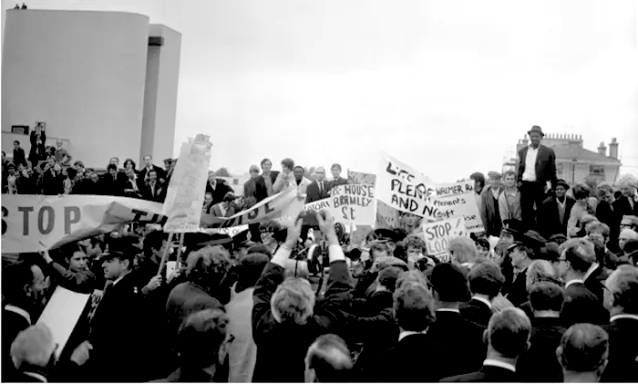
Caption from Simon Jenkins: “Angry local residents surround Michael Heseltine, then parliamentary secretary at the Ministry of Transport, as he opens the Westway, a 2.5-mile-long road that runs from Marylebone to Shepherd’s Bush. Photograph: PA Media”

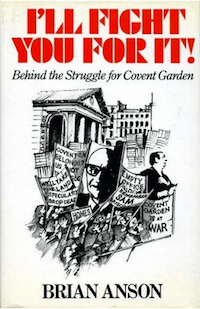
I wonder what inspired Simon Jenkins, one of the few sensible architecture critics in Britain, to pen his recent lengthy essay in The Guardian, “Concrete Bungle,” subtitled “How public fury stopped the 1970s plan to turn London into a motorway.” My guess: Jenkins must have happened upon a book, I’ll Fight You For It, by Brian Anson, published in 1981 after the public rallied to save the Covent Garden district. The book is not mentioned until well along in Jenkins’s piece. So maybe that was not his inspiration. Might it be that another modernist “icon” is on the verge of demolition in London? That would be under my radar but high on Jenkins’s list of news hooks.
Screen Shot 2019-10-23 at 4.46.58 PM.png

Jenkins’s title “Concrete Bungle” takes off on concrete jungle, which Merriam-Webster defines as “a modern city or urban area filled with large buildings and regarded especially as a harshly competitive, unwelcoming, or dangerous place.” That’s what much of London has become since 1973. Jenkins’s essay does not comment on that until near its conclusion, in reference to the city’s spate of “speculative luxury towers.” Maybe that’s what triggered him to write.

Sir Patrick Abercrombie, a leading postwar urbanist, inked his “District of London Plan” based on a 1963 report on traffic congestion. Its solution was, supposedly, “traffic separation” – or as Jenkins describes it, “[p]edestrians would be elevated on to decks above which would rise estates of towers and slabs.” The horrid Barbican, of 1965, was the first completed development in London based on such “traffic modernism,” as enthusiasts called it, and thankfully the last.
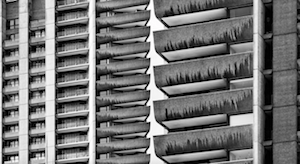
Screen Shot 2019-10-23 at 5.40.02 PM.png

The Barbican, 1965. (ArchDaily)

Why the last? Jenkins tracks the rise of public skepticism of the London Plan, which strikes me as rather sudden. Here is how he describes what the plan and its offshoots in other districts envisioned:

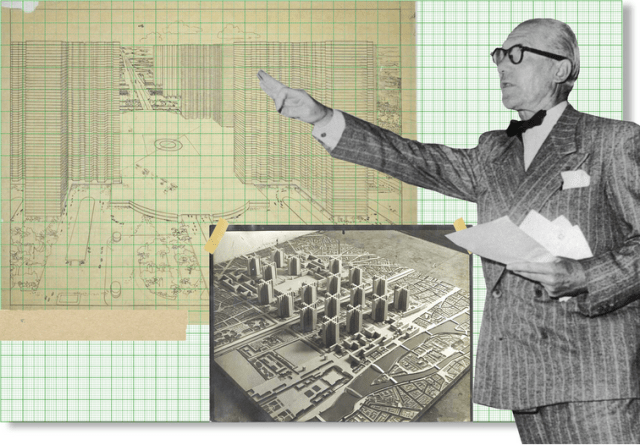
[A] London landscape entirely cleared of its existing districts, other than landmark monuments, such as the Houses of Parliament and the British Museum. The city would be one of rows of slabs and towers, similar to Corbusier’s plan [1925 Plan Voisin] for a new Paris of 60-storey towers.

Jenkins describes the most ambitious such plan, the inner-ring or Motorway Box, and the public’s reaction to it:

On one count it would demolish more houses than did the Luftwaffe, requiring the rehousing of 100,000 people. Public meetings along its route were chaotic, with officials often having to run for cover. When the roads minister, none other than a young Michael Heseltine, opened the Westway link to the box over Notting Hill in 1970, he encountered a riot of abuse from infuriated residents, who had his motorway passing just feet from their bedroom windows. [See top photo.]

The fight against London’s version of Corbusier’s Plan Voisin, which would have destroyed the Marais district of central Paris, came to a head in 1968 with the proposal to raze the Covent Garden district. Jenkins writes:

A militant community association sprang into action. Buildings were squatted, council meetings disrupted, streets occupied and councillors lobbied – or harassed. … The group was publicly supported by a then-radical Evening Standard, and by a wider awareness that a familiar London was being threatened by change more drastic than any inflicted by the blitz. … Despite continued protest through 1972, the Covent Garden plan pressed ahead. But trouble began when its custodian as GLC [Greater London Council] committee chairman, Lady Dartmouth (later Princess Diana’s stepmother, Lady Spencer), rebelled and joined the protesters. More critically, a sympathetic planning minister, Geoffrey Rippon, had his officials secretly list for preservation 250 “historic” buildings dotted across the entire plan area. When this became public, it sabotaged the entire proposal.

In the quote above, Jenkins identifies the nub of the issue in the minds of Londoners, who were justly concerned that “a familiar London was being threatened by change more drastic than any inflicted by the blitz.” Soon after the preservationist gambit described by Jenkins, the Covent Garden plan was withdrawn. Jenkins records a lengthy succession of such projects abandoned, including the Motorway Box, or put on indefinite hold, such as a plan to obliterate Whitehall and 10 Downing St. – the equivalent of the federal district in Washington, D.C. He adds:

Abercrombie was over. The GLC and the London boroughs switched the outlook of their planning policies. They actively promoted the new 1967 Civic Amenities Act, allowing for the designation of conservation areas across Britain’s inner cities. By 1975, 250 such areas of mostly Georgian and Victorian streets had been given protection, including most of Westminster, Kensington and Chelsea and much of inner Camden and Islington. The appearance of inner London we see today was largely determined in the immediate aftermath of 1973.

Jenkins adds:

The effect of the revolution was astonishing – and to the best of my knowledge never fully acknowledged.

And:

It is the architecture profession … that should be held responsible for what almost happened to London. We can blame elected politicians for decisions that govern our lives. But in complex decisions like this – as in matters of law, medicine or defence – they are at the mercy of professional experts. Architecture at the time had gone awry, seized by ideological gigantism, dubbed by some critics as an “edifice complex”. But I know of no effort by the profession to reflect on that period in its history, to set the record straight or show what lessons it has learned.

The rationale for the postwar reconfiguration of London and other British cities and towns was deeply flawed, and obviously so. But it was not obvious, apparently, to most “experts.” Since then, the dystopian sins of architecture have changed but have not improved, and the experts involved remain as stupendously oblivious today as in the 1950s, ’60s and ’70s. Yet somehow, then as now, the public recognizes the truth in spite of all the propaganda of the planners. In a remark that may be extended to other targeted London districts, Jenkins declares:

What saved Covent Garden from its fate was that the potential victims had enough fire in their bellies to fight back.

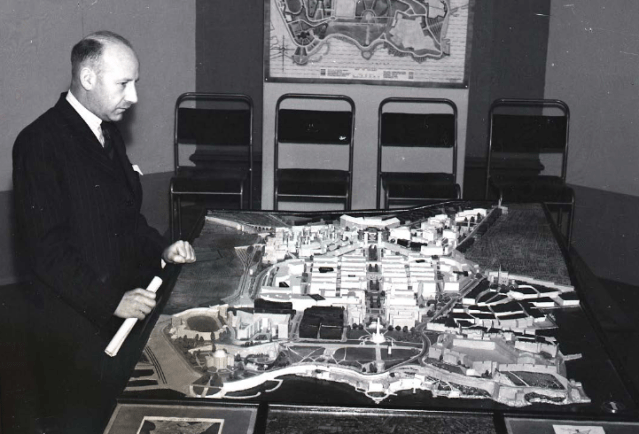
Until reading Jenkins’s piece today, I was largely unaware of the extent to which plans of “modernisation” were so actively opposed by the public. It reminds me of a propaganda film on the plan to rebuild Plymouth after the war. The film, “How We Live Now,” favored the plan, but it was so clearly and obscenely ridiculous, and the public so widely skeptical, that the film’s producers had enormous trouble making the case. Their struggle to do so is hilarious. To view the film, see my post “Plymouth after World War II.”

I imagine that many such films were made to ram the London Plan and its bloody sisters down the throats of a war-weary public. The plan to rebuild Plymouth also came from Prof. Abercrombie’s playbook. The planners won in Plymouth, and that city, along with others, was largely ruined.

While older and richer in historic fabric, London boasted no more of it per square foot than American cities and towns prior to the threat posed by urban renewal. Many cities were gritty and in disrepair after decades of depression and war. Repairing and renovating them would have been the sensible urban policy. But instead, in London and in American cities and towns, citizens found they had ample reason to fear the threat posed by modernism, and on both sides of the pond the transformation of historic preservation from a niche interest to a mass movement was swift.

The unsuitability of modern design and planning to the quality of life in cities has been obvious from the start, and has been recognized as such by the public from the start.  In a democracy, the public’s will must eventually manifest itself. In recent times, the focus of professional preservationists on saving old buildings has waned (partly because of their success at that task). Without preservationists as allies, opposition to insensitive development has seemed so futile that the public has tuned out on architecture.

This could change, however, as the history of success in blocking projects that degrade the quality of life in cities and towns becomes better known. As Jenkins writes, again offering advice whose importance goes well beyond a single victory in the style wars:

The way to prevent future Covent Gardens can only be to remain alert and to empower local people, not believe that some ordained future is inevitable. They can decide these things for themselves. It is the very essence of democracy.

Hope has been well nourished by Simon Jenkins’s “Concrete Bungle.”

***

Tip of the hat for sending me the Jenkins article to Malcolm Millais, author of Exploding the Myths of Modern Architecture (2009) and Le Corbusier: The Dishonest Architect (2017).
Screen Shot 2019-10-23 at 9.17.51 PM.png

Model of Professor Abercrombie’s plan for central Plymouth, largely realized. (plymhearts.org)
Screen Shot 2019-10-23 at 9.47.11 PM.png

Le Corbusier and his Plan Voisan. Image may be a collage. (fondationlecorbusier.fr)

Posted in Architecture, Preservation | Tagged , , , , , , , | 3 Comments

Good news from Big Apple

Screen Shot 2019-10-20 at 8.27.29 PM.png

111 West 57th St., designed by SHoP Architects.

The New York Times has published an article that, because it is in the New York Times, is sure to uplift the status of beauty on the architectural scene, in that city and elsewhere. “Bygone Romance Makes a Return” (“The Return of Golden Age Design” online), by Tim McKeough, ran on Page 1 of the Oct. 18 real-estate section subtitled: “With so many glass towers vying for attention in New York City, some developers are looking to the past for inspiration. The result: new buildings with Art Deco and neo-Georgian flourishes.”

Screen Shot 2019-10-20 at 8.58.46 PM.png

Rendering of Vandewater, in Morningside Heights. (Binyan Studios)

I doff my hat to Kristen Richards, editor of ArchNewsNow.com, the thrice-weekly free roundup of architectural news from around the world (in English). She warned me (heh-heh) by email that this article would be on her website. Most of her selections tend to validate her modernist disposition, but she is one of that extraordinarily rare breed, an honest and genuinely objective journalist. (Even I don’t claim to be the latter!)

Shortly after introducing readers to this remarkable turnabout in Big Apple projects, McKeough adds:

Rather than trying to develop buildings with contorted forms or monastic minimalism, they are aiming to evoke the romantic glow of New York’s past with new buildings that recall Art Deco, neo-Georgian and neo-Gothic style.

The comments at the end of the article include one by Arturo Eff. He writes, “I’d like to say bravo. I should love to see NYC in say 100 years. If the 20 year + trend of building tall mirrors in the sky is replaced by a new version of older more traditional designs, then hooray!” I’ll second that emotion!

There are plenty of passages and quotations that warm the cockles of your peripatetic classicist. Here’s another one, with McKeough quoting Akash Gupta, the recent purchaser of a condo in the Rose Hill, designed by CetraRuddy with Art Deco touches at 30 East 29th St.:

“There was a lot of supply in the area,” said Mr. Gupta, 47, who works in finance. But when he saw the Rose Hill sales gallery, “It was an easy decision,” he said. “It was a great building that jumped out as something differentiated. It felt special, like it was not just another building. Everything else was regular glass and steel.”

According to Beth Fisher, a senior managing director at Corcoran Sunshine Marketing Group, Mr. Gupta is far from alone in his opinions. “There has been a backlash against all-glass towers, particularly in neighborhoods or areas that are really seeking to have a highly residential character,” Ms. Fisher said. “And I think, fundamentally, people seek a sense of solidity for tumultuous times.”

All music to my ears, of course. But I looked down through the illustrations of these fine buildings, and visited the 21 images in the slideshow, without finding a single building that could possibly be confused with anything of the sort erected before World War II that many find enchanting today. Most of the buildings feature setbacks in their massing, vertical piers separating ranks of windows, and more overt decoration on the exterior façades (mostly at the entrance level) than in most modernist towers. But the setbacks are often minimal, and so is much of the decoration. The bulk of the Times’s examples seem to be takeoffs on Art Deco, which, if dumbed down, can almost be hard to distinguish from some of the more frisky modernist glass towers.

The website for 111 West 57th Street (top image) sort of lets the cat out of the bag. Text for an interior view reads: “All of [interior designer William] Sofield’s projects imbue a restrained luxury in design through choices in materials and craft as well as through a process of discovery where clients decipher their very own concept of luxury.”

That could mean anything, and imbibes of a sensibility that favors the anti-traditional theories of deconstructionism that are intended to degrade our ability to say things (and mean things) in a straightforward manner.

But if Tim McKeough and his editors at the Times want to try to fool us into thinking there’s a genuine revival of traditional work that is being applauded by the Times itself, then please, by all means, let the good times roll.

There are probably quite a number of buildings designed by architects such as Robert A.M. Stern (who is quoted), Peter Pennoyer and other classicists – more so, it may be, among the less dizzying examples of recent residential architecture. Maybe, if it really wants to cause a stir, the New York Times should feature some of them.

Screen Shot 2019-10-20 at 9.12.17 PM.png

Penthouse of Fifth Avenue triplex not pictured in NYT article. (Peter Pennoyer Architects)

Posted in Architecture, Development | Tagged , , , , , , | 3 Comments

SOM stole kid’s WTC design?

Screen Shot 2019-10-16 at 5.49.22 PM.png

The kid, Jeehoon Park, was a student of architecture at the Illinois Institute of Technology in 1999 when he designed for his senior thesis a building that looks like 1 World Trade Center, opened in 2014. It overtook Chicago’s Willis Tower as the tallest building in the U.S. It is 104 stories. Park’s tower was 122 stories. Park sued 1 WTC’s designer, the Chicago-based megafirm Skidmore, Owings & Merrill (SOM), in 2017. A judge has ruled that the suit brought by the kid, born in Korea and now, I suppose, in his mid-40s, can proceed.

“Go, kid!” says the iconoclast in me. Knock the SOM scalawags off their pedestal.

On the other hand, the 1 WTC design is a simple matter of twisting a tall, rectangular shaft with a square base and a square roof a quarter-way round. A commenter on an original story of the lawsuit in Archinect wrote:

Does this guy really think that he is the first person to think of this? I myself have sketched that form a million times, and I’m sure most designers have at some point. It’s almost inevitable that at some point you will rotate a square above a square base and connect the corners. That’s like the first cool thing you figure out how to do in SU.

So it would be like Cheops suing I.M. Pei for copying the Great Pyramid at Giza. Or the first guy who ever designed a house suing the second guy who ever designed a house for copying the first guy’s roof, or his door. However, as intellectual property lawyer Phil Nicolosai told the Chicago Tribune about the federal Architectural Works Copyright Protection Act:

The law doesn’t say you can’t be inspired to create something similar. What the law says is you can’t copy plans directly. That’s copyright infringement.

Park charges that his design was swiped by his thesis adviser, who was an architect at SOM, and that another SOM architect was involved, and that his model of the design sat in an Illinois Institute lobby for six years, and sat in the lobby of SOM itself while it was filmed for several scenes of the movie The Lake House (2006), starring Keanu Reeves and Sandra Bullock. It seems to be a stupid movie. Neither the Wikipedia nor the IMDb plot summaries of the movie mention anything about Park’s building design or model, which he called Cityfront ’99. Maybe it is in the background somewhere. But Reeves does play an architect who has built a glass house on a lake.

Oddly enough, however, the movie critic for USA Today wrote: “The Lake House is one of the more befuddling movies of recent years. The premise makes no sense, no matter how you turn it around in your head.”

That sounds a lot like what Park (or SOM) did to design 1 WTC. And in a lot of ways, almost all modern architecture is like one of those ridiculous movies that were popular, or at least frequently produced, in the 1970s. Their plot twists, flashbacks and time warps make it almost impossible to follow what’s going on, and more than anything else they resemble the sort of thinking that goes into contemporary architectural design – especially in recent decades, what with Gehry’s Bilbao, SOM’s 1 WTC, the absurd Career and Technical Academy, in Providence, R.I., and the like.

Park now runs a firm with four employees called Qube Architecture (weird corporate spellings are another virtually mandatory curiosity of modern architecture) in Suwanee, Ga, near Atlanta. It designs and constructs single-family houses, not 122-story glass towers, on or off lakes. Qube doesn’t have a website so it’s hard to tell what sorts of houses the firm designs.

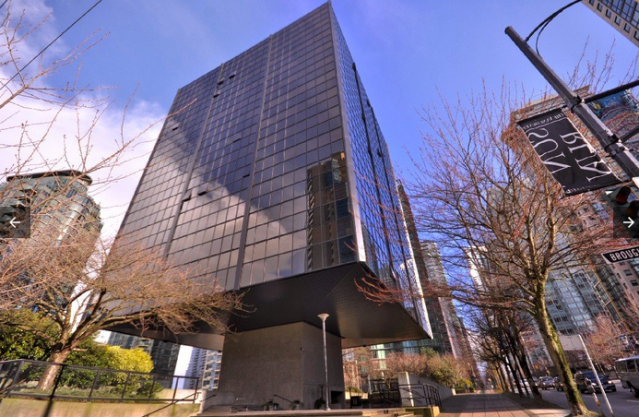
There is a condo tower of 15 stories at 1333 West Georgia St. in Vancouver, B.C., called The Qube, built in 1969, long before Jee Park got his architecture degree. Perhaps The Qube has a case of copyright theft against the kid for purloining the name of the building in Vancouver for his firm in Georgia. Nah. Spelling cube qube doesn’t quite cut the infringement mustard.

Screen Shot 2019-10-16 at 9.59.05 PM.png

The Cube, at 1333 West Georgia St., in Vancouver, British Columbia. (residencity.com)

Posted in Architecture | Tagged , , , , , , , , , | 6 Comments

Patinkin errs on Corso tower

Screen Shot 2019-10-14 at 12.42.00 PM.png

Proposed 12-story tower in the Jewelry District of Providence. (Pebb Capital)

Mark Patinkin, a columnist for the Providence Journal, wondered in Friday’s paper “Is Providence turning into the city of ‘no’?” He rushes to the defense of a newly proposed building in the Jewelry District that is opposed by the Jewelry District Association and others. Mark, who is famous for his affection for Rhode Island, makes vital errors of judgment that amount to a profound misunderstanding of Rhode Island, its capital city, and why its citizens love it.

Mark, you are in good company, because the Jewelry District Association, the Providence Preservation Society and others make the same error. Here’s how he opens his piece:

Critics are opposing a tall modern building near Providence’s open 195 land. No, not the Fane Tower. That’s 46 stories. Now they’re against one that’s 12 stories. They say that’s too tall, as well.

That’s what we’ve come to. …

Yet this cool new building is even opposed by the Jewelry District Association, which is leading the fight against the Fane Tower. At 46 stories, the tower is admittedly controversial, but for the association to also oppose a well-designed 12-story building makes it come off as a Dr. No Society, against everything.

The opposition is no doubt creating a dilemma for Providence’s Downtown Design Review Commission [DDRC], which has to evaluate the proposal. Part of their job is to listen to neighbors. But their main job is to have a vision for Providence’s future.

The Fane tower is opposed by many because of its height, as is the 12-story building proposed by a group including Michael Corso, a key figure in the 38 Studios scandal. The case against the Fane’s height is solid. In 2014, the city, with major input from citizens, passed a zoning plan that set a height limit of 100 feet. The Fane proposal for a 600-foot limit was rejected by the DDRC, but city council passed a law to change the limit to 600 feet and overrode Mayor Elorza’s veto of that legislation.

The council action seriously destabilized Providence’s development process to the detriment of its business climate. Opponents and a lawsuit are not trying to disrupt the regular development process but to fix it.

Compared with opposition to the Fane tower, the call from the JDA and others to oppose the Corso tower because of its 12-story height doesn’t cut the mustard. Arguing that this is too tall does indeed express what Mark says. It “makes us come off as a Dr. No Society, against everything.”

But Mark is missing the forest for the trees.

Important as it is in opposing the Fane tower and as unimportant as it is in opposing the Corso tower, height is not the key factor in either case. What’s important is much deeper than height. It is the character of the city.

It is the design of the Corso tower, which Mark calls “well-designed,” “cool,” a “jewel,” that matters. The photo atop this post clearly shows the design’s aesthetic problem. The building does not fit. Even if it were half or a third as tall it would not fit. But legally speaking, too, Mark is wrong. Providence’s comprehensive plan and zoning laws for downtown and the Jewelry District demand again and again that “new development [be] compatible with the existing historic building fabric and the historic character of downtown.”

Most people outside of the design process do not really have the language or vocabulary to express why “fitting in” is important. The developers, the designers, the planning bureau staff and most of those paid to frame the debate over how Providence will look believe that the public’s taste and its mostly traditional views on design are not cool, are behind the times and beneath contempt. In fact, the average citizen has ideas about architecture that are far more sophisticated than those of the experts, however intuitive and subconscious the average person’s ideas may be.

So organized opponents of the Fane and the Corso buildings studiously ignore both the popular opposition to design that does not fit and municipal laws against design that does not fit. The JDA supported the new Wexford Innovation Complex, even though its design fits in just as poorly as does the design of the Fane tower. Naturally, developers and the municipal planning department have also ignored these mandates for many decades. And the latter are, after all, beholden to politicians, whose attitudes more closely align with voters than with various architectural experts and municipal planning staff. The result is an official development process that tilts toward confusion rather than clarity, promoting higher developer cost and delay.

Why should new buildings fit into the historical character of an old city like Providence? Is that more important than growing the economy? In fact, it is vital to growing the economy. The reason why starts with a disastrous wrong turn that architecture made a century ago.

Advocacy organizations such as the JDA and PPS buy into a false narrative of architectural history. It divides architecture into a “past” and a “future” that disadvantages styles that most people like and favors styles that most people dislike. It is based upon an error made a century ago by a small coterie of European architects who believed that cities should reflect the character of machinery and break from tradition. Instead of evolving slowly as practices advance from generation to generation, novelty was prized – but only if it embraced a marketing ploy designed to reflect a false-face “future.”

The result has been architecture and city planning that evoke the metaphor of sleek machinery and technology but have failed to provide the promised efficiency or social progress. It is nevertheless protected from criticism by all of the leading institutions of the profession, from the American Institute of Architects down all the way down to the professional staffs of places like the JDA, the PPS and the Downtown Design Review Commission. This closed feedback loop has seriously damaged our society, imposing self-destructive practices on the professions and industries that build our cities.

The long and the short of all this is that most people involved in the development process obey the dictates of those who think any building designed for today has to look like “the future.” In fact, any building built today is of today, neither the future or the past, and it is the duty of planning officials, working with citizens, to define what that should mean.

Or, as Mark put it:

Part of their job is to listen to neighbors. But their main job is to have a vision for Providence’s future.

This, really, is the basic idea behind Mark’s column; it’s just that he does not understand the import of his own words. Given the broken feedback loop, that is understandable. Still, to the extent that the Corso tower’s “cool” new design reads “machine,” to that extent it offends the sensibilities of most citizens of the city Mark professes to love. I am sure that’s not what Mark wants. The work Mark looks back upon fondly that reopened the city’s rivers and restored its old commercial downtown was traditional. He should keep that in mind. He needs to scrape the architectural moss off his back. Mark needs to open himself up to “new” ideas. Today, oddly enough, designing traditional places that people love is the “slow architecture” movement that is assaulting the ramparts of conventional modernism.

Historical character and “fitting in” mean different things in Providence and, say, in Houston. If Providence wants to remain uniquely attractive and open to genuine economic growth based on its physical allure, its elites – nudged maybe by a reawakened Mark Patinkin – must confront their prejudices and act to save the city from a slow ruination now well under way.

***

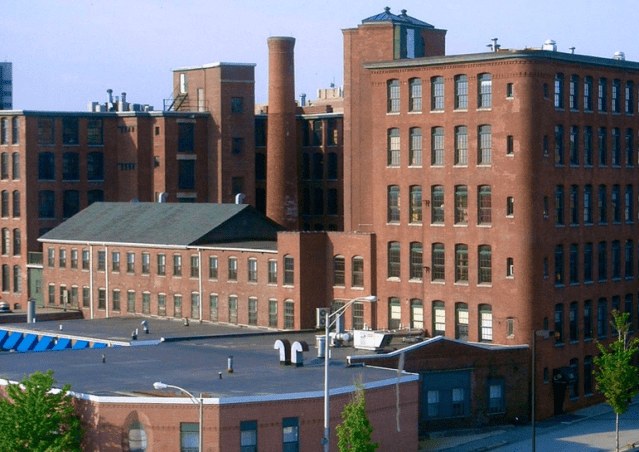
Below are photographs of the Jewelry District taken this morning near the proposed Corso tower that show the area. It is mostly a mixture of fine old brick factory buildings of greater or lesser size, some smaller brick buildings, and more recent crud, large and small. Although no high-quality historical buildings would be demolished for the Corso, both 151 and, especially, 155 Chestnut, the first two shots below, minimal as they are, add more to the district than would be added by the Corso tower. If erected, it and other buildings of recent vintage have pulled the district toward a mishmash that undermines its historical character.

IMG_0808.jpg

IMG_0810.jpg

IMG_0806.jpg

IMG_0827.jpg

IMG_0811.jpg

IMG_0813.jpg

IMG_0815.jpg

IMG_0821.jpg

IMG_0822.jpg

IMG_0823.jpg

IMG_0825.jpg

IMG_0812.jpg

IMG_0819.jpg

And finally, two more views pertinent to the changing character of the Jewelry District:

Screen Shot 2019-10-15 at 1.28.48 PM.png

Historic mill architecture in Jewelry District. (Norbert iImages)

Screen Shot 2019-10-15 at 1.41.46 PM.png

View from new pedestrian bridge to Wexford complex in I-195 corridor. (GoLocalProv)


Posted in Architecture, Development | Tagged , , , , , , , , , | 2 Comments

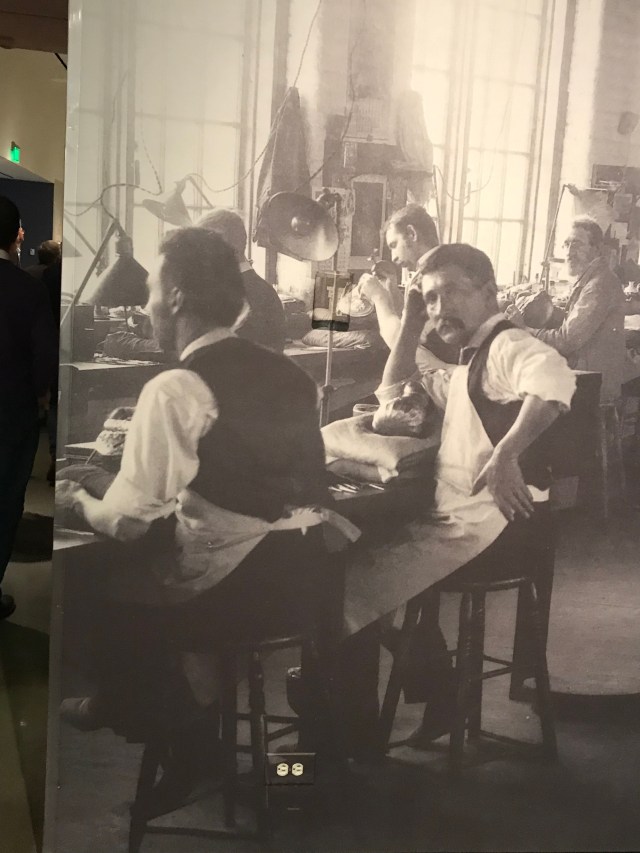
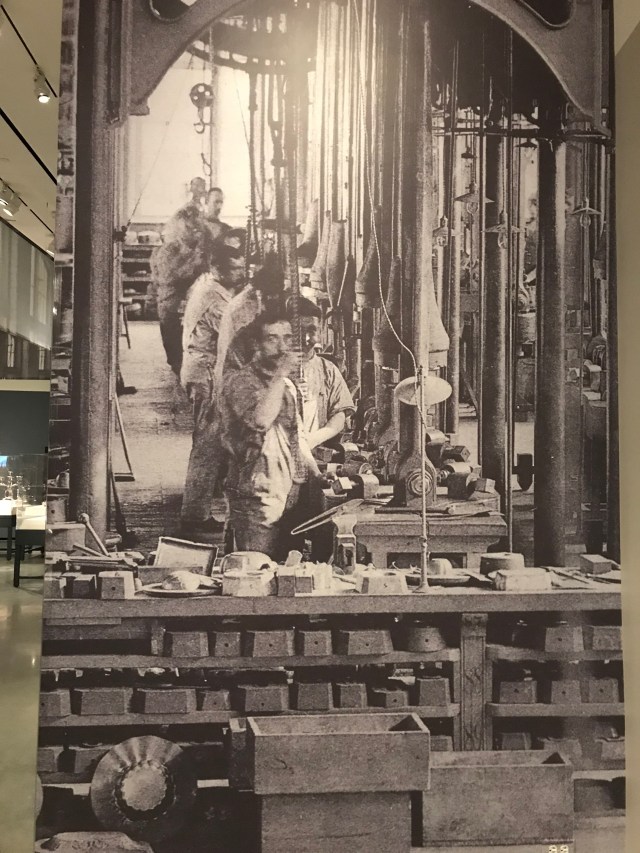
Gorham silver show @ RISD

IMG_0680.jpg

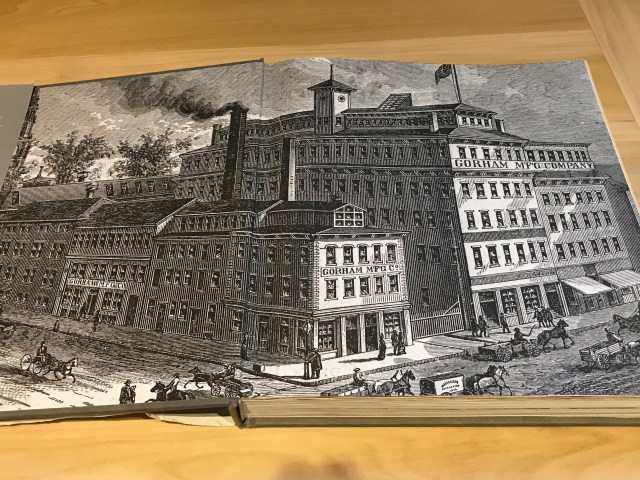
The original Gorham Co. factory east of the Providence River. (RISD Museum of Art)

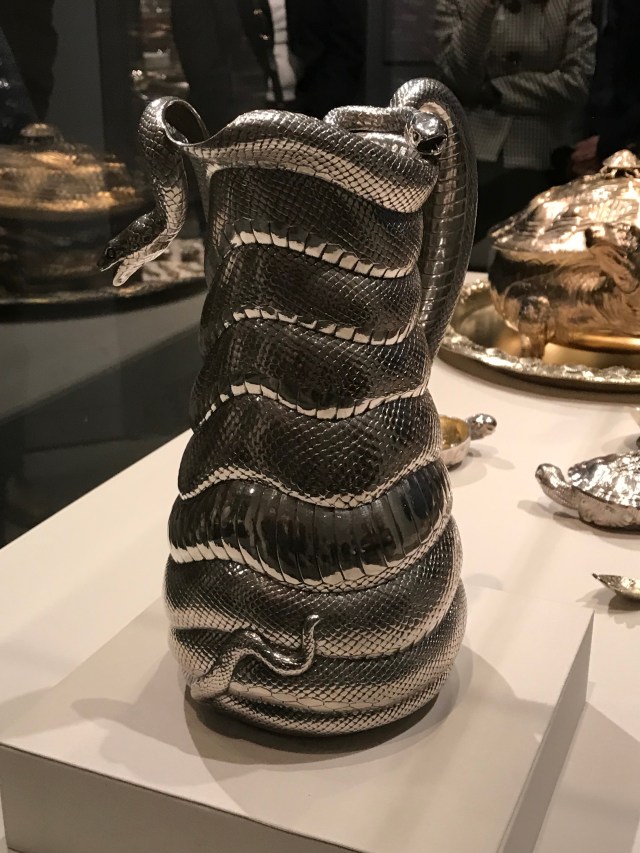
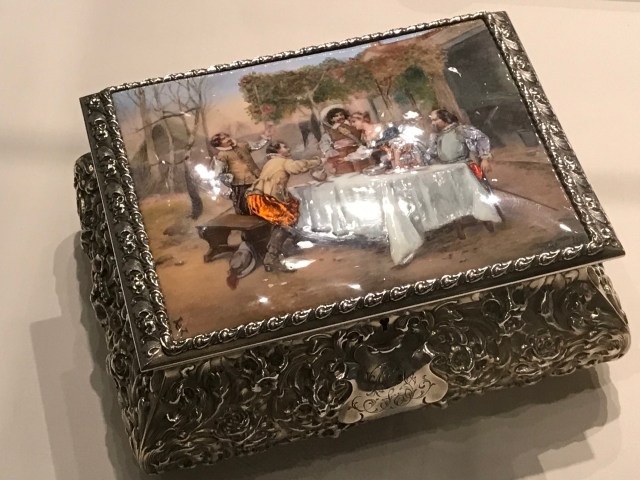
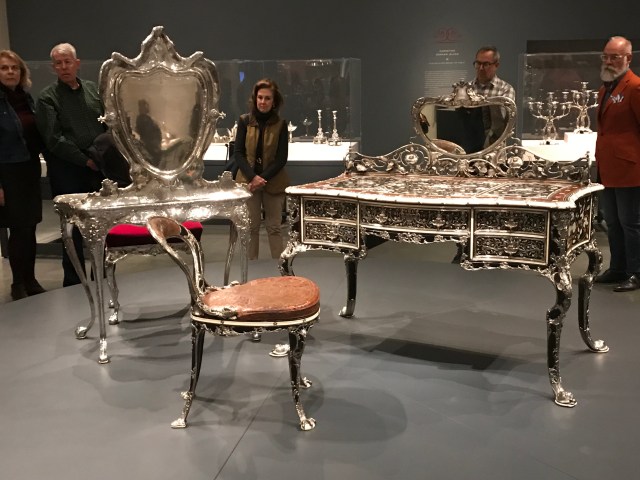
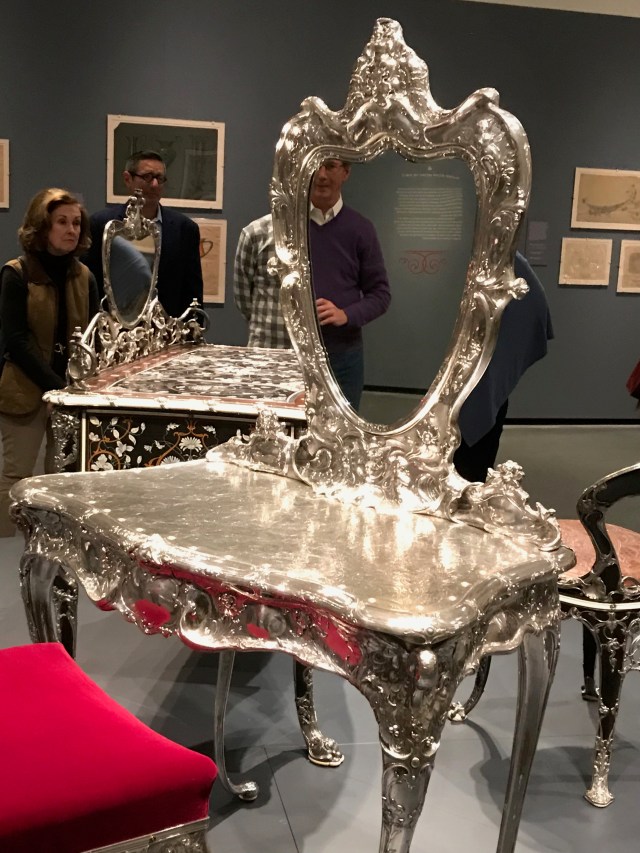
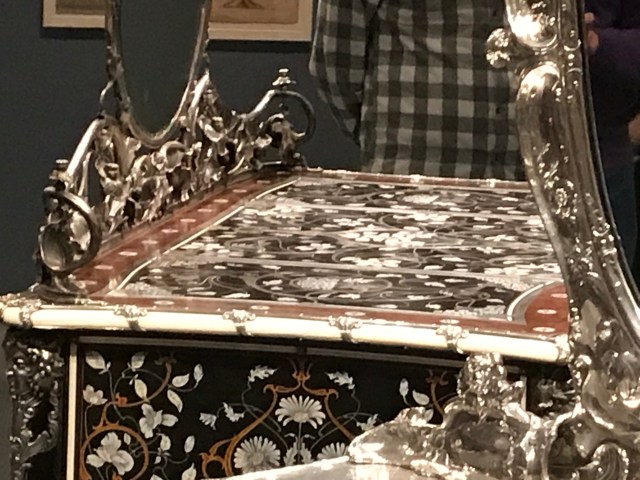
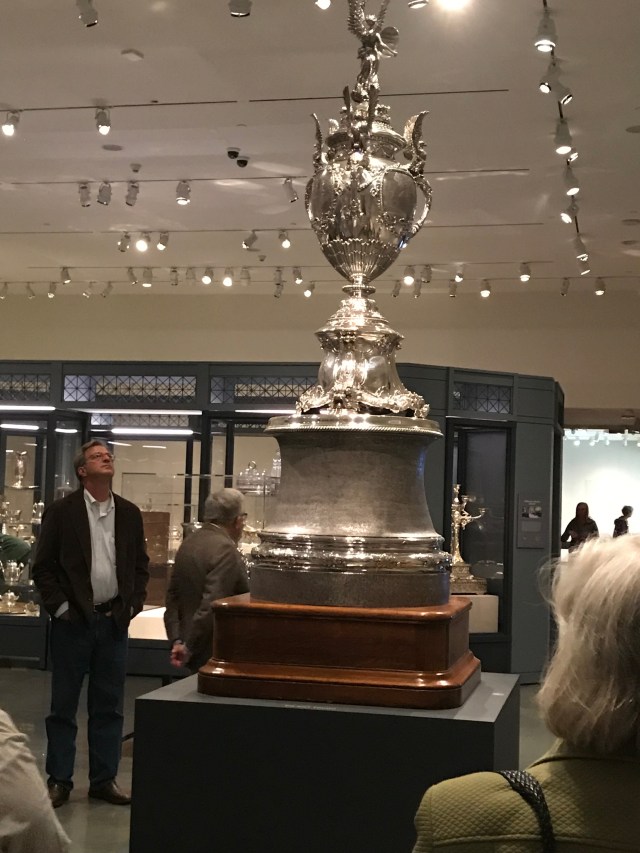
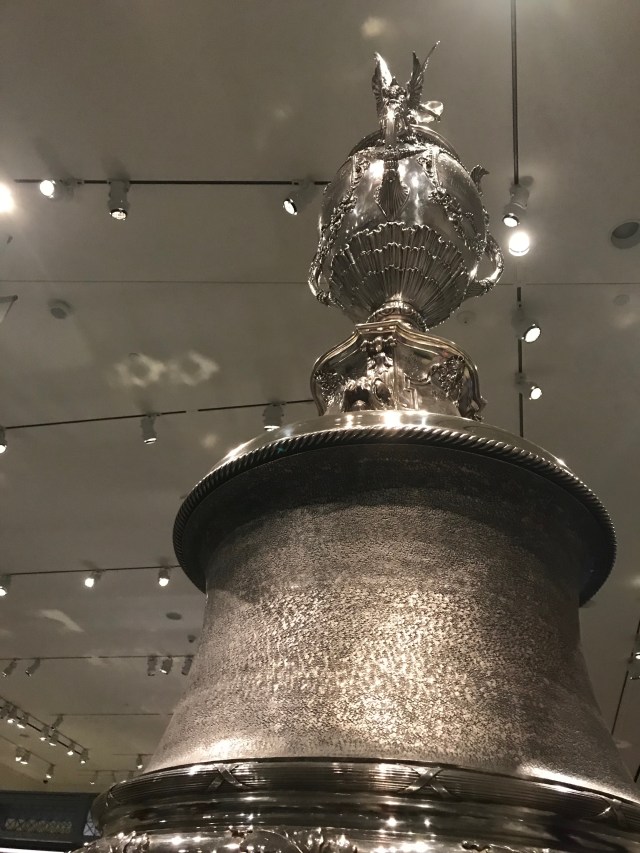
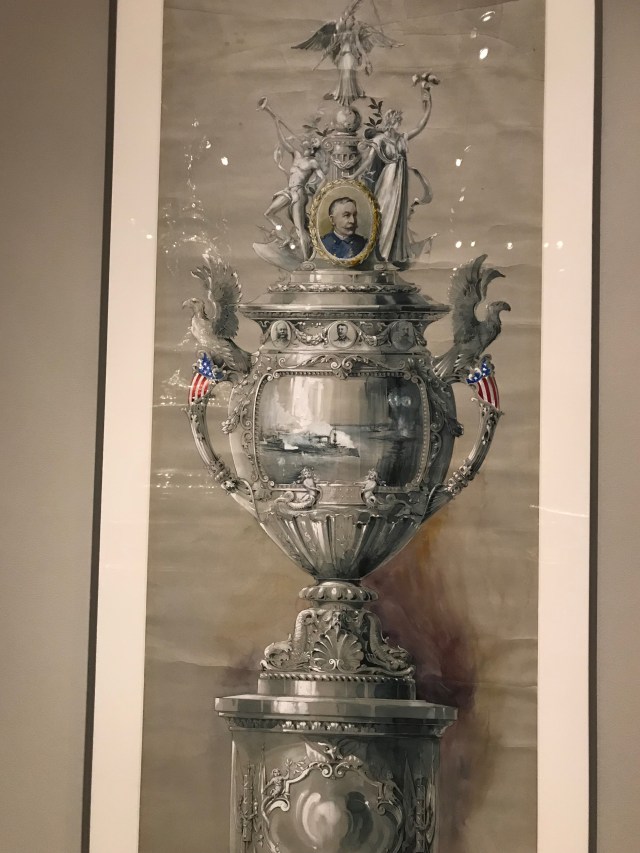
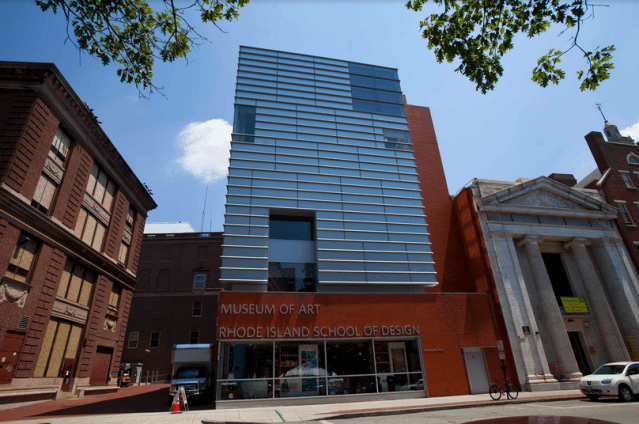
Once you are inside RISD’s Moneo monstrosity of an addition (2008) to its Art Museum you find that the interior is almost as tedious, but unlike the exterior it is, on occasion, graced with art so beautiful that you wonder why the museum operators do not take the hint. For example, last Saturday I viewed the Gorham exhibit, which runs until Dec. 1, at an event sponsored by the New England chapter of the Institute of Classical Architecture & Art.

The Gorham Manufacturing Company. was founded by Jabez Gorham at Providence in 1831, received early assistance from U.S. silver tariffs, and grew to rival Tiffany. Gorham had outlets in New York City, including one on Fifth Avenue designed by Stanford White of McKim, Mead & White. Its fine silver products were available for many years from the Stanley Weiss Collection‘s headquarters at the Tilden-Thurber Building in downtown Providence. The firm still exists, weaved into a string of companies in the mid-to-late 20th century, most recently Clarion Capital Partners, once known as Lenox.

The richness of embellished Gorham silver feels out of place in the RISD addition, even though the exhibit was clearly designed by a pro. So perhaps the idea is to focus attention on that richness, without any competition from interior design. If so, the idea cheats the exhibit, not to mention the museum itself, let alone the discriminatory ability of the human mind, of a holistic quality that would exalt the exhibit, its setting, and its observer.

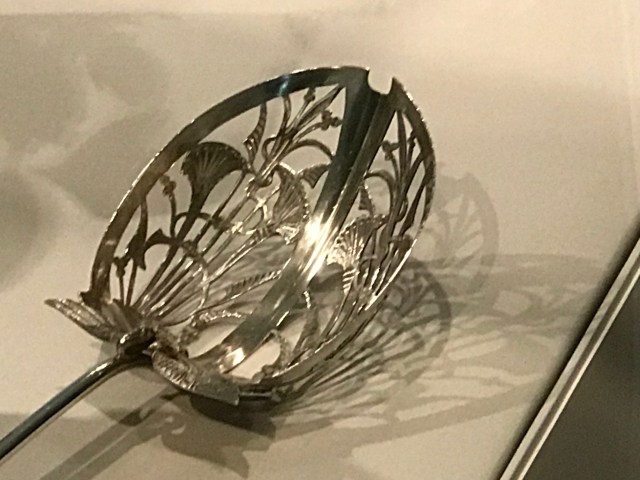
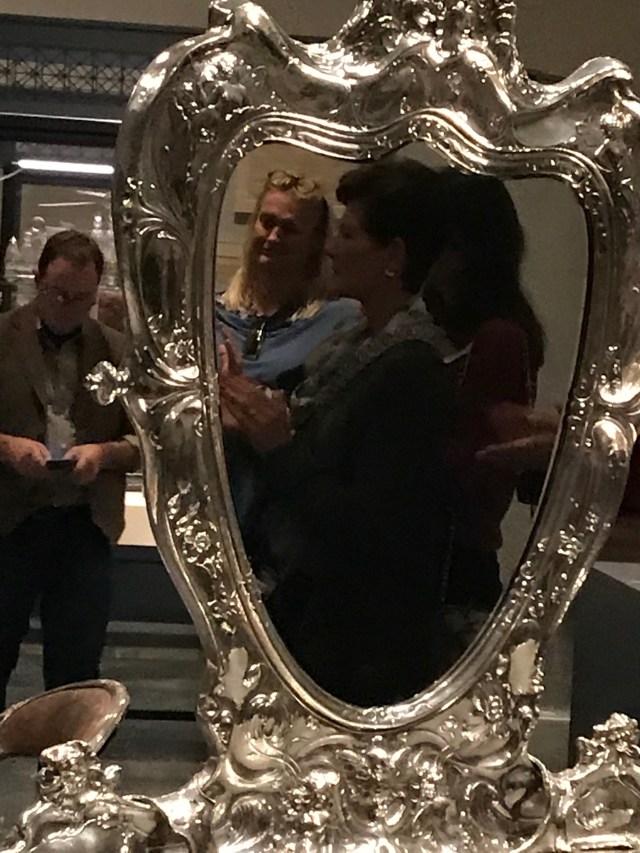
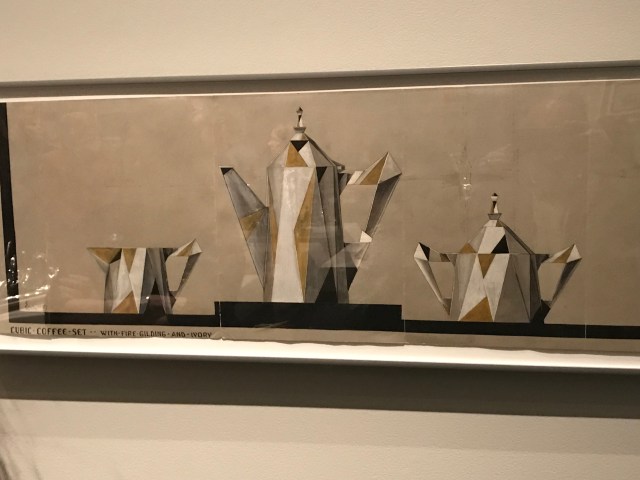
But this blogger is in no position to complain. His comments, which I promise are about to give way to photographs of Gorham silver, are set on a blank white page, though the page is itself surrounded by a graceful pattern with which readers are familiar. So here, without further comment, are items from the Gorham exhibition:

IMG_0660.jpg

IMG_0662.jpg

IMG_0663.jpg

IMG_0660 2.jpg

IMG_0664.jpg

IMG_0665.jpg

IMG_0667.jpg

IMG_0669.jpg

IMG_0673.jpg

IMG_0674.jpg

IMG_0676.jpg

IMG_0682.jpg

IMG_0688.jpg

IMG_0689.jpg

IMG_0690.jpg

IMG_0692.jpg

IMG_0693.jpg

IMG_0695.jpg

IMG_0696.jpg

IMG_0697.jpg

IMG_0698.jpg

IMG_0699.jpg

IMG_0700.jpg

IMG_0701.jpg

IMG_0703.jpg

IMG_0706.jpg

IMG_0708.jpg

IMG_0722.jpg

IMG_0707.jpg

IMG_0721.jpg

IMG_0712.jpg

IMG_0711.jpg

IMG_0715.jpg

IMG_0731.jpg

IMG_0734.jpg

Screen Shot 2019-10-10 at 8.23.26 PM.png

Sorry, felt obliged to add this image of the RISD Museum of Art’s 2008 addition. (cozycatering.com)

Posted in Art and design | Tagged , , , | 3 Comments

Hotel must gild College Hill

Screen Shot 2019-10-08 at 4.22.07 PM.png

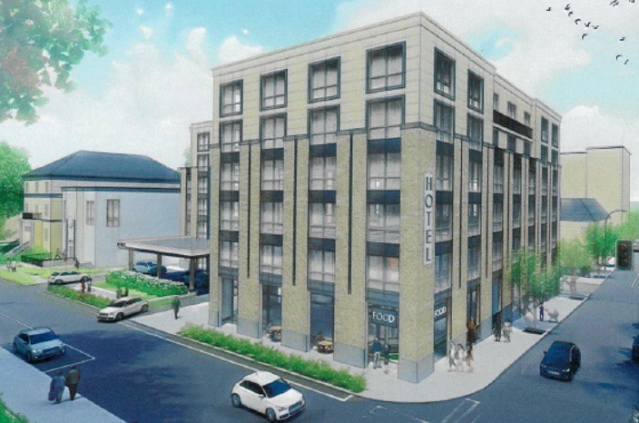
Hotel proposed to replace three old houses at Angell and Brook streets on College Hill. (ZDS)

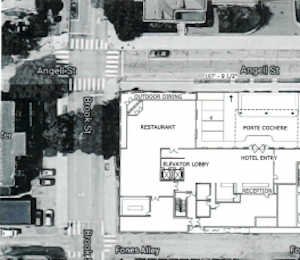
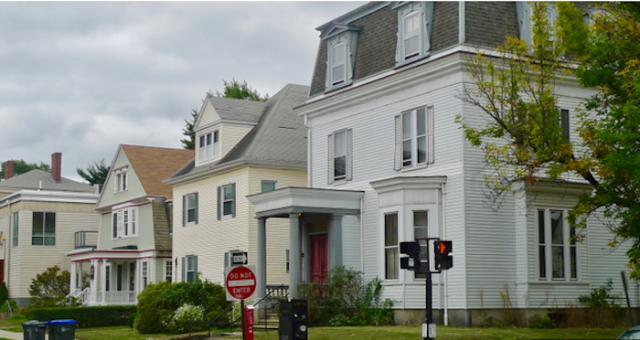
Lippitt House, at Hope and Angell, hosted the College Hill Neighborhood Association’s community meeting to hear about and comment on a hotel proposed by Edward F. Bishop and Smart (we’ll see) Hotels at Angell and Brook. Ed Bishop is a longtime resident and booster of the neighborhood, but his six-story hotel, if built as illustrated in Monday’s presentation, will continue trends that threaten the quality of life in College Hill.

Screen Shot 2019-10-08 at 10.50.11 PM.png

Plan of proposed hotel. (ZDS)

The danger comes not so much because three old houses (including Bishop’s insurance office) would be demolished. That’s a basic problem with this proposal and most other projects completed on the East Side in recent decades. The danger is that the hotel’s bland appearance would not make up for the loss of the three old houses, and would pave the way for more blandness. The loss of the houses would be more bearable if the hotel’s design were more elegant – if it lived up to the standards of the neighborhood.

The design looks cheesy, but that’s hard to tell from architectural drawings. If it is to live up to community standards, the hotel’s cornice should be more ornate, the windows should be narrower, more vertical, not horizontal, with more panes per window. This would enable an additional rank of windows, separated by slenderer piers, decorated by pilasters, and with a more robust base. If the massing cannot offer a sense of movement, the window reveals should be deep enough to suggest strength. That’s just for starters. The color scheme is fine, with its natural hues. Too many new buildings seek to fake animation by introducing contrasting color schemes. Not this hotel (so far).

It was encouraging to hear, toward the beginning of the presentation, that the design is preliminary and that “colors and materials” were not yet final. But later, answering a question from a skeptical audience, project architect Eric Zuena insisted that he would not be designing a hotel that “copied the past.” He said that as if he thought it would give him the cooties. He said his intention is to design a “transitional” building. This was bad news. Without realizing it, Zuena let the cat out of the bag. His word “transitional” means that not much would change from the initial bland design.

Zuena, like almost all architects today, believes new design which follows architectural traditions that evolved over hundreds of years is illegitimate – “not of our time.” Such an attitude condemns every old building we love in Providence to illegitimacy. For centuries, all new buildings “copied the past.” Zuena no doubt would object that he loves the city’s historical buildings as much as the next guy, and he probably does. But if so, why does he oppose designing new buildings in traditional styles? Such opposition cannot be justified. So he wants to have it both ways – to be seen as forward-looking without seeming to disdain the architecture that even he must admit makes Providence Providence and not, say, Hartford or Worcester.

That’s why he proposes a “transitional” hotel. And that’s why a “transitional” hotel, designed to satisfy both the traditional and the transitory in taste, is sure to satisfy nobody. Constant fascination arises from the psychology of developers and their hired architects, and the more local the project, the more rewarding is its examination.

The hotel’s proponents ardently fear a battle over their project similar to the one that has hobbled the proposed Fane tower in the Jewelry District. Quite understandable. They want to have the community on their side. But then why are the drawings being shown to the public so bland? If the proponents had started with a beautiful set of drawings, they would have the community on their side by now – all but those who are dead set against losing any old houses (a perfectly valid stance). If they ended up building a beautiful hotel, then they could charge higher room rates and perhaps recoup the cost of a lovelier hotel. If they eventually had to dumb it down, the community would be disappointed but the developers would already have won the battle.

So who knows why the initial drawings are so bland. Maybe the developers really did not believe the community would object. You’d think developers and their architects would be genuinely receptive to local opinion, but most of them haven’t the faintest idea what real people think. They live in silos impervious to views that contradict the fallacies architects learned in school or the dollar-centric environment that nurtures developers. Faulty ideas go unchallenged by architects’ professional associations and the architectural media. The public be damned, and if not damned, ignored. It used to be that developers, and architects, tried to satisfy clients and the public. The reverse today is true, and so development strategies feature obfuscation rather than clarity, complexity rather than simplicity and honesty. To admit wanting a “transitional” hotel is to be unusually frank, but that doesn’t make it good.

Nothing would help Providence more than a hotel project that teaches the public that beauty has not been lost to the march of time but is as valid and as feasible today as it was yesterday. One of my correspondents always ends her emails with this motto: “It is not good because it is old, it is old because it is good.” A hotel will live longer and profit more, its developers will be more respected, if it becomes part of the city’s infrastructure of love.

Perhaps the objections raised at Lippitt House will penetrate, and we’ll see improved drawings next time around that reflect what the College Hill community deserves.

Screen Shot 2019-10-08 at 10.44.44 PM.png

Three houses on Angell Street at risk in proposal for a hotel on College Hill. (William Morgan)

Posted in Architecture, Development | Tagged , , , , | 8 Comments

Hudson Yards as Dildoville

Screen Shot 2019-10-06 at 10.17.11 PM.png

Each of the Hudson Yards stimulatory products fits onto a storage base. (independent.co.uk)

Screen Shot 2019-10-06 at 10.11.58 PM.png

People’s Daily headquarters in Beijing (theindependent.co.uk)

The other day a correspondent sent me, under the title “Beyond parody,” an item from Architect’s Newspaper headlined “Design firm turns Hudson Yards towers into sex toys.” This family blog must of course issue a firm “No comment.” The late Ada Louise Huxtable wrote, in 2008, of Hudson Yards: “Skidmore, Owings and Merrill’s most conspicuous contribution is a pair of skyscrapers that look, in profile, alarmingly like sex toys.” What would she have thought of the headquarters of the People’s Daily, in Beijing? The Hudson Yard stimulators are said to be fabricated of silicone and are (as the image atop this post implies) accurately sized directly in proportion to the length and girth of the project’s buildings. AHAT (the acronym of this daring blog) hasn’t the foggiest idea what they are talking about.

Posted in Architecture, Humor | Tagged , , , , , | 7 Comments

The fate of the Fane tower

Screen Shot 2019-10-02 at 3.49.14 PM.png

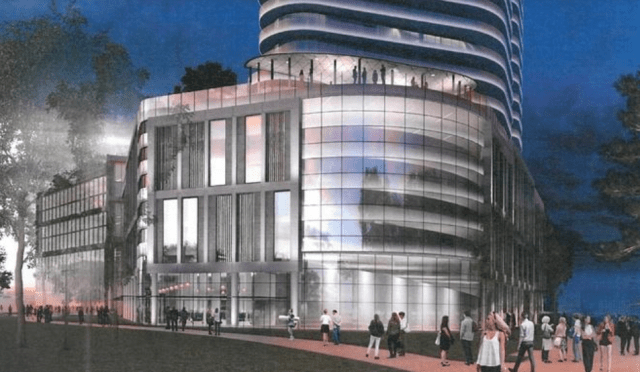
Rendering of parking garage/retail base of proposed Hope Point Tower. (Fane Organization)

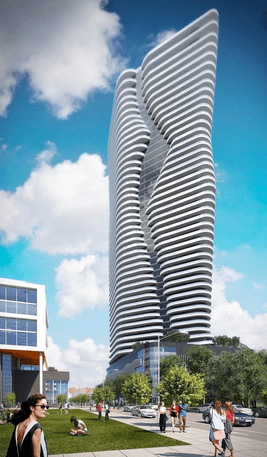
Last Wednesday, the I-195 Redevelopment District Commission approved the design of the proposed Fane tower in the city’s Jewelry District. The press duly noted the project’s latest step forward, but in fact hope is quite dim for the queer-looking 46-story building.

Screen Shot 2019-10-02 at 4.07.49 PM.png

“Iconic” design of Fane tower. (FO)

Much has been made of developer Jason Fane’s frustration with the pace of progress on his project, but not enough attention has been drawn to the “frustration” he has caused among the commissioners. Their complaints, which emerged in July, were perhaps most comprehensively described in a July 24 story by Eli Sherman of WPRI, Channel 12. He wrote:

A series of letters requested by Target 12 show the developer, Jason Fane, has repeatedly failed to meet deadlines and respond to a series of requests made by the I-195 Redevelopment District Commission.

“We are writing to express our disappointment at your organization’s failure to perform its obligations under our agreement,” wrote Robert Davis, I-195 Commission chairman, in a letter to Fane dated Tuesday.

The Fane Organization has apparently not corrected that behavior in the two months since the commissioners’ letters of complaint. Fane has “broken every rule and missed every deadline,” says a leading opponent, Sharon Steele, president of the Jewelry District Association. Maybe that overstates the case, but reporter Sherman’s story adds that the developer has had the benefit of several deadline extensions, including those for design drawings and a city tax stabilization agreement, and has sought to reduce fees and change other agreed arrangements. In response to one such attempt, commission chairman Robert Davis replied, “We have no interest in renegotiating the agreement.”

If Fane were confident he could raise funds for the project, and that it would succeed, why would he try to pinch so many pennies along the way? His attempts to move the goalposts expose his concerns about the project’s financial and market feasibility. Of course each twist and turn in the fight over the Fane tower further hikes costs for the developer and reduces returns for his investors, if he has any. He has just admitted the estimated cost of the tower has risen from $250 million to $300 million.

Sherman’s article further hints at the strained relations among the parties:

The commission declined to comment on whether the letters signaled the deal was at risk of falling through. Fane spokesperson Dante Bellini characterized the relationship as “collaborative,” and said the company “has enjoyed a good and productive relationship with the 195 Commission.”

“This is a large and complex deal and as such requires a great amount of due diligence by all parties,” he explained. “There have been, as you know, very formidable challenges.”

“The challenges Fane has encountered,” Sherman adds, “may only reinforce the narrative that Rhode Island is a bad place for business.” Wrong. Fane faces challenges because he – not opponents or procedural delay – violated key aspects of the city’s zoning and comprehensive plan. He has destabilized the city’s development environment by bamboozling the city council into raising the height limit on Parcel 42 from 100 feet to 600 feet. Planners use zoning to stabilize the development environment, so that it will show no favoritism, which is what honest developers want. If the challenges Fane has brought upon himself end up killing off his project, Providence will have a chance to restabilize its development environment and help turn the state into a better place for business.

The fact that citizens, by fighting back, show they understand the danger that Fane’s manipulations pose to our business climate will be seen by future developers as a sign that there is a more level playing field in Providence.

Screen Shot 2019-10-02 at 3.57.03 PM.png

Towers as originally proposed. (FO)

Part of that fight is a citizens’ lawsuit against council’s action on the height limit as a species of “spot zoning.” Of course, Fane is irked. “How can they do that to me?” he seems to wonder. “I have promised to build them an iconic building!” No, he has promised a tall building that looks like it belongs in Dubai, not Providence. (“What’s wrong with that?” he told the Providence Journal’s Mark Patinkin.”) We must not forget that when Fane first arrived here he mocked the city as “cutesy,” adding that it “doesn’t look up to date.” Most Rhode Islanders are tired of what “up to date” looks like. The last thing they want is Jason Fane’s idea of “iconic” on a gargantuan scale. Remember his original three towers with their Minion spectacles? Rhode Islanders know what is beautiful and what is not, and they know how beauty is key to the future of the capital city. As soon as Fane got off the plane he proved he does not understand Providence or care about why citizens love Rhode Island despite its problems.

Well, not quite. The second thing he did after arriving was to surround himself with lawyers and lobbyists. So maybe he does understand. He will need them all to dodge the blowback from his manipulative behavior. If a judge finds that spot zoning is illegal in Rhode Island, it is hard to see how the lawsuit could fail to stop the Fane tower.

Posted in Architecture, Development | Tagged , , , , , , , , , , | 7 Comments

Waterfire’s quarter century

IMG_0595.jpg

If I were more energetic I’d scrounge up examples of photos from WaterFire going back five, ten, fifteen, twenty and 25 years to commemorate the 25th anniversary of Providence’s art installation created (as if it were sufficient to use such a mundane word) by Barnaby Evans. Anyway, my digital photo archive does not go that far back. Instead, I’ll run a bunch from last night. To capture the brevity that eluded me in introducing my last post’s video of a lecture by Duncan Stroik, here goes:

IMG_0510.jpg

Screen Shot 2019-09-30 at 12.56.29 AM.png

IMG_0511.jpg

IMG_0530.jpg

Screen Shot 2019-09-30 at 12.49.44 AM.png

IMG_0525.jpg

IMG_0529.jpg

IMG_0532.jpg

Screen Shot 2019-09-30 at 12.51.50 AM.png

Screen Shot 2019-09-30 at 12.44.11 AM.png

Screen Shot 2019-09-30 at 12.45.40 AM.png

Screen Shot 2019-09-30 at 12.47.45 AM.png

IMG_0536.jpg

IMG_0537.jpg

IMG_0539.jpg

IMG_0540.jpg

IMG_0541.jpg

IMG_0545.jpg

IMG_0555.jpg

IMG_0546.jpg

IMG_0557.jpg

IMG_0560.jpg

IMG_0562.jpg

IMG_0565.jpg

IMG_0568.jpg

Screen Shot 2019-09-30 at 12.34.28 AM.png

IMG_0584.jpg

IMG_0588.jpg

Screen Shot 2019-09-30 at 12.32.15 AM.png

IMG_0595.jpg

Screen Shot 2019-09-30 at 12.25.51 AM.png

IMG_0596.jpg

IMG_0598.jpg

IMG_0602.jpg

Screen Shot 2019-09-30 at 12.19.56 AM.png

IMG_0611.jpg

IMG_0612.jpg

IMG_0617.jpg

IMG_0618.jpg

IMG_0620.jpg

IMG_0626.jpg

IMG_0627.jpg

IMG_0629.jpg

IMG_0630.jpg

IMG_0634.jpg

IMG_0640.jpg

IMG_0644.jpg

IMG_0654.jpg

IMG_0656.jpg

Posted in Architecture | Tagged , , , | 2 Comments

Stroik’s honest architecture

Screen Shot 2019-09-27 at 11.18.54 PM.png

Boston Public Library, by Charles Follen McKim, with addition at far right. (Duncan Stroik)

In this video, master architect Duncan Stroik defenestrates three of architecture’s most enduring principles. Speaking to attendees at the 2017 Bulfinch awards lecture series, Stroik takes a hammer to the “honesty” that supposedly undergirds classicism, especially this holy triad: that the façade expresses the plan, that they also express interior volumes, and that roof pediments express what’s behind them. Stroik blows them to smithereens with a sense of humor that only adds relish to the old adages’ demise.

Now, I’m usually a big fan of old adages, but to me these three principles, separately or all wrapped up in one principle, seemed to smell of the old modernist saw that form follows function and that architecture should be “honest” and if it is, then it will also be beautiful.

What bunk! Of course the modernists never followed their principles either.

In his amusing talk, which goes just over an hour, Stroik makes no mention of modern architecture or its flawed grounding in the ridiculous, and I give him credit for that. He starts with the Boston Public Library, and makes no mention of its clunky Philip Johnson addition. Good for him! He describes how the great arched windows along the façades of the Boston Public Library don’t express what’s behind the windows. The famous reading hall does not extend down the full Dartmouth Street façade as you might think. Other windows are filled in, or split by an interior wall into rooms that are definitely not expressed by the even spacing of the fenestration.

Stroik then switches from the American Renaissance to the European Renaissance some several centuries earlier. He goes swiftly through some major works, showing how their façades do not really express what’s behind them. He suggests how he would renovate the façades to better express, say, that the main ballroom on the piano nobile (the second floor) is really not in the middle, as the centrally located front portico would suggest, but toward the left corner of that floor. This, he suggests, would help visitors locate the two-story ballroom before they enter the building. (See bottom photo.)


But this is clearly a joke, and the whole idea that the façade must express the interior strikes Stroik’s audience just as absurdly as it does Stroik. The façade must be beautiful, above all, and this often suggests (if not requires) the use of symmetry and balance. Practical needs might place the ballroom to the left of the portico, but visitors approaching the building will not be looking to locate the ballroom before they go inside, they will be chattering about more important matters, like who they might dance with at the ball. Once inside, they would follow people going up the stairs. Naturally.

The symmetry of the building contributes to its beauty, and its beauty, along with other classical buildings you pass on the way to the ball, heighten your experience of the joy of civilized community and your anticipation of the conviviality of the evening ahead.

Stroik sums up his lecture:

As far as some of the major principles of classical architecture go, many if not all of the great architects of the Renaissance did not follow them. Even these buildings have major mistakes and should be downgraded – I say take them out of the history books [a joke!] – or the principles themselves are mistakes. If these three concepts, rules, principles, are simply nice-sounding adages and easy to tell young architects and students they sound good, like “Form follows function,” if they are simply nice sounding adages, then I say we disregard them and look for the true principles that the masters of the Renaissance followed. Our goal should be to search for what makes architecture great, so that we, in turn, can contribute to the culture.

Beauty, not function, is of greater importance – and of greater practical importance – to the life of a building and to the building of life in a city or town. All architects knew that quite well for centuries, even millennia, until the cultural brain fart known as modern architecture took over in the middle of the last century. Form follows function indeed. Harrumph! A beautiful building is the only truly honest building.

Anyhow, Stroik is quite hilarious in his approach to delivering a lecture, and so the video, “Principles of Architecture Disproved by the Renaissance” is well worth watching. After you click this link to the website of the New England chapter of the Institute of Classical Architecture & Art, scroll down to the second of the four videos. Then watch the other three excellent Bulfinch lectures by Arik Lasher, Matthew Bronski and Justin Shubow.

Screen Shot 2019-09-27 at 11.20.35 PM.png

Palazzo Farnese, with left two ranks of windows connected. (Duncan Stroik)

Posted in Architecture, Video | Tagged , , , , , | 3 Comments