Neighbors win third straight

At left is a rendering of duplex version from June submission; the one at right is from October. (HDC)

It may not yet be three strikes you’re out for the developers, but neighbors who want to preserve their little nook of history just off Benefit Street have persuaded the Providence Historic Preservation Commission that a plan to plop modern architecture into their midst needs more work.

The commissioners asked developer Joseph Furtado and architect Friedrich St. Florian to return with more details on two aspects of their plan. The first would relocate 59 Williams St., a small Victorian cottage, a few feet closer to the street. That would make room for the second – a new duplex townhouse, and possibly one or two more, to be built on the other end of the property, at 6 John St., after cutting down its historic wooded area.

Naturally, the neighbors are concerned about the woods and the relocation of the cottage. Yet the neighbors seem less concerned about the modernist style of the duplex, even though it, more so than the relocation of the cottage or even the loss of the woods, would rob them of the historical character that undergirds the beauty of College Hill and the value of their own houses.

A more traditional rendering of duplex from June submission. (HDC)

Many of those who testified against the project at last Monday’s HDC meeting via zoom, and the commissioners themselves, voiced levels of concern that a modernist house was “out of character” with the neighborhood. But the witnesses’ hearts really didn’t seem in it. They assured the commissioners that they don’t object to a modernist style – “just not here.”

“I’m not against modernism as some people are,” said Lily Bogosian, adding nevertheless that “we know how things ought to look in this neighborhood.”

This ambiguous attitude seems to have emboldened architect St. Florian to replace the gabled roofs of the third story balconies in an earlier version of the duplex, which the commission saw last June, in favor of flat roofs while adding “ocean liner” railings to the balconies and larger windows of a more modernist character.

These features suggest that St. Florian was eager for his design to doff its cap to founding modernist Le Corbusier. St. Florian’s respect in Rhode Island rests primarily on his traditional and pleasing designs for the Providence Place mall and the World War II Memorial on the National Mall in Washington, D.C. – big projects that made his national reputation.

It is odd that after these triumphs he has, late in his career, returned to the abstract modernism he favored as a young RISD professor. Even more curious is his willingness to risk the project, in the face of the presumed sentiments of the community, by shifting the design of the duplex much further toward modernism as the HDC process moved into an even more contentious phase. But with even the neighborhood singing the praises of St. Florian, who can blame the developer for his confidence in the architect?

Of the 6 John St. version of the duplex unveiled last week, St. Florian said: “I think this is going to be one of the most beautiful new additions to College Hill,” adding, “I am proud of this design.” Later, he chided the neighbors, arguing that their “personal opinions” are not “judgments.” Huh?

Altogether, opponents of the project raised so many objections to moving the cottage and giving “conceptual approval” to the duplex design that the commission voted unanimously against its own staff’s recommendation to approve both. Regarding the cottage, the staff had determined that “the proposed relocation and construction is architecturally and historically compatible with the property and district.” Regarding the design of the duplex, it determined, again, and without evidence, that the duplex design was “historically compatible” with nearby houses and the wider district.

That the staff was capable of making such recommendations testifies to the modernist sympathies of almost all professional preservationists, who keenly feel the pressure of elite opinion. Commendably, the commission properly deferred to the more sophisticated sensibilities of the neighbors, in spite of the reluctance of many neighbors to oppose modern architecture in a historic district (or at least this one) as vociferously as they should.

Developer and architect are likely to return in November with a plan that does not move the cottage. But, picking up on the neighbors’ all-too-typical architectural ambivalence, the architect seems unlikely to retreat from the modernist design of the duplex. This is a contest of wills, and the will of the neighbors is weak in this regard. Whether the commissioners will continue to have the fortitude to push back, on behalf of the neighbors (and the city), against both their staff and the developer remains to be seen.

Largely unnoted modernist addition to cottage sits behind wall but can be seen from street. (HDC)

Posted in Architecture, Development | Tagged , , , , , , | 1 Comment

Online drafting-tool angst

Set of drafting tools from Australia. (Douglas Finney/Pinterest)

This is the fourth but not necessarily the last in my brief series on the tools used in architectural drafting. I cannot imagine how artists and illustrators whose work features architecture can do it without technological assistance. Art and the machine! In the distant past, buildings were often designed, and certainly built, with a certain indeterminacy of line to which Time and Mother Nature added beauty.

The precision of line and surface was improved over the centuries with the use of drafting equipment, but now computing (CAD, or computer-assisted design) has taken some of the art out of architectural rendering. Still, some want to hark back to ye olden ways. Today, the acquisition of vintage tools can be frustrating. Read “This A-Hole Wants How Much?” by a cartoonist named Douglas (he signs himself “Admin”) at the Arsenic Lullabies Blog.

I read the whole thing. It is not improper to call it a screed, though Admin uses the word rant, or even the less rollicking complaint. Douglas’s complaint is long but the hilarity of his illustrated descriptions of the flaws of drafting tools he buys online compels a reader to follow the screed to the end. Along the way, beware of assorted pottymouthisms, solecisms and neologisms. Here he sums up his predicament:

Since, it would be legally impertinent, to rant about what I’d like to rant about right now,* I’m going to complain about something else I have been putting off complaining about.

One of the great screws of being an Illustrator or an artist is how much good supplies cost.  Even in the age of online stores it’s still expensive.  For example a 3 ounce bottle of quality ink will run you from $3 to $5.  Let me put that  in perspective for you.  Ink has two ingredients water and dye.  Soda has about 49 ingredients and you can get 20 ounces of it for 1.00. People who use oil based paints are laughing at me for complaining about ink, because a set of quality oil pant is close to a monthly car payment.  Brushes, pens, canvas….the good stuff is way over priced compared to tools people in other professions use.  Even when I was a mechanic and looking through the Snap-On catalogue (the gold standard for tools) tools were cheaper…and you could use the same one for the rest of your life.

The problem is there are not enough of us for the supplies to be mass produced to the point the cost is reasonable.  You see a painting for sale, it probably cost 200.00 just in supplies.  It’s ridiculous, and a little sick.

*And what might that be?

We are left to wonder. I am still wondering whether the subjects of my three previous posts – Phiz, Antiquity Smith and James Holland – actually used drafting tools in their work. But wondering can be hazardous, for here comes a stray thought: Might greater ease of producing precise lines and curves with the application of drafting tools have played a role in the profession’s drift toward modern architecture? Hmm.

Posted in Architecture | Tagged , , , , , , | 1 Comment

A draftsman in watercolor?

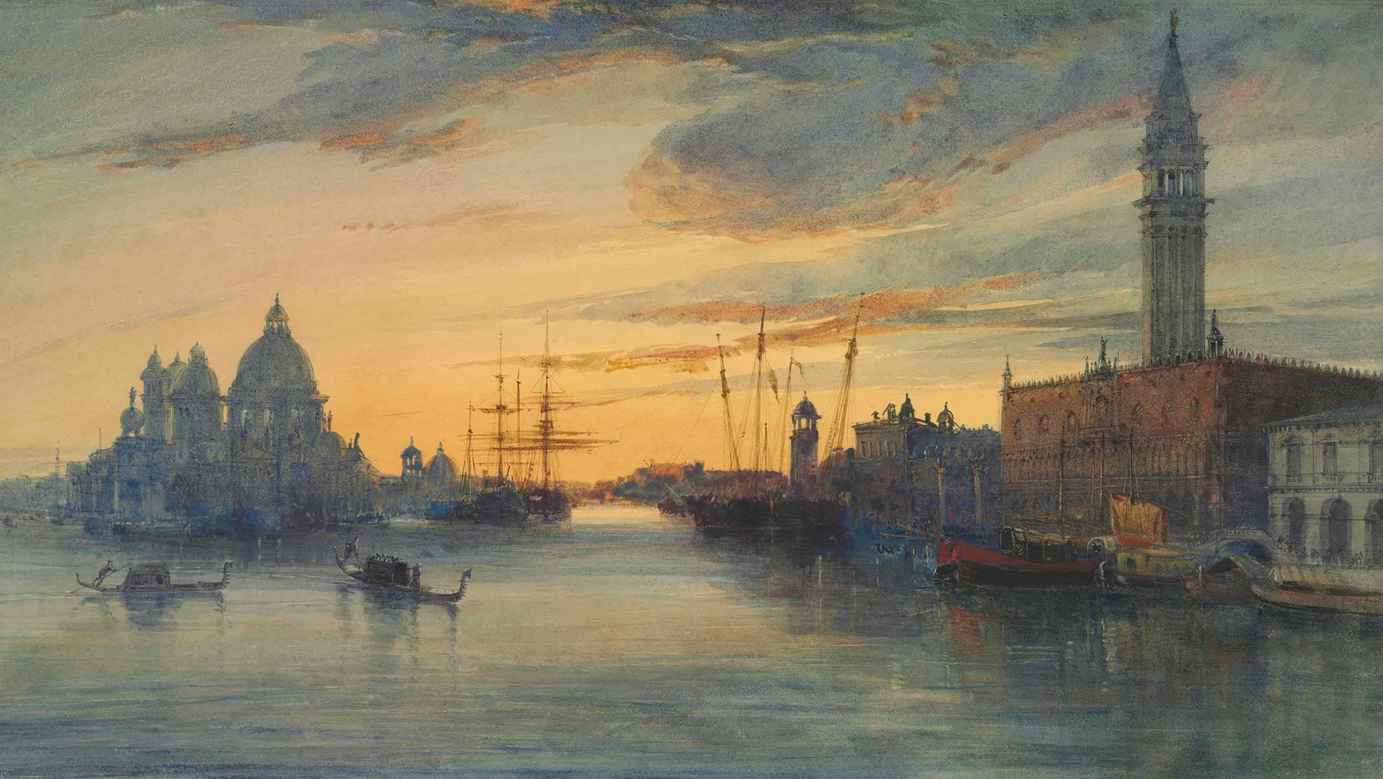
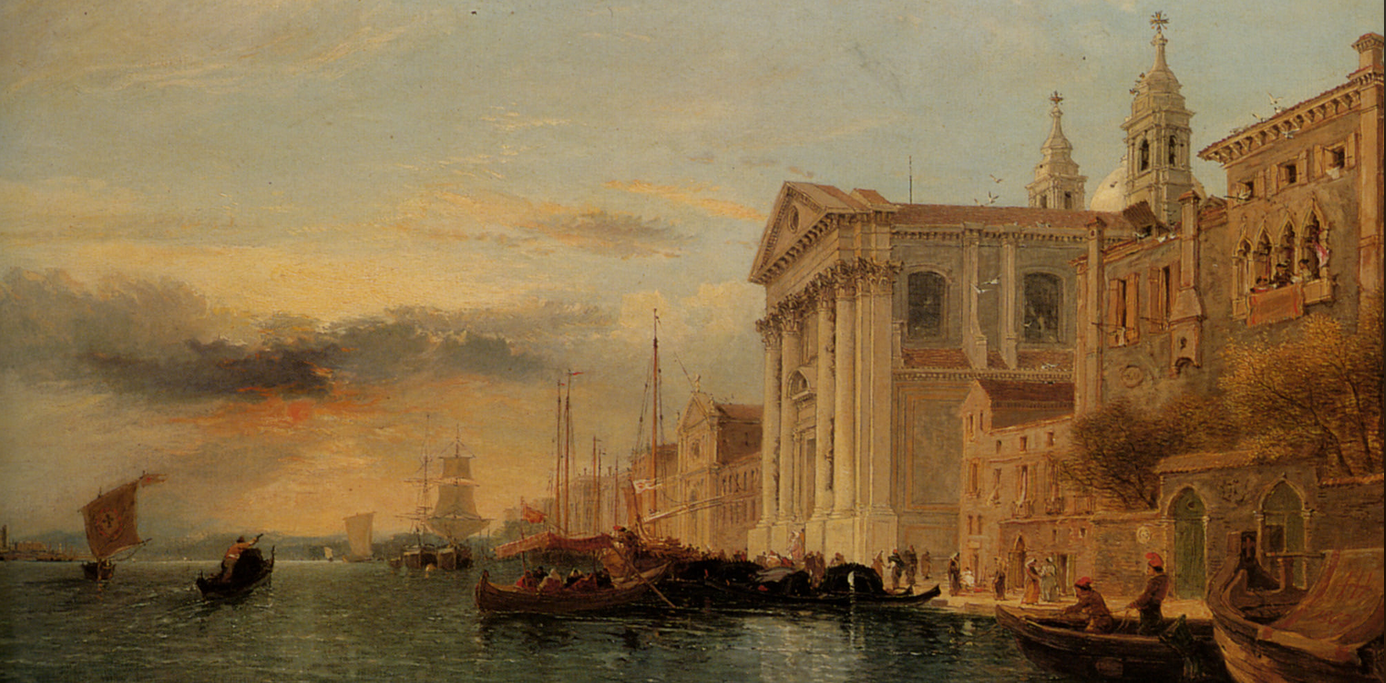
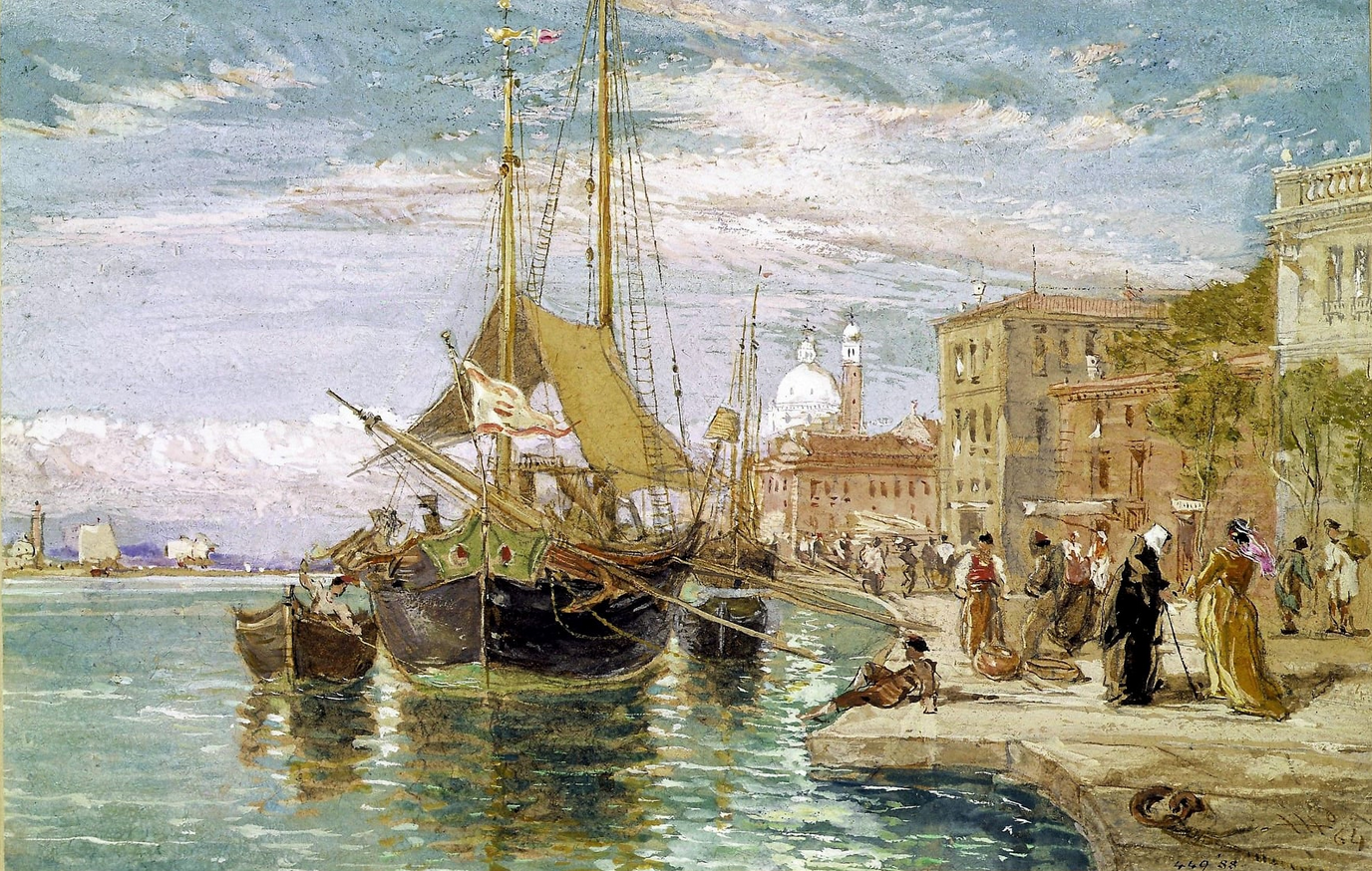
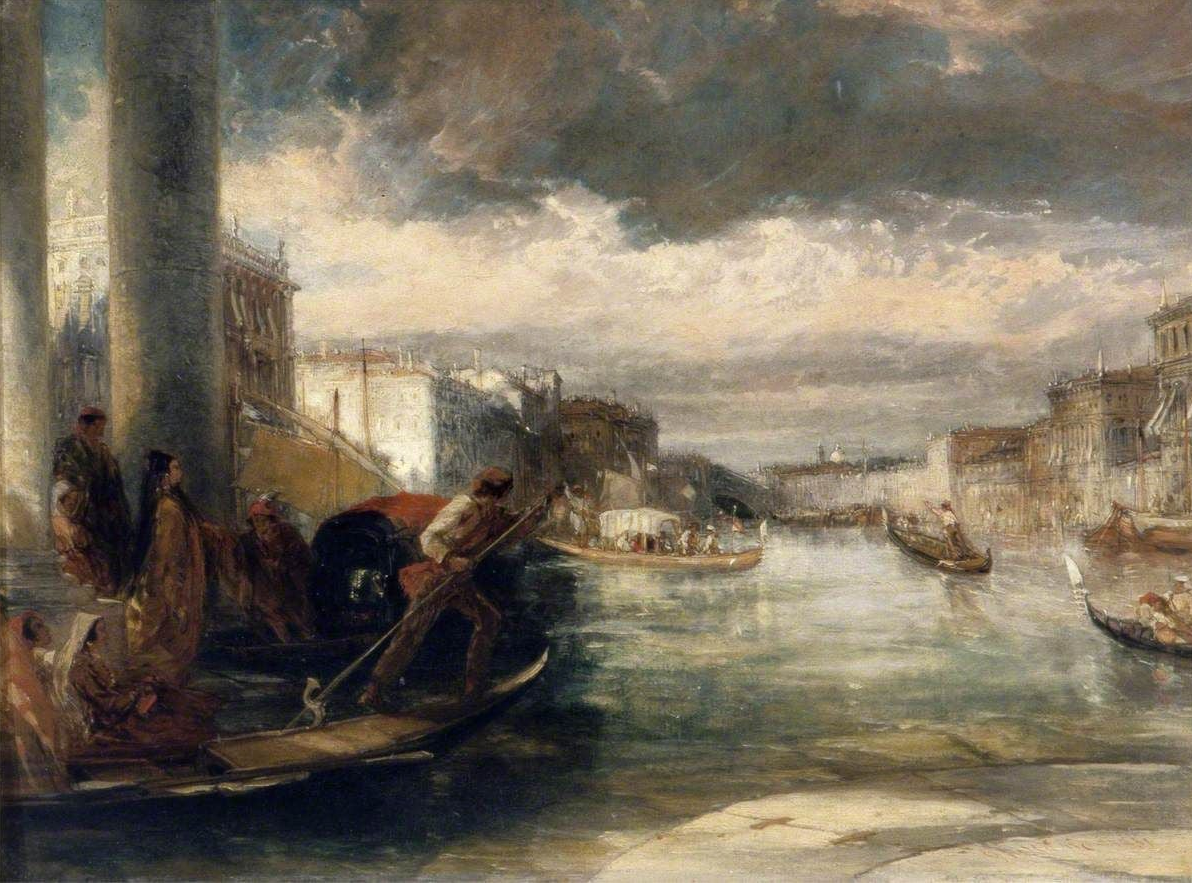
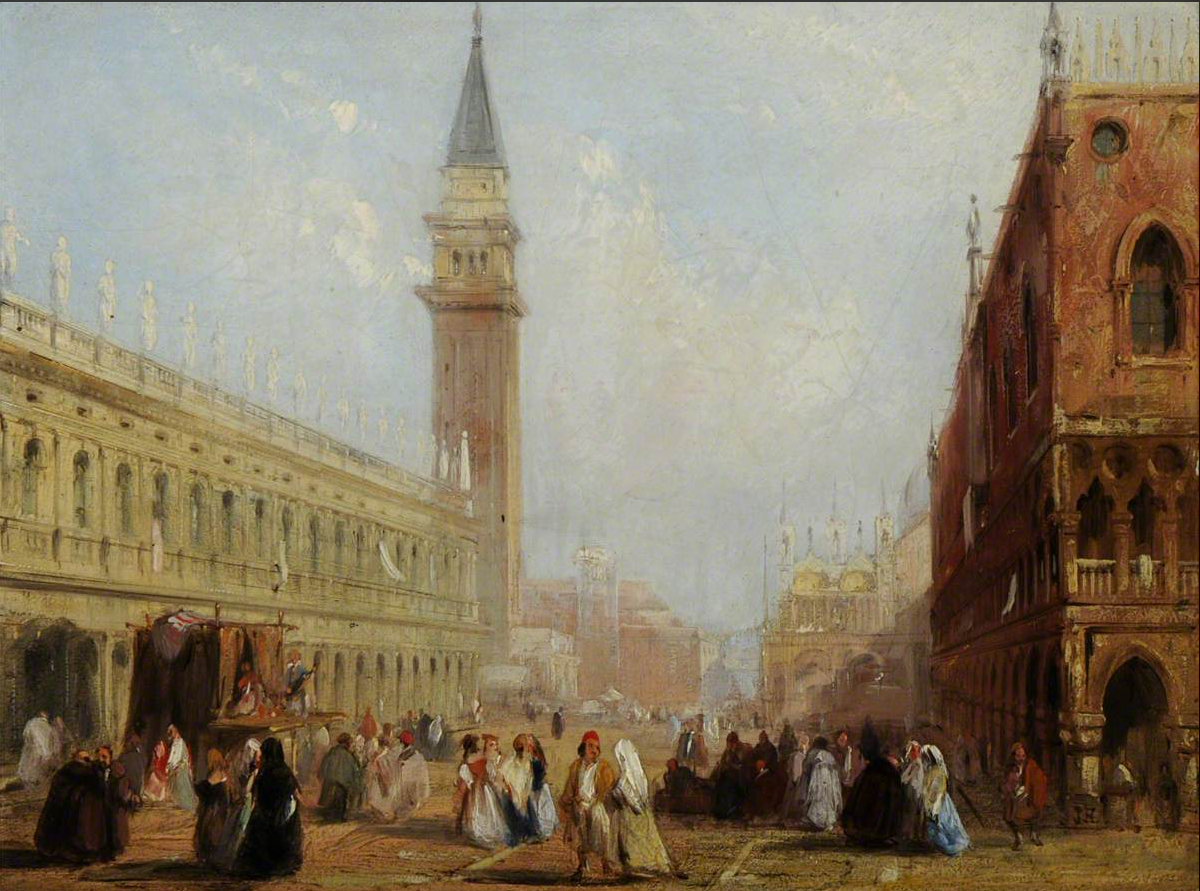
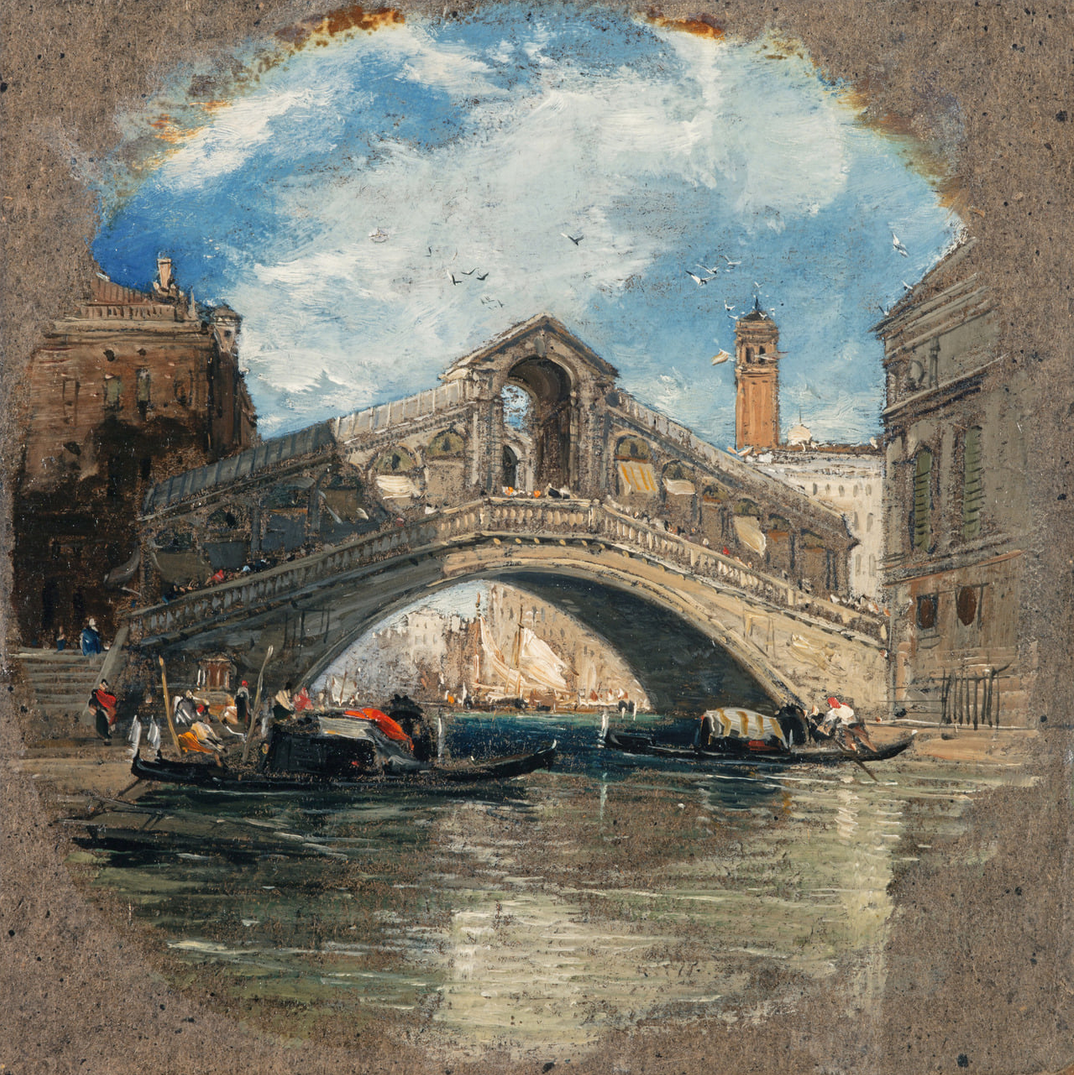
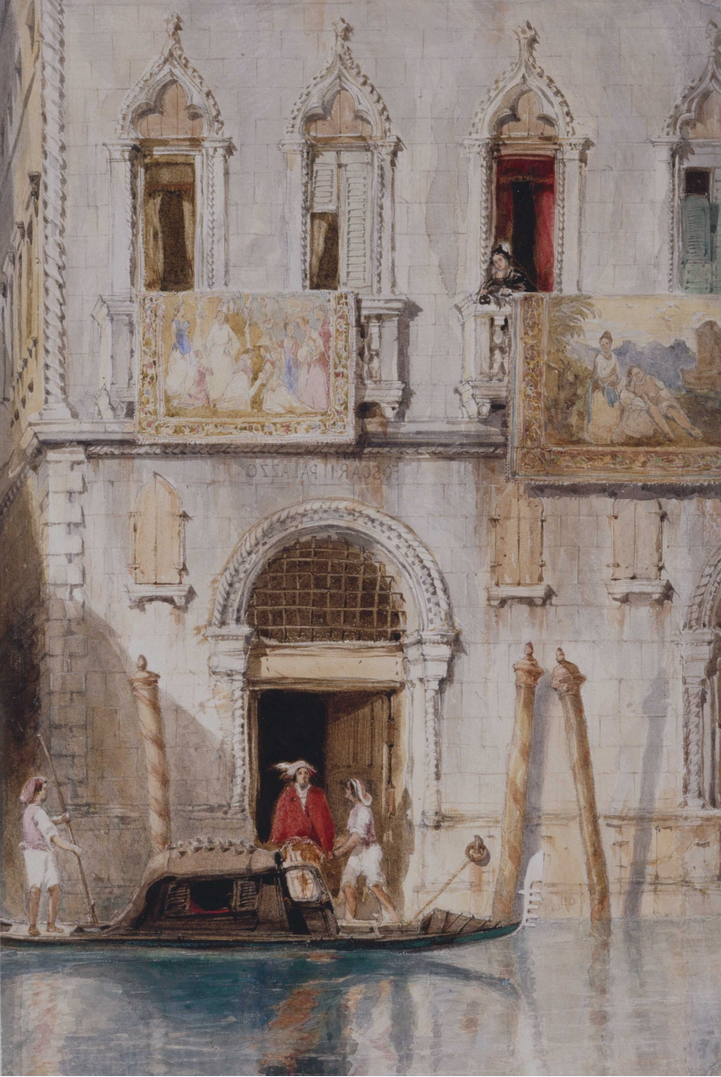
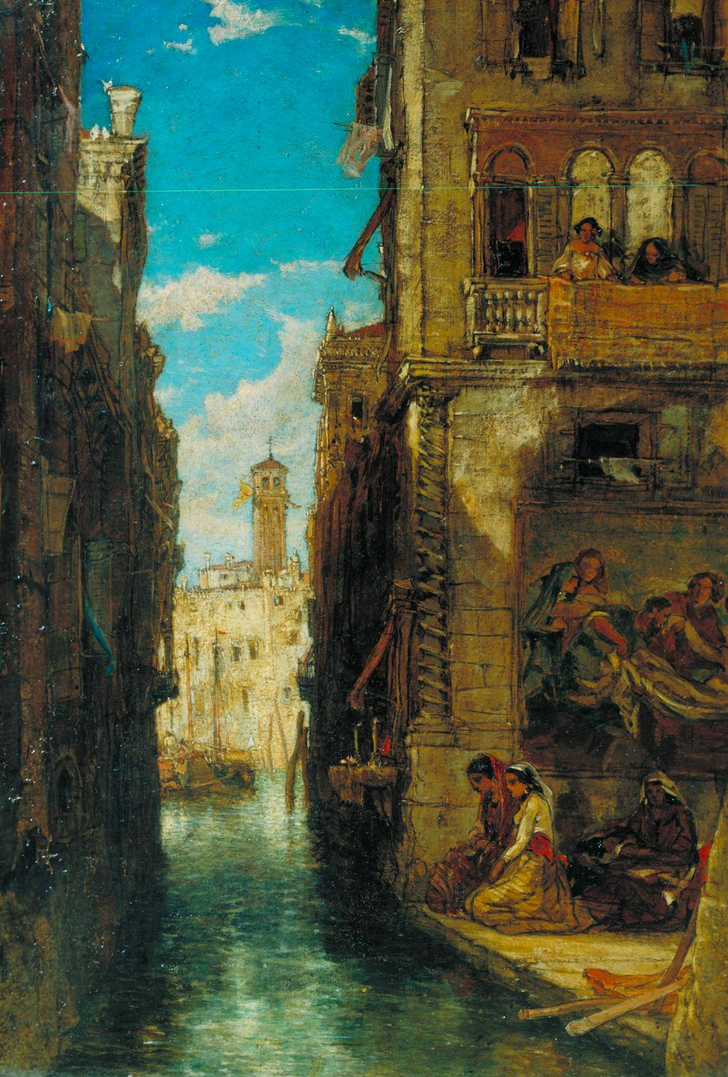
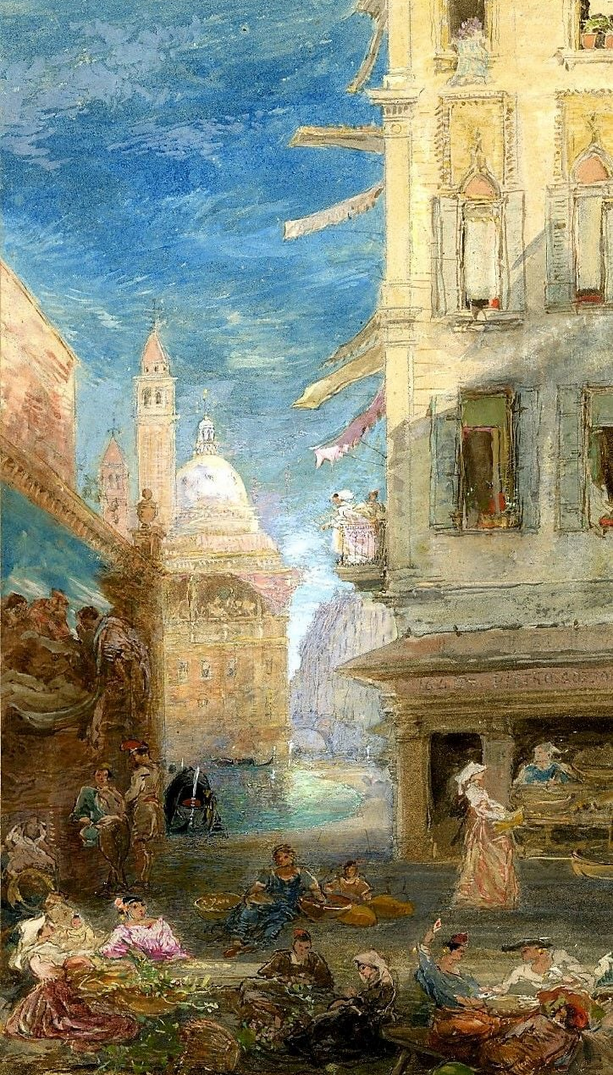
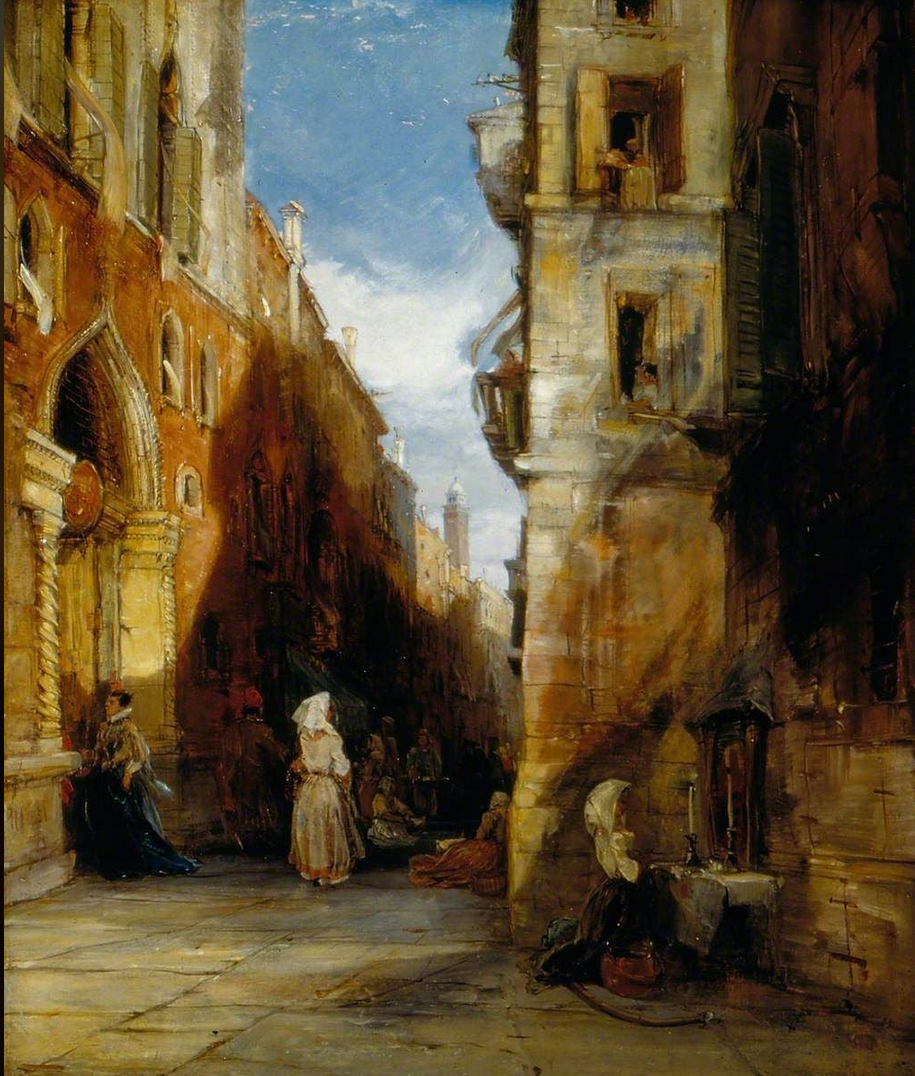
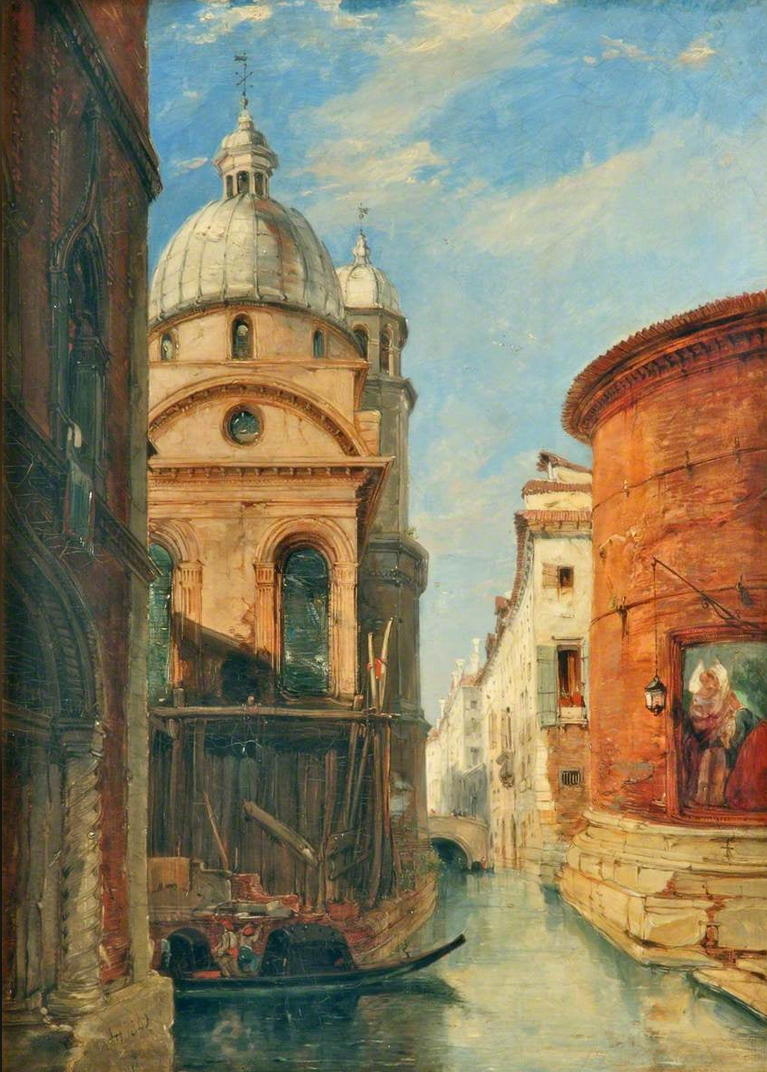
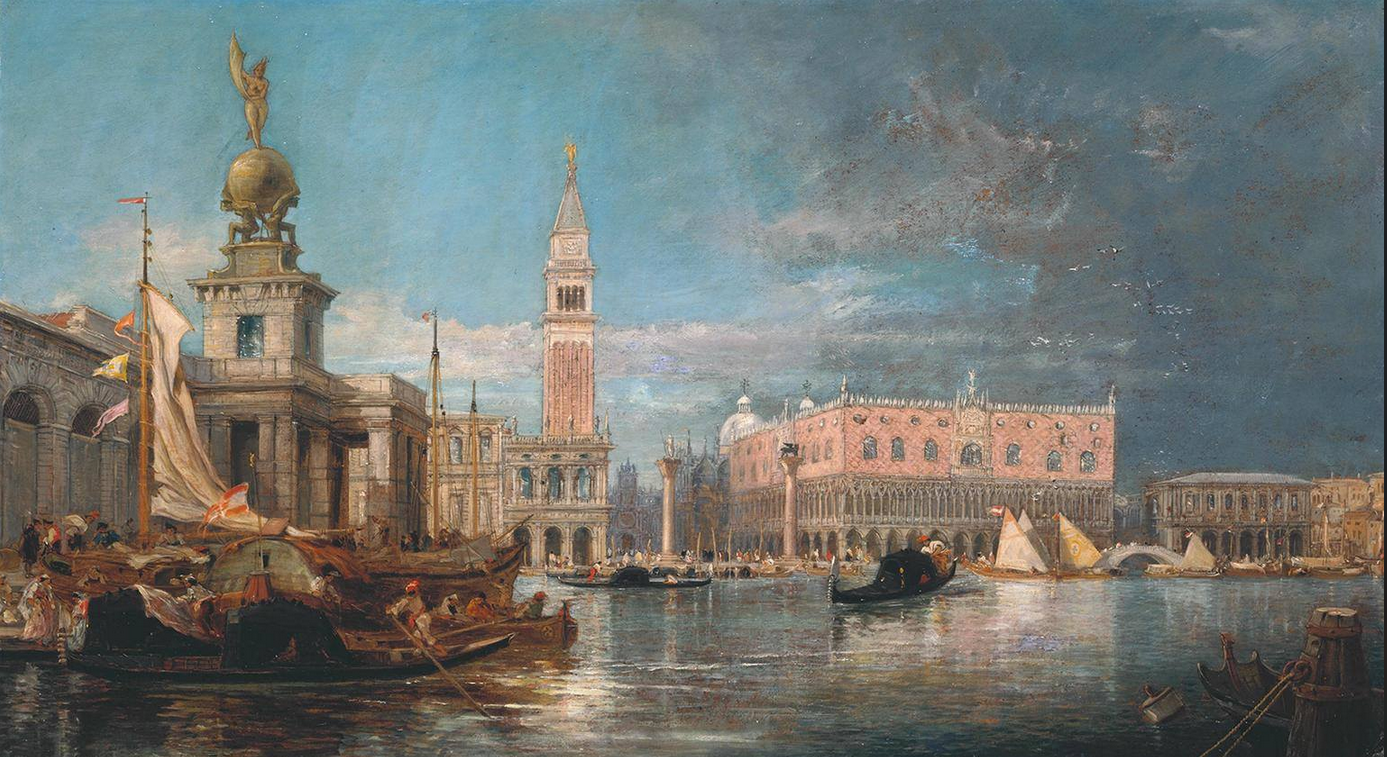
Watercolor of Venice by James Holland. Are the buildings inked in first? (Mario A. Pita)

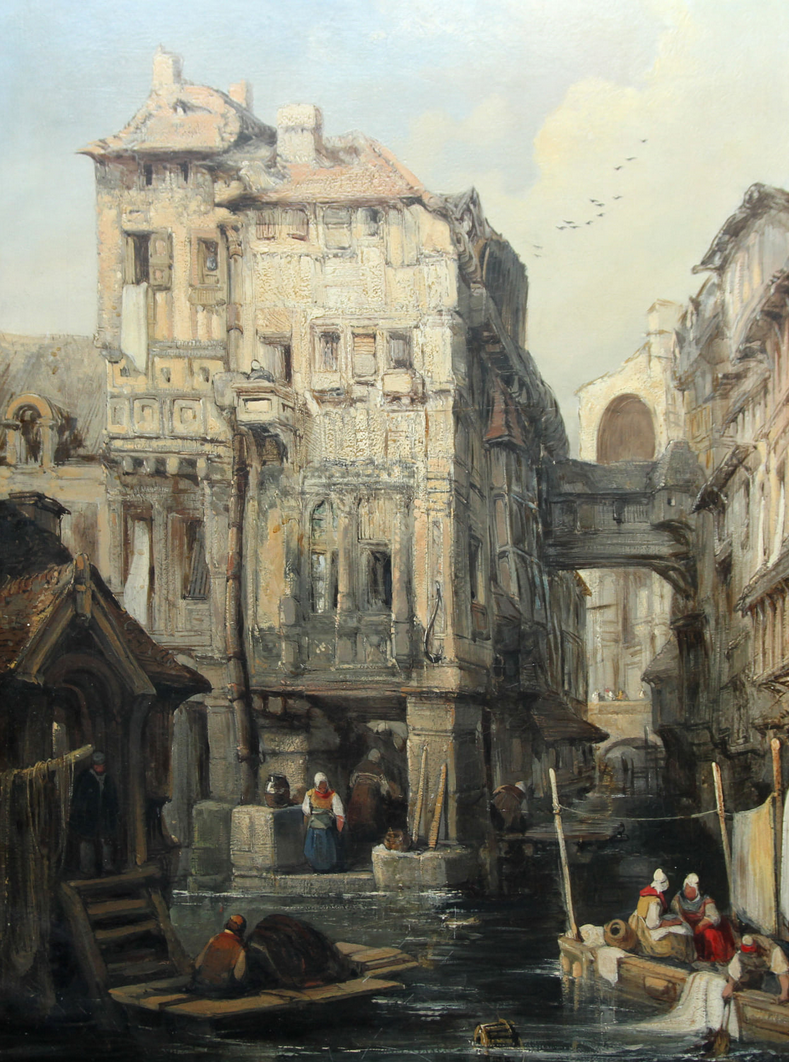
My wife, Victoria, sent me a Facebook post by Mario A. Pita, a son of Cuban refugees who resides in Arlington, Va., and who enjoys posting artists’ work on their birthdays. The birthday of watercolorist James Holland (1799-1870) fell just as I was conceiving a series of posts on architectural drafting tools and their disappearance from the market, but so far I’m not sure any of my subjects until now (“Phiz” and “Antiquity Smith”) used drafting tools in their work. As for James Holland, the Englishman appears to have used drafting tools, but I remain unsure. Painting architecture is not the same as painting nature or humans. Either he used drafting tools to outline the buildings first, or he had good eye for a straight line and the virtuosity of a curve.

You can see, in these watercolors of Venice, the outlines of buildings that might have been drawn with the tools of the draftsman. Readers of greater knowledge of painting techniques will, I hope, reveal whether Holland drew with his eye or used tools to assist his eye, and then washed the scene with watercolors. In some of these the etchings seem to be more evident than in others as a base for the architecture. Look and enjoy! (Click to enlarge.)

Posted in Architecture, Art and design | Tagged , , , , | 1 Comment

Inking “Old Curiosity Shop”

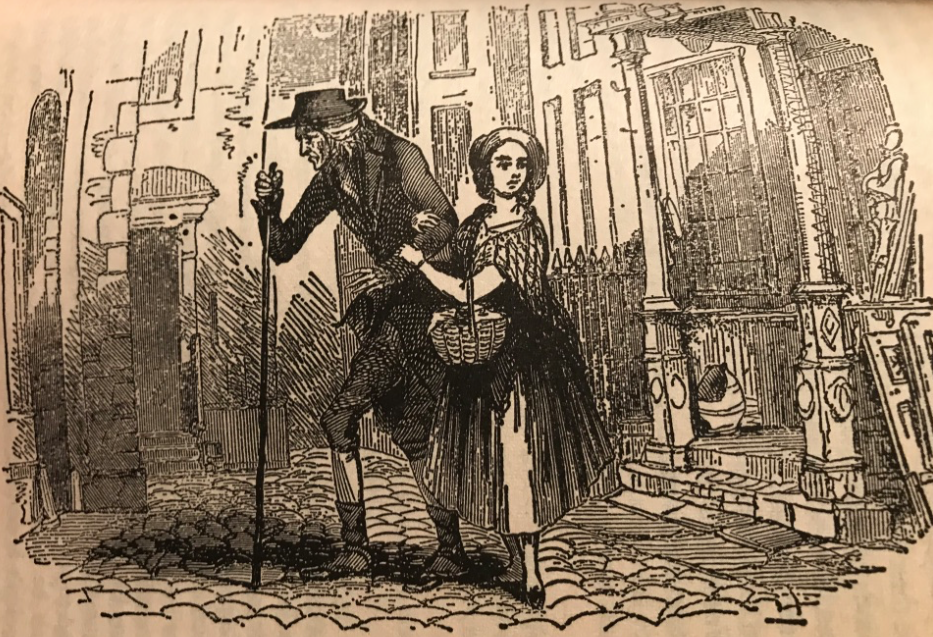
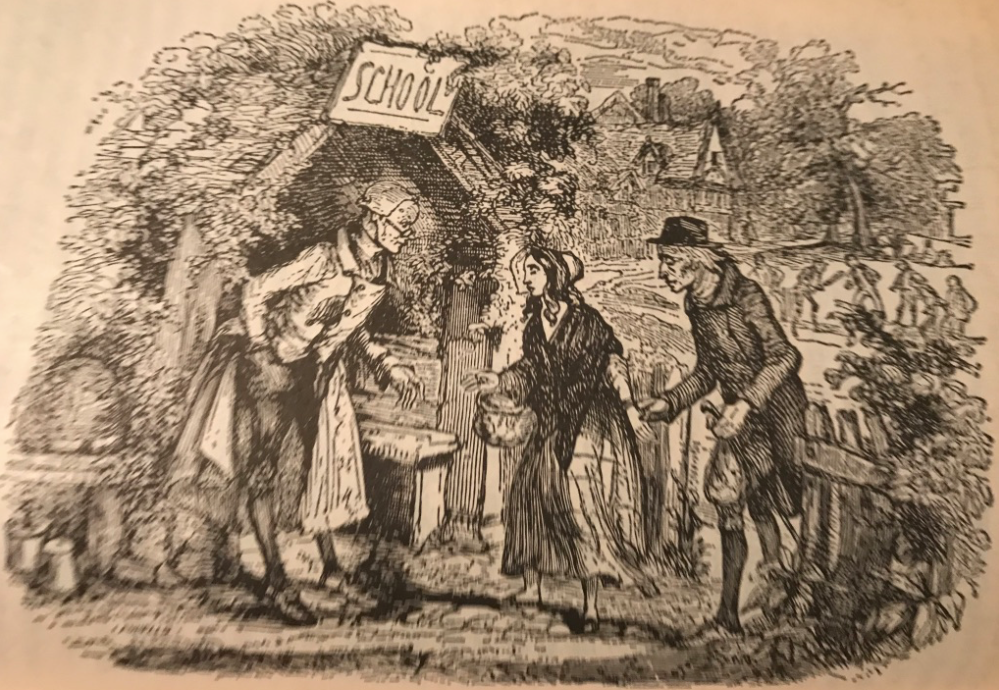
Nell and grandfather leave shop for the last time.

In recent days I’ve received a veritable flood of emails of about architectural drafting and illustration, the first regretting the disappearance of the tools of that trade, the others a succession of excellent examples. I’m not sure all of the sets of examples (or any of them) are species of the art in question. They are old, to be sure, as print-worthy examples of architectural draftmanship of recent vintage are rare. But all of those I’ve been sent are brilliant.

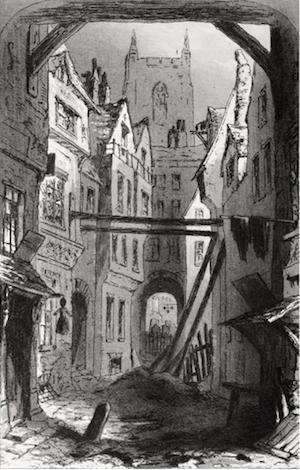
London, by Phiz, from “Bleak House.”

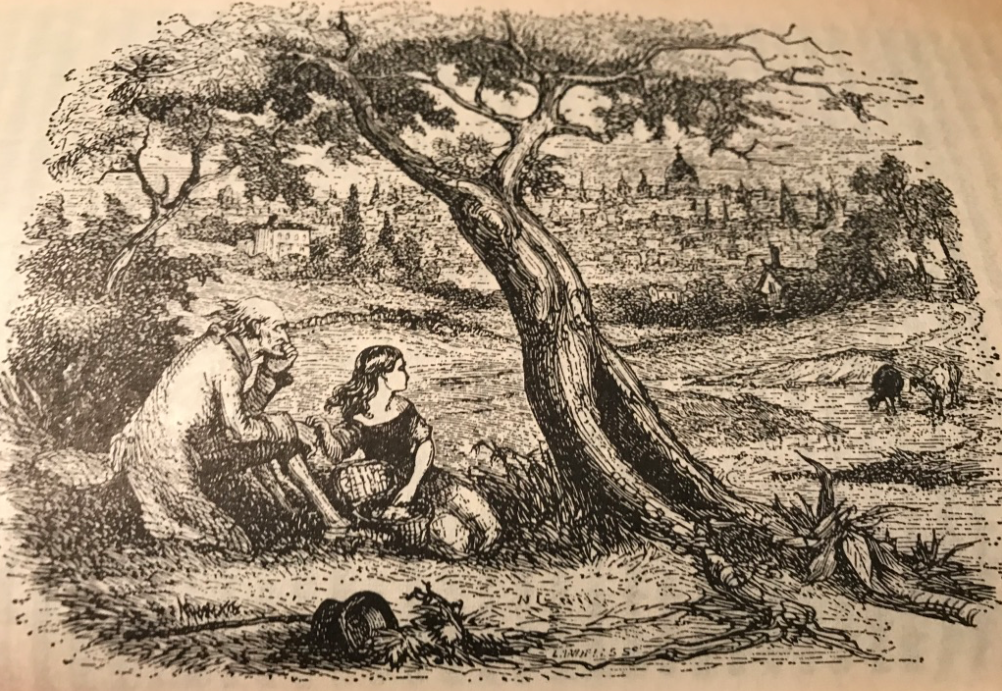
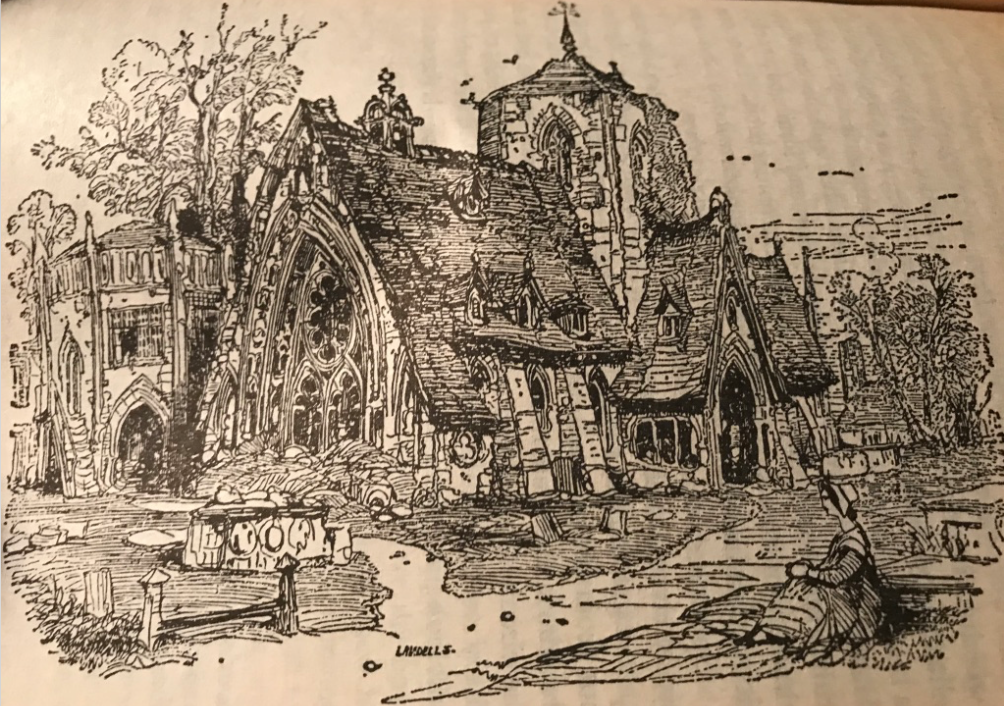
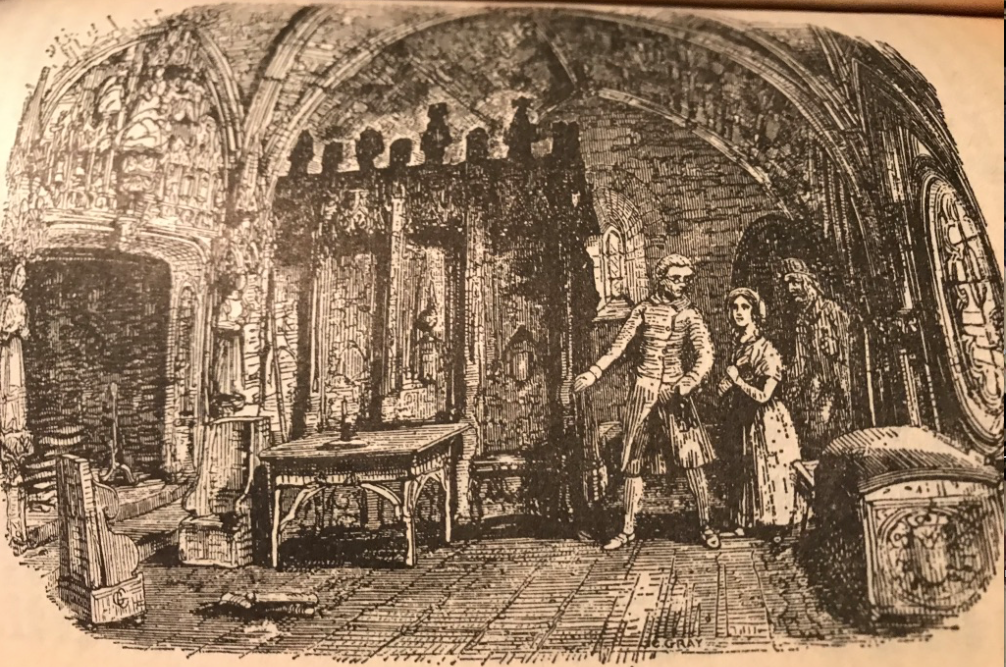
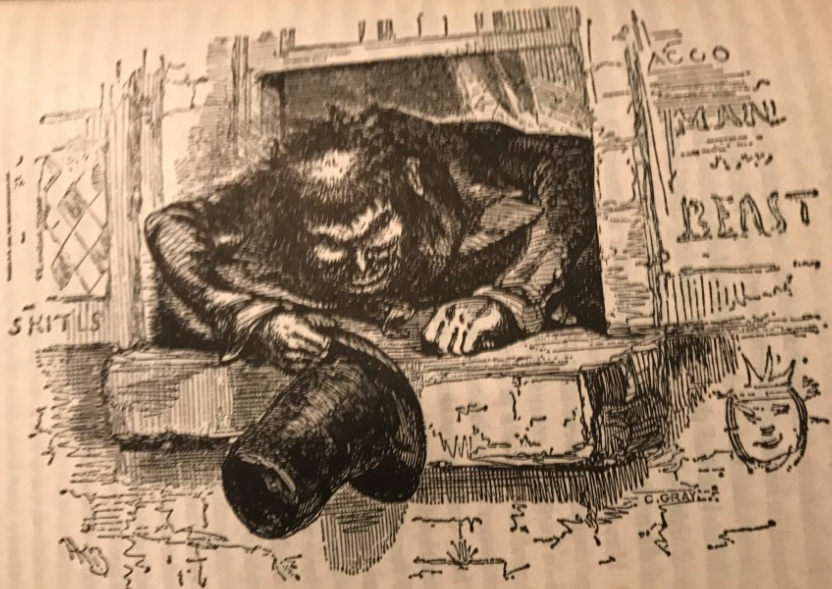
I plan a series of posts displaying some of these illustrations, and I begin with illustrations by George Cattermole and Hablot K. Browne, better known as Phiz. Their names are worthy of Dickens, whose The Old Curiosity Shop they depict. Except for the scene of Nell and granddad leaving the shop, the book has no vivid illustrations of London’s streets, so I have provided one he did for Bleak House. First, however, let’s enjoy a description of the “rooms” inhabited by one of the book’s chief characters, Mr. Richard Swiveller, one of several ridiculous creatures eager to take advantage of Little Nell, or rather to take possession of her supposed secret wealth. Her death in the novel caused a sudden and mass sensation among her readers, who followed her plight during 1841 in weekly installments. Oscar Wilde is said to have remarked: “One would have to have a heart of stone to read the death of little Nell without dissolving into tears … of laughter.”

Here is Dickens’s depiction of Dick Swiveller’s rooms. The author introduces the passage by describing the “wine” served by Dick Swiveller to guests, which is actually a mixture of gin and water. Dickens continues:

By a like pleasant fiction his single chamber was always mentioned in the plural number. In its disengaged times, the tobacconist had announced it in his window as “apartments” for a single gentleman, and Mr. Swiveller, following up the hint, never failed to speak of it as his rooms, his lodgings, or his chambers, conveying to his hearers a notion of indefinite space, and leaving their imaginations to wander through long suites of lofty halls, at pleasure.

Let that passage, from the 1985 Penguin Classics edition, serve as a teazer for the architectural illustratons below, in the order of the tale.

Posted in Architecture, Art and design | Tagged , , , , , | 4 Comments

Deplatform Beethoven’s 5th?

Midtown Manhattan as seen in 1931. (favrify.com)

As I write I am listening to Beethoven’s Fifth Symphony, played by the Vienna Philharmonic Orchestra. Of all his symphonies, including even my favorite, the Ninth, the Fifth seems to ring most true to Goethe’s description of architecture as “frozen music.” You can hear it building to the epiphany of a skyline of classical towers in old New York City, circa 1930. Invariably, the glory of classical architecture, and it alone, fills the mind and the soul.

Beethoven in 1804, the year he began his Fifth. (Wikipedia)

Yet I suppose I must admit I was not surprised by “How Beethoven’s 5th Symphony put the classism in classical music,” by Nate Sloan and Charlie Harding in Vox. After noting that its opening notes – Duh duh duh DUHHH – set to music Beethoven’s “progression from struggle to victory as a metaphor for Beethoven’s personal resilience in the face of his oncoming deafness,” they write:

Or rather, that’s long been the popular read among those in power, especially the wealthy white men who embraced Beethoven and turned his symphony into a symbol of their superiority and importance. For some in other groups — women, LGBTQ+ people, people of color — Beethoven’s symphony may be predominantly a reminder of classical music’s history of exclusion and elitism.

Well, I’m glad to read that I am “among those in power”!

But no, I was not surprised that a composition that required genius and perseverance to accomplish now falls under the shadow of theories that consider genius and perseverance as qualities to which only certain people can aspire. Talk about prejudice! The very idea disproves the view that two heads are better than one. It took two writers to achieve such stupidity!

A year and a half after the Fifth premiered in 1808 at Vienna, critic E.T.A. Hoffman described the imagery the symphony conjures up:

Radiant beams shoot through this region’s deep night, and we become aware of gigantic shadows which, rocking back and forth, close in on us and destroy everything within us except the pain of endless longing—a longing in which every pleasure that rose up in jubilant tones sinks and succumbs, and only through this pain, which, while consuming but not destroying love, hope, and joy, tries to burst our breasts with full-voiced harmonies of all the passions, we live on and are captivated beholders of the spirits.

Clearly the critic had a superior imagination. Ernst Theodor Amadeus Hoffman, a German, was the author of fantasy and Gothic horror, a jurist, composer, music critic and artist. Obviously Hoffman was “behaving white” before his time! (That is not my idea; I merely mock and parody the ideas of Messrs. Sloan, Harding and their ilk. Blame them.)

Maybe what Hoffman heard is not what you hear when you listen to the Fifth. That’s not what I hear. I hear beauty and it causes me to feel a heaving of my breast. Maybe a heaving of my breast is just what Hoffman described, translated into less than eighty words. And yet I do not feel that I have misunderstood or failed to appreciate the music.

Indeed, Hoffman himself puts this feeling of mine (superior? inferior?) into words that more directly reflect the listening experience of me and most others who have the pleasure of hearing the Fifth:

How this wonderful composition, in a climax that climbs on and on, leads the listener imperiously forward into the spirit world of the infinite! … No doubt the whole rushes like an ingenious rhapsody past many a man, but the soul of each thoughtful listener is assuredly stirred, deeply and intimately, by a feeling that is none other than that unutterable portentous longing, and until the final chord—indeed, even in the moments that follow it—he will be powerless to step out of that wondrous spirit realm where grief and joy embrace him in the form of sound.

Well, maybe the last bit is a little much. I wish I were powerless to step out of that wondrous spirit realm. Unfortunately, the real world awaits me and everyone else as we exit the concert hall.

So how does all this come to represent “classical music’s history of exclusion and elitism,” as the two authors put it?

They spend much of their essay describing how – apparently from the Fifth’s debut onward, and not before – classical music required concertgoers to refrain from cheering or clapping before the end. Sneezing was verboten. From then on you had to dress up to attend classical concerts. Is this the sum and totality of  the exclusion and elitism of classical music? I don’t think so. Today the penguin suit is no longer required. Does that mean that classism has at last been dismissed from classical music?

I could argue that the attire for a rock concert is just as conformist as that of a classical concert used to be. If classical music is to be deplatformed for the sins of Western civilization, then it would seem as if every accomplishment of Western civilization is tainted and must be sacrificed. Is this not, in fact, what many believe today? I would argue, against the perverse doctrine of Harding, Sloan & Co., that the directions to Carnegie Hall remain the same as always: practice, practice, practice. This is open to all who have the sense to ignore the reigning claptrap.

And since the composition of architecture is under the same attack as the architecture of music, the same directions apply: Ignore, ignore, ignore!

Theater an der Wien, in Vienna, where the Fifth debuted. (Wikipedia)

Posted in Architecture | Tagged , , , , , , , , | 8 Comments

It’s truly a beautiful world

Like everyone else, people I know send me stuff online that they get from people they know. Lee Juskalian, who used to work on development in Providence until moving to California a couple of decades ago, occasionally sends me photographs, in this case photos he has received from a friend of his, Robin Georgeff. Where she gets them, I don’t know. These are indeed amazing shots of the natural world – in which I would include the one on top of this post of a road in Wiltshire, England. I had trouble deciding which of two shots from Robin to put on top. I chose Wiltshire because the cottages seem almost literally of the natural world. The shot of the pyramids from a street (seemingly cut through rock) in Cairo takes its place on the bottom of this post. It, too, is an extraordinary shot, partly because you never see the pyramids as they are seen from Cairo, and partly because, in this shot, they seem to be floating on air in the distance. Most of these are photographs of nature, but some feature architecture or urbanism. They are all astounding in their way. They were compiled by a website called Izismile.com, and sent to me by Lee on August 5. Thank you, Lee! Thank you Robin! Enjoy!

I had planned to link to Lee’s email, which has all the rest. Unfortunately, I could not find a way to import it onto this post – barred for security reasons, according to WordPress. However, I will screenshot those I consider the most fabulous of 40 total below, following the pyramids. (The captions are at the top of each image. I found after publishing that I forgot to give the caption on the seventh photo down, of Tokyo.) Not long after I also found a link to the photos on the Izismile website. Press that link – here – and you can see which photos I left on the cutting room floor, giving you an opportunity to damn my judgment. So again, have fun!


Posted in Architecture, Photography | Tagged , , , , , , | 7 Comments

They don’t get Carnegie Hall

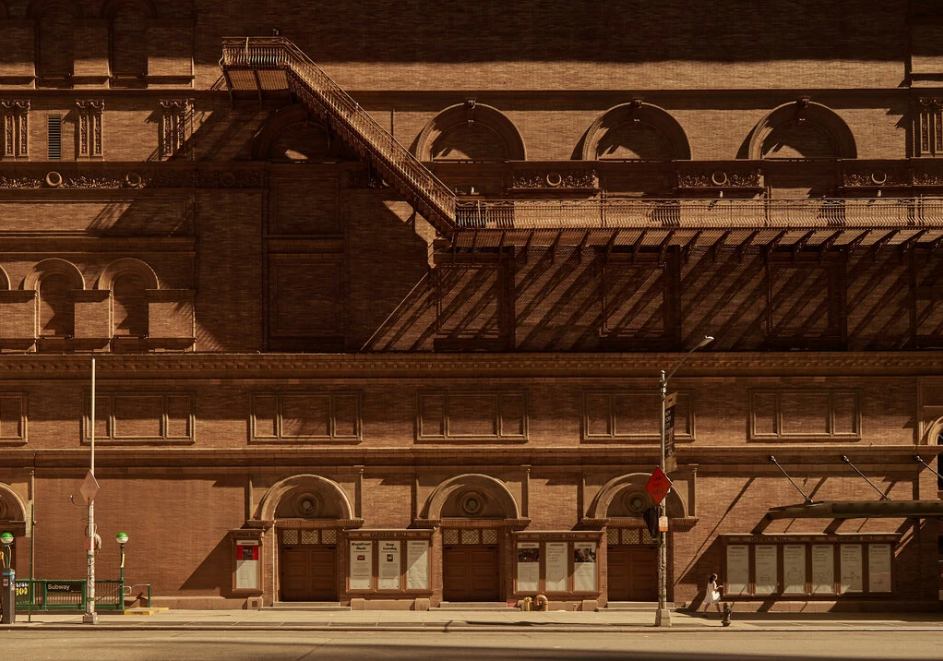
Front facade of Carnegie Hall. (Zack DeZon/NYT)

Here is another edition of Timesman Michael Kimmelman’s virtual tours through Manhattan’s neighborhoods accompanied by celebrity architects, in this case Midtown’s Carnegie Hall area with Billie Tsien and Tod Williams, who once lived in a Carnegie Hall studio (they are, I think, married). While their architecture is as deplorable as that of the rest of their tribe, I have a soft spot for them because their rusty hulk, the American Folk Art Museum (embedded in a facade of the Museum of Modern Art) was demolished to make way for an equally unpleasant addition to MoMA. You’d think they certainly now join the rest of us in feeling the brutality of modern architecture, right? Well, probably not, but we can hope.

I featured one of critic Kimmelman’s strolls in an earlier post, “Along NYC’s Museum Mile,” last April, with Zack DeZon along as photographer, and here he is again. DeZon’s photos reveal the embellishments of some of the older buildings on the itinerary. His shot of Manhattan’s new skyline, embellished – le mot injuste – by new stick skyscrapers puts the lie to Kimmelman’s nutty description of the sticks as “turning the storied cliff-face of high-rises lining Central Park South into the equivalent of chess pawns to their queens, kings and bishops along 57th and 58th Streets.” Quite the reverse, actually.

Among the remarks of Tod Williams: “Architects today have so many consultants, we are so risk-averse, but we still make mistakes.” That must be the understatement of the week. He adds: “It’s just that now we can blame somebody else.” (Anyone except themselves.)

Some of Williams’ and Tsien’s recollections of living in Carnegie Hall are worth reading. Most of their chatter with Kimmelman about architecture and the development of Midtown? Well, maybe not so much.

How do you get to Carnegie Hall? Whatever their fondness for it, neither Tsien nor Williams nor most of their ilk even get Carnegie Hall or why it is superior to what they design. Malpractice, malpractice, malpractice!

Here, with the exception of his shot of the skyline noted above, are some of DeZon’s shots of the loveliest sights from Kimmelman’s virtual tour:


Posted in Architecture | Tagged , , , , , , , | 8 Comments

More pause please, Newport

Proposed innovation center to replace casino in North End of Newport. (Carpionato)

Faced with a development proposal to replace the Newport Grand casino, the City by the Sea recently placed a moratorium on development in order to suck its elegant thumb about its development guidelines.

Bloomberg CityLab published a lengthy article, “History and Gentrification Clash in a Gilded Age Resort,” written by Alex Ulam, describing the conflict over how to amend development regulations. The freeze affected the North End, where the Carpionato Group proposes a major retail and innovation center outside of the city’s historic center, but the ban was lifted in July after about six months. It should be reinstated immediately and indefinitely.

Site of proposed development.

(I hasten to clarify for those unfamiliar with Newport that the casino in question is a huge shed marred by flat faux columns, not the famous Newport Casino on Bellevue Avenue designed by Charles Follen McKim.)

The general tenor of the debate over development in the North End illustrates a disconnect common to historic cities with sections of largely intact traditional streetscapes. In a misguided effort to be all things to all people – and hence satisfy no one – Newport seems willing to sacrifice its quality of life and its economic future to a supposed compromise between its historical character and the tainted character of modern development.

“Newport is wrestling with fundamental questions about what kind of city it wants to be,” writes Ulam, “and how to encourage development that doesn’t displace residents or fundamentally change the city’s character.” And who can quarrel with that? But Newport’s new planning director, Patricia Reynolds, was quoted by Ulam as saying:

Our history is an embarrassment of riches. … We are looking for something that respects the character of our city. It doesn’t mean historic-looking buildings — it could be modern buildings with the right proportions.

So let’s encourage new projects that water down the character of our city!

No. Newport must put a moratorium on that.

Architecture that respects the city’s character is fundamentally incompatible with “modern buildings,” with or without the right proportions. Modernist buildings, however well designed, undermine historical character. In most cities, that matters little because whatever historical character they once had is long gone. In Newport, the opportunity to reinforce historical character should not be cast aside based on a widespread misunderstanding.

That misunderstanding is that modern buildings must be, by definition, designed in modernist styles. In fact, all buildings erected today are modern buildings. That is true no matter their style. Modern architecture has stolen the word “modern.” Newly built “historic-looking” buildings are just as valid for the 21st century as modernist ones. More so in that traditional styles are what the public prefers, and that’s no small matter in a democracy. The best way to redress that wrong is to build new buildings – modern buildings – in traditional styles.

No place in America is that more appropriate than in Newport. Newport was the leading economic center of Rhode Island until its capture by the British during the Revolution. Merchants fled to Providence and established a solid industrial dominance. In the 20th century, however, both cities suffered from a failure to thrive. Growth in both places was sparse. As a result, Newport is an 18th century city preserved in amber, while Providence is a 19th century city preserved in amber. With few viable alternatives, both cities have built strong tourist economies based almost exclusively on old preserved beauty.

Newport got a long head start and has done much better. Providence has spent the last half-century eroding its historical character with modern architecture, still not truly recognizing the value of its beauty. Newport has effectively frozen modernism out of its historic districts. Except for America’s Cup Avenue, it has preserved entire neighborhoods. But both cities refuse to acknowledge that new buildings of traditional style can strengthen their historic brand, and without sacrificing “authenticity.” In fact, if Providence continues to build ugly at its current swift pace, its economy will falter and Newport could – if it embraces the concept of new traditional architecture – find itself in a position to leapfrog Providence, not just in tourism, where it already leads, but in broader economic measures.

That is why Newport should pause to rethink its development regulations, in the North End but also throughout the city. It should take the bold step of mandating that all new development embrace architecture that reinforces the city’s historical character – really reinforces it, not fake “respect” like that of planner Reynolds. Building in Newport should be held to the highest levels of quality. That will enrich Newporters at every level of income.

“We are not looking for big box stores,” Reynolds insists. But a big-box store designed to truly respect the historical character of Newport is preferable to a set of small-grained shops designed to look like refugees from the bow-wow Bauhaus School revolutionaries of 1919 Germany, when a cabal of architects decided, foolishly, that all buildings should look like the Machine Age. That delusion took over the European architecture establishment after World War I and the American architecture establishment after World War II. Most U.S. cities drank the Kool Aid. But not Newport. Unlike most U.S. cities, Newport never swallowed that delusion – but it must still protect itself from forces that, in every city, urge planners to continue drinking the Kool Aid.

The idea of an innovation center such as proposed by Carpionato, but housed in beautiful buildings inspired by the best traditions of the past – now there’s a truly transgressive idea that might appeal to a wide spectrum of the public.

Since Providence apparently will not, Newport should boldly go where no city has gone before by demanding that developers build what the people want, not what the befuddled design elite wants. Let this revolution begin in the North End.

Posted in Architecture, Development | Tagged , , , , , , , , , | 4 Comments

New and old on Westminster

From left, the Trayne addition, the Trayne, the Wit, and the Lapham. (Photo by author)

Several years in the making, renovations on downtown’s Westminster Street between Union and Mathewson are almost done. It will take more time, and possibly the extirpation of coronavirus “and stuff” (as my son puts it), for the buildings to be fully tenanted (as the property developers put it).

Still, this blog is about aesthetic change in Providence, not about the social and economic ramifications of such change. Not that they are unconnected. New buildings and renovations that add to the city’s historical character are likely to foster more economic growth and new jobs than new buildings that detract from its historical character.

The latter have dominated development here for more than half a century, stunting the city’s growth and quality of life. Flying in the face of that tedious history, the one new building and three renovated buildings on Westminster mostly improve the city’s historical character – in short, they are traditional rather than modernist in style. Traditional architecture always tends to feed historical character; modernist architecture always tends to starve it.

The four buildings in this project overseen by Buff Chace and his Cornish Associates, with Union Studio and Site Specific as design partners, constitute, then, a feast for the eye and balm for the future of Providence. Starting with the easternmost of the buildings, the project stands as follows:

The Trayne Building (1893), whose two-story faux-modernist façade was removed in the 1990s, now has an addition to its east that reads, in a totally different style, as an entirely new building, which extends into the plaza (with parking and public space) created by the demolition, in 2005, of the Brutalist 1949 W.T. Grant’s department store (for long the Travelers’ Aid Society) and John Holden Green’s 1823 Stephen Waterman House (by then almost entirely modernized). The nine-story Lapham Building (1904), which wraps around the four-story Tilden-Thurber Building (1895), now has 35 apartments and has been renovated to incorporate the poor Wit Building (1925), of two stories, between the Trayne and the Lapham. I say poor because until recently its first floor had huge plate-glass windows with a windowless faux modernist façade on the second story beneath an elegant cornice that read “Wit Building” (after a benefactor named I. Wit). The building’s modernist style shamed its classical cornice, raising questions about the “wit” (or maybe “wits”) of the designer who remodeled the exterior in the 1950s. In the first decade of this century, Buff Chace asked Union Studio to design a new façade for the building after it was vacated by the Black Repertory Theater (which had painted the faux-mod front black). In the dark as to what the Wit originally looked like (I was asked to look in the photo files of the Providence Journal, without success), Union proposed a traditional design that was grievously ignored when the time finally came to renovate the building. While certainly an improvement over its predecessor – a very, very low bar – the foreboding black tile and plate-glass façade disrupts the classic feel of the entire block, degrading an otherwise exultant Cornish project not quite fatally but most unpleasantly and inexcusably. What happened? (Someday it will be time to try again.)

Altogether, the project now has 52 apartments and space for six restaurants or shops. At the same time, Cornish’s new Nightingale Building, a block to the north on the huge Providence Journal lot across from its 75 Fountain St. headquarters (also owned and redeveloped by Cornish), provides another 143 units, bringing the firm’s total up to approximately 500 units in downtown. I thought it would be a lovely building when I first saw its brickwork going up more than a year ago along Washington and Fountain. Unfortunately, the upper story is a clunky chunk of brooding darkness that weighs down the building. The two stretches of unremitting schlock along its Mathewson and Union façades belie the brickwork that initially enchanted me. Are those two side streets chopped liver? Potted plants? They deserved a much better treatment. Again, what happened?

The surprising drawbacks in the Wit and the Nightingale are disappointing, but rather than representing a reversal of Cornish’s traditional design theme they constitute aesthetic errors that diminish the buildings themselves more than the streets upon which they sit. They are not modernist, after all, and hence do relatively little to upset the historical character that is the chief selling point of the city and its downtown.

The great urbanist Andrés Duany has said that Westminister’s ratio of street width to building height is as good as it gets, and that might be said to apply almost as well to parallel Washington and Weybosset streets and cross streets Eddy, Union, and Mathewson; also Aborn and Snow, someday, when Cornish or someone finally develops the mostly open parking lots between Washington and Weybosset.

I don’t buy the idea that covid will drive city dwellers into the suburbs or exurbs, at least not city dwellers lucky enough to inhabit such an intimate urban neighborhood as this, with most of its historical character intact. It is the only entire downtown listed on the National Register of Historic Places.

Above and below are photos I took on Thursday. I am trying to locate a copy of the rendering of the Wit Building proposal by Union Studio. At the post’s bottom is the Fountain Street end of the Nightingale Building. The building extends rightward, along Mathewson, all the way to Washington Street.

Posted in Architecture | Tagged , , , , , , , , | 6 Comments

Disrupt architecture now!

So proclaims Pittsburgh architect Anne Chen in “Let’s Change the Language of Buildings for the Future,” in Architect magazine. Huh? I thought that’s what architects have been doing for the last century. Here is her thesis:

As a nation, we have grown accustomed to old, prejudicial systems that center a white, patriarchal, privileged ideology. It is past time to imagine our world through a different lens.

What is she talking about? Should we leap to the conclusion that the old, prejudicial systems she refers to are the architectural traditions of the past? And yet perhaps we should be more careful and recognize that a “white, patriarchal, privileged” architecture could as easily mean the modernism that’s dominated the past hundred years.

Maybe she tips her hand in her opening passage:

Much of the built world that we have inherited reflects obsolete values. The vocabulary of the past is embedded with the symbols and imagery of a system that places dominance and power in the hands of the few. The nostalgic recreation of past styles, endorsed in the name of contextuality, legislated as historic design guidelines, and executed through culturally shaped perceptions of visual harmony and profit-driven planning and development, perpetuates a homogeneity that encourages communities to value visual sameness over the richness of diversity.

Surely she must mean classical and traditional architecture. But think about the language she uses. We are accustomed to the demonization of classical and traditional architecture in such terms, but the same language can apply equally to modern architecture.

What could be more obsolete from the point of view of sustainability than a glass-and-steel tower? What could be more nostalgic than the recent crazes among glossy archmag readers (if not among most people) for Brutalism or Mid-Century Modernism? What could be more in the hands of the few than the global development process that freezes out the architectural language most folks prefer? What better than modernism perpetuates a homogeneity of style that values visual sameness over the richness of diversity?

I’m sure you get my point. But in fact I do believe that Chen is pointing her finger at traditional architecture, not modernism. To do otherwise would be to risk being canceled or deplatformed. Chen herself may not even realize that each of the words in her opening paragraph could apply to both classicism and modernism.

How would Chen change the language of buildings for the future? Obviously, the syncopation of fenestration, the sterility of materials, the angularity of form and the defiance of gravity of most primary building features, not to mention the absence of ornament that has characterized elite architecture for the past several decades, can hardly be what she would like to see in the future, assuming she takes the word “change” to mean what it traditionally means. (I hope we can assume that!)

So if architects must imagine a future architecture “through a different lens,” does that mean not only that traditional architecture must be omitted but also those styles equally of the past such as the International Style, Miesian glass towers, Brutalism, postmodernism, neo-modernism, etc., etc.? They, no less than traditional architecture, “center a white, patriarchal, privileged ideology.” And if they are all beyond the pale, then what other lens should architects be looking through?

Chen does not offer any architectural suggestions. Her essay, once beyond its initial thesis, urges architects to embrace what might be called Critical Architecture Theory, a twist on Critical Legal Theory, Critical Literary Theory and other brands of neo-Marxist academic thinking by now common in the professions, lately joined by Critical Race Theory. In fact, architecture was probably the first field to dive deeply into this claptrap, and has done more than any other field to solidify a hold on its professional establishment – without, of course, calling attention to it by name. But if it is so old, can it really qualify as the “different lens” architects must now don? How different must it be in order to be free of the taint of the previous lens or lenses?

Admittedly, it is difficult to describe the future until it has become part of the past. So it may be unfair to task Chen with precise answers to these questions. Most architects are entirely unacquainted with any of this critical theory stuff. Nevertheless, it is not necessary to describe exactly what Chen is getting at in order to suggest that architects cannot embrace her thinking without, by implication, embracing its underlying theme, which is that society as it is must be ended before society as it should be is built.

Chen wants a revolution in architecture that she is unable to describe. Her description of the road to its achievement is no less foggy, and no more realistic. She urges architects to diversify the profession, liberate the canon, and listen to marginalized voices – as if they haven’t been trying to do that for at least two or three decades, arguably with considerable success. Maybe the revolution has already been televised. How does it now change course? Chen does not say. (Notice what she also does not say: Take architecture out of “the hands of the few” somehow does not make it onto her agenda.)

The profession’s signal failure – if you can call it that – has been its failure to diversify, liberate and listen to the marginalized arguments that traditional architects have made since they were ousted from the establishment in the late 1940s. The lens of tradition that worked for centuries built successful cities, if not always successful societies. But building successful cities, not solving global problems, is the job of architecture and its allies, art and planning. Having cities that work, and that exalt human dignity via language comprehensible to all, can help solve those problems – though it will take a revolution against the orthodoxy represented by Chen to win back architecture’s rightful place in the world.

Posted in Architecture | Tagged , , , , , , | 13 Comments