Save Lille’s Chapel St. Joseph!

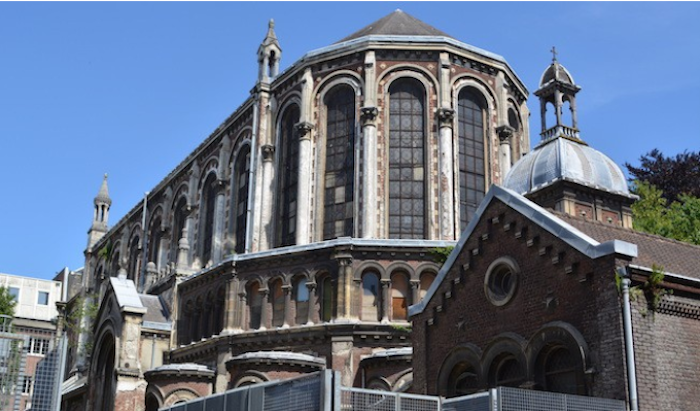
Chapelle Saint-Joseph, in Lille, slated for demolition in late February. (LaVie.fr)

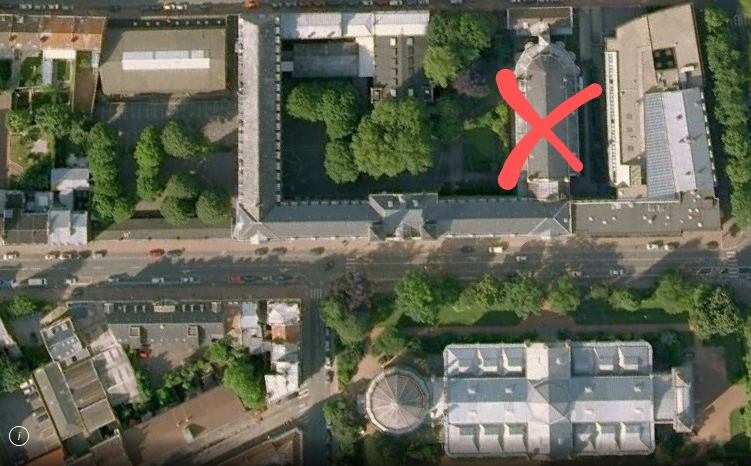
The Chapelle Saint-Joseph, in Lille, situated in the northernmost tip of France, should remain standing in testimony to the beauty of France. The chapel has been abandoned by the city government. The French ministry of culture has refused to classify it as a monument worthy of preservation. Its demolition and replacement by a mammoth and culturally insensitive university complex is set to begin in earnest late in February.

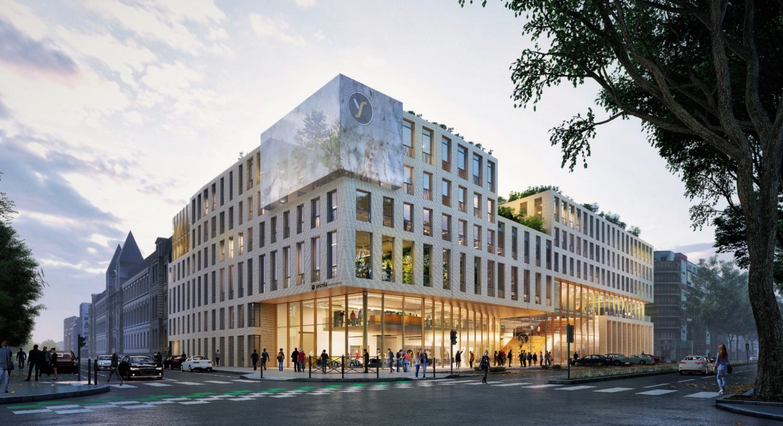
The preservation organization Urgences Patrimoine and its founder Alexandra Sobczak-Romanski seek interim relief before the president of the administrative court of Lille to delay the demolition. The ministry’s decision in November refusing to classify the chapel can be addressed thereafter if its supporters are granted time to persuade the minister of culture, Roselyne Bachelot, that her predecessor’s deputies have offered poor advice. The chapel would be replaced by a huge university edifice in a modernist architectural language insensitive to the surrounding campus of the College of Saint-Paul, designed by August Marcou, architect of the chapel and the Palais Rameau nearby.

Chapelle Saint-Joseph should be saved, and the proposed educational facility, incorporating the chapel, should be designed to fit into its setting. The resources are there to pursue such an alternative.

The fight to save Chapelle Saint-Joseph, built in 1880-1886 near the already protected palace, takes place against the backdrop of a broad international movement to protect the world’s fragile built heritage, including recent new elements of that movement that promote new development sympathetic with its surroundings. The British government has just announced reforms in the local development process that boost the public’s role in judging a project’s beauty. In the United States, the new administration will soon decide whether to carry forward with its predecessor’s mandate to favor tradition in government architecture going forward.

France has already decided to rebuild the damaged Cathedral of Notre-Dame in its historical style. Surely the president, the senate and the ministry of culture felt the pressure of the French citizenry in their quest to protect France’s greatest landmark. No doubt France feels akin to the Americans in their dominant preference for tradition over experimentation in architecture, a preference identified as nearly three-quarters by the Harris polling organization this past October – a finding that only confirms longstanding evidence of the popularity of tradition from both anecdotal and academic sources.

What sense could it make to save the Palaise Rameau and the College of Saint-Paul if in the end their beauty and their sense of place are to be smothered by an architectural elephantiasis within their midst? Saint-Joseph’s unique architecture – “eclectic,” the ministry avers – is a reason for not against its classification as a monument. Its Gothic virtuosity is remarkable. Its style carries the lovely whiff of Sainte Chapelle. Its embellishments inside and out, and especially its overhanging complex of bell towers, are enough to justify the chapel’s classification. Étienne Poncelet, chief architect of the monuments division, notes the chapel’s curious layout based on the number seven: the nave’s seven bays, the choir’s seven bays, the seven apses evoking the pilgrimage to the seven Roman basilicas.

It may be seen as less than fair, indeed as discriminatory, for the French ministry of culture to focus its protective concern so much on Paris, leaving the heritage of the exterior districts up for grabs in the commercial rumble and tumble of our age. Lille, or at least the citizens of Lille, and the citizens of the world who might visit Lille, deserves its beauty in spite of itself. Chapelle Saint-Joseph deserves to live. Its demolition, when there are alternatives that serve the interests of both sides, would be a crime against the history and the culture of France. Please do not let it happen!

Here is the email of the organization seeking to save the chapel: urgences.patrimoine@gmail.com

Preliminary work to gut the chapel has already begun. (archyde.com)

X marks site of chapel within grounds of the College of Saint-Paul. (paj-mag.fr)

The replacement block proposed by the school that owns the building. (Saison Menu Architects)

Posted in Architecture, Preservation | Tagged , , , , , , | 5 Comments

Mandating beauty in Britain?

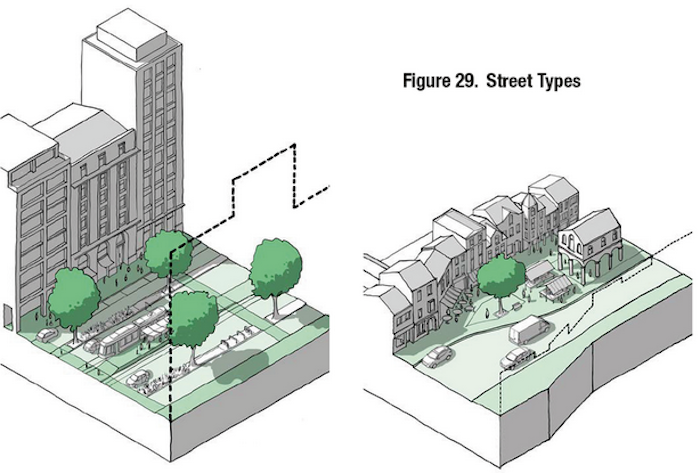
Illustration of British street types in proposed “Living with Beauty” reforms. (UK)

How thrilling to read that Great Britain’s housing ministry has just issued a proposal to bring beauty and the public more to the forefront of planning and design decisions on the Sceptered Isle. Is this a “mandate” for beauty? Certainly not in the sense that President Trump sought to mandate beauty via executive order. It remains to be seen how President Biden will follow up on the potential for unity it embodies. Much as I recognize the strength the Trump E.O. would have placed behind the ideal of beauty – and tradition – others rightly note that a mandate may not be the only way to do it.

Nevertheless, the skeptic in me recommends that Brits “count the spoons,” as one observer put it after placing the new proposals in the context of other developments in British planning circles, not to mention the difficulty of reforming the bureaucracy in charge of a huge and rapacious industry.

The proposed reforms of the “Living with Beauty” policy proposals arise from the Building Better, Building Beautiful Commission, chaired by the late classicist Sir Roger Scruton. The proposals were announced on February 30 by the housing minister, the Rt. Honorable Robert Jenrick, M.P.

I never read “Living with Beauty,” the final commission report issued after Scruton’s return to its chairmanship, from which he was unfairly dismissed. I read the interim report by Scruton’s replacement, Nicholas Boys Smith, issued before Scruton’s reinstatement (upon his return, they shared the chairmanship). I have looked through the new National Model Design Code.

Such reports normally strive to be diplomatic, and the same may be said of the new policies just announced. Scruton and Boys Smith shared an understandable reluctance to define beauty or to set standards in ways that go up the craw of the modernists with excessive vigor. While frankly guilty of producing the conditions that the new policy will try to correct, modernists cannot (alas!) be excluded from the new process going forward.

The result of this diplomacy is a definition of beauty that you could drive a truck through, and a reliance on the repetition of ideals to assure their achievement. A press release from the housing ministry said of the new proposals:

The measures mean the word “beauty” will be specifically included in planning rules for the first time since the system was created in 1947 – going back to a previous time when there was a greater emphasis on whether a building was considered attractive to local people.

The proposals are silent on defining beauty, except for repeating the word again and again, and associating it with qualities with which few would disagree. Aside from promoting “good quality design” over “poor quality,” the proposals offer little genuine guidance, obviously a difficult task if not tackled straightforwardly. Too much diplomacy is an invitation to those comfortable with the system and its attitudes to try to avoid reform and prolong comfort. Design quality, it may be supposed, is no less in the eye of the beholder than beauty.

On the other hand, the fact that a commission was charged with lifting beauty and the public out of the mire, with new proposals to carry out a new emphasis on both, would be totally inconceivable without the prior work and the recent participation of Scruton, Boys Smith and others who recognize the value and popularity of tradition. Likewise, tradition in architecture has gotten a lift from Trump’s executive order, which caused a rumpus that put classical architecture in the news like nothing before. (The U.S. has no equivalent to Prince Charles.)

Many classicists joined modernists in criticizing Trump’s order, mostly because either they disliked the idea of a mandate, even as they ignored the existing mandate in place since 1962 – or, in some cases, they just hated Trump. The torrid attack on Trump’s order by establishment modernists was sufficiently ridiculous to have been fully understood by the general public.

No doubt such a process will proceed in Britain with the “Living with Beauty” proposals. Studies there have identified how differently modernist architects and the public view traditional and modern architecture. And a poll by the Harris organization found in October that some three-quarters of Americans prefer traditional to modern architecture across a wide demographic spectrum, at least for federal buildings and courthouses. It is perfectly likely that Britons, and for that matter peoples around the world, have similar attitudes.

Despite the diplomatic language of the new reforms, their intent is crystal clear.

It may be too soon to judge how the modernist establishment in Britain will react to the new proposals. However attenuated, the “Living with Beauty” policies are sure to have a positive influence. Developers will have to actually listen to the public. They will have to wiggle around rules in which the concept of beauty, however defined, is set in concrete. They never had to do this before, and they might find it difficult now. And yet maybe the new proposals will be so easy for developers and modernists to get around that their associations will not bother to object. Or maybe the reforms will just be ignored. It has happened before. That is likely only in the unlikely event that the public, so active in recent years, retreats back into its shell. Even so, the new rules will open doors for the public to object to projects they do not consider beautiful by their own definition.

Maybe this is how Biden should approach the issue raised by his predecessor.

Posted in Architecture, Development | Tagged , , , , , , , , , | 2 Comments

Learn more about classicism

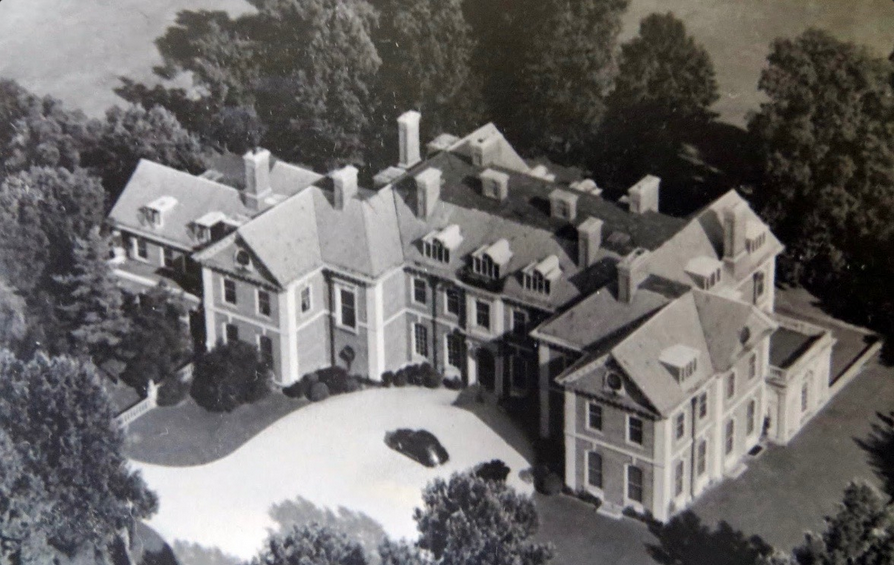
Androssan mansion, by Horace Trumbauer, inspired “The Philadelphia Story” (HouseHisTree)

Alexis de Tocqueville discovered, during his visit to our country in the early 1830s, that we Americans form more associations to pursue civic goals than in Britain or, I suppose, in France, his native land, else he would not have thought such a finding to be of interest. His concern was only with “the associations that are formed in civil life and which have an object that is in no way political.”

This is certainly true of Americans interested in pursuing the classical revival in architecture. I am a member of the TradArch list, which I’ve mentioned many times on this blog. It is a forum to discuss architecture, and those who insist on dragging politics into these discussions are often admonished by those who run the list. I am also a member of the Pro-Urb list, whose focus is more on urbanism than architecture, though the subjects are far from unrelated. More specifically, topics discussed often arise from the Congress of the New Urbanism, which was once more closely associated with the traditional design it promoted as beneficial to livable neighborhoods. In recent years, as CNU has begun to take its alleged “style neutrality” more seriously, its influence – it was once vast, nationally and internationally – seems to have waned. Over the years, I have occasionally been warned off political topics by Pro-Urb’s gentle administrator, Lucy Minogue Rowland, who styles herself “Snow White.” I’ve always thought her fair, and under admonishment I immediately back off.

Both Pro-Urb and TradArch get my posts, and those interested in architecture and urbanism may join both lists without a fee. I wonder how many other lists (often referred to as “listservs”) focus on traditional architecture. I have often considered joining a modernist list in order to throw in a hand grenade every now and then. Perhaps learning more about how modernists think would be an appropriate goal, even though we classicists are surrounded by outlets for modernist groupthink – oops, I mean analysis and opinion.

I wonder whether forums for those more interested in modern architecture discuss traditional architecture as much as the trad lists discuss modernism. Or is traditional design off the mods’ radar? Their public critique of trad work (“not of its time,” “it copies the past,” etc.) is as up to date as the horse and buggy. Trads struggle to keep their critique of modernism up to date because modern architecture, like the weather in New England, changes every five minutes.

Aside from the listservs there are many ways to follow the progress of traditional architecture, which of course was dominant until the 1940s and exclusively so for centuries through the early decades of the century just passed. When modernism took over almost every institution of architecture, traditional work almost came to a standstill. It was primarily the doings of the late historian Henry Hope Reed that kept tradition alive. He wrote The Golden City (1959) and started Classical America in 1968. The Institute of Classical Architecture was formed in 1992 and merged with C.A. in 2002, eventually renaming itself the Institute of Classical Architecture & Art, of which there are fifteen chapters around the country, all of which have some means, such as a blog, to keep in touch with members and others interested in traditional architecture. Although it has absurdly tried to remove “advocacy” from its mission statement, the ICAA is the closest rival to the American Institute of Architects, which ought to be neutral but in fact caters almost exclusively to modernist tastes. Britain’s equivalent, the Royal Institute of British Architects, at least has its own Traditional Architecture Group, however favorable it, too, is to the dominant modernist interest. Another most important group, the International Network for Traditional Architecture, Building and Urbanism (INTBAU), has chapters worldwide, including one in the U.S.

Blogs and online communications spring as well from firms that produce traditional work, such as Robert A.M. Stern Architects, David M. Schwarz Architects, Fairfax & Sammons, Ferguson & Shamamian, Glave & Holmes, Franck & Lohsen, McCrery Architects, Historical Concepts, Allan Greenberg, Michael G. Imber Architects, Duncan Stroik, Andreozzi Architecture, and LeVaughn & Assocs., to name only U.S. firms with which I am familiar from a list of the top 50 traditional firms compiled by the Institute of Traditional Architecture. In Britain, Robert Adam Architects and Quinlan Terry are established classicist firms; the latter’s son, Francis Terry, has started his own along the same delightful lines. Most if not all these firms have ways to reach out to potential clients and to the almost three-quarters of the public that prefers such work to that of modernist firms, whose commissions generally come to them by way of committees beholden to the establishment.

Recently, I was tasked by a committee of sorts – the Traditional Architecture Gathering, an arm of TradArch that meets every year; this year’s TAG 4 confab is Feb. 26-28 – to touch base with associations interested in traditional design to identify trends in the field of architecture. The 2021 event will be hosted by the Classic Planning Institute’s Nir Buras, author of The Art of Classic Planning and TAG founder Patrick Webb, who runs the excellent blog Real Finishes and is on the faculty of American College of the Building Arts. It made me wonder how many sources of information I was not reaching out to. For example, Christine Franck, founder of (CARTA), the Center for Advanced Research in Traditional Architecture at University of Colorado Denver, and Nikos Salingaros, of the University of Texas, whose scientific research in neurobiology has done so much to extend our knowledge of classical architecture’s deep relationship to nature. Of course, they will probably be at this year’s TAG 4 (via Zoom this year).

The number of schools of architecture devoted to traditional coursework has slowly grown over the years. So far as I can tell, the species had gone extinct by the 1960s or ’70s. The School of Architecture at the University of Notre Dame, whose classicist curricula was not developed until after a campus uprising that ousted a modernist curricula in 1991, has, so far as I know, no modernist course work in its curriculum. Please don’t tell me if I am wrong (only kidding). The original chapter of the Students for Classical Architecture was formed at Notre Dame. Whether Notre Dame’s school will remain exclusively classicist cannot be known. Given the cancel culture raging in the nation, a counter-insurrection is not beyond the realm of possibility. At Notre Dame or anywhere else.

Other schools whose curricula are mainly or partly classical include Judson University, Andrews University, University of Miami (Fla.), University of Colorado at Denver, Catholic University, College of Charleston, Benedictine College, Utah Valley University, American College of the Building Arts, Grand Central Atelier and the Academy of Classical Design. The info on architecture schools is from the ITA website. There are about 150 U.S. architecture schools.

The major journal for classical and traditional design is Traditional Building magazine, with its erudite articles and its lovingly extensive advertising for firms that offer traditional ornament, materials and workmanship. TB also hosts comprehensive quarterly symposia on traditional architecture, materials and techniques. TB’s sister publications are Period Homes, Traditional Building, New Old House, Arts & Crafts Homes, Early Homes, and Old House Journal. Founder Clem Labine writes a spirited column about architecture in TB. TB also hosts the Palladio Awards, which vie with Driehaus Prize (whose winner gets $200,000 compared with $100,000 for winners of the Pritzker Prize) and the ICAA’s Arthur Ross Awards and awards programs at some of its chapters (such as the Bulfinch Awards, sponsored by the New England chapter) for recognition in traditional architecture. All of the ICAA chapters feature outreach in some form to members and citizens interested in the classical revival.

Funny thing. Go into any store with a substantial shelf of magazines and all you’ll see under architecture is magazines for renovations and interior designs of houses in the classical style. That was true a few years ago. It seems to confirm the recent Harris poll that found almost three-quarters of Americans prefer traditional architecture, no matter whether they are rich or poor, black or white, educated or not, from any region of the country, even whether they voted Democrat or Republican. Of course, members of the TradArch list have known that all along, and so have the modernists (it drives them nuts).

In Europe, classicists have an even smaller beachhead in the war of styles. Europe is so steeped in how to do cities right that you’d think that’s what they’d do. And yet modern architecture has an even greater hold on elite sensibilities than in America. In the great cities of Paris, Rome, Venice, along with smaller cities and towns throughout the continent, people are surrounded by beauty. Tourism is such a strong segment of their economies that crowds of travelers seem to be choking off the lives of cities (at least before the pandemic) and beauty must be witnessed over somebody else’s shoulder. Is the theory that if Europe hugs ugly, then tourists will scram? I leave out London, which seems to be committing hari-kiri. Will Britain’s withdrawal from the European Union stay this suicide? One source from which I’ve sought information on trends for TAG 4 is the Prince’s Foundation, founded by Charles. I have not heard from them yet. Here I should note Léon Krier, the wicked doodler who masterplanned Charles’s beautiful new town of Poundbury, and the British historian James Stevens Curl, author of Making Dystopia (2018) and the Oxford Dictionary of Architecture (1999). A proposed modernist redevelopment of the classical Royal High School in Edinburgh has been rejected by the government of Scotland. Excellent! In Stockholm, even farther north, the Swedish public seems to be in revolt against redevelopment there, turning against the bleak prospect of a modernist future. Good news, if true! Michael Diamant, who keeps track of new traditional architecture from Stockholm, is also on my list of TAG 4 sources. I hope he will fill me in. Is that what the website Arkitekturupproret (“Architecture Uproar” … ?) is about? I don’t know. I can’t read it. Oh my.

This post has gone on way too long, and yet I’m sure I’ve left out someone or something I should have mentioned. I will try to execute an abrupt conclusion.

One of my favorite movies is The Philadelphia Story. After getting halfway through this post, after going to bed, I endured one of those ephemeral night thoughts, which drove me to my poor computer to jot down Jimmy Stewart’s drunken call, “Oh, C. K. Dexter Haven!” Now I can’t recall why that seemed pertinent to this post. Was the Main Line mansion where the action takes place designed by Horace Trumbauer? Or was it in Hollywood? If so, so what? Wasn’t Katherine Hepburn’s character, Tracy Lord, supposed to be a bronze statue of a goddess? Does Cary Grant want to deplatform her? Does his role represent an interesting case of intersectionality? Maybe that will be on the agenda at the TAG 4 conference later this month. But isn’t that politics? Perhaps we will have to wait for Snow White to decide, or whoever plays her role on the TradArch stage.

Posted in Architecture, Architecture Education | Tagged , , , , , , , , , , | 15 Comments

Russia’s artful classicist – Da!

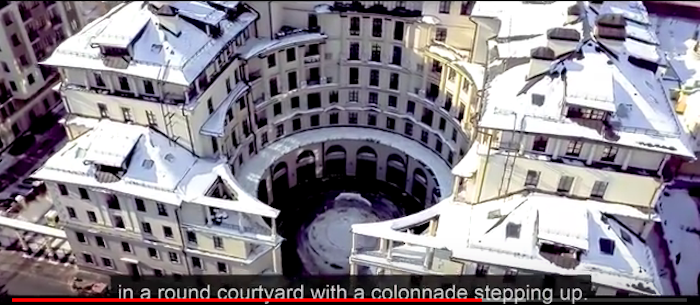
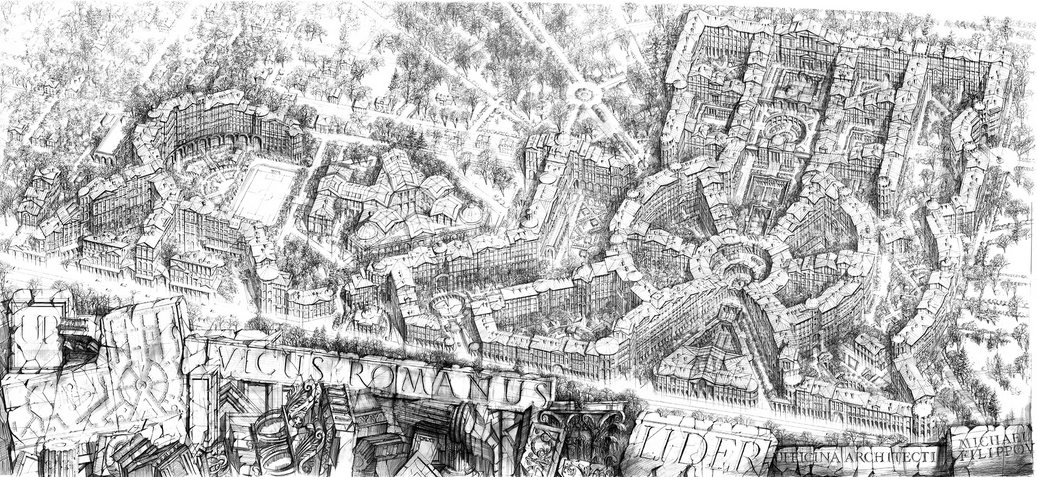
Roman House (2006), the firsr major project in Moscow by Mikhail Filippov. (YouTube)

Historian James Stevens Curl, the author of Making Dystopia (2018), the most comprehensive critical history of modern architecture, has sent me a marvelous video of the classical work of the Russian architect Mikhail Filippov. His work has been described as “Piranesian,” a reference to the Renaissance Italian artist whose specialty was imaginative classical structures and ruins that seem drawn from his own dreams. Elements of Filippov’s fanciful style call this quality to mind, but his finished works are far from ruins, and in a world fatigued by our dismal built environment it all does seem dreamlike, even utopian. But it is real.

In the half-hour video, Filippov describes his work in Russian, with subtitles. It displays a multitude of sketches of major urban developments he was asked to submit early in his career, which began as an artist and architectural renderer. Some of his unbuilt projects are on Russian waterfronts. He pairs his drawings with footage of what was actually built, his vision scrolling leftward at the top at the same pace as today’s view scrolling leftward at the bottom. These are heart-rending sequences. He says:

We live in an epoch exempt from the architecture we like, and we don’t care about the architecture of our time. We might like many things about our modern neighborhoods. We like them for abundant greens, fresh air, kindergartens, playgrounds, parking lots, etc., but not the architecture. If we want to see architecture we have to go to the center, or travel to historical sites, such as St. Petersburg, Venice, Paris and others. There we can see the true architecture that we miss in our modern places. This is a very unique situation in the human’s history. In all times people used to prefer the architecture of their own epoch. Today all the architecture of the city centers all over the world are declared as architectural monuments by law. They have to be preserved. And they are still the centers of political, economic and cultural life. The closer to the center the higher are the housing costs. And most importantly, nothing can be demolished there. For example, all historical centers, monuments and older buildings destroyed during the World War II were carefully restored. No one piece of modern architecture would be restored like that, since it’s never perceived as real architecture.

So true. Yet I suspect that Filippov’s description of which buildings survive in most historic city centers, especially on this side of the Atlantic, is on the optimistic side – but we’ll let that go for now. He is describing the ideal.

At 18:30 of the video, it starts showing his completed works, supplemented by his drawings. Roman House (2006), a “multifunctional residential complex” (the terminology undercuts its elegance), was Filippov’s first major project in Moscow. “The urban regulations allowed not higher than four-story buildings facing Kazachy Lane and seven-story buildings behind. I reflected this height change in a round courtyard with a colonnade stepping up.” The next built project fills the site of a former factory in Moscow and is even more imposing, and the next one, a social-housing project for military officers, picks up on the rondurous quality of his first Moscow project and is even more imposing still.

The video also has Filippov describing some of his techniques of fabrication and construction. Some say the result is on the thin side, insufficiently articulated, but what they are seeing in some of the photographs is, I think, not a lack of depth in the detail and fenestration but the effect on surfaces of the lack of time and weather. Unlike modern architecture, traditional architecture ages gracefully.

Watch the video and then visit the website for a more extensive set of both the drawings and photographs of the completed projects in Moscow and elsewhere. Without a doubt, Mikhail Filippov has managed to turn his artistic talent into a series of architectural masterpieces.

Roman House (2006), the firsr major project in Moscow by Mikhail Filippov. (YouTube)

Mikhail Filippov / Nadezhda Bronzova – “Monument to the XXI century,” 1987

Posted in Architecture, Development, Video | Tagged , , , , , , , , | 5 Comments

Don’t trifle with this building

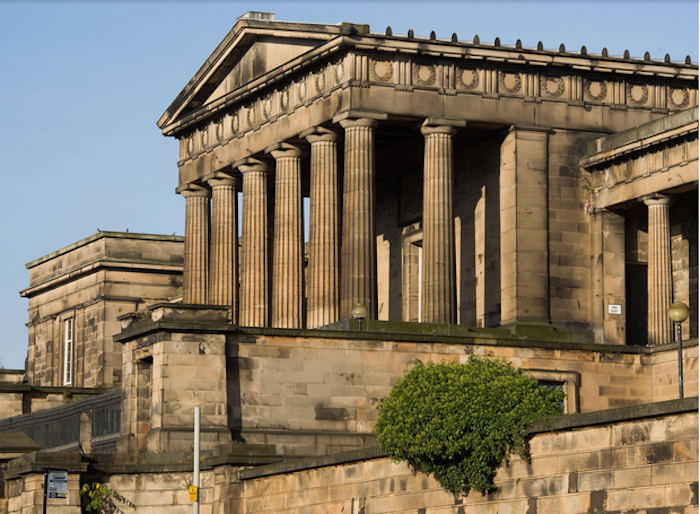
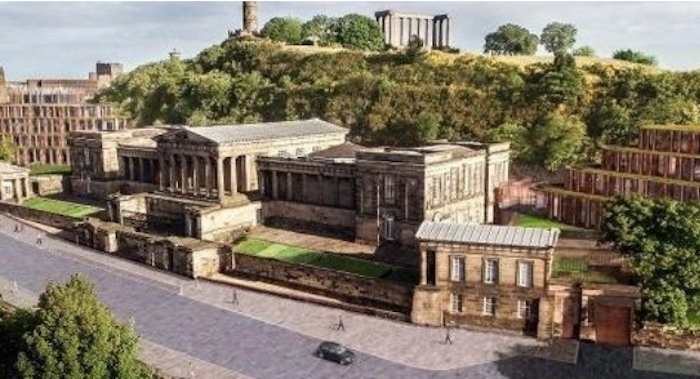
Plan to turn Old Royal High School into “arts hotel” rejected again. (The Scotsman)

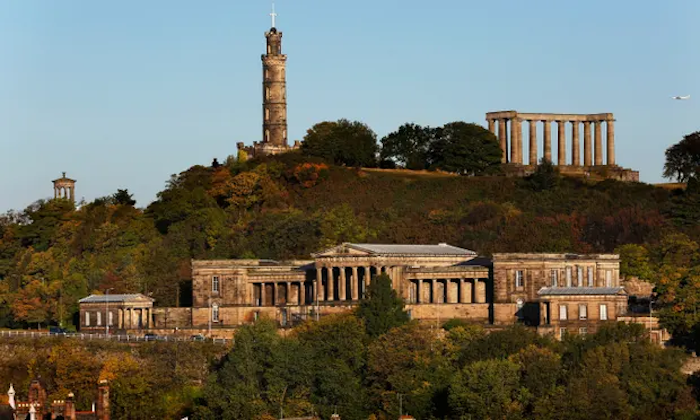
Opened in 1823 to a design by Thomas Hamilton, Edinburgh’s Old Royal High School has a stern and foreboding look. But surely a grin can be detected among its colonnades: It has recently dodged the bullet of redevelopment as an “arts hotel” (a what?). City Council for the Athens of the North, as the UNESCO World Heritage city is known, may have despaired of a use consonant with its location. The school, which absquatulated in 1968, sits halfway up Calton Hill in the Scottish capital, overlooked by the Dugald Stewart monument, a memorial to Admiral Nelson, and the Parthenon-like National Monument of Scotland, whose incompletion demanded its inevitable nickname, Scotland’s Folly.

Old Royal below Stewart Monument, Nelson Monument, National Monument. (Guardian)

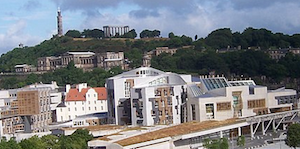
Of course, the real Scotland’s Folly is the Scottish Parliament, an absurdist structure opened in 2004 at ten times its original budget estimate, and set at the base of Calton Hill below the Old Royal. The new parliament was said to have “aimed to achieve a poetic union between the Scottish landscape, its people, its culture, and the city of Edinburgh,” according to Wikipedia. Just look at it! In 2005 it won the Stirling Prize, Britain’s Pritzker equivalent, ratifying the egoism of its ugliness. It should be torn down on general principles.

New Scottish Parliament (Wikipedia)

Edinburgh’s famous St. Mary’s School of Music has the council’s backing to occupy the Old Royal, but it will now have to compete on the open market. The muscular building can probably wait for a buyer, given its over half a century of waiting thus far. Can the music school’s wealthy backers compete? The building looks old, craggy even, but it also looks venerable. It ought not be trifled with. You’d think a music school would be just the thing – but you never know these days. It might even want Mickey Mouse ears, any ears to stuff wax or cotton balls against the racket. (But no! Scotland is a civilized place and St. Mary’s teaches classical, doesn’t it? So its website suggests.)

Proposed additions for “arts hotel” are to left and right of school. (Gareth Hoskins Architects)

The Mickey Mouse ears of the proposal recently defenestrated by council seem only modestly ridiculous by the standard of the modernist parliament. Should it have been acceptable given the probability of even worse alternatives? Certainly not. Modern architecture violates a city’s spirit, and should be given no quarter whatsoever. Throwing the Old Royal onto the market at least opens up the possibility that a sensitive buyer will respect the history of Scotland.

Edinburgh already has way too much modern architecture for a Heritage City, degrading both the city and the U.N. program. Recently a so-called Golden Turd, another atrocious hotel, has been inflicted upon its citizens, dealing yet another body blow to the city’s primary economic driver of tourism. Like my own city of Providence and so many other places around the world, Edinburgh seems intent upon wrecking its brand. (The commercial nomenclature usefully exposes the pretense of such policies.)

In fact, the Old Royal High School itself should house the Scottish Parliament. Tear down the monstrosity it currently occupies and move the happy legislators into a building more appropriate to the historic dignity of Scotland.

Posted in Architecture, Development | Tagged , , , , , , , , | 3 Comments

O’Brian’s game of composers

Paul Bettany as Maturin and Russell Crowe as Aubrey in Master and Commander. (20th Century Fox)

Having just had a capital meal of lasagna to celebrate a removal of sutures from the gap left by an extracted tooth, I am reminded of a passage I marked years ago in Patrick O’Brian’s The Nutmeg of Consolation, 1991, fourteenth in his series of Napoleonic era sea novels, which I am rereading. In the margin near the passage are the scrawled names of Russell Crowe and Paul Bettany, actors who played Captain Jack Aubrey and his ship’s surgeon Stephen Maturin, so I had probably just heard of the movie patched awkwardly from several books in the series, and thus I probably read Nutmeg in in 2003. The movie was called Master and Commander: The Far Side of the World. Though beautifully filmed, it was something of a disappointment.

Anyhow, this passage opens after Aubrey suggests to Maturin that they continue a musical game they often played (after meals on board) as amateurs on violin and cello. Here is O’Brian’s description of the game:

The game they played was that one should improvise in the manner of some eminent composer (or as nearly as indifferent skill and a want of inspiration allowed), that the other, having detected the composer, should then join in, accompanying him with a suitable continuo until some given point understood by both, when the second should take over, either with the same composer or with another.”

The game’s last round the captain claims to have won.

“Winning, for all love: how your aging memory does betray you, my poor friend,” said Stephen, fetching his ‘cello. They tuned, and at no great distance Killick [Aubrey’s manservant] said to his mate, “There they are, at it again. Squeak, squeak; boom, boom. And when they do start a-playing, it’s no better. You can’t tell t’other from one [one tune from another]. Never nothing a man could sing to, even as drunk as Davy’s sow.”

“I remember them in the Lively: but it is not as chronic as a wardroom full of gents with German flutes, bellyaching night and day, like we had in Thunderer. No. Live and let live, I say.”

“Fuck you, William Grimshaw.”

Killick’s reaction to the kind, forgiving sentiment of his mate Grimshaw puts me in mind of my feelings toward … well, I will not go there. But the game Aubrey and Maturin played I find intriguing. As a non-musician who loves classical music (as readers of this blog are well aware), the game strikes me as well beyond the level of playing that might be practiced in moments of leisure by amateur musicians today. I hope I am wrong, but in reading passages like this (and many others in the 21 volumes of the Aubrey-Maturin series), I am persuaded that all the endeavors of Western civilization (and maybe others, as are often described in the exploits of these historical novels) have today reached levels perishingly low. That is certainly true of architecture.

Aubrey and Maturin played their game in around 1814. As I say, I imagine that today’s young musicians – amateur or professional, and surely among the most civilized of people – would hardly be capable of such an erudite musical game. Again, I hope someone will tell me I am wrong. But all you need is eyes to know I’m right about one of civilization’s highest achievements: architecture. As with music generally, architecture achieves beauty (and with it, towering intellect) only by building upon and learning from the achievements of the past.

(Here is an interesting post from 2012 about Aubrey and Maturin as musicians on the website Boston Musical Intelligencer.)

Posted in Architecture, Art and design, Books and Culture | Tagged , , , , , , | 5 Comments

On the Moynihan Train Hall

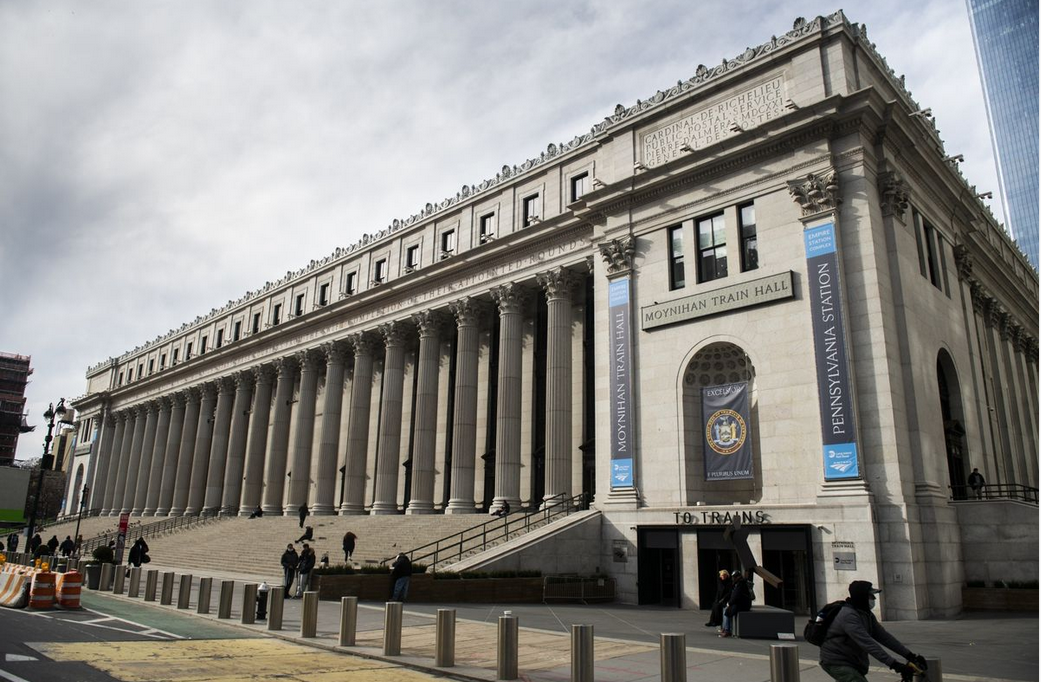
Moynihan Train Hall is inside the 1912 James A. Farley Post Office Building. (Bloomberg)

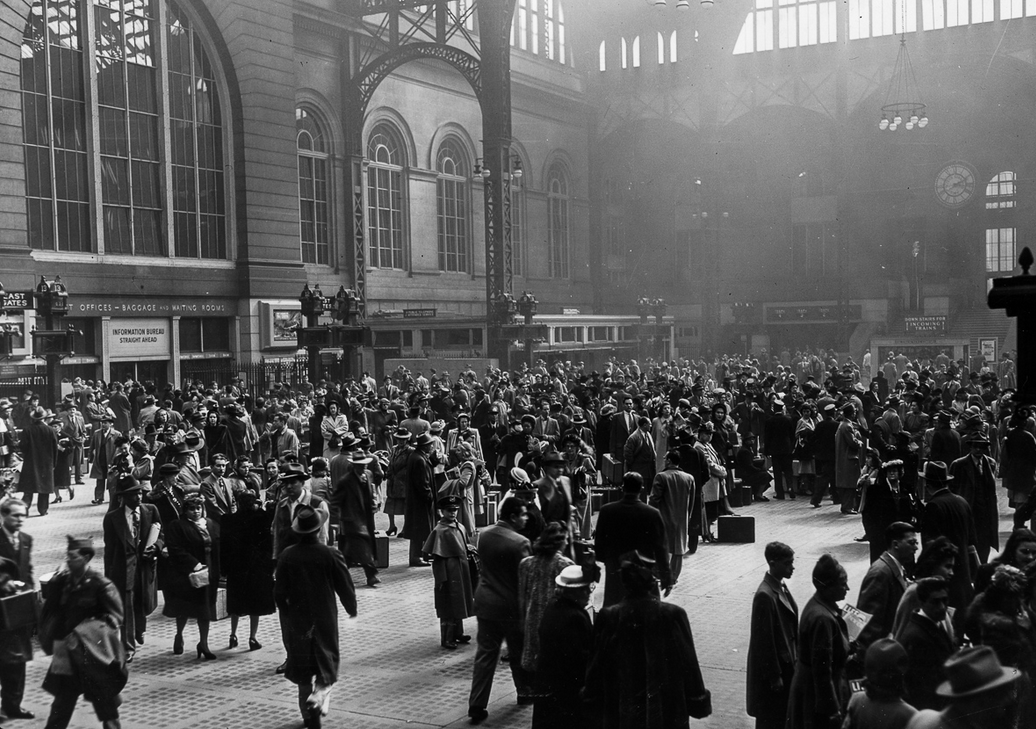
News of the Daniel Patrick Moynihan Train Hall opening across 8th Avenue from Penn Station in Manhattan is rivaled only by news about the closure of The Vessel, the ridiculous tower of art at nearby Hudson Yards, because of its allure to suicide wannabes. Speaking of death wishes, Penn Station doubtless generates its share. I can never resist historian Vincent Scully’s quote after the original Penn Station’s tragic demolition in 1963. He wrote: “One entered the city like a god; … one scuttles in now like a rat.”

The passageway from Penn Station to the new train hall is akin to a rat scuttle (if there is such a thing). Still, entering from the street beneath the colonnade of the James A. Farley Post Office Building, designed by McKim Mead & White, and completed in 1912 – three years after Charles Follen McKim’s death and two years after the opening his equally classical Penn Station – is as god-like an experience as one could wish.

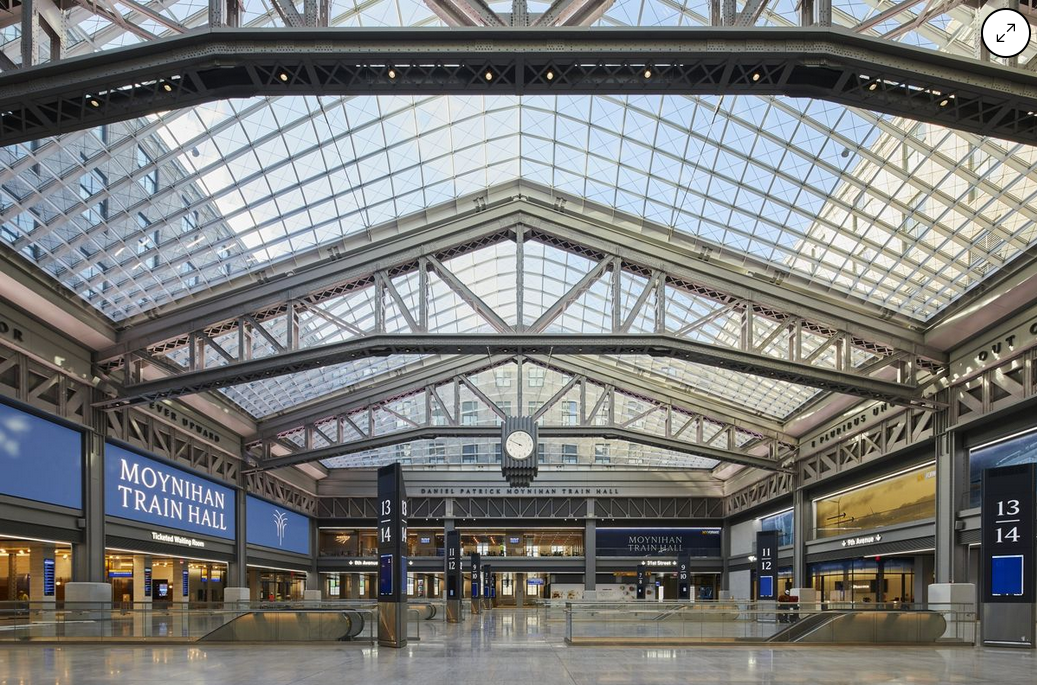
Moynihan Train Hall, designed by Skidmore, Owings & Merrill, the latter-day MM&W. (SOM)

Once inside the hall, the vast former postal-sorting room sits beneath a vaulted glass roof supported by original mammoth iron trusses decried as “beefy” and “intrusive” by architecture critic James S. Russell in “Can the Moynihan Train Hall Redeem Penn Station?” for Bloomberg CityLab. Russell doesn’t really answer the question. Nevertheless, the answer is no.

Ian Volner’s “The Moynihan Train Hall’s Glorious Arrival” in the New Yorker begs, somewhat, to disagree. It may combine “early-twentieth-century grandeur with early-twenty-first-century sophistication,” but the hall is also “ineluctably airporty.” Yet, thinking more broadly, Volner finds it distasteful that Facebook has leased the office spaces above the undulating glazed roof of the courtyard:

At all hours of the night and day, passengers gliding into the airy elegance of the concourse might be looked down upon by the employees of Mark Zuckerberg, whose windows sit directly above the skylight, surrounding it. As a metaphor for America’s society of digital surveillance, it’s pretty on the nose.”

Indeed! Still, as an aesthetic experience the train hall beats the rabbit— oops, the rat warren of Penn Station. That is a very low bar. To call the Moynihan Train Hall a step in the right direction is to damn it by faint praise, which is precisely my intention. The fact that it is now open does not in the least do away with the need for the proposal, by architect Richard Cameron and the National Civic Art Society, to rebuild Penn Station using the original design of Charles Follen McKim. Volner almost seems to allude to that when he writes:

The realization of the Moynihan Train Hall’s potential — and with it the redemption of New York’s greatest architectural mistake — can’t be truly complete until the late-sixties complex meets the same wrecking ball that clobbered its predecessor.

He stops short of citing the Cameron/NCAS proposal. He quotes Moynihan in a way that seems to pick up and even recast Volner’s thought of “clobbering” today’s Penn Station: “Where else but in New York could you tear down a beautiful Beaux Arts building and find another one right across the street?”

Moynihan is often referred to as the man who, as an aide to President Kennedy, wrote the apparently unintentional mandate for modern architecture for federal buildings. That was 1962. Eight years later, Moynihan said, “Twentieth-century America has seen a steady, persistent decline in the visual and emotional power of its public buildings, and this has been accompanied by a not less persistent decline in the authority of the public order.”

That is another quote that I cannot resist, and with the one offered by Volner, it suggests (to me) that Moynihan came to regret the boost he’d given to modern architecture. So, yes, I think Moynihan Train Hall is a perfectly appropriate for a U.S. senator who made it his mission to promote public rail. I am sure that while neither of the two articles quoted above mentions the best current proposal by far for Penn Station, the proposal to rebuild it in the image of McKim’s design is one that Moynihan, who died almost two decades before the opening of his train hall, would lovingly support.

And it may just be that a fellow train buff famous for taking Amtrak between Delaware and Washington, D.C., will also find it to his liking.

Upper concourse of old 1910 Pennsylvania Station in 1950. (Getty)

Posted in Architecture, Development | Tagged , , , , , , , , , | 6 Comments

Why are post offices lovely?

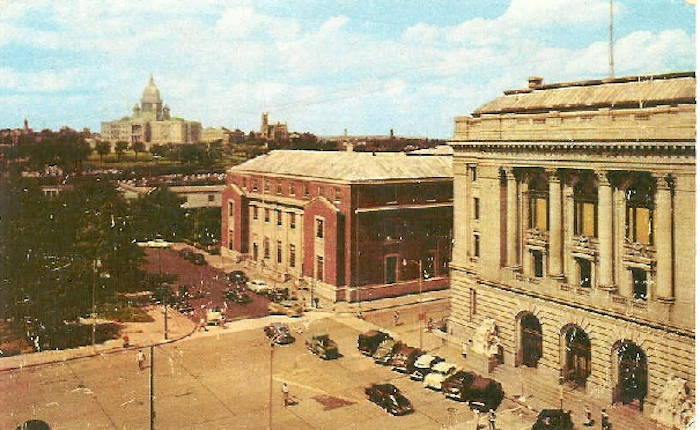
Federal courthouse, 1908 (right), post office 1940 (middle) and State House, 1901. (postcard, 1950?)

I speak out in praise of my friend and fellow Rhode Island architecture critic William Morgan’s “In Praise of the Post Office.” In this recent article for GoLocalProv.com, Morgan writes:

The physical post office is the embodiment of the miracle. More than just a convenient place to buy stamps, mail packages, and peruse wanted posters, the post office is similar to a public library–a temple of democracy. Like a pub in an English village, the post office is a meeting place where news is exchanged, while the architecture of post offices used to serve as manifestations of national pride.

All architecture used to serve as manifestations of pride, national or otherwise. Morgan, whose architectural attitudes are, I think, the exact opposite of my own, loves old buildings but is blind to the ugliness of modern architecture and cannot see the beauty of the classical revival, that is, new old buildings. He comes as close as he ever has in this article to admitting there was once a beauty in architecture that has disappeared. In the case of the disappearance of beautiful post offices, Morgan attributes that to the privatization of the post office under President Nixon, with worse to come:

During the Reagan era it was decided to lease post offices rather than build them, another example of choosing foolish economies over the public good. … Compound this with a national aesthetic blindness, along with the notion that the “postal service” could be streamlined to operate like a discount department store, and it is no wonder that elegance and style became relics of the past.

Whether privatization has helped or hurt the posting of letters and packages in America may be debated, yet it is surely true that a “national aesthetic blindness” has caused “elegance and style [to] become relics of the past.” As Morgan knows, I believe that the scourge of modernism, which he generally supports, is the root cause of this national aesthetic blindness (actually it is global in scope).

Morgan correctly attributes olden postal beauty to a century and a half of postal design by supervising architects of the U.S. Treasury – the first of whom was Ammi Burnham Young, who designed Providence’s 1857 custom house (also a post office for a period) – and the Works Progress Administration under FDR, which hired many artists to paint murals and to commit other forms of beauty during the Great Depression. What followed was the national blindness that Morgan seems to support, in writing that consistently admires tedious modernist work over the beauty of new architecture that harks back to the traditions he clearly adores. The choice in his article of beautiful postal buildings in Westerly and East Providence is exemplary. Yes, he deplores the decline in the elegance of postal facilities. His ideology is insufficient to inflict total blindness on his vision.

Many of the leased post offices of the U.S. Postal Service are located in suburban strip malls rather than on the Main Streets of city and town centers in decline. Still, has not the policy of leasing spared us a generation of modernist postal facilities? I would argue that it has, and that this may be a silver lining in the dark cloud of privatization.

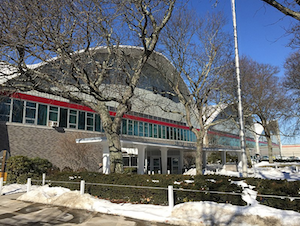
Providence main post office. (Wikipedia)

An exception is the main post office in Providence, the first automated post office in the world, built in 1960 and designed by Maguire & Assocs. Its form is an allusion to the Quonset hut, originally developed in 1940 for the Navy at a construction facility at Quonset Point, in Davisville, R.I. Its functional qualities, mainly ease and speed of construction, do not seem, for some reason, to have favored its continuity beyond World War II. Perhaps that can be blamed on its dysfunctional aesthetic merits, but those demerits still do not appear to have deterred other forms of modernist ugliness in the postwar era and beyond.

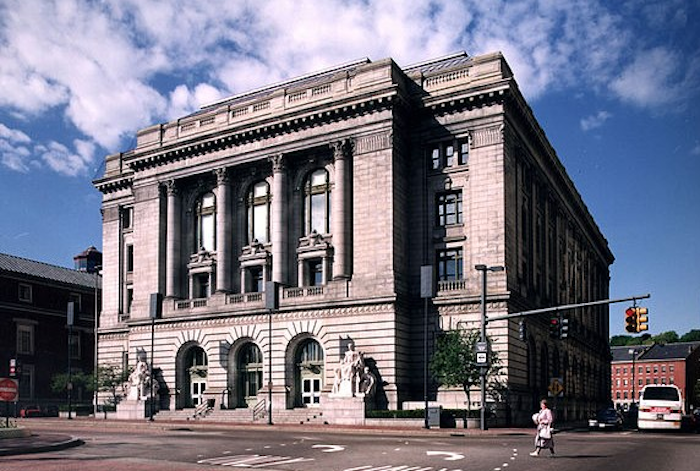
Kennedy Plaza in downtown Providence features a pair of post offices side by side at the square’s eastern end. The 1908 neoclassical building that is now a federal courthouse was originally a post office. The John O. Pastore Building, completed in 1940, was designed in what seems to be a combo of the Art Deco and Colonial Revival styles, and is now downtown’s main P.O. Both are lovely, and long may they survive, serving the public’s right to and desire for beauty, and yet serving also as reminders of Will Morgan’s eloquent but curious combination of vision and blindness.

Federal courthouse, initially a post office, completed in 1908. (New England Historical Society)

John O. Pastore Building, post office completed 1940. (Wikipedia)

Posted in Architecture | Tagged , , , , , | 9 Comments

More trad buildings of 2020

The main Cathedral of the Russian Armed Forces. (Wikipedia)

Since posting “Best trad buildings of 2020” on the last day of that eminently lamentable year, more buildings for my annual roundup have come to my attention, including several pointed out by diligent readers of this blog. I am publishing them here and at the bottom of the original Dec. 31 post.

***

The first, pictured above, is the Main Orthodox Cathedral of the Russian Armed Forces, dedicated on June 14, 2020. Designed in the Russian Orthodox Revival style, it commemorates what the Russians call the Great Patriotic War. Its steps are said to have been formed from melted down tanks of the Nazi Wehrmacht.

***

The Waycroft is a three-building mixed-use comlex in Arlington, Va.

The Waycroft, which opened earlier this year, is a mixed-use residential complex, in Arlington, Va. Designed by David A. Swartz Architects, it has over 400 luxury units in three connected buildings, with a Target on the ground floor. A main building of Art Deco design rises in the background of the picture above, which focuses on a series of traditionally styled townhouses.

***

Seminary of St. Joseph’s College, near Charlotte, N.C. (St. Joseph’s)

The seminary building of St. Joseph College, in Mount Holly, N.C., near Charlotte, was dedicated on Sept. 14 of this year. It was designed in the Gothic style by Michael G. Imber Architects.

***

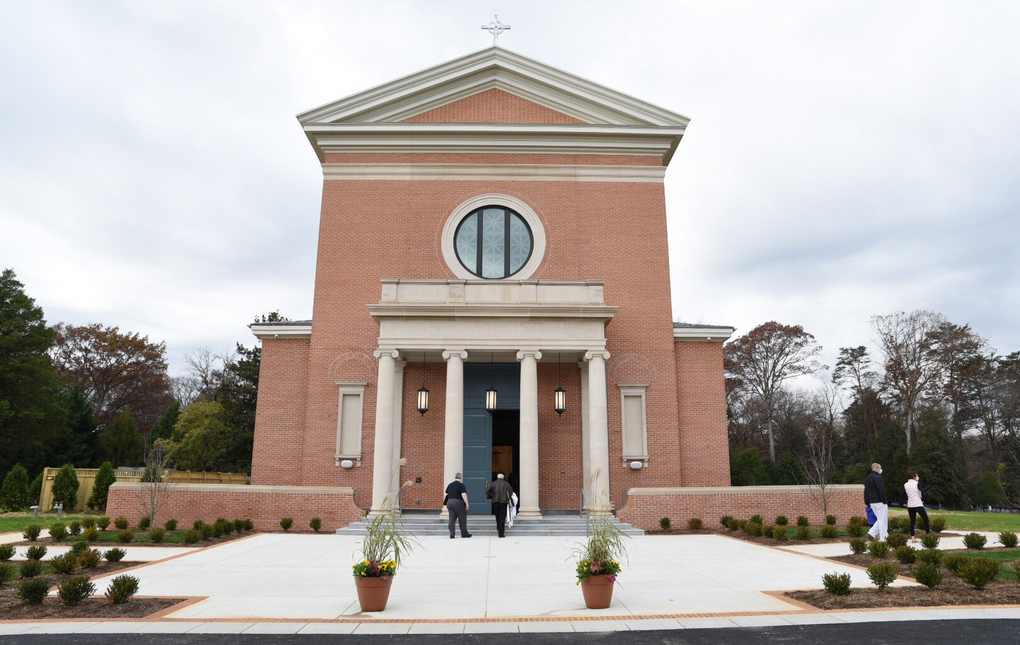
St. Mary of Sorrows Church. (St. Mary)

The new church in Fairfax, Va., for historic St. Mary of Sorrows, built around the congregation’s original tabernacle, was designed by McCrery Architects and dedicated last Nov. 15. The stained glass windows, created by Beyer Studio and to be set above its alter, represent the seven sorrows of Mary.

Posted in Architecture | Tagged , , , , , | 3 Comments

Best trad buildings of 2020

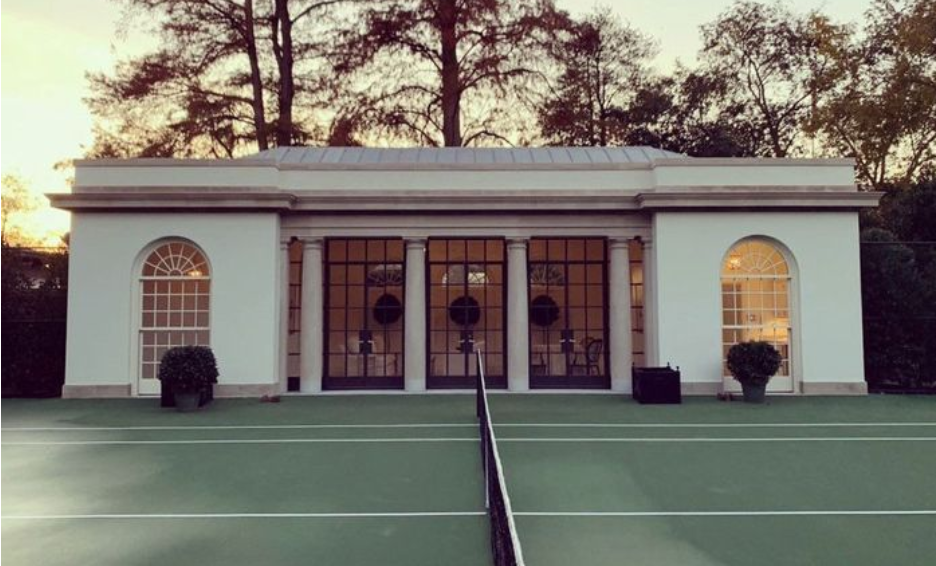
Tennis pavilion promoted by Melania Trump on the White House grounds. (White House)

Two weeks before President Trump signed his executive order calling for federal buildings to be designed in traditional styles, his wife, the first lady, Melania, announced the completion of a tennis pavilion on the White House grounds designed with the White House itself in mind. It was designed by Steven Spandle, one of three classicists recently appointed by the president to four-year terms on the seven-member U.S. Commission of Fine Arts. The pavilion is not open to the public, and little need be said of it, but it is purely classical and it was completed this past year, this month in fact.

***

Addition to Trayne Building on Westminster Street, Providence. (photo by author)

For a moment I feared that Melania’s tennis pavilion might be the only classical or traditional building erected in 2020. Then it hit me: Of course! Buff Chace’s new building on Westminster Street, right here in little ol’ Providence! How could I have forgotten it? But I did not forget it. There it is in all its glory, in the photo by yours truly above. It is considered an addition to the Trayne Building, to its left, but is for all intents and purposes a distinct building, designed in a different style calculated to fit in with the street’s glorious diversity of traditional and classical styles.

***

The Corsair, an apartment house in Greenwich, Conn., completed this year. (RAMSA)

As usual, architect Robert A.M. Stern and his firm produced a number of classical and traditional buildings last year, some quite notable. Scrolling through RAMSA’s portfolio is always an exciting and occasionally depressing experience (the firm does not quail at modernism). It takes me down memory lane, all the way back to its Brooklyn Law School Tower, which I defended against an unfair attack by former NYT critic Herbert Muschamp in 1994 (“Squinting at Prof. Muschamp,” I think it was called). A foretaste of projects for 2021 and 2022 includes a housing block, Audley Square, in Mayfair, London, and a federal courthouse in Charlotte, N.C., and the typical host of impressive collegiate structures. Above is The Corsair, an apartment house in Greenwich, Conn., completed this year.

***

Maybe I am getting lazy or not rousting my sources into action soon enough, but is it possible that this year’s crop of traditional and classical buildings should be even smaller than last year’s? This year, a major polling organization, Harris, surveyed 2,000 Americans and discovered that up to three-quarters preferred traditional styles, at least for federal courthouses. Then, just over a week ago, the president, as noted above, signed his new executive order to mandate classical and traditional styles for federal architecture. It seems odd that these events should close a year that seems to have boasted very few examples of the styles promoted at the highest levels of government. It is depressing. It is embarrassing. The web is filled with articles glorying in modernist carbuncles that went up this year and are expected next year. Is there a new strain of covid targeting trads? Surely not. But it seems this is the world we live in. Needless to say, any late entries in the 2020 sweepstakes, excluding building renovations, restorations and single-family houses, will be added to this meager post. [See below, added on Jan. 4.]

***

Since posting “Best trad buildings of 2020” on the last day of that year, more buildings for my annual roundup have come to my attention, including several pointed out by diligent readers of this blog. I am publishing them both on this new post and at the bottom of the original Dec. 31 post.

***

The main Cathedral of the Russian Armed Forces. (Wikipedia)

The first, pictured above, is the Main Orthodox Cathedral of the Russian Armed Forces, dedicated on June 14, 2020. Designed in the Russian Orthodox Revival style, it commemorates what the Russians call the Great Patriotic War. Its steps are said to have been formed from melted down tanks of the Nazi Wehrmacht.

***

The Waycroft is a three-building mixed-use comlex in Arlington, Va.

The Waycroft, which opened earlier this year, is billed as a mixed-use residential complex, in Arlington, Va., with a Target on its ground floor. Designed by David A. Swartz Architects, the complex has over 400 luxury units in three connected buildings. A large main building of Art Deco design rises in the background of the picture above, which focuses on a series of traditionally styled townhouses.

***

Seminary of St. Joseph’s College, near Charlotte, N.C. (St. Joseph’s)

The seminary building of St. Joseph College, in Mount Holly, N.C., near Charlotte, was dedicated on Sept. 14 of this year. It was designed in the Gothic style by Michael G. Imber Architects.

***

St. Mary of Sorrows Church. (St. Mary)

The new church in Fairfax, Va., for historic St. Mary of Sorrows, built around the congregation’s original tabernacle, was designed by McCrery Architects and dedicated last Nov. 15. The stained glass windows, created by Beyer Studio, to be installed above the church’s alter, represent the seven sorrows of Mary.

Posted in Architecture | Tagged , , , , , | 10 Comments