The Cotton District

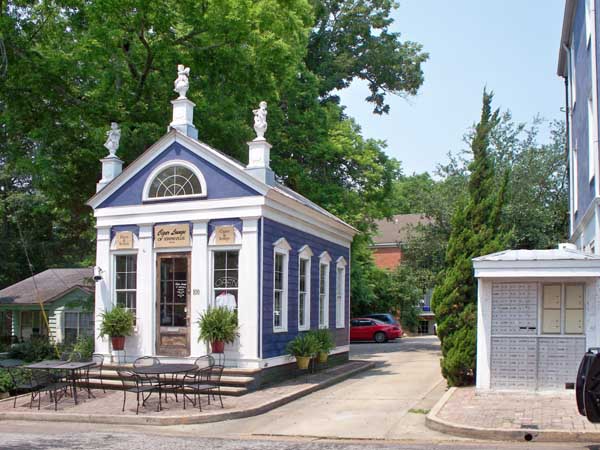
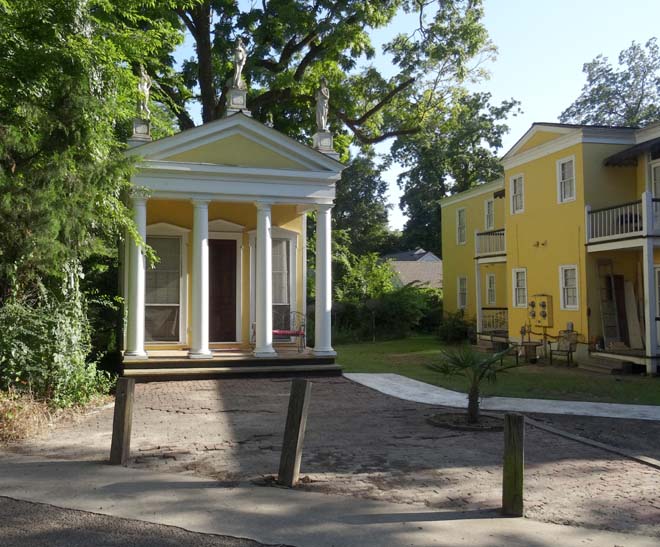
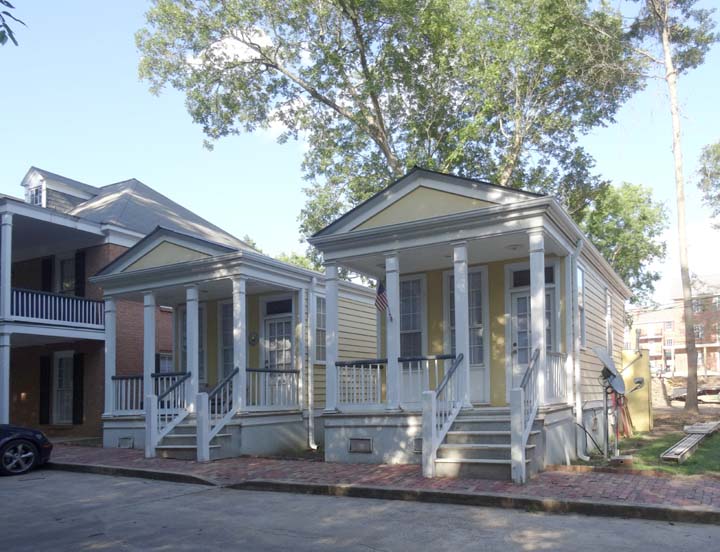
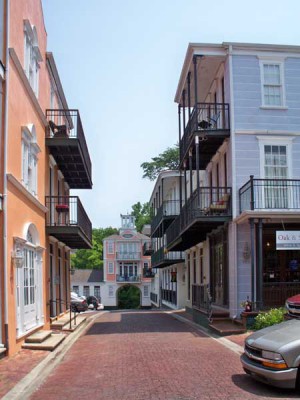
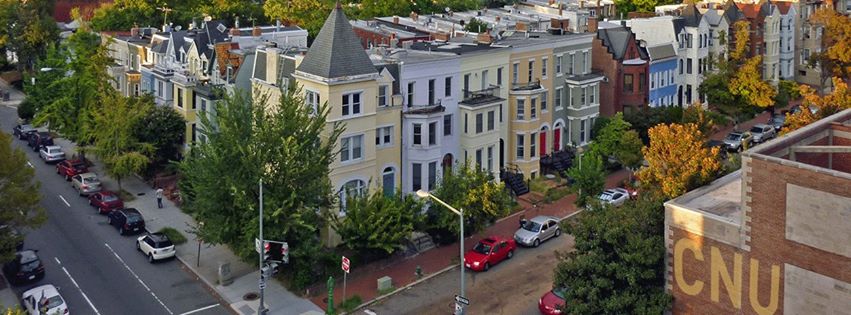
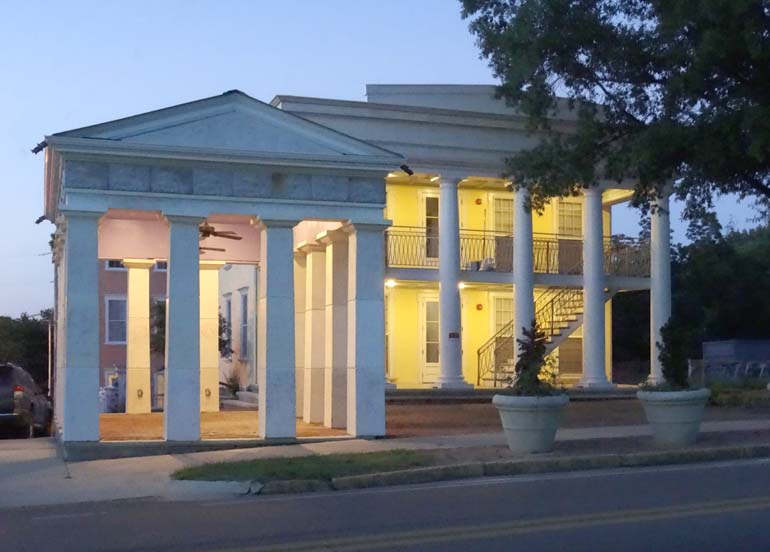
The Cotton District, in Starkville, Miss. (This and all photos below by Sara Hines)

The Cotton District, in Starkville, Miss. (This and all photos below by Sara Hines)

InfillRetailSml7071

AccessoryAprt764

SmallYellow7065

Pre-Katrina.Katrinas763

VistaStreet7083

Not sure how this place eluded my classical radar, but Starkville, Mississippi, home of Mississippi State, has a neighborhood called the Cotton District, between the downtown of the city of 23,000 and its university campus. Wikipedia calls it the nation’s first New Urbanist district, but it was conceived by Dan Camp, a former shop teacher, 20 years before the Congress of the New Urbanism was chartered, and at least 15 years before the development of Seaside, Florida – long considered the first New Urbanist town.

Dan Camp, according to this history of the Cotton District on its website, started building on a shoestring for students (also mostly living on a shoestring), and ended up with a lovely, thriving place that I feel embarrassed never to have heard of. He eventually became mayor of Starkville for a while.

A passage at the conclusion of the history (written by Dan Camp), makes an extraordinarily important point: “Presentations are still made to the Planning Commission and the Board of Alderman for setbacks and lot variances. However, it becomes easier and easier each time, as the true feeling and beauty of the area have become evident.”

The permitting and design approval process drives developers nuts in so many places, including Providence, because in most places planning officials do not learn. They do not learn that if developers build what people like, permitting goes down like an oyster. They prefer, for some reason, to build junk, and when resistance arises, they slog through the permitting process and then go home and cry into their beer.

Architect and planner Sara Hines, figuring I might need some story ideas, sent me a couple today, including one on Dan Camp’s Cotton District. The pictures here are hers. I don’t even need to write about the beauty of the place. The photos say it all. And there are many more at the Cotton District website linked to above.

This post is published with my thanks to you, Sara, for so many reasons – not least of which is that the Cotton District has now been pushed into the ambit of my radar.


Posted in Architecture, Development, Urbanism and planning | Tagged , , , , | 11 Comments

Column: The mathematician vs. the modernists

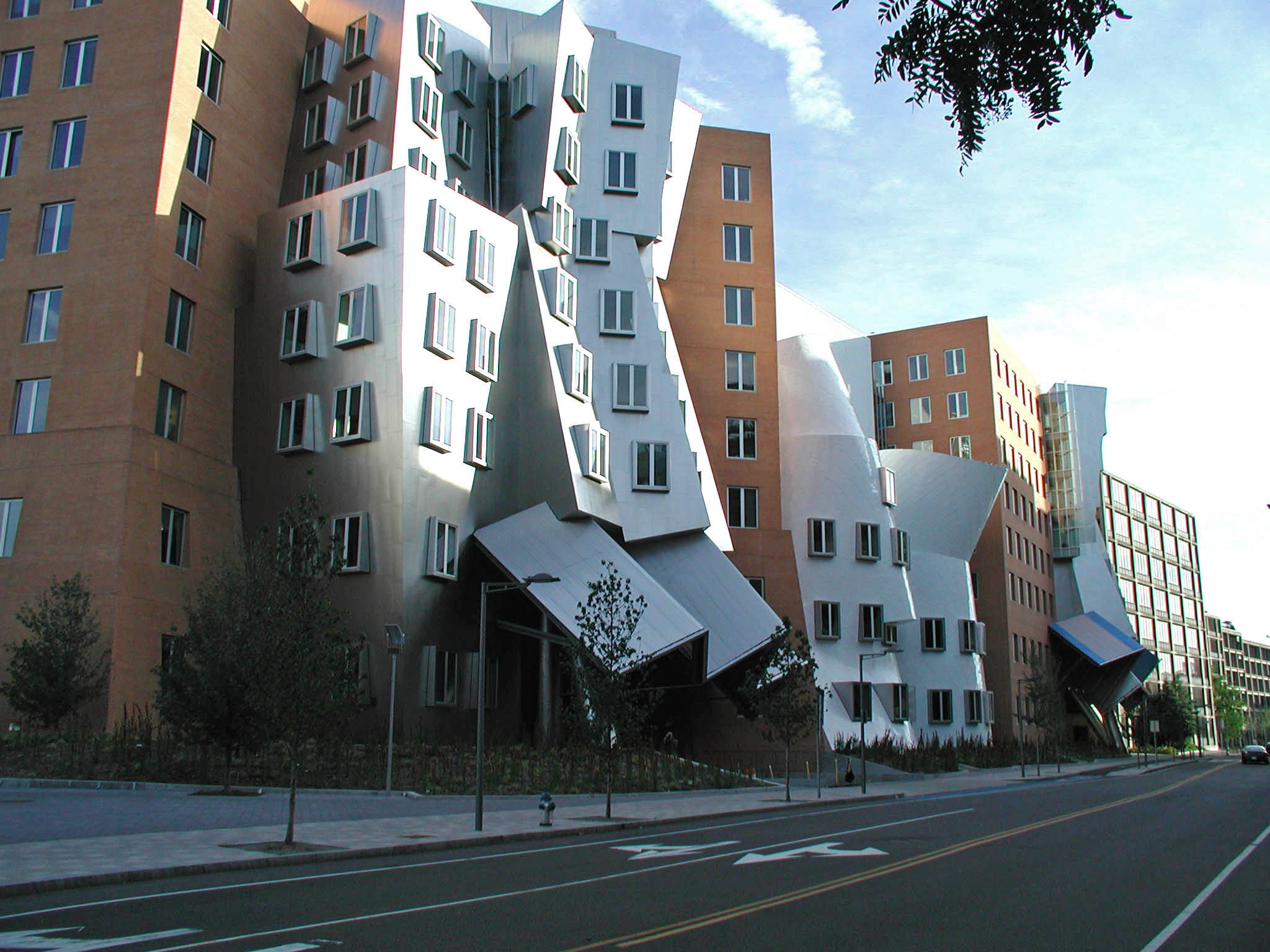
The Stata Center at the Massachusetts Institute of Technology, in Cambridge. (en.wikipedia.org)

The Stata Center at the Massachusetts Institute of Technology, in Cambridge. (en.wikipedia.org)

Nikos Salingaros. (vimeo.com)

Nikos Salingaros. (vimeo.com)

The Jetsons cartoon. (floridanature.wordpress.comm)

The Jetsons cartoon. (floridanature.wordpress.comm)

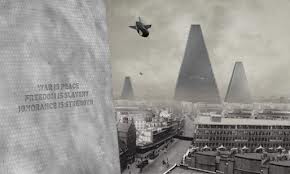
Ministry of Truth, Orwell's "1984." (archinect.com)

Ministry of Truth, Orwell’s “1984.” (archinect.com)

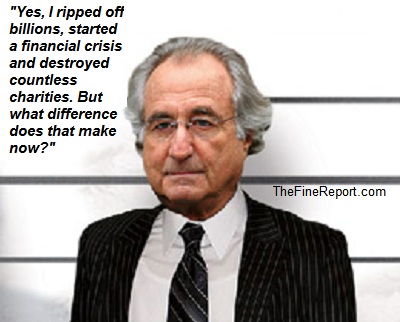
Bernie Madoff. (thefinereport.com)

Bernie Madoff. (thefinereport.com)

Fractal imagery of trees. (rosettacode.org)

Fractal imagery of trees. (rosettacode.org)

Mars-Earth Mandelbrot fractal. (xxx)

Mars-Earth Mandelbrot fractal. (xxx)

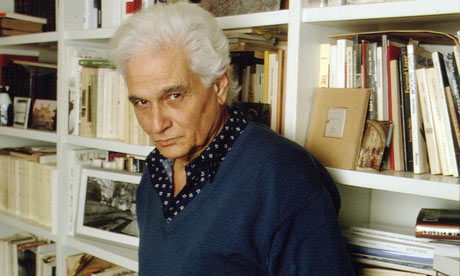
Jacques Derrida. (xxx)

Jacques Derrida. (xxx)

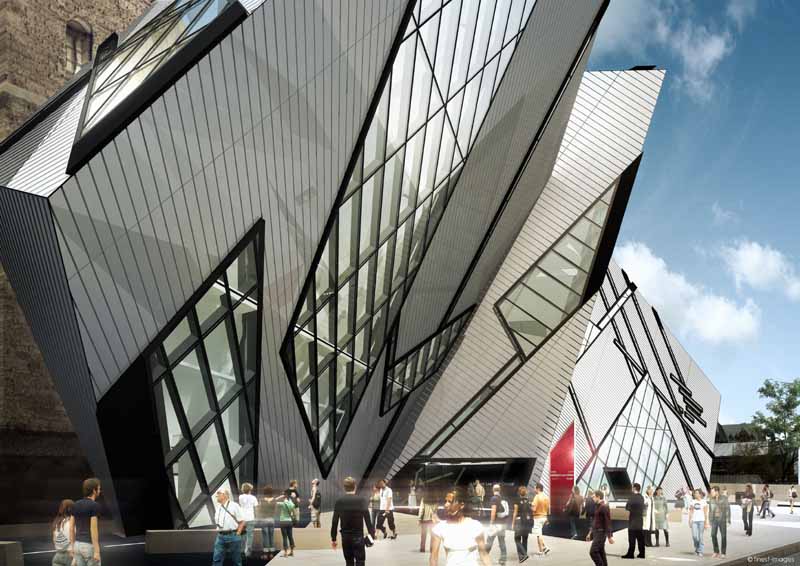
Royal Ontario Museum, by deconstructivist Daniel Libeskind. (e-architect.co.uk)

Royal Ontario Museum, by deconstructivist Daniel Libeskind. (e-architect.co.uk)

New Urbanist neighborhood in Chicago. (facebook.com)

New Urbanist neighborhood in Chicago. (facebook.com)

Science and modern architecture have gone hand in glove for decades. Buildings of steel and glass are filled with high technology to protect office space and living space from sun and climate. Hermetically sealed cartoon futurism must be scientific, right?

Well, it has struck some people that a built environment designed in opposition to the natural environment might have problems with science that transcend appearance.

Nikos Salingaros is among the lead prosecutors investigating this situation.

The mathematician and architectural theorist at the University of Texas in San Antonio has a new collection of essays out called “Anti-Architecture and Deconstruction” — actually the fourth edition of a book published in 2004. He continues his style of pulling no punches in attacking the architectural establishment.

Subtitled “The Triumph of Nihilism,” Salingaros’s volume takes a scientific approach to the modernist architectural fraud, using the metaphor of a virus, but also that of a cult.

Modernist doctrine has spread the way a virulent disease spreads, infecting authorities in charge of facilities design and construction at major institutions with beliefs that most people recognize as hostile to human sensibilities.

The disease maintains its grip, writes Salingaros, by controlling the professional dialogue and inuring us to a built environment of sterile, foreboding structures, whose torque and tilt suggest that their only connection to science is the denial of its most basic principles — especially gravity. Engineers work bravely to ensure that modernism does not literally fall down.

The modernist cult mocks such scientific terms as fractal — a descriptor of nature’s organized complexity. In the modernist lexicon it evidently means “broken,” as if shards of glass and twisted titanium have some innate link to science. As if nature were broken. Our era may be broken, and architects may feel a need to understand it — but, please, you need not replicate its worst features!

Modern architecture serves as handmaiden to financial and political mores that marry Bernie Madoff and Big Brother in a throwback world of “Jetsons” cartoon futurism.

Indeed, the accomplishments of modernism and its cult can be compared to the society created by George Orwell in “1984.” Most of its population of proles accept a status quo they recognize as inimical to well-being but find difficult to understand, let alone resist. Reality is redefined by Big Brother in terms that baffle normal patterns of thought. History and language are rewritten by the Ministry of Truth.

Orwell’s novel came out in 1949, foreshadowing the ’60s ideas of French thinker Jacques Derrida. Salingaros calls modernism the “Derrida virus” and its product deconstuctivism, exemplified by architecture that is not what it should be and everything it should not.

Of the Stata Center, for example, designed by Frank Gehry for the Massachusetts Institute of Technology, Salingaros writes, “Deconstructivist buildings are the most visible symbols of actual deconstruction. The randomness they embody is the antithesis of nature’s organized complexity. … Housing a scientific department at a university inside the symbol of its nemesis must be the ultimate irony.”

During the 1970s and ’80s, deconstructivists in schools of law, departments of literature and other academic fields sought to use Derrida’s ideas to undermine legal, literary, sociological and other knowledge. If better social and political systems were to be built, they claimed, society’s intellectual structures had to be dealt with first. The main method was to destabilize meaning. The legal establishment and most of academia swiftly marginalized such dangerously ridiculous thinking, but architecture remains largely sunk in deconstructivist theory, even if most modern architects themselves do not realize it; they merely practice it.

Salingaros and others have not just exposed the fraudulent use of science by modern architecture but have discovered the scientific basis of traditional architecture. He describes how scale, proportion and ornament ditched by the modernists reflect biological survival mechanisms evolved over millennia that value information. Returning those features to design will revive an architecture based on humanity.

The template for this revival exists throughout the world because preservationists have blocked modernists from its wholesale demolition. Urban planning has already staged a coup to evict modernist theory from most municipal planning agencies. Only the institutional power of modernist hierarchy prevents a return to natural values in architecture. A strategy must be found to oust the cult of modernism by leveraging the public’s intuitive preference for tradition. After reading his book I must nominate Nikos Salingaros to lead the way.

David Brussat is a former member of The Journal’s editorial board.

Posted in Architecture, Art and design, Book/Film Reviews | Tagged , , , , , | Leave a comment

Glasgow fire update

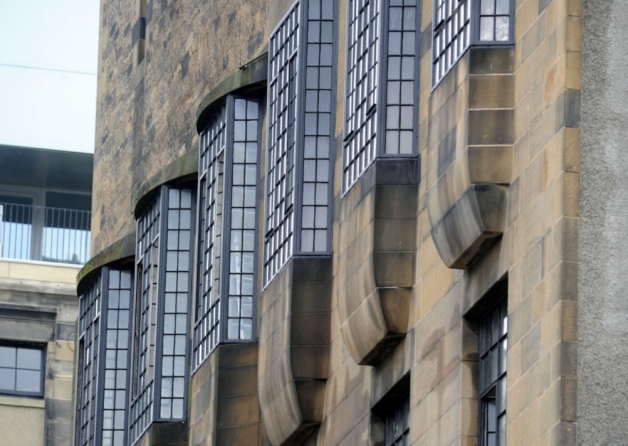
Fenestration at the Glasgow School of Art, designed by Charles Rennie Mackintosh. (thescotsman.com)

Fenestration at the Glasgow School of Art, designed by Charles Rennie Mackintosh. (thescotsman.com)

The good news is that in addition to money flowing in to repair the Glasgow School of Art that nearly burned down this spring, school officials seem firmly inclined to restore to the original state both the school building, most of which survived the fire, and the Charles Rennie Mackintosh-designed library hall that was destroyed.

But you can never be too sure, and, as this piece in the Guardian, “Glasgow School of Art to host Venice conference on rebuilding after fire,” suggests, there remain some who seek to topple such sound sense. On the theory that an excellent copy would be an excellent insult – a “Mockintosh,” in the modernist occult vernacular – they want the school to hire an architect who will ensure that “our era” is represented in the building’s reconstruction. Especially verboten would be restoring the library itself as closely as possible to its original state. Copy the glorious past? How retrograde! Beauty be damned!

Well, let the conference in Venice be held, and let a thousand dunces dance on the head of a pin. But at a proposed second conference in Glasgow just nail down the intelligent initial impulse of almost everybody involved, and get the building rebuilt as Macintosh intended. Nothing less will suffice.

Posted in Architecture, Architecture History, Preservation | Tagged , , | 1 Comment

Living under bridge now

images-1Seriously, it’s not that bad, but your architectural correspondent was in fact laid off yesterday from his job at the Providence Journal. A newspaper chain recently purchased the paper. Tomorrow’s column will be my last for the Journal. I will still write a weekly column and the usual stuff on my “Architecture Here and There” blog, which has been independent since December.

Meanwhile, I will be looking around, as they say, and if any reader has any leads to convey, maybe something in the writing game, my appreciation will know no bounds.

Posted in Architecture | Tagged , , , | 18 Comments

Mayor Riley in Providence

Charleston Mayor Joseph Riley. (charlestonbusiness.com)

Charleston Mayor Joseph Riley. (charlestonbusiness.com)

To celebrate my discovery of A Vision of Civic Conservation, I have resurrected a column from 2007 in which I report on the visit of Charleston Mayor Joseph Riley to Providence for the annual meeting of the Providence Preservation Society, for which he was keynote speaker. The column foreshadows much of the thinking of the VCC, which is the work of Christopher Liberatos and Jenny Bevan, two classical architects with a firm in the Holy City: that is Chucktown’s nickname. Its motto is Aedes mores juraque curat (“She guards her buildings, customs, and laws”). Well, yes. Sometimes.

Charleston speaks to Providence
Thursday, January 25, 2007 

AS THEY DROVE up Francis Street to the Gloria Dei Lutheran Church to attend the Providence Preservation Society’s annual meeting last Thursday, did Mayor Cicilline direct the attention of his guest, Charleston Mayor Joseph Riley Jr., to the left or to the right? Did he point with pride to Providence Place or the GTECH building? [The former was new and traditional, the latter new and modernist.]

If such a revealing moment did not actually take place, it should have.

Before addressing the society in this year of its 50th anniversary, Mayor Riley toured Providence for the first time. In 31 years as mayor of America’s most well-preserved major southern city, Riley had never before visited the nation’s most well-preserved major northern city. He was impressed.

Surely the tour must have featured Benefit Street (“Providence’s Mile of History”), the elegant quadrangles of Brown University, sumptuous Prospect Street, the Armory District (preservation’s first success away from College Hill), the traditionally styled affordable housing in South Providence, and downtown, the only major commercial district listed in its entirety on the National Register of Historic Places.

Cicilline must have beamed as he watched a mayor famous nationally for promoting civic beauty experience Providence for the first time.

At Gloria Dei, Riley began his speech with praise for the society. He heaped even more praise upon Mayor Cicilline. Then he launched into a slide presentation about how Charleston was saved. Riley’s speech was well described by Daniel Barbarisi’s story in the next day’s Journal (“How to give a city personality: Restore historic architecture”):

“[Mayor Riley’s] urban design philosophy can be summed up simply: When you lose a building, you lose a part of your city’s identity. And in Riley’s mind, a historic building is never beyond saving. … ‘There is never any excuse under any circumstances, no matter what it is, to ever build anything in our cities that doesn’t add to their beauty,’ Riley said.”

It was when he got to that line that the image of Mayor Cicilline trying to decide whether to brag about Providence Place or GTECH came to mind.

In his speech, Riley made the vital point that any new building in an old city should “fit into” its historic architectural context. He lampooned modernist buildings that he had blocked in Charleston. His audience of local architects, preservationists and planners howled with joy. Cicilline must have cringed.

As Riley pointed out in his speech, our mayor was his student at the Mayor’s Institute for City Design, in Charleston, founded in part by that city’s mayor. Such think tanks don’t always promote a specific agenda but rather a broad discussion of the relevant issues. And yet, if Professor Riley were handing out grades for civic design according to the principles of Mayor Riley, Mayor Cicilline would not have wanted to show his report card to his mother.

On the mayor’s watch, the Westminster end of the colonial revival Providence National Bank was demolished. The mayor supports demolition of the neoclassical headquarters of the Providence police and fire departments on Fountain Street. He supports demolition of a modest but attractive commercial building, 145-149 Washington St., that epitomizes the sort of urban fabric whose survival is key to the city’s beauty. He supports demolition of the Fogarty Building – an ugly but arguably “historic” rep-resentative of modernism’s Brutalist phase.

In each case, the mayor supports plans to replace the buildings with more-or-less modernist buildings that don’t fit into the city’s architectural heritage. In each case, he is willing to replace beautiful buildings with ugly ones – or, in the case of the Fogarty, ugly buildings with even uglier ones, if that can be imagined.

He also supports the [RISD] Chace Center, under construction on North Main, and the aforementioned GTECH building. Both purposely try not to fit in.

The Providence Preservation Society had also gone along with all of this – until recently, when it joined other community groups in appealing a preliminary decision to give city approval for the demolition of the police and fire headquarters. Perhaps, in its 51st year, PPS has rediscovered its purpose.

Mayor Riley’s praise for the society and for his fellow mayor recognizes the pressures that institutions and mayors face. He himself supports – in the face of public outcry, not to mention his own principles – the proposed Clemson Architecture Center, in a starkly modernist design that fits poorly, to say the least, in the old Charleston he loves so well.

Still, I would like to hope that as he witnessed the encroaching threat that faces Providence’s heritage of traditional streetscapes, he felt a chill go up his spine at what might happen to his own city if he follows Mayor Cicilline down that road. Maybe that chill was felt also by some of the preservationists, at least, in his audience at Gloria Dei. If not, Providence’s days of beauty may be numbered.

David Brussat is a member of The Journal’s editorial board. His e-mail is dbrussat@projo.com.
* * *

Charleston, S.C., Mayor Joseph Riley Jr. in his city

Journal archives

Posted in Architecture, Preservation, Providence | Tagged , , , , | Leave a comment

Capt. Hook’s Moat Brae

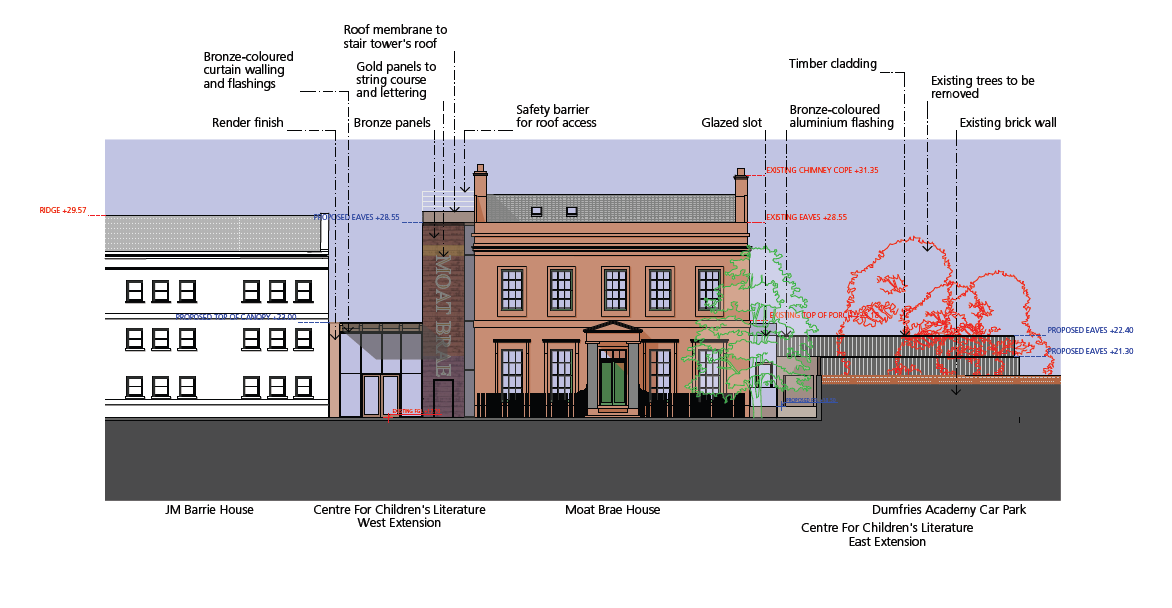
Moat Brae from front, with modernist additions at either end.

Moat Brae from front, with modernist additions at either end.

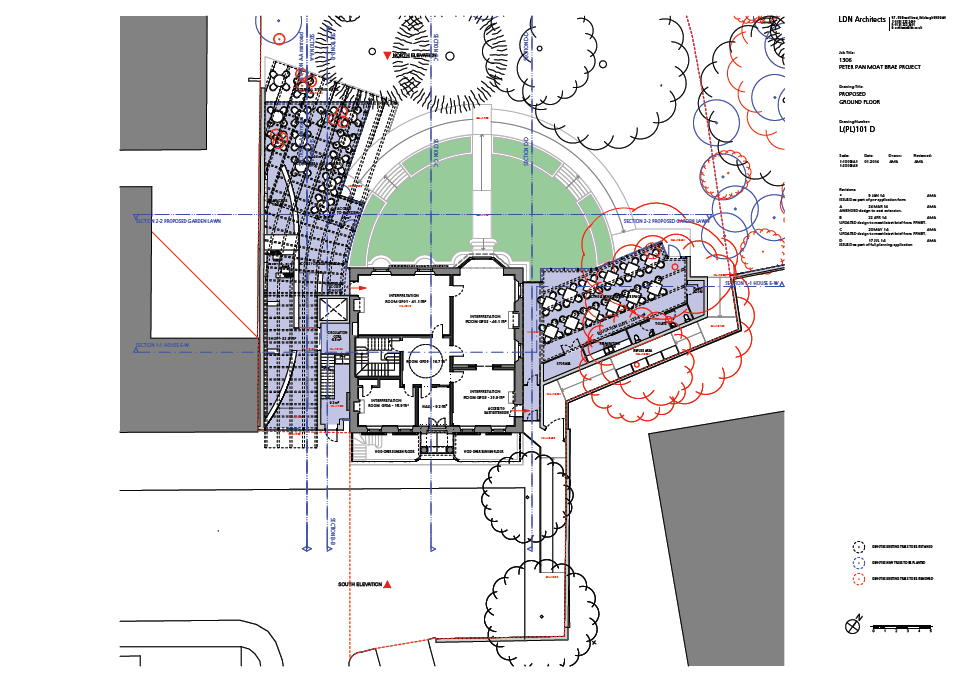
Here are three images of the modernist plan for Moat Brae, in Dumfries, Scotland, whose garden inspired Neverland. It is now threatened with fairly typical additions in an unsympathetic style. I was unable to get my hands on these images in time for my column “Help save history and Peter Pan” on the subject last week, so here they are.

Rear view of Moat Brae with addtions.

Rear view of Moat Brae with addtions.

Here is the plan for the additions.

Here is the plan for the Moat Brae additions.


Posted in Architecture, Development, Preservation | Tagged , , , , , | Leave a comment

Three Classicists

"Three Classicists" - see video link below. (perspectiveresources.blogspot.com)

“Three Classicists” – see video link below. (perspectiveresources.blogspot.com)

This time-lapse video, called “Three Classicists,” shows three British classicists, including Quinlan Terry’s son, sketching a classical scene on a blank wall in about three minutes, to the dear strains of a dulcet cellist. It is several years old but I post it to introduce readers to a great new website called “A Vision for Civic Conservation,” assembled by Christopher Liberatos and Jenny Bevan, who run an architectural firm in Charleston, S.C. – it has been a leader in opposing the sinister school of architecture being built in historic Charleston by Clemson University.

The three classicists are Francis Terry, George Saumarez Smith and Ben Pentreath. A host of other fascinating videos are also posted in the VCC “Readings” section.

But VCC is more than a great way to see videos. It uses graceful language and cantankerous posters, including the work of Leon Krier, to sum up the essential issues of architecture, preservation and urbanism in today’s world. It draws the startling contrast between the benefits of building cities based on the principles of tradition and the flaws of the reigning modernist way of building (or anti-building). We can do better, it insists.

VCC is not just a great website, it is a movement, and you can sign up. I did and so have many others. You can get on the bandwagon at “Sign Up Here.”

Posted in Architecture, Preservation, Urbanism and planning | Tagged , , , , | Leave a comment

UNESCO urbanicide?

The Erekthion, near the Parthenon on the Acropolis, in Athens. (Photo by David Brussat)

The Erekthion, near the Parthenon on the Acropolis, in Athens. (Photo by David Brussat)

DOMUS, a magazine about cities and culture, has published an infantile essay, “Urbanicide in all good faith,” excoriating UNESCO’s World Heritage program as an assassin of cities. The author, Marco D’Eramo, doesn’t call a spade a spade. Only briefly does his real agenda slip out: He says that if the Marais, in Paris, had been UNESCOed, we would not have the Beaubourg – that is, the piece of junk, the Centre Pompidou, maquerading as a museum that ruins its neighborhood of the Marais.

You see, the author is one of those critics who believes that modernists should be allowed to destroy historic cities because otherwise they are not cities but museums. He regrets that so many historic districts are unaffordable to most people, but fails to acknowledge or understand, that it is modern architecture that has caused beauty to be so rare around the world that, as with any rare commodity, its price is bid up by the wealthy who come to be (because of modern architecture everywhere else) the only people who can afford to live there.

Of course, that is an exaggeration, and the author traffics in exaggeration. He says you can’t find a grocer, butcher or baker in the listed Italian town of San Gimignano – well, you probably can. He says all you can find is gift shops with the same trinkets. In the Plaka, in the shadow of the Acropolis, that may be very close to true, but if it is not true, if you can find shops that sell other things, even other types of trinket, then you have uttered a falsehood. The writer specializes in this.

Indeed, the UNESCO program is not quite as perfectly effective at creating mausoleums worldwide. If it were, we would not have to put up with the New Acropolis Museum, which desecrates the Acropolis and serves as a perfect argument for keeping the Elgin Marbles in London. Where were you, UNESCO?

Does anyone imagine that the authoritarian government of Turkey will demolish three luxury apartment towers because UNESCO warns that they threaten to undermine the historic center of Istanbul? Not bloody likely!

Of course we wouldn’t need to anoint great places as World Heritage Sites if modernism did not make them so rare. So if you don’t like the fact that great places greatly need protection, then go on the warpath against modern architecture. This may seem simplistic. No, it is merely simple. You can dig down and find complexities, but the truth regarding the need for UNESCO is simply as stated.

Posted in Architecture, Architecture History, Preservation | Tagged , , , | 5 Comments

Hope for Emmett Square

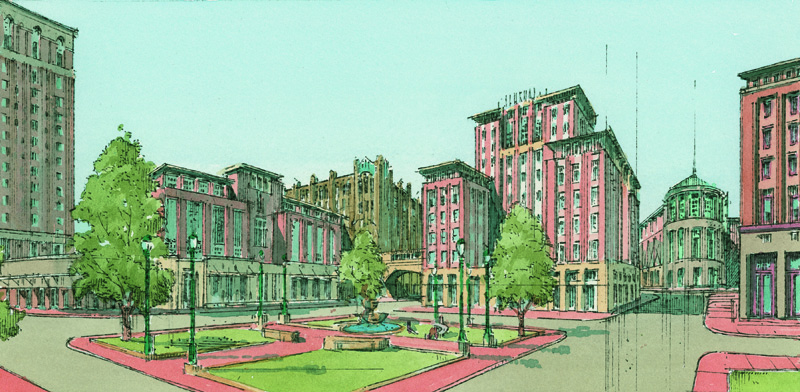
Proposal for Emmett Square, in Providence. (DPZ)

Proposal for Emmett Square, in Providence. Biltmore Hotel (l.) and R.I. Convention Center (r.) are visible. (DPZ)

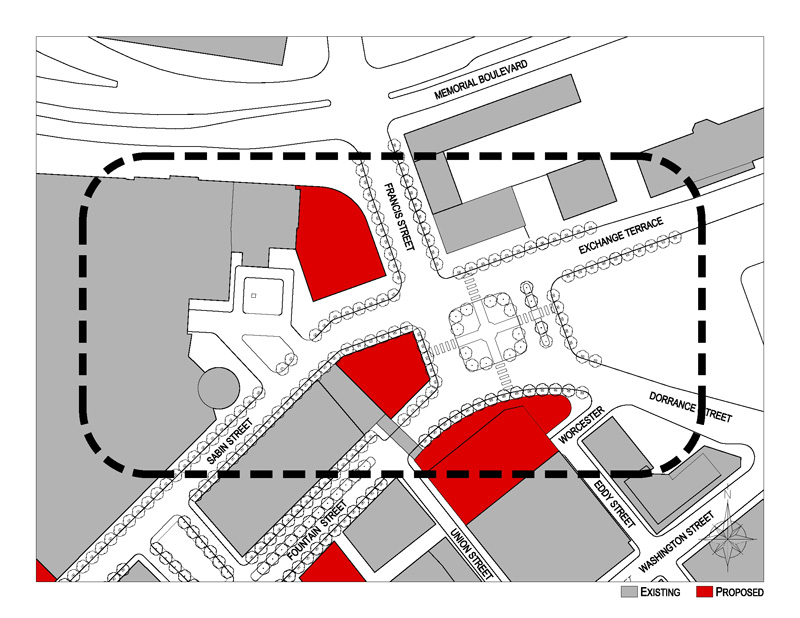
Years ago, the Miami architecture and planning firm DPZ, led by Andres Duany and Elizabeth Plater-Zyberk (his wife), came to Providence again and again to help plan the revival of its downtown. Its last charrette, or brainstorming session, was in 2005. One of the proposals was to reconfigure Emmett Square, just off Kennedy Plaza, at the end of Fountain Street, where the Providence Journal (my employer) is headquartered. The proposal for Emmett Square, which is fed by some seven streets, turned it into a real square, but was unworkable at the time because (among other reasons) two new buildings were to be erected on Journal-owned land on Fountain Street – especially the parking lot next to the Biltmore Hotel and the green, snub-nose parking garage addition to the Journal that juts into the square – much better uses for those spaces, by the way – but, hey, the land was owned by the Journal.

DPZ plan for Emmett Square. (DPZ)

DPZ plan for Emmett Square. (DPZ)

Perhaps the upcoming change in ownership will loosen strictures on that land. The reconfiguration of Emmett Square into something approaching greater regularity and pedestrian friendliness is already under way, but perhaps the vision of DPZ from a decade ago can be grafted upon what is under way now. But probably not. City Hall is already embarked on the destruction of Kennedy Plaza, and has even begun leveling its guns at Burnside Park. It is unlikely that

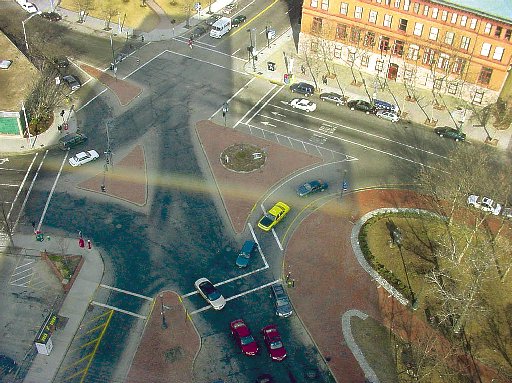
Emmitt Square today, with, clockwise from lower left, Eddy, Fountain, Sabin, West Exchange, Francis, Exchange Terrace and Dorrance streets entering or leaving the "square."

Emmett Square today, with, clockwise from lower left, Eddy, Fountain, Sabin, West Exchange, Francis, Exchange Terrace and Dorrance streets entering or leaving the “square.”

officials will want to upgrade Emmett Square as once conceived. Still, it is good to revive old plans that never materialized, even if just to look at, if they shine a clear light on the inadequacy of current planning. That is the intent here.


Posted in Architecture, Development, Urbanism and planning | Tagged , , , | Leave a comment

Bad news from Paris

DSCN5684

Mary Campbell Gallagher, of SOS Paris, reports that the new mayor of Paris is working to undermine the already weakened legal stuctures that protect the beauty of the City of Light. There was a pro-beauty, anti-skyscraper candidate in the March election, but she lost to the Socialist.

Here is Mary’s report:

The new mayor of Paris, Anne Hidalgo, is an enthusiastic supporter of skyscrapers and numberless other offenses against the built heritage and a skilled politician. In a recent non-act of potentially great impact, she has failed since the elections in March to re-appoint the members of the Commission on Old Paris (Commission du Vieux Paris), a respected body dating from 1897.

The CVP is composed of 40 experts, professors, historians, and others, including the current president of SOS Paris, Olivier de Monicault, and another 15 elected members of the City Council. Although the public knows little about the CVP, it has in fact examined all of the applications for building permits and demolition permits in Paris, and it has published its recommendations. Its opinions are merely advisory, but since preservationists cite them in lawsuits, they have caused pain at City Hall. Mayor

Hidalgo, according to a report in the August 13 issue of the weekly Canard Enchainé, wishes to reduce the scope of the CVP’s inquiries and to cease publishing its recommendations. Observers have asked whether such secrecy is consistent with the transparency prized by the Socialists. The deputy mayor for culture, Bruno Julliard, meanwhile, calls the proposed changes modernizing the CVP.

I am delighted to report that the revelations in the Canard Enchainé have caused a stir even in media like MetroNews not known for heritage reporting. More will be revealed.

Here’s an example of why the Commission du Vieux Paris (CVP) is so important that Mayor Hidalgo wants to cripple it. In the Samaritaine case, the governmental agencies charged with protecting the architectural heritage of Paris all backed SANAA’s and LVMH’s plans to build a seven-story tall, 260-foot long, wavy translucent glass facade on the rue de Rivoli, right in the historic center of Paris. Other buildings on the rue de Rivoli are made of limestone, and the facades have, it will not surprise you to learn, windows and doors. City approval nonetheless came for demolishing the 18th-century and 19th-century buildings already there and for building the glass billboard SANAA proposed. Not only that, but even the department in the national Ministry of Culture charged with protecting the surroundings of designated historical monuments ALSO approved SANAA’s blight. Only the CVP advised against the project. How embarrassing for City Hall. No wonder Mayor Anne Hidalgo wants to shut it down!

Cheers,

Mary

Posted in Architecture, Other countries, Urbanism and planning | Tagged , , , | 3 Comments