A monument to courage

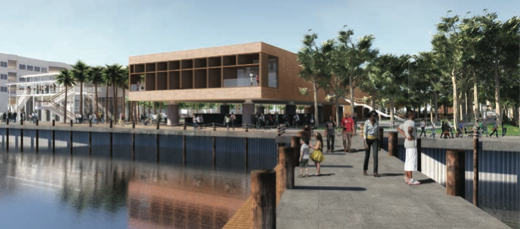
Proposed design for International Museum of African American History, in Charleston.
Proposed design for International Museum of African American History, in Charleston.

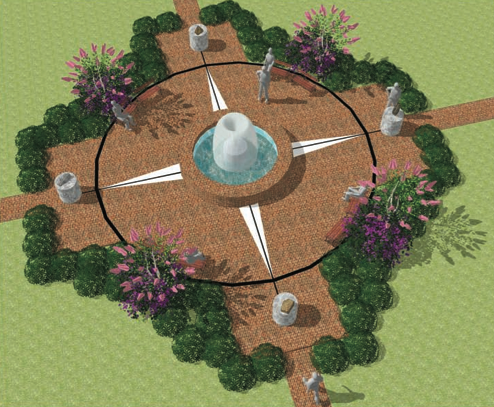
“A Bakongo Cosdmogram Compass”
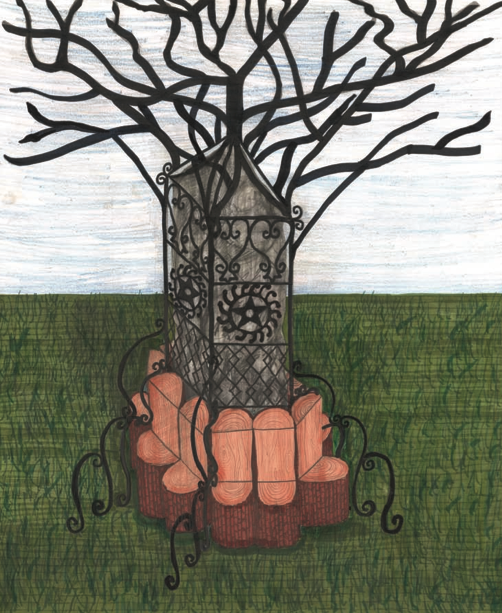
“Tree of Transformation”

“Gathering for the Journey”
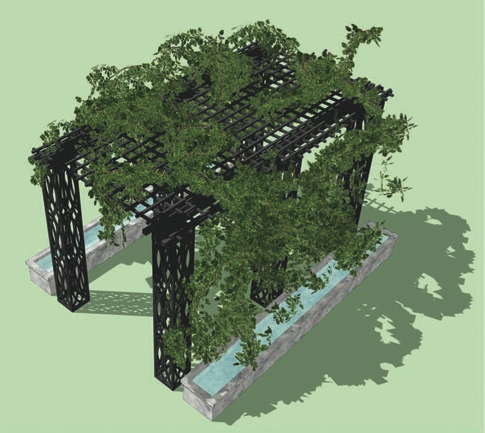
“The Indomitable Spirit Passage”
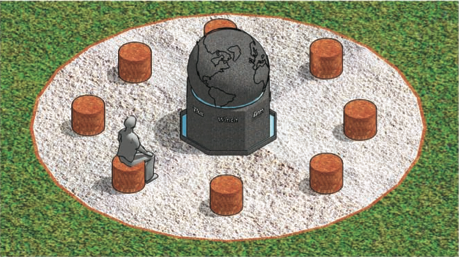
“That Which Does Not Burn”
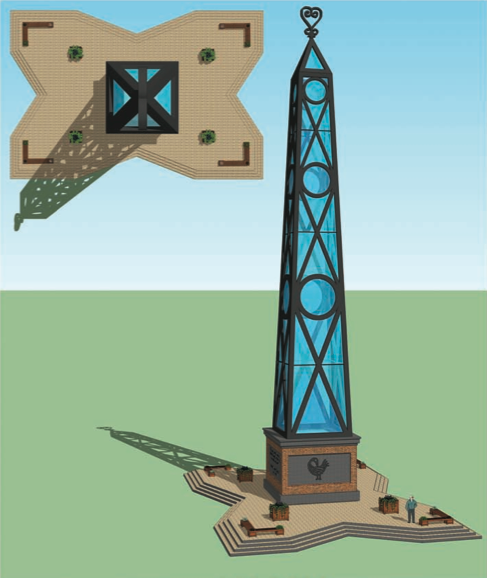
“Looking Backward, Moving Upward”
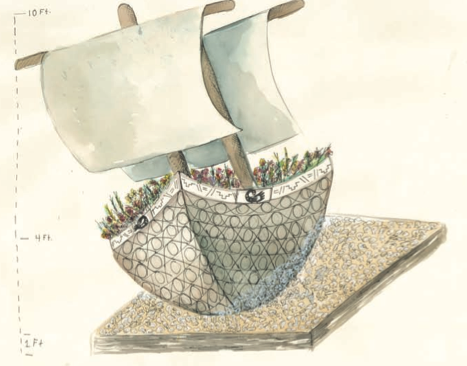
“Shipwreck”

“Bridge of Progress”
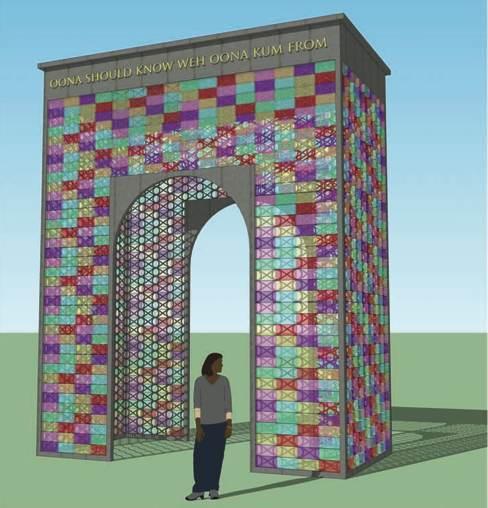
“Gateway to Community”
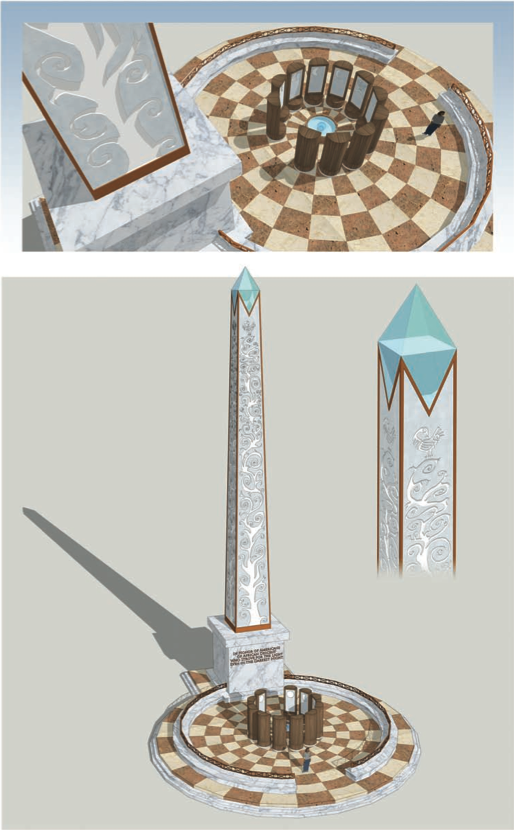
“A Tree of Light & A Hush Harbor”

A newly proposed memorial, called the Monument to the Courage of Those Who Suffered During the Atlantic Slave Trade, was the project for students in Prof. Nathaniel Robert Walker’s Architecture of Memory course in the Art and Architectural History Department of the College of Charleston.

The students split into groups of three, more or less, and submitted designs for the memorial, which are now on display at the college until Sept. 1. Professor Walker sent me the exhibit’s catalogue, and the booklet revealed how thoughtful the students were using design to reflect their noble ideas.

Hush Harbor, the catalogue’s title signifying a place for quiet storytelling, opens with a description of memorial forms from around the world and down through time:

The ceremonial gateway, the obelisk, the sacred enclosure, the symbolic sculpture, and the seat for rest and reflection – these monumental memorial forms are found all over the world, in countless cultures, from deep antiquity to the present day. They are useless from a utilitarian point of view, but crucially important as tools for marking special places and recalling key moments that might otherwise be forgotten. … They carve out a place for the past in the present.

The students’ memorial designs reflect all of these forms that come down through the classical tradition, a tradition that emerged not just from Greco-Roman history but from around the world, arising naturally from the needs of mankind. Often, as has occurred in monuments down through history, the student designs embrace more than one form.

The nine proposals’ titles give clues to the intent of their aesthetic expression:

  • “A Bakongo Cosmogram Compass,” by Jacqueline Laguarta, Kate Lesser and Audrey Marhoefer – a sundial form of hand-molded brick;
  • “A Tree of Transformation,” by Emily McVan, Madeline Ryan and Miller Smith – a tree of wrought-iron tendrils surrounded by seats;
  • “Gathering for the Journey,” by Charlotte Ball, Jillian Dowdy and Naomi Edmondson – a pond that sits amid chairs backed by oars;
  • “The Indomitable Spirit Passsage,” by James Coulter, Stephanie Greene and Sara Mosteller – a leafy pergola trellis of iron;
  • “That Which Does Not Burn,” by Linnea Grandquist, Elaina Gyure and Anna Camille Sligh – a seating area around a floating globe;
  • “Looking Backward, Moving Upward,” by Megan Harris, Shelby Konold, Rachel Moore and Miranda Symons – an illuminated 116-foot obelisk of wrought iron and glass;
  • “Shipwreck,” by Taylor Czerwinski, Kelly Macdonald and Jessica McMillan – a metal-work slave ship of elegance aground;
  • “Bridge of Progress,” by Kylie Beall, Mitchell Moon, P.J. Roberson and Matthew Timbes – an intimately scaled limestone arch topped by historic figures;
  • “Gateway to Community,” by Kelly Hogan – an arch of iron frame filled by glass bricks of color.

The student designs are joined by that of their teacher, who has submitted “A Tree of Light & Hush Harbor,” a 100-foot obelisk of steel, illuminated from within, backlighting on each of four sides the branches of a tree motif on top of which sits a sankofa, a bird plucking a seed from its own back – just beneath the obelisk’s crown, a prismatic blue glass beacon. To the side of the obelisk’s base is a circle of megalithic chairs – a “hush harbor,” or secret place for slaves to gather beyond the eyes of their owners and overseers.

The students clearly learned much from Professor Walker – I have, too, because he is a dear friend – and their ability to embue physical form with symbolic meaning is impressive. All of their memorial designs are worthy of consideration as the project to build Charleston’s International Museum of African American History advances.

The chosen memorial would grace the entry to the museum. It will be the memorial’s unofficial role to make up, in its elegance and symbolic meaning, for the inelegance and vacancy of meaning embodied by the design of the museum, as currently proposed. It is a mere rectangular box on stilts, with plain glass frontage, designed by Henry Cobb of the firm Cobb, Pei & Free, founded by the late modernist architect I.M. Pei, and destined to hover intrusively above the market where Africans once were sold as slaves to their fellow humans.

I hope Charleston will come to its senses regarding the museum design. Henry Cobb is mentioned as a supporter of this student memorial design project, and Professor Walker insists that Cobb’s design “has many virtues.” I could not detect a single one, and must insist that the design’s vacuity will only make it harder for the museum to articulate meaning – because his design is inarticulate.

Let us hope Cobb, or Charleston, will embrace a design more sensitive to history and to one of its most glorious cities.

If so, future visitors to the IMAAH will be able to reflect on history without the weight of its repudiation on their minds. And if a more sensitive, sensible museum design is adopted, then the Monument to the Courage of Those Who Suffered During the Atlantic Slave Trade will not have to suffer the indignity of carrying the museum on its back.
Posted in Architecture, Architecture Education, Architecture History, Art and design, Development | Tagged , , , , , | 1 Comment

Up, up, up in time and space

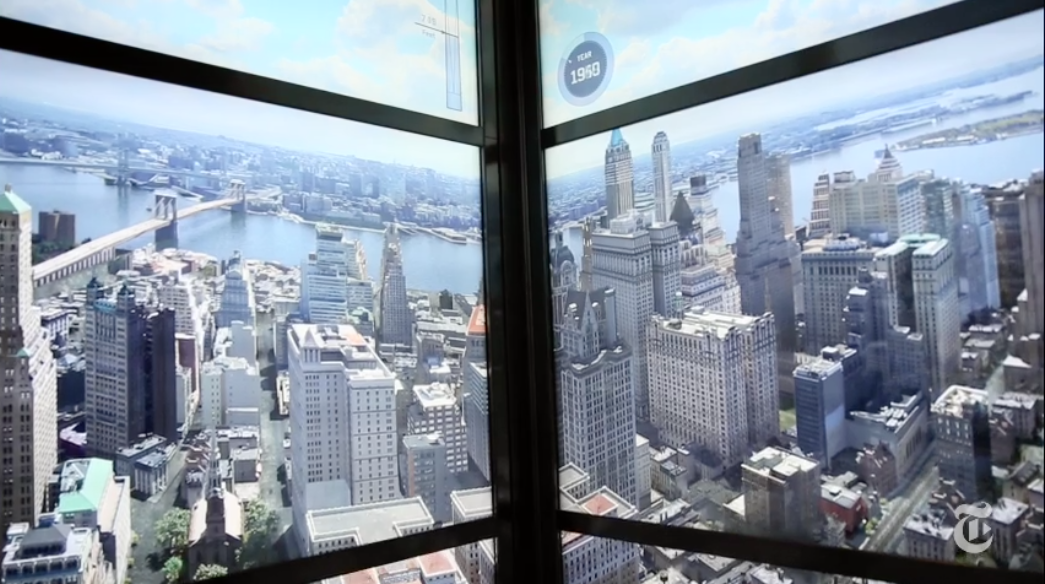
Screen shot from video of 1 WTC elevator show, stopped here at 1950. (1WTC/NYT)

Screen shot from video of 1 WTC elevator show, stopped here at 1950. (1WTC/NYT)

Get on the elevator to the observatorium at 1 World Trade Center and you’re in for the ride of your life. Up, up, up – ascending not just through space but through time. An animated display on the walls of the elevator shows, as if through windows in one of the doomed WTC towers, how Lower Manhattan looked from early settlement days through today. At a certain late point you can briefly see the edge of the other poor WTC tower, and a momentary shiver goes up your spine.

Above, I have “freeze-framed” Manhattan at 1950, before modern architecture really began to transform a beautiful city into merely an imposing city. Of course, you can stop the video at any point you like.

After the ascent through time and space are video ads you might find interesting. The Times story accompanying the video, “On Time-Lapse Rocket Ride to Trade Center’s Top, Glimpse of Doomed Tower,” is by David Dunlop. The show will actually not begin in the elevators to the building’s observatory until tomorrow. Here is how Dunlop describes the experience:

At first, one feels enclosed in bedrock. The year is 1500 and the elevator is 55 feet below ground. As it rises, time advances. The cab seems to head skyward from an offshore marsh, a reminder that the trade center site was originally underwater.
A peaceful riverfront settlement is then seen, just before the Europeans arrive. Soon enough, the still verdant island is dotted with the steep, crow-stepped gables of New Amsterdam, as windmill vanes poke up over the treetops.

Just after the cab passes the 250-foot mark in the 1760s, during the British colonial era, St. Paul’s Chapel rises splendidly on the eastern horizon, occupying the same site it does today.

Prominent landmarks of the 19th and early 20th centuries come and go: the behemoth of a Post Office in City Hall Park; the Astor House hotel across Broadway; the spiky New York Tribune and domed New York World buildings along Newspaper Row; the Hudson Terminal buildings that preceded the trade center.

Height records are made and broken by a succession of “tallest” towers: the Park Row Building, the Singer Building, the Woolworth Building and the original trade center.

Then, the steel framework of the new 1 World Trade Center seems to assemble itself around the cab before visitors once again find themselves within an enclosed space — this time, an elevator shaft.

Hats off to the 1 WTC team for thinking this up, to the New York Times for putting this video online, and to Kristen Richards of ArchNewsNow.com for putting it on her crucial blog of international architecture news.

Posted in Architecture, Architecture History, Development, Urbanism and planning, Video | Tagged , , , , , , | 1 Comment

“Disposable Architecture”

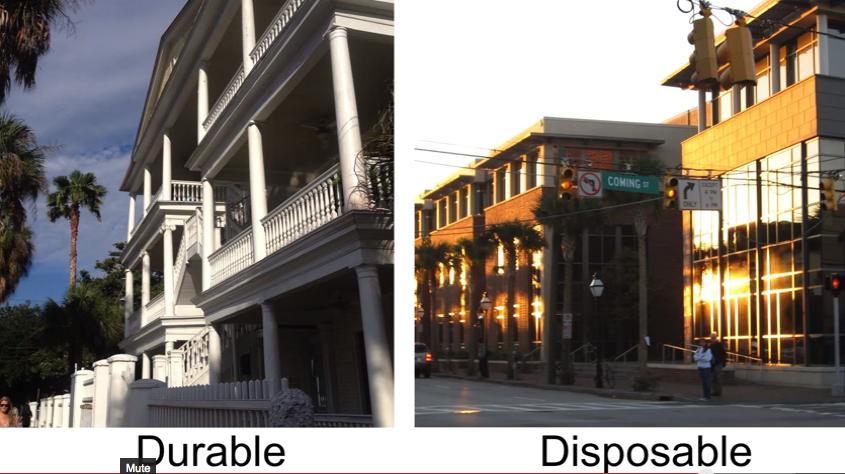
Porches on Charleston single house (l.) and buildings with inoperable windows (r.) (TEDx)

Porches on Charleston single house (l.) and buildings with inoperable windows (r.) (screenshots/TEDx)

Architect Jenny Bevan, of the Charleston firm Bevan & Liberatos, gave a TED talk called “Our Disposable Architecture” in that fair city on Tuesday. She spoke about sustainability in architecture, essentially pointing out that whatever you may think of this or that style of design, buildings erected using traditional techniques not only create beautiful buildings but lasting buildings – architecture that lasts for generations, often hundreds rather than the 40 or so years (and shrinking by the decade) timespan associated with most buildings erected in the past several score of decades. She’s in the right city for that.

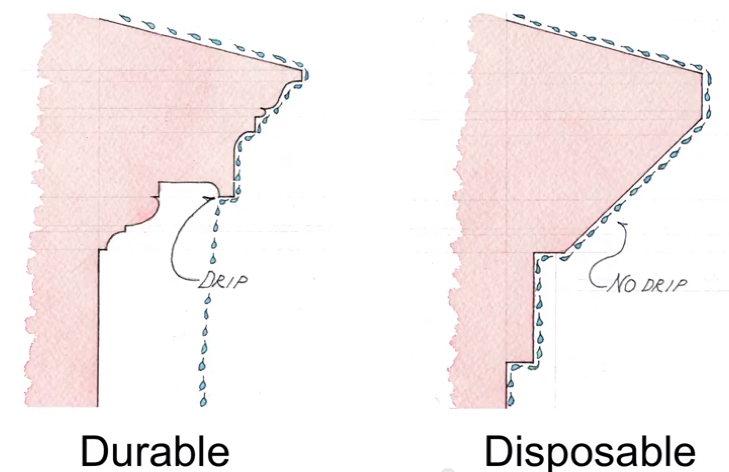
Well and poorly designed cornices.

Well and poorly designed cornices.

Bevan describes how many features considered merely ornamental (I use “merely” with a wink) play a role in adding to the life of a building and reducing its cost of operation and maintenance.

An example I often use is the cornice. A properly designed ornamental cornice directs rain to drip down parallel to the side of a building so it won’t get into joints on the way down. A poorly designed cornice – “abstract,” as Bevan put it – often leads rainwater directly into a building. It’s no wonder this building will have a shorter lifespan. Most modernist buildings have no proper cornice at all. These days, some modernist buildings seem to have roofs canted inward and downward, as if designed to collect water and funnel it right into the maintenance budget of the building owner!

In the screenshot on top she compares buildings with porches to buildings with glass curtain walls. Whereas porches – which in Charleston generally face the south and the west – bathe a building in shade during the hottest parts of the day, a glass building acts like a greenhouse, collecting heat. In the porched building the air conditioning (if it is necessary at all) works with nature to keep down the temperature and the electricity bill; the glass building forces the air conditioners to be on all day, since it is working against nature and must work all that much harder to cool  “And you’d think they would know better,” said Bevan, pointing to the glass box. “This is a college science building.” (Eruption of laughter.)

I ran an extraordinary passage written by Jenny Bevan for a Charleston newspaper in my post “What young people want,” on June 18, 2014.

Posted in Architecture, Architecture Education, Architecture History, Art and design, Development, Urbanism and planning, Video | Tagged , , , , , , , | 1 Comment

Hopeful video from ISIS?

Screenshot of Palmyra illustrating alleged ISIS video. (blouinartinfo.com)

Screenshot of Palmyra illustrating alleged ISIS video. (blouinartinfo.com)

Here is a three-minute video apparently from ISIS entitled “ISIS Vows Not To Bulldoze Palmyra Architecture (Only Statues),” with a text translated on-screen. The authenticity of this statement has not been confirmed but is considered likely. The Blouinartinfo Blogs article that contains the video also quotes a passage from an essay by Stephennie Mulder, associate professor of Islamic Art and Architecture at University of Texas at Austin, that addresses the question of how we should balance humanitarian concerns and cultural concerns. Very interesting material, and possibly hopeful within the context of an extraordinarily dangerous and distressing situation.

Posted in Architecture, Architecture History, Other countries, Preservation, Video | Tagged , , , , , , , | 2 Comments

Mystery of the High Line

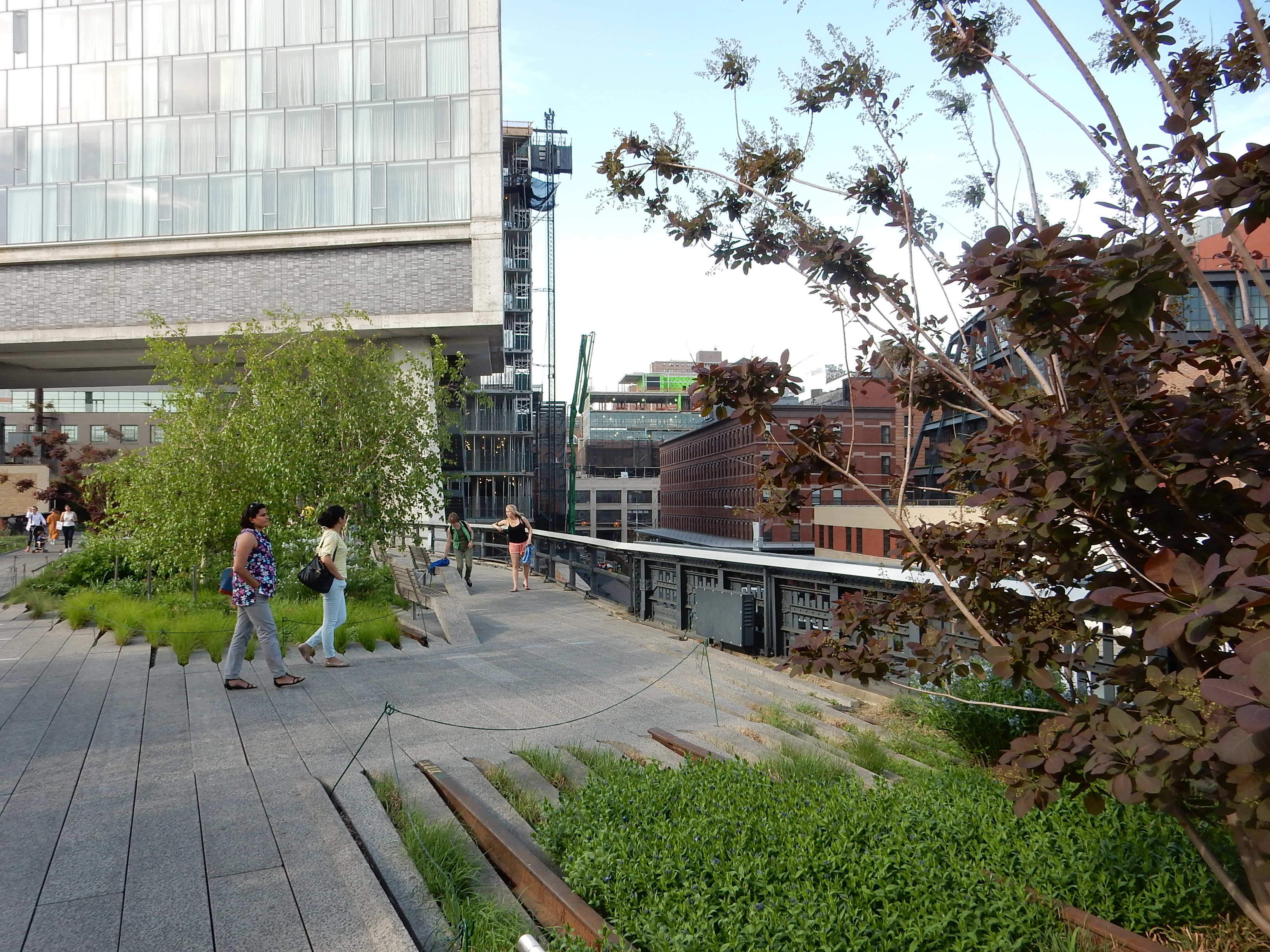
My son Billy stands next to iconic trackage at New York's High Line. (Photos by David Brussat)

My son Billy stands next to iconic trackage at New York’s High Line. (Photos by David Brussat)

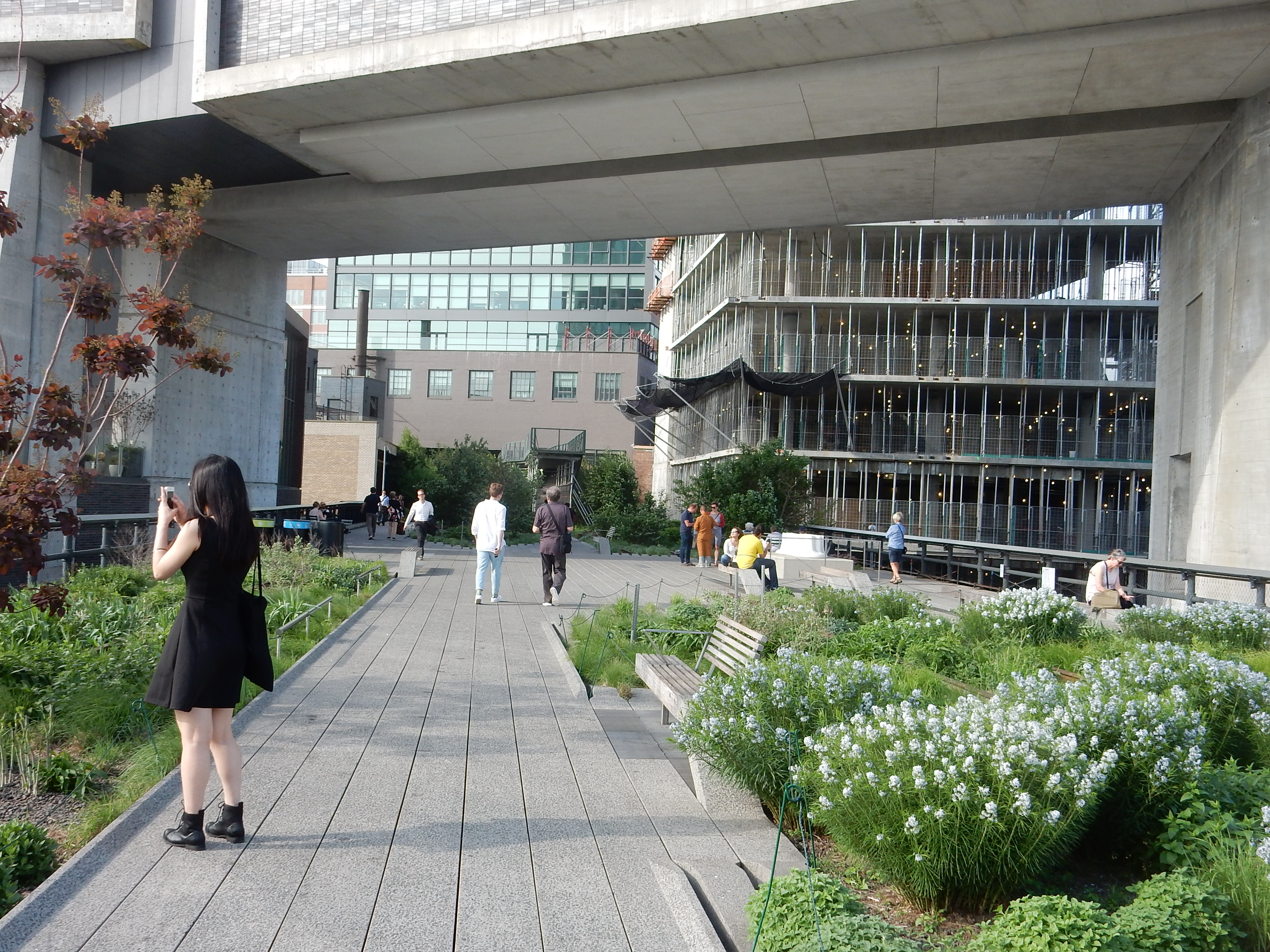
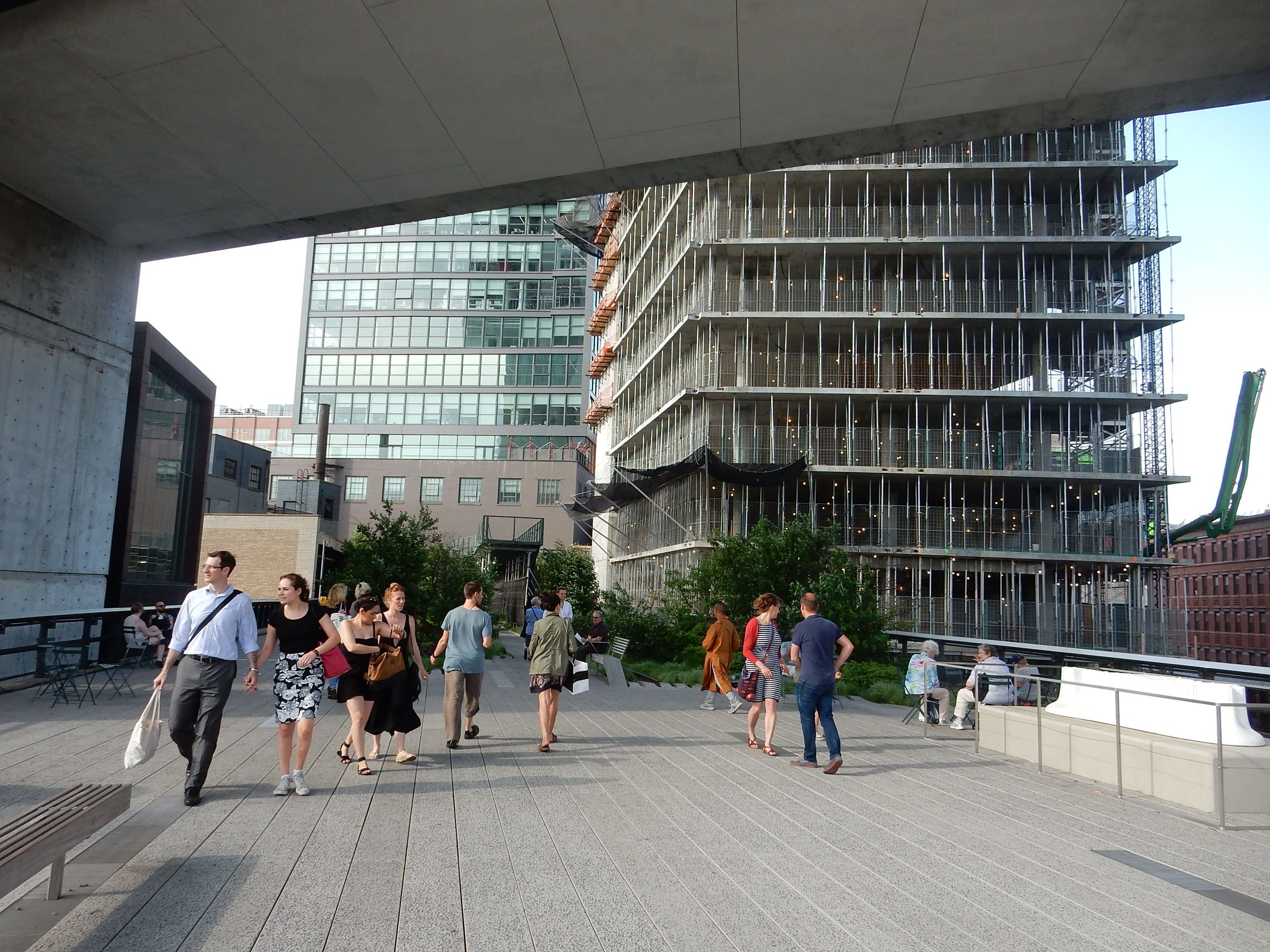
My son Billy and I visited the High Line in New York City for the first time a couple of weeks ago, and I’ve been dilatory in getting photos up. We started after sitting at outdoor seats for a while watching people enter and leave the new Whitney Museum, designed by Renzo Piano and now open at the southern end of the pathbreaking new urban park.

The idea is marvelous, of course, using an abandoned elevated rail path through the once hardscrabble architecture of the West Side and a story above its streets. Today, the park has increased local property values and the proximity of the High Line (and its sky rights) has been invaded by new modern architecture, mostly regrettable (but I repeat myself). Fans of the urban greenscape will marvel at the variety of plant life; art fans will stop and gawk at some of the art plopped along the way. Urbanists will revel in the persistence of the architecture’s obtrusiveness, whatever they may feel about its style.

It has been said that the High Line represents the apogee of Landscape Urbanism. If so, then Landscape Urbanism – a nebulous concept to begin with – certainly will never achieve the success of its rival, the New Urbanism. Reviving the principles of city, town and village design that once created great places throughout what NU’ers call the “transect” (the scale of the land’s human density) will never be displaced by a concept of urbanism that relies on substituting greenery for hardscape so long as the value of urban space continues to skyrocket. Landscape Urbanism probably reached its apogee with the creation of Central Park. Even with the High Line, LU is bound to head downward from here on out.

I wanted to visit the High Line at dusk but we were too early, and I wanted to traipse the entire way to its conclusion, but our time was limited. My thought, as we turned back toward the new museum and the High Line exit, was “Is this all it is?”

No, I missed out on a lot of it this time, but there will be next time, and maybe at dusk so that we – perhaps I should say I – can indulge my inner Peeping Tom by gaping at the human comedy behind the windows that look at the park from its edgy edges. And I’m sure that the second half of the High Line will thrill me even more than the first half did. That may not be a high bar, but there you have it, and here are some photos:

DSCN6642 DSCN6625 DSCN6650 DSCN6654 DSCN6655 DSCN6657 DSCN6658 DSCN6660 DSCN6667 DSCN6661 DSCN6663 DSCN6665 DSCN6669 DSCN6674

Posted in Architecture, Art and design, Development, Landscape Architecture, Photography, Urbanism and planning | Tagged , , , , | 9 Comments

“Tear Down This Wall!”

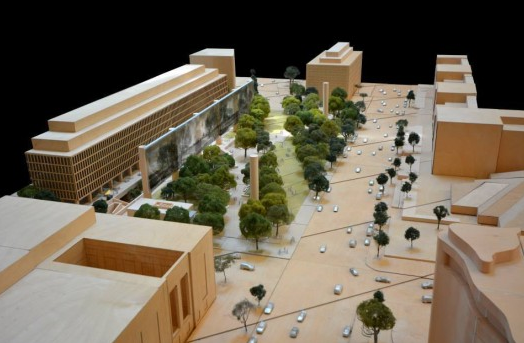
Latest version of Gehry memorial for Eisenhower, with two small

Latest version of Frank Gehry’s design for a proposed memorial to Dwight Eisenhower, with two smaller “tapestries” removed. (Gehry Partners)

Granted, and thankfully, “this wall” has not been built yet, but the design by Frank Gehry for a proposed memorial to Dwight Eisenhower should be scrapped. A new competition should be held. Kansas Sen. Pat Roberts recently took over as chairman of the Eisenhower Memorial Commission, so he’s in a good position to bring about a new competition.

Sam Roche, of Right By Ike, a group that opposes the Gehry design, has written a piece making that point for the Kansas City Star. “Sen. Pat Roberts can save the Eisenhower Memorial project in Washington,” traces how Gehry has produced a divisive design for a man whose leadership style exalted consensus, how its bloated cost of $144 million flies in the face of Ike’s “careful stewardship of the public purse,” and how Gehry’s selection, even if not downright corrupt, violated the normal open competitive process for public memorials of this sort. Roche concludes:

The commission’s radical departure from proven public process and fiscal restraint has made the Eisenhower Memorial a symbol of the bureaucratic waste and abuse of power its subject railed against. Organizers of the next national memorial in Washington — to World War I — just announced it will be designed through the usual public competition, open to anyone.

President Eisenhower deserves no less. Public competitions are standard practice because they build consensus through public participation. Already that sounds like a more fitting tribute to Dwight Eisenhower.

As things stand, the design is more about Gehry than about Ike. And Gehry has vowed to disown the project if his signature “tapestries” – huge metal scrims that resemble an old Gehry design for a parking garage – are removed. That’s how he reacted when Rep. Darrell Issa has called for their removal as a potential compromise. Congress has put a halt to funding for the memorial, and seems in no mood to reopen the spigot.

The Eisenhower family and many others have called for a new, open competition. Let’s hope that Senator Roberts sees the wisdom of such a course. Here is “A Gehryesque critique” on AIA editor Ned Cramer’s editorial, last October.

Posted in Architecture, Art and design, Development | Tagged , , , , , | 2 Comments

A street divided against itself

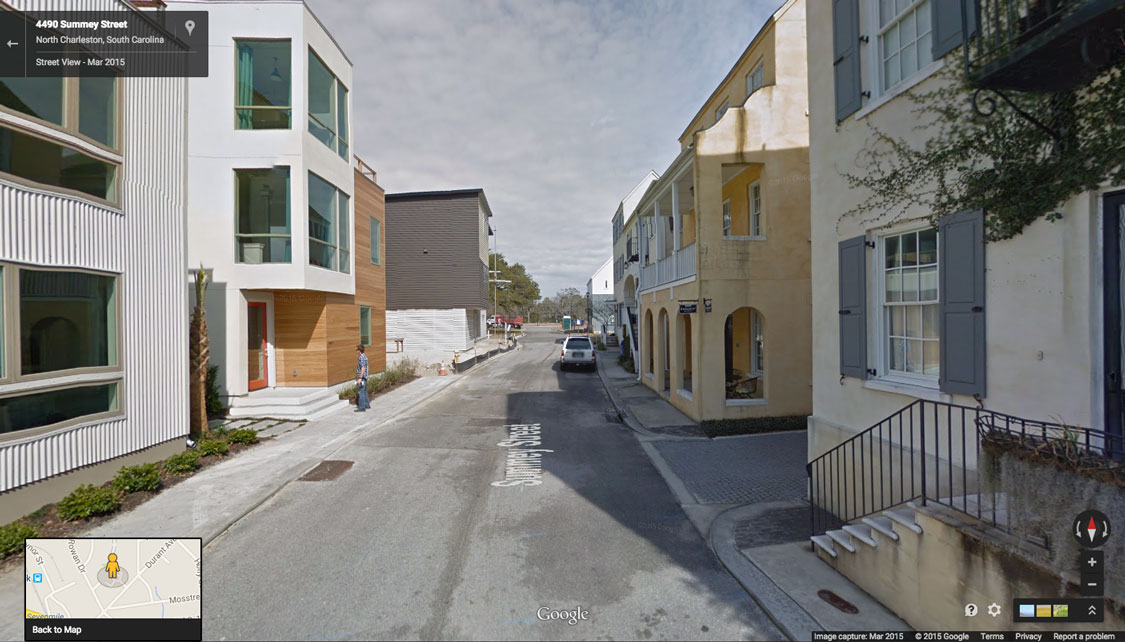
The modern and traditional architecture on either side of this street are part of the same project in Charleston.

The modern and traditional architecture on either side of this street are part of the same project.

Christopher Liberatos has posted the above image of the most oddball street. A single project, it features modern architecture one one side of the street facing traditional architecture on the other side of the street in North Charleston.

Is this some sort of cruel joke? Who would want to live here? Below is Christopher’s intriguing take on the bipolar psychology (if not psychosis) this must entail:

Take this new street. The people on the left – their view is of buildings whose owners went to the expense of creating an architecture that expresses a hopeful permanence for the community, with real stucco on masonry, quoins, arches and voussoirs, operable shutters and blinds, human-scaled multi-paned windows, expensive porches and porticos, while the people who made such an investment look out onto the houses at the left, which have great Modernist flare and are of corrugated plastic and plate-glass windows that make voyeurs out of those who happen to glance up at them.

Setting that injustice aside – who will love this street? Will people who prefer their architecture to be in styles that embrace the ongoing progress of tradition come to love this street? Will people who prefer their architecture to be rejectionist towards tradition come to love this street? Or neither?

I’m not suggesting any of this be banned, neither the styles on the left nor the styles on the right. I’m suggesting that the issue of architectural style be addressed so that said issue can inform the way we create urban ensembles. In my opinion, the street below would be better if it had either all Modernist Revival buildings or all progressive traditional ones. This street cannot be considered good simply because certain standards of good urbanism have been met.

Posted in Architecture, Development, Urbanism and planning | Tagged , , , , , , | 4 Comments

Next for the classical revival?

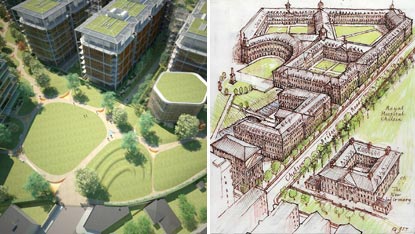
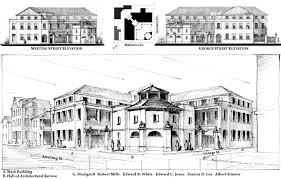
Rival plans for Chelsea Barracks development in London, circa 2009.

Rival plans for Chelsea Barracks development in London, circa 2009.

What those who favor traditional architecture should do to promote its revival has been pretty much the subject of this blog since I started it in 2009. In fact, the strategy I favor has the advantage of being under way already. It needs merely to be shifted into a higher gear.

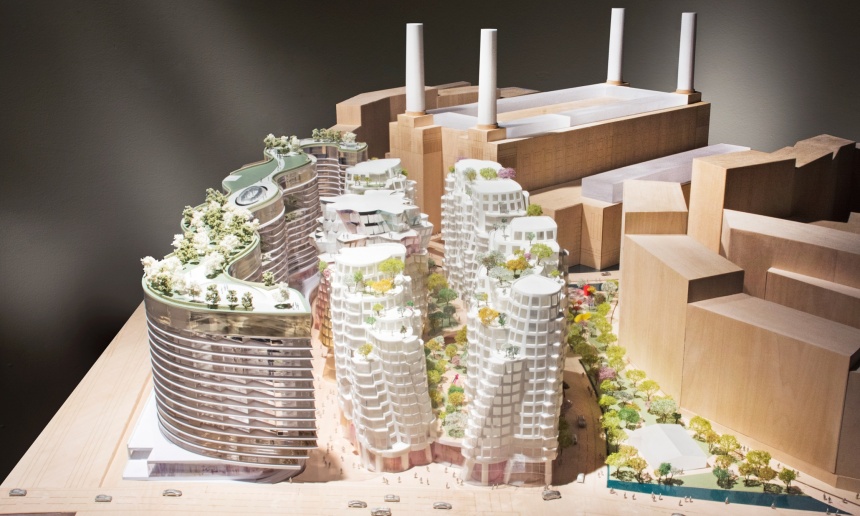
Battersea proposals by Norman Foster and Frank Gehry. (Gehry Partners)

Battersea proposals by Norman Foster and Frank Gehry. (Gehry Partners)

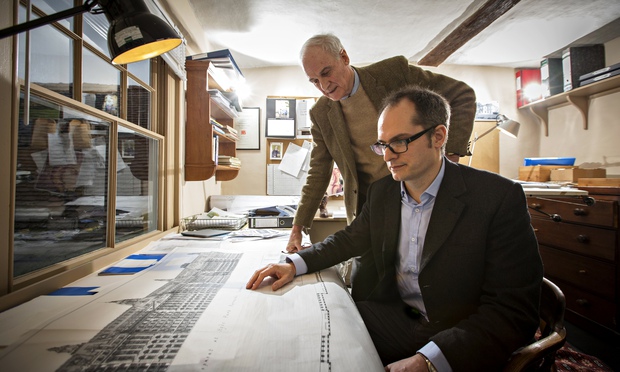
Quinlan and Francis Terry at their studio in Dedham. (The Guardian)

Quinlan and Francis Terry at their studio in Dedham. (The Guardian)

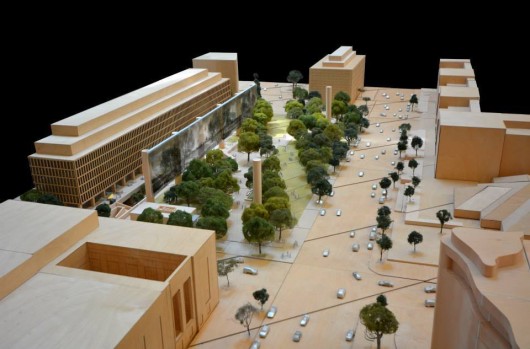
Latest version of Frank Gehry proposal for Eisenhower memorial. (archdaily.com)

Latest version of Frank Gehry proposal for Eisenhower memorial. (archdaily.com)

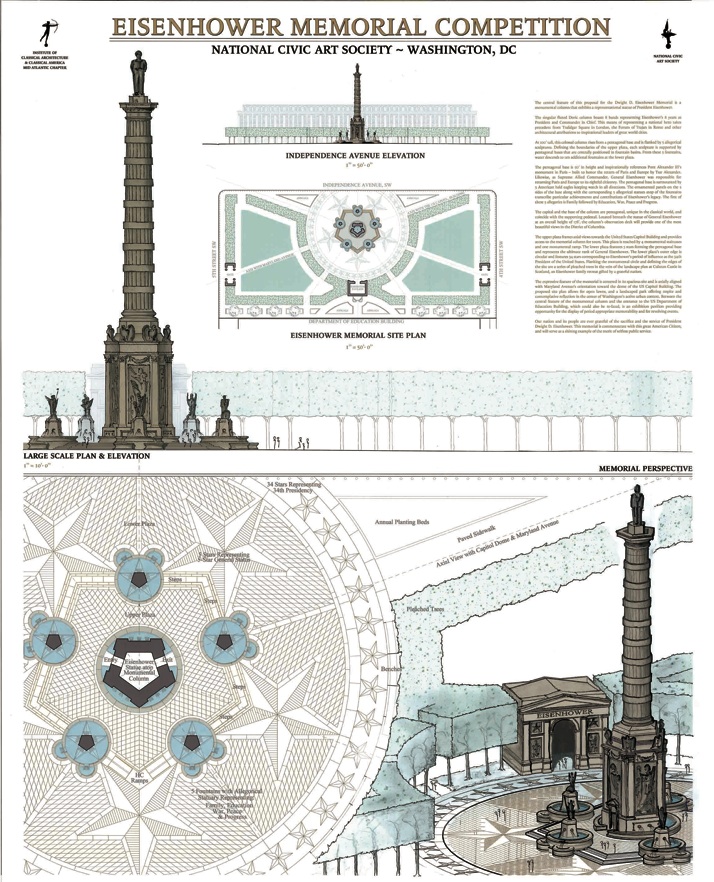
A counterproposal to Gehry design from competition sponsored by the National Civic Art Society. (theclassicalartist.com)

A counterproposal to Gehry design from competition sponsored by the National Civic Art Society. (theclassicalartist.com)

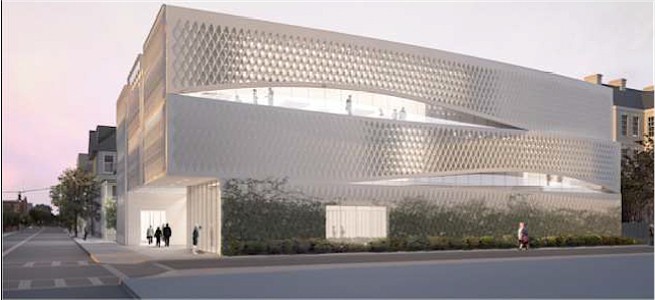
Clemson proposal for new architecture school in Charleston. (charlestoncitypaper.com)

Clemson proposal for new architecture school in Charleston. (charlestoncitypaper.com)

Counterproposal to Clemson proposal by Jenny Bevan and Christopher Liberators. (Courtesy of the architects)

Counterproposal to Clemson proposal by Jenny Bevan and Christopher Liberators. (Courtesy of the architects)

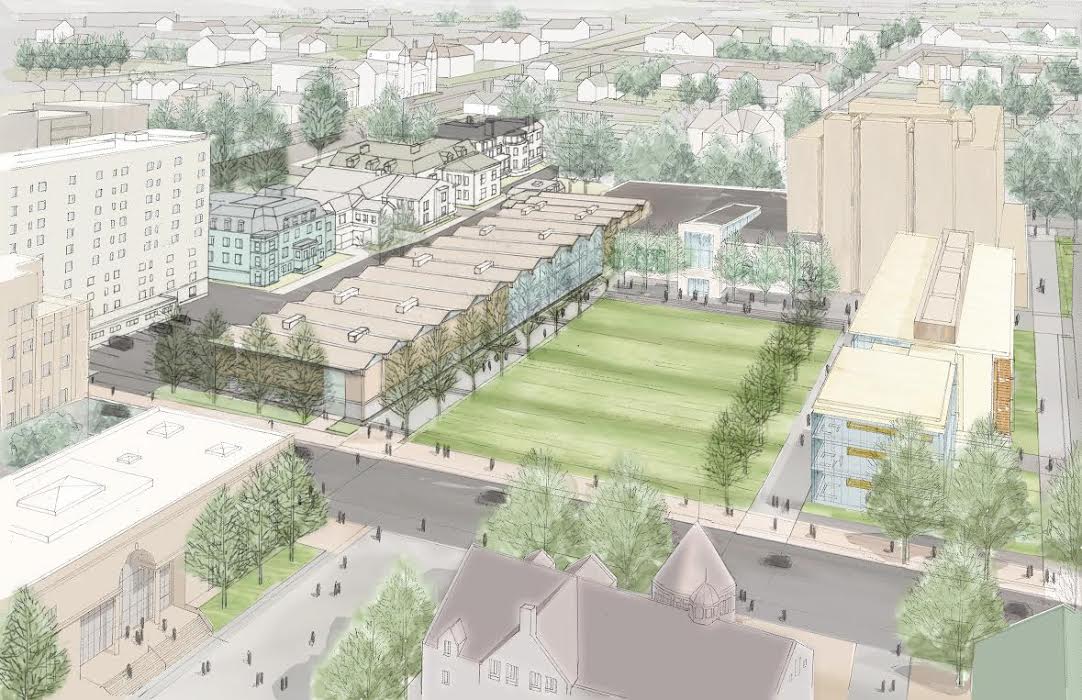
Nearest we have to an image of new Brown engineering campus. Proposed building to right of Manning Walk, involving demo of four lovely old hosues. (brown.edu)

Nearest we have to an image of new Brown engineering campus. Proposed building to right of Manning Walk, involving demo of four lovely old hosues. (brown.edu)

On Friday, I received an email that proposed using the word admirable in place of the word beauty. Then another person wrote in to defend the word beauty. Yet another person remarked that “something is emerging” in response (I think) to an email hailing a “New Classical Discourse.” I responded to all this with a relatively lengthy reply and, as I was about to sign and send, I had to take my son Billy to his school bus stop. I forgot all about my languishing contribution to the discourse. Here it is as a blog, with a few amendations:

I must say I too prefer the word beauty over admirable. Admirable is too general. That may be its allure to some – it lacks the baggage that the modernist discourse has loaded upon the word beauty. Admirable is indeed an admirable word and concept, but it cannot fill in for beauty.

The whole idea of debating over new words to promote existing ideas strikes me as typical of the sort of discourse that, fascinating as it is, keeps us little by little from taking action to bring beauty back into mainstream of practice in design and building.

It seems to me that the New Classical Discourse is also a distraction from the main thing traditionalists should be doing – pushing tradition, or classicism, or beauty, or admirability – in the forums that have the power and the responsibility to shape our built environment. Those forums are city councils, design review committees, development authorities, even the newspapers, where events at the former venues are reported.

I have broached this topic a number of times on TradArch and Pro-Urb and in my blog posts without much response. I realize what I am suggesting is difficult because it goes up directly against force of influence in the real world rather than talking amongst ourselves (in the “garden party” or elsewhere) about nomenclature, framing, etc. Again, all quite vital but secondary if the goal is to bring new traditional work into the mainstream of architectural practice and the development process.

We can use existing organizational structure to promote this strategy. Indeed, it is already begun without an organizational structure. It is the work done publicly to derail the Gehry design for the Ike memorial. It is the work done in Charleston to stop Clemson’s monstrosity and to build a more reasonable political infrastructure to oversee new development there. It is the work done by the New Urbanist movement to revive principles of community that worked for hundreds of years. It is the work done in Britain to use public opinion polls to derail a Richard Rogers project in favor of a traditional project by Terry Quinlan for Chelsea Barracks. It is the work done by SOS Paris to oppose plans to build skyscrapers in the City of Light. It is the proposal in New York to rebuild Penn Station as it was originally designed by Charles Follen McKim. It is every activist descent upon  the meetings of public agencies, every letter to the editor from someone peeved by ugly new buildings and anti-urbanist projects being developed in cities and towns around the country, every effort to mobilize opposition to the further degradation of our communities.

I think the Institute of Classical Architecture & Art would be the most effective existing institution to expand this broad effort through its 15 chapters. To the extent that people have not hit the mute button on their reaction to our increasingly ugly built environment, they favor traditional buildings and places by a large margin.

Architects and those who support them have a responsibility to the public. Roger Scruton described the public as the “great disenfranchised majority of users of architecture.”

And I think that the goal should indeed be to move forward by reaching back to the already-existing answer to the problems that have beset architecture, planning, cities and the built environment. We do not need a “new discourse.”

Yes, we should reach back to the classicism and the traditions interrupted before World War II by modernism, and move forward within that tradition, adopting to changes in program and improvements in technology and materials as architecture has always done, learning from past practice, including modernism, as architecture has only lately ceased to do.

The reply will come that young people are not with us, that they consider traditional architecture to symbolize a history that they find embarrassing. I think this impression is false, generated by those who spend too much time listening to the wind blowing through the groves of academe – where generating social angst has become a cheap alternative to seeking practical answers to the real problems of the world. It’s not that such complaints entirely lack validity – it’s just that most people in the real world beyond campus walls pay them little mind, and that discourse has little to do with architecture.

In short, I think we should concentrate on an action program seeking to push forward with an already existing ideal that answers every question.

Here are some previous posts I’ve written on this subject:

Another Chelsea Barracks, Jan. 3, 2015

How to capture territory, Aug. 22, 2014

The Providence conference, June 15, 2014

Posted in Architecture, Architecture Education, Architecture History, Art and design, Development, Urbanism and planning | Tagged , , , , , , | 3 Comments

NYT cartoon speaks for itself

Screen-shot-2015-05-23-at-11.45.46-AMHats off to Charleston architect Christopher Liberatos for posting this to TradArch!

Posted in Architecture, Art and design, Development, Humor, Urbanism and planning | Tagged , , , , | Leave a comment

St. Florian’s WWII memorial

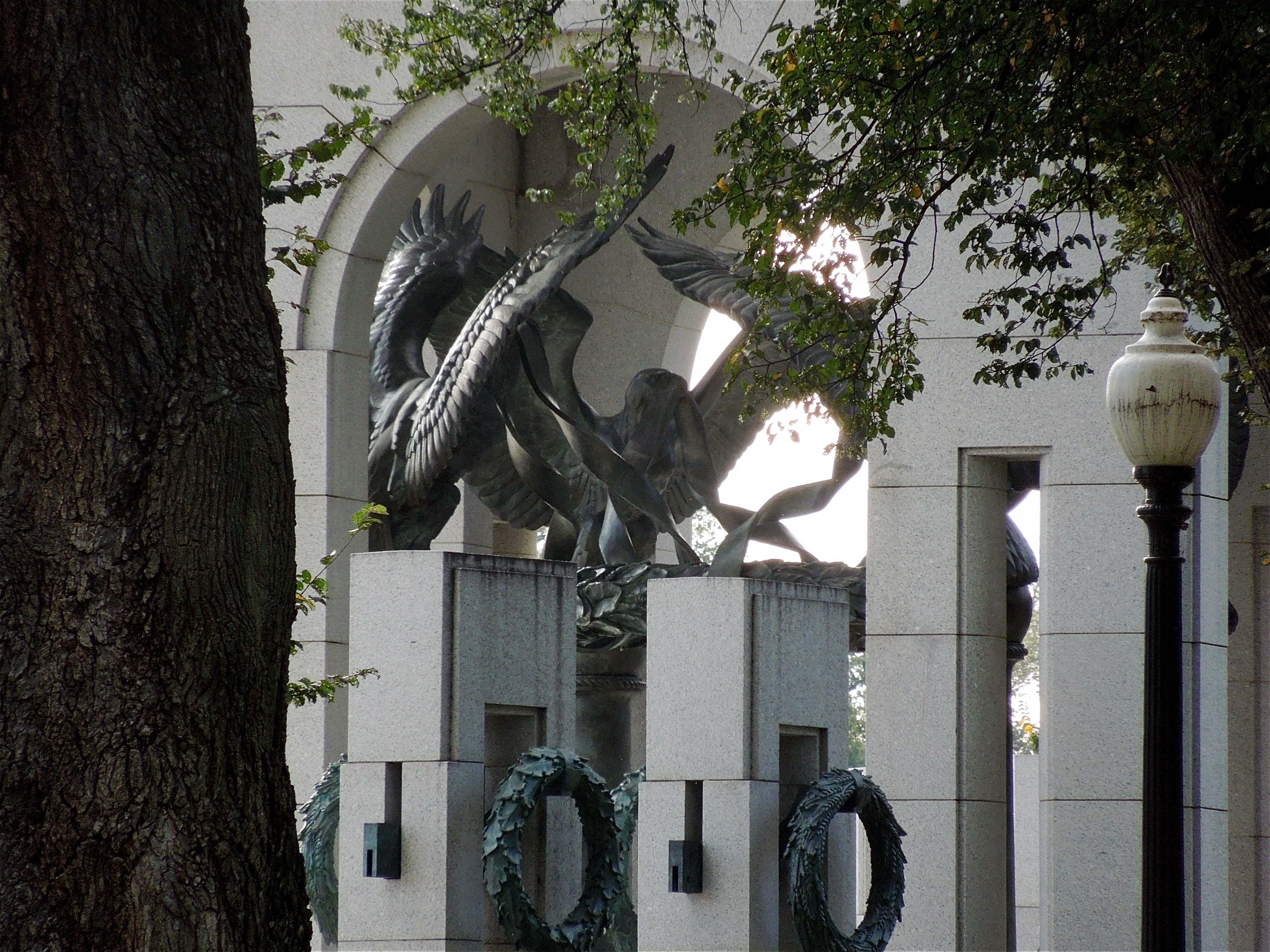
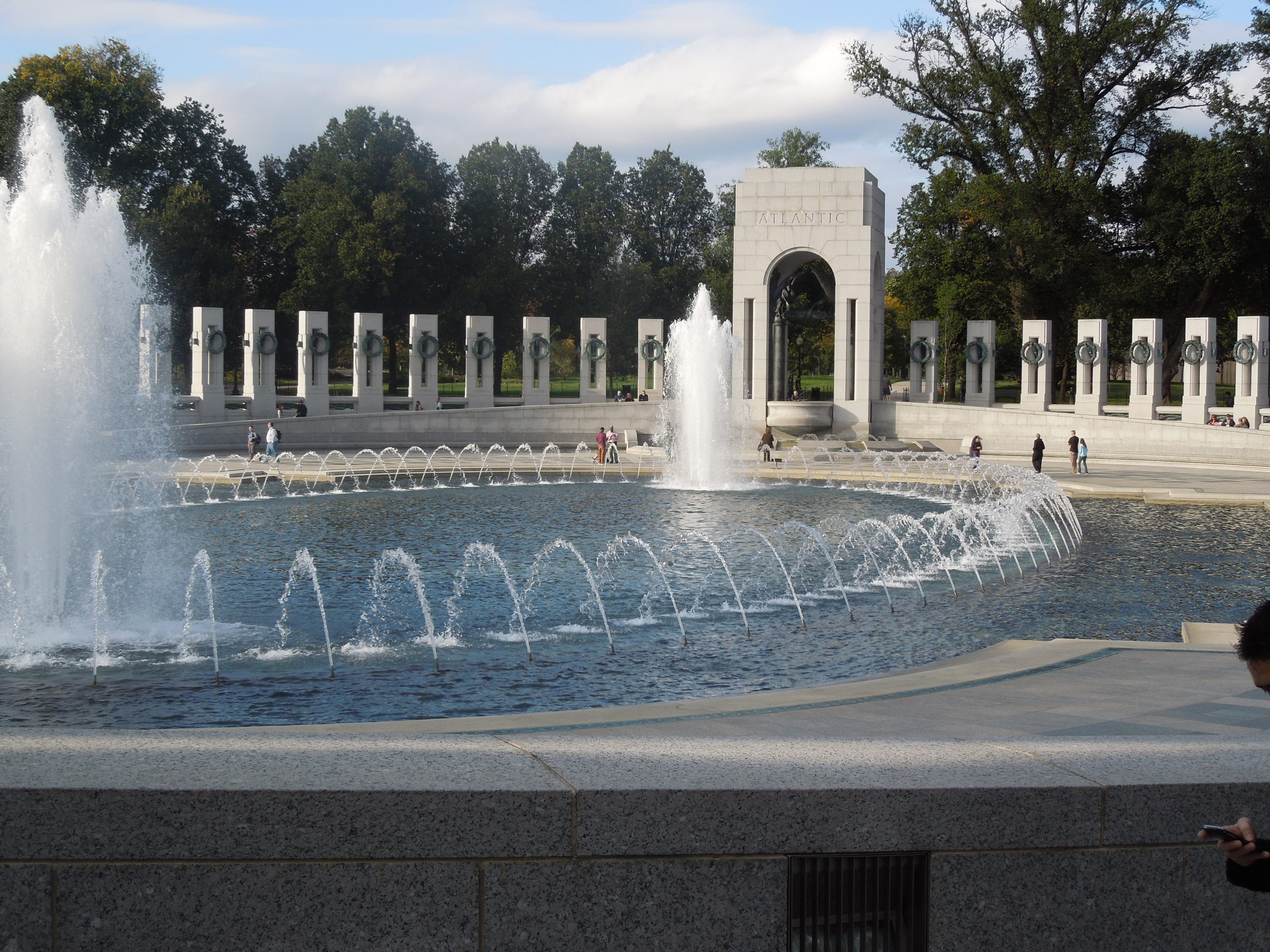
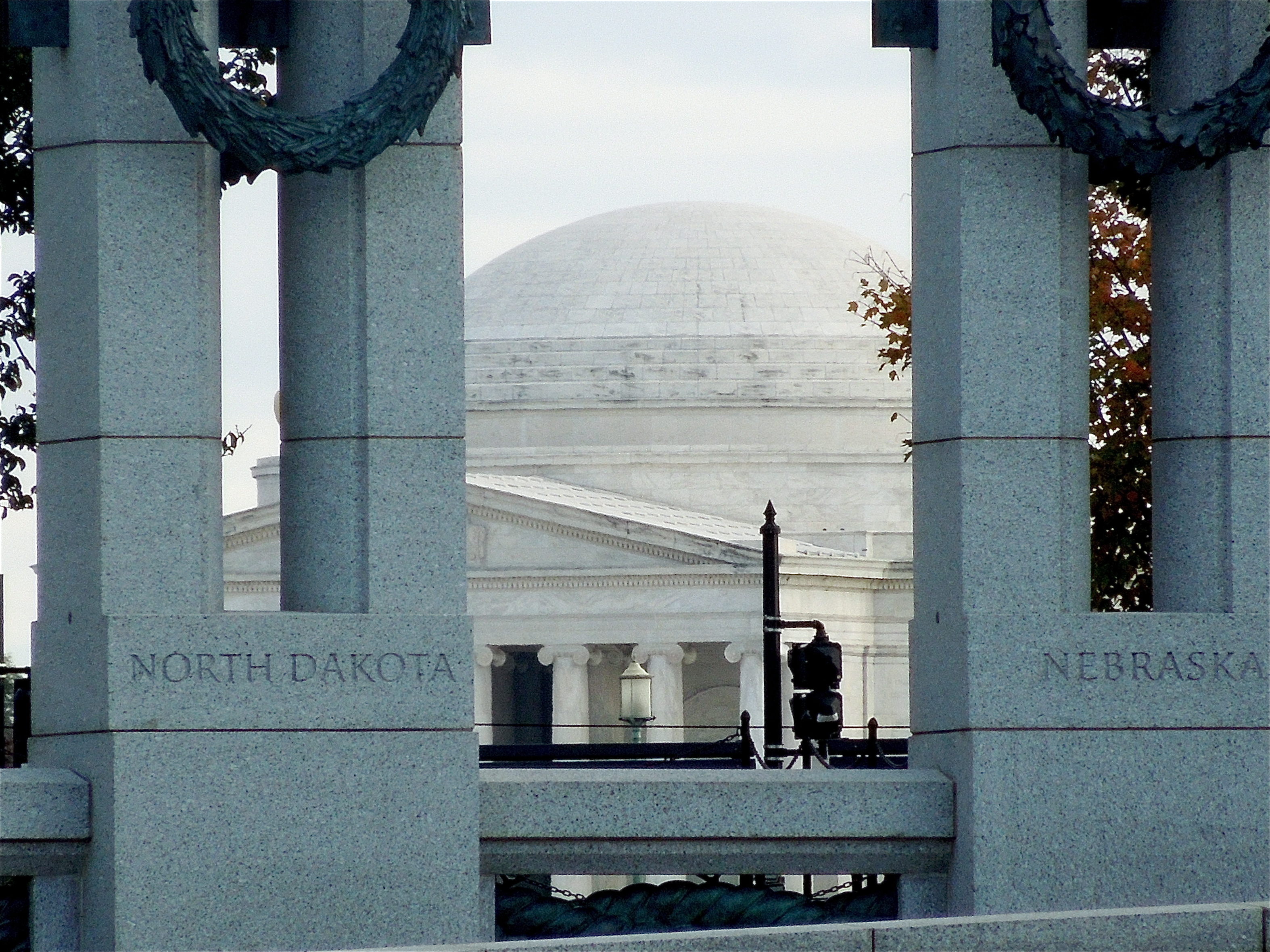
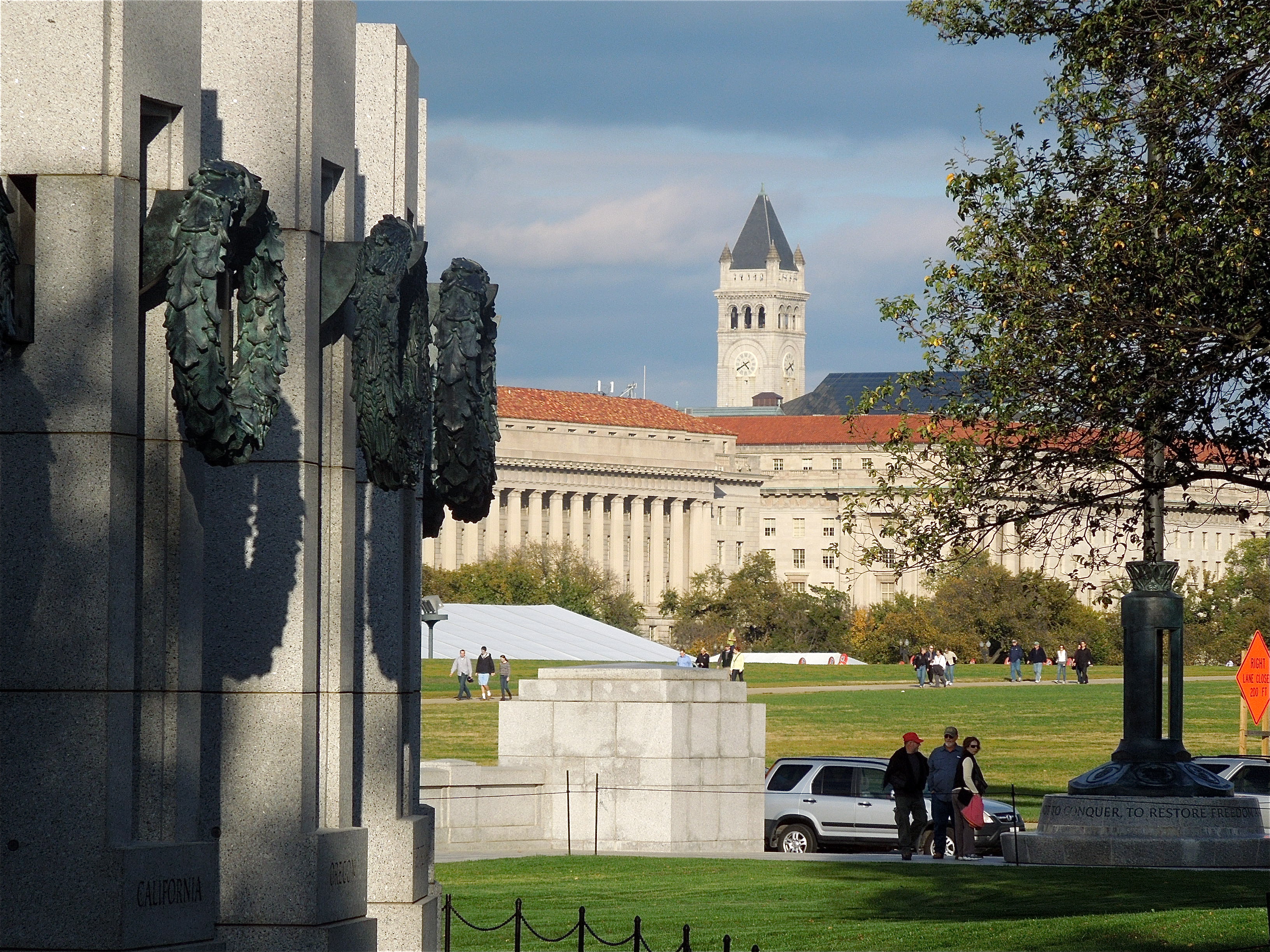
A view into the national World War II Memorial from just outside its perimeter. (Photos by David Brussat)

View of the national World War II Memorial from just outside its perimeter. (Photos by David Brussat)

It did not take long for the national World War II Memorial in Washington, designed by Rhode Island architect Friedrich St. Florian, to embed itself as a sacred place in America’s consciousness.

DSCN4790 DSCN4771 DSCN4775 DSCN4805Last year marked its first decade on the Mall. Its placement right on the nation’s front lawn between the Washington Monument and the Lincoln Memorial was controversial, and so was its design – a classical take on the colonnade of St. Peter’s in Rome with contemporary touches that have been criticized, inanely but inevitably, as recalling the grandiosity of the architecture of Hitler’s Nazi Germany.

The subject springs to mind because Friedrich – whom I’ve known since he designed the Providence Place shopping mall in the 1990s – has been invited to address the Rocky Mountain chapter of the Institute of Classical Architecture & Art, in Denver, on June 4. He will speak on the subject of the memorial’s design, whose heterodoxical character fits right into the current debate over what is and what is not classical architecture.

I am quite sure that Friedrich, who was born in Austria and has a gentle lilting accent that makes you want to cuddle up to his thoughts, will not broach that debate. He might discuss the vitriolic public controversy that greeted his design back in the late 1990s and early 2000s, but more in sorrow than in anger.

I recall with some pride my role defending his design as an architectural critic with the Providence Journal.

His original design, back in 1997, offered as part of an open design competition, featured twinned semicircular colonnades of classical fluted columns without base or capital, meant to represent lives cut off in war. The columns were later replaced by rectangular pillars upholding wreaths of oak leaves and wheat spears in bronze hanging on either side of the rectangular aperture in each pillar. Both early and final versions were unorthodox and yet distinctly classical.

The fluted columns and the grand arches anchoring each colonnade were perhaps the design’s most irksome elements to many in the architectural establishment. Some critics accused them of recalling Albert Speer.

Critics who claimed to see Hitler and Speer in the memorial’s design must also, if their absurdity is to at least have a ghost of plausibility, see the two villains in every classical building in Washington, every stripped classical building around the nation. The design is more accurately described by Thomas B. Grooms, of the U.S. General Services Administration, who wrote in a booklet about the memorial:

The architecture is a contemporary interpretation in granite and bronze of the spare Art Deco classicism of the 1930s and 1940s found throughout Washington. It is a memorial evocative of its time.

Although the jury for the competition was suffused with representatives of the architectural establishment, Friedrich’s original proposal was selected unanimously. The program for the competition insisted that respect be paid to the classicism of the Mall and the nation’s capital.

The architect would never say this, and I don’t mean it as damnation by faint praise, far from it, but his design’s victory arose largely from the weakness of its rivals, which mainly seemed to want the memorial to express, above all else and even to the exclusion of all else, a distaste for war. In St. Florian’s design, that distaste was treated as a given.

I recall being dismayed by the decision, made in Washington, to remove the fluted columns, partly because the intermediate ideas for their replacement were so lame. But I was pleased by the final design of the pillars.

At that time, the debate among classicists over what is classicism had not reached the fever pitch it has reached today, largely because of Andres Duany’s treatise – the final books of which are still being written (and whose latest draft I am editing) – on classicism. His treatise seeks to broaden the definition of classicism by including examples from heterodox classicists who were snubbed by the architectural establishment of the late 19th century. These classicists, such as Louis Sullivan, Otto Wagner and Joze Plecnik, were subsequently embraced as “pioneers” or “precursors” of the eventually (and unfortunately) dominant modernism that captured architecture’s establishment in the 1930s and ’40s and has controlled it since.

My goal here is not to recapitulate Duany’s treatise but to consider how Friedrich’s memorial design fits into its precepts. It is undoubtedly heterodoxical, but it doffs its cap with such clear regard to classicism’s Vitruvian canon that, to me, it seems almost the definition of what is needed to expand that canon without undermining it.

I wish I were able to fly out to Denver to attend Friedrich’s speech. I had drinks with him last week at the Eddy in downtown Providence and never got around to asking him what he was going to say. But I’m sure it will be a treat for Rocky Mountain classicists, especially those who are familiar with Friedrich’s compelling design for what has become one of Washington’s most monumental experiences.

Posted in Architecture, Art and design, Landscape Architecture | Tagged , , , , , | 2 Comments