Shots of China, Bhutan

The Bund, in Shanghai. (All photos by Michael Gerhardt)

The Bund, in Shanghai. (All photos by Michael Gerhardt)

Monday I was invited for a sail out of the Bristol Yacht Club with Michael Gerhardt, recently the temporary director of the Providence Athenaeum, and his friend Ken Gaus. The day was lovely and the wind was low – at least to start – and so the conversation got around to places we’d been to. I asked Mike to send me some shots of the recent trip he and his wife Doree took to Asia, and here are a few of them, starting in Shanghai, then Beijing, Tibet and Bhutan (actually, a couple of trips overlap in this series):

cwvDm9asA_Lw9YsGTQNy8vW7Zxw

cwvDm9asA_Lw9YsGTQNy8vW7Zxw-1

cwvDm9asA_Lw9YsGTQNy8vWzhgo-2

cwvDm9asA_Lw9YsGTQNy8vWzhgo-3

cwvDm9asA_Lw9YsGTQNy8vWzhgo-4

cwvDm9asA_Lw9YsGTQNy8vWzhgo-5

cwvDm9asA_Lw9YsGTQNy8vWzhgo-6

cwvDm9asA3Lw9bOGAfl5esWDJpQ

cwvDm9asA_Lw9YsGTQNy8vWzhgo-7

cwvDm9asA_Lw9YsGTQNy8vWzhgo-8

cwvDm9asA3Lw9btnAfl5esWDJoI

cwvDm9asA_Lw9YsGTQNy8vW7Zxw-4

cwvDm9asA_Lw9YsGTQNy8vW7Zxw-3

cwvDm9asA_Lw9YsGTQNy8vW7Zxw-2

The last photo is of the Yangtze River. Before that is a shot of the local kids, a lovely shot that reminded me of how American kids often liven up such “boring” group photos. I wonder if the hand signals mean the same thing! I enjoyed seeing the Bird’s Nest through the fog, and I enjoyed seeing the panda between Mike and Doree’s heads. I thank Mike for sending his photos, and for inviting me to sail with him on Monday.

Posted in Architecture, Architecture History, Books and Culture, Landscape Architecture, Other countries, Photography, Urbanism and planning | Tagged , , , , , , | 1 Comment

St. Florian does Parcel 12

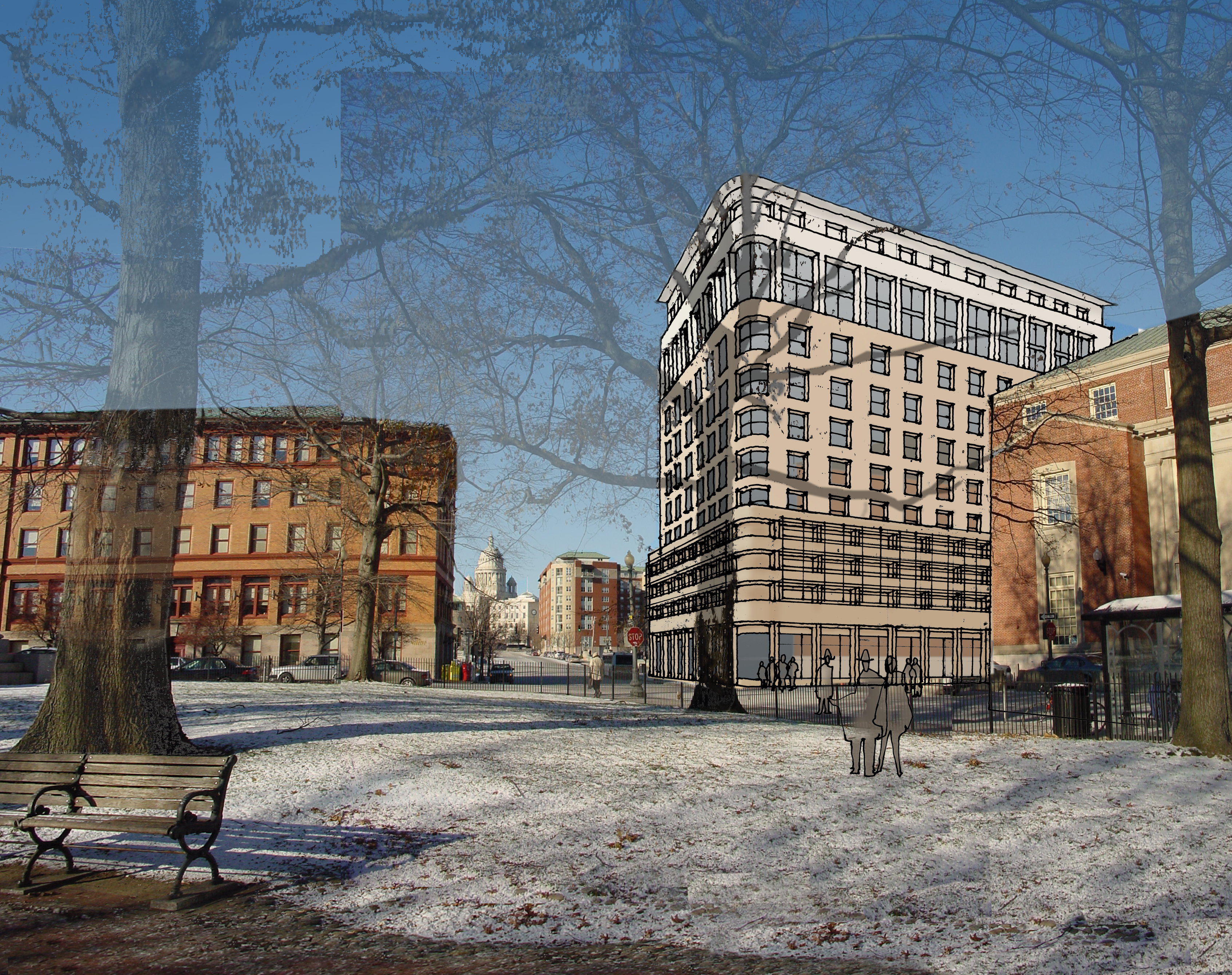
Rendering of design for Parcel 12 by Friedrich St. Florian. (St. Florian Architects)

Rendering of design for Parcel 12 by Friedrich St. Florian. (St. Florian Architects)

Disappointment has generally reigned over the proposal by First Bristol to erect a hotel on Parcel 12 in downtown Providence. It has neither enough traditional chops nor the unabashed modernist ugliness to emerge from the slough of suburban schlock. But it has, or wants to have, the bones of a very nice building of eight stories that could fit well on that northeastern corner of Burnside Park and Kennedy Plaza.

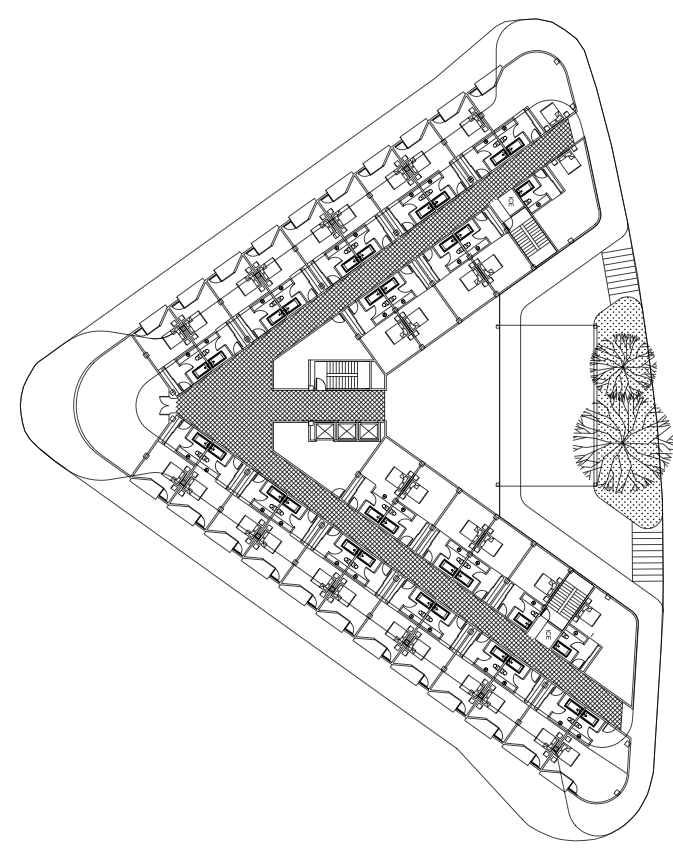
The site plan of the St. Florian design.

The site plan of the St. Florian design.

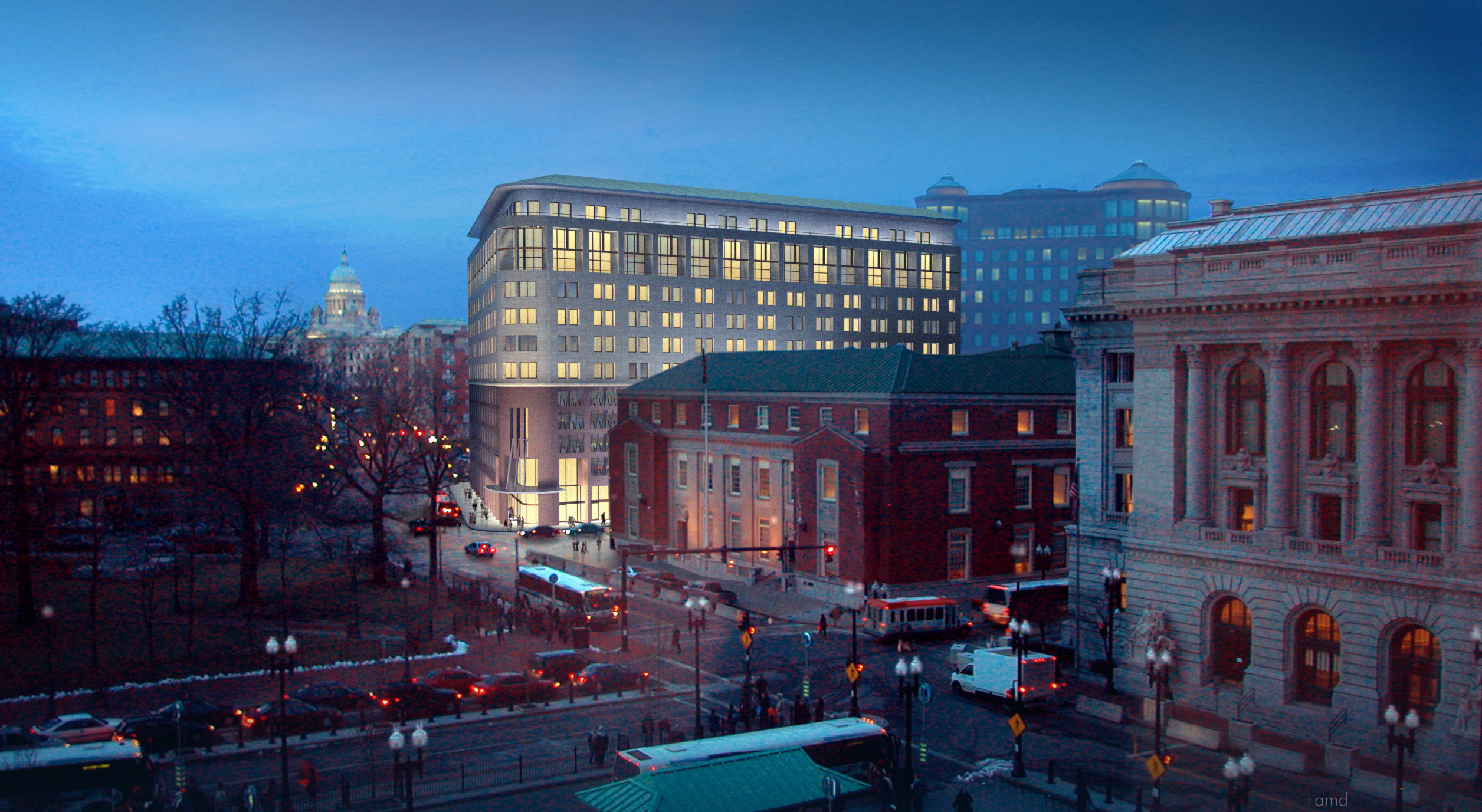
Evening view of the St. Florian proposal.

Evening view of the St. Florian proposal.

A few years ago, Friedrich St. Florian, who designed the Providence Place mall with enough traditional chops to (for a while) turn Waterplace Park into a very beautiful place (when viewed from the east), and then designed a World War II Memorial graceful enough – and traditional enough – to fit well in that sacred space between the Washington Monument and the Lincoln Memorial on the Mall in Washington, D.C. He and the late Bill Warner – who designed the city’s new waterfront in the 1990s – are Providence’s most storied architects of the modern era.

Recently St. Florian sent me a proposal he had made several years ago for a hotel and upper-floor penthouses totaling 12 stories on Parcel 12. It looks quite pleasant, but the devil, as they say, is in the details. It has a perfectly tripartite, classicizing base, shaft and and capital arrangement. Its windows seem well set back into the façades, giving the building a real sense of strength. It is hard to tell whether the upper cornice is sufficiently articulate, but at least it has a cornice. It is also hard to say whether the shaft portion of the arrangement should be topped by a cornice or, more properly, a stringcourse. And it is hard to tell why the upper three stories of the base segment should not be described as scaffolding that remains from the construction, but we are open-minded. It could be a trellis, or wrought-iron balconies. Again, hard to say for sure.

The rendering of the hotel in the evening is nice, too, but also seems to want to do more to fulfill its clearly classical ambition.

Urbanistically, it wins points for fully hugging its boundary edges along its two chief city-side façades. But the plan shows a “v” shape opening toward the east, where the Woonasquatucket River curves along the Memorial Boulevard. The legs of the v are broad enough to create façades covering more than 50 percent of that side of the parcel. Some will wonder whether there should be a greater sense of closure. Others will wonder whether the entrance is at that end or whether that is where the laundry trucks, etc., will enter the hotel. St. Florian’s client was Carpionato Properties, so it may not have mattered.

Nice drawings, Friedrich. Perhaps Jim Karam at First Bristol can present an updated proposal that will leapfrog the elegance of this St. Florian design.

Posted in Architects, Architecture History, Art and design, Development, Providence | Tagged , , , , , | Leave a comment

Lovely N’Awlins proposal

Apartment building proposed for New Orleans. (John C. Williams Architects)

Apartment building proposed for New Orleans. (John C. Williams Architects)

Michael Rouchell, a New Orleans architect who frequently participates in the TradArch conversation, sent this design of his for an apartment building there. In allure, it is far and away beyond anything that has been proposed in Providence for decades. Rouchell said the design was about to go before the Historic Districts Landmarks Commission. I wish it luck!

Anyway, the design prompted a discussion of design review, and someone recalled having overheard the topic discussed at a party by some modernist architects, of the sort who always value novelty over beauty. They said:

Design review is corrupt because citizens on a design review board are effectively bribed by lowbrow but likeable buildings. In other words, all an architect has to do to bribe design review is to offer an attractive building.

My source marveled at the idea that “the attractiveness of the building is itself a corrupt inducement, so lay citizens shouldn’t be allowed on design review because they have a conflict of interest if someone proposes a ‘superficially attractive’ building.”

I guess design review in New Orleans is different from design review in Providence, where the appointment of a review-board member who might be swayed by the attractiveness of a proposed new building is simply inconceivable.

Posted in Architects, Architecture, Art and design, Development, Providence | Tagged , , , | Leave a comment

“No tears for tankies”

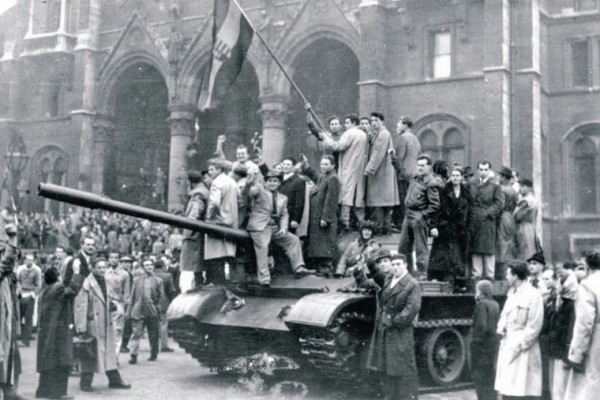
Scene from the Hungarian uprising in 1956 Budapest. (dailynewshungary.com)

Scene from the Hungarian uprising in 1956 Budapest. (dailynewshungary.com)

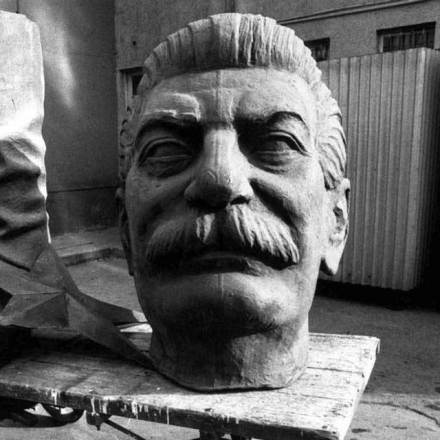
Bust of Stalin. (The Charnel-House)

Bust of Stalin. (The Charnel-House)

Here, from way out in total left field, is something completely off the radar of this blog. Yet I found it so perversely fascinating that I had to post. Last time I posted on a subject from the Charnel-House blog, blogmeister Ross Wolfe had titillated me by writing about how Le Corbusier screwed up the little hideaway of a friend by covering its walls with an obscene graffiti he considered “painting.” She was upset at him, and since Wolfe ran a photo I’d never seen of Corbu naked, I had to go with it.

That piece had an obvious link to this blog’s theme of architecture. “No tears for tankies” does not. It tracks inside lefty baseball and includes a battle on the far, far left about a term supposedly related to those few supporters of Stalin who remain. It’s very amusing and actually quite pleasant in its tone, notwithstanding its subject.

If there is no connection, however, I will have to invent one.

The debate over the definition of “tankies” has its parallel – no, not a very strong one, but bear with me – to debates over nomenclature among classicists. Here is Wolfe’s comment on the definition of tankie:

Briefly, a word on the provenance and history of the term “tankie,” for the uninitiated. Amber’s definition — “slang for Soviet apologist, or actual Stalinist” — is serviceable, but rather imprecise. “Tankie” was an epithet coined on the British left several decades ago to denote anyone who still supported the Kremlin line after the Soviet invasion of Hungary in 1956.

I am intrigued by this definition because I am a quarter Hungarian and my wife is a full-blooded Hungarian whose parents escaped from Hungary in 1956. I actually left a comment suggesting that while my heartstrings were attached to the definition above, a tankie might simply be anyone who’s “in the tank” for anyone or anything. Just as most architects today are “in the tank” for Le Corbusier and modernism. They have “drunk the Kool-Aid.”

Anyway, I have linked to the essay and I am sure it will prove a joyful romp for those of a certain mindset. The links dig you in even deeper. Enjoy!

(Here is “Shocking! Le Corbusier nude!“)

Posted in Architecture, Books and Culture, Humor, Other countries | Tagged , , , , , , | 2 Comments

Modernist GMO architecture

Field of wheat creates a landscape of beauty. (nature-hdwallpapers.com)

Field of wheat creates a landscape of beauty. (nature-hdwallpapers.com)

Yesterday evening I had the pleasure of appearing on WPRO’s Coalition Radio with Pat Ford and David Fisher (6 p.m. Saturdays, 630 AM and 99.5 FM). I was preceded on the air by Elizabeth Guardia of Right to Know RI, which supports legislation in the Rhode Island General Assembly to require labeling of GMO foods in this state. As Elizabeth and her associates filed out of the studio, I had the most alarming epiphany:

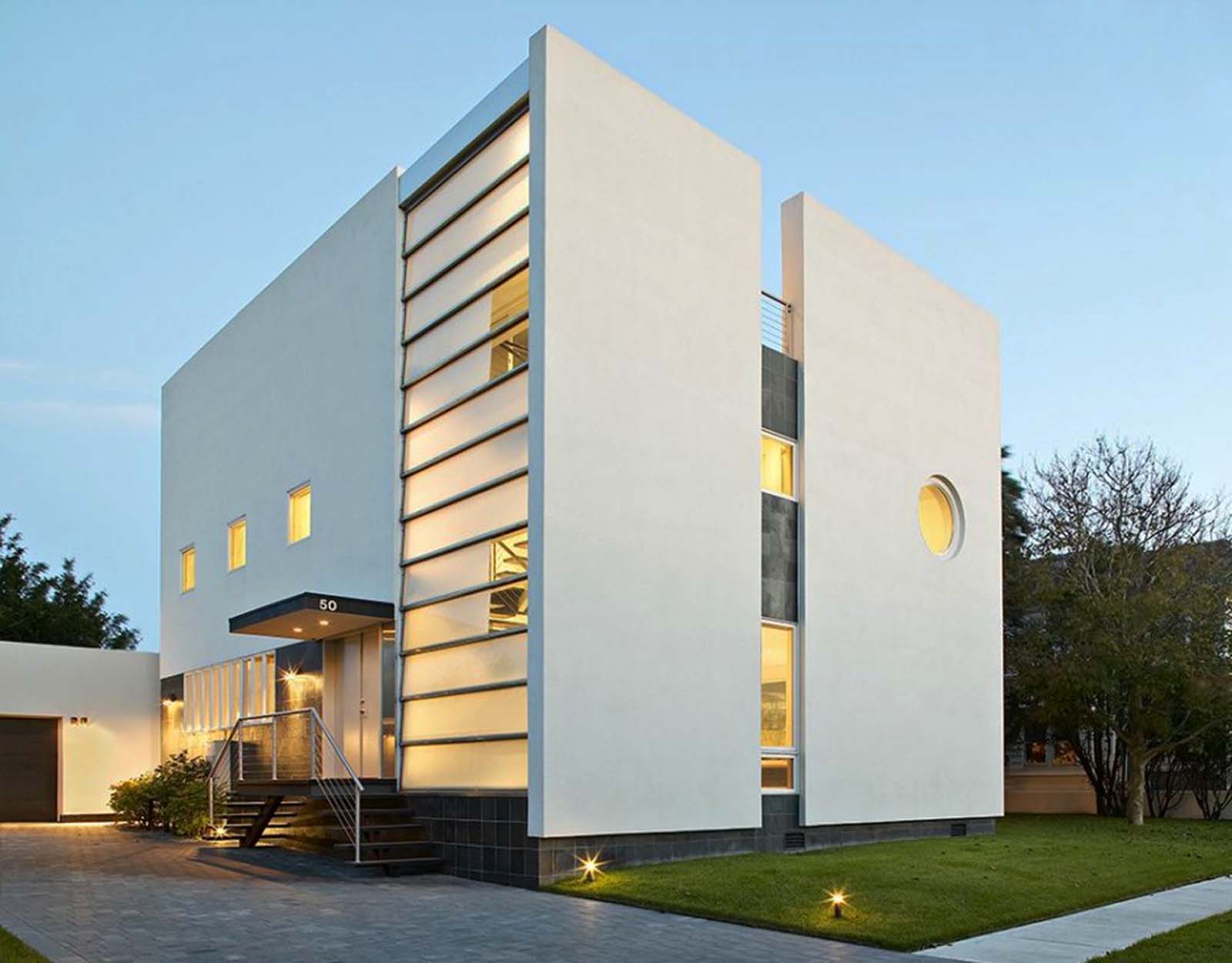
Typical modernist building. (lifepixel.net)

Typical modernist building. (lifepixel.net)

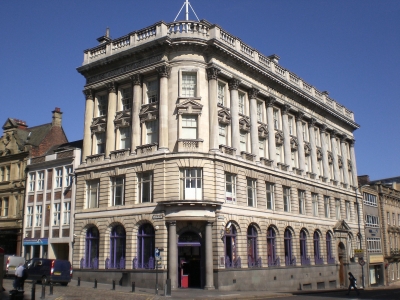
Typical traditional building. (knoji.com)

Typical traditional building. (knoji.com)

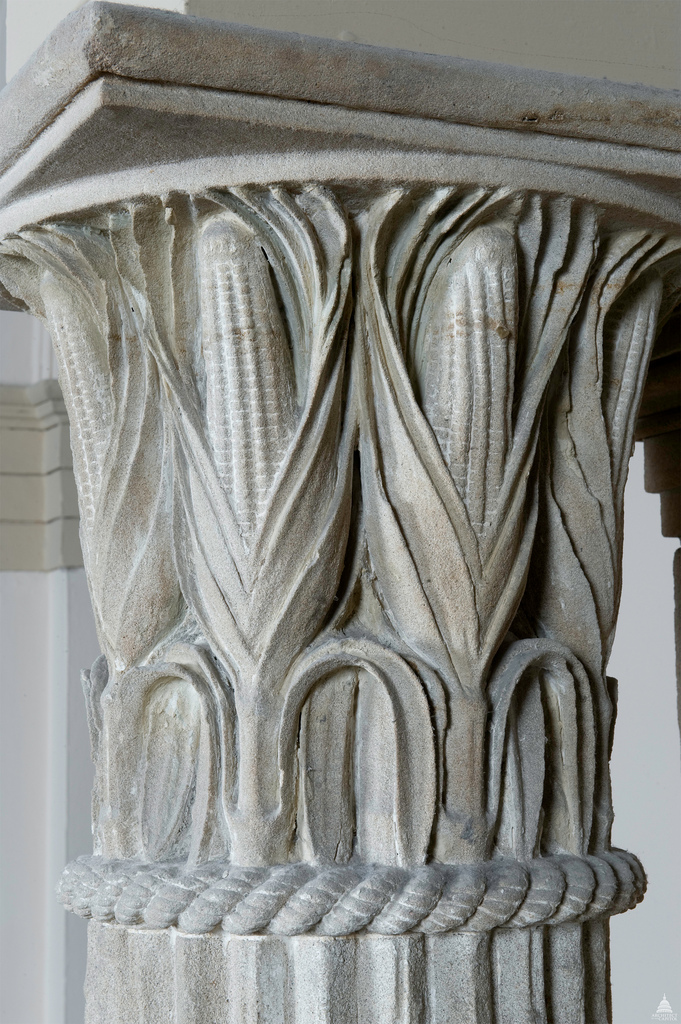
Corncob column capital at U.S. Capitol. (flickr.com)

Corncob column capital at U.S. Capitol. (flickr.com)

Modern architecture is GMO architecture.

GMOs are foods produced by manipulating the gene content of agricultural products. The acronym stands for genetically modified organisms. Instead of mating cows that produce more milk or corn that resists bugs better, as has been done for centuries, strains of corn or cattle feed that accomplishes those goals is produced in a laboratory by manipulating genetic material. GMO opponents think people have a right to know whether food they buy at their groceries was produced using this process. The big fear is that the practice, and research into its safety, has not gone on long enough to ascertain whether it carries hidden dangers.

Likewise, as I pointed out yesterday for the listening audience, modern architecture turns centuries of design practice on its head. Modern architects pride themselves on the novelty of their designs. They ignore best practices evolved over generations to produce the safest, most useful and most attractive buildings. They specialize in, and indeed revel in, the untried and (reluctant as they’d be to admit it) the untrue.

But what scientists are learning is that human neurobiological traits that hark back to our evolutionary survival of the fittest are embedded in traditional architecture. Ornament in particular reflects the information that early humans gathered from their environment to detect, often by instinct, threats ranging from poison in vegetation to tigers in trees. We do not need that sort of information today, but our brains still crave it. Architecture without embellishment literally makes us uneasy, according to such theorists as Nikos Salingaros, a mathematician at the University of Texas in San Antonio. (Full disclosure: I am editing his latest book on the biophilic healing properties in architecture.)

On the other hand, traditional architecture reflects the organized complexity of nature, and is naturally soothing and even alluring to people. Traditional architecture evolves over time in ways that reflect the way nature evolves and reproduces. The slow food movement is the cuisine equivalent of removing GMOs from buildings and the built environment. Modern architecture, alas, labels itself. Consciously and unconsciously, most people prefer traditional to modern architecture. It’s not just “a matter of taste.”

Over a quarter of a century I have blazed new trails in the art of demonizing modern architecture. In recent years, science has become a major ally in that endeavor. So I thank Right to Know RI and Coaltion Radio at WPRO for identifying another arrow for my rhetorical quiver.

Here are links to WPRO. The third link takes you to the Coalition website where you can click on Coalition #74 and hear my rant beginning at 34:00 minutes into the show:

Twitter: https://twitter.com/Coalition_Radio
Facebook: https://www.facebook.com/TheCoalitionRadio
Web: http://www.coalitionradio.us/
WPRO: http://www.coalitionradio.us/live-broadcast.html

Posted in Architecture, Architecture History, Art and design, Books and Culture, Rhode Island | Tagged , , , , , , | 4 Comments

See Paris while it lasts

The facade of La Samaritaine that faces the Seine. (Wall Street Journal)

The facade of La Samaritaine that faces the Seine. (Wall Street Journal)

Many years ago I marveled at the Art Deco building that houses La Samaritaine department store along the Seine. And I recall eating at the café behind the giant letters on top. That end of the building will survive, at least for a while. At the other end, however, a ruling to allow a tragic desecration of the famous rue de Rivoli has just been made by France’s highest court.

Rue de Rivoli. (Photo by David Brussat)

Rue de Rivoli. (Photo by David Brussat)

Design for La Samaritaine along rue de Rivoli. (SANAA)

Design for La Samaritaine along rue de Rivoli. (SANAA)

Model of renovation project. (SANAA)

Model of renovation project. (SANAA)

Court Approves Modern Building in Heart of Paris,” reads the headline in the Wall Street Journal. The headline should send shivers up the spine of all who love Paris. The ruling overturned a court order halting construction of the modernist design by SANAA, and a later one upholding that ruling on appeal. It offers a precedent that could over time wreck the beauty of the City of Light – if Parisians sit back and do nothing.

Most cities have already allowed modern architecture to wreck their beauty, doing nothing until it is too late. The evaporation of aesthetic charm proceeds slowly, until it is gone before it can be stopped. Paris, like Venice, Rome and a very small number of other cities, has expressed a more sensitive survival instinct, passing laws to slow this process. But Paris has stumbled, and it remains to be seen whether she will fall.

Our Paris correspondent, Mary Campbell Gallagher, of SOS Paris, has sent out a dire alarum. “Seven stories tall, made of undulating glass, without doors or windows, and at 265 feet long as long as a New York City block, this bizarre structure will be as alien as a spaceship in historic central Paris.”

“We’ll always have Paris,” Bogart told Bergman. Maybe. Maybe not.

To the battlements indeed!

Posted in Architecture, Architecture History, Art and design, Development, Preservation, Urbanism and planning | Tagged , , , , , , , , | 2 Comments

Xroads for Prov ped bridge?

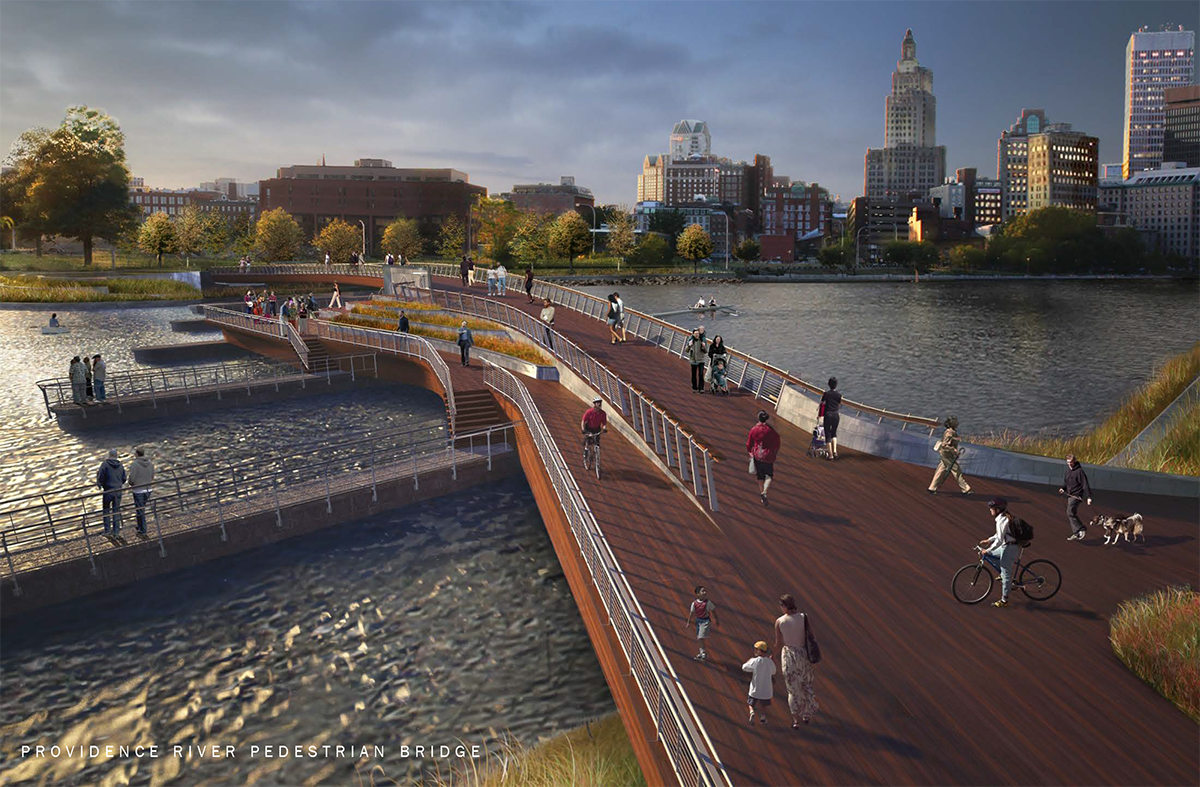
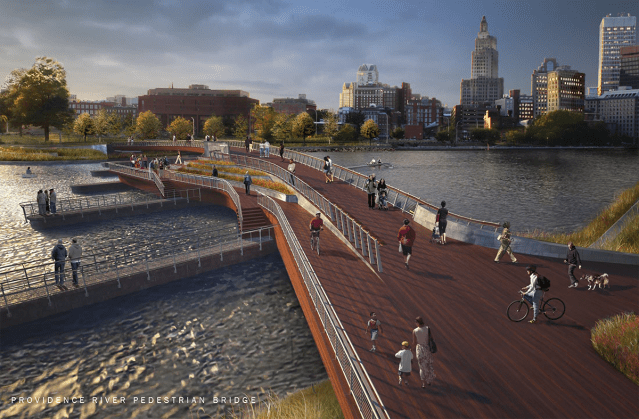
Proposed pedestrian bridge across the Providence River. (inFORM Studio)

Proposed pedestrian bridge across the Providence River. (inFORM Studio)

Pressure to delay or even kill the proposed Providence River pedestrian bridge has reached such a level that news of it has been reported in the Providence Journal. “The oft-delayed pedestrian bridge over the Providence River, to connect the city’s East Side with downtown, is in flux once again,” writes Kate Bramson in today’s paper.

Old 195 highway bridge piers mark location of proposed pedestrian bridge. (gcpvd.org)
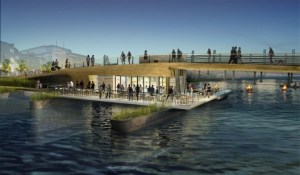
Old 195 highway bridge piers mark location of proposed pedestrian bridge. (gcpvd.org)

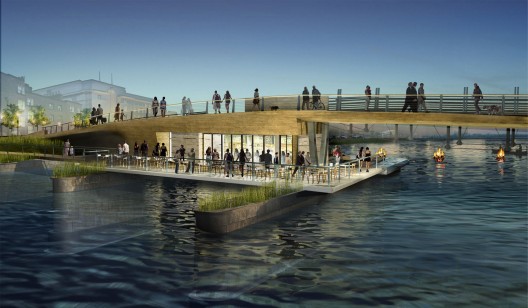
Original bridge design with restaurant. (inFORM Studio)
Original bridge design with restaurant. (inFORM Studio)

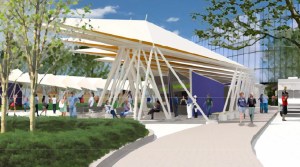
Proposed park feature. (epstein-joslin.com)
Proposed park feature. (epstein-joslin.com)

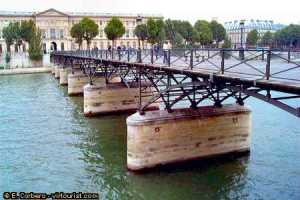
Pont des Arts, in Paris. (virtourist.com)

Pont des Arts, in Paris. (virtourist.com)

Ah, the pedestrian bridge! Its dubious fate was never hard to predict. The design was chosen in 2010 after a design competition was held to choose a more suitably “creative” bridge after a plain old beautiful bridge design – based on the Pont des Arts in Paris – was deemed insufficiently edgy for the so-called Creative Capital. Entries that looked like bridges were considered persona non grata for this competition, apparently.

The winner, by Detroit-based inFORM Studio, seemed to be very complicated – sinuous, attractive enough in its goofy way but filled with add-ons that seemed likely to force the design to give way to the second-place winner, designed in part by friends of Mayor (now consgressman) David Cicilline. He had intervened in the process, sponsored the contest and chose the winner – sowing confusion that has now come home to roost.

A bridge restaurant has been jettisoned along with other costly elements, and now the bridge is cheaper, but not as cheap as state transportation officials would prefer. So it is on the chopping block once more. “Given our current funding levels,” agency director Peter Alviti told the Journal, “RIDOT is re-evaluating this project given the availability of funding.” RIDOT has decided (doubtless with input from Gov. Gina Raimondo) to give higher priority to bridges in need of repair.

The pedestrian bridge’s western terminus would put it on land slated for a public park, land now also eyed as a stadium for the Pawtucket Red Sox. To add to the confusion, engineers fear that either end of the bridge could be submerged if water levels rise. RIDOT is now redesigning the bridge 18 inches higher than the original design.

If it is doing that, it should make sure that the riverwalk that has expanded southward over the past decade, along with that on the river’s east bank, has room to duck under the bridge’s western terminus. It goes without saying that the bridge should let boats pass beneath. Furthermore, the rivers need dredging if water traffic – especially during the dozen or so WaterFire events each year – is to remain viable (or, more precisely, resume viability). Maybe that should take priority over the pedestrian bridge, too.

The park itself has also been a study in poor planning. Ugly modernist park features have been proposed. Debates over how far away from its banks you should be able to see the river itself have contributed to the confusion. Any change in the bridge’s height will force changes in the slope of the park. The park was supposed to be done years ago. The bridge was supposed to be the first element completed in the Route 195 right-of-way. Neither feat appears likely. (That’s a good thing, actually, indicating that a handful of job-creating projects – perhaps not excluding a ballpark – may be moving forward.)

However, I’d wager that if the original lovely bridge design by Bill Warner had not been deep-sixed by Cicilline, it would be done by now. Design that exalts creativity, real or imagined, above all else brings added complexity to project engineering and financing – and, I would say, to the public support needed to help officials push expensive projects to completion. (By the way, Warner’s name should grace the Iway bridge that now carries the relocated segment of Route 195 over the Providence River.)

As matters stand, with funds scarce to repair bridges, and with two bridges available for pedestrians to cross up and downriver, we may now be seeing this benighted pedestrian bridge sinking slowly into the sunset. Given its eyebrow-raising conception, it may meet its just fate.

(I wrote of this project in my post “Pedestrian pedestrian bridge,” last Oct. 3.)

Posted in Architects, Architecture, Art and design, Development, Landscape Architecture, Providence, Urbanism and planning | Tagged , , , , , , , | Leave a comment

Updating Gehry’s Ike again

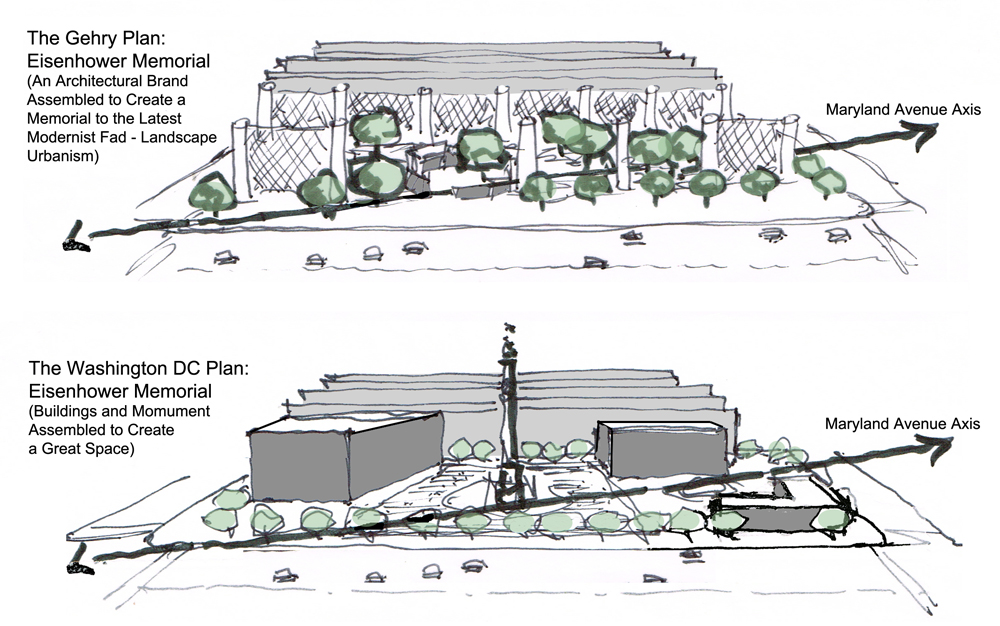
The Gehry design for memorial on top; a design by Howard Blackson. (placemakers.com)

The Gehry design for memorial above a 2012 design by Howard Blackson. (placeshakers.com)

Roll Call, the newspaper of Capitol Hill, has a detailed report out on the situation facing the proposed memorial for Dwight Eisenhower designed by Frank Gehry. “House Appropriators Call for ‘Reset’ on Eisenhower Memorial Plans” paints a picture of a memorial process in disarray, and a memorial proposal on death’s doorstep, but a memorial commission still desperately clinging to funds for its staff.

But this report also seems to contradict hopeful speculation that the commission’s new chairman, Sen. Pat Roberts of Kansas, might work to hurry the process by stopping the punch-drunk commission from dithering away the public’s money – already $60 million has been sunk. Roll Call suggests, rather, that Roberts has drunk the Gehry Kool-Aid. I wonder what his constituents think! The Eisenhower family is dead-set against the Gehry design, but that hasn’t carried any weight with the commission so far.

Roll Call notes the commission’s embarrassing private fundraising effort that has cost taxpayers $1.5 million over four years but has raised only $450,000.

It’s way past time for Congress to torpedo this clunker. Taking away the Gehry “tapestries” that mar the design would drive Gehry away from the project. That sounds like a good way to get the process back on track. By the way, check out the interesting design proposed by Howard Blackson, called “The Washington, D.C. Plan” and published by Placeshakers.

Here’s Artsy.net’s Gehry link: https://www.artsy.net/artist/frank-gehry

Posted in Architecture, Art and design, Development, Landscape Architecture, Urbanism and planning | Tagged , , , , , | Leave a comment

Liberate drones for photos

Sagrat Cor Church, above Barcelona, 20 minutes before a thunderstorm.

Sagrat Cor Church, above Barcelona, 20 minutes before a thunderstorm. (Photo by Amos Chapple)

If an argument is to be made to exempt photography from the gathering global wave of bans on the use of drones for commercial purposes, it is in “Illegal drove photos of the most beautiful places on earth,” a collection of drone aerial photography by Amos Chapple, published by Business Insider. Chapple also provides a running commentary on the challenges of drone photography. Of the photo above, for example, he notes that shots starring weather often require many retakes – impossibly costly from a helicopter.

Posted in Architecture, Art and design, Landscape Architecture, Photography, Urbanism and planning | Tagged , , , , | 1 Comment

News flash! Moi on WPRO!

radio+announcerGet me rewrite! I will be a guest on WPRO’s “The Coalition: Radio for Independent Minds” this Saturday at 6. I will be discussing … well, let’s hear it straight from the horse’s mouth: “In our second segment,” reports the website, “David Brussat, former architectural writer for the Providence Journal, joins us to talk about  the architectural integrity of the Providence skyline.”

The architectural integrity of the Providence skyline? Now there’s an issue facing the nation, nay, the world! Indeed, last weekend at the first annual Providence International Arts Festival the Industrial Trust National Bank (“Superman”) Building was lit up for the first time since its owner decided to douse the golden glow of the building’s iconic night illumination a couple of years ago. Now they’ve turned it on for the sake of art. Then the moment art goes its merry way, it’s lights out. Give us a break! Offing the Superman glow is like erecting a billboard to advertise the economic doldrums of the state of Rhode Island. Thanks, guys! Way to convince the public that your future is worth a public subsidy!

But I don’t want to telegraph my punches – indeed, I expect I’m more likely to discuss the new architecture being planned on the Route 195 land.

I haven’t been on radio since I did a series of shows for a fly-by-night radio/web operation back in the late 1990s. The studio was on Dorrance Street in the city’s second Masonic Temple building (just preceding the one that was never finished and became, 75 years later, a hotel). I hosted a show that had on air live such luminaries as Joe Paolino, Barnaby Evans, Dan Baudouin, Bob Burke. Buddy cancelled on me twice! … well, the show lasted 15 weeks. Half the time I was pre-empted by the Boston Red Sox. But at least the show was simulcast on the web. I’ve got tapes to prove it.

Now, on Saturday at 6 p.m., the torch will be lit again. Lit? Well, maybe. But no doubt a good time will be had by all. “Coalition Radio”! Dig it, Baby! Let’s rock ‘n’ roll! That’s AM 630 and FM 99.7. Tune in, turn on and opt out … oops, nah, I meant opt in. But tune in, that’s the ticket.

Here are links to WPRO:

Twitter:  https://twitter.com/Coalition_Radio
Facebook: https://www.facebook.com/TheCoalitionRadio
Web:  http://www.coalitionradio.us/
WPRO: http://www.coalitionradio.us/live-broadcast.html

Posted in Architecture, Books and Culture, Development, Providence, Rhode Island, Urbanism and planning | Tagged , , | 3 Comments