On Coalition Radio again

images-1Your roving correspondent has been asked to appear on WPRO’s Coaltion Radio once again this Saturday at 6 p.m. Also scheduled to appear is Pawtucket Mayor Donald Grebian. Two weeks ago, in my first appearance on PRO (which you can hear through a link below), we discussed why architecture is important to Providence, and how Rhode Island could improve its economy on the cheap by embracing projects with building designs people love. You know, houses that look like houses, banks that look like banks, even stadia that look like stadia. That sort of thing.

Huh? I suppose Mayor Grebian will have something to say about that. “We wuz robbed!” is a perfectly reasonable complaint on the part of Pawtucket – though the city has not been robbed yet. Personally, if the Pawsox do move from Pawtucket to Providence, I think the name Pawsox should remain unchanged in homage to the Bucket.

Here are links to WPRO and Coalition Radio. The third link takes you to the Coalition website where you can click on Coalition #74 and hear my rant beginning at 34:00 minutes into the show:

Twitter: https://twitter.com/Coalition_Radio
Facebook: https://www.facebook.com/TheCoalitionRadio
Web: http://www.coalitionradio.us/
WPRO: http://www.coalitionradio.us/live-broadcast.html

Posted in Architecture, Architecture History, Development | Tagged , , , , , | 3 Comments

King of the wild vocabulary

Davy Crockett:

CrockettMarchCoverThere is times that come upon us like a whirlwind and an airthquake; they are come like a catamount on the full jump! We are called upon to show our grit like a chain lightning agin a pine log, to exterminate, mollify and calumniate the foe … Pierce the heart of the enemy as you would a feller that spit in yer face, knocked down your wife, burnt up your horses and called your dog a skunk! Cram his pesky carcase full of thunder and lightning like a stuffed sessidge and turtle him off with a old hot poker so that there won’t be a piece of him left big enough to give a crow a breakfast and bit his nose off into the bargain … !

Melvyn Bragg, author of The Adventure of English, does not mention exactly what was on Crockett’s mind here, but I can think of certain folks who seem to insist upon ruining Rhode Island who are worthy of its sentiments.

Posted in Art and design, Humor, Rhode Island | Tagged , , , , | Leave a comment

Let Tiverton be Tiverton

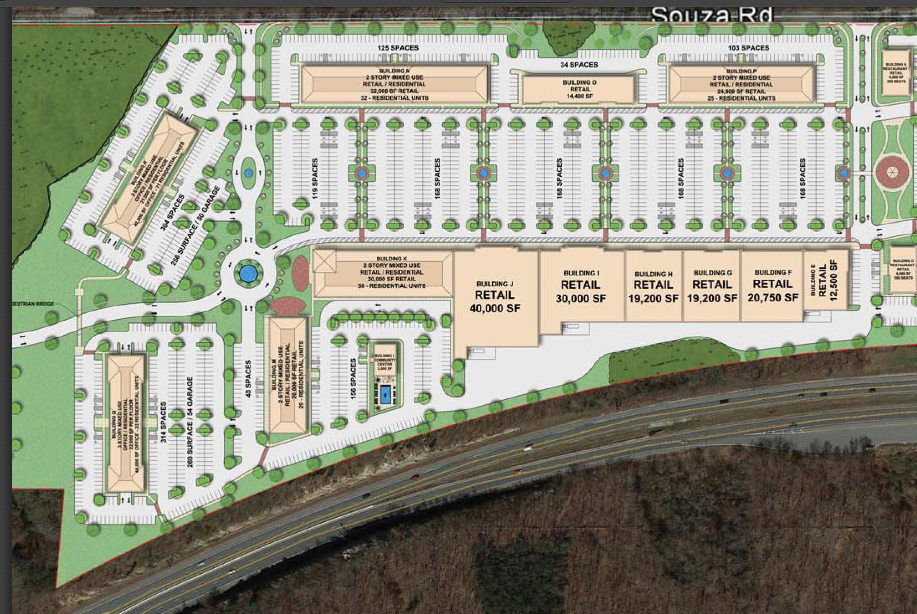
Portion of site plan for Tiverton Glen. (Carpionato)

Portion of site plan for Tiverton Glen. (Carpionato)

A very large retail and residential development proposed for Tiverton by the Carpionato Group has advanced through several stages of town review and approval without, so far as I can find online, any indication of what the place would look like. The Journal’s story today, “Big crowd, fiery debate on big development proposal in Tiverton,” had no pictures of the plan, once called Tiverton Crossings and now called Tiverton Glen. But the story suggests that trying to pull a fast one on the citizens of Tiverton is unlikely to succeed.

Carpionato is capable of pleasant enough design packages. Its proposal for a development on the east bank of the Providence River, part of the Route 195 corridor, was beautiful, but it has stalled since the 195 commission sold to a rival developer one of the parcels Carpionato had planned to build on. As for the firm’s signature development, Chapel View on Route 2 in Cranston, its renovation of old buildings of the former state Training School, including the chapel for its juvenile delinquents, was fine, but the overall project is marred by the mediocre quality of new buildings between the old ones.

Carpionato has allowed several projects to fall through, including hotels in Providence on the triangular land at the northeast corner of Burnside Park/Kennedy Plaza, and on land cleared by razing the old Produce Terminal across Route 95 from Providence Place.

What seems clear is that Carpionato lacks the developmental drive to bull its way through local opposition. That should be encouraging to citizens of Tiverton who oppose the firm’s proposal there.

Even if the project Carpionato intends for Tiverton were elegant enough to please Prince Charles, it would be a hard sell in Tiverton, a very low-key, bucolic community. The project is just too big.

Here is a presentation by Carpionato, somewhat confusing as to whether it includes any attempt to illustrate what Tiverton Glen might look like, but generally illustrative of the firm’s aesthetic tastes, which range from excellent to execrable. The apparent absence of architectural renderings for Tiverton Glen on the firm’s or the town planning board’s websites at this stage of the project should certainly raise eyebrows.

Economic development is where the rubber hits the road in a democracy – where voting most directly reflects the interests and the sentiments of citizens. People buy houses and pay property taxes in Tiverton because they like it. They have a right to crank up the drawbridge and keep it that way.

Of course, Carpionato and its supporters in Tiverton have an equal right to argue that the new revenue represented by the proposed development would be worth the erosion of the town’s ambiance, its quality of life. If they can persuade enough Tivertonians of this, then Tiverton is likely to feel the winds of change, like almost every other place.

However, the planners, the council members and the developers do not have a right to trample on the town’s comprehensive plan, which is also a product of its voters and reflects their idea of the paradise they call Tiverton. They have every right to be angry if they conclude that officials are trying to facilitate a Carpionato effort to get around the principles embodied in the comprehensive plan.

My next blog will be about Davy Crockett, the frontiersman from Tennessee who had an especially evocative vocabulary according to The Adventure of English, by Melvyn Bragg. Citizens of Tiverton might find words invented and popularized by the King of the Wild Frontier useful to deploy as the Carpionato project rolls merrily along.

Posted in Architecture, Art and design, Development, Preservation, Rhode Island, Urbanism and planning | Tagged , , , , , | 4 Comments

At cross purposes in R.I

Rendering of proposed Pawtucket waterfront development. (Providence Journal)

Rendering of proposed Pawtucket waterfront development. (Providence Journal)

What is wrong with this picture? The Providence Journal published a front-page story, “R.I. pursues the perfect pitch.” State officials seek a “‘top notch’ marketing team to set Rhode Island apart, encourage more visitors and convince people that the Ocean State is a great place to start a business.”

Then, on page 7, this headline: “Proposal for ‘premier’ property to be announced,” under an illustration (above) of an ugly development proposal for Pawtucket, along the banks of the Seekonk River. The developer is Colin Kane, the recently ousted chairman of the state’s I-195 Redevelopment District Commission.

Kane ought to be ashamed of himself. No wonder he lost his chairmanship.

Before his stint on the commission, he specialized in residential mixed-use projects on East Providence’s Seekonk embankment. Their designs generally tended to blend modern and traditional architecture – an aesthetic strategy that satisfies nobody but members of municipal design-review panels. Such compromises undermine local character just as surely as straightforward modernism, though the fingernail scraping the blackboard is not quite as painful.

Over four years, Kane presided over no shovels in the ground (except for a college project already in the works) – and no wonder, since the Developers Tool Kit his commission handed out was a guidebook of hurdles they must leap for approval to do a project in one of the worst business climates in the nation. And the things the Tool Kit suggested that a developer build were so ugly (as described just above) that it’s no wonder the various proposals for the I-195 corridor had generated little public enthusiasm.

The few proposals green-lighted by the commission so far are ugly, as is the proposed park on the west bank of the Providence River, to be linked to the parcels on its east bank by a pedestrian bridge, also ugly and now apparently on hold. The development parcels are lined with newly installed standard ugly highway cobra-head lampposts. A lovely Beaux-Arts white-elephant electrical plant near the 195 land is being rehabbed to house a nursing school – but as if to mask its beauty, an ugly garage and dormitory are proposed for the site.

What’s going on here? It looks as if the state is planning to ensure failure.

Rhode Island Gov. Gina Raimondo. (golocalprov.com)

Rhode Island Gov. Gina Raimondo. (golocalprov.com)

A new governor, Gina Raimondo, has appointed a new commission with a new chairman, a new secretary of commerce and a new slate of public subsidies to turn things around. The search for a new PR team to come up with some new words and images to sell Rhode Island is part of this latest turnaround effort. But it will amount to a mere spinning of wheels if some sort of new idea is not found to jumpstart the Rhode Island economy.

I have suggested such an idea many times over the years in my former Providence Journal column as a member of its editorial board (for three decades), in this blog for a decade and more directly in 28 weekly columns for GoLocalProv.com this past winter and spring.

The idea is to ask (not require) developers to build projects that will strengthen Rhode Island’s brand, which includes both natural and urban beauty. Most developers care little for one style of architecture over another. They just want government to be on their side, and would probably agree to a polite request from a sitting governor to build their projects in traditional designs that add to rather than diluting the state’s historical character.

So she should call up Colin Kane and ask him to have his architects give that new design for Pawtucket another shot. Make a number of similar calls to developers interested in doing projects on the I-195 corridor and elsewhere. The governor could make the development process here less grinding and generate a buzz about how Rhode Island wants to really distinguish itself from all other states, which are still building ugly and proud of it.

Why should Rhode Island continue to put its unique beauty at risk by copying other states’ mistakes in a matter so basic as the look of its built environment? Do something different!

This idea is easy, fast, cheap and requires no new legislation. Just do it, Gina!

Posted in Architecture, Architecture History, Art and design, Development, Providence, Rhode Island, Urbanism and planning | Tagged , , , , , , | Leave a comment

A high-rise schimflexicon

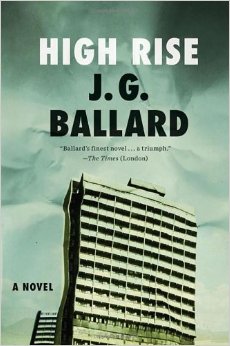
51dccScK8KL._SY344_BO1,204,203,200_H.L. Mencken assembled and published Menckeniana: A Schimflexicon, in which he collected all the abuse of his writing that he could find, mostly from newspaper reviews of his books. I have set myself a much easier but less amusing task of collecting between two covers (the beginning and the ending of this blog post) all the abuse of high-rises heaped on that building type by J.G. Ballard in his novel High-Rise, published in 1975.

He plots the degeneration into violence of the owners of what we now call condominiums in a new high-rise with balconies near London. The author is known for his science fiction, but while I found the plot intriguing, Ballard did not do a very good job of building up his rising levels of violence in plausible sequentiality. The flow of action was disconnected. His focus on three main characters was unfocused. His protagonists were not very likeable and I did not form any sort of connection with any of them. I was not sorry to get to the end of the book and, not surprisingly, the conclusion seemed anticlimactic.

The book may perhaps be said to be less a plot about events in the building than a catalogue of the feelings the building arouses in its residents. There were a number of fine passages about the ill nature of the feelings generated by this high-rise. Here are some:

  • “The ragged skyline of the city [viewed from the highrise] resembled the disturbed encephalograph of an unresolved mental crisis.” Okay, that’s a critique not of the highrise itself but of London – the London of 1975, not of today!
  • “The spectacular view [from the complex] always made Laing aware of his ambivalent feelings for this concrete landscape. Part of its appeal lay all too clearly in the fact that this was an environment built not for man but for his absence.”
  • “The cluster of auditorium roofs, curving roadway embankments and rectilinear curtain wall formed an intriguing medley of geometries – less a habitable architecture, he reflected, than the unconscious diagram of a mysterious psychic event.”
  • “Making no attempt to hide himself, Anthony Royal was watching Laing with a thoughtful gaze. As always, his expression was an uneasy mixture of arrogance and defensiveness, as if he were all to aware of the built-in flaws of this huge building he had helped to design, but was determined to out-stare any criticism.”
  • “Laing immediately recognized her as one of the ‘vagrants,’ of whom there were many in the high-rise, bored apartment-bound housewives and stay-at-home adult daughters who spent a large part of their time riding the elevators and wandering the long corridors of the vast building, migrating endlessly in search of change or excitement.”
  • “During the day, Laing … thought continually about the apartment building, a Pandora’s box whose thousand lids were one by one inwardly opening.”
  • “A new social type was being created by the apartment building, a cool, unemotional personality impervious to the psychological pressures of high-rise life, with minimal needs for privacy, who thrived like an advanced species of machine on the neutral atmosphere.”
  • “These people were the first to master a new kind of late twentieth-century life. They thrived on the rapid turnover of acquaintances, the lack of involvement with others, and the total self-sufficiency of lives which, needing nothing, were never disappointed.”
  • “Secure within the shell of the high-rise like passengers on board an automatically piloted airliner, they were free to behave in any way they wished, explore the darkest corners they could find. In many ways, the high-rise was a model of all that technology had done to make possible the expression of a truly ‘free’ psychopathology.”
  • “In his mind’s eye, [TV documentary producer Wilder] could already see a long, sixty-second zoom, slowly moving from the whole building in frame to a close-up of a single apartment, one cell in this nightmare termitary.”
  • “All the evidence accumulated over several decades cast a critical light on the high-rise as a viable social structure, but cost-effectiveness in the area of public housing and high profitability in the private sector kept pushing these vertical townships into the sky against the real needs of their occupants.”
  • “On the basis of his own experience, Wilder was convinced that the high-rise apartment was an insufficiently flexible shell to provide the kind of home which encouraged activities, as distinct from somewhere to eat and sleep. Living in high-rises required a special type of behavior, one that was acquiescent, restrained, even perhaps slightly mad. A psychotic would have a ball here, Wilder reflected.”
  • “In principle, the mutiny of these well-to-do professional people against the building they had collectively purchased was no different from the dozens of well-documented revolts by working-class tenants against municipal tower-blocks that had taken place at frequent intervals during the post-war years. But once again Royal had found himself reacting personally to these acts of vandalism. The breakdown of the building as a social structure was a rebellion against himself.”
  • “As he told himself repeatedly, the present breakdown of the high-rise might well mark its success rather than its failure. Without realizing it, he had given these people a means of escaping into a new life, and a pattern of social organization that would become the paradigm of all future high-rise blocks.”
  • “But,” reads the next line, “these dreams of helping the two thousand residents towards their new Jerusalem meant nothing to Anne.”

Anne was the architect Royal’s wife, who has decided they must move out. Fortunately for the rest of us, humans seem to fitted themselves more reasonably into tower life.

Here is a review, a little too in-depth regarding the characters and their fate for my taste, but those who want to wallow in High-Rise can do so with “Reconstructing High-Rise,” by Rick McGrath, a Ballard fan, written in 2004.

I’ve never lived in a building of more than seven stories (the Smith Building in downtown Providence). I don’t think a book, fictional or otherwise, could be written about the psychosis of its residents’ lifestyles. But then, while I lived there for 11 years, from 1999-2010, including, toward the end, three years with a wife and a year with a child, I moved out five years ago and who knows what has happened to life there since. On the other hand, I often hanker to return.

Posted in Architects, Architecture, Art and design, Books and Culture, Urbanism and planning | Tagged , , , , , , | 3 Comments

Providence’s own High Line

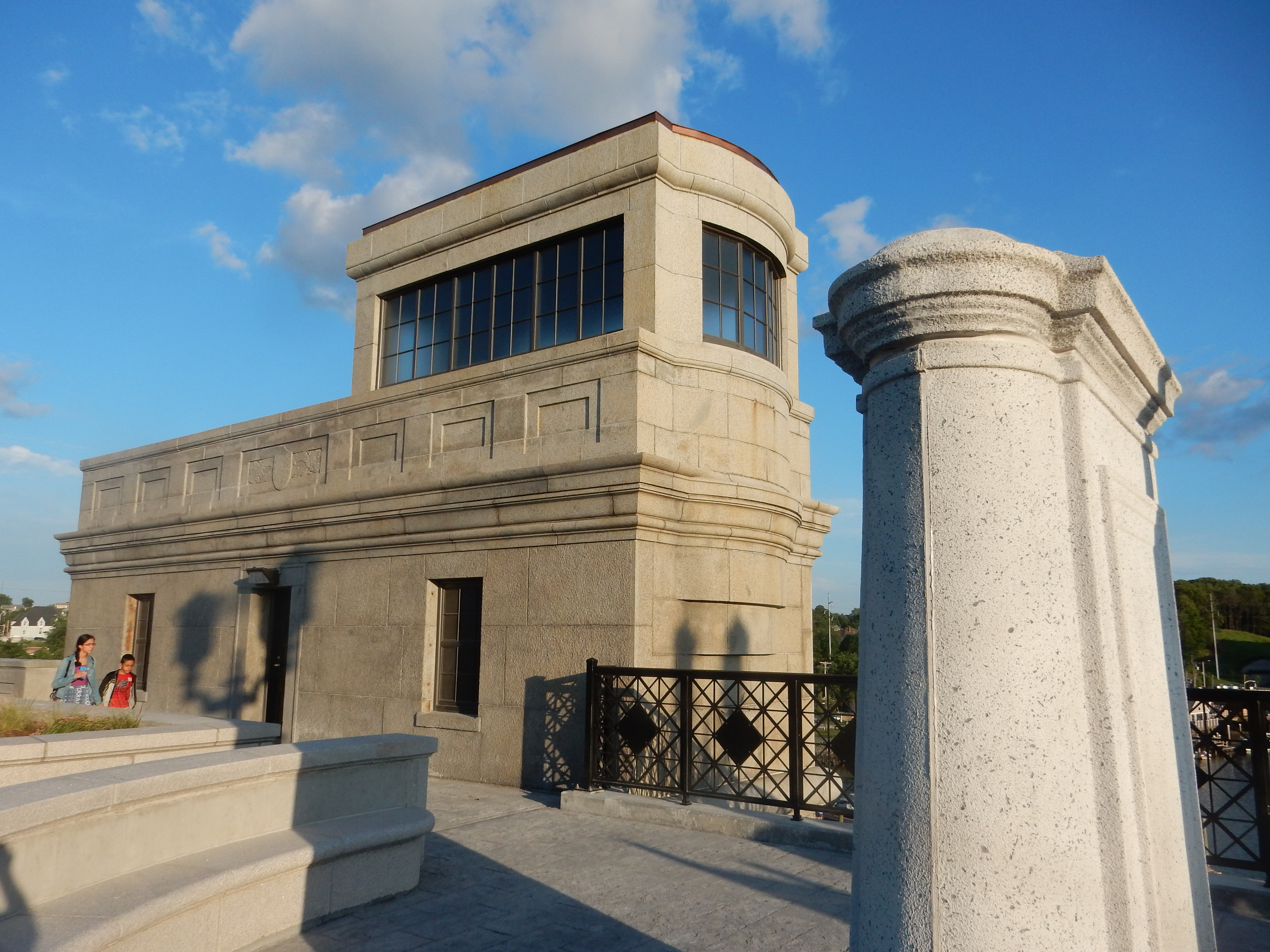
On segment of Washington Bridge, over Seekonk River, that once opened for river traffic.

On segment of Washington Bridge, over Seekonk River, that once opened for river traffic.

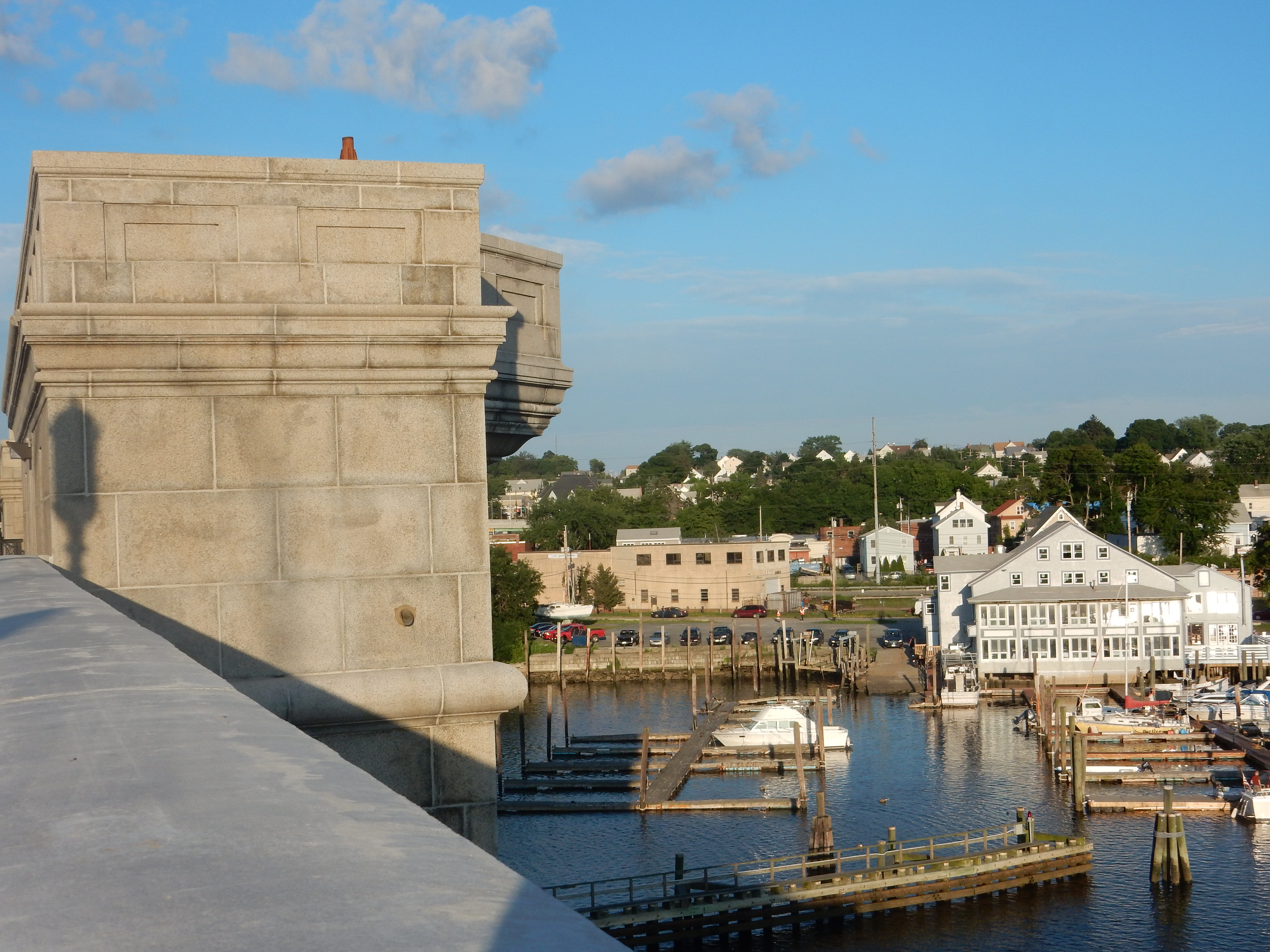
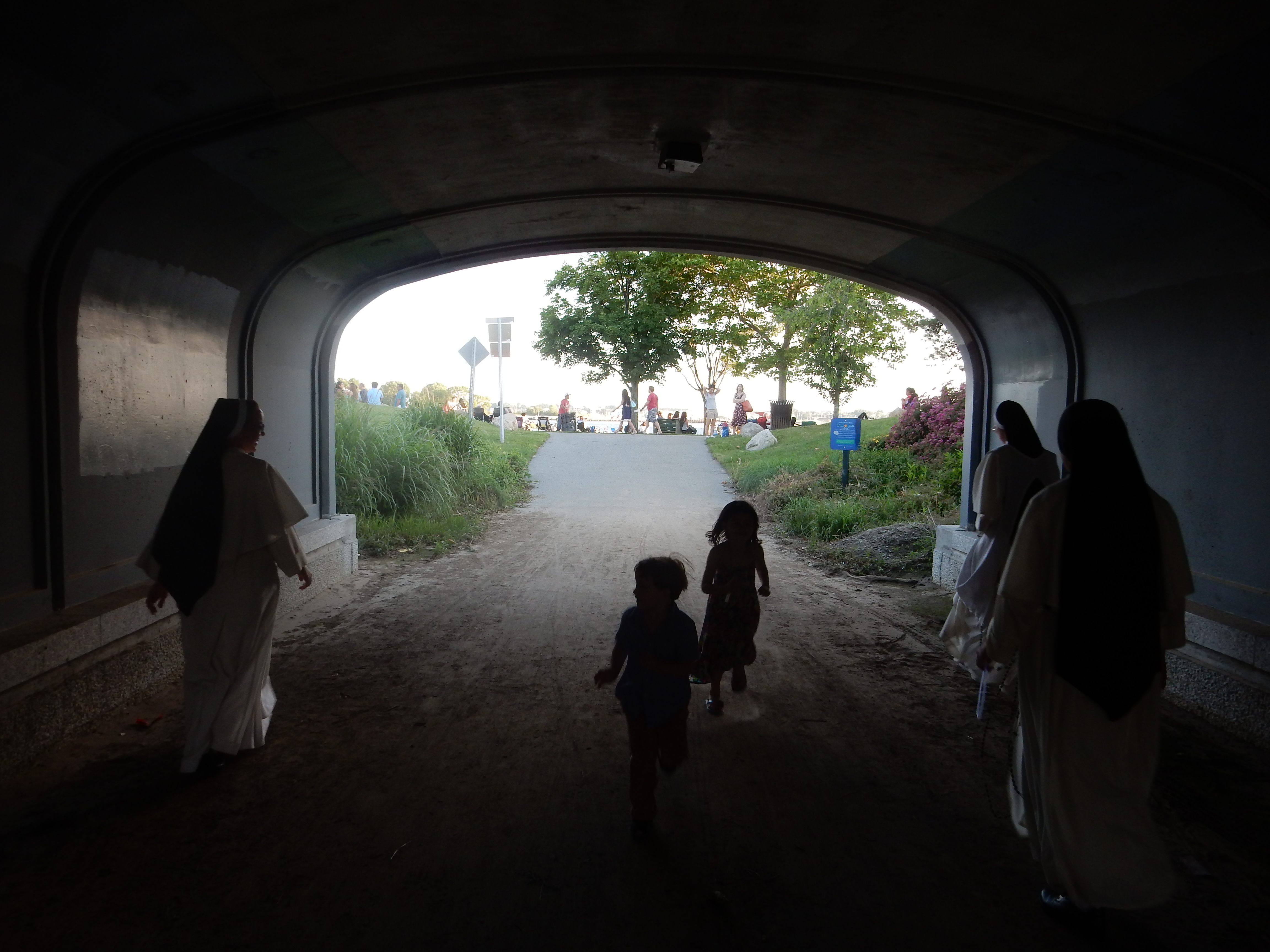
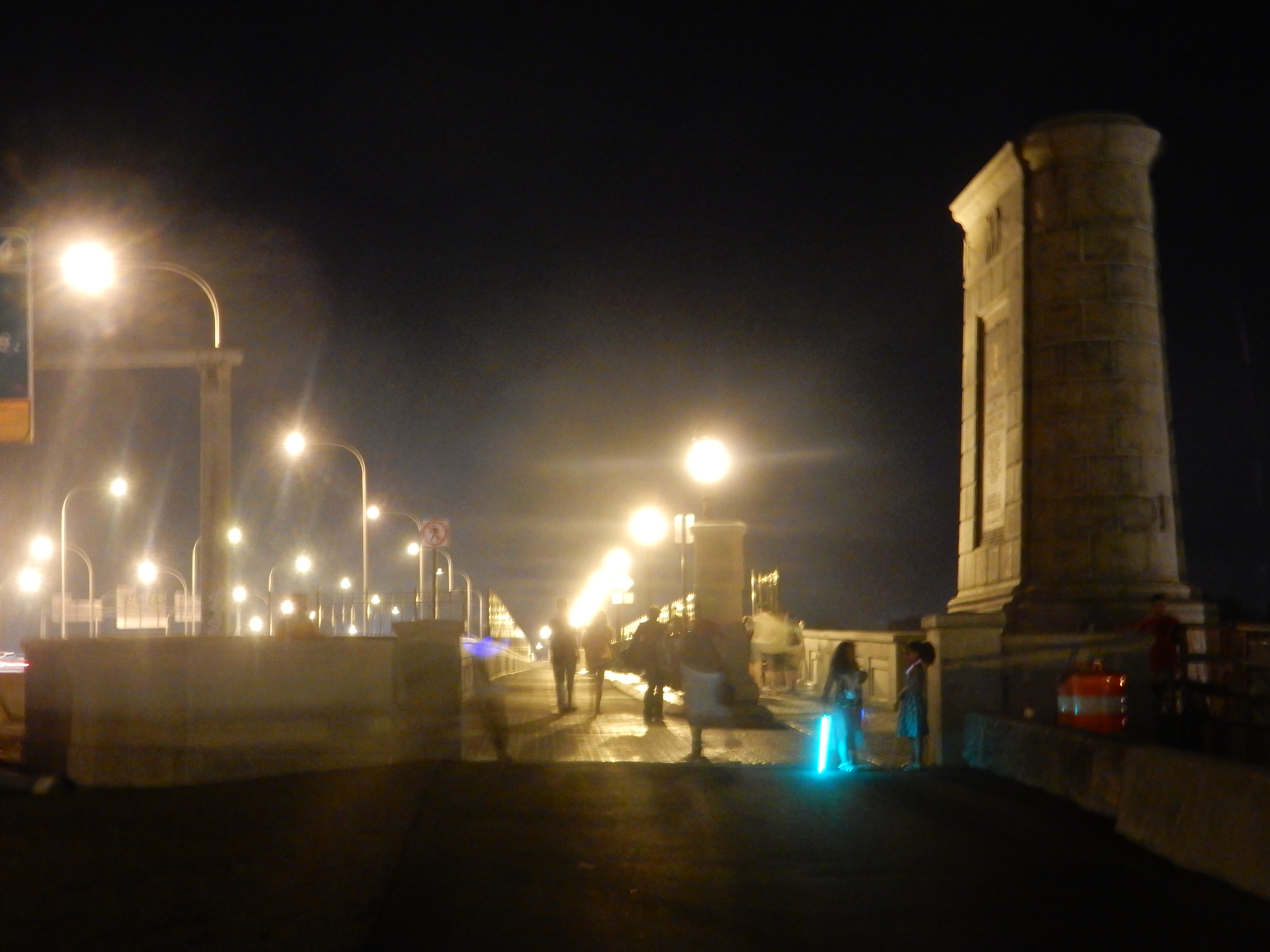
Providence’s new linear park, named for East Bay Bike Path founder George Redman (“Not a politician,” quoth Greater City Providence), opened in time for yesterday’s July Fourth fireworks. We drove to East Providence over the Washington Bridge, built in 1931, parked and walked back over its splendidly renovated pedestrian/bike span with our friends Dan and Shoko Gordon, whose daughter Caroline is buddies with our boy Billy, to view the fireworks and listen to the ever-lovely Rhode Island Philharmonic.

This new bridge park is a brilliant piece of work. The original bridge over the Seekonk (which merges with the Providence to form the peninsula of the capital city’s East Side) had a bike and pedestrian path so narrow that you had to duck into the occasional bay if someone was coming from the other direction. Now, its bike path is separate from its pedestrian path. The whole is lined with elegant wrought-iron railings and beautiful period lampposts. There are elegant classical buttresses marking the way. The small buildings that once housed machinery to draw open the center of the bridge have been cleaned off and lovingly restored. With its beauty and its splendid views, the bridge, which had been closed for the work since 2012, is a wonderful experience to cross.

Joan Slafsky says this new linear park is Providence’s High Line!

If the proposed pedestrian bridge over the Providence River had been designed likewise with beauty in mind, it would probably be built by now.

Rhode Island’s Department of Transportation has recently been criticized for how many of its bridges are in disrepair. But so far none has fallen! I think RIDOT also needs to be celebrated for its mammoth achievements over the past 40 years. It has buried Amtrak’s rails under the State House lawn, moved and opened downtown rivers long ignored, lined these rivers with walkways, built traditional arched bridges along the way that replaced the so-called “widest bridge in the world” (Guinness) – which looked like a huge sewer cover – and restored the state’s reputation for beautiful spans, then RIDOT relocated Route 195 to the far side of the Hurricane Barrier, opening an entire new development district for the city’s growth while also reknitting sections of downtown severed by the highway, and then finally it ran the new highway over another beautiful bridge – which should be named for the designer-in-chief of this excellent work, Bill Warner.

The result of all this new “transportation” infrastructure, topped by the George Redman Linear Park, has increased the quality of life for every Rhode Islander. Let’s give RIDOT credit for that. They have done a beautiful job. The pictures of the new span below could be augmented by many hundreds of other shots I’ve taken over the years of the city’s new waterfront, almost all of it traditional in its design. It has beautified beyond all desserts our little, often ridiculously corrupt, corner of world.

DSCN7992

DSCN8021

DSCN8003

DSCN8018

DSCN8014

DSCN8008

DSCN8006

DSCN8013

DSCN8016

DSCN8025

DSCN8062

DSCN8066

DSCN8074

DSCN8081

DSCN8008

This shot of the third arched span dedicated to bikes and pedestrians is from the RIDOT website.

This shot of the third arched span dedicated to bikes and pedestrians is from the RIDOT website.

Posted in Architecture, Art and design, Landscape Architecture, Photography, Preservation, Providence, Rhode Island, Urbanism and planning | Tagged , , , , , , | 8 Comments

The independence of music

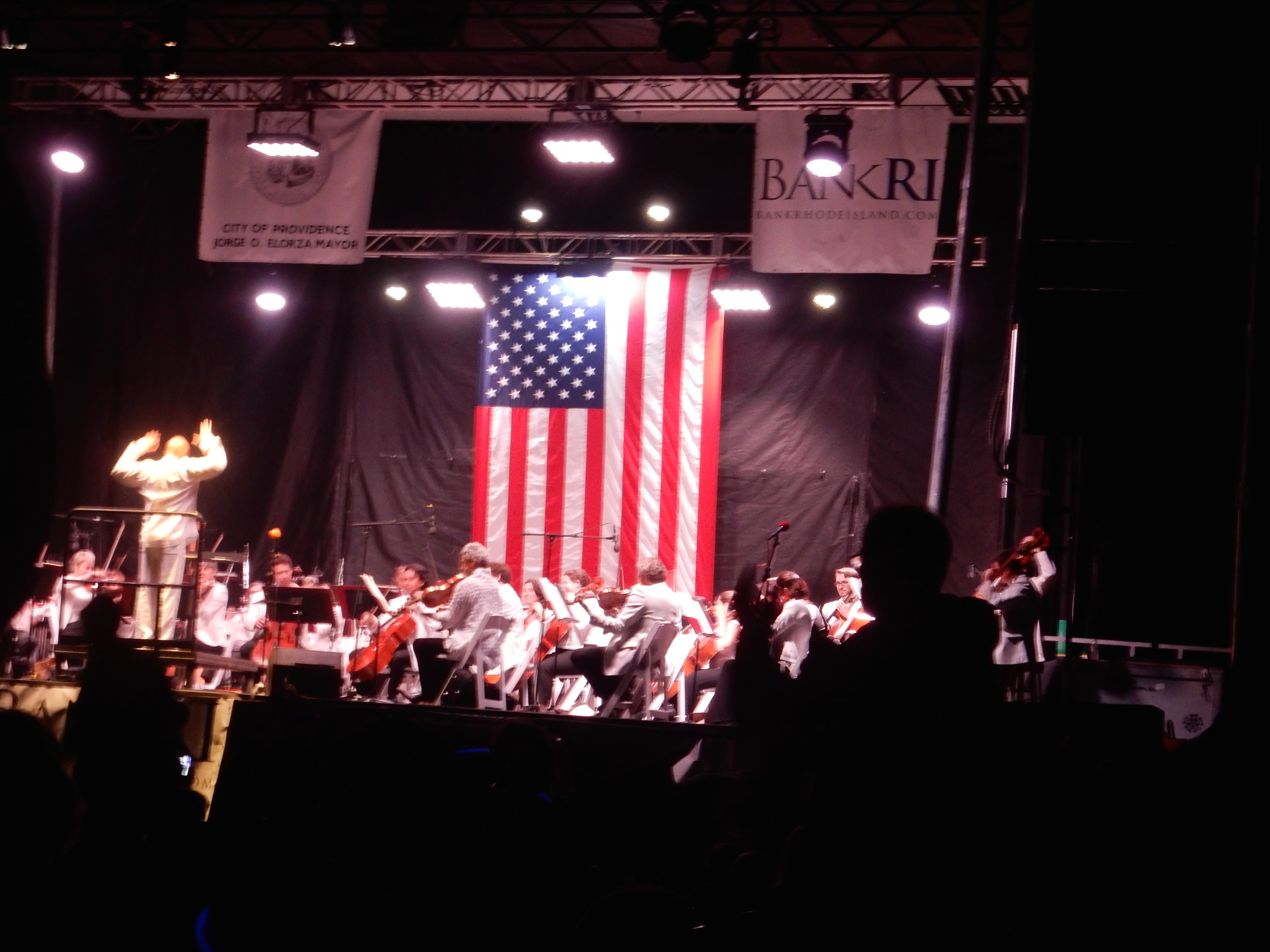
The Rhode Island Philharmonic near dusk at India Point Park last night.

The Rhode Island Philharmonic near dusk at India Point Park last night.

Not long ago, a few soft bars into Ravel’s Bolero, conductor Larry Rachleff of the Rhode Island Philharmonic, presiding at Veterans Memorial Auditorium – in the shadow of the Rhode Island State House designed by Charles Follen McKim – stopped the orchestra, turned around and offered a silent cough-into-sleeve-please lesson to a member of the audience who coughed during an early flute solo. Rachleff  resumed conducting, but many had not heard the cough, and (after reading of the incident in Channing Gray’s review in the Providence Journal) I thought that Rachleff had gone too far.

Billy and Victoria with me at India Point Park.

Billy and Victoria with me at India Point Park.

Last night, during the orchestra’s July 4 pops concert at India Point Park, the audience chattered, private fireworks popped and my son Billy romped on my stomach while I lay on my back in the grass listening through the obstacles to Sibelius’s Finlandia and a host of other pieces, including John Philip Sousa and Tchaikovsky. I did not get up to chide the audience, the private fireworks or even Billy. They all pressed their vain assault on my attention to the music throughout the performance.

It was not optimal listening but it was a quintessential musical experience, in that it broke the back of the obstacles to pleasure. Maybe I was really just in the right frame of mind. The Philharmonic, whether under Rachleff or, as last night, resident conductor Francisco Noya, was as always brilliant. My son and his allies in the audience failed to distract me, as they would certainly have managed to do had it been anything but music – say, a good novel.

In short, you can’t beat music. It surmounts every obstacle. And in this music is like architecture. The distractions of a busy street, for example, cannot sway a lover of buildings from the contemplation of a beautiful marble balustrade or a set of animated brackets upholding an ornate pediment. Maybe this is because music and architecture, compared with other art forms, are more intuitive and less reliant on analysis for enjoyment.

No wonder Goethe made that dazzling observation, “Music is liquid architecture; architecture is frozen music.”

Posted in Architecture, Art and design, Books and Culture, Providence | Tagged , , , , , , , | Leave a comment

Housing the founding fathers

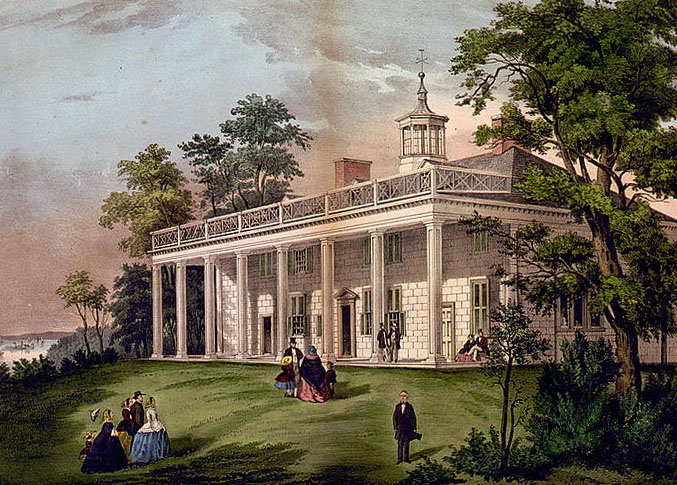
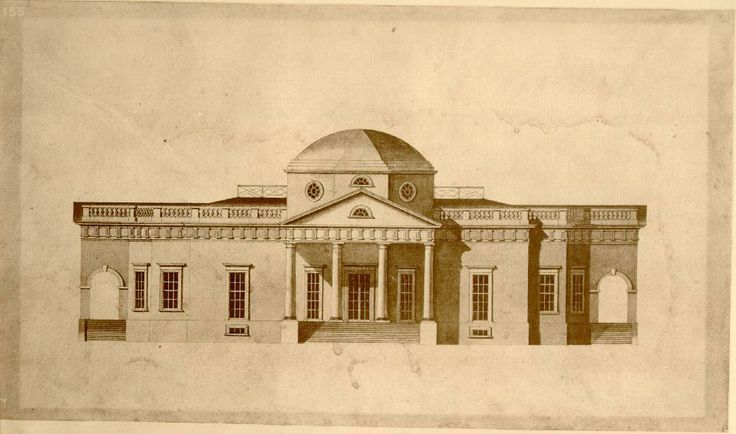
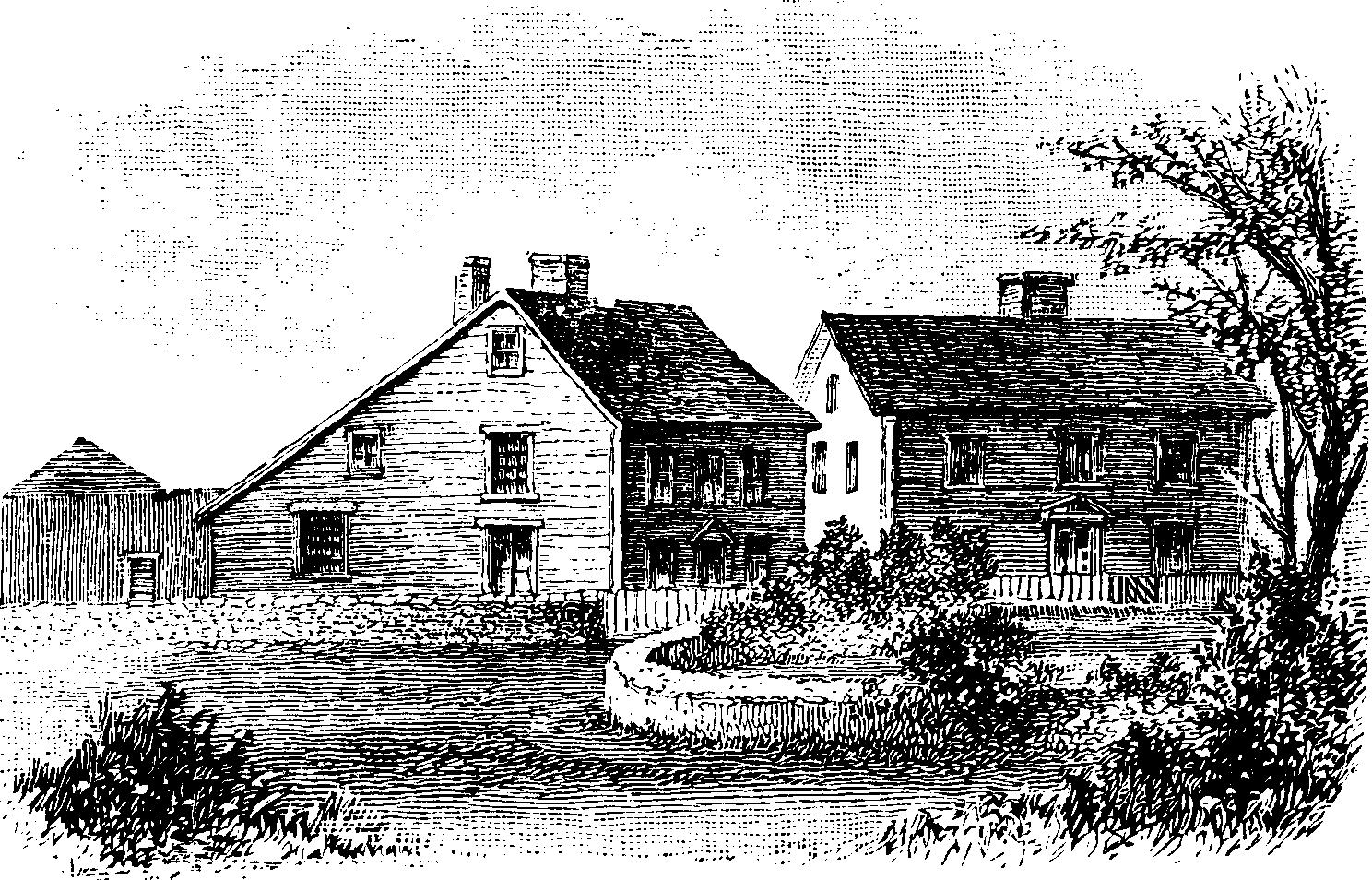
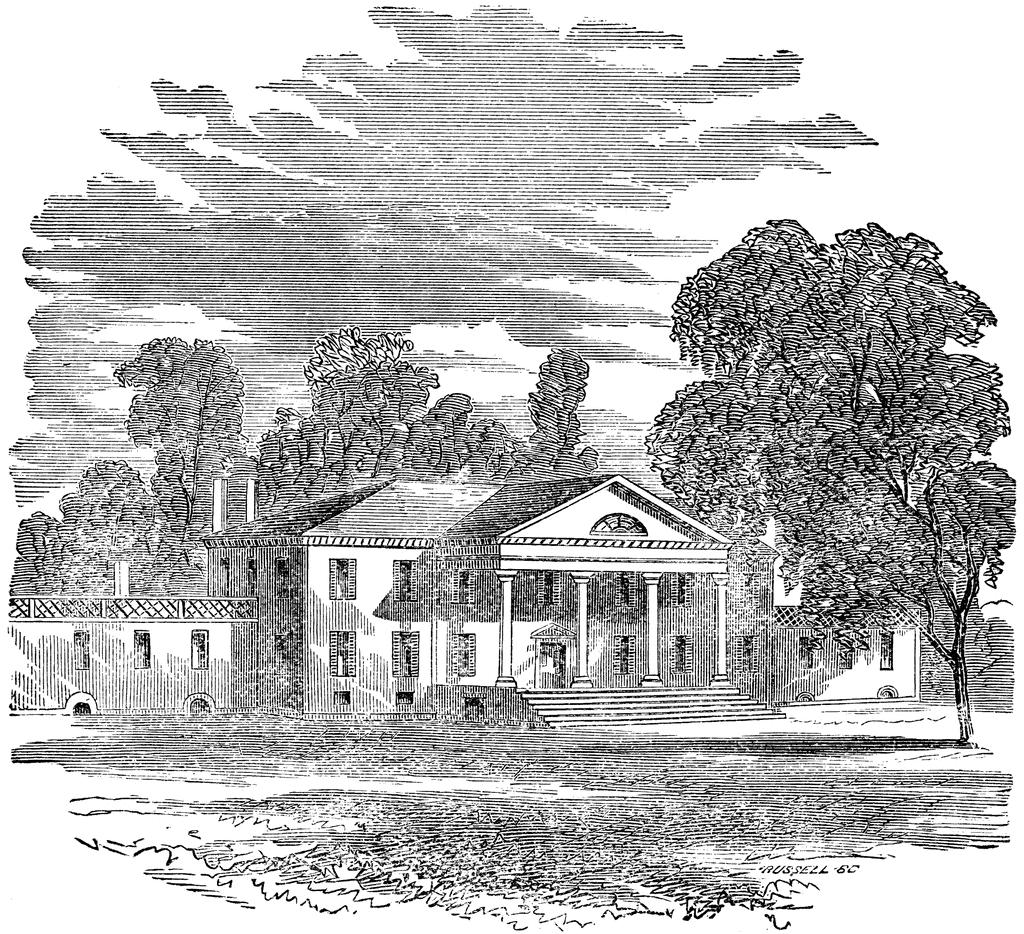
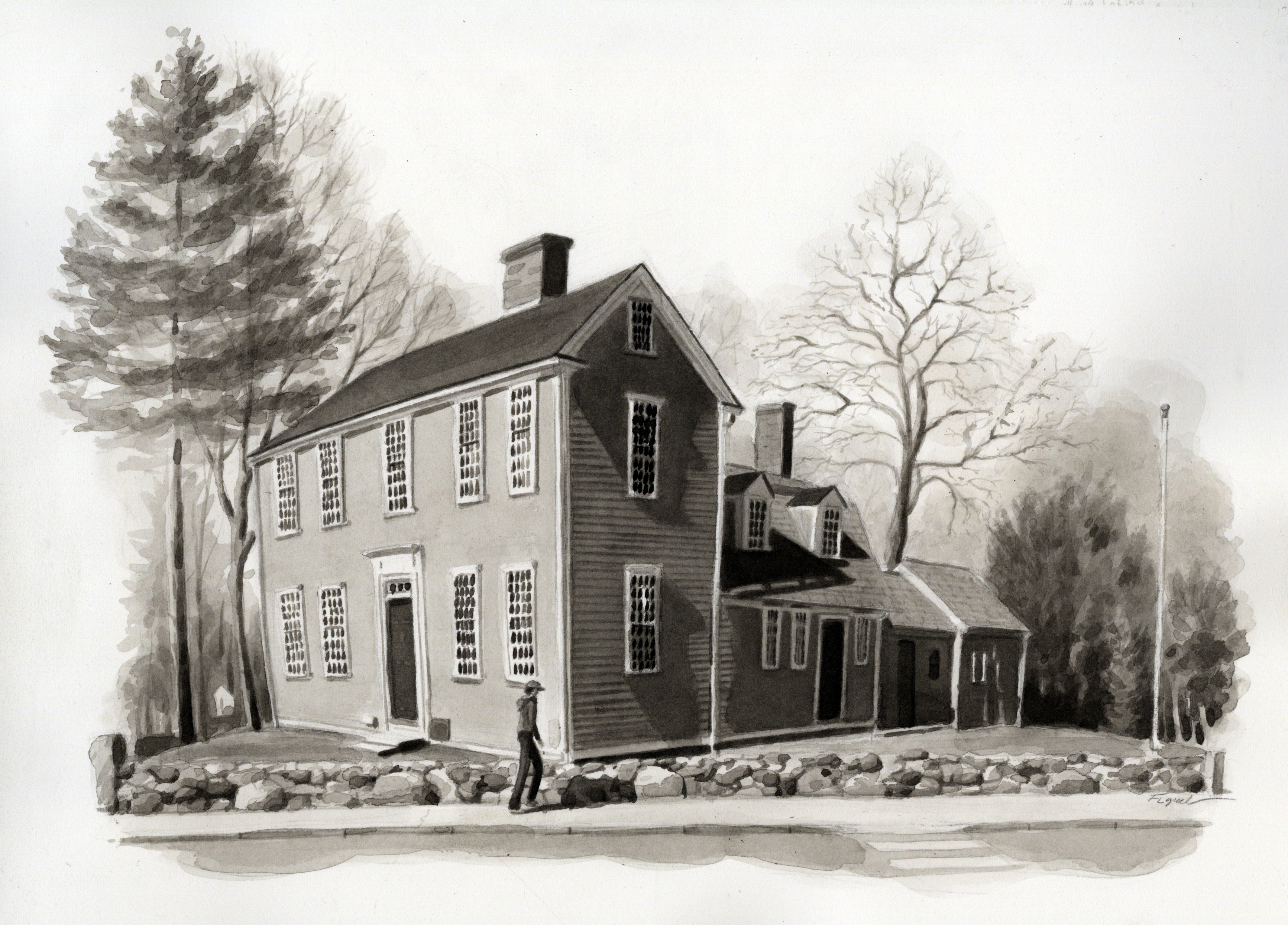
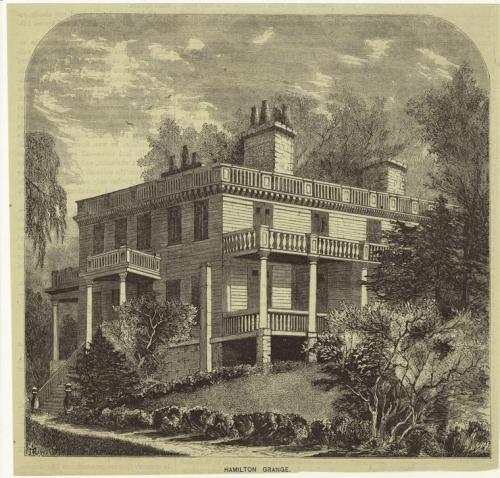
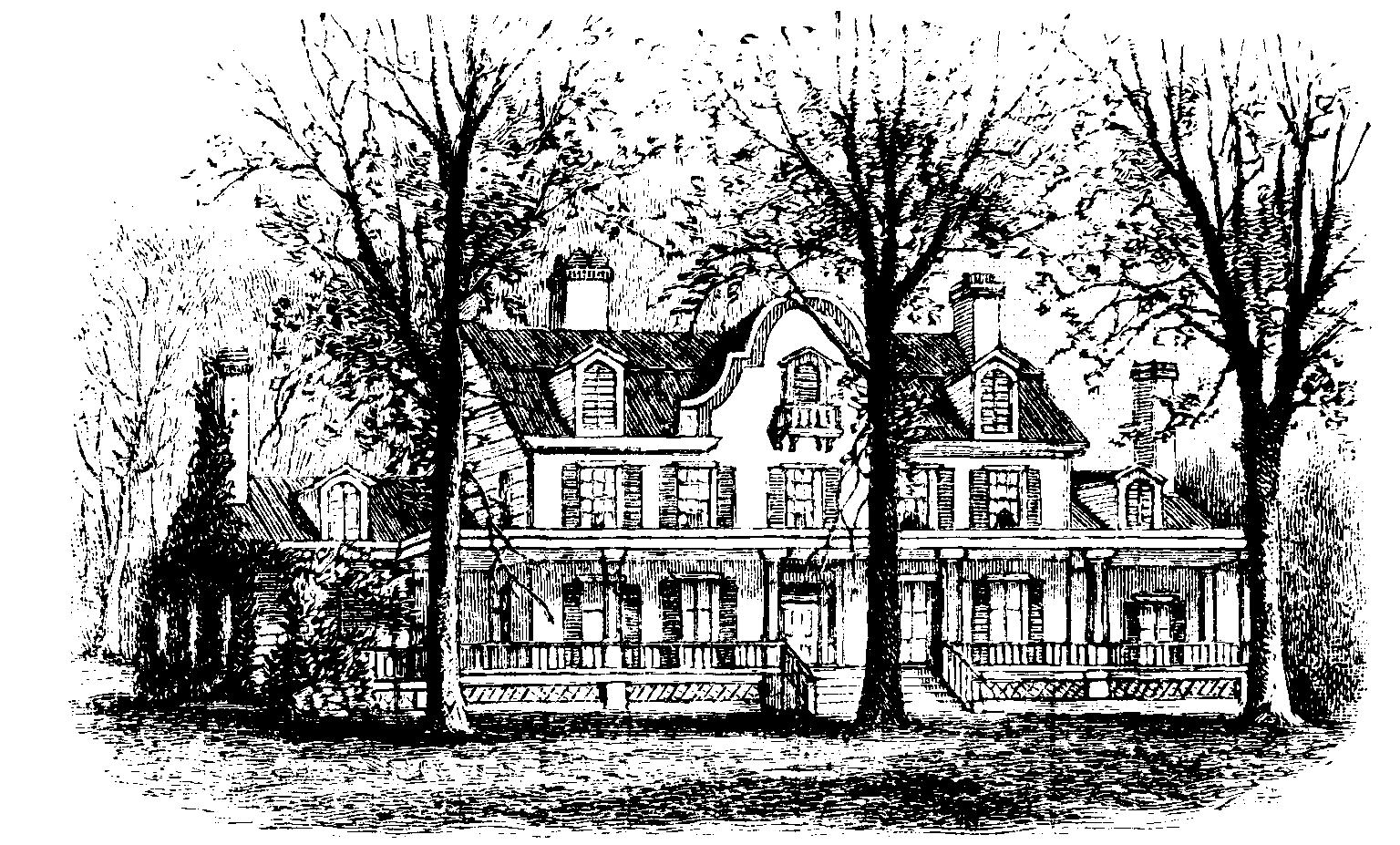
Here are some sketches of the houses of the founding fathers. George Washington’s Mount Vernon occupies, of course, pride of place. Benjamin Franklin’s house does not remain, alas, not unlike houses of some of the other founders, but at least Franklin’s memory was not besmirched by the sort of abomination that “represents” Franklin Court, in Philadelphia. As I could not find an image of Samuel Adams’s own house, I used the house he was hiding in at Lexington when the British were coming.

Thomas Jefferson's Monticello, drawn in 1803 by Robert Mills. (pinterest.com)

Thomas Jefferson’s Monticello, drawn in 1803 by Robert Mills. (pinterest.com)

John Adams's house in Quincy, Mass. (famousamericans.net)

John Adams’s house in Quincy, Mass. (famousamericans.net)

John Madison's Montpelier. (etc.usf.edu)

John Madison’s Montpelier, near Orange, Va. (etc.usf.edu)

House of Jonas Clark, hideout of Samuel Adams, in Lexington, Mass. (paulreversriderevisited.wordpress.com)

House of Jonas Clark, hideout of Samuel Adams, in Lexington, Mass. (paulreversriderevisited.wordpress.com)

John Hamilton's Hamilton Grange. (uptownflavor.wordpress.com)

Alexander Hamilton’s Hamilton Grange. (uptownflavor.wordpress.com)

John Jay's Bedford House, in Bedford, N.Y. (famousamericans.net)

John Jay’s Bedford House, in Bedford, N.Y. (famousamericans.net)

John Hancock's house. (freepages.history.rootsweb.ancestry.com)

John Hancock’s house. (freepages.history.rootsweb.ancestry.com)

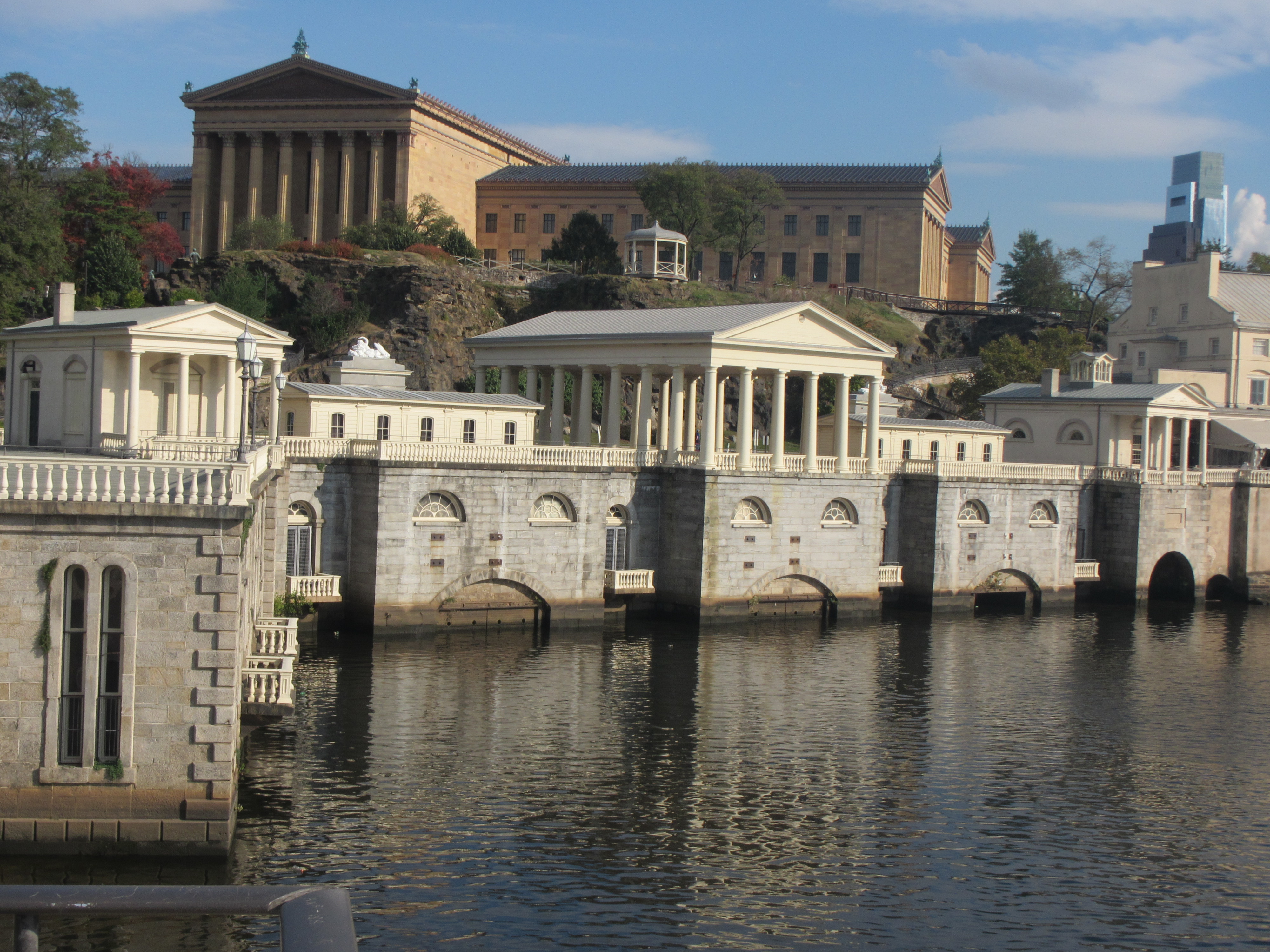
Fairmont Waterworks, c.1800, near Philadelphia Museum of Art. (halifaxbloggers.ca)

Fairmont Water Works, built 1812-72, near Philadelphia Museum of Art. (halifaxbloggers.ca)

Not even HABS has an old image of Franklin Place. So, unable to bring myself to conclude this retrospective with the modernist kitsch of Venturi & Rauch inflicted upon historic Philadelphia in 1976, I offer the Fairmont Water Works. Glimpsing it briefly but frequently from Amtrak, I’d always believed to be college crew boathouses, they were designed in 1809 and built in 1812-72 to disguise the pump equipment of the city’s former water system, atop the reservoir for which the museum now sits.

Posted in Architecture, Architecture History, Preservation | Tagged , , , , , , , , , , , | 3 Comments

Monopoly, Hasbro, P’tucket

Monopoly (Variety)

Monopoly (Variety)

Now that the film Monopoly has been announced by the game’s owner, Hasbro, headquartered in Pawtucket, R.I., one can imagine where it might be shot. Of course, the street names that make up the most memorable aspect of the game are from Atlantic City. Monopoly was invented in 1903 and popularized by Parker Bros. during the Depression. Since then, more than a billion people have played it in 114 countries around the world.

Seaside in “The Truman Show.” (beyondthefilmblog.blogspot.com)

Scene from “Blade Runner” (firstwefeast.com)

Today’s Providence Journal ran a tiny slice of a Variety article, “‘Monopoly’ Movie Going Forward with Lionsgate.” It mentioned that Hasbro’s home city is in Rhode Island, but the editors – I assume they still operate out of the newspaper’s longstanding headquarters in Fountain Street – seemed unaware of both the powerful local connection and of the film’s potentially immense popular appeal. They gave it a paltry three inches on page 10 under a squib headlined “Nortek buys $12M in Numera assets.” Go figure, huh?!

Given Hollywood these days, who would not be surprised if the entire movie is “filmed” in an animation studio owned by Pixar? If any of it is shot on location, however, I’d like it to be in Pawtucket. Why? Well there’s this obvious reason: “There once was a shoot in Pawtucket/Which is known by its nickname The Bucket/The actors wore latex/They got cheap at Apex/After painting the town they said fuck it.”

Pawtucket Mayor Donald Grebian, who recently bested “creative capital” Providence by hiring its PR team locally, may craft his own limerick. Perhaps he will choose to feature, in the final line, the supposedly impending absquatulation to Providence of Pawtucket’s AAA Boston Red Sox farm team, the Pawsox. For some reason, ribald limericks have long been a staple of Pawtucket pride. They can take away its baseball team but they can’t take away its rhyme scheme.

The plot of the Monopoly movie is said to revolve around a poor boy growing up on Baltic Avenue who seeks to improve his lot in life. Readers of this blog will expect to see him installed, eventually, in a classical mansion suitable to its location on Park Place or Boardwalk – though the latter may be aesthetically problematic with its excessive trumpery.

The screenplay is being written by Andrew Niccol, who wrote The Truman Show, filmed in Seaside, Fla. The beauty of the new town, built on New Urbanist principles that revive old-style urbanism, played a major role in that film. As virtually a character in the movie, Seaside was cast as a place whose loveliness was so surreal that it seemed the natural setting for an unreal but ominously serene place.

An earlier proposed version of Monopoly was to have been produced by Ridley Scott, whose settings for Blade Runner are the polar opposite of Seaside in The Truman Show. Perhaps gritty Pawtucket might have made a stronger bid for the location of the film had its producer been the auteur who introduced an urbanism of grit into our idea of the future.


Posted in Architecture, Art and design, Book/Film Reviews, Humor, Rhode Island, Urbanism and planning | Tagged , , , , , , , , , | 3 Comments

Love, beauty, architecture

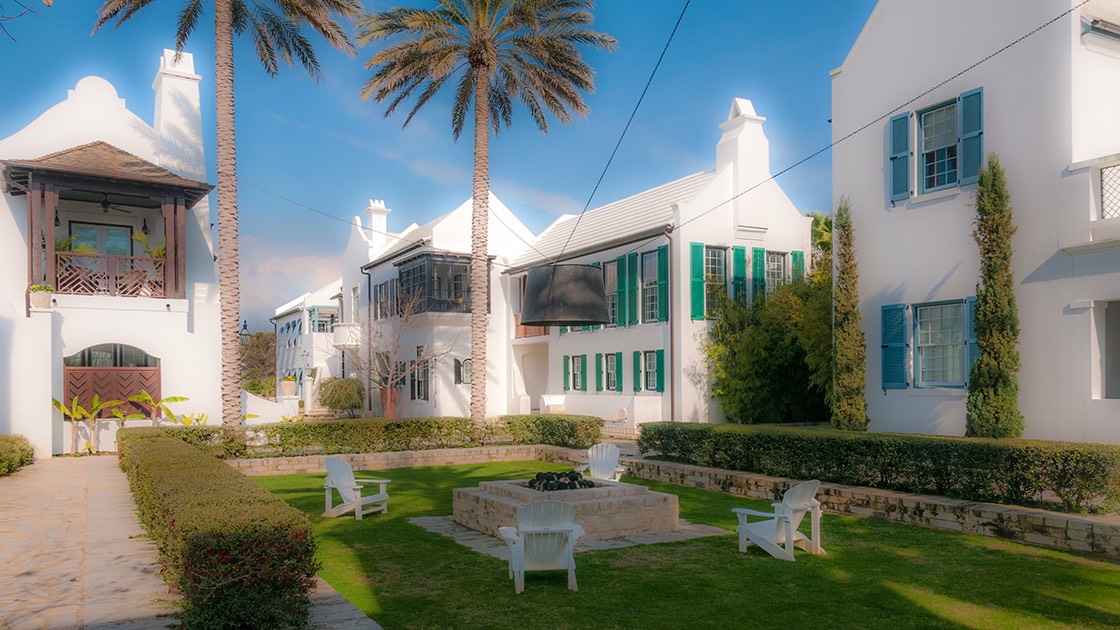
Houses in Alys Beach, a New Urbanist resort town developed by Duany Plater-Zyberk.

Houses in Alys Beach, a New Urbanist resort town developed by Duany Plater-Zyberk.

Steve Mouzon, an architect in Miami, has been the strongest advocate for years of lovability in architecture. He correctly sees lovability is a crucial factor in the creation of a living environment, and in assuring that people care for it (and take care of it) well into the future.

Mouzon expounded his lovability theory in his book The Original Green, and just wrote an article on his blog called “Lovability Gains Momentum.” It cites other articles wondering why most architects treat love as if it had the cooties. He notes that professionals in other fields do not feel the same angst that architects do when it comes to embracing the idea of love in their work. Most architects have a similarly strange reaction to the idea of beauty.

By the way, I am with him 100 percent on the importance of lovability in architecture. In the following passage, from the article, he describes a conversation with his wife Wanda during their third year of architecture school, and then he makes a key point:

“Why [asks Wanda] do you refuse to design buildings that anyone else I love would love?”

“Do I?”

“Of course you do!”

“How do you know they wouldn’t love what I design?”

“Have you ever listened to non-architects talk about architecture?”

“No, our professors tell us that we should educate the clients.”

“Well, if you’d ever stop and listen to them, you might learn what they actually love.”

The point to this story of the origin of my use of the term “lovable” is that the term requires something many architects are completely incapable of demonstrating: humility. Listening to the untrained requires humility.

Precisely. Architects are trained to rise above humility – a big mistake in their education. The idea that the public needs to be educated to appreciate their work arises from their profound ignorance of human nature. Their instincts are suffocated in architecture school. In fact, they are the real untrained. Humans of every station in life have spent their entire lives interacting with architecture at a degree of intimacy far beyond that given to any other aspect of their aesthetic life. Only architects seek to purge that intelligence from their minds.

People do not read poetry or watch plays or see sculpture every day of their lives but they experience architecture almost every moment of their lives. They may not think much about it – indeed, in today’s built environment, numbness to one’s surroundings is a sort of required defense mechanism – but their brains do. So people develop a judiciousness regarding architecture far more sophisticated than that which architects develop in architecture school – which is mainly a process of unlearning all that life has taught them about their built environment in their lives up until matriculation.

Of course, most people do not know how to build a house, but shown two houses they can reliably choose the one that most appeals to them – and their choice arises from decades of experience. Their sense of taste is well developed. They will almost always choose a more traditional over a less traditional house – and that is an expression of intelligence that a refugee from architecture school can almost never equal. This is why almost all architects are in denial. They are, in key respects relating to their own profession, stupider than almost all of those they themselves consider stupid.

So stick you head in the sand, architect! That’s where it is and that’s where it belongs until you wake up from your egotistical dream-world of self-love.

I’m sure Steve and Wanda have shucked most of what they learned in architecture school, which is why what they say about lovability in architecture deserves respect. Let’s hope lovability is indeed gaining momentum.

Posted in Architects, Architecture Education, Art and design | Tagged , , , , , | 2 Comments