Des “passages” de Paris

Narrow rue in Paris. (parisadele.blogspot.com)

Narrow rue in Paris. (parisadele.blogspot.com)

Umberto Eco. (amazon.com)

Umberto Eco. (amazon.com)

In the late 1800s, long after Baron Haussmann supposedly transformed the Paris of rabbit warrens into a Paris of bowling alleys for cannoneers, the protagonist (if you can call him that) of Umberto Eco’s novel The Prague Cemetery (2010) – which looks at Europe’s conspiracies through the eyes of a confirmed racist, anti-Semite, forger and spy, Simone Simonini – discovers plenty of narrow disgusting alleyways remaining in Paris.

Although I am a fan of the Eiffel Tower, I was nevertheless charmed when Simonini said: “All in all, Paris isn’t what it used to be, ever since that pencil sharpener, the Eiffel Tower, has been sticking up in the distance, visible from every angle.”

Here Simonini (through Eco’s fictional eyes) describes some of those narrow rues. But first he describes the boulevards:

I stayed in my room as little as possible and only allowed myself the pleasures available to penniless Parisians. So I walked the boulevards. I hadn’t realized how much larger Paris was than Turin. I was enthralled by the sight of so many people of all classes walking beside me. Few of them had any particular errand to perform, and most were there to look at each other. Respectable Parisian women dressed with great taste, and if they didn’t draw my attention, their hairstyles did. Unfortunately there were also, shall we say, those less respectable women who were ingenious at inventing ways of dressing up to gain the attention of our sex.

Simonini goes on to describe the categories of prostitutes he sees on the boulevards. Then he describes the narrow alleys, or passages, then often, and even more nowadays, glazed overhead:

I was fascinated by the passages. I adored passage Jouffroy, perhaps because it held three of Paris’s best restaurants: the Diner de Paris, the Diner du Rocher and the Diner Jouffroy. It seems, even today, that the whole of Paris gathers there, especially on Saturdays, in the glass-covered arcade where you are continually jostled by world-weary gentlemen and ladies who are too heavily scented for my taste.

Perhaps I was more intrigued by passage des Panoramas. The crowd you saw there was more working class, bourgeois and provincial, people who looked longingly at antiques they could never afford and young girls who had just come out of the factories. If you really must ogle petticoats, the women in passage Jouffroy are better dressed (if that’s what you like), but here, wandering up and down watching the factory girls, are the suiveurs, middle-aged men who conceal their gaze behind green-tinted glasses. I doubt that all the girls really are factory workers; that they are simply dressed, in tulle bonnets and pinafores, means nothing. Look carefully at their fingertips. Girls without cuts, scratches or small burns lead a more leisurely life, thanks to the suiveurs whom they manage to enchant.

It is not the factory girls I gaze at in the arcade, but the suiveurs. (Who said that a philosopher is someone who watches the audience and not the stage at the café chantant?) They may one day become my clients, or useful in another way. I follow some of them home, to see them being greeted, say, buy a fat wife and half a dozen brats. I make a note of their addresses. You never know. I could easily ruin them with an anonymous letter. One day, perhaps, if the need arises.

I am about a third through this novel and on the hunt for passages evocative of the streets of the great cities where the novel unfolds – Paris, Prague, Biarritz (where my father spent some time after serving in World War II), Turin, Palermo, Munich and others. If they show up, you will read them.

Prague. (litreactor.com)

Prague. (litreactor.com)
Posted in Architecture, Architecture History, Art and design, Other countries, Preservation, Urbanism and planning | Tagged , , , , , , , , , | 1 Comment

Eyesore vs. eyesore

Rendering of proposed hotel in downtown Providence. (gcpvd.org)

Rendering of proposed hotel in downtown Providence. (gcpvd.org)

The Providence Journal ran an editorial yesterday, “Activity vs. eyesore,” that takes a conventional attitude toward economic development that could ensure that Providence’s economy will never be as robust as it ought to be.

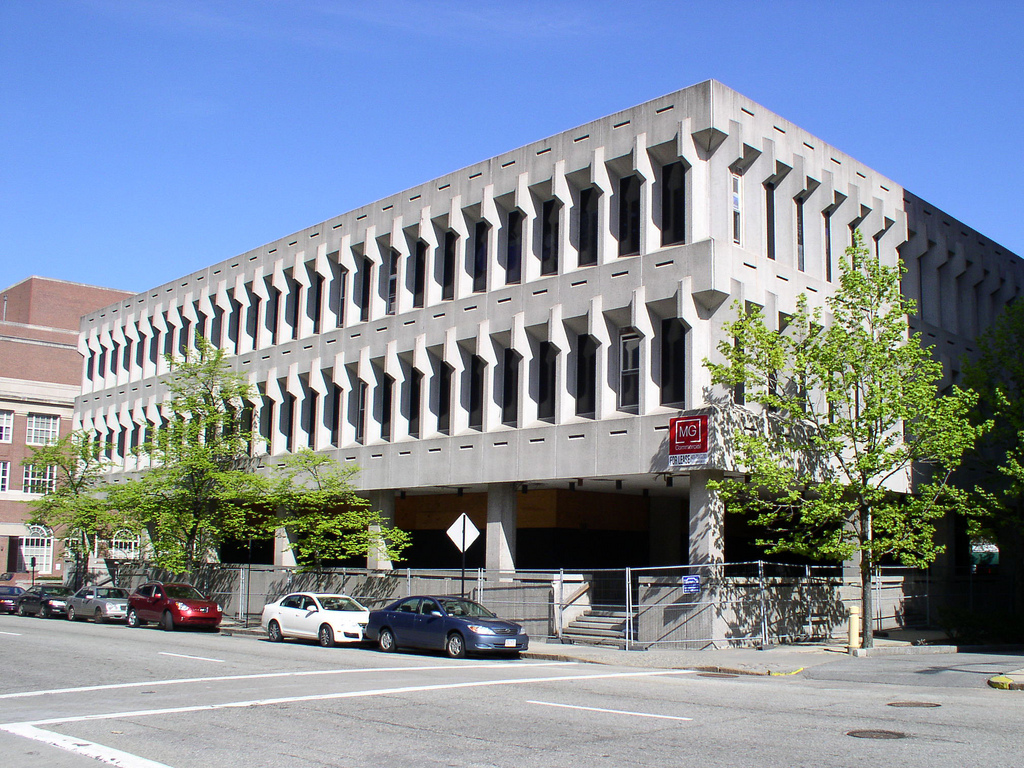
The editorial supports razing the city-owned Fogarty Building to build an extended-stay hotel proposed by the Procaccianti Group, of Cranston. The stand puts the paper’s editorial board (of which I was a member for 30 years) at odds with local preservationists, who hold an inordinate regard for this empty, leaky, stinky, ugly hulk.

Fogarty Building. (flickr.com)

Fogarty Building. (flickr.com)

It is a former human-services office designed by Castellucci, Galli & Planka Associates and opened in 1967. Its architectural style is not called Brutalist for nothing. Yes, the name comes from béton brut, or “rough concrete” in French, but it has stuck because of its accurate connotation. It deserves to be torn down. (I wrote about it in “Not so hard to say yes to beauty” on Feb. 15, 2007.)

Unfortunately, the building proposed by Procaccianti looks even uglier than the Fogarty. It is strictly suburban, and would feel much more at home out on Jefferson Boulevard. The Fogarty site is on Fountain Street next to the Journal’s lovely Neo-Georgian headquarters, designed by Albert Kahn and completed in 1934 (with its fourth floor added in 1949). The Fogarty should not be torn down unless something better – significantly better, considering the sluggardly merits of the Fogarty – is proposed. Even with the jobs, revenue and “activity” that are promised, this hotel does not qualify.

“A bright new hotel would be a vast improvement,” reads the editorial. Yes indeed, but again, this hotel does not qualify as a bright new hotel. The Journal has bought into the argument for jobs at any cost. But the cost can be too high. We recognize that when cost is conceived in terms of municipal subsidies, but there are other kinds of costs, too. The cost of inflicting a hotel that looks like this on Providence would be too high.

An old monstrosity always holds out the hope of replacement by something the public can admire, something that will build upon the city’s historical character, and possibly earn a higher return. A new monstrosity promises to glare at us for decades. Why replace a building we can blame on our fathers with a building we can blame only on ourselves?

Act in haste, repent at leisure!

The city deserves better. Tell Procaccianti to hold its horses and submit a superior design that strengthens the state’s brand rather than diluting it. If it refuses, the city should wait it out while seeking a new developer.

The city and state do themselves a disservice by assuming that second best is the best Rhode Island can do. We have embraced second best in the Route 195 Corridor, in the Capital Center District, at RISD, at Brown and at Providence College (the latter two having briefly seemed to learn their lesson). Please, not downtown as well! Why must Rhode Island sell itself short every time? Mediocre is not the new excellent. The Ocean State deserves better, and should demand it. Genuine prosperity requires it.

Posted in Architects, Architecture, Architecture History, Art and design, Development, Preservation, Providence, Rhode Island, Urbanism and planning | Tagged , , , , , | 4 Comments

Tiverton pulls plug on “Glen”

Recent view of propose entrance to site of project in Tiverton. (Journal photo by Kris Craig)

Recent view of propose entrance to site of project in Tiverton. (Journal photo by Kris Craig)

$100M Glen project dealt blow after residents rally” is the headline on Patrick Anderson’s story in today’s Providence Journal reporting that the Tiverton City Council voted 5 to 2 not to grant its developer, the Carpionato Group, a slew of amendments to the town’s comprehensive plan. Tiverton Glen is now up the creek without a paddle.

This is democracy in action at its basic level. Citizens saw through a “glen” as easily as they could see through a “crossing” – the project was originally called Tiverton Crossing.

“They [Carpionato] could submit a proposal that meets the comprehensive plan in a smaller, more reasonable development,” according to opposition leader Bruce Hathaway, who helped organize crowds at last night’s council meeting of up to 400 and even more at an earlier hearing. “We like new business but not at a scale that is over the top.”

I wonder why Carpionato did not (so far as I could determine) publicize how the project would look when completed (see “Let Tiverton be Tiverton“). If they had shown citizens illustrations of a lovely shopping center with elegant apartment buildings, more citizens might have been hesitant in their opposition, even if they thought it was too big.

Carpionato’s lack of renderings for the project suggests that they were hoping to change the Tiverton comprehensive plan on the cheap, then bring in the big guns. It’s a good thing Tivertonians showed up en masse to oppose what amounted to a secret mega-deal.

I think the problem with developers these days is that every project has to hit a home run financially. They go around sniffing at every community, and instead of figuring out what the community really needs and proposing that, it goes to every community and proposes more than it needs, figuring if they succeed once it will make up for all the failures. I don’t pretend to have spies inside the heads of developers, but I wonder why they don’t make more proposals of greater modesty in scope, and make a reasonable amount of money with every reasonable proposal based on an objective analysis of a community’s needs. Would that not add up to more money? I don’t know, just throwing it out.

So the score now in Tiverton’s stands at two to zip, citizens having scored on a beautiful library and having struck out a muscle-bound megaproject. But now the cleanup hitter, backed by the state, is coming to bat. It is the proposal for a new gambling casino.

Good luck, Tiverton!

Posted in Architecture, Art and design, Development, Preservation, Rhode Island, Urbanism and planning | Tagged , , , , , , , | 2 Comments

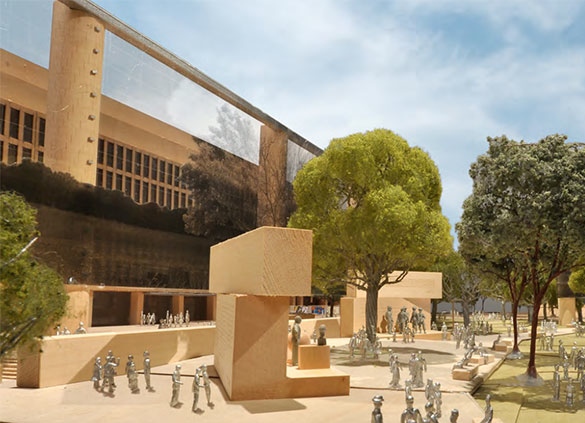
Gehry’s Ike vs. the nation

Detail of Frank Gehry's design for an Eisenhower memorial. (metropolis.com)

Detail of Frank Gehry’s design for an Eisenhower memorial. (metropolis.com)

The New York Times’s editorial “Battle Over Eisenhower in Washington” falsely poses the debate over Frank Gehry’s proposed memorial for Dwight Eisenhower as pitting Ike’s grandchildren against World War II veterans. This is not so. The Gehry design is at risk because even a host of official approvals cannot hide the fact that the design is an unsuitable tribute to the Allied general and 34th president.

The National Capital Planning Commission recently okay’d the design not long after Sen. Robert Dole of Kansas stated, “This is not being built for the grandchildren,” adding that veterans “want to be around for the dedication.”

The grandchildren understand that the memorial is not for them or even for the veterans but for the posterity of those veterans and of the nation. The Gehry design is unsuitable because the modernist style he works in has never developed a language comprehensible to the average citizen, not to mention the citizen of a century from now. Every modernist architect wants to do something different, so there has been no development (even over a century) of common elements or themes to serve as symbols or metaphors of anything, be it broad, deep or commonplace. Yet the Times intones:

For Congress to yield such power to family members, however, cuts against the whole idea of a national consensus to honor a national hero.

Precisely! But the ability to achieve a national consensus is exactly what is at stake, and why it is the Gehry design itself, not the Eisenhower grandchildren, that has held the memorial hostage.

Of course, the Times editorial does not mention the outrageous taxpayer cost, the pitiful amount of private money raised (most such memorials are privately funded), or the lack of openness and transparency of the design competition that “selected” Gehry, the propriety of which has been investigated by the House of Representatives.

If the Gehry design is built, the entire idea of national consensus on any issue, or even general cultural understanding, will receive a severe blow.

Our nation is already divided, some would say against itself. Part of this is inevitable, even necessary, in a complex society such as ours. Gehry’s design will make coming together for any unified purpose all the more difficult. It will become conventional for monuments to be incomprehensible, because a bland nothingburger of meaning is the least potentially offensive. This is already conventional, almost mandatory, in architecture for public and private buildings.

Some, who look at the semiotic roots of modern architecture, believe that is the whole idea. Unlike other fields, the field of architecture, at least among its top thinkers, never abandoned the deconstructivist philosophy that the legal profession and several fields of academia successfully resisted in the ’70s and ’80s. The idea of undermining meaning in the structure of language always seemed, for these ideologues, the best way undermine the structures of the state.

For example, just look at the queasy feeling modernists get from the idea of beauty. That is because beauty raises feelings that are understood by all. Even Gehry would not claim his design is beautiful. He once mocked the classical temple style of the Lincoln Memorial. He says architecture should reflect society’s turmoil, not try to ameliorate it. His own absurd design to “commemorate” Eisenhower is the strongest testament of its unsuitability.

Here’s Artsy.net’s Gehry link: https://www.artsy.net/artist/frank-gehry

Posted in Architects, Architecture, Architecture Education, Architecture History, Art and design | Tagged , , , , | 1 Comment

Bibliotopia in Tiverton

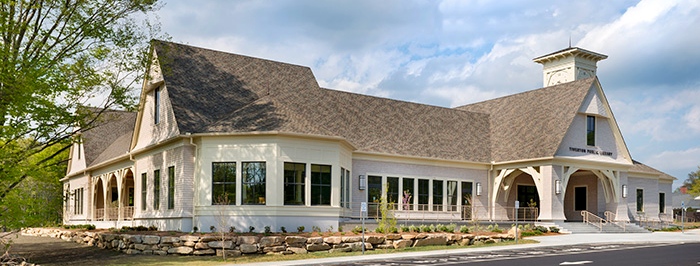
Tiverton Public Library, designed by Union Studios, in Providence. (Union Studios)

Tiverton Public Library, designed by Union Studios, in Providence. (Union Studios)

Tiverton, which faces the twin threat of a mega-retail/residential development and a new casino amid its charms, may rejoice that it has a beautiful new public library under its belt. When the design was shown to me several years ago I said to myself, “Not gonna happen!”

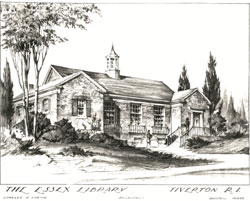
Essex Library. (tivertonlibrary.org)

Essex Library. (tivertonlibrary.org)

But there it is in all its glory. The Providence Journal, in Christine Dunn’s story “A new chapter begins for town’s public library,” reports that 500 new library cards have been issued since its opening in June. Also, it came in $500,000 below its $11 million budget. At 23,886 square feet, the new library dwarfs its cute predecessor, the Essex Library.

The photo above shows a library that breathes in the traditionally bucolic character of the town. Tiverton is among the loveliest names for a place, and its architecture should reflect the quiet beauty that is its brand.

Designed by Union Studios, in Providence, with Douglas Kallfelz as lead architect, the library’s arched and gabled entry portico features a tower with decorative arches etched into its sides that reflect those of the portico. At the other end, special spaces inside the library are highlighted with gabled bays connected by a terrace behind its own three arches. The design’s simplicity belies the size and complexity of the interior, which has about six times the room as the Essex, which remains.

They say architecture is the great unsung happiness of life. Well, these days that is debatable, but when when a work of design manages to express the pleasure of reading while accommodating the heavier burden that libraries take upon themselves in the modern era, well, it’s no wonder that the market for library cards is in growth mode!

Let us hope Tiverton can thwart the twin evils headed its way – but if the town is not thrice lucky, its leaders should propose that the twin evils (the “mall” and the casino) are made to parade in the falseface of beauty.

(Here is the deep skinny on the new library, “The Story of Tiverton’s Quarter-Century Crusade to Build a New Public Library,” by Gina Macris for the Rhode Island Library Report.)

Posted in Architects, Architecture, Art and design, Development, Rhode Island | Tagged , , , , | Leave a comment

Save Europe’s oldest street

High Street, Winchester, near Silver Hill scheme. (beautifulengland.net)

High Street, Winchester, near Silver Hill scheme. (beautifulengland.net)

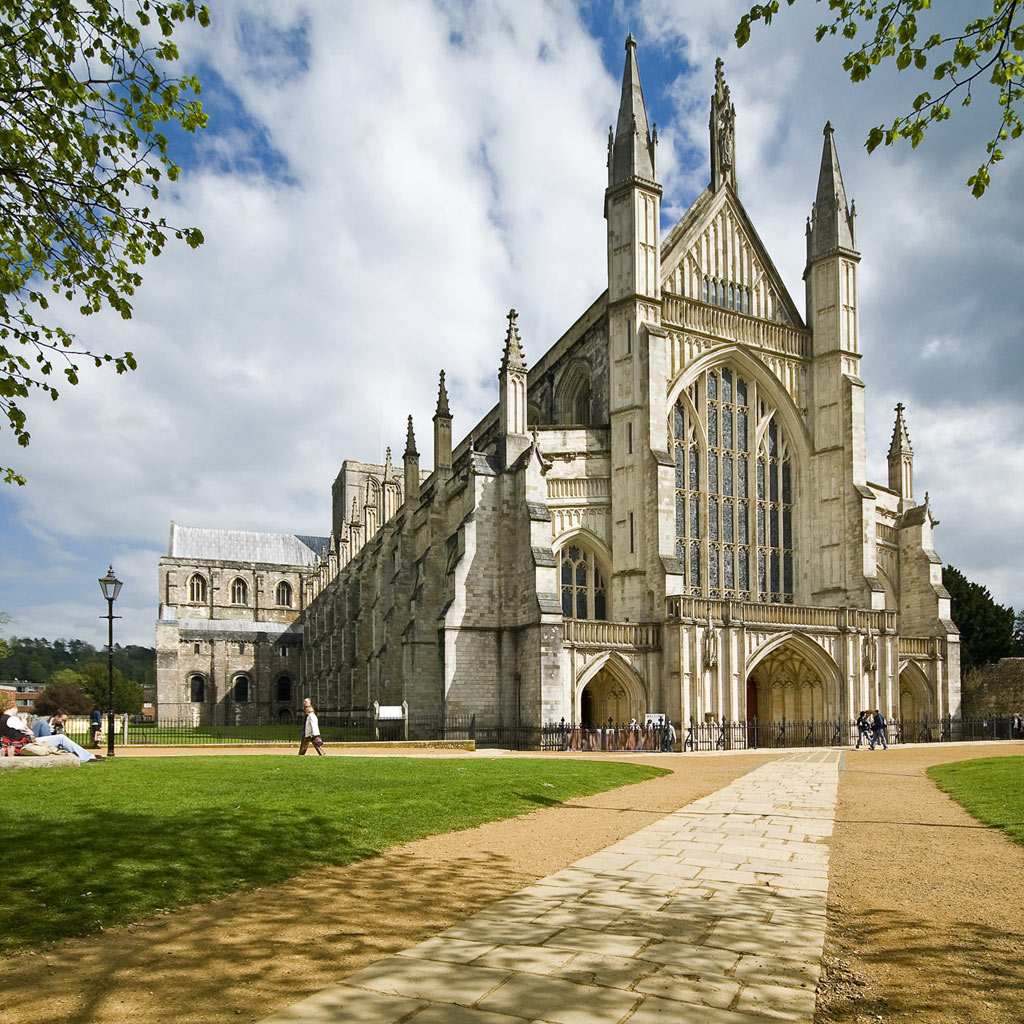
I blogged on the fate of Winchester, England, Europe’s oldest main street – home of the Winchester Cathedral made famous in song – several years ago. Since then the activist group Winchester Deserves Better has been fighting the scheme (they call projects schemes in Britain). Their efforts received a pair of dismaying official setbacks this week, but that has happened before and WDB keeps on fighting. Their motto is “It’s not built ’til it’s built – and it’s not built yet.” Or something really good like that.

Winchester Cathedral. (hotelduvin.com)

Winchester Cathedral. (hotelduvin.com)

Rendering of Silver Hill development proposed for Winchester. (architectsjournal.co.uk)

Rendering of Silver Hill development proposed for Winchester. (architectsjournal.co.uk)

Here I would merely like to applaud the organization’s doughy refusal to throw in the towel. The link in the first paragraph illustrates the proposal they oppose, called the Silver Hill development, which would be behind Winchester’s High Street – its main street. As you can see from the link, the developer has proposed streets lined with the same kind of cheesy compromise of the old and the new that is contemplated for the Route 195 corridor in Providence – to which few have objected so far.

Providence, like Winchester, is a beautiful historic city that has done far less to erode its charms than most other cities its size or larger. And Rhode Island benefits along with its capital for maintaining as much of its historical character as it can. But here, as in Britain, beauty usually disappears slowly enough to raise few eyebrows in time, and before the authorities realize the value of what they have booted away so thoughtlessly, it is gone.

Every city of beauty at risk deserves to have advocates with the moxy of Winchester Deserves Better. Good luck to them as they keep up the attack on this nasty scheme.

Posted in Architecture, Architecture History, Art and design, Development, Other countries, Providence, Urbanism and planning | Tagged , , , , , | Leave a comment

Hari-kari for Ha-Ha bowl

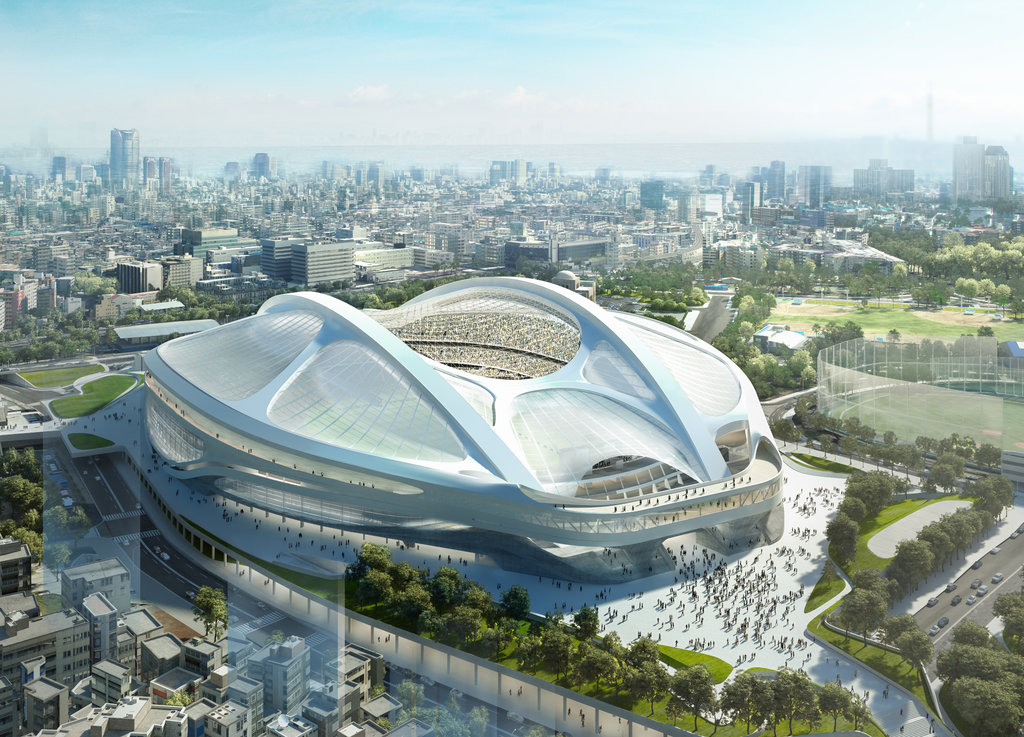
Olympic stadium by Zaha Hadid proposed for, now rejected by, Japan. (NYT)

Olympic stadium by Zaha Hadid proposed for, now rejected by, Japan. (NYT)

Zaha “Ha-Ha” Hadid’s design for an Olympic stadium for the 2020 Summer Games in Tokyo has been controversial since Japan was selected to host the games in 2013. Now Hadid’s proposal has been axed by Japanese officials. You might almost say the design committed hari-kari. But Ha-Ha herself hasn’t been sacked. Yet.

The stadium suicide is suggested by comments by officials in the New York Times article “Japan Scraps Olympic Stadium Plan Over $2 Billion Price Tag,” which also quoted Hadid saying that her plan was just a plain old vanilla envelope for sports – “standard materials and techniques,” quoth her office. Right. That’s why her nickname is what it is.

Last year, after revising her design at the behest of the Japanese, she told Dezeen, an online design mag, that “they don’t want a foreigner to build in Tokyo for a national stadium.” Some Japanese admitted it and were accused of chauvinism, of course, but why shouldn’t Japan want its national stadium to be designed by a Japanese architect?

Just because so few in power and authority in the victimized nations complain about this brutal form of western cultural imperialism doesn’t mean it is not objectionable. Priceless national heritage has been slaughtered by these marauders for decades now. The folks who regularly deplore Columbus have not uttered a peep.

That Japan has junked the design for its extravagant cost may be unprecedented. Who has quailed in the face of mounting budget overruns when the bright, shining reward at the end of the golden rainbow is a starchitectural masterpiece! Pulling the rug out on it before it pulls the rug out on your country is just is not done.

So kudos to the Japanese for their rare good sense. But do not forget that the skyrocketing costs – already breaching $2 billion – are directly related to the design. The Times reports:

Olympic officials say rising costs for labor and materials are responsible for about a third of the increase in the estimated cost. But they attribute more than $600 million of the increase to the design itself, specifically its use of two massive, curved support arches that run the length of the building.

Modern architecture runs over budget regularly because modern architecture is always reinventing the wheel. This stadium is no exception. Modern architects trip over each other not only to avoid “copying” the past but also to avoid copying each other. Building very difficult and complicated structures called buildings by embracing the best practices of architectural predecessors makes abundant sense but in modern architecture is verboten. That is just one reason why modern architecture costs so much, but perhaps the most basic one.

This stadium has been criticized for looking like a bike helmet, a turtle, an oyster and a white elephant. Before its revision it looked like a horseshoe crab. Now it looks like a dinosaur. Let’s hope people take to heart this object lesson on why modern architecture itself deserves to go extinct.

Posted in Architects, Architecture, Architecture Education, Art and design, Development, Other countries | Tagged , , , | 4 Comments

“Up from Ugliness” at NYT

Rendering of new Apple headquarters in Cupertino, now under construction. (Wikipedia)

Rendering of new Apple headquarters in Cupertino, now under construction. (Wikipedia)

Here is what I wrote about a New York Times column before learning it was published not recently but in 2011. Sigh. Well, the points do remain valid.

* * *

Ross Douthat, a regular columnist at the New York Times, has written a piece, “Up from Ugliness,” that has made leading modernist architecture critics very, very uncomfortable. He has brought beauty back into the conversation. His column may have as much positive influence as last December’s NYT piece “How to Redesign Architecture,” which argued that architects should listen to the public’s rejection of their profession’s conceits.

Like Steven Bingler and Martin Pedersen, Douthat shrinks from using the M word. But he does not hesitate to invoke the real cause of ugliness in our built environment: modern architecture. Like Bingler and Pedersen, he aims his ire at the real problem:

Our architects grew bored with beauty, our designers tired of elegance, our urban planners decided that function should trump form. We bulldozed row houses and threw up housing projects. We built public buildings out of raw concrete. … Our churches looked like recreation centers, and our rec centers looked like re-education camps. Our campuses and civic spaces were defaced by ziggurats of cement. Our cities had crime-ridden towers and white elephant shopping centers where the neighborhoods used to be. Our suburbs were filled with what James Howard Kunstler described as the “junk architecture” of strip malls and ranch houses.

Douthat missed a beat by overlooking Kunstler’s coined word “crudscape,” and I have removed from the above quote some of the non-architectural things he finds ugly, such as shag rugs. But Douthat gets it. He adds:

Then, gradually and haltingly, beauty began to make a comeback.

Bingo! But Douthat overlooks the work being done by the classical revival – architects working to bring back the traditional styles people love. Houses that look like houses! Banks that look like banks! Churches that look like churches! OMG! There are a lot of architects making them now, along with craft workers who are learning how to make the ornament and do the detail work that was banned by the modernists.

Still, Douthat is merely a columnist for the New York Times. He cannot be expected to know everything. He deserves a lot of credit for giving credit to the new urbanists for bringing beauty back into our communities: “A ‘new urbanist’ movement championed a return to walkable neighborhoods, human-scale housing, and pleasant public spaces.”

That may be the line that brought the modernist cuckoos (including major architecture critics) out of the woodwork, commenting furiously on Douthat’s article.

But he seems to have confused new urbanism with the preservation movement. “For all its successes,” he writes, “the new urbanism sometimes feels more like a reclamation project than a renaissance: it’s saved the row houses of yesterday without building the neighborhoods of tomorrow.”

No it hasn’t! Not on either count.

It’s the preservationists that saved the rowhouses. But the new urbanists have built the new neigborhoods of tomorrow: new rowhouses and other lovely housing types that are popular because they buy into the traditional idea of beauty that, after centuries, was second nature for architects until modernism came along. The new urbanists make their new towns and new neighborhoods with the same idea – new places of such surprising beauty that they are now being bid up by the rich. Traditional beauty is why the new urbanism is so successful. (Ditto the old urbanism rescued by the preservation movement when it was still interested in chaining itself to bulldozers. No longer, alas; it is in bed with the modernists.)

How unfortunate that when Douthat downshifts his dudgeon into high gear, he locates the answer to the problem in Steve Jobs. He writes of “the Apple founder’s eye for grace and style, and his recognition of the deep connection between beauty and civilization.”

Where Douthat’s thinking goes off the rails is with his equation of Apple and beauty. And there is an awful lot to be said for Jobs’s eye for grace in the design of machines. But after cataloging the modernist torture of the built environment, he forgets that in the realm of “machines for living in” (as modernist founder Le Corbusier put it), ugliness remains king.

If anything, modernists – who themselves have now “evolved” from the concrete and glass boxes of Corbusier and Mies to the dizzying swirly-whirly of Frank and Zaha – are stealing Jobs’s eye for purity of line and applying it to structures far larger in scale than a Mac Mini or an iPhone. Purity of line that you can hold in your hand behaves differently at the scale of a building. The iPad as skyscraper: been there, done that. An iPhone standing tall on the skyline might tip over in a way inimical to the health of people and other living things. They are all over the place, and a big part of the problem.

As Douthat points out, very large objects that show the stigmata of design that is “bored with beauty” is where the real problem lies. An iPod is a very small object. A Maserati is larger, but still falls into the category of small objects – which we perceive in a single glance. A car may be the largest scale that Jobs’s aesthetic can hope to reach without recapitulating modern architecture’s latest failures.

Try walking next to a skyscraper whose glass and steel ram into the sidewalk producing a sterile experience, something that is much more intimidating than it is graceful. That’s a scale that Jobs’s beauty cannot handle. When Apple workers in Cupertino move into Norman Foster’s lame, UFO-esque attempt at an iBuilding, they will see what I mean.

Douthat gets what the problem is. That’s a big thing. He does not get from there to the solution, which is forgivable given decades of propaganda and misinformation in which we all, all of us around the world, have been marinaded for many decades. But it’s a start, and because it’s in the New York Times – again!!! – it is important.

* * *

Here is my post “Between the lines at the NYT,” after the Bingler/Pedersen essay was published last December.

Posted in Architects, Architecture, Art and design, Development, Preservation, Urbanism and planning | Tagged , , , , , , , , , , , | Leave a comment

Redesign this awful garage!

Proposed garage at South Street Landing, in Providence. (gcpvd.org)

Proposed garage at South Street Landing, in Providence. (gcpvd.org)

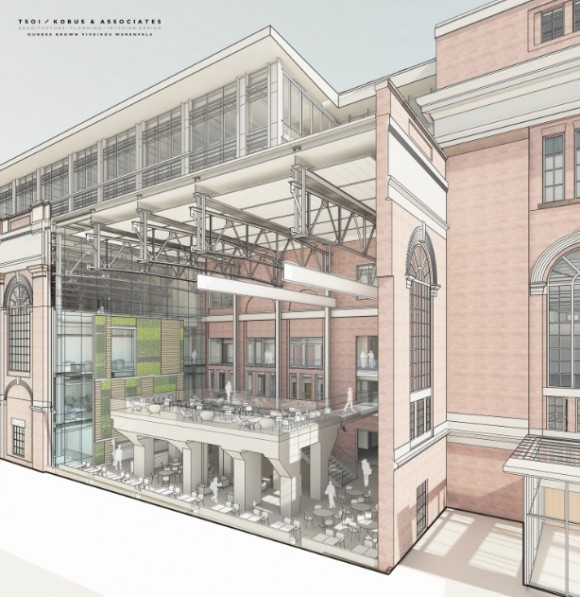
The proposed garage above is part of a project that is to feature a Rhode Island state nursing school housed in a Beaux-Arts former electric plant. South Street Landing, as the project is known, will also have offices for Brown University, housed supposedly in the old electric plant, and a dormitory that will also be newly built, apparently of a design quite as appalling as the garage above.

South Street Power Station. (providencedailydose.com)

South Street Power Station. (providencedailydose.com)

Power station design in earlier rehab project. (interactives.wpri.com)

Power station design in earlier rehab project. (interactives.wpri.com)

Why the state and Brown have not proposed a garage and dormitory that would fit into a lovely setting already created by the electric plant is a question that boggles the mind. One of the very few competitive advantages Rhode Island can boast of is its beauty – and yet it keeps fostering a modernist development strategy that has already eroded its beauty for decades.

More so than any other state, leaders in Rhode Island are close enough to the population to have an idea what it thinks. But nobody with power and authority in government or business here seems to care a fig for what the public thinks of their deteriorating built environment.

It is almost as if our leaders think that poking citizens in the eye with a stick will create jobs.

Go figure!

Dormitory, garage and nursing school, as envisioned, at South Street Landing project.. (gcpvd.org)

Dormitory, garage and nursing school, as envisioned, at South Street Landing project.. (gcpvd.org)

Posted in Architecture, Art and design, Development, Preservation, Providence, Urbanism and planning | Tagged , , , , , , | 7 Comments

Lincoln Center blowback

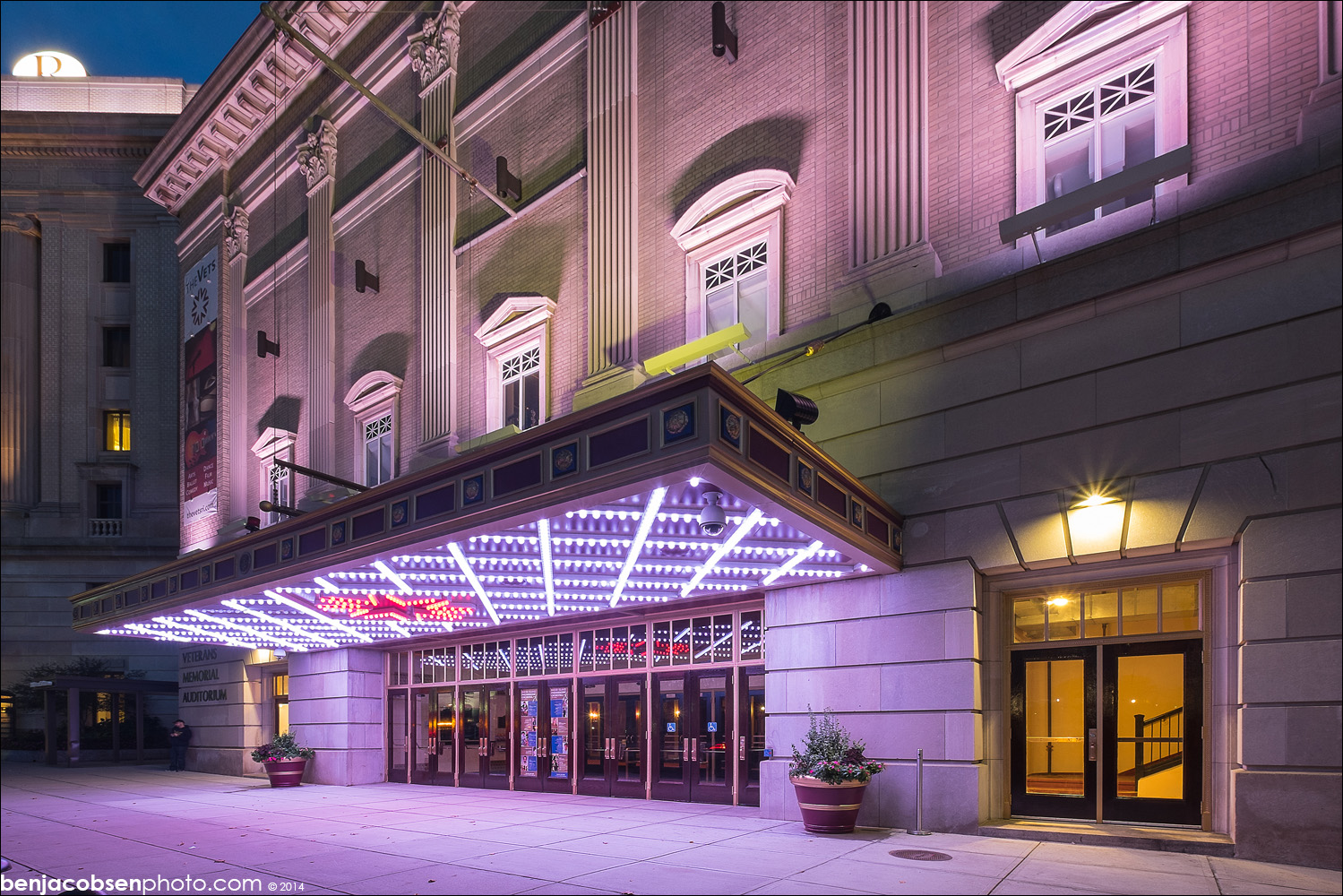
Veterans Memorial Auditorium, in Providence. (vmari.com)

Veterans Memorial Auditorium, in Providence. (vmari.com)

New York’s mammoth Lincoln Center has in recent years seen the demise of the New York City Opera – after its director cancelled a season of popular operas and replaced it with “modern” operas – and the near demise of the Metropolitan Opera, which has suffered under a big-spending director with “erratic artistic judgment.” And the director of the New York Philharmonic is stepping down amid widespread dismay over his tenure as its leader even as the concert hall closes for necessary renovations.

The judgments are from Terry Teachout’s thorough assessment of the grand facility in the latest issue of Commentary. “Lincoln Center’s Dark Legacy” describes, in part, how Lincoln Center mismanagement has undermined the fine arts and the performing arts in the rest of the country.

Teachout says that even for New York City, the out-of-scale ambition of the Lincoln Center, as conceived by New York’s development impresario Robert Moses, is largely unsustainable. Noting that only its smallest venue, Lincoln Center Theater, is on a sound artistic and managerial footing, he adds that

Lincoln Center’s performing spaces, in common with other concert halls and opera houses built in the ’60s, lack the inviting aura of 19th-century auditoriums like Carnegie Hall or the Vienna Staatsoper. Not only are they “modern” in an anonymous, off-putting way, but their public areas are famously uncomfortable.

Modernism in facility aesthetics and programming is not Teachout’s focus, but the rest of us should pay attention. Its degenerative influence is even more severe on places that lack the “captive” audience of Manhattan.

Leaving aside the plug-ugly copy-cat facilities everywhere, the Lincoln Center’s legacy of gigantism and its penchant for avant-garde fare has trickled down throughout the nation. Such trends have only made it more difficult for smaller concert halls, opera houses and other facilities, public and private, usually on tighter budgets, to keep aging audiences for music and other performing arts satisfied. That’s a big challenge as other entertainment options, often without any pretense to finesse, grow inside and outside of the home.

With news of the retirement in two years of Larry Rachleff, the beloved artistic director of the excellent Rhode Island Philharmonic, some of Teachout’s judgments bear on Rhode Island’s fine-arts future.

Nobody wants Rachleff to go, of course. In 20 years filling his part-time post, he has raised the quality of performances by the orchestra to a level that warrants and receives national acclaim. To be sure, modernist pieces that test the patience of listeners are inserted into almost every program – never at the end, of course: people could just walk out at the end of the previous piece; after all, the finale ought to be worth standing up for. But his talents as a conductor and leader of the orchestra and of the Music School – talents so extraordinary – have made up for that very serious flaw in his concert programming.

Many Rhode Islanders recall what happened when Adrian Hall retired after a quarter century as Trinity Rep’s artistic director. Anne Bogart brought in a raft of modernist plays and staged classic plays in modernist garb. Subscribers said “No thanks!” in droves. Her tenure lasted just one year but did years of damage to the theater’s bottom line.

With that model of what not to do still strong in Rhode Island’s artistic firmament, the philharmonic’s board is, I assume, intelligent enough to avoid making that mistake.

But don’t hold your breath. The state keeps making that mistake in the realm of development, and keeps wondering why the state’s economy just keeps on sucking wind.

In a state as small as this, it is both necessary and possible to keep faith with a market and an electorate whose populations are closer to their leaders than anywhere else in the country. Thus, it makes no sense that state and private development projects continue to be designed here as if poking the public in the eye with a stick will create jobs. Just look at the garage being proposed for the nursing school at South Street Landing. If the state’s leaders can ignore obvious wisdom in economic development, it can easily do so – again – in the fine arts.

Posted in Architecture, Architecture History, Art and design, Development, Providence, Rhode Island, Urbanism and planning | Tagged , , , , , , , , , , , , , | 2 Comments