Children and architecture

Author Dale Hrabi's playhouse as a child in Alberta. (WSJ)

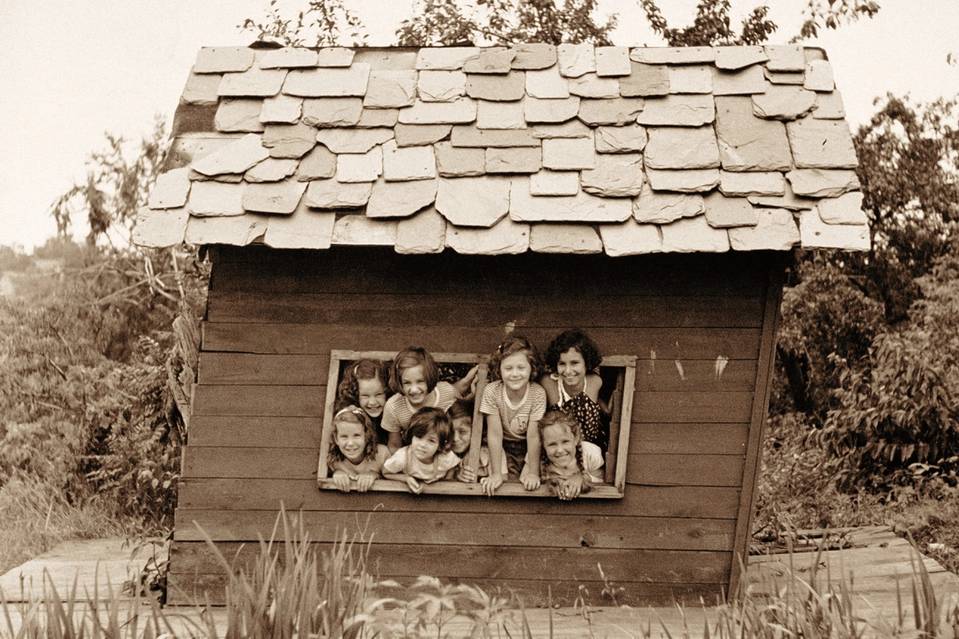
“Girls in a midcentury playhouse only slightly more architecturally distinguished than the author’s.” (WSJ/Getty Images)

Andres Duany has sent to TradArch a charming article, “Why Children Need Playhouses,” in the Wall Street Journal. Dale Hrabi describes his ramshackle playhouse behind his boyhood home in Alberta as a place to get away from his parents, how his parents cooperated with that, and how that contributed to his stability and maturity. The piece describes, comments on and pictures in a slideshow five contemporary playhouses.

I enjoyed the bit where Hrabi reacts with astonishment at a description of one of the playhouses on sale for $5,599 that has the option of an additional door sized for parents, who supposedly are invited to join together in play with their children. “Hold on. Together?” Hrabi says that as a child he would have “instituted stricter security policies.”

This gives me a convenient opportunity to quote from an old column of mine, from March 8, 2001, “Children as experts on architecture,” that for the first time unpacked what has become one of my favorite hobby horses. It begins with a conversation between a boy and his dad about a street in Amsterdam, where they are on vacation:

The boy (or girl), who is nine, stops short and says:

“That building sticks out like a sore thumb.”

“It’s modern architecture, son.”

“I don’t like it.”

“I think the architect was making a statement.”

“I thought architects were supposed to make buildings. Can’t they pass a law against architects who make statements?”

The father takes his pipe from his mouth, smiles, and they continue walking. He explains that “each building has to reflect its era.”

“Its error?”

“No, son, its era, its period in history.”

“Oh. Well, I guess you must be right, dad.”

They round the corner and disappear from view.

Let’s analyze their [fictional] conversation. The father has just revealed to his son the conventional wisdom of architecture. The boy’s simple attitudes about buildings have just become a bit more complex, mature, nuanced, subtle – in short, a bit more confused.

The column goes on to explain why children have more sophisticated views on architecture than adults, and why the vast preponderance of adults, who do not have an advanced degree in the design fields, have more sophisticated views on architecture than most architects and other design experts. I will try to find the column and post it.

Posted in Architecture, Architecture Education, Art and design, Blast from past | Tagged , , , , , | 4 Comments

De Botton contra Ionic Villa

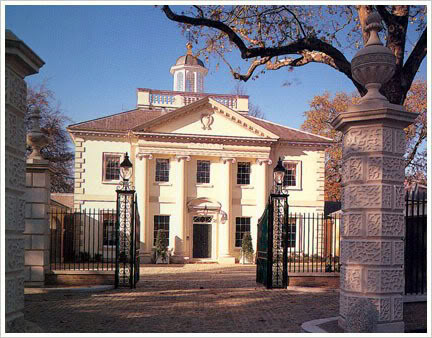
Ionic Villa (1900) by Quinlan Terry. (wirednewyork.com)

Ionic Villa (1900) by Quinlan Terry. (wirednewyork.com)

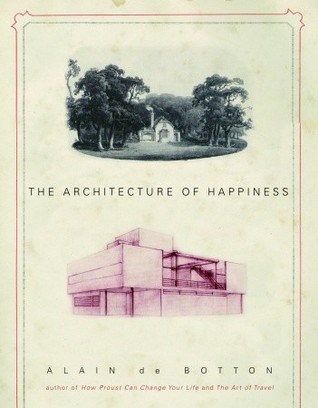
Above is a photo of a Palladian mansion in London’s Regent Park designed by Quinlan Terry, completed in 1990. It is really quite undeniably beautiful. Really? Undeniably? Well, maybe not quite. “We might expect the house,” writes critic Alain de Botton in The Architecture of Happiness, “to have been recognized as one of the superlative buildings of contemporary London, and Anglo-Saxon heir to the Villa Rotonda, and yet, in reality, the structure has garnered less flattering verdicts, and, among the more forthright, outright ridicule.”
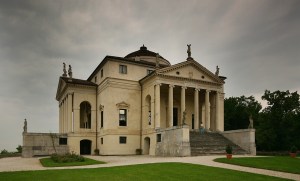
Villa Rotonda, by Andrea Palladio

Villa Rotonda, by Andrea Palladio

Of course, the less flattering verdicts come exclusively from de Botton’s crowd who hate new classical architecture. Ridicule? Naturally, any new building that hews to principles of beauty that have stood the test of time – 400 years in Palladio’s case – must pall next to buildings that are “of our time.” One is expected to bow down way low and doff one’s cap to such buildings, most of which are ugly, cold, sterile, impractical, prematurely decrepit structures that induce vertigo when they are not threatening to collapse, if they have not already.

Such buildings are considered to be “of our time” because they aim to reflect the era in which they were built, an era (we are told) of danger, crime, war, poverty, hunger, racism, sexism, pollution,  corruption, profligacy, ignorance, insincerity, waste, etc. Modern architecture is not supposed to ameliorate humanity’s flaws and problems but to reflect them. And it does!

Terry’s Ionic Villa, which to my eyes seems indisputably beautiful, is a failure, according to de Botton’s much more highly paid and widely acclaimed powers of observation and reflection, precisely because it follows a set of principles – those of Palladio – designed to produce beauty.

The villa’s problems are multiple. Its forms seem out of sympathy with their era, they communicate feelings of aristocratic pride, which sit oddly with contemporary ideals, the walls are too creamy in colour, while the materials have a lustre and flawlessness that mar the impression of aged dignity which endows Palladio’s own villas with charm.

Huh? Where to begin? We’ve already dispatched the “out of sympathy with our era” complaint. “Aristocratic pride”? Is that supposed to be worse than the hubris of today’s financial aristocracy whose starchitects de Botton favors? It’s certainly not as ugly. “Sits oddly with contemporary ideals”? Does he refer to the ideal of cultural genocide that his favorites pursue in sucking up to their elite kleptocratic clientel among the world’s worst tyrannies and autocracies? Or the titanium-plated unsustainability at the heart of every modernist building? What to make of the accusation that the Ionic Villa has “walls too creamy in colour” and “a lustre and flawlessness that mar the impression of aged dignity” that Palladio’s villas achieved. Might not the Villa Rotonda have had what de Botton might consider a regrettable lustre and flawlessness when it was new – over four centuries ago!

What a collection of trumped-up charges! The world, and certainly American suburbia, is filled with failed efforts to toot the Palladian horn. Why such an obviously lame effort to dump on this one magnificent mansion? Clearly the answer is that de Botton feels mightily threatened by what Terry achieves in his Ionic Villa, in all his work, and what is achieved by the growing number of architects pursuing the classical revival in Palladian and other (often more heterodox) attempts to re-establish the idea of beauty as an appropriate goal for architecture today.

And he is right to feel threatened – which is why the Institute of American Architects is so adamantly opposed to a level playing field for major design commissions. He, it and all modernists know, in their bones, that if a truly level playing field were ever established in the apparatus that directs development in America and elsewhere, it would not be level for long. The rush to resume building attractive cities would tilt the playing field back toward tradition before you could utter the words “radiant city”!

And humanity has every right and every reason to resist the continued dominance of the architectural cult that has trashed the built environment around the world. Our era? No, our error. But no, not our error. We are the victims and it’s time we rose up against the victimizers. Architecture has the power to make us happy, as de Botton seems to vaguely perceive. But how can architecture that reflects our flaws rather than our ideals possibly make us happy? His charming book is a thickly veiled attempt to gently embarrass us into continuing to knuckle under to the hatred of beauty that motivates the architectural establishment.

Gee, I feel like I’m standing on a soapbox! Let me end this post before I rise up from my chair and start shouting at my computer!

Posted in Architecture, Architecture Education, Architecture History, Art and design, Urbanism and planning | Tagged , , , , , , | 2 Comments

A new design for Parcel 12

Rendering of latest hotel design for Parcel 12 in downtown Providence. (ZDS)

Rendering of latest hotel design for Parcel 12 in downtown Providence. Click to enlarge. (ZDS)

The Capital Center Commission’s design-review panel took a look Tuesday morning at a pleasant, forthrightly classical hotel design presented by architect Eric Zuena, of ZDS, in Providence. There’s a lot to like in the new design for an eight-story extended-stay hotel on the triangle-shaped Parcel 12 downtown. It is one of two being proposed for downtown. The design of the other one, on Fountain Street, seems hopeless. The one on Parcel 12 is being developed by James Karam of First Bristol. It appears to simply want to be an attractive traditional building like the best of its neighbors. Imagine that!

Proposed hotel in context. (ZDS)

Proposed hotel in context. (ZDS)

The design improves upon an earlier, more suburban-looking version that was rejected by the panel before it could reach a higher potential. Just putting a triangular building on that triangular land might be best, with a gentle curve along Memorial Boulevard and a courtyard in the middle. Still, the new design by Zuena, who grew up in Rhode Island but has practiced overseas, makes up for this missed opportunity with a building that, while oddly shaped, has a distinctly classical base/shaft/capital arrangement fortified by pilasters, stringcourses and a bold (although not quite yet an elegant) cornice on top.

Nice. That’s progress. I offer recommendations for further improvement:

  • The moldings of the pilasters should feature curved lower lips rather than sharp edges. Maybe that is the intent, and it is merely the computer-aided design (CAD) program used by Zuena that suggests otherwise. Anyhow, since such elements are often fabricated on a machine these days rather than chiseled by stone carvers, it should cost little or no more to tweak the programmed settings and curve those moldings.
  • Ditto the moldings of the stringcourses.
  • The cornice wants more articulation, not necessarily dentils – squares lined up under the lower edge of a cornice that look like teeth – but at least more levels of molding. Importantly, the cornice should be extended entirely around the roof. Let’s not cheat Memorial Boulevard and, for that matter, the Woonasquatucket River.
  • Some of the windows could use more verticality, either by extending each window downward a foot or so (there seems to be room), or by replacing the central steel mullion of each with a thicker mullion of brick – or a mixture of those strategies.
  • The windows should also be set more deeply into the façades to increase the building’s sense of strength and authority.
  • The stone of the pilasters bracing the base’s two stories shouldn’t be so much darker than the stone (or precast?) of the pilasters as they rise the rest of the building’s eight stories. Ditto the stringcourses and the cornice. The high quality of the stone used will create a more pleasingly subtle differentiation even if they are the same color. (That appears to have been accidentally accomplished in part of the rendering (see Kennedy Coffee) on top of this post, and it looks better.

If greater quality of detail is achieved, that absence of curvature along Memorial will be less of a lost opportunity. A building that merely uses traditional methods to aspire to the beauty of its neighbors is doing an awful lot these days. Union Station, the Post Office Annex and the Federal Building are probably feeling pretty optimistic about this design. It could set the bar much higher in the sweepstakes here in Providence for daring design – yes, a quest for plain old beauty is daring these days.

Here is a PDF of the development proposal presented on Tuesday morning.

Architect Zuena reports that the design panel of the often-clubfooted Capital Center Commission seemed to like it. Good. Let’s see what happens next.

Rendering of earlier design of hotel, as seen from Memorial Boulevard. (First Bristol)

Rendering of earlier design of hotel, as seen from Memorial Boulevard. (First Bristol)

Rendering of hotel as seen from above Burnside Park. (ZDS)

Rendering of hotel as seen from above Burnside Park. (ZDS)

Rendering of hotel as seen from Kennedy Plaza. (ZDS)

Rendering of hotel as seen from Kennedy Plaza. (ZDS)

Rendering of hotel as seen from across Woonasquatucket River. (ZDS)

Rendering of hotel as seen from across Memorial Boulevard. (ZDS)

Posted in Architects, Architecture, Art and design, Development, Providence, Urbanism and planning | Tagged , , , , , , , , | 13 Comments

Shubow on WWI memorials

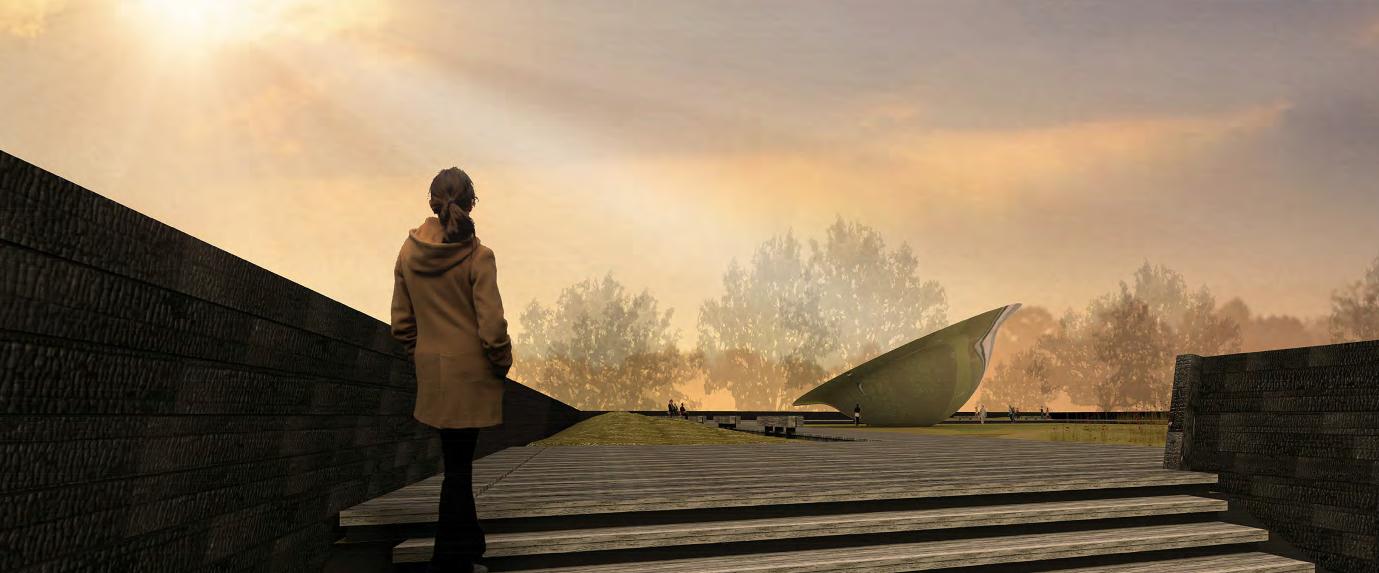
One of the less-ridiculous non-classical WWI memorial competition entries.

One of the less-ridiculous non-classical WWI memorial competition entries.

Here is the latest column in Forbes magazine by Justin Shubow, president of the National Civic Art Society, on the design competition for a monument to World War I: “First Look at the World War I Memorial Competition: All the Best Entries are Classical.” Judges have spent the last few days reviewing over 350 anonymous entries from around the world, of which maybe a score or so are classical. Anyone over age 18 was allowed to submit proposals.

I agree with Shubow’s assertion that the best entries are classical. It is disappointing but hardly surprising that so few are classical or traditional. Our design culture frowns on traditional work as not “of our time” – an intellectually vapid mental buzzword that has been granted influence it does not deserve. Only two or three major universities have classical curricula or even a choice between classical and modernist. Few architecture firms hire any classically trained designers. Now that I am no longer with the Journal, no major American newspaper has an architecture critic who supports traditional work, and all of the major professional groups, especially the American Institute of Architects, are organized not just to support modern architecture but to oppose new traditional architecture.

Thus classical architects are few and far between, though their number is growing, as is the number of artists and craftsmen (and women) who historically have worked alongside classical architects who consider art and craft as part and parcel of good architecture.

So it is sad that given this growing number, so few classical and traditional entries showed up on the doorstep of the World War I Centennial Commission, which sponsored the competition. Only 26 of more than 350 could be said to be classical.

I have reviewed all of the entries and found many of them to be mawkish, tendentious in their “war is bad” theme, and often completely bereft of reference to the First World War. A very, very few modernist proposals were not bad, embracing a stark modernist sense of order. But a shockingly large number of entries stooped to cockamamie sets of shapes, or shapelessnesses, abstract playgrounds of swoopy-doopy, lacking all pretense to dignity or honor. This has become almost the design template of memorials today. By far the largest percentage of entries were of this kind, hoping to ride a strategy of silly harmlessness to victory in the design competition.

Much of this reflects the folly of architectural education today, where learning how to design takes second place (if it places at all) to purging design intuition and inculcating the novelty mania. Which is odd considering how many entries seemed to be channeling Gehry or Hadid. I am sure that the overwhelming majority of the entries to this contest were produced by children. Too bad so few had the wit or the sense to channel someone like Maya Lin and her Vietnam Memorial, which at least has the grace of dignity. By now, that sort of thing probably strikes most conventional architects as boring, and anyway the rules barred listing the 116,516 American dead.

Of the 26 classical entries, maybe 10 seemed of considerably high quality. Seven of them may be seen in my post “Top classical WWI entries,” which contains the ones Shubow initially identified as the best. He has also placed all 350 entries on a 273-meg PDF.

The jury is examining the entries and will select “a handful” of finalists to develop their proposals further and compete in the second round. Good luck to the real architects here!

Posted in Architects, Architecture, Architecture Education, Art and design, Landscape Architecture | Tagged , , , , , , | 10 Comments

Why can’t we recreate Bath?

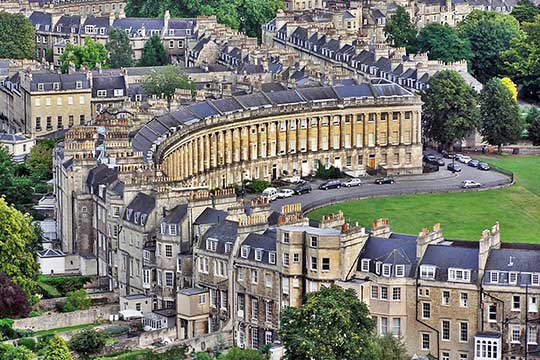
Bath, including the Nash Crescent. (studentcities.co.uk)

Bath, including Royal Crescent by John Wood the Younger. (studentcities.co.uk)

I am cruising through The Architecture of Happiness, wishing I had the time and energy to quote and then rebut its every line. Alain de Botton’s book is a masterpiece, but I have been forced to conclude that it is a masterpiece of dishonesty. Consider the following passage, from a chapter called “On the Virtues of Buildings”:

We might expect that it would, by now, have grown as easy to reproduce a city with the appeal of Bath as it is to manufacture consistent quantities of blueberry jam. If humans were at some point adept at creating a masterwork of urban design, it should come within the grasp of all succeeding generations to contrive an equally successful environment at will. There ought to be no need to pay homage to a city as to a rare creature; its virtues should be readily fitted to the development of any new piece of meadow or scrubland. There should be no need to focus our energies on preservation and restoration, disciplines which thrive on our fears of our own ineptitude. We should not have to feel alarmed by the waters that lap threateningly against Venice’s shoreline. We should have the confidence to surrender the aristocratic palaces to the sea, knowing that we could at any point create new edifices that would rival the old stones in beauty.

Has de Botton not noticed that sometime in the middle of the last century dominance of the fields involved in building cities was achieved by modern architecture and planning? Has he forgotten that, instead of a choice of modern and traditional work, national and city development authorities have sought to delegitimize and even to ban traditional buildings and patterns of urban design? Does he not realize that the movements of preservation and, later, new urbanism arose from “our fears of our own ineptitude” – or, rather, our fear of the will to ugliness that for years now has characterized architecture and planning?

I think de Botton knows all of this very well. His purported confusion is a species of fraud, of rank dishonesty. “In frustration,” he writes, “[architects] have turned against the very idea of laws [of civic beauty], declaring them naive and absurd, symptoms of utopian and rigid minds.” “In frustration”!? Does he not mean “In triumph”? Yet in the long passage above he admits that “at some point humans were adept at creating a masterwork of urban design.” He goes on to argue that a dictionary of building virtues is needed to revive our talent for building beautiful cities, and then pooh-poohs the idea.

“In frustration” is the locution he uses above to purport a sort of sadness among architects that they have lost the ability to create beautiful cities, when in fact, as de Botton knows very very well, it was not lost but banned. Preventing the construction of beauty in cities and working to destroy what was built before are major initiatives in architecture’s top organizations, the American Institute of Architects and the schools of architecture.

De Botton’s rhetorical switcheroo is dishonesty pure and simple, but he is so, so good at it that even I marvel at the sophistication of his prose, and his sly ability to subvert the obvious implication of almost everything he writes. A reader commenting on my last post quoting de Botton tarred him with the word “clever.” The word carries a hint of the idea of seedy manipulation. It is the perfect word to describe him.

Posted in Architects, Architecture, Architecture Education, Architecture History, Art and design, Books and Culture, Preservation, Urbanism and planning | Tagged , , | 6 Comments

“World’s Greatest Buildings”

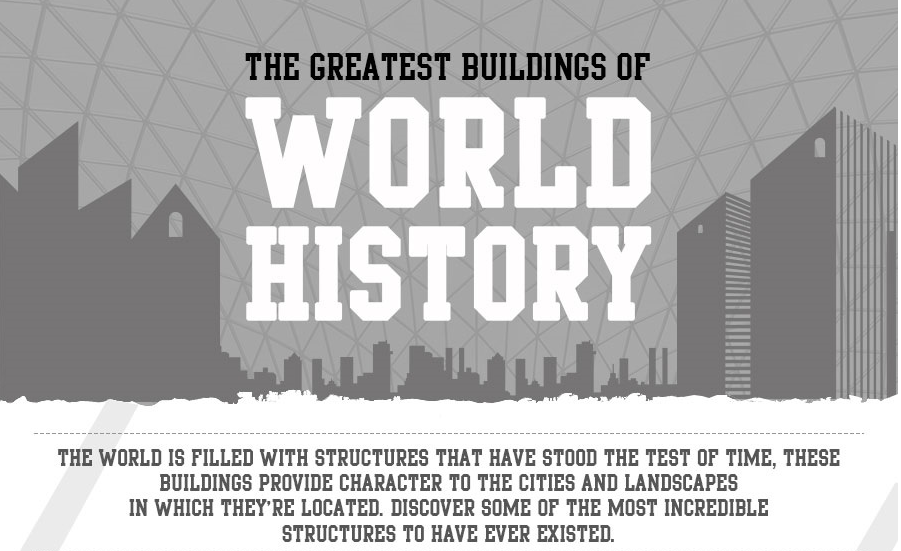
Screen shot of opening image in Andrew Sweeny's infographic.

Screen shot of opening image in Andrew Sweeny’s infographic.

Below is an “Infographic” depicting the great structural innovations of architectural history, kindly sent to me by Andrew Sweeny, of Pennywell, a company in Ireland that produces upscale kitchen work surfaces. Sweeny entitles his Infographic “The Greatest Buildings of World History.” Insofar as it includes the egregious Millennium Dome, in London, which is more like a tent than a building, the title is mistaken.

But not really, since the passage beneath the initial graphic (see above) introduces the buildings not as innovative but as having “stood the test of time,” which is something quite different. On the other hand, the Dome, built in 1999, has certainly not stood the test of time, and God willing, never will. (I pray for it to be peacefully but entirely demolished.)

In fact, the latest Pritzker Prize winner, Frei Otto, of Germany, was renowned exclusively for his tent-like structures. His Pritzker is merely another reason why Sweeny should not have included the Dome in his Infographic. And indeed Sweeny did strike the Dome off the Infographic after I objected to its inclusion, but I insisted on keeping it in, if only to abet the controversy that keeps blogs like this afloat.

Anyhow, most of Frei Otto’s tent-like buildings were erected decades before the one that besmirches the skyline of London, so the Dome probably does not really include much in the way of innovation, at least not beyond the sort of unprecedented arrogance required to build something so damned ugly in London. (But isn’t that old hat now?)

The final building in the infographic, the Burj Khalifa, in Dubai, is the tallest building in the world, and that must count as innovative. Still, completed in 2010, it has not stood the test of time.

But I quibble. The Infographic is filled with great details and is graphically intriguing. But let me insert one more quibble. Why is the White House on the list? It houses great men but is hardly a great building – nice enough, not great. Maybe housing U.S. presidents is some sort of engineering feat. I don’t think so! What is amazing about the White House is the extent to which an apparently unprecedented number of non-presidents have been able to climb its wrought-iron fence along Pennsylvania Avenue and approach (or even enter) the Executive Mansion. The only major error I found in the infographic was in this segment. Try to find it.

In fact, naming the great buildings left off this Infographic of the Greatest Buildings of World History makes a great parlor game. You first!

In addition to viewing the infographic, the reader is also entitled and indeed urged to click on a link to the website of Pennywell. Renovating your kitchen? Go for it! Hats off to Andrew Sweeny and Pennywell for producing The Greatest Buildings of World History.

Greatest Structures of History Infographic

Posted in Architecture, Architecture History, Books and Culture, Development, Humor, Other countries, Preservation | Tagged , , , , , , , , | 2 Comments

De Botton cracks abstract

(livingmyhouse.com)

(livingmyhouse.com)

Among the most cogent defenses of abstraction in art and architecture comes from Alain de Botton’s The Architecture of Happiness, which I am rereading. How does a building speak? How should people read houses? I have long believed that architecture – which above all must be practical – does not have quite as much to say as many of its advocates contend. De Botton takes an impressive crack at arguing otherwise.

“Two Segments and a Sphere,” by Barbara Hepworth (textingthecity.wordpress.com)

He takes inspiration from Barbara Hepworth’s 1936 sculpture Two Segments and a Sphere, at the Tate Gallery, in Cornwall, and critic Alan Stokes’s inferences as to the simple sculpture’s meaning. “The mobility and chubby fullness of the sphere,” de Botton writes, “subtly suggest to us a wriggling fat-cheeked baby, while the rocking ample forms of the segment have echoes of a calm, indulgent, broad-hipped mother. We dimly apprehend in the whole a central theme of our lives. We sense a parable in stone about motherly love.”

He reaches two conclusions: first, that it “doesn’t take much for us to interpret an object as a human or animal figure” and, second, that “our reasons for liking abstract sculptures, and by extension tables and columns, are not in the end so far removed from our reasons for honouring representational scenes.” He adds:

Once we start to look, we find no shortage of suggestions of living forms in the furniture and houses around us. There are penguins in our water jugs and stout and self-important personages in our kettles, graceful deer in our desks and even in our dining-room tables.

No doubt, but he leaps to illogic when he transfers this insight to architecture, and urges us to consider abstract buildings to be as beautiful as traditional buildings. After all, he says, when the public decries a modernist skyscraper as a “cheese grater,” maybe the average viewer of architecture should repackage that derisive moniker as insight, even as beauty.

Thus perceived, it may be impossible for a work of abstract art or of modern architecture to fail. It is true that we can find meaning in anything. Many of us discovered this as college sophomores sprawled on our dorm carpets at 2 a.m. But, to follow the logic of de Botton’s (and Stokes’s) thoughts on Two Segments, does the incline of a gabled roof truly mean aspiration (“Climb every mountain!”)?

Does it matter that we see a penguin in a water jug if the artist did not? Perhaps not. But what if the designer of a house with a gabled roof did not imagine that he was channelling Julie Andrews in The Sound of Music? Does it matter that different people might channel different things when they see the same building?

It may not, but don’t forget that architecture is viewed not just by people who choose to visit a gallery or a street to sample its aesthetic offerings. Architecture cannot be avoided by the public. It speaks not just to people trained to listen to its murmurings but also those who cannot read its mind or whose ears are not plugged into its vocabulary.

Not everyone is as deft as de Botton at teasing ideas from abstractions. And the fact is that the qualities that cause people to like or dislike architecture are the result of more basic kinds of cogitation. People like a house that looks like a house, a bank that looks like a bank, a church that looks like a church. They consider architecture that seeks to defy our ease of typological categorization to be an imposition on our patience. We are all busy people. Most of us do not believe we should be forced to have to try to figure out what a building is, or where its front door is located, let alone what meaning it wants to convey. Above all, many people look kindly – via human instinct and personal subconscious intuition driven by millennia of neurobiological survival training that we no longer need but which is still active in our brains – upon buildings that make their purpose clear.

23418

De Botton’s book is a masterpiece of projection. He takes his own capacity to discover meaning and assumes that everyone else has the same ability. But they do not, or they do not choose to refine whatever capacity they have, or to direct it at the question of meaning in architecture. At bottom, the appreciation of traditional architecture is natural while the appreciation of modern architecture is learned. And because so many of us are untutored in that specialized language, we don’t appreciate it. And because it makes the demand that we appreciate it anyway – or take its value as given – modern architecture is properly conceived as an improper imposition on our minds.

In short, it is ugly. It is not always ugly but it is ugly as a rule. Its beauty is an exception to the rule – almost accidental, certainly rare. Alain de Botton’s mind is supple enough to perceive this truth, and he hints at it again and again in his book, which is why it first struck me as a roller coaster of a reading experience. But he refuses to remove the blinders to reason installed by the ideology he serves. Still, his book is fun and worth reading. Many readers will enjoy filling the margins of their copy with rebuttals to his assertions. The Architecture of Happiness is not a roller coaster but a debate with himself that he loses.

Posted in Architects, Architecture Education, Architecture History, Art and design, Books and Culture | Tagged , , , , , | 2 Comments

Epson pano photo winners

Click to enlarge. Photographer above: Stanislav Sedov. Photographers below, in order: Sedov; Dmitriy Moiseenko; Ivan Roslyakov;  Moiseemenko.

Click to enlarge. Photographer above: Stanislav Sedov. Photographers below, in order: Sedov; Dmitriy Moiseenko; Ivan Roslyakov; Moiseemenko.

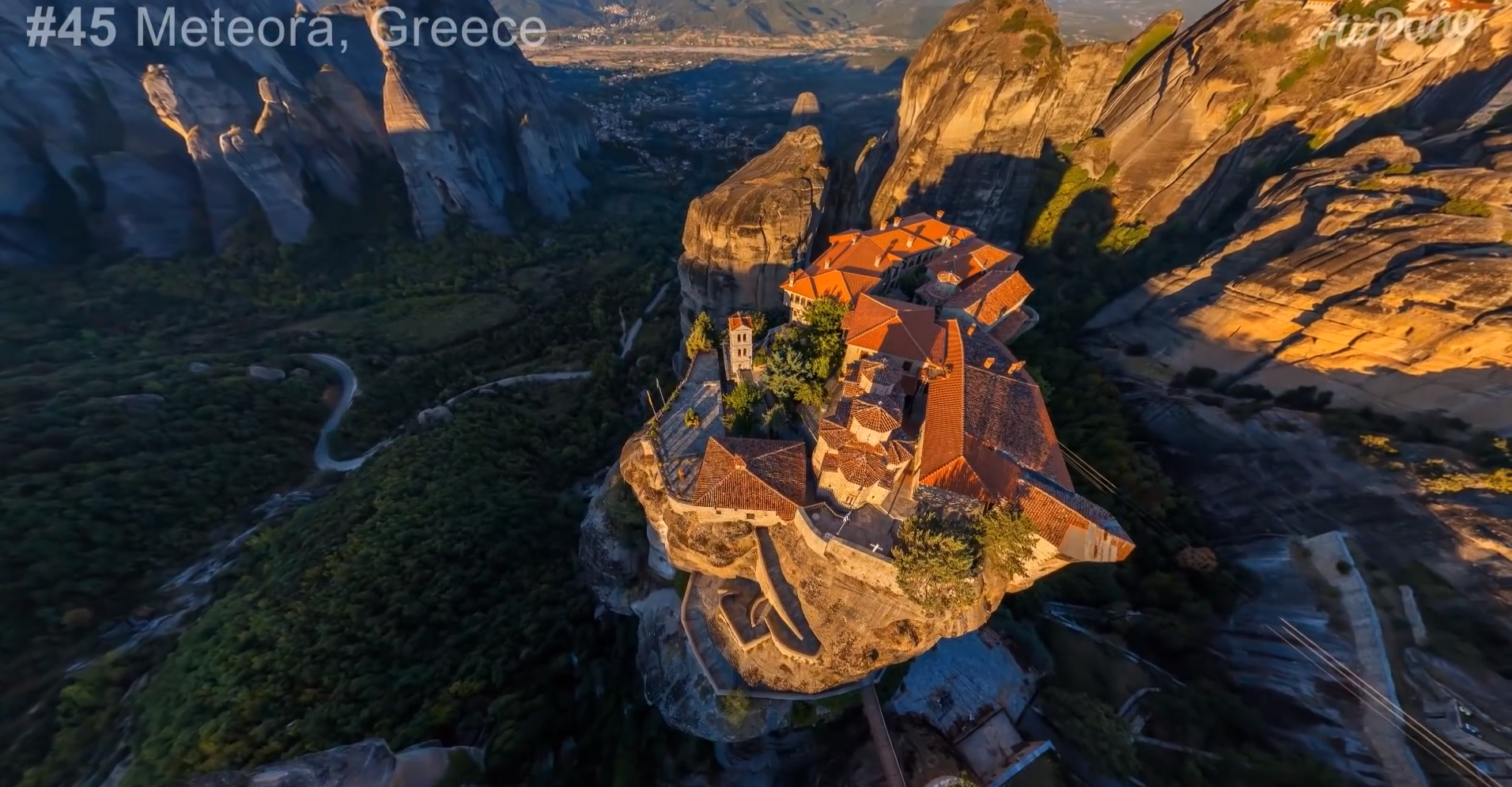
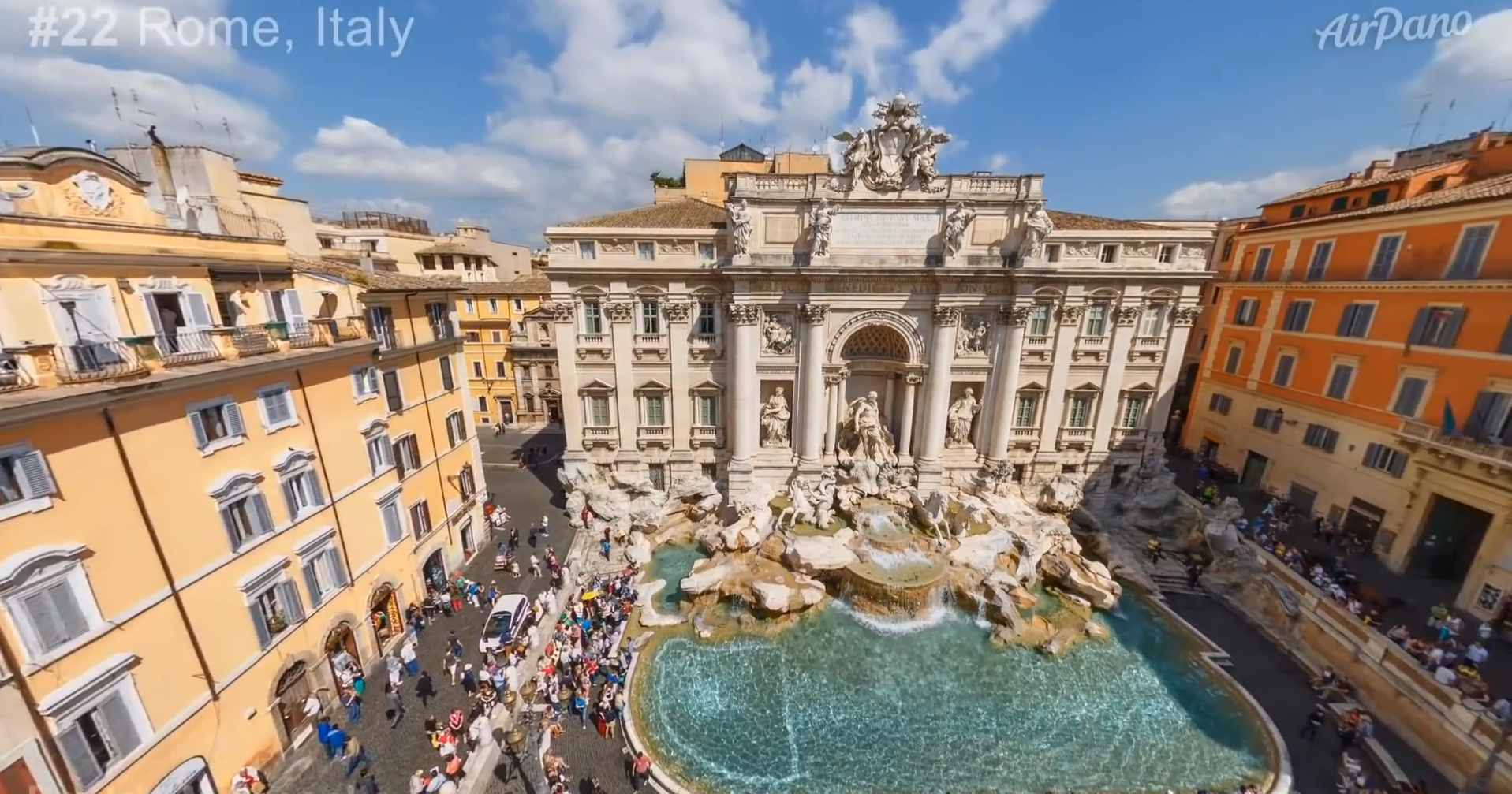
Here is a dramatic set of swooping shots taken by video of winning 360° panoramic photographs – stills taken in the round – from throughout the world, cities, the wild, geographic formations – it’s all here for your pleasure from the Epson International Pano Awards. My small selection here favors shots of cities but click the link and you will be rewarded by another couple of dozen examples in this elegantly arising photographic tradition.

Hats off to Lee Juskalian for sending me this link.

Screen Shot 2015-08-02 at 11.41.29 AM

Screen Shot 2015-08-02 at 11.38.48 AM

Screen Shot 2015-08-02 at 11.37.49 AM

Screen Shot 2015-08-02 at 11.34.40 AM

Posted in Architecture, Architecture History, Landscape Architecture, Other countries, Urbanism and planning, Video | Tagged , , , , | Leave a comment

Boston’s Olympic belly flop

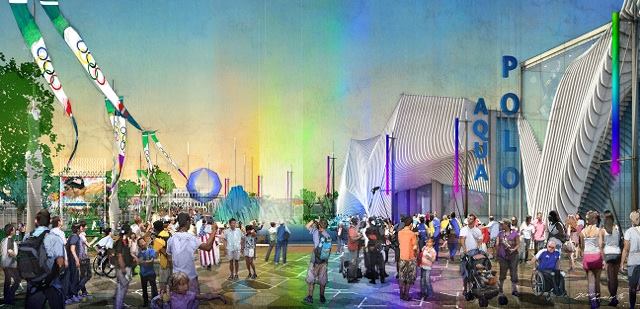
Rendering of someone's idea (straight or mocking) of an Olympic village in Boston. (bostinno.streetwise.com)

Rendering of someone’s idea (straight or mocking) of an Olympic village in Boston. (bostinno.streetwise.com)

Boston’s Olympic belly flop has sent crocodile tears gushing down this critic’s soaking, heaving cheeks. The city’s withdrawal of its bid to host the 2024 Summer Games leaves your vitriolic correspondent bereft. An endless parade of proposals for modernist Bird’s Nest wannabes and other sports ephemera – athlete villages, media centers, swimming quadrangles, bicyclotrons, fake volleyball beach-o-dromes and white elephants without surcease – has just marched off the cliff of Beantown inhospitability to the vicissitudes of the Olympic bottom line. My only consolation is a long vacation for the weary muscles that promised to roll my eyeballs in circumnavigation of the global folly of Olympic architecture.

You can tell how crushed I am by Boston’s abortive bid. A Summer Games 40 miles from Providence would have meant a bottomless pit of chortling from this corner. Visits from a battalion of designer-eyewear-bedecked starchitects to propose, perchance to build, the next blotch of God’s wrath on stadia would have meant excavating Kookhaasian turds embedded in scores of interviews in The Boston Globe. Well, there will still be a Summer Games somewhere, inflicted upon New Englanders by television, not the tax man.

Posted in Architecture, Art and design, Development, Humor, Urbanism and planning | Tagged , , , , | Leave a comment

The sculpture of place

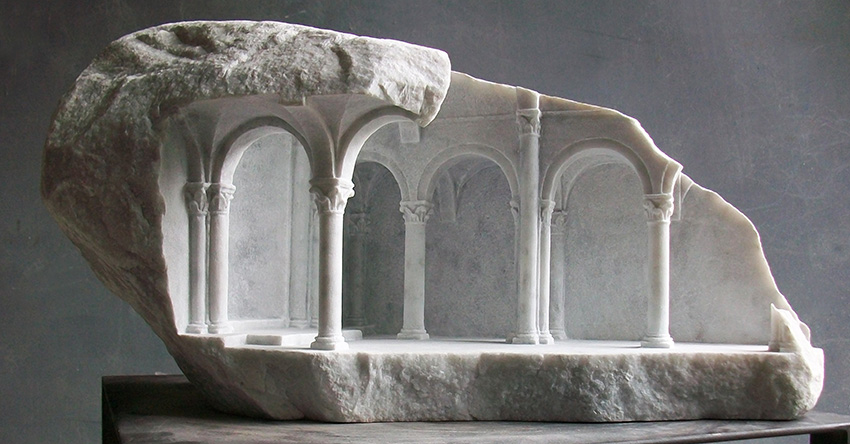
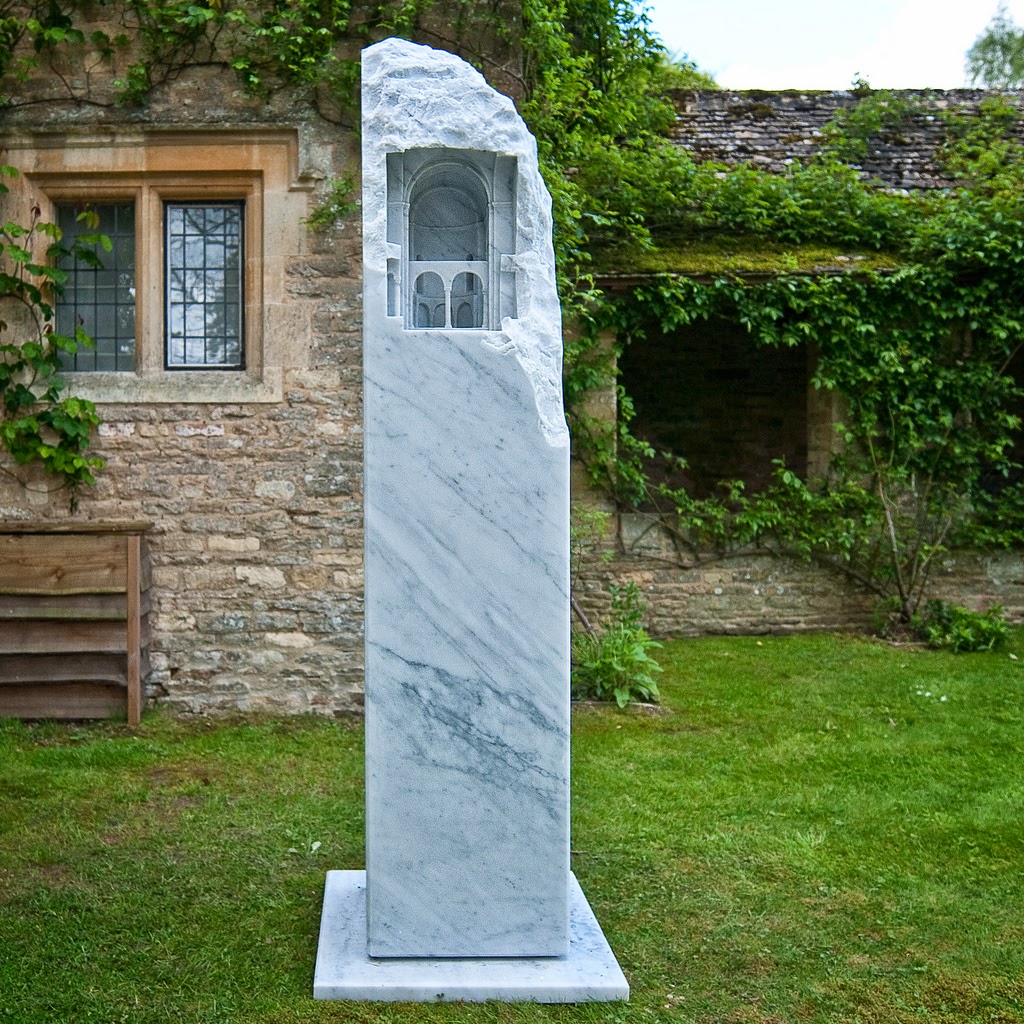
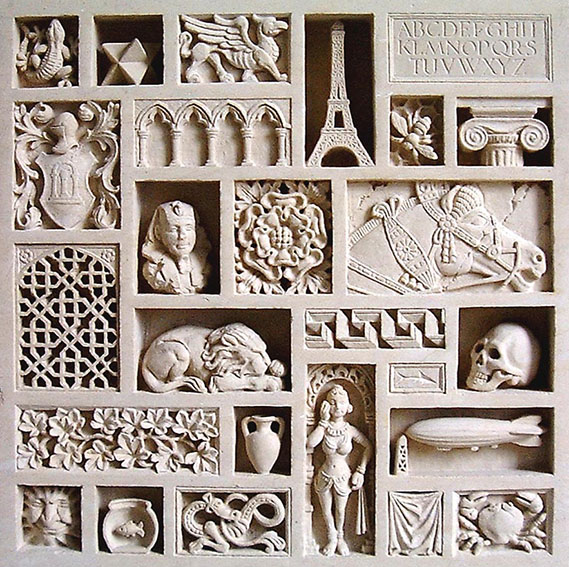
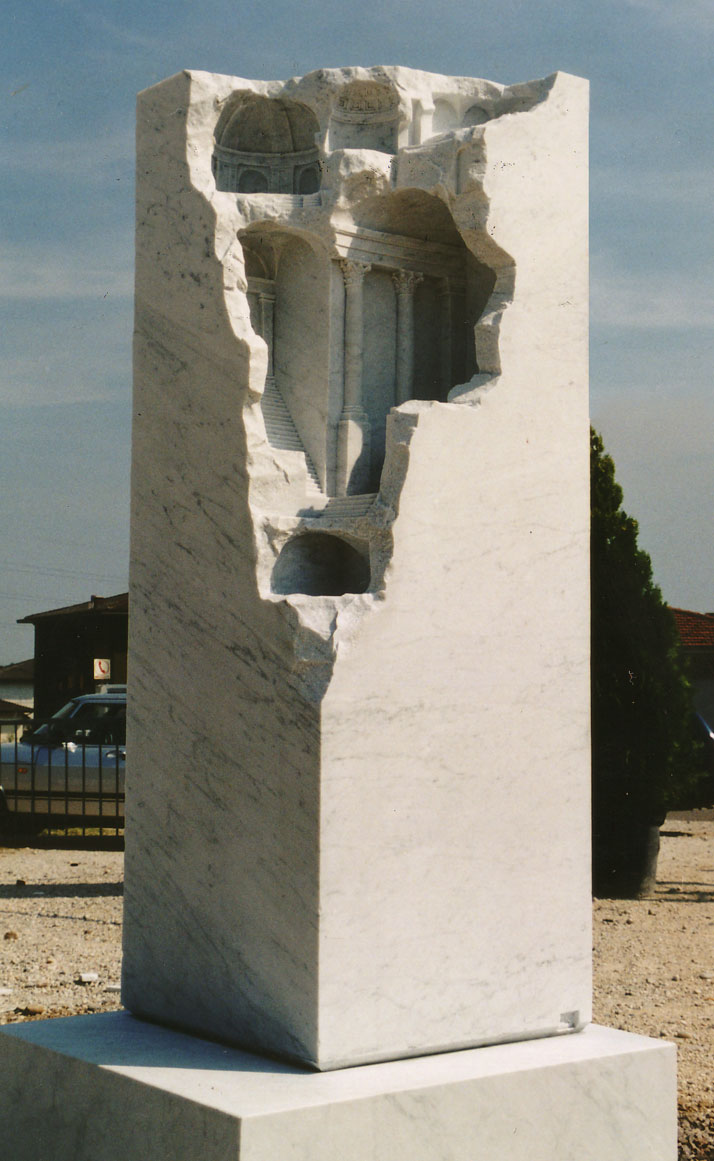
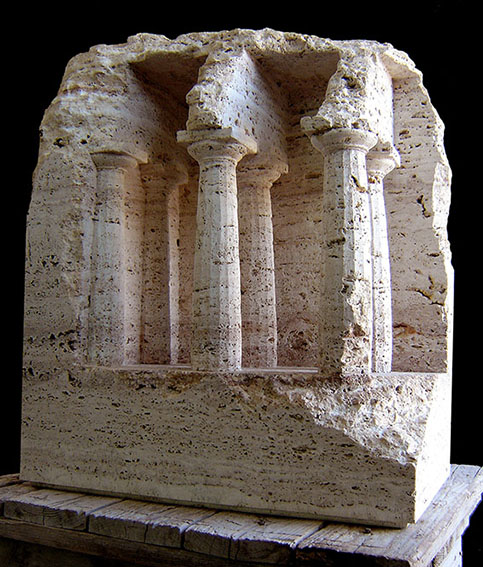
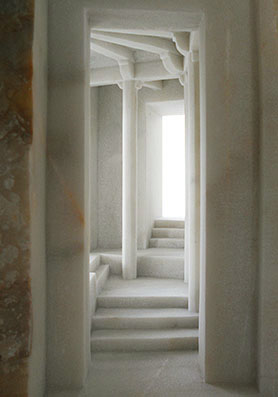
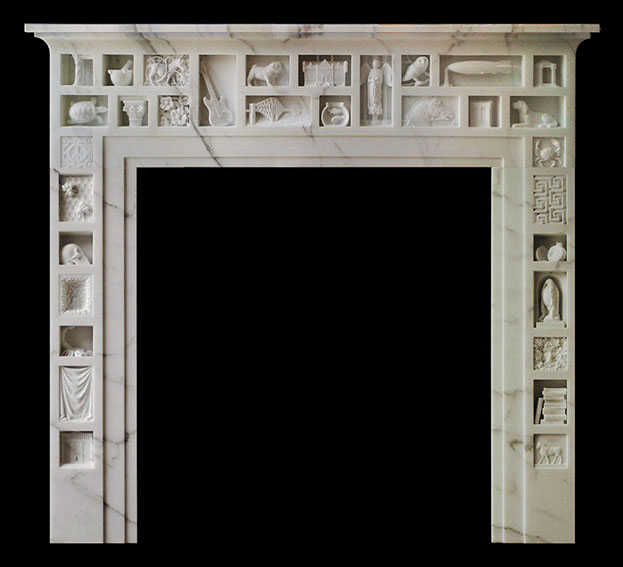
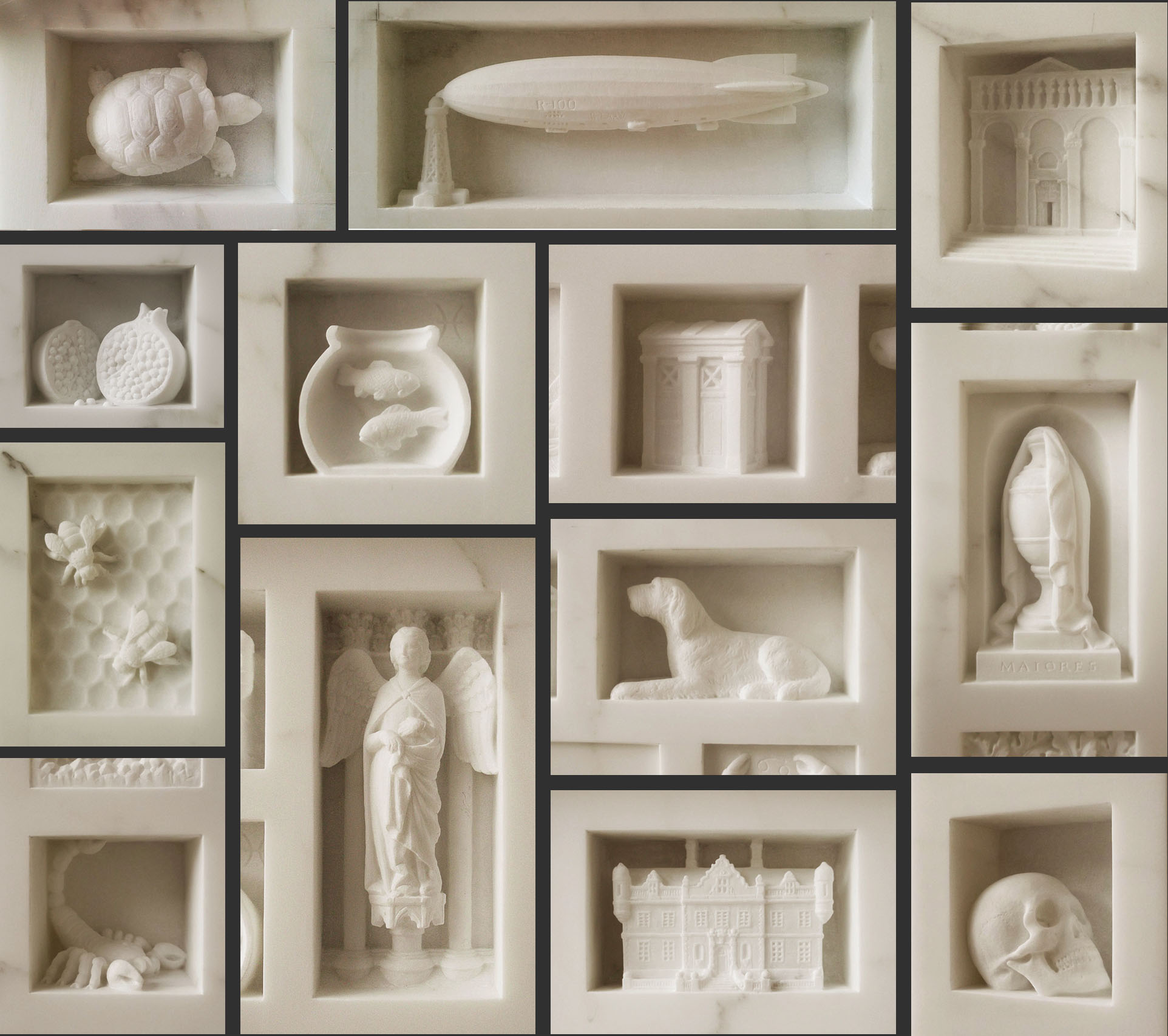
Sculpture of architecture cut from stone by Matthew Simmonds.

Sculpture of architecture cut from stone by Matthew Simmonds.

Here are shots of the work of Matthew Simmonds, a British sculptor who lives in Pietrasanta, Italy. Beautiful! (Here is his website.) Hats off to Roy Lewis, who sent photos to the TradArch list, eliciting more sent by others.

I wish I had an essay about the process of sculpting as revealing as the essay on painting by William Hazlitt that I posted a while back (“Hazlitt on painting“). Maybe someone will send me something I can run.

In the meantime, sculptor and stone carver Walter Arnold (here is his website) sent in some remarks about Simmonds, with whom he is acquainted. Walter says he runs into Simmonds on trips to Italy. [Cut away from green tint around gills of your correspondent.] I met Walter in Chicago a few years ago as we both marveled at a beautiful carving that was part of a staircase baluster at the Driehaus Museum there. Here are some comments by Walter Arnold in reply to a list member’s query about an aspect of Matthew Simmonds’s work:

The thinness just means he knows what he’s doing, has superb technical skills, is careful, and knows how to select his blocks of stone. The hard part is getting around corners and carving details and surfaces in deep places where you can’t reach directly with the chisel – that is, not carving directly in line to the chisel but rather perpendicular. There are techniques to do this, but its not easy.

Here Walter responds to a question from Roy Lewis about whether there is a rule of thumb regarding the cost and the price of carving:

No rule of thumb, because every carving, every project is different. I’ve done $5,000 fireplaces and I’ve done fireplaces that are well into the six figures. It would be like having a rule of thumb for how long it takes to draw a column capital, or a doorway, or a fireplace, without specifying whether it is Doric, Corinthian, Art Nouveau, Baroque, drawn in pencil, charcoal, pen and ink, cad, oil paint. Each takes a different amount of time. Even with things like a band of egg and dart there is no rule of thumb for time or cost per linear foot; I have books with dozens, perhaps hundreds of variations on egg and dart, each of which would take a different amount of time to carve.

Then, once a design is selected, even if, for example, it is specified as Indiana limestone, I’d have to look at which quarry and grade of limestone to determine a price. I’d also want to know where it is to be installed – interior, exterior in a mild climate, exterior in a harsh climate, viewed from five feet away or from 50 feet away, facing north, facing south. Each requires different detailing, under cutting, surface texture. With a good, complete set of drawings and clear specification of the type of stone, I can generally give a fixed price.

Very interesting. But now let’s cut to the photos!

Simmonds Basilica IV windows_99 11-Matthew-Simmonds-Sculptures-in-Marble-and-Stone-yatzer space_with_doric_columns_a trilogy_d chimneypiece chimneypiece_b

Posted in Architecture, Art and design, Photography | Tagged , , , , , , | 5 Comments