What the Carbuncle bestows

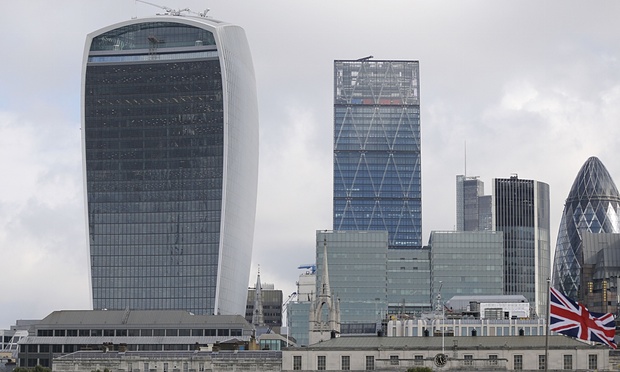
Walkie-Talkie poses with other abominations. The Shard is not pictured. (Guardian)

Walkie-Talkie poses with other abominations. The Shard is not pictured. (Guardian)

Here is a fatuously furious piece about the Walkie-Talkie building that just won Britain’s Carbuncle Cup. “The Walkie Talkie is a sty in London’s eye,” by Ned Beauman, browbeats the building as if it had committed a dark sin equalled by no other building. It is, he says, an “iceberg,” a building whose secret crimes are hidden and even more dastardly than its straightforward crimes against the eye of London. Beneath the surface of its toaster shape (and behavior!), the Walkie-Talkie proves that “we can’t say no to money”:

What the Shard proves about money is only that there is a lot of it around. What the Walkie Talkie proves about money is that we have lost the ability to say no to it, even when it howls giddy demands at us like an addled drug lord riding a zebra through the corridors of his palace.

Huh? I don’t know who Ned Beauman is, except that he’s a journalist, novelist and literary critic with a blog (“Ned Beauman’s blog“). Yet he must also be a mod-symp architecture critic because, like the rest of his tribe, he seems to think that because the Walkie-Talkie has won the Carbuncle Cup, it is somehow worse than the Shard, which has not. There seems to be one day a year when it’s okay for modernist critics to criticize a modernist building. But the Walkie-Talkie is no worse than the Shard, and no worse than every other modernist carbuncle – and the lot of them are all carbuncles, all but the ridiculously few that manage to eke some grace out of that void in the tool box of architectural design known as modernism. And they all prove that we can’t say no to money – speak for yourself, Bosco! – and they have been proving that for half a century and more.

Read the entire piece. It is very angry, very funny, very true, and very moot.

[Your globetrotting correspondent will be in Martha’s Vineyard for two days; this blog will vacation in Providence.]

Posted in Architects, Architecture, Development, Other countries, Urbanism and planning | Tagged , , , , , , , | Leave a comment

Tidbits of stadium news

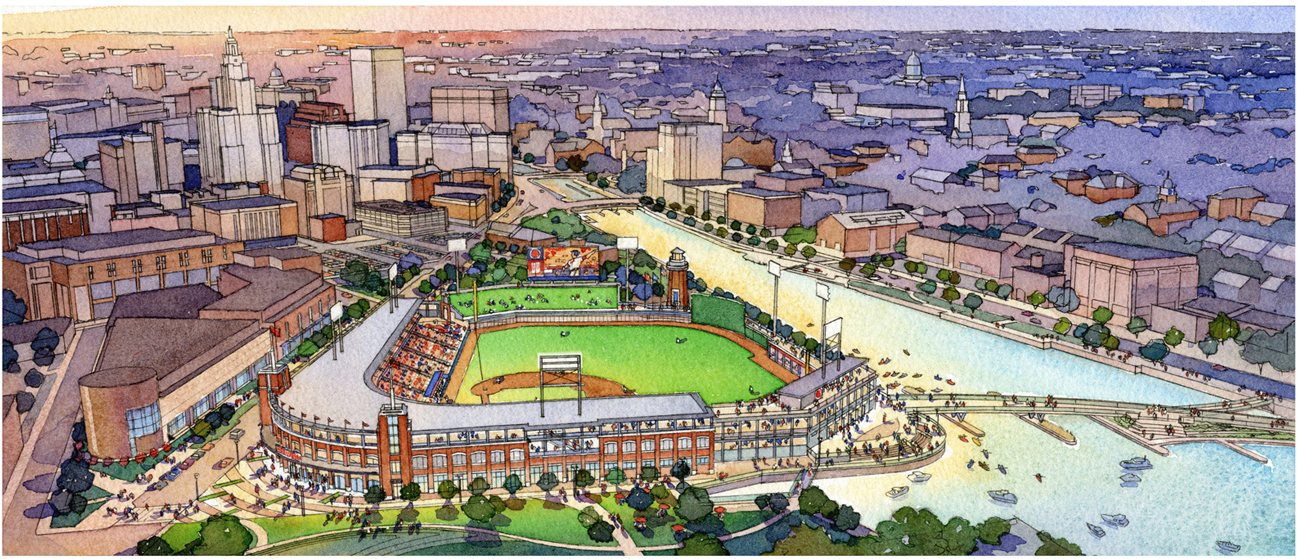
Proposed ballpark for PawSox in downtown Providence. (PawSox)

Proposed ballpark for PawSox in downtown Providence. (PawSox)

The job of negotiating a deal between Rhode Island and the owners of the Pawtucket Red Sox on a stadium in Providence grows harder day by day, it seems. Recent news that talks with Brown University over selling its land (with its ugly building) are stalled, and that Mayor Jorge Elorza is calling upon the team to pay for municipal services its relocation would require, are not making the numbers fit together any better.

Also, a concert promoter has expressed interested in using the proposed public park space where the stadium would go as the site of an outdoor arena for concerts and other events. I cannot figure out whether this idea is a stalking horse for the stadium or for its opponents. You cannot support both a private arena and a private stadium, of course, but you also cannot oppose the stadium and support the arena. But there it is in the mix!

And now Lifespan – the state’s biggest hospital collective – has purchased the Victory Plating site that some consider a viable alternative to the 195 land for a new ballpark. A ballpark at Victory Plating would be no more attractive than a ballpark in Pawtucket – it would just cost more, with little expectation of a return on investment of the sort that team owners seem to expect from a waterfront ballpark.

None of that news makes much difference. If the PawSox move is a bid by the new owners to make a lot more money from the franchise, there will be no deal. No acceptable public subsidy is likely to bring costs down enough to push profits that high. If that is all that’s behind the proposed relocation, it will not happen. It will only happen if the owners – to whom the cost of a stadium is crumbs off their collective plate, a net worth in excess, it is said, of $5 billion – have an “ulterior motive” to do more than just slab yet more icing on fortunes already caked with frosting.

They might instead want to refurbish their legacies as civic benefactors by building a facility that will do more to make the I-195 corridor more attractive to entrepreneurs and their employees than yet another public park. Even if it hosted only baseball games, the ballpark would do much more to create well-paying jobs and “buzz” for Rhode Island. The owners of the PawSox would see their reputations rise, in the eyes of the public, from that of expert milkers of public money for their corporations to benefactors willing to step up to the plate and give back at the other end.

You’re joking! You are not serious! Rich people interested in stewardship?

I realize that the very idea contradicts conventional attitudes toward people with money. Call me naïve. All I’m saying is that if the above does not reflect, to some considerable degree, the motives of the PawSox owners, then no stadium is going to be built. Period. But if the owners can let their inner altruism out, then maybe a stadium can be built and the Rhode Island public can be the one to profit from it.  That assumes that state leaders can be relied upon to negotiate a deal that truly benefits the state – and that the team owners want such a deal. Two very big ifs, to be sure, but not entirely inconceivable.

As for the alleged 99 percent opposition to a stadium, those numbers are no less suspect here than when announced by the Kremlin. #38Stadiums is a brilliant stroke of public relations, but pure cynicism is not a very effective game plan for the future of the state. If there is a deal announced that features revenue neutrality or even positive revenue for the state, it will prove that stewardship is a motive for the team owners. Only then will it be time to ask people what they really think of the stadium proposal.

Posted in Architecture, Development, I-195 Redevelopment District, Landscape Architecture, Providence, Rhode Island, Urbanism and planning | Tagged , , , , , , , , | 9 Comments

Classicism in Newport News

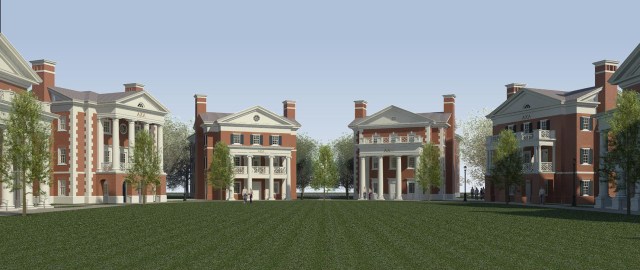
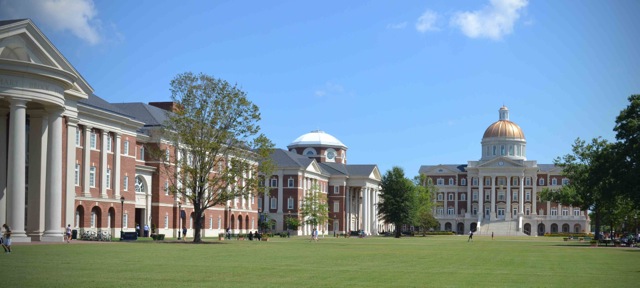
Great Lawn of new main campus of Christopher Newport University, in Newport News, Va. (CNU)

Great Lawn of new main campus of Christopher Newport University, in Newport News, Va. (CNU)

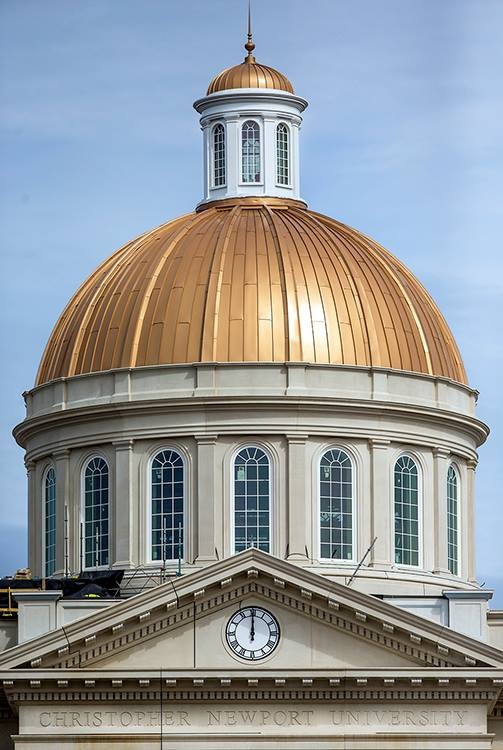
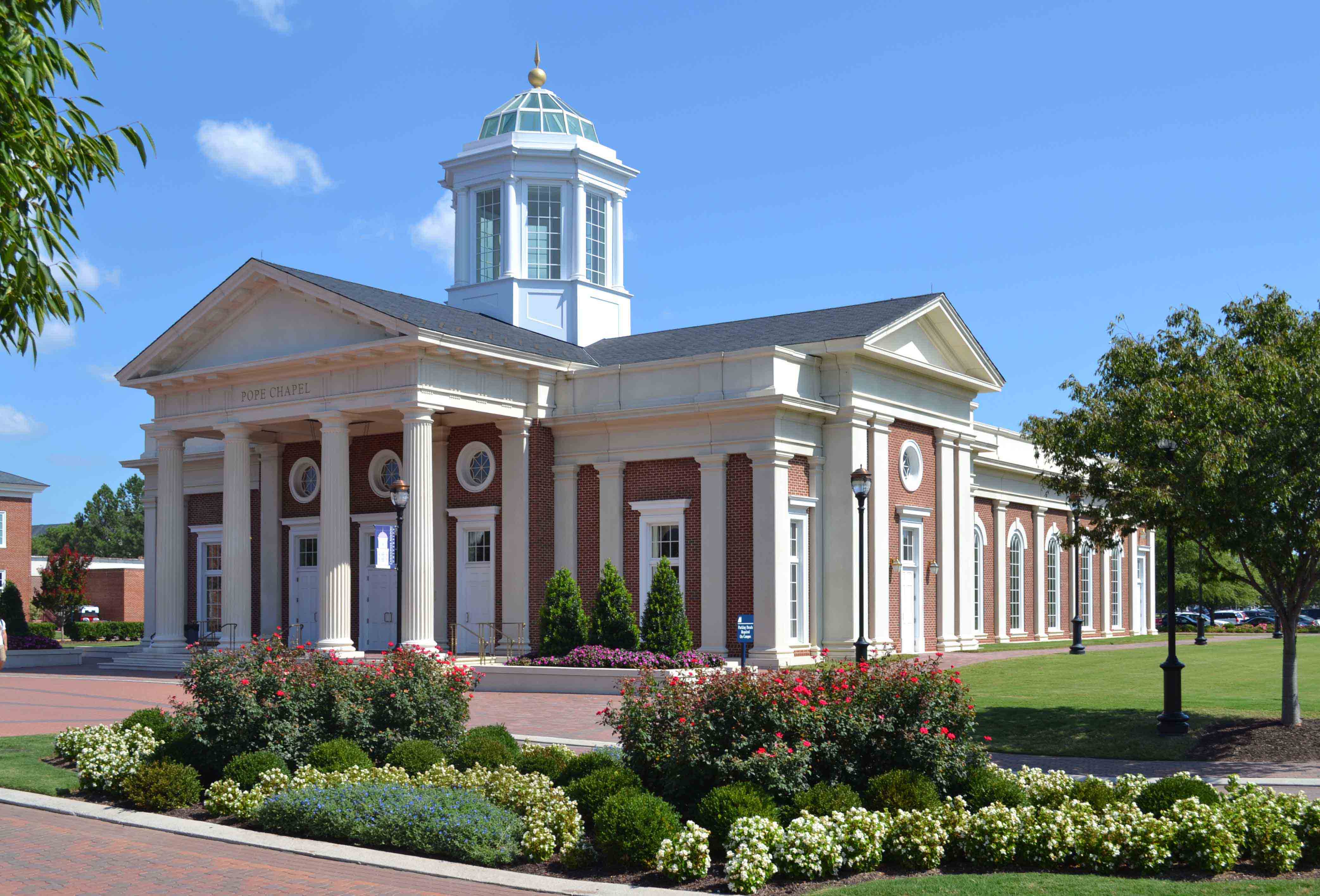
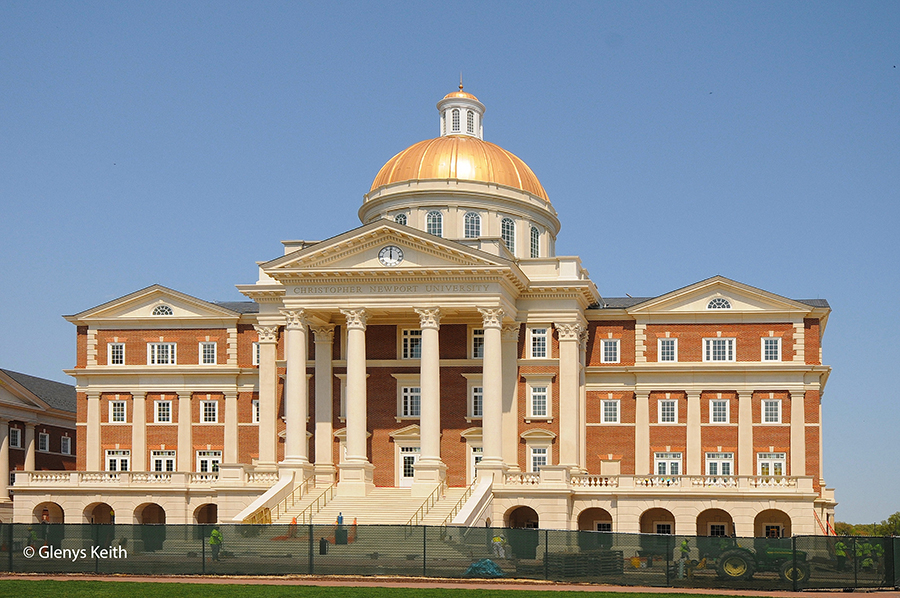
Calder Loth, a Virginia architectural historian, provided TradArch with good grist for chewing when he offered up a photo of a newly completed chapel, among the atest of a series of classical buildings on the new main campus at Christopher Newport University, a state school in Newport News, Va.

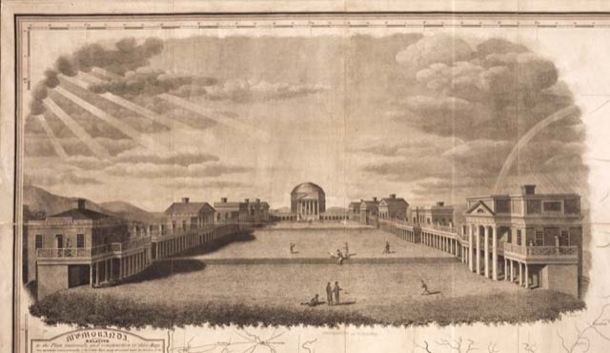
The Lawn at University of Virginia, in Charlottesville, designed by Thomas Jefferson. (uvaguides.org)

The Academical Village and Lawn at University of Virginia, in Charlottesville, designed by Thomas Jefferson. (uvaguides.org)

This is close to my heart. I am overjoyed at this news. I spent a couple of very pleasant years in Newport News, with an apartment overlooking the James River, several hundred yards north of where Newport News Shipbuilding & Dry Dock Co. – chief competitor to General Dynamics’ Electric Boat Co. up here in Rhode Island – was building two aircraft carriers in the mid-1980s, within easy view of the lawn in front of my apartment complex, which was walking distance from the Daily Press, the main paper in Newport News, where I worked (but never walked to).

Maybe that’s because I had a vintage Mercedes-Benz (a ‘tween-style 1967 250-S that I’d purchased from a Pentagon admiral for $2,800 before leaving D.C. for my first newspaper job in Augusta, Ga., where I was able to attend the Masters for free. That year Seve Ballesteros won. The Augusta Chronicle had a brand new color press and the photo on the front page the next day showed the late, great Spanish golfer donning his blue jacket!

At the Newport News Daily Press, my editor, the late Tony Snow, who eventually became chief speechwriter for the first President Bush, let me write a column under my byline, a plum that I was denied by my editor at the Augusta Chronicle. I enjoyed writing a weekly newspaper column on Thursdays for a full three decades thereafter.

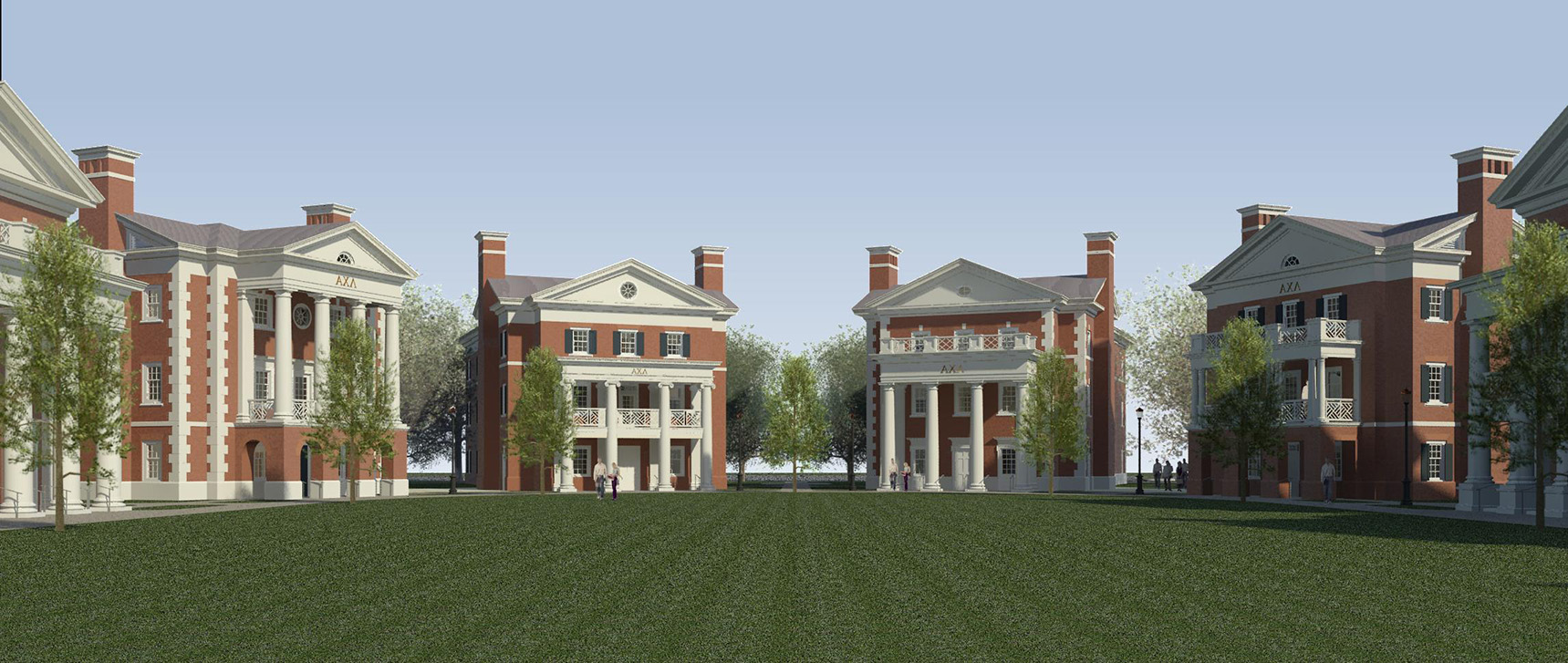
This post is about the new campus – a series of buildings erected over a decade, actually – at CNU, but I could not resist a little personal history. (My blog posts could clearly use the services of a good editor!) I was not into architecture yet when I was living in Newport News, and CNU did not exist as a university until a decade after I left the Daily Press for the Providence Journal. The campus, with its Great Lawn, harks back to the Lawn and Academical Village designed by Thomas Jefferson for the University of Virginia, with its domed library and twin colonnaded sets of pavilions.

Perhaps in its choice of title, CNU’s Great Lawn seems to engage in a bit of self-aggrandization, but it does bear comparison with Jefferson’s Lawn. Do not forget that assembling a beautiful collection of buildings is much more difficult in today’s architectural environment than it was in the early 1800s for Jefferson or anyone else. CNU President Paul Trible deserves a symphony of applause for his decision to make the attempt.

Here is one of the latest examples of his effort, the Pope Chapel designed by Glavé & Holmes Architecture, a firm operating out of Richmond that has done the most recent buildings on the Great Lawn:
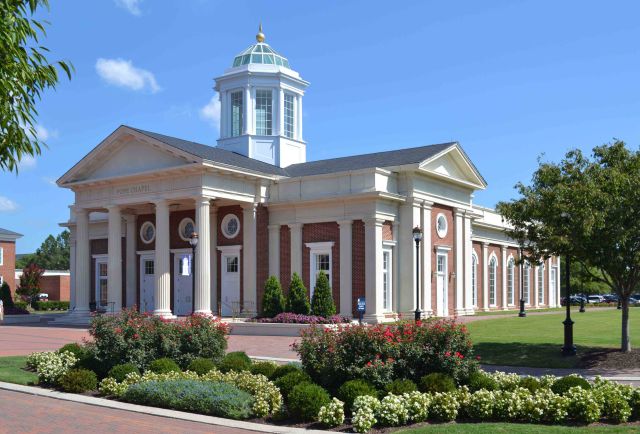
New chapel at CNU, designed by Glave & Holmes Architecture. (CNU)
New chapel at CNU, designed by Glave & Holmes Architecture. (CNU)

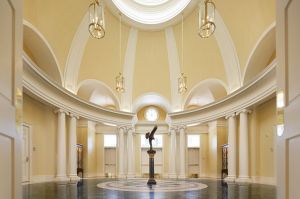
Interior of the new chapel. (CNU)

Interior of the new chapel. (CNU)

The design has been criticized, to an extent with justice. Minor flaws in its detailing might be pointed out, such as the parapets flanking the entrance portico that might be insufficiently well integrated with that structure, and, some arguing on TradArch say, an awkwardness in the design of the cupola, perhaps because more natural light was desired than a cupola without a glazed dome might be expected to provide. Still, it is a fine piece of work. Glavé & Holmes is to commended.

Most classicists can rip almost any work of architecture apart, new or old. Andrès Duany, a founder of the Congress for the New Urbanism, writes that the classicism of the campus is “better than a lot of Greek Revival 200 years ago. Stuff we now admire and preserve. Not as good as Palladio — the standard everyone will deny having.” It is an interesting parlor game to walk the tightrope between offering an accurate critique of the work of classical architects during an era when a classical education is extraordinarily rare — and offering critical remarks that go beyond accuracy to disdain, and risk making the perfect the enemy of the good.

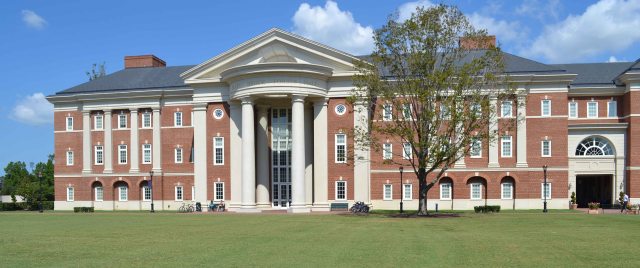
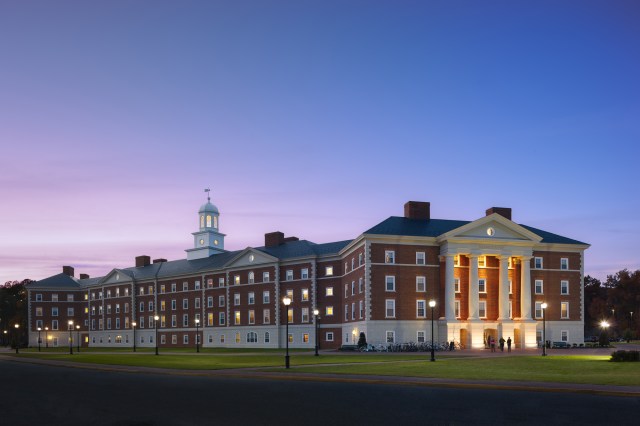
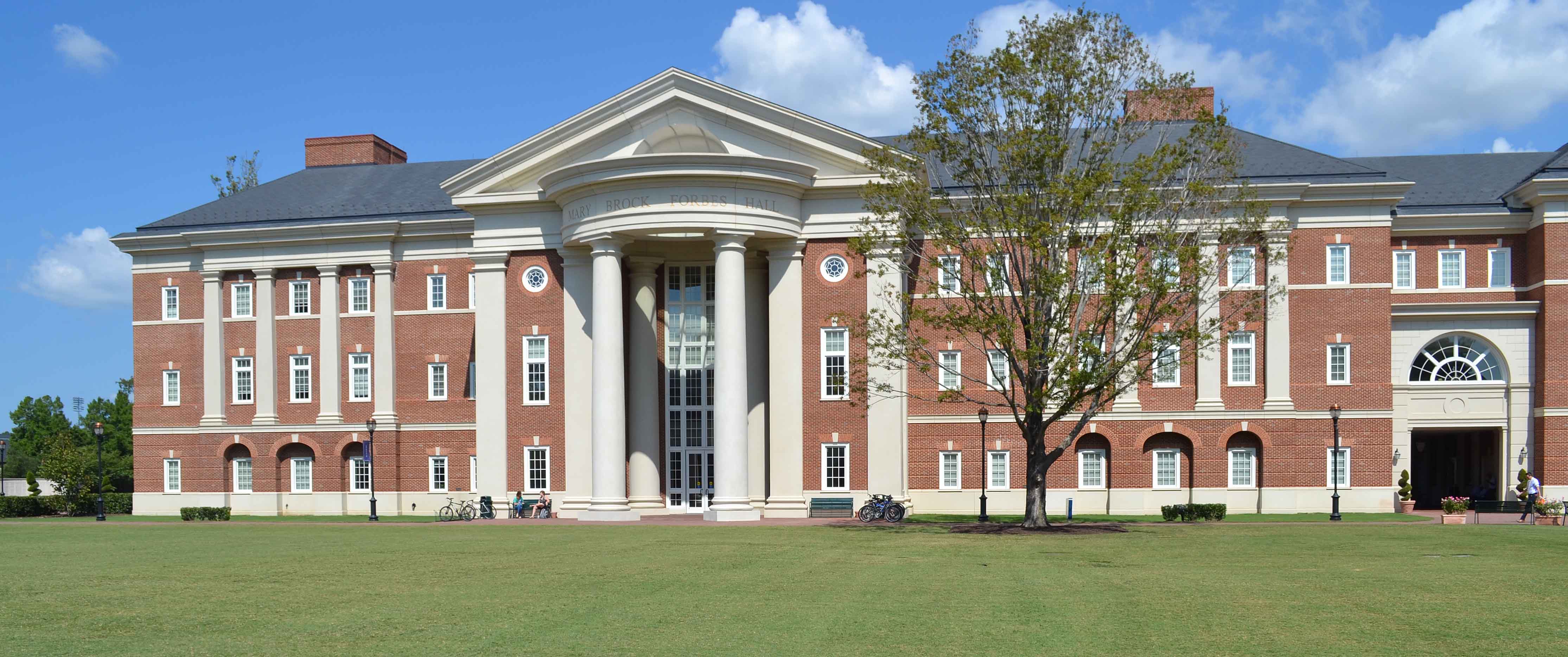
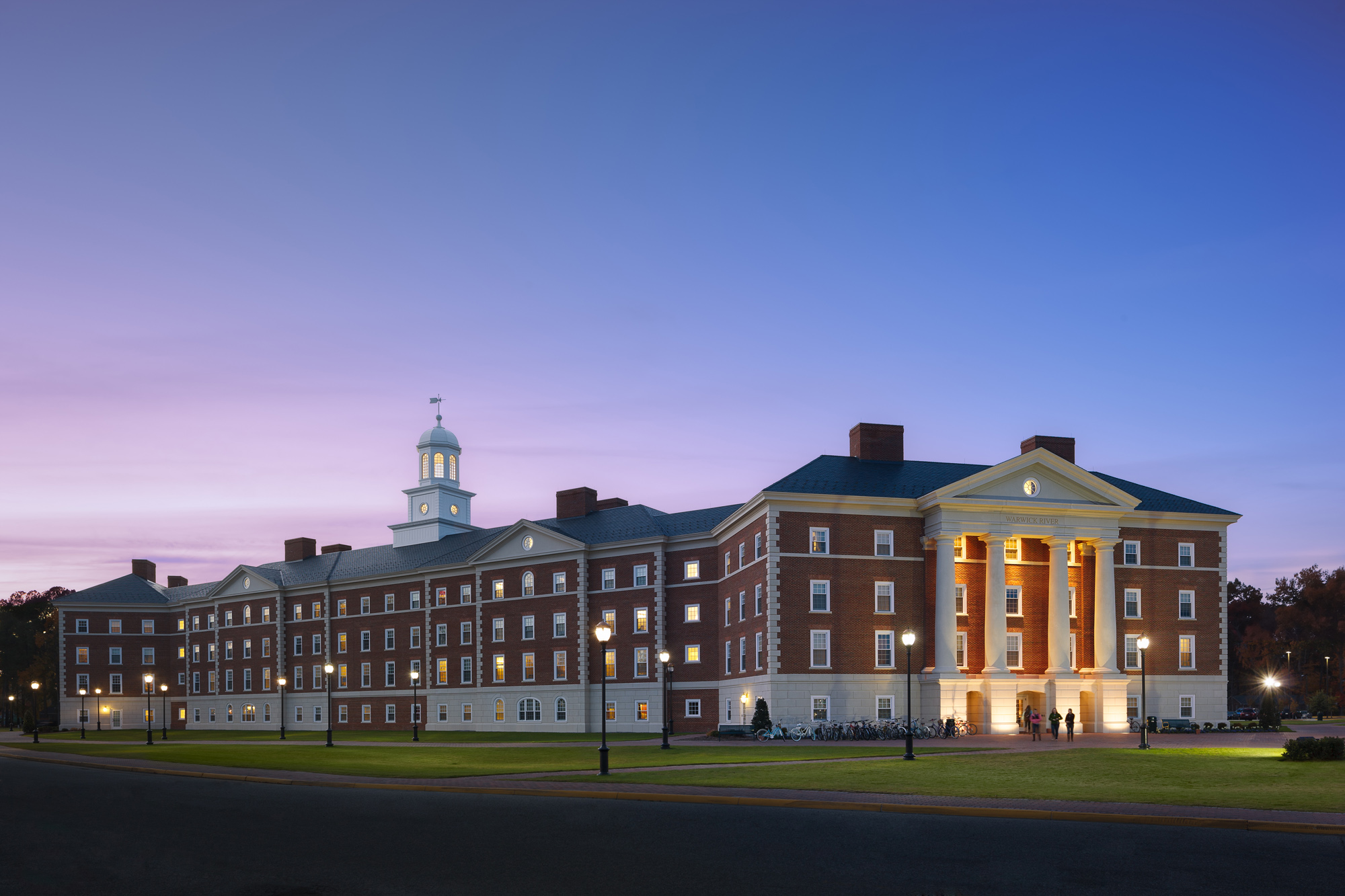
There is no “bad trad” among the recent work on the CNU campus, and I am told that the interiors of the new classicism are quite well done, but when Trible began his effort to prevent an “architectural zoo” from arising at the site of the recently anointed state university, some mistakes were made. One is just below. But I would like readers to consider, as is so evident in the shots below the example of “bad trad,” how very far the traditional architecture at Christopher Newport University has improved since then as classical learning and practice take hold, building after building after building, over a decade. Just look. It is really quite extraordinary. Bravo, CNU!

[I am informed by a commenter, John Spain of Galvé & Holmes, that the latest building erected at CNU is not the Pope Chapel but Christopher Newport Hall, with its golden dome, at the head of the Great Lawn. It is the fourth photo below, followed by its dome, the fifth photo.]
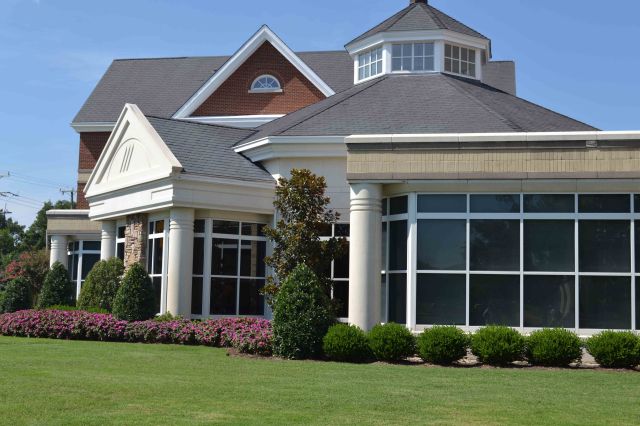
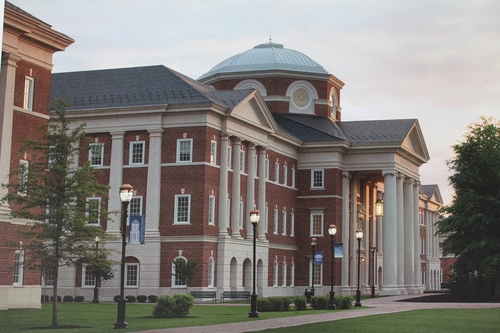
CNU building

Higher+Ed_+CNU_+New+hall_+ext

CNU_Rappahanock_Hall

Student-Success-Center-CNU-copyright

V82Cjd

phase-1

DSC_0688 copy

warwick10

11420722_1400150433648159_715451578_n

Posted in Architects, Architecture Education, Architecture History, Art and design, Books and Culture, Development, Landscape Architecture, Urbanism and planning | Tagged , , , , , , , , , , , , , , , | 3 Comments

Met, NYPL dodge ’40s bullet

Metropolitan Museum of Art. (

Metropolitan Museum of Art. (en.wikipedia.org)

New York Public Library. (therehereandback.com)

New York Public Library. (therehereandback.com)

A surprising revelation in an interesting paragraph from Michael Gross’s history of the Metropolitan Museum of Art, Rogues’ Gallery:

[NYC parks commissioner and Met board member] Robert Moses’s first impression of the new director [Francis Henry Taylor, 1940-55] was changing. Never a huge fan, Moses now worried about Taylor’s intentions, and so did some trustees, who were against the sort of modernist architects Taylor wanted to consult on the postwar program. A month later, Taylor proved their concerns were real when he threatened to give the museum’s building back to the city and floated a plan to knock down Carrère and Hastings’s monumental New York Public Library at Fifth Avenue and Forty-second Street and replace it with “a new tall building of the most modern kind” to house both the museum and the library. Moses immediately dropped any pretense of diplomacy and called Taylor “an egotistical crackpot” in a memo to an aide that he copied to half a dozen city officials.

Knocking down the Met and the NYPL in one fell swoop and stuffing both into a crackpot modernist tower cannot be anybody’s notion of a good idea. But of course that is not true: it and similar ideas, if not quite so outrageous, are conventional wisdom in the ridiculously rarified reaches of architecture’s establishment today. It feels strange, however, to credit Robert Moses for deflecting that one. Clearly at least part of his psyche remained in Jones Beach mode (artful) rather than that which later led to urban renewal and potted-plant plots like ramming a highway up the center of Washington Square. (Thank you for deflecting that one, Jane Jacobs!)

Posted in Architecture, Architecture Education, Architecture History, Art and design, Development, Preservation, Urbanism and planning | Tagged , , , , , , , , , | Leave a comment

Surprised and astonished

Blumenthal mansion at 710 Park Ave. (nysonglines.com)

Blumenthal mansion at 710 Park Ave. (nysonglines.com)

One of the pet peeves of Michael Gross in his Rogues’ Gallery, a history of the Metropolitan Museum of Art, is how long it took its board’s stuffed shirts to accept modern art into its collection. Here is an amusing passage by which Gross looks down his nose at Met president George Blumenthal. Derision was accomplished by noting that Blumenthal, who disliked modern art, was not a stuffed shirt in regard to everything.

Gross quotes a letter from New York City parks commissioner Robert Moses (yes, him; he was on the Met board as well) to Thomas Hoving, the Met’s executive director in a later era, reminiscing about visiting Blumenthal:

I went to see George once at his Gothic mansion on Park Avenue. … A lovely little French maid in a brief, trim, black uniform and a little white apron was sitting on George’s lap. She jumped up and discreetly melted away. Said George, “You caught me off guard.” George didn’t like me among other things because … I paid his Museum bills. “No, George,” said I, “you remind me of Samuel Johnson, the great lexicographer. In a similar contretemps his indefatigable biographer Boswell said, ‘Dr. Johnson, I am surprised.’ Said the old curmudgeon, never at a loss for the right word, ‘Boswell, you’re astonished. I’m surprised.'”

The interior courtyard of Blumenthal's mansion. (nysonglines.com)

The interior courtyard of Blumenthal’s mansion. (nysonglines.com)

Existing building at 710 Park Ave. (nysonglines.com)

Existing building at 710 Park Ave. (nysonglines.com)

I find myself sympathizing with Blumenthal – not for having a maid on his lap (I am appalled!!!) but for his reluctance to bring modern art into the Met. Not that I disagree that modern art has a place there; even though there were by the early ’40s the Museum of Modern Art (MoMA) and the Whitney for modern art. But modern did and does deserve a place in the city’s top and presumably most broadly representative art museum. Still, as I read through Rogues’ Gallery, I acknowledge that I, too, would have been dragging my feet, if not my knuckles.

But you know that. This post really is dedicated to Dr. Johnson and his marvelous ability to make the timely distinction between surprised and astonished for Boswell. (Plus, I like the idea of the curmudgeonly Johnson with a trollop on his lap.)

Blumenthal’s Gothic mansion, as referred to by Moses, was designed by Trowbridge & Livingston, completed in 1910, demolished in 1943 after Blumenthal’s death, and replaced by the apartment building, 710 Park Ave, completed in 1948. The Blumenthal mansion’s interior patio was scavenged from a Spanish castle and donated, stone by stone, to the Met, where it remains on display.

(A commenter notes that the mansion is not Gothic but Renaissance Revival.)

Posted in Architecture, Architecture History, Art and design, Books and Culture, Humor, Urbanism and planning | Tagged , , , , , , , , , | 4 Comments

Rip facade off mod angst

The Walkie-Talkie building, by Rafael Vinoly. (Jacob Carter/Rex Shutterstock)

The Walkie-Talkie building, by Rafael Vinoly. (Jacob Carter/Rex Shutterstock)

Very interesting chat in the Guardian, “Should Britain’s ‘worst building’ be torn down?” with its art critic Jonathan Jones and Design Museum director Deyan Sudjik debating the future of the recent winner of the Carbuncle Cup, the Walkie-Talkie building, and its towering ilk. Here is Jones making his basic case:

It’s time to reject this fatalistic sense that grandiose design mistakes are irreversible – that we just have to put up with them. I seriously think this building should be done away with. The reason is not just that it is silly in itself, bulging on the skyline like a model that has somehow wandered out of the 1960s TV show Thunderbirds, but even more urgently to shock developers into some sense of humility. … London is being wrecked by outrageous crimes against architectural taste. 

To which Sudjik replies:

But much as I would wish this unappetising lump gone, dynamiting it, or, more likely dismantling it piece by piece over a couple of years, is not a great idea. We demolish far too many buildings, too quickly. It is enormously wasteful, and it creates the idea that there are quick fix answers to tough problems. … You suggest that architecture leaves the public without a choice; they simply can’t ignore it. I am sure that you of all people aren’t suggesting that all new buildings should be as inoffensive as possible for fear of upsetting people?

Jones again:

But I think 21st-century Britain has a neurotic compulsion to overprotect the new. The reason for this is that asinine conservatism was so fashionable for so long that we’re terrified of returning to it.

Here’s an exchange, truncated in transcription for brevity’s sake, that will interest all of us who have supported Prince Charles in his opposition to modern architecture:

Jones: But now, everyone is so scared of sounding like Prince Charles or seeming to be a lover of mock-Georgian that we tremble to take the wrecking ball to this massive, tasteless monstrosity. …

Sudjik: You [Jones] suggest that the Prince of Wales is guilty of “asinine conservatism” for wanting to stop the building of the very same towers that you want to knock down? That sounds like having your cake while trying to eat it, never a good look. …

Jones: You’re quite right of course – I was being unfair on Prince Charles. History has proved him right. But on the other hand I love modern architecture. …

As usual, British modernists have a hard time reconciling their love for modernism with their love for London. That’s because they’re irreconcilable. You can’t love both modern architecture and London. You can try. You will fail. The continuing assault on the city by the developers of skyscrapers was bound to drive some modernists over the edge.

This internal contradiction inevitably afflicts the logic of discourse when a taste for the novel encounters a deep love for the natural, the traditional, the long established and much beloved – such of it that remains – which even modernists experience, deep in their subconscious, in everyday life.

Such deep love is usually attributed to the public, to Prince Charles, to contemporary classical architects – all retrograde influences on the “progress” of architecture. But it even haunts the sensibility of modernist critics, architects and their camp followers. Nobody, not even those with expensive design educations or financial interest in the conventional wisdom, can fully suppress their natural instincts, not even if they are members of design review boards in Providence, R.I.

What we see here in the Guardian is an unusually messy, public and embarrassing expression of the inevitable modernist angst, generated by the constant internal conflict between the principles they adhere to and the instincts they were born with.

Have fun. Read the whole thing.

Posted in Architects, Architecture, Architecture Education, Architecture History, Art and design, Development, Urbanism and planning | Tagged , , , , , , , | 5 Comments

Cloistered words of beauty

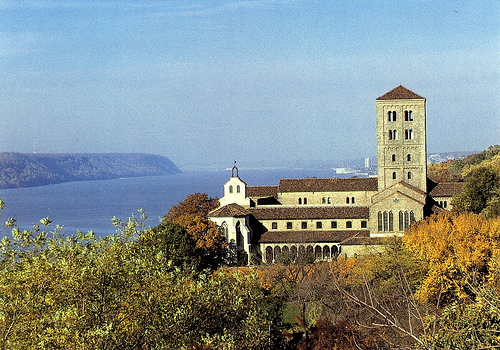
The Cloisters at Fort Tryon Park, New York City. (

The Cloisters at Fort Tryon Park, New York City. (flickr.com)

John D. Rockefeller Jr. gave a park in the upper reaches of Manhattan to New York City and built a museum in the grand manner on its grounds for the Metropolitan Museum of Art. The Cloisters and Fort Tryon Park were gifts from Junior, as he was known, and when the museum was dedicated in 1939, he spoke of beauty in words that suggest there was more to him than throwing his money around. His words were quoted by Michael Gross in Rogues’ Gallery: The Secret Story of the Lust, Lies, Greed, and Betrayals that Made the Metropolitan Museum of Art, which I am about a third the way through. Here, notwithstanding that title, are those words:

If what has been created here helps to interpret beauty as one of the great spiritual and inspirational forces of life, having the power to transform drab duty into radiant living; if those who come under the influence of this place go out to face life with new courage and restored faith because of the peace, the calm, the loveliness they have found here; if the many who thirst for beauty are refreshed and gladdened as they drank deeply from this well of beauty, those who have builded here will not have built in vain.

Rockefeller’s Lincolnian cadences hit the nail on the head still today, the words still speaking to why we make the effort to restore beauty to its rightful eminence in the way we build places.

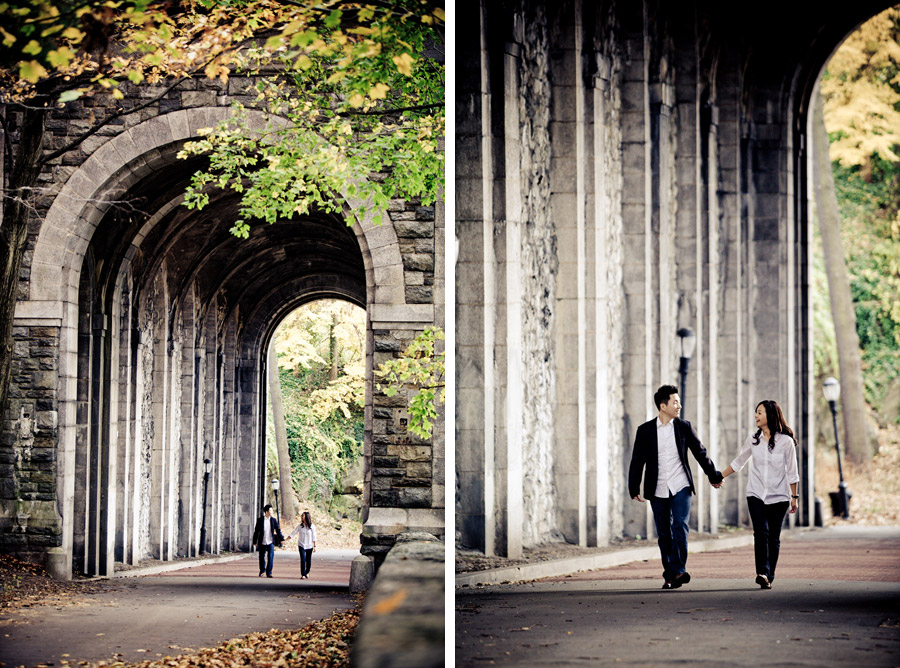
Entrance into The Cloisters. (bom-photo.com)

Fort Tryon Park’s Billings Arcade. (bom-photo.com)

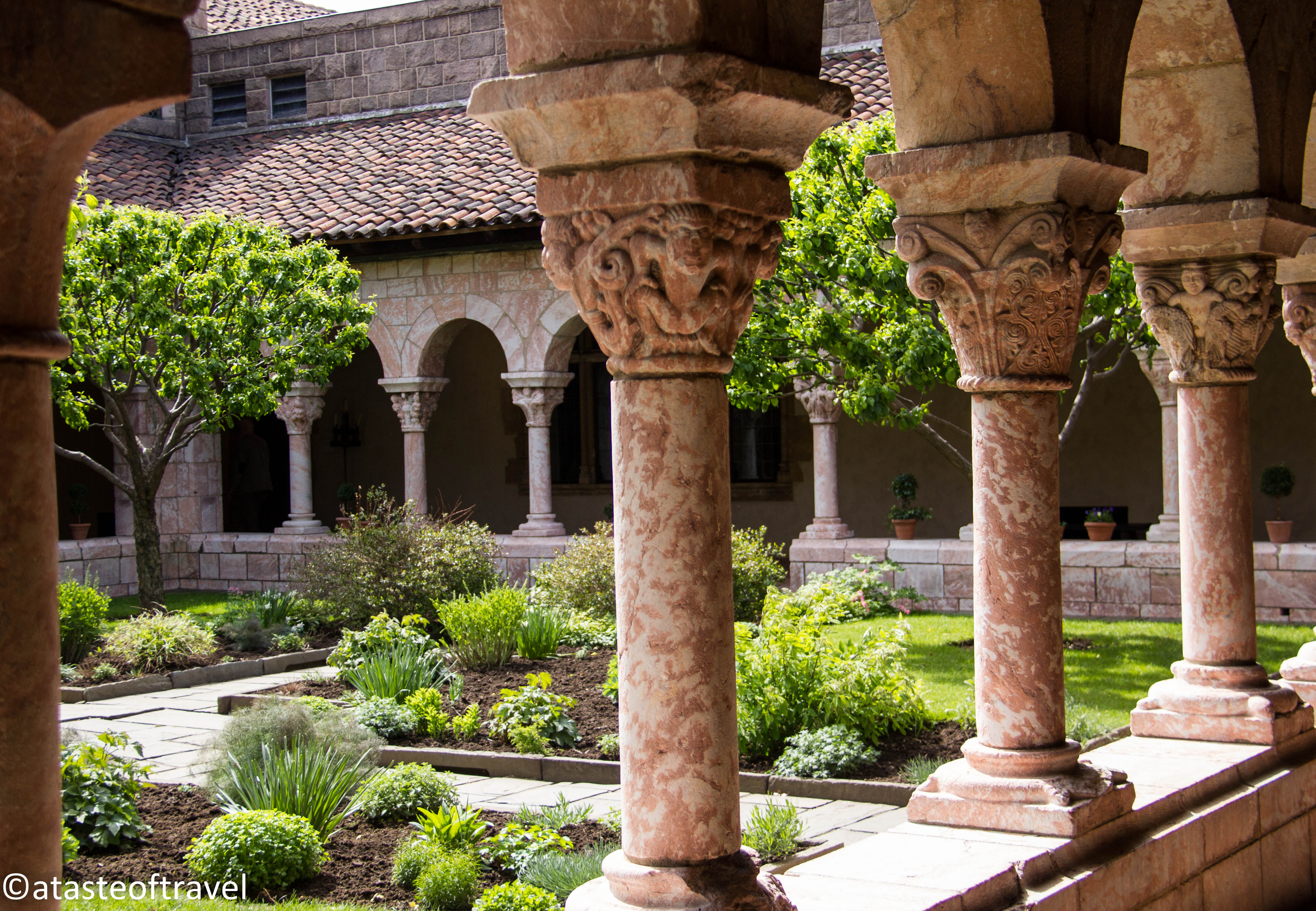
Courtyard at The Cloisters. (atasteoftravelblog.com)

Courtyard at The Cloisters. (atasteoftravelblog.com)

Posted in Architecture, Architecture Education, Architecture History, Books and Culture, Landscape Architecture, Preservation | Tagged , , , , , , | 1 Comment

Mont Saint-Michel of old

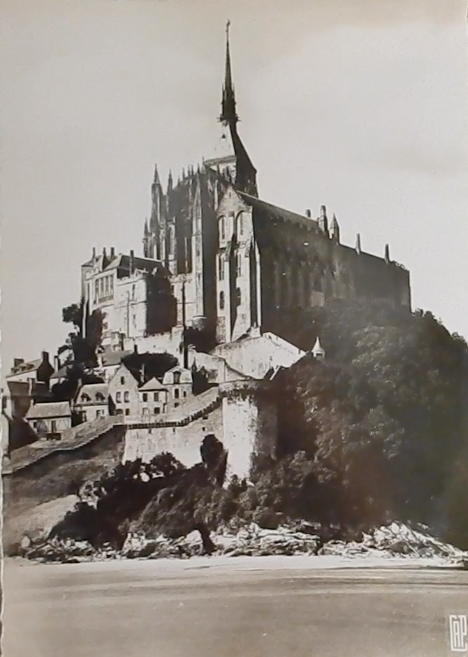
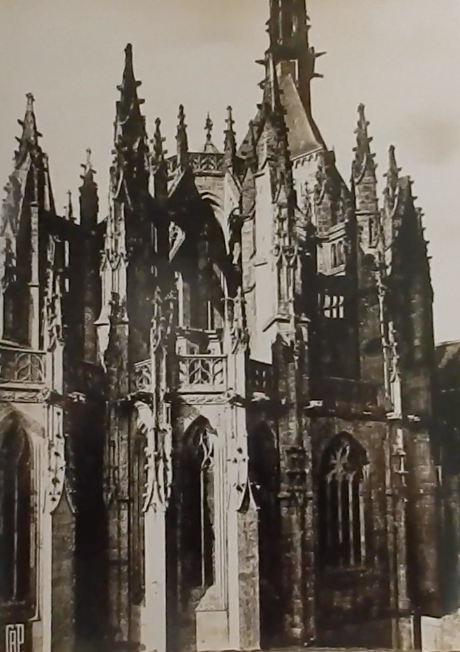
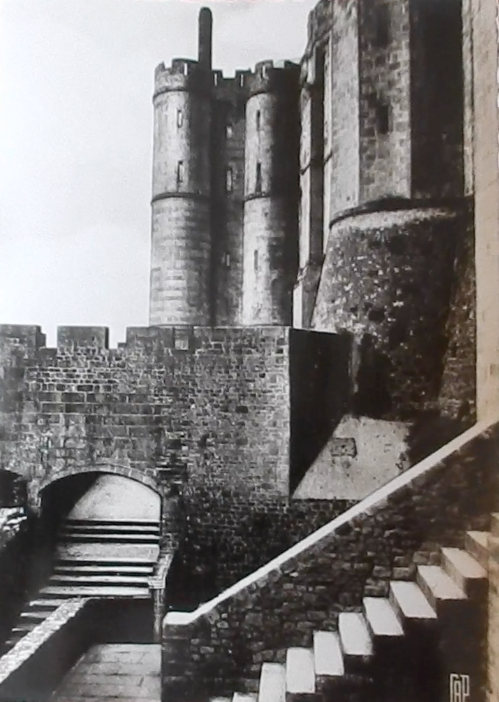
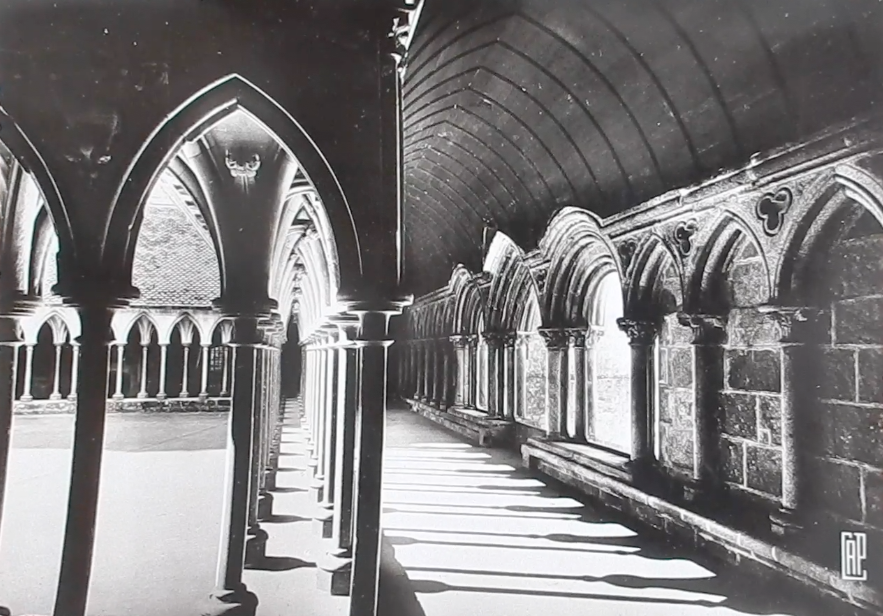
These photos are from postcards of Mont Saint-Michel, in France.

These photos are from postcards of Mont Saint-Michel, in France.

On my bucket list is a visit to Mont Saint-Michel, a monestary surrounded by a village on an island just over half a mile off the coast of Lower Normandy, in France. It originated as a fort in ancient times before the first abbey was built in the 8th century. From its Romanesque heights, the architecture steps down the mount by degrees, with God ensconced on the top, the great halls below, then storage and housing within the walls, then housing for farmers and fishermen outside the walls.

Very feudal. When the tide is out it you can get to it only by causeway. When the tide comes in … well, look at the high-tide shot below. Stupendous!

Recently the French government dammed the nearby river, the Couesnon, and built a new bridge out to the island that opened this year. It is not execrable, thankfully. What impact it has on the romantic movement of the tides, I do not know. Fortunately, the photos above and below were taken long before the inevitable governmental tinkering. From the automobiles in the second picture, below, it looks as if the photos were taken in about 1935, and then turned into postcards.

They were acquired by the parents of my old school chum John Bernot, an engineer in Washington, D.C., who inherited them. He gave them to my friend Stevenson Hugh Mields and asked Steve to send them to me.

Receiving them, and seeing in their beauty a mandate to put them onto my blog, partly to please my readers and partly as homage to John’s parents, a problem arose. Time had curved the postcards, and my camera, which is too sophisticated for someone like me, could not take pictures of them because, sharp as they are, the camera perceives everything that is not as sharp as reality as blurry. I don’t know how to get around that. So I made a video of them, with the camera moving from one picture to the next, then uploaded it to my iPhoto library, ran the video, and finally took screen shots of them in turn. It worked!

So, please, as you whisper prayers of thanks to a couple, now deceased, who passed these along to their youngest son, enjoy one of the most beautiful spots on the Earth.

Screen Shot 2015-09-08 at 1.25.11 PM

Screen Shot 2015-09-08 at 1.25.50 PM

Screen Shot 2015-09-08 at 4.26.32 PM

Screen Shot 2015-09-08 at 4.27.48 PM

Screen Shot 2015-09-08 at 1.27.27 PM

Screen Shot 2015-09-08 at 1.26.35 PM

Screen Shot 2015-09-08 at 1.28.48 PM

Posted in Architecture, Architecture History, Art and design, Books and Culture, Landscape Architecture, Other countries, Photography | Tagged , , , , , , , , , | 3 Comments

Style vs. form balderdash

Kensington Park Road, London, gets high grades from Roger Scruton. (rbcklocalstudies.wordpress.com)

Kensington Park Road, London, gets high grades from Roger Scruton. (rbcklocalstudies.wordpress.com)

Justin Shubow, the provocative head of the National Civic Art Society, has posted a segment from a 1996 book review by the late Paul Malo of Roger Scruton’s The Classical Vernacular: Architecture in a Time of Nihilism, which I recently reread. Malo’s point is to teaze out the relationship between style and form in architecture. In Malo’s view, Scruton is a shallow critic of modernism because he thinks style is more important than form.

[Malo’s article is in the International Journal of the Classical Tradition, Vol. 2, No. 3 (Winter, 1996), pp. 443-452. Justin’s link to it in a dropbox timed out. Justin resent it and I hope it will not time out again. If it does, the citation will remain here.]

But Malo, long a revered professor of architecture at Syracuse, starts out by mischaracterizing Scruton’s thinking in an important way. He quotes Scruton as saying “aesthetic considerations … must take precedence over all other factors – over function, structure, durability, even over economics.” Malo transforms the precedence of into the exclusion of all matters but appearance, and then spends the rest of his review castigating Scruton as shallow or, as he puts it, “superficial.” “Scruton’s exclusive concern for appearance renders him a stylist” when he should really be interested in “form.”

“‘Form,’ what is beyond appearance,” writes Malo, “is the genuine if invisible gestalt of architecture.” Things like symmetry, organization, structure, essence, flow, and other elements that you cannot necessarily see are matters of “form.” Appearance is secondary. Form is so invisible, so gestalt, and yet so important that it is able to render even such founding modernists as Ludwig Mies van der Rohe into “an ardent and rigorous classicist.” Louis Kahn was a “metaphysical architect … grounded in an understanding of architectural tradition” even though his work, inventive but mostly Brutalist concrete, treated the classical orders as if they had the cooties.

Many of today’s classicists fall for this bugaboo. They consider form as if it has nothing to do with appearance. And they buy into the hogwash of Mies being a classicist, one of the few shibboleths that they have not managed to abandon along with the other junk they acquired in architecture school, which they have wisely jettisoned with experience.

But appearance, or style, is part and parcel of form. The two cannot be considered separately, and Scruton never said they could or should be. He believes appearance is the most vital aspect of form because it is what people actually see – like it or dislike it – and what people see influences whether a building is useful – utilitarian, as the modernists like to say. Malo writes:

To the architectural theorists and educators, Scruton’s dictums seem silly – that architects’ “first concern must be the viewpoint of the man in the street” and that the “first principles of composition concern the ordering of façades.”

Whatever its intrinsic role in architectural practice and thinking, form is important to architectural discourse because it makes modernist nonsense sound plausible. Such modernists as Malo (who eventually reveals that he considers himself a classicist) exemplify the idea that words are meant not to express but to conceal thought. Malo’s ideas, clearly expressed, would immediately become obviously silly, even to the unlettered masses.

By the end of the essay it is clear that Malo does understand the essence of classical architecture. “Classicism is not ‘easier’ as a sort of kit-of-parts exercise. Classicism is more demanding because it entails rules.” He adds:

In architecture, as in music, conventional rules do not constrain but liberate. Rules are the grammar of language, without which expression (or at least communication) is impaired. Modern architecture tried to dispense with rules, or at least with old rules. It failed to find new values as  rewarding as classical qualities, such as scale and proportion. It failed to motivate designers with models – not so much forms to be replicated as goals of performance.

This seems to contradict much of what Malo says in the first half of his review. But the ability to hold contrary ideas in mind without apparent embarrassment is the key to being a theorist of modern architecture. You can believe things that make sense, but if you can’t also believe things that obviously don’t make any sense, then you can’t operate effectively as a modernist. There is a lot of interesting matter in Malo’s review of Scruton’s book, and many sentences that seem quite sensible when isolated from their context, but taken together the sensible is wholly submerged in a great vat of senselessness.

My shelf continues to groan under the weight of books and articles by modernists who bash modernism in order to give a bogus plausibility to their attacks on classicism.

Posted in Architects, Architecture Education, Architecture History, Art and design, Books and Culture, Urbanism and planning | Tagged , , , , , | 3 Comments