Save the Porto pavilions

Screen Shot 2016-11-01 at 9.48.40 AM.png

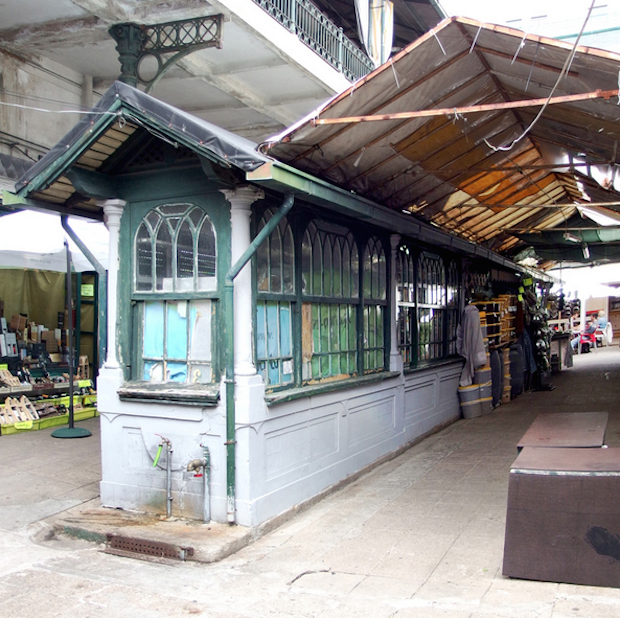
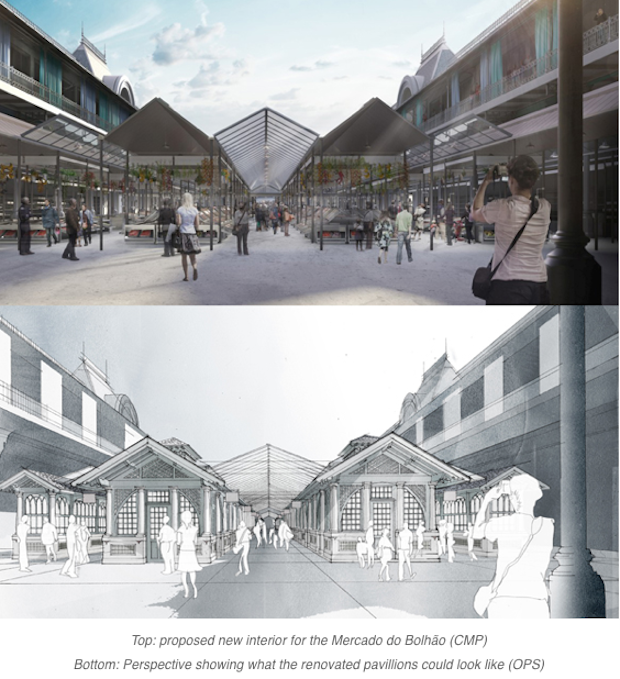
A year ago plans emerged in Portugal to replace the old pavilions of the old market in Porto with new pavilions of a  high-tech appearance. The existing market stalls of the Bolhão should not be replaced but restored. A post, “Bolhão a Year Later,” from the fab website Old Portuguese Stuff tells why, has lots of photos, and offers a petition to help save the pavilions. The petition is in Portuguese* with an English translation following. I did a post in July last year on saving the pavilions, ” Save market in Porto, Port.”

The excuse for the “need” to demolish the stalls is patently absurd:

Two reasons were given for this: the first, that the planned construction of a technical basement makes their removal a necessity. Reconstruction of the barracas was rejected as being pastiche. The second is the Council’s strategic “vision” for the market’s new role, which doesn’t bode well with keeping the pavilions. The Council, we were told, wants a market which can cater to “modern needs” and “the barracas do not allow it”.

If the stalls must be removed, so be it, but they may be removed and … then returned! This churning, this official reluctance to do the obviously right thing, is the result of people who have bought into a machine metaphor for architecture that has no basis in reality. The machine metaphor has not brought machine efficiency, only machine ugliness. It should be consigned to the ash heap of architectural history. Sign the petition!

A doff of the cap to Malcolm Millais, author of Exploding the Myths of Modern Architecture, for reminding me of this tragedy in the works if the public will is not heeded.

* This post originally stated that the petition is in Spanish. I meant Portuguese, of course, and I apologize for my error, and sheepishly thank commenter Raquel for pointing it out.

Screen Shot 2016-11-01 at 11.10.57 AM.png

Posted in Architecture | Tagged , , , , , | 7 Comments

Review: “If Venice Dies”

Screen Shot 2016-10-29 at 12.02.20 PM.png

From the cover of “If Venice Dies,” by Salvator Settis. (New Vessel Press)

By the time I was half finished reading If Venice Dies, I was proclaiming its virtues to anyone who would listen. It was to be another of my bibles. But, although the book, by Italian art historian Salvatore Settis, starts out with interesting chapters about the loss of population, the rise of skyscraper cities, the nature and design of the skyscraper itself, the historic city (especially Athens) that has forgotten its greatness, and a vigorously slashing chapter about the monetary value placed by “experts” on Venice itself, it was not until I reached chapter 8, “The Paradox of Conservation and the Poetics of Reutilization,” that the book really started to sing to me.

Written in Italian by Settis, the very evocative English translation is by André Naffis-Sahely. It was published in April by the New Vessel Press. Italian is a beautiful language, but so is English, the language in which books must strive to sing to me.

This passage in particular:

These days, self-styled “innovation leaders” seem to pop up at every turn to trigger witch hunts against the “conservationist mullah,” depicting them as opposing any sort of change, who dream of an impossible world where landscapes, cities, and monuments can go into hibernation, thus condemning them to a perpetual slumber. However, our cities’ historical memory doesn’t seek inertia, it seeks movement. It doesn’t wish to be embalmed, but rather exalts life. The kind of life and movement that nevertheless respects the city’s DNA, which favors a harmonious sort of growth, and not violent destruction; that gently grafts new kinds of architectures onto it, or restores its ancient ones, and does not brutally violate its shape and soul. Yet those who launch attacks against “conservationist mullahs” are the same people who promote indiscriminate intrusions, becoming complicit in the ruthless devastation of our cities.

In America, this sort of dishonesty often takes the form of a warning to a city against becoming a “museum.” The usually unstated idea here is that a city becomes a museum by constructing new buildings in traditional styles. As Settis points out, people who want to erect buildings that respect a city’s heritage are not against change. This “museum” warning is not only wrongheaded. It is also an insult to museums, which constantly embrace change by way of new exhibits, new arrangements of old exhibits, new schemes of interior design, even new wings (often unsympathetic, alas), etc. Here in Rhode Island, Newport has done a better job than Providence of seeing through these warnings.

For all his focus on skyscrapers, Settis warns readers against any sort of addition to a city that does not respect its soul. The key idea in Settis’s defense of Venice and of all historic cities facing the challenges of modernity is from his chapter “The Invisible City”:

Let’s try to think of a city as having a body (made of walls, buildings, squares, and streets, etc.), but also a soul; and its soul doesn’t merely include its inhabitants, its men and women, but also a living tapestry of stories, memories, principles, languages, desires, institutions, and plans that led to its present shape and which will guide its future development.

In the chapter “The Forma Urbis: Aesthetic Redemption,” Settis continues his attack on the sensibility and the true venal purpose of modern architecture. After discussing a series of recent efforts to “modernize” Venice – including a plan to save it from rising seas by surrounding it with skyscrapers (“The Venetians who remain in the city will therefore be reduced to the role of fish inside an aquarium. … One might as well force them to wear wigs and petticoats as though they were characters in a theme park”) – he writes:

A paradoxical continuum runs through this and other Venetian metamorphoses: that the city’s uniqueness is a thorn in the side of a two-bit modernity, the prime example of a stale and intolerable forma urbis, whose mere survival is a provocative challenge that must be met, forcing Venice to assimilate until it looks like any other city.

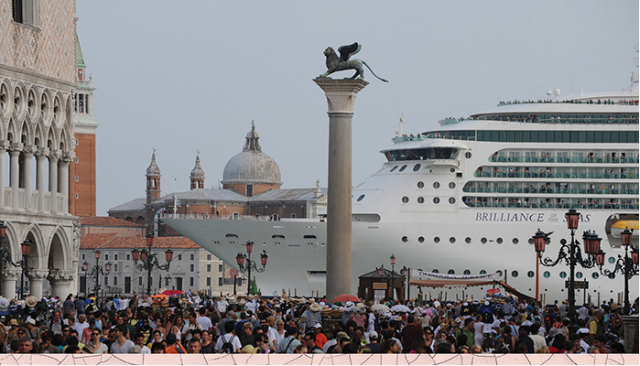
These are relatively uncompromising statements of the threat posed to Venice and other historic cities by modern architecture. Although Settis does not say so directly anywhere in the book, so far as I could find (and I did keep my eye peeled), he cannot possibly mean just the modern architecture of skyscrapers: his definition of the soul of a city asserts otherwise. Without pointing the finger of blame for the erosion of cities’ souls at the modernist infill architecture as well, he loses the aesthetic basis he claims in order to object to the soul-destroying impact of skyscrapers or of the cruise ships that sail up the Grand Canal, thrusting their mammoth skyscraper-like forms into beautiful historic viewscapes that have ennobled Venetians and pleased their guests for centuries.

… [R]egardless of whether it’s ships or skyscrapers, the abuse of Venice isn’t just a random consequence but the primary aim of such projects.

Many modern architects claim to love traditional architecture. I believe them. So many of them actually live in classical domiciles, naturally refusing to inflict upon themselves the sterile “machines for living” they inflict on their clients. I do not buy into Settis’s belief that skyscrapers or modern architecture in general aim to destroy historic architecture for the challenge it poses to their own work. Like Andres Duany, I believe modern architects are parasites – they understand that the contradiction their buildings pose to tradition in historic districts adds a panache to their allure, such as it is. Some people actually take a kind of pleasure in this contradiction, paying attention to the immediate “Wow!” factor, but failing to recognize the wound it inflicts upon the symphonic quality of the broader city setting. Modernism leans on the traditional city, a sort of crutch that is unavailable to modernist buildings set in places like Houston. Modern architecture is willing to chip away at traditional cityscapes, and will do so until they are slowly ruined – ruined before most preservationists have any idea they are even at risk. They do not, I think, want to destroy traditional buildings and settings out of an animus against their role as “thorns in the side of a two-bit modernity.” Most modern architects are just as thoughtless and self-serving as anyone else. Settis has some choice lines devoted to architects.

The creativity of artist-architects is still loudly proclaimed even when it breaks the law or jeopardizes the fates of those who will live and work in these new buildings. As Robert Venturi wrote, “modern architecture has been anything but permissive. Architects have preferred to change the existing environments rather than enhance what is there.” Yet architects who irreversibly denatural- ize environments and contexts do so on behalf of third parties, selling their services for cash (customers) or favors (politicians).

Modernist architects are not afraid of historic buildings but of new buildings in historic styles. They understand that if there were an even playing field for major commissions, traditional architecture would soon push modern architecture into the dustbin of history.

And I am afraid that this fear afflicts Settis no less than other writers who defend the historic city. I must assume that for Settis, this phobia is deeply implanted and part of the cultural deterioration of Italy since World War II. He may not even realize that it exists in the darkest corners of his mind.

Preservationists, or at least those who have jobs as preservationists, have little good to say of new architecture that looks like the architecture that preservationists used to chain themselves to bulldozers to protect.

Settis has nothing to say in his book, at least not directly, about new traditional architecture. Just about everything he says about the soul of the city seems to support the concept of new traditional architecture as a method of enabling soul-enhancing change in old cities, to avoid their becoming “museums.” At the same time, and also by implication, everything he says about “theme parks” – including the many copies of Venice – seems to oppose new traditional architecture, or at least to cast it in a ridiculous light. But he does not say anything at all about it directly. I wonder why.

Settis writes that Venice and other historic cities are threatened because skyscraper cities are pushing to eliminate historic cities for economic reasons. Historic cities are not thorns in the sides of modern architects so much as thorns in the sides of modern capitalist developers and financiers. There is more resistance there to development projects. There is plenty wrong with capitalism these days. The free market has been hijacked by pirates who operate in a financial environment of crony capitalism. Modern architecture is the “brand” of the 1 percent. If the rest of us were, somehow, to reinstall the free market as the basis of capitalism, the market forces that Settis detests for monetizing the value of Venice and other historic cities would become his ally. As in the days when businesses and corporations valued innovations that added value to goods and services by serving the needs and desires of the consumer, a free market untainted by crony capitalism would place a more nuanced value on the buildings and walls of such old cities as Venice. All that makes up their souls would be much more accurately valued. It would no longer be just about making money. In the meantime, to lift the siege the skyscraper city lays upon the historic city, an alternative is required that bases value on real human needs and desires.

That alternative is hiding in plain sight. It is the alternative that Settis for some reason completely ignores. Why I do not know, because Settis spends paragraph after wonderful, insightful paragraph describing the accumulation of value – including architectural value – in historic cities, a calculation that adds up to the city’s soul. But when it comes to figuring out why Venice is at risk, he does not even mention the most obvious answer.

Historic cities are at risk because in the middle of the last century it became unfashionable to build beautiful cities that people can love. In many places, it became illegal. To the extent that more cities, towns and communities that people can love are built, to that extent the pressure on old historic cities – the surviving preserves of such admirable civic qualities – would be lifted.

It is wrong, I think, to blame tourists for visiting tourist attractions (that is, beautiful places). Tourists come in all shapes and sizes, and some of them may truly appreciate a historic city like Venice, even perhaps more so than some native Venetians who remain. And certainly more than some of the Venetian natives in power who have, for example, banned cruise ships from coming within two miles of the Italian coast, everywhere except in Venice, which is exempt and where the limit is nil.

A good place to start inside Italy and Venice itself might be legislation to limit the extent to which very rich people can buy second houses (or third, or fourth houses) in Venice and then stay there only two days a year. The negative effect of this is only partly economic.

Some of the most entertaining stories told by Duany, mentioned above and a founder of the New Urbanist movement (basically reviving old urbanism), are of the somersaults that developers must undertake to get town and county governments to let them do things that were not just legal but the conventional wisdom before modern architecture and planning took over as the establishment in the 1940s and ’50s. Settis should place a phone call to Duany. The founder of the Congress of the New Urbanism has fought to begin the process of launching new traditional towns – and new traditional infill in existing cities – that at least strive to create an urbanism of character that might someday evolve into genuine soul.

If it were not for the municipal bureaucrats fighting tooth-and-nail for rules and zoning that guarantee the production of soulless suburbia and monolithic skyscraper cities, creating cities that work and that people love would not be all that difficult. The blueprints are all around us, especially in Europe where so many intact cities, big and small, remain as laboratories for urbanism that can work in the future. If climate change is a threat to cities, it should be noted that 40 percent of carbon emissions are from buildings, most of which have been built since the onset of the Thermostat Age. A machine architecture that offers a machine metaphor but not the promised machine efficiency is not just wasteful but ugly, hurtful to the souls of cities and people. It cannot be that difficult to shift from a fashion that has become unsustainable to one that promises to replicate the already well understood sustainability of the historic city.

Why is there nothing about this in If Venice Dies?

In his book and in his lecture at Brown University last Tuesday, Settis expressed a certain pride in his friendship with one of modern architecture’s most interesting theorists, Rem Koolhaas, who has done several projects in Venice. Perhaps Rem has bent the Settisian mind. Maybe Settis has ignored the obvious solution out of some sort of fear that he might offend his friend, whose internal contradictions on the subjects of architecture and cities are notorious. Maybe If Venice Dies, although it does criticize Rem’s design to transform the Fondaco dei Tedeschi, is really a reflection of the Koolhaas ethos. I don’t know. I am stretching here in my attempt to identify the reason why Settis has not yet embraced the obvious answer to the threat facing Venice and – as he so often says throughout the book – all historic cities. It is fashionable for critics to sneer at new traditional cities like Poundbury, but even some of these critics are beginning to realize that they are working. Let us not forget that Settis, for all his brilliance, teaches at universities and institutes in Western Europe and the United States. He is as susceptible to the rigors of intellectual fashion, I suppose, as anyone else.

Settis’s book is filled with lively, imaginative responses to some of the absurdities that have gathered in the arsenal of strategies for saving Venice. He clearly knows how to think about cities, and knows what makes them great places. His book is a joy to read, and its righteous anger at the awful predicament facing Venice and other historic cities is an invaluable resource to be visited again and again by those who love cities. That is true in spite of the gap in its effort to attack the enemies of Venice. The book clearly wants to save the soul of cities. Its real message may lie between the lines, but difficulty of access has never deterred the search for nuggets of gold.

I leave readers with another passage that proves Settis understands cities:

A city, like a living thing, is a united and continuous whole. [It] does not cease to be itself as it changes in growing older, nor does it become one thing after another with the lapse of time, but is always at one with its former self in feeling and identity, and must take all blame or credit for what it does or has done in its public character, so long as the association that creates it and binds it together with interwoven strands preserves it as a unity.

Posted in Architecture, Urbanism and planning | Tagged , , , , , , | 9 Comments

Symposium: Why preserve?

IMGP5838.JPG

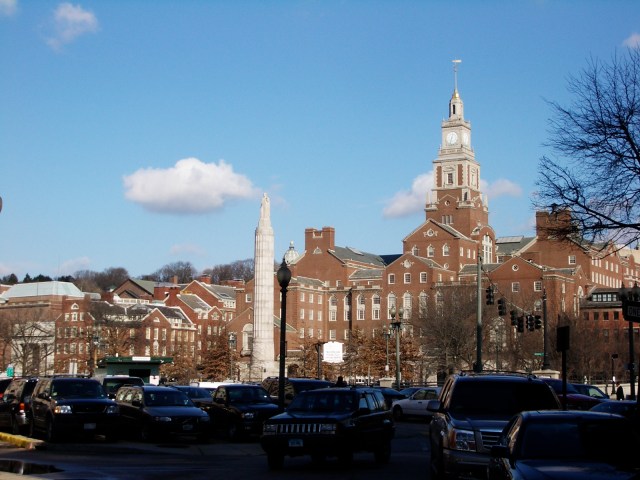
Townscape of College Hill before RISD’s 2008 museum addition. (Photo by David Brussat)

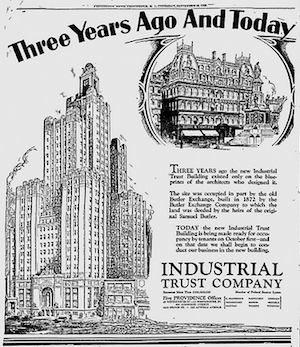
The Providence Preservation Society will be hosting a symposium on Thursday and Friday, Nov. 3-4, on the whys and wherefores of historic preservation. The focus will be, to some degree, on the empty Industrial Trust Bank Building, where the symposium will be held, and tours will be given of that very interesting structure. (Some might want to see if they can find evidence for a dirigible mooring station near the top of the building.)

Screen Shot 2016-10-28 at 2.57.21 PM.png

Why Preserve?” is the question at issue. And it is a good one.

In recent decades, those for whom preservation is a profession rather than a calling have, in my opinion, gone off track in their priorities. Granted, much of the preservation work of saving old buildings has been accomplished here. Preservationist pros have instead focused on preserving utilitarian structures and works of “midcentury modern,” or outright modernist monsters such as the Fogarty Building, that few people, even among their own members, really care about. PPS pros were, for example, more concerned to prevent the demolition of a relatively boring produce market behind Providence Place than to preserve truly excellent buildings such as the Providence Police and Fire Headquarters (1940) and the Providence National Bank (1929) and its addition (1950), though the latter’s facade was indeed saved. Efforts to preserve the police/fire HQ and the bank were relatively lethargic in comparison with efforts to preserve the produce market. (None of the efforts was successful.) In 2000, the society supported putting a glass box on top of the vacant Masonic Temple – an error that nearly resulted in its demolition. It was saved when an intelligent developer intervened with a traditional addition enabling its transformation into a hotel.

Moreover, the area where preservation could have the most positive effect on cities and their inhabitants, especially here in Providence, has been spurned. I refer to promoting future architecture that reinforces rather than undermines what Salvatore Settis, author of If Venice Dies, might call the soul of Providence. To encourage new buildings that respect the fabric that preservationists once worked so hard to save does not mean putting the brakes on change. On the contrary. It would greatly ease the complex process of bringing new building proposals to fruition. Rather than today’s largely blasé, even hostile attitude toward projects, people would want them to succeed. To strengthen the setting within which the city’s preserved jewels sit should be a top concern of preservationists. From an economic perspective, this would also strengthen the city’s “brand.”

Granted, it is not just preservationists for whom such a priority should be obvious, but the political, business and institutional leaders of the city and state.

I wonder whether these issues will even come up at the symposium sponsored by PPS, which has never had a director who truly understands the mission of preservation. All of the society’s executive directors since 1984 – Wendy Nicholas, Arnold Robinson, Catherine Horsey, Jack Gold, George Born, James Hall and now Brent Runyon – have been comfortable with the continued erosion of our fabric by insensitive modernist architecture unless it threatens a historic structure.

I wrote about this after Hall’s departure in a Providence Journal column called “Out with the preservation fogies.” Providence continues to cry out for a preservationist director who understands preservation. For all its good work these 60 years, perhaps the exercise of asking “Why Preserve?” will finally enable the Providence Preservation Society to answer a question that has proved elusive for decades.

More information about the symposium.

Posted in Architecture, Preservation | Tagged , , , , , | 5 Comments

More on Poundbury alive

Screen Shot 2016-10-27 at 12.37.30 PM.png

A few days ago, in “Poundbury a tourist mecca?,” I posted on Sophie Campbell’s brave article in the Telegraph. I applauded a piece written by someone disinclined to like Prince Charles’s idea of a town, but who found it largely irresistible and was honest enough to admit it. Now comes an even more delicious piece, also from a reluctant admirer. It is Oliver Wainwright, who has written “A royal revolution: Is Prince Charles’s model village having the last laugh?” for the Guardian.

But there’s a shocker at the end – hit me right in the solar plexis. Go see what I mean. … Can you believe it? I, for one, cannot. I’m sure Léon Krier can do it. I’m sure a third-grader could do it. But doing so might blow back against the classical revival by helping to undermine traditional architecture’s chief competitive advantage – the thick black line in the public’s mind between traditional and modern architecture? Am I wrong? What do you think?

Posted in Architecture, Urbanism and planning | Tagged , , , , | Leave a comment

“If Venice Dies” at Brown

DSCN9891.JPG

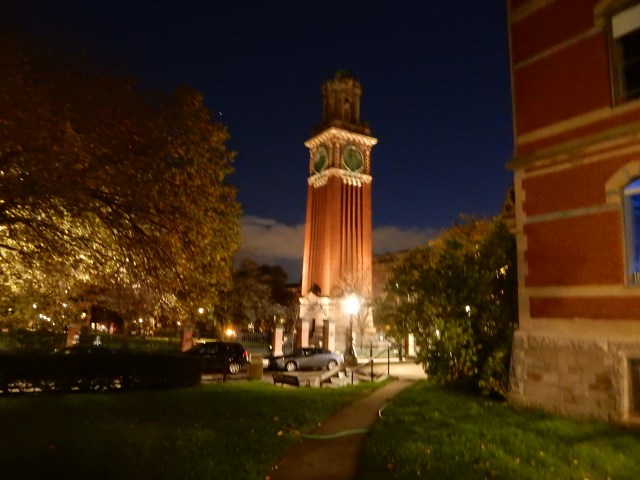
Carrie Tower at Brown University this evening before lecture. (Photo by David Brussat)

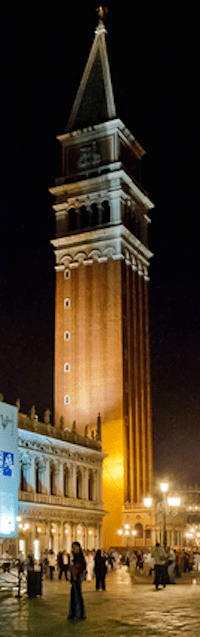
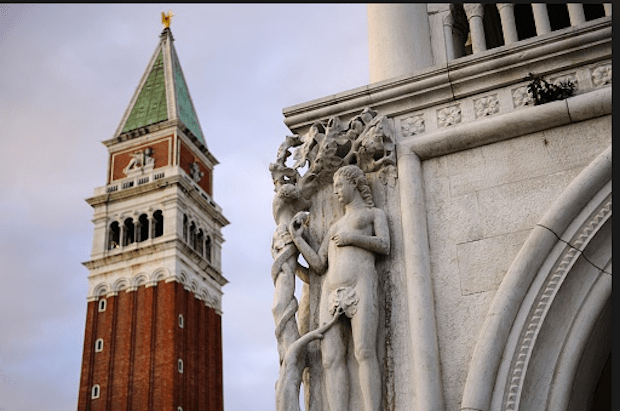
I went to hear the author of If Venice Dies, Salvatore Settis, at Brown this evening. On the way I took the picture above. During his lecture Settis noted that the world is spotted with copies of the Venice Campanile – which was rebuilt in 1902 after toppling – including here in Providence, he added, I think (his English was beautiful but heavily acccented). He did not name the Carrie Tower, built just two years after the Campanille’s reconstruction. Our tower is not an exact copy but more than close enough to claim patrimony. He discussed how a city has a soul, partly reflecting its people and partly reflecting its physical and cultural makeup. He said modernity increasingly threatens the civic soul.

Screen Shot 2016-10-25 at 9.07.33 PM.png

At the end of his lecture he took questions. I asked how far can a new building in a historic city diverge from its historic appearance without violating or diminishing its soul. He mentioned a building in a city near Venice as exemplifying (again, I think this is what he said) how well a new building could fit in. I could not tell for sure whether he was arguing that new buildings should closely adhere to the tenor of the surrounding historic architecture. I don’t think he was saying that, at least not tonight. He might have. He certainly does say that in his book, however, and without demurral.

If Settis does not believe that modern architecture hurts the soul of historic cities, then he has no real argument, at least not aesthetically, against skyscrapers and cruise ships. True, a modernist building can come close to fitting in, if that’s what its architect wants – but he usually does not want it to fit in. And city officials are reluctant to force the issue. Modern architecture, as Andres Duany frequently points out, is parasitical – that is, its personality only thrives by elbowing its neighbors in the ribs. Amid others of its ilk, its intrinsic dullness is more obvious. Modernist buildings love to imagine they are lording it over their neighbors. “Look at me! I’m new! I’m different!” They can’t do that in Houston.

Settis understands this perfectly well, I believe, based on the first half of his book, which is grandissimo (is that a word in Italian?). At the beginning of the second half he spends a lot of ink deploring the idea that a city might become a “museum.” To modernists, that is code for “do not build new buildings that look like old ones” This also seems to conflict with a city’s need to conserve its soul. Settis concluded his answer to my question by saying that how different a new building in an old city can be must be determined on “a case-by-case basis.” To be sure. But what is the principle involved?

Well, it was an interesting evening. I sat next to a fellow who I thought was Michael Wise, Setti’s publisher. I had not seen Michael since 1981, when he and I were both employed at the Washington bureau of the Associated Press, he as a reporter and me as a dictationist. I thought it was him, and I introduced myself assuming it was, but it turned out it was not him. He must have thought I was nuts. Again, an interesting evening, but not without its confusions.

Screen Shot 2016-10-25 at 9.44.40 PM.png

Posted in Architecture | Tagged , , , , , , | 1 Comment

Raymond Hood’s Providence

DSCN9889.JPG

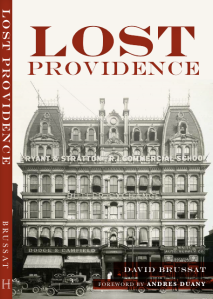
Above is a photo of a photo of a microfilm copy from a front-page story in the March 19, 1916, edition of the Providence Sunday Journal. It shows a proposed new municipal building designed by architect Raymond Hood, who was born in Pawtucket and graduated from Brown. I had seen the image many years ago, and hoped to include it in my book Lost Providence but was unable to recall what it was or who designed it, only what it looked like and that it was to have been just south of today’s Kennedy Plaza. During research for the book I finally came across a mention of it in an online promotion for an exhibit called “Unbuilt Providence” assembled by Brown Prof. Dietrich Neumann in 2004. It did not include a picture, but did name the architect. I wrote a column about it for the Journal. A librarian at the Providence Public Library finally pinned down the Journal article from 1916 on microfilm.

It came too late to get into the book as a “lost plan.” The newspaper headline, artistically designed, reads: “A Striking Plan for Dignifying Civic Center.” A subhead reads: “Former Rhode Islander Suggests Imposing State and Municipal Group, With Tower, to Occupy Entire Square South of Exchange.” That would be the block that today includes the Industrial Trust (“Superman”) Bank Building, the Fleet Center and the fourth Howard Building next to Dorrance Street. The article begins: “Startling, ambitious and comprehensive are the plans that have been drawn by Raymond M. Hood, a New York architect, as a suggestion for an improvement of Exchange Place, with the ultimate object of making the plaza one of the most beautiful square in America.” The story continues:

For a number of years those interested in making Providence a city beautiful have devoted considerable study to possible methods of taking full advantage of the possibilities of beautifying the great civic centre, but perhaps none of the plans thus far devised has been quite as ambitious, quite as comprehensive, or quite as flexible as those suggested by Mr. Hood.

Screen Shot 2016-10-24 at 2.17.04 PM.png

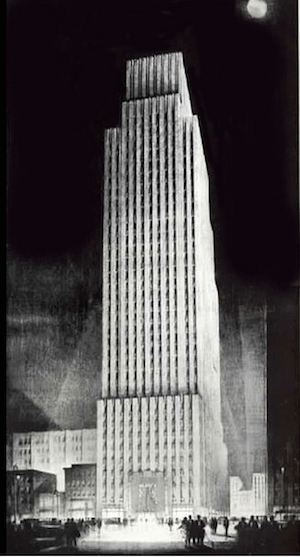
N.Y. Daily News Building by Raymond Hood, illustrated by Hugh Ferriss.

This would have been a dozen years before the construction of the Industrial Trust. Back in 1916 the ITBB’s predecessor, the Butler Exchange, had occupied its site for 43 years. Most of the rest of the block was occupied by aging commercial buildings facing either Exchange Place or Westminster Street. City Hall, built in 1878, looked east across the plaza to the new post office (now usually called the federal courthouse) built in 1908, both of which would have been connected to Hood’s extravaganza by tunnel.

Hood went on to become one of America’s most respected designers of skyscrapers at a time when the classical lines he proposed for Providence were under attack by modern architects. He and John Howells’ beautiful design won the competition to design the ornate  Chicago Tribune Building, built in 1924. He was a senior architect on the design team for the Rockefeller Center, built in 1933-37. Some say that his acceptance of new fashions in architecture made him the model for Peter Keating, the second-rate architect to Howard Roark in Ayn Rand’s The Fountainhead. Of course we all know where that trend line led.

How odd it is to read, in the Journal article of 1916, the words “beauty” and “making Providence a city beautiful” – a reference to the City Beautiful movement sparked by the World’s Columbian Exposition of 1893 in Chicago. Today the idea of building something lovely, designed to tickle the public’s sense of dignity, remains quite out of style. After a century, maybe it is time for a return of such ideas in architecture and elsewhere.

Posted in Architecture | Tagged , , , , , , , | 6 Comments

Alexander’s classical tent

Screen Shot 2016-10-23 at 1.39.11 PM.png

A traditional Batak house, Sumatra, Indonesia. (wikipedia)

Christopher Alexander – well known for his Pattern Language, his four-volume The Nature of Order, and for his research on the natural creation of form in architecture and digital technology – wrote an excellent open letter to members of the TradArch list in 2002. It urged those interested in promoting a classical revival to broaden the “tent” of classicism.

Screen Shot 2016-10-23 at 1.42.49 PM.png

Christopher Alezander

Alexander’s letter has come up again following the recent second meeting of TradArch listers in Raleigh, N.C. I attended the first one in Charleston last year, and this one in Raleigh, which I was unable to attend, seems to have been equally vigorous and (no surprise) equally challenged at achieving consensus on the difficult issues faced by classicists – theoreticians and practitioners, architects, artists and artisans alike.

Alexander does not seem (as I read his letter) to buy into the desire of some to “capture territory” from modern architecture – such as Andres Duany, who seems to go even beyond resuscitating kidnapped classicists like Louis Sullivan. But he does argue against defining classicism as strictly a matter of architecture derived directly from the canons of Athens and Rome. He does not seem to doubt that, say, Gothic is a valuable part of the classical canon. But more particularly he wants classicists to engage the traditional and vernacular work of the broad range of non-Western societies that are now seeing their cultures eviscerated by modern architecture. He writes:

All traditional architecture – that is, almost all the architecture built in Indonesia, Japan, Russia, Africa, Turkey, Iran, India, China – this dazzling wealth of forms, representing building, and art, and design for several millennia, is our heritage; and it is important because, regardless of its particular style, nearly all these buildings exemplify, in one way or another, a deeper thing: the presence of living structure.

This is wise, and it is in no way a retreat from the life-giving attributes of mainstream classicism. He voices a concern expressed at last year’s TradArch meeting by Nathaniel Walker, of the College of Charleston, that the classical revival could be perceived as narrow, backward-looking, elitist, even racist by many around the world. I have tended to resist that message myself, but only to the extent that it seems to open the door of classicism to modernist influences. Not that modernism has absolutely nothing to teach classicists; but almost nothing is pretty close to the actuality.

Most classicists and supporters of tradition in architecture, art and design understand that intuitively. And if Alexander, Walker and, for that matter, Duany are really saying the same thing – expanding the classical tent but excluding all but the very rare classicizing aspects of modernism – then I think it behooves classicists to listen carefully. If these three are not saying essentially the same thing, then the differences should be honestly identified and debated.

Sombreros off to Bin Jiang of the TradArch list for posting Alexander’s letter.

(I’ve mentioned Alexander many times on my blog and, in the olden days, my columns for the Providence Journal. My most extensive attempt to describe his thinking was in my review of Design for a Living Planet, by Nikos Salingaros and Michael Mehaffy.)

Screen Shot 2016-10-23 at 1.44.09 PM.png

Eishen School, Tokyo, by Christopher Alexander. (Hajo Neis/ArchitectureWeek.com)


Posted in Architecture | Tagged , , , , , , | 1 Comment

Poundbury a tourist mecca?

Screen Shot 2016-10-22 at 11.59.21 AM.png

A day or so ago there were comments on my post about Venice having too many tourists, which led to the question of whether tourists would press a bit less on places like Venice and Paris if new places were built with the same charms as the old places. Wouldn’t they be great places to live, and even draw their own tourists? And then, voila! An article about Poundbury showed up in my email, saying that it was indeed drawing tourists.

A marvelous piece by Sophie Campbell, “A toy town for the 21st century,” in the travel section of the U.K. Telegraph describes a Poundbury that anyone would want to see, not to mention live in. She says it has even become a sort of travel destination for tourists, who “jump up and down trying to see over the walls” of the charming little houses.

Screen Shot 2016-10-22 at 11.56.50 AM.png

I read paragraph after paragraph by Campbell about how wonderful Poundbury is. It is a new town in old styles developed next to Dorchester by Prince Charles. So I was startled to read Campbell’s admission: “My own feelings about Poundbury are mixed. I find it deeply disappointing that it is not contemporary in style – but Dorset friends point out that “trendy” design wouldn’t sell in the country.”

One must give her credit for her objectivity in not denying or camouflaging its appeal as so many of her fellow journalists have done over the decade or so since Poundbury was initiated. The “toy town” headline was obviously written by a member of that self-infatuated, intellectually blinkered group of people. But it simply wouldn’t be what it is, as lovely as it is, as profitable as it is, if it were in a contemporary style. Campbell continues:

Pastiche doesn’t bother me per se; I think that our horror of fake is snobbery, not aesthetics, and the Noddy feeling will wear off as the place matures (it will be another 10 years before all four building phases are finished). Overall, I reckon hats off to Charlie: he could have washed his hands of the land; instead he is trying to achieve something that, in a quaintly old-fashioned way, is truly radical.

“Pastiche” is a word usually used by modernists to cast aspersions on new traditional architecture. For her to use that word exposes, by itself, how deeply sunk she is in passé attitudes. Which makes her article all the more admirable, if not downright courageous. I assume she’s received blowback from her colleagues. Hats off to Charlie indeed! She then adds:

One unexpected problem is tourism. There is no hotel or bed and breakfast in the village, and residents hesitate to run private tours for fear of upsetting their neighbours. The Duchy blanched when I suggested mentioning a phone number. They said readers should write in for information on the regular official tours.

Ah, that’s what I love to hear. My only criticism is that, to judge by the photos seen on Google with a “poundbury” search, they could plant more trees. Still, I’d love to go there myself. For those who can make the trip, here is the information attached to the end of Campbell’s article:

The Prince’s Foundation website features Poundbury and similar developments: www.princes-foundation.org. Bus no 31 from High West Street in Dorchester drops you just outside the village.

The Duchy of Cornwall and the Residents’ Association run tours of the village. Apply to Middle Farm, Poundbury, Dorchester, Dorset DT1 3RS.

  • Screen Shot 2016-10-22 at 12.01.15 PM.png

Screen Shot 2016-10-22 at 3.06.54 PM.png

Posted in Architecture, Urbanism and planning | Tagged , , , , | 4 Comments

Henry James’s Roman ruins

Screen Shot 2016-10-21 at 10.50.04 AM.png

View from the Tiber of the Palace of the Caesars, in Rome. (wikigallery.org; artist?)

As we saw in his novel The Princess Casamassima, Henry James indulges himself in his descriptions of cities. In Daisy Miller, he describes the ruin of the Palace of the Caesars, and the Colosseum, in Rome:

A few days after his brief interview with her mother, [Mr. Winterbourne] encountered [Daily Miller] in that beautiful abode of flowering desolation known as the Palace of the Caesars. The early Roman spring had filled the air with bloom and perfume, and the rugged surface of the Palatine was muffled with tender verdure. Daisy was strolling along the top of one of those great mounds of ruin that are embanked with mossy marble and paved with monumental inscriptions. It seemed to him Rome had never been so lovely as just then. He stood looking off at the enchanting harmony of line and colour that remotely encircles the city, inhaling the softly humid odours and feeling the freshness of the year and the antiquity of the place reaffirm themselves in mysterious interfusion.

A few pages later, Winterbourne visits the Colosseum:

When, on his return from the villa (it was eleven o’clock), Winterbourne approached the dusky circle of the Colosseum, it occurred to him, as a lover of the picturesque, that the interior, in the pale moonshine, would be well worth a glance. He turned aside and walked to one of the empty arches, near which, as he observed, an open carriage – one of the little Roman street-cabs – was stationed. Then he passed in among the cavernous shadows of the great structure, and emerged upon the clear and silent arena. The place had never seemed to him more impressive. One half of the gigantic circus was in deep shade; the other was sleeping in the luminous dusk. As he stood there he began to murmur Byron’s famous lines, out of Manfred. …

Someone recently informed me that there is a collection of James’s writings on cities and architecture. If I can find that, then I can write this blog without doing any work of my own!

Posted in Architecture, Books and Culture | Tagged , , , , , , | 1 Comment

Coming up: ‘If Venice Dies’

Screen Shot 2016-10-20 at 1.57.54 PM.png

Screenshot from video of Venice by Rene Caovilla. (National Geographic)

My colleague from my days as a dictationist (1978-81) at the Washington bureau of the Associated Press, Michael Wise, who was a D.C. metro reporter there, is now a publisher, the co-founder, with Ross Ufberg, of New Vessel Press. Wise is author of many articles and a book, Capital Dilemma, from Princeton Architectural Press, on rebuilding Berlin after the fall of the wall. He has sent me a book by Salvatore Settis, If Venice Dies, to review. He sent it just as I was revving into the high gear of writing my book Lost Providence, which is now complete and sitting at History Press, its publisher, in Charleston, S.C.

Right now If Venice Dies is buried under the avalanche of books, plans, papers, articles and other research material beneath which the bed of our guest bedroom groans. I expect soon to find it and review it, but in the meantime here is an interview with Settis by Simon Worrell for National Geographic. Included with the interview are 3 1/2 minutes of pure bliss – a video of Venice by Rene Caovilla. Settis eloquently describes the threats facing Venice, from cruise ships to rising seas to tourism overkill – on all of which I will express my opinion in my eventual review, after I find my own copy of the buried book. The video demonstrates why Venice should not die.

Posted in Architecture, Video | Tagged , , , , , , , , | 3 Comments