Remember to save Alamo

Screen Shot 2017-05-11 at 3.25.17 PM.png

The Alamo, from which modern San Antonio seems to recede. (history.com)

The Houston Chronicle’s article “The Alamo is forgettable. A controversial new plan could change that,” by Texas Architect’s Alyssa Morris, describes a proposal to “remember” the Alamo by tinkering with its site in San Antonio. But her description of the plan contains four words – “at least in gesture” – that should alarm any friend of the historic site. She writes:

A new master plan aims to restore, at least in gesture, conditions of the mission before it was destroyed, highlighting it as a place where indigenous families lived, worked and worshiped for centuries, as well as the site of the 13-day siege.

“At least in gesture” refers to a glass wall that would “suggest” the wall that had surrounded the site before it was attacked, in 1836, by Mexican General (and 11-time Mexican president) Antonio Lopez de Santa Anna. Santa Anna sacked the mission, executed the Texan survivors and ordered the mission demolished, which in part it was. But there was no glass wall at the Alamo. To put one there, as proposed by the Alamo master plan, would be to attack its memory and undermine what remains of its “authenticity.”

Morris observes, rightly or wrongly, that today’s Alamo is under siege by the surrounding urban environment. She writes:

The site retains few of the original features that would have made up the 18th-century Spanish mission, except, of course, the iconic chapel and the long barracks. But these buildings seem curiously out of place and ignored by the high-rises and parking lots of the modern metropolis that grew up around them.

Screen Shot 2017-05-11 at 2.59.32 PM.png

Ben Franklin’s ghost. (Wikipedia)

To then erect a glass wall would be to commit a further assault on history, reminiscent of the “ghost reconstruction” of Benjamin Franklin’s house and shop in Philadelphia by Venturi & Rauch. Their abstract frame desecrated that site just as a glass wall would desecrate the Alamo site.

I assume that other parts of the Alamo master plan, by Preservation Design Partnership, of Philadelphia, suggest a more sensible improvement of the site. Today the plan goes before the San Antonio City Council for concep- tual approval. Let’s hope the council will encourage the architect to “tear down that wall” so that the Alamo will not be falsely construed.

Museums of this sort have plenty of techniques to inform the public of what was there. They can erect educational boards that show what historians and archaeologists’ think the original wall looked like. They can actually rebuild the original wall according to such findings. The last thing they should do is to add yet another thing that was not there and should not be there.

Screen Shot 2017-05-11 at 3.06.17 PM.png

Rendering of Alamo historical site with glass wall and surrounding city. (PDP)

Posted in Architecture, Preservation | Tagged , , , , , , , | 7 Comments

D.C. classical tours return

Screen Shot 2017-05-10 at 5.22.26 PM.png

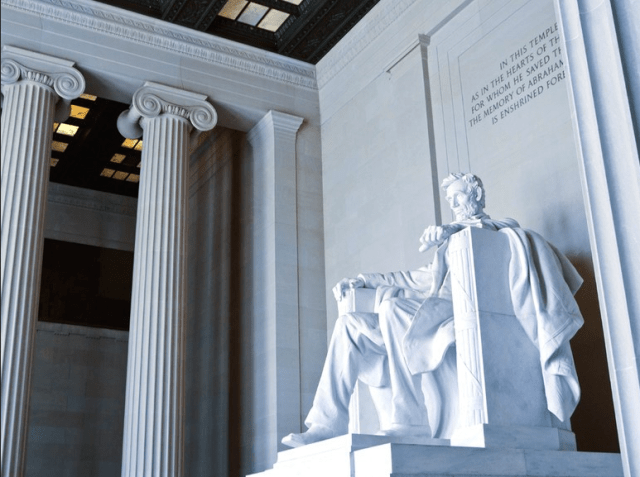
The Lincoln Memorial, by Henry Bacon. Statue by Daniel Chester French. (Conde Nast)

Washington, D.C., is among the nation’s if not the world’s most walkable big cities, and this year the town’s leading advocate for beauty, the National Civic Art Society, returns with a new slate of its walking tours. Moreover, because the District of Columbia is the capital of the free world, its architecture and accompanying sculpture must be comprehensible to citizens. In those many cases where its language is classical, its understanding is intuitive.

This is from the NCAS’s introduction to the “Our Classical Heritage” tours:

These tours are fashioned for those who wish a greater under- standing of why and how the District of Columbia came to be a classically designed city. You will learn of the ancient antecedents of our political philosophies, of the stylistic precedents of our architectural forms, and of the Founders’ classical vision.

But there are, I’m afraid, other languages (if we can so call them), and for the first time one of the tours is devoted to architecture in one of those so-called languages. So it is advantageous that this year’s tour guide, the sculptor Mi- chael Curtis, will lead all five tours. His experience in the direct translation of material to feeling will help him assess the several modernist buildings on Tour IV – “Brutal Mistakes” – on June 24.

The roster of those mistakes and the schedule for the entire series of NCAS’s “Our Classical Heritage” tours can be viewed at Eventbrite, where reserva- tions can be made at the $10 a tour, reduced from last year’s price. All of the tours are on Saturdays. The tours are individually titled as follows:

  1. June 3 – Washington, the Classical City
  2. June 10 – National, Political, and Personal Liberty
  3. June 17 – Freedom and Sacrifice
  4. June 24 – Brutal Mistakes
  5. July 8 – British America

At $10 a pop, this is the classical definition of a bargain. So I said in “Tour the national classical” a year ago, when the levy was fifty percent larger, and so it remains a year later. Although he was not among America’s founding fathers, Winston Churchill had this to say: “We shape our buildings; thereafter, they shape us.” That’s pretty much what Washington and Jefferson were thinking when they chose classical architecture to be the design template of the new United States of America. The value of understanding what our buildings say about our society has only grown since the last edition of NCAS D.C. tours.

O! To be in Washington!

Posted in Architecture | Tagged , , , , , , | 4 Comments

A “McMansion Hell” blog

Screen Shot 2017-05-09 at 11.55.32 AM.png

Kate Wagner, who writes a blog called McMansion Hell, hates McMansions, and so do I. But I revere Kate Wagner’s ability to tell the difference between a McMansion and a mansion. They are different. I sometimes wonder whether the word McMansion was invented to cast aspersions on mansions, not for being big houses built for people who can afford them, but as new houses built in old styles for people who like them – verboten to the modernist mindset.

The blog Hyperallergic has an article, “The Worst McMansion Sins, From Useless Pilasters to Hellish Transom Windows” by Sarah Archer, that understands Kate Wagner to perfection. Archer hits the jackpot when she describes McMansions as “architectural Mad Libs” and as the houses of rich people as imagined by poor people. (She was actually referring to Trump – “a poor person’s idea of a rich person.”) She writes:

Though a quick read can give the impression that the blog is about taste in a general sense, Wagner is at heart an architectural grammar scold: She hates ugly chandeliers, but what really fuels the ire of McMansion Hell is the misuse and decontextualization of elements that are supposed to carry architectural meaning. It’s the flagrant disregard for these visual and structural relationships — like, say, the cavalier application of scotch tape to the back of an overly-long necktie — that drives Wagner to share her personal hell with the internet.

She is equally devastating in her analysis of McMansion interiors. Perhaps the most amazing thing about Wagner’s site is its McMansion Scale, which analyzes current residential architecture from “New Traditional” to “McMansion Hell.” Her chart moves from “zone of forgivable errors” and “very trendy but well executed nonetheless” to “cascading gables” and “two-story entry, PoMo arch.” The chart displays a comprehensive and erudite understanding of contemporary home design, and is rib-splitting funny to boot.

A tip of the hat to Clay Fulkerson, who sent me the article from the blog Hyperallergic, an amazing compendium of quirky stuff, such as “The Octopus: A Motif of Evil in Historical Propaganda Maps,” which I’m going to next.


Posted in Architecture, Humor | Tagged , , , , | 4 Comments

The apotheosis of Ong-ard

Screen Shot 2017-05-07 at 8.14.00 PM.png

On Friday the top of my post “AD’s 24 ugliest skyscrapers” featured the Elephant Building, in Bangkok. Shortly after, Leon Krier left a comment informing me that the building’s architect, Ong-ard Satabrandhu, had had a Road to Damascus experience after designing it, and turned away from his modernist work, toward design that delves deeply and delightfully into Thai architectural tradition.

In an email Krier included a link to some illustrations, one of which is atop this post. No modern architect would ever assemble anything so enchanting. It would be beyond his power. That Ong-ard’s website is hard to get around indicates that he has not altogether chucked his modernist tendencies (mod- ernists also dislike putting the front door where it can be seen). Still, a search for descriptive material about his work (in English) rewards the effort. I en- joyed finally arriving at its “Profile” section, with its photo of the architect next to a table full of models of his work (see below). Then I found this:

Incidentally, Colin Rowe — Ong-ard’s esteemed professor at Cornell — wrote the well-known treatise “The Mathematics of the Ideal Villa” (1947), a text that discusses architectural and organizational similarities in the works of Palladio and Le Corbusier.

Well, we won’t hold that against Ong-ard. There is no similarity worth noting between La Rotonda (by Palladio) and the Villa Savoye (by Le Corbusier). Perhaps Rowe concludes that there are no such similarities – ha! – except that maybe they both preferred to use pencils. Who knows. Maybe the au- thor of this profile of Ong-ard inserted the paean to Rowe without permis- sion, and Ong-ard hadn’t the heart to chastise the perp. Or perhaps his Rowe fixation latched onto him during his Elephant Building period and he has had too much work to find time to give it the boot. Many fine architects have a hard time letting go of their teachers’ fondest theories, however misguided.

But soon I came across the following, and my thoughts about this architect, so new to me, floated back up into the clouds:

What Ong-ard discovered through his research — using drawing and photography, techniques that are almost entirely visual and not just historical or especially academic—is that certain attributes of clarity, modesty, proportion, scale, and repeated building elements are shared by most of his sources of inspiration. In other words what this quiet, talented architect found in these examples and seeks in his own work are attributes that seem to render the ego of the architect almost invisible or anonymous as if the works emerged almost without effort, from their place and situation. Such effortlessness was known in Italy, in the day of Palladio, as Sprezzatura, making the difficult seem easy.

It is very rare to find an architect who has come to his senses during his career. Ong-ard has published a book of his work, A Tradition of Serenity. Here is its forward by Leon Krier, who emphasizes the difficulty of escaping the modernist establishment even in the world’s most distant outposts. I will post some evidence of this below. Enjoy.

Screen Shot 2017-05-07 at 8.28.36 PM.png

Screen Shot 2017-05-07 at 8.46.27 PM.png

Screen Shot 2017-05-07 at 8.47.09 PM.png

Screen Shot 2017-05-07 at 8.47.23 PM.png

Screen Shot 2017-05-07 at 8.59.24 PM.png

Screen Shot 2017-05-07 at 8.59.39 PM.png

Screen Shot 2017-05-07 at 8.59.57 PM.png


Posted in Architecture | Tagged , , , , , | 4 Comments

My Jane’s Walk, tomorrow

My Jane’s Walk tour of the Providence waterfront is tomorrow, Saturday, May 6, at noon. The weather is expected to be rainy both before and after my tour, but not during, or so they say. Hope to see you anyway!

David Brussat's avatarArchitecture Here and There

Screen Shot 2017-04-29 at 1.30.02 PM.png Jane Jacobs in 1961, leading fight for West Village at Lions Head restaurant, in NYC.

Jane Jacobs’s 101st birthday is coming up on Thursday, May 4, so my Jane’s Walk tour along the Providence waterfront, starting at Crawford Street Bridge near Hemenway’s, will be on Saturday, May 6. Providence’s river walks were part of a large government redevelopment project of the sort that Jacobs scorned. That only goes to show that such projects are not good or bad because they are big or small. Their merits rest on their characteristics, and it is fair to say that those characteristics are good or bad based on whe- ther Jane Jacobs would like them or not. The bridges, walkways and parks along the Providence and Woonasquatucket rivers are walkable, sittable and lovable. Jane Jacobs would have loved them.

This year will see a host of tours in Providence through Jane’s Walk

View original post 144 more words

Posted in Uncategorized | Leave a comment

AD’s 24 ugliest skyscrapers

Screen Shot 2017-05-04 at 8.25.46 PM.png

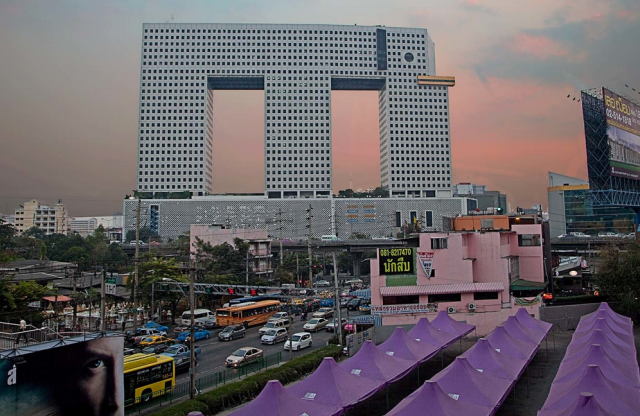
In Bangkok, the top building on AD’s list of 24 ugliest skyscrapers worldwide. (AD)

Architectural Digest has posted a list of the 24 ugliest skyscrapers in the world. Bully for AD. The building on top is in Bangkok. Is it the ugliest or the 24th ugliest? The editors do not say. I suspect that the list is in reverse order, not just because the protocol for lists nowadays is that the first shall be last, but because the last, in this case, is the Trump Tower in Las Vegas. Yuuugly!

It is a very ugly building but not the worst on this list. These are all ugly buildings not because they fail deeply on just about every aesthetic level – even though they do – but because they are all modernist buildings. I ap- plaud AD for posting this list, but couldn’t they find one ugly traditional skyscraper just for the sake of verismilitude? If it were a list of the most beautiful modernist skyscrapers, I dare say the best would be worse than the worst on any list of the 24 ugliest traditional skyscrapers. Or of all traditional skyscrapers of all time. Put that in your pipe and smoke it, AD!

No, of course there are probably some accidentally attractive modernist buildings that are better than the worst traditional buildings. Maybe five?

By the way, the skyscraper in Bangkok is called the Elephant Building. Did you guess that before you read it here?

Posted in Architecture, Humor | Tagged , , , , , , , , | 10 Comments

Inside Drabble’s developer

Screen Shot 2017-05-03 at 6.23.02 PM.png

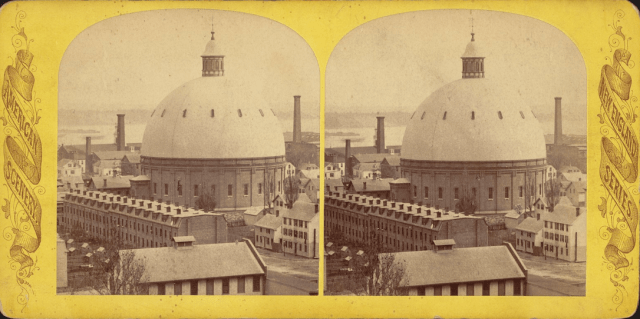
Gasometer with largest dome in the world. (digitalcommonwealth.org)

Margaret Drabble’s 1977 novel The Ice Age is supposedly about Britain and its existential angst during the ’60s and ’70s, but I just started reading it. For a few pages near the outset, at least, it concerns the career of her protagonist, Anthony Keating, son of an Anglican churchman. Keating starts out as a commentator on the BBC and becomes a property developer in London. In his first project he and his partners buy and raze an ancient tottering candy factory, the Imperial Delight Company, after which they name their new firm. She writes:

Anthony found the site inexpressibly romantic and exhilarating. … There was a large, open, cobbled space in the center of the site, which had a strange look of the countryside about it. Weeds grew up between the stones. There were horseshoes, nailed on the warehouse wall. Once there must have been a stable; no doubt the sweetmaker’s had distributed its sweets a hundred years ago by horse-drawn van. There was even a small tree: an elderberry had managed to root itself between the cobbles. It would be a pity, in a way, to remove this space, though nobody had seen it for decades, except for the handful of people who worked there, but it too would have to go. Anthony was quite relieved when Rory suggested that the local council might find their redevelopment plans more acceptable if they incorporated in them an open area for public use. “We could point out,” said Rory, who knew many developers’ architects and their ways with zoning boards, “that this present area hasn’t been seen or used for years, and we’re going to return to the community a nice patch of open space. With trees.”

That project was successful, and Anthony grew to enjoy driving around the city, looking for more property to redevelop.

London became a changed place to Anthony. Before he had seen it as a system of roads linking the houses of friends and the places of his employment, with a few restaurants and shops included in his personal map. Whole areas, hitherto ne- glected, acquired signifi- cance. At first Anthony went around dazed by achievements that he had once taken for granted: what genius had assembled the land for the Bowater House, for Eastbourne Terrace in Padding- ton, for soaring Millbank Tower and elegant Castrol House? And who could regret the forgotten buildings these giants had replaced? Even the much-maligned Centre Point of Harry Hyams revealed itself to him in a new light: indeed, he began to remark casually to friends, he had always thought it a rather fine building. …

Next, to assemble the site for another project, they bought a huge gasometer.

[H]e would drive down to look at [it], for the pleasure of looking at it. It was painted a steely gray-blue, and it rose up against the sky like a part of the sky itself; iron air, a cloud, a mirage, a paradox, defining a space in sky, changing subtly in color as the color of the sky changed. It stood dark and cold, it would catch the pink wash of sunset, it would turn white like a seagull, it would take upon itself the delicate palest blue against a slate-dark background. It was a work of art. It would have to come down, of course, for who wants an obsolete gasometer? But while it stood, while the I.D. Property Company negotiated for the other parts of the jigsaw, Anthony would gaze upon it with more pride and more wonder than he had ever, in childhood, regarded the cathedral outside his bedroom window, though that cathedral was thought by some to be the finest building in Britain. It thrilled him more to own it than it would have thrilled him to have a Velázquez, a Titian on his wall. A derelict gasometer, radiant with significance. One could see it from miles away, right across the Thames, from some directions. It lifted the heart. Up soared the heart like a bird in the chest, up through the light and airy metal shell, to the changing, so much before unnoticed sky.

Hmm. What came to mind immediately here was the image of the alien bursting from Sigourney Weaver’s colleague’s chest in Alien.

Drabble describes Anthony’s admiration for Len Wincobank, the young developer who had introduced him to the business.

… [H]e loved what he was doing, loved his buildings, believed in them, thought them beautiful, thought people ought to like them, was outraged when they didn’t (and, of course, they didn’t, as most people dislike anything new), and was determined, with a kind of blinkered faithful zeal, to make people like them. He was an enthusiast. Anthony liked Len’s girl, Maureen, too. Occasionally he had misgivings about the appearance of some of the actual developments: the center in Northam looked to him, from outside, sinister and blank, but when Len explained to him that this was the new kind of architecture, that there was no need to have any windows at all in that kind of building, that most new buildings were going to be windowless, and what about the height, the fine expanse, and of course perhaps architects hadn’t yet quite got the hang of building without windows, but they would, they would – well, Anthony began to see even the Northam center with new eyes.

Knowing little of Margaret Drabble or her work, I picked up The Ice Age on a whim at my library’s annual book sale the other day. I had no idea such a trove of developer mindset lore lurked within. I will print more excerpts if other such gems show up.

(The gasometer pictured above, in Providence, supposedly featured the world’s largest dome. It may have been built in 1850 and demolished in 1920. Or built in 1872 and demolished in 1938. Sources conflict. I was searching on Google for a gasometer with a dome to illustrate this post and found that be- fore I realized its location. I had figured it was in London or, when I started reading the text, Boston.}

Posted in Architecture, Development | Tagged , , , , , , , , | 1 Comment

Rampant peeping-Tomism

Screen Shot 2017-05-02 at 3.19.43 PM.png

In London, visitors to the Tate Modern (right) spy on residents of the Neo-Bankside. (Guardian)

With all the glass residential towers going up with floor-to-ceiling windows overlooking the hotshot cities of the world, the global market for binoculars and telescopes must be going haywire. But not everyone wants to be caught in the two-ring circus at the business end of someone else’s binoculars.

My recent post “Looking down on the Chrysler” on the blog This East Side explained how condo owners in Manhattan might soon be spying on each other, turning the Upper East Side into Peyton Place. Several readers have sent me the link to Oliver Wainwright’s piece “Gawpers Go Home!” in the Guardian – about a new London tower, the Neo Bankside, whose residents are suing the Tate Modern because visitors to its observation terrace keep “gawping” into their plate-glass windows.

They were sold on their proximity to Tate Modern. Now the residents of luxury flats are taking the gallery to court, arguing its viewing platform invades their privacy.

Boo-hoo! Wainwright doesn’t suffer these fools gladly, any less than he does the peeping Toms at the Tate, of whom he writes:

Climb to the summit of the Tate’s new twisted brick ziggurat and you are rewarded with majestic views of London’s skyline, where St Paul’s dome now competes for attention with the portly stump of the Walkie-Talkie, the swollen shaft of One Blackfriars and a host of other novelty forms in the capital’s own drunken sculpture garden. But most of the visitors are to be found huddled around the other side of the terrace, gawping at a spectacle of another kind: the pristine still lives of rich people’s homes.

The way he describes the “majestic” London skyline may explain why people would rather go to the “dull” side of the terrace to violate the privacy of rich people, whose taste certainly arouses Wainwright’s derision.

Like a vertical stack of Damien Hirst’s formaldehyde tanks, the apartments of Neo Bankside are piled up just metres away, their glass vitrines displaying glistening tableaux of Eames chairs, Castiglioni lamps and ornamental fruit in silver bowls – along with plenty of expensive telescopes for spying on the surrounding panorama. But it seems the residents want their crow’s nest views to work only one way.

Wainwright rolls his eyes at residents’ chances of winning their lawsuit, in which they seek damages for placing themselves willingly and with stupidity aforethought into their own “goldfish bowl.” Tate officials early on suggested putting up blinds or curtains – but that would hardly do! Why have magnifi- cent views if you must block them? Naturally, since their building faces the Tate Modern, I would argue with their definition of magnificent.

Wainwright’s article stretches out the what-ifs of viewupmanship as London’s booming tower market opens new lines of business for solicitors. No doubt the legal eagles of Manhattan are looking down from their aeries, paying very close attention.

Posted in Architecture, Humor | Tagged , , , , , , , | 6 Comments

Living beyond the Chrysler

Screen Shot 2017-04-23 at 2.07.19 PM.png

Photo of Margaret Bourke-White shooting from gargoyle of Chrysler Building. (MoMA)

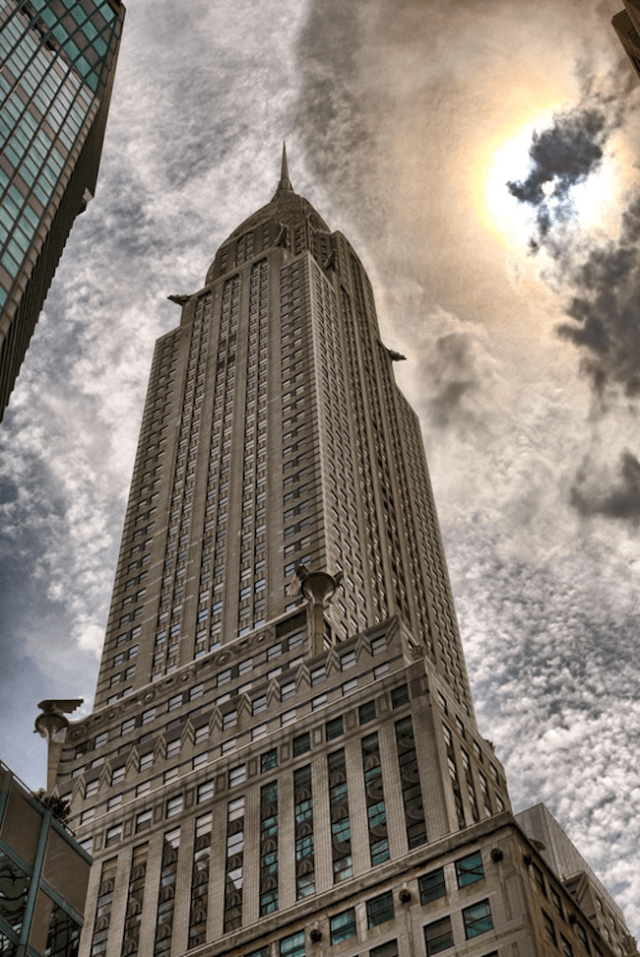
With the new looser height restrictions in Manhattan’s Midtown East, it looks as if people with condos atop new towers soon to be built will be able to look down their noses from the clouds above the crown of the Chrysler Building. I wrote about this, and about how to choose a floor to live on in a supertall, in “Looking down on the Chrysler” for This East Side, the new blog published by my friend and former colleague Froma Harrop. Visit the blog as well as my post. Froma’s a very sharp observer of the Upper East Side scene, where she lives when she is not living on “this East Side” of Providence.

Screen Shot 2017-05-01 at 3.05.29 PM.png

The Chrysler Building. (Wikipedia)

Posted in Architecture | Tagged , , , , , | 4 Comments

Architectural Revival on FB

Screen Shot 2017-04-30 at 5.05.05 PM.png

“In an age of ugliness, a work of beauty is an act of defiance.”

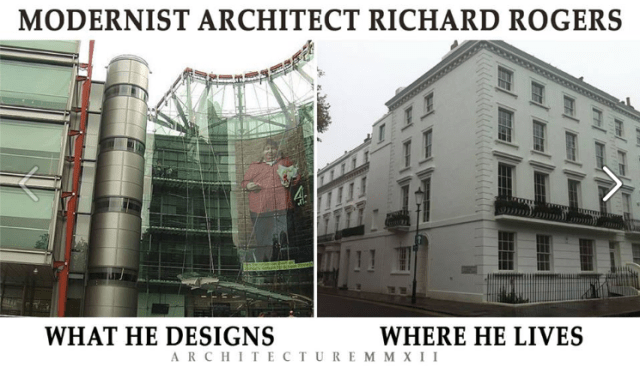
I recently discovered an amazing website called Architectural Revival. It is on Facebook, and is associated with ArchitectureMMXII, which recently felt the whip of publicity when one of its videos was adopted by the UKIP party (Uni- ted Kingdom Independence Party) in Britain, which led the successful Brexit campaign. Or maybe merely a supporter of UKIP. There was some back and forth on the TradArch list over how much the UKIP connection matters. It matters far less than the truths so eloquently expressed.

In trying to get to the bottom of who was responsible for what and when, I stumbled upon the Architectural Revival site on Facebook. Click on it above and you will find yourself in the middle of a slideshow that strings photos of beautiful places, slides that juxtapose beautiful and ugly places (that is, tra- ditional and modernist places), and inspired mottos, such as the one above, that crisply voice the common-sense arguments for tradition and against modernism, especially in the design of our cities and towns. I have found myself clicking endlessly from slide to slide over several days and have to force myself to halt my progression through this digital hall of divinity because I have other things I must do. It’s almost like the famous potato chip ad – bet you can’t eat just one!

Posted in Architecture, Art and design | Tagged , , , , , | Leave a comment