Millais on rebuilding Berlin

Screen Shot 2018-02-28 at 10.58.06 PM.png

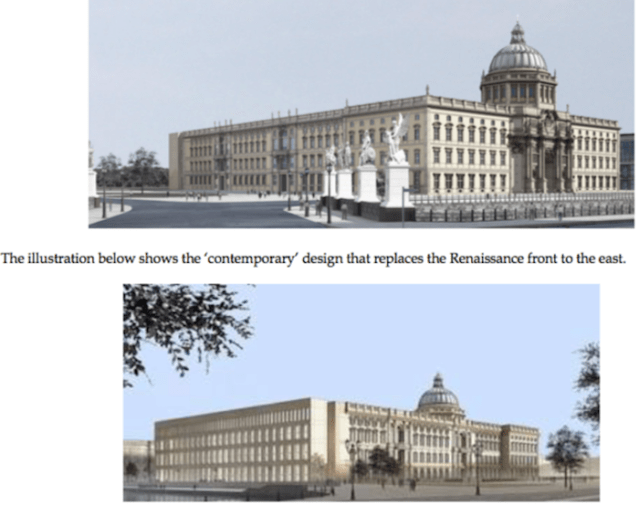
The Berliner Schloss, completed in 1845, bombed in 1945 and replaced by East Germany with the modernist People’s Palace, has been rebuit with three sides traditional and one modernist.

Malcolm Millais, author of Le Corbusier, the Dishonest Architect and Exploding the Myths of Modern Architecture, recently visited Berlin, in part to investigate four examples of how Germans have reconstructed historic buildings damaged by Allied bombs in World War II. His unique combination of pasted excerpts from online descriptions of the four examples, separated by his commentary upon them and followed by his conclusions, is a valuable short course in the rise and fall of European historical preservation.

It value is heightened considerably by the extensive links included by Millais, clustered after each of the four examples, that allow readers to draw their own conclusions about the debate that has raged in Berlin and Germany for decades. [To view document, click on the PDF link at the end of this post.]

And its value survives the dangers of working with multiple online sources in a difficult format. These include redundancies caused by clips from different sources that cover the same ground, pastings where dropped words lead to awkward phraseology, and page-design challenges.

Still, the evidence of vast confusion in directing Germany’s reconstruction over the half century or more since the war is damning. The modernist influence Millais describes and rightly condemns has inscribed the face of Berlin with vast architecture incoherence – especially regrettable in the city’s most venerable historical structures.

Visiting the now “restored” Neues Museum, colloquialisms like “mish-mash,” “pig’s ear” and “dog’s breakfast” come to mind. This just illustrates the incompatibility between normal building and what is known as modern architecture. The fact that the restoration has generated bitter controversy is unsurprising.

Perhaps the consensus ought to have been to destroy what remained of buildings whose erection was directly linked to the hubris that caused Germany to initiate two world wars (though the causes of the first were mixed in ways that causes of the second were not). And maybe this was the course taken with many ruins in the postwar years. It would take more familiarity with German cities than I claim to make such a judgment.

The four buildings described in their various types of restoration are the Berliner Schloss (Berlin Palace), Berlin Dom (Cathedral), the Neues (New) Museum and the Kaiser Wilhelm Memorial Church.

The examples presented by Millais argue strenuously for an even higher priority in favor not of monkeying around with these cultural artifacts but of rebuilding ruins as they were before the buildings were damaged. This may explain the public’s apparent preference (as I read it) for keeping historical accuracy uppermost in mind.

Upon seeing this post, Malcolm sent me a quote he’d just stumbled on in Isherwood’s Goodbye to Berlin:

… are modernist lamps, designed to look like pressure-gauges, thermometers and switchboard dials. But the furniture doesn’t match the house and its fittings. The place is like a power-station which the engineers have tried to make comfortable with chairs and tables from an old-fashioned, highly respectable boarding-house. On the austere metal walls hang highly varnished nineteenth-century landscapes in massive gold frames. Herr Bernstein probably ordered the villa from a popular avant-garde architect in a moment of recklessness, was horrified at the result and tried to cover it up as much as possible with family belongings.

Fates of Four of Berlin_s Iconic Buildings copy

Posted in Architecture, Preservation | Tagged , , , , , , , | Leave a comment

The special beauty of decay

Screen Shot 2018-02-26 at 6.06.26 PM.png

Ruins of the Forum of Julius Caesar, in Rome. (Leon’s Message Board)

I’ve been trying to decide whether to post the only passage I thought worth quoting from the section on Cardinal Manning in Lytton Strachey’s Eminent Victorians, recently read by your peripatetic couch-potato. When I discovered it was not a quote by Manning – the famous traitor to the Anglican Church who ended up a cardinal of the Roman Catholics, I was shaken in my resolve to post it. I mean, the book has absolutely nothing to say about architecture. But then I found that the passage came from Sir Mountstuart Elphinstone Grant-Duff. I decided to post it to memorialize the oddity of the name.

Screen Shot 2018-02-26 at 5.56.46 PM.png

Sir M.E Grant Duff. (Wikipedia)

Well, you have to admit that it is an odd one even for a member of the British aristocracy in the Victorian period. The name seems almost to mock Victorian bric-a-brac, yes? So here is the passage, which comes toward the end of Strachey’s very sly and subtle defenestration of the great ecclesiastic and his seemingly unchristian desire to step upon any obstacle in his rise up the ecclesiastical ladder. Manning enjoyed being the eminence gris at such places as the Metaphysical Society, in London, where he occasionally condescended to read a paper of his own. The passage that follows considers the occasionally curious subjects of the members’ papers, which they read aloud at meetings of the society. The brackets, by the way, are Strachey’s, so maybe he inserted the quote because he was as amused by the name as I am.

I think the paper that interested me the most of all that were ever read at our meetings [says Sir Mountstuart Elphinstone Grant- Duff] was one on “Wherein consists the special beauty of imperfection and decay?” in which were propounded the questions “Are not ruins recognized and felt to be more beautiful than perfect structures? Why are they so? Ought they to be so?”

This was the only passage in the Manning chapters that touched on architecture. I have long felt so myself, regarding decay more than ruins. I prefer the degeneracy of the French Quarter of New Orleans and on trips to Charleston have always enjoyed seeing ancient houses as they look before they are restored. But I don’t really know why. Of course, this can be taken too far. Around here (in Providence) if a building gets to looking too old, it might pass right through the stage of “ruin” to the stage of demolition, which is almost always sad because these days a lovely old building is almost never replaced by a lovely new building.

Where have I heard the name Grant-Duff before? Was it from an episode of “Jeeves & Wooster,” the excellent series starring Stephen Fry and based on the humorous novels by P.G. Wodehouse? [Here is a full episode.]

Looking up Mountstuart Elphinstone Grant-Duff, I find this Wikipedia entry. The first line runs thusly:

Sir Mountstuart Elphinstone Grant Duff GCSI CIE PC FRS (21 February 1829 – 12 January 1906), known as M. E. Grant Duff before 1887 and as Sir Mountstuart Grant Duff thereafter, was a Scottish politician, administrator and author. He served as the Under-Secretary of State for India from 1868 to 1874, Under-Secretary of State for the Colonies from 1880 to 1881 and the Governor of Madras from 1881 to 1886.

It seems that the hyphen has been dropped since Lytton Strachey’s day. Is it not time to return it to its traditional place?

Posted in Architecture, Books and Culture | Tagged , , , , , , , , | 4 Comments

Berlinski: Sacking of Paris

Screen Shot 2018-02-25 at 4.49.50 PM.png

Paris along the Seine, with skyscrapers outside the Peripherique. (Traveler Corner)

Claire Berlinski’s masterful summary of the sad situation in Paris is out in the latest City Journal under the title, “The Architectural Sacking of Paris.” I am looking also for Joe Queenan’s no doubt hilarious essay “London Beats Paris in the Tower Olympics,” but that is, alas, 1) behind the Wall Street Journal paywall and 2) from way back in 2012. I include the link in case some readers are WSJ subscribers. (If so, maybe someone will, bless you, cut-and-past a copy to me. Thank you in advance.)

Berlinski’s article was sorely depressing in its description of the 2014 mayoral race that pitted Nathalie Kosciusko-Morizet, who opposed the gargantuan Tour Triangle project, against Socialist Anne Hidalgo, who wants to “rupture” Paris from its past and make it into another London, towers and all. Berlinski writes that the race was “notable for its cattiness.”

Polls show that 62 percent of Parisians oppose skyscrapers in their town, but the woman they should have supported lost. Berlinski, who lives in Paris, does not dwell on that, but also does not suggest that much in the way of mass protests or class-action suits are in the offing to try to sway Hidalgo from her Vandal-like plans.

A while back, my deep source on all things Parisian, Mary Campbell Gallagher, president of the International Coalition for the Preservation of Paris, wrote about a suit brought by lawyers against plans to move French legal agencies from the Isle de Paris into a proposed skyscraper. And in fact, SOS Paris (another group she is linked to) sued in October to stop the Triangle, and other organizations are seeking referenda on the skyscraper issue. She sent Berlinski’s piece to me via the TradArch list-serv, adding, “I hope the tide is turning.”

Who cannot harbor such a fond hope? But the future is dicey.

The past, however, is described in depth by Berlinski, who informs readers of the city’s roots as a Roman outpost (though that makes it sound like a stockade) up to the changes made by Georges-Eugène Haussmann, the city prefect under Napoleon III, and, more recently, the sordid history of the modernist assault on Parisian beauty. As Belinski points out, apologists for the tragedy now unfolding there like to assert that Haussmann brought “rupture” to Paris, too, but they neglect the fact that his style of rupture was productive, not destructive, of beauty.

The question is not whether Paris can prevent change – it “can’t remain pickled in aspic,” writes Berlinski, and should not want to – but why French architects think change and beauty are mutually exclusive. Haussmann proved that this need not be so.

Berlinski’s long essay seems never to end, but is so full of insight that at its conclusion we wish it never would.

[I expect shortly a note of update from MCG, delightfully written if not necessarily filled with delightful news. But one can hope! …  Good news! MCG did indeed almost immediately send an update of anti-skyscraper activities, which I’ve incorporated above.]

Posted in Architecture, Development | Tagged , , , , , , , | 1 Comment

Johnston, we hardly knew ye

Screen Shot 2018-02-23 at 10.18.31 PM.png

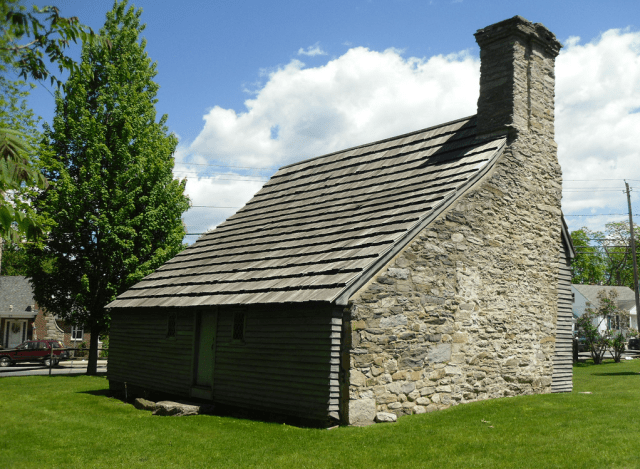
The Clemence-Irons House, circa 1691, restored by Norman Isham circa 1940. (flickr.com)

Fifteen years ago I wrote about Johnston, R.I., as part of a series that ran monthly (or at far longer intervals eventually) under the kicker “Outside Providence.” Each month, proceeding in alphabetical order, I’d visit a city or town outside the state capital and describe how well it had weathered the assault of modernity on its historical character. I’ve been back often since, but mainly on the “leash” I describe below. Has Johnston changed? For the better? For the worse?

I always tried to look at the positive, but maybe the citizens of Johnston, where I’ll be delivering a lecture on my book Lost Providence at the Johnston Historical Society next Wednesday, will run me out of town on a rail for what I would argue is the positive assessment that follows. (At the time I lived in downtown Providence and did not own a car.)

***

Johnston looms in the mind of your rent-a-car correspondent, heading west on Route 6 from Providence, as the most daunting town thus far to fall under his microscope. Sprawlsville, USA. Fast-food paradise. Land of big hair, coiffed up high as . . . well, high as the Central Landfill.

Jaaahn-st’n. Yeah, we Rhode Islanders think we know this place by heart, don’t we?

I hop off 6 onto Hartford Avenue, head over the Providence line, and what do I find but a string of grand old houses as pretty as you might ever expect to see. This, in Johnston? It was, alas, but a brief reprieve, evaporating with the onset of the Johnston we know too well, the intersection of Hartford and Atwood: Central Casting for Crudscape America.

Subway, Walgreen, Burger King, Jiffy Lube, McDonald’s, CVS, Blockbuster, BJ’s, Wendy’s, Dunkin’ Donuts, Walt’s Roast Beef, Sunoco, Brooks Drug, KFC, Hurd Pontiac, D’Angelo’s, etc., etc. (A friend often chides me for not including in these “Outside Providence” columns more names of local businesses. Now are you satisfied???). And right in the middle of this jumbled junk jungle, this McMegamerican crossroads, was my destination: Town Hall.

Town Hall is an imposing neo-colonial with a cupola high above a central pavilion flanked by two gabled wings. It must have towered above its almost rural surroundings in 1933. Architect Oresto DiSaia cannot have imagined how imperiously it would preside today over its Augean vicinity.

I pulled into a parking lot with a “For Town Employees Only” sign, which led to another, then another. Where, I wondered, do visitors park? Finally, a woman returning to her car after a pleasant visit with her friendly tax collector said, tartly, that I could park “down there, past all the bigwigs.”

At Town Hall, I met Johnston’s town planner, Jeanne Tracey-McAreavey, and local historian Louis McGowan, chief author of two fine books in the “Images of America” series, Johnston (1997) and Johnston, Volume II (1999). They assured me not only that Town Hall was slated for spiffing up, but that a Herculean plan to beautify its vicinity was being drawn up by landscape architect Wil Gates.

We then set out on a grand tour of Johnston.

As I said to myself while motoring on Route 6 at the beginning of this column, “How will I ever find anything nice to say about Johnston?”

Easy. Try looking beyond Hartford-and-Atwood. Most Rhode Islanders just don’t know Johnston. We are tethered to Route 95, Route 2, Route 6, and get on or off to get to work or home. We strain our vehicular leashes only to visit a few friends’ houses, a few favorite non-mall shops and eateries. No, most Rhode Islanders do not really know Rhode Island.

Our attitude toward Johnston is rivaled only by our attitude toward Craaanston, and proves the validity of this generalization. We do not know what Johnston looks like, let alone that it is the 28th town founded in what was still a colony. Or that it seceded from Providence in 1759, and ceded back to the capital its bustling heart, Olneyville, in 1898. Or that its namesake was a popular colonial attorney general, Augustus Johnston – popular, that is, until he was run out of town for his loyalty to the Crown in the Revolution. Or that Gov. Samuel Ward King, who suppressed the Dorr Rebellion in 1842, was from Johnston. Not that much history in Johnston; probably a good thing. A lot of mill owners with jobs for sturdy men and women. Increasingly, these were immigrant Italians who, in turn, immigrated to Johnston from Silver Lake, Federal Hill, Mount Pleasant – an unusual number of whom, to judge by the photos in McGowan’s books, were beautiful. Good bones, thick dark hair, strong features.

Strong features also mark the districts of Johnston we visited: Thornton, athwart Providence, retains its dense urban feel. Graniteville, Hughesdale and Simmonsville murmur of their past as mill villages, despite bombardment by split ranches and the like. In their narrow winding streets, they retain the feel of yore, with the occasional house, here and there a string of houses, reaching back a century – or three. The town’s oldest, the Clemence/Irons House (circa 1680), is a classic stone-ender, restored in 1939 by early preservationist Norman Isham. Many recent houses fetch you back in time. And who’d have thought so much of Johnston was rural, with up to 10 farms? Charming little Belknap enchanted this visitor with its village appeal.

Having borne the brunt of suburban flight, Johnston has weathered its proximity to Providence better than you might think, much better than you do think – better, surely, than this bug-eyed reporter once thought. So, Rhode Island, think again.

Johnston is a-okay. Maybe even aa-okay.

Copyright © 2003. LMG Rhode Island Holdings, Inc. All Rights Reserved.
Record Number: MERLIN_189520

[The Clement-Irons House was built circa 1691, not 1680 as stated above.]

Posted in Architecture, Development | Tagged , , , , | 2 Comments

Fit Brown’s hall into the Hill

Screen Shot 2018-02-22 at 7.58.02 PM.png

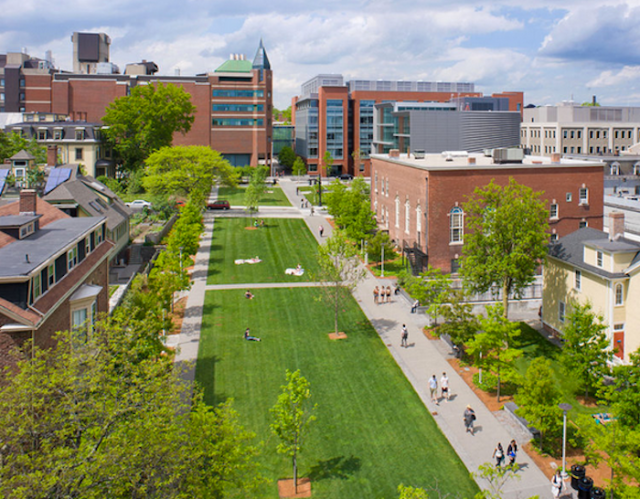
Proposed new site of Brown concert hall would extend from relocated Lucien Sharpe House (yellow, upper left) to edge of spire (top middle). Granoff Center is gray building (upper right). Old site was to be left of first two grassy swards of The Walk. (Brown)

Brown University pleased many by rethinking its plan to demolish four old buildings on its campus to make way for an ugly concert hall. Now it plans to build an ugly concert hall without demolishing any old buildings.

The surprising announcement was made on Tuesday. And it is progress. Undeniably. Bravo, Brown!

By ugly I mean a concert hall that does not fit into the historical character of College Hill. I would sadly accept four old houses going down to make way for a major concert hall that does fit into the historical character of College Hill. That might not be popular with diehard preservationists, but it would not just preserve the existing historical character but revive lost historical character and create new historical character, so to speak, going forward. Of course, saving the four houses and building a concert hall that fits in would be best. That does not seem to be in the cards. Still, you never know.

Screen Shot 2018-02-22 at 8.06.29 PM.png

Central campus of Brown University.

Although Brown retains its lovely central campus almost intact, and has spent many millions to restore old buildings, almost everything Brown has built anew in the past half a century has degraded the character of College Hill. When the performing arts center’s original site was announced in December, Brown’s chief architect, Collette Creppell, informed the City Plan Commission that its setting was already so architecturally diverse – a gentle pseudonym for degraded – that almost any design could be said to fit in.

So, while saving those four buildings means that their absence will not further degrade the setting, the setting will be further degraded by any concert hall that is likely to come from the studios of REX, of New York, the arch-modernist firm selected last year for the job.

Screen Shot 2018-02-22 at 8.45.14 PM.png

Granoff Center. (ArchDaily)

As things stand, the performing arts center has been moved a block north, requiring only the relocation of one old building. Good. But that means the concert hall must face off against the Granoff Center for the Creative Arts, directly opposite on The Walk. It will be amusing to see how REX plans to one-up the accordion struck by an earthquake designed by Diller Scofidio + Renfro, which boasts an equally ridiculous portfolio.

Fun, to be sure. But how much better for Brown and its neighbors to build a concert hall that actually fits into its setting – that is, what remains of a once enchanted setting. Instead of further degrading the campus and College Hill by adding yet another wrinkle to its diversity, why not build a concert hall that helps to walk the campus back toward the beauty of College Hill, exemplified by the College Green and Lincoln (now Simmons) Field?

Screen Shot 2018-02-22 at 8.01.59 PM.png

Nelson Athletic Center. (RAMSA)

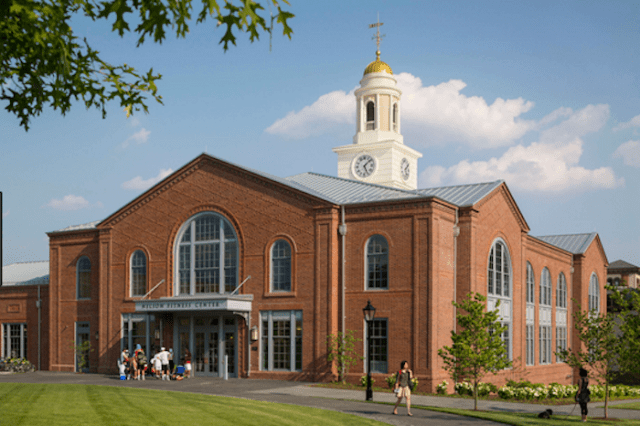
As it happens, Brown did exactly that not long ago when it agreed to switch the architects for a fitness center originally designed in the usual glass and concrete style. The lead donor, Jonathan Nelson, asked Brown President Ruth Simmons to make the change. She resisted but Nelson persisted and prevailed. The beautiful fitness center that bears his name, designed by Robert Stern Architects, now presides at Brown’s athletic complex on Hope Street. It may be the first traditional building erected by Brown in half a century.

Nelson has by now won a host of architectural prizes for patronage, and Brown has an excellent model for evolving the campus toward a better future. This process should commence with the performing arts center. Brown’s trouble with its College Hill neighbors arises not because it has expanded but because it has expanded ugly. Turn that around and Brown will see its community relations grow a lot more pacific.

And while nobody can deny Brown’s fundraising chops, they are sure to grow as the campus offers more charming memories for its graduates – better fundraising through architecture. This is not rocket science, President Paxson, but it does require thinking outside the box. Try it, you’ll like it. So will the students, the faculty, the staff and the neighbors.

Screen Shot 2018-02-22 at 8.03.09 PM.png

Jonathan Nelson Fitness Center (2012), on Hope Street in Providence. (RAMSA)

Posted in Architecture | Tagged , , , , , , , , , , | Leave a comment

Brown shifts, saves 5 houses

Screen Shot 2018-02-20 at 1.53.40 PM.png

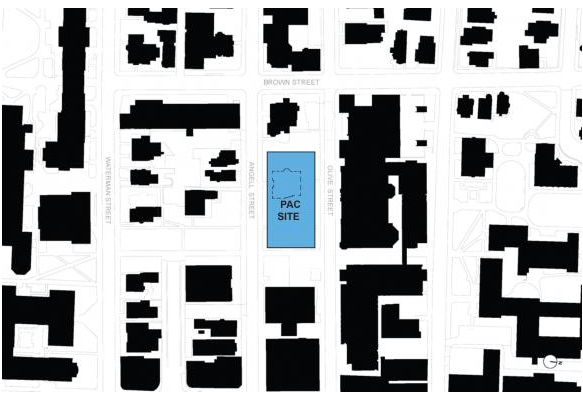
On this map, the old site of the proposed concert hall would have been left of the new site (in blue). College Green is at upper left. Thayer Street is just off bottom edge. (Brown)

Breaking news! Brown has just issued an announcement that it will shift its proposed performing arts center a block north, saving four historic buildings from demolition. The new site, between Angell and Olive streets rather than Waterman and Angell, requires no demolitions, only the relocation of the Sharpe House (1874) to a site next to the Peter Green House, relocated in 2007. Brown initially rejected the new site as too small.

Brown deserves applause for withdrawing a proposal that would have demolished four houses (including the Lucien Sharpe Carriage House, now the UEL) and relocated one, in effect destroying an entire block of history.

Brown would not have changed its mind were it not for powerful opposition from the local community, led by the Providence Preservation Society. The society, community organizations and other interested individuals and groups who rallied against the proposal did their jobs well. These included many from the Brown community itself.

The new site is smaller, but because it is not located over the tunnel, more activities can be housed beneath the center. It will sit directly across The Walk from the Granoff Center for the Creative Arts, the accordion struck by an earthquake that went up in 2011. The performing arts center will still be designed, it appears, by REX, of New York.

Now if only Brown can only get Joshua Prince-Ramus, the founder of REX, to embrace the challenge of making the building look as if it belongs on College Hill. His mentor was Dutch architect Rem Koolhaas, so anything is possible.

Anything? Well, okay, probably not that. But this state’s motto is “Hope.”

Screen Shot 2018-02-20 at 2.10.10 PM.png

To be relocated: Sharpe House, at 130-132 Angell St. (photo by George P. Landow)

Posted in Architecture, Development | Tagged , , , , , , , | 9 Comments

“Building with biophilia”

Screen Shot 2018-02-19 at 4.58.11 PM.png

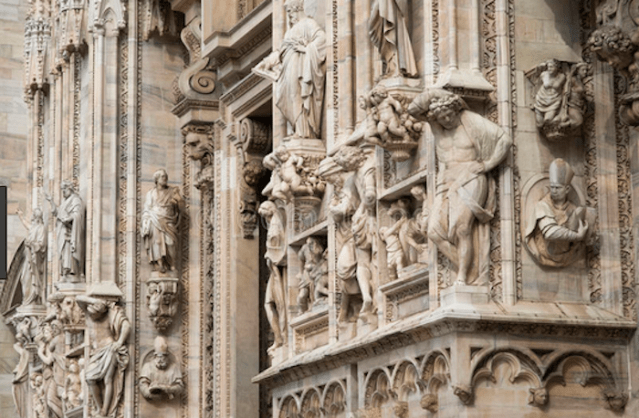
Cathedral of the Nativity of Saint Mary, in Milan. (dreamstime.com)

Philosopher/mountaineer Damien François interviewed mathematician/ theorist Nikos Salingaros for The Clarion Review. Salingaros’s thinking has inspired much of the writing in this blog. His work has, among many other things, identified some of the neurobiological factors that predispose humans to prefer traditional buildings that convey information that primitive man once required to survive. Today that need for information manifests itself as a preference, in our normally safer urban environments, for buildings that are figuratively decorative rather than abstract.

François titles his interview “Building with biophilia.” Biophilia, a concept that originated with the biologist Edward O. Wilson, describes man’s intuitive connections with nature.

In architecture, biophilia involves building from the ground up rather than from the top down. Architecture that exhibits biophilia evolves over long periods of time as builders and designers seek to advance best practices in placemaking by trial and error, passing their knowledge through successive generations. Precedent, or what the modernists derisively refer to as “copying the past,” is vital. The conventional theory, on the other hand, involves the avoidance of precedent in the creation of architecture that allegedly seeks to differentiate itself from all past and current design strategies – a theory that has failed human needs throughout the world, according to Salingaros.

Here is a passage:

DF: Nietzsche wrote: “To be alive means to be in danger.” I, for one, do prefer the danger of, say, Mount Everest, where I feel very alive, to bad architecture, where I feel just the opposite. If I understand you correctly, the very structure of everything natural “feeds” the human mind, through the visual and tactile senses, with a soothing and nourishing experience. It is not just about the sublime, it is not just aesthetics, it is deeper and less intellectual than that.

NS: I’m not a big fan of Nietzsche, but you have half the story correct. Yes, you are in danger on a mountaintop, but you are also in a fantastically healing environment that invigorates you and creates deep positive memories. Contrast this to the oppressive industrial-modernist environment: you could be in danger from physical aggression, or from a passing truck, but at the same time you are in a psychologically deadening environment. There is no longer any nourishing background in our cities against which to balance life’s daily ups and downs. No moral support from the built structures, only depression and nihilism.

Please read the entire interview.


Posted in Architecture | Tagged , , , , , , , , | 1 Comment

Crashing into looking glass

Screen Shot 2018-02-18 at 1.10.54 PM.png

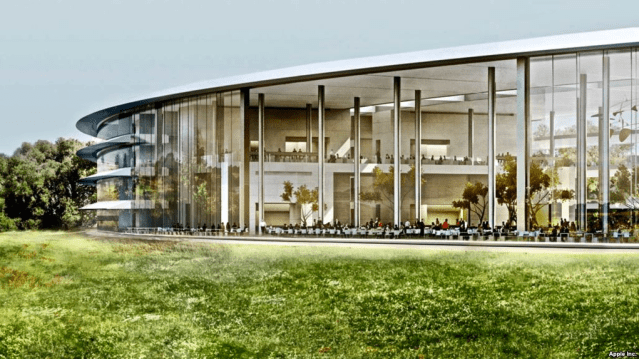
Rendering of glass facade at Apple headquarters in Cupertino, Calif. (Apple)

I’m always on the lookout for evidence of the flaws of modern architecture. So I was pleased to learn through an article in Fortune magazine that employees at Apple’s new round glass spaceship-like headquarters in Cupertino, Calif., keep walking into the walls.

Employees at Apple’s New Headquarters Keep Crashing Into the Glass Walls,” published in Fortune and written by an unnamed reporter from Bloomberg News, states:

Apple staff are often glued to the iPhones they helped popularize. That’s resulted in repeated cases of distracted employees walking into the panes, according to people familiar with the incidents. Some staff started to stick Post-It notes on the glass doors to mark their presence. However, the notes were removed because they detracted from the building’s design, the people said.

Typical modernist hypocrisy about matters of function. Maya Kosoff has a similar article in Vanity Fair. Others abound online.

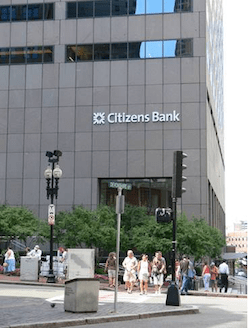
Screen Shot 2018-02-19 at 2.31.07 PM.pngAll this reminded me of the first board meeting I attended after being nominated back in 2007 (I think) to the board of the New England chapter of the Institute of Classical Architecture & Art. It was held, oddly enough, in a modernist highrise in Boston, across the Greenway from South Station. I walked up to it and strolled along a parapet looking for an entrance. At last I found it, swerved right to enter, and smacked into what turned out to be not a door but a window. My glasses were shoved into the bridge of my nose enough to hurt. If I recall, board members at the meeting saw it happen, since they were just inside. Ouch! Is that why they have been so kind and lenient to me over the years?

Today that’s a fond memory, of sorts, because it nourishes my internal feedback loop of modern architecture’s ridiculousness. But I get a similar nourishment every time I go to the classical Providence Public Library in downtown, built in 1900, and enter the modernist addition on Empire Street, built in 1954. It has one of those sliding glass doors you can’t tell which side to enter until the door glides open. So, approaching the door, I never seem to know whether to vector left or right. I should know by now. But what about those entering for the first time? (Don’t get me going on how the library ought to switch the entrance back to the original Beaux Arts portico on Washington Street.)

Of course, other modernist mishaps greet all of us so much of the time. I was once thrilled by a documentary about Louis Kahn, My Architect, by his son Nathaniel Kahn. In one scene he’s looking at one of his dad’s buildings but cannot find the entrance. Of his only building in his adopted Philadelphia, the Richards Lab at Penn, workers there say bad things. One says it looks like “a bomb shelter.” The next shot is of a crow cawing from the building’s roof parapet. (Click the link above to see the entire film.)

A lot of psychology going on there. The funny thing is that modern architecture is not what it most eagerly purports to be: utilitarian. But beautiful traditional buildings, whose embellishment modernists consider lacking in utility and therefore wasteful, use beauty to generate affection that assures continued expenditure for repair and maintenance by owners and users. Now that’s utility. And you can always tell where the entrance to a traditional building is, because it is decorated and surrounded by an elegant border. This itself is often surrounded by yet another border, even more elegant, designed to emphasize its hierarchical role in the building’s pantheon of openings.

Maybe someday we’ll get back to that sort of thing. In Cupertino? Maybe, but don’t hold your breath. However, in 2011 a woman, Evelyn Paswall, 83, sued Apple after walking into the glass wall of one of its stores, breaking her nose. New York Post writer Kieran Crowly, in “‘Pane’ & Suffering at the Apple Store,” quoted her lawyer:

“Apple wants to be cool and modern and have the type of architecture that would appeal to the tech crowd,” said her attorney, Derek T. Smith. “But on the other hand, they have to appreciate the danger that this high-tech modern architecture poses to some people.”

Well, that’s what they ought to do. His client did not win, but the world might someday be a better place for her pain.

Posted in Architecture | Tagged , , , , , , , , | 4 Comments

Empire of the Algonquin

Screen Shot 2018-02-16 at 10.07.36 PM.png

Just saw one of my favorite movies this evening, Steven Spielberg’s Empire of the Sun, in which a British boy, son of a factory owner in occupied prewar Shanghai, is split from his parents as they try to flee after Dec. 7, and ends up in an internment camp next to a Japanese fighter base. Eventually the war comes to a close, the internees wander out of the camp, and Jim (Christian Bale), after witnessing an atom-bomb blast from a distance, passes under a carved arch embellished as shown above, and finds himself in a pasture (below) littered with the confiscated possessions of his family and their fellow wealthy expats, including Jim’s father’s 1934 Packard Eight Club Sedan and his mother’s white baby grand piano. The music, composed by John Williams, is enchanting, even haunting.

Anyhow, that lush collection reminded me of the extraordinary furnishings of Boston’s Algonquin Club. In fact, I can testify that it’s much better as arrayed there than similar stuff in scattered heaps were in the film.

All this by way of reminding readers that I’ll be speaking there about my book, Lost Providence, this coming Tuesday, Feb. 20, at 6:30 p.m. The address is 217 Commonwealth Ave. The event is sponsored by the New England chapter of the Institute of Classical Architecture & Art. Reservations are $25 for ICAA members and $35 for the public.

What a show! I refer to the movie. The lecture has not yet occurred.

Screen Shot 2018-02-16 at 10.20.40 PM.png

Posted in Architecture, Lost Providence | Tagged , , , , , | 4 Comments

Downsizing newspapers

Screen Shot 2018-02-15 at 8.23.46 PM.png

Upper reaches of the Tribune Tower, once home to the Chicago Tribune. (architecture.org)

Unlike some other shrinking daily newspapers, the Providence Journal has not moved out of its historic headquarters building, designed by Albert Kahn and completed in 1934, during the Great Depression. But the Journal has shrunk big within its extraordinary neo-Georgian edifice. It used to occupy all four floors – five counting the mezzinine, which housed the newsroom for many years. In those days you could look through the arched windows from the sidewalk and see the printing presses pumping out the newspaper. Later, you could see the newsroom. Today? Move along. Nothing to see.

The newspaper has shrunk, but so has the building, in a sense. It looks the same from the outside but on the inside it displays the same facelessness of its feel-good corporate co-tenants. Its former granite and bronze lobby, so bold, now epitomizes blandified schlock. To fit the paper onto the second floor, a staff that during the 1980s boasted about 500 reporters and editors (counting only members of the Newspaper Guild) has been chopped down to maybe 20 reporters and 80 editors and other staff in the Guild.

A recent column by the Chicago Tribune’s architecture critic, Blair Kamin, describes in fascinating detail how many major papers have abandoned their historic headquarters buildings. His piece, “More newspapers are departing their landmark homes, and why that matters,” suggests that while good reporting can be exercised from bad buildings, these relocations are more than just a matter of finance or geography:

[T]he exit from structures that long symbolized their watchdog role hurts nonetheless. Lacking a memorable physical presence, embattled news organizations will have to work that much harder to keep the importance of their enterprise fixed in the public mind.

Kamin tells the sad story of the Des Moines Register & Tribune Building, site of his first real newspaper job. Originally a Beaux-Arts highrise, it was later “sheathed in modernist glass and metal.” It was an “architectural mishmash” but “it burst with character.” The Register moved out to another downtown building in 2013, which he does not characterize except as having “many” other tenants. He gives the tale a hint of nostalgic sadness, but does not describe his feelings, as a critic, toward the Register’s new headquarters. The old one is now residential lofts with floor plans blessed by cutesy news-biz nicknames like “Scoop” and “Byline.” Maybe one of them is “Deadline.”

Perhaps the most startling move will take place in late July when Kamin’s own Chicago Tribune will leave the famous, and famously alluring, Tribune Building designed by Raymond Hood and John Mead Howells and completed in 1925 after an international competition, an event equally famous among us building fanatics. With its flying buttresses and soaring pinnacles, its High Gothic style suggested that “journalism was a higher calling.” But now it will be condos. Worse, a condo tower expected to be 1,300 feet tall and, no doubt, 50 shades of ugly, will be built behind it. The paper and its architecture critic will move to the Prudential Building, a 1951 tower he considers “stolid.” It may better reflect the more sordid calling the field now embraces.

May he enjoy to the fullest his remaining occupancy of architectural history. I don’t know about Blair Kamin, but I would be massively pissed.

He discusses the fate of the Washington Post, a workplace that I coveted long, long ago. I must admit that upon reading his account I felt a sort of regretful Schadenfreude. And yet the Post has definitely gone to a better place, about equidistant from the White House, though proximity to that building may resonate differently now than when they moved in 2015.

Kamin reports that the Post’s Brutalist headquarters at 15th & L St., N.W., where I met David Broder in 1976 or thereabouts, has been demolished. It was designed in the early 1950s by Albert Kahn Associates (the founder died in 1942).* The Post has moved into One Franklin Square, which is a big step upward. It is an elegant building with two towers. I wrote about it more than two decades ago in a profile of new traditional buildings then arising in D.C.

When I was a boy I used to deliver the Post’s rival, the Star, an afternoon newspaper. I slid my folded papers down long carpeted halls to the comfy units of elderly dowagers in bland midcentury residential highrises along Connecticut Avenue. And I delivered the Daily News (which tanked even before the Star) to the Broadmoor, a Beaux-Arts confection more to my taste before I even had taste. I never wanted to deliver the Post – early to rise makes a kid cranky, not wise.

Kamin’s article is filled with fascinating details about the fate of newspapers. It has a slide show with many of the buildings on display. A dismaying number are midcentury modern, which may mean that many of these moves will not necessarily be so unfortunate, stylistically speaking. However, one paper, the New York Times, built its own shiny new skyscraper a decade ago. Predictably, the Renzo Piano glitzoid was so costly that, along with other factors shrinking the media, it forced the Newspaper of Record to cut staff and squish the paper’s offices onto fewer floors on behalf of the bottom line – from which even the First Amendment does not exempt the press.

This new Timesbuilding is said by Kamin to be the only instance in recent years of a major newspaper erecting what he calls a “major work of architecture.” Let that be a lesson.

[* Initial versions of this post erroneously attributed the Post’s former Brutalist headquarters to the same Albert Kahn who designed the Providence Journal Building. Blair Kamin did not make this mistake. He attributed the Post building to Albert Kahn Associates. Hats off to Michael Rouchell for his sharp eye.]

Screen Shot 2018-02-16 at 12.55.39 PM.png

Posted in Architecture | Tagged , , , , , , , | 5 Comments