‘Making Dystopia’: Arrival

Screen Shot 2018-08-08 at 11.16.48 PM.png

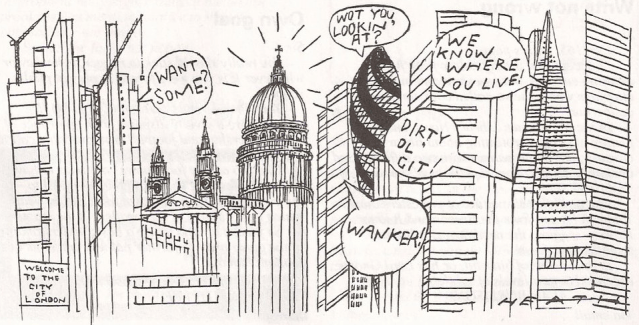
“What Architecture Means,” by Heath, published in Private Eye.

There it was. Sitting on my stoop. Wrapped in a plain brown postal envelope.

I picked it up.

Oof! It weighs a ton. It is not big but it is heavy. A brick of gold.

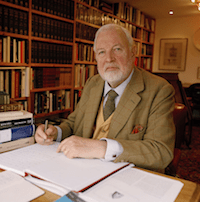
Making Dystopia: The Strange Rise and Survival of Architectural Barbarism, by James Stevens Curl, just out from Oxford University Press, had arrived.

This was yesterday. A review is to come but for now, from the preface, here is a passage summarizing what the author has gleaned from decades in the groves of architectural history:

This book is inevitably filled with regret, but it also contains critical examinations of what seem to be absurdities that have been supinely adopted as bases for what is happening in the world of architecture. What is needed now, perhaps more than ever before, is a surgical, thorough, methodical exposé of the ideologies for an environmental and cultural disaster on a massive scale, and no punches should be pulled when compiling it.

This is that book. Since 1970, Stevens Curl has written two score volumes of scholarly elucidation largely devoted, judging from their titles, to cherished arcana from Britain’s past: City of London Pubs: A Practical and Historical Guide (1973); The Londonderry Plantation 1609-1914: The History, Architecture, and Planning of the Estates of the City of London and its Livery Companies in Ulster (1986);  The Egyptian Revival: Ancient Egypt as the Inspiration for Design Motifs in the West (2005); Spas, Wells & Pleasure Gardens of London (2010); Funerary Monuments & Memorials in the Church of Ireland (Anglican) Cathedral of St Patrick, Armagh (2013), to name five of 17 listed in Dystopia.

Stevens Curl has written a dictionary of architecture for OUP. He has addressed several other architectural topics more generally than the above. Perhaps somewhere in these books he lays out what he really thinks about modern architecture. I suspect not. I suspect he has kept it mainly inside. So I can imagine that over the decades a bolus of anger and misery at the fate of beauty in his beloved land has grown and festered in his soul.

Herein that bolus, that boil, is lanced. I expect to enjoy his revenge if in these pages modern architecture gets, as I am sure it will, what it deserves.

Posted in Architecture, Books and Culture, Uncategorized | Tagged , , , , | 2 Comments

Palmyrenes saving Palmyra

Screen Shot 2018-08-06 at 11.18.50 AM.png

My eyes popped out when I saw last night’s segment on NBC Nightly News of Palmyrenes rebuilding Palmyra. Mostly they seem to be learning how to carve decorative elements of the ancient Roman city demolished by ISIS several years ago. Now ISIS has been beaten back and no longer holds the city. Still in Jordan, refugees from Palmyra and other Syrian cities seek to learn how to carve stone under the tutelege of Tony Steel, age 70, a master mason with the World Monuments Fund and veteran restorer of antiquities.

Screen Shot 2018-08-06 at 12.05.34 PM.png

Wafa’a Olimat carves a volute. (NBC)

The segment was reported by Bill Neely. His video accompanies a story with much more information on NBC’s website by Bill O’Reilly.

Mahmoud Rafeeq al Quasem was featured briefly, described by Steel as the most talented of the Syrian refugees learning stonemasonry. His work is featured above in this post’s top screenshot. “If we’re not going to rebuild it,” he tells Neely, “nobody else will.” Neither he nor any of his student colleagues had ever wielded a chisel before.

How can they know ISIS will not return? And how, knowing what may happen to them if that does happen, can they undertake this work? The bravery of refugees like Quasem must stagger those of us sitting at home watching TV from our couches.

Palmyra was founded in the third millennium before Christ, destroyed in the third century A.D. by the Romans under Emperor Aurelian and rebuilt not long after by Emperor Diocletian. Like Palmyra, many other ancient and historic cities have been destroyed or severely damaged by war or disaster, then rebuilt and, often, rebuilt again. Now that is beginning, at least, to happen anew in Jordan. Syria, of course, remains a war zone.

Many, perhaps most, modern cities have been destroyed or severely damaged, no less so than Palmyra, by modern architecture. They can be rebuilt, too. Like the Luftwaffe over London in 1940, at least ISIS did not replace the rubble with something worse. In cities around the world, we can only blame the tragedy of our built environment on ourselves. The courage required to rethink our errors may not quite be the courage shown by the Palmyrenes of today, but the forces of conventional wisdom arrayed against such a task in most cities are no less brutal, psychologically if not physically, than those of the Islamic State, however vitiated it may be of late.

This may strike many readers as a terrible exaggeration. Mark my words, it is not.

[Read my post “Behead the Islamic State” from 2015. To see other posts on Palmyra, type the city’s name into my blog’s search engine.]

Screen Shot 2018-08-06 at 11.44.04 AM.png

Palmyrene ruins after ISIS takeover in 2013. (Russia Beyond)

Posted in Architecture, Preservation | Tagged , , , , , , | 3 Comments

Steven Semes in Newport

Screen Shot 2018-08-04 at 7.19.13 PM.png

Redwood Library & Athenaeum (1750), designed by Peter Harrison. (redwoodlibrary.org)

The Redwood Library & Athenaeum will host a lecture by preservationist Steven Semes on Thursday, Aug. 16, at 6 p.m. Semes will discuss preservation news from around the world, partly about conventional misinterpretations of international preservation treaties, charters, texts and documents, such as the Athens Charter of 1933, the Valletta Principles of 2011, and the Secretary of the Interior’s Standards for Treatment of Historical Properties, inked in 1977 but updated several times since.

Semes, who heads the new preservation program at Notre Dame’s School of Architecture and has long led its Rome Studies Program, has been involved in efforts to improve such texts. In particular he has been in study groups to update the Interior’s standards, which have long been adopted by states and municipalities, and frequently misused to promote modern architecture in historic districts. Regarding the continuing evolution in the interpretation of international preservation texts, he has written:

The documents’ increasing emphasis on intangible heritage and the use of traditional materials and techniques in restorations and infill construction makes it difficult to sustain the frequent insistence by preservation authorities on conspicuously different modern materials and forms intended to “differentiate” old and new or represent “the architecture of our time.” Thorough reading of the international guidance shows a more subtle understanding of the relation between new and old architecture. …

These are some of the issues he plans to discuss at the Redwood. Especially intriguing, I think, will be his thoughts on how actual mistranslation of texts has played an important role in the divergence of preservation trends from what was originally intended – which may not have been as preferential to modern architecture as long believed. Intentionally twisting the meaning of such documents has, in my experience, also been a practice of modernist architects eager to tilt the playing field even more to the advantage of today’s wrongheaded conventional wisdom, especially in historic districts.

Newport has been far more sophisticated at resisting such efforts than most places, not excluding Providence. Success at resisting modern architecture is why tourists still come to the City by the Sea.

Of course, Semes is the author of one of my bibles. I refer to his 2009 book The Future of the Past, whose subtitle, “A Conservation Ethic for Architecture, Urbanism and Historic Preservation,” should be taken seriously. It is not just a preservation manifesto but a new (or, in fact, the old) way of looking at the built environment. Semes’s most basic insight is that architecture should be considered as a matter of place rather than time. To emphasize the latter is to buy into the false idea that architecture should reflect “its era.” Instead, architecture should aim to create beauty by emphasizing continuity of design in a place rather than creating contrast and stylistic discord, as the pesky modernists prefer. For they are not artists but ideologues. Most practicing modernists do not realize that, but they do not have to. They do not have to understand the agenda of the original modernists in order to carry out the goals of Corbusier, Gropius, Mies and other founding modernist architects – they do so just by building modernist buildings. To build such buildings is, in itself, to deeply misunderstand what architecture is all about.

But please. Don’t get me going.

Today, upholding tradition is unconventional. The Redwood Library should be proud that its guest speaker will be upholding the revolutionary traditions that it fostered back in the days when Rhode Islanders led the way to unseat King George.

[Reserve a seat to hear Steven Semes’s illustrated lecture by visiting the Redwood events page. Members will be asked at the door for $5, nonmembers $10.]

Screen Shot 2018-08-04 at 7.12.59 PM.png

The Audrain Building, on this side of Charles Follen McKim’s Casino on Bellevue Avenue, has recently seen its cornice lions reconstructed during a comprehensive restoration by the Northeastern Collaborative Architects. (postcard: a4arch.com)

Posted in Architecture, Preservation | Tagged , , , , , , | 5 Comments

Apex ain’t Pawtucket’s soul

Screen Shot 2018-08-02 at 8.05.01 PM.png

The Apex building, in Pawtucket, R.I. (MSN.com Business Insider)

If Apex is the soul of Pawtucket, then today’s Penn Station is the soul of New York City. Bad things have happened to the Big Apple in the last half century, and Penn Station arguably symbolizes the worst of it. Likewise, Apex stands for the bad things that have happened to Pawtucket.

But that’s a warped definition of soul.

Apex is the soul of Pawtucket,” by architectural historian William Morgan, about the former discount shopping mecca that might be razed to make way for a new PawSox stadium, ran in today’s Providence Journal. Morgan writes:

Pawtucket’s history has taken so many hits, including disastrous highway planning and misguided urban renewal. … Let us consider Apex, that piece of a once proud place’s patrimony. How ironic that as recently as 2004 the architectural guidebook Buildings of Rhode Island singled out Apex for its “genuine effort to renew the city through thoughtful development rather than merely to exploit opportunity in the crassest way possible.”

More recently, the lowdown on the Apex was more scientifically determined by a survey taken last year by MSN.com’s Business Insider titled “The Ugliest Building in Every US State, According to Those Who Live There.” They even put a photograph of the Apex on the top of the article, which is linked in my January post, “Each state’s ne plus ugly.” The passage from Buildings of Rhode Island singled out by Morgan is preceded by this:

Apex is, in scale, shape, isolation and stridency, at variance with everything around it. For all of these reasons this pyramid in its desert of macadam virtually is downtown Pawtucket. The heart of the city is ceded to the reigning pharaoh as his domain. So at least it appears to the visitor, who must poke around the perimeter of this monument to discover what remains of the rest of “downtown – if, in fact, in its withered state, it really exists at all anymore.

So while the author of Buildings of Rhode Island does not directly attribute Pawtucket’s decline to the Apex – its urban renewal was mostly inflicted before the Apex was built in 1969 – the late William H. Jordy, esteemed professor of architecture at Brown University, might have argued that the Apex was the apogee of the urban renewal that killed the Bucket, or at least its downtown. Main Street in Pawtucket was once as alluring as Westminster Street in Providence today. At the end of this post is a postcard of the street before the architects and planners got it by the throat.

Most people have curbed their attention to architecture and urban planning as a defense mechanism embraced to dull our perception of the evils done by architects and urban planners. Pawtucket was sacked more thoroughly by urban renewal, with the consent of its leading citizens, than any other Rhode Island city. No thanks to its own civic leaders, Providence dodged an urban renewal bullet announced in 1960 called the Downtown Providence 1970 plan, which would have destroyed many of downtown’s loveliest streetscapes. But Pawtucket went all-in, and the result, including the Apex, is for all to see.

A website assembled from the 2007 Planning Pawtucket Exhibit has a couple dozen plans and illustrations that expose the gory details.

Jordy, Morgan and almost all architectural historians these days think beautiful old buildings are fine and dandy, but shudder at the idea of new buildings inspired by what preservationists fought to save half a century ago. At the end of his entry on the Apex, Jordy writes:

[B]y the 1980s, cute fairy-tale villages, clumsily assembled of crude classical design, began to appear beside every cloverleaf. Better to have spared what is partly credible than to have demolished with the thought that a porticoed replacement or faked village nostalgia might be the key to downtown urbanity for Pawtucket.

Jordy is 100 percent wrong. Phrases like “cute fairy-tale villages” and “faked village nostalgia” falsely suggest that Pawtucket cannot be revived in ways that reflect the spirit and quality of its beloved old buildings, that fit into its surviving urban fabric, that strengthen its brand, and that earn the love of its residents and visitors. Jordy, Morgan and their ilk do not want the public to understand that architecture that built cities for hundreds of years need not be crudely and clumsily built today. No, they say, we cannot pick up where modern architecture and planning so rudely interrupted traditional civic growth. Beauty is part of the past and has no place in the modern world.

Keep on moving, folks, there’s nothing to see here. The old way of building is not possible today.

That lie strikes me as very close to pure evil – blocking a plausible road to happiness for billions (with a b) of people worldwide so that modernists can continue to make money by inflicting junk on the entire globe.

For hundreds and thousands of years cities moved forward by evolving the past gently into the future. If only the architecture establishment here in Rhode Island and everywhere else would lift its heel off of the creation of beautiful buildings today, a lot of good could come to this state, whose motto may be “Hope” but whose longstanding attitude is “Been down so long it looks like up to me.” Reviving traditional forms of beauty in architecture would do a world of good not just by putting delight back into the built environment but by lifting the spirits of all citizens – just as beauty in painting, sculpture, and other works of art and craft in everyday life have always done, but on a larger scale.

Pawtucket should tear down the Apex building, whether a stadium goes in its place or not. It should focus on rebuilding its downtown by using design tools that hark back to when Pawtucket was lovable. It should not tear down the Apex and put a modernist stadium in its place. That would send a signal to the citizens of Pawtucket and Rhode Island that the city has not learned a single thing from its own history.

Screen Shot 2018-08-02 at 9.29.01 PM.png

Main Street in Pawtucket. (CardCow.com)

Posted in Architecture, Development | Tagged , , , , , , | 7 Comments

The stupidest profession …

Screen Shot 2018-07-31 at 5.19.29 PM.png

Localism calls to mind various slow movements such as slow food. There should be a slow architecture movement. Localism was taken up recently by the New York Times columnist David Brooks in “The Localist Revolution: Sometimes it Pays to Sweat the Small Stuff.” He describes localism as flipping the power structure, decentralizing federalism, and writes:

[U]nder localism, the crucial power center is at the tip of the shovel, where the actual work is being done. … Change in a localist world often looks like a renewal of old forms, which were often more intimate and personalistic than the technocratic structures of the past 50 years.

Modern architecture is the epitome of centralized industry. For the most part, it is not shovel-ready. Worse, it is a cult – modernist architects never get out and see how people live in their “machines for living.” More often than not, modernists are unwilling to live in the kind of house or building they are paid to erect for clients. Because they control the architectural media and their house critics, they understand that nobody will point a spotlight at their hypocrisy.

Classical and traditional architects, on the other hand, mostly work at the tip of the shovel because modernists have ejected them from the establishment, which they use to tilt the playing field toward their modernist colleagues and keep big jobs out of the hands of traditional architects. So their remaining stronghold is in housing for the wealthy, people who can afford to choose the style of home they prefer, and who hire architects to build it for them. (A board of artist-wannabe suits chooses the architect for most major projects based on reputations burnished by the official critical apparat.)

Moreover, while modern architecture likes to imagine that it reflects science, traditional architecture reflects nature, whose principles science describes – principles that are not understood by modernists. Modern architecture is unnatural, unscientific, and primarily ideological. For example, modernists think fractals are jagged bits of skin that make up the exterior walls of an edgy building. Whereas modernist education is abstract and averse to history and precedent, traditional learning in architecture is intuitive, handed down generation to generation by practitioners whose understanding of best practices starts at the tip of the shovel.

Brooks naturally did not mention architecture in his column. Architecture has ousted itself from the concern of most people – even educated people – because modernism has created a world so maladroit that we have learned to ignore it as a defense mechanism. Most people can tell an ugly building from a pretty one, but they lack the confidence to assign blame, and few attend municipal design and permitting sessions in anything like the numbers at meetings devoted to other local issues. It no longer occurs to people to point fingers at a building for causing headaches, ennui or lack of happiness, even though the damned things press on us every hour, even in our dreams.

Brooks, speaking much more generally, adds:

Expertise is not in the think tanks but among those who have local knowledge, those with a feel for how things work in a specific place and an awareness of who gets stuff done.

Right. “Experts” in architecture are the best example of people who lack local knowledge and whose activities are so obviously contrary to happiness, or even usefulness, that their industry has developed a cult mentality that lets them tune out criticism. Eventually, they have no firm idea that people hate their work, and to the extent that they do have some idea, they treat it as a feather in their cap. Modern architecture is the occupation most extreme in its lack of self-awareness.

All organized human endeavors fit onto a spectrum of the professional id. Those fields that tilt toward architecture’s end of that spectrum, with the most unhinged lusts, contribute more than their share to the dysfunction of society. As the baby boomers have marched through the bureaucracies, they have carried with them theories, often picked up at the foot of the bong, of societal development that, without their direct awareness, prioritize thinking that spurns language and traditions that give structure and meaning to the organizations they now dominate. They never lost the impulse to tear down, though long since modulated by the instinct for self-preservation.

“Success is not measured by how big you can scale, but by how deeply you can connect,” Brooks says. Political analyst Richard Fernandez of The Belmont Club, a PJMedia website, also read Brooks’s column. In his essay “Ripping it all up,” he suggests that the “‘politicians in Washington’ he decries as ‘miserable, hurling ideological abstractions at one another’ may be unintended outcomes of a polarizing, reductionist narrative that tore up the fabric that actually made things work.”

I think Fernandez may be on to something, but it strikes me as bad news for architecture and the world’s built environment.

For all of its pretensions, architecture, in its current configuration, may be the stupidest profession on Earth, with its head stuck farthest down into a deep hole in the ground. What that means is that it may be harder to reform architecture than any other field. And that may be true even though – with an abundance, still, of models like Paris and Rome and smaller examples of beauty – reforming architecture may be the easiest task in the history of the world. Easiest – and, alas, with its head stuck halfway to China, least likely.

Posted in Architecture, Uncategorized | Tagged , , , , , , , | 3 Comments

WWI’s monumental sorrow

Screen Shot 2018-07-30 at 9.25.29 PM.png

Winning entry for WWI memorial after revisions. (WWI Centennial Commission)

The National World War II Memorial opened in 2004 on the Mall with a classical design that has been wildly popular with WWII veterans. Had America regained its senses after decades of embarrassing modernist monuments? Alas, no. A nontraditional memorial for a traditional man is being built for Dwight Eisenhower. After years of honorable resistance, his family finally threw in the towel, betraying themselves, their patriarch, and the many who backed their longstanding refusal to approve a design that honors architect Frank Gehry instead of the supreme Allied commander in Europe and 34th U.S. president. The resulting blotch of God’s wrath on memory, when it is completed after opponents came this close to blocking it, will be an insult to Ike and a national eyesore for decades.

Thankfully, America had the opportunity for something like a do-over by way of a proposed national monument to World War I. But that, too, is being botched. The competition for a monument in Washington to honor the First World War, sponsored by the World War One Centennial Commission, could have trod the triumphal footsteps of the Second World War monument, designed by Rhode Island architect Friedrich St. Florian. But instead of selecting a bold classical design by Richmond, Va., architect Devin Kimmel, the commission selected a sculpture of a cannon and crew in a bland square designed by Joseph Weishaar and surrounded on three sides by a low wall with a bas-relief by sculptor Sabin Howard. (In fact, the bas-relief was so understated in the submission illustrations that I originally thought the proposal was modernist, and said so in my roundup of the five finalists, “More on WWI competition.”) Kimmel’s design would have had the grandeur needed to anchor that end of Pennsylvania Avenue, but it got the heave-ho.

The commission blundered, but it may have partly redeemed itself by kicking all three of the ridiculous modernist finalists to the cutting-room floor.

Since then, according to the noted critic Catesby Leigh, the Weishaar/Howard proposal has undergone far more adverse tinkering than even the Gehry Ike, whose nadir was achieved instantly. The relief of the figures in Howard’s bronze wall frieze was deepened admirably, but its extent was shortened drastically and shunted to a stand-alone wall facing in a direction that appears to have flip-flopped almost weekly according to the mood of the commission. In a Weekly Standard essay entitled “The Battle of Pershing Park,” Leigh describes the frustrations and indignities heaped on the design. Finally, the site – Pershing Park, a dolorous 1982 plaza near the White House designed by modernist Paul Friedberg – was named to the National Register of Historic Places, which eases the way for lawsuits against the project.

That seems to have pushed the commission to seek to switch the location to a site just off the Mall, but apparently that’s not yet a done deal.

Originally, the new monument was intended to open on Nov. 11, 2018 – three and a half months from now. No hurry. The last WWI vet died in 2011. Traditionalists did a great job trying to spike the Gehry Ike, yet failed despite having all of the arguments on their side. But the trads are pikers next to the mods, who control the commanding heights of art and architecture in America. They always bring a gun to a knife fight.

The Public Broadcasting System, for example, has been running a documentary called “Ten Monuments that Changed America.” * The ten stretch from the Statue of Liberty and the Lincoln Memorial to the Gateway Arch, the Vietnam War Memorial, the AIDS Quilt, and the 168 empty chairs at the center of the Oklahoma City National Memorial, which mourns the terrorist bombing of the Alfred Murrah Federal Building in 1995. Watch the video linked above and you will see displayed, with unwitting accuracy, the decline and fall of monumental remembrance in America.

Screen Shot 2018-07-30 at 9.09.33 PM.png

Winning design proposal for World War I Memorial, before revisions. (WWI Centennial Comm.)

Screen Shot 2018-07-30 at 9.18.19 PM.png

Devin Kimmel entry for National WWI Monument. (Kimmel Studio)

*Scroll past opening video, which is a trailer, down to “Episodes” and select the middle video and click for full program.

Posted in Architecture | Tagged , , , , , , , , , | 2 Comments

Curl to clobber “dystopia”

Screen Shot 2018-07-26 at 8.49.03 PM.png

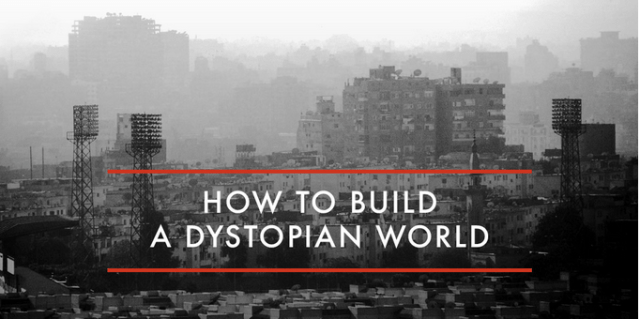
Illustration from atop a blog post about how to build a fictional dystopia. (nyeditors.com)

Printing now in Britain at Oxford University Press is James Stevens Curl’s jeremiad against modern architecture, called Making Dystopia: The Strange Rise and Survival of Architectural Barbarism. A review copy is on the way. As I informed Professor Curl in requesting a copy, I plan to write a book on the same topic, and since no one apparently has done so before him, I will be happy to draw on his observations. But how can I possibly outdo his title, which includes both dystopia and barbarism?

Screen Shot 2018-07-26 at 9.31.36 PM.png

The book is out in Britain and will be soon in the United States. Oxford is taking orders here and Amazon (Germany) here.

Professor Curl, whose academic career includes two stints as visiting fellow at Peterhouse, University of Cambridge, is the author of 40 volumes, including the Oxford Dictionary of Architecture (1999; 3rd ed. 2016). Making Dystopia is his 41st. It is vividly described in an Oxford University Press release that recently made its way into my inbox:

Drawing on prodigious personal research and a wealth of supporting materials, Professor Stevens Curl traces the effects of the Modernist revolution in architecture from 1918 to the present, arguing that, with each passing year, so-called ‘iconic’ architecture by supposed ‘star’ architects has become more bizarre, unsettling, and expensive, ignoring established contexts and proving to be stratospherically remote from the aspirations and needs of humanity. …

While this combative critique of the entire Modernist architectural project and its apologists will be regarded by many as highly controversial, Making Dystopia contains salutary warnings that we ignore at our peril and asks awkward questions to which answers are long overdue.

Can’t wait!

By the way, the photo atop this blog shows one possible environment for a dystopian novel. It is from a post at nyeditors.com about how to write such a novel. The author astutely notes that dystopia can take many physical forms, not excluding the beautiful. (Recall the movie The Truman Show, which was filmed at Seaside, Fla.) So modern architecture is not absolutely required for a dystopian world. Unfortunately, it does appear easier for the totalitarian mind to imagine. On our nonfictional Earth, modern architecture makes up the backdrop for the world toward which we are heading. As Churchill said, “We shape our buildings; thereafter, they shape us.”

You can read about how to create a fictional dystopia while you are waiting to read about how we are creating a real dystopia.

Posted in Architecture, Books and Culture | Tagged , , , , | 1 Comment

‘Dream of Venice in B&W’

Screen Shot 2018-07-25 at 3.10.51 PM.png

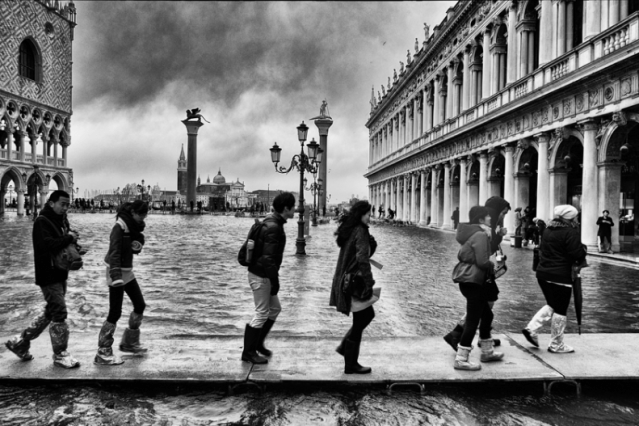
“Abbey Road, Venice,” 2015, by Filippo Salvalaggio. (Bella Figura Publications)

JoAnn Locktov, the editrix and impresaria of photographic essays of Venice in book form, sends me another of her beautiful works: Dream of Venice in Black and White, the third in her “Dream of Venice” series, published by Bella Figura Publications in California. It’s difficult to express in words the photos within – people, buildings, details, vistas – shot by a host of photographers, mostly within the past year or so, though one harks back to 1959.

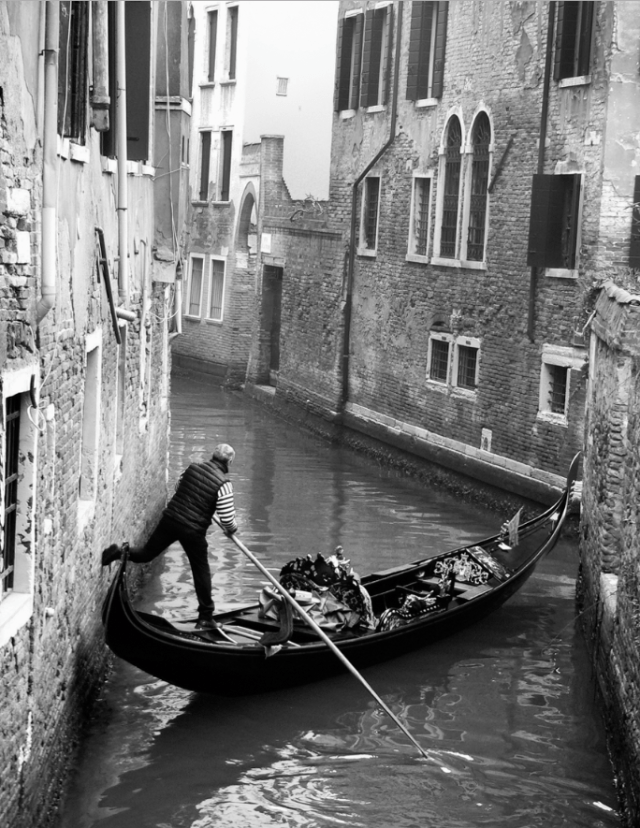
The one above, “Abbey Road, Venice,” shot by Filippo Salvalaggio in 2015, shows the wry wit between the covers of this book. Another photo, “A Gondolier in Venice,” shot in 2016 by Michela Ceola, catches a gondolier attempting to turn about in a canal narrower than his boat is long. Among his cargo, atop the pile of stuff closest to him, there appears to be a priest reading a book, though he’s too small to be a real person. Maybe he is a statuette, or maybe he’s a figment of my imagination. The very next photo, “Ripple,” taken in 2016 by Lisa Katsiaris, is of a ripple made by a gondolier’s oar. A squiggle of water at the upper left takes the shape of an elegantly dressed woman leaping upward, perhaps into the air, or into a canal.

The photos all invite such investigation, and the latter two are reproduced below. I was impressed to see that the first blurb on the back of the book was from Salvatore Settis, the author of If Venice Dies, which I reviewed here. I noticed the blurb after reading the introduction to Venice in B&W by Tiziano Scarpa, a novelist, poet and playwright native to Venice. Settis’s book spends much time regretting that so many tourists visit Venice, but Scarpa is more sympathetic to these misunderstood creatures, who come to places like Venice in their thousands and millions because modern architecture has robbed the world of most places worthy of our love. Scarpa tells of moving into an apartment on a canal, stepping out on its embankment and greeting what he first takes to be a pair of neighbors and then discovers they are merely tourists renting next door. He thinks about it, and writes:

A misunderstanding, it would seem. And yet it wasn’t: I was right to introduce myself to those two like the new kid on the block. Without even realizing it, I came to know the true lay of the land. They were real inhabitants of the neighborhood, even if they were only staying in Venice for one weekend of the whole of their lives. … [Tourists] envelop themselves in Venice – all of it. It is not a frivolous gesture but a deeply philosophical one.

Leaving aside the problems of touristic inundation (which certainly can be done more easily by me than by actual Venetians), Scarpa’s attitude is compelling. A man or woman who visits Venice for a day, a week, a month seeks to worship the city as a god of civitas – more so, at least, than the mere fulltime resident of Venice. Tourists ought not be twitted for such a humane inspiration, even if some of them don’t know quite what they are doing.

In fact, in my review of Settis’s magnificent book, I twitted him for not seeming to recognize that one of the strategies for saving Venice and other historic cities that he ought to have discussed is the construction of more new buildings that partake of the very aspects of a city’s soul, as he discusses with such depth and feeling. It is a strange omission. But not really all that strange. Settis is a college professor and an architectural historian, and he is true to type: he feels discomfort when confronted by a contrarian idea – in this case the idea of a new building designed in a timeless style, even if that style grows out of the history, the culture, the soul of the city in which it is built – in this case, Venice. Oh! What a strange concept!

Not all architectural historians are thusly prejudiced. I await reading Making Dystopia: The Strange Rise and Survival of Architectural Barbarism, by James Stevens Curl, the British architectural historian who wrote the Oxford Dictionary of Architecture, and whose attitudes toward architecture are, I say with considerable pride, much like my own. Making Dystopia is just out in Britain from Oxford University Press, and due out in America shortly.

In fact, allow me to presume to dare – nay, to double-dare – the Society of Architectural Historians to invite Curl, who has written 40 books, to speak at their next annual conference, which is scheduled to be held right here in River City – here in Providence, that is – next year, April 24-28, 2019.

Below are the second and third photos from Dream of Venice in Black and White, as described above.

Screen Shot 2018-07-25 at 3.09.48 PM.png

Screen Shot 2018-07-25 at 3.10.26 PM.png

Posted in Architecture, Books and Culture | Tagged , , , , , , , , | 5 Comments

Our downtown writers’ club

Screen Shot 2018-07-23 at 6.03.57 PM.png

What Cheer Writers Club is on the 2nd floor of 160 Westminster St. (author photo)

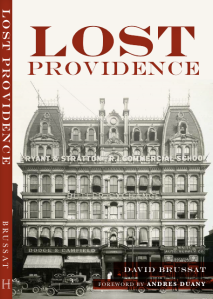
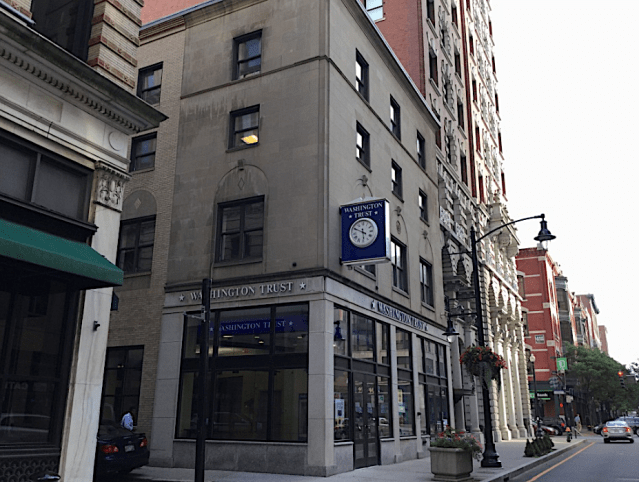
The other day I was invited to the What Cheer Writers Club to look around the premises and sign my book, Lost Providence. The club was on the second floor of 160 Westminster St., a muted classical building that sits between the Francis Building and the Union Trust Bank Building, two of the street’s most ornate exemplars of Beaux Arts classicism, having opened, respectively, in 1894 and 1901. The Union Trust address is actually on Dorrance Street. Right across Dorrance is the Dorrance Building, on Westminster Street.

The club’s building opened in 1870. A fourth story was added in 1940, and the building’s spare classicism was given a modest and elegant uplift four or five years ago. The state preservation survey calls its appearance “a classical moderne style” and adds that “in type and scale it provides continuity to the streetscape, and its reserved articulation is a foil for its more elaborate neighbors.” I was happy to have a reason to enter for the first time.

Jillian Winters, the club’s general manager, greeted me at the door. She had just ushered out a group of visitors (whose names were listed in the club’s visitors log), so we had the place all to ourselves, and a couple boxes of Knead doughnuts, of which I limited myself to one, the chocolate glazed, which was superb. What cheer, indeed!

“What cheer,” by the way, for non-Rhode Islanders who have reached this far, was the greeting offered, according to local lore, by the Narragansett Indians to our founder Roger Williams on his arrival (after his dastardly exile from Massachusetts) in what would become the colony of Rhode Island. (“What cheer, Netop?” is the full phrase, meaning “Hi, Neighbor.”)

Winters sat me down in one of the facility’s modern chairs and we discussed the club and its offerings. The club defines writer broadly – a must in these days of multifaceted media. Its definition includes:

  • Writers, authors, poets & journalists
  • Podcasters, playwrights & screenwriters
  • Cartoonists, illustrators & graphic novelists
  • Indie media & publishers
  • Editors, translators, agents & related pros.

Isn’t that just about everybody? No doubt most writers, broadly defined, could use some space away from home, and a place that, like a Victorian men’s club, opens doors to new connections, friendships and sources of advice and/or inspiration needed for work in the groves of wordsmithery. There are meeting rooms, private rooms and, soon, soundproof rooms to facilitate podcasting and other voiced writing. The brochure asks, “Are you a writer or an introvert seeking space? Come up for a free tour!”

So if you are both a writer and an introvert, you can double your pleasure. Seriously, if you need a mailing address, a hotdesk, a comfy chair, a wifi plugin, access to black & white printing, cups of coffee, tea or spring water, or even a bike rack, the What Cheer Writer’s Club, write in the middle of downtown (pun intended), may be just what Dr. Johnson ordered. A free tour is a good place to start.

Do I have, wonders the brochure, “any ideas of ways to support the work of local writers?” You bet I do. I advise any writer to print out William Hazlitt’s essay “On Familiar Style,” or better yet, find it in one of his books of essays, and put it under your pillow at night. Not before reading it, of course. The words verily trip off your lips, even though Hazlitt wrote it in 1822, perhaps because he wrote it in 1822. Here are the first few sentences:

It is not easy to write a familiar style. Many people mistake a familiar for a vulgar style, and suppose that to write without affectation is to write at random. On the contrary, there is nothing that requires more precision, and, if I may so say, purity of expression, than the style I am speaking of. It utterly rejects not only all unmeaning pomp, but all low, cant phrases, and loose, unconnected, slipshod allusions. It is not to take the first word that offers, but the best word in common use; it is not to throw words together in any combinations we please, but to follow and avail ourselves of the true idiom of the language.

Not much farther along in the essay he shakes his finger at the prose of Dr. Johnson. So maybe I should amend this post to defenestrate its reference to the Great Lexicographer. But no, I refuse to bowdlerize my blog, even for my favorite writer, Hazlitt!

But actually I do have one idea, if I may be forgiven for voicing it. If the club expects to have speakers in the future, this writer is not so introverted as to spurn invitations to speak.

Posted in Architecture, Books and Culture | Tagged , , , , , | Leave a comment

Modernist luxury mall fall

Screen Shot 2018-07-20 at 7.25.17 PM.png

Artz Pedregal mall that collapsed in Mexico City opened this March. (YouTube)

Beautiful building, eh? Well, you won’t have to look at it anymore after viewing this video. The mall collapsed in Mexico City on July 12, some four months after opening amid controversy, said by the Associated Press to have involved “loss of open space, congestion and other issues.” Might one of the other issues been its ugliness? Probably not. We have learned, as a defense mechanism, to tune that out. Thankfully, nobody was hurt in the accident. By the way, the photo above shows the luxury mall before its collapse.

Named Artz Pedregal, the mall is assumed, prior to investigation, to have failed for “structural” reasons. Being built on unstable soil may be considered a genuinely structural reason. Maybe there were philosophical reasons involved as well.

Many structures nowadays are designed using computer programs to generate mathematical algorithms to specify precisely the amount of stress that a structure can withstand. Bridges are a clear example of the exchange of principles involved in this advancement of design procedures. It used to be that engineers designed a bridge’s structure to support much more weight than necessary. Safety, based on a recognized lack of precision in old stress calculations, required redundancy.

Now that we can supposedly determine precisely how much weight a bridge can carry, we can save a whole lot of money by using that precision to avoid redundant cost. Why have bridge girders that can withstand three (or thirty!) times the expected stress? Some bridges fall because there was a bolt loose, but perhaps that bolt was loose not because a workman made an error but because the algorithm for how long the bolt needed to be was faulty.

Prior to an investigation, it is impossible to know whether the collapse of Artz Pedregal was caused by a drastic algorithm fail. Notice, however, that the photo of the mall before its collapse features a recent cliché of modern architecture. Perhaps it is a feature stolen from the late Zaha Hadid’s MAXXI art center, completed in 2009 outside of Rome. Like the center’s wing, the mall’s wing is cantilevered to appear as if it is about to fall down. And so it did. A structure that looks as if it is about to collapse is obviously more likely to collapse, all other things being equal, than a structure that looks solid.

Architects should learn from that. The perils of exactitude in the computer-assisted design of buildings might not be worth the cost.

Screen Shot 2018-07-20 at 7.46.05 PM.png

MAXXI art museum, by the late Zaha Hadid, in Rome. (Architonic)

Posted in Architecture, Video | Tagged , , , , , , , , | 1 Comment