The real Minnette de Silva

Screen Shot 2019-07-28 at 3.54.07 PM.png

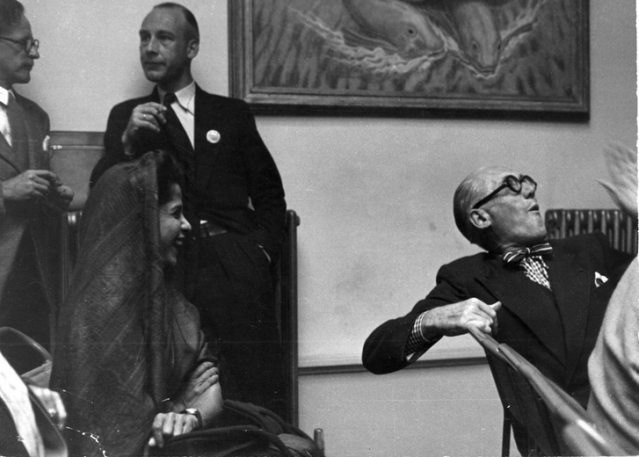
Minnette de Silva smiles at comment by Corbusier, in 1947. (Frieze)

Sometimes it seems like open season on female architects as long as they are in cahoots with the roving eye of Le Corbusier, one of the founding fathers of modern architecture. There is the recurrent hullaballoo over Eileen Gray, whose Mediterranean beach house Corbu vandalized via obscene graffiti when she was away. Then there was the stinkpot of British reporter Taya Zinken’s recollections of Corbu’s offensive behavior to her at Chandigarh.

There is much more titillation that brevity forces me to exclude.

Now there’s the new book out that transforms Sri Lankan modernist Minnette de Silva’s friendship with the Corbusier, starting in 1947, into a fictional affair. Isn’t this a little over the top? Shiromi Pinto’s Plastic Emotions is reviewed in the Guardian; Shahidha Bari offers the following description:

Screen Shot 2019-07-29 at 9.21.53 PM.png

Looking at the photograph (at left), it seems unsurprising that this real-life encounter and the exchange of letters that followed should have provided Pinto with the bones of her story. Plastic Emotions is an exercise in romantic speculation. Pinto imagines the nature of the relationship that develops between the 29-year‑old Sri Lankan and the ageing pioneer of urban modernism. She gives them trysts, meaningful exchanges, a separation and then painful longing, ending only with Le Corbusier’s death in 1965.

Actually, I wonder if the word “unsurprising” in that paragraph should have been changed by an editor to “surprising.”

I have not read the book so maybe it is unfair for me to comment, but its title does not speak well on the Great Man’s behalf. Well, did they have an affair or not? Le Corbusier was famously disloyal to his wife, mostly left behind in Paris, and it is hard to imagine him failing to fall for the lovely Sri Lankan. If they had a romantic interlude, however brief, it is hard to imagine Corbu’s legions of chroniclers not reporting it. Bari is coy on this in her article; ditto Pinto, who wrote the book. Nor, it seems, did de Silva ever retreat from her loyalty to Corbu’s architecture, so far as I can tell. She was the first Asian woman to join the Royal Institute of British Architects.

I might never have dedicated my blog to such an inconclusive topic but for the concluding lines of another article, also in the Guardian (“The brilliant female architect forgotten by history“), by Pinto herself. Describing a recent modernist project in Sri Lanka’s capital city, she quotes another architect on what de Silva might have thought of it:

“She would have hated it,” says Selva Sandrapragas, a British architect who worked with De Silva in her later years. “It displays no sensitivity to the history, culture or geography of where it is. It wraps itself around the old city, destroying the former context, suffocating it from the sea. It could literally be anywhere: Singapore, Dubai, Hong Kong.”

The question is how does that distinguish this prototypical modernist project from anything designed by Corbu?

(My hat is off to Audun Engh, of INTBAU – the International Network of Traditional Building, Architecture & Urbanism – for sending me word of the Guardian’s articles on Minnette de Silva.)
Posted in Architecture | Tagged , , , , , , , , , , | Leave a comment

A mere moment of beauty

IMG_0301.jpg

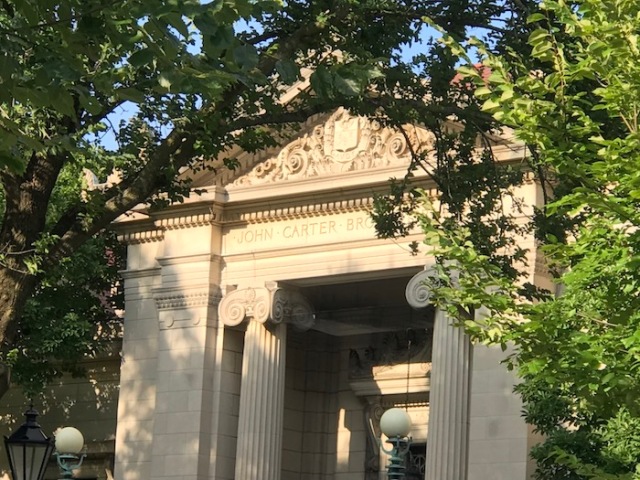
These two shots of the John Carter Brown Library on the College Green of Brown University were taken as my son Billy and I paused on College Hill, waiting for Victoria, his mother and my wife (whose birthday is today), to call back and tell us where to go. We were heading east on George, looking for a good place to stop and wait for the call. So we stopped at George and Brown on purpose so we could look at the library. We had a few moments to spare – and we decided to spend them in the company of beauty.

We could have chosen another spot from among many immersed in beauty on College Hill, but the John Carter Brown Library is not only beautiful but courageous. Whatever might be said about John Carter Brown (1797-1874) – grandson of the namesake of the college – the building itself, designed by the Boston firm of Shepley, Rutan & Coolidge and finished in 1904, committed an act of aesthetic bravery: the library’s board of directors commissioned the Washington, D.C., firm of Hartman-Cox to design an addition that respected the original building’s Beaux-Arts design.

The addition, named by donor Finn Caspersen ’63 to honor his parents, uses a slightly muted version of the elder building’s classicism to express the young building’s respect for the old building. At a time when architects usually design additions to reject a building’s style (implicitly rejecting the institution’s character), the library, its board and its donor directed Hartman-Cox to embrace rather than reject the idea of using architecture to reflect respect for the institution. By the way, the John Carter Brown Library, while on the Brown campus, is not part of Brown University – which may explain the library’s ability to get away with such aesthetic audacity.

So the library’s board, its donor, and its architecture did more than just display respect for the library; they also showed respect for generations of citizens of Providence, including Billy and me. For decades, Brown, the city of Providence and the state of Rhode Island have refused, again and again and again, to show such respect. Sadly, there are fewer and fewer places in Roger Williams’s city where citizens can stop and cherish places that use beauty to express respect for the founder’s idea of soul liberty, and whatever else is good and noble about Rhode Island and its history. Local leaders have absolutely no idea what they are doing. So enjoy our beauty while it lasts.

IMG_0302.jpg

Original building of John Carter Brown Library at left; addition at right. (Photos by the author)

Posted in Architecture | Tagged , , , , , , | 7 Comments

For one- or two-way streets?

Screen Shot 2019-07-22 at 9.36.17 PM.png

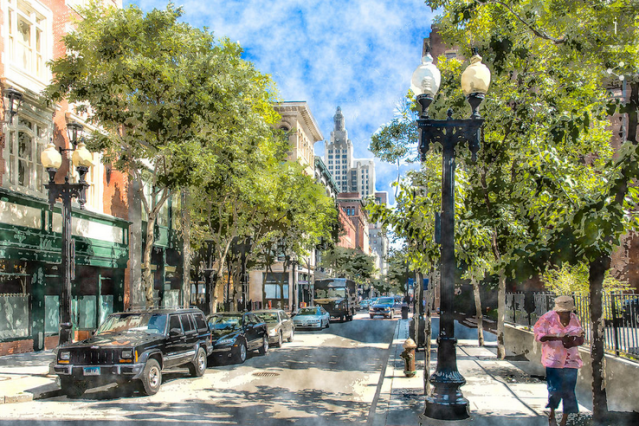
Westminster Street in downtown Providence. (Digital Artworks Limited)

On a recent sojourn in (and above) Manhattan, Steve Mouzon sparked a Facebook conversation about the merits and demerits of one- and two-way streets. It unfolded at such a high level of thoughtfulness about streets (of either ilk) from so many places – not just the Big Apple – that Mouzon decided to put the whole discussion on his blog, known as “The Original Green,” after his pathbreaking book of the same name (purchase it via his website). In light of street changes in Providence, I hereby link from my blog to the conversation on his blog (“New Urbanists on One-Way Streets“).

Mouzon got the ball rolling with this question: “To all my #NewUrbanist colleagues who feel that one-way streets are terrible, why is Manhattan not a wretched, dysfunctional place?”

(The number of those who would insist that Manhattan is indeed a wretched, dysfunctional place may not be legion, but it is also not inconsiderable. I hasten to add that I do not count myself among them.)

Providence’s historic downtown is, I think, still the only entire metropolitan downtown in America on the National Register of Historic Places. Since 1990, it has had the benefit of planning charrettes from New Urbanist guru Andrés Duany, and Liz Plater-Zyberk, his wife, partner and co-winner of the Driehaus Prize. One of their recommendations arose from the city’s mania for one-way streets during the urban-renewal era of the 1950s and 1960s. A one-way street was said to facilitate traffic speeding through our increasingly destitute downtowns. Duany urged Providence to turn some of those one-ways into two-ways. That has been done on major stretches of Washington, Weybosset, Empire, a brief stretch of lengthy Dorrance and the brief extent of Exchange Terrace. It ought to be done as well on Fountain and Sabin, which are both unnecessarily wide.

Providence’s main commercial thoroughfare, Westminster, is still one-way because it is not wide enough to be any other thing. Duany once stated that Westminster reflects the perfect ratio of street width to building height. It creates a maximum sense of enclosure and hence comfort for pedestrians. That is one reason it is among the most beautiful city streets in America and maybe the world, although I would stress the importance of lining a street with traditional architecture, which almost all downtown Providence streets have in abundance. A street with a perfect width-to-height ratio lined with modernist buildings would not be impressive but oppressive. (I wonder whether Duany would still agree with this.)

Ian Manire, an architect with Union Studios in downtown Providence, joined the Mouzonian conversation:

Lived in downtown Portland for years and because of the small blocks and pedestrian-speed traffic, it was immensely walkable and human-oriented. I now live between two one-way “thoroughfares” on the East Side of Providence, R.I., and it’s also lovely – because the streets are one-lane narrow road bed with naturally slowed automobile traffic. All about street scale and tighter grid-weave.

I am guessing that Manire lives between Angell and Waterman, which cross College Hill between downtown and the Seekonk River. For “thoroughfares,” Angell and Waterman are narrow, though not as narrow as most streets on deeply historic and profoundly beautiful College Hill.

More two-way streets have made it easier to get around downtown Providence by car, and without degrading the pedestrian experience. Its street grid is not as systematic as that of Manhattan, where most crosstown streets are one way and so are most north-south avenues. Not that making it easier for cars to get around is near the top of most New Urbanists’ agendas, but it ought to be a goal if it can be done without unprivileging pedestrians. After all, whether you happen to be in Manhattan or Providence, all drivers become pedestrians when they emerge from behind the wheel, and all cities are dependent on those drivers.

In our understandable urge to help pedestrians get out from under the dystopias created by city planners in the urban-renewal era, we sometimes went too far. (“We”? What you mean “we,” Kemosabe?) In cities whose streetscapes are “historic,” the question of one- or two-way streets is moot, because beauty heals most wounds arising from mere traffic patterns. Needless to say, planning offices almost entirely neglect the importance of beauty to the well-being of both pedestrians and drivers in cities.

More dangerous to Manhattan’s walkability than traffic patterns is the ubiquity of scaffolding on buildings along streets almost everywhere. (See “The streets of New York” from last May.) Some may think the hazard is to the heads of pedestrians but it is really to the eyes of pedestrians and drivers alike. I believe downtown Providence has only one building marred by scaffolding, but it is the Industrial Trust (“Superman”) Building of 1928. That’s the distant tall building with setbacks in the photo atop this post. It has been vacant since 2013. An occupant must be found, yes, but maybe removing the sidewalk scaffolding would help. It makes little difference that Westminster and Fulton streets are one-way on either side of the building.

Posted in Architecture, Urbanism and planning | Tagged , , , , , , , , , , , | 9 Comments

Art of the Olive Oyl skyline

Screen Shot 2019-07-19 at 10.32.54 PM.png

Photo of Manhattan from above Central Park. (Steve Mouzon)

This amazing (and scary) shot of Manhattan snapped (if you can say that about photos these days) from a helicopter hovering over Central Park was taken the other day by Miami architect Steve Mouzon. He and others may very well be astonished at the number of stick towers shooting up into the firmament, rivaling and eventually topping the height of the Empire State Building (1,250 feet). The first completed supertall stick was 432 Park Ave., at 1,396 feet, which was inspired by a trash can, and looks it; architect Rafael Viñoly admits it. After reading of the London skyline after the svelte Tulip’s supposed official demise, what are we to make of this sprouting of Olive Oyl condominiums?

Screen Shot 2019-07-19 at 11.08.19 PM.png

Building boom mapped. (CurbedNY)

The one toward the right, Mouzon writes, may have still 20 or 30 stories to go before topping out. Is that the one with the blue curtain wall and the yellow crane up top? If so, it looks to leave the poor Empire State in the dust. But that probably won’t be the only one. Curbed NY reports that 27 supertalls (not all of them sticks) are finished, under construction, or in the design and development phase (“NYC’s supertall skyscraper boom, mapped“). The supertalls are, by definition, over 984 feet. Nothing on the boards as yet breaks the height barrier – the “megatalls,” which must zoom over 1,968 feet. (Who comes up with these numbers anyway?)

Some of these sticks are so thin that only one apartment fits on each floor. They are less architectural than engineering marvels – most are not much to look at, but who cares? Who will want to sway in the wind scores of floors up there if the engineering’s not quite up to snuff? Is there an office charged with stamping a stick’s taut cred with a reliable Good Housekeeping seal of approval? In New York? Maybe. Maybe not. But bouts of wind flux may well be the de rigueur topic of conversation for the high and mighty on the way up and wondering what to talk about with occasional fellow travelers on the elevators. (Can there be more than one elevator in a stick?)

As Steve’s photograph suggests, these sticks are poking out the eyes of those for whom the skyline of Manhattan is the cat’s meow. Frankly, however, the elegant skyline long ago went the way of the dodo. Until the 1970s the New York skyline was both graceful and impressive. After the 1970s it remained impressive. Now it is, well, the New York skyline. Eventually it will look like an upturned hairbrush. Too bad.

Posted in Architecture, Development | Tagged , , , , , , | 4 Comments

Mayor nips Foster’s Tulip

Screen Shot 2019-07-17 at 7.33.48 PM.png

Proposed Tulip observation tower at center left. (Architects’ Journal)

On July 15, London Mayor Sadiq Khan nipped Lord Foster’s proposed Tulip in the bud. Fine. But why? It does not “represent world-class architecture,” quoth the mayor. “Mayor rejects ‘unwelcoming, poorly designed’ Tulip,” stated Architects’ Journal. One study declared it looks like “a surveillance tower,” which it was to have been, except for the use of tourists, not prison guards. “Of insufficient quality,” echoed a mayoral aide, adding that it would “harm London’s skyline.” Really? How could he tell?

Look at the photo above of London’s skyline. Look at the buildings around the  Tulip cropped into the photo across the street from the Gherkin (also by Foster). By what standard do any of these buildings qualify as “world-class architecture”? Which are “welcoming”? Which do no harm to the skyline of London? Not a single one of them. No doubt the hardest job in the world is service as a member of the Pritzker Prize jury. Modern architecture has no comprehensible set of standards by which to judge the quality of its prize submissions. It’s a movable feast, if that’s the sort of thing you find tasty.

One observer of that photo no doubt sported images in her memory of the London skylines of the distant past, skylines in which church spires literally aspired and the Tower Bridge actually towered. She wondered whether it was really London and not, say, Qatar. Surely her question was rhetorical, because in fact it really is not London, not the London beloved for centuries around the world. Although some tourist precincts survive intact, that London has been gone for at least a couple of decades.

Even 40 years ago, when I first visited London, many streets were pimpled with low- and mid-rise modernist buildings, often filling in for the rubble left by the Luftwaffe. The only real tower I recall seeing in central London then was Lloyds of London, designed in the ridiculous inside-out style of Richard Rogers, weighing in at a mere 14 stories and still incomplete in 1979. It was shown to me by my host, a boyhood friend enrolled at the London School of Economics, whose girlfriend and eventual wife we met at the building, where she worked for the Rothschilds. That was long before I ever thought of being an architecture critic, and five years before Prince Charles’s famous speech condemning a proposed addition to the National Gallery as “a monstrous carbuncle on the face of a much loved and elegant friend.”

Those words killed that project, just as Mayor Khan’s words appear to have killed Lord Foster’s Tulip. The difference is that the Prince of Wales knew whereof he spoke.

(Residents of Providence will wish Mayor Elorza had Mayor Khan’s authoritative powers over the fate of buildings.)

Posted in Architecture, Development | Tagged , , , , , , , , , | 4 Comments

Future of buildings revealed

Screen Shot 2019-07-14 at 9.47.25 PM.png

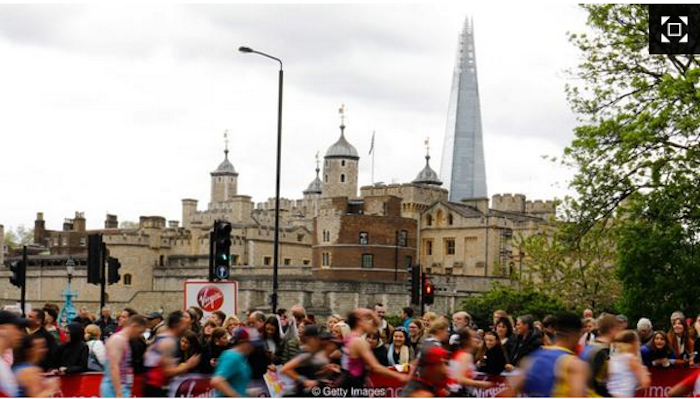
The Tower of London, with the Shard rising in the background. (BBC)

Nir Buras, founder of the Washington chapter of the Institute of Classical Architecture & Art, sent out to the Pro-Urb (New Urbanist) discussion group an article from the BBC that has much to say about buildings and which of them will survive the longest.

The headline of “The Simple Rule that Can Help You Predict the Future,” by Tom Chatfield, is a bit dodgy, as if it were click-bait inhabiting the murky bottom of many “news” websites. The “simple rule” is called the Lindy Effect, and it can’t, as the headline seems to imply, predict your future.

“What makes something endure for centuries? To find out, we must start with a principle called the ‘Lindy Effect.’ ” That is the subhead of Chatfield’s piece, and it is on target.

Chatfield cites author Nassim Nicholas Taleb’s 2012 book Antifragile: Things That Gain from Disorder as saying that the Lindy Effect – named for insights derived from the conversation among comedians at a New York delicatessen called Lindy’s – only predicts the longevity of inanimate objects such as buildings. Taleb writes: “Things that have been around for a long time are not ‘aging’ like persons, but ‘aging’ in reverse. … Every year that passes without extinction doubles the additional life expectancy.” Chatfield adds:

Because the only judge that matters when it comes to the future is time, our only genuinely reliable technique for looking ahead is to ask what has already proved enduring: what has shown fitness and resilience in the face of time itself, surviving its shocks and assaults across decades, centuries or millennia. The Tower of London may seem modest in comparison to the Shard skyscraper – which sits across the Thames at 11 times the height – but it has also proved its staying power across 94 times as many years. The Shard may be iconic and imposing, but its place in history is far from assured. When it comes to time, the older building looms larger.

The Lindy Effect works not just for buildings – our main concern here – but other things that do not die according to schedule, such as human beings, trees, or other biological phenomena of nature. The Lindy Effect predicts how long books, ideas, religions, art, myths, machinery, ethics, the careers of comedians, and other manmade artifacts of culture will last.

Chatfield adds that London’s buildings

are subject to the same forces of wear and tear as everything else on Earth: they may be tough, but they cannot remain in good condition without human support. And it’s for precisely this reason that the Lindy Effect is so useful when it comes to understanding them. The longer something has endured, the more significance and symbolic meaning it has accrued – and the more tests of function and fashion it has passed. The modern city of London, like most cities with hundreds of years of history, bends and weaves itself around its monuments. Over the centuries, fortune and favor have fixed them into a city’s identity. Within days of the fire at the 800-year-old cathedral of Notre-Dame de Paris earlier this year, the watching world had pledged over a billion euros to fund its reconstruction. It’s unlikely the Shard would have commanded quite the same response.

This may remind readers of Steve Mouzon’s splendid 2010 book The Original Green, in which he declares that the most environmentally sustainable buildings are those which are the most loved. In short, buildings that have been around a long time – or new buildings that look like they are based on the same principles of those beloved old buildings. He identifies traditional architecture as placing the gentlest carbon footprint on the Earth, much more so than buildings anointed by such fraudulent means as LEED, which traffics mostly in “gizmo green,” or. absurdly, gadgets designed to reduce the destructive impact of existing gadgets.

Here is Chatfield’s description of (you might say) Taleb channeling Mouzon:

When it comes to human creations – buildings, artefacts, ideas – there’s a similar adaptive superfluity in play. Even the hardiest buildings are fragile in the grander scheme of things. But the emotions and ideas that lead us to admire, maintain and emulate a handful of them are robust.

Or, in brief, as Chatfield states in closing his article:

When you look across the present moment, almost everything you see is noise. In the long view, it amounts only to distraction. To bastardize a famous quote by the author William Gibson: the future is already here, but the most important parts of it happened a long time ago.

Read the entire article.

Posted in Architecture | Tagged , , , , , , , , , , , | 10 Comments

The apology to Sir Roger

Screen Shot 2019-07-11 at 8.45.38 PM.png

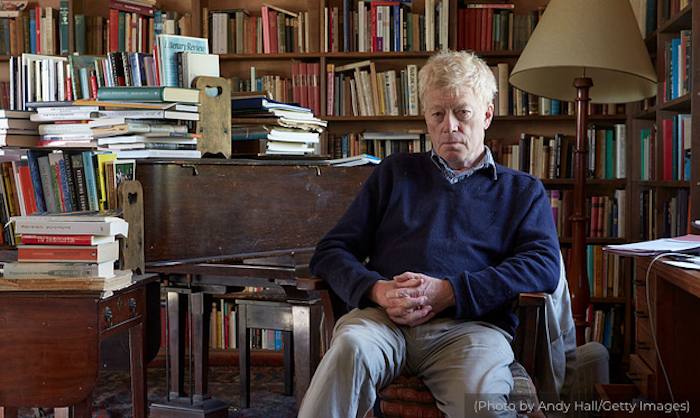
The New Statesman magazine, a British rag, has apologized at last for using monkeyed quotes from an interview in April to defame Sir Roger Scruton, who lost an important government post as a result. Who knows whether Scruton would like to return as chairman of the Building Better, Building Beautiful Commission, still run by the craven housing minister who sacked the conservative philosopher and architecture theorist virtually moments after the obviously bogus quotes emerged.

Read “An Apology for Thinking,” Scruton’s own eloquent description, in The Spectator, of how his words were purposely butchered by the deputy editor of the Statesman, George Eaton, who remains at his old post and, one may assume, unchastened. As usual, the Statesman’s deceit and media reports of it circulate widely but apologies, if they ever come, sink like a stone, read mainly by those already familiar with Scruton’s incapacity for thinking what he was wrongly accused of saying.

A rumor floated that Scruton’s replacement as chairman would be the head of the Royal Institute of British Architects, which is as staunchly modernist as the American Institute of Architects.  But, miracle of miracles, the post was filled, at least temporarily, by a very sensible person – Nicholas Boys Smith, head of Create Streets, an organization with what we here would consider a New Urbanist outlook.

Throwing caution to the wind, Boys Smith recently said, “Beauty should not be just a property of old buildings or protected landscapes but something we expect from new buildings, places and settlements,” adding, “We need to deliver beauty for everyone, not just the wealthy.”

No doubt the modernists, who were part of the drive to oust Scruton that went into high gear following his appointment, are out there looking for ways to assure Boys Smith as brief a tenure in his post as Scruton had. Maybe those words will be enough.

***

That should wrap up this succinct response to the latest turn in L’Affair Scruton, except to regret that it is also the latest turn in the politicization of architecture. The style wars – which will and should continue until beauty resumes its rightful place in the design of buildings and cities – have long shown signs of a division between conservative traditionalists and liberal modernists. This is unfortunate, because people of all stripes would benefit from a return to beauty in the civic arts. However, the tactics that were used to attack Roger Scruton were tactics of the left – ostracism – which are rarely seen on the right. Similar tactics are used by the architectural establishment to keep traditional architecture down, even though (and indeed because) it is preferred by most people.

Since Britain and America are democracies, choice in how architectural commissions are distributed should be more broadly based. Perhaps the fact that a powerful journal has been forced to apologize for maligning Sir Roger suggests that what the public thinks about architecture is a rising factor in how cities are built. No less than beauty, fairness has long been absent from the world of architecture. Time to bring it back.

Screen Shot 2019-07-11 at 2.40.27 PM.png

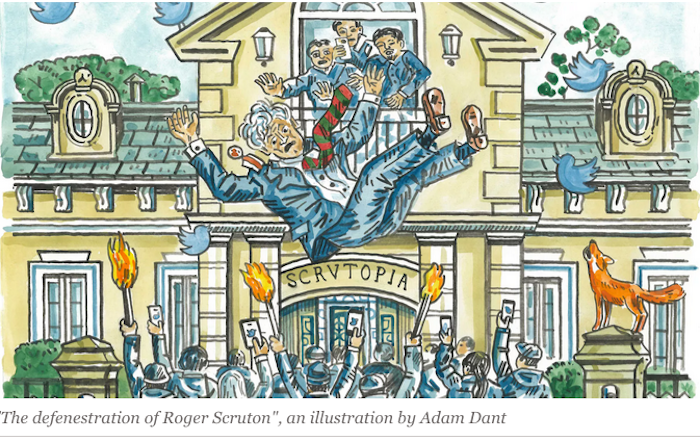
This cartoon was on top of the original version of this blog, but I switched it down to this spot because it seemed, on second thought, to poorly reflect the seriousness of the subject.

Posted in Architecture | Tagged , , , , , , , , , , | 3 Comments

People’s Notre-Dame contest

Screen Shot 2019-07-08 at 9.51.36 PM.png

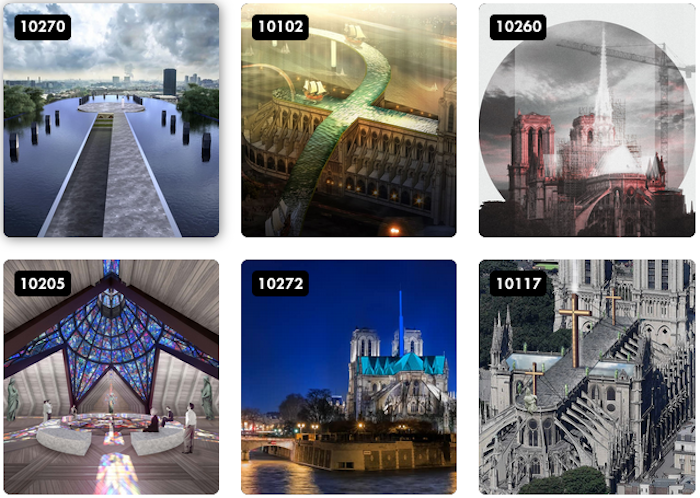
Entries to GoArchitect’s “people’s” design competition for Notre=Dame. (GoArchitect)

GoArchitect offers “The People’s Notre-Dame Design Contest,” supposedly as distinct from the international design competition announced by France after the cathedral fire in April. So far as I can tell, the announcement has not been followed up officially with a structure under which the competition would be held. Furthermore, in May the French Senate mandated recreating the cathedral’s “last known visual state.” This would contradict President Macron’s call for “an inventive reconstruction,” and presumably nullify the proposed official international competition.

Screen Shot 2019-07-08 at 9.43.04 PM.png

GoArchitect’s competition, whose winner will be announced on July 31 after voting that is under way now at the above link, has a $1,000 prize but no official influence on what is built. After the French Senate’s action, the competition’s CEO stated: “It would be a terrible loss to the democracy of design if the French Senate closes the door to the debate and exploration of the future of Notre-Dame Cathedral.”

Huh? “The democracy of design”? What in blazes is that? If democracy played any substantial role in design, the architecture of cities would be noncontroversial. It would please most people, as it did for hundreds of years. It would somehow manage to reflect the fact that the public overwhelmingly prefers traditional to modern design. Of course, the public has almost no say in the look of buildings or the design of cities. The vast bulk of what gets built today is widely disliked. Remember, even Frank Gehry called it 99 percent crap. If nothing else, the “people’s competition” proves that democracy plays little or no role in design.

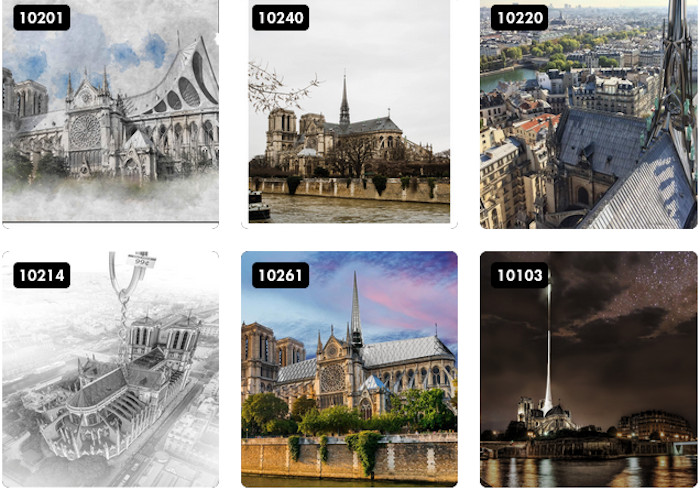
Just go to the GoArchitect link above and examine the entries. Because the images are small, I could find only two or three entries that seemed intended to reflect the will of the French Senate – which, I suppose, reflects in some degree the will of actual voters in France. More so, certainly, than the result of this “people’s competition.” Several dozen of the 225 entries seemed to be reasonable attempts to innovate upon the roof and spire of the cathedral without entirely disrespecting the original. But the largest contingent were obviously ridiculous entries seemingly intended to insult the history of the cathedral and blow a spit ball at those who revere the building.

Among these latter, I suppose my favorite is entry 10102, in the middle of the top row up above. It features a rooftop pool with a “river” running through it. Wowie! The river flows into and out of the roof pool along a flyover high on stilts. Napoleonic warships at not much less than full scale ply the pool and flyover. As is conventional in blind design competitions, we are not invited to doff our hats to the architect that came up with that idea.

I know there are people out there, readers of this blog who enjoy really, really bad architecture. I know this because they keep sending me emails with links to the most outrageous things, hoping, perhaps, to get my dander up and thereby inspire another of my “Can you believe this?” posts.

To these wonderful folk I say keep ’em coming! In the meantime, click on the link above and enjoy!

Such masochism has the effect, no doubt, of raising awareness that people’s intuitive dislike of such garbage is shared by most other people. And that knowledge may feed into a rising disinclination to let architectural elites and their developer buddies continue to pollute the world’s built environment. Accolades to the French Senate for reflecting that awareness, and putting its foot down on President Macron’s tomfoolery.

Screen Shot 2019-07-08 at 9.48.32 PM.png

No. 10240 is one of the few entries that seem to replicate the original. 10220 may be another.

Posted in Architecture | Tagged , , , , | 1 Comment

Songs of electric car silence

Screen Shot 2019-07-06 at 6.14.44 PM.png

Out to Lunch. Old Solutions to New Problems. (PL Diesslin)

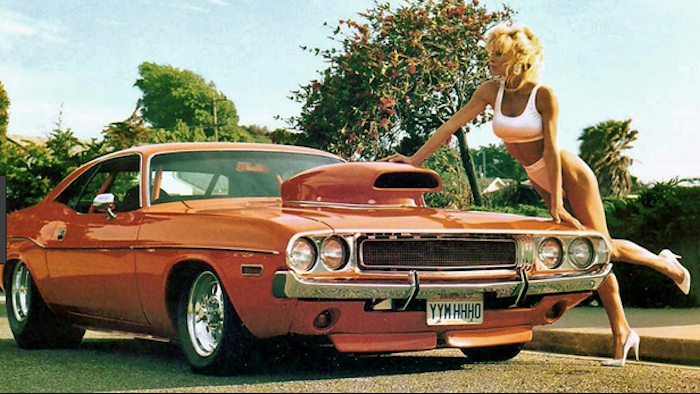
One of the endearing features of electric and hybrid cars is the silence of their engines. So of course that feature is about to meet its maker. U.S. and E.U. regulators are calling for noisemaking electric engines for safety reasons. Maybe the newfangled fake engine sounds should mimic real engine sounds. That would make more sense, vrooming more softly, possibly with a melody. Actually, automakers are far ahead of government. They’ve been souping up the menacing bass growl from under the hoods of pickup trucks and muscle cars for years now. Fooled ya!

Electric automakers anticipating efforts to ruin their products’ silence are trying to beat mandates to the punch. They have gentle sonic compositions in mind, bless them, although Harley-Davidson’s electric motorcycles will supposedly emit the sound of pigs snorting. Ha-ha! Inevitably, however, the systems gurus will give drivers a menu of options that will allow automobile owners to display their own highly refined musical tastes.

Imagine each driver being able to choose the music he prefers for the car he owns. Imagine reaching the rear of a slow-moving traffic jam. Imagine the cacophony! The Beatles, the Stones, Jimi, Frank, Elvis, Barbra, Cher, Miles, the Duke, “The Marseilles” or any passage from Tchaikovsky’s 1812 Overture (a staple on the Fourth everywhere except Providence) or Beethoven’s “Ode to Joy.” All at once! (One can and probably should imagine worse.)

Screen Shot 2019-07-06 at 4.35.37 PM.png

Apocalypse Now (military.com)

I have my own favorite. For my very modest, dinged to the max 2009 Hyundai Accent, give me Wagner’s “Ride of the Valkyries” from Apocalypse Now. That’ll clear out the road ahead! Actually, for most situations, such as driving through streets near schools (now 20 m.p.h. by law), give me the Ode to Joy. Give me that and I’ll creep through Providence, schools or no schools. Or for that matter, with the news about the Providence schools, why not play Mozart on all school buses? Maybe that will improve scores in the recently damned system. And every school cafeteria should play the aria from Le Nozze di Figaro that Tim Robbins sends over the prison loudspeakers in The Shawshank Redemption creating momentary bliss for the inmates. Play it in every school cafeteria. This would pacify the student population, soothing its savage breast. Don’t just put speakers in car engines, install them on all of the lampposts that line every road and play that aria all the time, everywhere. This would create a universal road-rage-free zone, and reduce the crime rate in cities.

Conversely, I would like the meanest, muscle-bound sports car to issue forth a soft putt-putt-putt-putt-putt-putt. Watching it travel down the road and imagining the feelings of its knuckleheaded driver would generate instant Shadenfreude – satisfaction at the misery of others. Better than a psychiatrist!

Hmm. Maybe something good will come out of safety concerns. For half a century we’ve all had to put up with that bleepin’ “BEEP! BEEP! BEEP! BEEP!” whenever a truck backs up. We can blame it on Jimmy Carter, but that doesn’t help very much. Maybe now trucks will be forced to adopt sonic vehicular reform. Progress marches forward. At least we can hope.

Screen Shot 2019-07-06 at 5.45.31 PM.png

Posted in Architecture, Humor | Tagged , , , , , , , , , , | 7 Comments

The trenches of modernism

Screen Shot 2019-07-03 at 7.46.40 PM.png

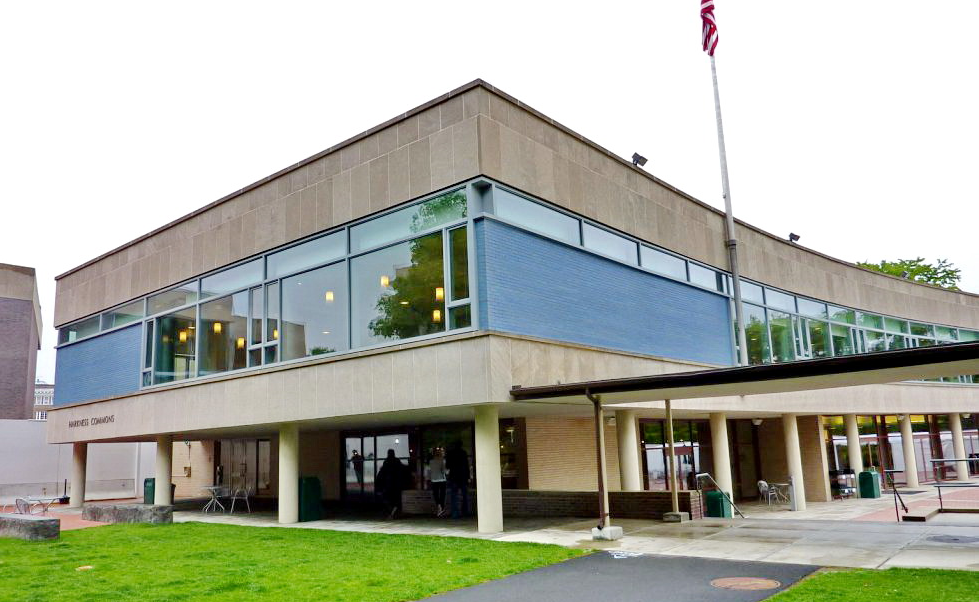
The Harvard Graduate Center (1949), by Walter Gropius. (

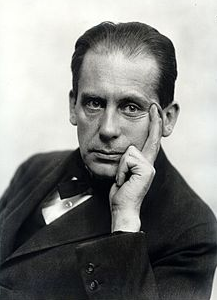
Walter Gropius, the founder of the Bauhaus school, died fifty years ago today. A new biography is out, Gropius: The Man Who Built the Bauhaus, by Fiona MacCarthy. Two major houses published it simultaneously, Faber & Faber in the U.K. and the Harvard University Press in the U.S. In this, the centennial year of the Bauhaus, the book could only be a hagiography. Its conclusion: “Everyone wants to think of him as one of the world’s great architects; he wasn’t. He was one of the world’s great philosophers.”

Everyone?! Hey, don’t put me in that basket of deplorables.

Screen Shot 2019-07-03 at 9.37.21 PM.png

Walter Gropius

Nor Ann Sussman, the architect, writer and researcher who has explained how the three most notable founding modernist architects’ work was a direct expression of their mental illness – Le Corbusier of autism, Ludwig Mies van der Rohe of PTSD, and Walter Gropius also of PTSD, post-traumatic-stress disorder, acquired in both cases from terrible combat experience in World War I.

MacCarthy’s book exhaustively recounts the history of Gropius’s wartime experiences (in which he won an Iron Cross), the history of his role in the founding of the Bauhaus and the “reform” of architectural education in America, and the history of his, shall we say, complex personal relationships (including his marriage to the widow of the composer Gustav Mahler). But the author fails to recognize or acknowledge the intimate connection, which she herself has described in horrifying detail, between his trauma and his architecture.

To oversimplify, sufferers of PTSD, their brains frozen in fear, seek relief from trauma’s confusions in simplicity, and simplification is the chief characteristic of modern versus traditional architecture – whose rejection was the purpose of the Bauhaus.

Screen Shot 2019-07-03 at 9.35.18 PM.png

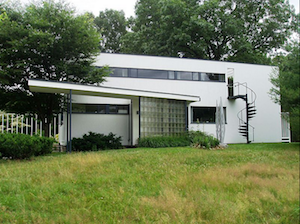
Gropius House in Lincoln, Mass. (Wiki)

That the three modernists were psychologically abnormal is a long-accepted fact of their biographies. Sussman’s contribution has been to track scientifically the influence of these striking abnormalities upon their architectural sensibilities – and hence to show how illness is baked into the philosophy of their architecture. Her research tracking the human visual response to the blanknesses of modern architecture has strengthened the argument that human neurobiology causes the widespread preference for traditional architecture over modern architecture.

After her lectures, Sussman is often asked whether she is saying that all modernist architects are crazy. No, she responds, but they have all embraced crazy ideas. Today’s modernist architects are mostly ignorant of the original basis for those ideas, but the buildings they design reflect them all the same. The recent celebrations of the Bauhaus in magazines and museums reflect the cult status of modern architecture, as explicated by Nikos Salingaros, perhaps science’s foremost delineator of how neurobiology, not personal taste (as in “it’s just a matter of …”), determines architectural preferences.

Salingaros’s work may be the most trenchant, so to speak, explanation for how this great gap in MacCarthy’s book escaped detection by the editors at Harvard and Faber. This is what editors are paid for – to vet not just the grammar of a manuscript but its basic connection to reality (in the case of nonfiction). Shame on them. Why did they let this pass? Because modernism is a cult – it refuses to brook dissent. It is totalitarian. Even editors at major publishing houses are afraid to cross swords with modernism.

That Gropius wasn’t a great architect may be the understatement of the decade. The building atop this post, the Harvard Graduate Center (or the Gropius Complex – truly le mot juste!) completed in 1949, was the first major modernist university building in America. The Gropius House, completed in 1938, is the house he built for himself and his family. That says it all, does it not? At bottom is the Bauhaus school, built in 1925, whose alleged design by Gropius is challenged in James Stevens Curl’s pathbreaking new history of modern architecture, Making Dystopia (Oxford University Press, no less!).

By the way, Professor Curl reviewed the book for Jackdaw here.

Grope was a far greater architect than he was a philosopher. MacCarthy’s book pays no attention at all to the fact that Walter Gropius’s only legacy is the creation of modern dystopias that bleed happiness from human hearts around the world. No thinking person could or would accomplish that. In other words, to call her book a hagiography is an example of praise by faint damnation: In its essence, in its broad defense of a career dedicated to a Bauhaus legacy that is indefensible, it is disconnected from reality.

Screen Shot 2019-07-03 at 9.41.18 PM.png

The Bauhaus school in Dessau, Germany. (landlopers.com)

Posted in Architecture | Tagged , , , , , , , , | 21 Comments