My reply to that then

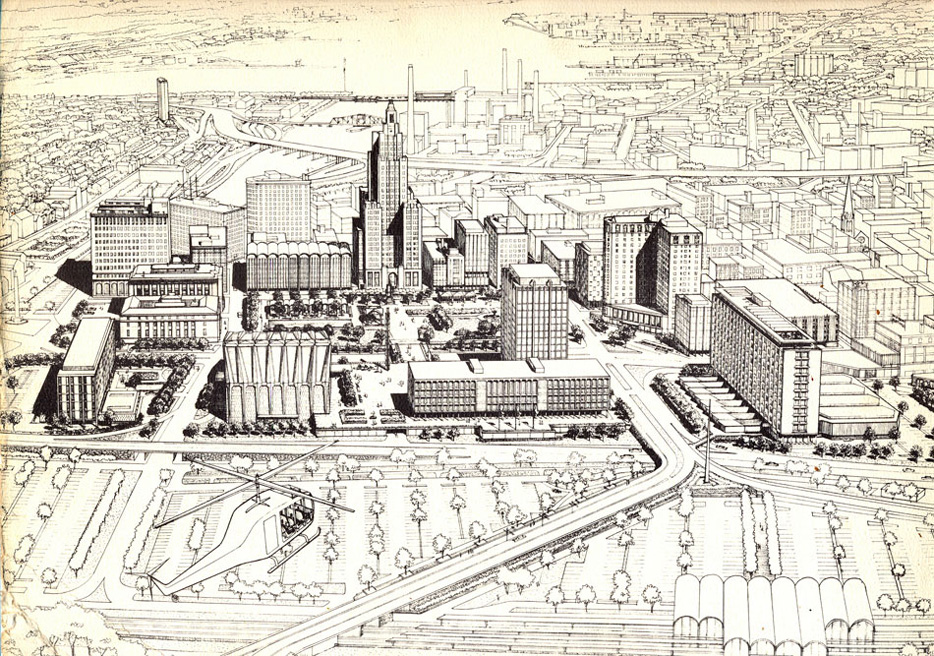
Downtown Providence 1970 Plan. This was the image of the city's modernist establishment in 1960. (gcpvd.com)

Downtown Providence 1970 Plan. This was the image of the city’s modernist establishment in 1960. Notice the vast swaths of parking – empty. The plan included many visionary images, most graced by males who seemed to have one thing in common: male pattern baldness. Why? (gcpvd.com)

Since we are already in the wayback machine, here is the column I wrote following the publication of Journal reporter John Castellucci’s interview with modernist Derek Bradford back in 1996:

The silence of the modernists
April 18, 1996

JOHN CASTELLUCCI’S fascinating interview with RISD architecture professor Derek Bradford, in the Feb. 26 Journal-Bulletin, raised issues of major importance to the future of Providence. Castellucci’s “Conversations with” in the Metropolitan section have been that feature’s best reads, in my opinion. He got the professor to say things that will give me the greatest pleasure to contradict.

I am fortunate enough to have heard Bradford speak in public, ex tempore, so my imagination supplies the British accent that goes with the words. And while some local pundits have confused speaking grammatically with having a British accent, in Bradford’s case it is not the accent itself – he is a native of London – but the charm and eloquence of the expression that make him a joy to hear.

View of Kennedy Plaza as renovated in Downtown Providence 1970. (gcpvd.com)

View of Kennedy Plaza as renovated in Downtown Providence 1970. (gcpvd.com)

For example, Bradford believes that there are too many domes on buildings in Providence. So who else, off the top of his head, could applaud the design change from a dome to a glazed barrel vault at Providence Place by inventing the word “domectomy”!

I am proud to have been deplored publicly by the professor – at a meeting of the Design Review Committee of the Capital Center Commission – as a proponent of “historicism” in architecture, by which he means favoring architecture that “copies” the past.

On that day years ago, and on others before and since, I encouraged Bradford to write a rebuttal to my column for these pages. It never showed up. Perhaps the Bradfordian style waxes too academic when he sets pen to paper. Maybe that explains the professor’s long silence. Or maybe it’s something else.

In a letter to the editor Tuesday (“The Journal’s Prince Charles”), Samuel A. Cate lauds the Bradford interview, and complains that “for months, we have read only the reactionary columns by our own Prince Charles of architectural criticism. . . .” He rejoices that the “shallowness and falseness of the mere copying of past styles is at last revealed!”

“Let’s have more contrary opinions expressed,” he concludes. OK. I hereby invite Cate – a Providence-based architect – or anyone he chooses, to end the silence of the modernists.

[I don’t recall how long ago – many years, certainly, but possibly since 1996 – the occasional columns of architectural historian William Morgan began appearing on the Journal’s oped pages. They offered a contrary view, favoring “good” architecture as opposed to architecture of a particular style.]

Castellucci opens his interview with Bradford by citing several quotations. “These are the kinds of iconoclastic statements that tend to get architects burned at the stake in this town. You’re swimming against the tide. Why?” Bradford responds:

“I think I’m a realist in the sense that I think cities change. They are products of their time. They’re constantly in flux. The fact that they are not what they were 50 or 100 years ago seems to me not only inevitable but part of the natural order of things. I try to see cities as realistically as possible – as what they are, what they could be – rather than measure them against some sort of known yardstick or known set of standards or canons which says this is an ideal city and we should emulate it.”

Why, I wonder, should a shift toward traditional architectural principles be any less valid a change than what Bradford would prefer? Indeed, a continuation of modernism could with equal validity be criticized as “copying the past,” albeit the more recent past. Why is today’s traditional movement in architecture not equally a product of its time? What is wrong with applying standards to architecture?

Bradford soon provides an answer: “I think this tendency establishes a much more conservative attitude towards the production of architecture [in Providence and the Capital Center].” He says this leads to “uninspired” and even “dishonest” architecture because “modern architecture . . . had a social, political, moral agenda [that] we lack . . . in our work now.”

Is this really all it is? Modernists piled a vast new agenda onto the back of architecture. When the new, sleek utility of modern design failed to solve the problems of the city in the 1950s, ’60s and ’70s, it was only natural that in the ’80s and ’90s, architects, their clients and the public would revive the “conservative” notion that buildings should at least try to be beautiful. Maybe this truth is so obvious and so painful that, for modernists, silence is golden.

Compare the modernists’ image of Kennedy Plaza with the old buildings we know and love, most of which would have been sacrificed under the “Downtown Providence 1970” plan (released in 1960). The more the public participates in the design of Capital Center via such bodies as the Design Review Committee, the more its buildings have moved, in style, away from modernism and toward the traditional.

The Westin Hotel and Providence Place speak eloquently to the public’s good taste – even more eloquently than Derek Bradford. Still, while I happily burn his opinions at the stake, I would never want to silence the voice that expresses them.

* * *

David Brussat is a Journal-Bulletin page design editor, editorial writer and columnist. His e-mail address is: davidbrussat @projo.com.

Of course, within half a decade the modernists were back in the saddle, reopening the question of whether the public’s participation in design review makes any difference. Certainly the public does not like the modernist buildings that have arisen in Capital Center (or on North Main Street] since 2005, though I’m sure Derek Bradford does. Still, though, there has been no effort to rebut my “reactionary” (that is, progressive*) views directly in the pages of the Journal. Perhaps, for the modernists, the bulk of what has been built since 2005 has been sufficient rebuttal. If so, I would still enjoy reading it in words.

* In favor of what the people want as opposed to what the establishment wants.

Posted in Architecture, Architecture History, Blast from past, Providence | Tagged , , , | Leave a comment

How modernism thinks

So-called "background buildings" in downtown Providence. (630wpro.com)

“Background buildings” in downtown Providence. (630wpro.com)

Derek Bradford, the modernist architect, longtime professor of architecture at RISD and Capital Center design review panelist whom I mentioned in Thursday’s column “Providence’s long romance with brick,” was interviewed by Providence Journal reporter John Castellucci back in 1996. Castellucci did an excellent job of leading Bradford on, bringing out his feelings about modernist and traditional architecture, especially in Providence. Bradford does not seem to have recognized that the city had been entirely devoted to modern architecture for at least 30 years at the point of this interview, which took place amid a hiccup of traditional architecture in the 1990s, mostly in the Capital Center development.

However Bradford misconceives Providence, it is astounding how little has changed in the outlook of a typical modernist. He is, in fact, quite the conservative. It is the advocates of a return to buildings people love who are the true progressives today (spitting into the official wind, as usual).

About two years before this, I debated Bradford at beautiful new housing for the elderly called Laurelmead, developed by Andrés Duany’s friend and fellow urbanist Buff Chace, who has brought residential living to restored old commercial buildings downtown. In fact, these are the buildings that Derek Bradford praises toward the end of the interview, showing just how totally he misunderstands traditional work, which he accuses of lacking social and moral principles. And the old buildings, which he praises as background urbanism, are indeed quite beautiful, but whatever he says, he would be against putting them up today. Bradford thinks that background buildings in our time (and perhaps all buildings) should be stripped of ornament and designed with minimal regard to exterior appearance – he cites the modernist Ludwig Mies van der Rohe as worth copying – so long as function was respected, indeed exalted. But most comical are Bradford’s remarks about Rhode Island’s glorious State House, designed by McKim, Mead & White. Castellucci quite properly tags their absurdity.

I was about to recall my debate with Bradford. He won, being much more used to talking to large groups than I was. He had his dulcet British accent. And he had his schtick down better than I did mine. But the audience agreed with me in spite of my relatively inept presentation of my disagreements with him about architecture. Anyway, here, courtesy of the Providence Journal, is John Castellucci’s long and interesting interview with Derek Bradford [including passages relating to Antoinette Downing and brick].

A CONVERSATION WITH … Architectural advocate Derek Bradford
By JOHN CASTELLUCCI
February 26, 1996  

Depending on your taste in architecture, Derek Bradford is either a voice crying out in the wilderness, or an iconoclast espousing a dangerously unpopular point of view.

In a city dominated by historic preservationists, Bradford, 59, has been an outspoken advocate of modern architecture. As a member of the Capital Center Commission’s Design Review Committee, he has frequently criticized the kind of “knee-jerk” classicism that says every new building built in Providence should emulate the buildings built during the city’s past.

Born in London, Bradford has taught architecture and worked on design projects all over the world. In 1994, he was awarded a Fulbright grant to teach at Dawood College in Karachi, Pakistan. He taught architecture and planning at Ahmadu Bello University in Nigeria before coming in 1968 to teach at the Rhode Island School of Design.

Now a professor of architecture at RISD, Bradford was the first faculty member to receive the school’s John R. Frazier Award for Excellence in Teaching. He was interviewed recently in the office of the dean of the architecture division.

Q: At one meeting of the Design Review Committee, you called the Westin Hotel “an eclectic pastiche” without any independent architectural identity. At another meeting, you said the classical facade on the Providence Place mall represents a missed opportunity and complained that the 20th century has so far failed to produce an architecture that looks forward to the 21st. In an interview in the Sunday Journal Magazine, you said, well, so what if downtown Providence closes down at 5 o’clock: “I don’t understand this kind of frenetic attempt to make all cities alive everywhere all the time.”

These are the kinds of iconoclastic statements that tend to get architects burned at the stake in this town. You’re swimming against the tide. Why?

A: I think I’m a realist in the sense that I think cities change. They are products of their time. They’re constantly in flux. The fact that they are not what they were 50 or 100 years ago seems to me not only inevitable but part of the natural order of things. I try to see cities as realistically as possible – as what they are, what they could be, rather than measure them against some sort of known yardstick or known set of standards or canons which says this is an ideal city and we must emulate it.

Q: Have we been doing that in Providence? Has the dominant body of opinion about architecture in Providence been measuring Providence against an already existing yardstick?

A: I think so. I think that’s partly what historic preservation is about. And that is a double-edged sword. It certainly saves the most valuable buildings, but I think it also tends to set a tone against which new buildings or new urbanism is measured, which I think is unfortunate.

Q: What has the effect of that tendency in Providence been?

A: I think the tendency establishes a much more conservative attitude towards the production of architecture and the new city. I think it was best summed up by Antoinette Downing, who is perhaps the most famous leader of architectural historical perservation, who once whispered to me at one of the design advisory meetings, “If I see another red brick building, I think I’ll be sick.”

Q: If even Antoinettte Downing, one of the foremost preservationists, was getting tired of architecture that imitated the architecture of the past, what is it that produces buildings like the facade of the Providence Place mall or the Westin Hotel?

A: People are naturally conservative. We all like to go with what we know has succeeded and what we feel comfortable with. We’re always a little ill at ease with the new, whatever it may be – new medical techniques, new legal systems, new methods of living, new forms of transportation. There’s a kind of nostalgic vein built into all of us. And perhaps that gets even more prominent the older we get.

Q: Is the architecture that’s resulted from that uninspired?

A: It’s certainly uninspired and I think it’s a dishonest architecture. I’m speaking as a modernist. I think one of the things about modern architecture was it had a different agenda. It had a social, political, moral agenda, which I think the architects and the people who commissioned the architects were interested in pursuing. It seems to me we lack that social, political, moral agenda in our work now. It seems to me we’re dealing purely with aesthetic values and very conservative aesthetic values. I was surprised when I first came to America how conservative it was. Coming from Europe, I always thought of America as being the leading, cutting-edge society in the 20th-century world, and I was terribly disappointed to find that America was basically very conservative.

Q: Well, was Providence your first stop in America?

A: No, Philadelphia was my first stop in America. Perhaps I should have gotten off the East Coast. I don’t know.

Q: Isn’t it true that Philadelphia is as conservative a community in architectural terms as Providence?

A: No, I disagree because, for example, Philadelphia was the home of my favorite American architect, Lou Kahn. He was somebody who was, I think, very actively trying to meld traditional values in architecture into a kind of contemporary, or maybe even a timeless, set of values. To a certain extent, I think that’s what classical architecture does – true classical architecture, not ersatz classical architecture. I think true classical architecture is concerned with abstract values. And I think we’ve misinterpreted it to be concerned with visual qualities: “That is a classical building because it has columns.” I would say, “That is a classical building because it has excellent proportions. Its cadences are correct. The numbers are correct.” It is in fact the attitude, the way the architecture is put together, the driving force behind the architecture that is important. So I think a modern building can be classical, with a small “c.”

Q: Are you saying that the kind of classical buildings that are being built are in essence tautologies – that they essentially say, “I’m a classical building because I look like a classical building?”

A: Well, I think they’re saying, “I’m pretending that I’m a classical building, so that I can fool you into believing that I will also convey those values. But in fact I’m not because I’m performing a different purpose. I’m built of different materials – in other words, I’m concerned much more with the surface appearance of what might be considered traditional or classical architecture, and less with the inherent qualities of it.”

Q: Can you give me a couple of examples of buildings like that?

A: The AT&T building opposite the fire station. I think an even better example is the new state office building – I believe it’s called 1 Capital Center, or 1 Capital Hill – that seems to me what I’d call classical architecture on steroids. It’s pumped up full of the supposed DNA of classical architecture, and it really isn’t classical. Frequently the clients are the problem, not the architects. I think that should be pointed out. That’s something that the Prince of Wales frequently forgets in his railing against modern architecture.

Q: Don’t you see the post-modern architecture that has taken hold here as a reaction to the excesses of modernism?

A: No, I don’t think so.

Q: Or as a reaction to the sterility of modern architecture?

A: You see, you use that word “sterility,” and I don’t buy that. There is a knee-jerk reaction that says, “Modern architecture is sterile, classical architecture is rich and varied.” That’s simply not true. Modern architecture can be extraordinarily delightful. And there isn’t much in America, which again astounds me. I don’t know why. But if I go to Europe, which I’ve just come back from, I can see an incredible new Channel Tunnel terminal in Waterloo by Nicholas Grimshaw. High-tech architecture. Absolutely splendid piece of work. I can see the work of Sir Norman Foster, the Hong Kong-Shanghai Bank. Absolutely magnificent pieces of contemporary modern architecture. Stretching structure to its limits. Investigating and investing in new materials. I mean, if I rolled out a Model-T car and tried to sell it in the showrooms today, I think I might be laughed at. Who’s going to buy a Model T? We want the latest vehicle. We want air bags, we want low fuel consumption, we want low pollution. Why do we expect advances, technological advances, in medicine and engineering and not in architecture? Why is architecture stultified and stymied?

Q: You’re asking a question that I wanted to ask. Why is it we seem to want the sort of architecture that existed in the past?

A: I think I’ll get back to the basic thing. People are not sure about new things. We have all sorts of new needs for buildings that we never had before. What do we do with airports? What do we do with bus stations? What do we do with large schools? What do we do with factories? What do we do with the computer? All of these things are changing our lives and somehow we think that we don’t have to change our cities or our architecture to go along with it. I’m convinced that we must.

Q: How do you produce an architecture that’s attractive and human-scaled when you have to accommodate the automobile?

A: Why should an architecture be “human-scaled”? What does that mean? Is the state Capitol human-scaled? 1904. McKim, Mead and White. Splendid example of Beaux Arts, puffed-up but important architecture. Is that human-scaled? I don’t think so. I suspect that if we proposed that building now to the state legislature, they wouldn’t fund it. Possibly because it was irrelevant or it would cost too much money. I think it cost too much money then. But in fact it is the one building in Rhode Island that most people take their visitors to. Right? Come and see the state Capitol. It’s absolutely beautiful. Walk inside it. Look at that building from a functional point of view. 50 percent of that building, by my best estimate, is pure circulation. Half the building is just space you walk around in. You don’t actually use it. You try to get that through a committee now.

Q: But doesn’t circulation space have a function in a building like that?

A: Exactly. There’s a whole range of architecture, as there is a whole range of parts of cities, from the most kind of iconographic, the most kind of symbolic pieces of architecture to the most utilitarian pieces of architecture. One of the things I think is great about Providence is not the individual buildings. It’s its stock of what I call generic 19th-centry buildings – the three or four-story buildings which are just wall and window, door and space.

Q: What is it that’s so special about those buildings?

A: They’re special because they meet the overall need that we have as architects or perhaps as a society for non-specific architectural space. That’s another conern I have – that we think of each building we do, or each piece of the city we do, as being unique or special. I think we should begin to think much more about architecture, or some aspects of architecture, and pieces of cities as being generic. Ordinary. Useful. Practical.

Q: You’ve been on the Capital Center Commission’s Design Review Committee since its inception. There seems to be widespread disappointment with the architecural quality of the buildings that have gone up. Can you explain that? You were in a position to see these buildings when they were proposed.

A: We did the best we can. I think there are many reasons that the buildings are not as exciting as we would expect or would hope. Probably economics is up there on top. These buildings are speculative buildings by and large and owners are not willing to invest large sums of money in speculative buildings. So the architecture is something that gets cut out. Let’s, for example, take a specultative office building, of which there are a number proposed for Capital Center.

Q: And one – Gateway Center – that’s already been built.

A: That’s correct – a speculative office building which fortunately for the city and the owner was immediately occupied by American Express. If we take a speculative office building, what I’m sure the prospective renter is looking for is large amounts of relatively inexpensive, flexible office space. The more specific the space, the more difficult it is to live with, the more difficult it is to change. So I would have wished that the architects and the owner of the American Express building had said, “Let’s reduce this building – in a very modernist way, a very functionalist way – let’s reduce this building to its absolute, barest components.” Plates of floor space, circulation systems and a skin. As simple as that. That would have been elegant. Absolutely elegant. I mean, Mies va der Rohe was brilliant at that. All his office buidlings. The Seagram building. The great City Center or Federal Center building in Chicago. That was his premise – that architecture could be reduced. He said, “Less is more,” and then Kahn said, “More or less.” Mies was, I think, a great modernist inasmuch as he was reductive about his work. Trying to reduce it down to the essential qualities. I think if you look at Foster’s buildings for example, I think that you’ll find that that’s also the case.

Q: Would a building like that have been accepted in Providence, given the sort of atmosphere that prevails here?

A: I would think so. I would think it would be accepted. If nothing else, it was neutral. Again I preface this with the statement that the architecture I’m talking about – the kind of simple, reductive architecture – should be well done. The materials should be good materials. I’m not by any means suggesting that this is cheap architecture. I think, if that were done, those buildings would be acceptable. If nothing else, because they were non-controversial. What happens is the architecture that tries to be something it isn’t or cannot be immediately becomes controversial. I think that’s true of Providence Place. It’s tried desperately to pretend that it is not what it really is. It’s in a huge building. It’s over 1,000 feet long on Francis Street. Obviously the charge to the architect is to try to make that very large building look like a series of small buildings, to break it up.

Q: The client, the Providence Place Group, must be getting that from someplace. The client must be reacting to what the community wants built.

A: Exactly

Q: It gets back to my question. Can a plain-vanilla shopping mall or office building be built here? I mean, even one of good architectural quality?

A: It was done in the 19th century. The 19th-century people built – with some decoration, with some elaboration – lots and lots of fairly simple, generic, honest, straightforward buildings. Why can’t we do that now?

Q: Possibly we can’t do that now because the climate of opinion about architecture has changed here. We’re not utilitarian anymore. We’re grandiose in our expectations.

A: I think that the climate of public relations is different. Everything must have an angle. Everything must be somehow not what its neighbor is. And this again, I think, is part of the moral, political vacuum we find ourselves in. Whether it’s true or not is arguable, but one of the great tenets of modern architecture is honesty. The architecture that you produce should be a product of who is using it, its function: “Form follows function” – a much misquoted thing but I think a very clear indication that there was a level of mature honesty in this architecture. What’s happened to that? I think that’s what we’ve lost.

Posted in Architecture, Architecture History, Development, Providence | Tagged , | 2 Comments

Hazlitt on painting

Portrait of Charles Lamb by his friend and fellow essayist William Hazlitt.

Charles Lamb by his friend and fellow essayist William Hazlitt.

Here is a passage from my favorite writer William Hazlitt’s essay “On the Pleasure of Painting,” written, I think, in the early 1820s. The famous British critic is known most for his essays on Shakespeare and other literature, but his best work, in my opinion, was his writing on a variety of subjects having to do with character in personality and the various mental tasks associated with different fields, from writing to boxing to juggling to painting. Hazlitt’s father, a dissenting minister, moved to New England when William was about 5 and stayed four years, at one point passing through Rhode Island on his way to Boston to found the first Unitarian congregation in America.

William Hazlit, self-portrait.

William Hazlit, self-portrait.

I wonder whether Hazlitt pere visited the Baptist congregation in Rhode Island, founded by Roger Williams in 1638; the First Baptist Church, built in Providence in 1775, arose three years before the birth of Hazlitt fils. As a critic later in life, Hazlitt would have had a field day with the Dallas Morning News architecture critic Mark Lamster, but he probably would have been able to rebut the lame assertions in Lamster’s recent piece on Dallas’s “pastiche” architecture – with a goofy complaint about modeling a Dallas church after the one in Providence – while he was still a wee child in America, though this was some 50 years before the creation of the state of Texas. Well, as I say, just wondering.

Hazlitt tried to be a painter before being a writer, and achieved considerable progress in his talent, but not monetary success. Still, he did paint a picture of his friend Charles Lamb, who had chuckled through Hazlitt’s wedding to his first wife. Today that painting hangs in the British Portrait Gallery. Here is the passage from Hazlitt’s essay on painting, where he describes trying to copy a portrait of an old woman:

The head I had seen at Burleigh [an art gallery] was an exact and wonderful facsimile of Nature, and I resolved to make mine (as nearly as I could) an exact facsimile of Nature. I did not then, nor do I now believe, with Sir Joshua [Reynolds, the painter], that the perfection of art consists in giving general appearances without individual details, but in giving general appearances with individual details. Otherwise, I had done my work the first day. But I saw something more in Nature than general effect, and I thought it worth my while to give it in the picture. There was a gorgeous effect of light and shade: but there was a delicacy as well as depth in the chiaro scuro, which I was bound to follow into all its dim and scarce perceptible variety of tone and shadow. Then I had to make the transition from a strong light to as dark a shade, preserving the masses, but gradually softening off the intermediate parts. It was so in Nature: the difficulty was to make it so in the copy. I tried, and failed again and again; I strove harder, and succeeded as I thought. The wrinkles in Rembrandt were not hard lines; but broken and irregular. I saw the same appearance in Nature, and strained every nerve to give it. If I could hit off this edgy appearance, and insert the reflected light in the furrows of old age in half a morning, I did not think I had lost a day.

This description by Hazlitt conveys what a painter tries to achieve when he is in the zone, and it strikes me as not too distant from the sort of subtlety an architect attempts to achieve in his own medium. The second line about the individual details grabbed me – this was a half century before Expressionism, and the line also brings to mind some of the differences between traditional and modern architecture. Note his use of the word “edgy” near the end.

As is typical in providing a quotation, I urge readers to get the essay and read the whole thing. Hazlitt starts by comparing writing to painting and finishes by describing his experience painting his elderly father, the Unitarian minister. All I can say is wow, from the first word to the last.

Posted in Architecture, Art and design, Books and Culture | Tagged , , , , | 2 Comments

Column: Providence’s long romance with brick

brick1

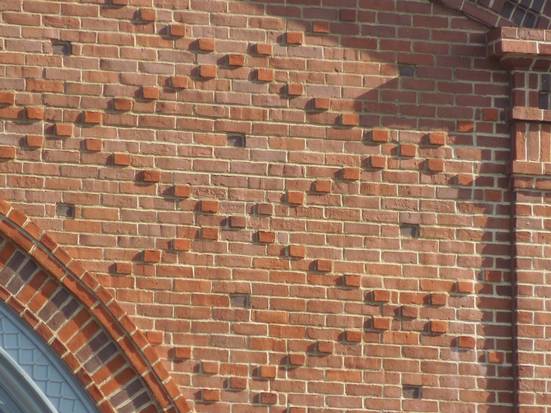
Diaper brickwork at Brown’s Jonathan Nelson Fitness Center, in Providence. (Photo by David Brussat)

Brick often finds itself in the dog house.

Long ago in Providence, architectural historian and local preservation heroine Antoinette Downing, sitting on the design review panel of the Capital Center Commission, is said to have sniggered at one of the oldest and most distinguished building materials in the history of architecture.

In an interview with The Journal’s John Castellucci on Feb. 26, 1996, she was described by fellow panel member and Rhode Island School of Design architecture professor Derek Bradford as whispering to him, “If I see another red brick building, I think I’ll be sick.”

Downing’s disdain for red brick strikes me as akin to the supposed disdain of the postwar American public for aging Victorian architecture. It was disliked by modern architects, who in their egoism now claim the world agreed.

[To read the rest of this column, please visit The Providence Journal.]

Posted in Architecture, Architecture Education, Providence | Tagged , , , , , , | Leave a comment

Dish Dallas kitsch

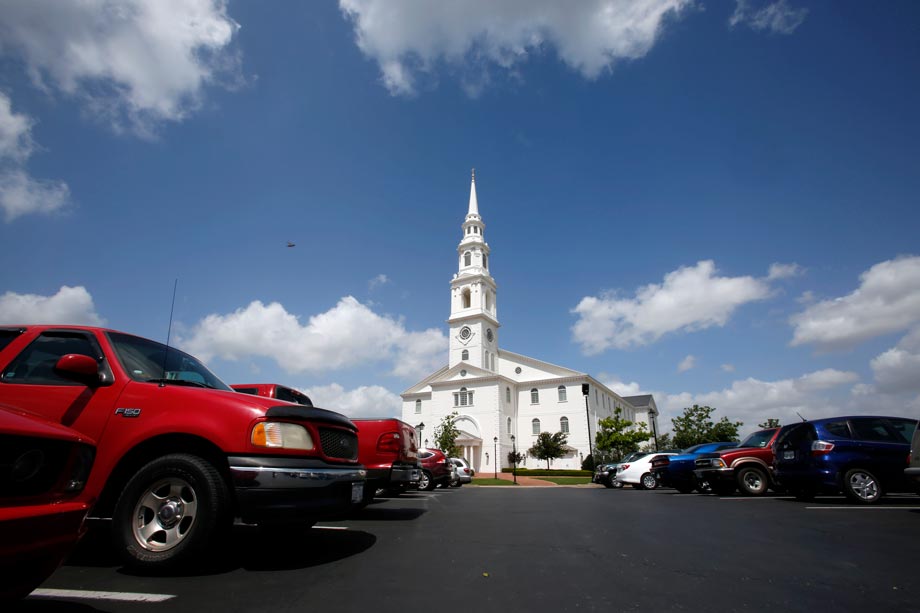
Bo and Patty Pilgrim Chapel, at Dallas Baptist University. (DMN)

Bo and Patty Pilgrim Chapel, at Dallas Baptist University. (DMN)

Mark Lamster writes about architecture for the Dallas Morning News, which owns, at least for now, my employer, the Providence Journal (for sale by A.H. Belo, which also owns the Morning News).* So I was predisposed to be generous in my response to his essay “Kitsch Dallas: Why is the city of the future stuck in the past?” After all, he takes offense at how Dallas Baptist University has stolen the design of Joseph Brown’s First Baptist Church, in Providence, completed in 1775, for its student chapel. Lamster’s looking out for us, eh? Good for him!

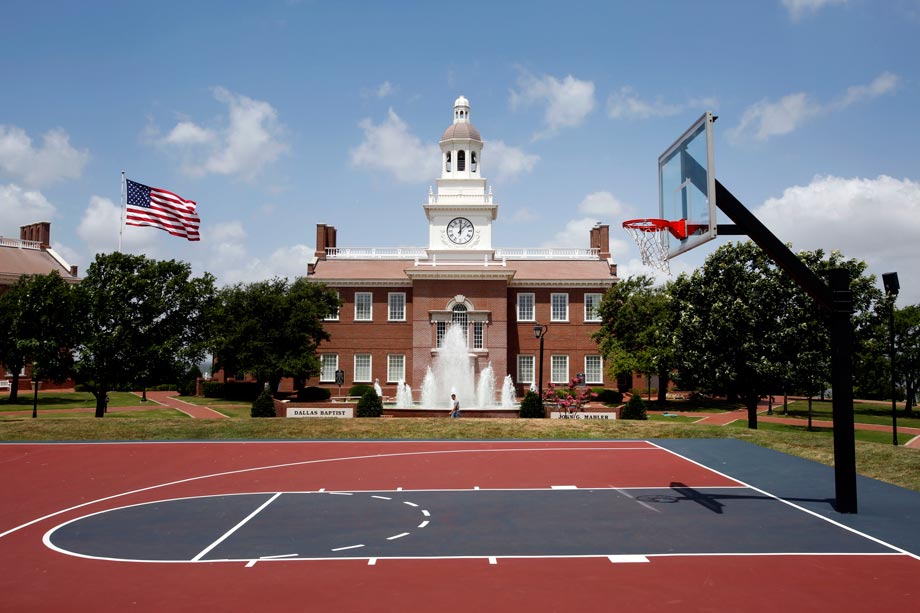
John G. Mahler Student Center at DBU.

John G. Mahler Student Center at DBU.

Imitation is the sincerest form of flattery, but it seems that Lamster isn’t interested in any platitudes that might put a more pleasant spin on his dislike for the school’s copying. He also debunks the Mahler Student Center, which he thinks looks too much like Independence Hall. But Lamster commits so many clichés and his view of architecture is so hackneyed, so lacking in basic fairness, charity and understanding, and so typical of the intellectually flaccid orthodoxy of an architectural commentariat that has not felt the need to defend its principles in decades, that pointing them out rather tersely must be considered a form of parental kindness.

Lamster writes well, and his lead-in to the piece is a great romp. He pretends to be taking a trip to visit famous colonial buildings along the east coast but it turns out his trip is only a few hours and he never leaves the Dallas area, visiting what he calls its “pastiche” architecture, which he purposely (I hope!) misunderstands in order to deplore. Some of the architecture he criticizes is poorly designed and assembled with cheap materials. Easy pokes at bloated targets are his stock in trade, apparently.

Notice how Lamster makes sure to set the subjects of his story’s photos behind embarrassing foregrounds – a basketball court, a parking lot – putting the buildings in their worst possible light. What a cheap shot! That is more a criticism of Dallas, or of the campus, than of the architecture itself. Any new traditional architecture will look a bit strange and uncomfortable set in what most of Dallas offers as built environment. But if beauty is to win back American cities, it has to start somewhere.

He wonders whether Georgian architecture can possibly be patriotic, since it’s named after King George, against whom we revolted. That may cause cognitive dissonance in the Lamsterian mind, but most people who dabble in architecture realize that it was Thomas Jefferson who promoted classicism – not specifically Georgian – as redolent of the experiment with democracy undertaken in ancient Athens.

But “so many of our founders were slaveholders”! So blame the buildings – and furthermore, blame the buildings that have been built since America purged itself of slavery. But how can those buildings have been built, Lamster must wonder, if slavery no longer existed? Those buildings look like they equate with slavery, so how can they even exist? Is there a disconnect here? If so, it passes over Lamster’s head. Oh well, just blame the buildings!

Space requires overlooking a host of howlers, but not this: “As one friend put it recently, you don’t drive a Ford Model T, so why build a Colonial Revival house?” Because you think it’s beautiful perhaps? Classical architecture goes back several millennia, and revival of (or more accurately, the continued use of) past styles goes back just as far. To consider a “revival” style as illegitimate today renders almost the entire history of architecture illegitimate – an illogical proposition, to say the least.

Headquarters of the Trinity Broadcasting Network.

Headquarters of the Trinity Broadcasting Network.

But “it’s not just a question of style. Contemporary design should respond to the ways we live now, taking advantage of the materials and technologies of the present.” Point to a single person who lives in a revival-style house who does not have a refrigerator, or whose house doesn’t use materials, traditional or modern, that have evolved over time since the period of revival.

Lamster reminds me of the people who say hiring a classicist to design a house is like hiring a doctor who uses 19th century surgical techniques or bleeds his sick patients. A third grader can see through these ridiculous arguments. The fact that they are still used regularly illustrates how the critical faculty of critics has weakened, since modern architecture has a powerful establishment that muscles past the objections of people who want beauty in their vicinity, and who like traditional architecture. Who the hell needs to bother trying to win an argument anymore? Not the modernists, apparently. Model T indeed!

Yes, the Trinity Broadcasting Network’s White House on the highway in from the airport tests even my patience, but it does not really look like the White House. It’s an imitation so cheap that even I cannot rise to its defense.

Old Parkland office development.

Old Parkland office development.

Lamster goes on to lambaste perfectly decent new traditional buildings like the Old Parkland. Somehow, he equates it with Jefferson’s academical village, the original campus he (Jefferson) designed for the University of Virginia in Charlottesville. It bears no such resemblance that I can detect beyond its brick, and a low wing that you can see in the photograph. It could be a “copy” of almost any large classical building of brick. Or to be more accurate, it could merely reflect architectural principles that have been used to design successful and attractive buildings for centuries.

Why – since Lamster had so many juicier targets easier to belittle for those even less knowledgeable about architecture than he is – did he choose to pick on Old Parkland? Probably because his real objection is not to new buildings that resemble buildings of the past (even if they don’t) so much as to new buildings that take up space that should be given to “architecture of our time.” Predictable but not defensible.

Well, I’m sorry if I have wasted readers’ time. I am shooting fish in a barrel. But yes, as Lamster well knows, that is fun.

* A.H. Belo Corp., owner of the Dallas Morning News, sold The Providence Journal to a chain that laid me off the day it took ownership, last September.

Posted in Architecture, Architecture History, Providence | Tagged , , , , | 5 Comments

Traditional Building confab

Amazing-Vertical-Fashion-Show-at-the-Revere-Hotel-Boston-Common-14

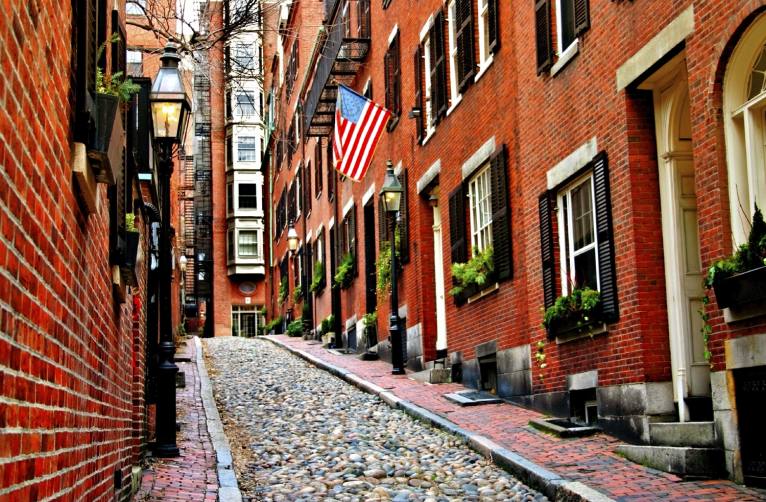
A lane on Beacon Hill, across Boston Common from the conference site. (luxedb.com)

Boston hosts the latest Traditional Building Conference next week. The event, on Wednesday and Thursday, July 16-17, will feature a range of panels, and some are sure to tickle the fancy of fanciers of traditional architecture. Several of these traditionalist conferences, with overlapping speakers and panel topics, take place each year. Washington was the site of the first conference of the year, in April, New Orleans the second in May, and the next one is scheduled for September in St. Paul. All are molded by the redoubtable Clem Labine, founder of Traditional Building magazine and Old Home Journal, whose continuing series of columns rattle all the cages most in need of cataclysm.

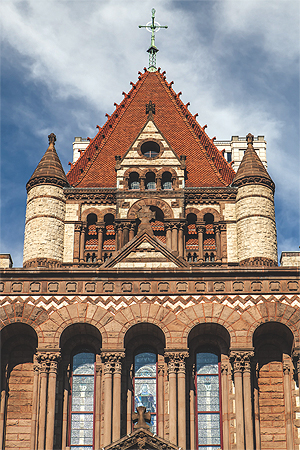
Trinity Church, by H.H. Richardson.

Trinity Church, by H.H. Richardson.

The schedule of panels features such superstars of classicism as Gary Brewer, who will speak about Robert A.M. Stern Architects’ new book Designs for Living (the book is by a host of RAMSA partners, including Gary); Steve Mouzon, author of The Original Green, who will speak about “Makers, Innovators and Tradition”; John Massengale, who will speak about Street Design, the book he has co-authored with Victor Dover; Philip James Dodd, who will speak about “The Art of Classical Details,” which is also the title of a book he wrote that was published last year; and a host of others whose topics and stature in those topics can be examined at the conference website, where registration, too, is possible.

I would especially want, if I could attend [it now turns out I can and will attend], to hear Donald Powers, of Union Studio Architects, in downtown Providence, speak on “Traditional Building in a Modern World.” It seems, from the description, that he will describe how a square peg, you might say, can be fit into a round hole without offending such tender sensibilities as my own – and, I suspect, those of most other attendees (although it would be a blessing – some would say a blessing in disguise – if a cell of modernists were actually to startle everyone by showing up, whether out of morbid curiosity or some more sinister and nefarious reason; the desire to learn something about beauty would be an unlikely motive, nor would it fit into any of the stated categories of more or less devious motivation … but excuse me, I drift).

Posted in Architecture, Architecture Education, Urbanism and planning | Tagged , , , | Leave a comment

Washington perceived

A few random shots of our nation’s capital on its birthday (in 2011, actually):

DSCN4808 DSCN4848 DSCN4852 DSCN4844 DSCN4834 DSCN4812 DSCN4776 DSCN4775 DSCN4762 DSCN4805 DSCN4789 DSCN4678  DSCN4589DSCN4661 fourth8

Posted in Architecture, Photography | Tagged , , , , | 1 Comment

Architecture’s slap in Charleston’s face

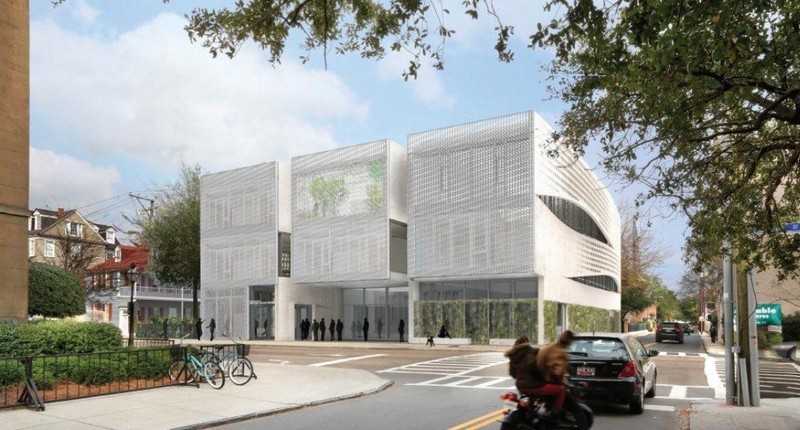
Clemson University's proposed school of architecture in Charleston.

Clemson University’s proposed school of architecture in Charleston.

Last week, Charleston, S.C., gave Clemson University the city’s official blessing to poke a stick in its own eye.

Unless blocked in court, a school of architecture, modernist in design, will be built amidst the city’s historic district. In the face of the entire community’s revulsion, expressed over a period of years, the board even let the university nix a nearby location that would have offended nobody’s sensibilities.

A Charleston firm, Bevan & Libertos, has executed two traditional counterproposals that should be considered if the modernist design by Brad Cleopfil, of Allied Works in Portland, Ore., gets the heave-ho it deserves.

[To read the rest of this column, please visit The Providence Journal.]

Posted in Architecture, Architecture Education, Development | Tagged , , , , | 1 Comment

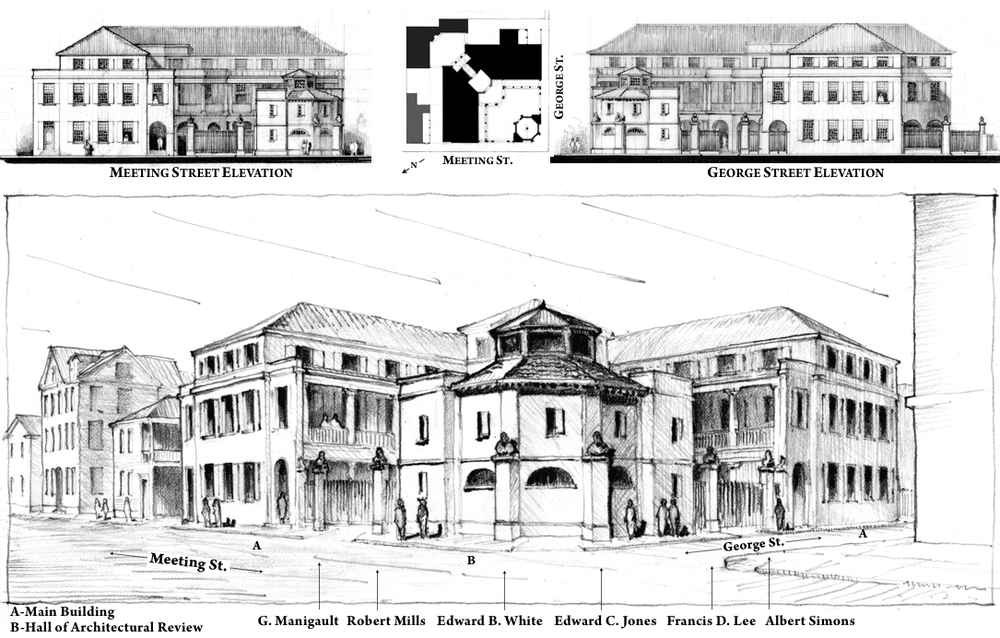
What are you trying to hide?

The School of Architecture building proposed by Clemson for Charleston's historic district.

The School of Architecture building proposed by Clemson for Charleston’s historic district.

I spent much of yesterday and today trying to get permission from an architect to run an image of his work. Easy-peasy, right? Well, today, having stretched my deadline, I got a “no” from Allied Works Architecture, of Portland, Ore., and New York City, whose principal, Brad Cloepfil, designed the proposed Clemson architecture school that was given approval last week by the Charleston Board of Architectural Review.

The image, which I can’t print but you can see in the Charleston City Paper and elsewhere, including the Web, shows a rectangular building that looks like it is about to fall asleep. The screen covering its George Street facade reveals its drooping eyelids – a pitch, one must imagine, for exciting lectures from the professoriate due to be installed within – or perhaps these were eyebrow dormer allusions that give the building the right to claim it fits into a historic context.

On Tuesday I called Stephanie Miller, who is in charge of press relations at AWA’s New York office. After explaining my desire for permission to use the image, I admitted that my column was not going to be an exercise in admiration, but urged that this should have no bearing on whether I should get permission to run the illustration, especially as it may be seen so many other places. Even before I informed her of my column’s thrust, she had said she believed Cloepfil was not sure he wanted to “release” the image.

Why? Was he uncomfortable with it? Was he already preparing to change the design a week after its approval? Some other reason, perhaps? Miller told me to expect an e-mail from him the next day, but none arrived. Late Wednesday afternoon I finally called the Portland office but he was in a meeting. Could he take a moment to attend to my request? No. Finally, I was informed that Miller had sent me an e-mail at about 3 p.m. I looked for it and there it was, to the effect that they are “not prepared to share information at this time.”

Maybe a good reason actually exists, though their evident reluctance to describe it cannot help but raise eyebrows.

So that meant I’d be running a much nicer image, actually, of the counterproposal, one of two, by the Charleston firm of Bevan & Liberatos – Jenny Bevan and Christopher Liberatos – who had already given me permission to use it, just in case. It is reproduced below, but my editor had the idea (knock knock, anyone in there, David?) of looking on the website of the Charleston Board of  Architectural Review, where it would be in the public domain. I could not find it but I found another image, apparently part of the same set of views, that is just as revealing. It is above and will be in tomorrow’s Journal, and atop its online version of the column, plus my own blog’s link to that online version, which will also have more of Jenny and Christopher’s counterproposals (there are two).

Modern architects have such thin skins. Go figure.

The first of two schemes presented by Bevan & Liberatos as counter proposals to the proposed Clemson building in Charleston.

Posted in Architecture, Architecture Education | Tagged , , , , | 2 Comments

Architectural ‘myopia’

Jefferson's campus for the University of Virginia, in Charlottesville.

Jefferson’s campus for the University of Virginia, in Charlottesville.

Michael Mehaffy and Nikos Salingaros – respectively a design consultant and a mathematician/architectural theorist – wrote a piece for Guernica magazine in 2011 called “The Architect Has No Clothes.” It delves deeply into the phenomenon probed often in this blog – why most architects continue to build buildings that don’t function well and are widely disliked by most people. How do these architects keep their jobs?

It is a great read because it touches on most of the major problems with modern architecture and relates them to new scientific findings that explain why the dislike for modernist architecture is not just a matter of taste.

Here is a passage that summarizes some of the scientific findings:

The promising new field of biophilia suggests that human beings have evolved with certain basic aesthetic and physiological needs: the presence of vegetation, water, sunlight, animals, and also the geometric relationships that have accompanied our evolutionary experiences with these structures. By tapping into this rich vocabulary of biophilic design elements, we can have an extremely rich variety of design possibilities—a rich range of artistic expression—while still meeting the needs of human beings. And within the same life-affirming process, we can meet the ecological needs of the environment too. 

Of course, excluding biophiliac elements from architectural practice, as the modernists have done, has negative results. Here is another passage that summarizes the result:

In the last half-century, the clear result of “architectural myopia” is buildings whose makers have been so concerned with the drama of their appearance that they fail on the most fundamental human criteria. They isolate people; they do not provide enough light; or provide a poor quality of light; they provide a hostile pedestrian environment at their edges; they cause excessive shade; or create winds in what is known as a “canyon effect;” or they trap pollutants in the “sick building syndrome;” they use resources wastefully; etc. Moreover, the buildings themselves are a wasteful use of resources, because they are not likely to be well-loved, cared for, repaired, modified, and re-used over many years. In short, it is not just that people find them ugly, but they represent a fundamentally unsustainable way of building human environments.

This raises yet again the question of why are these architects still employed? In any other field they would be without work, blacklisted as charlatans and banned from further activity harmful to the profession.

Salingaros has ruminated, in his Architecture and Anti-Architecture, on the architecture of life versus the architecture of death. Wikipedia has a useful definition of the biolphilia hypothesis, described by biologist Edward O. Wilson (who took the word from Erich Fromm) as the human attraction to other life forms and forms of vitality. That might include inanimate forms that nevertheless are vital, and which respond to influences from life and from vital aspects of nonlife forms, such as the wind. My brother Tony Brussat, out in Oregon (Mehaffy lives in Portland), has explored some of these relations with a considerable degree of depth and eloquence in his blog Conscious Ritualing, which he paused a few months ago in order explore other lines of thought, I think, though it is certainly worth investigating.

Posted in Architecture, Architecture Education | Tagged , , , , | 2 Comments