“The city that makes Rome blush”

An aerial view taken in 2009 shows Palmyra's impressive amphitheater. Immediately behind it is the 3,600-foot long colonnade that welcomed visitors to the city. (Christophe Charon / AFP/Getty Images)

An aerial view taken in 2009 shows Palmyra’s impressive amphitheater. Immediately behind it is the 3,600-foot long colonnade that welcomed visitors to the city. (Christophe Charon / AFP/Getty Images)

The City that Makes Rome Blush: Five Reasons Why Palmyera’s Ruins Are So Important,” by Caroline Miranda (what a name!) of the Los Angeles Times, wrote a fascinating piece in the days leading up to the ancient Syrian city’s capture by ISIS. Included is a video by the BBC that shows some of the Roman ruins there.

ISIS apparently has not begun destroying it yet, and the civilized world hopes that it will not. UNESCO officials visited the World Heritage Site before ISIS troops arrived to call for its protection, to hope that violence (military or religious) will not be wreaked upon it.

Here is a quote from Miranda that sums up Palmyra’s allure:

“It makes Rome blush,” says Stephennie Mulder, an archaeologist and professor of Middle Eastern Studies at the University of Texas at Austin. “When you approach the site, it rises out of the desert like some sort of a mirage out of a fairy tale.”

Palmyrenes refer to their home lovingly as “the bride of the desert.”

Detail of Palmyrene arch. (BBC)

Detail of Palmyrene arch. (BBC)

The rationale for this destruction by ISIS of ancient ruins is difficult for Westerners to parse. ISIS apparently wants to destroy any vestige of civilization that existed before the rise of Islam in the Middle Ages. This reason may be admixed with notions of idolatry. But let’s not heap all the blame on ISIS. The Saudi royal family is apparently behind that society’s destruction of Mecca under the heel of modern architecture – for similar reasons.
Posted in Architecture, Architecture History, Art and design, Other countries, Preservation, Video | Tagged , , , , , , , , | 3 Comments

Perspiring in Palmyra

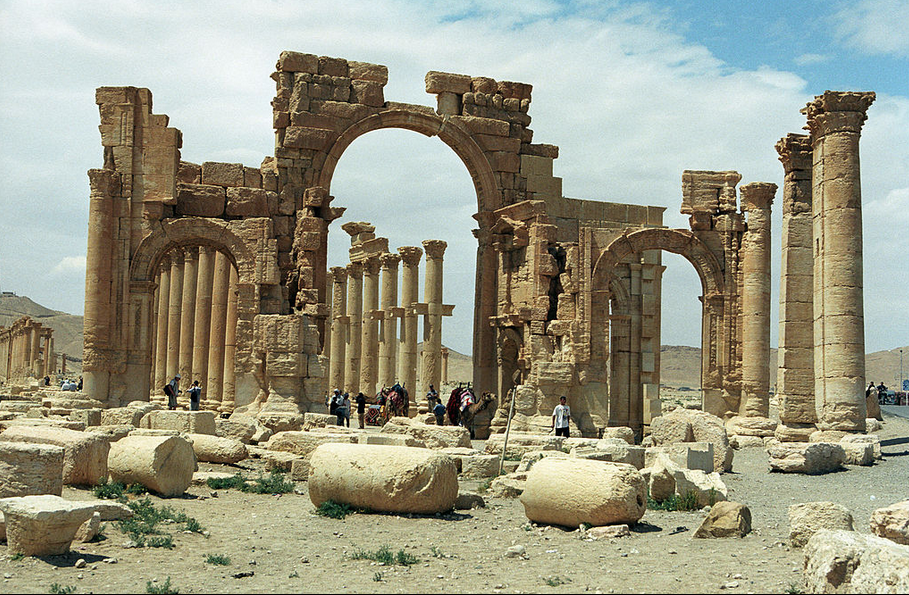
The monumental arch in the eastern section of Palmyra's colonnade. (Wikipedia)

The monumental arch in the eastern section of Palmyra’s colonnade. (Wikipedia)

The Islamic State has entered Palmyra, site of Roman ruins in war-torn Syria. ISIS has destroyed several famous archeological sites in its brutal quest for a caliphate, mostly so far in Iraq. Its forces have been in Palmyra for only a day or so and there is no evidence yet that its destruction is preordained, let alone under way.

Here is a stray paragraph from the entry on Palmyra in Wikipedia that gives a flavor of its ancient puissance:

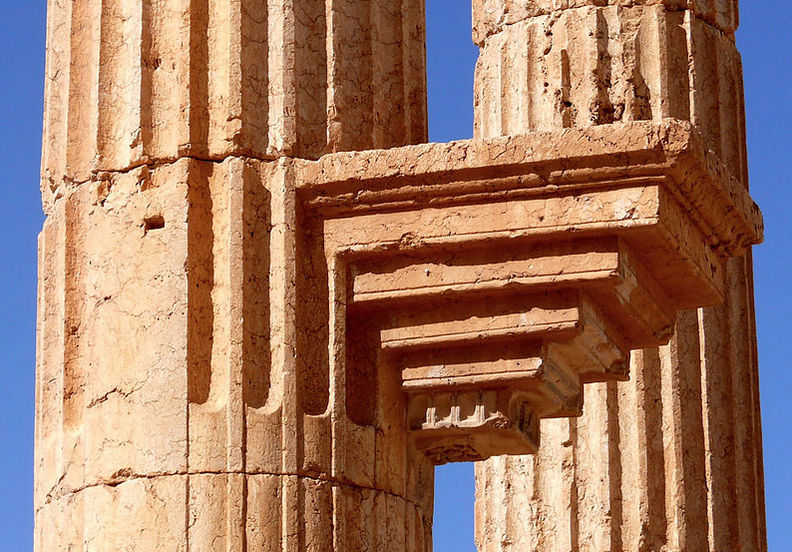
Bracket on a column of Palmyra's Grand Colonnade.

Bracket on a column of Palmyra’s Grand Colonnade.

In 129, Palmyra was visited by emperor Hadrian, who named it Hadriane Palmyra and granted it the status of a free city,[46][47] Hadrian promoted Hellenism throughout the empire,[48] and Palmyra’s urban expansion was modeled on the Greek fashion,[48] leading to many new projects, including the theatre, the colonnade and the temple of Nabu.[48] The Roman authority in the city was reinforced in 167, when the garrison Ala I Thracum Herculiana was moved to Palmyra.[49]

It has been said that expressions of horror in the West can only deepen Palmyra’s jeopardy. I hope not. Although there has been interest in this blog, and especially in my post “Kismet, but not in Mecca,” from some Islamic (not Islamicist, I hope) people online, I doubt that word of this post is likely to reach ISIS headquarters.

Some have called for U.S. air strikes to drive off ISIS troops. I am sympathetic to that call but doubt the prospect of its efficacy. Boots on the ground would be required. America has already abandoned the Mideast to its fate and its own devices – a sad turn of affairs. This destruction of history along the Fertile Crescent may be among the most lethally benign of its real-world policy blowbacks – even though it is among the most painful to civilized people, and destructive to mankind’s understanding of itself.

In all likelihood, Palmyra and who knows how many of history’s earliest shrines are at the mercy of a merciless band of cutthroats. What is to be done beyond prayer? It’s hard to say.

Posted in Architecture, Architecture History, Preservation | Tagged , , , , , | 4 Comments

Cameron on Penn Station

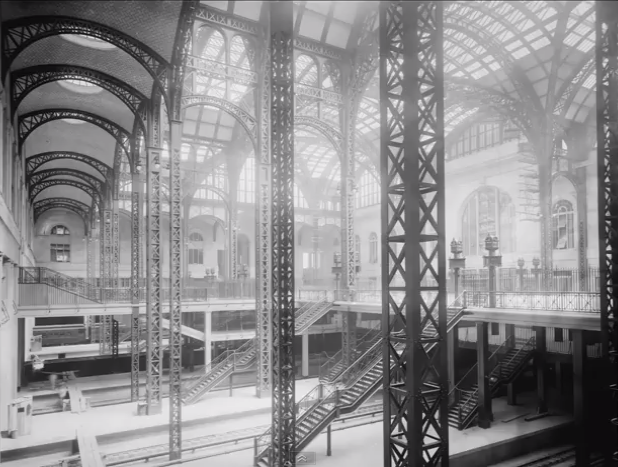
Pennsylvania Station. (Screen shot of YouTube video of Brian Lehrer Show)

Pennsylvania Station. (Screen shot of YouTube video of Brian Lehrer Show)

Brian Lehrer and Richard Cameron. (screenshot)

Brian Lehrer and Richard Cameron. (screenshot)

Richard Cameron, of the Brooklyn firm of Atelier & Co., went on Brian Lehrer’s TV interview show yesterday to discuss the great proposal to rebuild Penn Station. Lehrer leads Cameron through the thickets of how and why Penn Station can and should be rebuilt. The viewer gets to see lovely shots of the old station – designed by Charles Follen McKim, completed in 1910 and demolished in 1963. Having been without the station now for 52 years, we lose sight of how grand the station was, and it is a shock to hear that today’s Grand Central Station could, as Cameron put it, “fit comfortably, base to roof” into the Main Waiting Room of Penn Station. Where would Madison Square Garden go? Cameron tells us, and how much more convenient that would be. And how would such a project be financed? Cameron tells us that, too. This is doable, people! Let’s get to it!

The segment on Penn Station is the final of four on Lehrer’s show, and begins at 40:50 on the YouTube video of yesterday’s Brian Lehrer Show.

Posted in Architecture, Architecture History, Development, Urbanism and planning, Video | Tagged | Leave a comment

Shubow shellacks Lamster

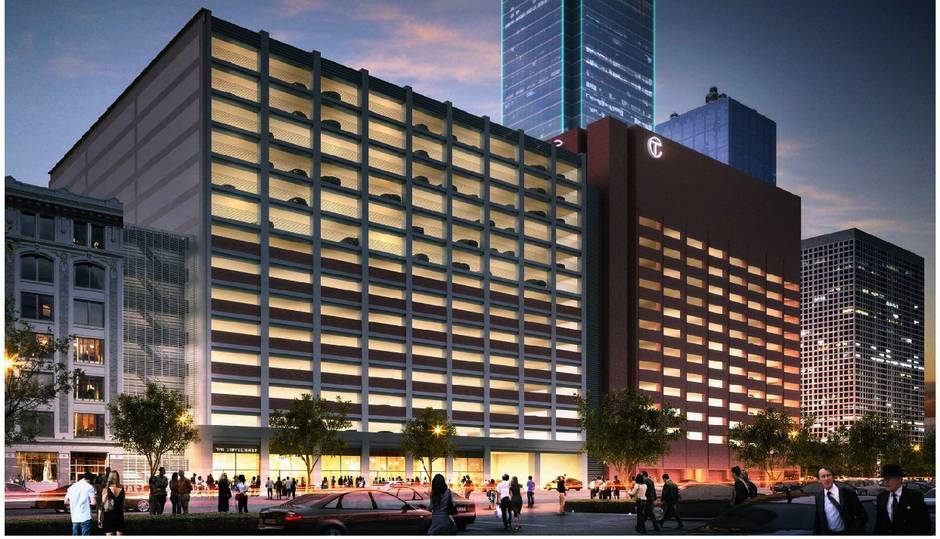
The planned Dallas parking garage Mark Lamster bemoans [I would say

Justin Shubow writes: “The planned Dallas parking garage Mark Lamster bemoans [I would say “affects to bemoan”]. Is it any worse than the other banal boxes in the image? Compare the pleasing, run-of-the-mill Beaux Arts building at the far left.” (The Dallas Morning News)

The latest piece by National Civic Art Society president Justin Shubow for Forbes.com, “Why Can’t the New Urbanists Get a Fair Shake?,” is less a defense of the New Urbanism than an attack on Dallas Morning News architecture critic Mark Lamster and the modern architecture he supports. Shubow has Lamster dead to rights, and trusses him up tightly before dropping him, and modernism, into Turtle Creek.

Justin Shubow.

Justin Shubow.

Some leaders of the Congress for the New Urbanism, which met this month in Dallas, will find Shubow’s defense difficult to swallow. These are New Urbanists who believe that in spite of its traditional reputation, the CNU should be as welcoming to modernists with the proper respect for urbanism. They don’t realize that modernism is averse to urbanism right from the very core of its Corbusian principles. CNU has bent over backward to stress its “agnosticism” toward style, and that may be politically savvy, but its success continues to rely on the assumption by most developers and people in the market for a house that New Urbanism is all about reviving the old urbanism that prevailed for 2,000 years until World War II (including traditional styles of architecture), which modernism is all about destroying.

Shubow’s piece sensibly buys into this conventional view of New Urbanism. He did not do much more than allude to the continuing debate among New Urbanists over architectural style – perhaps because Lamster himself, in “Why Is So Much Architecture Junk?,” was keen to avoid noticing that the debate even exists – too much evidence of liberality to suit his almost entirely blind attitude toward the congress and its works.

Shubow targets Lamster’s desire to let architects and architecture off the hook for the state of the built environment around the world:

Lamster allows architects to abdicate responsibility. By no means should they set the tone for developers and contractors.  By no means should they steer greedy clients in the right direction—as if the problem of the client’s profit-motive is somehow a new problem in architecture. As if we haven’t been building junk architecture for decades, under economic booms and busts alike. As if there hasn’t been junk architecture around the world in both socialist and capitalist countries.  Lamster repeats the classic refrain that allows architects to maintain their self-respect: When architecture is bad, blame the clients and socio-economic structural forces. When it is good, credit the hero architects.

Zappity-doo-dah! I can’t say enough in praise of this latest piece by Justin, who has agreed to deliver a keynote speech at the next Bulfinch Awards celebration, sponsored by the New England chapter of the Institute of Classical Architecture & Art. (More on that to come.) I hope when he is in Boston he will uncork such riffs as this passage, in which he characterizes many of the young people coming into the CNU orbit, and how they differ from the “cutting-edge Modernists” whom they wish they could flee:

Consider that the same young architects and planners, like so many millennials, eat heirloom tomatoes in slow-food restaurants, wear heritage flannels and Red Wing boots, live in historic districts with contextual additions, listen to roots rock, and drink pre-war cocktails in new bars with new tile floors, tin ceilings, and exposed brick walls. The most cutting-edge Modernists, by contrast, offer up the architectural equivalent of pretentious molecular gastronomy, experimental GMO Frankenfoods, deconstructed Helmut Lang fashion, and atonal synthesizer music. And they prefer petrochemical to natural building materials.

For more on Mark Lamster, I took him down here a year ago.

Posted in Architecture, Architecture Education, Architecture History, Art and design, Development, Urbanism and planning | Tagged , , , , | Leave a comment

Save the Four Seasons!

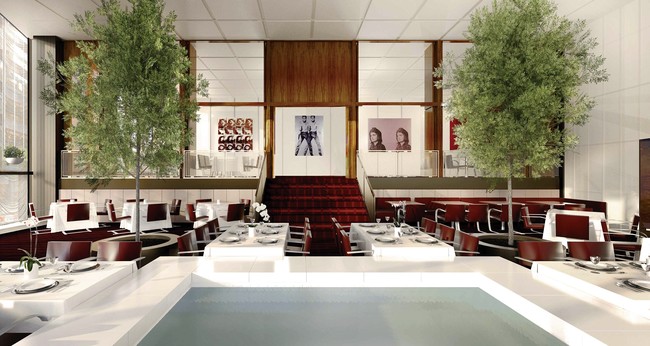
The Four Seasons' Pool Room in 1959. (bettmann:corbis)

The Four Seasons’ Pool Room in 1959. (bettmann:corbis)

The owners of the famous Four Seasons restaurant in the famous Seagram Building want to renovate its Pool Room. No less an eminento than Robert A.M. Stern, America’s only classical starchitect, writes to defend its modern design. His piece is “Why Changing the Four Seasons Will Destroy a Cultural Landmark” in the Wall Street Journal.

The Seagram Building. (lebbeuswoods@wordpress.com)

The Seagram Building. (lebbeuswoods@wordpress.com)

He has a point. Whatever you think of the Seagram (I don’t like it; it illustrates the adage “Less is a bore”) and the restaurant design (I think it is a delightful rendition of the best of midcentury modern – that is, it is inside), it does not deserve to be brutalized by its owners, RFR Holding LLC, which purchased it in 2000.

The restaurant was designed in 1958, mainly by the late Philip Johnson, famous as a postmodernist (that is, essentially a modernist) architect. Stern writes that the proposed Four Seasons renovation would “do more than simply tweak and freshen a detail here and there but instead threaten to fundamentally alter the character of this incomparably dignified setting for dining.”

A close look at the proposed renovations raises eyebrows – partly because one of the changes opposed would return the Pool Room closer to its original look. Also, the more downscale Brasserie was renovated by Diller Scofidio + Renfro in 2000 without any (loud) objections from the modernist restaurant preservation community.

Still, I’m sure lots of modernists are rising up to join Stern in seeking to preserve the Four Seasons from desecration. Good for them! But why can they not see the obvious parallel between preserving a beloved interior and preserving a beloved exterior? Whether it be an old building or an entire historic neighborhood, modernists believe that it is appropriate to add features that do not fit, undermining the character that makes it worth preserving. Yet they go apoplectic if unsympathetic features are proposed for a modernist building, interior or exterior. Why can they not see the inconsistency?

Since most mods are not downright stupid, I assume that they do see the inconsistency, and simply recognize that nobody will protest if they protect their own even as they spurn their own principles in applauding the desecration of things other people love. They know that no mainstream architecture critic will say boo. Mum’s the word!

“It is our obligation to preserve for future generations the essential experience of the Four Seasons that its creators originally intended,” writes Stern. Likewise, those who seek to preserve traditional buildings and historic districts rarely demand that no changes be allowed, only that changes reflect an evolution rather than a revolution in appearance.

The American Institute of Architects seeks to prop up the sagging reputation of modern architecture and architects. Clearly, the AIA has a lot of work to do, and this utter hypocrisy, blatant and unblushing, is one reason why.

[New York’s Landmarks Preservation Commission ruled against most of the proposed changes on Tuesday. Proposed new carpeting was permitted.]

A more recent view of the Pool Room. (Selldorf Architects)

Rendering of renovated Pool Room as proposed. (Selldorf Architects)

Posted in Architects, Architecture Education, Architecture History, Art and design, Landscape Architecture | Tagged , , , , , | 1 Comment

The Skeffingtonian legacy?

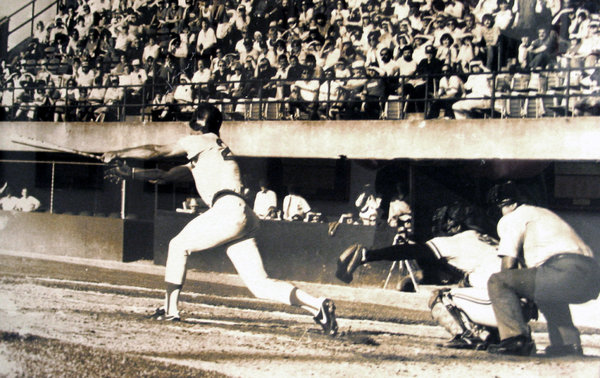
Dave Koza drove in the winning run for the Pawtucket Red Sox against the Rochester Red Wings on June 23, 1981, in a game that lasted 33 innings. (Pawtucket Red Sox via the Associated Press)

Dave Koza drove in the winning run for the Pawtucket Red Sox against the Rochester Red Wings on June 23, 1981, in a game that lasted 33 innings. (Pawtucket Red Sox via the Associated Press)

Sunday, during a jog, the chief new owner of the Pawtucket Red Sox had a heart attack. Jim Skeffington’s death – may he rest in peace – thrusts his plan to move the PawSox to Providence into deep shadow. The plan was a good one; the deal he proposed to bring it about was not. No doubt the public subsidy was going to evolve in a downwardly direction. But was it? Probably. Enough to make it a good deal for Rhode Island? Hard to say.

Wade Boggs, center, with Marty Barrett, played in the 33-inning game.

Wade Boggs, center, with Marty Barrett, played in the 33-inning game.

It depends on whether Skeffington and his fellow owners considered owning the PawSox to be another opportunity to make a whole lot of money, or an opportunity to “give back” to the state. Skeffington in particular might be expected to have seen the proposal to build a new stadium in a better location for the PawSox in such a light – as a legacy.

What now? Again, who knows? Do Skeffington’s surviving owners have the drive he had to get this done? My take is that if they just want to take the money and run, the vision will fade soon enough. But if their aspirations, after decades of making money, can afford to be more noble, maybe they will try to make the deal with the state and the city that should be made, one that is affordable to the state, its taxpayers and the fans of PawSox baseball.

Although the devil is in the details, I like the look of the proposed new stadium. I think it would not only boost the team’s popularity but would inspire state leaders and the I-195 Commission to embrace architecture that builds upon the competitive strengths of Rhode Island rather than kicking ’em in the shins.

Maybe, after all is said and done, the PawSox will stay in the Bucket. Read former Providence Journal (now New York Timesman) Dan Barry’s piece, “A City Braces for its Ballpark to Go the Way of its Mills,” in the Times on McCoy Stadium, which ran on Feb. 24. Great stuff!

Posted in Architecture, Art and design, Development, Providence, Rhode Island | Tagged , , , , , | 1 Comment

Speer’s Berlin described

Poster of Speer's Germania. (forum.axishistory.com)

Poster of Speer’s Germania. (forum.axishistory.com)

Here is another passage from Fatherland, a novel whose plot unfolds almost two decades after Germany has won World War II in 1946. The Fatherland stretches east of Moscow; most of Western Europe that is not part of the new Germany is part of a German-led co-prosperity sphere. But a rebellion fed by U.S. dollars festers in Soviet Russia east of what is now Germany’s national territory. Hitler, who is about to celebrate his 75th birthday, is in the process of framing a détente with his chief rival, U.S. President Joseph P. Kennedy.

As reflected in the following passage, Albert Speer’s Berlin has been largely completed as planned before the war.

“Leaving the arch [continues the tour bus guide], we enter the central section of the Avenue of Victory. The avenue was designed by Reichsminister Albert Speer and was competed in 1957. It is one hundred and twenty three meters wide and five-point-six kilometers in length. It is both wider, and two and a half times longer, than the Champs Élysées in Paris.”

Higher, longer, bigger, wider, more expensive … even in victory, thought [protagonist Det. Xavier] March, Germany has a parvenu’s inferiority complex. Nothing stands on its own. Everything has to be compared with what the foreigners have.

“The view from this point northward along the Avenue of Victory is considered one of the wonders of the world.”

“One of the wonders of the world,” repeated [March’s son] Pili in a whisper.

And it was, even on a day like this. Dense with traffic, the avenue stretched before them, flanked on either side by the glass-and-granite walls of Speer’s new buildings: ministries, offices, big stores, cinemas, apartment blocks. At the far end of this river of light, rising as gray as a battleship through the spray, was the Great Hall of the Reich, its dome half hidden in the low clouds. …

“The Great Hall of the Reich is the largest building in the world. It rises to a height of more than a quarter of a kilometer, and on certain days – observe today – the top of its dome is lost from view. The dome itself is one hundred and forty meters in diameter, and St. Peter’s in Rome will fit into it sixteen times.”

They had reached the top of the Avenue of Victory and were entering Adolf-Hitler-Platz. To the left, the square was bounded by the headquarters of the Wehrmacht High Command, to the right be the new Reich Chancellery and Palace of the Führer. Ahead was the hall. Its grayness had dissolved as their distance from it had diminished. Now they could see what the guide was telling them: that the pillars supporting the frontage were of red granite, mined in Sweden, flanked at either end by golden statues of Atlas and Tellus, bearing on their shoulders spheres depicting the heavens and the earth.

The building was as crystal white as a wedding cake, its dome of beaten copper a dull green. Pili was still at the front of the coach.

“The Great Hall is used only for the most solemn ceremonies of the German Reich and has a capacity of one hundred and eighty thousand people. One interesting and unforeseen phenomenon: the breath from this number of humans rises into the cupola and forms clouds, which condense and fall as light rain. The Great Hall is the only building in the world that generates its own climate.”

March had heard it all before.

In this chapter, the 10-year-old boy accuses his father of being “an asocial.”

I would like to read Léon Krier’s book, Albert Speer: Architecture 1932-1942. “Can a war criminal be a great artist?” he asks. Debate over his talent as a designer, whether his buildings are “classical,” what his work in that metier means for the reputation of classicism – these are all fascinating discussions. To me, it is possible to admire Speer’s work while hating Speer and all he represents. I don’t know whether I admire his work, but reading Krier’s book might help me decide.

I do know for a fact that, however interesting the discussion may be, classicism is not tainted by Hitler’s admiration for it or Speer’s use of it (even in stripped form). Those reflect not that classicism is fit for a totalitarian society but that it had by their time been the default architecture of Western civilization for centuries if not millennia.

Posted in Architecture, Architecture History, Books and Culture, Urbanism and planning | Tagged , , , , , , | 2 Comments

Michael Palin on London

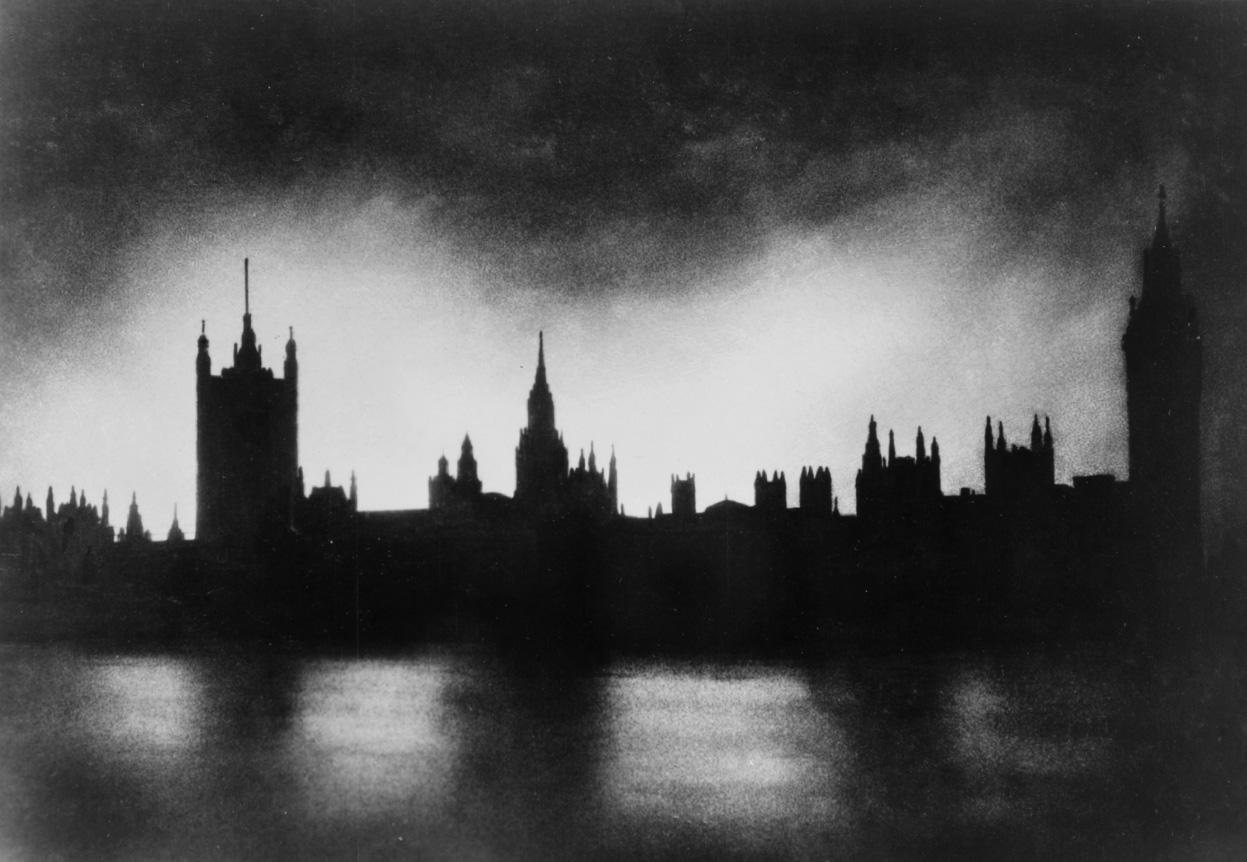
London during the Blitz of 1940. (asisbiz.com)

London during the Blitz of 1940. (asisbiz.com)

Here’s another passage, this one from Diaries, 1969-1979: The Python Years, about development trends in London. Sadly, this is from 43 years ago. I wonder what Palin would think about the same subject today.

Friday, Oct. 27, 1972. From the Methuen lunch – feeling full of cigars and brandy, which ought to be Rules’ coat of arms – walked back through sunlit Covent Garden. Knowing that the whole area will be redeveloped (keeping odd buildings of “historical merit”), it’s rather like one imagines walking through London in the Blitz. You know what’s happening is not going to do the city any good, but you’re powerless (almost) to stop it. However, pressure groups of all opinions seem to be more successful now – Piccadilly and Covent Garden have both had big development plans changed by community action and protest. The sad thing is that the basic thinking behind these redevelopment schemes never changes. Blocks (of offices mainly) dominate. Where there was once a gentle elegance and a human scale, there is now concrete and soaring glass. The City of London is rapidly getting to look like a Manhattan skyline, which doesn’t worry me so much – but the blocks creeping into the West End are more sinister, for they are forcing a primarily residential area into acres more of hotels, offices and widened roads, and the scale of London’s buildings – which are, by and large, reasonably small, friendly and non-monolithic – is every day being lost.

And this was more than a decade before Prince Charles’s reference to the Luftwaffe!

Toppers a-poppin for my friend Steve Mields, who sent this to me from Alexandria, Va., in a manila envelope festooned with a dozen Amelia Earhart stamps (8¢), plus two of Slater Mill (25¢). Steve is a confirmed philatelist, and his envelopes, addressed with his striking print style, are almost always nearly as amazing as their contents.

Posted in Architecture, Architecture History, Books and Culture, Development, Humor | Tagged , , , , | Leave a comment

Ghosts at a school for girls

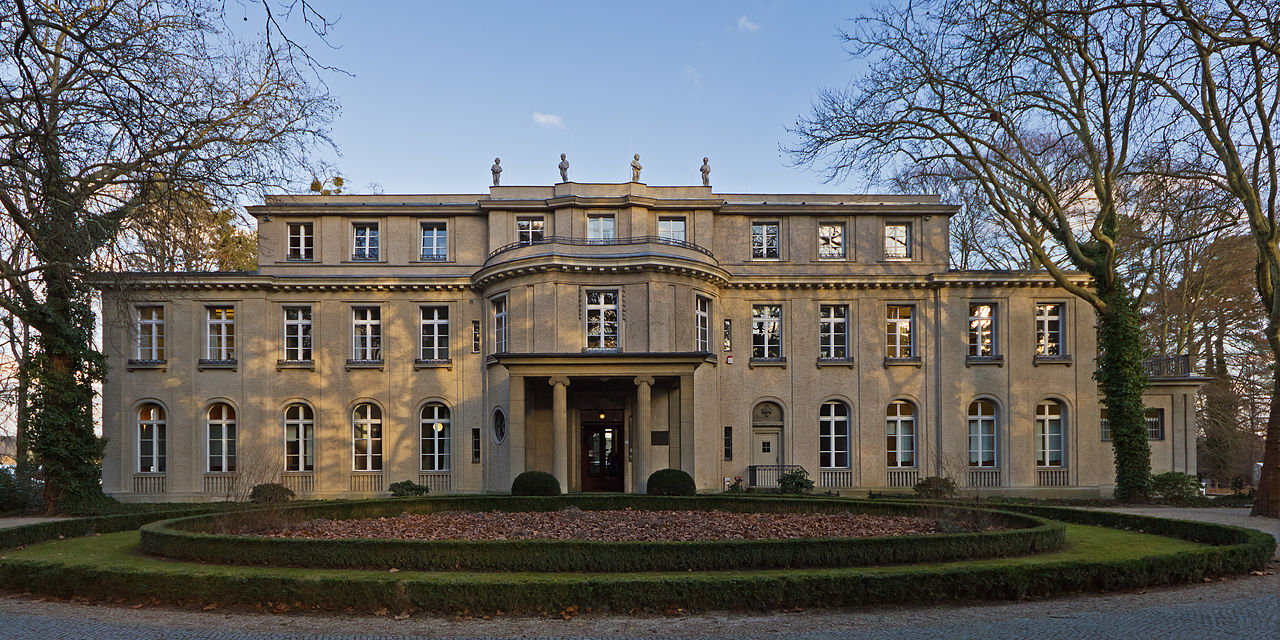
The infamous house in a suburb of Berlin. (wikipedia.com)

The infamous house in a suburb of Berlin. (wikipedia.com)

Reading a novel by Robert Harris called Fatherland, published in 1992, about a Berlin detective who gets caught up in crimes, circa 1964, arising from the protection of deep secrets in a Germany that had not lost World War II, I came across this intriguing passage:

He [Det. Xavier March] looked back at the house. His mother, a firm believer in ghosts, had used to tell him that brickwork and plaster soaked up history, stored what they had witnessed like a sponge. Since then March had seen his share of places in which evil had been done, and he did not believe it. There was nothing especially wicked about Am grossen Wannsee 56-58. It was just a businessman’s large mansion, now converted into a girls’ school. So what were the walls absorbing now? Teenage crushes? Geometry lessons? Exam nerves?

Of course, it is the house where Hitler’s underlings planned the final solution. Naturally one’s stomach turns at the thought of children in the house after its previous use. And the house might well be called evil – but not because of its architecture! (A taut novel, its plot unfolds in the days leading up to the celebration of Hitler’s 75th birthday.)

Posted in Architecture, Architecture History, Other countries | Tagged , , , , , , | 2 Comments

A memorial contest for WWI

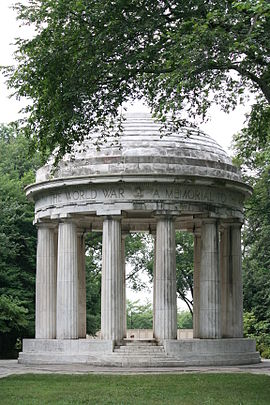
D.C.'s WWI Memorial. (wikipedia)

D.C.’s WWI Memorial on Mall. (wikipedia)

An international competition will be held to design a memorial for World War I – the only major U.S. conflict without a national monument on the Mall. The memorial would not be federally funded. The $20 million or so cost would be privately funded, and the design, unlike the one proposed by Frank Gehry for an Eisenhower Memorial, would be chosen fairly.

Thankfully, the World War I Centennial Commission was persuaded to avoid having the U.S. General Services Administration run the competition. The GSA ran the Ike competition and allegedly steered the job to Gehry.

The Eisenhower Memorial Commission has spent scores of millions in taxpayer dollars, and its proposal is so unpopular that the start of construction is nowhere near. The Gehry proposal has not been officially killed yet but its prospects for doing much beyond wasting more federal money seem very poor.

The National World War II Memorial, which sits directly on the Mall between the Lincoln Memorial and the Washington Monument, was designed by Rhode Island architect Friedrich St. Florian. The memorial, which is very popular, especially with old soldiers, last year celebrated its 10th anniversary. Its classical design was chosen in an open competition with over 400 entries, and built almost entirely with private money.

Eisenthower memorial counter-competition's winning entry, by Daniel Cook. (huffingtonpost.com)

Eisenthower memorial counter-competition’s winning entry, by Daniel Cook. (huffingtonpost.com)

GSA, which is in charge of all federal construction and building maintenance, has a modernist agenda. When a classicist, Notre Dame professor Thomas Gordon Smith, was nominated by President George W. Bush to be its architect in chief several years ago, all hell broke loose in the profession and the nomination was withdrawn. A modernist, Les Shepard, with 18 years at GSA under his vociferously modernist predecessor Edward Feiner, was appointed instead. Smith was given the consolation prize of a federal architecture fellowship.

World War I is commemorated on the Mall by a District of Columbia memorial, a lovely classical temple circular in form and designed by Frederick Brooke. It was completed in 1931 and was recently restored to its original splendor. The national WWI memorial is expected, or rather is hoped, to be completed by Nov. 11, 2018, in Pershing Square Park, a District-owned plot near Pennsylvania Avenue and the White House administered by the U.S. Park Service. Dedicated in 1981, it has a statue of General Pershing, the Allied commander in the war, and a pond. The memorial would become part of this park.

That is an ambitious schedule, but fairness in the design competition should enable the process to proceed more smoothly. Unlike the Ike competition, which invited only a few big firms, who did not even have to submit designs before being selected, the competition for the national WWI memorial will be open to modernist as well as traditional entries, as it should be.

Maybe its participants will include some of those who entered a counter-competition for the Ike memorial sponsored in 2011 by the Mid-Atlantic chapter of the Institute of Classical Architecture & Art. It was won by Daniel Cook.

Posted in Architects, Architecture, Art and design, Development | Tagged , , , , , | 3 Comments