“Unfinished New York”

NYC and U.S. laws inspired by demolition of Penn Station turning 50. (Places)

NYC and U.S. laws inspired by demolition of Penn Station turning 50. (Places)

The journal Places has a long and fascinating essay by Belmont Freeman (a New York name for you!) called “Unfinished New York.” He is a columnist for Places and an architect in private practice in the city, no doubt a dyed-in-the-wool modernist. I disagree with just about every sentiment expressed in his article, but he raises important questions, narrowing down to the idea that New York is only New York because it keeps on changing. He takes issue with preservationists trying to slow down change – none are trying to stop it, certainly not as hard as I would. (I would reverse it.) He cites O. Henry’s line that New York will be “a great place if they ever finish it” – as a warning to preservationists who have grown too big for their britches.

If I were in charge, I am not sure what I would do with New York, but I am sure that Belmont Freeman would not like it. He dislikes the idea of “saving place” if place is defined with beauty in mind (he calls it aesthetics; I call it beauty). He twits preservationists with the buildings we love today that would not exist had the preservation movement been alive when the Empire State Building or Rockefeller Center were planned. They required razing, respectively, Columbia’s 19th century campus and the first Waldorf Astoria. He speaks of a “generation’s abhorrence” of Victorian architecture; I think he means the abhorrence of a “generation of architectural historians” – I doubt most regular consumers of architecture abhorred Victorians, far from it, though they might once have thought too many needed spiffing up.

But abhor his viewpoint though I do, Freeman raises the length and breadth of issues facing preservationists in New York (and nationally), and on that account his lengthy piece is worth reading, and is well written. New York’s Landmarks Law turns 50 this year; the National Historic Preservation Act turns 50 next year.

When several years ago preservationists raised a hue and cry at the planned construction of a Beaux Arts shop for Ralph Lauren on Park Avenue, I realized that the New York Landmarks Preservation Commission needed coaching. Freeman’s basic game strategy for big cities comes pretty close to anything goes, and the faster the better. My game strategy is that the world suffers such whiplash from change that slowing it down – and especially the rate of change in the appearance of those biggest of human artifacts, cities and buildings – would give the rest of us something to hang on to for dear life. Take your choice.

Hats off to Kristen Richards and ArchNewsNow.com – the indispensable and yet free collection of global news and commentary on architecture and urbanism – for running Belmont Freeman’s piece.

Rebuild Penn Station, sez I!

Posted in Architects, Architecture, Architecture Education, Architecture History, Art and design, Preservation, Urbanism and planning | Tagged , , , , , , , , , | 1 Comment

Will Stirling quote Wren?

Burntwood School, 2015 Stirling Prize winner by AHMM. (Rob Parrish)

Burntwood School, 2015 Stirling Prize winner by AHMM. (Rob Parrish)

Take all the nominees for the Carbuncle Cup – a British contest for the year’s worst architecture – and all the nominees for the Pritzker Prize and its British equivalent, the Sterling Prize. Mix thoroughly. Now separate the buildings to be celebrated from the buildings to be pilloried.

Mission: Impossible.

Among the chief features of modern architecture is its absence of standards to judge good from bad. As each modernist architect strives to differentiate his or her work from that of all contemporary rivals, comparing rival designs is difficult. Novelty is raised to an impossible standard. Judging it amounts to a crapshoot based on fashion.

Granting all that, Hank Dittmar, writing in Building Design, raises a good question in “When will Stirling laureates be allowed to quote from Wren?

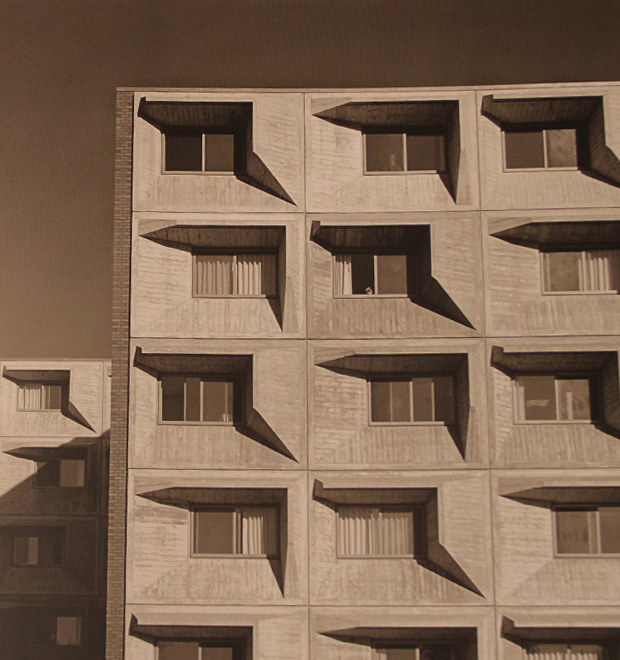
UMass, Marcel Breuer, 1967-70. (the189.com)

UMass, Marcel Breuer, 1967-70. (the189.com)

Dittmar writes of the latest Stirling winner, a school designed by a firm that openly acknowledges past influences on the design, especially the 1950s and ’60s work of modernist Marcel Breuer. Dittmar found that acknowledgment “notable.” It is certainly quite rare. Traditional architecture celebrates its past but references to previous modernist architects in modernist building design are generally sotto voce, when they exist at all – which they often do, often more by accident than by design. The most frequent such “quotes” of which the designers are aware probably involve the use of Corbusian pilotis (thin posts) or nautical-styled stair or balcony railings.

So yes, it does happen. And so Dittmar wonders:

Perhaps this means it is possible to erase the double standard that seems to exist in architecture, where it is permissible to quote or use modernist precedents, but often forbidden in planning guidance to reference precedents from before the modern era, such as Palladio or Wren or Lutyens. The use of precedent in traditional architecture is derided as “pastiche,” a descriptive term which has been transformed into an epithet, or as “historicist,” taking history and turning it into a pathology by adding “ist” on the end, as in calling something Islamist rather than Islamic.

Dittmar refers to the more common tendency in British planning and design review to forthrightly ban references to past styles, at least those from pre-modern times. In the U.S. such blatant censorship is rare, but no less rigorously implemented by the design apparat, which is marinaded in modernist attitudes, especially the disdain for tradition. Now that many midcentury modern buildings are age 50 and up, hence eligible for historic preservation, Dittmar wonders “when designs which reference Breuer or Mies or the Smithsons will be considered pastiche or historicist rather than contemporary.”

Don’t hold your breath, Hank! Either for that or, as you note in closing, “for a Demetri Porphyrios, John Simpson or Craig Hamilton building to be nominated” for a Stirling.

Posted in Architects, Architecture, Architecture Education, Architecture History, Art and design, Preservation | Tagged , , , , , , | 1 Comment

“Never fear, Prov. is here!”

Rhode Island State House (as Providence City Hall) with non-Providence buildings photoshopped in. (howcoolisit.com)

Rhode Island State House (as City Hall) with buildings not from Providence photoshopped in. (howcoolisit.com)

Apropos of apparently nothing in particular beyond the sheer deliciousness of it, the Providence Journal’s longtime food critic Gail Ciampa wrote a piece in today’s paper on movies where Rhode Island scenery shines. “Check it out: Five Hollywood movies that capture Rhode Island’s spendor” even quotes yours truly in its description of the film Underdog.

Being quoted in my old paper lifts my spirits on a day when I am under the weather and disinclined to add anything the least bit difficult to my blog. So I’m reprinting my old column that Gail quoted. The superhero’s refrain, “Never fear! Underdog is here!,” bid me call it “Never fear, Providence is here.” [Trigger warning: There is some thoroughly gooey stuff near the end having to do with my own latter-day Sweet Polly Purebred.]

So here is the Underdog column Gail quoted from:

***

Never fear, Providence is here!
August 30, 2007

UNDERDOG, the movie, is a rollercoaster ride through Providence. The critics made much of its location, but few noted its true character as a cinematic paean to Rhode Island’s capital. The city and its buildings, streets, parks and even alleyways careen across a celloid kaleidoscope of Providence, mostly at warp speed to keep pace with the movie’s star, the canine caped crusader Underdog. [The Disney film is based on the 1964-73 NBC cartoon.]

In the film, a beagle named Leo plays Underdog and his Clark Kentish alter ego Shoeshine (a shoe-shine dog in the 1960s cartoon, in the movie he is a disgraced bomb-sniffing police dog). Leo had three stand-ins, doggy-doubles and stunt-mutts. His most undoglike powers, such as speaking English, were performed by the special-effects crew. Leo’s voice, Jason Lee, is no Wally Cox, who was the voice of the original Underdog. And never mind that the plot line is (surprise!) cartoonish, or that the movie was panned by most critics. The real star of this film is the setting, called “Capital City,” aka Providence.

Much was made of buildings and skylines spliced in from bigger cities to give Providence a more metropolitan feel. But our city needs no such civic steroids. Most of the movie’s outdoor scenes were of Providence, and most of those shots were unadulterated by imported architecture. Even the indoor scenes were filmed in Providence, at the Cranston Street Armory, fitted out as a sound stage.

The film was directed by Frederick Du Chau. His feel for the most lovely and evocative buildings and vistas of Providence was unerring. The scene where Underdog discovers that he can fly has him zooming along Washington Street, and at one point the camera halts long enough for the eye to be enchanted by the view down Washington Street across Kennedy Plaza and up College Hill. A dramatic rescue unfolds at the Turk’s Head Building, whose rounded corner is upwardly caressed by the camera. In the climax, Simon Bar Sinister’s three German shepherds chase Underdog around the mural inside the dome of the State House [Charles McKim, 1901], which in the film is City Hall. The cross-axial marble staircase under the rotunda, where so many Rhode Islanders have stood gazing upward in awe, gets special attention.

(Curiously, for all its allusions to the superhero called Superman, the film has few if any shots of our Industrial Trust Bank, which is often called the Superman Building here, and no scene of its own.)

The skyline of downtown Providence backdrops a scene at Prospect Terrace, with Disco Roger (Williams) presiding. [The statue, by Leo Friedlander, looks as if it is dancing disco.] The scene in which the newly empowered Underdog chases after a frisbee with such speed that he can stop for Chinese on the other side of the world takes place in Roger Williams Memorial Park. The scene in which Underdog foils a cat burglary takes place on the exuberant façade of the Union Trust Building. A kidnapping takes place at the Arcade. Westminster Street, Weybosset Street, Washington Street and Benefit Street get their own star turns. Hope High School is featured as Capital City Middle School. A scene in which Shoeshine changes into his Underdog outfit takes place in a telephone booth next to the College Street Bridge at Market Square. Bar Sinister’s lab is in the basement of Citizens Plaza, but the shot that sets the scene focuses on its lavish lobby, not its clunky exterior. The filmmakers are unerring in their good taste for which buildings and places to include.

At last, though it may strain good taste to mention it, Underdog has a love interest, a cocker spaniel called Sweet Polly Purebred, whom he finally rescues from Bar Sinister and takes on a flight around the world – which reminds me that a friend says that my own soon-to-be-ex-fiancée, Victoria, reminds him of Sweet Polly Purebred. I assume he means the sweeter Polly of the cartoon. Tomorrow, I will, at long last, be marrying Victoria for real at the real City Hall, Judge John Martinelli presiding. At this modest affair, I will not play Tennessee Tuxedo (voice of Don “Get Smart” Adams), the wisecracking penguin who shared Sunday mornings with Underdog and Klondike Kat. On Saturday morning, Victoria and I will fly to Quebec City (in an airplane).

Another friend has urged me to see the Showtime series Brotherhood for its rendition of Providence, but he’s less interested in the look of the city than in its peculiar social, political and ethnic cachet. Years ago, I wrote a column, “The Providence of Providence” (Jan. 14, 1999), about the locational splendors of that NBC show. Unlike the soft-focus languor of Providence‘s Providence, the shots of Underdog‘s Providence shoot out at you with rat-a-tat velocity. I think we get more Providence in 84 minutes of Underdog than in a whole season of Providence. The executive producer of Underdog, Todd Arnow, told ComingSoon.net/SuperheroHype: “I don’t think anything’s been done on this level in Providence.” He is correct. I must get the DVD so I can luxuriate, frame by frame, in Walt Disney’s Providence.

This reviewer truly believes that he got his state Hollywood tax credits’ worth out of Underdog.

***

Courtesy of Walt Disney Pictures
Copyright © 2007. LMG Rhode Island Holdings, Inc. All Rights Reserved.
Record Number: MERLIN_419384

Posted in Architecture, Architecture History, Art and design, Blast from past, Book/Film Reviews, Humor, Providence, Providence Journal, Urbanism and planning | Tagged , , , , , , , , , , | 1 Comment

Names of feelings we’ve felt

edna_t658The article “23 Emotions We all Feel But Don’t Know the Names of” is a list of made-up words for inchoate or unsettling thoughts we’ve all had (mostly). It is quite interesting, more in the feelings author Bobby Popovic identifies than in the words he has coined for tickld.com. Those words drill a bit more deeply into lexicography than I can plumb (mostly), but some of the coinages strike home and almost all of the feelings do.

The words, in order, are sonder, opia, monachpsis, énouement, vellichor, rubatosis, kenopsia, Mauerbauertraurigkeit, jouska, christalism, vemödalen, anecdoche, ellipsism, kuebiko, lachesism, exulansis, adronitis, Ruckkehrunruhe, nodus tollens, onism, liberosis, Altschmerz and Occhiolism.

I want to make one up that relates to the general subject of this blog, architecture, but nothing pops to mind so I will make do with a recent coinage of, I think, Andrés Duany, a founder of the Congress for the New Urbanism, whose upcoming treatise Heterodoxia Architectonica I have helped to edit. Palladiophobia is the fear of liking architecture that is widely known for its likability. Its root is from Palladio, the famous Renaissance architect. Maybe I am not defining it quite as Duany would, but I commend his neologistical chops.

If the 23 words on the list were actually made up by Popovic, cited as the writer of the piece, then I must congratulate him. Meanwhile, I will doff my hat to my wife, Victoria Somlo, for tipping me off to his list.

Posted in Architecture, Art and design, Humor | Tagged , , , , , , | Leave a comment

Fie on a million years!

Royal Crescent at Bath (John Wood the Younger, 1767-74); cited as

Royal Crescent at Bath (John Wood the Younger, 1767-74); cited as “boring” by Anthony Flint. (wikipedia.org)

For his latest piece in CityLab, “Making the Case for Symmetrical Cities,” peripatetic architecture critic Anthony Flint, housed at the Lincoln Institute in Cambridge, does a very nice job adding up the evidence for the superiority of classical and traditional architecture.

Flint has heard a lecture by Ann Sussman, author (with Justin Hollander) of Cognitive Architecture: Designing for How We Respond to the Built Environment, and sums up her thinking thus:

The symmetry of red brick, perfectly positioned front doors and 12-pane windows has a soothing effect. It tells us all is well in the world, that there is order, and indeed that we’re connected to that equilibrium. In evolutionary terms, we sense a friendly environment; we’re going to have food, and we’re not going to be eaten. Survival of the tidiest.

“Can so much really be wrapped up in what we see?,” wonders Flint.

Much more than that, really. Symmetry is only part of it. Architecture and city building are among the few human arenas in which the product of the human mind lasts for centuries. Added to year by year, the way we build is a learning process that never stops. It inculcates eternal verities handed down generation to generation, literally since before we even started to build – as we humans began storing knowledge about the environment that enabled us to, say, spot the tiger in the bush yonder. Symmetry is a part of that, and so is the brain’s swift recognition of facial symbology. But that is far from all.

Flint then cites millennia of gathered wisdom that bears this out.

It has long been established that well-tailored design is pleasing not only to the eye but the soul, though the reasons for that have always been somewhat mysterious. Firmitas, utilitas, venustas — that is, solid, useful, and beautiful — we know from Vitruvius, are characteristics baked into architecture as an imitation of nature. Leonardo da Vinci, Le Corbusier and many others recognized the strange power of mathematical alignment. More recently, the Congress for the New Urbanism reminds us that great places built in traditional design make us feel good. The theory of how this all works is detailed in A Pattern Language by Christopher Alexander.

(I would boot Corbusier from that list because he used his knowledge to destroy cities and undermine the principles of human habitation.)

As I say, Flint adds all this up and nods approvingly, but clearly he feels uncomfortable:

The bottom line seems to be, why bother trying anything new, when we’ve already figured out what constitutes good design? I wonder if one possible result is a restraint on creativity, and cookie-cutter boredom.

The bottom line is not that at all. It is that anything new must be tried and tested over time, as was the case during millennia of architectural evolution. The modernists threw that baby out with the bathwater long ago. Most architecture today is not science but cult, and it’s people like Sussman – I would add also Nikos Salingaros, the Texas mathematician, architectural theorist and research partner of Christopher Alexander – who are among those trying to bring not only science back into the architectural fold, but firmness, utility and delight, all casualties of modernism. It’s hard enough with the architectural establishment arrayed against them, but snickering from the peanut gallery doesn’t help.

“Far be it from me to argue with a few million years of evolution,” sighs Flint at the end of his piece. Indeed.

Posted in Architecture, Architecture Education, Architecture History, Art and design, Books and Culture, Urbanism and planning | Tagged , , , , , , , , , , | 4 Comments

Architect, bury your mistake

Old Stone Square, by Edward Larrabee Barnes, 1984, now Brown School of Public Health. (brownsmokelab.org.)

Old Stone Square, by Edward Larrabee Barnes, 1984, now Brown School of Public Health. (brownsmokelab.org.)

Yesterday I ran some passages from the late critic Lewis Mumford and thought I recalled having written a column on him years ago after reading a biography. I cannot find it. But here is one column from June 1994 in which I quote Mumford being thrown in my face by a local architect. I would have liked to have been able to throw yesterday’s quotes [“Mumford’s words of warning“] back in his face but I was unaware of them. And my interlocutor would have the last laugh, since Mumford was hardly the wizard my quotations suggest. In the end, he backed the modernist horse.

Moreover, the decline of modernism perceived in this old column from the Providence Journal has not played out, at least not beyond a snail’s pace. After postmodernism, modernism got a second wind, goofing it up to applause that continues, at least among the establishment. In Providence, the “aesthetic calamity” of Old Stone Square was indeed repeated in the GTECH building. Sad, sad, sad! How much nicer the world would be if architects had indeed been hypnotized by Henry Hope Reed!

***

Architect, bury your mistake
June 30, 1994

Doctors bury their mistakes. Architects can’t.

– Frank Lloyd Wright

MODERN ARCHITECTURE was a mistake, but Frank Lloyd Wright was wrong. Architects can bury modernism just as democracy buried communism. The greatest crime against history was buried by statesmanship: Surely architects can bury a great crime against art.

Build over it. Build around it. A long, twilight struggle? Perhaps, but as the struggle against communism showed, victory can be more swift and less costly than even its own generals might imagine.

GTECH headquarters building. (lauralanden.com)

GTECH headquarters building. (lauralanden.com)

Modern architecture has been discredited, but its retreat is not yet a rout. In Providence, an aesthetic calamity of the magnitude of Old Stone Square will not be repeated. And great hammer blows have been rained upon modernism by the construction of new buildings in traditional styles, such as the Westin Hotel. Yet there is no assurance that local architects will avoid the stalemate of post-modernism.

The Convention Center, Fleet Center and Citizens Plaza are the most elegant local examples of this generally unsatisfying style, which rejects the modernist fear of ornament but shrinks from embracing the traditions of decoration. Providence Place, Rhode Island’s next major building, could lead architecture in the right direction nationally and internationally, but only if the integrity of its design is maintained.

The final victory of traditional over modern architecture, here as elsewhere, requires that the failure of modernism be understood intellectually by architects as fully as it has been understood intuitively by the public from the beginning.

Take Old Stone Square. The public cannot stand it, and never could. A reverence for that monstrosity is of a piece with the old communists’ assertions of belief even as their system collapsed around them. The building’s admirers probably live in old houses, as surely as old communists shopped at elite stores.

To be sure, the professional sneers and lost commissions suffered by architects who rebelled against modernist orthodoxy aren’t the same as bullets in the base of the skull, but their effect on the impulse to criticize has not been altogether dissimilar.

In Form Follows Fiasco (1974), architect Peter Blake admits it took him more than a decade to muster the courage to reveal publicly his dismay over modern architecture. “By 1960 or thereabouts,” he writes, he and “many” of his colleagues “confronted a severe crisis of confidence and competence. We knew that our beautiful diagrams had failed us, our clients, our art, and our time; but we had not, as yet, come up with any persuasive alternatives.”

The alternatives he suggests – an end to high-rise construction, liberation from the automobile and population control – are evasions based on his reluctance to admit the obvious, which was that the alternative had always been staring him in the face. Then and now, it was to return to (which does not mean to copy) traditional principles of architecture.

But first, architects must admit that modernism itself is not traditional. Fifteen years before Blake’s apostasy, Lewis Mumford wrote in Roots of Contemporary American Architecture (1959) that “modern architecture is a continuation of the great traditions of historic architecture, not a break with or a rejection of them. . . .” (This assertion was thrown in my face a while back by a prominent local architect, who has twice assured me he’s working on a rebuttal to my opinions, which he calls “stupid.” Well, if they are so easy to demolish, where’s your critique?!)

In fact, modernism is no less an aberration in the history of architecture than communism was in the history of political freedom. Whatever its “roots” may be, a central feature of modern architecture is its rejection of ornament, which is why most people do not like it. Mumford admits that modernism is “a two-faced Janus,” but warns that it would have had problems even if “the entire architectural profession had been hypnotized by . . . Henry Hope Reed.”

I doubt it. Reed wrote a book, published also in 1959, called The Golden City. It no doubt galled Mumford no end. Subtitled “A Pictorial Argument in the Raging Controversy Over ‘Classical’ vs. ‘Modern’ Fashion in Architecture and Other American Arts,” Reed’s book juxtaposes photos of traditional and modern buildings – a debating strategy that makes his case perfectly.

Reed goes on to predict that modern architecture is dying. Maybe it was, even in 1959. But if so, it has taken a dreadfully long time collapsing – and again, like communism, it may yet need a good strong push from courageous architects to finally fall.

* * *

Copyright © 1994. LMG Rhode Island Holdings, Inc. All Rights Reserved.
Record Number: MERLIN_1121251

Posted in Architects, Architecture, Architecture Education, Architecture History, Art and design, Blast from past, Development, Preservation, Providence, Urbanism and planning | Tagged , , , , , , , , | Leave a comment

Mumford’s words of warning

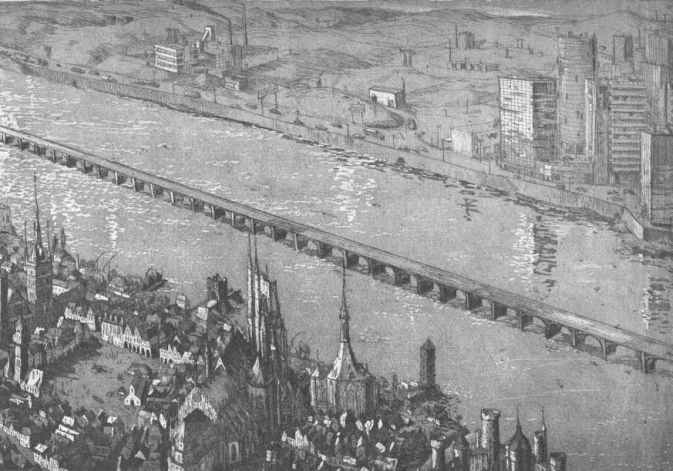
“The Bridge,” etching, 1976, by the Czech artist Jan Souček (1941-2008)

Here is a passage from Lewis Mumford’s essay “The Case Against ‘Modern Architecture'” in the April 1962 issue of Architectural Record:

In so far as modern architecture has succeeded in expressing modern life, it has done better in calling attention to its lapses, its rigidities, its failures, than in bringing out, with the aid of the architect’s creative imagination, its immense latent potentialities. The modern architect has yet to come to grips with the multidimensional realities of the actual world. He has made himself at home with mechanical processes, which favor rapid commercial exploitation, and with anonymous repetitive bureaucratic forms, like the high-rise apartment or office building, which lend themselves with mathematical simplicity to financial manipulation. But he has no philosophy that does justice to organic functions or human purposes, and that attempts to build a more comprehensive order in which the machine, instead of dominating our life and demanding ever heavier sacrifices in the present fashion, will become a supple instrument for humane design, to be used, modified, or on occasion rejected at will.

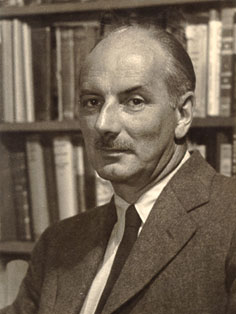
Lewish Mumford. (nndb.com)

Lewish Mumford. (nndb.com)

The critic Charles Jencks called this “the first shot of Post-Modernism in the style wars.” He said that coming from the venerable Mumford and “being comprehensive … it ruffled a few significant feathers.” But Mumford supported modern architecture in the end, and looked down his nose at attempts to recapture architecture’s past greatness. He may have been the first of many subsequent writers on architecture to notice modernism’s flaws only to ignore them and cry out for more modern architecture.

Here’s some more from “The Case Against.”:

Unfortunately, this interpretation of the new mechanical possibilities was in itself dominated by a superficial aesthetic, which sought to make the new buildings look as if they respected the machine, no matter what the material or methods of construction; and it was this superficial aesthetic, openly proclaiming its indifference to actual mechanical and biological functions or human purposes … that was formally put forward … as the International Style.

Mumford had nothing if not a comprehensive mind. As the writer of many books on architecture, culture and history, as the writer of “The Sky Line” column for more than 30 years in The New Yorker, Mumford had clout. He may be forgiven for looking down at us from the clouds. He may not, perhaps, be forgiven for ignoring his own warnings.

James Howard Kunstler’s excellent new essay, “Bang, You’re Dead,” on the connection between our society’s angst, its built environment and the recent shootings in Oregon, lays out the wider problem facing the nation:

The physical setting of American life composed of a failing suburban sprawl pattern for daily living — the perfect set-up for making community impossible — obliterates the secondary layer of socialization beyond the family. This is life in the strip-mall wilderness of our country, which has gotten to be mostly of where people live.

I would add, and I’m sure Kunstler would agree, that modern architecture’s blankness and sterility, from its suburban housing pods to its downtown corporate towers, represents the sensibility that is the problem in Kunstler’s broad social scenario – the powers that be, the establishment, cares not a hoot for the rest of us, and has little capacity to think about let alone to address the nation’s problems.

Recently I sought to engage the governor’s office in Rhode Island to turn away from the cult of the machine and toward architecture people love. The Ocean State’s “brand” is its beauty, after all. And Little Rhody is little. A small voice can make a difference. Right? Wrong. The governor’s people were uninterested. Kunstler, despairing that anyone in Washington can even conceive of what’s wrong in this country, put it this way:

President Obama and whatever else passes for authority in America these days won’t even talk about that. They don’t have a vocabulary for it. They don’t understand how it works and what it’s doing to the nation.

If only America had listened to Mumford. If only Mumford had listened to Mumford.

[The top image, showing the traditional world and the modernist world separated by a “bridge” that connects neither. It illustrates an essay, “The Case Against the Modernist Regime in Design Education,” by Jan Michl, of Norway.]

Posted in Architects, Architecture, Architecture Education, Architecture History, Art and design, Development, Rhode Island, Urbanism and planning | Tagged , , , , , , , | 1 Comment
Downtown living tour, 2015

The George C. Arnold Building, 11 feet wide, built in 1923. (coroflot.com)

The George C. Arnold Building, 11 feet wide, built in 1923. (coroflot.com)

This year’s Downtown Living Tour, operated genially, as usual, by Joelle Kanter of the Providence Foundation, is on Saturday, from 11 a.m. to 5 p.m. By shuttle and pedicab – Sol Chariots have become a delightful fixture locally – you can visit new and exciting places to live for those who want to experience the vivid enchantments of the downtown lifestyle. Or you can walk. Among the 11 rental and condo complexes on view are several brand new apartment options in Providence’s hot downtown market.

Recently, when AS220, the arts cooperative, hosted a panel on placemaking in the Peerless Building, its units were described as fully rented. So its absence from this year’s tour is no surprise. Although the Living Tour ($6 in advance, $10 on Saturday) kicks off at AS220’s 115 Empire Street digs, attendees are invited to a photo exhibit in the Peerless atrium of the Providence Perservation Society’s 10 most endangered properties.

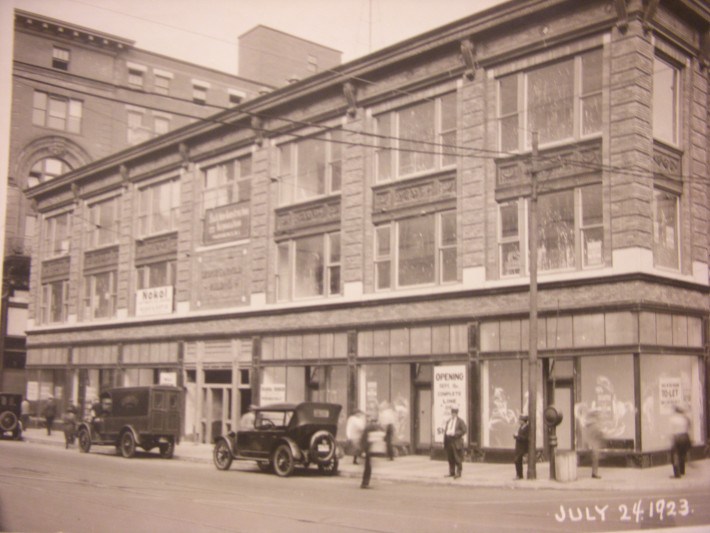
The Arnold Building when new in 1923. (Journal archives)

The Arnold Building when new in 1923. (Journal archives)

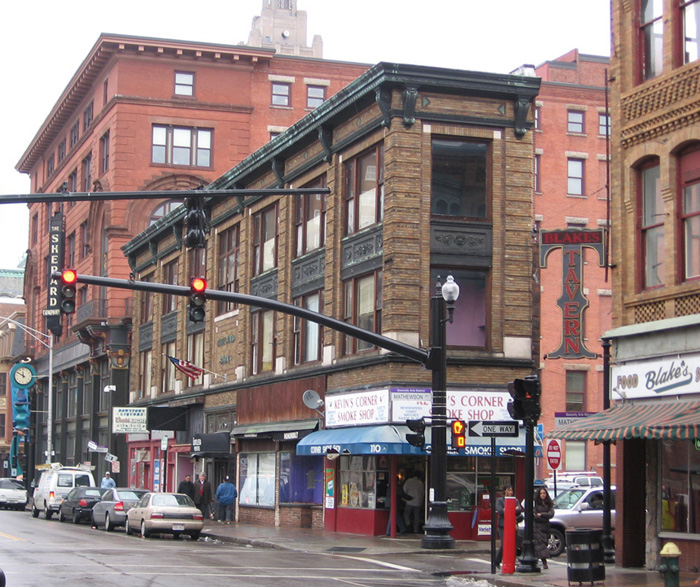
The George C. Arnold Building, one to see on Saturday, blessedly escaped the endangered list after 2012 when plans were adopted to put two retail shops and three apartments in the Washington Street building, only 11 feet wide and ravaged by fire in 2009. How do these three units compare to the microlofts at the Arcade? Does their size transcend the narrow ambit of their width? How deep are they? Well, let’s see! (Don’t confuse it with the Arnold Building, right across Mathewson Street, built in 1896 by the father of George C. Arnold. It is also on the list of buildings being redeveloped as apartments.)

Look at the web  page of  the Downtown Living Tour for the entire list of complexes available for viewing on Saturday. I’ll be taking the tour to check out the latest apartments in old buildings newly redeveloped. They are:

  • George C. Arnold Building, 3 units
  • Merchant’s Bank Building, 8 units
  • Kinsley Building, 44 units
  • Promenade complex, 196 units added

And here is a list of even more downtown residential projects in various stages of planning and construction, with the expected number of units:

  • Lapham Building, 40 units
  • 32 Custom House, 10 units
  • Union Trust Building, 60 units
  • Arnold (Blake’s Tavern) Building, 8 units
  • Irons & Russell (95 Chestnut) Building, unknown

Since the 2010 census, which counted 4,569 people living in Census Tract 8, some 356 new units have been added downtown, but alas, whole swaths of land have been added in recent years to what is officially considered downtown. I have not counted the proposed graduate-student housing at South Street Landing as planned new downtown residences because I don’t consider the Jewelry District (the I-195 corridor, the Knowledge District, whatever) to be part of downtown. An expanding definition of downtown does not really equate to a growing downtown, but it does undermine the city’s ability to claim that its downtown is compact and walkable – vital selling points, not to be tampered with lightly.

Be that as it may, downtown is what it is, and that will remain the case however it is defined by authorities. I lived downtown for 11 years, five of them carless by choice, in the Smith Building, the first of Buff Chace’s loft rehabs. The latest of the latter are the new Kinsley Building units. I live in the municipal suburbia of the East Side now, but I pine for my days living the Downcity dream. My kingdom for a pedicab!

Posted in Architecture, Architecture History, Art and design, Development, Preservation, Providence, Urbanism and planning | Tagged , , , , , , | Leave a comment

Portland’s imposing Old Port

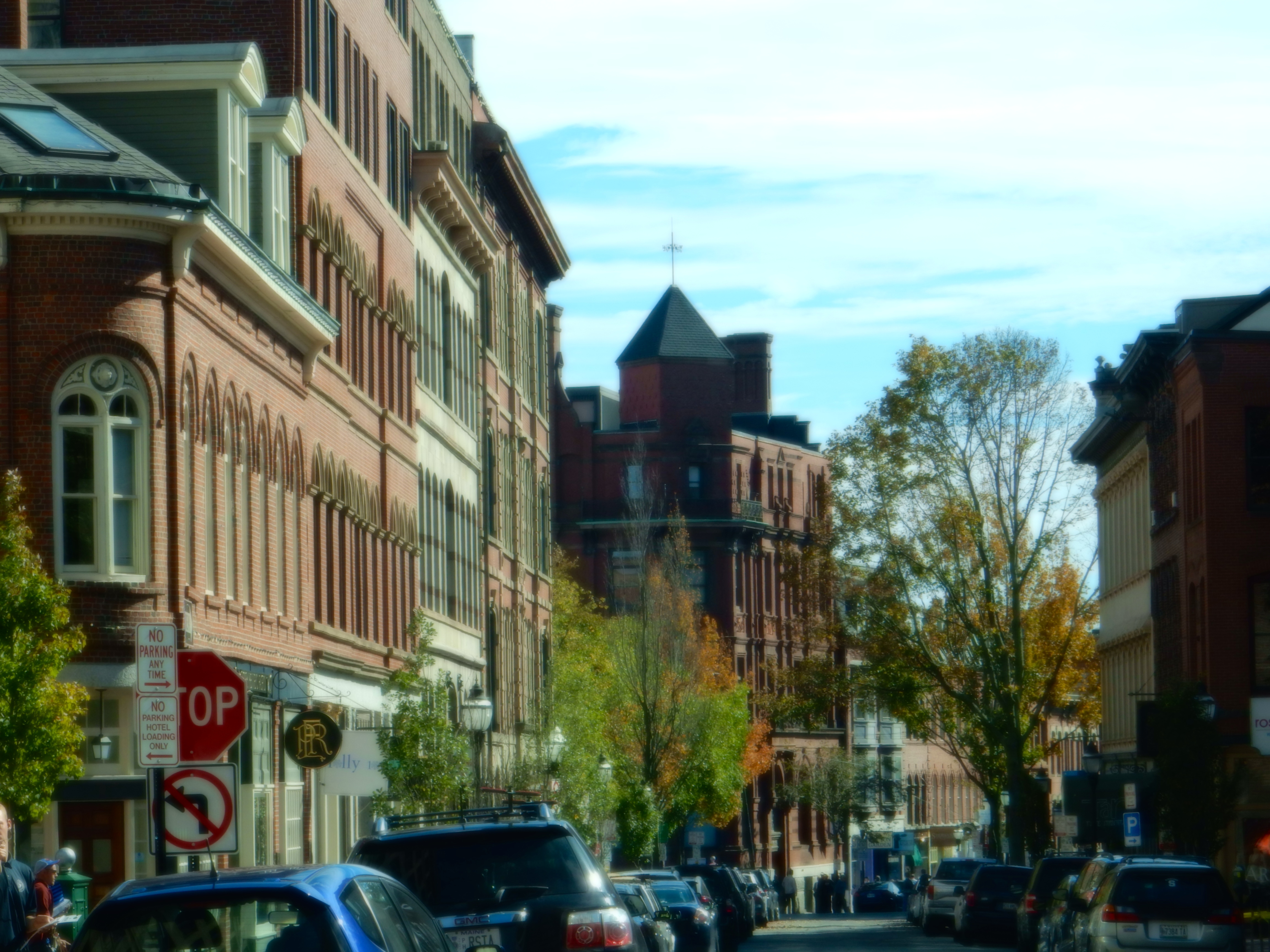
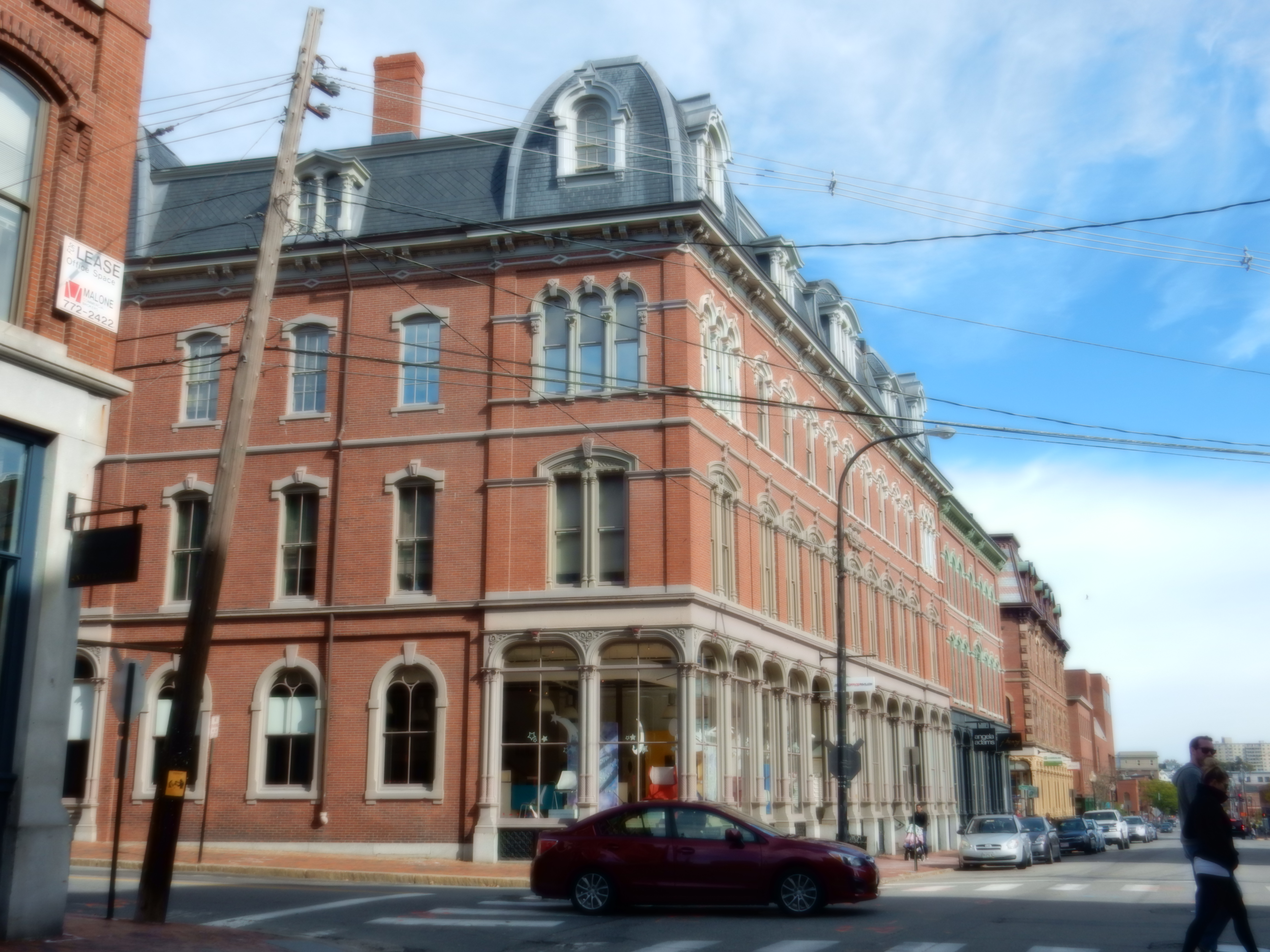
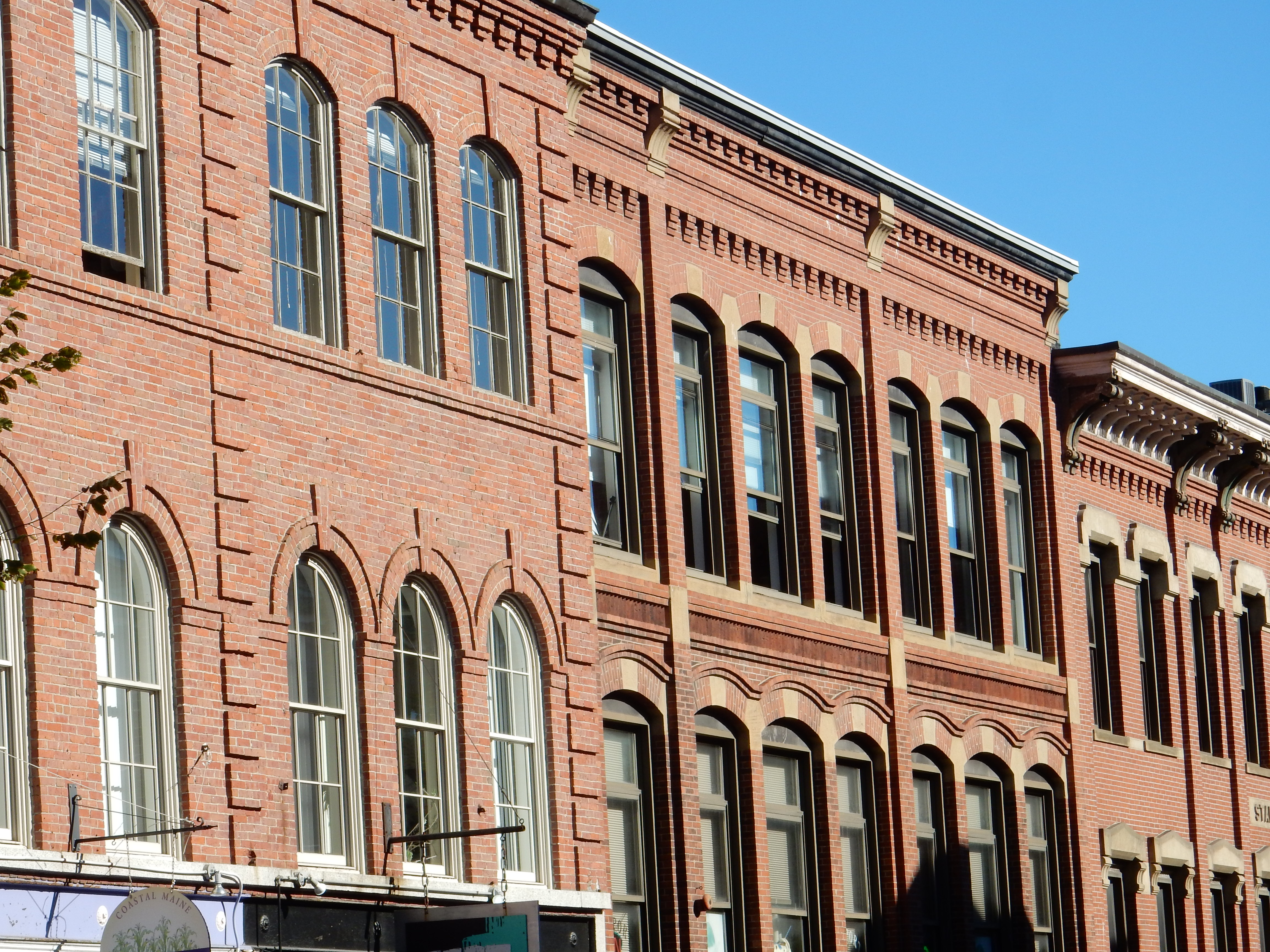
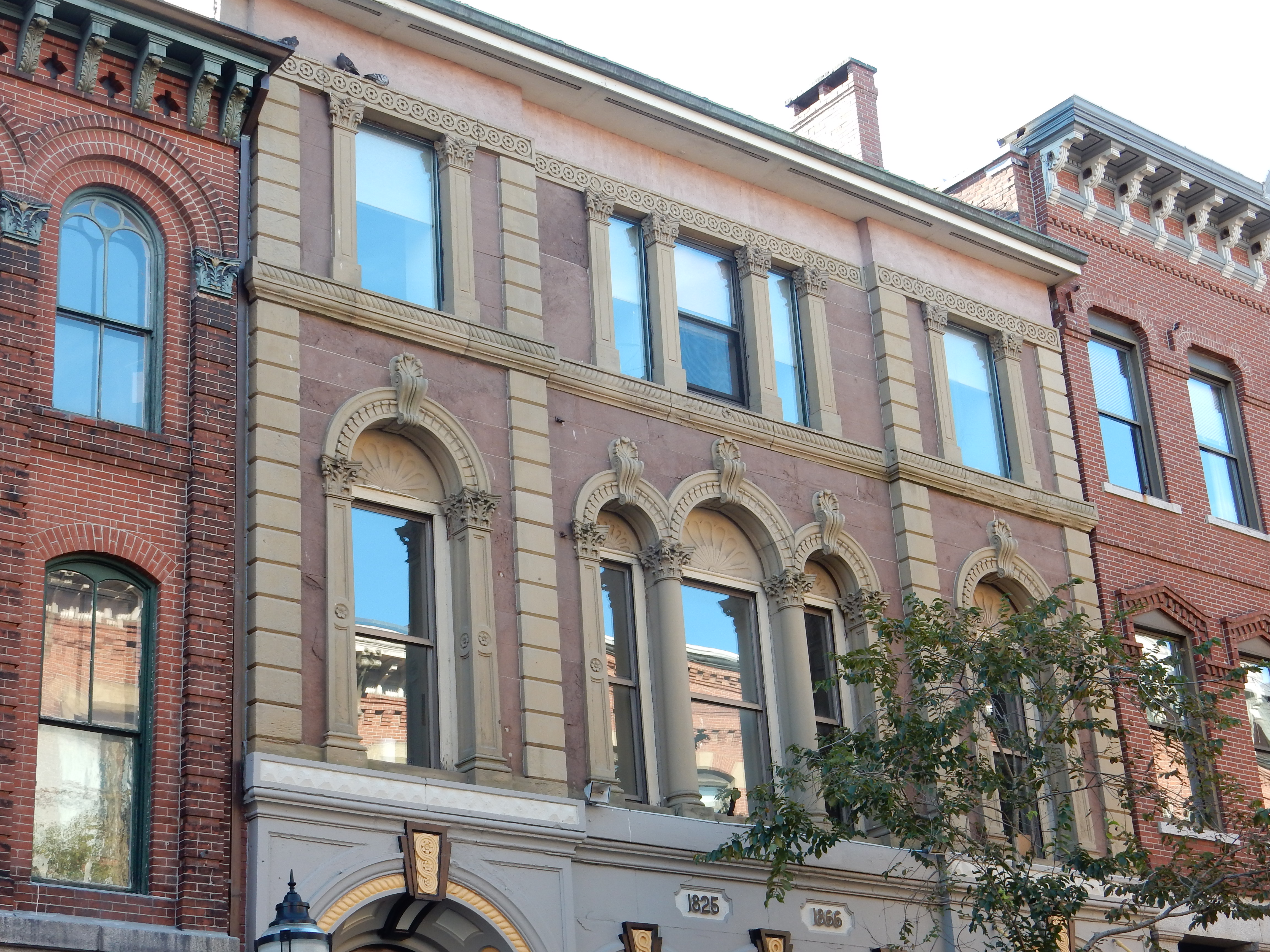
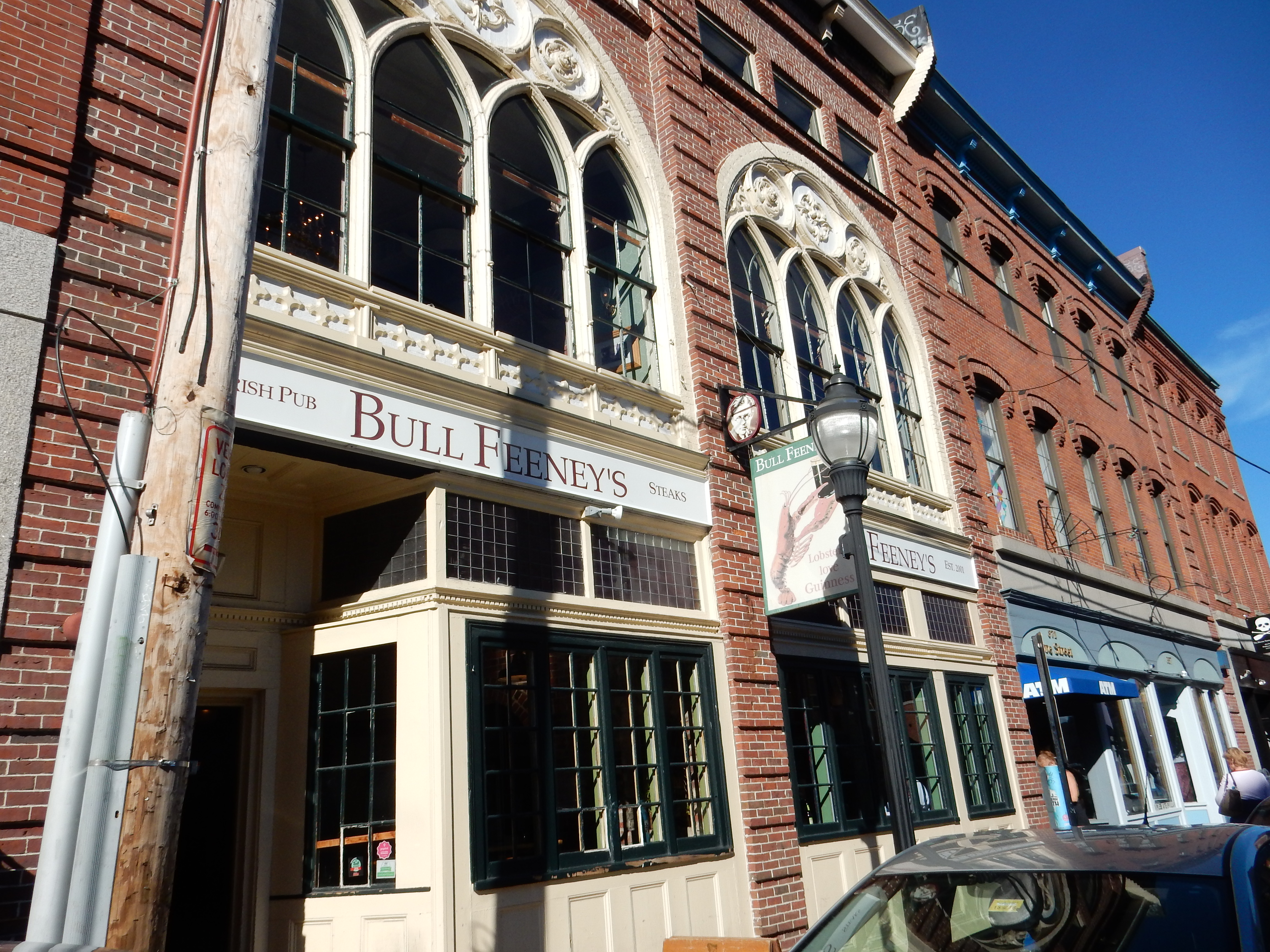
Portland's Old Port Exchange district, built after huge fire in 1866. (Photos by David Brussat)

Portland’s Old Port Exchange district, built after huge fire in 1866. (Photos by David Brussat)

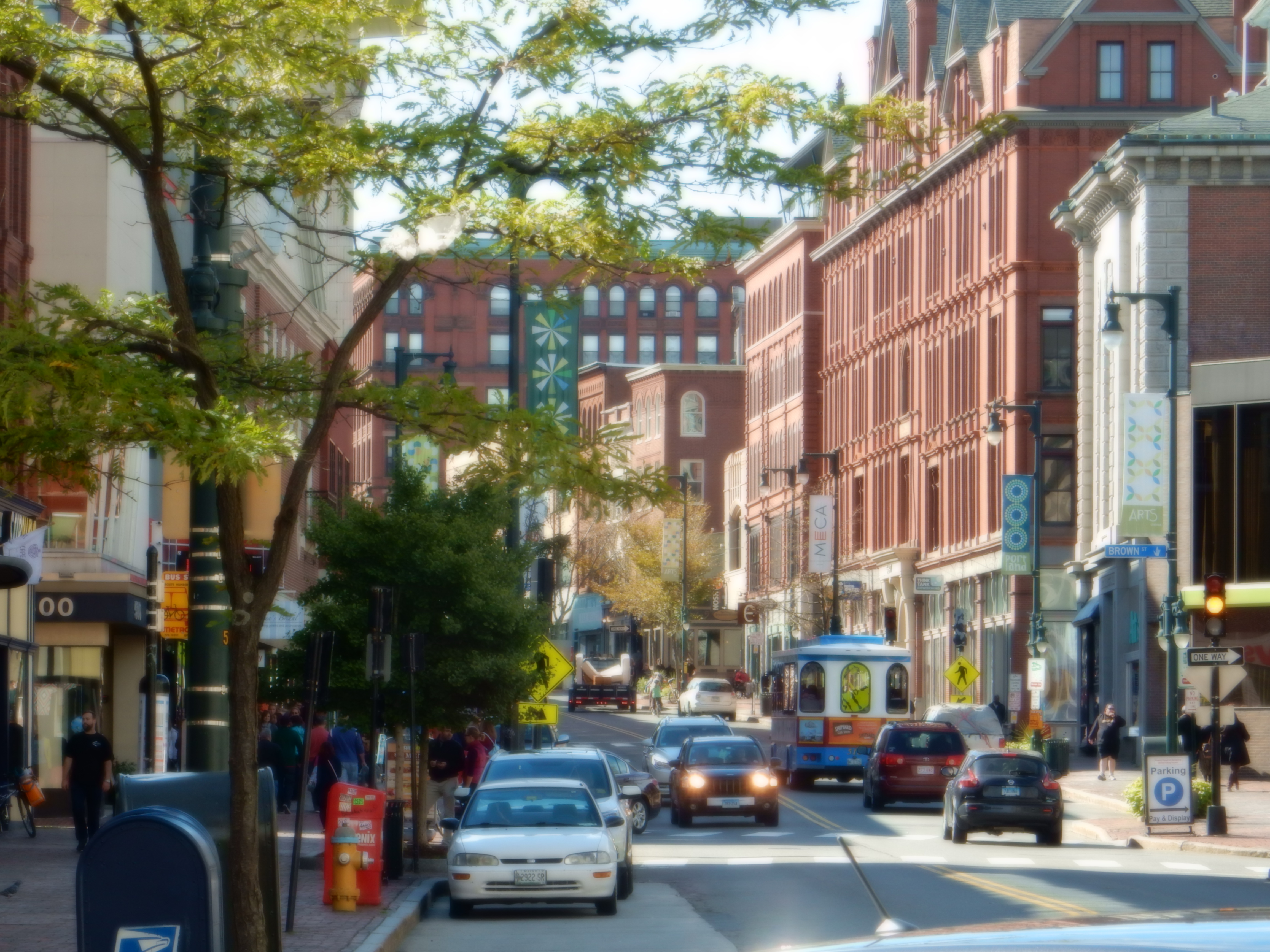
Portland’s Old Port Exchange district was bustling with tourists on Sunday morning as Billy and I drove up and down its streets in search of parking. Finding no place, we ended up touring Congress Street on foot instead, taking too long to double back to the Old Port. On the trip home the next day, Columbus Day, we passed through again – this time including Victoria – found parking and set about exploring the many shops.

The place seems much the same, made even more alluring with the switching in of an even more pleasing set of historic street lamps. The shops are more upscale than when I last visited in 1994. Here’s what I wrote in “Portland’s phoenix resurgent” at the time:

Thirty years ago, says Barbara Hager, who directs Portland’s downtown management district, the area consisted of flophouses and old sailors’ haunts. She says that growth was gradual, starting with entrepreneurial “hippies” who opened lunch spots for the employees from banks and other large companies in buildings constructed just north of the Port Exchange during the 1960s, ’70s and ’80s.

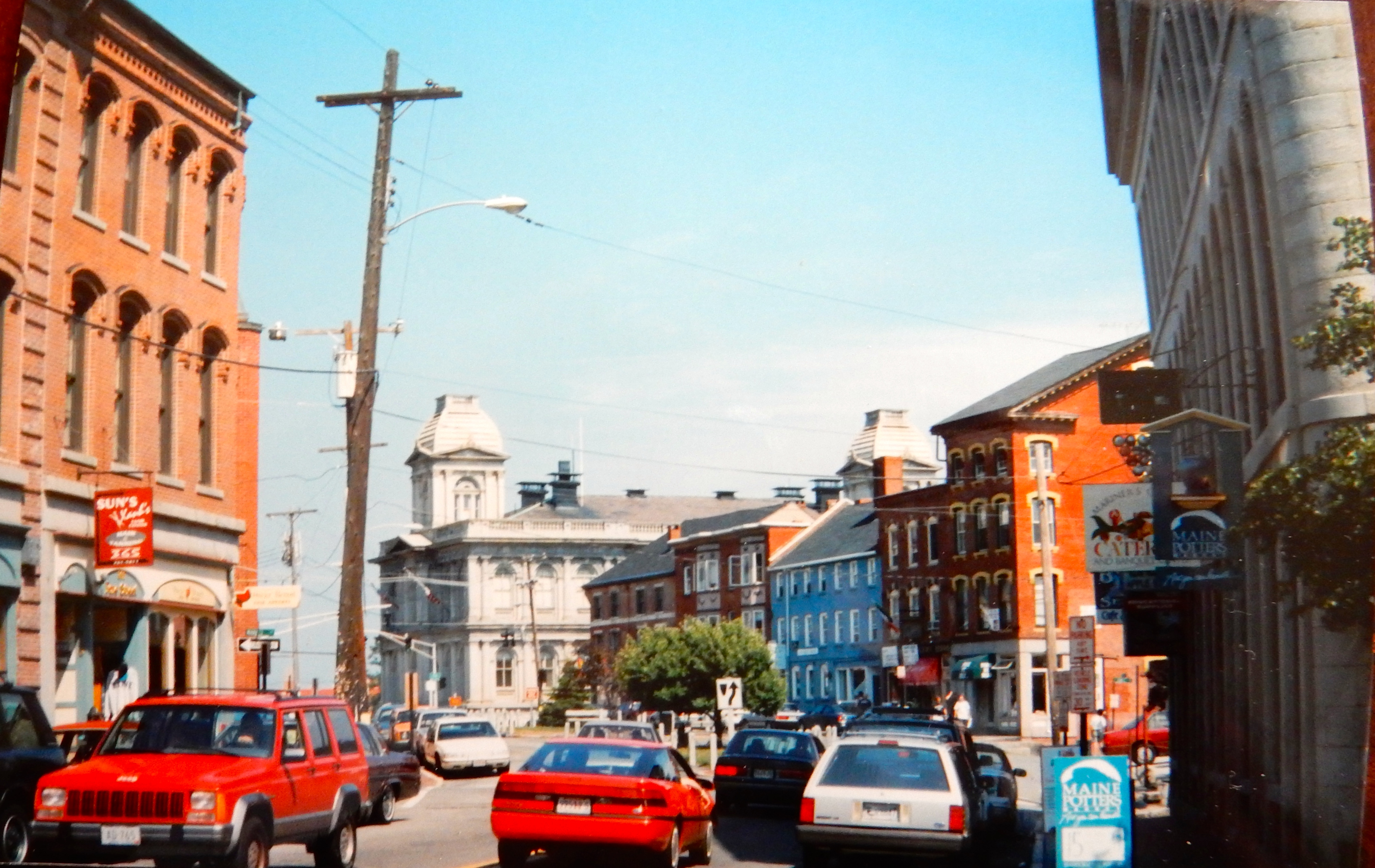
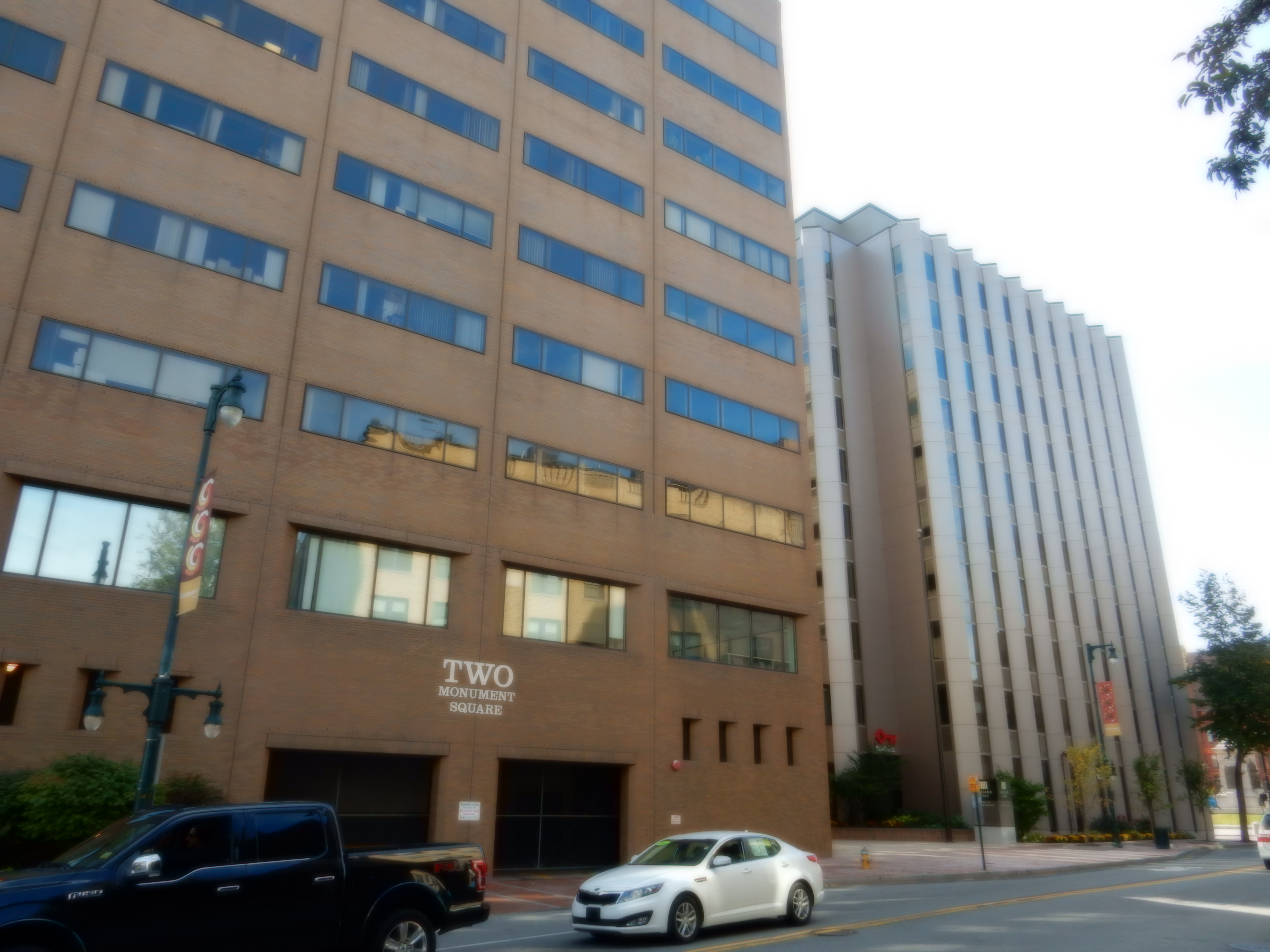
The latter buildings mostly avoided the Port Exchange, thankfully, except, it seems, for the dark, groping glass-and-steel behemoth that appears in the before-and-after shots below, beyond the ornate French Second Empire-style Custom House, completed in 1872. Perhaps the new hulk, whose identity eludes me, is not really in the Old Port at all, but in the business district next door. What follows are shots of the Custom House in 1994 and 2015:

Custom House (center) in 1994.

Custom House (center) in 1994.

Custom House (right of center) in 2015.

Custom House (right of center) in 2015.

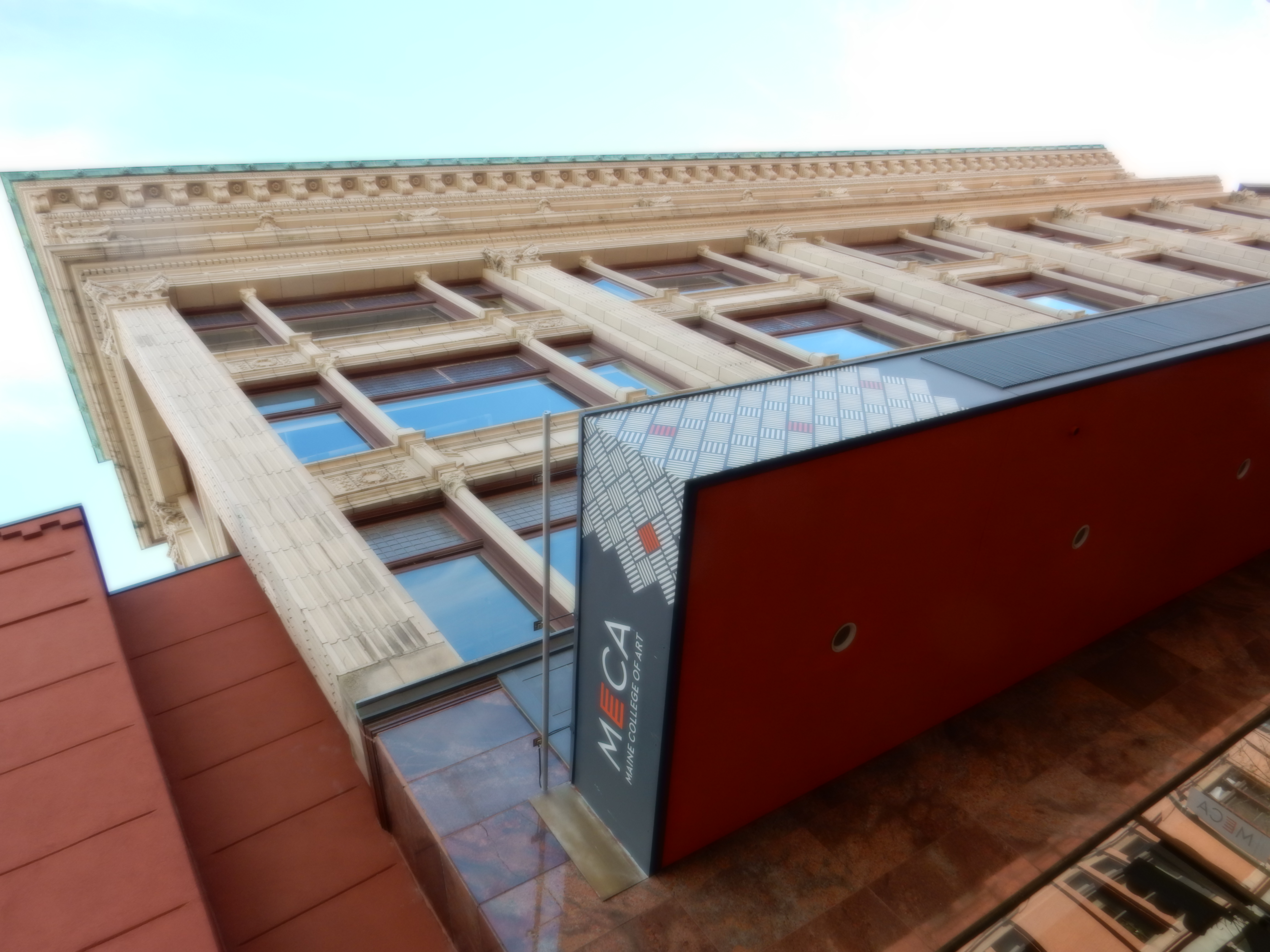
Today, the most successful districts of Portland, especially the Old Port Exchange, are much as they were then – in the 1990s – fine-grained buildings with small shops, and apartments or offices above. There are stretches of that on Congress Street, the city’s arts district, anchored by the Maine College of Art, but the Old Port abounds in it, thrives in it, is sustained by it.

The takeaway for Providence, considering the sluggishness of its Capital Center district, is that its I-195 redevelopment corridor – the so-called Knowledge District – should be recast at a smaller scale. At least some of its large parcels should be downsized to a smaller grain, seeking small business rather than large corporations and institutions in, no doubt, large ugly buildings, as recommended by the I-195 Developers Tool Kit.

Maine’s motto is Resurgem. Rhode Island’s motto is Hope. Portland has been resurgent for at least two decades. Providence has done more, to be sure, than inch forward, but not that much more, and remains hopeful.

Meanwhile, here are some shots, including a video, of the Old Port:

DSCN9512

DSCN9389

DSCN9597

DSCN9624

DSCN9517

DSCN9408

DSCN9398

DSCN9407

DSCN9392

DSCN9618

DSCN9607

DSCN9586

DSCN9587

DSCN9590

DSCN9600

DSCN9598

DSCN9613

DSCN9619

Posted in Architecture, Architecture History, Art and design, Blast from past, Development, I-195 Redevelopment District, Photography, Preservation, Providence, Urbanism and planning, Video | Leave a comment

Portland’s revival booms

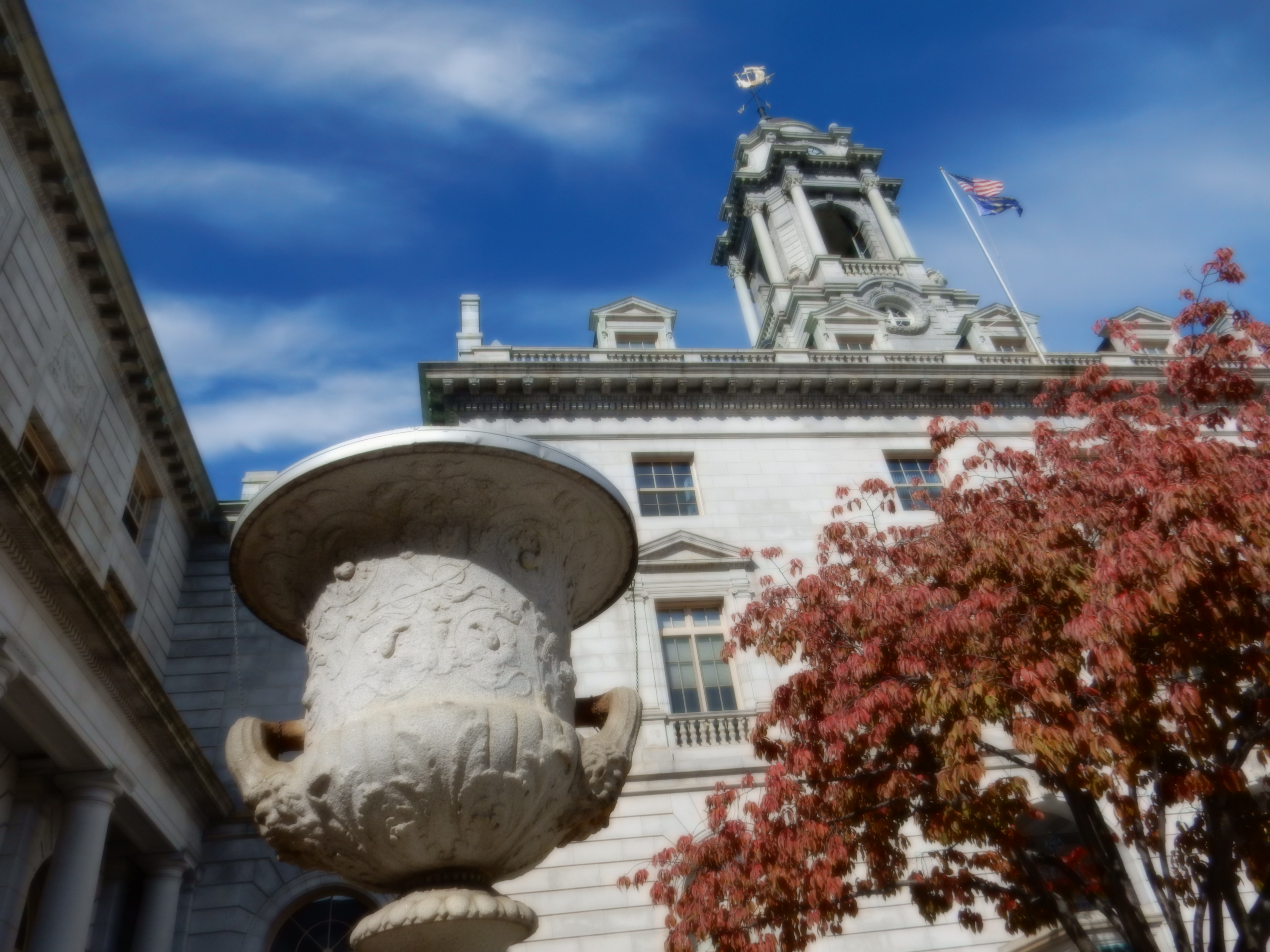
Portland City Hall, by Carrere and Hastings, completed in 1909. (Photos by David Brussat)

Portland City Hall, by Carrere and Hastings, completed in 1909. (Photos by David Brussat)

Two decades after my first visit to Portland in 1994, its enviable vitality seems to defy comparison with that of Providence. Portland is not its state capital anymore – not since 1832, when, 12 years after achieving statehood, the capital was moved to Augusta. Portland has barely a third of Providence’s population, either as city or metro area. It lacks Providence’s abundance of universities, and lacks the benefit of proximity to Boston and New York.

Moreover, 20 year ago Portland’s revival had been largely accomplished and has since matured, whereas Providence awaited the influence of its new Capital Center, and its yet to be completed new waterfront, with its new urban shopping mall, Providence Place, and the loft rehabs of the following decade still to come. These have now been accomplished and still Providence has not caught up with Portland in many measures of civic revival. Even though Capital Center is moribund, Providence now awaits the outcome on yet another several dozen acres of new downtown land, created by relocating Route 195, using the same sluggish development model as Capital Center – large parcels featuring major corporate and institutional buildings.

Why does Providence lag? Rhode Island’s government is as profligate as that of Maine is penny-pinching. Yet for all its loose fiscal ways, the Ocean State doesn’t roll in money, and the public and private enterprises of Providence seem to suffer no less in the pocketbook than those of Portland. It may be that without a robust economy to sustain it, fiscal profligacy is no more effective an engine of economic growth than is fiscal prudence.

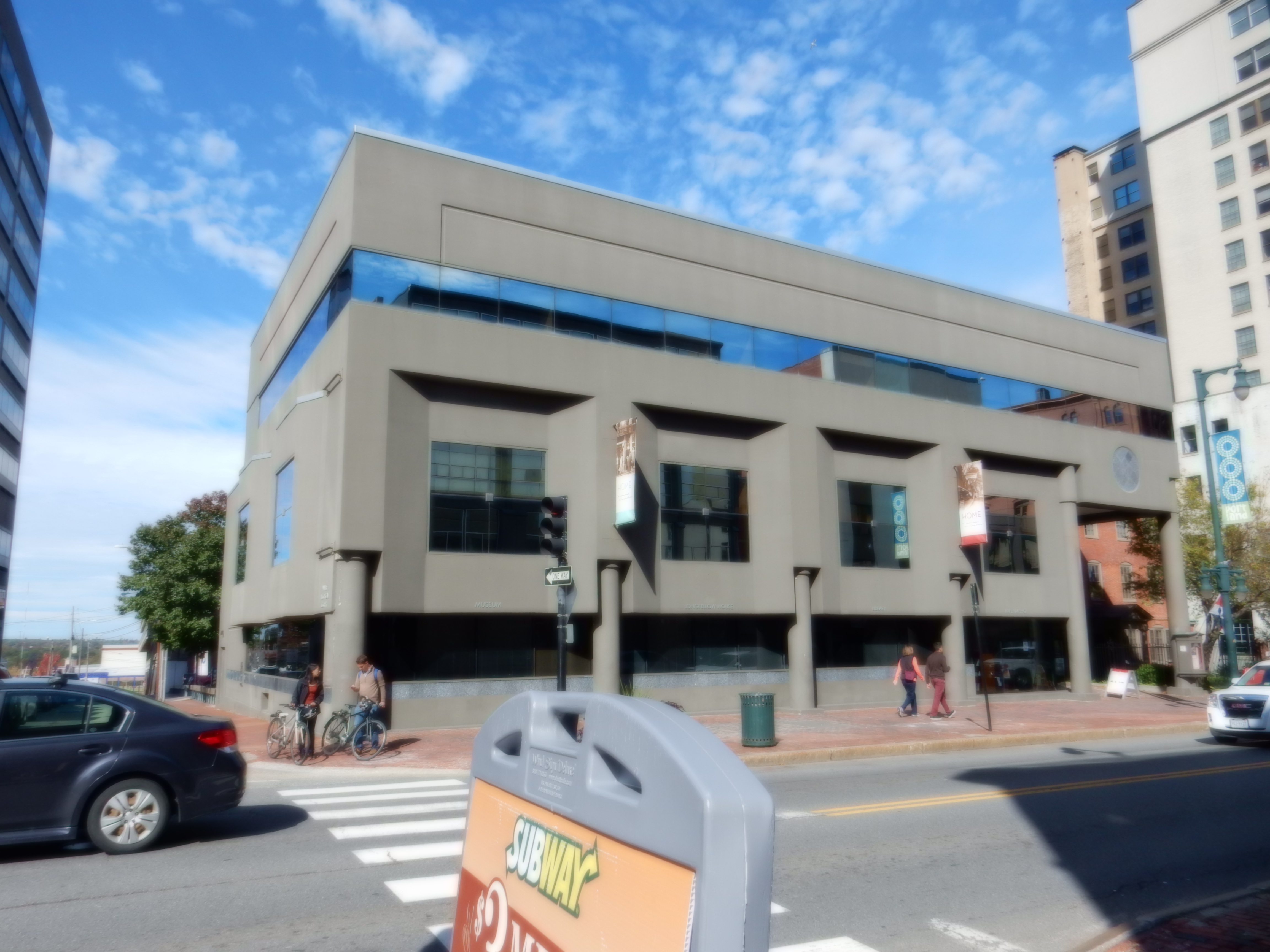
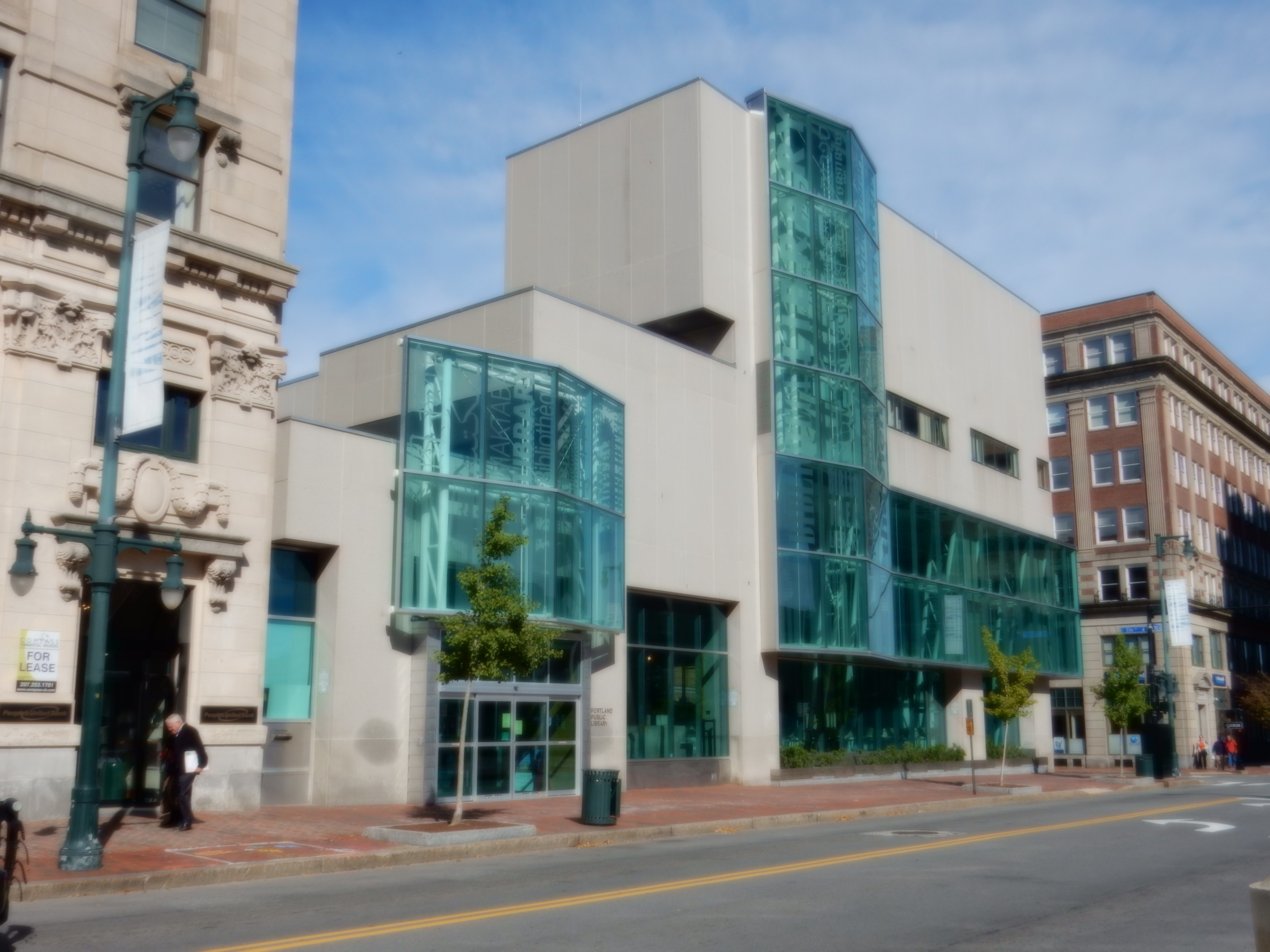
Could it be that Portland’s civic economy thrives because its downtown, at least to judge by Congree Street, has more of these? Take a look:

DSCN9488

DSCN9453

DSCN9440

DSCN9454

DSCN9438

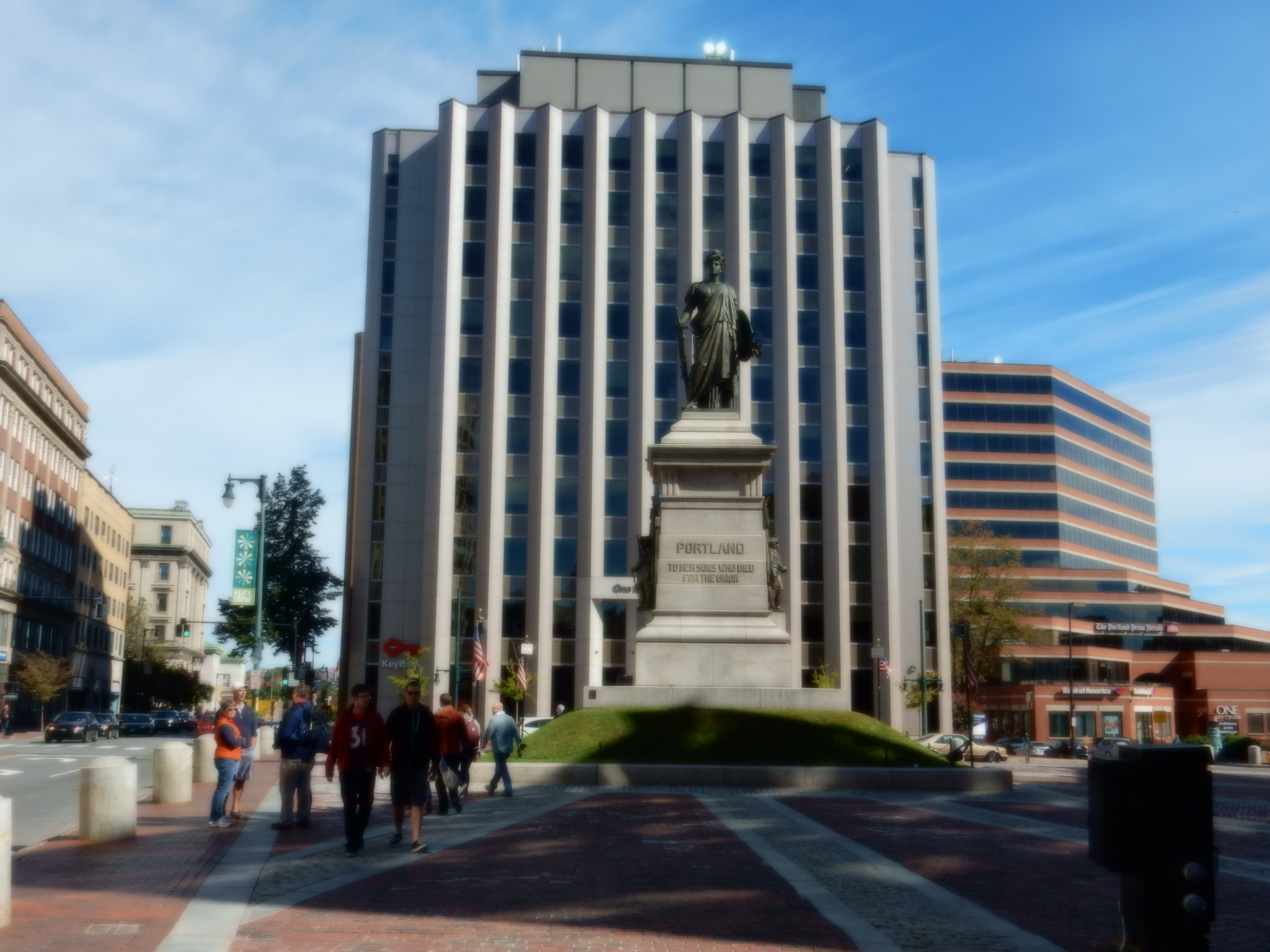
Only kidding! Because Congress Street also has lots of these:

DSCN9506

DSCN9461

DSCN9414

DSCN9486

DSCN9497

DSCN9470

DSCN9428

DSCN9429

DSCN9484

DSCN9483

DSCN9482

DSCN9462

And we have not yet reached the Old Port Exchange.

Portland’s business district has even more ugly buildings than Congress Street, with little relief from the sort of old architecture preserved along Congress. The Old Port Exchange remains largely free of ugly architecture. Whatever their influence on its economy, the ugly buildings of Congress Street merely demonstrate that an abundance of fine buildings cannot easily survive an attack of ugly ones.

It is not hard to suppose, especially in light of the Old Port’s success, that more beautiful buildings and fewer ugly ones can only help. Neither city seems to have learned that lesson, but because of the success of the Old Port, of which Rhode Island’s capital has no parallel, Portland stands less in need of the lesson than Providence.

The Old Port Exchange will have its own post soon.

Posted in Architecture, Architecture History, Art and design, Development, Photography, Preservation, Providence, Rhode Island, Urbanism and planning | Tagged , , , , | 2 Comments